Chapterبەش 6 · Lectureوانە 6.2
Adding, Subtracting and Scaling Matricesکۆکردنەوە، لێدەرکردن و لێکدانی ماتریکسەکان لە ژمارە
The same-size rule, adding and subtracting entry by entry, multiplying a matrix by a number, the trace, the properties of addition and of scalar multiples, and solving — with the notes' unfinished property 7 and a misprinted subscript corrected.
یاسای هەمان قەبارە، کۆکردنەوە و لێدەرکردنی ژمارە بە ژمارە، لێکدانی لە ژمارەیەک، ، تایبەتمەندییەکانی کۆکردنەوە و لێکدان لە و شیکارکردنی — لەگەڵ ڕاستکردنەوەی تایبەتمەندیی 7ی تەواونەکراو و هەڵە چاپکراوی تێبینییەکان.
What you will learnچی فێر دەبیت
- Decide whether two matrices can be added and add or subtract them entry by entry.
- Multiply a matrix by a number and use and .
- Find the trace of a square matrix and use the properties of addition and of scalar multiples.
- Solve matrix equations such as .
- بڕیار بدەیت ئایا دوو کۆ دەکرێنەوە و ژمارە بە ژمارە کۆیان بکەیتەوە یان لێیان دەربکەیت.
- لە ژمارەیەک بدەیت و و بەکاربهێنیت.
- بدۆزیتەوە و تایبەتمەندییەکانی کۆکردنەوە و لێکدان لە بەکاربهێنیت.
- وەک شیکار بکەیت.
Why add matrices?بۆچی ماتریکسەکان کۆ دەکەینەوە؟
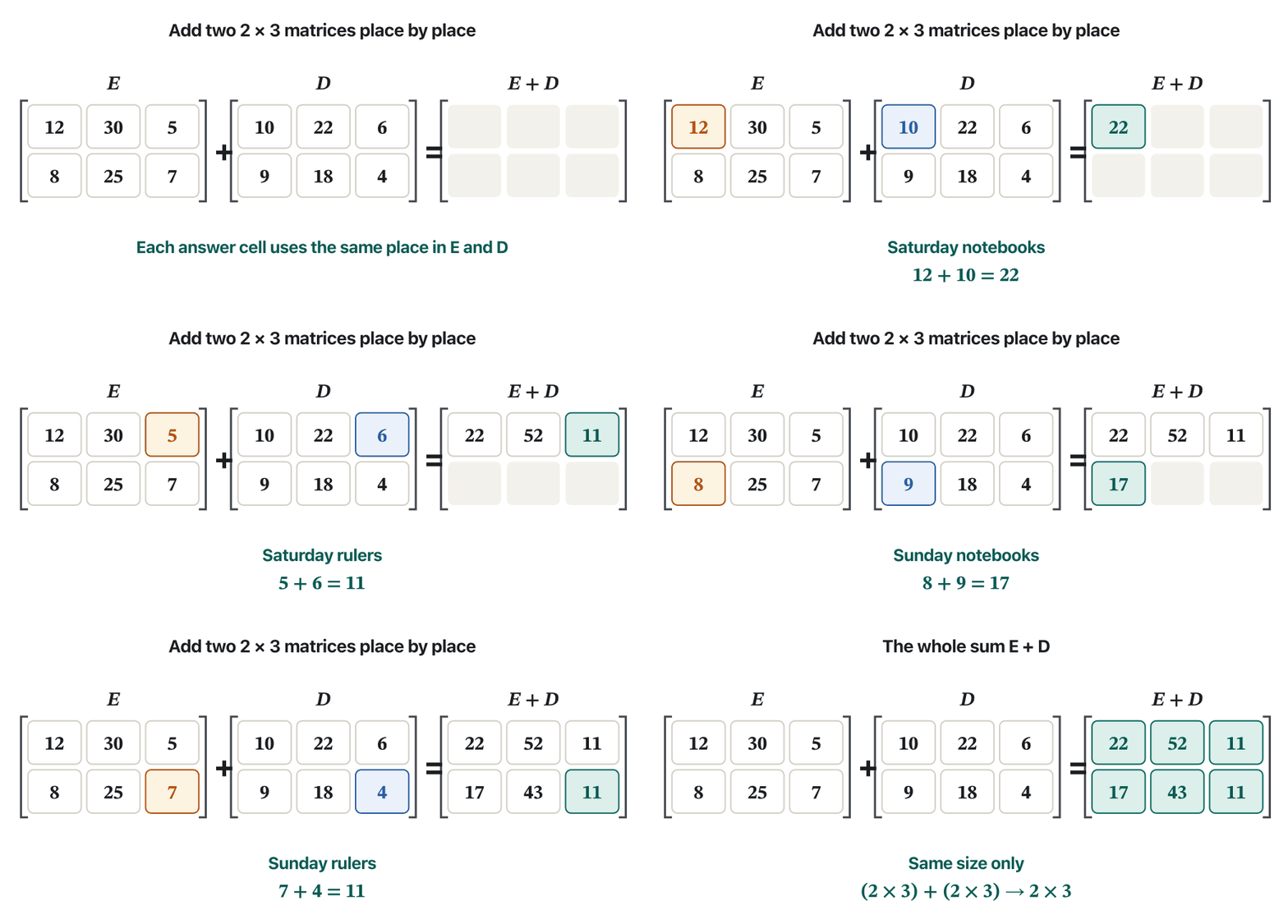
Aram has two branches of a stationery shop, one in Erbil and one in Duhok. Every weekend each branch writes its sales in a small table: the rows are the days (Saturday, Sunday) and the columns are the items (notebooks, pens, rulers). Each table is a :
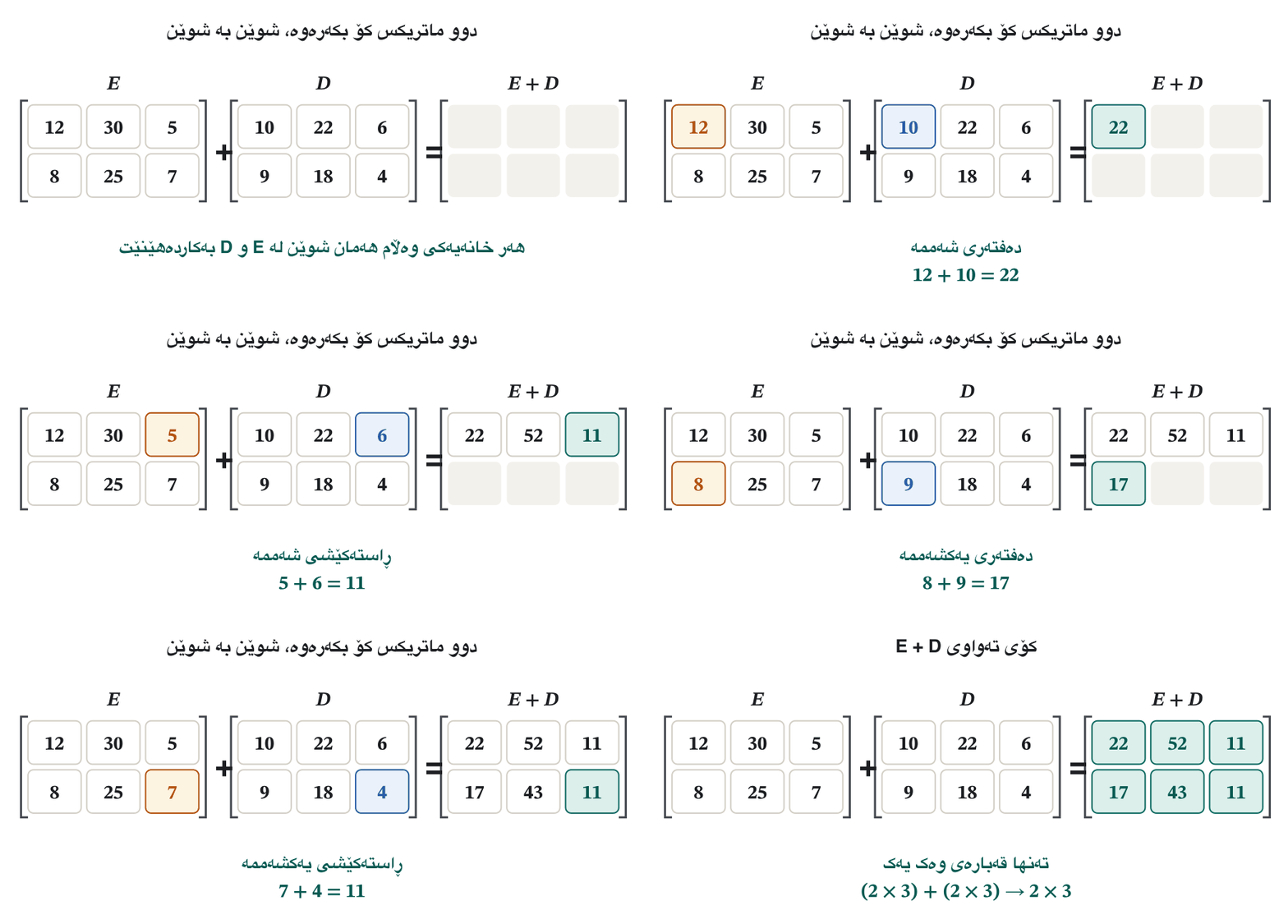
ئارام دوو لقی دوکانێکی پێداویستیی قوتابخانەی هەیە، یەکێکیان لە هەولێر و ئەوی تریان لە دهۆک. هەموو کۆتایی هەفتەیەک هەر لقێک فرۆشەکەی لە خشتەیەکی بچووکدا دەنووسێت: ڕیزەکان ڕۆژەکانن (شەممە، یەکشەممە) و ستوونەکان کاڵاکانن (دەفتەر، پێنووس، ڕاستەکێش). هەر خشتەیەک ـە:
= Erbil branch, = Duhok branch. Row 1 = Saturday, row 2 = Sunday; columns = notebooks, pens, rulers.
= لقی هەولێر، = لقی دهۆک. ڕیزی 1 = شەممە، ڕیزی 2 = یەکشەممە؛ ستوونەکان = دەفتەر، پێنووس، ڕاستەکێش.
To get the weekend total of the whole shop, Aram adds the numbers that mean the same thing: Saturday notebooks with Saturday notebooks (), Sunday pens with Sunday pens, and so on. That is exactly matrix addition:
بۆ ئەوەی کۆی فرۆشی هەموو دوکانەکە لە کۆتایی هەفتەدا بزانێت، ئارام ئەو ژمارانە کۆ دەکاتەوە کە هەمان واتایان هەیە: دەفتەری شەممە لەگەڵ دەفتەری شەممە ()، پێنووسی یەکشەممە لەگەڵ پێنووسی یەکشەممە و بەم شێوەیە. ئەمە ڕێک کۆکردنەوەی :
The same-size ruleیاسای هەمان قەبارە
Two matrices can be added only when they have the same order: the same number of rows and the same number of columns. Then you add the entries in the same position. For and the sum is with
دوو تەنها کاتێک کۆ دەکرێنەوە کە هەمان قەبارەیان هەبێت: هەمان ژمارەی ڕیز و هەمان ژمارەی ستوون. ئەو کاتە ژمارە هاوشوێنەکان کۆ دەکەیتەوە. بۆ و کۆکەیان ـە بەم شێوەیە:
This holds for every and . Written out in full, the sum looks like this:
ئەمە بۆ هەموو و ـێک ڕاستە. ئەگەر بە تەواوی بنووسرێت، کۆکە بەم شێوەیە دەبێت:
This is the same “point by point” idea as adding two functions in Operations on functions: there you add at the same ; here you add at the same .
ئەمە هەمان بیرۆکەی «خاڵ بە خاڵ»ـە وەک کۆکردنەوەی دوو لە کۆکردنەوە، لێدەرکردن، لێکدان و دابەشکردنی نەخشەکاندا: لەوێ لە هەمان دا کۆ دەکەیتەوە؛ لێرە لە هەمان دا.
A Kurdish university lecture: adding matrices of the same order, multiplying by a number, and multiplying matrices row by column.
وانەیەکی زانکۆ بە کوردی: کۆکردنەوەی کە هەمان قەبارەیان هەیە، لێکدان لە ژمارەیەک و لێکدانی ڕیز لە ستوون.
Kurdish (Sorani) explanation with English notes on paper: (1) addition needs the same order, (2) scalar multiple 3A, (3) negative of a matrix. Ends where multiplication starts.
ڕوونکردنەوە بە کوردیی سۆرانی، لەگەڵ تێبینیی ئینگلیزی لەسەر کاغەز: (1) کۆکردنەوە هەمان قەبارەی پێویستە، (2) لێکدان لە : ، (3) ، واتە سالبی . لەو شوێنەدا کۆتایی دێت کە لێکدانی دەست پێدەکات.
Watch it cell by cellخانە بە خانە سەیری بکە
The animation adds the two branch tables one cell at a time. Each frame lights up one place in , the same place in , and writes their sum into the same place of the answer.
ئەم وێنە جووڵاوە خشتەی دوو لقەکە خانە بە خانە کۆ دەکاتەوە. هەر وێنەیەک شوێنێک لە ، هەمان شوێن لە ڕووناک دەکاتەوە و کۆکەیان لە هەمان شوێنی وەڵامەکەدا دەنووسێت.
Different orders: no sumقەبارەی جیاواز: کۆ نییە
If the orders differ, some entries have no partner in the other matrix, so the sum is not defined. It is not zero, and you may not fill the gaps with zeros:
ئەگەر قەبارەکان جیاواز بن، هەندێک ژمارە هاوبەشیان لە تردا نییە، بۆیە کۆکە پێناسە نەکراوە. سفر نییە و ناشتوانیت بۆشاییەکان بە سفر پڕ بکەیتەوە:
This sum is not defined. Both matrices hold six numbers, but a and a matrix have different shapes.
ئەم کۆیە پێناسە نەکراوە. هەردوو شەش ژمارەیان تێدایە، بەڵام و شێوەی جیاوازیان هەیە.
Subtracting matricesلێدەرکردنی ماتریکسەکان
Subtraction works the same way: both matrices need the same order, and you subtract each entry of the second matrix from the entry in the same place of the first: with .
لێدەرکردن بە هەمان شێوە کار دەکات: هەردوو هەمان قەبارەیان پێویستە و هەر ژمارەیەکی دووەم لە ژمارە هاوشوێنەکەی یەکەم دەردەکەیت: بە .
The notes' example: find , , and for
نموونەی تێبینییەکان: ، ، و بدۆزەرەوە بۆ
Add the entries in the same place.
ژمارە هاوشوێنەکان کۆ بکەرەوە.
The same answer: for each entry .
هەمان وەڵام: بۆ هەر ژمارەیەک .
Subtract each entry of from the entry of in the same place.
هەر ژمارەیەکی لە ژمارە هاوشوێنەکەی دەربکە.
Every sign is the opposite of : .
هەموو هێمایەک پێچەوانەی ـە: .
So for addition the order of the two matrices does not matter, but for subtraction it does.
کەواتە بۆ کۆکردنەوە ڕیزبەندیی دوو گرنگ نییە، بەڵام بۆ لێدەرکردن گرنگە.
Multiplying a matrix by a numberلێکدانی ماتریکس لە ژمارەیەک
To multiply a matrix by a number (a ), multiply every entry by . The number may be positive or negative. The notes' examples:
بۆ لێکدانی لە ژمارەی ()، هەموو ژمارەکانی لە بدە. ژمارەکە دەکرێت موجەب یان سالب بێت. نموونەکانی تێبینییەکان:
A real use: a tea house in Sulaymaniyah keeps its prices in IQD in a matrix (rows: tea, coffee; columns: small, large). The owner raises every price by , which means multiplying the whole matrix by :
بەکارهێنانێکی ڕاستەقینە: چایخانەیەک لە سلێمانی نرخەکانی بە دینار لە هەڵدەگرێت (ڕیزەکان: چا، قاوە؛ ستوونەکان: بچووک، گەورە). خاوەنەکەی هەموو نرخێک زیاد دەکات، واتە هەموو لە دەدات:
Two special multiples are worth naming. flips the sign of every entry. And subtraction is really addition of a negative multiple: . With the matrices of the worked example, , the same as .
دوو لێکدانی تایبەت شایەنی ناونانن. هێمای هەموو ژمارەیەک پێچەوانە دەکاتەوە. لێدەرکردنیش لە ڕاستیدا کۆکردنەوەی لێکدانێکی سالبە: . بە نموونە شیکراوەکە، ، هەمان .
The trace of a square matrixکۆی تیرەی ماتریکسێکی چوارگۆشەیی
One more tool is needed for the properties below. The of a is the sum of the numbers on its :
بۆ تایبەتمەندییەکانی خوارەوە ئامرازێکی تر پێویستە. کۆی ژمارەکانی سەر :
Only the diagonal counts; the other six numbers play no part. A matrix that is not square has no main diagonal, so it has no trace.
تەنها تیرەکە حیساب دەکرێت؛ شەش ژمارەکەی تر هیچ ڕۆڵێکیان نییە. کە چوارگۆشەیی نەبێت نییە، بۆیە نییە.
Properties of matrix additionتایبەتمەندییەکانی کۆکردنەوەی ماتریکسەکان
Let , and have the same order, let be the of that order and a number. The notes list seven properties:
با ، و هەمان قەبارەیان هەبێت، بێت بە هەمان قەبارە و ژمارەیەک بێت. تێبینییەکان حەوت تایبەتمەندی دەژمێرن:
| # | Propertyتایبەتمەندی | Name / meaningناو / واتا |
|---|---|---|
| 1 | : order does not matter: ڕیزبەندی گرنگ نییە | |
| 2 | : grouping does not matter: کۆمەڵکردن گرنگ نییە | |
| 3 | a number multiplies out over a sumژمارە بەسەر کۆدا دابەش دەبێت | |
| 4 | changes nothing, like 0 for numbers هیچ ناگۆڕێت، وەک 0 بۆ ژمارەکان | |
| 5 | adding the same matrix keeps equalityزیادکردنی هەمان یەکسانی دەپارێزێت | |
| 6 | cancels لادەبات | |
| 7 | for square matrices: the trace of a sumبۆ : کۆیەک |
Properties of matrix additionتایبەتمەندییەکانی کۆکردنەوەی ماتریکسەکان
Why the properties holdبۆچی ئەم تایبەتمەندییانە ڕاستن
Why are they true? Each one is a rule of ordinary numbers applied to every entry separately. For example, for numbers, so for matrices. A quick check with the worked example's , and :
بۆچی ڕاستن؟ هەر یەکەیان یاسایەکی ژمارە ئاساییەکانە کە جیا جیا لەسەر هەر ژمارەیەک جێبەجێ دەکرێت. بۆ نموونە، بۆ ژمارەکان ، بۆیە بۆ . پشکنینێکی خێرا بە و ی نموونە شیکراوەکە و :
Properties of multiplying by a numberتایبەتمەندییەکانی لێکدان لە ژمارە
Let and be real numbers and , matrices. Then:
با و دوو بن و ، دوو بن. ئەو کاتە:
- — multiplying twice is multiplying once by the product. Check: .
- . Check with the worked example's : .
- (the same as addition property 3).
- — a number can move freely through a matrix product. It is used in Multiplying Matrices.
- — دوو جار لێکدان وەک یەک جار لێکدانە لە لێکدراوەکەیان. پشکنین: .
- . پشکنین بە ی نموونە شیکراوەکە: .
- (هەمان تایبەتمەندیی 3ی کۆکردنەوە).
- — ژمارە بە ئازادی بە ناو لێکدانی دەجووڵێت. لە لێکدانی ماتریکسەکاندا بەکاردێت.
Two more follow straight from the definition: and .
دوو تایبەتمەندیی تر ڕاستەوخۆ لە پێناسەکەوە دێن: و .
Solving a matrix equationشیکارکردنی هاوکێشەیەکی ماتریکس
The properties let you solve equations whose unknown is a whole matrix , just like for numbers. Solve for
تایبەتمەندییەکان ڕێگە دەدەن شیکار بکەیت کە نەزانراوەکەی تەواوە ، ڕێک وەک بۆ ژمارەکان. شیکار بکە بۆ
- Add to both sides بخە سەر هەردوو لا
By property 6, , so disappears from the left.
بە تایبەتمەندیی 6، ، بۆیە لە لای چەپ نامێنێت.
- Multiply both sides by هەردوو لا لە بدە
By the property , becomes .
بە تایبەتمەندیی ، دەبێتە .
- Checkپشکنین
Put back into the equation.
بگەڕێنەوە ناو .
Notice that we never divided by a matrix — only by the number 2. Dividing by a matrix is not defined; the chapter's lesson on inverses shows what takes its place (Why inverses? There is no matrix division) and how it solves equations such as (Using the inverse).
سەرنج بدە کە هەرگیز دابەشی نەکرا — تەنها دابەشی ژمارەی 2. دابەشکردن بەسەر پێناسە نەکراوە؛ وانەی پێچەوانەکانی ئەم بەشە پیشان دەدات چی جێگەی دەگرێتەوە (بۆچی پێچەوانە؟ دابەشکردنی ماتریکس نییە) و چۆن وەک شیکار دەکات (بەکارهێنانی پێچەوانە).
In computing: adding tables in codeلە کۆمپیوتەردا: کۆکردنەوەی خشتە لە کۆددا
Common mistakesهەڵە باوەکان
| Mistakeهەڵە | What is trueڕاستییەکە |
|---|---|
| Adding a and a matrix by filling the gaps with zeros.کۆکردنەوەی و بە پڕکردنەوەی بۆشاییەکان بە سفر. | Different orders: the sum is not defined.قەبارەی جیاواز: کۆکە پێناسە نەکراوە. |
| Every entry is multiplied: .هەموو ژمارەیەک لێک دەدرێت: . | |
| : every sign flips.: هەموو هێمایەک پێچەوانە دەبێتەوە. | |
| Adding all entries to get the trace.کۆکردنەوەی هەموو ژمارەکان بۆ دۆزینەوەی . | Only the counts, and only square matrices have a trace.تەنها حیساب دەکرێت و تەنها هەیە. |
Writing A + B in Python to add two matrices stored as lists.نووسینی A + B لە Pythonـدا بۆ کۆکردنەوەی دوو کە وەک هەڵگیراون. | It joins the lists; add entry by entry with loops. بەیەکەوە دەلکێنێت؛ بە ژمارە بە ژمارە کۆ بکەرەوە. |
| “Dividing” by a matrix.«دابەشکردن»ی بەسەر . | Divide by the number 2 (multiply by ).دابەشی ژمارەی 2 بکە (لە بیدە). |
Exercisesڕاهێنانەکان
Let and . Find , and .
با و بن. ، و بدۆزەرەوە.
Show answerوەڵامەکە پیشان بدە
Find .
بدۆزەرەوە.
Show answerوەڵامەکە پیشان بدە
Every sign flips and every size doubles.
هەموو هێمایەک پێچەوانە دەبێتەوە و هەموو ژمارەیەک دوو هێندە دەبێت.
Find if .
بدۆزەرەوە ئەگەر .
Hintئاماژە
Add first, then set each entry equal to the matching entry on the right.
سەرەتا کۆ بکەرەوە، پاشان هەر ژمارەیەک یەکسان بکە بە ژمارە هاوشوێنەکەی لای ڕاست.
Show answerوەڵامەکە پیشان بدە
Check for and .
بپشکنە بۆ و .
Show answerوەڵامەکە پیشان بدە
Solve for and .
شیکار بکە بۆ و .
Show answerوەڵامەکە پیشان بدە
Dilan wrote . What went wrong?
دیلان نووسی . چی هەڵە بوو؟
Show answerوەڵامەکە پیشان بدە
The orders are and , so the sum is not defined. Dilan added the column to column 1 and left column 2 alone, which is not a rule of matrix addition.
قەبارەکان و ـن، بۆیە کۆکە پێناسە نەکراوە. دیلان ستوونەکەی خستە سەر ستوونی 1 و ستوونی 2ی بە جێ هێشت کە یاسایەکی کۆکردنەوەی نییە.
Summaryپوختە
- Add or subtract only matrices of the same order, entry by entry: . Different orders: not defined.
- multiplies every entry by ; and .
- Addition is commutative and associative, , , ; subtraction is not commutative.
- The trace is the sum of the main diagonal; (the notes' unfinished property 7).
- Matrix equations such as are solved like number equations: .
- تەنها ئەو کۆ بکەرەوە یان لێ دەربکە کە هەمان قەبارەیان هەیە، ژمارە بە ژمارە: . قەبارەی جیاواز: پێناسە نەکراوە.
- هەموو ژمارەیەک لە دەدات؛ و .
- کۆکردنەوە و پەیڕەو دەکات، ، ، ؛ لێدەرکردن ئاڵوگۆڕ قبوڵ ناکات.
- کۆی ؛ (تایبەتمەندیی 7ی تەواونەکراوی تێبینییەکان).
- وەک وەک ژمارە شیکار دەکرێن: .
Can a and a matrix be added?ئایا ماتریکسێکی و کۆ دەکرێنەوە؟
No. They have three numbers each, but different orders.
نەخێر. هەریەکەیان سێ ژمارەیان هەیە، بەڵام قەبارەیان جیاوازە.
Why is always true?بۆچی هەمیشە ڕاستە؟
Because it is true for every pair of numbers , , and matrix addition works entry by entry.
چونکە بۆ هەموو جووتێک ژمارەی ، ڕاستە و کۆکردنەوەی ژمارە بە ژمارە کار دەکات.
Next: Multiplying Matrices.
دواتر: لێکدانی ماتریکسەکان.
Videoڤیدیۆ
Watch a videoسەیری ڤیدیۆیەک بکە
A video that viewers liked a lot and praised in their comments, chosen for this lesson.ڤیدیۆیەک کە بینەران زۆریان پێ خۆش بووە و لە کۆمێنتەکانیاندا ستایشیان کردووە، بۆ ئەم وانەیە هەڵبژێردراوە.
Adding and subtracting matrices of the same order entry by entry, and multiplying every entry by a number (scalar multiplication).
کۆکردنەوە و لێدەرکردنی دوو کە هەمان قەبارەیان هەیە، ژمارە بە ژمارە، هەروەها لێکدانی هەموو ژمارەکان لە یەک ژمارە (لێکدان لە ).
Plays from 7:38 ('Adding'): addition, subtraction and scalar multiples with worked examples. The first part (what a matrix is, order) is skipped.
لە 7:38ـەوە پەخش دەبێت (بەشی «Adding»): کۆکردنەوە، لێدەرکردن و لێکدان لە ، بە نموونەی چارەسەرکراو. بەشی یەکەم ( چییە و قەبارەکەی) بەجێ دەهێڵرێت.
Lesson complete!وانەکە تەواو بوو!
Well done. Review the key terms, then go on to the next lesson.دەستخۆش. سەیرێکی زاراوە سەرەکییەکان بکەرەوە، پاشان بڕۆ بۆ وانەی داهاتوو.
Key termsزاراوە سەرەکییەکان
Multiplying Matricesلێکدانی ماتریکسەکان
Related lecturesوانە پەیوەندیدارەکان
- Multiplying Matricesلێکدانی ماتریکسەکان
- Adding, Subtracting, Multiplying and Dividing Functionsکۆکردنەوە، لێدەرکردن، لێکدان و دابەشکردنی نەخشەکان
- Processing Two-Dimensional Listsکارکردن لەسەر لیستە دووڕەهەندەکان
- Algebra, Boolean Logic and Matrices Inside the Computerجەبر، لۆجیکی بوول و ماتریکسەکان لەناو کۆمپیوتەردا
- The Inverse of a Matrixپێچەوانەی ماتریکس
- Matrix Operations vs Element-by-Element Operationsکارەکانی ماتریکس بەرامبەر کارەکانی توخم بە توخم
References and further readingسەرچاوەکان و خوێندنەوەی زیاتر
This lecture is a first edition. The Kurdish text and terminology are waiting for review by Kurdish IT teachers.ئەم وانەیە چاپی یەکەمە. دەقە کوردییەکە و زاراوەکانی چاوەڕێی پێداچوونەوەی مامۆستایانی کوردی بواری IT ن.