Chapterبەش 6 · Lectureوانە 6.1
Matrix Notation and Special Matricesنووسینی ماتریکس و جۆرە تایبەتەکانی
Naming every entry of a matrix (, row first), building a matrix from a rule, equal matrices, and three special square matrices — symmetric (), involutory () and orthogonal () — with the notes' orthogonal example corrected.
ناونانی هەر ژمارەیەکی (، سەرەتا ڕیز)، دروستکردنی لە یاسایەکەوە، یەکسانەکان و سێ تایبەت — ()، () و () — لەگەڵ ڕاستکردنەوەی نموونە ئۆرتۆگۆناڵەکەی تێبینییەکان.
What you will learnچی فێر دەبیت
- Name and find any entry of a matrix and write the order .
- Build a matrix from a rule .
- Decide when two matrices are equal and use equality to find unknowns.
- Recognise and test symmetric, involutory and orthogonal matrices.
- هەر ژمارەیەکی ی ناو ببەیت و بیدۆزیتەوە و قەبارەی بنووسیت.
- لە یاسای ـەوە دروست بکەیت.
- بڕیار بدەیت کەی دوو یەکسانن و یەکسانی بۆ دۆزینەوەی نەزانراو بەکاربهێنیت.
- ، و بناسیتەوە و تاقییان بکەیتەوە.
What you already knowئەوەی پێشتر دەیزانیت
This chapter goes deeper into . The basics are in the statistics course's lesson Linear algebra and matrices: a matrix is a rectangle of numbers in rows and columns, and its order (size) is written rows × columns, such as . That lesson also names the basic types (row, column, zero, square, diagonal, scalar, identity, upper and lower triangular), shows row-times-column multiplication and the Transpose , which turns every row into a column.
ئەم بەشە زیاتر دەچێتە ناو . بنەماکان لە وانەی جەبری هێڵی و ماتریکسەکانی خولی : لاکێشەیەکی ژمارەیە لە ڕیز و ستووندا و قەبارەکەی بە ڕیز × ستوون دەنووسرێت، وەک . هەمان وانە جۆرە بنەڕەتییەکان ناو دەبات (ڕیزی، ستوونی، سفر، چوارگۆشەیی، تیرەیی، سکالێری، یەکە، سێگۆشەیی سەرەوە و خوارەوە)، لێکدانی ڕیز لە ستوون پیشان دەدات و جێگۆڕکێی ماتریکسیش دەناسێنێت کە هەموو ڕیزێک دەکاتە ستوون.
Here you add four new tools: a name for every single entry, matrices built from a rule, equal matrices, and three special : symmetric, involutory and orthogonal. If a word above is new to you, read that lesson first.
لێرەدا چوار ئامرازی نوێ فێر دەبیت: ناوێک بۆ هەر یەک ژمارە، ئەو بە یاسایەک دروست دەکرێن، یەکسانەکان و سێ تایبەت: ، و . ئەگەر وشەیەکی سەرەوە بۆت نوێیە، سەرەتا ئەو وانەیە بخوێنەوە.
The address of an entry: ناونیشانی ژمارەیەک:
A big matrix needs a way to point at one of its numbers. We name the matrix with a capital letter, such as , and each entry with the small letter and two : is the entry in row and column . The row number always comes first.
گەورە ڕێگەیەکی پێویستە بۆ ئاماژەکردن بە یەکێک لە ژمارەکانی. بە پیتێکی گەورە ناو دەنێین، وەک و هەر ژمارەیەکیشی بە هەمان پیتی بچووک لەگەڵ دوو : ئەو ژمارەیەیە کە لە ڕیزی و ستوونی دایە. ژمارەی ڕیز هەمیشە یەکەم دێت.
A matrix with rows and columns. The short form means “the matrix whose entries are the ”.
بە ڕیز و ستوون. شێوە کورتەکەی واتە «ئەو ژمارەکانی ـن».
A cinema ticket says “row 7, seat 12”. You first find row 7, then walk along it to seat 12. An entry is found the same way: first row , then column . A short way to remember the order is RC: Row, then Column.
بلیتی سینەما دەڵێت «ڕیزی 7، کورسیی 12». سەرەتا ڕیزی 7 دەدۆزیتەوە، پاشان بە درێژاییدا دەڕۆیت تا کورسیی 12. ژمارەی بە هەمان شێوە دەدۆزرێتەوە: یەکەم ڕیزی ، پاشان ستوونی . ڕێگەیەکی کورت بۆ لەبیرکردنی ڕیزبەندییەکە: RC: سەرەتا Row (ڕیز)، پاشان Column (ستوون).
Where the analogy stops workingسنووری ئەم نموونەیە
Cinemas sometimes name rows with letters and count seats from either side. In a matrix both numbers are whole numbers that start at 1 in the top-left corner.
سینەماکان هەندێک جار ڕیزەکان بە پیت ناو دەنێن و کورسییەکان لە هەر لایەکەوە بێت دەژمێرن. لە هەردوو ژمارەکە ژمارەی تەواون و لە گۆشەی سەرەوەی چەپەوە لە 1ـەوە دەست پێدەکەن.
How to name the entries of a matrix, find an entry from its row and column position, and write the order as rows × columns.
چۆن ژمارەکانی ناو ناو دەنێیت، ژمارەیەک لە شوێنی ڕیز و ستوونەکەیەوە دەدۆزیتەوە و قەبارەکەی وەک ڕیز × ستوون دەنووسیت.
Chapters: 0:44 elements, 1:35 position of an element (row first, then column), 2:32 order of a matrix.
بەشەکان: 0:44 ژمارەکانی ناو (elements)، 1:35 شوێنی ژمارەیەک (سەرەتا ڕیز، پاشان ستوون)، 2:32 قەبارەی (order).
Reading entries and ordersخوێندنەوەی ژمارەکان و قەبارە
Take this matrix. Count down to the row, then across to the column:
سەیری ئەم بکە کە قەبارەکەی ـە. بەرەو خوارەوە تا ڕیزەکە بژمێرە، پاشان بەرەو ڕاست تا ستوونەکە:
, , , . The last entry of any matrix is : here .
، ، ، . دوایین ژمارەی هەر ـە: لێرەدا .
The order is often written under the name: . It simply counts rows and columns, so a single column of three numbers is a matrix and a single row of three numbers is .
زۆرجار قەبارەکە لە ژێر ناوەکەوە دەنووسرێت: . تەنها ڕیز و ستوونەکان دەژمێرێت، بۆیە یەک ستوونی سێ ژمارەیی ـە و یەک ڕیزی سێ ژمارەیی ـە.
A matrix made by a ruleماتریکسێک کە بە یاسایەک دروست دەکرێت
A matrix can be given by a rule instead of a list of numbers. The rule tells you how to work out from its row number and column number . You have met one already: the times table in Linear algebra and matrices follows .
دەکرێت بە یاسایەک بدرێت لە جیاتی لیستێکی ژمارە. یاساکە دەڵێت چۆن لە ژمارەی ڕیزەکەی و ژمارەی ستوونەکەی بدۆزیتەوە. پێشتر یەکێکت بینیوە: خشتەی لێکدان لە جەبری هێڵی و ماتریکسەکان یاسای پەیڕەو دەکات.
- Row 1: put ڕیزی 1: دابنێ
, ,
، ،
- Row 2: put ڕیزی 2: دابنێ
, ,
، ،
- Row 3: put ڕیزی 3: دابنێ
, ,
، ،
The size must be given with the rule. With and order : row 1 is and row 2 is , so the matrix is .
دەبێت قەبارەکەش لەگەڵ یاساکەدا بدرێت. بە و قەبارەی : ڕیزی 1 ـە و ڕیزی 2 ـە، بۆیە ـە.
Equal matricesماتریکسە یەکسانەکان
Two matrices and are equal when both things are true: they have the same order , and every pair of entries in the same place is equal, for every and . The notes' example is a matrix compared with an exact copy of itself:
دوو و یەکسانن کاتێک هەردوو مەرجەکە ڕاست بن: هەمان قەبارەیان () هەبێت و هەر دوو ژمارەیەک کە لە هەمان شوێندان یەکسان بن، واتە بۆ هەموو و ، . نموونەی تێبینییەکان ـە کە لەگەڵ کۆپییەکی تەواوی خۆی بەراورد دەکرێت:
The same numbers are not enough: is and is , so they are not equal, even though both hold 1 and 2.
هەمان ژمارەکان بەس نین: ـە و ـە، بۆیە یەکسان نین، هەرچەندە هەردووکیان 1 و 2یان تێدایە.
Equality is useful for finding unknowns: every pair of matching entries gives one equation.
یەکسانی بۆ دۆزینەوەی نەزانراوەکان بەسوودە: هەر جووتێک ژمارەی هاوشوێن دەدات.
The other two pairs (, ) are already equal, so and .
دوو جووتەکەی تر (، ) پێشتر یەکسانن، بۆیە و .
Symmetric matrices: ماتریکسە هاوجێیەکان:
A is when for every and : the entry in row , column equals the entry in row , column . Because the transpose swaps exactly these two places, the short test is .
هاوجێیە ئەگەر بۆ هەموو و ، بێت: ژمارەی ڕیزی ، ستوونی یەکسانە بە ژمارەی ڕیزی ، ستوونی . لەبەر ئەوەی جێگۆڕکێی ماتریکس ڕێک ئەم دوو شوێنە دەگۆڕێتەوە، تاقیکردنەوە کورتەکە ـە.
The notes' example: row 1 of is the same as column 1, row 2 the same as column 2, and so on.
نموونەی تێبینییەکان: ڕیزی 1ی هەمان ستوونی 1ـە، ڕیزی 2 هەمان ستوونی 2 و بەم شێوەیە.
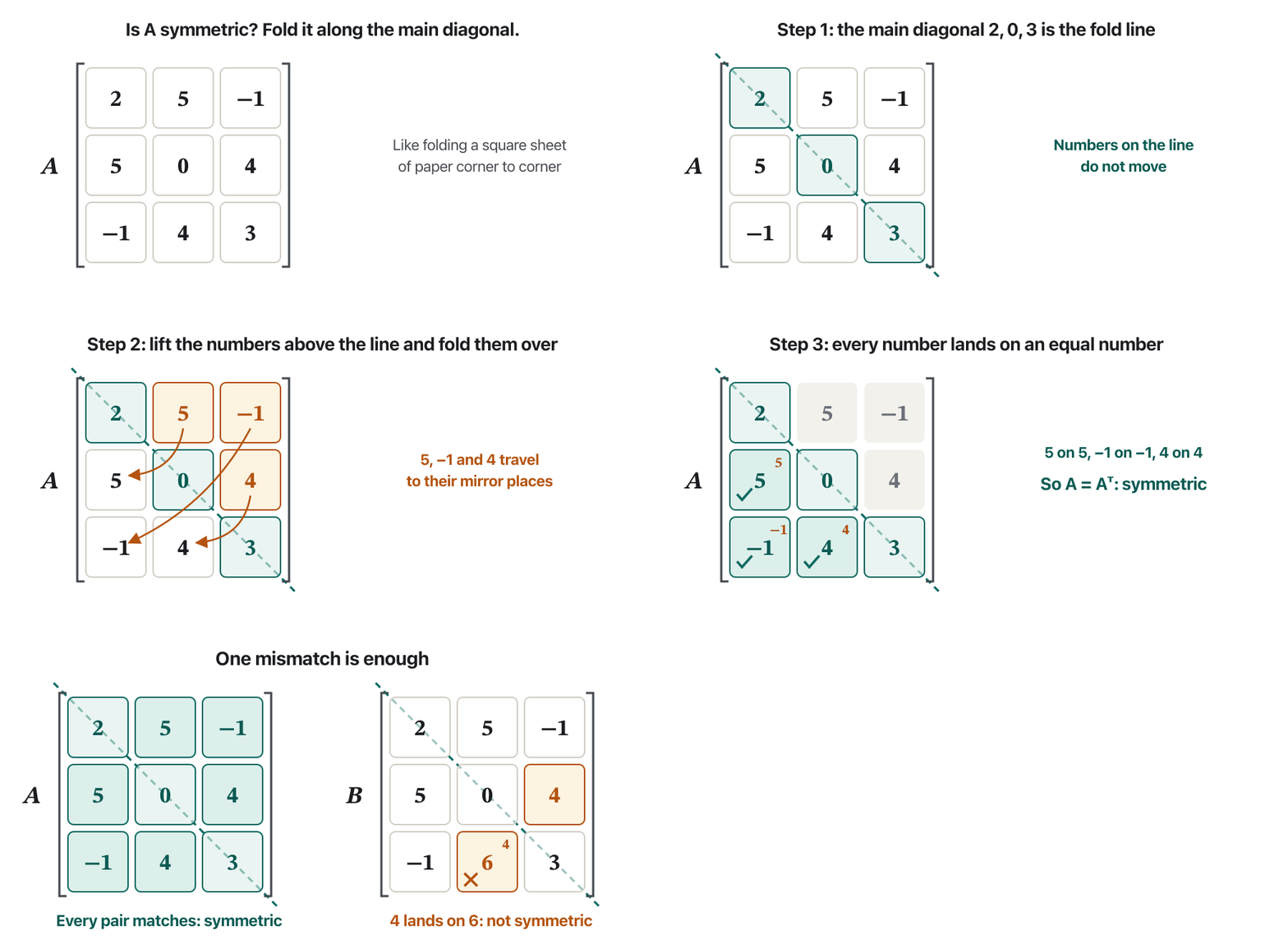
Picture the as a mirror — the transpose is exactly this mirror, not a turn (see A transpose is a mirror, not a turn). The diagonal entries can be anything; every entry above the mirror has an equal twin at its mirror place below it.
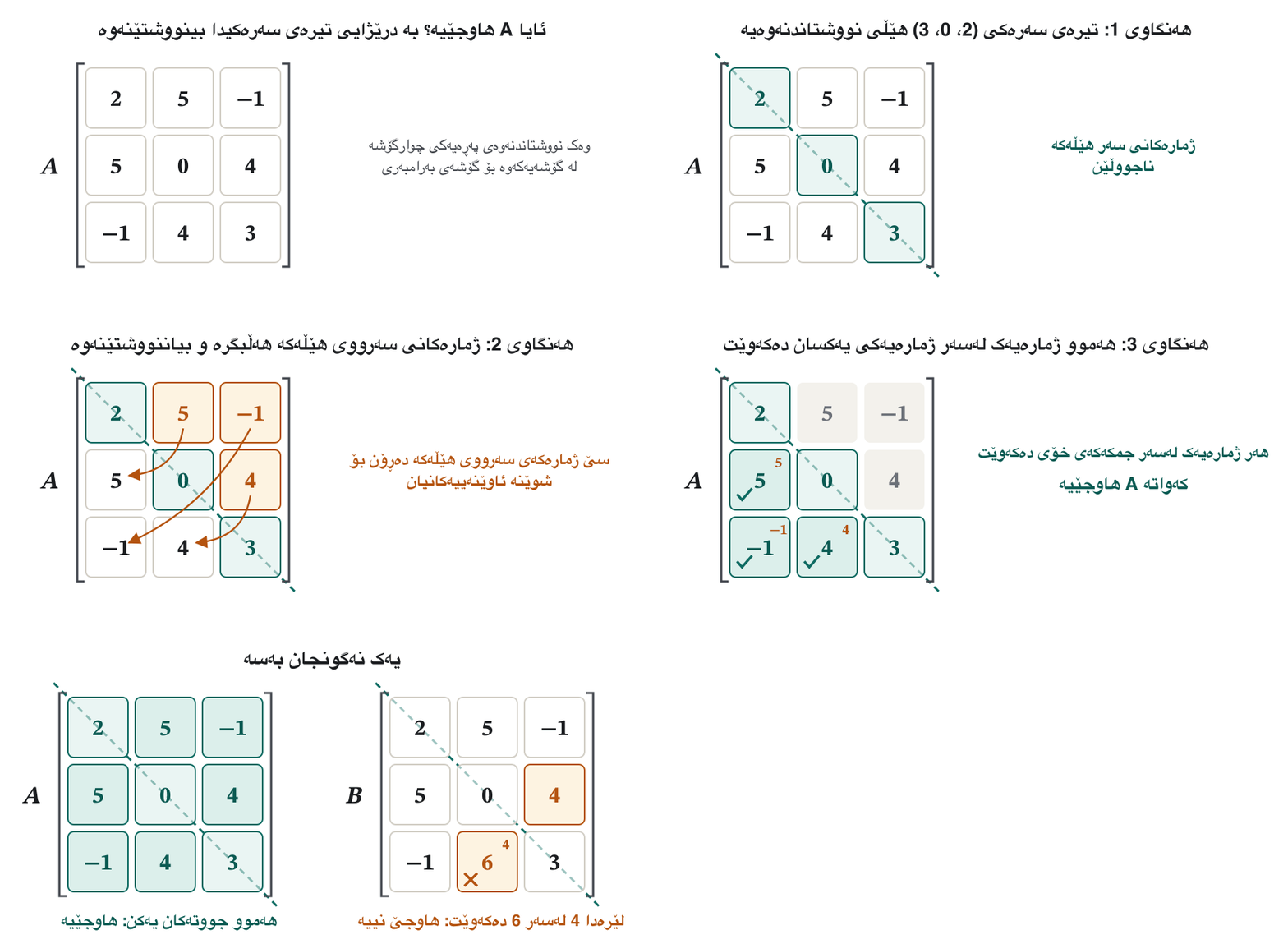
وەک ئاوێنەیەک وێنا بکە — ڕێک ئەم ئاوێنەیەیە، نەک سووڕانەوە (بڕوانە جێگۆڕکێی ماتریکس ئاوێنەیە، نەک سووڕانەوە). ژمارەکانی سەر تیرەکە دەتوانن هەر ژمارەیەک بن؛ هەر ژمارەیەکی سەرووی ئاوێنەکە جمکێکی یەکسانی هەیە لە شوێنی ئاوێنەییەکەیدا لە خوارەوە.
A symmetric matrix must be square: the transpose of an matrix is , and the two can only be equal when .
دەبێت چوارگۆشەیی بێت: کاتێک لەسەر دەکرێت، دەبێتە و ئەم دووانە تەنها کاتێک یەکسان دەبن کە بێت.
What a symmetric matrix is, how to test it with the transpose (A = Aᵀ), and why only a square matrix can be symmetric.
چییە، چۆن بە تاقی دەکرێتەوە ()، هەروەها بۆچی تەنها دەتوانێت هاوجێ بێت.
Chapters: 0:00 what a symmetric matrix is, 1:36 how to check, 2:30 a rectangular matrix cannot be symmetric, 3:41 not every square matrix is symmetric, 5:15 example.
بەشەکان: 0:00 چییە، 1:36 چۆن دەپشکنرێت، 2:30 لاکێشەیی ناتوانێت هاوجێ بێت، 3:41 هەموو هاوجێ نییە، 5:15 نموونە.
The fold testتاقیکردنەوەی نووشتاندنەوە
A quick test by eye: fold the matrix along its , like folding a square sheet of paper from one corner to the opposite corner. If every number lands on an equal number, the matrix is symmetric. One mismatch is enough for “not symmetric”.
تاقیکردنەوەیەکی خێرا بە چاو: بە درێژایی بنووشتێنەوە، وەک نووشتاندنەوەی پەڕەیەکی چوارگۆشە لە گۆشەیەکەوە بۆ گۆشەی بەرامبەری. ئەگەر هەموو ژمارەیەک لەسەر ژمارەیەکی یەکسان بکەوێت، هاوجێیە. یەک نەگونجان بەسە بۆ ئەوەی بڵێین «هاوجێ نییە».
Symmetric tables in daily lifeخشتەی هاوجێ لە ژیانی ڕۆژانەدا
Karwan's taxi office keeps a table of fixed fares between three cities, in thousands of IQD. The fare from city to city is the same as the fare back, so the table is a symmetric matrix. The diagonal is 0: there is no trip from a city to itself.
نووسینگەی تەکسیی کاروان خشتەیەکی کرێی جێگیری هەیە لە نێوان سێ شاردا، بە هەزار دینار. کرێی شاری بۆ شاری هەمان کرێی گەڕانەوەیە، بۆیە خشتەکە . تیرەکە 0ـە: هیچ گەشتێک لە شارێکەوە بۆ هەمان شار نییە.
| From / toلە / بۆ | Erbilهەولێر | Sulaymaniyahسلێمانی | Duhokدهۆک |
|---|---|---|---|
| Erbilهەولێر | |||
| Sulaymaniyahسلێمانی | |||
| Duhokدهۆک |
Tables of road distances, of flight times both ways, or of “who is friends with whom” are symmetric for the same reason: the relation works the same in both directions.
خشتەی دووریی ڕێگاکان، کاتی فڕین بە هەردوو ئاڕاستە، یان «کێ هاوڕێی کێیە» بە هەمان هۆ هاوجێن: پەیوەندییەکە بە هەردوو ئاڕاستەدا وەک یەکە.
Every diagonal matrix is symmetric: all its entries off the are 0, and 0 always matches 0. So for any diagonal , and in particular the satisfies :
هەموو تیرەیی هاوجێیە: هەموو ژمارەکانی دەرەوەی 0ـن و 0 هەمیشە لەگەڵ 0 دەگونجێت. بۆیە بۆ هەر تیرەیی ، و بەتایبەتی ـی بۆ ڕاستە:
Involutory matrices: ماتریکسە خۆپێچەوانەکان:
A is when multiplying it by itself gives the : . To multiply, use row times column as in Multiplying matrices: row times column; the full rules come in Multiplying Matrices.
خۆپێچەوانەیە ئەگەر لێکدانی لە خۆی بدات: . بۆ لێکدان ڕیز لە ستوون بەکاربهێنە وەک لە لێکدانی ماتریکسەکان: ڕیز لە ستوون؛ هەموو یاساکان لە لێکدانی ماتریکسەکاندا دێن.
Press a light switch once and the light changes; press it again and everything is as before. An involutory matrix behaves the same way: doing it twice changes nothing. A mirror flip is the clearest example: turns a point into , and flipping again brings it back.
جارێک گڵۆپ دابگرە، ڕووناکییەکە دەگۆڕێت؛ جارێکی تر دایبگرەوە، هەموو شتێک وەک پێشووی لێدێتەوە. بە هەمان شێوە ڕەفتار دەکات: دوو جار ئەنجامدانی هیچ ناگۆڕێت. ڕوونترین نموونە : خاڵی دەکاتە و دووبارە دەیگەڕێنێتەوە.
Where the analogy stops workingسنووری ئەم نموونەیە
Most matrices are not like this: doing them twice gives something new. And the identity is involutory in the dullest way — it changes nothing even once.
زۆربەی وا نین: دوو جار ئەنجامدانیان شتێکی نوێ دەدات. ـیش بە سادەترین شێوە خۆپێچەوانەیە — تەنانەت جارێکیش هیچ ناگۆڕێت.
Involutory matrices: ماتریکسە خۆپێچەوانەکان:
A example that undoes itselfنموونەیەکی کە خۆی هەڵدەوەشێنێتەوە
- Top-left: row 1 times column 1سەرەوەی چەپ: ڕیزی 1 لە ستوونی 1
- Top-right: row 1 times column 2سەرەوەی ڕاست: ڕیزی 1 لە ستوونی 2
- Bottom-left: row 2 times column 1خوارەوەی چەپ: ڕیزی 2 لە ستوونی 1
- Bottom-right: row 2 times column 2خوارەوەی ڕاست: ڕیزی 2 لە ستوونی 2
Because , the matrix undoes itself: its inverse is the matrix itself, . Inverses get their own lesson later in this chapter: see Matrices with easy inverses.
لەبەر ئەوەی ، کاری خۆی هەڵدەوەشێنێتەوە: پێچەوانەکەی خودی خۆیەتی، . پێچەوانەکان لە دواتری ئەم بەشەدا وانەی تایبەتی خۆیان هەیە: بڕوانە ئەو ماتریکسانەی پێچەوانەیان ئاسانە.
Checking the notes' exampleپشکنینی نموونە ـەکەی تێبینییەکان
The notes ask: show that this matrix is involutory.
تێبینییەکان دەپرسن: پیشان بدە کە ئەم خۆپێچەوانەیە.
Multiply by itself. Each entry of is one row of times one column of :
لە خۆی بدە. هەر ژمارەیەکی ڕیزێکی ـە لە ستوونێکی :
The three lines are rows 1, 2 and 3 of , column by column. So : the matrix is involutory, and .
سێ هێڵەکە ڕیزی 1، 2 و 3ی ن، ستوون بە ستوون. کەواتە : خۆپێچەوانەیە و .
Orthogonal matrices: ماتریکسە ئۆرتۆگۆناڵەکان:
A is when . Read the product row by row and it says two things about the rows of : each row times itself gives 1 (every row has length 1), and each row times a different row gives 0 (any two rows are at right angles). “Orthogonal” means “at right angles”.
ئۆرتۆگۆناڵە ئەگەر بێت. ئەگەر لێکدانی ڕیز بە ڕیز بخوێنیتەوە، دوو شت لەسەر ڕیزەکانی دەڵێت: هەر ڕیزێک لە خۆی 1 دەدات (هەموو ڕیزێک درێژییەکەی 1ـە) و هەر ڕیزێک لە ڕیزێکی جیاواز 0 دەدات (هەر دوو ڕیزێک گۆشەی وەستاو دروست دەکەن). «ئۆرتۆگۆناڵ» واتە «بە گۆشەی وەستاو».
The friendliest example is the matrix that turns points about the origin by an angle (see Matrices move, turn and resize pictures):
دۆستانەترین نموونە کە خاڵەکان بە گۆشەی بە دەوری دەسووڕێنێت (بڕوانە ماتریکسەکان وێنە دەجووڵێنن، دەسووڕێنن و قەبارەیان دەگۆڕن):
The diagonal is 1 because (see the Pythagorean identities); the other two entries cancel to 0.
تیرەکە 1ـە چونکە (بڕوانە هاوئەنجامە سێگۆشەییەکانی فیساغۆرس)؛ دوو ژمارەکەی تر یەکتر لادەبەن و 0 دەبن.
For : . Row 1 times itself is (length 1), and row 1 times row 2 is .
بۆ : . ڕیزی 1 لە خۆی دەکاتە (درێژی 1) و ڕیزی 1 لە ڕیزی 2 دەکاتە .
Vectors at right angles with length 1, and why a matrix with such rows satisfies AAᵀ = I, so its inverse is its transpose.
ئەو لەسەر یەکتر ستوونن و درێژییان 1ـە، هەروەها بۆچی بۆ کە ڕیزەکانی لەم جۆرەن ڕاستە، بۆیە یەکسانە بە .
Plays 0:28-8:18: 0:28 orthogonal vectors (dot product 0) and unit vectors (length 1); 4:26-5:54 orthogonal subspaces of R³ (beyond this lesson); 5:55 a 2 × 2 orthogonal matrix checked column by column; 7:32 its inverse is its transpose. Stops before 'Orthogonality in Functions'.
لە 0:28 تا 8:18 پەخش دەبێت: 0:28 ( = 0) و (درێژی = 1)؛ 4:26 تا 5:54 orthogonal subspaces لە بۆشایی (لە سنووری ئەم وانەیە دەردەچێت)؛ 5:55 کە ستوون بە ستوون دەپشکنرێت؛ 7:32 یەکسانە بە . پێش بەشی «Orthogonality in Functions» ڕادەوەستێت.
Orthogonal matrices: ماتریکسە ئۆرتۆگۆناڵەکان:
Why it matters: بۆچی گرنگە:
Why it matters: since , the inverse of an orthogonal matrix is its transpose, . Undoing a turn by is a turn back by , and the computer gets it for free just by swapping rows and columns. Orthogonal matrices also keep lengths and angles, which is why games and graphics programs use them for turning objects. The inverse lesson lists them with the other matrices with easy inverses.
بۆچی گرنگە: لەبەر ئەوەی ، پێچەوانەی ، . هەڵوەشاندنەوەی سووڕانەوەیەک بە سووڕانەوەیە بۆ دواوە بە و تەنها بە گۆڕینەوەی ڕیز و ستوون بە خۆڕایی دەستی دەکەوێت. درێژی و گۆشەش دەپارێزن، بۆیە یاری و بەرنامە گرافیکییەکان بۆ شتەکان بەکاریان دەهێنن. وانەی پێچەوانە لەگەڵ ئەو ماتریکسانەی پێچەوانەیان ئاسانەی تردا ڕیزیان دەکات.
The notes' example, correctedنموونە ـەکەی تێبینییەکان، ڕاستکراوە
The notes ask: show that is orthogonal, and find out whether is orthogonal. As printed, is:
تێبینییەکان دەپرسن: پیشان بدە کە ئۆرتۆگۆناڵە و بزانە ئایا ئۆرتۆگۆناڵە. وەک چاپکراوە:
- Write the corrected matrixماتریکسە ڕاستکراوەکە بنووسە
Only the first entry of row 2 changes.
تەنها یەکەم ژمارەی ڕیزی 2 دەگۆڕێت.
- Every row times itself gives 1هەر ڕیزێک لە خۆی 1 دەدات
, , .
، ، .
- Any two rows give 0هەر دوو ڕیزێک 0 دەدەن
Rows 1 and 2: ; rows 1 and 3: ; rows 2 and 3: .
ڕیزی 1 و 2: ؛ ڕیزی 1 و 3: ؛ ڕیزی 2 و 3: .
- Concludeدەرئەنجام
So , and for a square matrix this also gives : is orthogonal. The second question: , and is orthogonal itself (), so the answer is yes.
کەواتە و بۆ ئەمە ـیش دەدات: ئۆرتۆگۆناڵە. پرسیاری دووەم: و خۆی ئۆرتۆگۆناڵە ()، بۆیە وەڵامەکە بەڵێیە.
All the special matrices in one tableهەموو ماتریکسە تایبەتەکان لە یەک خشتەدا
The first eight types come from Types of matrices; the last three are new in this lesson. The last column says how to test a matrix.
هەشت جۆری یەکەم لە جۆرەکانی ماتریکسەوە هاتوون؛ سێ کۆتاییەکە لەم وانەیەدا نوێن. دوایین ستوون دەڵێت چۆن تاقی بکەیتەوە.
| Typeجۆر | Exampleنموونە | Testتاقیکردنەوە |
|---|---|---|
| rows = columnsژمارەی ڕیز = ژمارەی ستوون | ||
| Zero matrix | every هەموو | |
| Diagonal تیرەیی | square; for چوارگۆشەیی؛ بۆ | |
| Scalar سکالێری | diagonal, all equalتیرەیی و هەموو یەکسان | |
| Identity | , other entries 0، ئەوانی تر 0 | |
| Upper triangularسێگۆشەیی سەرەوە | for بۆ | |
| Lower triangularسێگۆشەیی خوارەوە | for بۆ | |
| Row / columnڕیزی / ستوونی | one row () or one column ()یەک ڕیز () یان یەک ستوون () | |
One matrix can belong to several rows of the table: is square, diagonal, scalar, triangular, symmetric, involutory and orthogonal all at once.
یەک دەتوانێت سەر بە چەند ڕیزێکی خشتەکە بێت: لە یەک کاتدا چوارگۆشەیی، تیرەیی، سکالێری، سێگۆشەیی، هاوجێ، خۆپێچەوانە و ئۆرتۆگۆناڵە.
Common mistakesهەڵە باوەکان
| Mistakeهەڵە | What is trueڕاستییەکە |
|---|---|
| Reading as column 3, row 2.خوێندنەوەی وەک ستوونی 3، ڕیزی 2. | Row first, then column: is in row 3, column 2.سەرەتا ڕیز، پاشان ستوون: لە ڕیزی 3، ستوونی 2دایە. |
| “Same numbers, so equal”: .«هەمان ژمارە، کەواتە یەکسان»: . | Equal matrices need the same order first (). یەکسانەکان سەرەتا هەمان قەبارەیان پێویستە (). |
| Calling a matrix symmetric.ناونانی بە هاوجێ. | Only a square matrix can equal its transpose.تەنها دەتوانێت یەکسان بێت بە . |
| Testing by squaring each entry: for that gives the same matrix, not .تاقیکردنەوەی بە دووجاکردنی هەر ژمارەیەک: بۆ هەمان دەدات، نەک . | , row times column. Here , so the matrix is involutory.، ڕیز لە ستوون. لێرەدا ، بۆیە خۆپێچەوانەیە. |
| Checking only that the rows have length 1: passes that test.پشکنینی تەنها ئەوەی کە درێژیی ڕیزەکان 1ـە: لەو تاقیکردنەوەیە دەردەچێت. | Different rows must also give 0. Here row 1 times row 2 is 1, so .ڕیزە جیاوازەکانیش دەبێت 0 بدەن. لێرەدا ڕیزی 1 لە ڕیزی 2 دەکاتە 1، بۆیە . |
| Writing “involuntary matrix” (as the notes do).نووسینی «involuntary matrix» (وەک تێبینییەکان). | The name is involutory.ناوەکەی involutoryـە. |
Exercisesڕاهێنانەکان
Write the matrix with .
بە یاسای بنووسە.
Hintئاماژە
Start with : .
بە دەست پێبکە: .
Show answerوەڵامەکە پیشان بدە
even gives , odd gives : a chessboard of signs. You will meet it again in Determinants, Minors and Cofactors.
ئەگەر جووت بێت و ئەگەر تاک بێت : تەختەی شەترەنجێکی هێماکان. دیسان لە دیتەرمینانتەکان، ماینەرەکان و کۆفاکتەرەکاندا دەیبینیتەوە.
Write the matrix with . Is it symmetric?
بە یاسای بنووسە. ئایا هاوجێیە؟
Show answerوەڵامەکە پیشان بدە
No. The twins have opposite signs (, ), so , not .
نەخێر. جمکەکان هێمای پێچەوانەیان هەیە (، )، بۆیە ، نەک .
Find if .
بدۆزەرەوە ئەگەر .
Show answerوەڵامەکە پیشان بدە
Find so that is symmetric.
بدۆزەرەوە بە شێوەیەک کە هاوجێ بێت.
Hintئاماژە
Write one equation for each twin pair.
بۆ هەر جووتێکی جمک بنووسە.
Show answerوەڵامەکە پیشان بدە
Twins must match: gives , so ; gives , so again. Both agree, so ( already).
جمکەکان دەبێت یەک بن: لە ـەوە ، بۆیە ؛ لە ـەوە ، بۆیە دیسان . هەردووکیان یەک دەگرنەوە، بۆیە ( پێشتر یەکن).
Find all and that make symmetric.
هەموو و ـێک بدۆزەرەوە کە هاوجێ بکەن.
Show answerوەڵامەکە پیشان بدە
gives or ; . Both values of work.
دەکاتە یان ؛ . هەردوو نرخەکەی گونجاون.
For each matrix, say whether it is symmetric, involutory and orthogonal: , , , , .
بۆ هەر بڵێ ئایا هاوجێ، خۆپێچەوانە و ئۆرتۆگۆناڵە: ، ، ، ، .
Show answerوەڵامەکە پیشان بدە
| Matrix | Symmetricهاوجێ | Involutoryخۆپێچەوانە | Orthogonalئۆرتۆگۆناڵ |
|---|---|---|---|
| yesبەڵێ | yesبەڵێ | yesبەڵێ | |
| yesبەڵێ | no ()نەخێر () | noنەخێر | |
| noنەخێر | noنەخێر | yesبەڵێ | |
| yesبەڵێ | yesبەڵێ | yesبەڵێ | |
| yesبەڵێ | no ()نەخێر () | noنەخێر |
Show that is both involutory and orthogonal. What does it do to a point ?
پیشان بدە کە هەم خۆپێچەوانەیە و هەم ئۆرتۆگۆناڵ. چی بە خاڵی دەکات؟
Show answerوەڵامەکە پیشان بدە
It swaps the two coordinates: , a mirror in the line . Swapping twice changes nothing.
دوو دەگۆڕێتەوە: ، واتە لە هێڵی ـدا. دوو جار گۆڕینەوە هیچ ناگۆڕێت.
Summaryپوختە
- is the entry in row , column — row first. A matrix with rows and columns is written .
- A rule such as plus an order defines a whole matrix.
- Equal matrices: the same order and everywhere; each matching pair gives one equation.
- Symmetric: (), a mirror across the ; every diagonal matrix is symmetric.
- Involutory: , so (the notes' “involuntary” is the wrong word).
- Orthogonal: — rows of length 1 at right angles — so (easy inverses); rotation matrices are orthogonal. The notes' example needs at the start of row 2.
- ژمارەی ڕیزی ، ستوونی ـە — سەرەتا ڕیز. بە ڕیز و ستوون بە دەنووسرێت.
- یاسایەکی وەک لەگەڵ قەبارەیەک تەواو دیاری دەکات.
- یەکسانەکان: هەمان قەبارە و لە هەموو شوێنێک ؛ هەر جووتێکی هاوشوێن دەدات.
- هاوجێ: ()، ئاوێنەیەک بە دەوری ؛ هەموو تیرەیی هاوجێیە.
- خۆپێچەوانە: ، بۆیە («involuntary»ی تێبینییەکان وشەیەکی هەڵەیە).
- ئۆرتۆگۆناڵ: — ڕیزی درێژی 1 بە گۆشەی وەستاو — بۆیە (پێچەوانەی ئاسان)؛ ئۆرتۆگۆناڵن. نموونە ـەکەی تێبینییەکان ـی لە سەرەتای ڕیزی 2دا پێویستە.
Why must a symmetric matrix be square?بۆچی ماتریکسێکی هاوجێ دەبێت چوارگۆشەیی بێت؟
Because of an matrix is , and equal matrices need the same order, so .
چونکە ی قەبارەکەی ـە و یەکسانەکان هەمان قەبارەیان پێویستە، بۆیە .
How do you find the inverse of an orthogonal matrix?چۆن پێچەوانەی ماتریکسێکی ئۆرتۆگۆناڵ دەدۆزیتەوە؟
Transpose it: , because .
وەربگرە: ، چونکە .
Is the identity matrix involutory?ئایا ماتریکسی یەکە خۆپێچەوانەیە؟
Yes: . It is also symmetric and orthogonal.
بەڵێ: . هەروەها هاوجێ و ئۆرتۆگۆناڵیشە.
Videoڤیدیۆ
Watch a videoسەیری ڤیدیۆیەک بکە
A video that viewers liked a lot and praised in their comments, chosen for this lesson.ڤیدیۆیەک کە بینەران زۆریان پێ خۆش بووە و لە کۆمێنتەکانیاندا ستایشیان کردووە، بۆ ئەم وانەیە هەڵبژێردراوە.
In Kurdish: what a matrix is, its rows, columns and entries, the order m × n, and the short form A = [aᵢⱼ].
بە کوردی: چییە، ڕیزەکان، ستوونەکان و ژمارەکانی، قەبارەی و شێوەی کورتی .
Kurdish (Sorani) lecture with English notes on paper. Plays 0:00-9:08: definition, rows and columns, entries, order m × n and A = [aᵢⱼ] (seen at 7:10). Stops before the chapter 'Row Matrix'.
وانەیەک بە کوردیی سۆرانی، لەگەڵ تێبینیی ئینگلیزی لەسەر کاغەز. لە 0:00 تا 9:08 پەخش دەبێت: پێناسە، ڕیز و ستوون، ژمارەکان، قەبارەی و (لە 7:10 دەبینرێت). پێش بەشی «Row Matrix» ڕادەوەستێت.
Lesson complete!وانەکە تەواو بوو!
Well done. Review the key terms, then go on to the next lesson.دەستخۆش. سەیرێکی زاراوە سەرەکییەکان بکەرەوە، پاشان بڕۆ بۆ وانەی داهاتوو.
Key termsزاراوە سەرەکییەکان
Adding, Subtracting and Scaling Matricesکۆکردنەوە، لێدەرکردن و لێکدانی ماتریکسەکان لە ژمارە
Related lecturesوانە پەیوەندیدارەکان
- Adding, Subtracting and Scaling Matricesکۆکردنەوە، لێدەرکردن و لێکدانی ماتریکسەکان لە ژمارە
- Multiplying Matricesلێکدانی ماتریکسەکان
- Determinants, Minors and Cofactorsدیتەرمینانتەکان، ماینەرەکان و کۆفاکتەرەکان
- Two-Dimensional Listsلیستە دووڕەهەندەکان
- Trigonometric Identitiesهاوئەنجامە سێگۆشەییەکان
- The Inverse of a Matrixپێچەوانەی ماتریکس
References and further readingسەرچاوەکان و خوێندنەوەی زیاتر
This lecture is a first edition. The Kurdish text and terminology are waiting for review by Kurdish IT teachers.ئەم وانەیە چاپی یەکەمە. دەقە کوردییەکە و زاراوەکانی چاوەڕێی پێداچوونەوەی مامۆستایانی کوردی بواری IT ن.