Chapterبەش 6 · Lectureوانە 6.4
Determinants, Minors and Cofactorsدیتەرمینانتەکان، ماینەرەکان و کۆفاکتەرەکان
What the determinant of a square matrix is and why it matters (inverses, areas), the case , the formula , minors, cofactors and the sign chessboard, expansion along any row or column, the rule of Sarrus for only, and the notes' example (732).
چییە و بۆچی گرنگە (پێچەوانە، ڕووبەر)، حاڵەتی ، ، ، ، و تەختەی شەترەنجی هێماکان، کردنەوە بە درێژایی هەر ڕیز یان ستوونێک، یاسای ساروس تەنها بۆ و نموونە ـەکەی تێبینییەکان (732).
What you will learnچی فێر دەبیت
- Explain what a determinant tells about a square matrix (inverse, area scale).
- Compute and determinants without confusing the bars with absolute value.
- Find minors and cofactors and expand a or determinant along the best row or column.
- Use the rule of Sarrus for matrices and know why it fails for larger ones.
- ڕوون بکەیتەوە چی لەسەر دەڵێت (پێچەوانە، ڕێژەی ڕووبەر).
- و بدۆزیتەوە بێ ئەوەی هێڵەکان لەگەڵ تێکەڵ بکەیت.
- و بدۆزیتەوە و یان بە باشترین ڕیز یان ستوون بکەیتەوە.
- یاسای ساروس بۆ بەکاربهێنیت و بزانیت بۆچی بۆ گەورەترەکان کار ناکات.
What a determinant isدیتەرمینانت چییە
The is one number worked out from a . It is written , or . Only square matrices have one. Two reasons make it important:
یەک ژمارەیە کە لە دەدۆزرێتەوە. بە ، یان دەنووسرێت. تەنها هەیە. دوو هۆ گرنگی دەکەن:
- It decides whether a matrix has an inverse (a matrix that undoes it): yes when , no when . Inverses are needed to solve systems of (see Invertible or singular: the determinant decides).
- It tells how much the matrix stretches areas when it moves the points of a picture (see the screen Areas are multiplied by the determinant).
- بڕیار دەدات ئایا پێچەوانەی هەیە ( کە کارەکەی هەڵدەوەشێنێتەوە): بەڵێ کاتێک ، نەخێر کاتێک . پێچەوانەکان بۆ شیکارکردنی کۆمەڵە پێویستن (بڕوانە پێچەوانەدار یان بێپێچەوانە: دیتەرمینانت بڕیار دەدات).
- دەڵێت کاتێک خاڵەکانی وێنەیەک دەجووڵێنێت، ڕووبەر چەند هێندە گەورە دەکات (بڕوانە ڕووبەرەکان لە دیتەرمینانت دەدرێن).
A matrix: the bars are not absolute valueماتریکسێکی : هێڵەکان نرخی ڕووت نین
A matrix has the single entry as its determinant: . The notes' examples:
ی تاکە ژمارەکەی خۆی، ، وەک هەیە: . نموونەکانی تێبینییەکان:
A matrix: ماتریکسێکی :
For a matrix, multiply along the main diagonal (down to the right), multiply along the other diagonal (up to the right), and subtract: “down minus up”.
بۆ ، ژمارەکانی سەر (بەرەو خوارەوەی ڕاست) لێک بدە، ژمارەکانی تیرەکەی تر (بەرەو سەرەوەی ڕاست) لێک بدە و دووەمیان لە یەکەمیان دەربکە: «خوارەوە کەم سەرەوە».
In the notes' letters: .
بە پیتەکانی تێبینییەکان: .
Down: . Up: . Determinant .
خوارەوە: . سەرەوە: . .
Down: . Up: . Determinant .
خوارەوە: . سەرەوە: . .
Watch the signs: subtracting a negative product adds it.
ئاگاداری هێماکان بە: دەرکردنی لێکدراوێکی سالب کۆکردنەوەیە.
Areas are multiplied by the determinantڕووبەرەکان لە دیتەرمینانت دەدرێن
In Matrices move, turn and resize pictures a matrix moves every point of a picture. The determinant tells what happens to areas. Send the unit square (corners , area 1) through : the corners go to , a parallelogram.
لە ماتریکسەکان وێنە دەجووڵێنن، دەسووڕێنن و قەبارەیان دەگۆڕندا هەموو خاڵێکی وێنەیەک دەجووڵێنێت. دەڵێت چی بەسەر ڕووبەردا دێت. چوارگۆشەی یەکە (گۆشەکانی ، ڕووبەر 1) بە دا تێپەڕێنە: گۆشەکان دەچنە ، واتە لاتەریبێک.
, and the parallelogram has area exactly 5. This is true for every matrix: every area is multiplied by . The scaling matrix of that lesson doubles lengths and has : areas grow four times.
و ڕووبەری لاتەریبەکە ڕێک 5ـە. ئەمە بۆ هەموو ڕاستە: هەموو ڕووبەرێک لە دەدرێت. ی ئەو وانەیە درێژییەکان دوو هێندە دەکات و : ڕووبەرەکان چوار هێندە دەبن.
- A negative determinant means the picture is also flipped like a mirror image: , and this matrix swaps and but keeps the area.
- A determinant of 0 squashes the square flat onto a line (area 0): . A flattened picture cannot be un-flattened, which is why such a matrix has no inverse.
- سالب واتە وێنەکە وەک ئاوێنەش هەڵدەگەڕێتەوە: و ئەم و دەگۆڕێتەوە، بەڵام ڕووبەرەکە دەپارێزێت.
- 0 چوارگۆشەکە دەپلیشێنێتەوە بۆ سەر هێڵێک (ڕووبەر 0): . وێنەیەکی پلیشاو ناگەڕێتەوە دۆخی پێشووی، بۆیە ئەو جۆرە پێچەوانەی نییە.
The determinant as the number that multiplies areas: a negative determinant flips the picture, and a zero determinant squashes it flat.
وەک ئەو ژمارەیەی ڕووبەرەکانی پێ لێک دەدرێت: سالب وێنەکە هەڵدەگەڕێنێتەوە و سفر وێنەکە پان دەکاتەوە.
Plays 0:00-5:33: areas scale by the determinant (2:39 in 2-D), 3:42 negative determinants flip orientation. Stops before 3-D volumes.
لە 0:00 تا 5:33 پەخش دەبێت: ڕووبەرەکان بە گەورە یان بچووک دەبنەوە (2:39 لە دوو ڕەهەنددا)، 3:42 سالب ئاڕاستەی وێنەکە هەڵدەگەڕێنێتەوە. پێش قەبارە سێ ڕەهەندییەکان ڕادەوەستێت.
Minors and cofactorsماینەرەکان و کۆفاکتەرەکان
Bigger determinants are built from smaller ones. Two words are needed:
گەورەترەکان لە بچووکترەکان دروست دەکرێن. دوو وشە پێویستن:
- The of the entry is the determinant that is left after deleting row and column .
- The of is the minor with a sign: . (The notes write it ; many books use , which is easier to tell apart from the entry .)
- ی ژمارەی ئەو کە دوای سڕینەوەی ڕیزی و ستوونی دەمێنێتەوە.
- لەگەڵ هێمایەک: . (تێبینییەکان بە دەینووسن؛ زۆر کتێب بەکاردەهێنن کە ئاسانترە لە ژمارەی جیا بکرێتەوە.)
The sign is when is even and when it is odd. Laid out over the matrix it makes a chessboard that starts with in the top-left corner:
هێمای ـە کاتێک جووت بێت و ـە کاتێک تاک بێت. ئەگەر بەسەر ڕیز بکرێت، تەختەی شەترەنجێک دروست دەکات کە لە گۆشەی سەرەوەی چەپەوە بە دەست پێدەکات:
What a minor is (delete a row and a column, take the determinant) and how the sign (−1)^(i+j) turns it into a cofactor.
چییە (ڕیزێک و ستوونێک لاببە و ئەوەی دەمێنێتەوە بدۆزەرەوە)، هەروەها چۆن هێمای دەیکاتە .
Chapters: 0:00 the 3 × 3 determinant written as a₁₁(…) − a₁₂(…) + a₁₃(…) (frame at 0:30), 1:43 what a minor is, 1:55 what a cofactor is, 2:30 finding them, 3:15 how minor and cofactor are related.
بەشەکان: 0:00 کە وەک دەنووسرێت (وێنەی 0:30)، 1:43 چییە، 1:55 چییە، 2:30 دۆزینەوەیان، 3:15 پەیوەندیی نێوان و .
Minors and cofactorsماینەرەکان و کۆفاکتەرەکان
The notes' first example: a یەکەم نموونەی تێبینییەکان: ماتریکسێکی
The notes' first example, : deleting a row and a column of a matrix leaves a single number.
یەکەم نموونەی تێبینییەکان، : سڕینەوەی ڕیزێک و ستوونێکی تەنها یەک ژمارە دەهێڵێتەوە.
The minors are on the left, the cofactors on the right. For example, : delete row 1 and column 2, which leaves 4; its sign is , so .
لە لای چەپن و لە لای ڕاست. بۆ نموونە، : ڕیزی 1 و ستوونی 2 بسڕەوە، 4 دەمێنێتەوە؛ هێماکەی ـە، بۆیە .
Row 1 times its cofactors gives the determinant — the same as . The next screen explains why this works.
ڕیزی 1 لە خۆی دەدات — هەمان ـی . شاشەی داهاتوو ڕوونی دەکاتەوە بۆچی ئەمە کار دەکات.
Expanding a determinantکردنەوەی دیتەرمینانتێکی
The value of a determinant is the sum of the entries of one row, each multiplied by its own cofactor. Along the first row of a matrix:
نرخی کۆی ژمارەکانی ڕیزێکە کە هەریەکەیان لە خۆی دراوە. بە درێژایی ڕیزی یەکەمی :
This is called cofactor expansion (or Laplace expansion). Each determinant turns into three ones.
ئەمە پێی دەگوترێت کردنەوە بە (یان کردنەوەی لاپلاس). هەر دەبێتە سێ .
The notes' example: . All nine minors and cofactors:
نموونەی تێبینییەکان: . هەموو نۆ و :
For example and , so . The cofactors are the minors with the chessboard signs.
بۆ نموونە و ، بۆیە . هەمان لەگەڵ هێماکانی تەختەی شەترەنج.
Step by step: the determinant of a 3×3 matrix by expanding along the first row, each entry times its signed 2×2 minor.
هەنگاو بە هەنگاو: بە کردنەوە بە درێژایی ڕیزی یەکەم؛ هەر ژمارەیەک لە خۆی لێک دەدرێت، بە هێمای + یان −.
Chapters: 0:34 how to find the determinant of a 3×3 matrix, 2:59 the steps summarised.
بەشەکان: 0:34 چۆن دەدۆزیتەوە، 2:59 کورتەی هەنگاوەکان.
Watch an expansion with a running totalسەیری کردنەوەیەک بکە لەگەڵ کۆی تا ئێستا
The animation expands the notes' along row 1. For each entry it greys out that entry's row and column, lights up the minor, adds the chessboard sign and puts the term into a running total.
ئەم وێنە جووڵاوە ی تێبینییەکان بە درێژایی ڕیزی 1 دەکاتەوە. بۆ هەر ژمارەیەک ڕیز و ستوونەکەی خۆڵەمێشی دەکات، ڕووناک دەکاتەوە، هێمای تەختەی شەترەنج زیاد دەکات و بڕەکە دەخاتە سەر کۆی تا ئێستا.
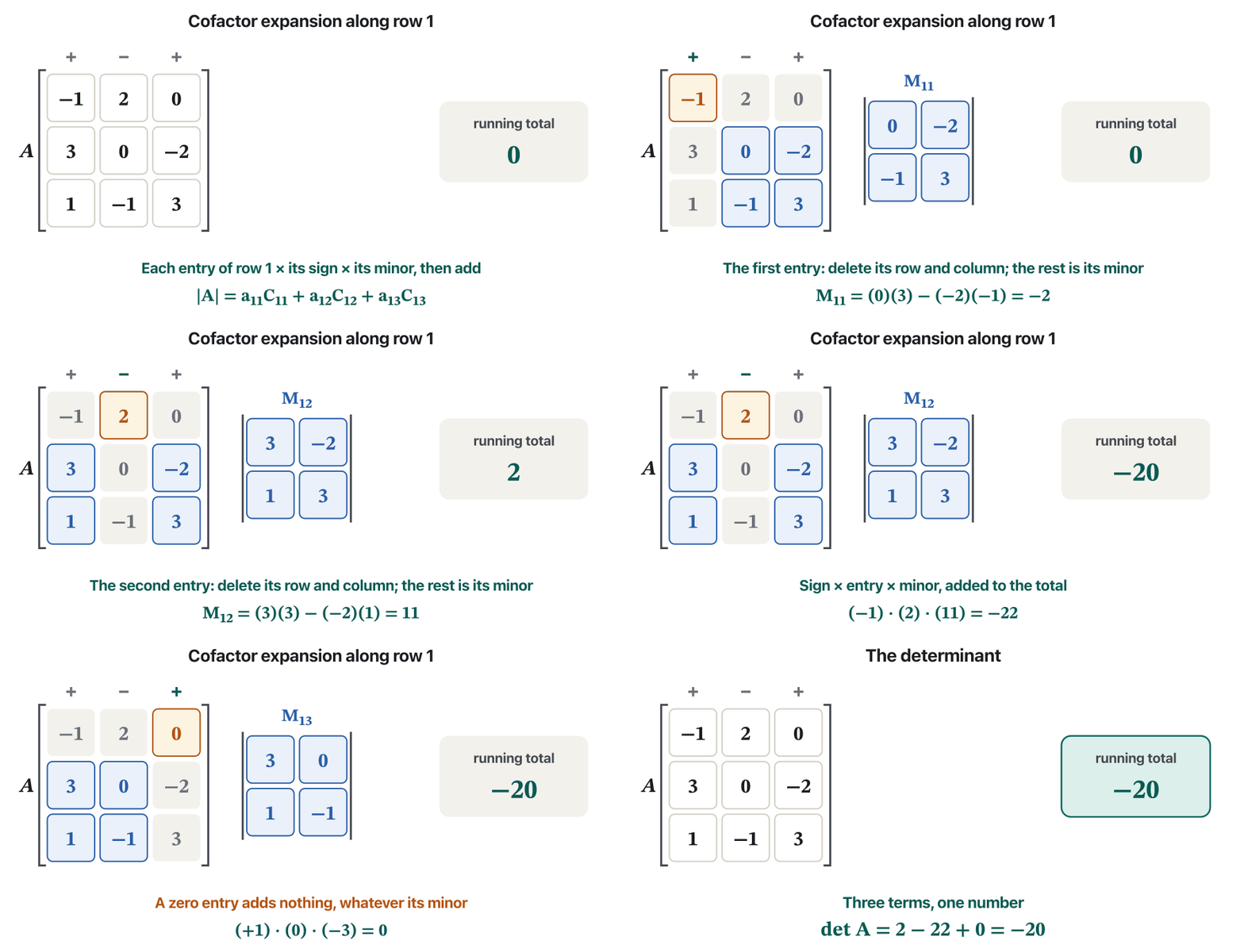
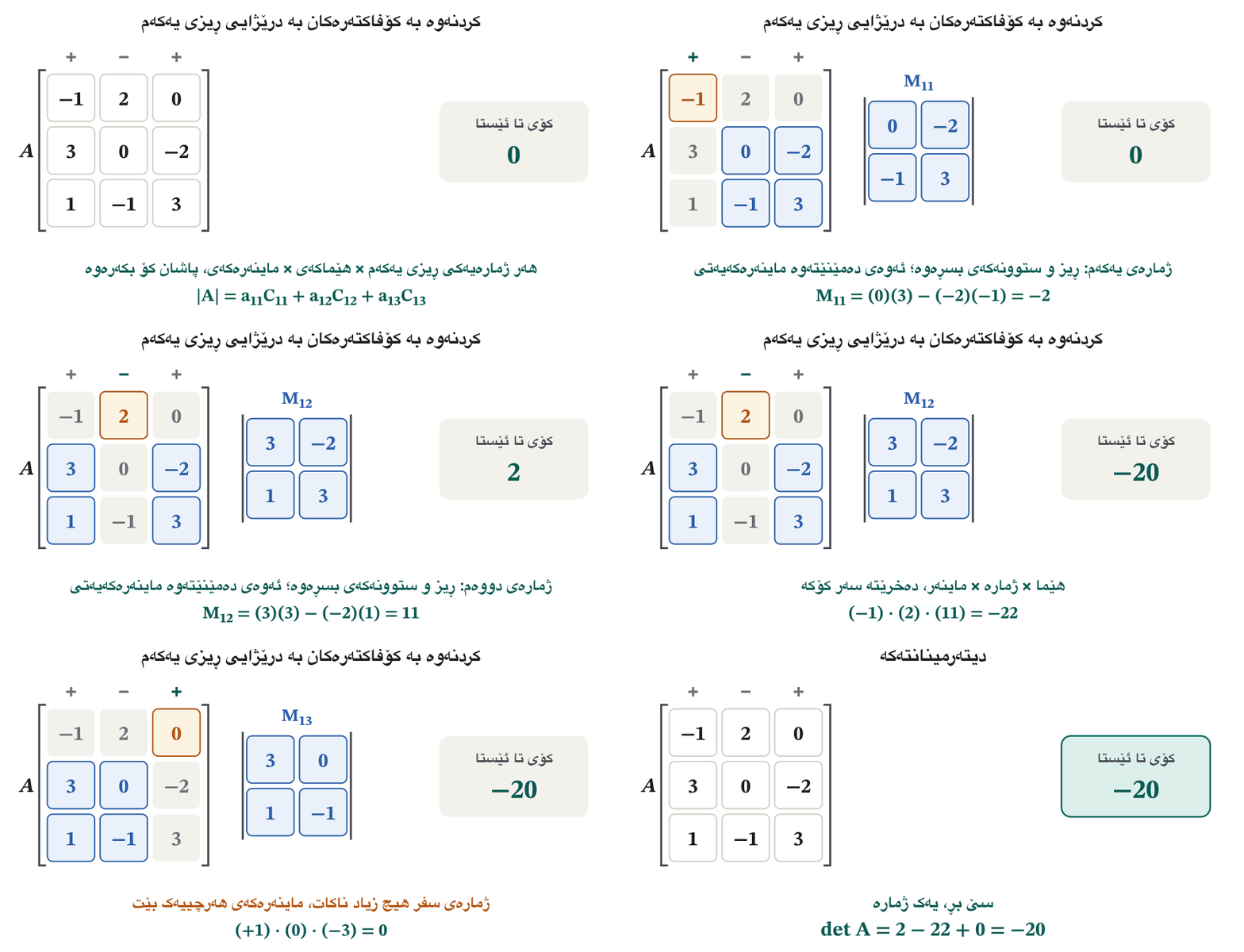
Any row or column gives the same answerهەر ڕیز یان ستوونێک هەمان وەڵام دەدات
You may expand along any row or any column — the answer is always the same. Here is from the previous screen, expanded six ways with its cofactors :
دەتوانیت بە درێژایی هەر ڕیزێک یان هەر ستوونێک بیکەیتەوە — وەڵامەکە هەمیشە یەکە. ئەمە ی شاشەی پێشووە کە بە شەش ڕێگە بە کراوەتەوە:
| Alongبە درێژایی | Entries × cofactorsژمارەکان × | Totalکۆ |
|---|---|---|
| row 1ڕیزی 1 | ||
| row 2ڕیزی 2 | ||
| row 3ڕیزی 3 | ||
| column 1ستوونی 1 | ||
| column 2ستوونی 2 | ||
| column 3ستوونی 3 |
So choose the row or column with the most zeros: every 0 entry kills its whole term, so you need fewer minors. Column 2 of has a 0, and its expansion needs only two determinants. (The sign pattern still comes from the chessboard: column 2 starts with .)
کەواتە ئەو ڕیز یان ستوونە هەڵبژێرە کە زۆرترین سفری هەیە: هەر ژمارەیەکی 0 هەموو بڕەکەی دەکوژێت، بۆیە کەمترت پێویست دەبێت. ستوونی 2ی 0ـێکی هەیە و کردنەوەکەی تەنها دوو ی پێویستە. (نەخشی هێماکان هێشتا لە تەختەی شەترەنجەوە دێت: ستوونی 2 بە دەست پێدەکات.)
A shortcut for only: the rule of Sarrusڕێگەیەکی کورت تەنها بۆ : یاسای ساروس
For a determinant there is a quick pattern. Copy the first two columns to the right of the matrix. Add the three products going down to the right, then subtract the three products going up to the right. The notes' second order-three example:
بۆ نەخشێکی خێرا هەیە. دوو ستوونی یەکەم لە لای ڕاستی کۆپی بکە. سێ لێکدراوی بەرەو خوارەوەی ڕاست کۆ بکەرەوە، پاشان سێ لێکدراوی بەرەو سەرەوەی ڕاست دەربکە. دووەم نموونەی پلە-سێی تێبینییەکان:
marks the three products going down to the right, the three going up.
سێ لێکدراوە بەرەو خوارەوەکەی ڕاستە و سێ لێکدراوە بەرەو سەرەوەکە.
A determinantدیتەرمینانتێکی
The notes ask for the determinant of
تێبینییەکان داوای ئەمە دەکەن:
Row 3 is : three zeros. Expanding along row 3 leaves a single term, the entry in place (3, 3) with the sign :
ڕیزی 3 بریتییە لە : سێ سفر. کردنەوە بە درێژایی ڕیزی 3 تەنها یەک بڕ دەهێڵێتەوە، ژمارەی لە شوێنی (3، 3) بە هێمای :
Expanding along row 1 of the matrix would need four determinants; choosing row 3 needed only one.
کردنەوە بە درێژایی ڕیزی 1ی ـەکە چوار ـی پێویست دەبوو؛ هەڵبژاردنی ڕیزی 3 تەنها یەکێکی پێویست بوو.
In computing: why computers do not expandلە کۆمپیوتەردا: بۆچی کۆمپیوتەر کردنەوە بەکارناهێنێت
Common mistakesهەڵە باوەکان
| Mistakeهەڵە | What is trueڕاستییەکە |
|---|---|
| For a matrix the bars mean determinant: .بۆ هێڵەکان واتە : . | |
| or یان | Down minus up: .خوارەوە کەم سەرەوە: . |
| Using minors without their signs.بەکارهێنانی بێ هێماکانیان. | Multiply by the chessboard sign first.سەرەتا لە هێمای تەختەی شەترەنج بیدە. |
| Thinking the sign depends on the entry (“a negative entry gets ”).پێتوابێت هێماکە پەیوەندی بە ژمارەکەوە هەیە (« وەردەگرێت»). | The sign depends only on the place .هێماکە تەنها پەیوەندی بە شوێنی ـەوە هەیە. |
| Using Sarrus' diagonals on a matrix.بەکارهێنانی تیرەکانی ساروس لەسەر . | Sarrus is for only; expand by cofactors instead.ساروس تەنها بۆ ـە؛ لە جیاتی ئەوە بە بیکەرەوە. |
| Expanding along a row full of non-zero entries when a row of zeros is available.کردنەوە بە درێژایی ڕیزێکی پڕ لە ژمارەی ناسفر کاتێک ڕیزێکی پڕ لە سفر هەیە. | Any row or column gives the same answer — pick the one with the most zeros.هەر ڕیز یان ستوونێک هەمان وەڵام دەدات — ئەوەیان هەڵبژێرە کە زۆرترین سفری هەیە. |
Exercisesڕاهێنانەکان
Find by expanding along column 2.
بدۆزەرەوە بە کردنەوە بە درێژایی ستوونی 2.
Hintئاماژە
Column 2 is with signs .
ستوونی 2 ـە بە هێماکانی .
Show answerوەڵامەکە پیشان بدە
The same as along row 1 and with Sarrus.
هەمان وەک کردنەوە بە درێژایی ڕیزی 1 و یاسای ساروس.
Find .
بدۆزەرەوە.
Show answerوەڵامەکە پیشان بدە
Find the determinant of the matrix .
ی بدۆزەرەوە.
Hintئاماژە
Look for the column with two zeros.
بەدوای ئەو ستوونەدا بگەڕێ کە دوو سفری هەیە.
Show answerوەڵامەکە پیشان بدە
Column 4 is with signs , so only two terms remain:
ستوونی 4 ـە بە هێماکانی ، بۆیە تەنها دوو بڕ دەمێننەوە:
Find twice: by expansion and by Sarrus.
دوو جار بدۆزەرەوە: بە کردنەوە و بە یاسای ساروس.
Show answerوەڵامەکە پیشان بدە
Expanding along row 1:
کردنەوە بە درێژایی ڕیزی 1:
Sarrus (down minus up) gives the same value.
یاسای ساروس (خوارەوە کەم سەرەوە) هەمان نرخ دەدات.
For which is ?
چەند بێت بۆ ئەوەی بێت؟
Show answerوەڵامەکە پیشان بدە
For these two values the matrix has no inverse.
بۆ ئەم دوو نرخە پێچەوانەی نییە.
Find .
بدۆزەرەوە.
Show answerوەڵامەکە پیشان بدە
Column 4 has three zeros; only the 5 in place (4, 4) counts.
ستوونی 4 سێ سفری هەیە؛ تەنها 5ـەکەی شوێنی (4، 4) حیساب دەکرێت.
Soran wrote . Find the mistake and the correct value.
سۆران نووسی . هەڵەکە و نرخە ڕاستەکە بدۆزەرەوە.
Show answerوەڵامەکە پیشان بدە
He forgot the minus sign of the middle cofactor . Correct: .
هێمای سالبی ناوەڕاست ی لەبیر کرد. ڕاست: .
Summaryپوختە
- Only square matrices have a determinant, written or ; exactly when has an inverse.
- (so : not an absolute value); .
- A matrix multiplies areas by ; a negative determinant also flips, 0 flattens.
- Minor : delete row and column . Cofactor (chessboard signs).
- Expand along any row or column — same answer; pick the one with the most zeros (the notes' : 732).
- Sarrus' diagonals work for only.
- تەنها هەیە کە بە یان دەنووسرێت؛ ڕێک کاتێک کە پێچەوانەی هەبێت.
- (بۆیە : نییە)؛ .
- ڕووبەرەکان لە دەدات؛ سالب هەڵیشیدەگەڕێنێتەوە، 0 دەیپلیشێنێتەوە.
- : ڕیزی و ستوونی بسڕەوە. (هێماکانی تەختەی شەترەنج).
- بە درێژایی هەر ڕیز یان ستوونێک بیکەرەوە — هەمان وەڵام؛ ئەوەیان هەڵبژێرە کە زۆرترین سفری هەیە (ـەکەی تێبینییەکان: 732).
- تیرەکانی ساروس تەنها بۆ کار دەکەن.
Why is equal to and not 2?بۆچی یەکسانە بە نەک 2؟
Because the bars around a matrix mean determinant, and the determinant of is itself.
چونکە هێڵەکان بە دەوری واتە و خودی ـیە.
Which row should you expand along?بە درێژایی کام ڕیز بیکەیتەوە؟
Any row or column gives the same value; the one with the most zeros is the least work.
هەر ڕیز یان ستوونێک هەمان نرخ دەدات؛ ئەوەی زۆرترین سفری هەیە کەمترین کاری هەیە.
Next in this chapter: Properties of Determinants — rules that make big determinants quick.
دواتر لەم بەشەدا: تایبەتمەندییەکانی دیتەرمینانت — یاساگەلێک کە گەورەکان خێرا دەکەن.
Lesson complete!وانەکە تەواو بوو!
Well done. Review the key terms, then go on to the next lesson.دەستخۆش. سەیرێکی زاراوە سەرەکییەکان بکەرەوە، پاشان بڕۆ بۆ وانەی داهاتوو.
Key termsزاراوە سەرەکییەکان
Properties of Determinantsتایبەتمەندییەکانی دیتەرمینانت
Related lecturesوانە پەیوەندیدارەکان
- Matrix Notation and Special Matricesنووسینی ماتریکس و جۆرە تایبەتەکانی
- Absolute Valueنرخی ڕووت
- Algebra, Boolean Logic and Matrices Inside the Computerجەبر، لۆجیکی بوول و ماتریکسەکان لەناو کۆمپیوتەردا
- Normalizationنۆرماڵکردن
- Properties of Determinantsتایبەتمەندییەکانی دیتەرمینانت
- The Inverse of a Matrixپێچەوانەی ماتریکس
References and further readingسەرچاوەکان و خوێندنەوەی زیاتر
- OpenStax College Algebra 2e, 7.8 Solving Systems with Cramer's Rule (2 × 2 and 3 × 3 determinants, the augmented diagonal method)
- Wikipedia: Laplace expansion (minors, cofactors, any row or column, cost)
- Wikipedia: Rule of Sarrus (3 × 3 only)
- Wikipedia: Determinant (signed area of the parallelogram, det = 0 iff not invertible, 1 × 1 case)
This lecture is a first edition. The Kurdish text and terminology are waiting for review by Kurdish IT teachers.ئەم وانەیە چاپی یەکەمە. دەقە کوردییەکە و زاراوەکانی چاوەڕێی پێداچوونەوەی مامۆستایانی کوردی بواری IT ن.