JavaJava · Chapterبەش 12 · Lectureوانە 12.1
LinkedList, Iterators, Stacks and QueuesLinkedList، خولپێکەرەکان، ستاکەکان و کیووەکان
Java's LinkedList with addFirst, getFirst and removeFirst; what a chain of nodes is and when it is faster or slower than ArrayList (measured); the List interface; walking and removing with an Iterator and a ListIterator; a stack with ArrayDeque's push, pop and peek, and why not the old Stack class; a queue with offer, poll and peek and the two families of queue methods; a deque used at both ends; a first look at PriorityQueue. Examples: an undo history and a print queue.
LinkedListـی Java بە addFirst، getFirst و removeFirst؛ زنجیرەی چییە و کەی لە ArrayList خێراترە یان خاوترە (بە پێوانە)؛ List؛ ڕۆیشتن و لابردن بە و ListIterator؛ بە push، pop و peekـی ArrayDeque و بۆچی کلاسی کۆنی Stack نا؛ بە offer، poll و peek و دوو خێزانەکەی ؛ کە لە هەردوو سەرەوە بەکار دێت؛ یەکەم سەیرکردنی PriorityQueue. نموونەکان: مێژووی و چاپ.
What you will learnچی فێر دەبیت
- Use LinkedList's methods for both ends and explain how its chain of nodes differs from ArrayList's array.
- Choose between ArrayList and LinkedList from measured facts, and write methods for the List interface.
- Walk a collection with an Iterator or a ListIterator and remove elements safely during the walk.
- Use an ArrayDeque as a stack (push, pop, peek) and as a queue (offer, poll, peek), and explain why it replaces the old Stack class.
- Tell the throwing queue methods from those that return null, and say what a PriorityQueue does.
- هەردوو سەری LinkedList بەکار بهێنیت و ڕوونی بکەیتەوە زنجیرەی چۆن لە ناو ArrayList جیاوازە.
- بە پشتبەستن بە پێوانە لە نێوان ArrayList و LinkedListـدا هەڵبژێریت و بۆ List بنووسیت.
- بە یان ListIteratorـێک بە ناو کۆکراوەیەکدا بڕۆیت و لە کاتی ڕۆیشتندا بە سەلامەتی لاببەیت.
- ArrayDeque وەک (push، pop، peek) و وەک (offer، poll، peek) بەکار بهێنیت و ڕوونی بکەیتەوە بۆچی جێی کلاسی کۆنی Stack دەگرێتەوە.
- کە فڕێ دەدەن لەوانە جیا بکەیتەوە کە
nullدەگەڕێننەوە و بڵێیت PriorityQueue چی دەکات.
From ArrayList to more data structuresلە ArrayListـەوە بۆ پێکهاتەی دراوەی زیاتر
You already keep many values in an ArrayList (ArrayList) and find them by key in a HashMap (HashMap). Each one is a : a way to store data together with the operations it allows (What is a data structure?).
پێشتر زۆر لە ArrayListـێکدا هەڵدەگریت (ArrayList) و بە لە HashMapـێکدا دەیاندۆزیتەوە (HashMap). هەر یەکەیان : ڕێگەیەک بۆ هەڵگرتنی لەگەڵ ئەو کارانەی ڕێگەیان پێ دەدات (پێکهاتەی دراوە چییە؟).
This lesson meets more of java.util: LinkedList, a chain of nodes; the Iterator, which walks through any collection; ArrayDeque, which works as a or a ; and, at the end, PriorityQueue. The dashed boxes are interfaces (Interfaces): promises of methods that the classes below them keep.
ئەم وانەیە زیاتر لە java.util دەناسێنێت: LinkedList، زنجیرەیەک لە ؛ Iterator کە بە ناو هەر کۆکراوەیەکدا دەڕوات؛ ArrayDeque کە وەک یان کار دەکات؛ لە کۆتاییشدا PriorityQueue. سندووقە پچڕپچڕەکان (نێوبەستەکان): بەڵێنی کۆمەڵێک کە ژێریان دەیانبەنە سەر.
LinkedList: working at both endsLinkedList: کارکردن لە هەردوو سەرەوە
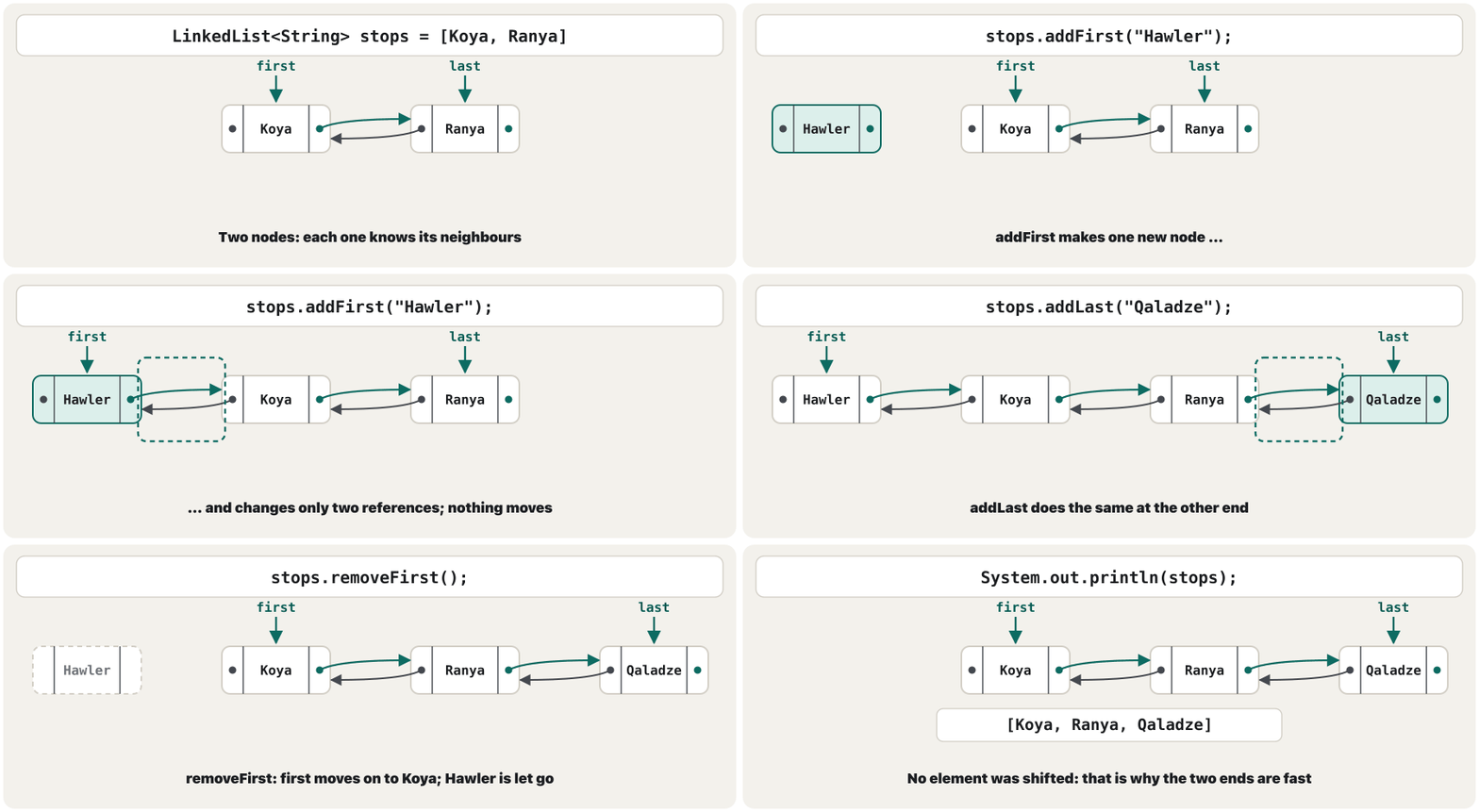
LinkedList is in java.util and has every method of ArrayList (add, get, size …). It adds methods for the two ends: addFirst, addLast, getFirst, getLast, removeFirst and removeLast. A bus route fits it well, because stops are added and dropped at the ends:
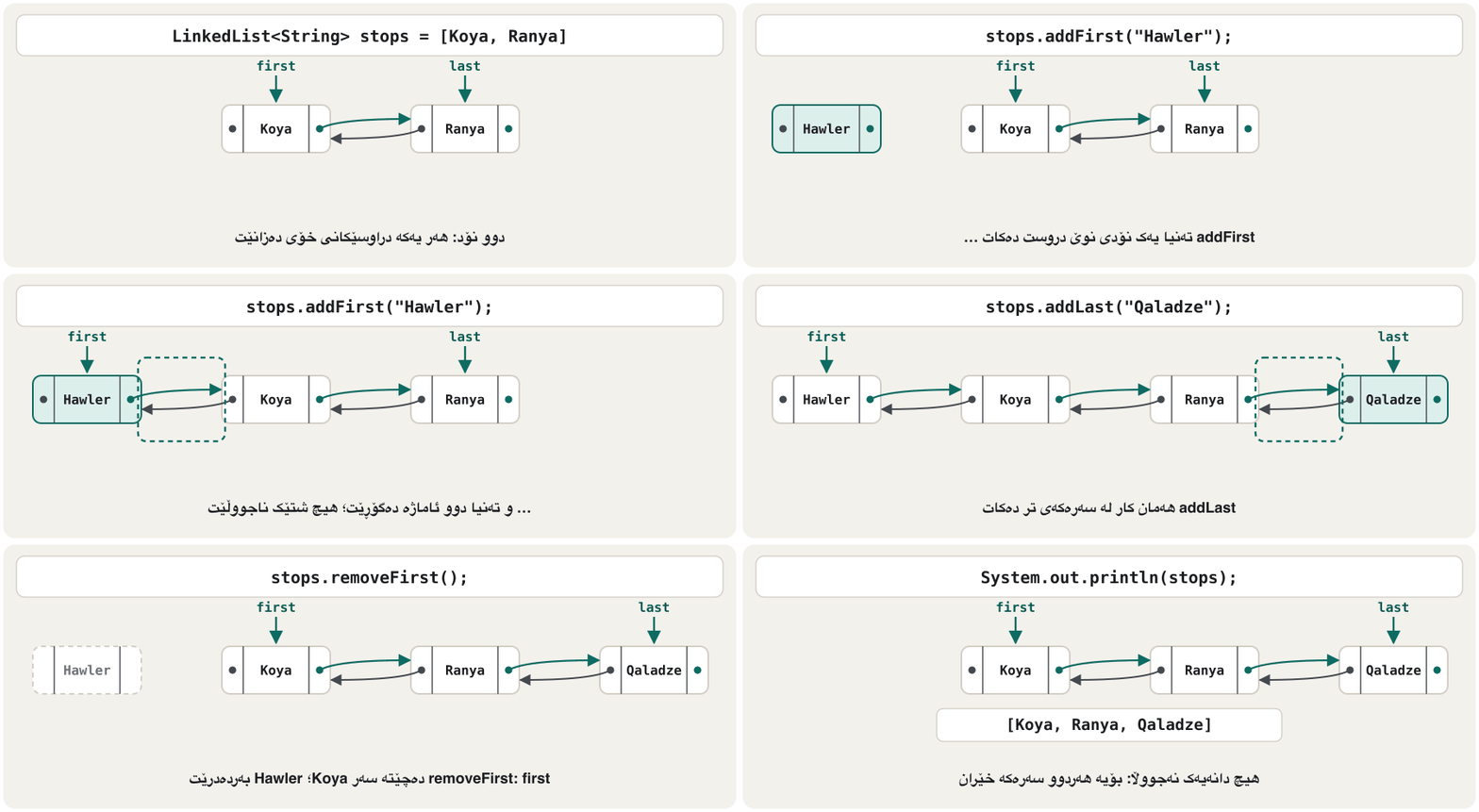
LinkedList لە java.utilـدایە و هەموو ArrayListـی هەیە (add، get، size …). تایبەت بە دوو سەرەکەش زیاد دەکات: addFirst، addLast، getFirst، getLast، removeFirst و removeLast. هێڵی پاسێک بە باشی لەگەڵیدا دەگونجێت، چونکە وێستگەکان لە دوو سەرەکەوە زیاد دەکرێن و لادەبرێن:
import java.util.LinkedList;

public class BusRoute {
    public static void main(String[] args) {
        LinkedList<String> stops = new LinkedList<>();
        stops.add("Koya");
        stops.add("Ranya");
        stops.addFirst("Hawler");         // a new first element
        stops.addLast("Qaladze");         // a new last element (the same as add)
        System.out.println(stops);
        System.out.println("First: " + stops.getFirst() + ", last: " + stops.getLast());
        System.out.println("get(1): " + stops.get(1) + ", size: " + stops.size());
        String gone = stops.removeFirst();
        stops.removeLast();
        System.out.println("Removed " + gone + " and the last stop: " + stops);
    }
}$ java BusRoute [Hawler, Koya, Ranya, Qaladze] First: Hawler, last: Qaladze get(1): Koya, size: 4 Removed Hawler and the last stop: [Koya, Ranya]
Explain the codeڕوونکردنەوەی کۆدەکە
- Lineدێڕی 8-9
addLastdoes the same asadd: a new last element.addLastهەمان کاریaddدەکات: نوێی کۆتایی.- Lineدێڕی 13-14
removeFirstandremoveLasttake an element away and return it.removeFirstوremoveLastلادەبەن و دەیگەڕێننەوە.
An empty LinkedList: get or peek?LinkedListـێکی بەتاڵ: get یان peek؟
On an empty list getFirst() has nothing to give, so it throws a NoSuchElementException (Exceptions). peekFirst() and pollFirst() answer null instead:
لەسەر بەتاڵ، getFirst() هیچی نییە بیدات، بۆیە NoSuchElementException فڕێ دەدات (هەڵاوێردەکان). لە جیاتی ئەوە peekFirst() و pollFirst() بە null وەڵام دەدەنەوە:
import java.util.LinkedList;

public class EmptyRoute {
    public static void main(String[] args) {
        LinkedList<String> stops = new LinkedList<>();
        System.out.println("peekFirst: " + stops.peekFirst());
        System.out.println("pollFirst: " + stops.pollFirst());
        System.out.println("getFirst: " + stops.getFirst());
    }
}$ java EmptyRoute peekFirst: null pollFirst: null Exception in thread "main" java.util.NoSuchElementException at java.base/java.util.LinkedList.getFirst(LinkedList.java:248) at EmptyRoute.main(EmptyRoute.java:8)
Use getFirst when an empty list would be a bug, and check isEmpty() before you call it. Use peekFirst or pollFirst when an empty list is normal, and test the answer for null. Queues have the same two families of methods (Two families).
کاتێک بەتاڵ هەڵەیەک بێت getFirst بەکار بهێنە و پێش بانگکردنی isEmpty() بپشکنە. کاتێک بەتاڵبوون ئاسایی بێت peekFirst یان pollFirst بەکار بهێنە و تاقی بکەرەوە ئاخۆ وەڵامەکە nullـە. هەمان دوو خێزانە هەیە (دوو خێزان).
Inside: boxes in a row, or a chain of nodesلە ناوەوە: خانە لە ڕیزێکدا، یان زنجیرەیەک نۆد
An ArrayList keeps its elements in one array: boxes side by side in memory. get(2) jumps straight to box 2. But add(0, x) must first move every element one box to the right.
ArrayList لە یەک هەڵدەگرێت: خانەکان لە لە تەنیشت یەکترن. get(2) ڕاستەوخۆ باز دەداتە خانەی 2. بەڵام add(0, x) دەبێت سەرەتا هەموو یەک خانە بەرەو ڕاست بجووڵێنێت.
A LinkedList is a : each element sits in its own , a small object that also holds two , one to the next node and one to the previous node. The list itself only remembers the first and the last node. Adding at an end makes one node and changes two references; nothing moves. But get(2) must walk from the nearer end, node by node.
LinkedList : هەر لە تایبەت بە خۆیدایە، بچووک کە هەروەها دوو هەڵدەگرێت، یەکێک بۆ دواتر و یەکێک بۆ پێشتر. خودی تەنیا یەکەم و دوایین لەبیر دەگرێت. زیادکردن لە سەرێکەوە یەک دروست دەکات و دوو دەگۆڕێت؛ هیچ شتێک ناجووڵێت. بەڵام get(2) دەبێت لە سەرە نزیکترەکەوە، بە ، بڕوات.
A train is a linked list: each wagon is coupled only to the wagon in front and the wagon behind. Adding a wagon at either end takes one coupling. To reach the tenth wagon you walk through nine. An ArrayList is more like a row of numbered lockers: you go straight to locker 10, but squeezing a new locker in at the start means moving all the others.
شەمەندەفەرێک : هەر واگۆنێک تەنیا بە واگۆنی پێشەوە و واگۆنی دواوەی خۆیەوە بەستراوە. زیادکردنی واگۆنێک لە هەر سەرێکەوە تەنیا یەک بەستنەوەی دەوێت. بۆ گەیشتن بە واگۆنی دەیەم دەبێت بە ناو نۆ واگۆندا تێپەڕیت. ArrayList زیاتر لە ڕیزێک دۆڵابی ژمارەدار دەچێت: ڕاستەوخۆ دەچیتە لای دۆڵابی 10، بەڵام بۆ خستنە ناوەوەی دۆڵابێکی نوێ لە سەرەتادا دەبێت هەموو ئەوانی تر بجووڵێنیت.
Where the analogy stops workingسنووری ئەم نموونەیە
A program cannot jump into the middle of the chain: it must still walk to a middle node before it can unlink it.
بەرنامە ناتوانێت باز بداتە ناوەڕاستی زنجیرەکە: هێشتا دەبێت بڕوات بۆ ناوەڕاست پێش ئەوەی لە زنجیرەکە جیای بکاتەوە.
Which is faster? Measured, not guessedکامیان خێراترە؟ بە پێوانە، نەک بە مەزەندە
You will often read that "LinkedList is faster for adding and removing". That is only half true, so we measured. ListTimes does each task n times on a fresh list. It repeats this five times and keeps the best run, because the first runs are slower while the warms up:
زۆر جار دەخوێنیتەوە کە «LinkedList بۆ زیادکردن و لابردن خێراترە». ئەمە تەنیا نیوەی ڕاستییە، بۆیە پێوانەمان کرد. ListTimes هەر کارێک n جار لەسەر نوێ دەکات. ئەمە پێنج جار دووپاتە دەکاتەوە و باشترینیان هەڵدەگرێت، چونکە یەکەم جارەکان خاوترن تا گەرم دەبێت:
import java.util.ArrayList;
import java.util.LinkedList;
import java.util.List;

public class ListTimes {
    static long sink;                                // keeps the JVM from skipping work

    static List<Integer> newList(boolean linked, int size) {
        List<Integer> list = linked ? new LinkedList<>() : new ArrayList<>();
        for (int i = 0; i < size; i++) {
            list.add(i);
        }
        return list;
    }

    // one task on a fresh list; returns nanoseconds
    static long once(String task, boolean linked, int n) {
        boolean full = task.equals("get(i) for each i") || task.equals("remove at the front");
        List<Integer> list = newList(linked, full ? n : 0);
        long start = System.nanoTime();
        for (int i = 0; i < n; i++) {
            switch (task) {
                case "add at the end" -> list.add(i);
                case "add at the front" -> list.add(0, i);
                case "add in the middle" -> list.add(list.size() / 2, i);
                case "get(i) for each i" -> sink += list.get(i);
                case "remove at the front" -> sink += list.remove(0);
            }
        }
        return System.nanoTime() - start;
    }

    // the same task 5 times: the first runs warm the JVM up, so keep the best
    static long best(String task, boolean linked, int n) {
        long best = Long.MAX_VALUE;
        for (int round = 0; round < 5; round++) {
            best = Math.min(best, once(task, linked, n));
        }
        return best / 1_000_000;                     // milliseconds
    }

    public static void main(String[] args) {
        int n = Integer.parseInt(args[0]);
        String[] tasks = {"add at the end", "add at the front", "remove at the front",
                          "add in the middle", "get(i) for each i"};
        System.out.println("n = " + n + ", best of 5 runs, in milliseconds");
        System.out.printf("%-22s %10s %11s%n", "task (n times)", "ArrayList", "LinkedList");
        for (String task : tasks) {
            System.out.printf("%-22s %10d %11d%n", task, best(task, false, n), best(task, true, n));
        }
    }
}$ java ListTimes 20000 n = 20000, best of 5 runs, in milliseconds task (n times) ArrayList LinkedList add at the end 0 0 add at the front 18 1 remove at the front 18 0 add in the middle 9 182 get(i) for each i 0 180 $ java ListTimes 40000 n = 40000, best of 5 runs, in milliseconds task (n times) ArrayList LinkedList add at the end 0 0 add at the front 79 3 remove at the front 74 4 add in the middle 36 710 get(i) for each i 0 647
Explain the codeڕوونکردنەوەی کۆدەکە
- Lineدێڕی 6
Without
sinkthe JVM could skip work whose result is never used.بەبێ
sinkدەتوانێت ئەو کارە فەرامۆش بکات کە ئەنجامەکەی هەرگیز بەکار نایەت.- Lineدێڕی 34-39
Five runs, keep the fastest.
پێنج جار، خێراترینیان هەڵبگرە.
Read the pattern, not the exact numbers. At the front, ArrayList shifts every element, so doubling n makes the work about four times bigger (from 18 to 79 ms); LinkedList only changes two references. But get(i) and adding in the middle are far slower on LinkedList, because it must first walk to position i. In big-O words (Big-O), one get(i) is on an ArrayList and on a LinkedList.
سەیری شێوەکە بکە، نەک ژمارە وردەکان. لە سەرەتادا ArrayList هەموو دەجووڵێنێت، بۆیە دووجارکردنی n کارەکە نزیکەی چوار ئەوەندە دەکات (لە 18 بۆ 79 ms)؛ LinkedList تەنیا دوو دەگۆڕێت. بەڵام get(i) و زیادکردن لە ناوەڕاستدا لەسەر LinkedList زۆر خاوترن، چونکە سەرەتا دەبێت بڕوات بۆ شوێنی i. بە زمانی Big-O (Big-O)، یەک get(i) لەسەر ArrayList ـە و لەسەر LinkedList .
One method for both: the List interfaceیەک میتۆد بۆ هەردووکیان: نێوبەستەی List
Both classes keep the promises of the List interface (The List interface). So a method whose parameter type is List accepts either one, and you can switch the class later without touching the method:
هەردوو بەڵێنەکانی List دەبەنە سەر (نێوبەستەی List). کەواتە کە جۆری List بێت هەر یەکێکیان وەردەگرێت و دەتوانیت دواتر بگۆڕیت بەبێ دەستدان لە :
import java.util.ArrayList;
import java.util.LinkedList;
import java.util.List;

public class AnyList {
    static void addCities(List<String> list) {       // any kind of List
        list.add("Duhok");
        list.add(0, "Zakho");
        list.add("Akre");
        System.out.println(list.getClass().getSimpleName() + ": " + list + ", get(1) = " + list.get(1));
    }

    public static void main(String[] args) {
        addCities(new ArrayList<>());
        addCities(new LinkedList<>());
    }
}$ java AnyList ArrayList: [Zakho, Duhok, Akre], get(1) = Duhok LinkedList: [Zakho, Duhok, Akre], get(1) = Duhok
A List variable promises only List methods. In Java 17 addFirst belongs to LinkedList and Deque, not to List, so the compiler refuses it on a List variable:
List تەنیا بەڵێنی List دەدات. لە Java 17ـدا addFirst هی LinkedList و Dequeـە، نەک هی List، بۆیە لەسەر List ڕەتی دەکاتەوە:
import java.util.LinkedList;
import java.util.List;

public class ListFirst {
    public static void main(String[] args) {
        List<String> stops = new LinkedList<>();
        stops.addFirst("Hawler");
        System.out.println(stops);
    }
}$ javac ListFirst.java
ListFirst.java:7: error: cannot find symbol
stops.addFirst("Hawler");
^
symbol: method addFirst(String)
location: variable stops of type List<String>
1 errorThe Iterator: hasNext and nextخولپێکەر: hasNext و next
Every collection can give you an : an object that walks through it, one element at a time. Picture a that stands between the elements. hasNext() asks whether there is an element after the cursor; next() jumps over that element and returns it. Calling next() at the end throws NoSuchElementException:
هەموو کۆکراوەیەک دەتوانێت بداتە دەستت: کە بە ناویدا دەڕوات، بە . بهێنە بەرچاوت کە لە نێوان وەستاوە. hasNext() دەپرسێت ئاخۆ لە دوای هەیە؛ next() بەسەر ئەو باز دەدات و دەیگەڕێنێتەوە. بانگکردنی next() لە کۆتاییدا NoSuchElementException فڕێ دەدات:
import java.util.ArrayList;
import java.util.Iterator;
import java.util.List;

public class WalkNames {
    public static void main(String[] args) {
        List<String> names = new ArrayList<>(List.of("Aram", "Shilan", "Karwan"));
        Iterator<String> it = names.iterator();
        while (it.hasNext()) {                       // is there an element after the cursor?
            String name = it.next();                 // jump over it and give it back
            System.out.println(name + " has " + name.length() + " letters");
        }
        System.out.println("hasNext: " + it.hasNext());
        it.next();                                   // nothing is left
    }
}$ java WalkNames Aram has 4 letters Shilan has 6 letters Karwan has 6 letters hasNext: false Exception in thread "main" java.util.NoSuchElementException at java.base/java.util.ArrayList$Itr.next(ArrayList.java:970) at WalkNames.main(WalkNames.java:14)
Explain the codeڕوونکردنەوەی کۆدەکە
- Lineدێڕی 9-10
The usual loop: ask, then take.
باو: بپرسە، پاشان وەریبگرە.
A for-each loop is this while loop in short: Java turns for (String name : names) into an iterator with hasNext() and next(). That is why for-each works on every collection: lists, sets, deques (for-each).
کورتکراوەی ئەم : Java for (String name : names) دەکات بە بە hasNext() و next()ـەوە. هەر بۆیە for-each لەسەر هەموو کۆکراوەیەکی کار دەکات: ، ، (for-each).
Removing safely: Iterator.remove()لابردنی بێ مەترسی: Iterator.remove()
You met this crash in Removing inside a loop: removing through the list inside a for-each loop. The loop's hidden iterator notices that the list changed behind its back and throws a ConcurrentModificationException, an :
ئەم تێکشکانەت لە لابردن لە ناو خولێکدا بینی: لابردن بە لە ناو . هەست دەکات کە لە پشتییەوە گۆڕاوە و ConcurrentModificationException فڕێ دەدات، کە :
import java.util.ArrayList;
import java.util.List;

public class ForEachRemove {
    public static void main(String[] args) {
        List<Integer> marks = new ArrayList<>(List.of(90, 45, 30, 75, 48));
        for (Integer mark : marks) {
            if (mark < 50) {
                marks.remove(mark);                  // an Integer: removes the value
            }
        }
        System.out.println(marks);
    }
}$ java ForEachRemove Exception in thread "main" java.util.ConcurrentModificationException at java.base/java.util.ArrayList$Itr.checkForComodification(ArrayList.java:1013) at java.base/java.util.ArrayList$Itr.next(ArrayList.java:967) at ForEachRemove.main(ForEachRemove.java:7)
The fix is the iterator's own remove(). It removes the element that next() just returned and keeps its own count right:
چارەسەرەکە remove()ـی خودی . ئەو لادەبات کە next() تازە گەڕاندوویەتییەوە و ژماردنەکەی خۆی ڕێک دەهێڵێتەوە:
import java.util.ArrayList;
import java.util.Iterator;
import java.util.List;

public class IteratorRemove {
    public static void main(String[] args) {
        List<Integer> marks = new ArrayList<>(List.of(90, 45, 30, 75, 48));
        Iterator<Integer> it = marks.iterator();
        while (it.hasNext()) {
            int mark = it.next();
            if (mark < 50) {
                it.remove();                         // removes the mark next() just gave
            }
        }
        System.out.println(marks);
    }
}$ java IteratorRemove [90, 75]
ListIterator: both directions, and setListIterator: هەردوو ئاڕاستە و set
A list can also give you a ListIterator. It adds hasPrevious() and previous() to walk backwards, nextIndex() for the cursor's position, set(x) to replace the element next() just returned, and add(x) to insert at the cursor. Here every mark gets 5 bonus marks, never above 100, and then the cursor walks back:
دەتوانێت ListIteratorـیشت بداتێ. hasPrevious() و previous() بۆ ڕۆیشتن بە پاشەوە زیاد دەکات، nextIndex() بۆ شوێنی ، set(x) بۆ گۆڕینی ئەو next() تازە گەڕاندوویەتییەوە و add(x) بۆ خستنە ناوەوە لە شوێنی . لێرەدا هەر نمرەیەک 5 نمرەی دیاری وەردەگرێت، هەرگیز لە 100 زیاتر نا، پاشان بە پاشەوە دەگەڕێتەوە:
import java.util.ArrayList;
import java.util.List;
import java.util.ListIterator;

public class Bonus {
    public static void main(String[] args) {
        List<Integer> marks = new ArrayList<>(List.of(70, 96, 58));
        ListIterator<Integer> it = marks.listIterator();
        while (it.hasNext()) {
            int index = it.nextIndex();
            int mark = it.next();
            it.set(Math.min(100, mark + 5));         // replace the mark next() just gave
            System.out.println("index " + index + ": " + mark + " -> " + marks.get(index));
        }
        System.out.print("Backwards:");
        while (it.hasPrevious()) {                   // the cursor is at the end now
            System.out.print(" " + it.previous());
        }
        System.out.println();
    }
}$ java Bonus index 0: 70 -> 75 index 1: 96 -> 100 index 2: 58 -> 63 Backwards: 63 100 75
A stack: last in, first outستاک: دوایین هاتوو، یەکەم دەرچوو
A lets you reach only its top. You push an element onto the top, pop the top element off, and peek at the top without removing it. The last element pushed is the first one out: LIFO, last in, first out. The idea, its uses and step-by-step traces are in Stacks; here is the Java way, an ArrayDeque used through the Deque interface:
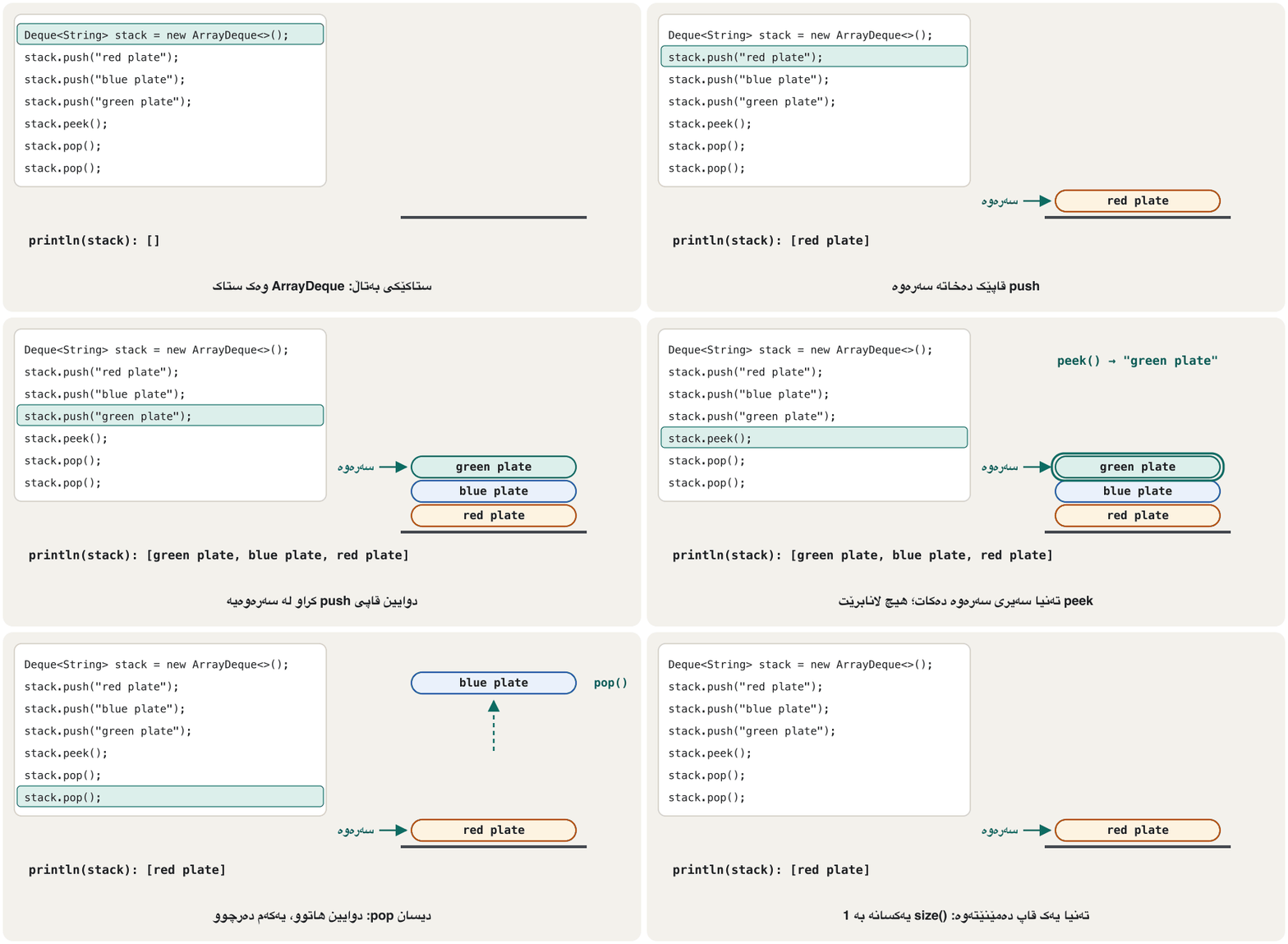
تەنیا ڕێگەت پێ دەدات دەستت بگاتە سەرەوەکەی. بە push دەخەیتە سەرەوە، بە pop سەرەوە لادەبەیت و بە peek سەیری سەرەوە دەکەیت بەبێ لابردن. دوایین کە push کرا یەکەم دانەیە کە دەردەچێت: LIFO، دوایین هاتوو، یەکەم دەرچوو. بیرۆکەکە، بەکارهێنانەکانی و بەدواداچوونی هەنگاو بە هەنگاو لە ستاکەکانـدان؛ ئەمەش ڕێگەی Javaـیە، ArrayDequeـێک لە ڕێگەی Dequeـەوە:
import java.util.ArrayDeque;
import java.util.Deque;

public class Plates {
    public static void main(String[] args) {
        Deque<String> stack = new ArrayDeque<>();
        stack.push("red plate");
        stack.push("blue plate");
        stack.push("green plate");
        System.out.println(stack);                       // the top is printed first
        System.out.println("peek: " + stack.peek());     // look at the top
        System.out.println("pop:  " + stack.pop());      // take the top away
        System.out.println("pop:  " + stack.pop());
        System.out.println(stack + ", size " + stack.size());
    }
}$ java Plates [green plate, blue plate, red plate] peek: green plate pop: green plate pop: blue plate [red plate], size 1
Explain the codeڕوونکردنەوەی کۆدەکە
- Lineدێڕی 6
Declare the variable as
Deque, create anArrayDeque.وەک
Dequeبناسێنە وArrayDequeـێک دروست بکە.
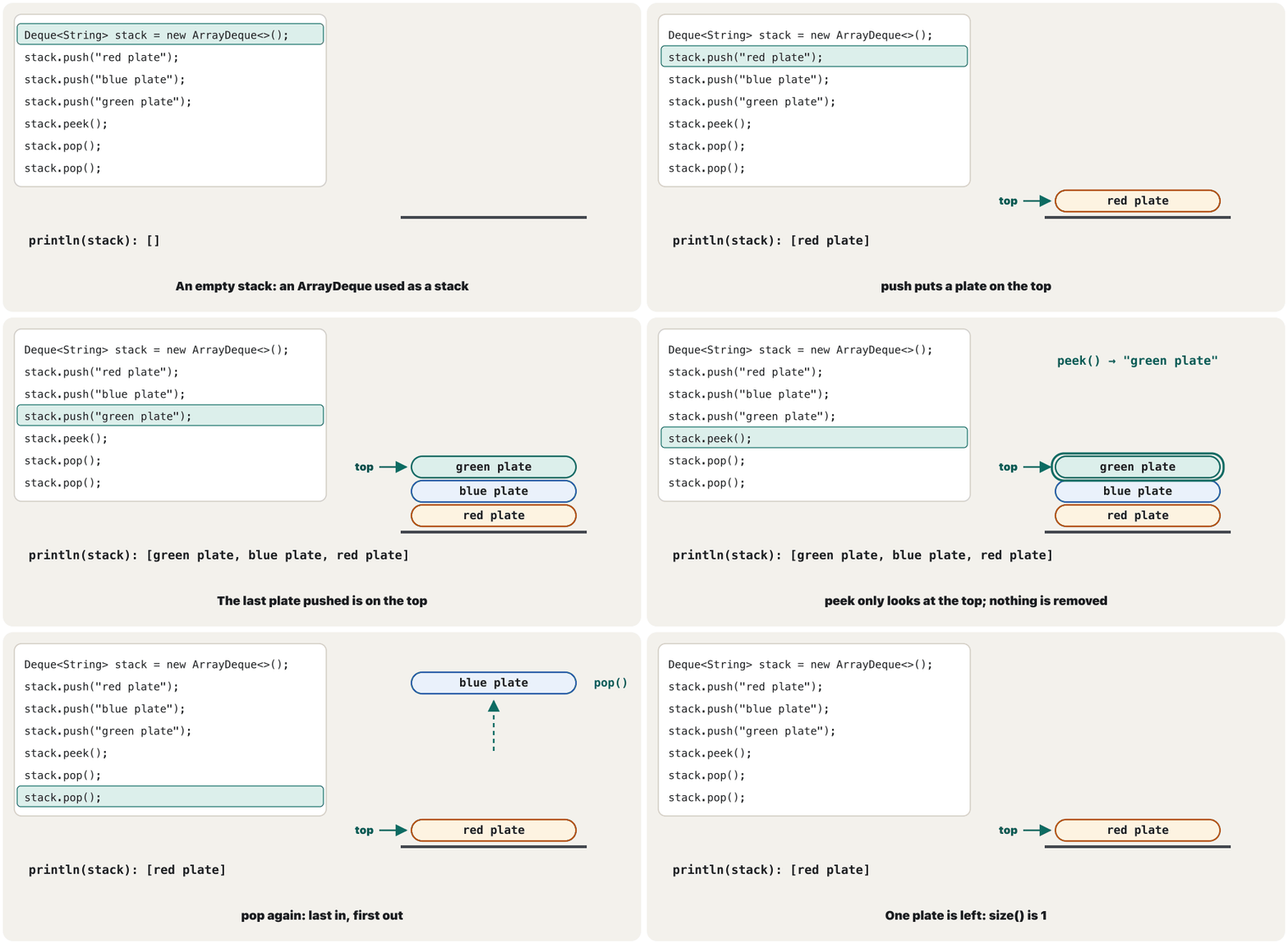
println shows the top first. pop() returns the plate it removes, so you can use it; peek() only looks.
println سەرەوە یەکەم پیشان دەدات. pop() ئەو قاپە دەگەڕێنێتەوە کە لای دەبات، بۆیە دەتوانیت بەکاری بهێنیت؛ peek() تەنیا سەیر دەکات.
The old Stack class, or ArrayDeque?کلاسی کۆنی Stack، یان ArrayDeque؟
Java also has a class named Stack, from Java 1.0. Its own documentation says to prefer a Deque such as ArrayDeque. This run shows why:
Java تریشی هەیە بە ناوی Stack، لە Java 1.0ـەوە. بەڵگەنامەی خۆی دەڵێت Dequeـێکی وەک ArrayDeque باشترە. ئەم کارپێکردنە پیشان دەدات بۆچی:
import java.util.ArrayDeque;
import java.util.Deque;
import java.util.Stack;

public class OldStack {
    public static void main(String[] args) {
        Stack<String> old = new Stack<>();
        Deque<String> modern = new ArrayDeque<>();
        String[] plates = {"red", "blue", "green"};
        for (String p : plates) {
            old.push(p);
            modern.push(p);
        }
        System.out.println("Stack:      " + old + "  top: " + old.peek());
        System.out.println("ArrayDeque: " + modern + "  top: " + modern.peek());
        old.add(0, "yellow");                    // a Vector method: under the bottom plate
        System.out.println("Stack after add(0, \"yellow\"): " + old);
        System.out.println("old.get(1): " + old.get(1));
    }
}$ java OldStack Stack: [red, blue, green] top: green ArrayDeque: [green, blue, red] top: green Stack after add(0, "yellow"): [yellow, red, blue, green] old.get(1): red
Stackis a kind ofVector(an old growable array), so it also hasadd(0, x)andget(i). They break the stack rule: yellow went in under the bottom plate.- It prints from the bottom up, while
ArrayDequeprints from the top down. - Every
Stackmethod is synchronized (locked for use by several threads at once), which costs time even in a simple program. TheArrayDequedocumentation says it is "likely to be faster than Stack".
Stackجۆرێکە لەVector( کۆن کە دەتوانێت گەورە ببێت)، بۆیەadd(0, x)وget(i)ـیشی هەیە. ئەمانە یاسای دەشکێنن: زەرد چووە ژێر قاپی خوارەوە.- لە خوارەوە بۆ سەرەوە چاپ دەکات، بەڵام
ArrayDequeلە سەرەوە بۆ خوارەوە. - هەموو
Stacksynchronizedـە (بۆ بەکارهێنانی هاوکاتی چەند thread قفڵ دەکرێت)، کە تەنانەت لە سادەشدا کات دەبات. بەڵگەنامەیArrayDequeدەڵێت «لەوانەیە لە Stack خێراتر بێت».
Popping an empty stackpop لەسەر ستاکێکی بەتاڵ
In most programs, popping an empty stack is a bug: in a bracket checker it means a closing bracket without a partner. The old Stack throws an EmptyStackException:
لە زۆربەی ، pop لەسەر بەتاڵ : لە پشکنەرێکی کەوانەدا واتای کەوانەیەکی داخستنە بێ هاوتا. Stackـی کۆن EmptyStackException فڕێ دەدات:
import java.util.Stack;

public class EmptyStack {
    public static void main(String[] args) {
        Stack<String> plates = new Stack<>();
        System.out.println("empty: " + plates.empty());
        plates.pop();
    }
}$ java EmptyStack empty: true Exception in thread "main" java.util.EmptyStackException at java.base/java.util.Stack.peek(Stack.java:101) at java.base/java.util.Stack.pop(Stack.java:83) at EmptyStack.main(EmptyStack.java:7)
ArrayDeque.pop() throws a NoSuchElementException, while its peek() returns null. Check isEmpty() before you pop:
ArrayDeque.pop() NoSuchElementException فڕێ دەدات، بەڵام peek()ـەکەی null دەگەڕێنێتەوە. پێش pop isEmpty() بپشکنە:
import java.util.ArrayDeque;
import java.util.Deque;

public class EmptyDeque {
    public static void main(String[] args) {
        Deque<String> plates = new ArrayDeque<>();
        System.out.println("isEmpty: " + plates.isEmpty());
        System.out.println("peek: " + plates.peek());
        plates.pop();
    }
}$ java EmptyDeque isEmpty: true peek: null Exception in thread "main" java.util.NoSuchElementException at java.base/java.util.ArrayDeque.removeFirst(ArrayDeque.java:362) at java.base/java.util.ArrayDeque.pop(ArrayDeque.java:593) at EmptyDeque.main(EmptyDeque.java:9)
Example: an undo historyنموونە: مێژووی پاشگەزبوونەوە
Every editor has Ctrl+Z. Before each change, the program pushes the old text; to undo, it pops it back. The newest old version is on the top, exactly what undo needs:
هەموو Ctrl+Zـی هەیە. پێش هەر گۆڕانکارییەک دەقە کۆنەکە push دەکات؛ بۆ pop دەکات و دەیگەڕێنێتەوە. نوێترین وەشانی کۆن لە سەرەوەیە، ڕێک ئەوەی پێویستیەتی:
import java.util.ArrayDeque;
import java.util.Deque;

public class Editor {
    public static void main(String[] args) {
        Deque<String> undo = new ArrayDeque<>();
        String text = "Hello";
        String[] edits = {"Hello Hana", "Hello Hana!", "Hello Lana!"};
        for (String next : edits) {
            undo.push(text);                     // keep the version before the edit
            text = next;
            System.out.println("edit: " + text);
        }
        System.out.println("saved versions: " + undo);
        text = undo.pop();                       // Ctrl+Z: the newest old version
        System.out.println("undo: " + text);
        text = undo.pop();
        System.out.println("undo: " + text);
        System.out.println("one more undo would give: " + undo.peek());
    }
}$ java Editor edit: Hello Hana edit: Hello Hana! edit: Hello Lana! saved versions: [Hello Hana!, Hello Hana, Hello] undo: Hello Hana! undo: Hello Hana one more undo would give: Hello
Checking brackets is the other classic job of a stack; you write it in the exercises (Bracket matching).
پشکنینی کەوانەکان کاری کلاسیکی تری ؛ لە ڕاهێنانەکاندا دەینووسیت (یەکگرتنەوەی کەوانەکان).
A queue: first in, first outکیوو: یەکەم هاتوو، یەکەم دەرچوو
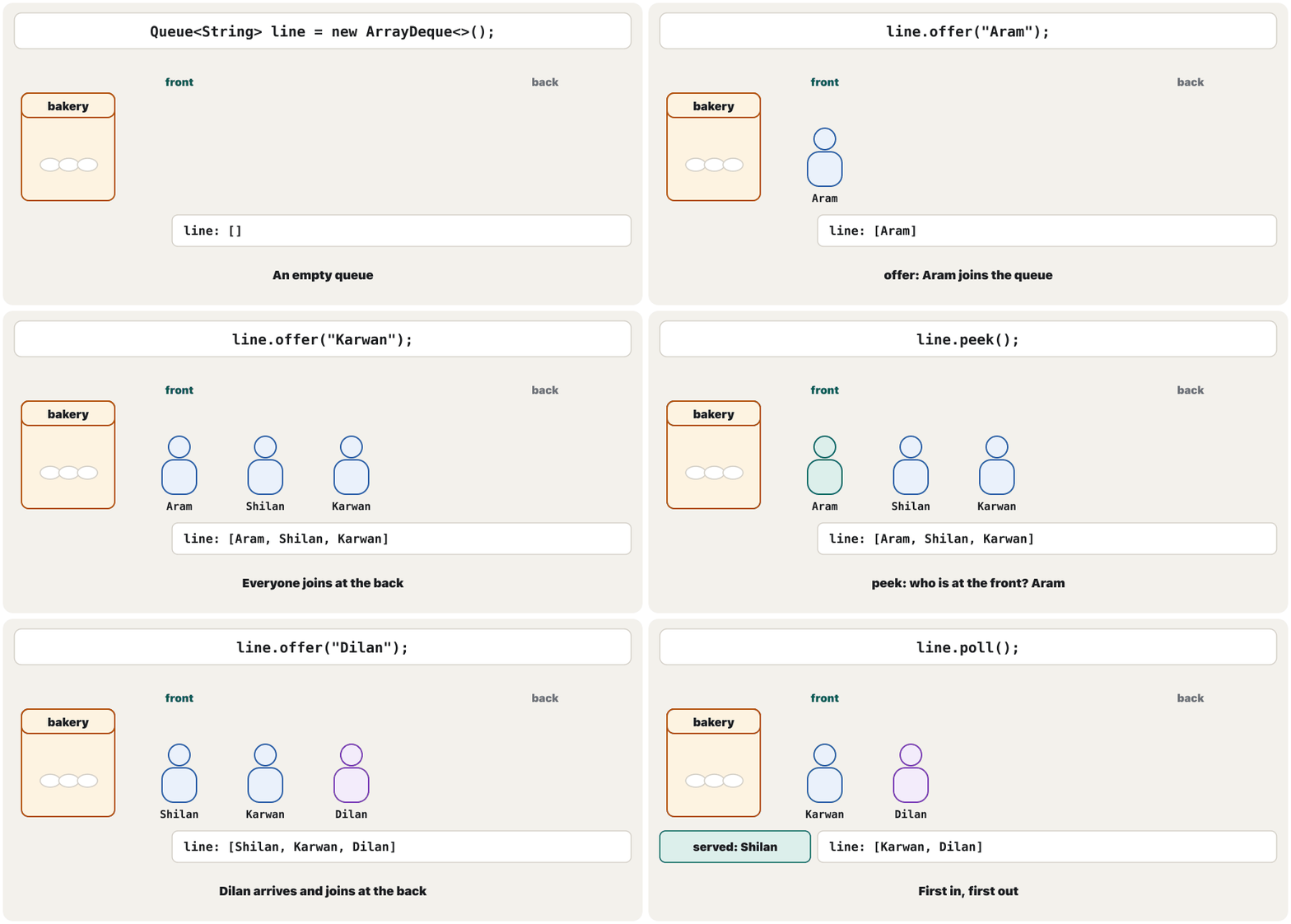
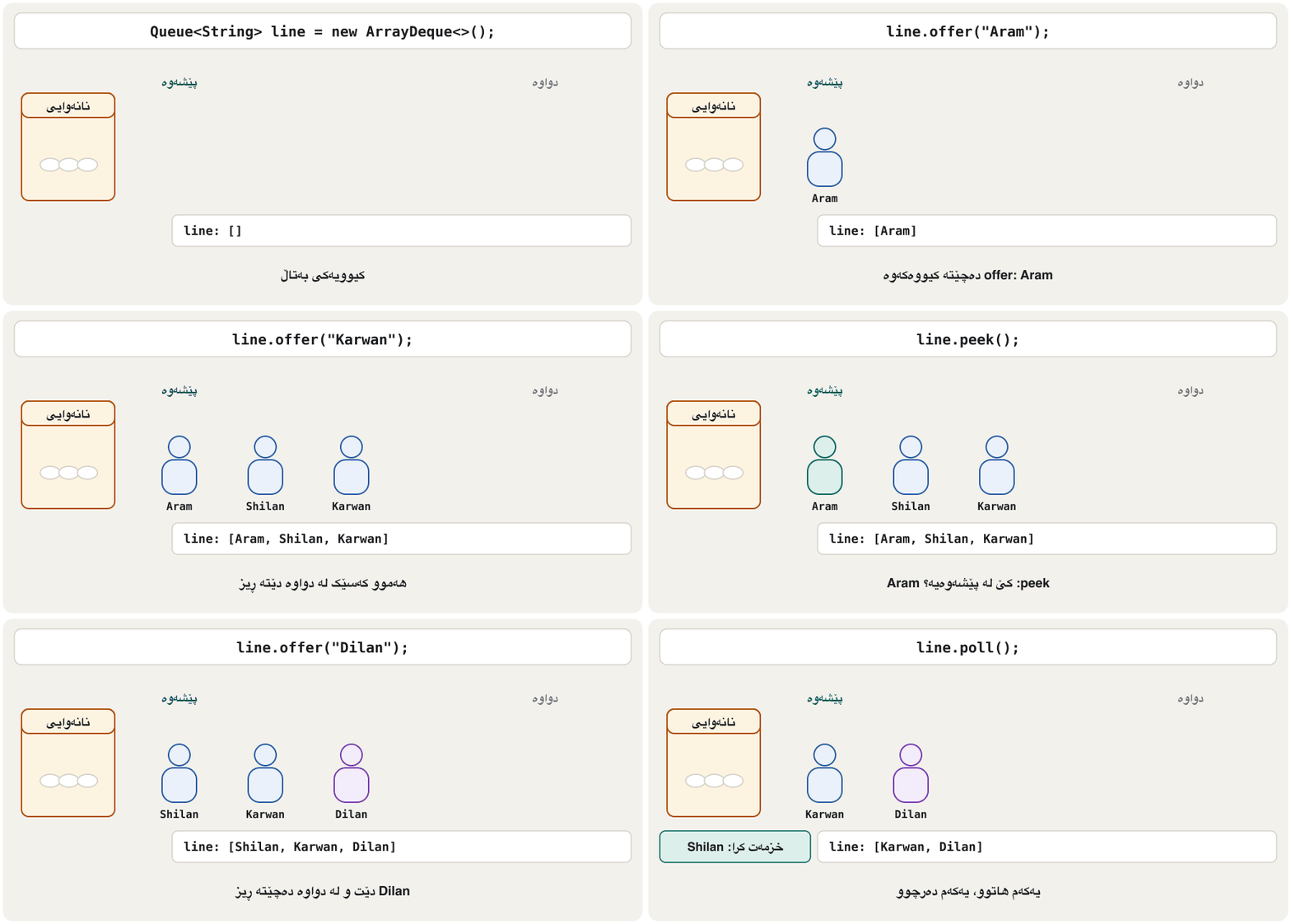
A works like the line at a bakery in the morning: new people join at the back, and the person at the front is served first. That is FIFO, first in, first out. In Java, offer adds at the back, poll removes and returns the front, and peek looks at the front. The idea and its uses are in Queues. Again ArrayDeque is the class to use, through the Queue interface:
وەک ڕیزی نانەوایی لە بەیانیدا کار دەکات: خەڵکی نوێ لە دواوە دەچنە ڕیزەوە و ئەو کەسەی لە پێشەوەیە یەکەم جار نانی پێ دەدرێت. ئەمە FIFOـیە، یەکەم هاتوو، یەکەم دەرچوو. لە Javaـدا offer لە دواوە زیاد دەکات، poll ئەوەی پێشەوە لادەبات و دەیگەڕێنێتەوە و peek سەیری پێشەوە دەکات. بیرۆکەکە و بەکارهێنانەکانی لە کیووەکانـدان. دیسان ArrayDeque ئەو کە بەکاری دەهێنیت، لە ڕێگەی Queueـەوە:
import java.util.ArrayDeque;
import java.util.Queue;

public class Bakery {
    public static void main(String[] args) {
        Queue<String> line = new ArrayDeque<>();
        line.offer("Aram");
        line.offer("Shilan");
        line.offer("Karwan");
        System.out.println("Line: " + line + ", front: " + line.peek());
        System.out.println("Served: " + line.poll());
        line.offer("Dilan");                         // joins at the back
        System.out.println("Served: " + line.poll());
        System.out.println("Line: " + line + ", size " + line.size());
    }
}$ java Bakery Line: [Aram, Shilan, Karwan], front: Aram Served: Aram Served: Shilan Line: [Karwan, Dilan], size 2
Explain the codeڕوونکردنەوەی کۆدەکە
- Lineدێڕی 12
Dilan arrives later and joins at the back.
Dilan دواتر دێت و لە دواوە دەچێتە ڕیزەوە.
Two families: offer/poll/peek and add/remove/elementدوو خێزان: offer/poll/peek و add/remove/element
Queue has two methods for each job. One family throws an exception when it cannot do the job; the other returns a special value, false or null. On an empty queue poll() and peek() give null, while element() throws:
Queue بۆ هەر کارێک دوو هەیە. خێزانێکیان کاتێک ناتوانێت کارەکە بکات فڕێ دەدات؛ ئەوی تر تایبەت دەگەڕێنێتەوە، false یان null. لەسەر بەتاڵ poll() و peek() null دەدەن، بەڵام element() فڕێ دەدات:
import java.util.ArrayDeque;
import java.util.Queue;

public class EmptyQueue {
    public static void main(String[] args) {
        Queue<String> line = new ArrayDeque<>();
        System.out.println("poll: " + line.poll());
        System.out.println("peek: " + line.peek());
        System.out.println("element: " + line.element());
    }
}$ java EmptyQueue poll: null peek: null Exception in thread "main" java.util.NoSuchElementException at java.base/java.util.ArrayDeque.getFirst(ArrayDeque.java:402) at java.base/java.util.ArrayDeque.element(ArrayDeque.java:551) at EmptyQueue.main(EmptyQueue.java:9)
Because null means "empty", ArrayDeque refuses null elements: offer(null) throws a NullPointerException. LinkedList accepts them, but the Queue documentation advises against it. Use offer/poll/peek when an empty (or full) queue is normal, and add/remove/element when it would be a bug.
چونکە null واتە «بەتاڵ»، ArrayDeque null وەرناگرێت: offer(null) NullPointerException فڕێ دەدات. LinkedList وەریان دەگرێت، بەڵام بەڵگەنامەی Queue ئامۆژگاری دەکات کە وا نەکەیت. کاتێک بەتاڵ (یان پڕ) ئاسایی بێت offer/poll/peek بەکار بهێنە و کاتێک بێت add/remove/element.
Example: a print queueنموونە: کیووی چاپ
Several people send documents to one . The jobs wait in a queue and are printed in the order they came. poll() returns null when nothing is waiting, and the program uses that to print a message (the same idea in Python: A print queue):
چەند کەسێک بەڵگەنامە دەنێرن بۆ یەک . کارەکان لە چاوەڕێ دەکەن و بە ڕیزی هاتنیان چاپ دەکرێن. کاتێک هیچ کارێک چاوەڕێ ناکات poll() null دەگەڕێنێتەوە و ئەوە بەکار دەهێنێت بۆ چاپکردنی پەیامێک (هەمان بیرۆکە لە Pythonـدا: کیووی چاپ):
import java.util.ArrayDeque;
import java.util.Queue;

public class PrintQueue {
    public static void main(String[] args) {
        Queue<String> jobs = new ArrayDeque<>();
        String[] events = {"report.pdf", "photo.jpg", "PRINT", "letter.docx", "PRINT", "PRINT", "PRINT"};
        for (String e : events) {
            if (e.equals("PRINT")) {
                String job = jobs.poll();                // null when nothing is waiting
                if (job == null) {
                    System.out.println("Printer: nothing to print");
                } else {
                    System.out.println("Printer: printing " + job);
                }
            } else {
                jobs.offer(e);
                System.out.println("New job " + e + " -> queue " + jobs);
            }
        }
    }
}$ java PrintQueue New job report.pdf -> queue [report.pdf] New job photo.jpg -> queue [report.pdf, photo.jpg] Printer: printing report.pdf New job letter.docx -> queue [photo.jpg, letter.docx] Printer: printing photo.jpg Printer: printing letter.docx Printer: nothing to print
A deque: both endsکیووی دووسەرە: هەردوو سەر
ArrayDeque implements Deque, a double-ended queue (a ): it can add, remove and look at both ends. push and pop work at the front (a stack); offer adds at the back and poll takes from the front (a queue); and offerFirst, offerLast, pollFirst, pollLast, peekFirst and peekLast name the end themselves:
ArrayDeque Deque دەباتە سەر، دوو سەر (): دەتوانێت لە هەردوو سەرەوە زیاد بکات، لاببات و سەیر بکات. push و pop لە پێشەوە کار دەکەن ()؛ offer لە دواوە زیاد دەکات و poll لە پێشەوە وەردەگرێت ()؛ offerFirst، offerLast، pollFirst، pollLast، peekFirst و peekLast خۆیان ناوی سەرەکە دەبەن:
import java.util.ArrayDeque;
import java.util.Deque;

public class BothEnds {
    public static void main(String[] args) {
        Deque<String> d = new ArrayDeque<>();
        d.offerLast("B");                            // at the back
        d.offerLast("C");
        d.offerFirst("A");                           // at the front
        System.out.println(d);
        System.out.println("pollFirst: " + d.pollFirst() + ", pollLast: " + d.pollLast());
        System.out.println(d);
    }
}$ java BothEnds [A, B, C] pollFirst: A, pollLast: C [B]
Inside, an ArrayDeque is an array used as a ring: the front and the back move around it, so nothing is shifted at either end. That is why it beats LinkedList as a queue, as its documentation says.
لە ناوەوە، ArrayDeque کە وەک بازنەیەک بەکار دێت: پێشەوە و دواوە بە دەوریدا دەسووڕێنەوە، بۆیە لە هیچ سەرێکەوە هیچ شتێک ناجووڵێت. هەر بۆیە وەک لە LinkedList باشترە، وەک بەڵگەنامەکەی دەڵێت.
PriorityQueue: the most urgent firstPriorityQueue: بەپەلەترین یەکەم
A PriorityQueue is not first in, first out. poll() always takes the smallest element, or the largest when you create it with Comparator.reverseOrder(). Think of a hospital's emergency room, where 1 means "most urgent":
PriorityQueue «یەکەم هاتوو، یەکەم دەرچوو» نییە. poll() هەمیشە بچووکترین دەبات، یان گەورەترین کاتێک بە Comparator.reverseOrder() دروستی دەکەیت. بەشی فریاکەوتنی نەخۆشخانەیەک بهێنە بەرچاوت، کە تێیدا 1 واتە «بەپەلەترین»:
import java.util.Comparator;
import java.util.PriorityQueue;

public class Emergency {
    public static void main(String[] args) {
        PriorityQueue<Integer> waiting = new PriorityQueue<>();   // 1 = most urgent
        waiting.offer(3);
        waiting.offer(1);
        waiting.offer(4);
        waiting.offer(2);
        System.out.println("printed: " + waiting + ", peek: " + waiting.peek());
        System.out.print("poll order:");
        while (!waiting.isEmpty()) {
            System.out.print(" " + waiting.poll());              // always the smallest
        }
        System.out.println();

        PriorityQueue<Integer> biggest = new PriorityQueue<>(Comparator.reverseOrder());
        biggest.offer(3);
        biggest.offer(1);
        biggest.offer(4);
        biggest.offer(2);
        System.out.println("largest first: " + biggest.poll() + " " + biggest.poll());
    }
}$ java Emergency printed: [1, 2, 4, 3], peek: 1 poll order: 1 2 3 4 largest first: 4 3
Inside is a : a tree kept in an array, with the smallest element at the top. So printing shows the heap's array, [1, 2, 4, 3], not a sorted list; only poll() and peek() promise the smallest. offer and poll take about steps each (Heaps and priority queues).
لە ناوەوە : دارێک کە لە هەڵگیراوە و بچووکترین لە سەرەوەیە. بۆیە چاپکردن پیشان دەدات، [1, 2, 4, 3]، نەک ڕیزکراو؛ تەنیا poll() و peek() بەڵێنی بچووکترین دەدەن. هەر offer و pollـێک نزیکەی هەنگاو دەبات (هیپەکان و کیووە پێشینەییەکان).
Which one should I use?کامیان بەکار بهێنم؟
Choose by the question your program asks most often. Most programs need an ArrayList or a HashMap. When the order of arrival matters, use an ArrayDeque; when the most urgent item matters, a PriorityQueue. Avoid Stack and Vector in new code.
بەپێی ئەو پرسیارەی زۆرتر دەیکات هەڵبژێرە. زۆربەی ArrayList یان HashMapـیان پێویستە. کاتێک ڕیزی هاتن گرنگ بێت ArrayDeque بەکار بهێنە؛ کاتێک بەپەلەترین شت گرنگ بێت PriorityQueue. لە کۆدی نوێدا خۆت لە Stack و Vector لابدە.
Common mistakesهەڵە باوەکان
| You wroteنووسیت | What happensچی ڕوو دەدات | Fixچارەسەر |
|---|---|---|
getFirst() or removeFirst() on an empty LinkedListgetFirst() یان removeFirst() لەسەر LinkedListـێکی بەتاڵ | NoSuchElementException | Check isEmpty() first, or use peekFirst / pollFirst.سەرەتا isEmpty() بپشکنە، یان peekFirst / pollFirst بەکار بهێنە. |
list.remove(x) inside a for-each loop over listlist.remove(x) لە ناو بەسەر listـدا | ConcurrentModificationException | it.remove() or removeIf; without an exception, an element may be skipped.it.remove() یان removeIf؛ بەبێ لەوانەیە بازی بەسەر بدرێت. |
it.remove() twice after one next()دوو جار it.remove() دوای یەک next() | IllegalStateException | One remove() for each next().بۆ هەر next()ـێک یەک remove(). |
it.next() twice in one pass of the loopدوو جار it.next() لە یەک سووڕدا | mixes two elements, then NoSuchElementExceptionدوو تێکەڵ دەکات، پاشان NoSuchElementException | Call next() once and keep the result in a variable.next() یەک جار بانگ بکە و ئەنجامەکەی لە هەڵبگرە. |
Stack<String> s = new Stack<>(); in new codeStack<String> s = new Stack<>(); لە کۆدی نوێدا | works, but allows add(0, x) and get(i), and is slowerکار دەکات، بەڵام ڕێگە بە add(0, x) و get(i) دەدات و خاوترە | Deque<String> s = new ArrayDeque<>();Deque<String> s = new ArrayDeque<>(); |
pop() on an empty stackpop() لەسەر بەتاڵ | EmptyStackException (Stack) or NoSuchElementException (ArrayDeque)EmptyStackException (Stack) یان NoSuchElementException (ArrayDeque) | Check isEmpty() first.سەرەتا isEmpty() بپشکنە. |
queue.offer(null) on an ArrayDequequeue.offer(null) لەسەر ArrayDeque | NullPointerException | Never put null in a queue: poll() uses it to say "empty".هەرگیز null مەخە ناو : poll() بەکاری دەهێنێت بۆ وتنی «بەتاڵ». |
System.out.println(priorityQueue) to see the orderSystem.out.println(priorityQueue) بۆ بینینی ڕیزەکە | the heap's array order, not sortedڕیزبەندیی ناوەوەی ، نەک ڕیزکراو | poll() in a loop.poll() لە ناو . |
for (int i = 0; i < n; i++) list.get(i) on a big LinkedListfor (int i = 0; i < n; i++) list.get(i) لەسەر LinkedListـێکی گەورە | very slow: each get(i) walksزۆر خاو: هەر get(i)ـێک دەڕوات | A for-each loop, or an ArrayList.، یان ArrayList. |
list.addFirst(x) on a List variable (Java 17)list.addFirst(x) لەسەر List (Java 17) | error: cannot find symbol | Declare it as LinkedList or Deque.وەک LinkedList یان Deque بیناسێنە. |
Calling next() twice in one pass is easy to miss. The loop asked hasNext() once but took two names: "Aram is 6 letters long" mixes Aram with Shilan, and the next pass crashes:
بانگکردنی next() دوو جار لە یەک سووڕدا بە ئاسانی لە چاو ون دەبێت. یەک جار hasNext()ـی پرسی، بەڵام دوو ناوی برد: «Aram is 6 letters long» Aram و Shilan تێکەڵ دەکات و سووڕی دواتر تێک دەشکێت:
import java.util.ArrayList;
import java.util.Iterator;
import java.util.List;

public class NextTwice {
    public static void main(String[] args) {
        List<String> names = new ArrayList<>(List.of("Aram", "Shilan", "Karwan"));
        Iterator<String> it = names.iterator();
        while (it.hasNext()) {
            System.out.println(it.next() + " is " + it.next().length() + " letters long");
        }
    }
}$ java NextTwice Aram is 6 letters long Exception in thread "main" java.util.NoSuchElementException at java.base/java.util.ArrayList$Itr.next(ArrayList.java:970) at NextTwice.main(NextTwice.java:10)
And remove() twice after one next(): the iterator has already removed that element, so the second call throws an IllegalStateException:
هەروەها دوو جار remove() دوای یەک next(): پێشتر ئەو لابردووە، بۆیە بانگکردنی دووەم IllegalStateException فڕێ دەدات:
import java.util.ArrayList;
import java.util.Iterator;
import java.util.List;

public class RemoveTwice {
    public static void main(String[] args) {
        List<String> names = new ArrayList<>(List.of("Aram", "Shilan", "Karwan"));
        Iterator<String> it = names.iterator();
        it.next();
        it.remove();                                 // removes Aram
        it.remove();                                 // nothing new was given out
    }
}$ java RemoveTwice Exception in thread "main" java.lang.IllegalStateException at java.base/java.util.ArrayList$Itr.remove(ArrayList.java:980) at RemoveTwice.main(RemoveTwice.java:11)
Explain the codeڕوونکردنەوەی کۆدەکە
- Lineدێڕی 10-11
The second
remove()has no new element fromnext()to remove.remove()ـی دووەم هیچ نوێیnext()ـی نییە بۆ لابردن.
Practiceڕاهێنان
Write static boolean balanced(String text). It returns true when every (, [ and { is closed by the right partner, in the right order. Test it with ((2+3)*(4/2))+2, (5+2]*3, [(1+2)*{3-1}], (() and ())(.
static boolean balanced(String text) بنووسە. کاتێک هەموو (، [ و {ـێک بە هاوتای دروست و بە ڕیزی دروست دابخرێت true دەگەڕێنێتەوە. بە ((2+3)*(4/2))+2، (5+2]*3، [(1+2)*{3-1}]، (() و ())( تاقی بکەرەوە.
Hintئاماژە
Push every opening bracket; at a closing bracket, pop and compare.
هەموو کەوانەیەکی کردنەوە push بکە؛ لە کەوانەی داخستندا pop بکە و بەراورد بکە.
Show answerوەڵامەکە پیشان بدە
import java.util.ArrayDeque;
import java.util.Deque;

public class Brackets {
    static boolean balanced(String text) {
        Deque<Character> open = new ArrayDeque<>();
        for (char c : text.toCharArray()) {
            if (c == '(' || c == '[' || c == '{') {
                open.push(c);                        // remember every opening bracket
            } else if (c == ')' || c == ']' || c == '}') {
                if (open.isEmpty()) {
                    return false;                    // a closing bracket with no partner
                }
                char top = open.pop();
                if ((c == ')' && top != '(') || (c == ']' && top != '[') || (c == '}' && top != '{')) {
                    return false;                    // the wrong kind of bracket
                }
            }
        }
        return open.isEmpty();                       // nothing may stay open
    }

    public static void main(String[] args) {
        String[] tests = {"((2+3)*(4/2))+2", "(5+2]*3", "[(1+2)*{3-1}]", "(()", "())("};
        for (String t : tests) {
            System.out.println(t + " -> " + balanced(t));
        }
    }
}$ java Brackets
((2+3)*(4/2))+2 -> true
(5+2]*3 -> false
[(1+2)*{3-1}] -> true
(() -> false
())( -> falseEvery opening bracket is pushed. A closing bracket pops the newest open one and compares: the wrong kind, or an empty stack, means "not balanced". At the end nothing may stay open. The step-by-step idea is in Bracket matching.
هەموو کەوانەیەکی کردنەوە push دەکرێت. کەوانەیەکی داخستن نوێترین کەوانەی کراوە pop دەکات و بەراوردیان دەکات: جۆری هەڵە، یان بەتاڵ، واتە «هاوسەنگ نییە». لە کۆتاییدا نابێت هیچ کەوانەیەک کراوە بمێنێتەوە. بیرۆکەکە هەنگاو بە هەنگاو لە یەکگرتنەوەی کەوانەکانـدایە.
Print the words of "Java keeps every value in order" in reverse order, using a stack.
وشەکانی "Java keeps every value in order" بە ڕیزی پێچەوانە چاپ بکە، بە بەکارهێنانی .
Show answerوەڵامەکە پیشان بدە
import java.util.ArrayDeque;
import java.util.Deque;

public class ReverseWords {
    public static void main(String[] args) {
        String sentence = "Java keeps every value in order";
        Deque<String> stack = new ArrayDeque<>();
        for (String word : sentence.split(" ")) {
            stack.push(word);
        }
        StringBuilder out = new StringBuilder();
        while (!stack.isEmpty()) {
            out.append(stack.pop());
            if (!stack.isEmpty()) {
                out.append(" ");
            }
        }
        System.out.println(out);
    }
}$ java ReverseWords order in value every keeps Java
split(" ") gives the words; pushing them and popping them back reverses their order.
split(" ") وشەکان دەدات؛ push کردن و pop کردنەوەیان ڕیزەکەیان پێچەوانە دەکاتەوە.
Remove every odd number from the list [4, 7, 10, 13, 15, 22] with an Iterator.
هەموو ژمارەیەکی تاک لە [4, 7, 10, 13, 15, 22] بە Iteratorـێک لاببە.
Show answerوەڵامەکە پیشان بدە
import java.util.ArrayList;
import java.util.Iterator;
import java.util.List;

public class RemoveOdd {
    public static void main(String[] args) {
        List<Integer> numbers = new ArrayList<>(List.of(4, 7, 10, 13, 15, 22));
        Iterator<Integer> it = numbers.iterator();
        while (it.hasNext()) {
            if (it.next() % 2 != 0) {
                it.remove();
            }
        }
        System.out.println(numbers);
    }
}$ java RemoveOdd [4, 10, 22]
it.next() % 2 != 0 tests the number next() just gave, and it.remove() removes exactly that one.
it.next() % 2 != 0 ئەو ژمارەیە تاقی دەکاتەوە کە next() تازە دای و it.remove() ڕێک هەمان ژمارە لادەبات.
Before you run it: what does this program print?
پێش ئەوەی کاری پێ بکەیت: ئەم چی چاپ دەکات؟
import java.util.ArrayDeque;
import java.util.Queue;

public class Tickets {
    public static void main(String[] args) {
        Queue<String> q = new ArrayDeque<>();
        q.offer("Rebin");
        q.offer("Hana");
        q.offer("Soran");
        q.poll();
        q.offer("Lana");
        q.offer(q.poll());
        System.out.println(q + " " + q.peek());
    }
}
Show answerوەڵامەکە پیشان بدە
$ java Tickets
[Soran, Lana, Hana] Soran
Rebin, Hana and Soran join; poll() serves Rebin. Lana joins: [Hana, Soran, Lana]. q.offer(q.poll()) takes Hana from the front and puts her at the back: [Soran, Lana, Hana], so peek() is Soran.
Rebin، Hana و Soran دەچنە ڕیز؛ poll() Rebin دەبات. Lana دەچێتە ڕیز: [Hana, Soran, Lana]. q.offer(q.poll()) Hana لە پێشەوە دەبات و دەیخاتە دواوە: [Soran, Lana, Hana]، بۆیە peek() Soranـە.
A palindrome reads the same from both ends (level, noon). Put the letters of a word into a deque and compare the two ends until one letter or none is left. Test level, Kayak, Erbil and noon.
پالیندرۆم لە هەردوو سەرەوە یەک شت دەخوێنرێتەوە (level، noon). پیتەکانی وشەیەک بخە ناو و دوو سەرەکە بەراورد بکە تا یەک پیت یان هیچ پیتێک دەمێنێتەوە. level، Kayak، Erbil و noon تاقی بکەرەوە.
Hintئاماژە
while (d.size() > 1), then compare d.pollFirst() with d.pollLast().
while (d.size() > 1)، پاشان d.pollFirst() لەگەڵ d.pollLast() بەراورد بکە.
Show answerوەڵامەکە پیشان بدە
import java.util.ArrayDeque;
import java.util.Deque;

public class Palindrome {
    static boolean isPalindrome(String word) {
        Deque<Character> d = new ArrayDeque<>();
        for (char c : word.toLowerCase().toCharArray()) {
            d.offerLast(c);
        }
        while (d.size() > 1) {
            if (!d.pollFirst().equals(d.pollLast())) {   // compare the two ends
                return false;
            }
        }
        return true;
    }

    public static void main(String[] args) {
        for (String w : new String[] {"level", "Kayak", "Erbil", "noon"}) {
            System.out.println(w + " -> " + isPalindrome(w));
        }
    }
}$ java Palindrome level -> true Kayak -> true Erbil -> false noon -> true
pollFirst() and pollLast() take one letter from each end; one mismatch is enough to answer false. toLowerCase() makes Kayak work. The Python version is in Palindromes.
pollFirst() و pollLast() لە هەر سەرێک پیتێک دەبەن؛ یەک ناکۆکی بەسە بۆ وەڵامی false. toLowerCase() وا دەکات Kayak کار بکات. وەشانی Python لە پالیندرۆمـدایە.
Summaryکورتە
LinkedListis a chain of nodes with references to the next and the previous node.addFirst,addLast,getFirst,getLast,removeFirstandremoveLastwork at the ends;getFirston an empty list throws NoSuchElementException,peekFirstgivesnull.- Measured:
LinkedListwins only at the front;get(i)and the middle are much slower than onArrayList. Program to theListinterface. - An
Iteratoris a cursor:hasNext(),next(), andremove()for safe removal while walking.ListIteratoralso goes backwards and hassetandadd. - Stack (LIFO):
Deque<…> s = new ArrayDeque<>()withpush,pop,peek. The oldStackclass is aVectorand is not recommended. - Queue (FIFO):
Queue<…> q = new ArrayDeque<>()withoffer,poll,peek(they returnfalse/null);add,remove,elementthrow instead. - A
Dequeworks at both ends; aPriorityQueuealways gives the smallest (a heap inside).
LinkedListزنجیرەیەک بە بۆ دواتر و پێشتر.addFirst،addLast،getFirst،getLast،removeFirstوremoveLastلە سەرەکان کار دەکەن؛getFirstلەسەر بەتاڵ NoSuchElementException فڕێ دەدات،peekFirstnullدەدات.- بە پێوانە:
LinkedListتەنیا لە سەرەتادا دەباتەوە؛get(i)و ناوەڕاست لەArrayListزۆر خاوترن. بەListبنووسە. - :
hasNext()،next()وremove()بۆ لابردنی بێ مەترسی لە کاتی ڕۆیشتندا.ListIteratorبە پاشەوەش دەڕوات وsetوaddـی هەیە. - (LIFO):
Deque<…> s = new ArrayDeque<>()بەpush،pop،peek. کلاسی کۆنیStackVectorـە و پێشنیار ناکرێت. - (FIFO):
Queue<…> q = new ArrayDeque<>()بەoffer،poll،peek(false/nullدەگەڕێننەوە)؛add،remove،elementلە جیاتی ئەوە فڕێ دەدەن. Dequeلە هەردوو سەرەوە کار دەکات؛PriorityQueueهەمیشە بچووکترین دەدات ( لە ناوەوە).
What is the difference between poll() and remove() on an empty queue?جیاوازیی poll() و remove() لەسەر کیوویەکی بەتاڵ چییە؟
poll() returns null; remove() throws NoSuchElementException.
poll() null دەگەڕێنێتەوە؛ remove() NoSuchElementException فڕێ دەدات.
Why does a for-each loop crash when you remove through the list?بۆچی خولی foreach تێک دەشکێت کاتێک بە لیستەکە لادەبەیت؟
Its hidden iterator sees that the list changed behind its back and throws ConcurrentModificationException. Remove with it.remove() or removeIf.
دەبینێت کە لە پشتییەوە گۆڕاوە و ConcurrentModificationException فڕێ دەدات. بە it.remove() یان removeIf لاببە.
Which class should a new program use for a stack?بەرنامەیەکی نوێ بۆ ستاک کام کلاس بەکار بهێنێت؟
ArrayDeque, through the Deque interface.
ArrayDeque، لە ڕێگەی Dequeـەوە.
Lesson complete!وانەکە تەواو بوو!
Well done. Review the key terms, then go on to the next lesson.دەستخۆش. سەیرێکی زاراوە سەرەکییەکان بکەرەوە، پاشان بڕۆ بۆ وانەی داهاتوو.
Key termsزاراوە سەرەکییەکان
Sorting, Searching and Lambda Expressionsڕیزکردن، گەڕان و کردارە بێناوەکان
Related lecturesوانە پەیوەندیدارەکان
- Stacks: Last In, First Outستاکەکان: دوایین هاتوو، یەکەم دەرچوو
- Queues and Deques: First In, First Outکیووەکان و کیووە دووسەرەکان: یەکەم هاتوو، یەکەم دەرچوو
- Abstract Classes, Interfaces, Inner Classes and Enumsکلاسە ڕووتەکان، نێوبەستەکان، کلاسە ناوەکییەکان و ئینەمەکان
- Exceptions: try, catch and finallyهەڵاوێردەکان: try، catch و finally
- Sorting, Searching and Lambda Expressionsڕیزکردن، گەڕان و کردارە بێناوەکان
- Project: A Student Marks Managerپڕۆژیلە: بەڕێوەبەری نمرەی قوتابیان
- Notation in Computing: mod, Bases, Big-O and Code Operatorsهێماکان لە کۆمپیوتەردا: mod، بنچینەکان، نیشانەی O-ی گەورە و کارپێکەرەکانی کۆد
References and further readingسەرچاوەکان و خوێندنەوەی زیاتر
This lecture is a first edition. The Kurdish text and terminology are waiting for review by Kurdish IT teachers.ئەم وانەیە چاپی یەکەمە. دەقە کوردییەکە و زاراوەکانی چاوەڕێی پێداچوونەوەی مامۆستایانی کوردی بواری IT ن.