PythonPython · Chapterبەش 8 · Lectureوانە 8.2
Return Values and Noneنرخە گەڕاوەکان و None
What the return statement gives back and why it ends a function at once; early returns for special cases; why every branch must return a value and how a missing return becomes None; functions without return values; returning versus printing; and the Lab 2 pyramid, average and grade tasks, the triangle-perimeter quiz, two mystery functions, and practice with traffic lights, discounts and formulas.
ڕستەی return چی دەگەڕێنێتەوە و بۆچی یەکسەر کۆتایی پێدێنێت؛ returnـی زوو بۆ حاڵەتە تایبەتەکان؛ بۆچی هەموو لقێک دەبێت نرخێک بگەڕێنێتەوە و چۆن returnـێکی ون دەبێتە None؛ ؛ گەڕاندنەوە بەرامبەر چاپکردن؛ و ئەرکەکانی هەرەم، و نمرەی تاقیگەی 2، تاقیکردنەوەی چێوەی سێگۆشە، دوو نهێنی و ڕاهێنان لەسەر گڵۆپی هاتووچۆ، داشکاندن و .
What you will learnچی فێر دەبیت
- Use
returnto send any expression back to the caller, and explain why the function ends at that moment. - Handle special cases with an early return.
- Make every branch return a value, and recognise
Nonewhen a branch forgets. - Choose between returning and printing, and write functions without return values that are called as statements.
returnبەکار بهێنیت بۆ ناردنەوەی هەر بۆ و ڕوونی بکەیتەوە بۆچی لەو کاتەدا کۆتایی دێت.- بە
returnـی زوو مامەڵە لەگەڵ حاڵەتە تایبەتەکان بکەیت. - وا بکەیت هەموو لقێک نرخێک بگەڕێنێتەوە و
Noneبناسیتەوە کاتێک لقێک لەبیری دەکات. - لە نێوان گەڕاندنەوە و چاپکردندا هەڵبژێریت و بنووسیت کە وەک بانگ دەکرێن.
What return doesreturn چی دەکات
You use the return statement to state the result of a function. After the word return you can write any expression. Python works out its value and sends that value back to the , where the call is replaced by it.
ڕستەی return بەکار دەهێنیت بۆ دیاریکردنی ئەنجامی . دوای وشەی return دەتوانیت هەر بنووسیت. Python نرخەکەی دەژمێرێت و ئەو نرخە دەنێرێتەوە بۆ ، کە لەوێ بانگکردنەکە بەو نرخە دەگۆڕدرێت.
A useful picture: a value-returning function is like a machine. Arguments go in, one value — the — comes out. A function without a return value is different: it does something, such as printing on the screen, and gives back only None.
وێنەیەکی بەسوود: وەک ئامێرێک وایە. دەچنە ژوورەوە و یەک نرخ — — دێتە دەرەوە. جیاوازە: کارێک دەکات — وەک چاپکردن لەسەر شاشە — و تەنها None دەگەڕێنێتەوە.
None.نرخ دەچێتە ژوورەوە و یەک نرخ دێتە دەرەوە — یان کارێک و None.CêITIn Kurdish: functions that give back a value with the return statement.
بە کوردی: ، کە بە return دەگەڕێننەوە.
Kurdish (Sorani), whole video (7:52): part 12 of MR. Ant's Python course.
ڤیدیۆیەکی کوردی (سۆرانی)، هەموو ڤیدیۆکە (7:52): بەشی 12 لە کۆرسی MR. Ant.
Returning an expression directlyگەڕاندنەوەی دەربڕینێک ڕاستەوخۆ
Often you do not need a variable for the result. Instead of saving the value in a variable and returning the variable, you can return the expression itself. Both versions below give the same answers:
زۆرجار پێویستت بە نییە بۆ ئەنجامەکە. لەبری ئەوەی نرخەکە لە هەڵبگریت و پاشان بگەڕێنیتەوە، دەتوانیت خودی بگەڕێنیتەوە. هەردوو وەشانەکەی خوارەوە هەمان وەڵام دەدەن:
def cube_volume(side_length):
    volume = side_length ** 3
    return volume


print(cube_volume(2), cube_volume(10))8 1000
def cube_volume(side_length):
    return side_length ** 3


print(cube_volume(2), cube_volume(10))8 1000
Explain the codeڕوونکردنەوەی کۆدەکە
- Lineدێڕی 2
**is the power operator:side_length ** 3isside_length * side_length * side_length.**توانە:side_length ** 3واتەside_length * side_length * side_length.- Lineدێڕی 5
Two calls inside one
print: their return values 8 and 1000 are printed.دوو بانگکردن لەناو یەک
printـدا: ، 8 و 1000، چاپ دەکرێن.
return ends the function at oncereturn یەکسەر کردارەکە کۆتایی پێدێنێت
When a return statement runs, the function exits immediately; the lines after it are not executed. Many programmers use this on purpose to deal with special cases at the start of a function. A cube cannot have a negative side, so for a negative value this function returns 0 and stops:
کاتێک ڕستەیەکی return جێبەجێ دەبێت، یەکسەر دەردەچێت؛ دێڕەکانی دوای ئەو جێبەجێ ناکرێن. زۆر بەرنامەساز بە ئەنقەست ئەمە بەکار دەهێنن بۆ مامەڵەکردن لەگەڵ حاڵەتە تایبەتەکان لە سەرەتای . درێژیی لای مکەعەبێک ناتوانێت سالب بێت، بۆیە بۆ نرخێکی سالب ئەم 0 دەگەڕێنێتەوە و دەوەستێت:
def cube_volume(side_length):
    if side_length < 0:
        return 0          # special case: the function stops here
    # Handle the regular case.
    return side_length ** 3


print(cube_volume(-2))
print(cube_volume(3))0 27
Explain the codeڕوونکردنەوەی کۆدەکە
- Lineدێڕی 2-3
The special case: for a negative side the function returns 0 and stops here.
حاڵەتە تایبەتەکە: بۆ لایەکی سالب 0 دەگەڕێنێتەوە و لێرەدا دەوەستێت.
- Lineدێڕی 4-5
The regular case is reached only when
side_lengthis 0 or more.تەنها کاتێک دەگاتە حاڵەتە ئاساییەکە کە
side_length0 یان زیاتر بێت.
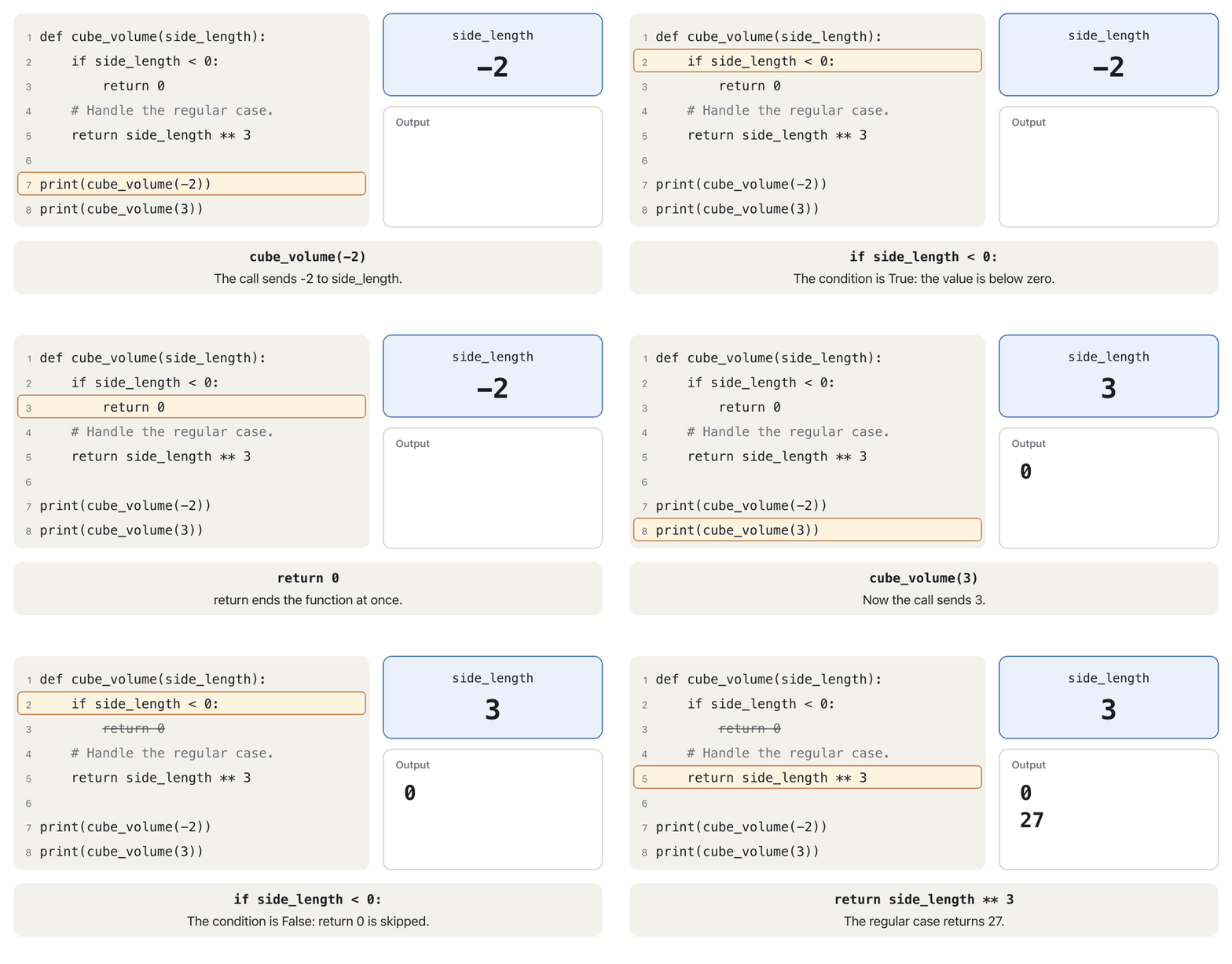
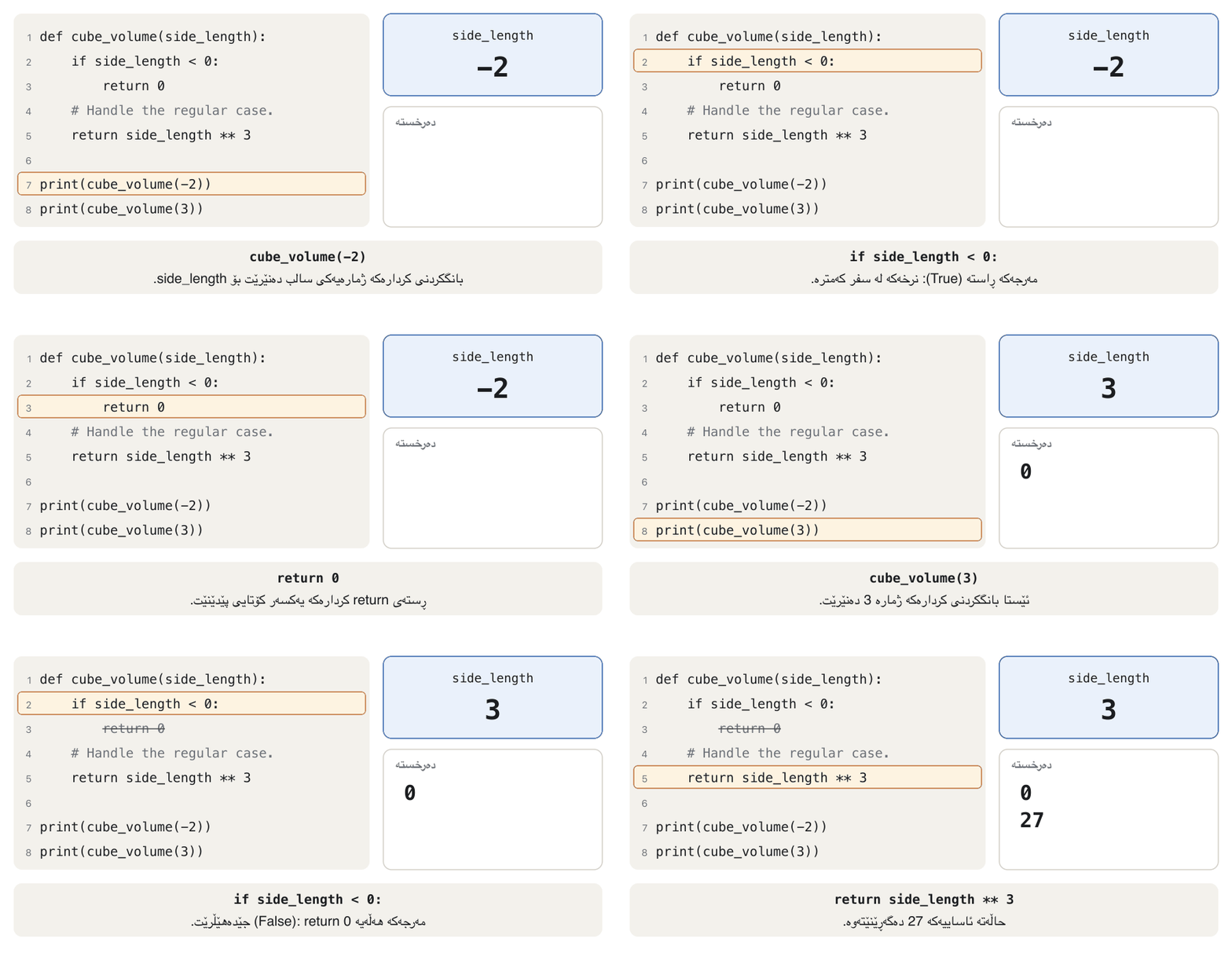
return 0 fires and the rest of the body is skipped.return 0 جێبەجێ دەبێت و باقیی جەستەکە جێدەهێڵرێت.CêITreturn ends the function at oncereturn یەکسەر کردارەکە کۆتایی پێدێنێت
Code after return never runsکۆدی دوای return هەرگیز جێبەجێ نابێت
A line written directly after return, in the same block, can never run. Python does not warn you — it simply skips it:
دێڕێک کە ڕاستەوخۆ دوای return لە هەمان بلۆکدا نووسرابێت هەرگیز جێبەجێ نابێت. Python ئاگادارت ناکاتەوە — تەنها جێی دەهێڵێت:
def greet(name):
    return "Hello, " + name
    print("This line never runs")


message = greet("Dilan")
print(message)Hello, Dilan
"This line never runs" is never printed.
«This line never runs» هەرگیز چاپ ناکرێت.
Every branch should return a valueهەموو لقێک دەبێت نرخێک بگەڕێنێتەوە
If a function returns a value in some branches of an if, then every branch should return one. Look at this incorrect function: it returns a volume for 0 and positive sides, but nothing for a negative side.
ئەگەر لە هەندێک لقی ifـدا بگەڕێنێتەوە، دەبێت هەموو لقێک یەکێک بگەڕێنێتەوە. سەیری ئەم هەڵەیە بکە: بۆ لای 0 و موجەب قەبارە دەگەڕێنێتەوە، بەڵام بۆ لایەکی سالب هیچ.
def cube_volume(side_length):
    if side_length >= 0:
        return side_length ** 3
    # Error: no return value if side_length < 0


print(cube_volume(2))
print(cube_volume(-2))8 None
Python does not report this as an error. When the if condition is false, the function simply reaches the end of its body — it "falls off the end" — and Python returns the special value None ().
Python ئەمە وەک ڕاناگەیەنێت. کاتێک if هەڵەیە، تەنها دەگاتە کۆتایی جەستەکەی — «لە کۆتاییەوە دەکەوێتە خوارەوە» — و Python نرخی تایبەتی None () دەگەڕێنێتەوە.
return falls off the end and gives None.لقێک کە returnـی تێدا نەبێت دەگاتە کۆتایی و None دەدات.CêITEvery branch should return a valueهەموو لقێک دەبێت نرخێک بگەڕێنێتەوە
Where the missing value bitesنرخە ونبووەکە لە کوێ زیان دەگەیەنێت
A missing return is a : the program runs, but the wrong value travels on. The crash often comes later, on a line that looks innocent:
returnـێکی ون : کار دەکات، بەڵام نرخێکی هەڵە بەڕێ دەکەوێت. تێکچوونەکە زۆرجار دواتر دێت، لەسەر دێڕێک کە بێتاوان دیارە:
def cube_volume(side_length):
    if side_length >= 0:
        return side_length ** 3


total = cube_volume(-2) + 1
print(total)Traceback (most recent call last):
File "none_bites.py", line 6, in <module>
total = cube_volume(-2) + 1
~~~~~~~~~~~~~~~~^~~
TypeError: unsupported operand type(s) for +: 'NoneType' and 'int'The traceback points at line 6, but the real mistake is the missing else branch in the function. When you see NoneType in an error message, look for a function that forgot to return a value. More on reading errors: Errors and Debugging.
ئاماژە بە دێڕی 6 دەکات، بەڵام هەڵە ڕاستەقینەکە نەبوونی لقی elseـە لە . کاتێک لە NoneType دەبینیت، بەدوای بگەڕێ کە گەڕاندنەوەی نرخێکی لەبیر کردووە. زیاتر دەربارەی خوێندنەوەی هەڵەکان: هەڵەکان و کرمەکوژی.
Every branch should return a valueهەموو لقێک دەبێت نرخێک بگەڕێنێتەوە
Two correct versionsدوو وەشانی دروست
The slides fix the function in two ways. The first gives the else branch its own return:
سلایدەکان بە دوو شێوە چاک دەکەنەوە. یەکەمیان returnـێکی تایبەت دەدات بە لقی else:
returnـێک لە هەموو لقێکداcube_two_returns.pyPYTHONType in a terminalلە تێرمیناڵدا بینووسەdef cube_volume(side_length):
if side_length >= 0:
return side_length ** 3
else:
return 0
print(cube_volume(2))
print(cube_volume(-2))8 0
The second way avoids several return statements: store the result in a variable in each branch, and return that variable once, in the last statement of the function.
ڕێگەی دووەم خۆی لە چەند ڕستەیەکی return دەپارێزێت: لە هەر لقێکدا ئەنجامەکە لە هەڵبگرە و ئەو تەنها یەک جار، لە دوایین ڕستەی ، بگەڕێنەوە.
return لە کۆتاییداcube_one_return.pyPYTHONType in a terminalلە تێرمیناڵدا بینووسەdef cube_volume(side_length):
if side_length >= 0:
volume = side_length ** 3
else:
volume = 0
return volume # one return, at the end
print(cube_volume(2))
print(cube_volume(-2))8 0
Explain the codeڕوونکردنەوەی کۆدەکە
- Lineدێڕی 2-5
Both branches set
volume.هەردوو لقەکە نرخ دەدەن بە
volume.- Lineدێڕی 6
A single exit: easy to see what comes back.
تەنها یەک دەرچوون: ئاسانە ببینیت چی دەگەڕێتەوە.
Functions without return valuesکردارە نەگەڕێنەرەکان
Sometimes you need to carry out a sequence of instructions that does not produce a value. If that sequence is needed several times, you still package it into a function. This one prints a string inside a box:
هەندێک جار پێویستە زنجیرەیەک فەرمان ئەنجام بدەیت کە هیچ نرخێک بەرهەم ناهێنێت. ئەگەر ئەو زنجیرەیە چەند جار پێویست بێت، هەر دەیخەیتە ناو . ئەمە لەناو چوارچێوەیەکدا چاپ دەکات:
def box_string(content):
    n = len(content)
    print("-" * (n + 2))
    print("|" + content + "|")
    print("-" * (n + 2))


box_string("Stage 1: IT Department")------------------------ |Stage 1: IT Department| ------------------------
Explain the codeڕوونکردنەوەی کۆدەکە
- Lineدێڕی 2
len(content)is the number of characters: 22 here.len(content)ژمارەی نووسەکانە: لێرەدا 22.- Lineدێڕی 3
"-" * (n + 2)repeats the dash times: two more for the two|signs."-" * (n + 2)هێڵی کورت جار دووبارە دەکاتەوە: دوو دانە زیاتر بۆ دوو نیشانەی|.- Lineدێڕی 8
The call is a statement on its own line.
بانگکردنەکە لەسەر دێڕی خۆی.
box_string does not compute any value. It performs some actions and then returns to the caller. Strictly speaking it does return something — the special value None — but there is nothing useful you can do with it. So you call such a function as a statement, not as part of an expression.
box_string هیچ نرخێک ناژمێرێت. چەند کارێک ئەنجام دەدات و پاشان دەگەڕێتەوە بۆ . بە وردی شتێک دەگەڕێنێتەوە — نرخی تایبەتی None — بەڵام هیچ کارێکی بەسوودت پێی نییە. بۆیە وا وەک بانگ دەکەیت، نەک وەک بەشێک لە .
box_string?چی لە box_stringـەوە دەگەڕێتەوە؟box_none.pyPYTHONType in a terminalلە تێرمیناڵدا بینووسەdef box_string(content):
n = len(content)
print("-" * (n + 2))
print("|" + content + "|")
print("-" * (n + 2))
result = box_string("Hi")
print(result)---- |Hi| ---- None
Explain the codeڕوونکردنەوەی کۆدەکە
- Lineدێڕی 8
The box is printed while the function runs;
resultreceivesNone.چوارچێوەکە لە کاتی کارکردنی چاپ دەکرێت؛
resultNoneوەردەگرێت.
None: the value that means "nothing"None: ئەو نرخەی واتای «هیچ» دەدات
None is Python's special value for "no value" (). It has its own type, NoneType, and print shows it as the word None. A function returns None in three situations: it has no return statement, it runs a bare return with nothing after it, or it reaches the end of its body without meeting a return.
None نرخی تایبەتی Pythonـە بۆ «هیچ نرخ» (). جۆری تایبەتی خۆی هەیە (NoneType) و print وەک وشەی None پیشانی دەدات. لە سێ حاڵەتدا None دەگەڕێنێتەوە: هیچ ڕستەیەکی returnـی نییە، returnـێکی بەتاڵ (بەبێ هیچ شتێک لە دوایدا) جێبەجێ دەکات، یان دەگاتە کۆتایی جەستەکەی بەبێ ئەوەی بگاتە returnـێک.
print(None)
print(type(None))None <class 'NoneType'>
Sometimes None is returned on purpose, to say "I found nothing". The caller then checks for it with is None:
هەندێک جار None بە ئەنقەست دەگەڕێنرێتەوە، بۆ ئەوەی بڵێت «هیچم نەدۆزییەوە». ئەوسا بە is None دەیپشکنێت:
None as a deliberate answerNone وەک وەڵامێکی ئەنقەستیfirst_even.pyPYTHONType in a terminalلە تێرمیناڵدا بینووسەdef find_first_even(a, b, c):
for n in (a, b, c):
if n % 2 == 0:
return n
return None # no even number: say "nothing" on purpose
result = find_first_even(3, 8, 5)
print(result)
result = find_first_even(1, 3, 5)
if result is None:
print("No even number")
print(type(result))8 No even number <class 'NoneType'>
Explain the codeڕوونکردنەوەی کۆدەکە
- Lineدێڕی 2-4
return ninside the loop ends the whole function at the first even number.return nلەناو هەموو لە یەکەم ژمارەی جووتدا کۆتایی پێدێنێت.- Lineدێڕی 5
Written out on purpose: if no number was even, say so with
None.بە ئەنقەست نووسراوە: ئەگەر هیچ ژمارەیەک جووت نەبوو، بە
Noneبیڵێ.- Lineدێڕی 12
is Noneis the correct test forNone.is Noneپشکنینی دروستە بۆNone.
Returning versus printingگەڕاندنەوە بەرامبەر چاپکردن
In a tea house, a tea maker who shouts "Your tea is ready!" across the room has told you something — but there is no glass on your table. That is print: the message goes to the screen, and the program gets nothing it can use. A waiter who puts the glass on your table has given you something you can drink, sweeten or pass to a friend. That is return: the value goes to the caller, which can store it, calculate with it or hand it on.
لە چایخانەدا، چایچییەک کە لە ئەودیوی ژوورەکەوە هاوار دەکات «چاکەت ئامادەیە!» شتێکی پێ وتوویت — بەڵام هیچ ئیستیکانێک لەسەر مێزەکەت نییە. ئەمە printـە: پەیامەکە دەچێتە سەر شاشە و هیچ شتێک وەرناگرێت کە بتوانێت بەکاری بهێنێت. گارسۆنێک کە ئیستیکانەکە لەسەر مێزەکەت دادەنێت شتێکی پێداویت کە دەتوانیت بیخۆیتەوە، شەکری تێبکەیت یان بیدەیت بە هاوڕێیەک. ئەمە returnـە: نرخەکە دەچێت بۆ ، کە دەتوانێت هەڵیبگرێت، ژمێرکاریی پێ بکات یان بیداتە شوێنێکی تر.
Where the analogy stops workingسنووری ئەم نموونەیە
A Python function may do both — print a message and return a value. They are simply two different jobs: printing talks to the person at the screen, returning talks to the program.
Python دەتوانێت هەردووکیان بکات — پەیامێک چاپ بکات و نرخێک بگەڕێنێتەوە. تەنها دوو کاری جیاوازن: چاپکردن قسە لەگەڵ ئەو کەسە دەکات کە لەبەردەم شاشەدایە، گەڕاندنەوە قسە لەگەڵ دەکات.
def add_and_print(a, b):
    print(a + b)          # shows the sum on the screen


def add_and_return(a, b):
    return a + b          # gives the sum back to the caller


x = add_and_return(2, 3) * 10
print("x is", x)

y = add_and_print(2, 3)
print("y is", y)
z = y * 10x is 50
5
y is None
Traceback (most recent call last):
File "print_or_return.py", line 14, in <module>
z = y * 10
~~^~~~
TypeError: unsupported operand type(s) for *: 'NoneType' and 'int'Explain the codeڕوونکردنەوەی کۆدەکە
- Lineدێڕی 9
add_and_return(2, 3)is the value 5, soxbecomes 50.add_and_return(2, 3)نرخی 5ـە، بۆیەxدەبێتە 50.- Lineدێڕی 12
add_and_printshows 5 on the screen but gives backNone.add_and_printژمارە 5 لەسەر شاشە پیشان دەدات بەڵامNoneدەگەڕێنێتەوە.- Lineدێڕی 14
None * 10is impossible: TypeError.None * 10ناشێت: TypeError.
The difference between print() inside a function and return: print only shows text, so the caller gets None.
جیاوازیی print() لەناو لەگەڵ return: print تەنها دەق پیشان دەدات، بۆیە None وەردەگرێت.
Whole video (4:47). Chapters: 0:20 return, 1:58 print() in a function, 4:27 summary.
هەموو ڤیدیۆکە (4:47). بەشەکان: 0:20 return، 1:58 print() لەناو ، 4:27 کورتە.
Returning versus printingگەڕاندنەوە بەرامبەر چاپکردن
print or return: which one when?print یان return: کەی کامیان؟
The two jobs side by side:
دوو کارەکە لە تەنیشت یەکەوە:
| Aspectلایەن | print(...) inside the functionprint(...) لەناو | return ...return ... |
|---|---|---|
| Who receives the value?کێ نرخەکە وەردەگرێت؟ | The person looking at the screenئەو کەسەی سەیری شاشە دەکات | The code that called the functionئەو کۆدەی بانگ کردووە |
| Can the caller calculate with it?دەتوانێت ژمێرکاریی پێ بکات؟ | No — the caller gets Noneنەخێر — None وەردەگرێت | Yesبەڵێ |
| Does the function end? کۆتایی دێت؟ | No, it continuesنەخێر، بەردەوام دەبێت | Yes, at onceبەڵێ، یەکسەر |
| Typical useبەکارهێنانی ئاسایی | Showing results, menus, messagesپیشاندانی ئەنجام، پەیام و مێنیو | Computing results for the rest of the programژماردنی ئەنجام بۆ باقیی |
Returning versus printingگەڕاندنەوە بەرامبەر چاپکردن
Lab 2, Task 2: the pyramid, two waysتاقیگەی 2، ئەرکی 2: هەرەمەکە بە دوو شێوە
Define a function that calculates the volume of a pyramid with a square base: base_area = base_length * base_length and volume = height * base_area / 3. Show its result for the pyramids (9, 10), (0, 10) and (3, 12), where each pair is (height, base length).
بناسێنە کە قەبارەی هەرەمێک بە بنکەیەکی چوارگۆشە بژمێرێت: base_area = base_length * base_length و volume = height * base_area / 3. ئەنجامەکەی بۆ هەرەمەکانی (9, 10)، (0, 10) و (3, 12) پیشان بدە، کە هەر جووتێک (بەرزی، درێژیی لای بنکە)یە.
is the height and the length of a side of the square base, so is the base area.
بەرزییەکەیە و درێژیی لایەکی بنکە چوارگۆشەکەیە، بۆیە ڕووبەری بنکەکەیە.
the first pyramid Volume: 300.0
the second pyramid Volume: 0.0
the third pyramid Volume: 144.0
Show answerوەڵامەکە پیشان بدە
def pyramid_volume(height, base_length):
    base_area = base_length * base_length
    volume = height * base_area / 3
    return volume


print("the first pyramid Volume:", pyramid_volume(9, 10))
print("the second pyramid Volume:", pyramid_volume(0, 10))
print("the third pyramid Volume:", pyramid_volume(3, 12))

total = pyramid_volume(9, 10) + pyramid_volume(3, 12)
print("Both pyramids together:", total)the first pyramid Volume: 300.0 the second pyramid Volume: 0.0 the third pyramid Volume: 144.0 Both pyramids together: 444.0
Explain the codeڕوونکردنەوەی کۆدەکە
- Lineدێڕی 1-4
The function returns the volume.
قەبارەکە دەگەڕێنێتەوە.
- Lineدێڕی 11-12
Because the values come back, they can be added: .
چونکە نرخەکان دەگەڕێنەوە، دەتوانرێت کۆ بکرێنەوە: .
One student's solution printed the volume inside the function instead of returning it:
چارەسەری قوتابییەک قەبارەکەی لەناو چاپ کرد لەبری ئەوەی بیگەڕێنێتەوە:
#Task 2
def pyramidVol(level, height, baseLength):
    baseArea = baseLength * baseLength
    volume = height * baseArea / 3
    print(f"The {level} pyramid volume is: {volume}")
pyramidVol("first", 9, 10)
pyramidVol("second", 0, 10)
pyramidVol("third", 3, 12)The first pyramid volume is: 300.0 The second pyramid volume is: 0.0 The third pyramid volume is: 144.0
The numbers are right, and the label is neatly built with an f-string. But nothing comes back: the caller cannot add the two volumes, round them or use them in a later calculation. A returning function can do everything the printing one does — the caller simply prints the value — and more. (In the student's file this code came straight after Task 1, whose loop never ended its line, so the first pyramid line appeared glued to Task 1's output; see Positional, Keyword and Default Arguments.)
ژمارەکان دروستن و ناونیشانەکە بە بە جوانی دروست کراوە. بەڵام هیچ شتێک ناگەڕێتەوە: ناتوانێت دوو قەبارەکە کۆ بکاتەوە، بۆ بکات یان لە ژمێرکارییەکی دواتردا بەکاریان بهێنێت. دەتوانێت هەموو ئەو شتانە بکات کە وەشانە چاپکردنەکە دەیکات — تەنها نرخەکە چاپ دەکات — و زیاتریش. (لە فایلەکەی قوتابییەکەدا ئەم کۆدە ڕاستەوخۆ دوای ئەرکی 1 هات، کە هەرگیز دێڕەکەی تەواو نەکرد، بۆیە یەکەم دێڕی هەرەمەکە بە ئەرکی 1ـەوە لکا؛ بڕوانە ئارگیومێنتە شوێنییەکان، ئارگیومێنتە ناودارەکان و نرخە بنەڕەتییەکان.)
Lab: the average of three numbersتاقیگە: ناوەندی سێ ژمارە
Write the function def average(x, y, z) that returns the average of its three arguments. Test it with 12, 46 and 38; the program should print Average = 32.0.
def average(x, y, z) بنووسە کە سێ بگەڕێنێتەوە. بە 12، 46 و 38 تاقیی بکەرەوە؛ دەبێت Average = 32.0 چاپ بکات.
Show answerوەڵامەکە پیشان بدە
def average(x, y, z):
    return (x + y + z) / 3


print("Average = ", average(12, 46, 38))Average = 32.0
The parentheses matter. Without them Python divides first, because / comes before +:
کەوانەکان گرنگن. بەبێ ئەوان Python سەرەتا دابەش دەکات، چونکە / پێش + دێت:
print((12 + 46 + 38) / 3)
print(12 + 46 + 38 / 3)32.0 70.66666666666667
Change the program so that the user types the three numbers. Keep the same function average(x, y, z).
بگۆڕە بۆ ئەوەی بەکارهێنەر سێ ژمارەکە بنووسێت. هەمان average(x, y, z) بهێڵەوە.
Hintئاماژە
Read each number with float(input(...)) — never with eval().
هەر ژمارەیەک بە float(input(...)) بخوێنەوە — هەرگیز بە eval().
Show answerوەڵامەکە پیشان بدە
def average(x, y, z):
    return (x + y + z) / 3


a = float(input("Enter the first number: "))
b = float(input("Enter the second number: "))
c = float(input("Enter the third number: "))
print("Average = ", average(a, b, c))Enter the first number: 12 Enter the second number: 46 Enter the third number: 38 Average = 32.0
A sample run: the user typed 12, 46 and 38.
نموونەیەکی جێبەجێکردن: بەکارهێنەر 12، 46 و 38ـی نووسی.
Explain the codeڕوونکردنەوەی کۆدەکە
- Lineدێڕی 5-7
input()returns text;float()turns it into a number. See Input and Output.input()دەق دەگەڕێنێتەوە؛float()دەیکاتە ژمارە. بڕوانە نێوخستە و دەرخستە.- Lineدێڕی 8
The function did not change at all: only the arguments now come from the keyboard.
هیچ نەگۆڕا: تەنها ئێستا لە تەختەکلیلەوە دێن.
Lab: grades, with and without returnتاقیگە: نمرە، بە return و بەبێ ئەو
Define a value-returning function gGrade(score) and call it to get the grade letter for 5 scores typed by the user: A from 90, B from 80, C from 70, D from 60, and F below 60.
بە ناوی gGrade(score) بناسێنە و بانگی بکە بۆ وەرگرتنی پیتی پلە بۆ 5 نمرە کە بەکارهێنەر دەینووسێت: A لە 90ـەوە، B لە 80ـەوە، C لە 70ـەوە، D لە 60ـەوە و F لە خوار 60.
enter a score: 78
The grade is  C
enter a score: 34
The grade is  F
enter a score: 98
The grade is  A
enter a score: 64
The grade is  D
enter a score: 80
The grade is  B
Show answerوەڵامەکە پیشان بدە
def gGrade(score):           # a value-returning function
    if score >= 90:
        return "A"
    elif score >= 80:
        return "B"
    elif score >= 70:
        return "C"
    elif score >= 60:
        return "D"
    else:
        return "F"


for i in range(5):
    score = int(input("enter a score: "))
print("The grade is ", gGrade(score))enter a score: 78 The grade is C enter a score: 34 The grade is F enter a score: 98 The grade is A enter a score: 64 The grade is D enter a score: 80 The grade is B
The user typed 78, 34, 98, 64 and 80.
بەکارهێنەر 78، 34، 98، 64 و 80ـی نووسی.
Explain the codeڕوونکردنەوەی کۆدەکە
- Lineدێڕی 1-11
The
elifchain is checked from the top. The first true condition returns its letter and ends the function.زنجیرەی
elifلە سەرەوە دەپشکنرێت. یەکەم کە ڕاست بێت پیتەکەی دەگەڕێنێتەوە و کۆتایی پێدێنێت.- Lineدێڕی 10-11
elsemakes sure every score gets a letter — no branch withoutreturn.elseدڵنیا دەبێتەوە کە هەموو نمرەیەک پیتێک وەردەگرێت — هیچ لقێک بەبێreturnنییە.- Lineدێڕی 16
The returned letter is used inside
print.پیتە گەڕێنراوەکە لەناو
printـدا بەکار دێت.
Lab: grades, with and without returnتاقیگە: نمرە، بە return و بەبێ ئەو
Lab: the grade function without returnتاقیگە: کردارەکەی نمرە بەبێ return
Repeat Task 5-1, but this time define a function without a return value, pGrade(score), that shows the grade letter itself. Test it with 50, 90, 36, 85 and 63.
ئەرکی 5-1 دووبارە بکەرەوە، بەڵام ئەم جارە بەبێ بە ناوی pGrade(score) بناسێنە کە خۆی پیتی پلەکە پیشان بدات. بە 50، 90، 36، 85 و 63 تاقیی بکەرەوە.
Show answerوەڵامەکە پیشان بدە
def pGrade(score):           # no return value: it prints
    if score >= 90:
        print("The grade is  A")
    elif score >= 80:
        print("The grade is  B")
    elif score >= 70:
        print("The grade is  C")
    elif score >= 60:
        print("The grade is  D")
    else:
        print("The grade is  F")


for i in range(5):
    score = int(input("enter a score: "))
pGrade(score) # called as a statemententer a score: 50 The grade is F enter a score: 90 The grade is A enter a score: 36 The grade is F enter a score: 85 The grade is B enter a score: 63 The grade is D
The user typed 50, 90, 36, 85 and 63.
بەکارهێنەر 50، 90، 36، 85 و 63ـی نووسی.
Explain the codeڕوونکردنەوەی کۆدەکە
- Lineدێڕی 1-11
Each branch prints instead of returning; the function returns
None.هەر لقێک چاپ دەکات لەبری گەڕاندنەوە؛
Noneدەگەڕێنێتەوە.- Lineدێڕی 16
So the call is a statement on its own line.
بۆیە بانگکردنەکە لەسەر دێڕی خۆی.
A shorter pGrade can reuse gGrade: let the value-returning function decide, and only print its answer. This is the usual way to combine the two kinds:
pGradeـێکی کورتتر دەتوانێت gGrade دووبارە بەکار بهێنێتەوە: با بڕیار بدات و تەنها وەڵامەکەی چاپ بکە. ئەمە ڕێگە ئاساییەکەیە بۆ پێکەوە بەکارهێنانی ئەم دوو جۆرە:
def gGrade(score):
    if score >= 90:
        return "A"
    elif score >= 80:
        return "B"
    elif score >= 70:
        return "C"
    elif score >= 60:
        return "D"
    else:
        return "F"


def pGrade(score):           # no return value ...
    print("The grade is ", gGrade(score))   # ... but it reuses gGrade


for i in range(5):
pGrade(int(input("enter a score: ")))enter a score: 50 The grade is F enter a score: 90 The grade is A enter a score: 36 The grade is F enter a score: 85 The grade is B enter a score: 63 The grade is D
The same five scores give the same letters.
هەمان پێنج نمرە هەمان پیتەکان دەدەن.
Quiz program: a triangle's perimeterبەرنامەیەکی تاقیکردنەوە: چێوەی سێگۆشە
Write a function perimeter(a, b, c) that returns the perimeter of a triangle with sides a, b and c. Use it to print the perimeters of the triangles with sides (4, 8, 11), (13, 11, 17) and (18, 22, 19).
بە ناوی perimeter(a, b, c) بنووسە کە چێوەی سێگۆشەیەک بە لاکانی a، b و c بگەڕێنێتەوە. بەکاری بهێنە بۆ چاپکردنی چێوەی ئەو سێگۆشانەی لاکانیان (4, 8, 11)، (13, 11, 17) و (18, 22, 19)ـە.
Show answerوەڵامەکە پیشان بدە
def perimeter(a, b, c):
    p = a + b + c
    return p
print(f"Perimeter of the first triangle is: {perimeter(4, 8, 11)}")
print(f"Perimeter of the second triangle is: {perimeter(13, 11, 17)}")
print(f"Perimeter of the third triangle is: {perimeter(18, 22, 19)}")Perimeter of the first triangle is: 23 Perimeter of the second triangle is: 41 Perimeter of the third triangle is: 59
Explain the codeڕوونکردنەوەی کۆدەکە
- Lineدێڕی 1-3
The function returns the sum of the three sides.
کۆی سێ لاکە دەگەڕێنێتەوە.
- Lineدێڕی 4-6
Each call sits inside an f-string: its return value is put straight into the text.
هەر بانگکردنێک لەناو : ڕاستەوخۆ دەخرێتە ناو دەقەکە.
This solution from the course's quiz works perfectly. The variable p could even be skipped: return a + b + c. PEP 8 would also put two blank lines after the function.
ئەم چارەسەرەی تاقیکردنەوەی کۆرسەکە بە تەواوی کار دەکات. تەنانەت دەکرێت p لابرێت: return a + b + c. PEP 8 هەروەها دوو دێڕی بەتاڵ دوای دادەنێت.
What does it print? Two mystery functionsچی چاپ دەکات؟ دوو کرداری نهێنی
These two exercises were shown in class. Read each program the way Python runs it: start at the call of main(), jump into mystery when it is called, and come back with the return value.
ئەم دوو ڕاهێنانە لە پۆلدا پیشان دران. هەر بەو شێوەیە بخوێنەوە کە Python جێبەجێی دەکات: لە بانگکردنی main()ـەوە دەست پێبکە، کاتێک mystery بانگ دەکرێت باز بدە ناوی و لەگەڵ بگەڕێوە.
What does this program print?
ئەم چی چاپ دەکات؟
def main():
    a = 5
    b = 7
    print(mystery(a, b))


def mystery(x, y):
    z = x + y
    z = z / 2.0
    return z


main()
Show answerوەڵامەکە پیشان بدە
6.0
mystery(5, 7)is called:x = 5,y = 7.z = x + ygives 12;z = z / 2.0gives 6.0 —/always produces a float.return zsends 6.0 back, andmainprints it. The function computes the average of its two arguments.
mystery(5, 7)بانگ دەکرێت:x = 5،y = 7.z = x + yژمارە 12 دەدات؛z = z / 2.0ژمارە 6.0 دەدات —/هەمیشە بەرهەم دێنێت.return zژمارە 6.0 دەگەڕێنێتەوە وmainچاپی دەکات. دوو دەژمێرێت.
The second exercise on the same slide was cut off in the class photo. Here is a complete version of the same idea. What does it print?
ڕاهێنانی دووەمی سەر هەمان سلاید لە وێنەی پۆلەکەدا بڕاوە. ئەمە وەشانێکی تەواوی هەمان بیرۆکەیە. چی چاپ دەکات؟
def main():
    a = 4
    print(mystery(a + 1))


def mystery(x):
    y = x * x
    return y


main()
Show answerوەڵامەکە پیشان بدە
25
The argument a + 1 is an expression: Python evaluates it before the call, so x receives 5. Then y = 5 * 5 = 25 is returned and printed. Had the call been mystery(a), x would be 4 and the program would print 16.
a + 1 : Python پێش بانگکردنەکە نرخەکەی دەژمێرێت، بۆیە x ژمارە 5 وەردەگرێت. پاشان y = 5 * 5 = 25 دەگەڕێنرێتەوە و چاپ دەکرێت. ئەگەر بانگکردنەکە mystery(a) بووایە، x دەبووە 4 و 16ـی چاپ دەکرد.
Extra: returning several valuesزیادە: گەڕاندنەوەی چەند نرخێک
A return statement gives back one value — but that value can be a that holds several items. Write the values after return separated by commas, and unpack them at the call:
ڕستەی return یەک نرخ دەگەڕێنێتەوە — بەڵام ئەو نرخە دەکرێت بێت کە چەند دانەیەک هەڵدەگرێت. نرخەکان دوای return بە کۆما جیا بکەرەوە و لە شوێنی بانگکردنەکەدا جیایان بکەرەوە ():
def smallest_and_largest(a, b, c):
    return min(a, b, c), max(a, b, c)


low, high = smallest_and_largest(7, 2, 9)
print("smallest:", low)
print("largest:", high)
print(smallest_and_largest(7, 2, 9))smallest: 2 largest: 9 (2, 9)
Explain the codeڕوونکردنەوەی کۆدەکە
- Lineدێڕی 2
return min(...), max(...)returns the tuple(2, 9).return min(...), max(...)(2, 9)دەگەڕێنێتەوە.- Lineدێڕی 5
Unpacking: the first item goes into
low, the second intohigh.جیاکردنەوە: یەکەم دانە دەچێتە
lowو دووەم دانە دەچێتەhigh.- Lineدێڕی 8
Printed without unpacking, you see the tuple itself.
بەبێ جیاکردنەوە چاپ بکرێت، خودی دەبینیت.
A shop gives 5 % off from 500,000 dinars, 8 % from 1,000,000 and 10 % from 2,000,000; members get 5 % more. Write discount(amount, member) that returns two values: the discount and the amount to pay. Test it with 1,200,000 dinars for a member.
دوکانێک لە 500٬000 دینارەوە 5٪، لە 1٬000٬000ـەوە 8٪ و لە 2٬000٬000ـەوە 10٪ دادەشکێنێت؛ ئەندامەکان 5٪ی زیاتر وەردەگرن. discount(amount, member) بنووسە کە دوو نرخ بگەڕێنێتەوە: بڕی داشکاندن و ئەو بڕەی دەدرێت. بە 1٬200٬000 دینار بۆ ئەندامێک تاقیی بکەرەوە.
Hintئاماژە
Choose the percentage with if … elif from the largest limit down, add 5 for a member, then return off, amount - off.
بە if … elif لە گەورەترین سنوورەوە بەرەو خوار هەڵبژێرە، بۆ ئەندام 5 زیاد بکە، پاشان return off, amount - off.
Show answerوەڵامەکە پیشان بدە
def discount(amount, member):
    """Return the discount and the amount to pay, in dinars."""
    if amount >= 2000000:
        percent = 10
    elif amount >= 1000000:
        percent = 8
    elif amount >= 500000:
        percent = 5
    else:
        percent = 0
    if member:
        percent += 5            # members get 5 % more
    off = amount * percent // 100
    return off, amount - off


off, pay = discount(1200000, True)
print("Discount:", off, "dinars - to pay:", pay, "dinars")
print(discount(300000, False))
print(discount(2500000, False))Discount: 156000 dinars - to pay: 1044000 dinars (0, 300000) (250000, 2250000)
Explain the codeڕوونکردنەوەی کۆدەکە
- Lineدێڕی 3-10
From the largest limit down, so each
elifneeds only its lower limit.لە گەورەترین سنوورەوە بەرەو خوار، بۆیە هەر
elifـێک تەنها سنووری خوارەوەی خۆی پێویستە.- Lineدێڕی 13
//keeps the dinars whole: .//دینارەکان تەواو دەهێڵێتەوە: .- Lineدێڕی 14
Two values after
return: Python packs them into one tuple.دوو نرخ دوای
return: Python دەیانپێچێتەوە لە یەک .
Common mistakesهەڵە باوەکان
| Mistakeهەڵە | What happensچی ڕوو دەدات | Fixچارەسەر |
|---|---|---|
Forgetting return (the result stays in a local variable)لەبیرکردنی return (ئەنجامەکە لە دەمێنێتەوە) | The caller gets None None وەردەگرێت | End with return result.بە return result کۆتایی پێبهێنە. |
A branch without returnلقێک بەبێ return | None only for some inputsNone تەنها بۆ هەندێک | Add else: return …, or one return at the end.else: return … زیاد بکە، یان یەک return لە کۆتاییدا. |
| Printing inside the function when the caller needs the valueچاپکردن لەناو کاتێک پێویستی بە نرخەکەیە | The value cannot be used in calculationsنرخەکە لە ژمێرکاریدا بەکار نایەت | return it; let the caller print.بیگەڕێنەوە؛ با چاپی بکات. |
Code after return in the same blockکۆد دوای return لە هەمان بلۆکدا | It never runsهەرگیز جێبەجێ نابێت | Move it before the return.بیبە پێش return. |
| Calling a value-returning function as a statementبانگکردنی وەک | The returned value is thrown away فڕێ دەدرێت | Store it or print it: v = cube_volume(3).هەڵیبگرە یان چاپی بکە: v = cube_volume(3). |
> instead of >= at a boundary> لەبری >= لە سنوورێکدا | 80 gets C instead of B80 C وەردەگرێت لەبری B | Test the boundary values themselves.خودی نرخەکانی سنوور تاقی بکەرەوە. |
No colon after def … or if …نەبوونی دوو خاڵ دوای def … یان if … | SyntaxError: expected ':'SyntaxError: expected ':' | End headers with :.سەردێڕەکان بە : کۆتایی پێبهێنە. |
def cube_volume(side_length):
    return side_length ** 3


cube_volume(3)          # the value 27 is thrown away
print("done")done
27 is computed but never stored or printed.
27 دەژمێردرێت بەڵام هەرگیز هەڵناگیرێت و چاپ ناکرێت.
Exercisesڕاهێنانەکان
Write a function is_even(n) that returns True if n is even and False otherwise. Use it in an if.
بە ناوی is_even(n) بنووسە کە ئەگەر n جووت بوو True بگەڕێنێتەوە و ئەگەر نا False. لەناو ifـێکدا بەکاری بهێنە.
Hintئاماژە
n % 2 == 0 is already True or False — return it directly.
n % 2 == 0 خۆی True یان Falseـە — ڕاستەوخۆ بیگەڕێنەوە.
Show answerوەڵامەکە پیشان بدە
def is_even(n):
    return n % 2 == 0


print(is_even(10))
print(is_even(7))
if is_even(4):
print("4 is even")True False 4 is even
The same pattern tests any divisor: n % 7 == 0 is True exactly when 7 divides n, so is_divisible_by_7(n) is one line too.
هەمان شێوە هەر دابەشکەرێک تاقی دەکاتەوە: n % 7 == 0 تەنها کاتێک Trueـە کە 7 بە تەواوی n دابەش بکات، بۆیە is_divisible_by_7(n)ـیش یەک دێڕە.
This program should print 12. It prints None. Why? Fix it.
ئەم دەبێت 12 چاپ بکات. None چاپ دەکات. بۆچی؟ چاکی بکەرەوە.
def rectangle_area(width, height):
    area = width * height


print(rectangle_area(3, 4))
Show answerوەڵامەکە پیشان بدە
None
The function computes area but never returns it, so it falls off the end and returns None. Add return area:
area دەژمێرێت بەڵام هەرگیز نایگەڕێنێتەوە، بۆیە دەگاتە کۆتایی و None دەگەڕێنێتەوە. return area زیاد بکە:
def rectangle_area(width, height):
    area = width * height
    return area


print(rectangle_area(3, 4))12
returnـێکی زووWrite absolute(n) that returns -n when n is negative, and n otherwise. Use an early return for the negative case.
absolute(n) بنووسە کە کاتێک n سالب بوو -n بگەڕێنێتەوە و ئەگەر نا n. بۆ حاڵەتی سالب returnـێکی زوو بەکار بهێنە.
Show answerوەڵامەکە پیشان بدە
def absolute(n):
    if n < 0:
        return -n
    return n


print(absolute(-7), absolute(5), absolute(0))7 5 0
Python already has this as the built-in abs() (see the built-in toolbox); writing it yourself is good practice for early returns.
Python ئەمەی وەک بە ناوی abs() هەیە (بڕوانە سندوقی ئامرازی کردارە ئامادەکان)؛ نووسینی بە خۆت ڕاهێنانێکی باشە بۆ returnـی زوو.
Write light_code(colour), which returns a number for a traffic-light colour (0 red, 1 yellow, 2 green, anything else), and advice(code), which returns the message for the driver. Call them together: advice(light_code("red")).
light_code(colour) بنووسە کە ژمارەیەک بۆ ڕەنگی گڵۆپی هاتووچۆ بگەڕێنێتەوە (0 سوور، 1 زەرد، 2 سەوز، بۆ هەر شتێکی تر) و advice(code) کە پەیامەکە بۆ شۆفێر بگەڕێنێتەوە. پێکەوە بانگیان بکە: advice(light_code("red")).
Hintئاماژە
colour.upper() makes "Red", "red" and "RED" the same. Every branch of both functions needs a return, including the last one.
colour.upper() وا دەکات "Red"، "red" و "RED" وەک یەک بن. هەموو لقێکی هەردوو پێویستی بە return هەیە، دوایین لقیش.
Show answerوەڵامەکە پیشان بدە
def light_code(colour):
    """Return 0 for red, 1 for yellow, 2 for green and -1 for anything else."""
    colour = colour.upper()
    if colour == "RED":
        return 0
    elif colour == "YELLOW":
        return 1
    elif colour == "GREEN":
        return 2
    return -1


def advice(code):
    """Turn a light code into a message for the driver."""
    if code == 0:
        return "Stop and wait."
    elif code == 1:
        return "Slow down and get ready to stop."
    elif code == 2:
        return "Go, but watch for people crossing."
    return "Unknown light: drive carefully."


print("red ->", advice(light_code("red")))
print("Green ->", advice(light_code("Green")))
print("yellow ->", advice(light_code("yellow")))
print("blue ->", advice(light_code("blue")))red -> Stop and wait. Green -> Go, but watch for people crossing. yellow -> Slow down and get ready to stop. blue -> Unknown light: drive carefully.
Explain the codeڕوونکردنەوەی کۆدەکە
- Lineدێڕی 10
The last
returncovers every other colour, so the function never falls off its end.دوایین
returnهەموو ڕەنگەکانی تر دەگرێتەوە، بۆیە هەرگیز بەبێ نرخ ناگاتە کۆتایی.- Lineدێڕی 24
The return value of
light_codebecomes the argument ofadvice.light_codeدەبێتەadvice.
Splitting the work this way keeps each function small: one decides, the other explains. A traffic-control program could use light_code without ever showing a message.
دابەشکردنی کارەکە بەم شێوەیە هەر بچووک دەهێڵێتەوە: یەکێکیان بڕیار دەدات و ئەوی تر ڕوون دەکاتەوە. کۆنترۆڵی هاتووچۆ دەتوانێت light_code بەکار بهێنێت بەبێ ئەوەی هەرگیز پەیامێک پیشان بدات.
Exercisesڕاهێنانەکان
Exercises: formulas as functionsڕاهێنان: فۆرمولەکان وەک کردار
A formula with inputs and one result is a perfect value-returning function: the inputs become parameters, the formula goes after return.
کە چەند و یەک ئەنجامی هەیە بە تەواوی دەبێتە : دەبنە و دوای return دێت.
For the quadratic equation , the number (the discriminant) tells how many real roots there are: two if , one if , none if . Write discriminant(a, b, c) and kind_of_roots(a, b, c), which calls it.
بۆ ، ژمارەی (discriminant) دەڵێت چەند چارەسەری لەناو هەیە: دوو ئەگەر ، یەک ئەگەر ، هیچ ئەگەر . discriminant(a, b, c) و kind_of_roots(a, b, c) بنووسە کە ئەوی یەکەم بانگ دەکات.
Show answerوەڵامەکە پیشان بدە
def discriminant(a, b, c):
    """Return b**2 - 4*a*c for the equation a*x**2 + b*x + c = 0."""
    return b ** 2 - 4 * a * c


def kind_of_roots(a, b, c):
    d = discriminant(a, b, c)
    if d > 0:
        return "two different real roots"
    elif d == 0:
        return "one repeated real root"
    else:
        return "no real roots"


print(discriminant(1, -3, 2), kind_of_roots(1, -3, 2))
print(discriminant(1, -4, 4), kind_of_roots(1, -4, 4))
print(discriminant(1, 2, 5), kind_of_roots(1, 2, 5))1 two different real roots 0 one repeated real root -16 no real roots
Explain the codeڕوونکردنەوەی کۆدەکە
- Lineدێڕی 1-3
The formula goes straight after
return.ڕاستەوخۆ دوای
returnدێت.- Lineدێڕی 6-7
One function uses another's return value.
تر بەکار دەهێنێت.
The three test equations, checked by hand.
سێ تاقیکراوەکە، بە دەست پشکنراون.
When a bank adds % to an amount times a year, after years the amount is (compound interest). Write final_amount(principal, rate, years, times_per_year) and find the amount for 1,000,000 dinars at 5 % for 3 years, added once a year and twelve times a year.
کاتێک بانکێک ٪ دەخاتە سەر بڕە پارەیەکی ، جار لە ساڵێکدا، دوای ساڵ بڕەکە دەبێتە (بە ئینگلیزی: compound interest). final_amount(principal, rate, years, times_per_year) بنووسە و بڕەکە بۆ 1٬000٬000 دینار بە 5٪ بۆ 3 ساڵ بدۆزەوە، جارێک لە ساڵێکدا و دوازدە جار لە ساڵێکدا.
Hintئاماژە
Turn the percentage into a fraction first: r = rate / 100. ** raises to a power.
سەرەتا بکە بە : r = rate / 100. ** بەرز دەکاتەوە بۆ .
Show answerوەڵامەکە پیشان بدە
def final_amount(principal, rate, years, times_per_year):
    """Money after `years` years when `rate` % is added times_per_year times a year."""
    r = rate / 100
    n = times_per_year
    return principal * (1 + r / n) ** (n * years)


print(round(final_amount(1000000, 5, 3, 1)))
print(round(final_amount(1000000, 5, 3, 12)))1157625 1161472
Explain the codeڕوونکردنەوەی کۆدەکە
- Lineدێڕی 5
The whole formula in one
return.هەموو لە یەک
returnـدا.- Lineدێڕی 8-9
round()with no second argument gives whole dinars.round()بەبێ دووەم دیناری تەواو دەدات.
Added once a year: 5 % on top of the previous year's amount, three times.
جارێک لە ساڵێکدا: 5٪ لەسەر بڕی ساڵی پێشوو، سێ جار.
Summaryپوختە
returnstates a function's result. It can return any expression, and the call is replaced by that value.returnends the function at once; this is handy for special cases at the start. Code after it in the same block never runs.- Every branch should return a value. A function that falls off its end returns
None— Python does not warn you. - A function without a return value performs actions (such as printing) and is called as a statement; it returns
None. - Return values to the program; print messages for people. A returning function can be reused in calculations.
- Test for
Nonewithis None. To return several values, return a tuple and unpack it.
returnئەنجامی دیاری دەکات. دەتوانێت هەر بگەڕێنێتەوە و بانگکردنەکە بەو نرخە دەگۆڕدرێت.returnیەکسەر کۆتایی پێدێنێت؛ ئەمە بۆ حاڵەتە تایبەتەکانی سەرەتا بەسوودە. کۆدی دوای ئەو لە هەمان بلۆکدا هەرگیز جێبەجێ نابێت.- دەبێت هەموو لقێک نرخێک بگەڕێنێتەوە. کە دەگاتە کۆتایی جەستەکەی
Noneدەگەڕێنێتەوە — Python ئاگادارت ناکاتەوە. - کارێک ئەنجام دەدات (وەک چاپکردن) و وەک بانگ دەکرێت؛
Noneدەگەڕێنێتەوە. - نرخ بۆ بگەڕێنەوە؛ پەیام بۆ مرۆڤ چاپ بکە. دەتوانرێت لە ژمێرکاریدا دووبارە بەکار بهێنرێتەوە.
- بە
is NoneبۆNoneبپشکنە. بۆ گەڕاندنەوەی چەند نرخێک، بگەڕێنەوە و جیای بکەرەوە.
What does a function return if no return statement runs?ئەگەر هیچ ڕستەیەکی return جێبەجێ نەبێت، کردارێک چی دەگەڕێنێتەوە؟
None.
None.
Why is return better than print inside pyramid_volume?بۆچی return لەناو pyramid_volumeـدا لە print باشترە؟
The caller gets the number and can add, round or reuse it; with print it gets None.
ژمارەکە وەردەگرێت و دەتوانێت کۆی بکاتەوە، بۆ بکات یان دووبارە بەکاری بهێنێتەوە؛ بە print None وەردەگرێت.
Which two ways of fixing "not every branch returns" did the slides show?سلایدەکان کام دوو ڕێگەیان بۆ چاککردنی «هەموو لقێک ناگەڕێنێتەوە» پیشان دا؟
A return in every branch (if … return … / else: return …), or a variable set in each branch and one return at the end.
returnـێک لە هەموو لقێکدا (if … return … / else: return …)، یان کە لە هەر لقێکدا نرخ وەردەگرێت و یەک return لە کۆتاییدا.
Next: Positional, Keyword and Default Arguments — more ways to pass values into a function.
دواتر: ئارگیومێنتە شوێنییەکان، ئارگیومێنتە ناودارەکان و نرخە بنەڕەتییەکان — ڕێگەی زیاتر بۆ ناردنی نرخ بۆ ناو .
Videoڤیدیۆ
Watch a videoسەیری ڤیدیۆیەک بکە
A video that viewers liked a lot and praised in their comments, chosen for this lesson.ڤیدیۆیەک کە بینەران زۆریان پێ خۆش بووە و لە کۆمێنتەکانیاندا ستایشیان کردووە، بۆ ئەم وانەیە هەڵبژێردراوە.
How return sends a value back to the caller, storing that value in a variable, and why code after return never runs.
return چۆن دەگەڕێنێتەوە بۆ ، هەڵگرتنی ئەو لە و بۆچی کۆدی دوای return هەرگیز جێبەجێ نابێت.
Whole video (6:15). Chapters: 1:04 creating a function, 3:05 using return, 4:07 storing the result, 4:56 return ends the function.
هەموو ڤیدیۆکە (6:15). بەشەکان: 1:04 دروستکردنی ، 3:05 بەکارهێنانی return، 4:07 هەڵگرتنی ئەنجامەکە، 4:56 return کۆتایی پێدەهێنێت.
Lesson complete!وانەکە تەواو بوو!
Well done. Review the key terms, then go on to the next lesson.دەستخۆش. سەیرێکی زاراوە سەرەکییەکان بکەرەوە، پاشان بڕۆ بۆ وانەی داهاتوو.
Key termsزاراوە سەرەکییەکان
Positional, Keyword and Default Argumentsئارگیومێنتە شوێنییەکان، ئارگیومێنتە ناودارەکان و نرخە بنەڕەتییەکان
Related lecturesوانە پەیوەندیدارەکان
- Positional, Keyword and Default Argumentsئارگیومێنتە شوێنییەکان، ئارگیومێنتە ناودارەکان و نرخە بنەڕەتییەکان
- Variable Scope: Local and Globalمەودای گۆڕاوەکان: ناوخۆیی و گشتی
- Errors and Debuggingهەڵەکان و کرمەکوژی
- Tuples, Sets and Dictionariesتاپڵەکان، کۆمەڵەکان و فەرهەنگەکان
- Making Decisions: if, elif, elseبڕیاردان:
if،elifوelse
References and further readingسەرچاوەکان و خوێندنەوەی زیاتر
- Python tutorial 4.8: Defining functions (return, falling off the end returns None)
- Python language reference 7.6: The return statement
- PEP 8 — Style Guide for Python Code (consistent return statements, comparisons to None)
- Harvard CS50P, lecture 0 notes: Returning Values
- Python glossary: argument, parameter, function
- Microsoft Learn: Tuple types (C#) — returning and deconstructing tuples
This lecture is a first edition. The Kurdish text and terminology are waiting for review by Kurdish IT teachers.ئەم وانەیە چاپی یەکەمە. دەقە کوردییەکە و زاراوەکانی چاوەڕێی پێداچوونەوەی مامۆستایانی کوردی بواری IT ن.