JavaJava · Chapterبەش 4 · Lectureوانە 4.3
Type Casting: Widening and Narrowingگۆڕینی جۆر: فراوانکردنی جۆر و تەسککردنەوەی جۆر
How Java turns a value of one primitive type into another: widening, which is automatic (and can still lose digits), and narrowing with a cast such as (int), which cuts off the fraction and can wrap round ((byte) 200 is -56). Also Math.round versus a cast, char and numbers, and where the cast goes in a percentage.
Java چۆن لە جۆرێکی سەرەتاییەوە دەگۆڕێت بۆ جۆرێکی تر: کە خۆکارە (و هێشتا دەتوانێت لەدەست بدات) و بە (int) و هاوشێوەکانی، کە دەبڕێتەوە و دەتوانێت بسوڕێتەوە ((byte) 200 دەبێتە -56). هەروەها Math.round بەراورد بە (int)، char و ژمارەکان و شوێنی (double) لە ڕێژەی سەدیدا.
What you will learnچی فێر دەبیت
- Tell widening from narrowing and follow Java's real widening map, including
charand the conversions that lose digits. - Write casts such as
(int), and predict what they do: cutting toward zero and wrapping round. - Choose between a cast and
Math.round, and put(double)in the right place in a division.
- لە جیا بکەیتەوە و نەخشە ڕاستەقینەکەی Java بخوێنیتەوە،
charو ئەو گۆڕینانەش کە لەدەست دەدەن. (int)و هاوشێوەکانی بنووسیت و پێشبینی بکەیت چی دەکەن: بڕین بەرەو سفر و سووڕانەوە.- لە نێوان
(int)وMath.roundهەڵبژێریت و(double)لە شوێنی دروستی دابەشکردنێکدا دابنێیت.
What type casting isگۆڕینی جۆر چییە؟
Changing the type of a value is type casting (): a whole number used in a calculation with decimals, or a decimal price stored as a whole number. Java converts its number types and char into each other (The eight primitive types); a boolean never converts. There are two directions:
گۆڕینی جۆری پێی دەگوترێت (type casting): کە لە ژماردنێکی بەکار دێت، یان نرخێکی کە وەک هەڵدەگیرێت. Java جۆرە ژمارەییەکانی و char بۆ یەکتر دەگۆڕێت (هەشت جۆرە سەرەتاییەکە)؛ boolean هەرگیز ناگۆڕدرێت. دوو ئاراستە هەیە:
- : from a smaller type to a bigger one, such as
inttodouble. Java does it by itself. - : from a bigger type to a smaller one, such as
doubletoint. You must ask for it by writing the new type in brackets:(int).
- : لە جۆرێکی بچووکەوە بۆ جۆرێکی گەورەتر، وەک
intبۆdouble. Java خۆی دەیکات. - : لە جۆرێکی گەورەوە بۆ جۆرێکی بچووکتر، وەک
doubleبۆint. دەبێت خۆت داوای بکەیت بە نووسینی جۆرە نوێیەکە لە ناو کەوانەدا:(int).
Pour a full tea glass into a big mug: it always fits. Pour a full big mug into a tea glass: it may not fit, so you must pour on purpose and accept that some is lost.
ئیستیکانێکی پڕ چا بڕێژە ناو پەرداخێکی گەورە: هەمیشە جێی دەبێتەوە. پەرداخێکی گەورەی پڕ بڕێژە ناو ئیستیکانێک: لەوانەیە جێی نەبێتەوە، بۆیە دەبێت بە ئەنقەست بیڕێژیت و قبووڵ بکەیت هەندێکی بڕژێت.
Where the analogy stops workingسنووری ئەم نموونەیە
A cast never spills: Java keeps a number that fits, and it can be a surprising one.
هەرگیز شتێک ناڕژێنێت: Java ژمارەیەک دەهێڵێتەوە کە جێی دەبێتەوە و لەوانەیە ژمارەیەکی سەیر بێت.
Widening: Java does it by itselfفراوانکردنی جۆر: Java خۆی دەیکات
Widening happens by itself when a value of a smaller type goes into a bigger type. Here the int 9 goes into a double variable:
خۆی ڕوو دەدات کاتێک جۆرێکی بچووک دەچێتە ناو جۆرێکی گەورەتر. لێرەدا intـی 9 دەچێتە ناو double:
public class Widening {
    public static void main(String[] args) {
        int myInt = 9;
        double myDouble = myInt;      // automatic casting: int to double
        System.out.println(myInt);
        System.out.println(myDouble);
    }
}$ java Widening 9 9.0
Nothing is lost: every int value fits in a double, which simply prints .0. Widening happens wherever a bigger type is expected: in an assignment, when an int is given to a method that wants a double (Math.sqrt(9) gives 3.0), and inside calculations that mix types (Mixing types).
هیچ لەدەست ناچێت: هەموو int لە doubleـدا جێی دەبێتەوە، کە تەنیا .0 چاپ دەکات. لە هەر شوێنێکدا ڕوو دەدات کە جۆرێکی گەورەتر چاوەڕوان دەکرێت: لە ، کاتێک int دەدرێتە کە double دەوێت (Math.sqrt(9) دەدات 3.0) و لە ناو ئەو ژماردنانەدا کە جۆرەکان تێکەڵ دەکەن (تێکەڵکردنی جۆرەکان).
Which conversions are automatic?کام گۆڕینانە خۆکارن؟
The Java Language Specification (§5.1.2) lists exactly which conversions widen. Follow the arrows: a type converts by itself into every type further along its arrows.
تایبەتمەندیی زمانی Java (بڕگەی 5.1.2) بە وردی دەڵێت کام گۆڕینانە . بەدوای تیرەکاندا بڕۆ: هەر جۆرێک خۆی دەگۆڕێت بۆ هەموو ئەو جۆرانەی کە بە شوێنکەوتنی تیرەکانی پێیان دەگەیت.
byte → short → int → long → float → doublechar → int, and from there on tolong,floatanddouble.shortandcharare both 16 bits but hold different numbers (−32 768 to 32 767 and 0 to 65 535), so neither fits into the other. Many tutorials draw one chainshort → char → int; Java's rules need a cast both ways, and also frombytetochar:
byte → short → int → long → float → doublechar → intو لەوێوە بۆlong،floatوdouble.shortوcharهەردووکیان 16 بەڵام ژمارەی جیاواز هەڵدەگرن (لە −32 768 تا 32 767 و لە 0 تا 65 535)، بۆیە هیچیان لە ناو ئەوی تردا جێی نابێتەوە. زۆر فێرکاری یەک زنجیرە دەکێشنshort → char → int؛ یاساکانی Java لە هەردوو ئاراستەدا(type)ـیان دەوێت، هەروەها لەbyteـەوە بۆchar:
public class ShortAndChar {
    public static void main(String[] args) {
        short s = 65;
        char c = s;               // short -> char?
        char letter = 'A';
        short t = letter;         // char -> short?
    }
}$ javac ShortAndChar.java
ShortAndChar.java:4: error: incompatible types: possible lossy conversion from short to char
char c = s; // short -> char?
^
ShortAndChar.java:6: error: incompatible types: possible lossy conversion from char to short
short t = letter; // char -> short?
^
2 errorsWhich conversions are automatic?کام گۆڕینانە خۆکارن؟
Widening can still lose digitsفراوانکردنی جۆر هێشتا دەتوانێت تاکژمارە لەدەست بدات
Widening never loses the size of a number, but three conversions can lose digits: int → float, long → float and long → double. A float keeps only about 7 digits and a double about 15 to 16 (float or double?):
هەرگیز قەبارەی ژمارەیەک لەدەست نادات، بەڵام سێ گۆڕین دەتوانن لەدەست بدەن: int بۆ float، long بۆ float و long بۆ double. float تەنیا نزیکەی 7 دەهێڵێتەوە و double نزیکەی 15 تا 16 (float یان double؟):
public class LostDigits {
    public static void main(String[] args) {
        int big = 123456789;
        float f = big;                    // int -> float: automatic
        System.out.println(big);
        System.out.println(f);
        System.out.println((int) f);
        long huge = 9007199254740993L;    // 2 to the power 53, plus 1
        double d = huge;                  // long -> double: automatic
        System.out.println(huge);
        System.out.println(d);
    }
}$ java LostDigits 123456789 1.23456792E8 123456792 9007199254740993 9.007199254740992E15
Java does this silently, with no error. Keep big whole numbers in int or long; every int fits exactly in a double, but not every long.
Java ئەمە بە بێدەنگی دەکات، بێ هیچ هەڵەیەک. ژمارە گەورەکان لە int یان longـدا بهێڵەرەوە؛ هەموو intـێک ڕێک لە doubleـدا جێی دەبێتەوە، بەڵام هەموو longـێک نا.
Narrowing: you must write the castتەسککردنەوەی جۆر: دەبێت (type) بنووسیت
Going from a bigger type to a smaller one is narrowing. You must do it by hand: put the new type in brackets in front of the value. The type in brackets is called a cast:
چوون لە جۆرێکی گەورەوە بۆ جۆرێکی بچووکتر . دەبێت بە دەست بیکەیت: جۆرە نوێیەکە لە ناو کەوانەدا بخە پێش . جۆرەکەی ناو کەوانە پێی دەگوترێت cast:
public class Narrowing {
    public static void main(String[] args) {
        double myDouble = 9.78;
        int myInt = (int) myDouble;   // manual casting: double to int
        System.out.println(myDouble);
        System.out.println(myInt);
    }
}$ java Narrowing 9.78 9
Without the cast, javac refuses, because the value could change: int myInt = myDouble; gives incompatible types: possible lossy conversion from double to int. The cast says: I know, do it anyway. The original variable does not change: myDouble still holds 9.78.
بەبێ (int)، javac ڕەتی دەکاتەوە، چونکە لەوانەیە بگۆڕێت: int myInt = myDouble; دەدات incompatible types: possible lossy conversion from double to int. (int) دەڵێت: دەزانم، هەر بیکە. ناگۆڕێت: myDouble هێشتا 9.78 هەڵدەگرێت.
Narrowing: you must write the castتەسککردنەوەی جۆر: دەبێت (type) بنووسیت
A cast cuts off the fraction(int) کەرتەکە دەبڕێتەوە
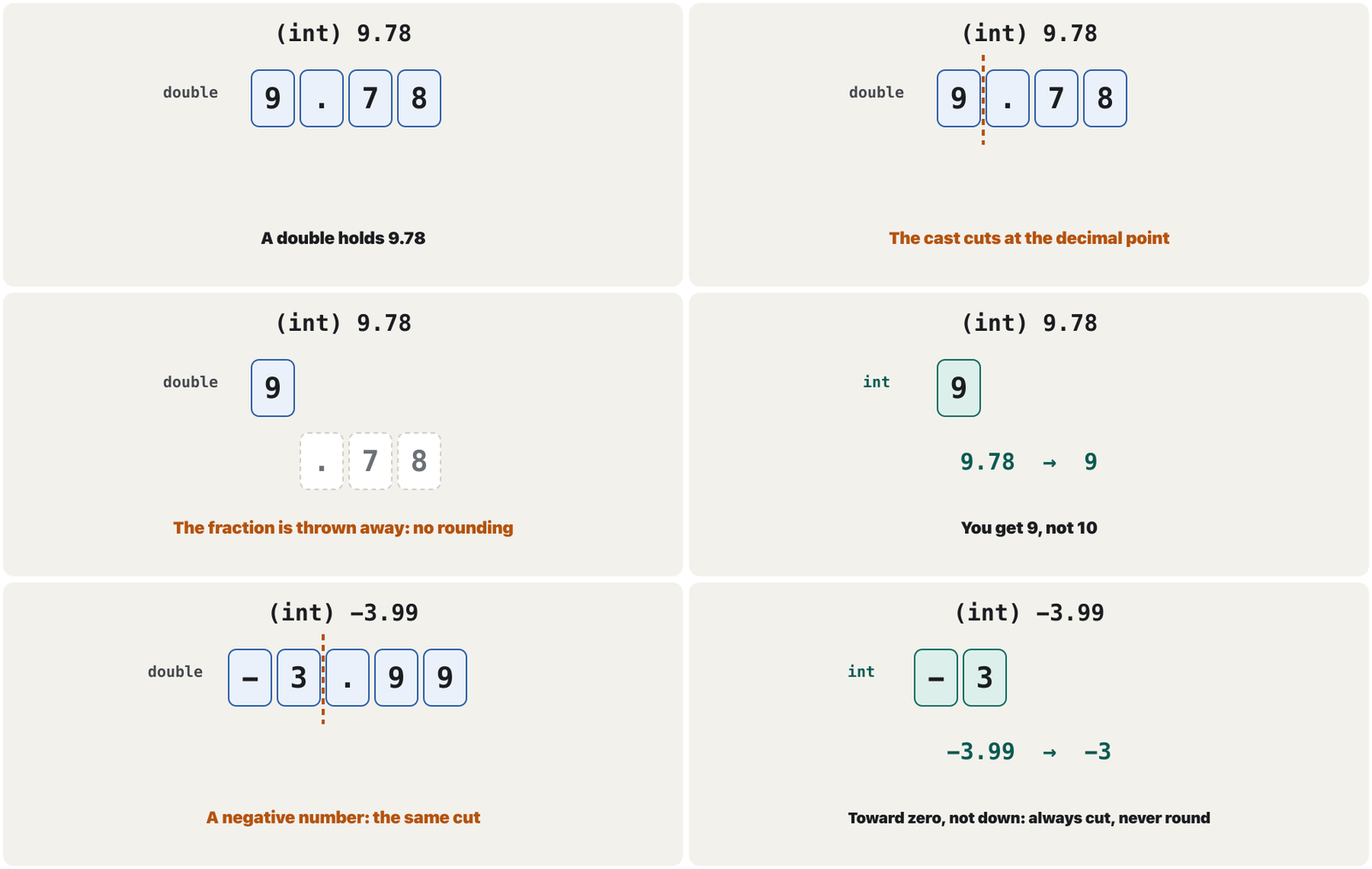
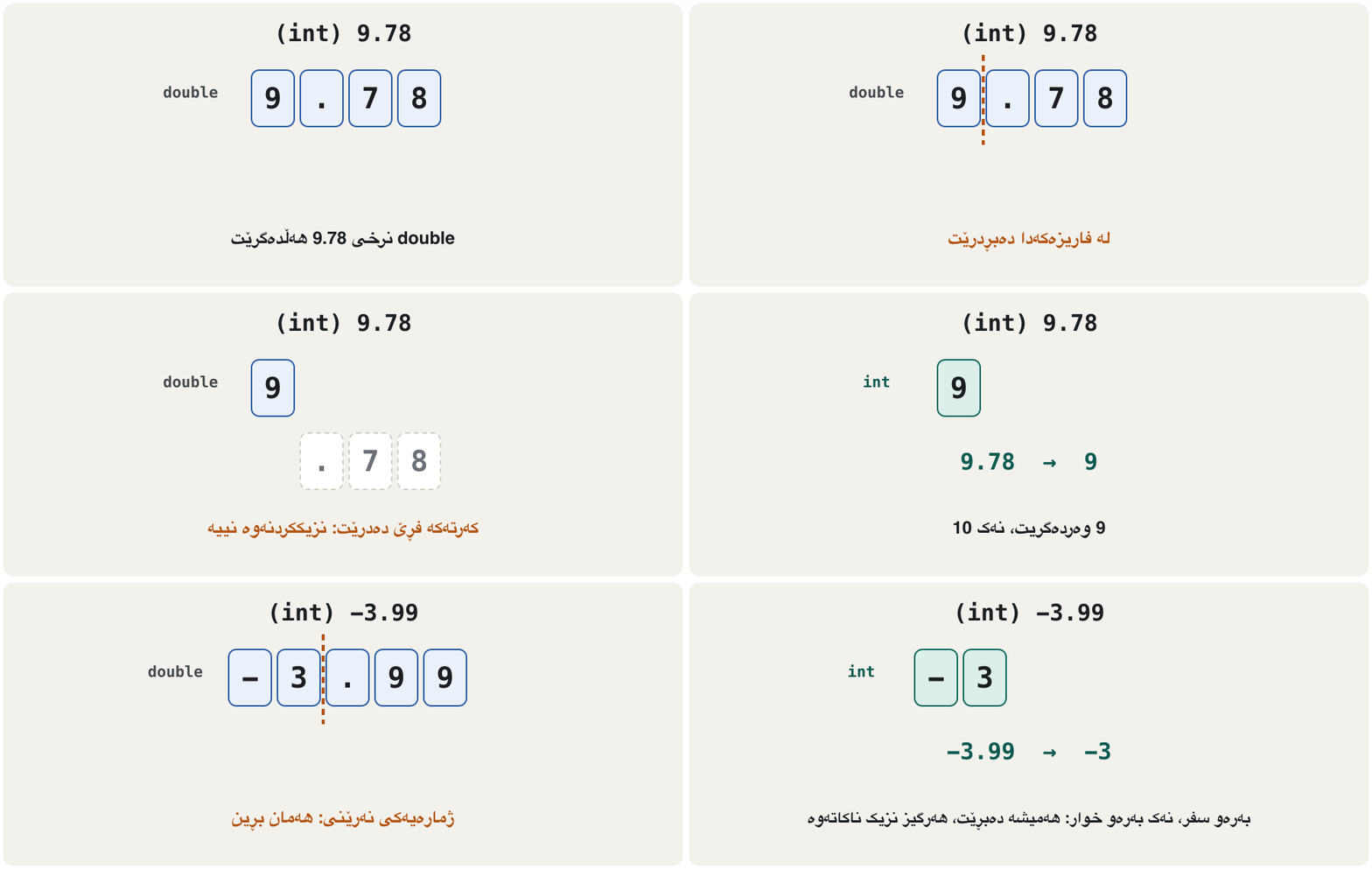
A cast from double or float to a whole-number type does not round. It throws the fraction away (truncation, ), which always moves the number toward zero: 9.78 becomes 9, and -3.99 becomes -3, not -4.
گۆڕین لە double یان floatـەوە بۆ جۆرێکی نزیک ناکاتەوە. فڕێ دەدات ()، کە هەمیشە ژمارەکە بەرەو سفر دەبات: 9.78 دەبێتە 9 و -3.99 دەبێتە -3، نەک -4.
(int) فڕێ دەدات، بەرەو سفرCêITpublic class CutOff {
public static void main(String[] args) {
System.out.println((int) 9.78);
System.out.println((int) 3.99);
System.out.println((int) -3.99);
System.out.println((int) 0.999);
}
}$ java CutOff 9 3 -3 0
Narrowing: you must write the castتەسککردنەوەی جۆر: دەبێت (type) بنووسیت
Rounding instead: Math.roundلە جیاتی بڕین نزیکی بکەرەوە: Math.round
For the nearest whole number, use Math.round instead of a cast. It returns a long, so cast its answer when you need an int:
بۆ نزیکترین ، لە جیاتی (int) Math.round بەکار بهێنە. long دەگەڕێنێتەوە، بۆیە ئەگەر intـت دەوێت جۆری وەڵامەکەی بگۆڕە:
public class RoundOrCut {
    public static void main(String[] args) {
        double price = 9.78;
        System.out.println((int) price);          // cut off
        System.out.println(Math.round(price));    // nearest whole number
        System.out.println((int) -9.78);
        System.out.println(Math.round(-9.78));
        int rounded = (int) Math.round(price);    // Math.round gives a long
        System.out.println(rounded);
    }
}$ java RoundOrCut 9 10 -9 -10 10
Other ways to round (floor, ceil, rint) and the rule for halves are in The Math class.
ڕێگاکانی تری (floor، ceil، rint) و یاسای نیوەکان لە کلاسەکەی Mathدان.
Narrowing: you must write the castتەسککردنەوەی جۆر: دەبێت (type) بنووسیت
When a small type needs no castکەی جۆرێکی بچووک پێویستی بە (type) نییە
There is one exception. A whole number written straight into the code (a ) may go into a byte, short or char without a cast when its value fits, because javac can check a fixed number. A variable is different: javac does not look at what is inside it, so it asks for a cast:
یەک ئاوارتە هەیە. کە ڕاستەوخۆ لە کۆدەکەدا نووسرابێت () دەتوانێت بەبێ (type) بچێتە ناو byte، short یان char ئەگەر جێی ببێتەوە، چونکە javac دەتوانێت ژمارەیەکی جێگیر بپشکنێت. جیاوازە: javac سەیری ناوەوەی ناکات، بۆیە (type) دەوێت:
public class Fits {
    public static void main(String[] args) {
        byte a = 100;          // the constant 100 fits in a byte
        char c = 65;           // 65 fits in a char: it is the letter A
        int x = 100;
        byte b = x;            // x is a variable, not a constant
    }
}$ javac Fits.java
Fits.java:6: error: incompatible types: possible lossy conversion from int to byte
byte b = x; // x is a variable, not a constant
^
1 error(type)ـیان دەوێتCêITNarrowing can change the value completelyتەسککردنەوەی جۆر دەتوانێت نرخەکە بە تەواوی بگۆڕێت
If the value does not fit into the smaller type, you can get a completely different number, and there is no error. Between whole-number types Java keeps only the lowest bits that fit: a byte keeps the last 8. 200 is 11001000 in binary; in a byte the first bit is the sign bit, so it means -56 (200 - 256), the same wrap-round as overflow:
ئەگەر لە جۆرە بچووکەکەدا جێی نەبێتەوە، دەتوانیت ژمارەیەکی بە تەواوی جیاواز وەربگریت و هیچ هەڵەیەکیش نییە. لە نێوان جۆرەکانی Java تەنیا نزمترین دەهێڵێتەوە کە جێیان دەبێتەوە: byte دوایین 8 دەهێڵێتەوە. 200 بە شێوەی 11001000ـە؛ لە byteـدا یەکەم ، بۆیە واتای -56 دەدات (200 - 256)، هەمان سووڕانەوەی سەرڕێژبوون:
public class ByteWrap {
    public static void main(String[] args) {
        int big = 200;
        byte small = (byte) big;
        System.out.println(small);
        System.out.println((byte) 127);
        System.out.println((byte) 128);
        System.out.println((byte) 256);
        System.out.println((short) 70000);
    }
}$ java ByteWrap -56 127 -128 0 4464
(byte) 200 دەسوڕێتەوە بۆ -56CêITThere and back: char, byte and shortبۆ double و گەڕانەوە: char، byte و short
A char is a number too (A char is a number): 'X' is character number 88. So a char widens to int, long, float or double by itself, and comes back only with a cast. The lab task below does this with three types.
charـیش ژمارەیە (charـێک ژمارەیەکە): 'X' ژمارە 88ـە. بۆیە char بە خۆکاری دەبێتە int، long، float یان double و تەنیا بە (char) دەگەڕێتەوە. ئەرکی تاقیگەی خوارەوە ئەمە بە سێ جۆر دەکات.
(type) گەڕانەوەCêITStore char let1 = 'X', byte num = 120 and short year = 2020. Print them, convert each one to double and print again, then convert them back to their original types and print them once more.
char let1 = 'X'، byte num = 120 و short year = 2020 هەڵبگرە. چاپیان بکە، هەریەکەیان بگۆڕە بۆ double و دووپاتە چاپیان بکە، پاشان بیانگەڕێنەوە بۆ جۆرە سەرەکییەکانیان و جارێکی تر چاپیان بکە.
Hintئاماژە
Widening needs nothing; for the way back write the type in brackets.
هیچی ناوێت؛ بۆ گەڕانەوە جۆرەکە لە ناو کەوانەدا بنووسە.
Show answerوەڵامەکە پیشان بدە
public class Task4 {
    public static void main(String[] args) {
        char let1 = 'X';
        byte num = 120;
        short year = 2020;
        System.out.println("******* Task 4 *******");
        System.out.println("all values before type casting:");
        System.out.println(let1 + "\t" + num + "\t" + year);

        double d1 = let1;      // widening: automatic
        double d2 = num;
        double d3 = year;
        System.out.println("all values after type casting:");
        System.out.println(d1 + "\t" + d2 + "\t" + d3);

        char back1 = (char) d1;     // narrowing: a cast is needed
        byte back2 = (byte) d2;
        short back3 = (short) d3;
        System.out.println("reversing back all values to the original data type:");
        System.out.println(back1 + "\t" + back2 + "\t" + back3);
    }
}$ java Task4 ******* Task 4 ******* all values before type casting: X 120 2020 all values after type casting: 88.0 120.0 2020.0 reversing back all values to the original data type: X 120 2020
The way to double is widening, so no cast is written; the way back is narrowing and needs (char), (byte) and (short). 'X' prints as 88.0 because a double holds its character number. \t is a tab, which lines the values up.
ڕێگای چوون بۆ double ، بۆیە هیچ (type)ـێک نانووسرێت؛ ڕێگای گەڕانەوە و (char)، (byte) و (short)ـی دەوێت. 'X' وەک 88.0 چاپ دەکرێت چونکە double هەڵدەگرێت. \t تابێکە کە ڕیز دەکات.
Where the cast goes: a percentageشوێنی (double): ڕێژەی سەدی
Casts matter in real calculations. Shilan came to 18 of 24 lessons: what percentage is that? Both counts are int, so the place of (double) decides the answer:
لە ژماردنی ڕاستەقینەدا گرنگە. شیلان لە 18 وانە لە کۆی 24 وانە ئامادە بوو: ئەمە چەند لە سەدە؟ هەردوو ژمارەکە intـن، بۆیە شوێنی (double) وەڵامەکە دیاری دەکات:
public class Attendance {
    public static void main(String[] args) {
        int attended = 18;      // Shilan came to 18 of 24 lessons
        int lessons = 24;
        System.out.println(attended / lessons * 100);
        System.out.println((double) (attended / lessons) * 100);
        System.out.println((double) attended / lessons * 100);
    }
}$ java Attendance 0 0.0 75.0
A cast belongs to the value right after it and is done before *, / and % (precedence). (double) attended makes 18.0 first, so the division is real division. (double) (attended / lessons) is too late: 18 / 24 is already 0 (integer division).
(double) هی ئەو کە ڕاستەوخۆ دوای دێت و پێش *، / و % ئەنجام دەدرێت (پێشینەیی کارپێکەرەکان). (double) attended سەرەتا 18.0 دروست دەکات، بۆیە دابەشکردنەکە دابەشکردنی ڕاستەقینەیە. (double) (attended / lessons) زۆر درەنگە: 18 / 24 پێشتر بووە 0 (دابەشکردنی ژمارەی تەواو).
Common mistakesهەڵە باوەکان
| You wroteنووسیت | Java saysJava دەڵێت | Fixچارەسەر |
|---|---|---|
int n = 9.78; | incompatible types: possible lossy conversion from double to int | Write (int) 9.78 if cutting off is what you want, or keep a double.ئەگەر بڕینت دەوێت (int) 9.78 بنووسە، یان double بهێڵەرەوە. |
(int) 9.78 and expecting 10(int) 9.78 و چاوەڕوانی 10 | (no message: 9)(هیچ پەیامێک: 9) | Math.round(9.78) gives 10.Math.round(9.78) دەدات 10. |
char c = s; // s is a short | possible lossy conversion from short to char | short ↔ char always needs a cast: (char) s.short ↔ char هەمیشە (type)ـی دەوێت: (char) s. |
(double) (a / b) | (no message: the fraction is already gone)(هیچ پەیامێک: پێشتر ڕۆیشتووە) | Cast an operand: (double) a / b.جۆری بگۆڕە: (double) a / b. |
(byte) 200 and expecting 200(byte) 200 و چاوەڕوانی 200 | (no message: -56)(هیچ پەیامێک: -56) | Use a type that fits, such as int.جۆرێک بەکار بهێنە کە جێی ببێتەوە، وەک int. |
int n = (int) passed; // boolean | incompatible types: boolean cannot be converted to int | A boolean is never a number; decide with an if statement.boolean هەرگیز ژمارە نییە؛ بە ڕستەی if بڕیار بدە. |
int n = (int) "42"; | incompatible types: String cannot be converted to int | A cast cannot read text: Integer.parseInt("42") gives 42 (Numbers and text).(int) ناتوانێت دەق بخوێنێتەوە: Integer.parseInt("42") دەدات 42 (ژمارە و دەق). |
Practiceڕاهێنان
What does each line print? (int) 7.9 · (int) -7.9 · (byte) 130 · (char) 75 · Math.round(7.5) · (double) 7 / 2 · (double) (7 / 2)
هەر دێڕێک چی چاپ دەکات؟ (int) 7.9 · (int) -7.9 · (byte) 130 · (char) 75 · Math.round(7.5) · (double) 7 / 2 · (double) (7 / 2)
Show answerوەڵامەکە پیشان بدە
public class Predict {
    public static void main(String[] args) {
        System.out.println((int) 7.9);
        System.out.println((int) -7.9);
        System.out.println((byte) 130);
        System.out.println((char) 75);
        System.out.println(Math.round(7.5));
        System.out.println((double) 7 / 2);
        System.out.println((double) (7 / 2));
    }
}$ java Predict 7 -7 -126 K 8 3.5 3.0
Casts cut toward zero (7, -7); 130 wraps round to 130 - 256 = -126; character 75 is K; Math.round sends 7.5 up to 8; (double) 7 / 2 is real division, 3.5; in (double) (7 / 2) the integer division comes first: 3.0.
بەرەو سفر دەبڕێت (7، -7)؛ 130 دەسوڕێتەوە بۆ 130 - 256 = -126؛ ژمارە 75 پیتی Kـە؛ Math.round 7.5 دەبات بۆ 8؛ (double) 7 / 2 دابەشکردنی ڕاستەقینەیە، 3.5؛ لە (double) (7 / 2)ـدا یەکەم دێت: 3.0.
This program does not compile. Read the message, then fix it in two different ways.
ئەم کۆمپایل نابێت. بخوێنەرەوە، پاشان بە دوو ڕێگای جیاواز چاکی بکە.
public class Total {
    public static void main(String[] args) {
        int total = 7.5 * 2;
        System.out.println(total);
    }
}$ javac Total.java
Total.java:3: error: incompatible types: possible lossy conversion from double to int
int total = 7.5 * 2;
^
1 errorShow answerوەڵامەکە پیشان بدە
public class Total {
    public static void main(String[] args) {
        double total = 7.5 * 2;          // keep the fraction
        int whole = (int) (7.5 * 2);     // or cut it off on purpose
        System.out.println(total);
        System.out.println(whole);
    }
}$ java Total 15.0 15
7.5 * 2 is a double (15.0), and javac will not put it into an int by itself. Keep it as a double, or cast on purpose with (int).
7.5 * 2 جۆری doubleـە (15.0) و javac خۆی نایخاتە ناو int. وەک double بیهێڵەرەوە، یان بە ئەنقەست (int) بنووسە.
Hana's two marks add up to 15. Store int sum = 15; and int count = 2; and print the average as 7.5, not 7.
کۆی دوو نمرەی هانا 15ـە. int sum = 15; و int count = 2; هەڵبگرە و تێکڕاکە وەک 7.5 چاپ بکە، نەک 7.
Show answerوەڵامەکە پیشان بدە
public class Average {
    public static void main(String[] args) {
        int sum = 15;           // two marks: 7 and 8
        int count = 2;
        double average = (double) sum / count;
        System.out.println(average);
    }
}$ java Average 7.5
(double) sum turns 15 into 15.0 before the division.
(double) sum پێش دابەشکردن 15 دەکات بە 15.0.
Without running it, say what (byte) 300 and (byte) -129 print. Then check with Java.
بەبێ جێبەجێکردن بڵێ (byte) 300 و (byte) -129 چی چاپ دەکەن. پاشان بە Java بیپشکنە.
Show answerوەڵامەکە پیشان بدە
public class Wrap300 {
    public static void main(String[] args) {
        System.out.println((byte) 300);
        System.out.println((byte) -129);
    }
}$ java Wrap300 44 127
A byte has 256 values, so add or subtract 256 until the number is in -128 … 127: 300 - 256 = 44 and -129 + 256 = 127.
byte 256 هەیە، بۆیە 256 زیاد یان کەم بکە تا ژمارەکە بکەوێتە نێوان -128 و 127: 300 - 256 = 44 و -129 + 256 = 127.
Summaryکورتە
- Widening (smaller to bigger type) is automatic:
byte → short → int → long → float → double, andchar → int.inttofloat,longtofloatandlongtodoublemay lose digits. - Narrowing (bigger to smaller) needs a cast, the type in brackets:
(int) 9.78.short ↔ charalways needs one. - A cast to a whole-number type cuts the fraction off, toward zero;
Math.roundrounds. - A value that does not fit wraps round (
(byte) 200is -56) or, from adouble, stops at the largestint. - A cast applies to the value right after it:
(double) a / b, not(double) (a / b).
- (جۆری بچووک بۆ گەورە) خۆکارە:
byte → short → int → long → float → doubleوchar → int.intبۆfloat،longبۆfloatوlongبۆdoubleلەوانەیە لەدەست بدەن. - (گەورە بۆ بچووک) جۆرەکەی لە ناو کەوانەدا دەوێت:
(int) 9.78.short ↔ charهەمیشە پێویستی پێیەتی. - گۆڕین بۆ جۆرێکی دەبڕێتەوە، بەرەو سفر؛
Math.roundنزیک دەکاتەوە. - کە جێی نەبێتەوە دەسوڕێتەوە (
(byte) 200دەبێتە-56)، یان لەdoubleـەوە لە گەورەترینintـدا دەوەستێت. (double)لەسەر ئەو کە ڕاستەوخۆ دوای دێت:(double) a / b، نەک(double) (a / b).
Why does double d = 9; compile but int i = 9.5; does not?بۆچی double d = 9; کۆمپایل دەبێت بەڵام int i = 9.5; نا؟
int → double is widening and always fits. double → int is narrowing and could lose the .5, so javac wants a cast.
int بۆ double و هەمیشە جێی دەبێتەوە. double بۆ int و لەوانەیە 0.5 لەدەست بدات، بۆیە javac (int)ـی دەوێت.
What is the difference between (int) 2.9 and Math.round(2.9)?جیاوازیی نێوان (int) 2.9 و Math.round(2.9) چییە؟
The cast cuts off the fraction and gives 2; Math.round gives the nearest whole number, 3 (as a long).
(int) دەبڕێتەوە و 2 دەدات؛ Math.round نزیکترین دەدات، 3 (وەک long).
Why is (byte) 200 equal to -56?بۆچی (byte) 200 یەکسانە بە -56؟
A byte keeps only the last 8 bits, 11001000. With the sign bit set, that pattern means 200 - 256 = -56.
byte تەنیا دوایین 8 دەهێڵێتەوە، 11001000. کاتێک 1ـە، ئەو شێوەیە واتە 200 - 256 = -56.
Lesson complete!وانەکە تەواو بوو!
Well done. Review the key terms, then go on to the next lesson.دەستخۆش. سەیرێکی زاراوە سەرەکییەکان بکەرەوە، پاشان بڕۆ بۆ وانەی داهاتوو.
Key termsزاراوە سەرەکییەکان
Arithmetic, Increment and Assignment Operatorsکارپێکەرە ژمێرەییەکان و کارپێکەرەکانی دانانی نرخ، ++ و --
Related lecturesوانە پەیوەندیدارەکان
- Arithmetic, Increment and Assignment Operatorsکارپێکەرە ژمێرەییەکان و کارپێکەرەکانی دانانی نرخ،
++و-- - The Math Classکلاسەکەی Math
- Variables, Names and Constantsگۆڕاوەکان، ناوەکان و نەگۆڕەکان
- Variables and Data Typesگۆڕاوەکان و جۆرەکانی دراوە
- Signed Numbers: Sign-Magnitude, 1's and 2's Complementژمارە نیشانەدارەکان: نیشانە و نرخی ڕووت، تەواوکەری یەک و تەواوکەری دوو
References and further readingسەرچاوەکان و خوێندنەوەی زیاتر
This lecture is a first edition. The Kurdish text and terminology are waiting for review by Kurdish IT teachers.ئەم وانەیە چاپی یەکەمە. دەقە کوردییەکە و زاراوەکانی چاوەڕێی پێداچوونەوەی مامۆستایانی کوردی بواری IT ن.