Chapterبەش 8 · Lectureوانە 8.3
Minterms, Maxterms and Truth Tablesمینتێرمەکان، ماکستێرمەکان و خشتەکانی ڕاستی
Every row of a truth table has one minterm (a product that is 1 only there) and one maxterm (a sum that is 0 only there). Learn to write and number them, to use Σm and ΠM, to see that both describe the same function, and to build truth tables from standard SOP and POS expressions.
هەموو ڕیزێکی یەک (لێکدانێک کە تەنها لەوێ 1ـە) و یەک (کۆیەک کە تەنها لەوێ 0ـە) هەیە. فێر دەبیت چۆن بیاننووسیت و ژمارەیان بۆ دابنێیت، Σm و ΠM بەکاربهێنیت، ببینیت هەردووکیان هەمان وەسف دەکەن و لە و ستانداردەوە دروست بکەیت.
What you will learnچی فێر دەبیت
- Write the minterm and the maxterm of any row and name them and .
- Write a function as and as and convert between them.
- Build the truth table of a standard SOP or POS expression.
- Avoid the classic mistake of putting the bars on the wrong bits.
- و هەر ڕیزێک بنووسیت و ناویان بنێیت و .
- وەک و وەک بنووسیت و لە نێوانیاندا بیگۆڕیت.
- یان ستاندارد دروست بکەیت.
- خۆت لە هەڵە باوەکەی دانانی هێڵ لەسەر هەڵە بپارێزیت.
One row, one termیەک ڕیز، یەک بڕ
In a standard SOP or POS expression, every term contains every variable of the function, plain or with a bar. Such a term is tied to exactly one row of the truth table. A function of three variables has rows, so there are 8 of these product terms and 8 of these sum terms. They have names: minterms and maxterms. This lesson shows how to write them, how to name them with a number, and how to move between an expression and its truth table.
لە SOP یان POSـدا هەموو بڕێک هەموو لەخۆ دەگرێت، یان بە ساکاری یان بە هێڵێک لەسەریەوە. بڕێکی وا ڕێک بە یەک ڕیزی بەستراوە. بە سێ ڕیزی هەیە، بۆیە 8 وا و 8 وا هەن. ناوی تایبەتیان هەیە: و . ئەم وانەیە نیشانی دەدات چۆن دەیاننووسیت، چۆن بە ژمارەیەک ناویان دەنێیت و چۆن لە دەچیت بۆ و بە پێچەوانەوە.
Picture a building with 8 flats, numbered 0 to 7 — one flat for each row of a 3-variable truth table. A minterm is like a parcel with a complete address: it reaches one flat only (it is 1 in one row and 0 everywhere else). A maxterm is like a planned power cut for one flat: every flat has electricity (1) except that one (0).
باڵەخانەیەک بهێنە بەرچاوت کە 8 شوقەی هەیە بە ژمارەی 0 تا 7 — بۆ هەر ڕیزێکی بە سێ شوقەیەک. وەک پاکەتێکە کە ناونیشانێکی تەواوی لەسەرە: تەنها دەگاتە یەک شوقە (لە یەک ڕیزدا 1ـە و لە هەموو شوێنێکی تردا 0). وەک بڕینی کارەبای پلاندارە بۆ یەک شوقە: هەموو شوقەکان کارەبایان هەیە (1) جگە لەو یەک شوقەیە (0).
Where the analogy stops workingسنووری ئەم نموونەیە
A real flat can receive many parcels. In logic each row has exactly one minterm and one maxterm, and a function has either a 1 or a 0 in that row, never both.
شوقەیەکی ڕاستەقینە دەتوانێت چەندین پاکەت وەربگرێت. لە لۆجیکدا هەر ڕیزێک ڕێک یەک و یەک هەیە و لەو ڕیزەدا یان 1ـە یان 0، هەرگیز هەردووکیان نا.
Minterms: equal to 1 in one rowمینتێرمەکان: تەنها لە یەک ڕیزدا 1
A product term that contains every variable once, plain or complemented, so it is 1 for exactly one input row. Row 101 gives the minterm , written .
کە هەموو گۆڕاوێک تەنها یەک جار لەخۆ دەگرێت، ئاسایی یان بە تەواوکەر، بۆیە ڕێک بۆ یەک ڕیزی 1ـە. ڕیزی 101 مینتێرمی دەدات کە بە دەنووسرێت.
To write the minterm of a row, look at its bits: a variable whose bit is 1 is written plain, a variable whose bit is 0 gets a bar. Take row 5, where : A is 1, so write ; B is 0, so write ; C is 1, so write . The minterm is .
بۆ نووسینی ڕیزێک سەیری بکە: کە 1 بێت بە ساکاری دەنووسرێت، ئەوەی 0 بێت هێڵێکی لەسەر دادەنرێت. ڕیزی 5 وەربگرە کە تێیدا : A یەکسانە بە 1، بۆیە بنووسە؛ B یەکسانە بە 0، بۆیە بنووسە؛ C یەکسانە بە 1، بۆیە بنووسە. ـە.
Why this works: a product (AND) is 1 only when every literal in it is 1. In row 101 the literals , and are all 1, so . In every other row at least one literal is 0, and the product is 0. The minterm is named with the row number in decimal: , so .
بۆچی ئەمە ڕاستە: لێکدان (AND) تەنها کاتێک 1ـە کە هەموو ناوی 1 بن. لە ڕیزی 101ـدا ، و هەموویان 1ن، بۆیە . لە هەر ڕیزێکی تردا لانیکەم یەک 0ـە و لێکدانەکە دەبێتە 0. ناوی ژمارەی ڕیزەکەیە بە : ، بۆیە .
Maxterms: equal to 0 in one rowماکستێرمەکان: تەنها لە یەک ڕیزدا 0
A sum term that contains every variable once, plain or complemented, so it is 0 for exactly one input row. Row 101 gives the maxterm , written .
کە هەموو گۆڕاوێک تەنها یەک جار لەخۆ دەگرێت، ئاسایی یان بە تەواوکەر، بۆیە ڕێک بۆ یەک ڕیزی 0ـە. ڕیزی 101 ماکستێرمی دەدات کە بە دەنووسرێت.
A maxterm uses the opposite rule: a variable whose bit is 0 is written plain, a variable whose bit is 1 gets a bar. For row 5 () the maxterm is , named with a capital M.
ڕێسای پێچەوانە بەکار دەهێنێت: کە 0 بێت بە ساکاری دەنووسرێت، ئەوەی 1 بێت هێڵی لەسەر دادەنرێت. بۆ ڕیزی 5 () ـە و ناوی ـە بە Mـی گەورە.
Why the rule is reversed: a sum (OR) is 0 only when every literal in it is 0. In row 101 we need each literal to be 0: because , , and because . So in this row. In any other row at least one literal is 1, and the sum is 1.
بۆچی ڕێساکە پێچەوانەیە: کۆ (OR) تەنها کاتێک 0ـە کە هەموو ناوی 0 بن. لە ڕیزی 101ـدا پێویستە هەر 0 بێت: چونکە ، و چونکە . بۆیە لەم ڕیزەدا . لە هەر ڕیزێکی تردا لانیکەم یەک 1ـە و کۆکە دەبێتە 1.
All eight minterms and maxtermsهەر هەشت مینتێرم و ماکستێرمەکە
Here is the complete list for three variables. Read each row both ways: the minterm bars the 0s, the maxterm bars the 1s.
ئەمە لیستی تەواوە بۆ سێ . هەر ڕیزێک بە هەردوو ڕێگاکە بخوێنەوە: هێڵ لەسەر 0ـەکان دادەنێت و لەسەر 1ـەکان.
| Rowڕیز | Minterm (= 1 in this row) (لەم ڕیزەدا = 1) | Maxterm (= 0 in this row) (لەم ڕیزەدا = 0) | |||
|---|---|---|---|---|---|
| 0 | |||||
| 1 | |||||
| 2 | |||||
| 3 | |||||
| 4 | |||||
| 5 | |||||
| 6 | |||||
| 7 |
With four variables A, B, C and D there are 16 rows, to and to . The rules do not change: → 1001 → . The order of the variables matters: A is always the leftmost bit (the most significant one).
بە چوار A، B، C و D، 16 ڕیز هەن: تا و تا . ڕێساکان ناگۆڕێن: . ڕیزبەندیی گرنگە: A هەمیشە لای چەپە ().
Standard SOP = a sum of mintermsSOPـی ستاندارد = کۆی مینتێرمەکان
Every term of a standard SOP expression is a minterm, so a standard SOP is simply a sum of minterms, also called the minterm expansion of the function. You already know from Standard SOP and POS Forms that a standard SOP has one product term for each row where the function is 1. Now each of those terms has a name and a number, so the whole function fits in one short line.
هەموو بڕێکی ، بۆیە ستاندارد بە سادەیی کۆی ، کە پێی دەوترێت فراوانکردنی . لە SOP و POSـی ستاندارد دەزانیت کە ستاندارد بۆ هەر ڕیزێک کە تێیدا 1 بێت هەیە. ئێستا هەر یەکێک لەو بڕانە ناو و ژمارەیەکی هەیە، بۆیە هەموو لە دێڕێکی کورتدا جێ دەبێتەوە.
Start from the standard SOP of the course notes:
لە ستانداردی تێبینییەکانی کۆرسەکەوە دەست پێ بکە:
Write each term as bits (plain = 1, bar = 0), then as a row number:
هەر بڕێک وەک بنووسە (ساکار = 1، هێڵدار = 0) و پاشان وەک ژمارەی ڕیز:
Another way to see it: every minterm appears with a coefficient, and the coefficient is the output in that row (0 = left out, 1 = kept):
ڕێگایەکی تر بۆ بینینی: هەموو هاوکۆلکەیەکی هەیە و هاوکۆلکەکە ئەو ڕیزەیە (0 = لادەبرێت، 1 = دەمێنێتەوە):
Write it short with Σ ("sum of minterms"):
بە Σ کورتی بنووسەوە («کۆی »):
Standard POS = a product of maxtermsPOSـی ستاندارد = لێکدانی ماکستێرمەکان
Every sum term of a standard POS expression is a maxterm, so a standard POS is a product of maxterms (the maxterm expansion). The function is 0 exactly in the rows of its maxterms and 1 in all the others.
هەموو ، بۆیە ستاندارد لێکدانی (فراوانکردنی ). ڕێک لە ڕیزەکانی خۆیدا 0ـە و لە هەموو ڕیزەکانی تردا 1.
Start from the standard POS of the course notes:
لە ستانداردی تێبینییەکانی کۆرسەکەوە دەست پێ بکە:
Write each sum term as bits (plain = 0, bar = 1), then as a row number:
هەر وەک بنووسە (ساکار = 0، هێڵدار = 1) و پاشان وەک ژمارەی ڕیز:
Write it short with Π ("product of maxterms"):
بە Π کورتی بنووسەوە («لێکدانی »):
One function, two descriptionsیەک نەخشەی بوولی، دوو وەسف
Put the two examples side by side: and are the same function. The minterm list names the rows where ; the maxterm list names all the other rows, where . Together the two lists contain every row number once, and no number is in both.
دوو نموونەکە لە تەنیشت یەک دابنێ: و هەمان . لیستی ئەو ڕیزانە دەڵێت کە ؛ لیستی هەموو ڕیزەکانی تر دەڵێت کە . هەردوو لیستەکە پێکەوە هەموو ژمارەیەکی ڕیز یەک جار لەخۆ دەگرن و هیچ ژمارەیەک لە هەردووکیاندا نییە.
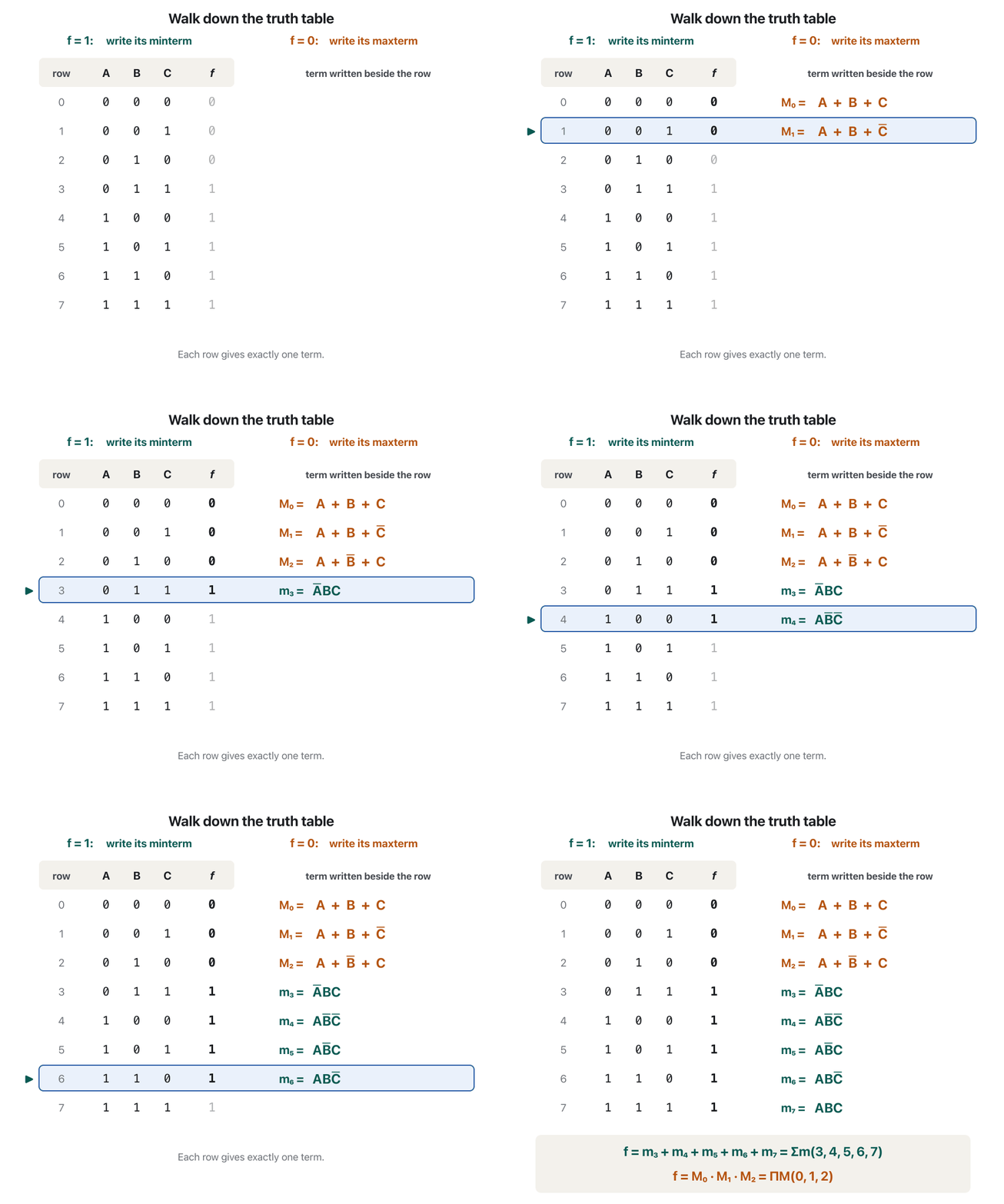
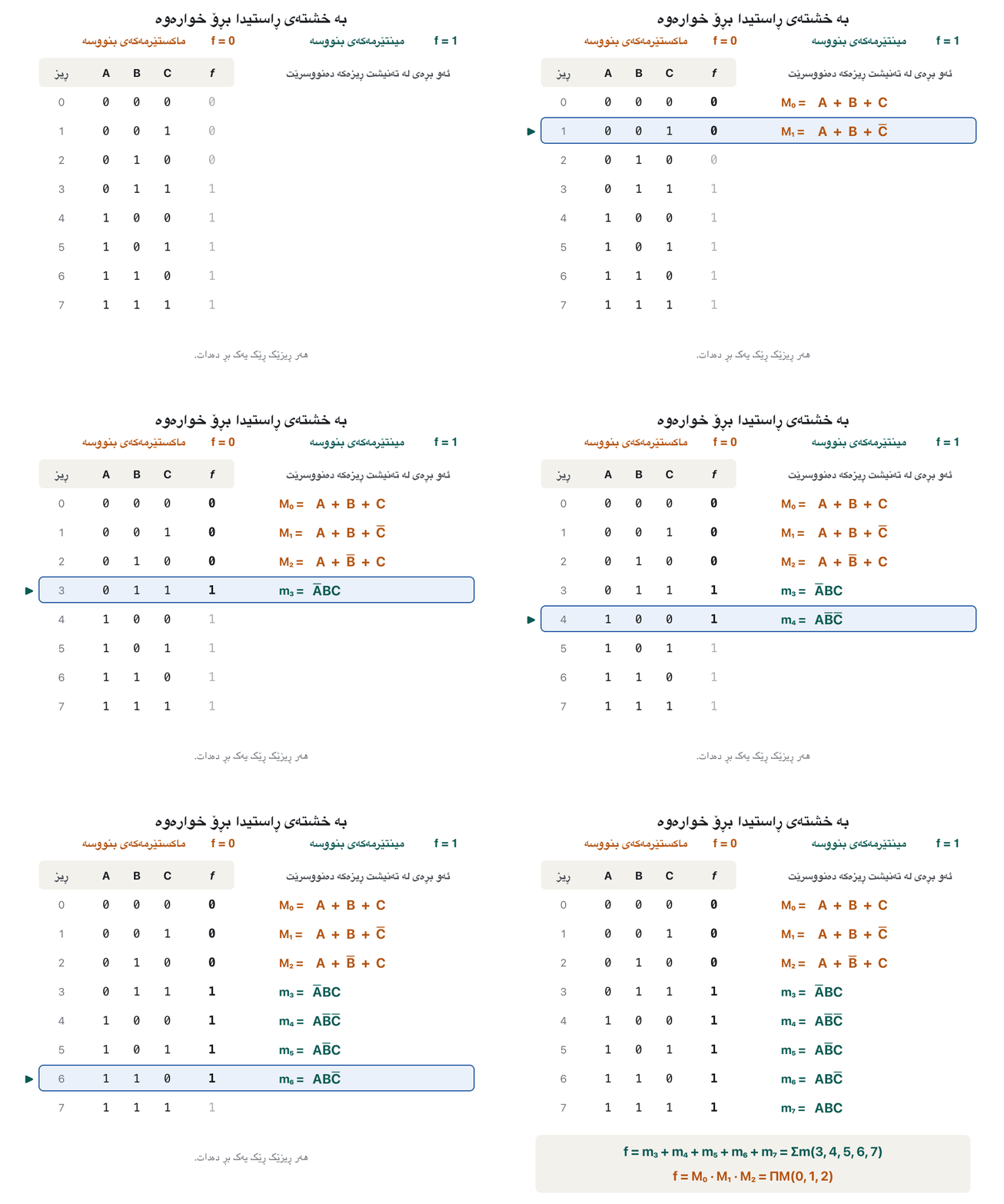
So converting is easy: to go from Σm to ΠM (or back), write the row numbers that are missing from the list. This is the same idea as converting a standard SOP into a standard POS in the previous lesson, written with numbers instead of terms.
بۆیە گۆڕین ئاسانە: بۆ چوون لە Σm بۆ ΠM (یان بە پێچەوانەوە) ئەو ژمارانەی ڕیز بنووسە کە لە لیستەکەدا نین. ئەمە هەمان بیرۆکەی گۆڕینی ستانداردە بۆ ستاندارد لە وانەی پێشوو، بەڵام بە ژمارە لە جیاتی بڕ.
From a standard SOP to a truth tableلە کۆی لێکدانەکانی ستانداردەوە بۆ خشتەی ڕاستی
Here you go from a standard expression to its truth table — the opposite of reading the standard forms off a truth table. Because every term is a minterm, each term marks exactly one row.
لێرەدا لە ستانداردەوە دەچیت بۆ — پێچەوانەی خوێندنەوەی شێوە ستانداردەکان لە خشتەی ڕاستییەوە. چونکە هەموو بڕێک ، هەر بڕێک ڕێک یەک ڕیز دیاری دەکات.
Write the binary value of each product term: a plain variable is 1, a barred one is 0.
بەهای هەر بنووسە: ساکار 1ـە و هێڵدار 0.
Put a 1 in the output column of each of those rows.
لە ستوونی هەر یەکێک لەو ڕیزانەدا 1 دابنێ.
Put a 0 in every other row.
لە هەموو ڕیزەکانی تردا 0 دابنێ.
Example (Q8 i of the course): . The terms are 001, 100 and 111, so in rows 1, 4 and 7: .
نموونە (پرسیاری Q8 iـی کۆرسەکە): . بڕەکان 001، 100 و 111ن، بۆیە X لە ڕیزەکانی 1، 4 و 7دا 1ـە: .
| Rowڕیز | ||||
|---|---|---|---|---|
| 0 | 0 | 0 | 0 | 0 |
| 1 | 0 | 0 | 1 | 1 |
| 2 | 0 | 1 | 0 | 0 |
| 3 | 0 | 1 | 1 | 0 |
| 4 | 1 | 0 | 0 | 1 |
| 5 | 1 | 0 | 1 | 0 |
| 6 | 1 | 1 | 0 | 0 |
| 7 | 1 | 1 | 1 | 1 |
From a standard POS to a truth tableلە لێکدانی کۆکانی ستانداردەوە بۆ خشتەی ڕاستی
Write the binary value of each sum term: a plain variable is 0, a barred one is 1.
بەهای هەر بنووسە: ساکار 0ـە و هێڵدار 1.
Put a 0 in the output column of each of those rows.
لە ستوونی هەر یەکێک لەو ڕیزانەدا 0 دابنێ.
Put a 1 in every other row.
لە هەموو ڕیزەکانی تردا 1 دابنێ.
Example (Q9 ii of the course): . The sum terms are 010, 001 and 111, so in rows 2, 1 and 7, and in rows 0, 3, 4, 5 and 6: .
نموونە (پرسیاری Q9 iiـی کۆرسەکە): . 010، 001 و 111ن، بۆیە X لە ڕیزەکانی 2، 1 و 7دا 0ـە و لە ڕیزەکانی 0، 3، 4، 5 و 6دا 1ـە: .
| Rowڕیز | ||||
|---|---|---|---|---|
| 0 | 0 | 0 | 0 | 1 |
| 1 | 0 | 0 | 1 | 0 |
| 2 | 0 | 1 | 0 | 0 |
| 3 | 0 | 1 | 1 | 1 |
| 4 | 1 | 0 | 0 | 1 |
| 5 | 1 | 0 | 1 | 1 |
| 6 | 1 | 1 | 0 | 1 |
| 7 | 1 | 1 | 1 | 0 |
A class quiz and its classic mistakeتاقیکردنەوەیەکی پۆل و هەڵە باوەکەی
A short class quiz asked: determine the truth table of . The course author's answer started with the right plan: "the expression is POS, so we have to determine its maxterms". Write the maxterm of every row, mark the ones that appear in X — there — and every other row is 1.
تاقیکردنەوەیەکی کورتی پۆل پرسیبووی: ئەمە دیاری بکە: . وەڵامەکەی خاوەنی کۆرسەکە بە پلانێکی دروست دەستی پێ کرد: « POSـە، بۆیە دەبێت دیاری بکەین». هەموو ڕیزێک بنووسە، ئەوانەی لە Xـدا هەن نیشانە بکە — لەوێدا — و هەموو ڕیزەکانی تر 1ن.
| Rowڕیز | Maxterm of the row ڕیزەکە | In X?لە Xـدا هەیە؟ | ||
|---|---|---|---|---|
| 0 | yesبەڵێ | 0 | ||
| 1 | yesبەڵێ | 0 | ||
| 2 | noنەخێر | 1 | ||
| 3 | yesبەڵێ | 0 | ||
| 4 | yesبەڵێ | 0 | ||
| 5 | noنەخێر | 1 | ||
| 6 | yesبەڵێ | 0 | ||
| 7 | noنەخێر | 1 |
So : X is 1 only for 010, 101 and 111.
کەواتە : X تەنها بۆ 010، 101 و 111 یەکسانە بە 1.
A class quiz and its classic mistakeتاقیکردنەوەیەکی پۆل و هەڵە باوەکەی
The classic mistake: bars on the wrong bitsهەڵە باوەکە: هێڵ لەسەر بیتەکانی هەڵە
Common mistakesهەڵە باوەکان
| Mistakeهەڵە | Fixچارەسەر |
|---|---|
| Using the minterm rule for a maxterm (bars on the 0s).بەکارهێنانی ڕێسای بۆ (هێڵ لەسەر 0ـەکان). | Maxterm: bars on the 1s. Row 101 → .: هێڵ لەسەر 1ـەکان. ڕیزی 101 ← . |
| Calling a sum term a minterm, or a product term a maxterm.ناونانی بە ، یان بە . | Minterms are products (AND), maxterms are sums (OR) — always. لێکدانن (AND) و کۆن (OR) — هەمیشە. |
| Writing and with the same numbers for one function.نووسینی و بە هەمان ژمارەکان بۆ یەک . | The maxterm numbers are the rows missing from the minterm list.ژمارەکانی ئەو ڕیزانەن کە لە لیستی نین. |
| Multiplying coefficients into maxterms ().لێکدانی هاوکۆلکە لەگەڵ (). | Add them: . Or simply write .کۆیان بکەرەوە: . یان بە سادەیی بنووسە. |
| Reading the variables in a different order (C as the leftmost bit).خوێندنەوەی بە ڕیزبەندییەکی تر (C وەک لای چەپ). | Keep the order A, B, C (, D): A is the leftmost bit of the row number.ڕیزبەندیی A، B، C (، D) بپارێزە: A لای چەپی ژمارەی ڕیزەکەیە. |
Exercisesڕاهێنانەکان
Determine the binary values for which each standard SOP expression is equal to 1: (a) (b)
بۆ هەر یەکێک لەم SOPـە ستانداردانە، ئەو بەها دیاری بکە کە تێیاندا یەکسانە بە 1: (أ) (ب)
Hintئاماژە
Each minterm gives one binary value: plain = 1, bar = 0.
هەر یەک بەهای دەدات: ساکار = 1، هێڵدار = 0.
Show answerوەڵامەکە پیشان بدە
(a) 1111, 1001 and 0000, so . (b) 011, 101, 110, 010 and 111, so .
(أ) 1111، 1001 و 0000، کەواتە . (ب) 011، 101، 110، 010 و 111، کەواتە .
Determine the binary values for which each standard POS expression is equal to 0: (a) (b)
بۆ هەر یەکێک لەم POSـە ستانداردانە، ئەو بەها دیاری بکە کە تێیاندا یەکسانە بە 0: (أ) (ب)
Hintئاماژە
Each maxterm gives one binary value: plain = 0, bar = 1.
هەر یەک بەهای دەدات: ساکار = 0، هێڵدار = 1.
Show answerوەڵامەکە پیشان بدە
(a) 0000, 0110 and 1111, so . (b) 010, 100, 111, 001 and 011, so .
(أ) 0000، 0110 و 1111، کەواتە . (ب) 010، 100، 111، 001 و 011، کەواتە .
Develop the truth table of .
دروست بکە.
Show answerوەڵامەکە پیشان بدە
| Rowڕیز | ||||
|---|---|---|---|---|
| 0 | 0 | 0 | 0 | 0 |
| 1 | 0 | 0 | 1 | 0 |
| 2 | 0 | 1 | 0 | 1 |
| 3 | 0 | 1 | 1 | 0 |
| 4 | 1 | 0 | 0 | 0 |
| 5 | 1 | 0 | 1 | 1 |
| 6 | 1 | 1 | 0 | 0 |
| 7 | 1 | 1 | 1 | 1 |
for 010, 101 and 111: . Notice that this is the same function as the class quiz above — the quiz wrote it as a product of maxterms.
X بۆ 010، 101 و 111 یەکسانە بە 1: . سەرنج بدە کە ئەمە هەمان تاقیکردنەوەکەی سەرەوەیە — تاقیکردنەوەکە وەک لێکدانی نووسیبووی.
Determine the truth table of .
دیاری بکە.
Show answerوەڵامەکە پیشان بدە
| Rowڕیز | ||||
|---|---|---|---|---|
| 0 | 0 | 0 | 0 | 0 |
| 1 | 0 | 0 | 1 | 1 |
| 2 | 0 | 1 | 0 | 0 |
| 3 | 0 | 1 | 1 | 0 |
| 4 | 1 | 0 | 0 | 1 |
| 5 | 1 | 0 | 1 | 0 |
| 6 | 1 | 1 | 0 | 0 |
| 7 | 1 | 1 | 1 | 1 |
The maxterms are , so for 000, 010, 011, 101, 110 and for 001, 100, 111: . Compare with Q8 i: it is the same function, once as a sum of minterms and once as a product of maxterms.
ن، بۆیە X بۆ 000، 010، 011، 101، 110 یەکسانە بە 0 و بۆ 001، 100، 111 یەکسانە بە 1: . بەراوردی بکە لەگەڵ Q8 i: هەمان ، جارێک وەک کۆی و جارێک وەک لێکدانی .
A function has the truth table of Q9 ii ( in rows 0, 3, 4, 5 and 6). Write it (a) as a sum of minterms in Σ notation and as an expression, (b) as a product of maxterms in Π notation.
Q9 iiـی هەیە (X لە ڕیزەکانی 0، 3، 4، 5 و 6دا 1ـە). بینووسە (أ) وەک کۆی بە نووسینی Σ و وەک ، (ب) وەک لێکدانی بە نووسینی Π.
Show answerوەڵامەکە پیشان بدە
With the variables A, B, C, D: (a) which minterm is ? (b) Write the maxterm .
بە A، B، C، D: (أ) کام ؟ (ب) بنووسە.
Show answerوەڵامەکە پیشان بدە
(a) , so . (b) ; in a maxterm the 1s get bars: .
(أ) ، کەواتە . (ب) ؛ لە 1ـەکان هێڵیان لەسەر دادەنرێت: .
Summaryپوختە
- A minterm is a product of all the variables that is 1 in exactly one row: bars on the 0 bits. Row 101 → .
- A maxterm is a sum of all the variables that is 0 in exactly one row: bars on the 1 bits. Row 101 → .
- n variables give minterms and maxterms; .
- Standard SOP = sum of minterms, : the rows where . Standard POS = product of maxterms, : the rows where .
- The two lists of one function are complements of each other: .
- Truth table from a standard SOP: 1 in the minterm rows, 0 elsewhere. From a standard POS: 0 in the maxterm rows, 1 elsewhere.
- Next, Karnaugh maps put the minterm numbers into a grid to simplify a function by sight.
- لێکدانی هەموو کە ڕێک لە یەک ڕیزدا 1ـە: هێڵ لەسەر 0. ڕیزی 101 ← .
- کۆی هەموو کە ڕێک لە یەک ڕیزدا 0ـە: هێڵ لەسەر 1. ڕیزی 101 ← .
- n و دەدەن؛ .
- ستاندارد = کۆی ، : ئەو ڕیزانەی . ستاندارد = لێکدانی ، : ئەو ڕیزانەی .
- دوو لیستەکەی یەک تەواوکەری یەکترن: .
- لە ستانداردەوە: 1 لە ڕیزەکانی ، 0 لە شوێنی تر. لە ستانداردەوە: 0 لە ڕیزەکانی ، 1 لە شوێنی تر.
- دواتر، نەخشەکانی کارنۆ ژمارەکانی دەخەنە ناو تۆڕێکەوە بۆ ئەوەی بە چاو کورت بکەیتەوە.
Why does a minterm put bars on the 0 bits?بۆچی مینتێرم هێڵ لەسەر بیتەکانی 0 دادەنێت؟
Because an AND is 1 only when every literal is 1; a barred variable is 1 exactly when its bit is 0.
چونکە AND تەنها کاتێک 1ـە کە هەموو 1 بێت؛ هێڵدار ڕێک کاتێک 1ـە کە 0 بێت.
A 3-variable function is . Write it with Σ.نەخشەیەکی بوولی بە سێ گۆڕاوی بوولی ـە. بە Σ بینووسە.
— the missing rows. (It is simply C.)
— ئەو ڕیزانەی نین. (بە سادەیی Cـە.)
How do you check that a sum term is the maxterm of a row?چۆن پشکنین دەکەیت کە بڕێکی کۆ ماکستێرمی ڕیزێکە؟
Put the row's bits into it: the result must be 0.
ڕیزەکە بخەرە ناوی: ئەنجامەکە دەبێت 0 بێت.
Videoڤیدیۆ
Watch a videoسەیری ڤیدیۆیەک بکە
A video that viewers liked a lot and praised in their comments, chosen for this lesson.ڤیدیۆیەک کە بینەران زۆریان پێ خۆش بووە و لە کۆمێنتەکانیاندا ستایشیان کردووە، بۆ ئەم وانەیە هەڵبژێردراوە.
Kurdish (Sorani): SOP and POS shapes, the domain of an expression and expanding the terms into standard SOP and POS.
بە کوردیی سۆرانی: شێوەکانی SOP و POS، و فراوانکردنی و بۆ SOP و POS.
In Sorani, from 7:36: the minterm (m0 …) and maxterm (M0 …) of every row of a truth table, and the SOP and POS they give.
بە سۆرانی، لە 7:36ـەوە: بۆ هەموو دێڕێکی (m0 …) و (M0 …) دەنووسێت، پاشان ئەو SOP و POSـەی لێیانەوە دروست دەبن.
Lesson complete!وانەکە تەواو بوو!
Well done. Review the key terms, then go on to the next lesson.دەستخۆش. سەیرێکی زاراوە سەرەکییەکان بکەرەوە، پاشان بڕۆ بۆ وانەی داهاتوو.
Key termsزاراوە سەرەکییەکان
From Expression to Circuit and Backلە دەربڕینی بوولییەوە بۆ سووڕ و بە پێچەوانەوە
Related lecturesوانە پەیوەندیدارەکان
References and further readingسەرچاوەکان و خوێندنەوەی زیاتر
- Wikipedia: Canonical normal form (minterms and maxterms)
- MIT OpenCourseWare 6.004 Computation Structures (Spring 2017), 4.1 Annotated slides: combinational logic, sum of products
- T. L. Floyd, Digital Fundamentals, 11th ed., §4-7 Boolean expressions and truth tables (Pearson, 2015) — topic order only
This lecture is a first edition. The Kurdish text and terminology are waiting for review by Kurdish IT teachers.ئەم وانەیە چاپی یەکەمە. دەقە کوردییەکە و زاراوەکانی چاوەڕێی پێداچوونەوەی مامۆستایانی کوردی بواری IT ن.