Chapterبەش 2 · Lectureوانە 2.2
Subscripts and Sigma (Σ) Notationژێرنووسەکان و نیشانەی سیگما (Σ)
How statistics names values with subscripts and writes long sums with Σ; Σ as a running total and as a loop; the summation rules 1–8 with numeric checks, why the printed “rule 9” is false, Examples (1) and (2) worked in full, common mistakes and a Python check.
چۆن بە ناو لە نرخەکان دەنێت و کۆی درێژ بە Σ دەنووسێت؛ Σ وەک کۆیەکی بەردەوام و وەک ؛ یاساکانی کۆکردنەوەی 1–8 بە پشکنینی ژمارەیی، بۆچی «یاسای 9»ـی چاپکراو هەڵەیە، نموونەکانی (1) و (2) بە تەواوی شیکراو، هەڵە باوەکان و پشکنین بە Python.
What you will learnچی فێر دەبیت
- Read and write subscript notation and sigma notation .
- Expand a sigma sum and compute it by hand with a table.
- Use the summation rules for constants, sums and differences, and check each with numbers.
- Tell from , and explain why .
- Connect Σ with a loop and check sums with Python's
sum().
- و بخوێنیتەوە و بنووسیت.
- کۆیەکی سیگما بکەیتەوە و بە دەست و بە خشتە حسابی بکەیت.
- یاساکانی کۆکردنەوە بۆ ، کۆ و جیاوازی بەکار بهێنیت و هەر یەکەیان بە ژمارە بپشکنیت.
- لە جیا بکەیتەوە و ڕوونی بکەیتەوە بۆچی .
- Σ بە ببەستیتەوە و کۆکان بە
sum()ـی Python بپشکنیت.
Subscripts: naming every valueژێرنووسەکان: ناونانی هەموو نرخێک
Statistics works with lists of numbers: the marks of a class, the prices in a shop. We need a short way to talk about any one of them. If a takes values, we call them . The symbol (read “X sub i”) means any one of these values.
لەگەڵ لیستی ژمارە کار دەکات: نمرەکانی پۆلێک، نرخەکانی دوکانێک. پێویستمان بە ڕێگایەکی کورتە بۆ قسەکردن دەربارەی هەر یەکێکیان. ئەگەر ژمارەی نرخ وەربگرێت، ناویان دەنێین . (دەخوێنرێتەوە «X ژێر i») واتە هەر یەکێک لەم نرخانە.
The small letter is the (or ). It can stand for any of the numbers and tells us which value we mean. If three students scored 8, 3 and 5, then , , and .
پیتە بچووکەکەی (یان ). دەتوانێت هەر یەکێک لە ژمارەکانی بنوێنێت و پێمان دەڵێت مەبەستمان کام نرخە. ئەگەر سێ خوێندکار نمرەی 8، 3 و 5یان هێنابێت، ئەوا ، ، و .
Sigma (Σ): a short way to write a sumسیگما (Σ): ڕێگایەکی کورت بۆ نووسینی کۆکردنەوە
A short way to write a long sum with the Greek letter (sigma): . It works like a that adds every term.
ڕێگایەکی کورتە بۆ نووسینی کۆکردنەوەیەکی درێژ بە پیتی گریکیی (سیگما): . وەک کار دەکات کە هەموو بڕەکان کۆ دەکاتەوە.
Writing is long. Mathematicians use the capital Greek letter sigma, , which means “add up”. The below means: the sum of all from to .
نووسینی درێژە. بیرکاریزانەکان پیتی گەورەی گریکیی سیگما، ، بەکار دەهێنن کە واتە «کۆ بکەرەوە». ئەم خوارەوە واتە: کۆی هەموو ـەکان لە ـەوە تا .
For (): . The limits may start or stop anywhere: . When the sum runs over all the values, people often write just or .
بۆ (): . سنوورەکان دەتوانن لە هەر شوێنێک دەست پێبکەن یان بوەستن: . کاتێک کۆکە هەموو نرخەکان دەگرێتەوە، زۆرجار تەنها یان دەنووسرێت.
How to read the capital sigma: the index starts at the bottom number, goes up to the top number, and every term is added.
چۆن سیگمای گەورە () دەخوێنیتەوە: لە ژمارەی خوارەوە دەست پێدەکات، تا ژمارەی سەرەوە دەڕوات و هەموو بڕەکان کۆ دەکرێنەوە.
Watch 5:21–8:35, the summation-notation part; the rest is about sequences and the number e.
لە 5:21 تا 8:35 سەیر بکە، بەشی ؛ ئەوانی تری ڤیدیۆکە دەربارەی زنجیرەی ژمارەکان و .
Σ is a running totalΣ کۆیەکی بەردەوامە
You can think of as a machine that walks through the values one by one, adding each new term to a running total. Watch it add :
دەتوانیت وەک ئامێرێک ببینیت کە یەک بە یەک بە نرخەکاندا دەڕوات و هەر بڕێکی نوێ دەخاتە سەر کۆی تا ئێرە. سەیری بکە چۆن کۆ دەکاتەوە:
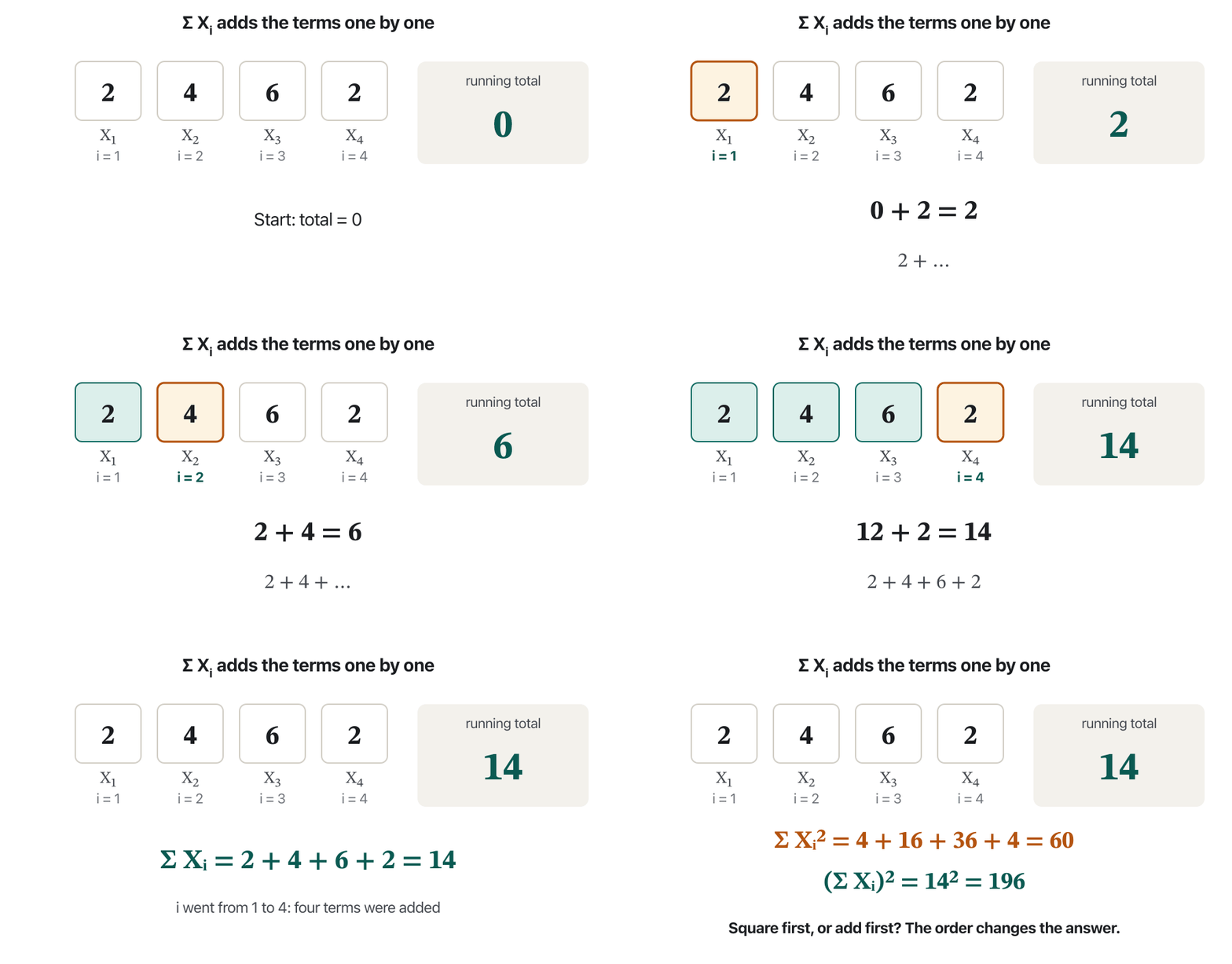
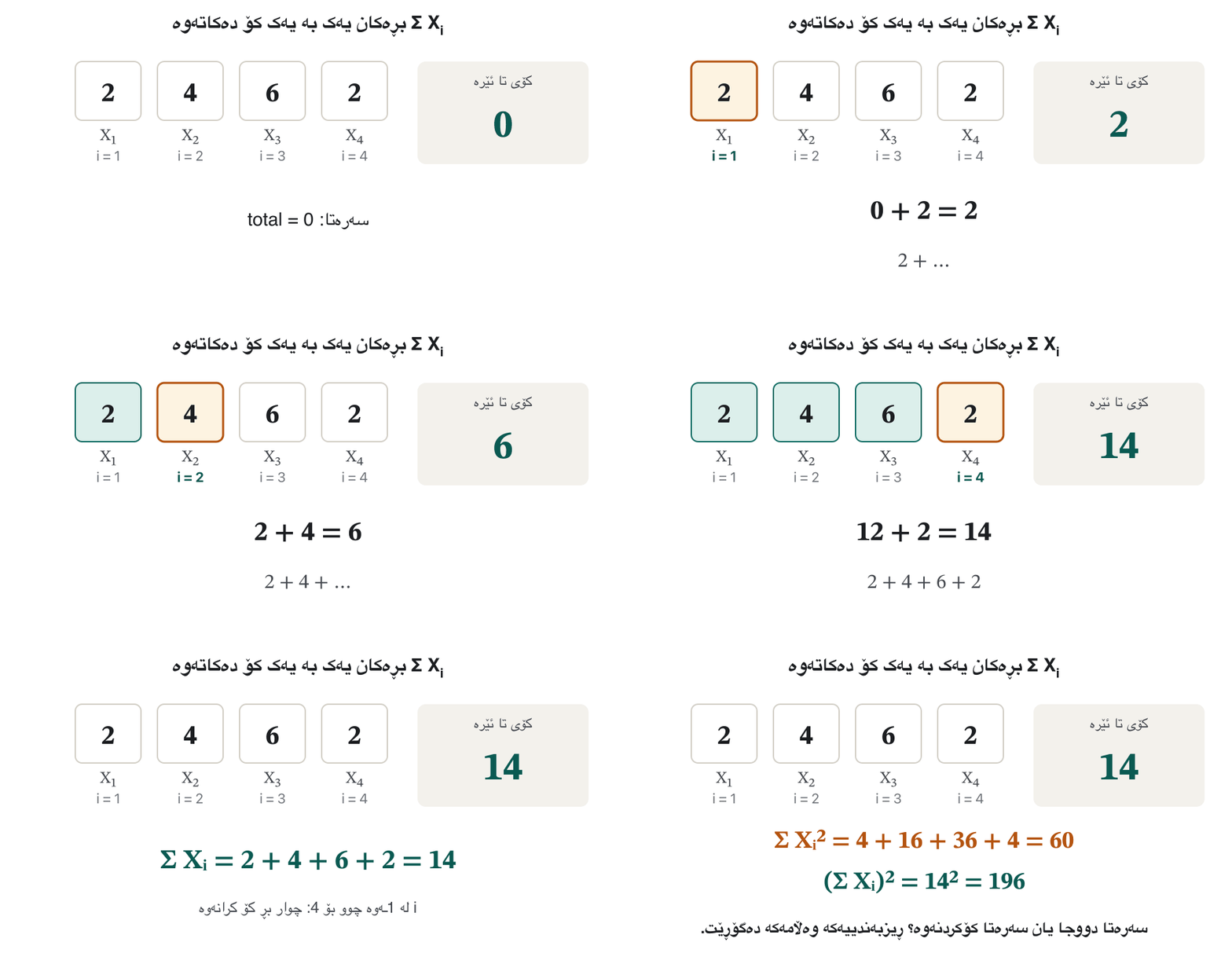
A cashier in the bazaar adds your items one by one: tea 3,000, sugar 2,000, rice 6,000. After each item the screen shows the total so far. When the last item is added, the screen shows the whole sum. That is exactly what does.
حسابکەرێک لە بازاڕدا کاڵاکانت یەک بە یەک کۆ دەکاتەوە: چا 3,000، شەکر 2,000، برنج 6,000. دوای هەر کاڵایەک کۆی تا ئێستا پیشان دەدات. کاتێک دوایین کاڵا زیاد دەکرێت، هەموو کۆکە پیشان دەدات. ئەمە ڕێک ئەوەیە کە دەیکات.
Where the analogy stops workingسنووری ئەم نموونەیە
A cashier can make a mistake or skip an item; the notation never does. And Σ can add numbers that are not prices at all, such as squares or products.
حسابکەر دەتوانێت هەڵە بکات یان کاڵایەک لەبیر بکات؛ نیشانەکە هەرگیز ئەوە ناکات. Σ دەتوانێت ژمارەی وا کۆ بکاتەوە کە هەرگیز نرخ نین، وەک دووجا یان لێکدراو.
A loop is a sigmaخول هەمان سیگمایە
The essay's research notes join the two worlds. In , repeating a block of code is called , and it is done with a . In mathematics, adding many terms is called summation and is written with the Greek sigma. They are the same idea: a that adds each value to a total computes .
تێبینییەکانی نامیلکەکە ئەم دوو جیهانە پێکەوە دەبەستن. لە دووبارەکردنەوەی بلۆکێک کۆد پێی دەگوترێت و بە ئەنجام دەدرێت. لە بیرکاریدا کۆکردنەوەی چەندین بڕ پێی دەگوترێت کۆکردنەوە (Summation) و بە سیگمای گریکی دەنووسرێت. هەمان بیرۆکەن: کە هەر نرخێک دەخاتە سەر کۆیەک، حساب دەکات.
X = [2, 4, 6, 2]

total = 0
for x in X:
    total = total + x
print(total)

print(sum(X))14 14
Explain the codeڕوونکردنەوەی کۆدەکە
- Lineدێڕی 3
The running total starts at 0, like the empty sum.
کۆی تا ئێرە لە 0ـەوە دەست پێدەکات، وەک کۆی بەتاڵ.
- Lineدێڕی 4-5
Each turn of the loop adds one term: 2, then 4, then 6, then 2.
لە هەر بڕێک زیاد دەکرێت: 2، پاشان 4، پاشان 6، پاشان 2.
- Lineدێڕی 8
The
sum()does the same loop for you.sum()هەمان بۆت دەکات.
Rules 1 and 2: square then add, or add then square?یاساکانی 1 و 2: سەرەتا دووجا یان سەرەتا کۆ؟
The first two rules look alike but give very different numbers. Rule 1 squares every value first and then adds. Rule 2 adds first and then squares the total once.
دوو یاسای یەکەم لە یەک دەچن بەڵام ژمارەی زۆر جیاواز دەدەن. یاسای 1 سەرەتا هەموو نرخێک دووجا دەکات و پاشان کۆیان دەکاتەوە. یاسای 2 سەرەتا کۆ دەکاتەوە و پاشان کۆکە یەک جار دووجا دەکات.
Line 1 is rule 1 (square, then add); line 2 is rule 2 (add, then square).
دێڕی 1 یاسای 1ـە (سەرەتا دووجا، پاشان کۆ)؛ دێڕی 2 یاسای 2ـە (سەرەتا کۆ، پاشان دووجا).
Numeric check with : 60 is not 196, so .
پشکنینی ژمارەیی بە : 60 یەکسان نییە بە 196، بۆیە .
Rules 3 and 4: two variablesیاساکانی 3 و 4: دوو گۆڕاو
With two variables and measured on the same members, rule 3 multiplies each pair and then adds. Rule 4 adds each variable separately and then multiplies the two totals.
بە دوو و کە لەسەر هەمان ئەندامەکان پێورراون، یاسای 3 هەر جووتێکی لێک دەدات و پاشان کۆیان دەکاتەوە. یاسای 4 هەر بە جیا کۆ دەکاتەوە و پاشان دوو کۆکە لێک دەدات.
Line 3 is rule 3 (multiply each pair, then add); line 4 is rule 4 (add each variable, then multiply the totals).
دێڕی 3 یاسای 3ـە (هەر جووتێک لێک بدە، پاشان کۆ)؛ دێڕی 4 یاسای 4ـە (هەر کۆ بکەرەوە، پاشان دوو کۆکە لێک بدە).
| 1 | 2 | 3 | 6 |
| 2 | 4 | 9 | 36 |
| 3 | 6 | 6 | 36 |
| 4 | 2 | 1 | 2 |
| Sumکۆ | 14 | 19 | 80 |
Rule 3 gives , but rule 4 gives . Again, the order of “multiply” and “add” changes the answer.
یاسای 3 دەدات، بەڵام یاسای 4 دەدات. دیسان ڕیزبەندیی «لێکدان» و «کۆکردنەوە» وەڵامەکە دەگۆڕێت.
Rules 5 and 6: constantsیاساکانی 5 و 6: نەگۆڕەکان
A is a number that does not depend on . Rule 5: adding the same constant times gives . Rule 6: a constant factor can come out in front of the sum, because every term contains it (this is the distributive law).
ژمارەیەکە کە پەیوەندیی بە ـەوە نییە. یاسای 5: کۆکردنەوەی هەمان بە ژمارەی جار دەکاتە . یاسای 6: کە لە هەموو بڕەکاندا هەیە دەتوانێت بچێتە پێش کۆکە (ئەمە ).
Rule 5: the constant is written times, once for each value of . Rule 6: the constant factor comes out in front of the sum.
یاسای 5: بە ژمارەی جار دەنووسرێت، بۆ هەر نرخێکی جارێک. یاسای 6: دەچێتە پێش کۆکە.
Numeric check with , and .
پشکنینی ژمارەیی بە ، و .
Rules 7 and 8: sums of sumsیاساکانی 7 و 8: کۆی کۆکان
Rule 7: a sum of several variables can be split into separate sums. Rule 8 is the special case where one of them is a constant: adding to every value adds to the total, not just .
یاسای 7: کۆی چەند دەتوانرێت بۆ چەند کۆیەکی جیا جیا بکرێتەوە. یاسای 8 حاڵەتێکی تایبەتە کە یەکێکیان : زیادکردنی بۆ هەموو نرخێک دەخاتە سەر کۆکە، نەک تەنها .
Line 7 is rule 7 (split a sum of variables); line 8 is rule 8 (a constant added to every value adds ).
دێڕی 7 یاسای 7ـە (کۆی چەند جیا بکەرەوە)؛ دێڕی 8 یاسای 8ـە (زیادکردنی بۆ هەموو نرخێک زیاد دەکات).
Numeric check with , , and . Forgetting the would give , which is wrong.
پشکنینی ژمارەیی بە ، ، و . لەبیرکردنی دەیکاتە کە هەڵەیە.
The same rule works with minus: .
هەمان یاسا لەگەڵ کەمکردنەوەش کار دەکات: .
“Rule 9” is false«یاسای 9» هەڵەیە
The lecturer's sheet prints a ninth rule, and a later homework (H.W 10) asks: “Is it true or not?”
پەڕەکەی مامۆستاکە یاسایەکی نۆیەم چاپ دەکات و ئەرکێکی دواتر (H.W 10) دەپرسێت: «ئایا ڕاستە یان نا؟»
The general lesson. Σ passes through plus and minus (rules 7–8) and lets a constant factor out (rule 6). It does not pass through multiplication of variables, division, squares, square roots or logarithms: , , .
وانە گشتییەکە. Σ بە کۆ و کەمکردنەوەدا تێدەپەڕێت (یاساکانی 7–8) و ڕێگا دەدات بچێتە دەرەوە (یاسای 6). بە لێکدانی ، دابەشکردن، دووجا، یان تێناپەڕێت: ، ، .
Example (1): worked items 1–3نموونەی (1): بڕگەکانی 1–3 بە شیکردنەوە
Let and for . The best way to work by hand is a table: one column for each piece, then add each column.
با و بن بۆ . باشترین ڕێگا بۆ کارکردن بە دەست خشتەیەکە: ستوونێک بۆ هەر پارچەیەک، پاشان هەر ستوونێک کۆ بکەرەوە.
| 1 | 2 | 3 | |||
| 2 | 4 | 9 | |||
| 3 | 6 | 6 | |||
| 4 | 2 | 1 | |||
| Sumکۆ | 14 | 19 | 27 | 13 | 560 |
Notice in item 3 that only is squared, not .
لە بڕگەی 3دا ئاگادار بە کە تەنها دووجا دەکرێت، نەک .
Example (1): homework items 4–9نموونەی (1): ئەرکەکانی 4–9
The lecturer left items 4 to 9 as homework. Try each one, then open the answer. Use the totals , , and , with .
مامۆستاکە بڕگەکانی 4 تا 9ی وەک ئەرک بەجێهێشت. هەر یەکێکیان تاقی بکەرەوە، پاشان وەڵامەکە بکەرەوە. کۆکانی ، ، و بەکار بهێنە، لەگەڵ .
Find .
بدۆزەوە.
Show answerوەڵامەکە پیشان بدە
Longhand: .
بە درێژی: .
Find .
بدۆزەوە.
Show answerوەڵامەکە پیشان بدە
Longhand: .
بە درێژی: .
Find .
بدۆزەوە.
Show answerوەڵامەکە پیشان بدە
Each fraction must be worked out separately: there is no shortcut for a sum of fractions.
هەر دەبێت بە جیا حساب بکرێت: بۆ کۆی هیچ ڕێگایەکی کورت نییە.
Find .
بدۆزەوە.
Show answerوەڵامەکە پیشان بدە
Here the division comes after the two sums, so it is allowed.
لێرەدا دابەشکردن دوای دوو کۆکە دێت، بۆیە ڕێگەپێدراوە.
Find .
بدۆزەوە.
Show answerوەڵامەکە پیشان بدە
Find .
بدۆزەوە.
Show answerوەڵامەکە پیشان بدە
Example (2): eight sumsنموونەی (2): هەشت کۆ
Let and for . Find: 1) ; 2) ; 3) ; 4) with ; 5) ; 6) ; 7) ; 8) .
با و بن بۆ . بدۆزەوە: 1) ؛ 2) ؛ 3) ؛ 4) بە ؛ 5) ؛ 6) ؛ 7) ؛ 8) .
Item 6 uses rule 6: the constant comes out in front of the sum.
بڕگەی 6 یاسای 6 بەکار دەهێنێت: دەچێتە پێش کۆکە.
Item 7 uses base-10 logarithms. A sum of logarithms is the logarithm of the product: (see log rules). Each term is shown to four decimal places, but the totals are worked out from the unrounded values: that is why item 8 ends in 13.9828, not 13.9829.
بڕگەی 7 (بنکەی 10) بەکار دەهێنێت. کۆی لێکدراوەکەیە: (بڕوانە یاساکانی لۆگاریتم). هەر بڕێک بە چوار نیشان دراوە، بەڵام کۆکان لە نرخە نزیکنەکراوەکانەوە حساب کراون: بۆیە بڕگەی 8 بە 13.9828 کۆتایی دێت، نەک 13.9829.
Spot the mistakesهەڵەکان بدۆزەوە
A handwritten solution of Example (2) wrote: (a) ; (b) ; (c) ; (d) . Find each mistake.
چارەسەرێکی دەستنووسی نموونەی (2) نووسیبووی: (أ) ؛ (ب) ؛ (ج) ؛ (د) . هەر هەڵەیەک بدۆزەوە.
Hintئاماژە
Recompute every product and check how many decimal places each term kept.
هەموو لێکدراوێک دووبارە حساب بکەرەوە و سەیر بکە هەر بڕێک بە چەند نووسراوە.
Show answerوەڵامەکە پیشان بدە
- (a) , not 55. The sum is 324.
- (b) , not 91.
- (c) , not 1.04. Rounding one term too early moves the answer: the correct total is 3.5977.
- (d) The square roots were cut short (, ), so the total is a little low: 13.9828.
- (أ) ـە، نەک 55. کۆکە 324ـە.
- (ب) ـە، نەک 91.
- (ج) ـە، نەک 1.04. بڕێک زۆر زوو وەڵامەکە دەجووڵێنێت: کۆی دروست 3.5977ـە.
- (د) کورت کرانەوە (، )، بۆیە کۆکە کەمێک کەمە: 13.9828.
Check your sums with Pythonکۆکانت بە Python بپشکنە
A computer is a perfect checker for long sums. These lines recompute all eight items of Example (2); zip(X, Y) pairs with , exactly like the in .
پشکنەرێکی تەواوە بۆ کۆی درێژ. ئەم دێڕانە هەر هەشت بڕگەکەی نموونەی (2) دووبارە حساب دەکەنەوە؛ zip(X, Y) لەگەڵ جووت دەکات، ڕێک وەک لە ـدا.
import math

X = [2, 4, 5, 9, 11]
Y = [9, 7, 1, 12, 15]

print(sum(X), sum(Y))                            # items 1 and 2
print(sum(x * y for x, y in zip(X, Y)))          # item 3
print(3 * sum(X), sum(x ** 2 for x in X))        # items 4 and 5
print(round(sum(y / 6 for y in Y), 4))           # item 6
print(round(sum(math.log10(x) for x in X), 4))   # item 7
print(round(sum(math.sqrt(y) for y in Y), 4)) # item 831 44 324 93 247 7.3333 3.5977 13.9828
Explain the codeڕوونکردنەوەی کۆدەکە
- Lineدێڕی 7
zip(X, Y)walks through both lists together: (2, 9), (4, 7), (5, 1), …zip(X, Y)پێکەوە بە هەردوو لیستەکەدا دەڕوات: (2، 9)، (4، 7)، (5، 1)، …- Lineدێڕی 10-11
math.log10is the base-10 logarithm andmath.sqrtthe square root.math.log10وmath.sqrt.
Common mistakesهەڵە باوەکان
| Mistakeهەڵە | Correctدروست | Check with پشکنین بە |
|---|---|---|
| They differجیاوازن | ||
| They differجیاوازن | ||
| False (the old “rule 9”)هەڵەیە («یاسای 9»ـی کۆن) | ||
| Reading as “X times 3”خوێندنەوەی وەک «X جاران 3» | is the third value سێیەم نرخە | |
| Rounding each term early هەر بڕێک زوو | Round only the final answerتەنها وەڵامی کۆتایی نزیک بکەرەوە |
Exercisesڕاهێنانەکان
Let . Find , , , and .
با بێت. ، ، ، و بدۆزەوە.
Show answerوەڵامەکە پیشان بدە
Write with sigma notation, then use rule 6 to find it quickly.
بە بنووسە، پاشان بە یاسای 6 خێرا بیدۆزەوە.
Hintئاماژە
Each term is 3 times its position.
هەر بڕێک 3 هێندەی شوێنەکەیەتی.
Show answerوەڵامەکە پیشان بدە
Decide, and test with , : (a) ; (b) ; (c) .
بڕیار بدە و بە ، تاقی بکەرەوە: (أ) ؛ (ب) ؛ (ج) .
Show answerوەڵامەکە پیشان بدە
- (a) True (rule 7): .
- (b) False: but .
- (c) True (rule 6): .
- (أ) ڕاستە (یاسای 7): .
- (ب) هەڵەیە: بەڵام .
- (ج) ڕاستە (یاسای 6): .
Summaryپوختە
- is the -th value of ; the subscript runs over .
- : a running total, the same as a loop that adds each value.
- Σ splits over and , lets constants out (, , ).
- It does not split over products, squares or division: , , and “rule 9” is false ().
- Work in a table, keep four decimals, and check long sums with Python's
sum().
- نرخی ـەمی ـە؛ بە دا دەڕوات.
- : کۆیەکی بەردەوام، هەمان کە هەموو نرخێک کۆ دەکاتەوە.
- Σ بەسەر و دا دابەش دەبێت و ڕێگا دەدات بچنە دەرەوە (، ، ).
- بەسەر لێکدان، دووجا یان دابەشکردندا دابەش نابێت: ، و «یاسای 9» هەڵەیە ().
- لە خشتەیەکدا کار بکە، چوار بهێڵەوە و کۆی درێژ بە
sum()ـی Python بپشکنە.
Next: the same idea for multiplication, Product (Π) notation.
دواتر: هەمان بیرۆکە بۆ لێکدان، نیشانەی پی.
Lesson complete!وانەکە تەواو بوو!
Well done. Review the key terms, then go on to the next lesson.دەستخۆش. سەیرێکی زاراوە سەرەکییەکان بکەرەوە، پاشان بڕۆ بۆ وانەی داهاتوو.
Key termsزاراوە سەرەکییەکان
Product (Π) Notationنیشانەی پی (Π)
Related lecturesوانە پەیوەندیدارەکان
References and further readingسەرچاوەکان و خوێندنەوەی زیاتر
This lecture is a first edition. The Kurdish text and terminology are waiting for review by Kurdish IT teachers.ئەم وانەیە چاپی یەکەمە. دەقە کوردییەکە و زاراوەکانی چاوەڕێی پێداچوونەوەی مامۆستایانی کوردی بواری IT ن.