Chapterبەش 5 · Lectureوانە 5.4
Expected Value (Mathematical Expectation)نرخی پێشبینیکراو (چاوەڕوانیی بیرکاری)
The expected value as a long-run average and a balance point: the course's game, die, continuous and box examples, fair games and prices, a computer simulation of the law of large numbers, the rules and , and a corrected 'find the mistake' answer to the defective-items problem (the hypergeometric distribution).
وەک تێکڕای درێژخایەن و خاڵی هاوسەنگی: نموونەکانی یاری، بەردەزار، بەردەوام و سندووقی کۆرسەکە، یاری و نرخی دادپەروەر، تاقیکردنەوەیەکی بۆ ، یاساکانی و و وەڵامێکی ڕاستکراوەی «هەڵەکە بدۆزەرەوە» بۆ پرسیاری کەرەستە بێکەڵکەکان ().
What you will learnچی فێر دەبیت
- Compute for a discrete random variable with a table, and for a continuous one with an integral.
- Explain the expected value as a long-run average and a balance point, and decide whether a game or price is fair.
- Use , the sum rule and .
- Find the distribution of the number of special items drawn without replacement (hypergeometric) and its mean.
- بۆ بە خشتە و بۆ بە بژمێریت.
- وەک تێکڕای درێژخایەن و خاڵی هاوسەنگی ڕوون بکەیتەوە و بڕیار بدەیت کە یارییەک یان نرخێک دادپەروەرە یان نا.
- ، یاسای کۆ و بەکاربهێنیت.
- دابەشبوونی ژمارەی کەرەستە تایبەتەکانی دەرهێنراو () و بدۆزیتەوە.
What you expect in the long runئەوەی لە کۆتاییدا چاوەڕێی دەکەیت
Here is a game from the course (Example 9), told as a die game. Roll a fair die. Faces 1, 3 and 5 give 0 points, face 2 gives 20, face 4 gives 40, and face 6 costs you 30 points ().
ئەمە یارییەکی کۆرسەکەیە (نموونەی 9)، وەک یارییەکی بەردەزار. بەردەزارێکی دادپەروەر فڕێ بدە. ڕووەکانی 1، 3 و 5 0 خاڵ دەدەن، ڕووی 2 20 خاڵ، ڕووی 4 40 خاڵ و ڕووی 6 30 خاڵت لێ دەبات ().
Play once and you cannot know what you will get. But play 600 times: each face comes up about 100 times, so your total is about points. That is points per game. The 600 cancels out: each value is simply multiplied by its probability, , and the results are added.
یەک جار یاری بکە و ناتوانیت بزانیت چی دەبەیتەوە. بەڵام 600 جار یاری بکە: هەر ڕوویەک نزیکەی 100 جار دێت، بۆیە کۆی خاڵەکانت نزیکەی خاڵە. ئەمە دەکاتە خاڵ بۆ هەر یارییەک. ژمارە 600 لادەچێت: تەنها هەر نرخێک لە () لێک دەدرێت و ئەنجامەکان کۆ دەکرێنەوە.
This long-run average is the expected value (also called the mathematical expectation or the mean) of the random variable X. The course writes it like this:
ئەم تێکڕا درێژخایەنە ی ـە (پێی دەوترێت چاوەڕوانیی بیرکاری یان یش). کۆرسەکە بەم شێوەیە دەینووسێت:
Multiply every value by its probability, then add. , and all name the same number.
هەر نرخێک لە لێک بدە، پاشان کۆیان بکەرەوە. ، و هەموویان ناوی هەمان ژمارەن.
The long-run average of a : (discrete) or (continuous).
تێکڕای درێژخایەنی : (پچڕاو) یان (بەردەوام).
If you have met the weighted mean, this is the same idea: the values are weighted by their probabilities, and the weights already add up to 1.
گەر ناوەندی قورسکراوت بینیوە، ئەمە هەمان بیرۆکەیە: نرخەکان بە قورس دەکرێن و کۆی پێشتر 1ـە.
Watch the average settleسەیری جێگیربوونی تێکڕاکە بکە
A computer can roll a die thousands of times in a moment. For one fair die the expected value is (we will compute it soon). Watch the running average of one long run of rolls:
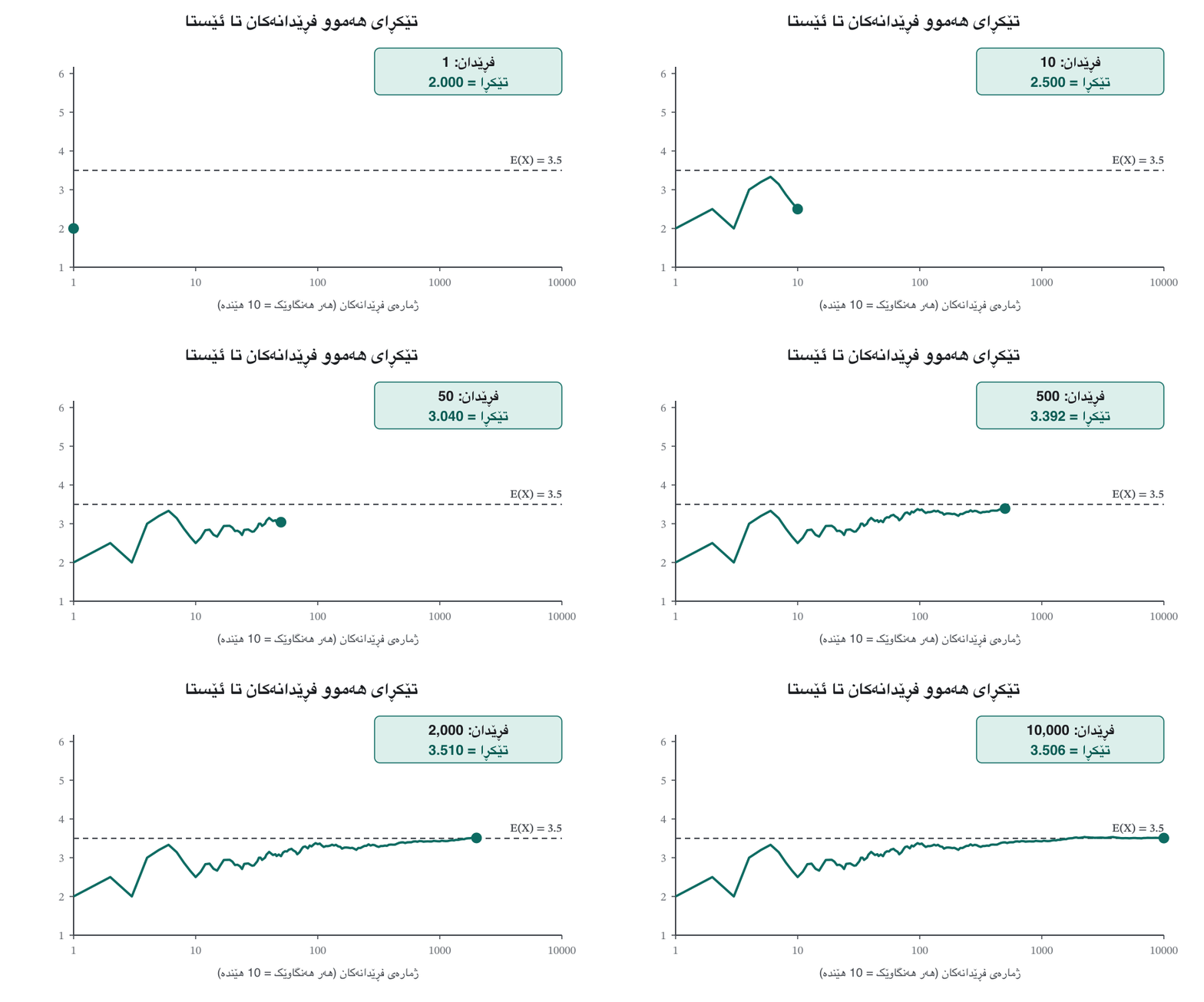
دەتوانێت لە چرکەیەکدا هەزاران جار بەردەزار فڕێ بدات. بۆ یەک بەردەزاری دادپەروەر ـە (کەمێکی تر دەیژمێرین). سەیری تێکڕای هەموو فڕێدانەکان تا ئەو کاتە بکە لە زنجیرەیەکی درێژی فڕێداندا:
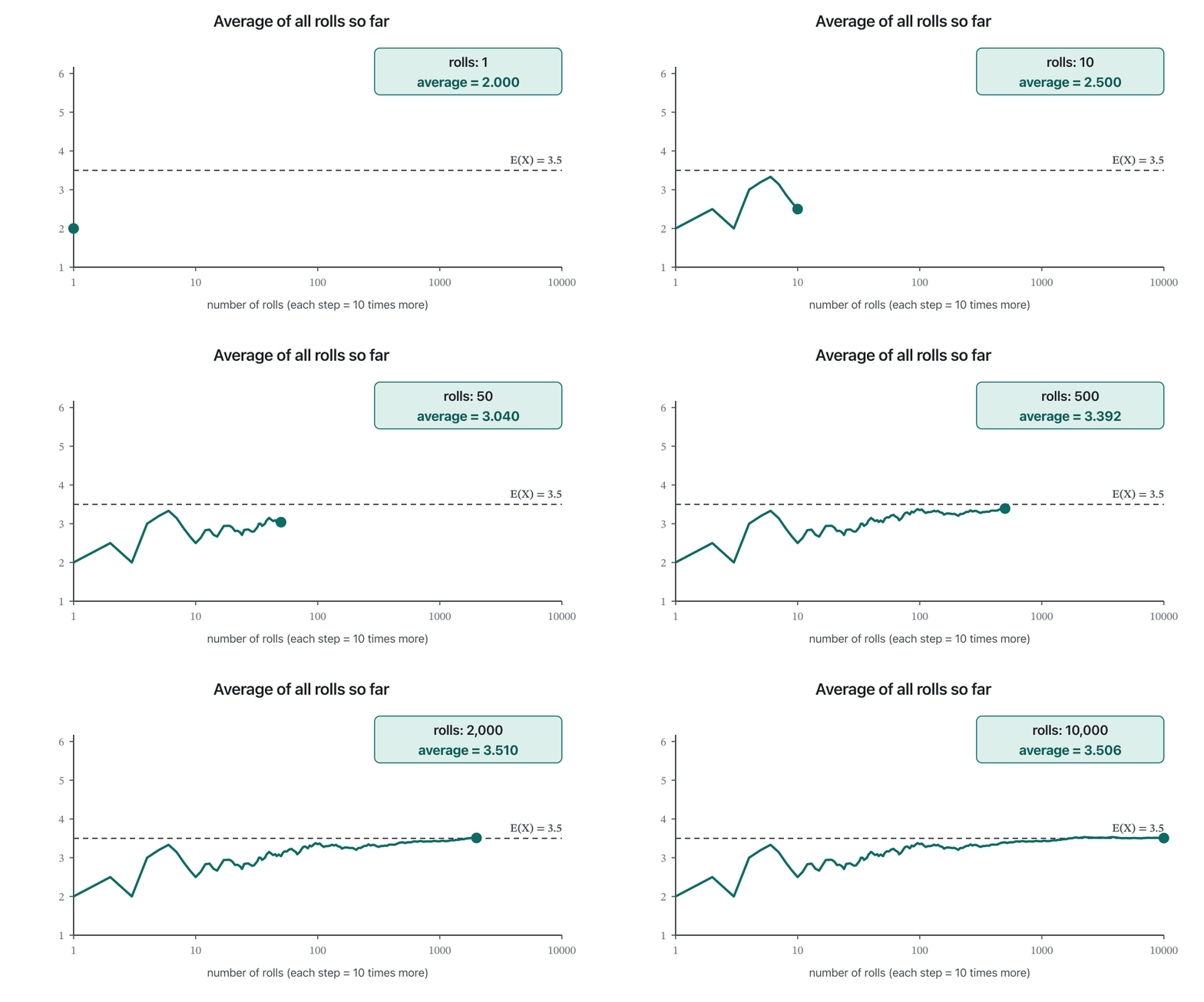
This is the law of large numbers again: over many repetitions the average of the results gets close to the expected value. Here is the same run in Python, so you can try other seeds:
ئەمە دیسان یاسای ژمارە گەورەکانـە: لە دووبارەبوونەوەی زۆردا تێکڕای ئەنجامەکان لە نزیک دەبێتەوە. ئەمە هەمان تاقیکردنەوەیە بە Python، بۆ ئەوەی بتوانیت تر تاقی بکەیتەوە:
import random

random.seed(4)                      # the same "random" rolls every run
total = 0
for n in range(1, 10_001):
    total += random.randint(1, 6)   # one roll of a fair die
    if n in (10, 100, 1_000, 10_000):
        print(f"after {n:>6} rolls: average = {total / n:.3f}")
print("expected value E(X) = 3.5")after 10 rolls: average = 2.500 after 100 rolls: average = 3.350 after 1000 rolls: average = 3.423 after 10000 rolls: average = 3.506 expected value E(X) = 3.5
Explain the codeڕوونکردنەوەی کۆدەکە
- Lineدێڕی 3
A fixed seed makes the 'random' rolls the same every run, so your output matches this one.
جێگیر وا دەکات فڕێدانە «هەڕەمەکی»یەکان لە هەموو جارێکدا وەک یەک بن، بۆیە ئەنجامەکەت وەک ئەمە دەبێت.
- Lineدێڕی 6
randint(1, 6)returns 1, 2, 3, 4, 5 or 6, each with probability 1/6.randint(1, 6)یەکێک لە 1، 2، 3، 4، 5 یان 6 دەگەڕێنێتەوە، هەریەکە بە .
Example 9: the game, worked outنموونەی 9: یارییەکە، شیکراوە
The course gives Example 9 as six values, each with probability : . Find .
کۆرسەکە نموونەی 9 وەک شەش نرخ دەدات، هەریەکە بە : . بدۆزەرەوە.
The working in the course notes: each term is a value times its probability.
کارکردنەکەی ناو تێبینییەکانی کۆرسەکە: هەر بەشێک نرخێکە کە لە لێک دراوە.
The value 0 appears three times, so a random variable with this game has only four different values, and 0 has probability . A table makes the work tidy:
نرخی 0 سێ جار هاتووە، بۆیە ئەم یارییە تەنها چوار نرخی جیاوازی هەیە و 0 دەکاتە . خشتەیەک کارەکە ڕێک دەکات:
| Totalکۆ |
Fair games and fair pricesیاریی دادپەروەر و نرخی دادپەروەر
A game is fair when the expected value of what you win (after paying to play) is 0. Example 9 pays 5 points per game on average, so a fair price to play it is 5 points: then your net result is and .
یارییەک دادپەروەرە کاتێک ئەوەی دەیبەیتەوە (دوای پارەدان بۆ یاریکردن) 0 بێت. نموونەی 9 بە تێکڕا 5 خاڵ بۆ هەر یارییەک دەدات، بۆیە نرخی دادپەروەری یاریکردنی 5 خاڵە: ئەو کاتە ئەنجامی کۆتاییت ـە و .
Lotteries use the same arithmetic, but never in your favour: the prizes they pay out are worth less, on average, than the tickets they sell.
لاتاری هەمان ژمێرکاری بەکار دەهێنێت، بەڵام هەرگیز لە بەرژەوەندیی تۆدا نا: خەڵاتەکانی بە تێکڕا لە نرخی ئەو بلیتانە کەمترن کە دەیفرۆشێت.
Expected value with real examples: a coin game, why a lottery ticket is worth less than its price, and planning a trip to work.
بە نموونەی ڕاستەقینە: یارییەکی دراو، بۆچی بەهای بلیتی لاتاری کەمترە لە نرخەکەی، هەروەها پلاندانانی ڕێگای سەر کار.
Whole video; the lottery example (from about 3:30) shows a ticket worth much less than its price, the point of this screen.
هەموو ڤیدیۆکە؛ نموونەی لاتارییەکە (لە نزیکەی 3:30ـەوە) پیشان دەدات بەهای بلیتێک زۆر کەمترە لە نرخەکەی، کە خاڵی سەرەکیی ئەم شاشەیەیە.
Warranties: the shop sees the long runگەرەنتی: دوکانەکە دووبارەبوونەوەی زۆر دەبینێت
Businesses use the same arithmetic. A phone shop sells a one-year warranty for 15,000 dinars. Suppose 1 phone in 10 needs a repair in that year, and a repair costs 120,000 dinars. For a customer without the warranty, the expected repair cost is dinars. The shop takes 15,000 and pays out 12,000 on average, so it earns about 3,000 dinars per warranty. Insurance companies work the same way: the expected value is on their side.
بازرگانییەکان هەمان ژمێرکاری بەکار دەهێنن. دوکانێکی مۆبایل گەرەنتییەکی یەک ساڵە بە 15,000 دینار دەفرۆشێت. وا دابنێ لە هەر 10 مۆبایل یەکیان لەو ساڵەدا چاککردنەوەی پێویست دەبێت و چاککردنەوەش 120,000 دینار تێدەچێت. بۆ کڕیارێکی بێ گەرەنتی، تێچووی چاوەڕوانکراوی چاککردنەوە دینارە. دوکانەکە 15,000 وەردەگرێت و بە تێکڕا 12,000 دەداتەوە، بۆیە بۆ هەر گەرەنتییەک نزیکەی 3,000 دینار قازانج دەکات. کۆمپانیاکانی بیمەش هەر بەم شێوەیە کار دەکەن: لە بەرژەوەندیی ئەوانە.
A shop that sells 1,000 warranties a year will pay for about 100 repairs. For the shop the expected value is almost a sure thing, like the 10,000 die rolls. You own one phone: for you the result is either 0 or 120,000.
دوکانێک کە لە ساڵێکدا 1,000 گەرەنتی دەفرۆشێت نزیکەی پارەی 100 چاککردنەوە دەدات. بۆ دوکانەکە نزیکەی شتێکی دڵنیایە، وەک 10,000 فڕێدانەکەی بەردەزار. تۆ یەک مۆبایلت هەیە: بۆ تۆ ئەنجامەکە یان 0ـە یان 120,000.
Where the analogy stops workingسنووری ئەم نموونەیە
So a warranty can still be a sensible choice for you: it removes the risk of one big loss. How big that risk is, is measured by the variance — the next lesson.
بۆیە گەرەنتی هێشتا دەکرێت بڕیارێکی ژیرانە بێت بۆ تۆ: مەترسیی یەک زیانی گەورە لادەبات. ئەو مەترسییە چەندە، بە دەپێورێت — وانەی داهاتوو.
H.W 8: the die, and the balance pointئەرکی ماڵەوەی 8: بەردەزار و خاڵی هاوسەنگی
H.W 8. One die is tossed. What is the expected number of dots on the top face?
ئەرکی ماڵەوەی 8. بەردەزارێک فڕێ دەدرێت. ژمارەی چاوەڕوانکراوی خاڵەکانی ڕووی سەرەوە چەندە؟
When all values are equally likely, is just their ordinary mean: .
کاتێک هەموو نرخەکان بن، تەنها ئاسایی ئەوانە: .
3.5 is not a face of the die. An expected value does not have to be a possible value; it is the balance point of the distribution. Put a weight equal to at each value x on a light ruler: the ruler balances exactly at . Here is the game of Example 9:
3.5 ڕوویەکی بەردەزار نییە. پێویست ناکات نرخێکی ڕوودانی هەبێت؛ خاڵی هاوسەنگیی دابەشبوونەکەیە. لەسەر ڕاستەیەکی سووک لە هەر نرخێکی x کێشێک بە قەبارەی دابنێ: ڕاستەکە ڕێک لە هاوسەنگ دەبێت. ئەمە یارییەکەی نموونەی 9ـە:
This is the same balance-point idea as for data in the arithmetic mean; now the weights are probabilities.
ئەمە هەمان بیرۆکەی خاڵی هاوسەنگییە کە بۆ لە ناوەندی ژمێرەیی بینیمان؛ ئێستا .
Continuous random variables: an integral instead of a sumگۆڕاوە هەڕەمەکییە بەردەوامەکان: تەواوکاری لە جیاتی کۆ
For a continuous random variable with density , probability is spread over an interval instead of sitting on separate points. Cut the interval into thin strips: a strip at of width has probability about . Value times probability, added over all strips, becomes an integral:
بۆ گۆڕاوێکی هەڕەمەکیی بەردەوام بە چڕیی ، بەسەر ماوەیەکدا بڵاوە، نەک لەسەر چەند خاڵێکی جیا. ماوەکە بکە بە پارچەی باریک: پارچەیەک لە بە پانیی نزیکەی ـی هەیە. لێکدانی نرخ لە ، کە بۆ هەموو پارچەکان کۆ بکرێتەوە، دەبێتە :
The continuous version of . Outside the interval where the integrand is 0, so you integrate only over that interval.
وەشانی بەردەوامی . لە دەرەوەی ئەو ماوەیەی ، ناوەوەی 0ـە، بۆیە تەنها بەسەر ئەو ماوەیەدا وەردەگیرێت.
- Example 10: نموونەی 10:
It is a density: . Then
: . پاشان
- Why 1.33 and not 1?بۆچی 1.33 و نەک 1؟
The interval is 0 to 2, so its middle is 1. But grows to the right: larger values are more likely, so the balance point moves right of the middle.
ماوەکە لە 0 بۆ 2ـە، بۆیە ناوەڕاستەکەی 1ـە. بەڵام بەرەو ڕاست گەورە دەبێت: نرخە گەورەکان زیاترە، بۆیە خاڵی هاوسەنگی بۆ ڕاستی ناوەڕاست دەڕوات.
- H.W 9: ئەرکی ماڵەوەی 9:
Again a density (), leaning to the right:
دیسان ()، کە بەرەو ڕاست لار بووەتەوە:
Rules that save workیاساکانی کورتکردنەوەی کار
The course lists properties of expectation. Each one follows from the definition in one line, because . Here k, a and b are constants:
کۆرسەکە تایبەتمەندییەکانی ڕیز دەکات. هەریەکەیان بە یەک دێڕ لە پێناسەکەوە دەردەچێت، چونکە . لێرەدا k، a و b :
| Ruleیاسا | Formulaفۆرمولە | Whyبۆچی |
|---|---|---|
| 1a. Shift1a. جووڵاندن | ||
| 1b. Scale1b. گەورەکردن | ||
| 1c. Constant1c. بە تەنها | ||
| 3. Sum3. کۆ | Add the expectations; no independence needed کۆ بکەرەوە؛ سەربەخۆیی پێویست نییە | |
| 4. Linear4. هێڵی | 1a and 1b together1a و 1b پێکەوە |
Rule 3 is powerful. Roll two dice and let S be the sum. Instead of listing all 36 outcomes: .
یاسای 3 بەهێزە. دوو بەردەزار فڕێ بدە و با S کۆی هەردووکیان بێت. لە جیاتی نووسینی هەموو 36 : .
The same idea works for any function g of X: (or ). You keep the probabilities and change only the values. The next lesson uses this with .
هەمان بیرۆکە بۆ هەر ـی کار دەکات: (یان ). وەک خۆیان دەهێڵیتەوە و تەنها نرخەکان دەگۆڕیت. وانەی داهاتوو ئەمە بە بەکار دەهێنێت.
Example 11: four expectations from one tableنموونەی 11: چوار نرخی پێشبینیکراو لە یەک خشتە
X takes the values , 0 and 1 with probabilities 0.2, 0.3 and 0.5. Find (1) , (2) , (3) and (4) .
نرخەکانی ، 0 و 1 وەردەگرێت بە 0.2، 0.3 و 0.5. ئەمانە بدۆزەرەوە: (1) ، (2) ، (3) و (4) .
| Sumکۆ |
(rule 1b)
(یاسای 1b)
(rule 1a)
(یاسای 1a)
(rule 4). The table's last column gives the same 1.6.
(یاسای 4). دوایین ستوونی خشتەکە هەمان 1.6 دەدات.
H.W 10: defective items in a boxئەرکی ماڵەوەی 10: کەرەستەی بێکەڵک لە سندووقێکدا
H.W 10. A box has 12 items; 3 of them are defective. You take 3 items at random (without putting any back). Find the expected number of defective items among the 3.
ئەرکی ماڵەوەی 10. سندووقێک 12 کەرەستەی تێدایە؛ 3یان بێکەڵکن. 3 کەرەستە بە هەڕەمەکی دەردەهێنیت (هیچیان ناگەڕێنیتەوە). ژمارەی چاوەڕوانکراوی کەرەستە بێکەڵکەکان لەو 3 دانەیەدا بدۆزەرەوە.
X can be 0, 1, 2 or 3. Every group of 3 items is equally likely, and there are groups (combinations). For you choose of the 3 defective items and of the 9 good ones:
دەکرێت 0، 1، 2 یان 3 بێت. هەموو کۆمەڵێکی 3 کەرەستەیی و کۆمەڵ هەیە (گونجێنەکان). بۆ ، دانە لە 3 کەرەستە بێکەڵکەکە و دانە لە 9 بەکەڵکەکە هەڵدەبژێریت:
| Waysڕێگاکان | |||
|---|---|---|---|
| Totalکۆ |
So . A shortcut gives the same: each of the 3 draws has a chance of being defective, and by rule 3, . This counting model has a name: the hypergeometric distribution, with mean ( items drawn from , of which are special).
کەواتە . ڕێگایەکی کورت هەمان شت دەدات: هەریەک لە 3 دەرهێنانەکە بە بێکەڵکە و بە یاسای 3، . ئەم مۆدێلی ژماردنە ناوێکی هەیە: ، بە ( کەرەستە لە دەردەهێنرێن، کە دانەیان تایبەتن).
The number of “special” items when you draw items from a box: .
ژمارەی کەرەستە «تایبەتەکان»ـە کاتێک کەرەستە لە بۆکسێک دەردەهێنیت: .
If the items were put back after each draw, the draws would be independent and would follow the binomial distribution; the mean would still be 0.75.
گەر کەرەستەکان دوای هەر دەرهێنانێک بگەڕێنرانایەتەوە، دەرهێنانەکان سەربەخۆ دەبوون و دابەشبوونی دووڕادەییـی دەبوو؛ هەر 0.75 دەبوو.
H.W 10: defective items in a boxئەرکی ماڵەوەی 10: کەرەستەی بێکەڵک لە سندووقێکدا
The same answer from a treeهەمان وەڵام لە هێڵکارییەکی درەختییەوە
You can also draw the three items one after another. Now the order shows: one defective item can come first, second or third. Each of these three paths has the same probability, so the path probability is multiplied by 3:
دەتوانیت سێ کەرەستەکە یەک لە دوای یەک دەربهێنیت. ئێستا ڕیزبەندی دەردەکەوێت: یەک کەرەستەی بێکەڵک دەکرێت یەکەم، دووەم یان سێیەم بێت. ئەم سێ ڕێگایە هەمان هەیە، بۆیە یەک ڕێگا لە 3 لێک دەدرێت:
The tree and the combinations agree. Combinations simply count the orders for you.
و یەک دەگرنەوە. تەنها ڕیزبەندییەکانت بۆ دەژمێرن.
H.W 10: defective items in a boxئەرکی ماڵەوەی 10: کەرەستەی بێکەڵک لە سندووقێکدا
Find the mistake: an answer from the course notesهەڵەکە بدۆزەرەوە: وەڵامێک لە تێبینییەکانی کۆرسەکە
The course notes contain a Kurdish answer to this homework («پرسیاری بۆکسەکە», marked P56, H.W 10). Its reasoning starts well: each chosen item can be good or defective, X can be 0, 1, 2 or 3, and the expected value is . Then it multiplies the probabilities along one order of drawing:
تێبینییەکانی کۆرسەکە وەڵامێکی کوردییان بۆ ئەم ئەرکە تێدایە («پرسیاری بۆکسەکە»، نیشانکراو بە P56، H.W 10). بیرکردنەوەکەی باش دەست پێ دەکات: هەر کەرەستەیەکی هەڵبژێردراو دەکرێت بەکەڵک یان بێکەڵک بێت، X دەکرێت 0، 1، 2 یان 3 بێت و دەکاتە . پاشان بە درێژایی یەک ڕیزبەندیی دەرهێنان لێک دەدات:
| Product usedلێکدراوی بەکارهاتوو | Answer writtenوەڵامی نووسراو | Checkپشکنین | |
|---|---|---|---|
| correctڕاستە | |||
| one order only, and the product is 0.1636; with 3 orders: تەنها یەک ڕیزبەندی و لێکدراوەکە 0.1636ـە؛ بە 3 ڕیزبەندی: | |||
| one order only, and the product is 0.0409; with 3 orders: تەنها یەک ڕیزبەندی و لێکدراوەکە 0.0409ـە؛ بە 3 ڕیزبەندی: | |||
| the product is 0.0045 ()لێکدراوەکە 0.0045ـە () |
It ends with . Before reading on, find what went wrong. One quick test catches it.
بەم شێوەیە کۆتایی دێت: . پێش ئەوەی بخوێنیتەوە، بدۆزەرەوە چی هەڵە بوو. پشکنینێکی خێرا دەیگرێت.
H.W 10: defective items in a boxئەرکی ماڵەوەی 10: کەرەستەی بێکەڵک لە سندووقێکدا
What went wrong, and the right answerچی هەڵە بوو و وەڵامە ڕاستەکە
Common mistakesهەڵە باوەکان
| Mistakeهەڵە | Why it is wrongبۆچی هەڵەیە | Correctڕاست |
|---|---|---|
| Averaging the values without the probabilitiesتێکڕای نرخەکان بەبێ | Unlikely values count as much as likely onesنرخە کەمڕوودەرەکان وەک نرخە زۆرڕوودەرەکان هەژمار دەکرێن | |
| Listing the products with commasنووسینی لێکدراوەکان بە کۆما | The definition is a sumپێناسەکە کۆیە | |
| Expecting to be a possible valueچاوەڕوانیی ئەوەی نرخێکی ڕوودانی هەبێت | It is a balance point (3.5 for a die)خاڵی هاوسەنگییە (بۆ بەردەزار 3.5) | Report it as it is, e.g. 0.75وەک خۆی بینووسە، بۆ نموونە 0.75 |
| Writing نووسینی | That is ئەوە ـە | |
| Forgetting the orders when multiplying along one pathلەبیرکردنی ڕیزبەندییەکان لە لێکدانی یەک ڕێگادا | 1 defective can come in 3 orders1 بێکەڵک دەکرێت بە 3 ڕیزبەندی بێت | Use combinations, or multiply by the number of orders بەکاربهێنە، یان لە ژمارەی ڕیزبەندییەکان لێکی بدە |
| Not checking نەپشکنینی | Missing probability goes unnoticed ونبوو دەرناکەوێت | Always add the column firstهەمیشە سەرەتا ستوونەکە کۆ بکەرەوە |
Exercisesڕاهێنانەکان
In the pmf lesson you met for . Find .
لە وانەی نەخشەی بارستەی ئەگەر ـت بینی بۆ . بدۆزەرەوە.
Show answerوەڵامەکە پیشان بدە
Larger values have larger probabilities, so the balance point (3.67) is right of the middle value 3.
نرخە گەورەکان گەورەتریان هەیە، بۆیە خاڵی هاوسەنگی (3.67) لە ڕاستی نرخی ناوەڕاست 3ـە.
In a multiple-choice exam each question has 5 options. A right answer gives marks and a wrong answer . You know nothing and guess. What is the expected mark per question? What if there were only 4 options?
لە تاقیکردنەوەیەکی هەڵبژاردنی چەند وەڵامیدا هەر پرسیارێک 5 وەڵامی هەیە. وەڵامی ڕاست نمرە دەدات و وەڵامی هەڵە . هیچ نازانیت و تەخمین دەکەیت. نمرەی چاوەڕوانکراو بۆ هەر پرسیارێک چەندە؟ ئەی گەر تەنها 4 وەڵام هەبوایە؟
Show answerوەڵامەکە پیشان بدە
With 5 options: right with probability 0.2, wrong with 0.8.
بە 5 وەڵام: ڕاست بە 0.2، هەڵە بە 0.8.
With 4 options: right with probability 0.25, wrong with 0.75.
بە 4 وەڵام: ڕاست بە 0.25، هەڵە بە 0.75.
With 5 options the exam is designed so that blind guessing is a fair game: on average it neither helps nor hurts. With 4 options the same marking would reward guessing.
بە 5 وەڵام تاقیکردنەوەکە وا داڕێژراوە کە تەخمینی کوێرانە یارییەکی دادپەروەر بێت: بە تێکڕا نە یارمەتی دەدات و نە زیان. بە 4 وەڵام هەمان نمرەدان پاداشتی تەخمین دەداتەوە.
For Example 11 (), find in one line.
بۆ نموونەی 11 ()، بە یەک دێڕ بدۆزەرەوە.
Show answerوەڵامەکە پیشان بدە
Check with the table: .
بە خشتەکە بیپشکنە: .
X has density for . Show that it is a density and find .
X ئەم چڕییەی هەیە: بۆ . نیشانی بدە کە چڕییە و بدۆزەرەوە.
Hintئاماژە
Multiply by first: .
سەرەتا لە x لێکی بدە: .
Show answerوەڵامەکە پیشان بدە
The phone shop raises the repair cost estimate to 160,000 dinars (still 1 phone in 10). At what warranty price would the deal be fair?
دوکانی مۆبایلەکە خەمڵاندنی تێچووی چاککردنەوە دەکاتە 160,000 دینار (هێشتا لە هەر 10 مۆبایل یەک). بە چ نرخێکی گەرەنتی مامەڵەکە دادپەروەر دەبێت؟
Show answerوەڵامەکە پیشان بدە
Expected repair cost dinars. A price of 16,000 dinars makes the expected net result 0 for both sides.
تێچووی چاوەڕوانکراوی چاککردنەوە دینارە. نرخی 16,000 دینار ئەنجامی کۆتایی چاوەڕوانکراو بۆ هەردوو لا دەکاتە 0.
Summaryپوختە
- The expected value is the long-run average: (discrete) or (continuous).
- It is the balance point of the distribution and need not be a possible value (a die: 3.5).
- A game is fair when the expected net gain is 0; shops, insurers and lotteries price so that favours them.
- Rules: , , , .
- Results: Example 9 → 5; die → 3.5; Example 10 → ; H.W 9 → ; Example 11 → 0.3, 0.6, 1.3, 1.6; H.W 10 (hypergeometric) → 0.75.
- تێکڕای درێژخایەنە: (پچڕاو) یان (بەردەوام).
- خاڵی هاوسەنگیی دابەشبوونەکەیە و پێویست ناکات نرخێکی ڕوودانی هەبێت (بەردەزار: 3.5).
- یارییەک دادپەروەرە کاتێک قازانجی کۆتایی چاوەڕوانکراو 0 بێت؛ دوکان، بیمە و لاتاری نرخەکان وا دادەنێن کە لە بەرژەوەندیی ئەوان بێت.
- یاساکان: ، ، ، .
- ئەنجامەکان: نموونەی 9 ← 5؛ بەردەزار ← 3.5؛ نموونەی 10 ← ؛ ئەرکی ماڵەوەی 9 ← ؛ نموونەی 11 ← 0.3، 0.6، 1.3، 1.6؛ ئەرکی ماڵەوەی 10 () ← 0.75.
Why can the expected value of a die be 3.5 when no face shows 3.5?بۆچی نرخی پێشبینیکراوی بەردەزار دەکرێت 3.5 بێت کاتێک هیچ ڕوویەک 3.5 نیشان نادات؟
It is the average over many rolls, the balance point of the six equal weights, not the result of one roll.
تێکڕای فڕێدانی زۆرە، خاڵی هاوسەنگیی شەش کێشە یەکسانەکە، نەک ئەنجامی یەک فڕێدان.
What is the quickest check of a probability table?خێراترین پشکنینی خشتەی ئەگەر چییە؟
The probabilities must add up to 1.
کۆی دەبێت 1 بێت.
How does change if every value is doubled and then 1 is added?گەر هەموو نرخێک دوو هێندە بکرێت و پاشان 1ی بۆ زیاد بکرێت، چۆن دەگۆڕێت؟
It becomes .
دەبێتە .
Videoڤیدیۆ
Watch a videoسەیری ڤیدیۆیەک بکە
A video that viewers liked a lot and praised in their comments, chosen for this lesson.ڤیدیۆیەک کە بینەران زۆریان پێ خۆش بووە و لە کۆمێنتەکانیاندا ستایشیان کردووە، بۆ ئەم وانەیە هەڵبژێردراوە.
What an expected value is: multiply each outcome by its probability and add them up, with a betting example and the E(X) notation.
چییە: هەر لە بدە و هەموویان کۆ بکەرەوە، لەگەڵ نموونەیەکی گرەو و .
Whole video (the first minutes set up the example; the calculation starts at 5:09 and the notation at 8:02).
هەموو ڤیدیۆکە (خولەکە سەرەتاییەکان نموونەکە ئامادە دەکەن؛ ژماردن لە 5:09 دەست پێدەکات و شێوەی نووسینەکەی لە 8:02).
Lesson complete!وانەکە تەواو بوو!
Well done. Review the key terms, then go on to the next lesson.دەستخۆش. سەیرێکی زاراوە سەرەکییەکان بکەرەوە، پاشان بڕۆ بۆ وانەی داهاتوو.
Key termsزاراوە سەرەکییەکان
Moments, Variance and Standard Deviation of a Random Variableمۆمێنتەکان، لێکنەچوون و لادانی پێوانەیی گۆڕاوێکی هەڕەمەکی
Related lecturesوانە پەیوەندیدارەکان
- The Arithmetic Mean and the Weighted Meanناوەند و ناوەندی قورسکراو
- What Is Probability?ئەگەرێتی چییە؟
- Combinationsگونجێنەکان
- Moments, Variance and Standard Deviation of a Random Variableمۆمێنتەکان، لێکنەچوون و لادانی پێوانەیی گۆڕاوێکی هەڕەمەکی
- The Binomial Distribution (Supplementary)دابەشبوونی دووڕادەیی (زیادە)
References and further readingسەرچاوەکان و خوێندنەوەی زیاتر
- OpenStax, Introductory Statistics 2e, 4.2 Mean or Expected Value and Standard Deviation (long-run average, law of large numbers, games)
- OpenStax, Introductory Statistics 2e, 4.5 Hypergeometric Distribution (sampling without replacement, mean nr/(r + b))
- MIT OpenCourseWare 18.05 (Spring 2022), Reading 4b: Discrete Random Variables: Expected Value (centre of mass, linearity)
- Python documentation: random — randint and seed
This lecture is a first edition. The Kurdish text and terminology are waiting for review by Kurdish IT teachers.ئەم وانەیە چاپی یەکەمە. دەقە کوردییەکە و زاراوەکانی چاوەڕێی پێداچوونەوەی مامۆستایانی کوردی بواری IT ن.