Chapterبەش 2 · Lectureوانە 2.1
Order on the Real Line and the Rules of Inequalitiesڕیزبەندی لەسەر هێڵی ژمارە ڕاستییەکان و یاساکانی لاسەنگەکان
What “less than” really means, the trichotomy and transitive properties, the four inequality symbols and chains, and the ten rules for adding, multiplying, taking reciprocals and squaring — with the reason behind every rule.
«بچووکتر لە» بە ڕاستی واتای چییە، و ، چوار هێماکەی و زنجیرەکان، هەروەها دە یاساکەی زیادکردن، لێکدان، وەرگرتنی و دووجاکردن — لەگەڵ هۆکاری پشت هەر یاسایەک.
What you will learnچی فێر دەبیت
- Compare real numbers on the number line and explain as “ is positive”.
- State and use the trichotomy and transitive properties, the four inequality symbols and chains.
- Know which operations keep an inequality sign and which reverse it, and why.
- Apply the reciprocal and square rules 6–10 and avoid the common sign mistakes.
- لەسەر بەراورد بکەیت و وەک « موجەبە» ڕوون بکەیتەوە.
- ، ، چوار هێماکەی و زنجیرەکان بڵێیت و بەکاریان بهێنیت.
- بزانیت کام هەنگاوانە هێمای دەهێڵنەوە و کامیان پێچەوانەی دەکەنەوە و بۆچی.
- یاساکانی 6–10ـی و دووجا بەکار بهێنیت و خۆت لە هەڵە باوەکانی هێما بپارێزیت.
Comparing numbersبەراوردکردنی ژمارەکان
Comparing is everywhere: the pass mark is 50 or more, the speed limit is 100 km/h or less, and a phone warns you when the battery is below 20 %. In a program you write if mark >= 50. This lesson gives the exact rules behind every comparison of real numbers.
بەراوردکردن لە هەموو شوێنێکدایە: نمرەی دەرچوون 50 یان زیاترە، خێرایی ڕێگەپێدراو 100 کیلۆمەتر لە کاتژمێرێک یان کەمترە و مۆبایل ئاگادارت دەکاتەوە کاتێک پاترییەکەی لە 20%ـی کەمتر بێت. لە دەنووسیت if mark >= 50. ئەم وانەیە یاسا وردەکانی پشت هەموو بەراوردکردنێکی دەدات.
Picture the real numbers on the number line. To the left is smaller, to the right is larger. So because −3 lies to the left of 2, and because −7 lies further left. Behind the picture is one exact idea: means that is a positive number.
لەسەر وێنا بکە. لای چەپ بچووکترە، لای ڕاست گەورەترە. بۆیە چونکە لە لای چەپی 2ـەوەیە، هەروەها چونکە زیاتر بەرەو چەپە. لە پشت ئەم وێنەیەوە یەک بیرۆکەی ورد هەیە: واتە .
Exactly one of threeتەنها یەکێک لە سێ
The rule that for any two real numbers a and b exactly one is true: , or .
ئەو یاسایەی کە بۆ هەر دوو a و b تەنها یەکێک لەمانە ڕاستە: ، یان .
This is the first rule of order in ℝ. Two different numbers can always be compared, and a comparison can never be true in two ways at once. The slide states it twice (rule 1 of the order relation and rule 5 of the inequality rules); it is one rule.
ئەمە یەکەم یاسای ڕیزبەندییە لە ℝـدا. دوو ژمارەی جیاواز هەمیشە دەتوانرێت بەراورد بکرێن و بەراوردکردنێک هەرگیز ناتوانێت لە یەک کاتدا بە دوو شێوە ڕاست بێت. سلایدەکان دوو جار دەیڵێن (یاسای 1ـی پەیوەندیی ڕیزبەندی و یاسای 5ـی یاساکانی )؛ یەک یاسایە.
The course example: for 2 and −1 we see that , and . One statement is true and the other two are false.
نموونەی کۆرسەکە: بۆ 2 و دەبینین ، و . یەک ڕستە ڕاستە و دووانەکەی تر هەڵەن.
Why exactly one? Remember the meaning of “less than” from the first screen: exactly when is positive. The difference is positive, zero or negative, and only one of these. Positive gives , zero gives , negative gives .
بۆچی تەنها یەکێک؟ واتای «بچووکترە لە»ت لە شاشەی یەکەمەوە لە بیر بێت: ڕێک کاتێکە کە موجەب بێت. جیاوازیی یان موجەبە، یان سفرە، یان سالبە و تەنها یەکێک لەمانە. موجەب دەدات، سفر و سالب .
Passing order along a chainگواستنەوەی ڕیزبەندی بە زنجیرەیەکدا
The rule that an order passes along a chain: if and , then .
ئەو یاسایەی کە ڕیزبەندی بە زنجیرەیەکدا دەگوازرێتەوە: ئەگەر و ، ئەوا .
If a is to the right of b and b is to the right of c, then a is to the right of c. The course example: and , so .
ئەگەر a لە لای ڕاستی b بێت و b لە لای ڕاستی c بێت، ئەوا a لە لای ڕاستی cـیە. نموونەی کۆرسەکە: و ، بۆیە .
Aram is taller than Karwan, and Karwan is taller than Dilan. Without measuring anyone again, you know that Aram is taller than Dilan. Heights pass along the chain, just like the order of numbers.
ئارام لە کاروان باڵاترە و کاروانیش لە دیلان باڵاترە. بەبێ ئەوەی جارێکی تر کەس بپێویت، دەزانیت ئارام لە دیلان باڵاترە. باڵا بە زنجیرەکەدا دەگوازرێتەوە، ڕێک وەک ڕیزبەندیی ژمارەکان.
Where the analogy stops workingسنووری ئەم نموونەیە
Not every comparison passes along. In football, team A may beat B and B may beat C, and still C beats A on another day. “Beats” is not transitive; “is less than” always is.
هەموو بەراوردکردنێک بەم شێوەیە ناگوازرێتەوە. لە تۆپی پێدا تیمی A لەوانەیە B ببات و Bـیش C ببات، بەڵام هێشتا C لە ڕۆژێکی تردا A ببات. «بردنەوە» گواستراوە نییە؛ «بچووکترە لە» هەمیشە گواستراوەیە.
Inequalities and their four symbolsلاسەنگەکان و چوار هێماکەیان
A statement that compares two amounts with , , or instead of . Its answer is usually a whole range of numbers, not one number.
ڕستەیەکی بیرکارییە کە دوو بڕ بە ، ، یان بەراورد دەکات، لە جیاتی . وەڵامەکەی زۆرجار کۆمەڵێک ژمارەیە، نەک یەک ژمارە.
Statements of the form , , and are called inequalities. Here is how to read them:
ڕستەی وەک ، ، و پێیان دەوترێت . بەم شێوەیە دەخوێنرێنەوە:
| Symbolهێما | Read asدەخوێنرێتەوە | True exampleنموونەی ڕاست | False exampleنموونەی هەڵە | In codeلە کۆددا |
|---|---|---|---|---|
| a is less than ba بچووکترە لە b | a < b | |||
| a is less than or equal to ba بچووکترە لە b یان یەکسانە پێی | a <= b | |||
| a is greater than ba گەورەترە لە b | a > b | |||
| a is greater than or equal to ba گەورەترە لە b یان یەکسانە پێی | a >= b |
“Less than or equal to” is true when either part is true. So is true (equal) and is true (less).
«بچووکتر یان یەکسان» ڕاستە کاتێک یەکێک لە دوو بەشەکە ڕاست بێت. بۆیە ڕاستە (یەکسانن) و ـیش ڕاستە (بچووکترە).
How to read the four inequality signs, a trick to remember them, inequalities with negative numbers, and chains like 2 < x < 5.
چۆن چوار هێماکەی دەخوێنیتەوە، فێڵێک بۆ ئەوەی لەبیرت نەچن، لەگەڵ و زنجیرەی وەک .
Plays 0:00-3:41: the four signs (0:19-2:00), negative numbers (2:20) and chains like 2 < x < 5 (2:57). The number-line part after 3:41 belongs to the Intervals lesson.
لە 0:00 تا 3:41 پەخش دەبێت: چوار هێماکە (0:19 تا 2:00)، (2:20) و زنجیرەی وەک (2:57). بەشی دوای 3:41 سەر بە وانەی .
Chains: زنجیرە:
Two comparisons are often written as one chain:
زۆرجار دوو بەراوردکردن وەک یەک زنجیرە دەنووسرێن:
A chain is true only when both comparisons are true. So is false, because is false, even though is true.
زنجیرەیەک تەنها کاتێک ڕاستە کە هەردوو بەراوردکردنەکە ڕاست بن. بۆیە هەڵەیە، چونکە هەڵەیە، هەرچەندە ڕاستە.
Chains describe a stretch of the number line. means: x is bigger than −1 and at most 3. Here −1 is left out and 3 is included. You will write such stretches as intervals in the next lesson.
زنجیرەکان پارچەیەک لە وەسف دەکەن. واتە: x لە گەورەترە و زۆرترین 3ـە. لێرەدا دەرەوەیە و 3 دەگیرێتەوە. لە وانەی داهاتوودا ئەم پارچانە وەک دەنووسیت.
Adding the same number to both sidesزیادکردنی هەمان ژمارە بۆ هەردوو لا
Adding (or subtracting) the same number on both sides never changes the direction. The slide states it for as well: .
زیادکردن (یان کەمکردنەوەی) هەمان ژمارە لە هەردوو لا هەرگیز ئاڕاستەکە ناگۆڕێت. سلایدەکە بۆ ـیش دەیڵێت: .
Why? The gap between the two numbers stays the same: , which is still positive. On the number line both points slide by the same distance, so the left one stays on the left.
بۆچی؟ بۆشایی نێوان دوو ژمارەکە وەک خۆی دەمێنێتەوە: ، کە هێشتا . لەسەر هەردوو خاڵەکە بە هەمان دووری دەخزێن، بۆیە ئەوەی لای چەپە لە لای چەپ دەمێنێتەوە.
Soran is 12 and his brother Rezan is 15, so Soran is younger. In 10 years they will be 22 and 25: Soran is still younger, by the same 3 years. Adding the same amount to both never changes who is ahead.
سۆران 12 ساڵە و براکەی ڕێزان 15 ساڵ، بۆیە سۆران بچووکترە. دوای 10 ساڵ دەبنە 22 و 25: سۆران هێشتا بچووکترە، بە هەمان 3 ساڵ. زیادکردنی هەمان بڕ بۆ هەردووکیان هەرگیز ناگۆڕێت کێ لە پێشە.
Where the analogy stops workingسنووری ئەم نموونەیە
Ages only grow. The rule also works when c is negative, which is like going back in time: 10 years ago they were 2 and 5.
تەمەن تەنها زیاد دەکات. یاساکە کاتێک c سالبیشە کار دەکات، کە وەک گەڕانەوەیە بۆ ڕابردوو: 10 ساڵ پێش ئێستا تەمەنیان 2 و 5 بوو.
This is how simple inequalities are solved: → add 3 to both sides → .
سادەکان بەم شێوەیە چارەسەر دەکرێن: ← 3 بۆ هەردوو لا زیاد بکە ← .
Multiplying by a positive numberلێکدان لە ژمارەیەکی موجەب
Multiplying both sides by the same positive number keeps the direction. The slide's version with : and give .
لێکدانی هەردوو لا لە هەمان ئاڕاستەکە دەهێڵێتەوە. وەشانەکەی سلایدەکە بە : و دەبنە .
The course example: and , so , that is .
نموونەی کۆرسەکە: و ، بۆیە ، واتە .
Why? . Both and c are positive, and a positive times a positive is positive, so . Dividing by a positive c is the same as multiplying by , which is also positive, so division keeps the direction too: .
بۆچی؟ . و c هەردووکیان و لێکدانی دوو ، بۆیە . دابەشکردن بەسەر cـی موجەب وەک لێکدانە لە ، کە ئەویش موجەبە، بۆیە دابەشکردنیش ئاڕاستەکە دەهێڵێتەوە: .
Multiplying by a negative number reverses the signلێکدان لە ژمارەیەکی سالب هێماکە پێچەوانە دەکاتەوە
This is the one rule that makes inequalities different from equations: multiplying both sides by a negative number turns the sign around.
ئەمە تاکە یاسایە کە لە جیا دەکاتەوە: لێکدانی هەردوو لا لە هێماکە پێچەوانە دەکاتەوە.
Example: and : and , and . Why? Now is a positive times a negative, which is negative, so . Watch the picture: multiplying by −1 turns the number line half a turn around 0, so the left point ends up on the right.
نموونە: و : و ، هەروەها . بۆچی؟ ئێستا لێکدانی لە ، کە سالبە، بۆیە . سەیری وێنەکە بکە: لێکدان لە نیو خول بە دەوری 0دا دەسووڕێنێت، بۆیە خاڵەکەی لای چەپ دەچێتە لای ڕاست.
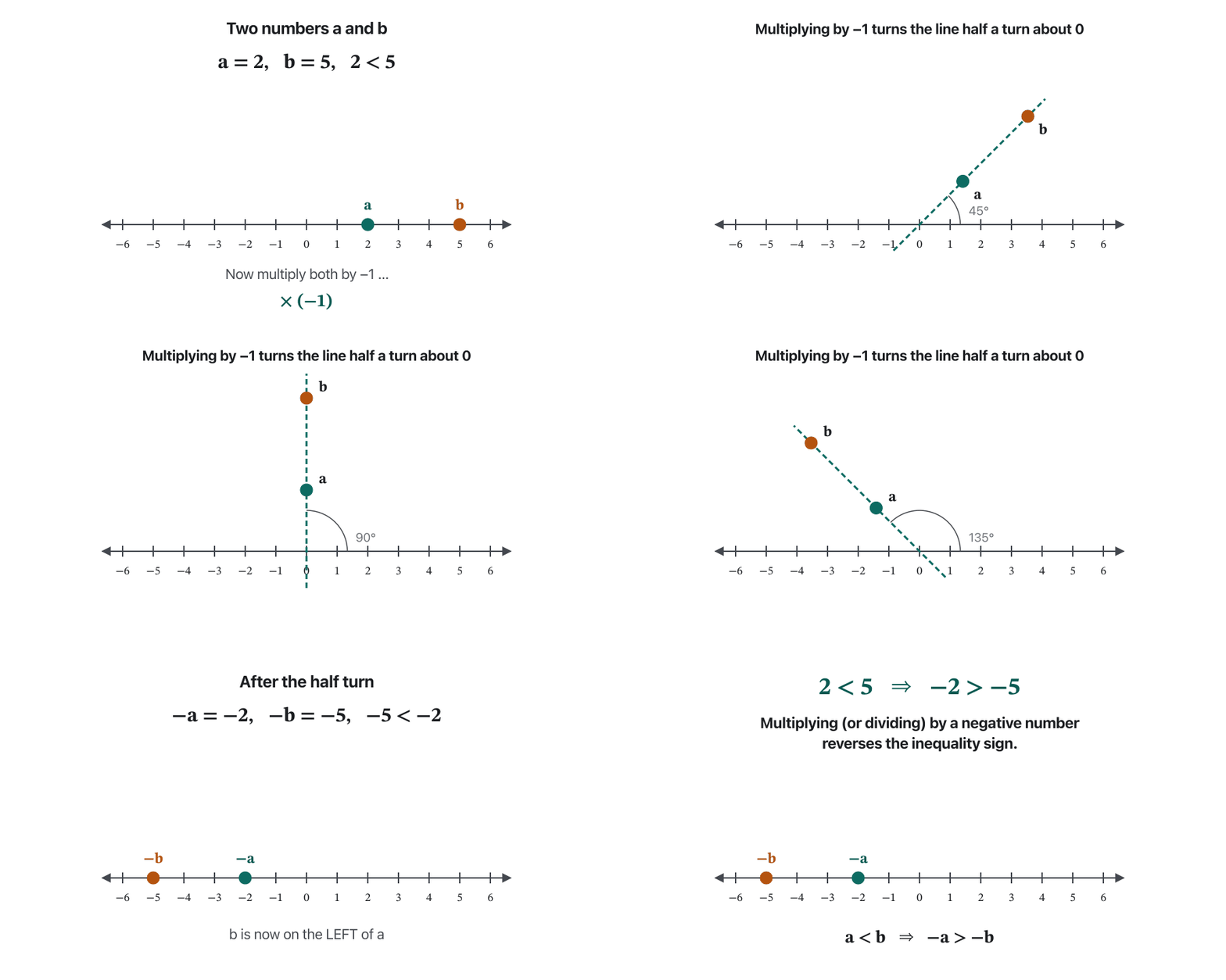
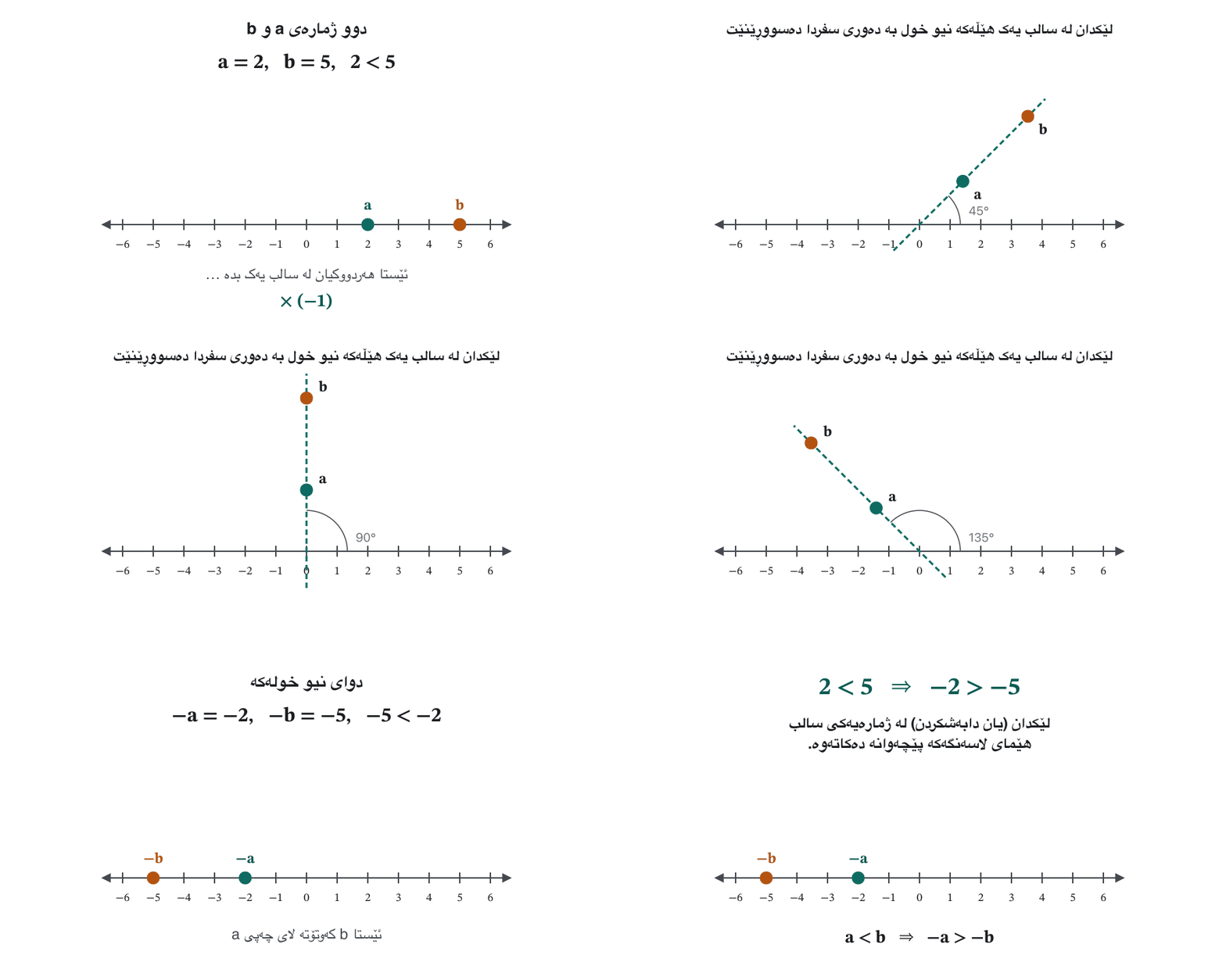
Dividing by a negative number also reverses the sign, because it is multiplying by , which is negative too. Example: → divide by −2 → .
دابەشکردن بەسەر هێماکە پێچەوانە دەکاتەوە، چونکە لێکدانە لە ، کە ئەویش سالبە. نموونە: ← دابەشی بکە ← .
Having 2 dinars is less than having 5 dinars. Now turn both into debts: owing 2 dinars () is better than owing 5 dinars (). The minus sign turned the order around.
هەبوونی 2 دینار کەمترە لە هەبوونی 5 دینار. ئێستا هەردووکیان بکە بە قەرز: قەرزداربوون بە 2 دینار () باشترە لە قەرزداربوون بە 5 دینار (). نیشانەی سالب ڕیزبەندییەکەی پێچەوانە کردەوە.
Where the analogy stops workingسنووری ئەم نموونەیە
The analogy covers multiplying by −1. Multiplying by −3 also stretches the distances, but the order still flips in the same way.
ئەم لێکچواندنە لێکدان لە دەگرێتەوە. لێکدان لە دوورییەکانیش درێژ دەکاتەوە، بەڵام ڕیزبەندییەکە هەر بە هەمان شێوە پێچەوانە دەبێتەوە.
When an inequality sign must turn around: dividing or multiplying both sides by a negative number, with practice and the reason why.
کەی هێمای دەبێت پێچەوانە بکرێتەوە: کاتێک هەردوو لا لە لێک دەدەیت یان دابەشی دەکەیت، لەگەڵ ڕاهێنان و هۆکارەکەی.
Plays from 2:20: dividing by negatives, multiplying with negatives (4:40) and why the sign turns (6:47). The first part (adding and subtracting never flip) is skipped; it belongs to the 'adding' screen.
لە 2:20ـەوە پەخش دەبێت: دابەشکردن بەسەر ، لێکدان لە (4:40) و بۆچی هێماکە پێچەوانە دەبێتەوە (6:47). بەشی یەکەم (زیادکردن و کەمکردنەوە هەرگیز هێماکە پێچەوانە ناکەنەوە) بەجێ دەهێڵرێت؛ سەر بە شاشەی زیادکردنە.
Reciprocals: rules 6, 7 and 8هەڵگەڕاوەکان: یاساکانی 6، 7 و 8
The reciprocal of a number is : the number you multiply a by to get 1. For a , turn it upside down: the reciprocal of is . Zero has no reciprocal.
ژمارەی دەکاتە : ئەو ژمارەیەیە کە ئەگەر aـی پێ لێک بدەیت، 1 بەدەست دێت. بۆ ، و جێیان دەگۆڕیتەوە: دەکاتە . سفر هیچ نییە.
The reciprocal of a number is . What happens to an inequality when we take reciprocals of both sides depends on the signs. The slide's rules, each with an example:
ژمارەی دەکاتە . ئەوەی بەسەر دێت کاتێک هەردوو لا وەردەگرین، پشت بە هێماکان دەبەستێت. یاساکانی سلایدەکە، هەریەکەیان بە نموونەیەکەوە:
| Ruleیاسا | Conditionمەرج | Conclusionئەنجام | Exampleنموونە |
|---|---|---|---|
| 6 | , ، | ||
| 7 | , , ، ، | ||
| 8 | , ، |
Why? . The top is positive. If a and b have the same sign, , the whole fraction is positive and (rules 6 and 8). If they have different signs, , and the order stays (rule 7). Zero has no reciprocal, so these rules never use 0.
بۆچی؟ . موجەبە. ئەگەر a و b هاوهێما بن، ، هەموو موجەبە و (یاساکانی 6 و 8). ئەگەر هێمایان جیاواز بێت، و ڕیزبەندییەکە وەک خۆی دەمێنێتەوە (یاسای 7). سفر هیچ نییە، بۆیە ئەم یاسایانە هەرگیز 0 بەکار ناهێنن.
Share one cake between 2 friends and each gets ; share it between 3 and each gets . More people () means a smaller piece (). That is rule 6.
کێکێک بەسەر 2 هاوڕێدا دابەش بکە، هەریەکەیان وەردەگرێت؛ بەسەر 3دا دابەشی بکە، هەریەکەیان وەردەگرێت. کەسی زیاتر () واتە پارچەی بچووکتر (). ئەمە یاسای 6ـە.
Where the analogy stops workingسنووری ئەم نموونەیە
Cakes and people are positive. For negative numbers use rule 8 (it also flips) and for mixed signs rule 7 (no flip).
کێک و خەڵک موجەبن. بۆ یاسای 8 بەکار بهێنە (ئەویش پێچەوانە دەکاتەوە) و بۆ هێمای جیاواز یاسای 7 (پێچەوانە ناکاتەوە).
Squares: rules 9 and 10دووجاکان: یاساکانی 9 و 10
| Ruleیاسا | Conditionمەرج | Conclusionئەنجام | Exampleنموونە |
|---|---|---|---|
| 9 | , ، | ||
| 10 | , ، |
Why? , and . For two positive numbers , so : squaring keeps the order (rule 10). For two negative numbers , so : squaring reverses it (rule 9). On the number line, squaring measures how far a number is from 0, and for negatives the one further left is further from 0.
بۆچی؟ و . بۆ دوو ، بۆیە : دووجاکردن ڕیزبەندی دەهێڵێتەوە (یاسای 10). بۆ دوو ، بۆیە : دووجاکردن پێچەوانەی دەکاتەوە (یاسای 9). لەسەر ، دووجاکردن دووریی ژمارەیەک لە 0 دەپێوێت و بۆ ئەوەی زیاتر لە لای چەپە دوورترە لە 0.
Adding and multiplying two inequalitiesکۆکردنەوە و لێکدانی دوو لاسەنگە
Two inequalities that point the same way can be added: the two smaller sides together stay smaller than the two larger sides together. If all four numbers are positive, they can also be multiplied.
دوو کە ئاڕاستەیان وەک یەکە دەتوانرێت کۆ بکرێنەوە: دوو لا بچووکەکە پێکەوە هەر لە دوو لا گەورەکە پێکەوە بچووکترن. ئەگەر هەر چوار ژمارەکە موجەب بن، دەشتوانرێت لێک بدرێن.
In daily life: a bus ticket costs less than 1,500 dinars and a sandwich less than 2,000 dinars, so both together cost less than 3,500 dinars. A room is less than 5 m long and less than 4 m wide, so its floor is less than m².
لە ژیانی ڕۆژانەدا: بلیتی پاس لە 1,500 دینار کەمترە و ساندویچێک لە 2,000 دینار کەمترە، کەواتە هەردووکیان پێکەوە لە 3,500 دینار کەمترن. ژوورێک درێژییەکەی لە 5 مەتر کەمترە و پانییەکەی لە 4 مەتر کەمترە، کەواتە ڕووبەری زەوییەکەی لە مەتری دووجا کەمترە.
Careful with multiplying: it needs positive numbers. and , but is greater than . Why both rules hold is shown in the exercises.
لە لێکداندا وریابە: پێویستی بە هەیە. و ، بەڵام لە گەورەترە. بۆچی هەردوو یاساکە ڕاستن لە ڕاهێنانەکاندا پیشان دراوە.
All the rules at a glanceهەموو یاساکان بە یەک نیگا
Here are all the rules of slides 9, 11 and 12 in one table, with the numbering of slide 11–12 (a, b, c are real numbers). The last two rows combine two inequalities (d is a fourth real number).
ئەمە هەموو یاساکانی سلایدەکانی 9، 11 و 12ـە لە یەک خشتەدا، بە ژمارەکانی سلایدەکانی 11–12 (a، b و c ). دوو ڕیزی کۆتایی دوو پێکەوە دەبەستن (d چوارەم ).
| Ruleیاسا | If …ئەگەر … | then …ئەوا … | Signهێما |
|---|---|---|---|
| Orderڕیزبەندی | exactly one: , , (rule 5)تەنها یەکێک: ، ، (یاسای 5) | — | |
| Transitive | keptدەمێنێتەوە | ||
| 1 | keptدەمێنێتەوە | ||
| 2 | keptدەمێنێتەوە | ||
| 3 | reversedپێچەوانە دەبێتەوە | ||
| 4 | or یان | — | |
| 6 | reversedپێچەوانە دەبێتەوە | ||
| 7 | keptدەمێنێتەوە | ||
| 8 | reversedپێچەوانە دەبێتەوە | ||
| 9 | reversedپێچەوانە دەبێتەوە | ||
| 10 | keptدەمێنێتەوە | ||
| Adding twoکۆکردنەوەی دوانیان | keptدەمێنێتەوە | ||
| Multiplying two (all positive)لێکدانی دوانیان (هەمووی موجەب) | keptدەمێنێتەوە |
Common mistakesهەڵە باوەکان
| Mistakeهەڵە | Why it is wrongبۆچی هەڵەیە | Do this insteadلە جیاتی ئەوە |
|---|---|---|
| Dividing by −2 must flip the signدابەشکردن بەسەر دەبێت هێماکە پێچەوانە بکاتەوە | ; check with ؛ بە بیپشکنە | |
| Flipping the sign after subtracting a number: پێچەوانەکردنەوەی هێما دوای کەمکردنەوەی ژمارەیەک: | Adding and subtracting never flipزیادکردن و کەمکردنەوە هەرگیز پێچەوانەی ناکەنەوە | |
| “ is false because ”« هەڵەیە چونکە » | For negatives, the bigger number without its sign is further leftبۆ ، ئەوەی بەبێ نیشانەکەی گەورەترە زیاتر لە لای چەپە | Use the number line: −5 is left of −2 بەکار بهێنە: لە لای چەپی ـیە |
| Reciprocals of positive numbers reverse the order ڕیزبەندی پێچەوانە دەکەنەوە | ||
| Squaring when the signs are mixed: “”دووجاکردن کاتێک هێماکان جیاوازن: «» | Rules 9 and 10 need both numbers with the same signیاساکانی 9 و 10 پێویستیان بەوەیە هەردوو ژمارەکە هاوهێما بن | Check the signs firstسەرەتا هێماکان بپشکنە |
| Writing a chain in mixed directions, like نووسینی زنجیرە بە ئاڕاستەی تێکەڵ، وەک | It says nothing about how 5 and 7 relate to each other, and readers expect one directionهیچ شتێک دەربارەی پەیوەندیی 5 و 7 نالێت و خوێنەر چاوەڕێی یەک ئاڕاستەیە | Use one direction: (which already gives )یەک ئاڕاستە بەکار بهێنە: (کە خۆی ـیش دەدات) |
| Multiplying by an unknown like x without knowing its signلێکدان لە نەزانراوێکی وەک x بەبێ زانینی هێماکەی | If x is negative the sign must flip, if positive it must notئەگەر x سالب بێت دەبێت هێماکە پێچەوانە بێتەوە، ئەگەر موجەب بێت نابێت | Avoid it; the lessons on rational inequalities show safe methodsخۆتی لێ بپارێزە؛ وانەکانی ڕێگای سەلامەت پیشان دەدەن |
Exercisesڕاهێنانەکان
Decide and give the reason. (a) (b) (c) If , then for all real a and b. (d) If and , then .
بڕیار بدە و هۆکارەکەی بنووسە. (أ) (ب) (ج) ئەگەر ، ئەوا بۆ هەموو a و bـیەکی ڕاستی. (د) ئەگەر و ، ئەوا .
Show answerوەڵامەکە پیشان بدە
- (a) True: −5 lies to the left of −2 ().
- (b) False: and both are positive, so by rule 6 .
- (c) False: but . It is true only when a and b are both positive (rule 10).
- (d) True: if a were less than b, then would be false; if a were greater, would be false. By trichotomy only is left.
- (أ) ڕاست: لە لای چەپی ـیە ().
- (ب) هەڵە: و هەردووکیان موجەبن، بۆیە بەپێی یاسای 6 .
- (ج) هەڵە: بەڵام . تەنها کاتێک ڕاستە کە a و b هەردووکیان موجەب بن (یاسای 10).
- (د) ڕاست: ئەگەر a لە b بچووکتر بوایە، هەڵە دەبوو؛ ئەگەر گەورەتر بوایە، هەڵە دەبوو. بەپێی تەنها دەمێنێتەوە.
(a) If , between which numbers do and lie? (b) If , between which numbers does lie? (c) If , between which numbers does lie?
(أ) ئەگەر بێت، و لە نێوان چ ژمارانێکدان؟ (ب) ئەگەر بێت، لە نێوان چ ژمارانێکدایە؟ (ج) ئەگەر بێت، لە نێوان چ ژمارانێکدایە؟
Show answerوەڵامەکە پیشان بدە
Each arrow names the rule used. Multiplying by −1 and taking reciprocals or squares of negatives reverse the signs; multiplying by 2 and adding 1 keep them.
هەر تیرێک ناوی ئەو یاسایە دەڵێت کە بەکار هاتووە. لێکدان لە و وەرگرتنی یان دووجای هێماکان پێچەوانە دەکەنەوە؛ لێکدان لە 2 و زیادکردنی 1 دەیانهێڵنەوە.
Solve each inequality and check one value: (a) (b) (c) (d)
هەر چارەسەر بکە و یەک بەها بپشکنە: (أ) (ب) (ج) (د)
Hintئاماژە
Only multiplying or dividing by a negative number flips the sign.
تەنها لێکدان یان دابەشکردن بە هێماکە پێچەوانە دەکاتەوە.
Show answerوەڵامەکە پیشان بدە
- (a) Add 4: . Check : ✓.
- (b) Divide by −3 and flip: . Check : ✓.
- (c) Multiply by −2 and flip: . Check : ✓.
- (d) Subtract 5: ; multiply by −1 and flip: . Check : ✓.
- (أ) 4 زیاد بکە: . پشکنین بە : ✓.
- (ب) دابەشی بکە و هێماکە پێچەوانە بکەرەوە: . پشکنین بە : ✓.
- (ج) لێکی بدە لە و هێماکە پێچەوانە بکەرەوە: . پشکنین بە : ✓.
- (د) 5 کەم بکەرەوە: ؛ لێکی بدە لە و هێماکە پێچەوانە بکەرەوە: . پشکنین بە : ✓.
A student wrote: “, so ” and “, so by rule 10 ”. What is wrong in each line?
خوێندکارێک نووسیویەتی: «، کەواتە » و «، کەواتە بەپێی یاسای 10 ». هەڵەی هەر دێڕێک چییە؟
Show answerوەڵامەکە پیشان بدە
Line 1 forgets that reciprocals of positive numbers reverse the order (rule 6); the right answer is . Line 2 has a true result, , but the reason is wrong: rule 10 needs both numbers positive, and −2 is negative. With the same “rule” would give , which is false.
دێڕی یەکەم لە بیری دەچێت کە ڕیزبەندی پێچەوانە دەکەنەوە (یاسای 6)؛ وەڵامی ڕاست ـە. دێڕی دووەم ئەنجامێکی ڕاستی هەیە، ، بەڵام هۆکارەکەی هەڵەیە: یاسای 10 پێویستی بەوەیە هەردوو ژمارەکە موجەب بن و سالبە. بە هەمان «یاسا» دەدات، کە هەڵەیە.
Use only the meaning and two facts: the sum and the product of two positive numbers are positive. Prove: (a) if and , then ; (b) if and , then ; (c) if and , then .
تەنها واتای و دوو ڕاستی بەکار بهێنە: کۆ و لێکدراوی دوو موجەبن. بیسەلمێنە: (أ) ئەگەر و ، ئەوا ؛ (ب) ئەگەر و ، ئەوا ؛ (ج) ئەگەر و ، ئەوا .
Hintئاماژە
Write “right side minus left side” and split it into pieces you know are positive. In (c), subtract and add bc.
لای چەپ لە لای ڕاست دەربکە و ئەنجامەکە بکە بە چەند پارچەیەک کە دەزانیت موجەبن. لە (ج)ـدا bc لێدەربکە و زیادی بکەرەوە.
Show answerوەڵامەکە پیشان بدە
In (a) and (b) each bracket is positive because of what we know, and a sum of positive numbers is positive. In (c) the products and are positive because every factor is positive: this is exactly where the rule needs and . Each line ends with , so by the meaning of “less than” we get , and .
لە (أ) و (ب)ـدا هەر کەوانەیەک بەپێی ئەوەی دەیزانین موجەبە و کۆی موجەبە. لە (ج)ـدا لێکدراوەکانی و موجەبن چونکە هەموو ژمارەکانی ناو هەر لێکدانێک موجەبن: ئەمە ڕێک ئەو شوێنەیە کە یاساکە پێویستی بە و هەیە. هەر دێڕێک بە کۆتایی دێت، کەواتە بەپێی واتای «بچووکترە لە» ، و دەردەچن.
Summary and reviewپوختە و پێداچوونەوە
- means a lies to the left of b, that is . For real numbers exactly one of , , holds.
- Order passes along chains: and give . A chain means both parts at once.
- Adding, subtracting, and multiplying or dividing by a positive number keep the sign.
- Multiplying or dividing by a negative number reverses the sign.
- Same-direction inequalities can be added; between positive numbers they can also be multiplied.
- Reciprocals reverse the order of two numbers with the same sign; squares reverse it for two negatives and keep it for two positives.
- واتە a لە لای چەپی bـیە، واتە . بۆ ڕێک یەکێک لە ، ، ڕاستە.
- ڕیزبەندی بە زنجیرەدا دەگوازرێتەوە: و دەبنە . زنجیرەی واتە هەردوو بەشەکە پێکەوە.
- زیادکردن، کەمکردنەوە و لێکدان یان دابەشکردن بە هێماکە دەهێڵنەوە.
- لێکدان یان دابەشکردن بە هێماکە پێچەوانە دەکاتەوە.
- بە هەمان ئاڕاستە دەتوانرێت کۆ بکرێنەوە؛ لە نێوان دەشتوانرێت لێک بدرێن.
- ڕیزبەندیی دوو ژمارەی هاوهێما پێچەوانە دەکەنەوە؛ دووجاکان بۆ دوو پێچەوانەی دەکەنەوە و بۆ دوو دەیهێڵنەوە.
Why does multiplying by a negative number flip the sign?بۆچی لێکدان لە ژمارەیەکی سالب هێماکە پێچەوانە دەکاتەوە؟
Because is a positive number times a negative number, which is negative, so .
چونکە لێکدانی لە ، کە سالبە، بۆیە .
Is true?ئایا ڕاستە؟
Yes: means “less than or equal”, and .
بەڵێ: واتە «بچووکتر یان یەکسان» و .
When does taking reciprocals not reverse the order?کەی وەرگرتنی هەڵگەڕاوە ڕیزبەندی پێچەوانە ناکاتەوە؟
When one number is negative and the other positive (rule 7): and .
کاتێک یەک ژمارە سالب و ئەوی تر موجەب بێت (یاسای 7): و .
What does mean? واتای چییە؟
and , both at the same time.
و ، هەردووکیان لە یەک کاتدا.
Videoڤیدیۆ
Watch a videoسەیری ڤیدیۆیەک بکە
A video that viewers liked a lot and praised in their comments, chosen for this lesson.ڤیدیۆیەک کە بینەران زۆریان پێ خۆش بووە و لە کۆمێنتەکانیاندا ستایشیان کردووە، بۆ ئەم وانەیە هەڵبژێردراوە.
In Kurdish: the inequality signs and the rules for adding, multiplying and dividing both sides, including turning the sign for negatives, with number-line answers.
بە کوردی: هێماکانی و یاساکانی زیادکردن، لێکدان و دابەشکردنی هەردوو لا، لەوانە پێچەوانەکردنەوەی هێماکە بۆ ، بە وەڵامی سەر .
Sorani, Grade 9 lesson (1-5) Inequalities (لاسەنگەکان), page 22.
بە سۆرانی، وانەی پۆلی 9 (1-5): ، لاپەڕە 22.
Lesson complete!وانەکە تەواو بوو!
Well done. Review the key terms, then go on to the next lesson.دەستخۆش. سەیرێکی زاراوە سەرەکییەکان بکەرەوە، پاشان بڕۆ بۆ وانەی داهاتوو.
Key termsزاراوە سەرەکییەکان
Intervals and the Number Lineماوەکان و هێڵی ژمارەکان
Related lecturesوانە پەیوەندیدارەکان
- Intervals and the Number Lineماوەکان و هێڵی ژمارەکان
- Solving Linear and Double Inequalitiesچارەسەرکردنی لاسەنگە هێڵییەکان و لاسەنگە ئاوێتەکان
- Logical Operators and Nested ifکارپێکەرە لۆجیکییەکان و ڕستەی ifـی ناوەکی
- Operatorsکارپێکەرەکان
- Programming Languages and Algorithmsزمانەکانی بەرنامەسازی و ئەلگۆریزمەکان
References and further readingسەرچاوەکان و خوێندنەوەی زیاتر
- OpenStax, College Algebra 2e — 2.7 Linear Inequalities and Absolute Value Inequalities (Using the Properties of Inequalities)
- J. M. Lee, Math 134 Honors Calculus, Handout 3: The Real Numbers (University of Washington) — order axioms and Theorems 35–48
- OpenStax, College Algebra 2e — 1.1 Real Numbers: Algebra Essentials (the number line)
- Python Language Reference — Comparisons (chained comparisons)
This lecture is a first edition. The Kurdish text and terminology are waiting for review by Kurdish IT teachers.ئەم وانەیە چاپی یەکەمە. دەقە کوردییەکە و زاراوەکانی چاوەڕێی پێداچوونەوەی مامۆستایانی کوردی بواری IT ن.