Chapterبەش 6 · Lectureوانە 6.1
Logic Gates, Truth Tables and the NOT Gateگەیتە لۆجیکییەکان، خشتەکانی ڕاستی و گەیتی NOT
What a logic gate is and why the same inputs always give the same output; the gate family (basic, universal and other gates); truth tables with rows and a printable 16-row template; the two symbol styles (distinctive shapes and IEC rectangles); the NOT gate or inverter with its switch model, truth table, notation and timing diagram; and the real 74HC chips that hold the gates, with their power, delay and fan-out.
چییە و بۆچی هەمان هەمیشە هەمان دەدەن؛ خێزانی (، و ئەوانی تر)؛ بە ڕیز و قاڵبێکی شانزە ڕیزی بۆ چاپکردن؛ دوو شێوازی (شێوەی تایبەت و لاکێشەی IEC)؛ یان پێچەوانەکەر بە نموونەی ، ، نووسینەکەی و ؛ و 74HC کە هەڵدەگرن، لەگەڵ وزە، دواکەوتن و fan-outـیان.
What you will learnچی فێر دەبیت
- Explain what a logic gate and a combinational circuit are, and name the basic, universal and other gates.
- Build a truth table with rows for a gate with n inputs.
- Recognise gates in both symbol styles: distinctive shapes and IEC rectangles.
- Describe the NOT gate with its switch model, truth table, expression and timing diagram.
- Say how gates are sold as real chips (74HC00, 04, 08, 32 …) and how they are powered.
- ڕوونی بکەیتەوە و چین و ، و ئەوانی تر ناو ببەیت.
- بە ڕیز بۆ بە n دروست بکەیت.
- لە هەردوو شێوازی بناسیتەوە: شێوە تایبەتەکان و لاکێشەکانی IEC.
- وەسف بکەیت بە نموونەی ، ، دەربڕینی و .
- بڵێیت چۆن وەک ڕاستەقینە دەفرۆشرێن (74HC00، 04، 08، 32 …) و چۆن وزەیان پێ دەدرێت.
What is a logic gate?گەیتی لۆجیکی چییە؟
Every digital machine — a calculator, a phone, a computer — is built from small circuits that take some (0s and 1s) and produce . In a the outputs depend only on the inputs at this moment: whenever the same set of inputs is fed in, the same outputs come out. It has no memory of what happened before.
هەموو ئامێرێکی — ، مۆبایل، — لە بچووک دروست کراوە کە هەندێک (0 و 1) وەردەگرن و دەدەن. لە تەنها بەندن بە ئەم ساتە: هەر کاتێک هەمان کۆمەڵە بدرێت، هەمان دێنە دەرەوە. هیچ ئەوەی پێشتر ڕوویداوە نییە.
Think of the doorkeeper at an exam hall. He checks a few yes/no facts (Do you have your student card? Is your name on the list?) and gives one answer: you may enter, or not. He follows a fixed rule, so two students with the same facts get the same answer.
بیر لە دەرگاوانی هۆڵی تاقیکردنەوە بکەرەوە. چەند ڕاستییەکی بەڵێ/نەخێر دەپشکنێت (ناسنامەی قوتابیت پێیە؟ ناوت لە لیستەکەدایە؟) و یەک وەڵام دەدات: دەتوانیت بچیتە ژوورەوە یان نا. یاسایەکی جێگیر پەیڕەو دەکات، بۆیە دوو قوتابی بە هەمان ڕاستییەکان هەمان وەڵام وەردەگرن.
Where the analogy stops workingسنووری ئەم نموونەیە
A person can change his mind or remember yesterday. A combinational gate has no memory, never changes its rule and decides in a few billionths of a second.
مرۆڤ دەتوانێت بیروڕای بگۆڕێت یان دوێنێی لەبیر بێت. تێکەڵەیی هیچ نییە، هەرگیز یاساکەی ناگۆڕێت و لە چەند بەشێکی ملیارێکی چرکەیەکدا بڕیار دەدات.
What is a logic gate?گەیتی لۆجیکی چییە؟
A gate: one decision, one outputگەیتی لۆجیکی: یەک بڕیار، یەک دەرخستە
The simplest combinational circuits are called . A logic gate is an electronic circuit that makes one logical decision. The course author's report describes gates as devices made of connected transistors that give a 0 or a 1 according to the inputs they receive, and notes that every electronic system works with them. That is why digital systems are said to be built from logic gates.
سادەترین پێیان دەوترێت . ئەلیکترۆنییە کە یەک بڕیاری لۆجیکی دەدات. ڕاپۆرتی خاوەنی کۆرسەکە وەک ئامێر یان وەسف دەکات کە لە کۆمەڵێک پێکەوە بەستراو پێکهاتوون و بەپێی 0 یان 1 دەدەن. هەروەها دەڵێت هەرچی سیستەمی ئەلیکترۆنییە بەم کار دەکات. بۆیە دەوترێت سیستەمە لە دروست کراون.
A small electronic circuit that takes one or more binary inputs and gives one binary output by a fixed rule. NOT, AND and OR are the basic gates, and every digital circuit is built from gates.
سووڕێکی ئەلیکترۆنیی بچووکە کە یەک یان چەند وەردەگرێت و بەپێی یاسایەکی جێگیر یەک دەدات. NOT، AND و OR گەیتە بنەڕەتییەکانن و هەموو سووڕێکی لە گەیت دروست دەکرێت.
What is a logic gate?گەیتی لۆجیکی چییە؟
The gate familyخێزانی گەیتەکان
- Basic gates: AND, OR and NOT. Every other gate can be described with these three.
- Universal gates: NAND and NOR. Any logic circuit at all can be built from NAND gates alone, or from NOR gates alone — the lesson NAND and NOR shows how.
- Other gates: XOR (also written EXOR) and XNOR (EXNOR).
- : AND، OR و NOT. هەموو تر دەتوانرێت بەم سێیانە وەسف بکرێت.
- : NAND و NOR. هەر دەتوانرێت تەنها بە یان تەنها بە دروست بکرێت — وانەی NAND و NOR پیشانی دەدات چۆن.
- تر: XOR (کە EXORـیشی پێ دەنووسرێت) و XNOR (EXNOR).
In this chapter you will learn to recognise each gate by its shape (AND, OR, NAND, NOR, NOT, XOR, XNOR, and the negative-OR and negative-AND forms), describe how it works, write its truth table for any number of inputs, draw its timing diagram for any input waveforms, and write its logic expression.
لەم بەشەدا فێر دەبیت هەر لە شێوەکەیەوە بناسیتەوە (AND، OR، NAND، NOR، NOT، XOR، XNOR و شێوەکانی Negative-OR و Negative-AND)، شێوازی کارکردنی وەسف بکەیت، بۆ هەر ژمارەیەک بنووسیت، بۆ هەر بکێشیت و بنووسیت.
Truth tablesخشتەکانی ڕاستی
A lists every possible combination of the inputs and the output for each one. It works like a map of how a gate behaves. It has one column for each input — usually named A, B, C … or x and y — and one more column for the output.
هەموو تێکەڵەیەکی گونجاوی و بۆ هەر یەکێکیان ڕیز دەکات. وەک نەخشەیەک یان پلانێک وایە بۆ زانینی شێوازی کارکردنی . بۆ هەر ستوونێکی هەیە — بە زۆری بە A، B، C … یان x و y ناو دەنرێن — و ستوونێکی تر بۆ .
Each input can be 0 or 1, so every new input doubles the number of rows: a gate with n inputs needs rows (, , , ). To be sure no row is missing, write the input columns by counting in binary from 00…0 up to 11…1.
هەر دەتوانێت 0 یان 1 بێت، بۆیە هەر نوێ ژمارەی ڕیزەکان دوو هێندە دەکات: بە n پێویستی بە ڕیز هەیە (، ، ، ). بۆ ئەوەی دڵنیا بیت هیچ ڕیزێک نەماوە، ستوونەکانی بە ژماردن بە لە 00…0 تا 11…1 بنووسە.
| A | B | C | X |
|---|---|---|---|
| 0 | 0 | 0 | ? |
| 0 | 0 | 1 | ? |
| 0 | 1 | 0 | ? |
| 0 | 1 | 1 | ? |
| 1 | 0 | 0 | ? |
| 1 | 0 | 1 | ? |
| 1 | 1 | 0 | ? |
| 1 | 1 | 1 | ? |
The output column is what makes each gate different. The next screens fill it in for NOT, and the next lessons for AND and OR.
ستوونی ئەوەیە کە هەر جیاواز دەکات. پەڕەکانی داهاتوو بۆ NOT پڕی دەکەنەوە و وانەکانی دواتر بۆ AND و OR.
Truth tablesخشتەکانی ڕاستی
A 16-row table for lab workخشتەیەکی ڕاستی بە شانزە ڕیز بۆ تاقیگە
With four inputs you need rows. The course's lab template saves you the counting: a Dec column numbers the rows 0 to 15, the four input columns already hold those numbers in binary, and two output columns are left empty for you to fill in.
بە چوار پێویستت بە ڕیز هەیە. قاڵبی تاقیگەی کۆرسەکە ژماردنەکەت لەسەر کەم دەکاتەوە: ستوونی Dec () ڕیزەکان لە 0 تا 15 ژمارە دەکات، چوار ستوونەکەی هەمان ژمارەکانیان بە تێدایە و دوو ستوونی بەتاڵ ماونەتەوە بۆ ئەوەی خۆت پڕیان بکەیتەوە.
The decimal row number is more than a label. Later you will call it the row's minterm number: row 11 is the row where (see minterms).
ژمارە ڕیزەکە تەنها ناونیشانێک نییە. دواتر پێی دەڵێیت ژمارەی ئەو ڕیزە: ڕیزی 11 ئەو ڕیزەیە کە ـە (بڕوانە مینتێرمەکان).
Two ways to draw gatesدوو ڕێگا بۆ کێشانی گەیتەکان
Each gate has a distinctive shape (standard ANSI/IEEE 91). This is the style used in this course and in most textbooks. Europe and many data sheets also use the rectangular IEC 60617 style: every gate is a box, and a mark inside it says what the gate does:
هەر شێوەیەکی تایبەتی هەیە (ستانداردی ANSI/IEEE 91). ئەمە ئەو شێوازەیە کە لەم کۆرسەدا و لە زۆربەی کتێبەکاندا بەکار دێت. ئەوروپا و زۆر پەڕەی زانیاریی شێوازی لاکێشەیی IEC 60617یش بەکار دەهێنن: هەر سندووقێکە و نیشانەیەک لە ناویدا دەڵێت چی دەکات:
&— AND: all inputs must be 1.- — OR: at least one input is 1.
1— one input passed straight through; with a bubble on the output it is NOT.=1— XOR: exactly one input is 1.
&— AND: هەموو دەبێت 1 بن.- — OR: لانیکەم یەک 1ـە.
1— یەک ڕاستەوخۆ دەگوازرێتەوە؛ بە لەسەر دەبێتە NOT.=1— XOR: تەنها یەک 1ـە.
In both styles a small circle — a — means NOT: the signal is inverted at that point. That is the only difference between AND and NAND, or between OR and NOR.
لە هەردوو شێوازەکەدا بازنەیەکی بچووک — — واتە NOT: لەو شوێنەدا پێچەوانە دەکرێتەوە. ئەمە تاکە جیاوازیی نێوان AND و NAND، یان نێوان OR و NORـە.
The NOT gate (inverter)گەیتی NOT (پێچەوانەکەر)
A gate with one input that gives the opposite value: input 0 gives 1 and input 1 gives 0. It is also called an inverter; NOT A is written or .
کە یەک هەیە و نرخی پێچەوانە دەدات: 0 دەکاتە 1 و 1 دەکاتە 0. پێی دەگوترێت پێچەوانەکەر؛ NOT A بە یان دەنووسرێت.
The NOT operation turns a statement from TRUE to FALSE and from FALSE to TRUE: it inverts it. The NOT gate does this to a signal. It has a single input: when the input is 0 the output is 1, and when the input is 1 the output is 0. That is why it is also called an inverter — the course author's homework puts it simply: the NOT gate inverts the value, so it is called “Inverter”.
NOT ڕستەیەک لە ڕاستەوە دەکات بە هەڵە و لە هەڵەوە دەکات بە ڕاست: پێچەوانەی دەکاتەوە. ئەمە بە دەکات. تەنها یەک هەیە: کاتێک 0 بێت 1ـە و کاتێک 1 بێت 0ـە. بۆیە پێی دەوترێت پێچەوانەکەر — هەروەک ئەرکی ماڵەوەی خاوەنی کۆرسەکە دەڵێت: « نرخەکە پێچەوانە دەکات بۆیە پێیشی وتراوە (Inverter: پێچەوانەکەر)».
If the input is called A, the output is called NOT A and is written (A with a bar) or . So the logic expression of the gate is . Its symbol is a triangle with a small bubble at the tip: the triangle means “pass the signal on” and the bubble means “invert it”.
ئەگەر ناوی A بێت، ناوی NOT Aـیە و بە (A بە هێڵێک لەسەری) یان دەنووسرێت. کەواتە ـە. سێگۆشەیەکە بە لە نووکەکەیدا: سێگۆشەکە واتە « بگوازەرەوە» و بازنەکە واتە «پێچەوانەی بکەرەوە».
| 0 | 1 |
| 1 | 0 |
The NOT gate (inverter)گەیتی NOT (پێچەوانەکەر)
A switch model of NOTنموونەی سویچی NOT
You can build a NOT with a battery, a resistor R, a lamp and one switch A connected across the lamp (side by side with it). Let switch open = 0 and closed = 1, lamp ON = 1 and OFF = 0. When A is open (0), the current goes through the lamp, so it is ON (1). When A is closed (1), the current takes the easy path through the switch and the lamp gets none, so it is OFF (0). The lamp always shows . The resistor stops the battery from being short-circuited when the switch is closed.
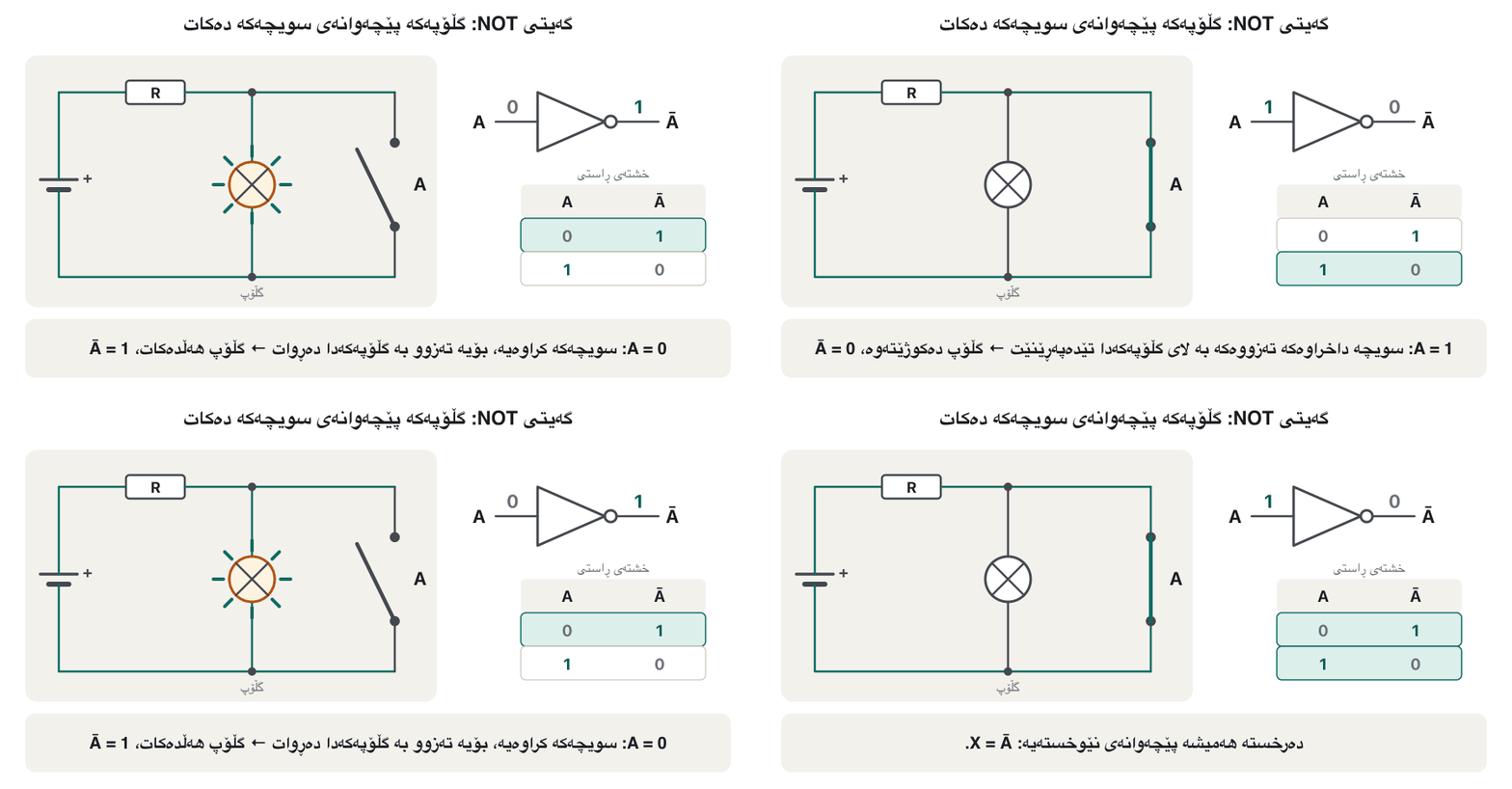
دەتوانیت NOT دروست بکەیت بە پاترییەک، (R)، گڵۆپێک و یەک A کە بە تەنیشت گڵۆپەکەوە بەستراوە. با کراوە = 0 و داخراو = 1 بێت، گڵۆپی هەڵکراو = 1 و کوژاوە = 0. کاتێک A کراوەیە (0)، تەزووەکە بە گڵۆپەکەدا دەڕوات، بۆیە هەڵکراوە (1). کاتێک A داخراوە (1)، تەزووەکە ڕێگا ئاسانەکەی ناو دەگرێت و هیچ بە گڵۆپەکە ناگات، بۆیە کوژاوەیە (0). گڵۆپەکە هەمیشە پیشان دەدات. ڕێگە دەگرێت لەوەی پاترییەکە کاتێک داخراوە ڕاستەوخۆ کورت ببەسترێتەوە.
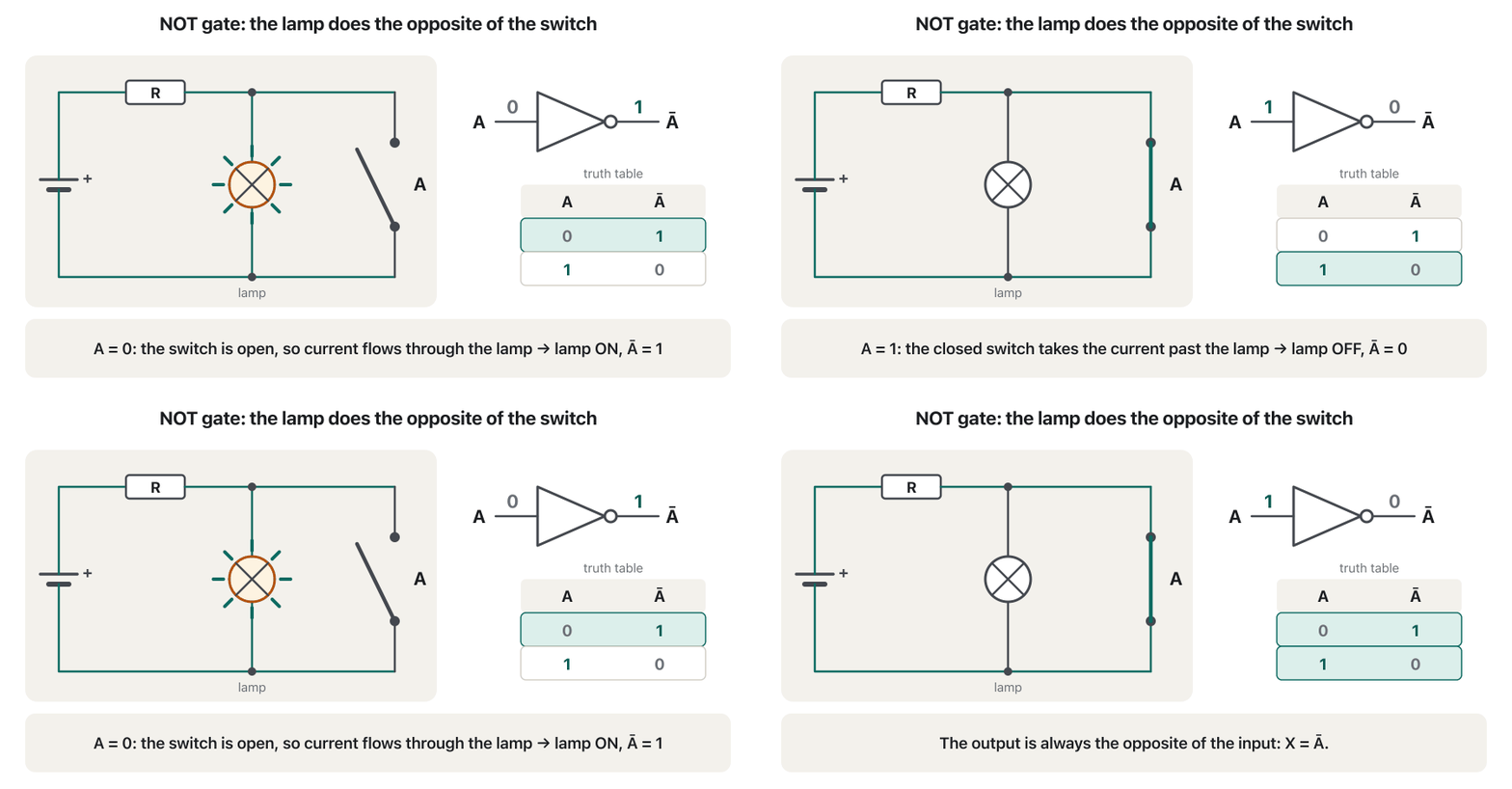
A fridge light works like an inverter. When the door is closed it presses a small switch (1) and the light is off (0). Open the door, the switch is released (0) and the light comes on (1).
گڵۆپی سەلاجە وەک پێچەوانەکەر کار دەکات. کاتێک دەرگاکە داخراوە بچووک دادەگرێت (1) و گڵۆپەکە کوژاوەیە (0). دەرگاکە بکەرەوە، بەر دەبێتەوە (0) و گڵۆپەکە هەڵدەبێت (1).
Where the analogy stops workingسنووری ئەم نموونەیە
The fridge switch is a mechanical part pressed by a door. A real NOT gate is made of transistors, switches billions of times faster, and its output can feed the inputs of other gates.
سەلاجە پارچەیەکی میکانیکییە کە دەرگا دایدەگرێت. ڕاستەقینە لە دروست کراوە، ملیارەها جار خێراتر دەگۆڕێت و دەتوانێت ببێتە تر.
How transistors make NOT and AND gates: an inverter flips its input; two transistors in series give 1 only when both inputs are 1.
دروستکردنی NOT و AND لە : پێچەوانەکەر پێچەوانە دەکاتەوە؛ دوو بە تەنها کاتێک 1 دەدەن کە هەردوو 1 بن.
2:27-4:44: an inverter built from one transistor used as a switch: when the input is on, the current bypasses the output, so the output is off.
لە 2:27 تا 4:44: پێچەوانەکەرێک لە یەک کە وەک بەکار دێت: کاتێک هەڵکراوە، بە ڕێگایەکی تردا دەڕوات و بە ناچێت، بۆیە دەکوژێتەوە.
The NOT gate (inverter)گەیتی NOT (پێچەوانەکەر)
NOT in a timing diagramNOT لە هێڵکاریی کاتبەندیدا
A timing diagram draws signals over time, one under another. For a NOT gate the output is simply the input turned upside down. If the input pulse goes HIGH (1) at time t1 and back LOW (0) at t2, the output goes LOW at t1 and back HIGH at t2 — at every moment it is the opposite of the input.
هێڵکاریی کاتبەندی بە درێژایی کات لەژێر یەکتری دەکێشێت. بۆ ، تەنها کە سەرەوژێر کراوە. ئەگەر لە کاتی t1 بچێتە HIGH (1) و لە t2 بگەڕێتەوە LOW (0)، لە t1 دەچێتە LOW و لە t2 دەگەڕێتەوە HIGH — لە هەموو ساتێکدا پێچەوانەی .
Two inverters in a row cancel out: the second one undoes the first, so . You will meet this again as rule 9 of Boolean algebra, and the statistics course shows the same NOT law.
دوو پێچەوانەکەر بە دوای یەکدا یەکتر پووچ دەکەنەوە: دووەمیان کاری یەکەمیان هەڵدەوەشێنێتەوە، بۆیە . دواتر وەک یاسای 9ی جەبری بوول دووبارە دەیبینیتەوە. کۆرسی ئامار هەمان یاسای NOT پیشان دەدات.
Gates are real chipsگەیتەکان چیپی ڕاستەقینەن
A gate is not just a drawing. Inside, it is a few working as electronic switches; a CMOS inverter needs only two. Gates are sold as small integrated circuits (). The best-known family is the 7400 series, started by Texas Instruments in the 1960s. Today the CMOS version 74HC (supply 2 V to 6 V) is common; older TTL versions such as 74LS need 5 V (4.75 V to 5.25 V). How a few transistors make a gate is shown in Building gates from transistors.
تەنها وێنەیەک نییە. لە ناوەوە چەند کە وەک ئەلیکترۆنی کار دەکەن؛ پێچەوانەکەرێکی CMOS تەنها دوانی پێویستە. وەک بچووک دەفرۆشرێن. ناسراوترین خێزان زنجیرەی 7400ـە کە Texas Instruments لە ساڵانی 1960دا دەستی پێکرد. ئەمڕۆ وەشانی CMOS 74HC (وزە 2 تا 6 ) باوە؛ وەشانە کۆنەکانی TTL وەک 74LS پێویستیان بە 5 (4.75 تا 5.25 ). چۆنیەتیی دروستکردنی لە چەند لە دروستکردنی گەیتەکان لە ترانزیستۆرەکانەوەدا پیشان دراوە.
| Chip | Containsچی تێدایە |
|---|---|
74HC00 | 4 NAND gates, 2 inputs each4 ، هەر یەکە دوو |
74HC02 | 4 NOR gates, 2 inputs each4 ، هەر یەکە دوو |
74HC04 | 6 NOT gates (hex inverter)6 (پێچەوانەکەری شەشی) |
74HC08 | 4 AND gates, 2 inputs each4 ، هەر یەکە دوو |
74HC32 | 4 OR gates, 2 inputs each4 ، هەر یەکە دوو |
74HC86 | 4 XOR gates, 2 inputs each4 ، هەر یەکە دوو |
OR as two switches in parallel lighting a lamp, and real chips holding several gates, such as the hex inverter with six NOT gates.
OR وەک دوو بە کە گڵۆپێک دادەگیرسێنن، هەروەها کە چەند تێدایە، وەک پێچەوانەکەری شەشی کە شەش تێدایە.
From 7:00: pin diagrams of real gate chips; six inverters in a 14-pin IC make a hex inverter.
لە 7:00ـەوە: هێڵکاریی قاچەکانی ؛ شەش پێچەوانەکەر لە 14 قاچیدا پێچەوانەکەری شەشی پێک دەهێنن.
Gates are real chipsگەیتەکان چیپی ڕاستەقینەن
Power, delay and fan-outوزە، دواکەوتن و fan-out
Every gate needs power: the drawings in this course leave the VCC and GND pins out, but they are always connected. And a real gate is not instant: its output changes a few nanoseconds after its input (the propagation delay). In fast circuits these small delays add up — the ripple-carry adder is a famous example.
هەموو پێویستی بە وزە هەیە: وێنەکانی ئەم کۆرسە پینەکانی VCC و GND ناکێشن، بەڵام هەمیشە بەستراون. هەروەها ڕاستەقینە دەستبەجێ نییە: چەند نانۆچرکەیەک دوای دەگۆڕێت (). لە خێراکاندا ئەم دواکەوتنە بچووکانە کۆ دەبنەوە — کۆکەرەوەی زنجیرەیی نموونەیەکی ناسراوە.
One output cannot feed an unlimited number of inputs. The number of inputs it can drive safely is its fan-out: a standard TTL output drives about 10 TTL inputs. CMOS outputs can drive more, but every extra input slows the signal down. When one signal must reach many inputs, a buffer (a triangle without a bubble) is put in between to give it more strength.
یەک ناتوانێت بێ سنوور بدات. زۆرترین ژمارەی کە یەک دەتوانێت بە سەلامەتی بیانبات پێی دەوترێت fan-out: ستانداردی TTL نزیکەی 10 TTL دەبات. CMOS زیاتر دەبەن، بەڵام هەر زیادە خاو دەکاتەوە. کاتێک دەبێت بگاتە زۆر ، بافەرێک (سێگۆشەیەک بێ بازنە) دەخرێتە نێوانیان بۆ ئەوەی هێزی زیاتری پێ بدات.
| Scaleپلە | Gates per chip لە یەک | Exampleنموونە |
|---|---|---|
| SSI | fewer than about 12کەمتر لە نزیکەی 12 | the 74HC gate chips above 74HC کە لە سەرەوە باسکران |
| MSI | about 12 to 100نزیکەی 12 تا 100 | a 4-bit adder chip; the multiplexer and decoder chips چوار بیتی؛ چیپەکانی مەڵتیپلێکسەر و کۆدهەڵوەشێنەر |
| LSI | about 100 to 10,000نزیکەی 100 تا 10,000 | the first processors (1971) and memory chipsیەکەم (1971) و |
| VLSI | 10,000 and far more10,000 و زۆر زیاتر | the CPU of a phone or a PC (billions of transistors) مۆبایل یان کەسی (ملیارەها ) |
Common mistakesهەڵە باوەکان
| Mistakeهەڵە | Fixچارەسەر |
|---|---|
| Giving a gate “one or more outputs”.دانانی «یەک یان چەند » بۆ . | One gate has exactly one output. Circuits of several gates can have more.یەک تەنها یەک هەیە. چەند دەتوانێت زیاتری هەبێت. |
| Missing rows in a truth table.نەمانی هەندێک ڕیز لە . | n inputs need rows; list them by counting in binary.n پێویستی بە ڕیز هەیە؛ بە ژماردن بە بیاننووسە. |
| Forgetting the bubble when drawing NOT, or drawing it on the wrong side.لەبیرکردنی بازنەکە لە کاتی کێشانی NOT، یان کێشانی لە لای هەڵە. | The triangle alone is a buffer (no change). NOT needs the bubble at the output tip.سێگۆشە بە تەنها بافەرە (هیچ ناگۆڕێت). NOT پێویستی بە بازنەکە هەیە لە نووکی . |
| Writing NOT A as A⁻ or .نووسینی NOT A وەک A⁻ یان . | Write or . A minus sign means subtraction, not NOT. یان بنووسە. نیشانەی کەم واتە لێدەرکردن نەک NOT. |
| Thinking a closed switch in the NOT model turns the lamp on.وا بیرکردنەوە کە داخراو لە نموونەی NOTـدا گڵۆپەکە هەڵدەکات. | The switch is across the lamp: closing it takes the current away from the lamp. بە تەنیشت گڵۆپەکەوەیە: داخستنی تەزووەکە لە گڵۆپەکە دوور دەخاتەوە. |
Exercisesڕاهێنانەکان
How many rows does a truth table need for a gate with 1, 2, 3 and 5 inputs?
پێویستی بە چەند ڕیز هەیە بۆ بە 1، 2، 3 و 5 ؟
Show answerوەڵامەکە پیشان بدە
Signal A goes into a NOT gate, and its output goes into a second NOT gate. Write a truth table with the columns A, and the final output.
A دەچێتە ناو و دەچێتە ناو دووەمەوە. بنووسە بە ستوونەکانی A، و کۆتایی.
Show answerوەڵامەکە پیشان بدە
| 0 | 1 | 0 |
| 1 | 0 | 1 |
The final output equals A: two inversions cancel.
کۆتایی یەکسانە بە A: دوو پێچەوانەکردن یەکتر پووچ دەکەنەوە.
Input A of an inverter over six intervals is 1, 1, 0, 1, 0, 0. Draw (or write) the output X.
پێچەوانەکەرێک (A) لە شەش ماوەدا 1، 1، 0، 1، 0، 0ـە. X بکێشە (یان بینووسە).
Show answerوەڵامەکە پیشان بدە
X = 0, 0, 1, 0, 1, 1 — every interval is inverted. The output is LOW for the first two intervals, HIGH in the third, LOW in the fourth and HIGH in the last two.
X = 0, 0, 1, 0, 1, 1 — هەموو ماوەیەک پێچەوانە دەکرێتەوە. لە دوو ماوەی یەکەمدا LOWـە، لە سێیەمدا HIGH، لە چوارەمدا LOW و لە دوو ماوەی کۆتاییدا HIGH.
Name the gate drawn as: (a) a box marked &; (b) a box marked ; (c) a box marked 1 with a bubble on the output; (d) a box marked & with a bubble on the output.
ناوی ئەم بنووسە: (أ) سندووقێک بە نیشانەی &؛ (ب) سندووقێک بە ؛ (ج) سندووقێک بە 1 و بازنەیەک لەسەر ؛ (د) سندووقێک بە & و بازنەیەک لەسەر .
Summaryپوختە
- A combinational circuit has no memory: the same inputs always give the same outputs. Logic gates are its simplest parts.
- A gate has one output. Basic gates: AND, OR, NOT. Universal: NAND, NOR. Others: XOR, XNOR.
- A truth table for n inputs has rows, listed by counting in binary.
- Gates have distinctive shapes (this course) and IEC rectangles (
&, ,1,=1); a bubble means NOT. - NOT (inverter): one input, ; and at every moment.
- Real gates come in 14-pin 74HC chips that need power (VCC, GND), have a small propagation delay and a limited fan-out.
- هیچ نییە: هەمان هەمیشە هەمان دەدەن. سادەترین پارچەکانین.
- یەک هەیە. بنەڕەتی: AND، OR، NOT. گشتگیر: NAND، NOR. ئەوانی تر: XOR، XNOR.
- بۆ n ڕیزی هەیە کە بە ژماردن بە دەنووسرێن.
- شێوەی تایبەتیان هەیە (لەم کۆرسەدا) و لاکێشەی IEC (
&، ،1،=1)؛ بازنەیەکی بچووک واتە NOT. - NOT (پێچەوانەکەر): یەک ، ؛ لە هەموو ساتێکدا و .
- لە 74HCـی 14 پینیدان کە پێویستیان بە وزەیە (VCC، GND)، دواکەوتنێکی کەمیان هەیە و fan-outـیان سنووردارە.
Why does a 3-input truth table have 8 rows?بۆچی خشتەیەکی ڕاستیی سێ نێوخستە 8 ڕیزی هەیە؟
Each input is 0 or 1, so there are combinations.
هەر 0 یان 1ـە، بۆیە تێکەڵە هەیە.
What is another name for the NOT gate?ناوێکی تری گەیتی NOT چییە؟
Inverter, because it inverts its input.
پێچەوانەکەر، چونکە پێچەوانە دەکاتەوە.
What does a small bubble on a gate symbol mean?بازنەی پێچەوانەکردن لەسەر هێمای گەیتێک واتای چییە؟
Inversion (NOT) at that point.
پێچەوانەکردنەوە (NOT) لەو شوێنەدا.
Videoڤیدیۆ
Watch a videoسەیری ڤیدیۆیەک بکە
A video that viewers liked a lot and praised in their comments, chosen for this lesson.ڤیدیۆیەک کە بینەران زۆریان پێ خۆش بووە و لە کۆمێنتەکانیاندا ستایشیان کردووە، بۆ ئەم وانەیە هەڵبژێردراوە.
From transistors to the seven logic gates: NOT, AND, OR, NAND, NOR, XOR and XNOR, with their symbols and truth tables.
لە بۆ حەوت : NOT، AND، OR، NAND، NOR، XOR و XNOR، لەگەڵ و .
0:00 transistors; 1:21 NOT; 2:13 AND and OR; 3:28 NAND and NOR; 5:17 XOR and XNOR.
0:00 ؛ 1:21 NOT؛ 2:13 AND و OR؛ 3:28 NAND و NOR؛ 5:17 XOR و XNOR.
Lesson complete!وانەکە تەواو بوو!
Well done. Review the key terms, then go on to the next lesson.دەستخۆش. سەیرێکی زاراوە سەرەکییەکان بکەرەوە، پاشان بڕۆ بۆ وانەی داهاتوو.
Key termsزاراوە سەرەکییەکان
The AND Gateگەیتی AND
Related lecturesوانە پەیوەندیدارەکان
References and further readingسەرچاوەکان و خوێندنەوەی زیاتر
- Wikipedia: Logic gate (symbols, construction, propagation delay)
- Wikipedia: Inverter (logic gate)
- Wikipedia: 7400-series integrated circuits
- Wikipedia: List of 7400-series integrated circuits
- MIT OpenCourseWare 6.111, Lecture 2: logic families, common gates
- T. L. Floyd, Digital Fundamentals, 11th ed., §1-3, §1-6, §3-1 and §3-8 (Pearson, 2015)
- Wikipedia: Fan-out
- Wikipedia: Integrated circuit (SSI, MSI, LSI, VLSI)
This lecture is a first edition. The Kurdish text and terminology are waiting for review by Kurdish IT teachers.ئەم وانەیە چاپی یەکەمە. دەقە کوردییەکە و زاراوەکانی چاوەڕێی پێداچوونەوەی مامۆستایانی کوردی بواری IT ن.