Chapterبەش 2 · Lectureوانە 2.8
Absolute Value Equations and Inequalitiesهاوکێشەکان و لاسەنگەکانی نرخی ڕووت
Solve , and (and the , forms) by reading absolute value as distance: one interval inside, two rays outside, two points on the edge. The course's examples , , , , and , with a homework answer that lost its negative half.
شیکارکردنی ، و (هەروەها شێوەکانی و ) بە خوێندنەوەی وەک دووری: یەک لە ناوەوە، دوو تیشک لە دەرەوە، دوو خاڵ لەسەر لێوار. نموونەکانی وانەکە ، ، ، ، و ، لەگەڵ وەڵامێکی ئەرکی ماڵەوە کە نیوە سالبەکەی ون کردبوو.
What you will learnچی فێر دەبیت
- Translate and into statements about distance and draw them.
- Use the theorem to turn an absolute-value inequality into a double inequality or into two inequalities joined by “or”.
- Solve absolute-value equations and write their solution sets correctly with braces or unions.
- Handle the special cases and inequalities with , where .
- و بکەیتە ڕستە دەربارەی دووری و بیانکێشیت.
- بەکار بهێنیت بۆ گۆڕینی بۆ یان دوو کە بە «یان» بەستراون.
- شیکار بکەیت و بە دروستی بە کەوانەی یان بنووسیت.
- حاڵەتە تایبەتەکانی و چارەسەر بکەیت، کە تێیاندا .
Read the bars as a distanceهێڵەکان وەک دووری بخوێنەوە
In Absolute value you learned to read as the distance from to . That one idea solves this whole lesson. With centre 3 and distance 2:
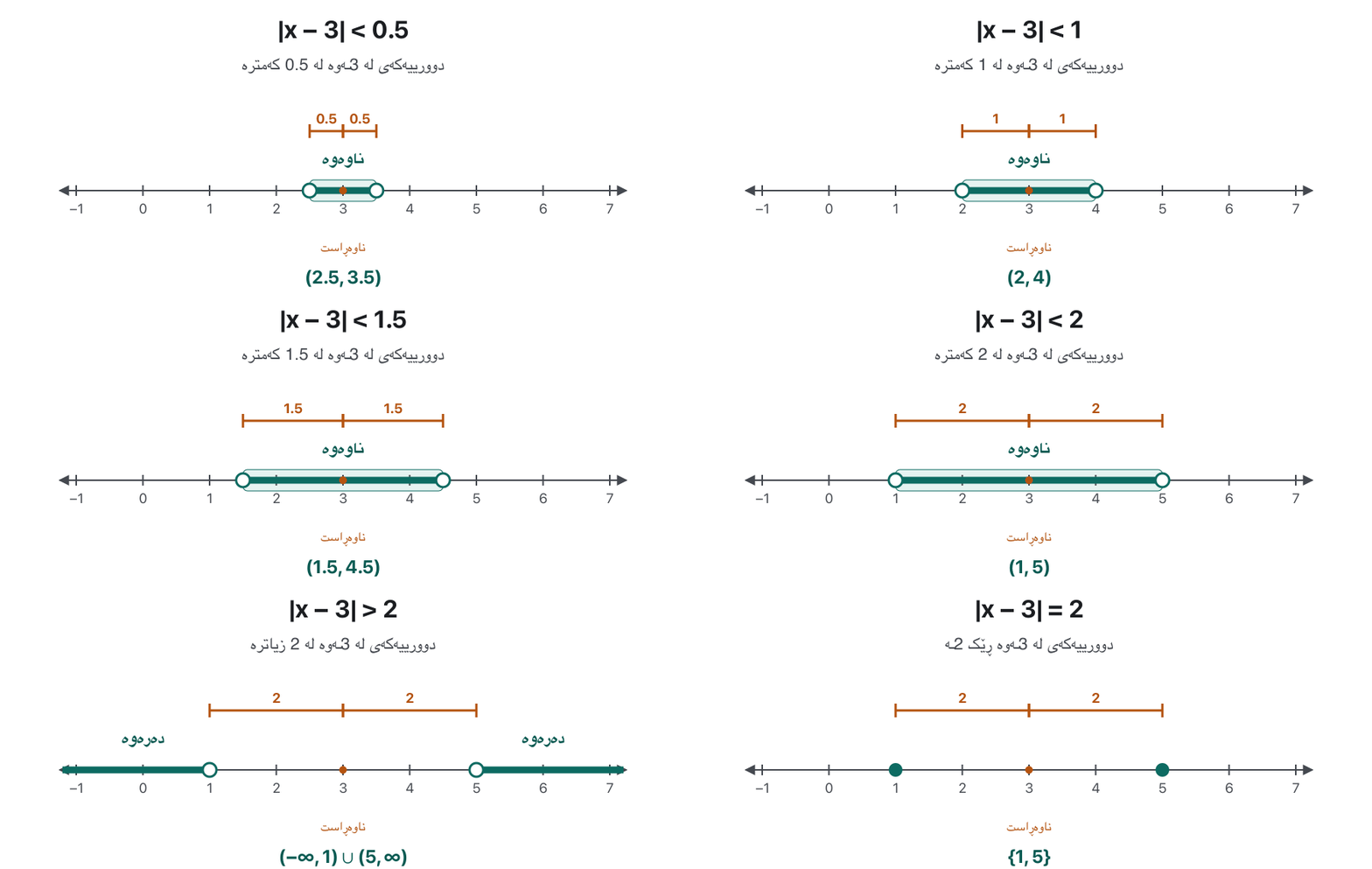
لە نرخی ڕووت فێربوویت وەک دووریی لە ـەوە بخوێنیتەوە. ئەم یەک بیرۆکەیە هەموو ئەم وانەیە شیکار دەکات. بە ناوەڕاستی 3 و دووریی 2:
- : is exactly 2 away from 3 — two points, 1 and 5;
- : less than 2 away — everything inside the region between 1 and 5;
- : more than 2 away — everything outside it.
- : ڕێک 2 لە 3ـەوە دوورە — دوو خاڵ، 1 و 5؛
- : کەمتر لە 2 دوور — هەموو ژمارەکانی ناو ناوچەی نێوان 1 و 5؛
- : زیاتر لە 2 دوور — هەموو ژمارەکانی دەرەوەی ئەو ناوچەیە.
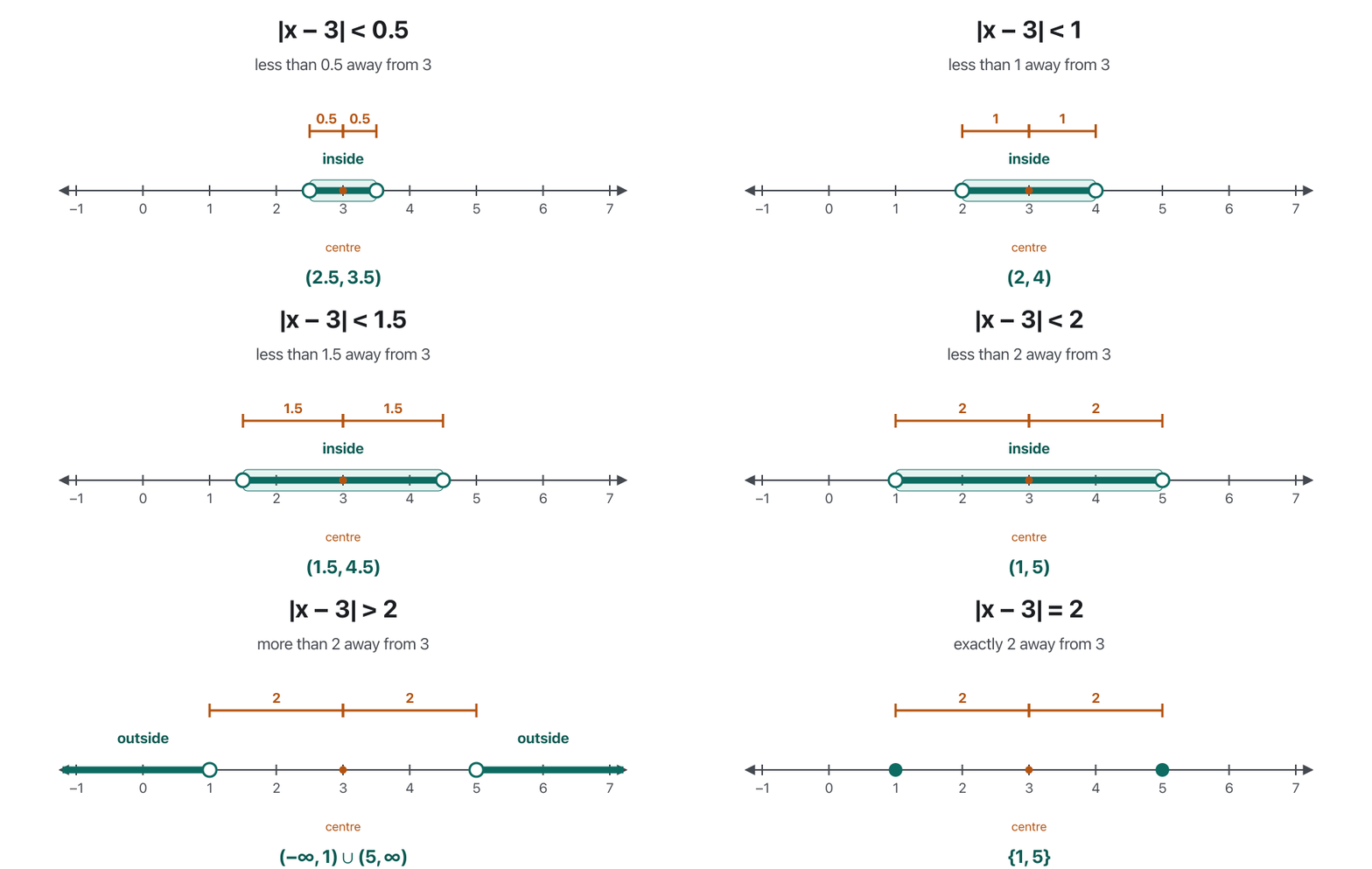
A village school stands at kilometre 3 of a straight road. The bus collects every pupil who lives less than 2 km from the school, that is from kilometre 1 to kilometre 5: . Pupils who live more than 2 km away, , take a taxi instead.
قوتابخانەیەکی گوند لە کیلۆمەتری 3ی ڕێگایەکی ڕاستدایە. پاسەکە هەموو ئەو قوتابیانە هەڵدەگرێت کە کەمتر لە 2 کم لە قوتابخانەکەوە دوورن، واتە لە کیلۆمەتری 1ـەوە تا کیلۆمەتری 5: . ئەو قوتابیانەی زیاتر لە 2 کم دوورن، ، لە جیاتیی ئەوە بە تەکسی دێن.
Where the analogy stops workingسنووری ئەم نموونەیە
A road, like the number line, has only two directions. In a real town “less than 2 km from the school” is a whole disc around it, not a piece of a line.
ڕێگا، وەک ، تەنها دوو ئاڕاستەی هەیە. لە شارێکی ڕاستەقینەدا «کەمتر لە 2 کم لە قوتابخانەوە» بازنەیەکی تەواوە بە دەوریدا، نەک پارچەیەک لە هێڵێک.
The theorem: three casesسەلمێنراوەکە: سێ حاڵەت
Let be a positive real number () and any real number. The course states this theorem without proof:
با موجەب بێت () و هەر بێت. وانەکە ئەم بەبێ دەڵێت:
Why it is true (the proof the course leaves out): is the distance from to 0. A distance of exactly gives the two points . A distance less than keeps between and . A distance more than puts beyond on the left or beyond on the right.
بۆچی ڕاستە (ئەو وانەکە بەجێی دەهێڵێت): دووریی ـە لە سفرەوە. دوورییەکی ڕێک دوو خاڵی دەدات. دوورییەکی کەمتر لە لە نێوان و ـدا دەهێڵێتەوە. دوورییەکی زیاتر لە دەباتە ئەودیوی لە چەپ یان ئەودیوی لە ڕاست.
The same holds with and ; the edges are then included. All five forms:
هەمان شت بۆ و ڕاستە؛ ئەوکات لێوارەکانیش دەچنە ناو وەڵامەکەوە. هەر پێنج شێوەکە:
| Formشێوە | Meaningواتا | Solutionشیکار |
|---|---|---|
| exactly from 0ڕێک لە سفرەوە | ||
| less than from 0کەمتر لە لە سفرەوە | ||
| at most from 0لانیزۆر لە سفرەوە | ||
| more than from 0زیاتر لە لە سفرەوە | ||
| at least from 0لانیکەم لە سفرەوە |
The in the theorem may be any expression. For example means or .
ـی ناو دەشێت هەر بێت. بۆ نموونە واتە یان .
A Kurdish (Sorani) teacher solves equations and inequalities with absolute value: |x| = r, |x| < r and |x| > r.
مامۆستایەکی کورد بە سۆرانی و چارەسەر دەکات: ، و .
Kurdish grade 9 lesson 1-8 (16 min): the three cases of the theorem with worked examples.
وانەی پۆلی 9 (1-8) بە کوردی (16 خولەک): سێ حاڵەتەکەی لەگەڵ نموونەی چارەسەرکراو.
The theorem: three casesسەلمێنراوەکە: سێ حاڵەت
What if is 0 or negative?ئەگەر سفر یان سالب بێت چی؟
The theorem asks for . The other cases are quick, because an absolute value is never negative:
داوای دەکات. حاڵەتەکانی تر خێران، چونکە هەرگیز سالب نییە:
| Inequality or equation یان | Solutionشیکار | Whyبۆچی |
|---|---|---|
| none ()هیچ () | a distance cannot be دووری ناتوانێت بێت | |
| none ()هیچ () | no distance is below a negative numberهیچ دوورییەک لە کەمتر نییە | |
| distance 0 means دووریی سفر واتە | ||
| every هەموو | only has distance 0تەنها دووریی سفری هەیە | |
| all real numbers, هەموو ، | every distance is هەموو دوورییەک ـە و |
Solving : one pieceشیکارکردنی : یەک پارچە
Write the inequality as a double inequality: .
وەک بنووسە: .
Do the same operation to all three parts until stands alone in the middle. Dividing by a negative number reverses both signs (see multiplying by a negative number and Double inequalities).
هەمان هەنگاو لەسەر هەر سێ بەشەکە جێبەجێ بکە تا بە تەنها لە ناوەڕاستدا بمێنێتەوە. دابەشکردن بەسەر هەردوو هێماکە پێچەوانە دەکاتەوە (بڕوانە لێکدان لە ژمارەیەکی سالب و لاسەنگە ئاوێتەکان).
Write the answer as an interval and draw it: open circles for , filled dots for .
وەڵامەکە وەک بنووسە و بیکێشە: بازنەی کراوە بۆ ، خاڵی پڕکراو بۆ .
Example 1. Solve .
نموونەی 1. شیکار بکە.
On the board the is circled: it is what we remove, by adding 3 to all three parts.
لەسەر تەختەکە لە بازنەیەکدا دانراوە: ئەوەیە کە لای دەبەین، بە کۆکردنەوەی 3 لەگەڵ هەر سێ بەشەکە.
: . Check one number inside and one outside: gives ✓; gives , not less than 2 ✗.
: . ژمارەیەک لە ناوەوە و یەکێک لە دەرەوە بپشکنە: دەداتە ✓؛ دەداتە کە لە 2 کەمتر نییە ✗.
Example 3, and your turnنموونەی 3 و نۆرەی تۆ
Example 3. Solve .
نموونەی 3. شیکار بکە.
: . To place on the number line, the lecturer does a small long division in the margin: , so sits two thirds of the way from 0 to 1.
: . بۆ دانانی لەسەر ، مامۆستاکە لە پەراوێزدا دابەشکردنێکی درێژی بچووک دەکات: ، بۆیە لە دوو لەسەر سێی ڕێگای نێوان 0 و 1دایە.
Solve and draw the answer.
شیکار بکە و وەڵامەکە بکێشە.
Hintئاماژە
Add 1 to all three parts.
1 لەگەڵ هەر سێ بەشەکە کۆ بکەرەوە.
Show answerوەڵامەکە پیشان بدە
: — open circles at and 7, shaded between. In words: all numbers less than 6 away from 1.
: — بازنەی کراوە لە و 7دا، نێوانیان ڕەنگکراو. بە وشە: هەموو ئەو ژمارانەی کەمتر لە 6 لە 1ـەوە دوورن.
Solving : two raysشیکارکردنی : دوو تیشک
A distance greater than cannot be written as one chain. It splits into two separate pieces joined by or; solve each piece on its own.
دوورییەکی زیاتر لە ناتوانرێت وەک یەک زنجیرە بنووسرێت. دەبێتە دوو پارچەی جیا کە بە یان پێکەوە دەبەسترێن؛ هەر پارچەیەک بە جیا شیکار بکە.
Example 2. Solve .
نموونەی 2. شیکار بکە.
Equations: هاوکێشەکان:
Example 9. Solve the equation . By case 1 of the theorem the inside is either or :
نموونەی 9. شیکار بکە. بەپێی حاڵەتی 1ی ، ناوەوە یان ـە یان :
: (the answer sheet lists it as — the same set, since order does not matter). Here braces are correct: the answer is two single numbers, not an interval. Check: ✓ and ✓.
: (پەڕەی وەڵامەکان وەک دەینووسێت — هەمان ، چونکە ڕیزبەندی گرنگ نییە). لێرەدا کەوانەی دروستە: وەڵامەکە دوو ژمارەی تاکە، نەک . پشکنین: ✓ و ✓.
The distance picture works here too: means : the two numbers at distance 3.5 from 1.5, which are and 5.
وێنەی دوورییەکەش لێرەدا کار دەکات: واتە : ئەو دوو ژمارەیەی بە دووریی 3.5 لە 1.5ـەوەن، کە و 5ن.
A squared unknown: نەزانراوێکی دووجا:
Example 8 (homework on the slide). Solve . There are no bars yet — they appear when we take square roots. All three parts are , and the square root keeps the order of non-negative numbers (rule 10), so we may take the square root of each part. Remember :
نموونەی 8 (ئەرکی ماڵەوە لە سلایدەکەدا). شیکار بکە. هێشتا هێڵ نییە — کاتێک ڕەگ وەردەگرین دەردەکەون. هەر سێ بەشەکە ن و ڕیزبەندیی ژمارە نا-سالبەکان دەپارێزێت (یاسای 10)، بۆیە دەتوانین ڕەگی هەر بەشێک وەربگرین. لەبیرت بێت :
So the distance from to 0 is between and . That happens on the right, , or on the left, .
کەواتە دووریی لە سفرەوە لە نێوان و دایە. ئەمە لە لای ڕاست ڕوودەدات، ، یان لە لای چەپ، .
: . Check a negative number: gives , and ✓. Another way to see it: means and — the overlap of two familiar pictures.
: . بپشکنە: دەداتە و ✓. ڕێگایەکی تری بینین: واتە و — بەشە هاوبەشەکەی دوو وێنەی ناسراو.
A squared unknown: نەزانراوێکی دووجا:
Spot what is missingئەوەی ونە بدۆزەوە
Here is a student's homework answer to Example 8, typed out. In the margin the student later wrote «ماویەتی» — “something is still missing”. What is missing, and where did it go wrong?
ئەمە وەڵامی ئەرکی ماڵەوەی خوێندکارێکە بۆ نموونەی 8، دووبارە نووسراوەتەوە. دواتر خوێندکارەکە لە پەراوێزدا نووسیویەتی «ماویەتی» — «هێشتا شتێکی ماوە». چی ونە و لە کوێدا هەڵە ڕوویدا؟
The student's steps. ( is another way to write the open interval .)
هەنگاوەکانی خوێندکارەکە. ( شێوەیەکی ترە بۆ نووسینی .)
Hintئاماژە
What is when is negative?
کاتێک سالبە، چەندە؟
Show answerوەڵامەکە پیشان بدە
The wrong step is . The square root of is , so the middle line must read . That has a second piece on the left, : for example gives , which lies between and . The student's own margin note was right — half of the answer was missing.
هەنگاوە هەڵەکە ـە. یەکسانە بە ، بۆیە دێڕی ناوەڕاست دەبێت ببێتە . ئەمە پارچەیەکی دووەمی لە لای چەپ هەیە، : بۆ نموونە دەداتە کە لە نێوان و دایە. تێبینیی پەراوێزی خوێندکارەکە خۆی ڕاست بوو — نیوەی وەڵامەکە ون بوو.
The complete answer.
وەڵامە تەواوەکە.
The notation , common in European books, means the same open interval as (see reversed brackets).
نووسینی ، کە لە کتێبە ئەوروپییەکاندا باوە، هەمان دەگەیەنێت (بڕوانە کەوانە پێچەوانەکان).
Practiceڕاهێنان
Solve .
شیکار بکە.
Hintئاماژە
Two pieces joined by “or”; dividing by reverses the sign.
دوو پارچە بە «یان»؛ دابەشکردن بەسەر هێماکە پێچەوانە دەکاتەوە.
Show answerوەڵامەکە پیشان بدە
: .
: .
Solve .
شیکار بکە.
Show answerوەڵامەکە پیشان بدە
Dividing all three parts by reverses both signs. : .
دابەشکردنی هەر سێ بەشەکە بەسەر هەردوو هێماکە پێچەوانە دەکاتەوە. : .
Solve: (a) (b) (c) .
شیکار بکە: (أ) (ب) (ج) .
Show answerوەڵامەکە پیشان بدە
(a) ; (b) no solution, — a distance is never negative; (c) every real number, .
(أ) ؛ (ب) هیچ شیکارێک نییە، — دووری هەرگیز سالب نییە؛ (ج) هەموو ، .
Solve .
شیکار بکە.
Hintئاماژە
Take square roots and remember .
ڕەگ وەربگرە و لەبیرت بێت .
Show answerوەڵامەکە پیشان بدە
Both pieces: 3 and are included (), 2 and are not ().
هەردوو پارچە: 3 و سەر بە وەڵامەکەن ()، بەڵام 2 و نا ().
Write as an absolute-value inequality and solve: “all numbers whose distance from 7 is less than 0.5”.
وەک بنووسە و شیکاری بکە: «هەموو ئەو ژمارانەی دوورییان لە 7ـەوە لە 0.5 کەمترە».
Show answerوەڵامەکە پیشان بدە
: .
: .
Common mistakesهەڵە باوەکان
| Mistakeهەڵە | Why it is wrongبۆچی هەڵەیە | Correctدروست |
|---|---|---|
| written as بە شێوەی | no number is below and above 2 at onceهیچ ژمارەیەک لە یەک کاتدا لە بچووکتر و لە 2 گەورەتر نییە | |
| dividing by must reverse both signsدابەشکردن بەسەر دەبێت هەردوو هێماکە پێچەوانە بکاتەوە | ||
| in لە دا | loses the negative pieceپارچە سالبەکە لەدەست دەدات | : two pieces: دوو پارچە |
| a set of intervals, not of numbers نەک ژمارە | ||
| the theorem needs پێویستی بە هەیە | no solutionهیچ شیکارێک نییە | |
| Dropping the bars: لابردنی هێڵەکان: | forgets the left side; would “work”لای چەپ لەبیر دەکات؛ «کار دەکات» |
Summaryپوختە
- Read as the distance from to : is inside, is outside, is the two edges.
- For : ; ; or ; the same with and .
- : solve one double inequality. : solve two pieces joined by “or” and write a union.
- If , think before applying the theorem: has no solution, holds for every .
- Taking square roots gives , not : has two pieces.
- وەک دووریی لە ـەوە بخوێنەوە: ناوەوەیە، دەرەوەیە، دوو لێوارەکەیە.
- بۆ : ؛ ؛ یان ؛ هەمان شت بۆ و .
- : یەک شیکار بکە. : دوو پارچە بە «یان» شیکار بکە و بنووسە.
- ئەگەر بوو، پێش بەکارهێنانی بیر بکەرەوە: هیچ شیکارێکی نییە، بۆ هەموو ـێک ڕاستە.
- وەرگرتنی ڕەگ دەدات نەک : دوو پارچەی هەیە.
Why does give two pieces but only one?بۆچی دوو پارچە دەدات بەڵام تەنها یەک؟
Numbers close to 0 form one segment around 0. Numbers far from 0 can be far on the left or far on the right.
ژمارە نزیکەکان لە سفرەوە یەک پارچە بە دەوری سفردا پێک دەهێنن. ژمارە دوورەکان دەشێت لە چەپ یان لە ڕاست دوور بن.
When are set braces right in an answer?کەوانەی کۆمەڵە کەی لە وەڵامدا دروستە؟
For a list of single numbers, such as for . Pieces of the number line are joined with .
بۆ لیستێکی ژمارەی تاک، وەک بۆ . پارچەکانی بە پێکەوە دەبەسترێن.
What comes next?دواتر چی دێت؟
Absolute values with a fraction inside, such as , where the sign of the denominator is unknown — see Absolute value inequalities with fractions.
کە لە ناویاندایە، وەک ، کە هێمای نەزانراوە — بڕوانە لاسەنگەکانی نرخی ڕووت لەگەڵ کەرتەکان.
Videoڤیدیۆ
Watch a videoسەیری ڤیدیۆیەک بکە
A video that viewers liked a lot and praised in their comments, chosen for this lesson.ڤیدیۆیەک کە بینەران زۆریان پێ خۆش بووە و لە کۆمێنتەکانیاندا ستایشیان کردووە، بۆ ئەم وانەیە هەڵبژێردراوە.
Solves 'greater than' as two pieces joined by 'or', 'less than' as one double inequality, with number lines and special cases.
لە ، «گەورەتر لە» دەبێتە دوو پارچە بە «یان» و «بچووکتر لە» دەبێتە یەک ، لەگەڵ و حاڵەتە تایبەتەکان.
Whole lesson: 'greater than' (0:00), graphing (2:36), 'less than' (3:40), special cases such as negative r (6:36), multi-step (9:39).
هەموو بابەتەکە: «گەورەتر لە» (0:00)، کێشانی وەڵام (2:36)، «بچووکتر لە» (3:40)، حاڵەتە تایبەتەکان وەک کاتێک r سالبە (6:36)، نموونەی چەند هەنگاوی (9:39).
Lesson complete!وانەکە تەواو بوو!
Well done. Review the key terms, then go on to the next lesson.دەستخۆش. سەیرێکی زاراوە سەرەکییەکان بکەرەوە، پاشان بڕۆ بۆ وانەی داهاتوو.
Key termsزاراوە سەرەکییەکان
Absolute Value Inequalities with Fractionsلاسەنگەکانی نرخی ڕووت لەگەڵ کەرتەکان
Related lecturesوانە پەیوەندیدارەکان
References and further readingسەرچاوەکان و خوێندنەوەی زیاتر
- OpenStax College Algebra 2e, 2.7 Linear Inequalities and Absolute Value Inequalities (Solving Absolute Value Inequalities)
- Paul's Online Notes, Algebra: Absolute Value Inequalities (cases b > 0, b = 0, b < 0)
- Paul's Online Notes, Algebra: Absolute Value Equations
- Wikipedia: Absolute value (|a| ≤ b ⟺ −b ≤ a ≤ b)
This lecture is a first edition. The Kurdish text and terminology are waiting for review by Kurdish IT teachers.ئەم وانەیە چاپی یەکەمە. دەقە کوردییەکە و زاراوەکانی چاوەڕێی پێداچوونەوەی مامۆستایانی کوردی بواری IT ن.