Chapterبەش 3 · Lectureوانە 3.2
Embedded Systems at Work: a Bike Computer and a Car Engineسیستەمە چەسپێنراوەکان لە کاردا: کۆمپیوتەری پاسکیل و بزوێنەری ئۆتۆمبێل
Open two real embedded systems. A bike computer turns a magnet, a reed switch and a few formulas into your speed with a tiny 8-bit chip on a coin cell. A car's engine control unit senses, decides and acts on every turn of the engine and talks to dozens of other ECUs on the CAN bus. Then see why machines get computers, the four jobs they do — closed-loop control, sequencing, signal processing and communication — and the four limits they live with.
دوو ڕاستەقینە بکەرەوە. پاسکیل بە موگناتیسێک، و چەند هاوکێشەیەک خێراییەکەت دەدۆزێتەوە، بە 8 بیتیی بچووک و پاترییەکی دوگمەیی. یەکەی کۆنترۆڵی بزوێنەری ئۆتۆمبێل لە هەر سووڕێکی بزوێنەردا هەست دەکات، بڕیار دەدات و کار دەکات و لەسەر لەگەڵ دەیان ECUـی تر قسە دەکات. پاشان ببینە بۆچی ئامێرەکان وەردەگرن، چوار کارەکەیان — ، ڕیزبەندیی هەنگاوەکان، و پەیوەندی — و ئەو چوار سنوورەی لەگەڵیدا دەژین.
What you will learnچی فێر دەبیت
- Describe a bike computer's inputs, output, microcontroller and four constraints.
- Compute speed and distance from wheel pulses with , and .
- Name the six jobs of a petrol engine's ECU and explain its sense–decide–act loop and the CAN bus.
- Explain the four benefits, the four jobs and the four constraints of embedded systems, with an example of each.
- ، ، و چوار سنوورەکەی پاسکیل وەسف بکەیت.
- خێرایی و دووری لە چەرخەوە بە ، و حیساب بکەیت.
- شەش کارەکەی ECUـی بزوێنەری بەنزین ناو ببەیت و خولی هەستکردن ← بڕیاردان ← کارکردن و ڕوون بکەیتەوە.
- چوار سوود، چوار کار و چوار سنوورەکەی ڕوون بکەیتەوە، بۆ هەریەکەیان نموونەیەک.
Two embedded systems, two different worldsدوو سیستەمی چەسپێنراو، دوو جیهانی جیاواز
In What is an embedded system? you met the idea: a small computer built into a bigger machine to do one job. This lesson opens two real ones. A bike computer sits on the handlebar and shows your speed. An engine control unit sits in a car and runs the engine. Both are embedded systems, but they live in very different worlds.
لە سیستەمی چەسپێنراو چییە؟ بیرۆکەکەت ناسی: بچووک کە لەناو ئامێرێکی گەورەتردا دانراوە بۆ ئەوەی یەک کار بکات. ئەم وانەیە دوو نموونەی ڕاستەقینە دەکاتەوە. پاسکیل لەسەر دەسکی پاسکیلەکە دادەنرێت و خێراییەکەت پیشان دەدات. یەکەی کۆنترۆڵی بزوێنەر لەناو ئۆتۆمبێلدایە و بزوێنەرەکە بەڕێوە دەبات. هەردووکیان ، بەڵام لە دوو جیهانی زۆر جیاوازدا دەژین.
The bike computer: what goes in and what comes outکۆمپیوتەری پاسکیل: چی دەچێتە ژوورەوە و چی دێتە دەرەوە
A bike computer has two jobs: measure speed and measure distance. To do them it needs very little:
پاسکیل دوو کاری هەیە: پێوانی خێرایی و پێوانی دووری. بۆ ئەم دوو کارە زۆر کەمی پێویستە:
- Inputs: a wheel-rotation sensor, which tells the chip each time the wheel turns once, and a mode key.
- The mode key is a button that changes what the screen shows — the mode. Press it once: speed. Again: the distance travelled. Again: the total ride time.
- Output: a small liquid-crystal display ().
- : سووڕانەوەی چەرخ، کە هەر جارێک چەرخەکە یەک جار بسووڕێتەوە بە دەڵێت؛ هەروەها دوگمەی دۆخ.
- دوگمەی دۆخ کە ئەوەی شاشەکە پیشانی دەدات دەگۆڕێت — واتە دۆخـەکە. جارێک دایبگرە: خێرایی. دووپاتە: ئەو دوورییەی بڕیوتە. دیسان: کۆی کاتی سواربوون.
- : شاشەیەکی بچووکی کریستاڵی شل ().
Four limits: size, cost, power and weightچوار سنوور: قەبارە، تێچوو، کارەبا و کێش
A constraint is a rule or a limit that controls what designers can do. It stops them from doing whatever they like and forces them to meet special conditions. A bike computer has four:
سنوور (constraint) یاسایەک یان مەرجێکە کە دیاری دەکات دیزاینەران چی دەتوانن بکەن. ڕێگەیان لێ دەگرێت هەرچییەک بیانەوێت بیکەن و ناچاریان دەکات مەرجی تایبەت جێبەجێ بکەن. پاسکیل چوار سنووری هەیە:
- Size — it must be small enough to fit on the handlebar; a big, heavy box is uncomfortable to ride with.
- Cost — it must be cheap to make and to buy. Nobody pays hundreds of dollars for a simple speedometer, so the maker uses simple parts and a low-cost design.
- Power and energy — it runs on a small battery, such as a coin cell or an AA cell, so it must use very little electricity.
- Weight — it must be very light. Cyclists want the bike to feel fast and easy, and every heavy part makes riding harder.
- قەبارە — دەبێت ئەوەندە بچووک بێت کە لەسەر دەسکی پاسکیلەکە جێی ببێتەوە؛ سندووقێکی گەورە و قورس سواربوونی ناخۆش دەکات.
- تێچوو — دەبێت دروستکردن و کڕینی هەرزان بێت. کەس سەدان دۆلار بۆ خێراییپێوێکی سادە نادات، بۆیە دروستکەر پارچەی سادە و دیزاینێکی هەرزان بەکار دەهێنێت.
- و — بە بچووک کار دەکات، وەک پاترییەکی دوگمەیی یان AA، بۆیە دەبێت کارەبایەکی زۆر کەم بەکار بهێنێت.
- کێش — دەبێت زۆر سووک بێت. پاسکیلسواران دەیانەوێت پاسکیلەکە خێرا و ئاسان هەست پێ بکرێت و هەموو پارچەیەکی قورس سواربوون قورستر دەکات.
Four limits: size, cost, power and weightچوار سنوور: قەبارە، تێچوو، کارەبا و کێش
Power is how fast; energy is how muchتوانای کارەبایی خێراییە؛ وزەی کارەبایی بڕە
Two words are easy to mix up. Power is how fast a device uses energy, measured in watts (W). Energy is how much it has used after some time, measured in watt-hours (Wh). A battery stores a fixed amount of energy, so the battery lasts longer when the power is lower:
دوو وشە بە ئاسانی تێکەڵ دەبن. ئەوەیە ئامێرێک بە چ خێراییەک وزە بەکار دەهێنێت و بە وات (W) دەپێورێت. ئەوەیە دوای ماوەیەک چەندی بەکار هێناوە و بە وات-کاتژمێر (Wh) دەپێورێت. بڕێکی جێگیر لە هەڵدەگرێت، بۆیە هەتا کەمتر بێت پاترییەکە زیاتر دەخایەنێت:
A CR2032 coin cell (about 225 mAh at 3 V) holds about 0.675 Wh. A careful design that sleeps between wheel pulses may average 0.07 mW; one that never sleeps, 1 mW, empties the same cell in about 675 hours — four weeks.
پاترییەکی دوگمەیی CR2032 (نزیکەی 225 mAh بە 3 V) نزیکەی 0.675 Wh هەڵدەگرێت. دیزاینێکی وریا کە لە نێوان چەرخدا دەخەوێت لەوانەیە بە تێکڕایی 0.07 mW بەکار بهێنێت؛ دیزاینێک کە هەرگیز ناخەوێت، 1 mW، هەمان پاتری لە نزیکەی 675 کاتژمێردا بەتاڵ دەکات — چوار هەفتە.
A small, slow microcontroller is enoughمایکرۆکۆنترۆڵەرێکی بچووک و هێواش بەسە
The bike computer uses a low-performance microcontroller: 8-bit, about 10 MIPS.
پاسکیل کەمتوانا بەکار دەهێنێت: 8 بیتی، نزیکەی 10 MIPS.
- 8-bit means it handles only small numbers in one step: 8 bits hold 0 to 255. Think of a small bucket that carries a little water at a time. Bigger numbers are still possible — they just take a few more steps.
- means million instructions per second. At 10 MIPS the chip carries out about 10 million simple instructions every second — very slow next to a phone, which does billions.
- 8 بیتی واتە لە یەک هەنگاودا تەنیا ژمارەی بچووک کار پێ دەکات: 8 لە 0 تا 255 هەڵدەگرن. بیر لە سەتڵێکی بچووک بکەرەوە کە هەر جارە کەمێک ئاو هەڵدەگرێت. ژمارەی گەورەتریش دەکرێت — تەنیا چەند هەنگاوێکی زیاتر دەخوازن.
- واتە ملیۆن لە چرکەیەکدا. بە 10 MIPS لە هەر چرکەیەکدا نزیکەی 10 ملیۆن سادە جێبەجێ دەکات — بە بەراورد بە مۆبایلێک کە ملیاران دەکات، زۆر هێواشە.
Is that enough? At 40 km/h a road-bike wheel turns about 5.3 times a second, so the chip still has about 1.9 million instructions for every turn — far more than it needs to count one pulse and divide two numbers. A faster chip would only cost more and empty the battery sooner.
ئایا ئەوە بەسە؟ بە 40 km/h چەرخی پاسکیلێکی ڕێگا لە چرکەیەکدا نزیکەی 5.3 جار دەسووڕێتەوە، بۆیە هێشتا بۆ هەر سووڕێک نزیکەی 1.9 ملیۆن هەیە — زۆر زیاتر لەوەی پێویستیەتی بۆ ژماردنی و دابەشکردنی دوو ژمارە. خێراتر تەنیا گرانتر دەبوو و پاترییەکەی زووتر بەتاڵ دەکرد.
Counting wheel turns: a magnet and a reed switchژماردنی سووڕەکانی چەرخ: موگناتیسێک و سویچێکی قامیشی
How does the chip know that the wheel has turned? A small magnet is clipped to one spoke, and a sensor is fixed to the fork. In many bike computers the sensor is a reed switch: two thin metal blades sealed in a glass tube. When the magnet passes, it pulls the blades together for a moment and closes the circuit — one short pulse. Others use a Hall-effect sensor, which does the same job with no moving parts.
چۆن دەزانێت چەرخەکە سووڕاوەتەوە؟ موگناتیسێکی بچووک بە یەکێک لە تیلەکانەوە دەبەسترێت و لەسەر چنگاڵەکە جێگیر دەکرێت. لە زۆر پاسکیلدا ئەو : دوو پەڕەی کانزایی تەنک کە لەناو بۆرییەکی شووشەیی داخراودان. کاتێک موگناتیسەکە تێدەپەڕێت، بۆ ساتێک پەڕەکان بەیەکەوە دەلکێنێت و دادەخات — یەک کورت. هەندێکی تر Hall بەکار دەهێنن، کە هەمان کار بێ هیچ پارچەیەکی جووڵاو دەکات.
A small with two thin metal blades (reeds) sealed in a glass tube. A magnet brought near pulls the blades together and closes the ; taken away, it lets them spring apart. A bike computer counts wheel turns this way, with a magnet on a spoke.
بچووکە بە دوو پەڕەی کانزایی تەنکەوە کە لەناو بۆرییەکی شووشەیی داخراودا دانراون. کاتێک موگناتیسێک نزیک دەکرێتەوە، پەڕەکان بەیەکەوە دەلکێنێت و دادەخات؛ کە دوور دەخرێتەوە، پەڕەکان لێک دەبنەوە. پاسکیل بەم شێوەیە سووڕەکانی چەرخ دەژمێرێت، بە موگناتیسێک لەسەر تیلێک.
The microcontroller's timer measures the time between two pulses — the time of one turn. Watch it happen:
کاتی لە نێوان دوو دەپێوێت — کاتی یەک سووڕ. سەیری بکە:
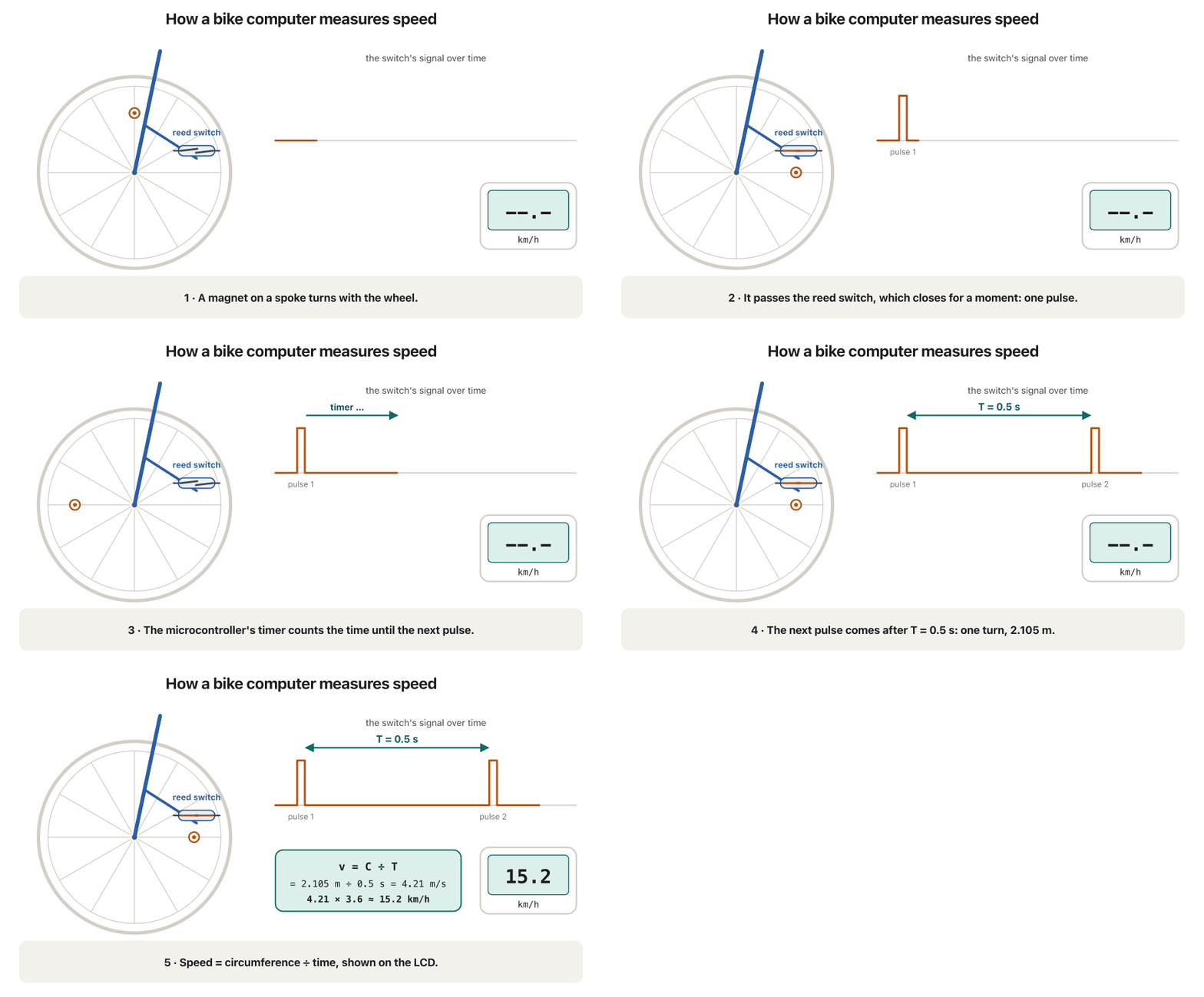
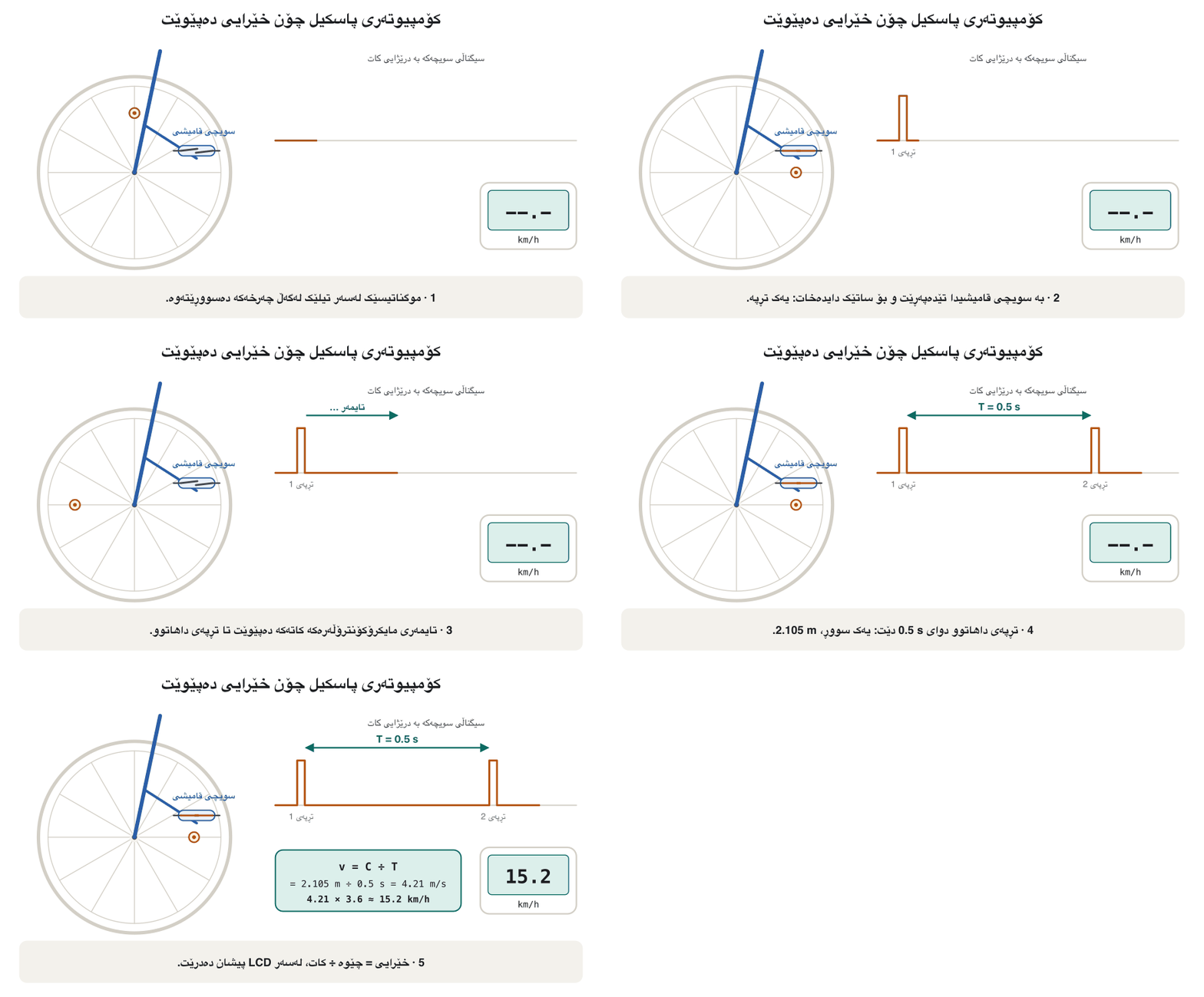
Counting wheel turns: a magnet and a reed switchژماردنی سووڕەکانی چەرخ: موگناتیسێک و سویچێکی قامیشی
From pulses to km/h: the mathsلە تڕپەوە بۆ km/h: بیرکارییەکەی
One wheel turn moves the bike forward by one circumference, . The rider types the wheel size into the bike computer once; the chip does the rest with three formulas:
هەر سووڕێکی چەرخ پاسکیلەکە بە ئەندازەی یەک چێوە بەرەو پێش دەبات، . پاسکیلسوارەکە یەک جار قەبارەی چەرخەکە دەنووسێتە ناو پاسکیلەکەوە؛ ئەوانی تر بە سێ هاوکێشە دەکات:
- Circumferenceچێوە
A common road wheel (700×25C) is about 0.67 m across.
چەرخێکی باوی پاسکیلی ڕێگا (700×25C) تیرەکەی نزیکەی 0.67 mـە.
- Speedخێرایی
The timer measured T = 0.5 s for one turn.
بۆ یەک سووڕ T = 0.5 sـی پێوا.
- km/hگۆڕین بۆ km/h
One metre per second is 3.6 km/h, because an hour has 3,600 seconds and a kilometre 1,000 metres.
یەک مەتر لە چرکەیەکدا دەکاتە 3.6 km/h، چونکە کاتژمێرێک 3,600 چرکەیە و کیلۆمەترێک 1,000 مەتر.
- Distanceدووری
The chip also counts the pulses. After N = 1,000 turns:
دەژمێرێت. دوای N = 1,000 سووڕ:
A petrol engine's control unit: six jobsیەکەی کۆنترۆڵی بزوێنەری بەنزین: شەش کار
A petrol car's engine control unit (ECU) is a small computer inside the car that controls the engine so that it works correctly. (Careful: "ECU" also stands for , the name for every small control computer in a car; the engine's is just one of them.) It has six main jobs; here are the first three:
یەکەی کۆنترۆڵی بزوێنەر (ECU)ی ئۆتۆمبێلێکی بەنزین بچووکە لەناو ئۆتۆمبێلەکەدا کە بزوێنەرەکە کۆنترۆڵ دەکات بۆ ئەوەی بە دروستی کار بکات. (ئاگاداربە: «ECU» واتای ـیش دەدات، کە ناوی هەموو بچووکی کۆنترۆڵی ناو ئۆتۆمبێلە؛ هی بزوێنەرەکە تەنیا یەکێکیانە.) شەش کاری سەرەکیی هەیە؛ ئەمە سێ کاری یەکەمن:
- Fuel injection — how much petrol goes into the engine, and when: more when you press the pedal, less when you slow down.
- Air intake — how much air goes in. Fuel needs air to burn and make power; the wrong amount of air and the car runs badly.
- Spark timing — the exact moment the spark plug fires and burns the fuel–air mixture. Like fireworks lit too early or too late, a badly timed spark wastes the push.
- پاشاندنی سووتەمەنی — چەند بەنزین دەچێتە ناو بزوێنەرەکەوە و کەی: زیاتر کاتێک پێدالەکە دادەگریت، کەمتر کاتێک خاو دەبیتەوە.
- هەوای ژوورەوە — چەند هەوا دەچێتە ژوورەوە. سووتەمەنی بۆ سووتان و دروستکردنی هێز پێویستی بە هەوایە؛ بڕی هەڵەی هەوا و ئۆتۆمبێلەکە بە خراپی کار دەکات.
- کاتی پریسکە — ساتی ڕاستی دانی پریسکە و سووتاندنی تێکەڵەی سووتەمەنی و هەوا. وەک یاری ئاگرینێک کە زوو یان درەنگ دادەگیرسێنرێت، پریسکەیەکی بێکات هێزەکە بەفیڕۆ دەدات.
A petrol engine's control unit: six jobsیەکەی کۆنترۆڵی بزوێنەری بەنزین: شەش کار
Three more jobs: exhaust gas, throttle and knockسێ کاری تر: گازی دەرچوو، دەریچە و تەقەتەق
The other three jobs clean the exhaust, replace the pedal cable and protect the engine:
سێ کارەکەی تر گازی دەرچوو پاکتر دەکەن، شوێنی وایەری پێدالەکە دەگرنەوە و بزوێنەرەکە دەپارێزن:
- Exhaust-gas recirculation (EGR) — sending a little exhaust gas back into the engine. It cools the burning, which reduces polluting nitrogen oxides (NOx).
- Electronic throttle control — there is no cable from the pedal: a sensor tells the computer how far you press, and a motor opens the engine's air valve (the throttle) by the right amount.
- Knock control — knocking is small, uncontrolled explosions that can damage the engine. A knock sensor "listens", and the computer moves the spark a little later until it stops.
- گەڕاندنەوەی گازی دەرچوو (EGR) — ناردنەوەی کەمێک لە گازی دەرچوو بۆ ناو بزوێنەرەکە. سووتانەکە ساردتر دەکات و ئەمەش ئۆکسیدەکانی نایترۆجینی پیسکەر (NOx) کەم دەکاتەوە.
- کۆنترۆڵی ئەلیکترۆنیی دەریچە — هیچ وایەرێک لە پێدالەکەوە نییە: بە دەڵێت چەندت داگرتووە و ماتۆڕێک دەریچەی هەوای بزوێنەرەکە بە ئەندازەی گونجاو دەکاتەوە.
- کۆنترۆڵی تەقەتەق — تەقەتەق تەقینەوەی بچووک و بێکۆنترۆڵە کە دەکرێت زیان بە بزوێنەرەکە بگەیەنێت. تەقەتەق «گوێ دەگرێت» و پریسکەکە کەمێک دوا دەخات تا دەوەستێت.
A petrol engine's control unit: six jobsیەکەی کۆنترۆڵی بزوێنەری بەنزین: شەش کار
Sense, decide, act — on every turn of the engineهەستکردن، بڕیاردان، کارکردن — لە هەر سووڕێکی بزوێنەردا
All six jobs follow one pattern. The ECU senses (pedal position, air flow, engine speed, oxygen in the exhaust, knocking), decides (how much fuel, the best moment for the spark) and acts through its actuators (injectors, spark plugs, the throttle motor). Then it senses the result and starts again — on every turn of the engine, thousands of times a minute.
هەر شەش کارەکە یەک شێوازیان هەیە. ECU هەست دەکات (شوێنی پێدال، بڕی هەوا، خێرایی بزوێنەر، ئۆکسجینی ناو گازی دەرچوو، تەقەتەق)، بڕیار دەدات (چەند سووتەمەنی، باشترین سات بۆ پریسکە) و بە کار دەکات (پاشێنەرەکان، پریسکەکان، ماتۆڕی دەریچە). پاشان هەست بە ئەنجامەکە دەکات و دیسان دەست پێ دەکاتەوە — لە هەر سووڕێکی بزوێنەردا، هەزاران جار لە خولەکێکدا.
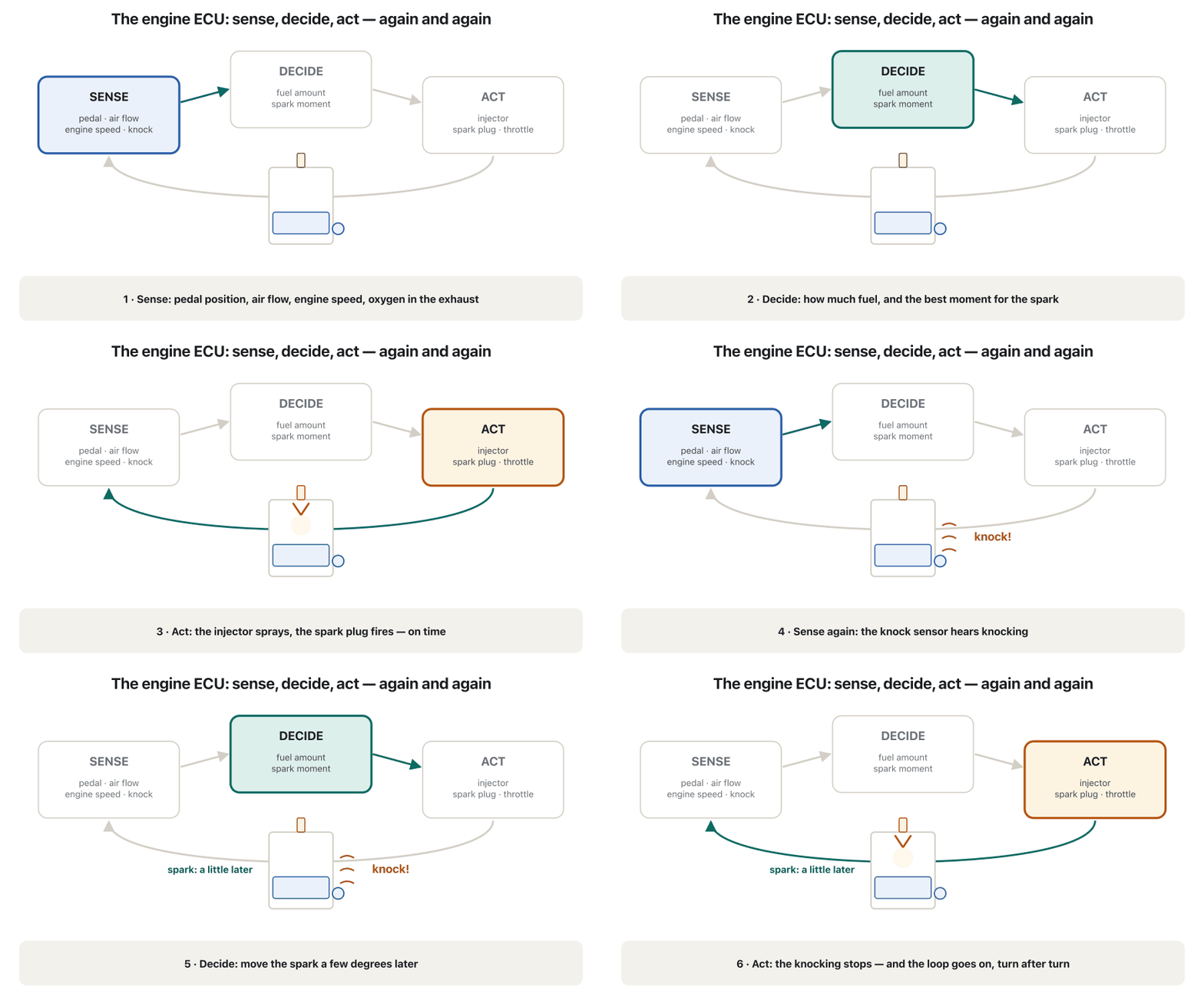
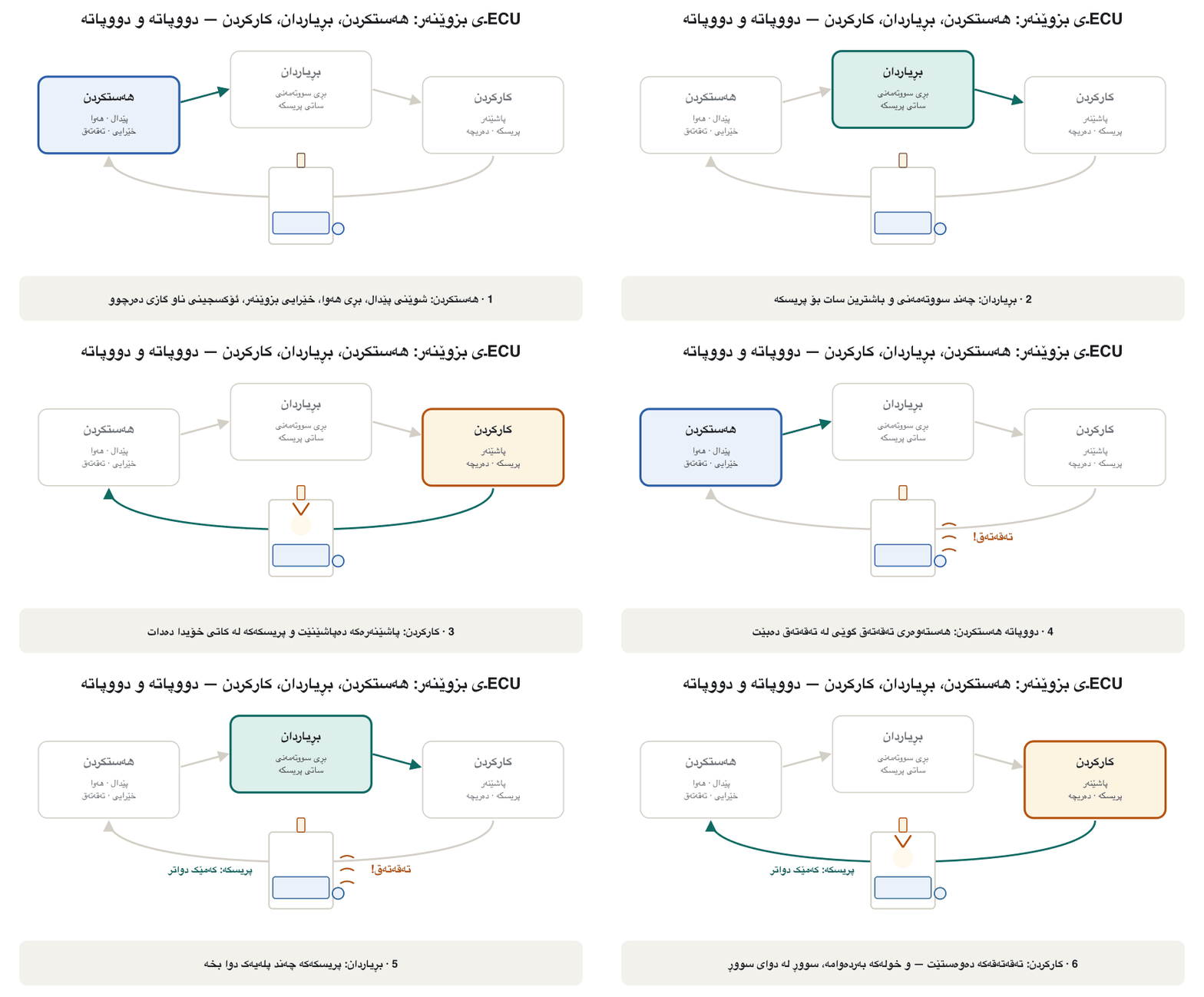
A drone's flight controller runs the same kind of loop hundreds of times a second (The control loop), and artificial intelligence describes any such machine as an agent with sensors and actuators.
هەمان جۆری خول سەدان جار لە چرکەیەکدا جێبەجێ دەکات (خولی کۆنترۆڵ) و هەر ئامێرێکی لەم جۆرە وەک وەسف دەکات کە هەستەوەرەکان و جووڵێنەرەکانی هەیە.
A petrol engine's control unit: six jobsیەکەی کۆنترۆڵی بزوێنەری بەنزین: شەش کار
Built for heat, shaking and years of workدروستکراو بۆ گەرما، لەرزین و ساڵانێک کار
The engine ECU's constraints are different from the bike computer's: reliability in a harsh environment comes first — heat from the engine, cold winters, shaking, water and electrical noise, for many years — then cost and weight. It has many inputs and outputs: separate sensors and actuators all around the engine, and a network connection to the rest of the car.
سنوورەکانی ECUـی بزوێنەر جیاوازن لە هی پاسکیل: لە ژینگەیەکی دژواردا لە پێشەوەیە — گەرمای بزوێنەر، زستانی سارد، لەرزین، ئاو و ، بۆ چەندین ساڵ — پاشان تێچوو و کێش. و زۆری هەیە: و جیاواز لە هەموو دەوری بزوێنەرەکەدا و پەیوەندییەکی بە باقی ئۆتۆمبێلەکەوە.
So it uses a high-performance microcontroller: 32-bit, with megabytes of flash memory and a clock of hundreds of megahertz. For example, NXP's MPC5777C, made for engine control, has two 32-bit cores at up to 300 MHz plus a third core that checks their work, 8 MB of flash, 512 KB of SRAM and 96 timer channels for injection and spark, and it works in air from −40 °C to 125 °C.
بۆیە بەتوانا بەکار دەهێنێت: 32 بیتی، بە چەند مێگابایتێک و کاتژمێرێکی سەدان مێگاهێرتز. بۆ نموونە، MPC5777Cـی NXP کە بۆ کۆنترۆڵی بزوێنەر دروست کراوە ئەمانەی هەیە: دوو ناوکی 32 بیتیی تا 300 MHz لەگەڵ ناوکێکی سێیەم کە کاری ئەوان دەپشکنێت، 8 MB فلاش، 512 KB و 96 کەناڵی بۆ پاشاندن و پریسکە. لە هەوای −40 °C تا 125 °C کار دەکات.
A petrol engine's control unit: six jobsیەکەی کۆنترۆڵی بزوێنەری بەنزین: شەش کار
Talking to the rest of the car: the CAN busقسەکردن لەگەڵ باقی ئۆتۆمبێلەکە: تێپەڕگەی CAN
The engine ECU is not alone. A modern car has dozens of ECUs — for the gearbox, the brakes (ABS), the airbags, the dashboard, the doors and lights — and some luxury models have up to about 150. They share data over a two-wire network called the (Controller Area Network), which Bosch introduced in 1986. Mercedes-Benz began to use it in its upper-class cars in 1991, and it became the ISO 11898 standard in 1993.
ECUـی بزوێنەر تەنیا نییە. ئۆتۆمبێلێکی نوێ دەیان ECUـی هەیە — بۆ گێڕبۆکس، برێکەکان (ABS)، کیسەکانی هەوا، داشبۆرد، دەرگاکان و گڵۆپەکان — و هەندێک جۆری لوکس تا نزیکەی 150ـیان هەیە. ئەم یەکانە بە دوو وایەری بە ناوی (Controller Area Network) لەگەڵ یەکتر دەگۆڕنەوە، کە Bosch لە ساڵی 1986دا ناساندی. Mercedes-Benz لە ساڵی 1991ـەوە لە ئۆتۆمبێلە باڵاکانیدا بەکاری هێنا و لە 1993دا بوو بە ستانداردی ISO 11898.
Every ECU hears every message. A message carries an ID, which is also its priority: when two ECUs talk at once, the lower ID wins. Classical CAN carries up to 8 bytes at up to 1 Mbit/s; CAN FD (2012) carries up to 64 bytes and CAN XL up to 2,048. Mechanics read the cars' fault codes through the OBD socket on the same network. Newer cars are starting to merge many small ECUs into a few powerful zone and central computers.
هەموو ECUـێک گوێی لە هەموو پەیامێک دەبێت. هەر پەیامێک IDـیەکی هەیە کە پێشینەییەکەشیەتی: کاتێک دوو ECU پێکەوە قسە دەکەن، ID بچووکتر دەباتەوە. CANـی ئاسایی تا 8 بە خێرایی تا 1 Mbit/s دەگوازێتەوە؛ CAN FD (2012) تا 64 و CAN XL تا 2,048. وەستاکان کۆدی هەڵەکانی ئۆتۆمبێل لە ڕێگەی دەرچەی OBDـەوە لەسەر هەمان دەخوێننەوە. ئۆتۆمبێلە نوێیەکان خەریکن زۆر ECUـی بچووک لە چەند بەهێزی ناوچەیی و ناوەندیدا کۆ دەکەنەوە.
Why put a computer inside a machine?بۆچی کۆمپیوتەرێک دەخەینە ناو ئامێرێکەوە؟
Engines ran for a hundred years without computers. Why add one? Four benefits:
بزوێنەرەکان سەد ساڵ بێ کاریان کرد. بۆچی بۆ زیاد بکەین؟ چوار سوود:
- Greater performance and efficiency. Software makes sophisticated — advanced — control possible. It controls things very precisely, so the machine does its job faster and better: a robot arm moves exactly, an engine burns exactly the fuel it needs.
- Lower costs. Cheaper parts can be used because the software makes the clever decisions: a simple motor acts like a smart one when software controls it. Making, running and maintaining the machine cost less too.
- More features — many of them impossible or impractical any other way, such as a washing machine that weighs the clothes and chooses the water.
- Better dependability. An adaptive system can work around a failure — the engine keeps running in a safe "limp" mode when one sensor fails — and stored fault codes, such as P0301 (cylinder 1 misfire), tell the mechanic where to look, so repairs are faster.
- توانا و کارایی زیاتر. وا دەکات کۆنترۆڵی ورد و پێشکەوتوو بکرێت. شتەکان زۆر بە وردی کۆنترۆڵ دەکات، بۆیە ئامێرەکە کارەکەی خێراتر و باشتر دەکات: بازووی بە وردی دەجووڵێت و بزوێنەر ڕێک ئەو سووتەمەنییە دەسووتێنێت کە پێویستیەتی.
- تێچووی کەمتر. دەکرێت پارچەی هەرزانتر بەکار بهێنرێت چونکە بڕیارە زیرەکەکان دەدات: سادە کاتێک کۆنترۆڵی دەکات وەک یەکێکی زیرەک کار دەکات. دروستکردن، کارپێکردن و چاککردنەوەی ئامێرەکەش تێچوویان کەمتر دەبێت.
- تایبەتمەندیی زیاتر — زۆریان بە هیچ ڕێگەیەکی تر نەدەکران یان نەکردەیی بوون، وەک جلشۆرێک کە جلەکان دەکێشێت و بڕی ئاو هەڵدەبژێرێت.
- پشتپێبەستنی باشتر. سیستەمێکی خۆگونجێن دەتوانێت لە دەوری تێکچوونێک کار بکات — بزوێنەرەکە بە دۆخێکی سەلامەتی «لەنگ» بەردەوام دەبێت کاتێک تێکدەچێت — و کۆدی هەڵەی هەڵگیراو، وەک P0301 (نەتەقینی سیلیندەری 1)، بە وەستاکە دەڵێن لە کوێ بگەڕێت، بۆیە چاککردنەوە خێراتر دەبێت.
Four jobs embedded systems doچوار کار کە سیستەمە چەسپێنراوەکان دەیکەن
Look inside almost any embedded system and you find some of four kinds of work: closed-loop control, sequencing, signal processing, and communication and networking. The next three screens take them one by one.
سەیری ناو نزیکەی هەر بکەیت، هەندێک لەم چوار جۆرە کارە دەبینیت: ، ڕیزبەندیی هەنگاوەکان، و پەیوەندی و . سێ پەڕەی داهاتوو یەک یەک باسیان دەکەن.
Four jobs embedded systems doچوار کار کە سیستەمە چەسپێنراوەکان دەیکەن
Closed-loop control: hold the set pointخولی کۆنترۆڵ: ڕاگرتنی نرخی ئامانج
Closed-loop control means: watch a process and keep adjusting an output so that the process stays at a wanted value, the set point — a temperature, a speed, a direction. In plain words, the system checks what is happening and corrects itself to stay right. A room thermostat set to 25 °C is the classic example: measure, compare with 25 °C, switch the heater, measure again.
واتە: چاودێریی پرۆسەیەک بکە و بەردەوام ڕێک بخە بۆ ئەوەی پرۆسەکە لەسەر بەهایەکی خوازراو بمێنێتەوە، — پلەی گەرمی، خێرایی، ئاراستە. بە زمانێکی سادە، سیستەمەکە دەپشکنێت چی ڕوو دەدات و خۆی ڕاست دەکاتەوە بۆ ئەوەی دروست بمێنێتەوە. ژوور کە لەسەر 25 °C دانراوە نموونە ناسراوەکەیە: بپێوە، لەگەڵ 25 °C بەراوردی بکە، گەرمکەرەوەکە هەڵبکە یان بیکوژێنەرەوە، دیسان بپێوە.
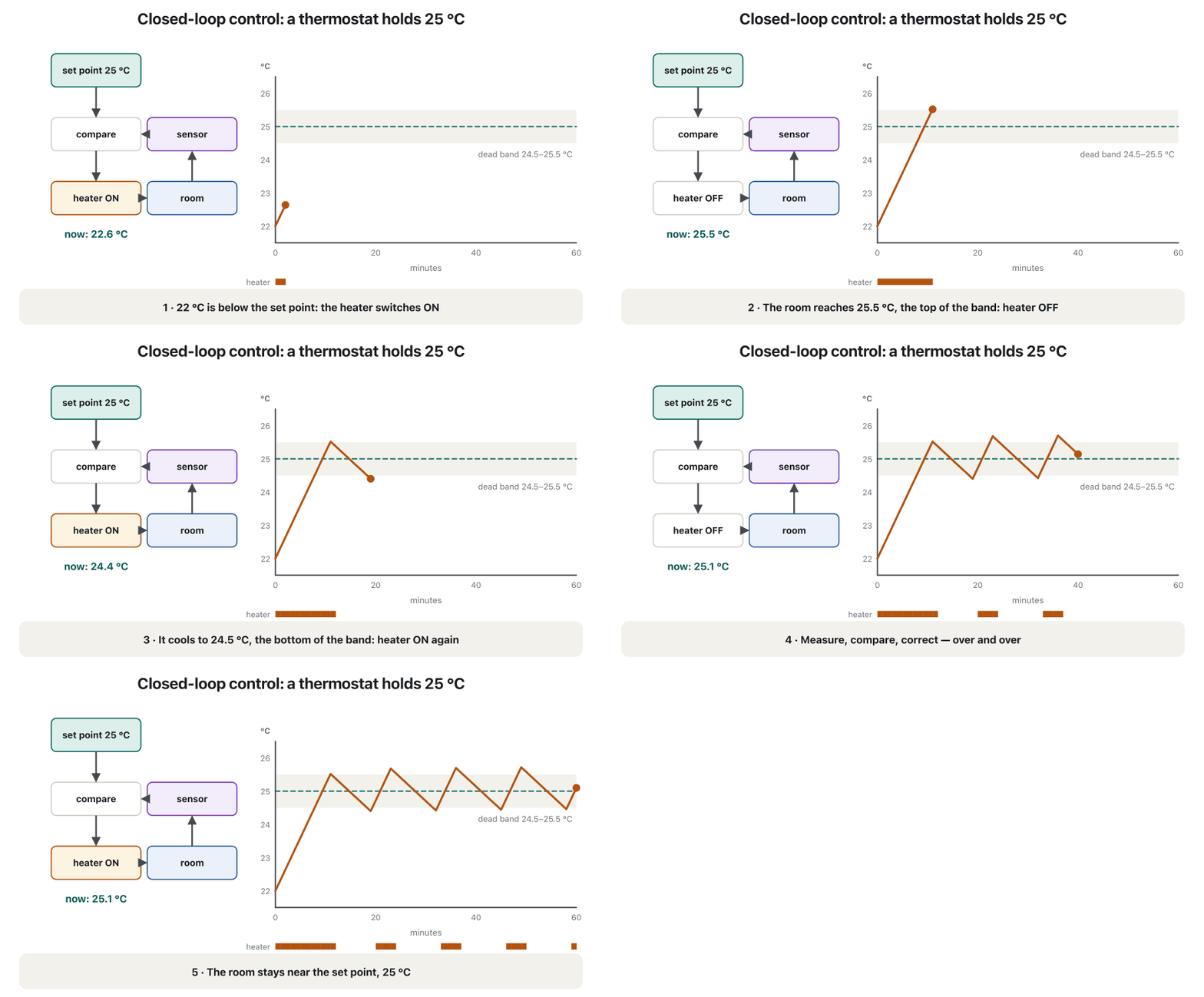
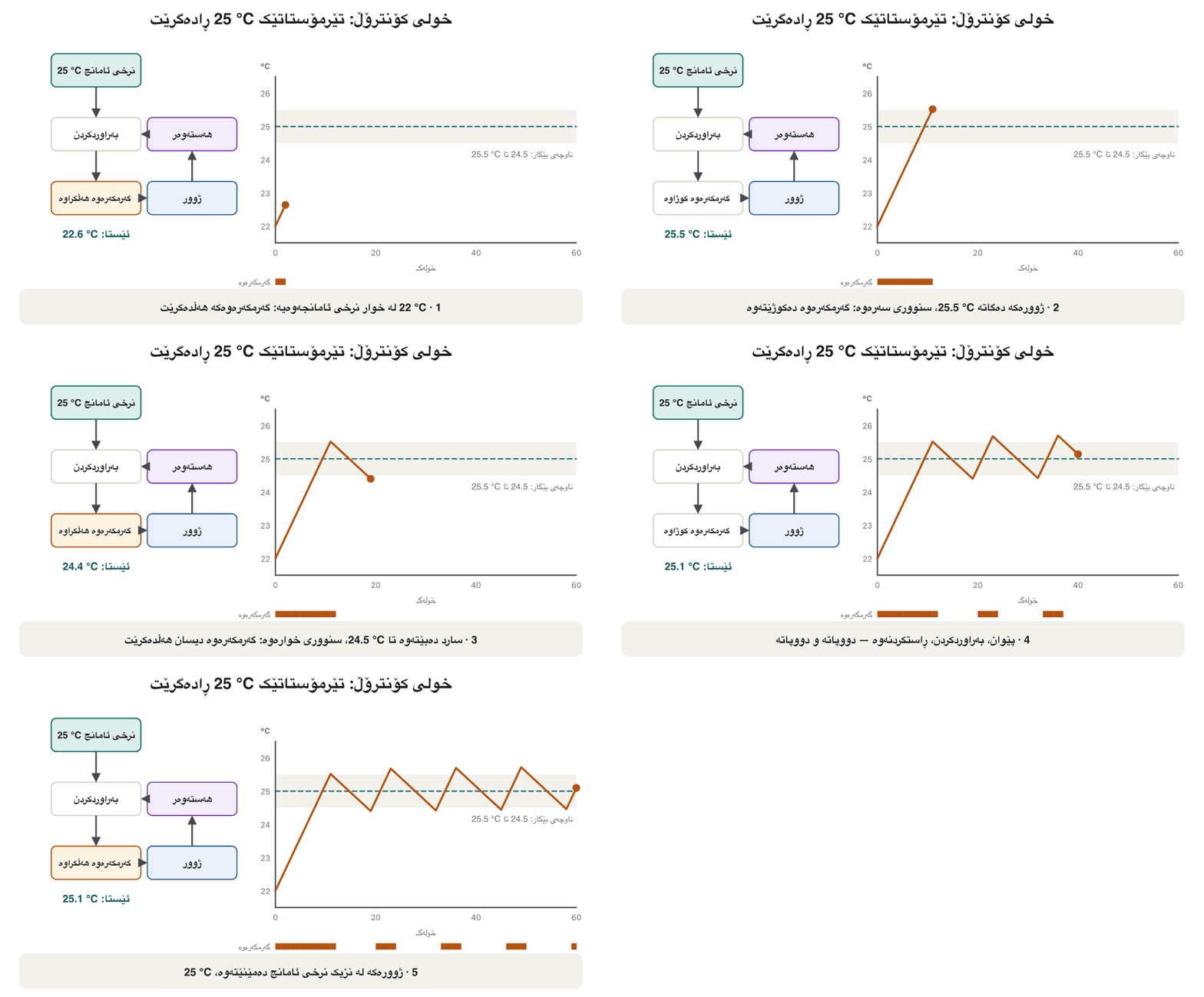
You will meet this loop again in this course: a motor holds its speed by counting the pulses of an encoder (Closed loop: count, compare, correct), and the bird-cage project keeps the cage between 20 and 25 °C with a heater and a fan (The temperature rule).
ئەم خولە لەم کۆرسەدا دیسان دەبینیتەوە: بە ژماردنی خێراییەکەی ڕادەگرێت (خولی داخراو: بژمێرە، بەراورد بکە، ڕاستی بکەرەوە) و پڕۆژەی قەفەزی باڵندە بە گەرمکەرەوە و پانکەیەک پلەی گەرمیی قەفەزەکە لە نێوان 20 و 25 °Cـدا ڕادەگرێت (یاسای پلەی گەرمی).
Four jobs embedded systems doچوار کار کە سیستەمە چەسپێنراوەکان دەیکەن
Why a dead band?بۆچی ناوچەی بێکار؟
Why the from 24.5 to 25.5 °C? Without it the heater would click on and off every few seconds around 25.0 °C and wear out. Smoother controllers, such as the PID controller in a drone, change the output little by little instead of just on and off (PID in plain words).
بۆچی لە 24.5 تا 25.5 °C؟ بەبێ ئەو، گەرمکەرەوەکە هەموو چەند چرکەیەک لە دەوری 25.0 °C هەڵدەبوو و دەکوژایەوە و زوو تێکدەچوو. کۆنترۆڵکەرە نەرمترەکان، وەک ، کەم کەم دەگۆڕن لە جیاتی تەنیا هەڵکردن و کوژاندنەوە (PID بە وشەی سادە).
Taking a shower is closed-loop control. Your skin is the sensor, the temperature you like is the set point, your brain compares, and your hand on the tap is the actuator. Too cold — turn it warmer; too hot — turn it back.
خۆشۆردن لەژێر دووشدا . پێستت ، ئەو پلەی گەرمییەی حەزی لێ دەکەیت ، مێشکت بەراورد دەکات و دەستت لەسەر کونبڵەکە . زۆر سارد — گەرمتری بکە؛ زۆر گەرم — بیگەڕێنەرەوە.
Where the analogy stops workingسنووری ئەم نموونەیە
Your hand turns the tap smoothly, like a PID controller; a simple thermostat can only switch the heater fully on or fully off.
دەستت کونبڵەکە بە نەرمی دەسووڕێنێت، وەک ؛ سادە تەنیا دەتوانێت گەرمکەرەوەکە بە تەواوی هەڵبکات یان بیکوژێنێتەوە.
Four jobs embedded systems doچوار کار کە سیستەمە چەسپێنراوەکان دەیکەن
Sequencing: one step after anotherڕیزبەندیی هەنگاوەکان: هەنگاوێک لە دوای هەنگاوێک
Sequencing means stepping through different stages, moving on when the environment (a sensor) or the system itself (a timer) says so. A washing machine is the everyday example: fill with water, wash, rinse, spin.
ڕیزبەندیی هەنگاوەکان واتە تێپەڕین بە چەند قۆناغێکی جیاوازدا و چوون بۆ هەنگاوی دواتر کاتێک ژینگەکە () یان خودی سیستەمەکە () بڵێت. جلشۆر نموونەی ڕۆژانەیە: پڕکردن بە ئاو، شۆردن، ئاوکێشان، سووڕاندن.
Four jobs embedded systems doچوار کار کە سیستەمە چەسپێنراوەکان دەیکەن
Signal processing and communicationچارەسەرکردنی سیگناڵ و پەیوەندی
Signal processing means removing the noise from a sensor's signal and picking out the feature you want. A watch's heart sensor gives a shaky, noisy signal; the firmware averages away the noise and then counts the peaks — the heartbeats. Communication and networking means exchanging that information reliably and quickly: the smartwatch sends your heart rate to your phone over Bluetooth or Wi-Fi, just as the car's ECUs talk over the CAN bus.
واتە لابردنی لە و دەرهێنانی ئەو تایبەتمەندییەی دەتەوێت. دڵی کاتژمێرێک لەرزۆک و پڕ دەدات؛ بە تێکڕاگرتن لادەبات و پاشان لووتکەکان دەژمێرێت — واتە لێدانەکانی دڵ. پەیوەندی و واتە گۆڕینەوەی ئەو زانیارییە بە متمانە و خێرایی: کاتژمێرە هۆشمەندەکە لێدانی دڵت بە یان دەنێرێت بۆ مۆبایلەکەت، هەروەک چۆن ECUـەکانی ئۆتۆمبێل لەسەر قسە دەکەن.
Reading sensor signals on an Arduino — and why they are noisy — is taught in Analog signals and the ADC; the radios come in Wi-Fi and Bluetooth.
خوێندنەوەی لەسەر Arduino — و بۆچی پڕ ژاوەژاون — لە سیگناڵەکانی ئەنالۆگ و ADC فێر دەکرێت؛ ڕادیۆکانیش لە وایفای و Bluetooth دێن.
The four limits on every embedded systemچوار سنوورەکەی هەموو سیستەمێکی چەسپێنراو
The bike computer had four constraints. In general, every embedded system lives with these:
پاسکیل چوار سنووری هەبوو. بە گشتی، هەموو لەگەڵ ئەمانەدا دەژی:
- Cost — competitive markets punish products that do not give enough value for their price. A simple digital watch must be cheap: if it costs much more than a $5 watch but does the same, nobody buys it.
- Size and weight — in mobile systems (aircraft, cars) and portable, handheld ones. Cars, aeroplanes, drones, handheld devices and smartphones all need small, light parts.
- Power and energy — the battery holds only so much, and the heat must go somewhere. A smartwatch's small battery needs a power-efficient design; too much power also makes heat, and inside a watch there is no room to cool it.
- Environment — temperature, shaking, dust and water. Chips are sold in temperature grades: commercial parts work in air from 0 to 70 °C, while car parts are made for −40 °C up to 125 °C (grade 1) or even 150 °C (grade 0). The −40 °C is a frozen winter morning; the 125 °C is not the weather but the air around a hot engine.
- تێچوو — بازاڕی کێبڕکێ ئەو بەرهەمانە سزا دەدات کە بە ئەندازەی نرخەکەیان سوود نادەن. کاتژمێرێکی دیجیتاڵیی سادە دەبێت هەرزان بێت: ئەگەر زۆر لە کاتژمێرێکی 5 دۆلاری گرانتر بێت و هەمان کار بکات، کەس نایکڕێت.
- قەبارە و کێش — لە سیستەمە جووڵاوەکاندا (فڕۆکە، ئۆتۆمبێل) و ئەوانەی بە دەست هەڵدەگیرێن. ئۆتۆمبێل، فڕۆکە، ، ئامێری دەستی و هەموویان پارچەی بچووک و سووکیان پێویستە.
- و — پاتری تەنیا بڕێکی دیاریکراو هەڵدەگرێت و گەرماکەش دەبێت بچێتە شوێنێک. پاتریی بچووکی کاتژمێرێکی هۆشمەند دیزاینێکی کەمخەرجی دەوێت؛ زۆر گەرماش دروست دەکات و لەناو کاتژمێرێکدا جێگە بۆ ساردکردنەوەی نییە.
- ژینگە — پلەی گەرمی، لەرزین، تۆز و ئاو. بە پلەی گەرمی دەفرۆشرێن: پارچەی بازرگانی لە هەوای 0 تا 70 °C کار دەکەن، بەڵام پارچەی ئۆتۆمبێل بۆ −40 °C تا 125 °C (پلەی 1) یان تەنانەت 150 °C (پلەی 0) دروست دەکرێن. −40 °C بەیانییەکی زستانی بەستووە؛ 125 °C کەشوهەوا نییە، بەڵکو هەوای دەوری بزوێنەرێکی گەرمە.
Common mistakesهەڵە باوەکان
| Mistakeهەڵە | Betterباشتر |
|---|---|
| "ECU always means engine control unit."«ECU هەمیشە واتە یەکەی کۆنترۆڵی بزوێنەر.» | It also means electronic control unit — any of the dozens of control computers in a car. The engine's is one of them.واتای دەدات — هەر یەکێک لە دەیان کۆنترۆڵی ناو ئۆتۆمبێل. هی بزوێنەر یەکێکە لەوان. |
| "A faster chip makes a better bike computer."« خێراتر پاسکیلی باشتر دروست دەکات.» | It only costs more and empties the battery sooner; 10 MIPS is already far more than the job needs.تەنیا گرانترە و پاترییەکە زووتر بەتاڵ دەکات؛ 10 MIPS خۆی زۆر لە پێویستی کارەکە زیاترە. |
| "Power and energy are the same thing."« و هەمان شتن.» | Power is how fast energy is used (W); energy is how much has been used (Wh). Battery life = energy ÷ power. خێرایی بەکارهێنانی وزەیە (W)؛ ئەو بڕەیە کە بەکار هاتووە (Wh). تەمەنی پاتری = ÷ . |
| "The wheel size setting does not matter."«ڕێکخستنی قەبارەی چەرخ گرنگ نییە.» | Every speed and distance is multiplied by it. Typing 2.000 m for a 2.105 m wheel makes every reading about 5 % too low.هەموو خێرایی و دوورییەک لێی دەدرێت. نووسینی 2.000 m بۆ چەرخێکی 2.105 m هەموو خوێندنەوەیەک نزیکەی 5 % کەمتر دەکات. |
| "A car's chip must survive 125 °C summers."« ئۆتۆمبێل دەبێت لە هاوینی 125 °C بژی.» | 125 °C is the engine-bay rating (AEC-Q100 grade 1), not the weather; −40 °C covers the coldest winters.125 °C پلەی ناوچەی بزوێنەرە (AEC-Q100 پلەی 1)، نەک کەشوهەوا؛ −40 °C ساردترین زستانەکان دەگرێتەوە. |
| "A loop with a timer is closed-loop control."«خولێک بە .» | Closed-loop control needs a sensor that measures the result and feeds it back. "Heat for 20 minutes" with no thermometer is not closed-loop. دەوێت کە ئەنجامەکە بپێوێت و بیگەڕێنێتەوە. «20 خولەک گەرم بکە» بەبێ گەرمیپێو نییە. |
Exercisesڕاهێنانەکان
A bike wheel is 0.7 m across, and the magnet passes the sensor 3 times every second. (a) What is the circumference? (b) What is the speed in m/s and in km/h? (c) How far has the bike gone after 2,500 pulses?
تیرەی چەرخێکی پاسکیل 0.7 mـە و موگناتیسەکە لە هەر چرکەیەکدا 3 جار بە تێدەپەڕێت. (أ) چێوەکەی چەندە؟ (ب) خێراییەکە بە m/s و بە km/h چەندە؟ (ج) دوای 2,500 پاسکیلەکە چەندی بڕیوە؟
Hintئاماژە
3 turns a second means , so .
3 سووڕ لە چرکەیەکدا واتە ، بۆیە .
Show answerوەڵامەکە پیشان بدە
A fridge keeps its inside at 4 °C. Name the set point, the sensor, the controller and the actuator. Why does it switch the compressor on at 5 °C and off at 3 °C instead of exactly at 4 °C?
سەلاجەیەک ناوەوەی لەسەر 4 °C ڕادەگرێت. ، ، کۆنترۆڵکەر و ناو ببە. بۆچی کۆمپرێسەرەکە لە 5 °C هەڵدەکات و لە 3 °C دەیکوژێنێتەوە لە جیاتی ڕێک لە 4 °C؟
Show answerوەڵامەکە پیشان بدە
Set point: 4 °C. Sensor: the temperature sensor inside. Controller: the fridge's microcontroller (or a simple thermostat). Actuator: the compressor (switched by a relay). The gap from 3 to 5 °C is a dead band: without it the compressor would start and stop every few seconds and wear out quickly.
: 4 °C. : ناوەوە. کۆنترۆڵکەر: سەلاجەکە (یان سادە). : کۆمپرێسەرەکە (کە بە هەڵدەکرێت). بۆشایی 3 تا 5 °C : بەبێ ئەو، کۆمپرێسەرەکە هەموو چەند چرکەیەک دەست پێ دەکرد و دەوەستا و زوو تێکدەچوو.
For each device, name one of the four jobs (closed-loop control, sequencing, signal processing, communication) and the constraint that matters most: (a) a smartwatch; (b) a traffic-light controller; (c) a car's airbag unit; (d) a soil sensor in a field that runs on a battery for two years.
بۆ هەر ئامێرێک یەکێک لە چوار کارەکە (، ڕیزبەندیی هەنگاوەکان، ، پەیوەندی) و گرنگترین سنوور ناو ببە: (أ) کاتژمێرێکی هۆشمەند؛ (ب) کۆنترۆڵکەری گڵۆپی هاتوچۆ؛ (ج) یەکەی کیسەی هەوای ئۆتۆمبێل؛ (د) خاک لە کێڵگەیەکدا کە دوو ساڵ بە پاترییەک کار دەکات.
Show answerوەڵامەکە پیشان بدە
- (a) signal processing and communication (heart rate to the phone); power and energy, size;
- (b) sequencing (red, red-amber, green, amber); environment — it stands outside in heat and rain for years;
- (c) signal processing (is this a real crash or a pothole?) with a hard deadline; reliability and environment;
- (d) communication (sending readings by radio); power and energy above all.
- (أ) و پەیوەندی (لێدانی دڵ بۆ مۆبایل)؛ و ، قەبارە؛
- (ب) ڕیزبەندیی هەنگاوەکان (سوور، سوور و زەرد، سەوز، زەرد)؛ ژینگە — بۆ چەندین ساڵ لە دەرەوە لە گەرما و باراندا دەوەستێت؛
- (ج) (ئایا ئەمە پێکدادانێکی ڕاستەقینەیە یان چاڵێک؟) بە کاتێکی دیاریکراوی توند؛ و ژینگە؛
- (د) پەیوەندی (ناردنی خوێندنەوەکان بە ڕادیۆ)؛ پێش هەموو شتێک و .
An old car had a cable from the pedal to the throttle and a mechanical part that set the spark. Give two benefits of replacing them with an ECU, and one new risk.
ئۆتۆمبێلێکی کۆن وایەرێکی لە پێدالەوە بۆ دەریچە هەبوو و پارچەیەکی میکانیکی کە پریسکەکەی ڕێک دەخست. دوو سوودی گۆڕینیان بە ECU بنووسە، لەگەڵ یەک مەترسیی نوێ.
Show answerوەڵامەکە پیشان بدە
Benefits: better performance and efficiency — the spark and fuel are set exactly for every turn, so the engine uses less fuel and pollutes less; better dependability — knock control protects the engine and fault codes speed up repairs (also: new features such as cruise control). Risk: the car now depends on software and electronics, so a bug, an electrical fault or an attack on the car's network can affect the engine; that is why ECUs are tested for reliability and checked by extra cores.
سوودەکان: توانا و کارایی باشتر — پریسکە و سووتەمەنی بۆ هەر سووڕێک بە وردی ڕێک دەخرێن، بۆیە بزوێنەرەکە سووتەمەنیی کەمتر بەکار دەهێنێت و پیسکردنی کەمترە؛ پشتپێبەستنی باشتر — کۆنترۆڵی تەقەتەق بزوێنەرەکە دەپارێزێت و کۆدی هەڵە چاککردنەوە خێرا دەکات (هەروەها تایبەتمەندیی نوێ وەک ڕاگرتنی خێرایی). مەترسی: ئێستا ئۆتۆمبێلەکە پشت بە و ئەلیکترۆنیات دەبەستێت، بۆیە ، تێکچوونێکی کارەبایی یان هێرشێک بۆ سەر ئۆتۆمبێلەکە دەتوانێت کار لە بزوێنەرەکە بکات؛ بۆیە ECUـەکان بۆ تاقی دەکرێنەوە و بە ناوکی زیادە دەپشکنرێن.
Summaryپوختە
- A bike computer measures speed and distance with two inputs (a wheel-rotation sensor and a mode key), one output (an LCD) and an 8-bit, 10-MIPS microcontroller; its constraints are size, cost, power and energy, and weight.
- A magnet passing a reed switch gives one pulse per turn; and , with .
- A petrol engine's ECU controls fuel injection, air intake, spark timing, exhaust-gas recirculation, the electronic throttle and knock — sense, decide, act on every turn — with a fast 32-bit microcontroller built for a harsh environment.
- A car's dozens of ECUs share the CAN bus, where the lower message ID wins.
- Benefits of embedded computers: performance and efficiency, lower costs, more features, better dependability. Their jobs: closed-loop control (hold a set point), sequencing, signal processing, communication. Their limits: cost, size and weight, power and energy, environment.
- پاسکیل خێرایی و دووری بە دوو ( سووڕانەوەی چەرخ و دوگمەی دۆخ)، یەک () و 8 بیتیی 10 MIPS دەپێوێت؛ سنوورەکانی قەبارە، تێچوو، و و کێشن.
- موگناتیسێک کە بە تێدەپەڕێت بۆ هەر سووڕێک یەک دەدات؛ و ، کە .
- ECUـی بزوێنەری بەنزین پاشاندنی سووتەمەنی، هەوای ژوورەوە، کاتی پریسکە، گەڕاندنەوەی گازی دەرچوو، دەریچەی ئەلیکترۆنی و تەقەتەق کۆنترۆڵ دەکات — هەستکردن، بڕیاردان، کارکردن لە هەر سووڕێکدا — بە 32 بیتیی خێرا کە بۆ ژینگەیەکی دژوار دروست کراوە.
- دەیان ECUـی ئۆتۆمبێلێک بەکار دەهێنن، کە تێیدا IDـی بچووکتری پەیام دەباتەوە.
- سوودەکانی چەسپێنراو: توانا و کارایی، تێچووی کەمتر، تایبەتمەندیی زیاتر، پشتپێبەستنی باشتر. کارەکانیان: (ڕاگرتنی )، ڕیزبەندیی هەنگاوەکان، ، پەیوەندی. سنوورەکانیان: تێچوو، قەبارە و کێش، و ، ژینگە.
Why is an 8-bit, 10-MIPS chip enough for a bike computer?بۆچی چیپێکی 8 بیتیی 10 MIPS بۆ کۆمپیوتەری پاسکیل بەسە؟
Its job is tiny — count a pulse, time it, divide — and even at 40 km/h it has about 1.9 million instructions per wheel turn. A faster chip would cost more and drain the battery.
کارەکەی زۆر بچووکە — ژماردنی ، پێوانی کاتەکەی، دابەشکردن — و تەنانەت بە 40 km/h بۆ هەر سووڕێکی چەرخ نزیکەی 1.9 ملیۆن هەیە. خێراتر گرانتر دەبوو و پاترییەکەی بەتاڵ دەکرد.
What is the difference between a set point and a dead band?جیاوازیی نێوان نرخی ئامانج و ناوچەی بێکار چییە؟
The set point is the target (25 °C). The dead band is a small range around it (24.5–25.5 °C) where the controller does nothing, so the heater does not switch on and off all the time.
ئامانجەکەیە (25 °C). ناوچەیەکی بچووکە لە دەوریدا (24.5 تا 25.5 °C) کە کۆنترۆڵکەرەکە تێیدا هیچ ناکات، بۆ ئەوەی گەرمکەرەوەکە هەمیشە هەڵنەبێت و نەکوژێتەوە.
Why does the CAN bus give braking messages a low ID?بۆچی تێپەڕگەی CAN IDـی بچووک دەداتە پەیامەکانی برێک؟
On CAN the lower ID wins when two ECUs send at once, so safety messages get through first.
لەسەر CAN، کاتێک دوو ECU پێکەوە دەنێرن IDـی بچووکتر دەباتەوە، بۆیە پەیامەکانی سەلامەتی یەکەم دەگەن.
Lesson complete!وانەکە تەواو بوو!
Well done. Review the key terms, then go on to the next lesson.دەستخۆش. سەیرێکی زاراوە سەرەکییەکان بکەرەوە، پاشان بڕۆ بۆ وانەی داهاتوو.
Key termsزاراوە سەرەکییەکان
Microprocessor or Microcontroller?مایکرۆپرۆسێسەر یان مایکرۆکۆنترۆڵەر؟
Related lecturesوانە پەیوەندیدارەکان
- Microprocessor or Microcontroller?مایکرۆپرۆسێسەر یان مایکرۆکۆنترۆڵەر؟
- The Questions Behind Every IoT Designئەو پرسیارانەی لە پشت هەموو دیزاینێکی IoTـەوەن
- The Flight Controller: Sensors, Control Loops and Autopilotsکۆنترۆڵکەری فڕین: هەستەوەرەکان، خولەکانی کۆنترۆڵ و فڕۆکەوانی خۆکار
- Agents, Sensors and Actuators; Rational Agentsئەیجێنتەکان، هەستەوەرەکان و جووڵێنەرەکان؛ ئەیجێنتە عەقڵانییەکان
- Reading Analog Signals: the ADC and analogRead()خوێندنەوەی سیگناڵەکانی ئەنالۆگ: ADC و analogRead()
- Project: a Smart Bird-Cage Coverپرۆژە: بەرگی هۆشمەندی قەفەزی باڵندە
References and further readingسەرچاوەکان و خوێندنەوەی زیاتر
- Wikipedia: Cyclocomputer (magnet on a spoke, reed switch or Hall-effect sensor on the fork, circumference calibration)
- Wikipedia: Reed switch (two reeds in a sealed glass tube closed by a magnet; bicycle speed sensors)
- Wikipedia: Electronic control unit (engine control unit vs electronic control unit; up to 150 ECUs)
- eeNews Europe (15 May 2019): Number of automotive ECUs continues to rise (IHS Markit: a luxury vehicle can integrate as many as 150 ECUs)
- NXP: MPC5777C Ultra-Reliable MCU for automotive and industrial engine management (two z7 cores up to 300 MHz, lockstep core, 8 MB flash, 512 kB SRAM, 96 eTPU channels, −40 to 125 °C)
- CAN in Automation: History of CAN technology (Bosch, SAE congress February 1986; Mercedes-Benz since 1991; ISO 11898 in November 1993; CAN FD 2012, 64 bytes; CAN XL 2,048 bytes)
- CAN in Automation: CAN knowledge (Classical CAN up to 1 Mbit/s; CAN FD; CAN XL)
- Renesas: Temperature ranges (AEC-Q100 grades 0-3: −40 to 150 / 125 / 105 / 85 °C)
This lecture is a first edition. The Kurdish text and terminology are waiting for review by Kurdish IT teachers.ئەم وانەیە چاپی یەکەمە. دەقە کوردییەکە و زاراوەکانی چاوەڕێی پێداچوونەوەی مامۆستایانی کوردی بواری IT ن.