Chapterبەش 6 · Lectureوانە 6.5
RFID, Zigbee and Other Mesh ProtocolsRFID، Zigbee و پرۆتۆکۆڵەکانی تری ڕایەڵەی چنراو
Two ways to connect many small things. RFID gives each item a radio identity that a reader can see without a battery in the tag — passive, battery-assisted and active tags, bands and reach, the shop-door alarm, real-time inventory and smart shelves. Mesh protocols let devices pass messages on across a building: Zigbee on IEEE 802.15.4 with its roles and power trade-off, Thread with IPv6, Matter as one language on top (1.6.1 as of November 2026), Z-Wave below 1 GHz and Bluetooth Mesh.
دوو ڕێگە بۆ بەستنەوەی زۆر شتی بچووک. ناسنامەیەکی ڕادیۆیی بە هەر کاڵایەک دەدات کە خوێنەرەوەیەک دەیبینێت بەبێ ئەوەی تاگەکە هەبێت — ، تاگی یارمەتیدراو بە و ، باند و دووری، ئاگادارکەرەوەی دەرگای دووکان، ژماردنی کاڵا لە و . ڕێگە دەدەن ئامێرەکان پەیام بە نێو بینایەکدا بگوازنەوە: لەسەر بە ڕۆڵەکان و هاوسەنگیی وزەکەیەوە، بە ، وەک یەک زمان لە سەرووی ئەوانەوە (1.6.1 تا تشرینی دووەمی 2026)، لە خوار 1 GHz و Bluetooth Mesh.
What you will learnچی فێر دەبیت
- Explain how an RFID reader and tag work, and compare passive, battery-assisted and active tags and the RFID bands.
- Describe how RFID changes retail and logistics, from the shop-door gate to real-time inventory and smart shelves.
- Explain Zigbee: its IEEE 802.15.4 radio, its mesh roles and why a mesh costs power.
- Compare Zigbee, Thread, Matter, Z-Wave and Bluetooth Mesh, and say what Matter 1.6 changed.
- ڕوون بکەیتەوە خوێنەرەوە و چۆن کار دەکەن و ، تاگی یارمەتیدراو بە و و باندەکانی بەراورد بکەیت.
- وەسف بکەیت چۆن فرۆشتن و دەگۆڕێت، لە ستوونەکانی دەرگای دووکانەوە تا ژماردنی کاڵا لە و .
- ڕوون بکەیتەوە: ڕادیۆی ، ڕۆڵەکانی و بۆچی وزەی دەوێت.
- ، ، ، و Bluetooth Mesh بەراورد بکەیت و بڵێیت 1.6 چی گۆڕیوە.
Naming things and linking thingsناساندنی شتەکان و بەستنەوەیان
Two jobs come up again and again in IoT. The first is naming things: a shop, a warehouse or a hospital wants a computer to see every box, shirt or tool without anyone counting. RFID does this by giving each item a radio identity. The second is linking things: dozens of small, often battery-powered devices around a building must reach a hub, even when they are too far from it. Mesh protocols — Zigbee, Thread, Z-Wave and Bluetooth Mesh — solve this by letting devices pass messages on for each other, with Matter as one shared language on top.
دوو کار لە IoTـدا دووپاتە و سێبارە دەردەکەونەوە. یەکەمیان ناساندنی شتەکانە: دووکانێک، کۆگایەک یان نەخۆشخانەیەک دەیەوێت کۆمپیوتەرێک هەموو سندوق، کراس یان ئامرازێک ببینێت بەبێ ئەوەی کەس بیانژمێرێت. ئەمە دەکات بە پێدانی ناسنامەیەکی ڕادیۆیی بە هەر کاڵایەک. دووەمیان بەستنەوەی شتەکانە: دەیان ئامێری بچووک کە زۆرجار بە کار دەکەن لە دەوری بینایەکدا دەبێت بگەنە هەبێک، تەنانەت کاتێک لێی زۆر دوورن. — ، ، و Bluetooth Mesh — ئەمە چارەسەر دەکەن بەوەی ڕێگە دەدەن ئامێرەکان پەیام بۆ یەکتر بگوازنەوە و یش وەک یەک زمانی هاوبەش لە سەرووی ئەوانەوەیە.
How RFID works: a tag and a readerRFID چۆن کار دەکات: تاگێک و خوێنەرەوەیەک
RFID (radio-frequency identification) uses radio waves to send small amounts of data from an RFID tag — often just a sticker — to a reader a short distance away. Most tags have no battery. The reader sends out radio waves; the tag's antenna catches a little of their energy, which wakes up its chip, and the tag answers by reflecting the wave back with its ID written into it (backscatter). The reader passes the ID on to a computer.
(ناسینەوە بە لەرەلەری ڕادیۆیی) بەکار دەهێنێت بۆ ناردنی بڕی کەمی لە — کە زۆرجار تەنیا لەیبڵێکە — بۆ خوێنەرەوەیەک لە دوورییەکی کەمدا. زۆربەی تاگەکان نییە. خوێنەرەوەکە دەنێرێت؛ تاگەکە کەمێک لە وزەکەیان دەگرێت کە بەئاگا دەهێنێت و تاگەکە بە گەڕاندنەوەی شەپۆلەکە وەڵام دەداتەوە، بە شێوەیەک کە ناسنامەکەی تێدا نووسرابێت (backscatter). خوێنەرەوەکە ناسنامەکە دەدات بە کۆمپیوتەرێک.
No line of sight is needed, so a reader can read tags inside a closed box, and many tags one after another. Everyday uses, from race timing to library books, are listed in RFID: reading tags by radio. For IoT, RFID gives each thing an identity that a computer can see: the idea that gave the Internet of Things its name in 1999 (A name for the idea).
پێویست ناکات یەکتر ببینن، بۆیە خوێنەرەوەیەک دەتوانێت تاگەکانی ناو سندوقێکی داخراو بخوێنێتەوە و زۆر تاگیش یەک لە دوای یەک. بەکارهێنانە ڕۆژانەکان، لە کاتپێوانی پێشبڕکێوە تا کتێبی کتێبخانە، لە بەشی RFID: خوێندنەوەی تاگ بە ڕادیۆدا ڕیز کراون. بۆ IoT، ناسنامەیەک بە هەر شتێک دەدات کە کۆمپیوتەر دەیبینێت: ئەو بیرۆکەیەی لە 1999ـدا ناوی لێ نرا (ناوێک بۆ بیرۆکەکە).
Passive, battery-assisted and active tagsتاگی ناچالاک، تاگی یارمەتیدراو بە پاتری و تاگی چالاک
Tags come in three kinds. A passive tag has no battery and lives on the reader's energy: it is cheap and thin, and is read from a few centimetres up to about 10 m. A battery-assisted passive tag has a small battery that runs its chip and often a sensor, such as a temperature logger on a box of medicine; it still speaks only when a reader asks, but it can be read from farther away. An active tag has its own battery and transmitter and calls out by itself, often every few seconds, so readers hear it tens of metres away. It is bigger and costs more, so it goes on containers, vehicles and expensive tools.
تاگەکان سێ جۆرن. نییە و بە وزەی خوێنەرەوەکە دەژی: هەرزان و تەنکە و لە چەند سانتیمەترێکەوە تا نزیکەی 10 m دەخوێندرێتەوە. تاگی یارمەتیدراو بە (ناچالاک، بەڵام ) بچووکی هەیە کە و زۆرجار کار پێ دەکات، وەک تۆمارکەری پلەی گەرمی لەسەر سندوقێکی دەرمان؛ هێشتا تەنیا کاتێک قسە دەکات کە خوێنەرەوەیەک پرسیاری لێ بکات، بەڵام لە دوورتر دەخوێندرێتەوە. و نێرەری خۆی هەیە و خۆی بانگ دەکات، زۆرجار هەموو چەند چرکەیەک جارێک، بۆیە خوێنەرەوەکان لە دەیان مەتر دوورەوە دەیبیستن. گەورەتر و گرانترە، بۆیە لەسەر کۆنتەینەر، ئۆتۆمبێل و ئامرازی گران دادەنرێت.
How far can a reader reach?خوێنەرەوە تا چەند دوور دەگات؟
A tag and its reader must be close: from a few centimetres to a few metres. How far depends mostly on the radio band. Low-frequency tags (about 125 kHz) work up to about 10 cm — chips in pets and farm animals, older door cards. High-frequency tags (13.56 MHz) work up to about 1 m; NFC, which phones use to pay, is the short-range form of this band. Ultra-high-frequency tags (about 865–928 MHz, sold as RAIN RFID) are read up to about 10–12 m, so warehouses and shops use them. Metal and liquids weaken UHF reads, so the tag must suit the item. The full band table is in RFID tags.
تاگ و خوێنەرەوەکەی دەبێت نزیک بن: لە چەند سانتیمەترێکەوە تا چەند مەترێک. چەند دووری پشت بە دەبەستێت. تاگەکانی نزم (نزیکەی 125 kHz) تا نزیکەی 10 cm کار دەکەن — ئاژەڵی ماڵی و ئاژەڵی کێڵگە، کارتی کۆنی دەرگا. تاگەکانی بەرز (13.56 MHz) تا نزیکەی 1 m کار دەکەن؛ ، کە مۆبایلەکان بۆ پارەدان بەکاری دەهێنن، شێوەیەکی ئەم باندەیە بۆ دووریی زۆر کورت. تاگەکانی زۆر بەرز (نزیکەی 865–928 MHz، بە ناوی RAIN RFID) تا نزیکەی 10–12 m دەخوێندرێنەوە، بۆیە کۆگا و دووکانەکان بەکاریان دەهێنن. کانزا و شلە خوێندنەوەی UHF لاواز دەکەن، بۆیە دەبێت تاگەکە لەگەڵ کاڵاکە بگونجێت. خشتەی تەواوی باندەکان لە تاگەکانی RFIDدایە.
The alarm at the shop doorئاگادارکەرەوەی دەرگای دووکان
You have probably seen the gates at a shop door. Forget to remove the tag on a new shirt, and the alarm goes off as you walk out: the gate sends radio waves and listens for any tag that is still switched on. At the till the cashier removes the tag or switches it off.
بێگومان ئەو دوو ستوونەت بینیوە کە لە دەرگای دووکاناندا دادەنرێن. ئەگەر لەبیرت بچێت تاگی کراسێکی نوێ لاببەیت، کاتێک دەچیتە دەرەوە ئاگادارکەرەوەکە لێ دەدات: ستوونەکان دەنێرن و گوێ لە هەر تاگێک دەگرن کە هێشتا کارا بێت. لە لای کاشێر، تاگەکە لادەبرێت یان دەکوژێنرێتەوە.
Many shops use simple anti-theft tags for this: they only say 'I am here', with a tuned circuit at 8.2 MHz or a magnetic strip at about 58 kHz. More and more shops use RFID tags instead, which also tell the gate which item is passing, and the same tag helps count stock.
زۆر دووکان بۆ ئەمە تاگی دژەدزیی سادە بەکار دەهێنن: تەنیا دەڵێن «من لێرەم»، بە سووڕێکی ڕێکخراو لەسەر 8.2 MHz یان پارچەیەکی موگناتیسی لەسەر نزیکەی 58 kHz. ژمارەیەکی زیاتر لە دووکانەکان لە جیاتی ئەوە بەکار دەهێنن، کە بە ستوونەکانیش دەڵێن کام کاڵا تێدەپەڕێت و هەمان تاگ یارمەتیی ژماردنی کاڵاکانیش دەدات.
RFID in retail and logisticsRFID لە فرۆشتن و لۆجستیکدا
RFID has brought big changes to retail (selling products) and logistics (moving goods): both became faster and smarter. With tags on all kinds of products and equipment, a business tracks its inventory and assets in real time. A reader at a dock door reads all 40 shirts in a box without opening it, and every read records what passed, where and when. Stock is counted all the time instead of once a year, so the business can plan stock and production better and run a leaner supply chain. How readers at each door follow a product from factory to shop is shown in How tags track products.
گۆڕانکاریی گەورەی لە فرۆشتن (فرۆشتنی کاڵا) و (گواستنەوەی کاڵا)دا هێنا: هەردووکیان خێراتر و ژیرتر بوون. بە دانانی تاگ لەسەر هەموو جۆرە کاڵا و ئامێرێک، کۆمپانیایەک کاڵا و کەلوپەلەکانی لە بەدوادا دەچێت. خوێنەرەوەیەک لە دەرگای بارکردندا هەر 40 کراسی ناو سندوقێک بەبێ کردنەوەی دەخوێنێتەوە و هەر خوێندنەوەیەک تۆمار دەکات چی تێپەڕی، لە کوێ و کەی. کاڵاکان بەردەوام دەژمێردرێن نەک ساڵی جارێک، بۆیە کۆمپانیاکە دەتوانێت پلانی کاڵا و بەرهەمهێنان باشتر دابنێت و ڕێکوپێکتر بەڕێوە ببات. بەشی تاگەکان چۆن بەدوای کاڵادا دەچن پیشان دەدات خوێنەرەوەی سەر هەر دەرگایەک چۆن کاڵایەک لە کارگەوە تا دووکان بەدوادا دەچێت.
The scale is huge: tag makers shipped 52.8 billion RAIN (UHF) tag chips in 2024 and 42.7 billion in 2025 (the newest yearly figures as of November 2026). The RAIN Alliance explained the dip mainly by chip stocks that were already too full, and also by tariff worries and shops cutting their stock; over four years the market still grew by about half.
قەبارەکەی زۆر گەورەیە: دروستکەرانی تاگ لە 2024ـدا 52.8 ملیار تاگی RAIN (UHF) و لە 2025ـدا 42.7 ملیاریان نارد (نوێترین ژمارەی ساڵانە تا تشرینی دووەمی 2026). RAIN Alliance کەمبوونەوەکەی بە تایبەتی بۆ ئەوە گەڕاندەوە کە کۆگاکانی پێشتر زۆر پڕ بوون، هەروەها بۆ نیگەرانیی باجی گومرگی و کەمکردنەوەی کاڵای کۆگای دووکانەکان؛ لە ماوەی چوار ساڵدا بازاڕەکە هێشتا نزیکەی نیوە گەورەتر بووە.
Smart shelves and self-checkoutڕەفە هۆشمەندەکان و پارەدانی خۆیی
As IoT spreads, RFID makes new retail ideas possible, such as smart shelves and self-checkout. A smart shelf has antennas under each board (or weight sensors or cameras) and knows what is on it: when the milk is running low it tells the stock room to refill it, and it notices an item put back in the wrong place. With RFID self-checkout you drop all your items into a bin and a reader reads them at once. One day you might simply pick up your groceries and pay automatically, without scanning each item.
لەگەڵ بڵاوبوونەوەی IoT، بیرۆکەی نوێی فرۆشتن دەکاتە شتێکی گونجاو، وەک و پارەدانی خۆیی. لە ژێر هەر تەختەیەکدا هەیە (یان کێش یان کامێرا) و دەزانێت چی لەسەرە: کاتێک شیرەکە خەریکە تەواو دەبێت بە کۆگاکە دەڵێت پڕی بکەنەوە و هەست بە کاڵایەک دەکات کە لە شوێنی هەڵەدا دانراوەتەوە. بە پارەدانی خۆیی بە ، هەموو کاڵاکانت دەخەیتە ناو سەبەتەیەکەوە و خوێنەرەوەیەک بە یەکجار دەیانخوێنێتەوە. ڕۆژێک لەوانەیە تەنیا کاڵاکانت هەڵبگریت و بە شێوەی خۆکار پارە بدەیت، بەبێ ئەوەی هەر کاڵایەک بخوێنیتەوە.
Zigbee: a low-power language for the homeZigbee: زمانێکی کەموزە بۆ ماڵ
Zigbee is a short-range (under 100 m), low-power wireless standard for home and building automation. It runs on IEEE 802.15.4 radios in the 2.4 GHz band — the same band as Wi-Fi and Bluetooth — at up to 250 kbit/s. In practice one hop reaches about 10–20 m indoors and up to about 100 m in the open, using very little battery. Smart bulbs at home talk to each other and, through a hub, to your phone.
ستانداردێکی بێتەلی کەموزەیە بۆ دووریی کورت (کەمتر لە 100 m)، بۆ ماڵ و بینا. لەسەر ڕادیۆکانی لە باندی 2.4 GHzـدا کار دەکات — هەمان باندی و — بە خێرایی تا 250 kbit/s. لە ڕاستیدا یەک لە ناو بینادا نزیکەی 10–20 m و لە شوێنی کراوەدا تا نزیکەی 100 m دەگرێتەوە، بە بەکارهێنانی زۆر کەم. گڵۆپە هۆشمەندەکانی ماڵ لەگەڵ یەکتر و لە ڕێی هەبێکەوە لەگەڵ مۆبایلەکەت قسە دەکەن.
Zigbee is often called an IEEE standard, but only its radio is: the Zigbee network and application rules are written by the Connectivity Standards Alliance (CSA), the former Zigbee Alliance (IEEE: the radios). More than a billion Zigbee devices are in use worldwide.
زۆرجار دەوترێت ستانداردێکی IEEEـیە، بەڵام تەنیا ڕادیۆکەی وایە: ڕێساکانی و لەلایەن Connectivity Standards Alliance (CSA)ـەوە دەنووسرێن، کە پێشتر Zigbee Alliance بوو (IEEE: ڕادیۆکان). زیاتر لە ملیارێک ئامێری لە جیهاندا بەکار دەهێنرێن.
The mesh: messages hop from bulb to bulbڕایەڵەی چنراو: پەیام لە گڵۆپێکەوە بۆ گڵۆپێکی تر باز دەدات
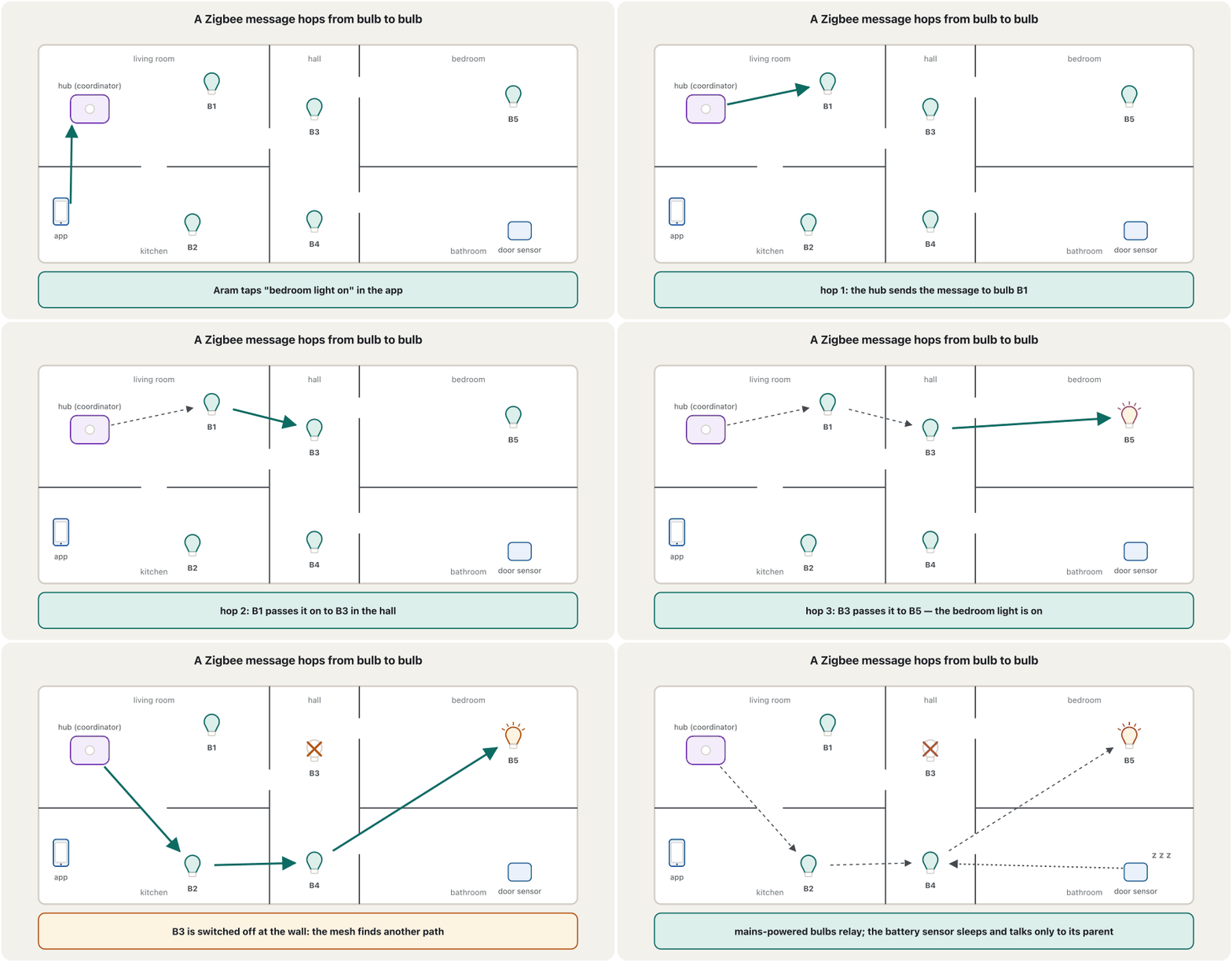
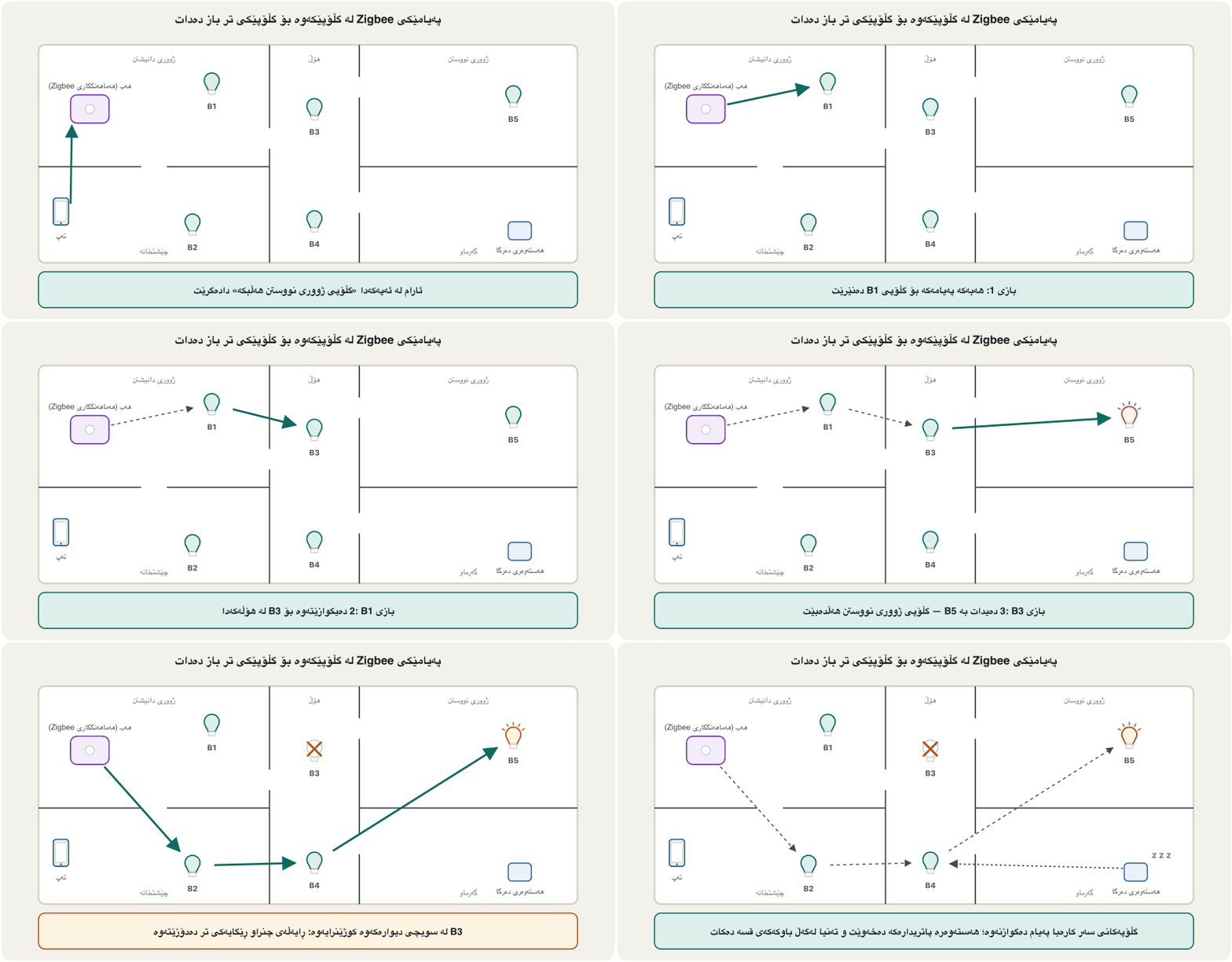
Zigbee is usually deployed as a mesh, which extends its coverage: each device can pass a message on, so data travels farther in hops over several nodes. If your phone is far from a bulb, the command may pass through another bulb first. A Zigbee network has three roles. One coordinator, usually in the hub, starts the network and keeps its keys. Routers — mains-powered bulbs and plugs — relay messages. End devices — battery sensors — talk only to their parent router and sleep. If a router disappears, the mesh finds another path. Mesh basics are taught in Point-to-Point, Star and Mesh Networks.
زۆرجار وەک دادەنرێت، کە داپۆشینەکەی فراوانتر دەکات: هەر ئامێرێک دەتوانێت پەیامێک بگوازێتەوە، بۆیە بە بە سەر چەند دوورتر دەڕوات. ئەگەر مۆبایلەکەت لە گڵۆپێک دوور بێت، فەرمانەکە لەوانەیە سەرەتا بە گڵۆپێکی تردا تێپەڕێت. سێ ڕۆڵی هەیە. یەک ، زۆرجار لەناو هەبەکەدا، دەست پێ دەکات و کلیلەکانی دەپارێزێت. — گڵۆپ و پلاکی سەر کارەبا — پەیامەکان دەگوازنەوە. — پاتریدار — تەنیا لەگەڵ باوکیان قسە دەکەن و دەخەون. ئەگەر نەما، ڕێگایەکی تر دەدۆزێتەوە. بنەماکانی لە پەیوەندیی خاڵ بۆ خاڵ، ڕایەڵەی ئەستێرەیی و ڕایەڵەی چنراو دەخوێندرێن.
A mesh costs powerڕایەڵەی چنراو وزەی دەوێت
Compared with an LPWAN, Zigbee has a higher data rate — 250 kbit/s against a few kbit/s — but much lower power efficiency, because the routers of a mesh must keep listening so that they can relay at any moment. That is why the routers are mains-powered bulbs and plugs, and only the end devices run on batteries. Zigbee works best over medium distances, such as one building, with nodes spread evenly and not too far apart: a sensor with no neighbour in range cannot join at all.
بە بەراورد لەگەڵ ، بەرزترە — 250 kbit/s لە بەرامبەر چەند kbit/sـێک — بەڵام بە وزە زۆر کەمتر بەکەڵکە، چونکە دەبێت بەردەوام گوێ بگرن بۆ ئەوەی هەر کاتێک بتوانن پەیام بگوازنەوە. لەبەر ئەمە گڵۆپ و پلاکی سەر کارەبان و تەنیا بە کار دەکەن. بۆ دووریی مامناوەند باشترینە، وەک یەک بینا، کە یەکسان بڵاو بووبنەوە و زۆر لە یەکتر دوور نەبن: کە هیچ دراوسێیەکی لە نزیکی خۆیدا نەبێت هەر ناتوانێت بچێتە ناو .
Zigbee and Wi-Fi in a smart homeZigbee و وایفای لە ماڵێکی هۆشمەنددا
Zigbee is a perfect partner for Wi-Fi in home automation and is often used beside it: Wi-Fi carries the big data, Zigbee links the many small devices. Typical jobs are smart lighting; HVAC controls — heating, ventilation («هەواگۆڕکێ») and air conditioning, which keep a building's air warm or cool and fresh; security sensors on doors and windows; and energy management, such as smart meters and their displays. The Zigbee devices talk to a hub, and the hub joins the home network by Ethernet or Wi-Fi — the device-to-gateway model. A gas meter that reports through an electricity meter over Zigbee is shown in Meters that read themselves.
هاوبەشێکی تەواوی لە ماڵدا و زۆرجار لە تەنیشتیەوە بەکار دێت: گەورە هەڵدەگرێت و ئامێرە بچووکە زۆرەکان دەبەستێتەوە. کارە باوەکان: ڕووناکیی هۆشمەند؛ کۆنترۆڵی — گەرمکردنەوە، هەواگۆڕکێ و فێنککردنەوەی هەوا، کە هەوای بینایەک گەرم یان فێنک و پاک ڕادەگرن؛ لەسەر دەرگا و پەنجەرە؛ و بەڕێوەبردنی وزە، وەک و شاشەکانیان. ئامێرەکانی قسە لەگەڵ هەبێک دەکەن و هەبەکە بە Ethernet یان دەچێتە ناو ماڵەوە — مۆدێلی ئامێر بۆ دەروازە. پێوەرێکی گاز کە لە ڕێی پێوەرێکی کارەباوە بە ڕاپۆرت دەدات لە بەشی پێوەرە هۆشمەندەکان پیشان دراوە.
Zigbee in 2026Zigbee لە 2026ـدا
Zigbee keeps changing. Zigbee 4.0, announced by the CSA in November 2025, strengthens security (for example against replayed messages), lets you set up many devices at once (batch commissioning) and supports set-up from a phone over Bluetooth LE (Zigbee Direct). It also adds sub-GHz bands — 800 MHz in Europe and 900 MHz in North America — under the name Suzi, for longer-range meshes in big homes, offices and factories. Zigbee 4.0 stays backward compatible with Zigbee 3.0 devices, and certification of Suzi products opened in September 2026.
بەردەوام دەگۆڕێت. Zigbee 4.0، کە CSA لە تشرینی دووەمی 2025ـدا ڕایگەیاند، بەهێزتر دەکات (بۆ نموونە دژی پەیامی دووپاتەکراوە)، ڕێگە دەدات چەندین ئامێر بە یەکجار ڕێک بخەیت و پشتگیریی ڕێکخستن لە مۆبایلەوە بە دەکات (Zigbee Direct). هەروەها باندی ژێر 1 GHz زیاد دەکات — 800 MHz لە ئەوروپا و 900 MHz لە ئەمریکای باکوور — بە ناوی Suzi، بۆ کە دوورتر دەگەن، لە ماڵی گەورە، نووسینگە و کارگەکاندا. Zigbee 4.0 لەگەڵ ئامێرەکانی Zigbee 3.0 گونجاو دەمێنێتەوە و پەسەندکردنی بەرهەمەکانی Suzi لە ئەیلوولی 2026ـدا دەستی پێ کرد.
Thread: a mesh that speaks IPv6Thread: ڕایەڵەی چنراو بە زمانی IPv6
Thread, from the Thread Group (founded in 2014), uses the same IEEE 802.15.4 radio as Zigbee but speaks the internet's language: every device gets its own IPv6 address, squeezed into small radio frames by 6LoWPAN (IETF rules for tiny devices). A Thread network has up to 32 routers, and the routers elect one of them as leader; battery devices are sleepy end devices that wake up to ask their parent router for messages. Border routers — often a smart speaker, a TV box or a Wi-Fi router — join the Thread mesh to the home's Wi-Fi or Ethernet, and a home can have several, so there is no single point of failure.
، لە Thread Groupـەوە (کە لە 2014ـدا دامەزرا)، هەمان ڕادیۆی IEEE 802.15.4ـی بەکار دەهێنێت، بەڵام بە زمانی قسە دەکات: هەر ئامێرێک ناونیشانی ـی تایبەت بە خۆی وەردەگرێت، کە دەیچنێتە ناو چوارچێوە ڕادیۆییە بچووکەکانەوە (ڕێساکانی IETF بۆ ئامێرە زۆر بچووکەکان). تا 32 هەیە و یەکێکیان وەک سەرکردە هەڵدەبژێرن؛ ئامێرە پاتریدارەکان خەوتوون کە بەئاگا دێن بۆ ئەوەی لە باوکیان بپرسن ئایا پەیامیان هەیە. — زۆرجار بڵندگۆیەکی هۆشمەند، ئامێرێکی تیڤی یان — بە یان Ethernetـی ماڵەوە دەبەستنەوە و ماڵێک دەتوانێت چەند دانەیەکی هەبێت، بۆیە هیچ نییە.
Thread 1.4 (September 2024) lets border routers from different makers share one Thread network instead of building rival ones; since 1 January 2026 new border routers can be certified only against Thread 1.4.
Thread 1.4 (ئەیلوولی 2024) ڕێگە دەدات دروستکەری جیاواز یەک هاوبەش بکەن، لە جیاتی دروستکردنی چەند ڕکابەر؛ لە 1ـی کانوونی دووەمی 2026ـەوە نوێ تەنیا بەپێی Thread 1.4 پەسەند دەکرێن.
Matter: one language above the radiosMatter: یەک زمان لە سەرووی ڕادیۆکانەوە
Matter is not a radio. It is an application standard from the CSA that runs over IP on Wi-Fi, Thread or Ethernet, so devices of every brand speak one language; its history is told in Matter: one language for the smart home. What it changed: before Matter, each smart-home system needed its own app, hub and certification, and a bulb bought for one did not work with another. A Matter device is certified once, works locally over IP even when the internet is down, and several apps and voice assistants can control it at the same time (multi-admin). Older Zigbee and Z-Wave devices join through a bridge.
ڕادیۆ نییە. لە CSAـەوە کە لەسەر IP بە ، یان Ethernet کار دەکات، بۆیە ئامێری هەموو مارکەیەک بە یەک زمان قسە دەکەن؛ بەشی Matter: یەک زمان بۆ ماڵی هۆشمەند مێژووەکەی دەگێڕێتەوە. ئەوەی گۆڕی: پێش ، هەر سیستەمێکی پێویستی بە ، هەب و پەسەندکردنی تایبەت بە خۆی بوو و گڵۆپێک کە بۆ یەکێکیان کڕدرابوو لەگەڵ ئەوی تر کاری نەدەکرد. ئامێرێکی یەک جار پەسەند دەکرێت، بە IP بە شێوەی ناوخۆیی کار دەکات تەنانەت کاتێک پچڕاوە و چەند و دەتوانن لە یەک کاتدا کۆنترۆڵی بکەن (multi-admin). ئامێرە کۆنترەکانی و لە ڕێی پردێکەوە (bridge) دەچنە ناوی.
Set-up uses Bluetooth LE or NFC. The big recent change came with Matter 1.6 (17 June 2026): a device can now be set up entirely over NFC, even before it is powered on; several controllers can share the administration of one network (Joint Fabric); and thermostats accept time-limited suggestions instead of direct commands. As of November 2026 the newest version is Matter 1.6.1 (September 2026), a smaller update that refines 1.6 and adds no new device types.
ڕێکخستن بە یان دەکرێت. گۆڕانکارییە گەورەکەی ئەم دواییە لە 1.6دا هات (17ـی حوزەیرانی 2026): ئێستا ئامێرێک دەتوانرێت بە تەواوی بە ڕێک بخرێت، تەنانەت پێش ئەوەی کارەبای پێ بگات؛ چەند کۆنترۆڵکەرێک دەتوانن بەڕێوەبردنی یەک هاوبەش بکەن (Joint Fabric)؛ و پێشنیاری کاتداری وەردەگرن لە جیاتی فەرمانی ڕاستەوخۆ. تا تشرینی دووەمی 2026 نوێترین وەشان 1.6.1ـە (ئەیلوولی 2026)، نوێکردنەوەیەکی بچووکترە کە 1.6 باشتر دەکات و هیچ جۆرێکی نوێی ئامێر زیاد ناکات.
Z-Wave: a mesh below 1 GHzZ-Wave: ڕایەڵەی چنراو لە خوار 1 GHzـەوە
Z-Wave, from the Z-Wave Alliance, is a smart-home mesh that works below 1 GHz — 868.4 MHz in Europe and 908.42 MHz in the USA — so it does not share the crowded 2.4 GHz band with Wi-Fi, and its signals pass walls better. A Z-Wave network holds up to 232 devices, a message can take up to 4 hops, and each hop reaches about 100 m in the open. Z-Wave Long Range (2020) adds a star of up to 4,000 devices, tested over about 1.6 km. Z-Wave has been a ratified multi-source standard since 2020, and a second chip supplier joined in 2023. Sub-GHz bands differ by country, so a device must be made and approved for the local band.
، لە Z-Wave Allianceـەوە، کە لە خوار 1 GHz کار دەکات — 868.4 MHz لە ئەوروپا و 908.42 MHz لە ئەمریکا — بۆیە باندی قەرەباڵغی 2.4 GHz لەگەڵ هاوبەش ناکات و باشتر بە دیواردا تێدەپەڕن. تا 232 ئامێر هەڵدەگرێت، پەیامێک دەتوانێت تا 4 ببڕێت و هەر لە شوێنی کراوەدا نزیکەی 100 m دەگرێتەوە. Z-Wave Long Range (2020) تا 4,000 ئامێر زیاد دەکات کە لە دووریی نزیکەی 1.6 km تاقی کراوەتەوە. لە 2020ـەوە پەسەندکراوە کە هەر کۆمپانیایەک دەتوانێت بۆ دروست بکات و دابینکەری دووەمی لە 2023ـدا هاتە ناوی. باندەکانی ژێر 1 GHz لە وڵاتێکەوە بۆ وڵاتێکی تر جیاوازن، بۆیە دەبێت ئامێرەکە بۆ باندی ناوخۆیی دروست کرابێت و پەسەند کرابێت.
Five mesh options side by sideپێنج هەڵبژاردەی ڕایەڵەی چنراو لە تەنیشت یەکەوە
| Featureتایبەتمەندی | Zigbee | Thread | Matter | Z-Wave | Bluetooth Mesh Bluetooth |
|---|---|---|---|---|---|
| What it isچییە | mesh protocol | IPv6 mesh network | application language over IPزمانی لەسەر IP | mesh protocol | mesh over Bluetooth LE لەسەر BLE |
| Radio and bandڕادیۆ و باند | IEEE 802.15.4, 2.4 GHz (sub-GHz in 4.0)IEEE 802.15.4، 2.4 GHz (ژێر 1 GHz لە 4.0ـدا) | IEEE 802.15.4, 2.4 GHzIEEE 802.15.4، 2.4 GHz | Wi-Fi, Thread or Ethernet، یان Ethernet | below 1 GHz (868.4 / 908.42 MHz)خوار 1 GHz (868.4 / 908.42 MHz) | Bluetooth LE, 2.4 GHzBLE، 2.4 GHz |
| Written byدانەر | CSA | Thread Group | CSA | Z-Wave Alliance | Bluetooth SIG |
| Every device has an IP address?هەر ئامێرێک هەیە؟ | no — through a hubنەخێر — لە ڕێی هەبەوە | yesبەڵێ | yesبەڵێ | no — through a hubنەخێر — لە ڕێی هەبەوە | noنەخێر |
| Typical useبەکارهێنانی باو | lights, sensors, metersگڵۆپ، ، پێوەر | carrying Matter devicesهەڵگرتنی ئامێرەکانی | any smart-home deviceهەر ئامێرێکی | locks, home securityقوفڵ، ماڵ | lighting in large buildingsڕووناکیی بینا گەورەکان |
Matter sits on top of Thread and Wi-Fi rather than competing with them, and Zigbee and Z-Wave devices reach Matter through bridges. Bluetooth Mesh, first published by the Bluetooth SIG in 2017, relays messages between many BLE devices and is popular for controlling the lights of offices and factories.
لە سەرووی و دادەنیشێت نەک ڕکابەریان بێت و ئامێرەکانی و لە ڕێی پردەوە دەگەنە . Bluetooth Mesh، کە Bluetooth SIG یەکەمجار لە 2017ـدا بڵاوی کردەوە، پەیام لە نێوان زۆر ئامێری BLEـدا دەگوازێتەوە و بۆ کۆنترۆڵکردنی ڕووناکیی نووسینگە و کارگەکان بەناوبانگە.
Common mistakesهەڵە باوەکان
- 'Zigbee is an IEEE standard.' Only its radio, IEEE 802.15.4, is; the CSA writes Zigbee itself.
- 'Every shop-door tag is an RFID chip.' Many are simple anti-theft tags that only say 'present' (8.2 MHz or about 58 kHz).
- 'RFID tags need a battery.' Most tags are passive and live on the reader's energy; only battery-assisted and active tags carry one.
- 'UHF RFID reads anything, anywhere.' Metal and liquids weaken UHF reads, so the tag must suit the item.
- 'Any mesh device can relay.' Relaying needs a radio that is always on; battery devices are end devices and sleep.
- 'Matter is a new radio.' Matter is a language on top of IP over Wi-Fi, Thread or Ethernet.
- 'More hops are always fine.' Every hop adds delay and one more device that can fail; spread nodes evenly and not too far apart.
- « IEEEـیە.» تەنیا ڕادیۆکەی، IEEE 802.15.4، وایە؛ خودی لەلایەن CSAـەوە دەنووسرێت.
- «هەموو تاگێکی دەرگای دووکان .» زۆریان تاگی دژەدزیی سادەن کە تەنیا دەڵێن «هەیە» (8.2 MHz یان نزیکەی 58 kHz).
- « پێویستیان بە هەیە.» زۆربەی تاگەکان ناچالاکن و بە وزەی خوێنەرەوەکە دەژین؛ تەنیا تاگی یارمەتیدراو بە و یەکێکیان هەیە.
- «RFIDـی UHF هەموو شتێک لە هەموو شوێنێک دەخوێنێتەوە.» کانزا و شلە خوێندنەوەی UHF لاواز دەکەن، بۆیە دەبێت تاگەکە لەگەڵ کاڵاکە بگونجێت.
- «هەموو ئامێرێکی دەتوانێت پەیام بگوازێتەوە.» گواستنەوە پێویستی بە ڕادیۆیەکە کە هەمیشە هەڵکرابێت؛ ئامێرە پاتریدارەکان و دەخەون.
- « ڕادیۆیەکی نوێیە.» زمانێکە لە سەرووی IP بە ، یان Ethernet.
- « زیاتر هەمیشە باشە.» هەر و ئامێرێکی تر کە دەکرێت تێکبچێت زیاد دەکات؛ یەکسان و نە زۆر دوور لە یەکتر بڵاو بکەرەوە.
Exercisesڕاهێنانەکان
Choose the kind of tag (passive LF, HF or UHF; battery-assisted; active) for: (a) an ear tag on a cow; (b) pallets of boxes going through a dock door; (c) a library book checked out at a desk; (d) shipping containers at a port gate; (e) a box of vaccines whose temperature must be logged on the way.
جۆری تاگ (ناچالاک بە LF، HF یان UHF؛ یارمەتیدراو بە ؛ چالاک) هەڵبژێرە بۆ: (a) تاگی گوێی مانگایەک؛ (b) پالێتی سندوق کە بە دەرگای بارکردندا تێدەپەڕن؛ (c) کتێبێکی کتێبخانە کە لە سەر مێزێک تۆمار دەکرێت؛ (d) کۆنتەینەری بارکردن لە دەرگای بەندەرێکدا؛ (e) سندوقێکی ڤاکسین کە دەبێت پلەی گەرمییەکەی لە ڕێگادا تۆمار بکرێت.
Show answerوەڵامەکە پیشان بدە
- (a) Passive LF: read up close, works on animals.
- (b) Passive UHF (RAIN): read from several metres, many at once.
- (c) Passive HF: read on the desk, a few centimetres away.
- (d) Active: heard tens of metres away.
- (e) Battery-assisted passive with a temperature sensor: logs on the way, read at each door.
- (a) ناچالاکی LF: لە نزیکەوە دەخوێندرێتەوە، لەسەر ئاژەڵ کار دەکات.
- (b) ناچالاکی UHF (RAIN): لە چەند مەترێکەوە دەخوێندرێتەوە، زۆریان بە یەکجار.
- (c) ناچالاکی HF: لەسەر مێزەکە، لە چەند سانتیمەترێکەوە دەخوێندرێتەوە.
- (d) چالاک: لە دەیان مەتر دوورەوە دەبیسترێت.
- (e) تاگی یارمەتیدراو بە بە پلەی گەرمییەوە: لە ڕێگادا تۆمار دەکات و لە هەر دەرگایەکدا دەخوێندرێتەوە.
Shilan's Zigbee hub is in the living room. She puts a battery temperature sensor in a garden shed 40 m away, behind two walls, and it never joins. Explain why, and give two fixes.
هەبی شیلان لە ژووری دانیشتندایە. پاتریداری پلەی گەرمی لە کۆختەیەکی باخچەدا دادەنێت کە 40 m دوورە و لە پشت دوو دیوارەوەیە و هەرگیز ناچێتە ناو . ڕوون بکەرەوە بۆچی و دوو چارەسەر بڵێ.
Show answerوەڵامەکە پیشان بدە
One Zigbee hop reaches only about 10–20 m indoors, and walls weaken 2.4 GHz further; a battery end device cannot relay for itself, so it needs a router within reach.
یەک لە ناو بینادا تەنیا نزیکەی 10–20 m دەگرێتەوە و دیوارەکان 2.4 GHz زیاتر لاواز دەکەن؛ پاتریدار ناتوانێت بۆ خۆی پەیام بگوازێتەوە، بۆیە پێویستی بە هەیە لە نزیکیدا.
- Add a mains-powered Zigbee router (a smart plug or a bulb) halfway, for example by the back door.
- Or use a sub-GHz option, such as Z-Wave or Zigbee's Suzi, whose signals pass walls better.
- سەر کارەبا ( یان گڵۆپێک) لە نیوەی ڕێگادا دابنێ، بۆ نموونە لە لای دەرگای دواوە.
- یان هەڵبژاردەیەکی ژێر 1 GHz بەکار بهێنە، وەک یان Suziـی ، کە باشتر بە دیواردا تێدەپەڕن.
Describe, step by step, how a smart shelf with UHF RFID decides to send 'refill milk', and give one privacy rule the shop should follow.
هەنگاو بە هەنگاو وەسف بکە بە UHF چۆن بڕیار دەدات «شیر پڕ بکەرەوە» بنێرێت و یەک ڕێسای بڵێ کە دووکانەکە پێویستە پەیڕەوی بکات.
Show answerوەڵامەکە پیشان بدە
- Every milk carton carries a passive UHF tag with its product code.
- Antennas under the board read the tags every few seconds and count the cartons.
- When the count falls below a set level (say 3), the shelf sends a message to the stock-room system.
- Privacy: remove or disable tags at the till, and tell customers that RFID is used.
- هەر قوتوویەکی شیر UHF بە کۆدی بەرهەمەکەیەوە هەڵدەگرێت.
- ژێر تەختەکە هەر چەند چرکەیەک جارێک تاگەکان دەخوێننەوە و قوتووەکان دەژمێرن.
- کاتێک ژمارەکە لە ئاستێکی دیاریکراو کەمتر دەبێت (بۆ نموونە 3)، ڕەفەکە پەیامێک بۆ سیستەمی کۆگاکە دەنێرێت.
- : لە لای کاشێر تاگەکان لاببە یان ناکارایان بکە و بە کڕیاران بڵێ کە بەکار دەهێنرێت.
Karwan wants door locks, lights and motion sensors from three different brands in one app, and he wants them to keep working when the internet is down. What should he look for, and which radios will the devices use?
کاروان دەیەوێت قوفڵی دەرگا، گڵۆپ و جووڵە لە سێ مارکەی جیاوازەوە لە یەک بن و دەیەوێت کاتێک پچڕاوە هەر کار بکەن. پێویستە بەدوای چیدا بگەڕێت و ئامێرەکان کام ڕادیۆ بەکار دەهێنن؟
Show answerوەڵامەکە پیشان بدە
He should choose Matter-certified devices: Matter gives one language and local control over IP, and several apps can control them. Battery devices such as locks and sensors will usually use Thread, through a border router he already has or buys (a smart speaker or TV box); mains devices may use Wi-Fi or Thread. Old Zigbee devices can join through a bridge.
پێویستە ئامێری پەسەندکراوی هەڵبژێرێت: یەک زمان و کۆنترۆڵی ناوخۆیی بە IP دەدات و چەند دەتوانن کۆنترۆڵیان بکەن. ئامێرە پاتریدارەکان وەک قوفڵ و زۆرجار بەکار دەهێنن، لە ڕێی کە پێشتر هەیەتی یان دەیکڕێت (بڵندگۆیەکی هۆشمەند یان ئامێرێکی تیڤی)؛ ئامێرەکانی سەر کارەبا دەکرێت یان بەکار بهێنن. ئامێرە کۆنەکانی لە ڕێی پردێکەوە دەچنە ناوی.
Summaryپوختە
- RFID: a reader's radio waves power a tag, which answers with its ID; no line of sight, many tags at once.
- Passive tags (cheap, cm to ~10 m), battery-assisted (sensors, farther) and active tags (own transmitter, tens of metres); the band (LF, HF, UHF) sets the reach.
- RFID changed retail and logistics: real-time inventory, smart shelves and self-checkout; shop-door alarms are often simpler anti-theft tags.
- Zigbee: IEEE 802.15.4 radio, 2.4 GHz, 250 kbit/s, written by the CSA; a mesh of a coordinator, mains-powered routers and sleeping end devices.
- Zigbee suits one building and partners with Wi-Fi in homes: lighting, HVAC, security and energy; Zigbee 4.0 (2025) adds Suzi in sub-GHz bands.
- Thread: an IPv6 mesh on the same radio, with border routers and no single point of failure; Matter (1.6.1 as of November 2026) is one language over Wi-Fi, Thread or Ethernet.
- Z-Wave is a sub-GHz home mesh (232 devices, Long Range 4,000); Bluetooth Mesh lights offices and factories.
- : خوێنەرەوەیەک وزە دەدەن بە تاگێک و ئەویش بە ناسنامەکەی وەڵام دەداتەوە؛ پێویست ناکات یەکتر ببینن، زۆر تاگ بە یەکجار.
- (هەرزان، سانتیمەتر تا ~10 m)، تاگی یارمەتیدراو بە (، دوورتر) و (نێرەری خۆیان، دەیان مەتر)؛ باندەکە (LF، HF، UHF) دوورییەکە دیاری دەکات.
- فرۆشتن و گۆڕی: ژماردنی کاڵا لە ، و پارەدانی خۆیی؛ ئاگادارکەرەوەی دەرگای دووکان زۆرجار تاگی دژەدزیی سادەترە.
- : ڕادیۆی IEEE 802.15.4، 2.4 GHz، 250 kbit/s، لەلایەن CSAـەوە نووسراوە؛ لە ، سەر کارەبا و خەوتوو.
- بۆ یەک بینا گونجاوە و لە ماڵدا هاوبەشی : ڕووناکی، ، و وزە؛ Zigbee 4.0 (2025) Suzi لە باندی ژێر 1 GHzـدا زیاد دەکات.
- : لەسەر هەمان ڕادیۆ، بە و بێ ؛ (1.6.1 تا تشرینی دووەمی 2026) یەک زمانە لەسەر ، یان Ethernet.
- ماڵی ژێر 1 GHzـە (232 ئامێر، Long Range 4,000)؛ Bluetooth Mesh ڕووناکیی نووسینگە و کارگەکان کۆنترۆڵ دەکات.
Lesson complete!وانەکە تەواو بوو!
Well done. Review the key terms, then go on to the next lesson.دەستخۆش. سەیرێکی زاراوە سەرەکییەکان بکەرەوە، پاشان بڕۆ بۆ وانەی داهاتوو.
Key termsزاراوە سەرەکییەکان
Cellular IoT: 4G, 5G, LTE-M and NB-IoTIoTـی خانەیی: 4G، 5G، LTE-M و NB-IoT
Related lecturesوانە پەیوەندیدارەکان
- Point-to-Point, Star and Mesh Networksپەیوەندیی خاڵ بۆ خاڵ، ڕایەڵەی ئەستێرەیی و ڕایەڵەی چنراو
- Who Writes the Rules? IoT Standardsکێ یاساکان دەنووسێت؟ ستانداردەکانی IoT
- A Short History of IoT, and How Many Devices There Areمێژوویەکی کورتی ئینتەرنێتی شتەکان و ژمارەی ئامێرەکانی
- Cloud, Fog and Edge Computingهەورەژمێرکاری، ژمێرکاریی تەم و ژمێرکاریی لێوار
- From Smoke Signals to Device-to-Cloudلە نیشانەی دووکەڵەوە تا پەیوەندیی ئامێر بۆ هەور
- Cellular IoT: 4G, 5G, LTE-M and NB-IoTIoTـی خانەیی: 4G، 5G، LTE-M و NB-IoT
- Low-Power Wide-Area Networks (LPWAN)ڕایەڵە فراوانە کەموزەکان
- Touch, Pen, Voice, Video and Scanningدەستلێدان، قەڵەم، دەنگ، ڤیدیۆ و سکانکردن
- Optical Discs, Smart Cards, RFID and NFCدیسکە لەیزەرییەکان، کارتە هۆشمەندەکان، RFID و NFC
- Keeping IoT Devices Safe and Privateئامێرەکانی IoT: ئاسایش و تایبەتێتی
References and further readingسەرچاوەکان و خوێندنەوەی زیاتر
- Wikipedia: Radio-frequency identification (passive, battery-assisted and active tags; ISO/IEC 18000 bands)
- Wikipedia: Electronic article surveillance (8.2 MHz RF and 58 kHz acousto-magnetic tags)
- RAIN Alliance (Feb 2025): 52.8 billion RAIN tag chips shipped in 2024
- Think WIoT (20 April 2026): RAIN Alliance — 42.7 billion RAIN tag chips shipped in 2025
- RAIN Alliance (2026): RAIN Alliance reports 42.7 billion tag chip shipments in 2025
- DigiKey: Specifying and using RFID for IIoT asset tracking (passive UHF tags)
- Connectivity Standards Alliance: Zigbee
- CSA (18 November 2025): Zigbee 4.0 and Suzi
- CSA newsroom: press releases (Suzi certification open; Matter 1.6 announcement)
- Wikipedia: Zigbee (250 kbit/s, 10-100 m, device types)
- Thread Group: What is Thread
- OpenThread: Node roles and types
- Wikipedia: Thread (network protocol) — Thread 1.4 and border-router certification from 1 January 2026
- Connectivity Standards Alliance: Matter
- CSA (17 June 2026): Matter 1.6
- CSA: specifications download (Matter 1.6.1 is the newest core specification listed, checked 7 Nov 2026)
- matter-smarthome.de: Matter 1.6.1 arrives on the first platforms
- Z-Wave Alliance: What is Z-Wave (232 devices, 100 m per hop, Z-Wave Long Range)
- Wikipedia: Z-Wave (frequencies, 4 hops, ratified standard 2020, second chip supplier 2023)
- Bluetooth SIG: Bluetooth Mesh
This lecture is a first edition. The Kurdish text and terminology are waiting for review by Kurdish IT teachers.ئەم وانەیە چاپی یەکەمە. دەقە کوردییەکە و زاراوەکانی چاوەڕێی پێداچوونەوەی مامۆستایانی کوردی بواری IT ن.