Chapterبەش 1 · Lectureوانە 1.4
Inside an IoT System: Building Blocks and the Data Pathناو سیستەمێکی IoT: پێکهاتە سەرەکییەکان و ڕێڕەوی دراوە
What made the Internet of Things possible, the six building blocks of an IoT service, the five things every IoT device needs (sensors, actuators, a microcontroller, connectivity and power, including energy harvesting), the block diagram of a device, how little data becomes big data, and the seven steps a reading takes from a sensor to a decision — and back to a motor.
چی ممکن کرد، شەش پێکهاتە سەرەکییەکەی خزمەتگوزارییەکی IoT، ئەو پێنج شتەی هەموو ئامێرێکی IoT پێویستی پێیانە (، ، ، پەیوەندی و وزە، لەوانە )، ئامێرێک، چۆن بچووک دەبێتە ، هەروەها ئەو حەوت هەنگاوەی خوێندنەوەیەک لە تا بڕیارێک دەیبڕێت — و گەڕانەوەی بۆ .
What you will learnچی فێر دەبیت
- Name the four developments that made IoT possible, with today's names (BLE, 4G/5G with LTE-M and NB-IoT, open ecosystems after Mbed).
- Describe the six building blocks of an IoT service: identification, sensing, communication, computation, services and semantics.
- List what every IoT device needs — sensors, actuators, a microcontroller, connectivity and power — with an example of each.
- Draw and read the block diagram of an IoT device.
- Explain how little data from many small devices becomes big data.
- Follow a reading along the seven steps of the IoT data path, and the command back to an actuator.
- ئەو چوار پێشکەوتنە ناو ببەیت کە IoTـیان ممکن کرد، بە ناوەکانی ئەمڕۆیانەوە (BLE، 4G/5G لەگەڵ و ، ژینگە کراوەکان دوای Mbed).
- شەش پێکهاتەکەی خزمەتگوزارییەکی IoT ڕوون بکەیتەوە: ناسینەوە، هەستکردن، پەیوەندی، ژمێرکاری، خزمەتگوزاری و واتاناسی.
- ئەوەی هەموو ئامێرێکی IoT پێویستی پێیەتی بژمێریت — ، ، ، پەیوەندی و وزە — بە نموونەیەک بۆ هەر یەکەیان.
- ئامێرێکی IoT بکێشیت و بیخوێنیتەوە.
- ڕوون بکەیتەوە چۆن بچووکی زۆر ئامێری بچووک دەبێتە .
- بەدوای خوێندنەوەیەکدا بڕۆیت بە حەوت هەنگاوەکەی ڕێڕەوی لە IoTـدا، هەروەها فەرمانەکە تا گەڕانەوەی بۆ .
A hot afternoon in a Halabja greenhouseنیوەڕۆیەکی گەرم لە سەوزەخانەیەکی هەڵەبجە
It is one o'clock on a summer afternoon in a tomato greenhouse near Halabja. The sun heats the plastic roof, and the air inside climbs past 30 °C, the upper limit the farmer has set. A small sensor notices. Seconds later the farmer's phone shows a warning, and a motor opens the ventilation windows. Nobody had to walk to the greenhouse.
کاتژمێر یەکی دوانیوەڕۆیەکی هاوینە لە سەوزەخانەیەکی تەماتەدا لە نزیک هەڵەبجە. خۆر سەربانە پلاستیکییەکە گەرم دەکات و پلەی گەرمیی هەوای ناوەوە لە 30 °C تێدەپەڕێت، کە بەرزترین سنوورێکە جووتیارەکە داینابوو. بچووک هەستی پێدەکات. چەند چرکەیەک دواتر مۆبایلەکەی جووتیارەکە ئاگادارییەک پیشان دەدات و پەنجەرەکانی هەواگۆڕکێ دەکاتەوە. پێویست نەبوو کەس بە پێ بچێتە سەوزەخانەکە.
This lesson opens up such a system. First you will see what made IoT possible and which building blocks every IoT service uses. Then you will look inside a device, and finally you will follow a reading along the data path, from the sensor to a decision — and back to a motor.
ئەم وانەیە سیستەمێکی لەو جۆرە دەکاتەوە. سەرەتا دەبینیت چی IoTـی ممکن کرد و هەموو خزمەتگوزارییەکی IoT کام پێکهاتە سەرەکییانە بەکار دەهێنێت. پاشان سەیری ناو ئامێرێک دەکەیت و لە کۆتاییدا بەدوای خوێندنەوەیەکدا دەڕۆیت بە درێژایی ڕێڕەوی ، لە تا بڕیارێک — و گەڕانەوەی بۆ .
Four things that made IoT possibleچوار شت کە IoTـیان ممکن کرد
The Internet of Things did not come from one invention. Four developments came together:
لە یەک داهێنانەوە نەهات. چوار پێشکەوتن پێکەوە کۆبوونەوە:
- Mobile computing — smart, low-power devices such as smartphones and tablets proved that a capable computer can run all day on a small battery.
- Little devices and little data — embedded devices such as wearables and sensors: tiny, cheap computers that each send small amounts of data.
- Standards that work at internet scale — shared rules that let billions of devices from different makers talk: Wi-Fi, mobile networks (4G and 5G), Bluetooth Low Energy, web browsers and JavaScript, HTTP, and TLS for secure connections.
- Web- and community-based development — open tools, libraries and examples that developers trust and share, and web standards such as HTML5 that let one app run in any browser, so a beginner can build on the work of thousands of others.
- ژمێرکاریی مۆبایل — ئامێرە هۆشمەند و کەموزەکانی وەک و سەلماندیان کە بە توانا دەتوانێت بە بچووک هەموو ڕۆژ کار بکات.
- ئامێری بچووک و بچووک — ئامێرە چەسپێنراوەکانی وەک و : زۆر بچووک و هەرزان کە هەر یەکەیان بڕێکی کەم دەنێرێت.
- کە لە ئاستی کار دەکەن — یاسای هاوبەش کە ڕێگە دەدات ملیارەها ئامێری دروستکەری جیاواز پێکەوە قسە بکەن: ، (4G و 5G)، ، و ، ، هەروەها بۆ پەیوەندیی پارێزراو.
- گەشەپێدانی وێببنەما و کۆمەڵگەبنەما — ئامراز، و نموونەی کراوە کە گەشەپێدەران متمانەیان پێیانە و هاوبەشیان دەکەن، هەروەها وێبی وەک کە ڕێگە دەدەن یەک لە هەموو کار بکات، بۆ ئەوەی سەرەتاکارێک لەسەر کاری هەزاران کەسی تر بنیات بنێت.
Why chips became cheap and small enough is told in Why IoT became possible now.
بۆچی ئەوەندە هەرزان و بچووک بوون لە بەشی «بۆچی IoT ئێستا ممکن بوو» باس کراوە.
Four things that made IoT possibleچوار شت کە IoTـیان ممکن کرد
The same four, with today's namesهەمان چوار، بە ناوەکانی ئەمڕۆ
Names in IoT age quickly. Three updates you need (as of November 2026):
ناوەکان لە IoTـدا زوو کۆن دەبن. سێ نوێکردنەوە کە دەبێت بیانزانیت (تا تشرینی دووەمی 2026):
- Bluetooth Smart was an older marketing name for Bluetooth Low Energy (BLE), the low-power Bluetooth radio inside fitness bands, tags and sensors. Today people say BLE or Bluetooth LE.
- 3G is being switched off. By August 2026 more than 100 mobile operators had already closed their 3G networks, and many more had started (GSA). New IoT devices use 4G — including LTE-M and NB-IoT, the low-power cellular versions made for IoT — or 5G. What the switch-offs mean for devices already working: When 2G and 3G switch off.
- Mbed has ended. Arm's Mbed OS and its online tools reached end of life in July 2026, and Arduino moved the boards that used it to Zephyr, an open-source real-time operating system. Popular open ecosystems today include the Arduino IDE and its libraries, Zephyr, and Espressif's ESP-IDF for ESP32 chips.
- Bluetooth Smart ناوێکی بازاڕیی کۆنی (BLE) بوو، ئەو ڕادیۆ کەموزەیەی Bluetooth کە لە بازنەی دەستی وەرزشی، تاگ و هەیە. ئەمڕۆ خەڵک دەڵێن BLE یان Bluetooth LE.
- 3G دەکوژێنرێتەوە. تا ئابی 2026 زیاتر لە 100 کۆمپانیای مۆبایل 3Gـیان بە تەواوی داخستبوو و زۆری تریش دەستیان پێکردبوو (GSA). ئامێرە نوێیەکانی IoT 4G بەکار دەهێنن — لەوانە و ، ئەو وەشانە کەموزانەی کە بۆ IoT دروست کراون — یان 5G. کوژاندنەوەکان چی بۆ ئەو ئامێرانە دەگەیەنن کە ئێستا کار دەکەن: کاتێک 2G و 3G دەکوژێنرێنەوە.
- Mbed کۆتایی هات. Mbed OSـی کۆمپانیای Arm و ئامرازە ئۆنلاینەکانی لە تەممووزی 2026ـدا گەیشتنە کۆتایی تەمەنیان و Arduino ئەو بۆردانەی Mbedـیان بەکار دەهێنا گواستییەوە بۆ Zephyr، کە . ئەمڕۆ ژینگە کراوە بەناوبانگەکان بریتین لە Arduino IDE و ، Zephyr و ESP-IDFـی کۆمپانیای Espressif بۆ ESP32.
Six building blocks of an IoT serviceشەش پێکهاتەی خزمەتگوزارییەکی IoT
A widely cited survey of IoT (Al-Fuqaha and colleagues, IEEE, 2015) names six elements that every IoT service needs. The greenhouse has all six:
توێژینەوەیەکی گشتگیری ناسراو لەبارەی IoT (Al-Fuqaha و هاوکارانی، IEEE، 2015) شەش پێکهاتە ناو دەبات کە هەموو خزمەتگوزارییەکی IoT پێویستی پێیانە. سەوزەخانەکە هەر شەشیانی تێدایە:
- Identification — each thing needs a name (an ID such as
greenhouse-3/temp-1) and an address on the network (for example an IPv6 address). The name says what it is; the address says where to reach it. - Sensing — collecting data from the world: the temperature sensor.
- Communication — moving the data: Wi-Fi, Bluetooth LE, Zigbee, RFID or a mobile network.
- Computation — the brain: the microcontroller in the device and the servers in the cloud.
- Services — what people actually get: from simply identifying things, to collecting and summarising readings, to acting by themselves (opening the windows at 30 °C).
- Semantics — the meaning of the data, so that machines use it correctly: "31" means degrees Celsius, inside greenhouse 3, at 13:00 — not humidity and not °F.
- ناسینەوە — هەر شتێک ناوێکی پێویستە (ناسنامەیەک وەک
greenhouse-3/temp-1) و ناونیشانێک لەسەر (بۆ نموونە ). ناوەکە دەڵێت چییە؛ ناونیشانەکە دەڵێت لە کوێ پێی دەگەیت. - هەستکردن — کۆکردنەوەی لە جیهانەوە: .
- پەیوەندی — گواستنەوەی : ، Bluetooth LE، ، یان .
- ژمێرکاری — مێشکەکە: لە ناو ئامێرەکەدا و لە هەوردا.
- خزمەتگوزاری — ئەوەی خەڵک بەڕاستی وەریدەگرن: لە ناسینەوەی سادەی شتەکانەوە، بۆ کۆکردنەوە و پوختەکردنی خوێندنەوەکان، تا کارکردنی خۆکار (کردنەوەی پەنجەرەکان لە 30 °C).
- واتاناسی — واتای ، بۆ ئەوەی ئامێرەکان بە دروستی بەکاری بهێنن: «31» واتە پلەی سیلیزی، لە ناو سەوزەخانەی 3، لە کاتژمێر 13:00 — نەک و نەک پلەی فەهرەنهایت.
What every IoT device needsئەوەی هەموو ئامێرێکی IoT پێویستی پێیەتی
Open almost any IoT device — a soil sensor, a smart lock, a water meter — and you find the same parts. Engineers draw them as a block diagram: boxes for the parts, arrows for the data and power between them.
هەر ئامێرێکی IoT بکەیتەوە — خاک، قفڵێکی هۆشمەند، پێوەرێکی ئاو — نزیکەی هەمیشە هەمان بەشەکان دەبینیت. ئەندازیاران وەک دەیانکێشن: سندووق بۆ بەشەکان و تیر بۆ و وزەی نێوانیان.
- Sensors measure the world — the inputs.
- Actuators change the world — the outputs.
- A microcontroller reads the sensors, decides, and drives the actuators.
- Connectivity — usually a radio, the wireless sub-system — links the device to other devices and to the internet.
- Power — from the mains, a battery or the surroundings — keeps everything running.
- جیهان دەپێون — .
- جیهان دەگۆڕن — .
- دەخوێنێتەوە، بڕیار دەدات و دەجووڵێنێت.
- پەیوەندی — زۆرجار ڕادیۆیەک، واتە بەشە بێتەلەکە — ئامێرەکە بە ئامێری تر و بە دەبەستێتەوە.
- وزە — لە کارەبای گشتییەوە، لە یان لە دەوروبەرەوە — هەموو شتێک بە کارکردن دەهێڵێتەوە.
Many devices also have a small user interface: a button, a light, a buzzer or a tiny screen.
زۆربەی ئامێرەکان بچووکیشیان هەیە: دوگمەیەک، گڵۆپێک، یان شاشەیەکی بچووک.
What every IoT device needsئەوەی هەموو ئامێرێکی IoT پێویستی پێیەتی
Sensors measure, actuators moveهەستەوەرەکان دەپێون، جووڵێنەرەکان دەجووڵێنن
A sensor turns something physical into data. IoT devices often measure temperature, humidity, pressure, the level of a liquid in a tank, and vibration. A vibration sensor on a water pump, for example, can warn that a bearing is wearing out before the pump breaks down.
شتێکی فیزیکی دەکاتە . ئامێرەکانی IoT زۆرجار پلەی گەرمی، ، پەستان، ئاستی شلەمەنی لە تانکیدا و لەرینەوە دەپێون. بۆ نموونە لەرینەوە لەسەر پەمپێکی ئاو دەتوانێت ئاگادار بکاتەوە کە بێرینگەکەی خەریکە دەسوێت، پێش ئەوەی پەمپەکە لە کار بکەوێت.
An actuator does the opposite: it turns a command into movement or another physical action. Three common kinds:
پێچەوانەکەی دەکات: فەرمانێک دەکاتە جووڵە یان کارێکی فیزیکیی تر. سێ جۆری باو:
- an electric motor — turns a fan, rolls up the side of a greenhouse, locks a smart door;
- a pneumatic system — moves things with compressed air, such as a valve or a gripper in a factory;
- a hydraulic system — moves heavy loads with a liquid under pressure, usually oil, such as the gate of a dam or the arm of a digger.
- — پانکەیەک دەسووڕێنێت، تەنیشتی سەوزەخانەیەک هەڵدەپێچێت، دەرگایەکی هۆشمەند قفڵ دەکات؛
- سیستەمی هەوایی (پنیوماتیک) — شتەکان بە هەوای پەستێنراو دەجووڵێنێت، وەک سەمامێک یان گرتکەیەک لە کارگەیەکدا؛
- سیستەمی هایدرۆلیکی — بارە قورسەکان بە شلەیەکی پەستێنراو، زۆرجار ڕۆن، دەجووڵێنێت، وەک دەرگای بەنداوێک یان بازووی شۆفڵێک.
The lessons on sensors and actuators go deeper. The AI course meets the same pair in robots and agents: sensors and actuators.
وانەکانی هەستەوەرەکان و جووڵێنەرەکان قووڵتر دەچنە ناوی بابەتەکە. کۆرسی هەمان جووت لە و دەبینێت: هەستەوەرەکان و جووڵێنەرەکان.
What every IoT device needsئەوەی هەموو ئامێرێکی IoT پێویستی پێیەتی
The microcontroller: the device's brainمایکرۆکۆنترۆڵەر: مێشکی ئامێرەکە
A microcontroller (MCU) is a whole small computer on one chip: a processor core, flash memory for the program, a little RAM for data, and pins for inputs and outputs. Microcontrollers in the IT course shows how it differs from a PC's processor. When engineers choose one for an IoT device, they compare:
(MCU) بچووکی تەواوە لەسەر یەک : ، بۆ ، کەمێک بۆ و بۆ و . بەشی «مایکرۆکۆنترۆڵەرەکان» لە کۆرسی ITـدا پیشانی دەدات چۆن لە پرۆسێسەری کۆمپیوتەرێکی کەسی جیاوازە. کاتێک ئەندازیاران یەکێک بۆ ئامێرێکی IoT هەڵدەبژێرن، ئەمانە بەراورد دەکەن:
- word size — 8, 16 or 32 bits: how many bits the processor handles in one step;
- power use — how little current it draws, especially while it sleeps;
- clock speed (operating frequency) — from a few MHz to hundreds of MHz;
- memory — flash for the program and RAM for the data;
- I/O pins for sensors and actuators, and serial interfaces (UART, I²C, SPI) for talking to other chips;
- connectivity — some MCUs have Wi-Fi or Bluetooth built in.
- قەبارەی — 8، 16 یان 32 : پرۆسێسەرەکە لە یەک هەنگاودا مامەڵە لەگەڵ چەند دەکات؛
- — چەند کەم دەکێشێت، بە تایبەتی کاتێک لە ؛
- ( کارکردن) — لە چەند MHzـێکەوە تا سەدان MHz؛
- — بۆ و بۆ ؛
- بۆ و ، هەروەها (، ، SPI) بۆ قسەکردن لەگەڵ تر؛
- پەیوەندی — هەندێک MCU یان لە ناو خۆیاندا هەیە.
What every IoT device needsئەوەی هەموو ئامێرێکی IoT پێویستی پێیەتی
Real microcontrollers, and who makes themمایکرۆکۆنترۆڵەری ڕاستەقینە و دروستکەرەکانیان
| Chip | Makerدروستکەر | Word sizeقەبارەی | Clock | Found onلەسەر |
|---|---|---|---|---|
ATmega328P | Microchip | 8-bit8 بیتی | 16 MHz on the board (up to 20 MHz)16 MHz لەسەر بۆردەکە (تا 20 MHz) | Arduino UNO R3 |
RA4M1 | Renesas | 32-bit (Arm Cortex-M4)32 بیتی (Arm Cortex-M4) | 48 MHz | Arduino UNO R4 |
ESP32-S3 | Espressif | 32-bit, two cores32 بیتی، دوو ناوک | up to 240 MHz; Wi-Fi and Bluetooth LE built inتا 240 MHz؛ و Bluetooth LE لە ناو خۆیدا | Arduino Nano ESP32; the radio of the UNO R4 WiFiArduino Nano ESP32؛ ڕادیۆی UNO R4 WiFi |
Other big MCU makers include STMicroelectronics, NXP, Texas Instruments and Nordic Semiconductor. Note that Arduino designs boards, not chips: an Arduino board is a small circuit board built around a microcontroller from one of these makers. Arduino boards come later in this course, and more chips — many with two cores and a built-in radio — are compared in Microcontrollers you will meet.
دروستکەرە گەورەکانی تری MCU بریتین لە STMicroelectronics، NXP، Texas Instruments و Nordic Semiconductor. ئاگاداربە کە Arduino بۆرد دیزاین دەکات، نەک : بۆردێکی Arduino تەختەیەکی بچووکی ئەلیکترۆنییە کە لە دەوری یەکێک لەم دروستکەرانە دروست کراوە. بۆردەکانی Arduino دواتر لەم کۆرسەدا دێن و زیاتر — زۆریان بە دوو ناوک و ڕادیۆیەکی ناوخۆوە — لە ئەو مایکرۆکۆنترۆڵەرانەی دەیانبینیتـدا بەراورد کراون.
What every IoT device needsئەوەی هەموو ئامێرێکی IoT پێویستی پێیەتی
Connectivity: how far must the data travel?پەیوەندی: دراوە دەبێت چەند دوور بڕوات؟
A device needs a way to send its data. The choice depends mainly on distance, on how much data it sends and on how much power its radio may use. From short to long range:
ئامێرێک ڕێگایەکی پێویستە بۆ ناردنی . هەڵبژاردنەکە زیاتر پەیوەستە بە دووری، بە بڕی ئەو دەینێرێت و بە ئەو وزەیەی ڕادیۆکەی بۆی هەیە بەکاری بهێنێت. لە نزیکەوە بۆ دوور:
- Bluetooth LE — a room or a house; very low power; links to a phone or a hub.
- Wi-Fi — a home or a building, through a router; more data, more power.
- LPWAN (low-power wide-area networks, such as LoRaWAN) — kilometres from one gateway, with tiny messages and very low power.
- Cellular — wherever a mobile network reaches: 4G, 5G and the IoT versions LTE-M and NB-IoT.
- Satellite — almost anywhere on Earth: pipelines in the desert, ships, remote weather stations.
- Bluetooth LE — ژوورێک یان ماڵێک؛ وزەی زۆر کەم؛ بە مۆبایلێک یان ناوەندێکەوە دەبەسترێت.
- — ماڵێک یان بینایەک، لە ڕێگەی ؛ زیاتر، وزەی زیاتر.
- (وەک ) — چەند کیلۆمەترێک لە یەک ، بە پەیامی زۆر بچووک و وزەی زۆر کەم.
- — هەر شوێنێک لێ بێت: 4G، 5G و وەشانەکانی IoT واتە و .
- مانگی دەستکرد — نزیکەی هەموو شوێنێکی زەوی: بۆری نەوت لە بیاباندا، کەشتی، وێستگەی کەشناسیی دوورەدەست.
Cellular, LPWAN and satellite links are all kinds of WAN (wide-area network): they cover a large area. The map of wireless technologies compares them all by range and data rate.
پەیوەندییەکانی ، و مانگی دەستکرد هەموویان جۆرێکن لە : ناوچەیەکی گەورە دەگرنەوە. نەخشەی تەکنەلۆجیا بێتەلەکان هەموویان بەپێی دووری و بەراورد دەکات.
What every IoT device needsئەوەی هەموو ئامێرێکی IoT پێویستی پێیەتی
Power: the mains, a battery or the surroundingsوزە: کارەبای گشتی، پاتری یان دەوروبەر
Every device needs energy. It can come from three places:
هەموو ئامێرێک وزەی پێویستە. دەتوانێت لە سێ شوێنەوە بێت:
- Mains electricity from a wall socket — for devices that stay near one: a gateway, a fridge, a camera. Where power cuts are common, a backup battery keeps them working.
- Batteries — for devices far from sockets or on the move. A sensor that sleeps most of the time can run for years on small batteries.
- Energy harvesting — collecting small amounts of energy from the surroundings:
- light, with a small solar cell;
- movement: a wireless light switch can power its radio message from the press of its own button;
- heat differences, the vibration of machines, and moving air or water;
- radio waves: a passive RFID tag has no battery at all — it runs on the energy of the reader's radio waves;
- even chemical energy: researchers at Northwestern University powered soil-moisture sensors with a device that makes electricity from microbes living in the soil.
- کارەبای گشتی لە پلاکی دیوارەوە — بۆ ئەو ئامێرانەی لە نزیک پلاکێک دەمێننەوە: ، سەلاجەیەکی هۆشمەند، کامێرایەک. لەو شوێنانەی کارەبا زۆر دەبڕێت، یەدەگ بە کارکردن دەیانهێڵێتەوە.
- — بۆ ئەو ئامێرانەی لە پلاک دوورن یان دەجووڵێن. کە زۆربەی کات دەخەوێت دەتوانێت چەند ساڵێک بە بچووک کار بکات.
- — کۆکردنەوەی بڕی کەمی وزە لە دەوروبەرەوە:
- ڕووناکی، بە بچووک؛
- جووڵە: بێتەلی گڵۆپ دەتوانێت وزەی پەیامە ڕادیۆییەکەی لە پەستانی دوگمەکەی خۆیەوە وەربگرێت؛
- جیاوازیی پلەی گەرمی، لەرینەوەی مەکینەکان، هەروەها جووڵەی هەوا یان ئاو؛
- : ناچالاک هیچ نییە — بە وزەی خوێنەرەکە کار دەکات؛
- تەنانەت وزەی کیمیایی: توێژەرانی زانکۆی Northwestern شێی خاکیان بە ئامێرێک خستە کار کە لە میکرۆبە زیندووەکانی ناو خاکەوە کارەبا دروست دەکات.
Harvesting means fewer battery changes for thousands of sensors in fields or walls. Why energy is so hard for IoT: Energy: making batteries last.
واتە گۆڕینی کەمتری بۆ هەزاران لە کێڵگە و دیوارەکاندا. بۆچی وزە بۆ IoT ئەوەندە قورسە: «وزە: درێژکردنەوەی تەمەنی پاتری».
Little devices, little data — together, big dataئامێری بچووک، دراوەی بچووک — پێکەوە، دراوەی گەورە
Each device sends very little: one temperature reading is only a few bytes. But an IoT system has many devices, and they report again and again. One sensor that reports once a minute makes 1,440 readings a day and 525,600 a year. A city with 10,000 such sensors collects more than five billion readings a year.
هەر ئامێرێک زۆر کەم دەنێرێت: یەک خوێندنەوەی پلەی گەرمی تەنیا چەند . بەڵام سیستەمێکی IoT ئامێری زۆری هەیە و ئەوانیش جار لە دوای جار ڕاپۆرت دەدەن. کە خولەکی جارێک ڕاپۆرت بدات، ڕۆژانە و ساڵانە خوێندنەوە دروست دەکات. شارێک بە لەو جۆرە ساڵانە زیاتر لە پێنج ملیار خوێندنەوە کۆ دەکاتەوە.
Readings per day, per year, and per year for 10,000 sensors.
خوێندنەوە لە ڕۆژێکدا، لە ساڵێکدا و لە ساڵێکدا بۆ .
Data this large, arriving this fast, is big data: ordinary tools cannot store or analyse it. On the way, nodes and gateways collect the readings over many kinds of radio — Wi-Fi, Bluetooth, Zigbee, IEEE 802.15.4, mobile networks — sometimes clean or summarise them locally, and pass them to the cloud. There, services keep the system secure, handle communication, discover new devices, store and analyse the data, manage the devices and run the applications people use.
کە ئەوەندە گەورە بێت و ئەوەندە خێرا بگات : ئامرازە ئاساییەکان ناتوانن هەڵیبگرن یان شیی بکەنەوە. لە ڕێگادا و خوێندنەوەکان بە چەندین جۆری ڕادیۆ کۆ دەکەنەوە — ، Bluetooth، ، ، — هەندێک جار لە شوێنی خۆیاندا پاکیان دەکەنەوە یان پوختەیان دەکەن و دەیاننێرن بۆ هەور. لەوێ خزمەتگوزارییەکان سیستەمەکە پارێزراو دەهێڵنەوە، پەیوەندی بەڕێوە دەبەن، ئامێری نوێ دەدۆزنەوە، خەزن دەکەن و شیی دەکەنەوە، ئامێرەکان بەڕێوە دەبەن و ئەو خەڵک بەکاریان دەهێنن کار پێدەکەن.
The IoT data path in seven stepsڕێڕەوی دراوە لە IoTـدا بە حەوت هەنگاو
Engineers describe the journey of data as the IoT data path. A classic example is the structural monitoring of an aeroplane: watching that its body stays safe and strong.
ئەندازیاران گەشتی وەک ڕێڕەوی لە IoTـدا باس دەکەن. نموونەیەکی ناسراو چاودێریی پێکهاتەی فڕۆکەیەکە: چاودێریکردنی ئەوەی لەشی فڕۆکەکە سەلامەت و بەهێز بمێنێتەوە.
- Data generation — sensors on the wings and body measure strain (how much the metal stretches) and vibration.
- Data processing — a small board with a microcontroller reads the sensors and prepares the readings (removing noise, adding the time).
- Communication, sensor → gateway — a low-power radio carries them to a gateway. The example uses IEEE 802.15.4 radios with 6LoWPAN, which fits internet (IPv6) packets into these small radio frames.
- Communication, gateway → cloud — the gateway forwards the readings over the internet, for example with MQTT, a light messaging protocol made for IoT.
- Data storage — a cloud IoT service stores them; ThingSpeak and AWS IoT Core are two real examples.
- Data analytics — software looks for patterns, such as a vibration that grows a little every week.
- Software deployment — the result reaches people through software, such as a phone app that warns the engineers, who then inspect the aircraft.
- دروستبوونی — لەسەر باڵەکان و لەشی فڕۆکەکە کشان (کانزاکە چەند دەکشێت) و لەرینەوە دەپێون.
- — بۆردێکی بچووک بە دەخوێنێتەوە و خوێندنەوەکان ئامادە دەکات ( لادەبات، کاتەکەیان بۆ زیاد دەکات).
- پەیوەندی، ← — ڕادیۆیەکی کەموزە دەیانگەیەنێتە . نموونەکە ڕادیۆی لەگەڵ بەکار دەهێنێت، کە () دەخاتە ناو چوارچێوە ڕادیۆییە بچووکەکانەوە.
- پەیوەندی، ← هەور — خوێندنەوەکان بە دەنێرێت، بۆ نموونە بە ، سووکی پەیامناردن کە بۆ IoT دروست کراوە.
- — خزمەتگوزارییەکی هەوریی IoT خەزنیان دەکات؛ ThingSpeak و AWS IoT Core دوو نموونەی ڕاستەقینەن.
- — بەدوای شێوازدا دەگەڕێت، وەک لەرینەوەیەک کە هەموو هەفتەیەک کەمێک زیاد دەکات.
- — ئەنجامەکە لە ڕێگەی دەگاتە خەڵک، وەک مۆبایل کە ئاگاداری ئەندازیاران دەکاتەوە و ئەوانیش فڕۆکەکە دەپشکنن.
The IoT data path in seven stepsڕێڕەوی دراوە لە IoTـدا بە حەوت هەنگاو
Follow one reading — and the command that comes backبەدوای یەک خوێندنەوەدا بڕۆ — و ئەو فەرمانەی دەگەڕێتەوە
Now back to the greenhouse. Watch one reading travel the seven steps — and then see the path run backwards: the decision travels back as a command to an actuator.
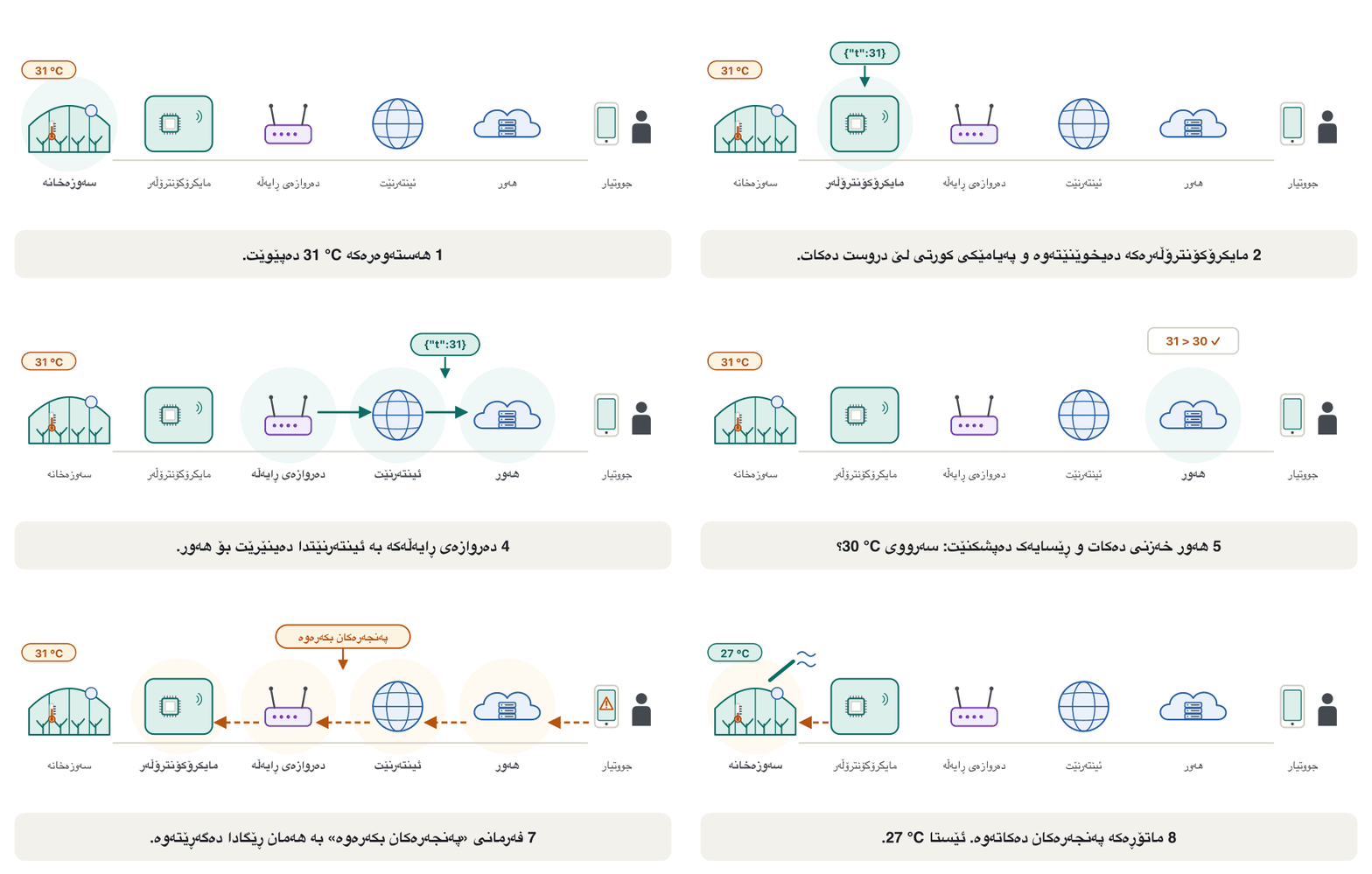
ئێستا با بگەڕێینەوە بۆ سەوزەخانەکە. سەیری یەک خوێندنەوە بکە کە حەوت هەنگاوەکە دەبڕێت — پاشان ببینە چۆن ڕێڕەوەکە بە پێچەوانەوە کار دەکات: بڕیارەکە وەک فەرمانێک دەگەڕێتەوە بۆ .
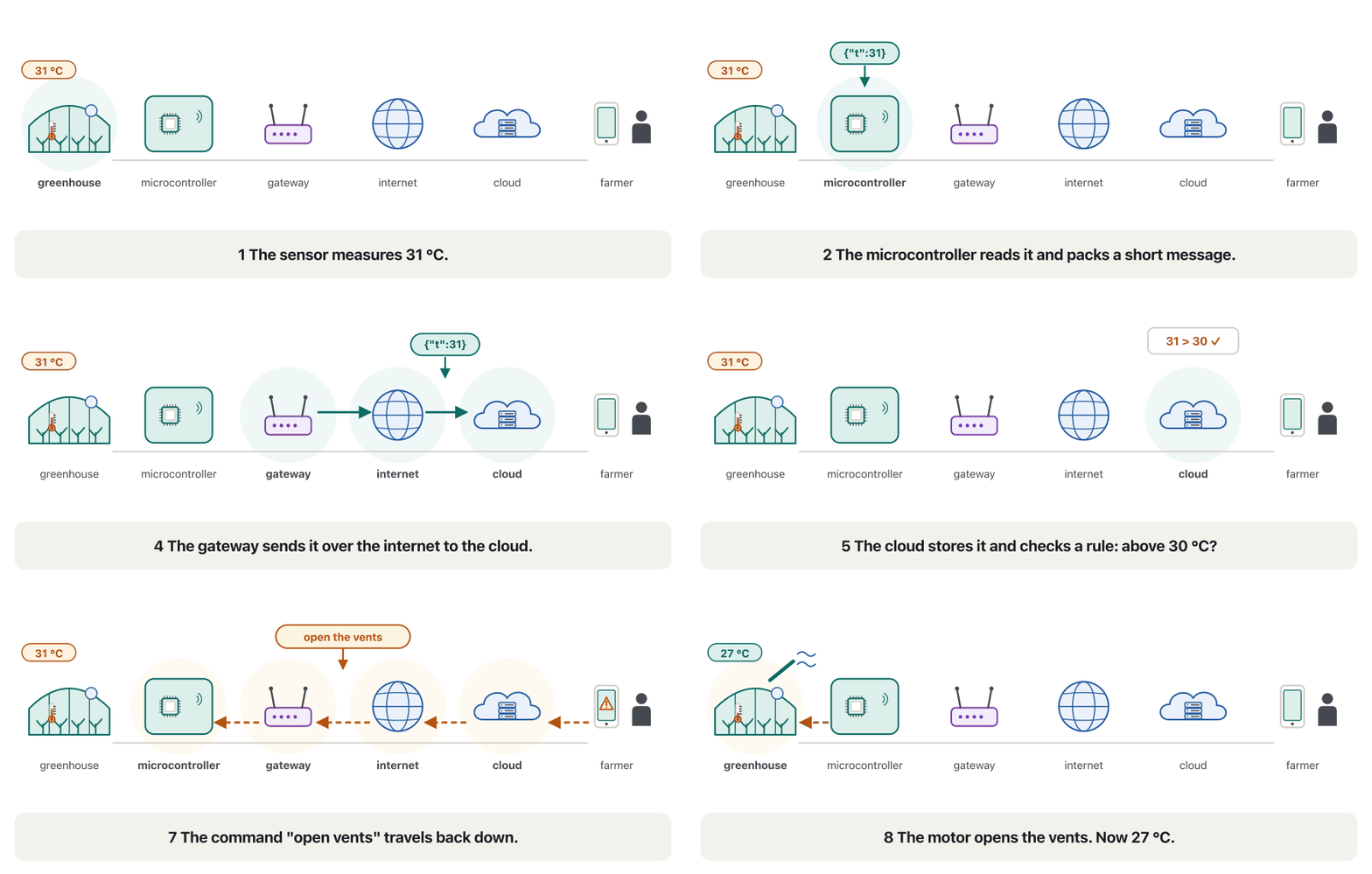
Most IoT systems are such a loop: sense → send → store → analyse → decide → act. Here the decision was made far away, in the cloud and by the farmer. Making it inside the device itself is often better — that design choice is the topic of Where should the thinking happen?.
زۆربەی سیستەمەکانی IoT خولێکی لەو جۆرەن: هەستکردن ← ناردن ← ← شیکردنەوە ← بڕیاردان ← کارکردن. لێرەدا بڕیارەکە لە دوورەوە درا، لە هەور و لەلایەن جووتیارەکەوە. زۆرجار باشترە لە ناو ئامێرەکە خۆیدا بدرێت — ئەم هەڵبژاردنەی دیزاین بابەتی وانەیەکی دواترە: «بیرکردنەوە دەبێت لە کوێ ڕووبدات؟».
The IoT data path in seven stepsڕێڕەوی دراوە لە IoTـدا بە حەوت هەنگاو
Real tools at each stepئامرازی ڕاستەقینە لە هەر هەنگاوێکدا
| Stepهەنگاو | Real toolsئامرازی ڕاستەقینە | Learn moreزیاتر فێربە |
|---|---|---|
| 1 Generationهەنگاوی 1: دروستبوون | temperature, strain and vibration sensors پلەی گەرمی، کشان و لەرینەوە | Sensorsوانەی هەستەوەرەکان |
| 2 Processingهەنگاوی 2: | a microcontroller board (Arduino, ESP32)بۆردێکی (Arduino، ESP32) | Embedded systemsوانەی سیستەمە چەسپێنراوەکان |
| 3 Sensor → gatewayهەنگاوی 3: لە بۆ | IEEE 802.15.4 with 6LoWPAN, Zigbee, Bluetooth LE, LoRa لەگەڵ ، ، Bluetooth LE، | Choosing wirelessهەڵبژاردنی بێتەل |
| 4 Gateway → cloudهەنگاوی 4: لە بۆ هەور | MQTT, or HTTP to a REST API, over the internet، یان بۆ REST APIـیەک، بە | Data protocolsپرۆتۆکۆڵەکانی دراوە |
| 5 Storageهەنگاوی 5: | cloud databases, ThingSpeak, AWS IoT Core هەور، ThingSpeak، AWS IoT Core | Cloud back-endsپشتەوەی هەور |
| 6 Analyticsهەنگاوی 6: شیکاری | charts, statistics, machine learning، ، | Machine learningوانەی فێربوونی ئامێر |
| 7 Deploymentهەنگاوی 7: | phone apps, dashboards, alerts مۆبایل، ، | Mobile cloud and back endsهەوری مۆبایل و پشتەوە |
Why is a gateway needed at all? The sensors' small radios cannot reach the internet by themselves. The gateway speaks both languages — the low-power radio on one side and the internet on the other — and translates between them.
بۆچی پێویستە؟ ڕادیۆ بچووکەکانی خۆیان ناتوانن بگەنە . هەردوو زمانەکە دەزانێت — ڕادیۆ کەموزەکە لە لایەک و لە لایەکی ترەوە — و لە نێوانیاندا وەرگێڕان دەکات.
Common mistakesهەڵە باوەکان
| Mistakeهەڵە | Betterباشتر |
|---|---|
| "Arduino makes microcontrollers."«Arduino دروست دەکات.» | Arduino designs boards. The chips on them come from Microchip, Renesas, Espressif, Raspberry Pi and other makers.Arduino بۆرد دیزاین دەکات. سەریان لە Microchip، Renesas، Espressif، Raspberry Pi و دروستکەرانی ترەوە دێن. |
| "Sensors and actuators are the same thing."« و هەمان شتن.» | A sensor measures (input); an actuator acts (output). A thermostat needs both: a sensor to read the room and a relay or valve to switch the heating. دەپێوێت ()؛ کار دەکات (). پێویستی بە هەردووکیانە: بۆ خوێندنەوەی ژوورەکە و یان سەمامێک بۆ هەڵکردن و کوژاندنەوەی گەرمکەرەوەکە. |
| "Each reading is tiny, so IoT data is small."«هەر خوێندنەوەیەک بچووکە، کەواتە IoT کەمە.» | Many devices × frequent readings × years = big data.ئامێری زۆر × خوێندنەوەی بەردەوام × ساڵ = . |
| "Bluetooth Smart, 3G and Mbed are today's choices."«Bluetooth Smart، 3G و Mbed هەڵبژاردەکانی ئەمڕۆن.» | Today: BLE; 4G or 5G (LTE-M, NB-IoT); open ecosystems such as Arduino, Zephyr and ESP-IDF. Mbed reached end of life in July 2026.ئەمڕۆ: BLE؛ 4G یان 5G (، )؛ ژینگەی کراوەی وەک Arduino، Zephyr و ESP-IDF. Mbed لە تەممووزی 2026ـدا گەیشتە کۆتایی تەمەنی. |
| "With energy harvesting a device needs no energy."«بە ئامێرەکە پێویستی بە وزە نییە.» | It still needs energy; it collects tiny amounts from light, movement or heat, so it must use very little and sleep most of the time.هێشتا وزەی پێویستە؛ بڕی زۆر کەم لە ڕووناکی، جووڵە یان گەرمییەوە کۆ دەکاتەوە، بۆیە دەبێت زۆر کەم بەکار بهێنێت و زۆربەی کات بخەوێت. |
| "The data path ends in the cloud."«ڕێڕەوی لە هەوردا کۆتایی دێت.» | It ends when people or actuators act on the result: step 7, and often a command that travels back to the device.کاتێک کۆتایی دێت کە خەڵک یان لەسەر ئەنجامەکە کار دەکەن: هەنگاوی 7. زۆرجار فەرمانێکیش دەگەڕێتەوە بۆ ئامێرەکە. |
Exercisesڕاهێنانەکان
Karwan has a small shop in Erbil with an ice-cream freezer. Design an IoT device that warns him on his phone if the freezer becomes warmer than −15 °C. Draw its block diagram and name the part in each block.
کاروان دووکانێکی بچووکی لە هەولێر هەیە بە فریزەرێکی دۆندرمەوە. ئامێرێکی IoT دیزاین بکە کە لەسەر مۆبایلەکەی ئاگاداری بکاتەوە ئەگەر فریزەرەکە لە −15 °C گەرمتر بوو. بکێشە و پارچەی ناو هەر بلۆکێک ناو ببە.
Show answerوەڵامەکە پیشان بدە
- Sensor: a temperature probe inside the freezer (and, if you like, a door switch).
- Microcontroller: reads the probe every minute and compares it with −15 °C.
- Connectivity: the shop's Wi-Fi; if there is none, a cellular modem (LTE-M or NB-IoT).
- Actuator / user interface: a buzzer that sounds in the shop, an LED and a button to silence it.
- Power: mains, with a backup battery — so the alarm still works during a power cut, exactly when the freezer warms up.
- : لە ناو فریزەرەکەدا (و ئەگەر بتەوێت، دەرگا).
- : هەموو خولەکێک دەخوێنێتەوە و لەگەڵ −15 °C بەراوردی دەکات.
- پەیوەندی: دووکانەکە؛ ئەگەر نەبوو، ( یان ).
- / : کە لە دووکانەکەدا دەنگ دەدات، و دوگمەیەک بۆ بێدەنگکردنی.
- وزە: کارەبای گشتی، لەگەڵ یەدەگ — بۆ ئەوەی ئاگادارکەرەوەکە لە کاتی بڕانی کارەبادا کار بکات، ڕێک ئەو کاتەی فریزەرەکە گەرم دەبێت.
Sensors measure the water level of a dam every 10 minutes and the engineers of the dam want an early warning before the water reaches the spillway. Write the seven steps of the data path for this system.
هەموو 10 خولەکێک ئاستی ئاوی بەنداوێک دەپێون و ئەندازیارانی بەنداوەکە ئاگادارکردنەوەیەکی زوویان دەوێت پێش ئەوەی ئاوەکە بگاتە ڕێڕەوی ئاو. حەوت هەنگاوەکەی ڕێڕەوی بۆ ئەم سیستەمە بنووسە.
Show answerوەڵامەکە پیشان بدە
- Generation: a level sensor measures the height of the water.
- Processing: a microcontroller averages a few readings to remove the ripples of waves.
- Sensor → gateway: an LPWAN radio sends it to a gateway on the dam's office.
- Gateway → cloud: the gateway forwards it over the internet (for example with MQTT).
- Storage: a cloud database keeps every reading with its time.
- Analytics: software compares the level and how fast it rises with safe limits.
- Deployment: a dashboard and phone alerts warn the engineers, who decide whether to open the gates.
- دروستبوون: ئاست بەرزیی ئاوەکە دەپێوێت.
- : تێکڕای چەند خوێندنەوەیەک دەدۆزێتەوە بۆ لابردنی کاریگەریی شەپۆلەکان.
- ← : ڕادیۆیەکی دەینێرێت بۆ لەسەر نووسینگەی بەنداوەکە.
- ← هەور: بە دەینێرێت (بۆ نموونە بە ).
- : هەور هەموو خوێندنەوەیەک لەگەڵ کاتەکەیدا هەڵدەگرێت.
- شیکاری: ئاستەکە و خێرایی بەرزبوونەوەکەی لەگەڵ سنووری سەلامەت بەراورد دەکات.
- : و مۆبایل ئەندازیاران ئاگادار دەکەنەوە و ئەوان بڕیار دەدەن دەرگاکان بکەنەوە یان نا.
Choose a power source for each device and give one reason: (a) a soil-moisture sensor in a wheat field far from any house; (b) a gateway in a farm office; (c) a wireless doorbell button; (d) a parcel tracker on a lorry from Erbil to Duhok.
بۆ هەر ئامێرێک هەڵبژێرە و هۆکارێک بنووسە: (أ) شێی خاک لە کێڵگەیەکی گەنمدا، دوور لە هەموو ماڵێک؛ (ب) لە نووسینگەی کێڵگەیەکدا؛ (ج) دوگمەیەکی بێتەلی زەنگی دەرگا؛ (د) ئامێرێکی بەدواداچوونی پاکێج لەسەر بارهەڵگرێک لە هەولێرەوە بۆ دهۆک.
Show answerوەڵامەکە پیشان بدە
- (a) A battery with a small solar cell: no sockets in the field, and the sun can top up the battery.
- (b) Mains, ideally with a backup battery: it is always on and sits next to a socket.
- (c) Energy harvesting from the press of the button, or a coin-cell battery that lasts for years.
- (d) A rechargeable battery: it moves, so it cannot use a socket on the way.
- (أ) لەگەڵ بچووک: لە کێڵگەکەدا پلاک نییە و خۆر دەتوانێت پڕ بکاتەوە.
- (ب) کارەبای گشتی، باشتر لەگەڵ یەدەگ: هەمیشە هەڵکراوە و لە تەنیشت پلاکێکدایە.
- (ج) لە پەستانی دوگمەکەوە، یان دوگمەیی کە چەند ساڵێک دەخایەنێت.
- (د) دووپاتە پڕکراوە: دەجووڵێت، بۆیە لە ڕێگادا ناتوانێت پلاک بەکار بهێنێت.
A company watches 50 greenhouses. Each greenhouse has 4 sensors that report every 5 minutes, and each reading takes 40 bytes. How many readings arrive per day? How much data per year?
کۆمپانیایەک چاودێریی 50 سەوزەخانە دەکات. هەر سەوزەخانەیەک 4 هەیە کە هەموو 5 خولەکێک ڕاپۆرت دەدەن و هەر خوێندنەوەیەک 40 دەگرێت. ڕۆژانە چەند خوێندنەوە دەگات؟ ساڵانە چەند ؟
Show answerوەڵامەکە پیشان بدە
200 sensors, 288 readings each per day, 57,600 readings a day, about 21 million a year — about 841 MB a year. Small for one year, but it keeps growing every year the system runs.
200 ، هەر یەکەیان ڕۆژانە 288 خوێندنەوە، ڕۆژانە خوێندنەوە، ساڵانە نزیکەی 21 ملیۆن — نزیکەی 841 MB لە ساڵێکدا. بۆ یەک ساڵ کەمە، بەڵام هەر ساڵێک سیستەمەکە کار بکات زیاتر دەبێت.
Name the IoT building block (identification, sensing, communication, computation, services or semantics) that each sentence describes: (a) a smart meter has the address 2001:db8::17; (b) a gateway forwards readings over 4G; (c) a dashboard shows that "57" is the humidity in percent in room 2; (d) a microcontroller averages ten readings; (e) the city app tells drivers where to park.
ناوی ئەو پێکهاتەیەی IoT بنووسە (ناسینەوە، هەستکردن، پەیوەندی، ژمێرکاری، خزمەتگوزاری یان واتاناسی) کە هەر ڕستەیەک باسی دەکات: (أ) ناونیشانی 2001:db8::17ـی هەیە؛ (ب) خوێندنەوەکان بە 4G دەنێرێت؛ (ج) پیشان دەدات کە «57» ژووری 2ـە بە سەدی؛ (د) تێکڕای دە خوێندنەوە دەدۆزێتەوە؛ (ه) شارەکە بە شۆفێران دەڵێت لە کوێ ئۆتۆمبێل ڕابگرن.
Show answerوەڵامەکە پیشان بدە
- (a) identification — an address
- (b) communication
- (c) semantics — the meaning of the number
- (d) computation
- (e) services
- (أ) ناسینەوە — ناونیشانێک
- (ب) پەیوەندی
- (ج) واتاناسی — واتای ژمارەکە
- (د) ژمێرکاری
- (ه) خزمەتگوزاری
Summaryپوختە
- Four developments made IoT possible: mobile computing, little devices with little data, standards for internet scale and open, community-based development. In 2026 say BLE (not Bluetooth Smart), 4G/5G with LTE-M and NB-IoT (not 3G) and Arduino, Zephyr or ESP-IDF (Mbed has ended).
- Every IoT service combines identification, sensing, communication, computation, services and semantics.
- A device needs sensors, actuators, a microcontroller, connectivity and power (mains, batteries or energy harvesting), often with a small user interface.
- Many little devices sending little data add up to big data in the cloud.
- The data path: generation → processing → sensor-to-gateway → gateway-to-cloud → storage → analytics → software deployment; commands travel back to actuators.
- چوار پێشکەوتن IoTـیان ممکن کرد: ژمێرکاریی مۆبایل، ئامێری بچووک بە بچووکەوە، بۆ ئاستی و گەشەپێدانی کراوەی کۆمەڵگەبنەما. لە 2026ـدا بڵێ BLE (نەک Bluetooth Smart)، 4G/5G لەگەڵ و (نەک 3G) و Arduino، Zephyr یان ESP-IDF (Mbed کۆتایی هاتووە).
- هەموو خزمەتگوزارییەکی IoT ناسینەوە، هەستکردن، پەیوەندی، ژمێرکاری، خزمەتگوزاری و واتاناسی پێکەوە کۆ دەکاتەوە.
- ئامێرێک پێویستی بە ، ، ، پەیوەندی و وزە هەیە (کارەبای گشتی، یان )، زۆرجار لەگەڵ بچووک.
- زۆر ئامێری بچووک کە بچووک دەنێرن، لە هەوردا دەبنە .
- ڕێڕەوی : دروستبوون ← ← بۆ ← بۆ هەور ← ← شیکاری ← ؛ فەرمانەکان دەگەڕێنەوە بۆ .
What is the difference between a sensor and an actuator?جیاوازیی نێوان هەستەوەر و جووڵێنەر چییە؟
A sensor turns something physical into data (input); an actuator turns a command into a physical action (output).
شتێکی فیزیکی دەکاتە ()؛ فەرمانێک دەکاتە کارێکی فیزیکی ().
Why do IoT devices need gateways?بۆچی ئامێرەکانی IoT پێویستیان بە دەروازەی ڕایەڵە هەیە؟
Their low-power radios cannot reach the internet by themselves; a gateway links their network to the internet and translates between them.
ڕادیۆ کەموزەکانیان خۆیان ناتوانن بگەنە ؛ بە دەبەستێتەوە و لە نێوانیاندا وەرگێڕان دەکات.
Name four ways to harvest energy.چوار ڕێگای کۆکردنەوەی وزە ناو ببە.
Light (solar cells), movement (a button press), heat differences, vibration, moving air or water, radio waves and chemical energy — any four.
ڕووناکی ()، جووڵە (پەستانی دوگمە)، جیاوازیی پلەی گەرمی، لەرینەوە، جووڵەی هەوا یان ئاو، و وزەی کیمیایی — هەر چواریان.
What happens in step 7 of the data path?لە هەنگاوی 7ـی ڕێڕەوی دراوەدا چی ڕوودەدات؟
Software deployment: the result reaches people through an app, a dashboard or an alert, so that someone (or an actuator) can act on it.
: ئەنجامەکە لە ڕێگەی ، یان دەگاتە خەڵک، بۆ ئەوەی کەسێک (یان ) کاری لەسەر بکات.
Lesson complete!وانەکە تەواو بوو!
Well done. Review the key terms, then go on to the next lesson.دەستخۆش. سەیرێکی زاراوە سەرەکییەکان بکەرەوە، پاشان بڕۆ بۆ وانەی داهاتوو.
Key termsزاراوە سەرەکییەکان
The Questions Behind Every IoT Designئەو پرسیارانەی لە پشت هەموو دیزاینێکی IoTـەوەن
Related lecturesوانە پەیوەندیدارەکان
- Where IoT Is Used, and What Makes It HardIoT لە کوێ بەکار دێت و چی قورسی دەکات
- Where Should the Thinking Happen?بیرکردنەوە دەبێت لە کوێ ڕووبدات؟
- Sensors: How Things Feel the Worldهەستەوەرەکان: شتەکان چۆن هەست بە جیهان دەکەن
- Actuators: DC Motors, Encoders and Servosجووڵێنەرەکان: ماتۆڕەکانی DC، کۆدکەرەکانی هەنگاوبەهەنگاو و ماتۆڕەکانی سێرڤۆ
- Microprocessor or Microcontroller?مایکرۆپرۆسێسەر یان مایکرۆکۆنترۆڵەر؟
- Range, Speed and Power: Choosing a Wireless Technologyمەودای سیگناڵ، خێرایی و وزە: هەڵبژاردنی تەکنەلۆجیایەکی بێتەل
- Sending IoT Data: HTTP, JSON and MQTTناردنی دراوەی IoT: HTTP، JSON و MQTT
- Storing IoT Readings in the Cloudهەڵگرتنی خوێندنەوەکانی IoT لە هەوردا
- The CPU: Control Unit, ALU and CoresCPU: یەکەی جڵەوکردن، ALU و ناوکەکانی پرۆسێسەر
- Emerging Technologies: IoT, VR/AR, Robots and Blockchainتەکنەلۆجیا نوێیەکان: ئینتەرنێتی شتەکان، ڕاستیی گریمانەیی/ڕاستیی زیادکراو، ڕۆبۆتەکان و بلۆکچەین
References and further readingسەرچاوەکان و خوێندنەوەی زیاتر
- Al-Fuqaha, Guizani, Mohammadi, Aledhari and Ayyash (2015): Internet of Things: A Survey on Enabling Technologies, Protocols, and Applications, IEEE Communications Surveys & Tutorials 17(4) — section IV, IoT elements
- Arm: Mbed OS (end of life in July 2026)
- Arduino blog (29 July 2026): Arduino Core on Zephyr 0.90.0 is officially stable and leaving beta
- Espressif: ESP-IDF Get Started
- Bluetooth SIG: Bluetooth technology overview (Classic and LE radios)
- Advanced Television (12 August 2026): GSA 2G and 3G switch-off report — Europe leads 3G switch-off
- Arduino docs: UNO R3 (ATmega328P, 16 MHz)
- Arduino docs: UNO R4 WiFi (Renesas RA4M1, ESP32-S3 radio)
- Arduino docs: Nano ESP32 (u-blox NORA-W106, ESP32-S3)
- Espressif: ESP32-S3 product page
- EnOcean: Battery-free — energy at the press of a button
- EnOcean: Our technology (energy from motion, light and temperature differences)
- Tech Briefs: Harvesting energy from microbes in soil (Northwestern University soil fuel cell)
- RFC 4944: Transmission of IPv6 Packets over IEEE 802.15.4 Networks (6LoWPAN)
- MQTT.org: MQTT — the standard for IoT messaging (OASIS)
- MathWorks: ThingSpeak IoT analytics
- AWS IoT Core
This lecture is a first edition. The Kurdish text and terminology are waiting for review by Kurdish IT teachers.ئەم وانەیە چاپی یەکەمە. دەقە کوردییەکە و زاراوەکانی چاوەڕێی پێداچوونەوەی مامۆستایانی کوردی بواری IT ن.