Chapterبەش 6 · Lectureوانە 6.2
Point-to-Point, Star and Mesh Networksپەیوەندیی خاڵ بۆ خاڵ، ڕایەڵەی ئەستێرەیی و ڕایەڵەی چنراو
How IoT devices are linked together, and what each shape costs. Reliability with redundancy and single points of failure; point-to-point links; stars around a gateway, limited by its range; meshes where messages hop node to node, partial and full, self-healing, with their costs: relays, awake routers, complexity and a larger attack surface.
ئامێرەکانی IoT چۆن پێکەوە دەبەسترێن و هەر شێوەیەک چ نرخێکی هەیە. بە و ؛ ؛ بە دەوری کە بە سنووردارە؛ کە پەیامەکان تێیدا لە نۆدێکەوە بۆ نۆدێکی تر باز دەدەن، بەشەکی و تەواو، خۆچاککەرەوە، لەگەڵ تێچووەکانی: گوازەرەوە، بە ئاگا، ئاڵۆزی و گەورەتر.
What you will learnچی فێر دەبیت
- Define network topology and reliability, and explain redundancy and single points of failure.
- Describe point-to-point, star and mesh topologies for IoT, with their strengths and weaknesses.
- Tell a partial mesh from a full mesh and count the links of a full mesh.
- Explain self-healing, why relays must stay awake and how routers and sleepy end devices share the work.
- Choose a topology for an IoT system from its distances, power and security needs.
- و پێناسە بکەیت و و ڕوون بکەیتەوە.
- ، و بۆ IoT وەسف بکەیت، لەگەڵ خاڵە بەهێز و لاوازەکانیان.
- بەشەکی لە تەواو جیا بکەیتەوە و پەیوەندییەکانی تەواو بژمێریت.
- خۆچاککردنەوە ڕوون بکەیتەوە، بۆچی گوازەرەوەکان دەبێت بە ئاگا بن و و خەوتوو چۆن کارەکە دابەش دەکەن.
- بۆ سیستەمێکی IoT بەپێی دووری، وزە و پێویستییەکانی هەڵبژێریت.
How the parts are connectedبەشەکان چۆن پێکەوە دەبەسترێن
A network topology defines the way the components of a network communicate with each other: which device talks to which. In IoT the components are mostly sensor nodes and gateways, and the links are usually radio links. Topologies vary greatly in security, power consumption, cost and complexity, so the choice shapes the whole system.
ئەو شێوەیە دیاری دەکات کە پێکهاتەکانی پێی پەیوەندی بە یەکترەوە دەکەن: کام ئامێر لەگەڵ کام ئامێر قسە دەکات. لە IoTـدا بەشەکان زۆربەیان و ـن و پەیوەندییەکان زۆرجار ڕادیۆیین. لە ، ، تێچوو و ئاڵۆزیدا زۆر جیاوازن، بۆیە هەڵبژاردنەکە هەموو سیستەمەکە دادەڕێژێت.
The classic shapes (bus, ring, star, mesh, tree) are taught in Network Topologies, and the physical and logical maps of a network in One network, two maps. Radio has no cables to draw, so an IoT topology is mostly a logical map: who talks to whom. IoT networks use three shapes: point-to-point, star and mesh. From left to right they cost more, but they survive failures better.
شێوە کلاسیکییەکان (، ، ، ، ) لە تۆپۆلۆجییەکانی ڕایەڵە دەخوێندرێن و دوو نەخشە فیزیکی و لۆجیکییەکەی لە یەک ڕایەڵە، دوو نەخشە. ڕادیۆ کێبڵی نییە تا بیکێشیت، بۆیە IoT زۆرتر نەخشەیەکی لۆجیکییە: کێ لەگەڵ کێ قسە دەکات. ڕایەڵەکانی IoT سێ شێوە بەکار دەهێنن: ، و . لە چەپەوە بۆ ڕاست تێچوویان زیاترە، بەڵام باشتر بەرگەی تێکچوون دەگرن.
Reliability: working even when parts failپشتپێبەستراوی: کارکردن تەنانەت کاتێک بەشێک تێک دەچێت
Reliability is a network’s ability to function without failure, even if some of its components fail (how reliability is measured). Two factors decide it:
توانای بۆ ئەوەی بەبێ تێکچوون کار بکات، تەنانەت ئەگەر هەندێک لە بەشەکانی تێک بچن (پشتپێبەستراوی چۆن دەپێورێت). دوو هۆکار دیاری دەکەن:
- Redundancy: more than one path for the data. Mesh networks are highly reliable, because if one link fails, alternatives exist.
- Single points of failure: one part whose failure stops everything. A star network is less reliable, because if its central hub or gateway fails, no node can reach the rest of the system.
- : زیاتر لە یەک ڕێگا بۆ . زۆر پشتپێبەستراون، چونکە ئەگەر پەیوەندییەک تێک بچێت، ڕێگای تر هەن.
- : یەک بەش کە تێکچوونی هەموو شتێک دەوەستێنێت. کەمتر پشتپێبەستراوە، چونکە ئەگەر ناوەندەکەی، یان ، تێک بچێت، هیچ نۆدێک ناگاتە بەشەکانی تری سیستەمەکە.
So a mesh scores high reliability thanks to its many connections, while a star is only as reliable as its central node. That is why the gateway of a star often gets a backup battery, or a second gateway covers the same area.
کەواتە بەهۆی پەیوەندییە زۆرەکانییەوە بەرزی هەیە، بەڵام تەنیا ئەوەندە پشتپێبەستراوە کە نۆدە ناوەندییەکەی پشتپێبەستراوە. بۆیە لە زۆرجار یەدەگی بۆ دادەنرێت، یان دووەم هەمان ناوچە دادەپۆشێت.
Point-to-point: two things, one linkپەیوەندیی خاڵ بۆ خاڵ: دوو شت، یەک پەیوەندی
Mesh and star networks connect many things; a point-to-point link connects just two. It is much simpler: the link simply tunnels (sends) a flow of data between the two points, either one way (unidirectional, like a doorbell button that only sends to its chime) or both ways (bidirectional, like a sensor node that sends readings and receives new settings). These are the transmission modes simplex, half duplex and full duplex.
و زۆر شت پێکەوە دەبەستن؛ تەنیا دوو شت پێکەوە دەبەستێت. زۆر سادەترە: پەیوەندییەکە تەنیا لێشاوێکی لە نێوان دوو خاڵەکەدا دەنێرێت، یان بە یەک ئاراستە (وەک دوگمەی زەنگی دەرگا کە تەنیا بۆ زەنگەکەی دەنێرێت) یان بە هەردوو ئاراستە (وەک کە خوێندنەوە دەنێرێت و ڕێکخستنی نوێ وەردەگرێت). ئەمانە شێوازەکانی ناردنـن: ، و .
Its weakness for IoT is also its strength: it joins only two devices, while a real IoT system has tens or thousands of things, so point-to-point is rarely useful on its own. But it is the building block of the others: every link of a star is a one-hop point-to-point link to the gateway, and a mesh is many of them (point-to-point in IT).
لاوازییەکەی بۆ IoT هەمان بەهێزییەکەیەتی: تەنیا دوو ئامێر دەبەستێت، لە کاتێکدا سیستەمێکی ڕاستەقینەی IoT دەیان یان هەزاران شتی هەیە، بۆیە بە تەنیا خۆی کەم جار بەسوودە. بەڵام بەردی بناغەی ئەوانی ترە: هەموو هێڵێکی بە یەک باز بۆ و لە زۆر دانەی ئەوان پێک دێت (پەیوەندیی خاڵ بۆ خاڵ لە IT).
Star: one hop to the gatewayڕایەڵەی ئەستێرەیی: یەک باز بۆ دەروازەی ڕایەڵە
In a star topology each node is connected directly to a central gateway: a one-hop, point-to-point connection. It is simpler and less expensive to build than a mesh. Network security improves too: the end nodes work independently of each other, so if one node is attacked, the rest of the network stays intact.
لە دا هەر نۆدێک ڕاستەوخۆ بە ناوەندییەوە بەستراوە: بە یەک باز. دروستکردنی لە سادەتر و هەرزانترە. ڕایەڵەکەش باشتر دەبێت: نۆدە کۆتاییەکان بە جیا لە یەکتر کار دەکەن، بۆیە ئەگەر هێرش بکرێتە سەر نۆدێک، بەشەکانی تری ڕایەڵەکە سەلامەت دەمێننەوە.
Its main disadvantage is size: the network’s footprint is limited to the maximum transmission range between the devices and the gateway. Each device must be close enough to send its signal straight to the centre; a device that is too far away cannot join. To cover more ground you need a longer-range radio or more gateways.
لاوازییە سەرەکییەکەی قەبارەیە: ناوچەی ڕایەڵەکە بە زۆرترین نێوان ئامێرەکان و سنووردارە. هەر ئامێرێک دەبێت ئەوەندە نزیک بێت کە ڕاستەوخۆ بگاتە ناوەندەکە؛ ئامێرێک کە زۆر دوورە ناتوانێت بەشدار بێت. بۆ داپۆشینی ناوچەی زیاتر پێویستت بە ڕادیۆیەکی دوورمەوداتر یان زیاتر هەیە.
Star: one hop to the gatewayڕایەڵەی ئەستێرەیی: یەک باز بۆ دەروازەی ڕایەڵە
Stars everywhere: Wi-Fi, Bluetooth, LPWAN and cellularڕایەڵەی ئەستێرەیی لە هەموو شوێنێک: وایفای، Bluetooth، ڕایەڵەی فراوانی کەموزە و ڕایەڵەی مۆبایل
Most IoT radios form stars. A Wi-Fi access point is the centre of its devices, and a phone is the centre of its Bluetooth LE gadgets. Low-power wide-area networks (LoRaWAN, Sigfox, NB-IoT and LTE-M) are stars too: each device connects straight to a gateway or a cell tower, often kilometres away.
زۆربەی ڕادیۆکانی IoT پێک دەهێنن. ناوەندی ئامێرەکانی خۆیەتی و مۆبایلێک ناوەندی ئامێرە بچووکەکانی خۆیەتی. (، ، و )یش : هەر ئامێرێک ڕاستەوخۆ بە یان تاوەرێکی مۆبایلەوە دەبەسترێت، زۆرجار لە چەند کیلۆمەتر دوورەوە.
Big networks join many stars into a star of stars. In LoRaWAN every gateway in range hears a device’s message and forwards it to one network server, which keeps one copy. End devices never relay for others, so they can sleep most of the time and run for years on a battery (an LPWAN is a star, LoRaWAN).
ڕایەڵە گەورەکان زۆر پێکەوە دەبەستن و ئەستێرەی ئەستێرەکان پێک دەهێنن. لە هەر کە لە ناو ئامێرێکدا بێت پەیامەکەی دەبیستێت و بۆ یەک ڕایەڵە دەنێرێت، کە تەنیا یەک کۆپی هەڵدەگرێت. هەرگیز پەیام بۆ ئامێری تر ناگوازنەوە، بۆیە دەتوانن زۆربەی کات بخەون و چەند ساڵ بە یەک کار بکەن (ڕایەڵەی فراوانی کەموزە ڕایەڵەی ئەستێرەییە، LoRaWAN).
Mesh: messages hop from node to nodeڕایەڵەی چنراو: پەیامەکان لە نۆدێکەوە بۆ نۆدێکی تر باز دەدەن
In a mesh, a message hops (jumps) from one device to another until it reaches its destination, usually a gateway. So a sensor node in a mesh has two jobs: it is an endpoint that captures and transmits its own data, and a repeater that relays (passes on) data from other nodes, just like Chappe’s towers.
لە دا پەیامێک لە ئامێرێکەوە بۆ ئامێرێکی تر باز دەدات تا دەگاتە شوێنی مەبەست، کە زۆرجار . کەواتە لە دوو کاری هەیە: خاڵی کۆتایییە کە خۆی کۆ دەکاتەوە و دەینێرێت، هەروەها کە نۆدەکانی تر دەگوازێتەوە، ڕێک وەک بورجەکانی Chappe.
The gain: each radio only needs to reach its nearest neighbour, not the gateway. A phone that is far from a smart bulb can still reach it, because the message passes through another bulb on the way.
سوودەکەی: هەر ڕادیۆیەک تەنیا پێویستە بگاتە دراوسێ نزیکەکەی، نەک . مۆبایلێک کە لە گڵۆپێکی هۆشمەند دوورە هێشتا دەتوانێت پێی بگات، چونکە پەیامەکە لە ڕێگادا بە گڵۆپێکی تردا تێدەپەڕێت.
Mesh: messages hop from node to nodeڕایەڵەی چنراو: پەیامەکان لە نۆدێکەوە بۆ نۆدێکی تر باز دەدەن
Partial mesh and full meshڕایەڵەی چنراوی بەشەکی و تەواو
In a partial mesh, only selected nodes have the repeater (relaying) function and are connected to more than one other node; the other sensor nodes talk to one relay only. In a full mesh, all nodes are homogeneous (alike) and fully interconnected: every node is linked to every other node.
لە بەشەکیدا تەنیا هەندێک نۆدی هەڵبژێردراو کاری (گواستنەوە)یان هەیە و بە زیاتر لە یەک نۆدی ترەوە بەستراون؛ تر تەنیا لەگەڵ یەک گوازەرەوە قسە دەکەن. لە تەواودا هەموو نۆدەکان وەک یەکن و بە تەواوی پێکەوە بەستراون: هەموو نۆدێک بە هەموو نۆدێکی ترەوە بەستراوە.
A full mesh needs many links: with n nodes, , so 6 nodes need 15 links and 50 nodes need 1,225 (counting mesh links, the price of a full mesh). Radio needs no cables, but every node must then be in range of every other, which only happens in a small space. So most IoT meshes are partial.
تەواو پەیوەندیی زۆری دەوێت: بۆ n نۆد ، کەواتە 6 نۆد 15 پەیوەندی و 50 نۆد 1,225 پەیوەندییان دەوێت (ژماردنی پەیوەندییەکانی ڕایەڵەی چنراو، نرخی ڕایەڵەی چنراوی تەواو). ڕادیۆ کێبڵی ناوێت، بەڵام ئەو کاتە هەموو نۆدێک دەبێت لە ناو هەموو نۆدەکانی تردا بێت، کە تەنیا لە شوێنێکی بچووکدا ڕوو دەدات. بۆیە زۆربەی IoT بەشەکین.
Mesh: messages hop from node to nodeڕایەڵەی چنراو: پەیامەکان لە نۆدێکەوە بۆ نۆدێکی تر باز دەدەن
Self-healing: finding another wayڕایەڵەی خۆچاککەرەوە: دۆزینەوەی ڕێگایەکی تر
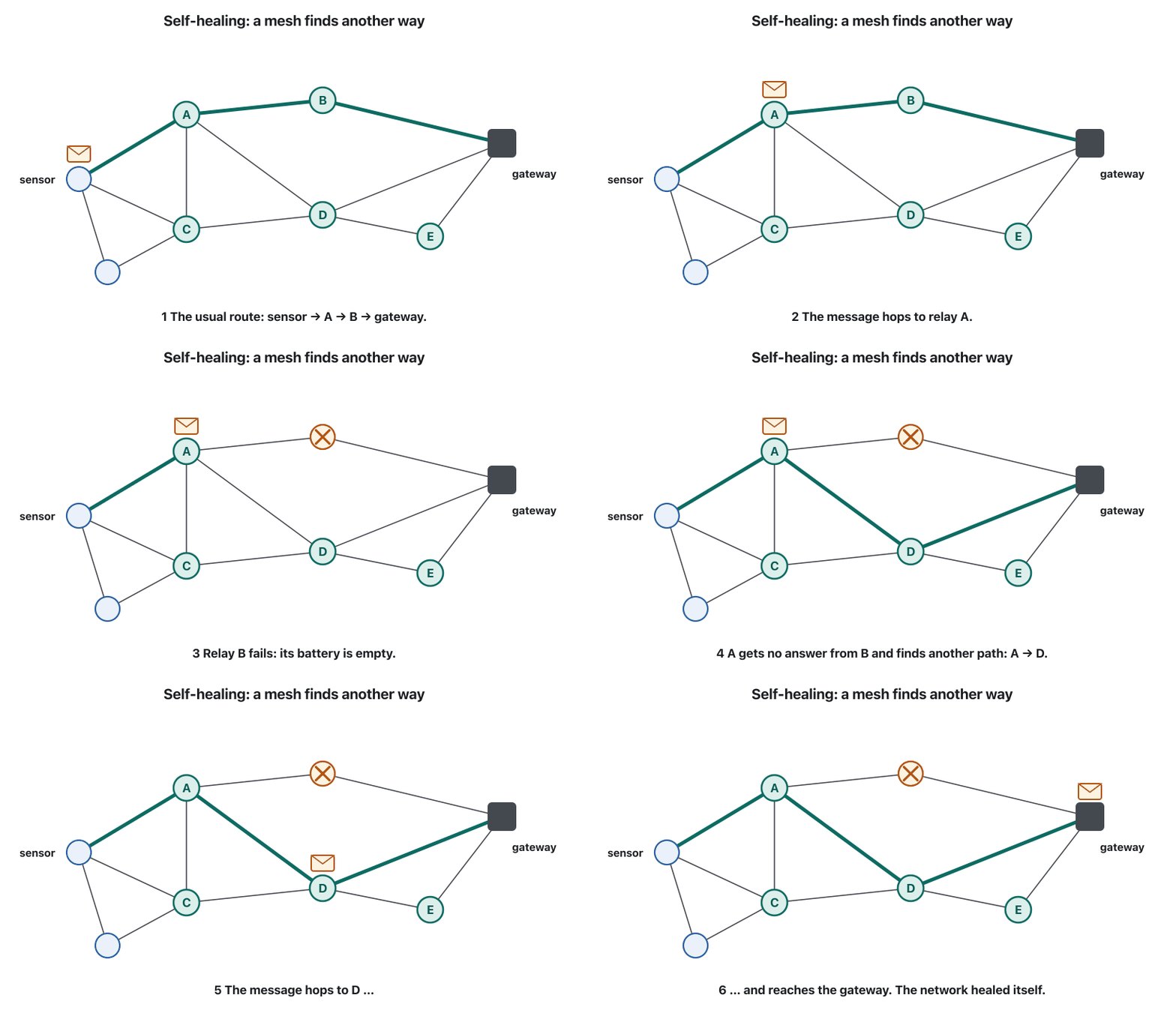
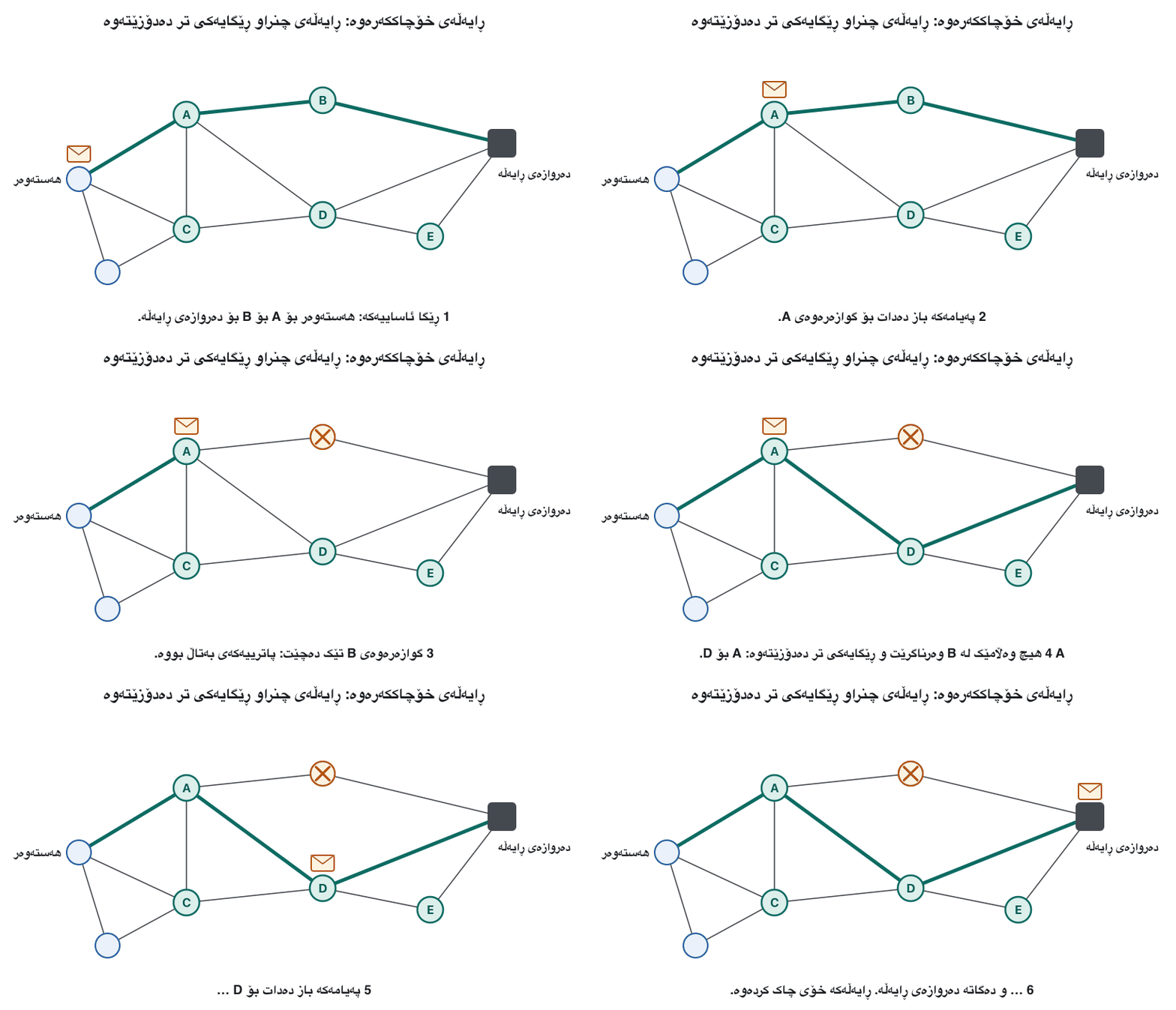
A mesh has a self-healing capability: if one repeater node fails, the data is re-routed along another path and the network keeps working. This makes it robust: strong and hard to break. The routing protocol, for example in Zigbee or Thread, notices that a neighbour no longer answers and picks a new route by itself, before anyone repairs anything.
توانای خۆچاککردنەوەی هەیە: ئەگەر نۆدێکی تێک بچێت، بە ڕێگایەکی تردا دەنێردرێت و ڕایەڵەکە بەردەوام کار دەکات. ئەمە بەهێزی دەکات و تێکشکاندنی زەحمەت دەکات. ، بۆ نموونە لە یان Threadـدا، هەست دەکات کە دراوسێیەک چیتر وەڵام ناداتەوە و خۆی ڕێگایەکی نوێ هەڵدەبژێرێت، پێش ئەوەی هیچ کەسێک شتێک چاک بکاتەوە.
Self-healing works like the roads of a city. If one street in Erbil is closed for repairs, taxis do not stop: they take another street and still arrive.
خۆچاککردنەوە وەک شەقامەکانی شارێک کار دەکات. ئەگەر شەقامێک لە هەولێر بۆ چاککردنەوە دابخرێت، تەکسییەکان ناوەستن: شەقامێکی تر دەگرن و هەر دەگەن.
Where the analogy stops workingسنووری ئەم نموونەیە
A mesh finds the new road automatically and in seconds. And if every road around a node is closed, that node is cut off: self-healing needs at least one working neighbour.
ڕێگا نوێیەکە خۆکارانە و لە چەند چرکەیەکدا دەدۆزێتەوە. هەروەها ئەگەر هەموو ڕێگاکانی دەوری نۆدێک داخران، ئەو نۆدە دادەبڕێت: خۆچاککردنەوە پێویستی بە لانیکەم یەک دراوسێی کارا هەیە.
Where meshes shineکوێ ڕایەڵەی چنراو باشترە
Mesh is widely used to extend the coverage of short-range wireless technologies such as Zigbee, Z-Wave and WirelessHART, and today also Thread and Bluetooth Mesh. Each radio reaches only tens of metres, but a mesh of them can cover large areas, such as an entire industrial campus or a commercial building.
بە بەرفراوانی بۆ درێژکردنەوەی ناوچەی داپۆشینی تەکنەلۆجیا کورتمەوداکان بەکار دێت، وەک ، و WirelessHART، هەروەها ئەمڕۆ Thread و Bluetooth Meshـیش. هەر ڕادیۆیەک تەنیا چەند دە مەترێک دەگات، بەڵام لەوان دەتوانێت ناوچەی گەورە دابپۆشێت، وەک هەموو ناوچەیەکی پیشەسازی یان باڵەخانەیەکی بازرگانی.
Smart lights are a good example: every mains-powered bulb is also a relay, so a house full of bulbs becomes its own network. These protocols are compared in RFID, Zigbee and other mesh protocols. Home Wi-Fi can be a mesh of access points too (ad hoc and mesh Wi-Fi).
گڵۆپە هۆشمەندەکان نموونەیەکی باشن: هەموو گڵۆپێک کە بە کارەبای پلاک کار دەکات گوازەرەوەشە، بۆیە ماڵێکی پڕ لە گڵۆپ خۆی دەبێتە ڕایەڵە. ئەم لە RFID، Zigbee و پرۆتۆکۆڵەکانی تری ڕایەڵەی چنراو بەراورد دەکرێن. ماڵەوەش دەکرێت بێت لە (ad hoc و وایفایی چنراو).
The price of a meshنرخی ڕایەڵەی چنراو
A mesh has costs too. It is expensive to install: the range between two nodes is short, so the number of repeaters grows quickly with distance. Often extra nodes must be added not to capture data but only to reach the desired coverage, devices that measure nothing and only pass messages on.
تێچووشی هەیە. دامەزراندنی گرانە: نێوان دوو نۆد کورتە، بۆیە ژمارەی بە زیادبوونی دووری زوو زیاد دەکات. زۆرجار دەبێت نۆدی زیادە دابنرێن، نەک بۆ کۆکردنەوەی ، بەڵکو تەنیا بۆ گەیشتن بە ناوچەی داپۆشینی پێویست؛ ئامێرانێک کە هیچ ناپێون و تەنیا پەیام دەگوازنەوە.
So many devices and connections make setup, management and maintenance hard, like a city with too many roads, where signs, repairs and traffic control all become difficult. This complexity greatly hampers (blocks) scalability, the ability to grow. And although each radio sends with low power, relaying makes the total power consumption high.
ئەم هەموو ئامێر و پەیوەندییە ڕێکخستن، بەڕێوەبردن و چاککردنەوە قورس دەکەن، وەک شارێک کە شەقامی زۆر زۆری هەبێت و تێیدا نیشانەکان، چاککردنەوە و کۆنترۆڵی هاتوچۆ هەموویان قورس دەبن. ئەم ئاڵۆزییە ڕێگری لە دەکات، واتە توانای گەورەبوون. هەرچەندە هەر ڕادیۆیەک بە وزەی کەم دەنێرێت، گواستنەوە گشتی بەرز دەکاتەوە.
The price of a meshنرخی ڕایەڵەی چنراو
Relays must stay awakeگوازەرەوەکان دەبێت بە ئاگا بن
A relay cannot sleep: it must constantly be awake and listen, in case a message needs relaying. When much traffic flows through one node, for example the node next to the gateway, its battery drains quickly, like a worker who is given everyone’s extra jobs and gets tired first.
گوازەرەوە ناتوانێت بخەوێت: دەبێت هەمیشە بە ئاگا بێت و گوێ بگرێت، نەوەک پەیامێک پێویستی بە گواستنەوە هەبێت. کاتێک هاتوچۆیەکی زۆر بە یەک نۆددا تێدەپەڕێت، بۆ نموونە ئەو نۆدەی لە تەنیشت ، زوو بەتاڵ دەبێت، وەک کرێکارێک کە کاری زیادەی هەمووانی پێ دەسپێردرێت و پێش هەمووان ماندوو دەبێت.
Modern mesh protocols solve this with roles. In Zigbee and Thread only the router nodes relay, and they are usually mains-powered devices such as bulbs and smart plugs. Battery sensors join as sleepy end devices: they sleep most of the time and wake briefly to send a reading and to ask their parent router for waiting messages, so they still run for years.
نوێی ئەمە بە دابەشکردنی ڕۆڵ چارەسەر دەکەن. لە و Threadـدا تەنیا نۆدەکانی پەیام دەگوازنەوە و ئەوانیش زۆرجار ئامێری کارەبای پلاکن، وەک گڵۆپ و . کە هەیە وەک خەوتوو بەشدار دەبن: زۆربەی کات دەخەون و بۆ ماوەیەکی کەم بەخەبەر دێن بۆ ناردنی خوێندنەوەیەک و بۆ پرسیارکردن لە سەرووی خۆیان لەبارەی پەیامی چاوەڕوانکراو، بۆیە هێشتا چەند ساڵ کار دەکەن.
A castle with many gatesقەڵایەک بە چەندین دەرگاوە
Every node of a mesh is a possible way in. The larger the network, the more repeaters it has, and the more possible points of attack: a bigger attack surface. An attacker who takes over one repeater can read or drop the messages that pass through it, or use it to attack its neighbours.
هەموو نۆدێکی ڕێگایەکی ئەگەریی چوونە ژوورەوەیە. تا ڕایەڵەکە گەورەتر بێت، زیاتری هەیە و خاڵی ئەگەریی هێرشی زیاتری هەیە: گەورەتر. هێرشبەرێک کە دەست بەسەر دەگرێت، دەتوانێت ئەو پەیامانەی بە ناویدا تێدەپەڕن بخوێنێتەوە یان فڕێیان بدات، یان بەکاری بهێنێت بۆ هێرشکردنە سەر دراوسێکانی.
A mesh is like a castle with many gates: if one gate is left open, enemies can get in. More relays mean more gates to guard.
وەک قەڵایەکە بە چەندین دەرگاوە: ئەگەر دەرگایەک بە کراوەیی بەجێ بهێڵرێت، دوژمن دەتوانێت بچێتە ژوورەوە. گوازەرەوەی زیاتر واتە دەرگای زیاتر بۆ پاسەوانی.
Where the analogy stops workingسنووری ئەم نموونەیە
Modern meshes lock every gate: Zigbee and Thread encrypt their links with 128-bit AES keys, so one broken gate does not open the whole castle at once. Each gate still needs guarding: unique keys, updates and no default passwords.
ڕایەڵە چنراوە نوێیەکان هەموو دەرگایەک قفڵ دەکەن: و Thread پەیوەندییەکانیان بە AESـی 128 شفرە دەکەن، بۆیە یەک دەرگای شکاو هەموو قەڵاکە یەکسەر ناکاتەوە. هێشتا هەموو دەرگایەک پاسەوانیی دەوێت: جیاواز بۆ هەر ئامێرێک، و نەبوونی بنەڕەتی.
A star is easier to protect: its end nodes work independently and never relay, so an attacked node does not affect the others, and the gateway is the one place to guard carefully. More in IoT security and privacy.
پاراستنی ئاسانترە: نۆدە کۆتاییەکانی بە جیا کار دەکەن و هەرگیز پەیام ناگوازنەوە، بۆیە نۆدێکی هێرشکراو کار ناکاتە سەر ئەوانی تر و ئەو یەک شوێنەیە کە دەبێت بە وردی بپارێزرێت. زیاتر لە ئاسایش و تایبەتێتیی IoT.
Point-to-point, star and mesh side by sideپەیوەندیی خاڵ بۆ خاڵ، ڕایەڵەی ئەستێرەیی و ڕایەڵەی چنراو لە تەنیشت یەکەوە
| Featureتایبەتمەندی | Point-to-point | Star | Mesh |
|---|---|---|---|
| Devicesئامێرەکان | 2 | many, around one gatewayزۆر، بە دەوری یەک | many, linked to neighboursزۆر، بەستراو بە دراوسێکانەوە |
| Hops to the gatewayباز بۆ | 1 | 1 | severalچەندین |
| Costتێچوو | lowestکەمترین | lowکەم | higher (relays, setup)زیاتر (گوازەرەوە، ڕێکخستن) |
| Reliability | one link: if it fails, nothing gets throughیەک پەیوەندی: ئەگەر تێک بچێت هیچ ناگات | the centre is a single point of failureناوەندەکە | high: self-healingبەرز: خۆچاککردنەوە |
| Coverageناوچەی داپۆشین | one radio’s range یەک ڕادیۆ | the gateway’s range | grows with every nodeبە هەر نۆدێک گەورە دەبێت |
| Battery of end devices | longدرێژ | long: they only sendدرێژ: تەنیا دەنێرن | relays need mains; sleepy end devices lastگوازەرەوەکان کارەبای پلاکیان دەوێت؛ خەوتوو زۆر دەمێنێتەوە |
| Security | simple: two partiesسادە: دوو لایەن | an attacked node stays alone; guard the gatewayنۆدی هێرشکراو بە تەنیا دەمێنێتەوە؛ بپارێزە | more nodes, larger attack surfaceنۆدی زیاتر، گەورەتر |
| IoT examplesنموونەی IoT | doorbell; heart-rate strap to watchزەنگی دەرگا؛ پشتێنی دڵ بۆ کاتژمێر | Wi-Fi, Bluetooth LE, LoRaWAN, Sigfox, NB-IoT, LTE-M، ، ، ، ، | Zigbee, Z-Wave, Thread, Bluetooth Mesh, WirelessHART، ، Thread، Bluetooth Mesh، WirelessHART |
Common mistakesهەڵە باوەکان
- “Mesh is always best, because it is the most reliable.” Reliability costs nodes, power and complexity. For sensors far apart on batteries, a star of long-range radios is usually better.
- “Every node of a mesh must stay awake.” Only the router (relaying) nodes do; battery sensors join as sleepy end devices.
- “If one mesh node is hacked, the whole network collapses.” It can disturb what passes through it and attack its neighbours; encryption on every link limits the damage, but every node must be protected.
- “A star is unreliable, so avoid it.” Most IoT networks are stars. Protect the single point of failure: backup power for the gateway, or a second gateway.
- “Links in a full mesh grow like the number of nodes.” They grow much faster: n(n − 1) ÷ 2, so doubling the nodes roughly quadruples the links.
- “A topology is the shape of the cables.” In a radio network it is mostly a logical map: which device talks to which.
- « هەمیشە باشترینە، چونکە پشتپێبەستراوترینە.» نرخی نۆد، وزە و ئاڵۆزیی هەیە. بۆ لە یەکتر دوور کە هەیە، بە ڕادیۆی دوورمەودا زۆرجار باشترە.
- «هەموو نۆدێکی دەبێت بە ئاگا بێت.» تەنیا نۆدەکانی (گوازەرەوە) وان؛ خاوەن وەک خەوتوو بەشدار دەبن.
- «ئەگەر نۆدێکی هاک بکرێت، هەموو ڕایەڵەکە دەڕووخێت.» دەتوانێت ئەوەی بە ناویدا تێدەپەڕێت تێک بدات و هێرش بکاتە سەر دراوسێکانی؛ لە هەموو پەیوەندییەکدا زیانەکە سنووردار دەکات، بەڵام دەبێت هەموو نۆدێک بپارێزرێت.
- « پشتپێبەستراو نییە، بۆیە لێی دوور بکەوەوە.» زۆربەی ڕایەڵەکانی IoT . بپارێزە: وزەی یەدەگ بۆ ، یان دووەم.
- «پەیوەندییەکانی تەواو وەک ژمارەی نۆدەکان زیاد دەکەن.» زۆر خێراتر زیاد دەکەن: n(n − 1) ÷ 2، کەواتە دوو هێندەکردنی نۆدەکان پەیوەندییەکان نزیکەی چوار هێندە دەکات.
- « شێوەی کێبڵەکانە.» لە ڕایەڵەیەکی ڕادیۆییدا زۆرتر نەخشەیەکی لۆجیکییە: کام ئامێر لەگەڵ کام ئامێر قسە دەکات.
Exercisesڕاهێنانەکان
Choose point-to-point, star or mesh, and say why: (a) 30 smart bulbs and 10 battery door sensors on three floors of a house; (b) 40 soil sensors over a 5 km farm near Sulaymaniyah; (c) a heart-rate strap and a sports watch; (d) 200 sensors in a factory hall full of metal machines where one radio reaches about 15 m; (e) water meters in the basements of a city’s houses.
، یان هەڵبژێرە و هۆکارەکەی بڵێ: (a) 30 گڵۆپی هۆشمەند و 10 دەرگای خاوەن لە سێ نهۆمی ماڵێکدا؛ (b) 40 خاک لە کێڵگەیەکی 5 کیلۆمەتری لە نزیک سلێمانی؛ (c) پشتێنێکی لێدانی دڵ و کاتژمێرێکی وەرزشی؛ (d) 200 لە هۆڵێکی کارگەدا کە پڕە لە ئامێری ئاسنین و یەک ڕادیۆ نزیکەی 15 مەتر دەگات؛ (e) پێوەری ئاو لە ژێرزەمینی ماڵەکانی شارێکدا.
Show answerوەڵامەکە پیشان بدە
(a) Mesh, such as Zigbee or Thread: the mains-powered bulbs are routers and the door sensors sleepy end devices. (b) Star of a long-range LPWAN such as LoRaWAN: far apart, little data, batteries. (c) Point-to-point over Bluetooth LE. (d) Mesh, such as WirelessHART or Zigbee: short range, many paths around the metal. (e) Star: NB-IoT through the mobile network, which reaches deep indoors, or LoRaWAN gateways on rooftops.
(a) ، وەک یان Thread: گڵۆپەکان کە بە کارەبای پلاک کار دەکەن و دەرگا خەوتوون. (b) بە دوورمەودا وەک : دوور لە یەکتر، کەم، . (c) بە . (d) ، وەک WirelessHART یان : کورت و چەندین ڕێگا بە دەوری ئاسنەکاندا. (e) : لە ڕێگەی ، کە بە قووڵی دەچێتە ناو بیناکانەوە، یان لەسەر بانەکان.
Eight sensor nodes must be connected. (a) How many links does a full mesh of the 8 nodes need? (b) How many links does a star with the 8 nodes around one gateway need? (c) How many more links does the full mesh have?
هەشت دەبێت پێکەوە ببەسترێن. (a) تەواوی 8 نۆدەکە چەند پەیوەندیی دەوێت؟ (b) کە 8 نۆدەکە بە دەوری یەک بن چەند پەیوەندیی دەوێت؟ (c) تەواو چەند پەیوەندیی زیاترە؟
Show answerوەڵامەکە پیشان بدە
(a) 28; (b) 8, one link from each node to the gateway; (c) 20 more.
(a) 28؛ (b) 8، یەک پەیوەندی لە هەر نۆدێکەوە بۆ ؛ (c) 20 زیاتر.
A leak sensor sits 450 m from the gateway along a straight oil pipeline, and each mesh radio reaches 60 m. (a) How many hops are needed? (b) How many relay nodes must be added if nothing else is on the line?
دزەکردن لە 450 مەتر دووری بە درێژایی بۆرییەکی ڕاستی نەوت دانراوە و هەر ڕادیۆیەکی 60 مەتر دەگات. (a) چەند باز پێویستە؟ (b) ئەگەر هیچ شتێکی تر لەسەر هێڵەکە نەبێت، دەبێت چەند نۆدی گوازەرەوە زیاد بکرێت؟
Hintئاماژە
A part of a hop is still a whole hop: round up.
بەشێک لە بازێک هەر بازێکی تەواوە: بیخە سەرەوە.
Show answerوەڵامەکە پیشان بدە
(a) 8 hops, because 7 hops of 60 m reach only 420 m; (b) 7 relays, one between every two hops. A long-range radio would need none.
(a) 8 باز، چونکە 7 بازی 60 مەتری تەنیا دەگاتە 420 مەتر؛ (b) 7 گوازەرەوە، یەکێک لە نێوان هەر دوو بازێکدا. ڕادیۆیەکی دوورمەودا هیچیانی ناوێت.
In a mesh, five sensors send 4 messages an hour each, and all of them pass through one relay next to the gateway, which also sends its own 4 messages. Suppose every message sent costs the same energy and sending uses most of the battery. (a) How many messages does the relay send per hour? (b) How many times faster does its battery empty than a sensor’s? (c) Suggest one fix.
لە پێنج هەریەکەیان کاتژمێرێ 4 پەیام دەنێرن و هەموویان بە یەک گوازەرەوەی تەنیشت تێدەپەڕن، کە 4 پەیامی خۆیشی دەنێرێت. وا دابنێ هەموو پەیامێکی نێردراو هەمان وزەی تێ دەچێت و ناردن زۆربەی بەکار دەبات. (a) گوازەرەوەکە لە کاتژمێرێکدا چەند پەیام دەنێرێت؟ (b) چەند جار لە هی خێراتر بەتاڵ دەبێت؟ (c) چارەسەرێک پێشنیار بکە.
Show answerوەڵامەکە پیشان بدە
(a) 24 messages an hour; (b) about 6 times faster; (c) power the relay from the mains (make it a router), add a second relay to share the traffic, or move the gateway closer so that some sensors reach it directly.
(a) 24 پەیام لە کاتژمێرێکدا؛ (b) نزیکەی 6 جار خێراتر؛ (c) گوازەرەوەکە بە کارەبای پلاک کار پێ بکە (بیکە بە )، گوازەرەوەیەکی دووەم زیاد بکە بۆ دابەشکردنی هاتوچۆکە، یان نزیکتر بخەرەوە بۆ ئەوەی هەندێک ڕاستەوخۆ پێی بگەن.
Summaryپوختە
- A network topology is the way the parts of a network communicate; topologies differ in security, power consumption, cost and complexity.
- Reliability means working even when parts fail: redundancy (more paths) raises it, a single point of failure (a star’s centre) lowers it.
- Point-to-point joins two devices, one way or both ways; simple, but rarely enough on its own.
- A star links every node to a gateway in one hop: simple, cheap and secure, but limited to the gateway’s range. LPWANs and cellular IoT are stars (or stars of stars).
- In a mesh messages hop node to node; sensor nodes are endpoints and repeaters; partial meshes are common, full meshes need n(n − 1) ÷ 2 links.
- Meshes extend short-range radios (Zigbee, Z-Wave, WirelessHART, Thread) and heal themselves, but cost more, are harder to manage and scale, need awake routers and give a larger attack surface.
- Next: which radio to choose, by range, speed and power.
- ئەو شێوەیەیە کە پێکهاتەکانی ڕایەڵە پێی پەیوەندی دەکەن؛ لە ، ، تێچوو و ئاڵۆزیدا جیاوازن.
- واتە کارکردن تەنانەت کاتێک بەشێک تێک دەچێت: (ڕێگای زیاتر) بەرزی دەکاتەوە و (ناوەندی ) نزمی دەکاتەوە.
- دوو ئامێر دەبەستێت، بە یەک ئاراستە یان هەردوو ئاراستە؛ سادەیە، بەڵام بە تەنیا خۆی کەم جار بەسە.
- هەموو نۆدێک بە یەک باز بە دەبەستێت: سادە، هەرزان و پارێزراوە، بەڵام بە سنووردارە. و IoTـی خانەیی (یان ئەستێرەی ئەستێرەکان).
- لە پەیامەکان لە نۆدێکەوە بۆ نۆدێکی تر باز دەدەن؛ هەم خاڵی کۆتایین و هەم ؛ بەشەکی باوە و تەواو n(n − 1) ÷ 2 پەیوەندیی دەوێت.
- ڕادیۆی کورتمەودا درێژ دەکاتەوە (، ، WirelessHART، Thread) و خۆی چاک دەکاتەوە، بەڵام تێچووی زیاترە، بەڕێوەبردن و فراوانکردنی قورسترە، پێویستی بە بە ئاگا هەیە و گەورەتری هەیە.
- دواتر: کام ڕادیۆ هەڵبژێرین، بەپێی مەودای سیگناڵ، خێرایی و وزە.
Lesson complete!وانەکە تەواو بوو!
Well done. Review the key terms, then go on to the next lesson.دەستخۆش. سەیرێکی زاراوە سەرەکییەکان بکەرەوە، پاشان بڕۆ بۆ وانەی داهاتوو.
Key termsزاراوە سەرەکییەکان
Range, Speed and Power: Choosing a Wireless Technologyمەودای سیگناڵ، خێرایی و وزە: هەڵبژاردنی تەکنەلۆجیایەکی بێتەل
Related lecturesوانە پەیوەندیدارەکان
- Network Topologiesتۆپۆلۆجییەکانی ڕایەڵە
- Physical and Logical Topologiesتۆپۆلۆجیی فیزیکی و تۆپۆلۆجیی لۆجیکی
- Wireless LANs: Wi-Fi Standards, Access Points and Securityڕایەڵەی بێتەلی ناوچەیی: ستانداردەکانی وایفای، خاڵەکانی دەستڕاگەیشتن و ئاسایش
- Range, Speed and Power: Choosing a Wireless Technologyمەودای سیگناڵ، خێرایی و وزە: هەڵبژاردنی تەکنەلۆجیایەکی بێتەل
- The Questions Behind Every IoT Designئەو پرسیارانەی لە پشت هەموو دیزاینێکی IoTـەوەن
- Data Communication: Modes, Switching and Protocolsپەیوەندیی دراوە: شێوازەکانی ناردن، سویچکردن و پرۆتۆکۆڵەکان
- RFID, Zigbee and Other Mesh ProtocolsRFID، Zigbee و پرۆتۆکۆڵەکانی تری ڕایەڵەی چنراو
- Low-Power Wide-Area Networks (LPWAN)ڕایەڵە فراوانە کەموزەکان
- LoRaWAN: the Network Behind LoRaLoRaWAN: ڕایەڵەکەی پشت LoRa
- Keeping IoT Devices Safe and Privateئامێرەکانی IoT: ئاسایش و تایبەتێتی
References and further readingسەرچاوەکان و خوێندنەوەی زیاتر
- OpenThread: Thread primer, node roles and types (routers, end devices, sleepy end devices)
- Wikipedia: Zigbee (device types, 250 kbit/s, 128-bit keys)
- Connectivity Standards Alliance: Zigbee (self-organizing, self-healing mesh)
- LoRa Alliance: About LoRaWAN (star-of-stars topology)
- Bluetooth SIG: Bluetooth technology overview (point-to-point, broadcast and mesh topologies)
This lecture is a first edition. The Kurdish text and terminology are waiting for review by Kurdish IT teachers.ئەم وانەیە چاپی یەکەمە. دەقە کوردییەکە و زاراوەکانی چاوەڕێی پێداچوونەوەی مامۆستایانی کوردی بواری IT ن.