Chapterبەش 6 · Lectureوانە 6.4
Wi-Fi and Bluetooth Low Energy for IoTوایفای و بلووتووسی کەموزە بۆ IoT
The two radios found in almost every home, seen from the IoT side: Wi-Fi (IEEE 802.11), interoperability and Wi-Fi Alliance certification, Wi-Fi 6 and 6E for crowds of devices, and its high power cost; then Bluetooth Classic and Bluetooth Low Energy — central, peripheral and advertising, light control, proximity monitors, a disposable parcel tag from Erbil to Duhok — and how to estimate battery life.
ئەو دوو ڕادیۆیەی لە نزیکەی هەموو ماڵێکدا هەن، لە لای IoTـەوە: (IEEE 802.11)، و پەسەندکردنی Wi-Fi Alliance، 6 و 6E بۆ قەرەباڵغیی ئامێرەکان و تێچووی زۆری وزەکەی؛ پاشان کلاسیک و — ، و ڕاگەیاندن، کۆنترۆڵی ڕووناکی، چاودێریی نزیکی، تاگێکی یەکجاری بۆ پاکەتێک لە هەولێرەوە بۆ دهۆک — و چۆنیەتیی مەزەندەکردنی تەمەنی .
What you will learnچی فێر دەبیت
- Explain what IEEE 802.11 is and why interoperability and Wi-Fi certification matter for IoT devices from different makers.
- Describe what Wi-Fi 6 and 6E add for buildings full of devices, and why Wi-Fi drains batteries.
- Compare Bluetooth Classic and Bluetooth Low Energy, and explain central, peripheral and advertising.
- Give industrial uses of BLE and follow a BLE-tagged parcel from Erbil to Duhok.
- Estimate battery life from the average current, and choose between Wi-Fi and BLE for a device.
- ڕوون بکەیتەوە IEEE 802.11 چییە و بۆچی و پەسەندکردنی بۆ ئامێرەکانی IoT لە دروستکەری جیاوازەوە گرنگن.
- وەسف بکەیت 6 و 6E چی بۆ بینای پڕ لە ئامێر زیاد دەکەن و بۆچی بەتاڵ دەکات.
- کلاسیک و بەراورد بکەیت و ، و ڕوون بکەیتەوە.
- بەکارهێنانە پیشەسازییەکانی BLE بڵێیت و بەدوای پاکەتێکی خاوەن لە هەولێرەوە بۆ دهۆک بچیت.
- تەمەنی لە تێکڕای مەزەندە بکەیت و بۆ ئامێرێک لە نێوان و BLEـدا هەڵبژێریت.
Two radios in almost every homeدوو ڕادیۆ لە نزیکەی هەموو ماڵێکدا
Look around a modern home. The router's Wi-Fi carries the camera's video, the smart TV's films and the smart plug's commands. Close to you, Bluetooth links your watch, your earbuds and small tags and sensors to your phone. Together these two radios carry more than half of all IoT connections: in 2025 about 32 % of connected IoT devices used Wi-Fi and about 24 % used Bluetooth (IoT Analytics). All the wireless options are compared in Range, Speed and Power.
سەیری ماڵێکی ئەمڕۆیی بکە. ڤیدیۆی کامێراکە، فیلمەکانی و فەرمانەکانی دەگوازێتەوە. لە نزیکی خۆتەوە، کاتژمێرەکەت، گوێگرەکانت و تاگ و بچووک بە مۆبایلەکەتەوە دەبەستێتەوە. ئەم دوو ڕادیۆیە پێکەوە زیاتر لە نیوەی هەموو پەیوەندییەکانی IoT هەڵدەگرن: لە 2025ـدا نزیکەی 32%ی ئامێرە بەستراوەکانی IoT و نزیکەی 24% بەکار هێنا (IoT Analytics). هەموو هەڵبژاردە بێتەلەکان لە وانەی هەڵبژاردنی تەکنەلۆجیایەکی بێتەل بەراورد کراون.
This lesson looks at both radios from the IoT side: not how fast they are, but how they serve many small devices from different makers, often running on batteries. How Wi-Fi itself works (bands, channels, security) is taught in Wireless LANs.
ئەم وانەیە لە لای IoTـەوە سەیری هەردوو ڕادیۆکە دەکات: نەک ئەوەی چەند خێران، بەڵکو چۆن خزمەتی ژمارەیەکی زۆر ئامێری بچووک لە دروستکەری جیاوازەوە دەکەن کە زۆرجار بە کار دەکەن. خودی کارکردنی (باند، کەناڵ و ) لە ڕایەڵە ناوخۆییە بێتەلەکان دەخوێندرێت.
Wi-Fi is IEEE 802.11وایفای بریتییە لە IEEE 802.11
Wi-Fi is the everyday name of the IEEE 802.11 family of standards. Writing it is often called one of the IEEE's crowning achievements: its greatest success, the crown on top of its work. Each new version brought a new letter after 802.11: b (1999, slow and old), g, n, ac and ax, and after it be. Each one is faster and more stable than the last.
ناوی ڕۆژانەی خێزانی ستانداردەکانی 802.11ـی . نووسینی ئەم ستانداردە زۆرجار بە یەکێک لە دەستکەوتە پادشایانەکانی IEEE دادەنرێت (crowning achievement): گەورەترین سەرکەوتنی، وەک تاجێک لەسەر کارەکانی. هەر وەشانێکی نوێ پیتێکی نوێی لە دوای 802.11 هێنا: b (1999، هێواش و کۆن)، g، n، ac و ax و لە دوای ئەویش be. هەریەکەیان لە پێشووتر خێراتر و جێگیرترە.
Since 2018 the Wi-Fi Alliance also gives the generations simple numbers: 802.11n is Wi-Fi 4, ac is Wi-Fi 5, ax is Wi-Fi 6 and be is Wi-Fi 7 (dates and speeds: Wi-Fi generations). For IoT the newest letter matters less than you might think. Most Wi-Fi IoT boards, such as ESP32 boards and the Arduino UNO R4 WiFi with its ESP32-S3 module, use 802.11n at 2.4 GHz: slow next to a laptop, but far more than a sensor needs, and 2.4 GHz passes walls well. Newer chips such as the ESP32-C6 bring Wi-Fi 6 to IoT, mainly for its battery-saving features.
لە 2018ـەوە Wi-Fi Alliance ژمارەی سادەش بە نەوەکان دەدات: 802.11n بریتییە لە 4، ac 5، ax 6 و be 7 (مێژوو و خێرایی: نەوەکانی وایفای). بۆ IoT نوێترین پیت هێندەی بیری لێ دەکەیتەوە گرنگ نییە. زۆربەی بۆردەکانی IoTـی ، وەک بۆردەکانی ESP32 و Arduino UNO R4 WiFi بە مۆدیولی ESP32-S3ـەوە، 802.11n لەسەر 2.4 GHz بەکار دەهێنن: لە چاو لاپتۆپ هێواشە، بەڵام زۆر زیاترە لەوەی پێویستیەتی و 2.4 GHz باش بە دیواردا تێدەپەڕێت. نوێتر وەک ESP32-C6 6 بۆ IoT دەهێنن، بە تایبەتی بۆ تایبەتمەندییەکانی پاراستنی .
Same standard, different makersهەمان ستاندارد، دروستکەری جیاواز
Everything in Wi-Fi rests on one basic idea — its foundational premise: interoperability. An access point from one company nearly always works with a Wi-Fi device from another. A phone from one maker connects to a router from another because both follow the same IEEE 802.11 standard, just as two people from different countries can talk when they share one language.
هەموو شتێکی لەسەر یەک بیرۆکەی بنەڕەتی وەستاوە: . لە کۆمپانیایەکەوە نزیکەی هەمیشە لەگەڵ ئامێرێکی لە کۆمپانیایەکی ترەوە کار دەکات. مۆبایلی دروستکەرێک بە دروستکەرێکی ترەوە دەبەسترێت، چونکە هەردووکیان پەیڕەوی هەمان IEEE 802.11 دەکەن، هەروەک دوو کەس لە دوو وڵاتی جیاواز دەتوانن قسە بکەن کاتێک یەک زمانیان هەیە.
For IoT this matters even more. A smart plug or a camera bought today must join whatever router the home already has, of any brand, with no special box in between. The same idea lets the different layers of an IoT system work together: Different makers, one language.
بۆ IoT ئەمە لەوەش گرنگترە. یان کامێرایەک کە ئەمڕۆ دەکڕدرێت دەبێت بچێتە ناو هەر کە ماڵەکە هەیەتی، لە هەر مارکەیەک بێت، بەبێ سندوقێکی تایبەت لە نێوانیاندا. هەمان بیرۆکە وا دەکات چینە جیاوازەکانی سیستەمێکی IoT پێکەوە کار بکەن: دروستکەری جیاواز، یەک زمان.
What the Wi-Fi name promisesناوی وایفای چ بەڵێنێک دەدات
Two groups share the work. The IEEE writes the standard. The Wi-Fi Alliance, a group of companies that owns the name Wi-Fi, tests products against it. So a product that uses the brand name Wi-Fi has usually been certified: an independent lab tested it in many set-ups with other certified equipment, and it passed. You can trust it to work with other Wi-Fi devices. How alliances certify products is explained in IoT standards.
دوو کۆمەڵە کارەکە دابەش دەکەن. IEEE دەنووسێت. Wi-Fi Alliance، کە کۆمەڵێک کۆمپانیایە و خاوەنی ناوی Wi-Fiـیە، بەرهەمەکان بەپێی ئەو تاقی دەکاتەوە. بۆیە بەرهەمێک کە ناوی بازرگانیی بەکار دەهێنێت زۆرجار پەسەند کراوە: تاقیگەیەکی سەربەخۆ لە زۆر ڕێکخستنی جیاوازدا لەگەڵ ئامێرە پەسەندکراوەکانی تر تاقیی کردۆتەوە و دەرچووە. دەتوانیت متمانە بکەیت کە لەگەڵ ئامێرەکانی تری کار دەکات. چۆنیەتیی پەسەندکردنی بەرهەم لەلایەن هاوپەیمانییەکانەوە لە ستانداردەکانی IoT ڕوون کراوەتەوە.
Certification also checks security: WPA3, today's Wi-Fi security, is mandatory for Wi-Fi CERTIFIED devices (Securing Wi-Fi). But the logo does not promise a fast link through your walls, and it says nothing about the maker's app, its cloud or future updates. Those are covered in IoT security.
پەسەندکردن دەپشکنێت: WPA3، ئەمڕۆی ، بۆ ئامێرە Wi-Fi CERTIFIEDـەکان ناچارییە (پاراستنی وایفای). بەڵام لۆگۆکە بەڵێنی پەیوەندییەکی خێرا بە نێو دیوارەکانتدا نادات و هیچ لەسەر دروستکەرەکە، هەورەکەی یان نوێکردنەوەکانی داهاتوو ناڵێت. ئەوانە لە ئاسایشی IoT باس کراون.
Wi-Fi 6 and 6E: built for crowds of devicesوایفای 6 و 6E: بۆ قەرەباڵغیی ئامێرەکان
Wi-Fi 6 (IEEE 802.11ax) works in the 2.4 GHz and 5 GHz bands; Wi-Fi 6E adds the 6 GHz band, which is wider and less crowded, so it is faster with less traffic. Both reach up to 9.6 Gbit/s in theory — a total for all antennas under perfect conditions — which helps gaming, video calls and streaming. Wi-Fi 7 (802.11be) goes further: What Wi-Fi 6 and Wi-Fi 7 add.
6 (IEEE 802.11ax) لە باندەکانی 2.4 GHz و 5 GHzـدا کار دەکات؛ 6E باندی 6 GHz زیاد دەکات کە فراوانتر و کەمقەرەباڵغترە، بۆیە خێراترە و هاتوچۆی کەمترە. هەردووکیان لە تیۆریدا تا 9.6 Gbit/s دەگەن — کۆی هەموو لە بارودۆخی تەواودا — کە یارمەتیی یاری، پەیوەندیی ڤیدیۆیی و پەخشی ڤیدیۆ دەدات. 7 (802.11be) زیاتر دەڕوات: وایفای 6 و وایفای 7 چی زیاد دەکەن.
For IoT two other features matter more than speed. OFDMA lets the access point serve many small devices in one transmission instead of one after another. Target wake time (TWT) lets a device agree with the access point when it will next wake up; until then its radio is switched off. Both ends must support Wi-Fi 6 to use them.
بۆ IoT دوو تایبەتمەندیی تر لە خێرایی گرنگترن. OFDMA وا دەکات لە یەک ناردندا خزمەتی زۆر ئامێری بچووک بکات، نەک یەک لە دوای یەک. (TWT) وا دەکات ئامێرێک لەگەڵ ڕێک بکەوێت کە جاری داهاتوو کەی بەئاگا دێت؛ تا ئەو کاتە ڕادیۆکەی کوژاوەیە. بۆ بەکارهێنانیان دەبێت هەردوو لا پشتگیریی 6 بکەن.
Why Wi-Fi drains batteriesبۆچی وایفای پاتری بەتاڵ دەکات
Wi-Fi was designed for laptops and phones that move a lot of data. Its radio needs a strong transmitter and a sensitive receiver, and both draw a lot of current. The datasheet of the ESP32, a popular Wi-Fi chip, gives 180–240 mA while sending and about 100 mA while receiving, but only 0.01 mA in deep sleep: more than ten thousand times less. A BLE chip made for low power sends with about 5 mA.
بۆ لاپتۆپ و مۆبایل دیزاین کراوە کە زۆر دەگوازنەوە. ڕادیۆکەی پێویستی بە نێرەرێکی بەهێز و وەرگرێکی هەستیار هەیە و هەردووکیان زۆر دەکێشن. داتاشیتی ESP32، ناسراوی ، لە کاتی ناردندا 180–240 mA و لە کاتی وەرگرتندا نزیکەی 100 mA دەدات، بەڵام لە خەوی قووڵدا تەنیا 0.01 mA: زیاتر لە دە هەزار جار کەمتر. BLE کە بۆ وزەی کەم دروست کراوە بە نزیکەی 5 mA دەنێرێت.
That is why most Wi-Fi IoT devices are plugged in: cameras, smart plugs, TVs, thermostats. A Wi-Fi device on a battery has to work in bursts: wake up, connect, send, and go back to deep sleep. A small coin cell is a poor match for Wi-Fi at all, because it is built for tiny currents, not bursts of 200 mA.
لەبەر ئەمە زۆربەی ئامێرەکانی IoTـی بە کارەباوە بەستراون: کامێرا، ، تیڤی، . ئامێرێکی کە بە کار دەکات دەبێت بە پچڕپچڕی کار بکات: بەئاگا بێت، ببەسترێتەوە، بنێرێت و بگەڕێتەوە ناو خەوی قووڵ. دوگمەیی بچووک هەر بە کەڵکی نایەت، چونکە بۆ زۆر کەم دروست کراوە، نەک بۆ کێشانی کورت و بەهێزی 200 mA.
Where Wi-Fi fits in IoTوایفای لە IoTـدا لە کوێ گونجاوە
In industry two uses are ideal for Wi-Fi. Barcode scanners in factories and warehouses send each scan at once to the stock system, and connected machines report their status and faults over the same network. Two benefits make this easy: enterprise buildings already have Wi-Fi coverage almost everywhere, so there is no new network to build, and Wi-Fi chipsets and modules are inexpensive.
لە پیشەسازیدا دوو بەکارهێنان بۆ گونجاون. لە کارگە و کۆگاکاندا هەر خوێندنەوەیەک دەستبەجێ بۆ سیستەمی کۆگا دەنێرن و ئامێرە بەستراوەکان دۆخ و تێکچوونەکانی خۆیان بە هەمان ڕادەگەیەنن. دوو سوود ئەمە ئاسان دەکەن: بیناکانی کۆمپانیاکان پێشتر نزیکەی لە هەموو شوێنێک هەیە، بۆیە پێویست بە دروستکردنی نوێ ناکات و و مۆدیولەکانی هەرزانن.
Ordinary Wi-Fi reaches about one building. For sensors spread over a farm or a campus there is Wi-Fi HaLow (IEEE 802.11ah), which works below 1 GHz with about 1 km of range and low power; it is compared with the other long-range options in Range, Speed and Power.
ئاسایی نزیکەی بینایەک دەگرێتەوە. بۆ کە بە سەر کێڵگە یان کەمپێکدا بڵاو بوونەتەوە، (IEEE 802.11ah) هەیە کە لە خوار 1 GHz بە نزیکەی 1 km و وزەی کەم کار دەکات؛ لەگەڵ هەڵبژاردەکانی تری دووریی زۆر لە وانەی هەڵبژاردنی تەکنەلۆجیایەکی بێتەل بەراورد کراوە.
Bluetooth: two radios under one nameBluetooth: دوو ڕادیۆ لە ژێر یەک ناودا
Bluetooth is very popular in consumer electronics: the devices ordinary people buy for daily life, such as phones, tablets, TVs, headphones, speakers, smartwatches and game consoles. Interest is also growing in Bluetooth in industrial settings — factories, warehouses, power plants and construction sites — mainly because it is among the cheapest wireless technologies. Its odd name comes from a Viking king (Why “Bluetooth”?).
لە ئەلیکترۆنیاتی بەکاربەردا زۆر بەناوبانگە: ئەو ئامێرانەی خەڵکی ئاسایی بۆ ژیانی ڕۆژانە دەیانکڕن، وەک مۆبایل، تابلێت، تیڤی، هێدفۆن، بڵندگۆ، کاتژمێری هۆشمەند و ئامێری یاری. حەزکردن لە لە ژینگەی پیشەسازیشدا زیاد دەکات — کارگە، کۆگا، وێستگەی کارەبا و شوێنی بیناسازی — بە تایبەتی چونکە یەکێکە لە هەرزانترین تەکنەلۆجیا بێتەلەکان. ناوە سەیرەکەی لە پاشایەکی ڤایکینگەوە هاتووە (بۆچی ناوی Bluetoothـە؟).
But Bluetooth is really two radios. Bluetooth Classic streams continuously: music to headphones, a file to a laptop. Bluetooth Low Energy (BLE), added in Bluetooth 4.0 in 2010 and once sold as Bluetooth Smart, is a version made to save battery and send small bits of data now and then, not music or big files — perfect for sensors and small devices. Most phones contain both.
بەڵام لە ڕاستیدا دوو ڕادیۆیە. کلاسیک بە بەردەوامی دەنێرێت: مۆسیقا بۆ هێدفۆن، فایلێک بۆ لاپتۆپ. (BLE)، کە لە 4.0ـدا لە 2010 زیاد کرا و جاران بە ناوی Bluetooth Smart دەفرۆشرا، وەشانێکە بۆ پاراستنی و ناردنی بڕی بچووکی جار بە جار دروست کراوە، نەک مۆسیقا یان فایلی گەورە — بۆ و ئامێری بچووک تەواوە. زۆربەی مۆبایلەکان هەردووکیان تێدایە.
Bluetooth: two radios under one nameBluetooth: دوو ڕادیۆ لە ژێر یەک ناودا
Classic and LE side by sideکلاسیک و LE لە تەنیشت یەکەوە
| Featureتایبەتمەندی | Bluetooth Classic کلاسیک | Bluetooth LE |
|---|---|---|
| Bandباند | 2.4 GHz | 2.4 GHz |
| Channelsکەناڵ | 79, each 1 MHz wide79، هەریەکە 1 MHz پان | 40, each 2 MHz wide (3 for advertising)40، هەریەکە 2 MHz پان (3 بۆ ڕاگەیاندن) |
| Speedخێرایی | 1, 2 or 3 Mbit/s | 1 or 2 Mbit/s; 125 or 500 kbit/s for long range1 یان 2 Mbit/s؛ 125 یان 500 kbit/s بۆ دووریی زیاتر |
| Ways to connectشێوەی بەستنەوە | one to oneیەک بۆ یەک | one to one, broadcast, meshیەک بۆ یەک، ، |
| Typical useبەکارهێنانی باو | audio streaming, file transferناردنی دەنگ، گواستنەوەی فایل | sensors, tags, wearables, finding position، تاگ، ، دۆزینەوەی شوێن |
Both share the 2.4 GHz band with Wi-Fi, but their channels are different, so a Classic-only device cannot talk to an LE-only device. Short links around one person are explained in Bluetooth, mobile networks and satellites.
هەردووکیان باندی 2.4 GHz لەگەڵ هاوبەش دەکەن، بەڵام کەناڵەکانیان جیاوازن، بۆیە ئامێرێک کە تەنیا کلاسیکی هەیە ناتوانێت لەگەڵ ئامێرێک قسە بکات کە تەنیا LEـی هەیە. پەیوەندیی کورت لە دەوری یەک کەسدا لە Bluetooth، ڕایەڵەکانی مۆبایل و مانگە دەستکردەکان ڕوون کراوەتەوە.
Central and peripheral: who announces, who listensئامێری ناوەندی و ئامێری لاوەکی: کێ ڕادەگەیەنێت، کێ گوێ دەگرێت
Bluetooth usually works between two or more paired or connected devices, and one of them acts as the 'access point': a central device that the others connect to, usually a phone or a device made for the job. In BLE the two roles have names. The peripheral is the small device: a sensor, a tag, a watch. It advertises — every few milliseconds to a few seconds it sends a short packet on the three advertising channels that says, in effect, 'I am here, and this is what I measure'.
زۆرجار لە نێوان دوو یان زیاتر ئامێری جووتکراو یان بەستراودا کار دەکات و یەکێکیان کاری «» دەکات: کە ئەوانی تر پەیوەندیی پێوە دەکەن، زۆرجار مۆبایلێک یان ئامێرێک کە بۆ ئەو کارە دروست کراوە. لە BLEـدا ئەم دوو ڕۆڵە ناویان هەیە. ئامێرە بچووکەکەیە: ، تاگێک، کاتژمێرێک. دەکات — هەر چەند میلیچرکە یان چەند چرکەیەک جارێک کورت لەسەر سێ کەناڵی ڕاگەیاندن دەنێرێت کە بە کورتی دەڵێت: «من لێرەم و ئەمە ئەو شتەیە کە دەیپێوم».
The central — a phone, a tablet or a gateway — scans for these packets, chooses a device and connects; after that the two talk at agreed moments. Inside the peripheral, data is kept as characteristics (such as a temperature value) grouped into services; the central reads them or subscribes to changes. A beacon only advertises and never connects. When the central is a gateway, it passes the data on to the internet: the device-to-gateway model.
— مۆبایل، تابلێت یان — بۆ ئەم پاکێتانە دەپشکنێت، ئامێرێک هەڵدەبژێرێت و پەیوەندیی پێوە دەکات؛ دوای ئەوە هەردووکیان لە کاتە ڕێککەوتووەکاندا قسە دەکەن. لەناو ، وەک تایبەتمەندی (characteristic، بۆ نموونە بەهای پلەی گەرمی) هەڵدەگیرێت کە لە ناو خزمەتگوزارییەکاندا (service) کۆ کراونەتەوە؛ دەیانخوێنێتەوە یان بەشداری دەکات بۆ ئەوەی گۆڕانەکانی پێ بگات. بیکن (beacon) تەنیا ڕادەگەیەنێت و هەرگیز پەیوەندی ناکات. کاتێک ، بۆ دەگوازێتەوە: مۆدێلی ئامێر بۆ دەروازە.
BLE at work: light control and proximity monitorsBLE لە شوێنی کار: کۆنترۆڵی ڕووناکی و چاودێریی نزیکی
Three industrial uses suit BLE well. The first is light control: switching lights on or off, or changing their brightness, without wires in factories, warehouses or offices — for example a warehouse worker with a Bluetooth tablet. BLE saves energy and needs neither a big Wi-Fi network nor new cabling; the lights of a whole building often form a Bluetooth Mesh.
سێ بەکارهێنانی پیشەسازی بۆ BLE زۆر گونجاون. یەکەمیان کۆنترۆڵی ڕووناکییە: هەڵکردن و کوژاندنەوەی گڵۆپەکان یان گۆڕینی ڕووناکییەکەیان بەبێ وایەر لە کارگە، کۆگا یان نووسینگەدا — بۆ نموونە کرێکارێکی کۆگا بە تابلێتێکی . BLE وزە دەپارێزێت و نە پێویستی بە گەورەی هەیە و نە بە کێبڵی نوێ؛ گڵۆپەکانی بینایەکی تەواو زۆرجار Bluetooth Mesh پێک دەهێنن.
The second is proximity monitoring: detecting how close a person, a machine or a vehicle is. A worker who comes too close to a dangerous machine triggers a warning on a supervisor's phone; BLE badges or wristbands send the signals that show location or distance. The receiver estimates distance from signal strength; Channel Sounding, added in Bluetooth 6.0 in 2024, measures it far more precisely. The third use, tracking boxes, comes next.
دووەمیان چاودێریکردنی نزیکییە: زانینی ئەوەی کەسێک، ئامێرێک یان ئۆتۆمبێلێک چەند نزیکە. کرێکارێک کە زۆر لە ئامێرێکی مەترسیدار نزیک دەبێتەوە ئاگادارییەک لەسەر مۆبایلی سەرپەرشتێک دروست دەکات؛ کارتی ناسنامە یان بازنی BLE ئەو دەنێرن کە شوێن یان دووری پیشان دەدەن. وەرگرەکە دووری لە بەهێزیی مەزەندە دەکات؛ Channel Sounding، کە لە 2024ـدا لە 6.0ـدا زیاد کرا، زۆر وردتر دەیپێوێت. بەکارهێنانی سێیەم، بەدواداچوونی سندوقەکان، لە دواوە دێت.
Disposable trackers: parts from Erbil to Duhokتراکەری یەکجاری: پارچە لە هەولێرەوە بۆ دهۆک
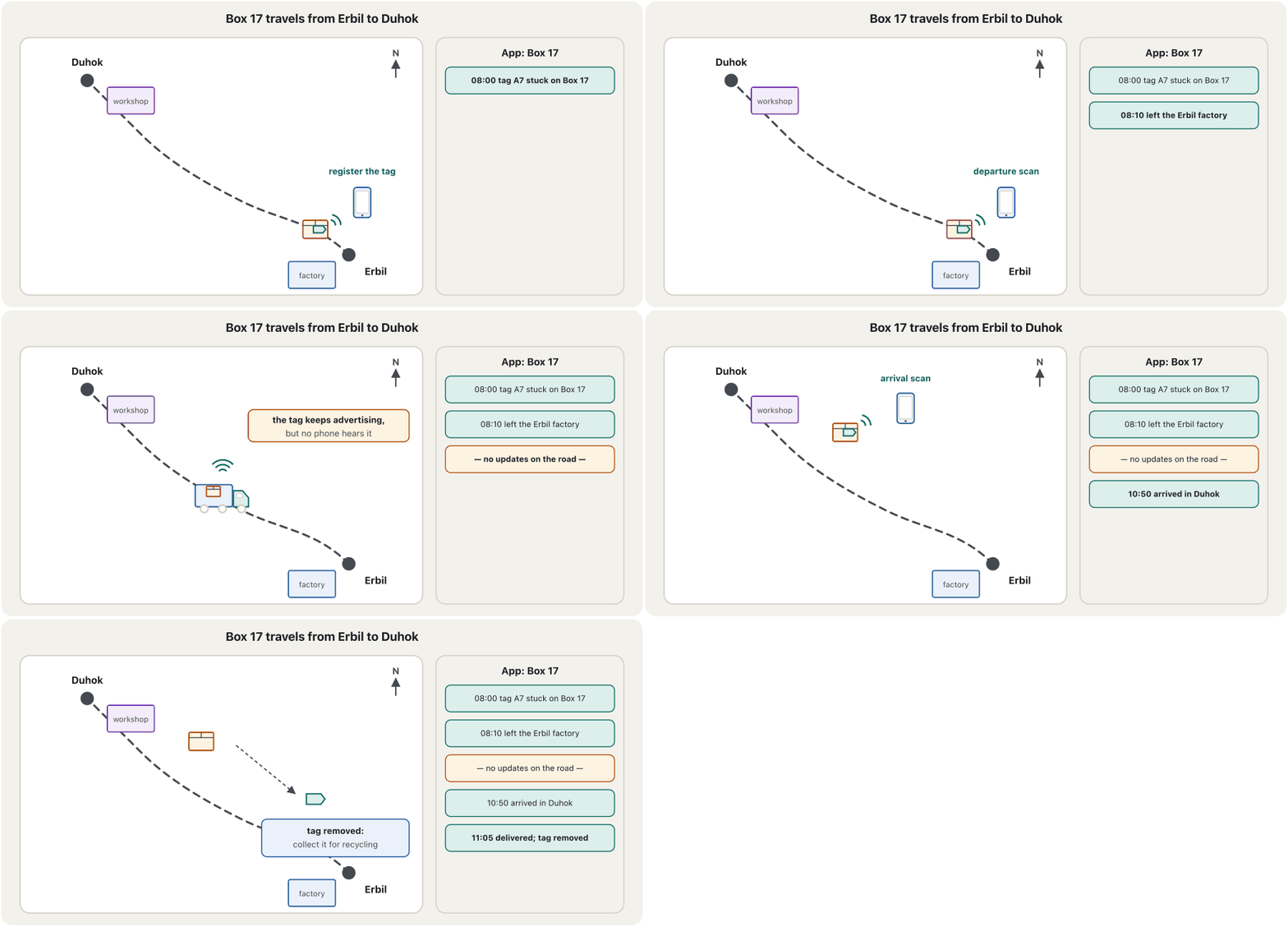
The third use is the disposable asset tracker. Disposable means used once or for a short time; an asset is a valuable thing, such as a box, a package or a tool; a tracker is a small device that tells where something is. Picture a car factory in Erbil that sends spare parts to a workshop in Duhok. Each box gets a cheap BLE tag. Workers follow the boxes with an app on a phone or tablet in the warehouse, and when they leave and arrive. After delivery the tag is thrown away, like a one-use plastic bag.
بەکارهێنانی سێیەم تراکەری یەکجارییە بۆ . یەکجاری واتە بۆ یەک جار یان بۆ ماوەیەکی کورت بەکار دێت؛ کەلوپەل (asset) شتێکی بەنرخە، وەک سندوق، پاکەت یان ئامراز؛ تراکەر ئامێرێکی بچووکە کە دەڵێت شتێک لە کوێیە. کارگەیەکی ئۆتۆمبێل لە هەولێر وێنا بکە کە پارچەی یەدەگ بۆ وەرشەیەک لە دهۆک دەنێرێت. هەر سندوقێک هەرزانی پێوە دەنووسێنرێت. کرێکاران بە لەسەر مۆبایل یان تابلێت لە کۆگاکەدا و لە کاتی ڕۆیشتن و گەیشتندا بەدوای سندوقەکاندا دەچن. دوای گەیاندن تاگەکە فڕێ دەدرێت، وەک کیسەیەکی نایلۆنی یەکجاری.
A BLE tag does not know where it is: it has no GPS. It only advertises its ID to whatever is a few metres away, and the phone that hears it records the place and the time. Each tag also holds a small battery, so collect used tags for recycling instead of the bin.
نازانێت لە کوێیە: نییە. تەنیا ناسنامەکەی بۆ هەر شتێک ڕادەگەیەنێت کە چەند مەترێک لێیەوە دوور بێت و ئەو مۆبایلەی دەیبیستێت شوێن و کاتەکە تۆمار دەکات. هەر تاگێک بچووکیشی تێدایە، بۆیە لە جیاتی تەنەکەی خۆڵ، تاگە بەکارهاتووەکان بۆ دووپاتە بەکارهێنانەوە کۆ بکەرەوە.
Disposable trackers: parts from Erbil to Duhokتراکەری یەکجاری: پارچە لە هەولێرەوە بۆ دهۆک
Follow Box 17بەدوای سندوقی 17دا بڕۆ
Watch Box 17 travel. The phone in the Erbil factory registers the tag, a scan at the door records the departure, and the workshop's phone in Duhok records the arrival. On the road nobody hears the tag, because BLE reaches only metres. For live updates on the way, the truck would need a gateway with a mobile connection: that is cellular IoT.
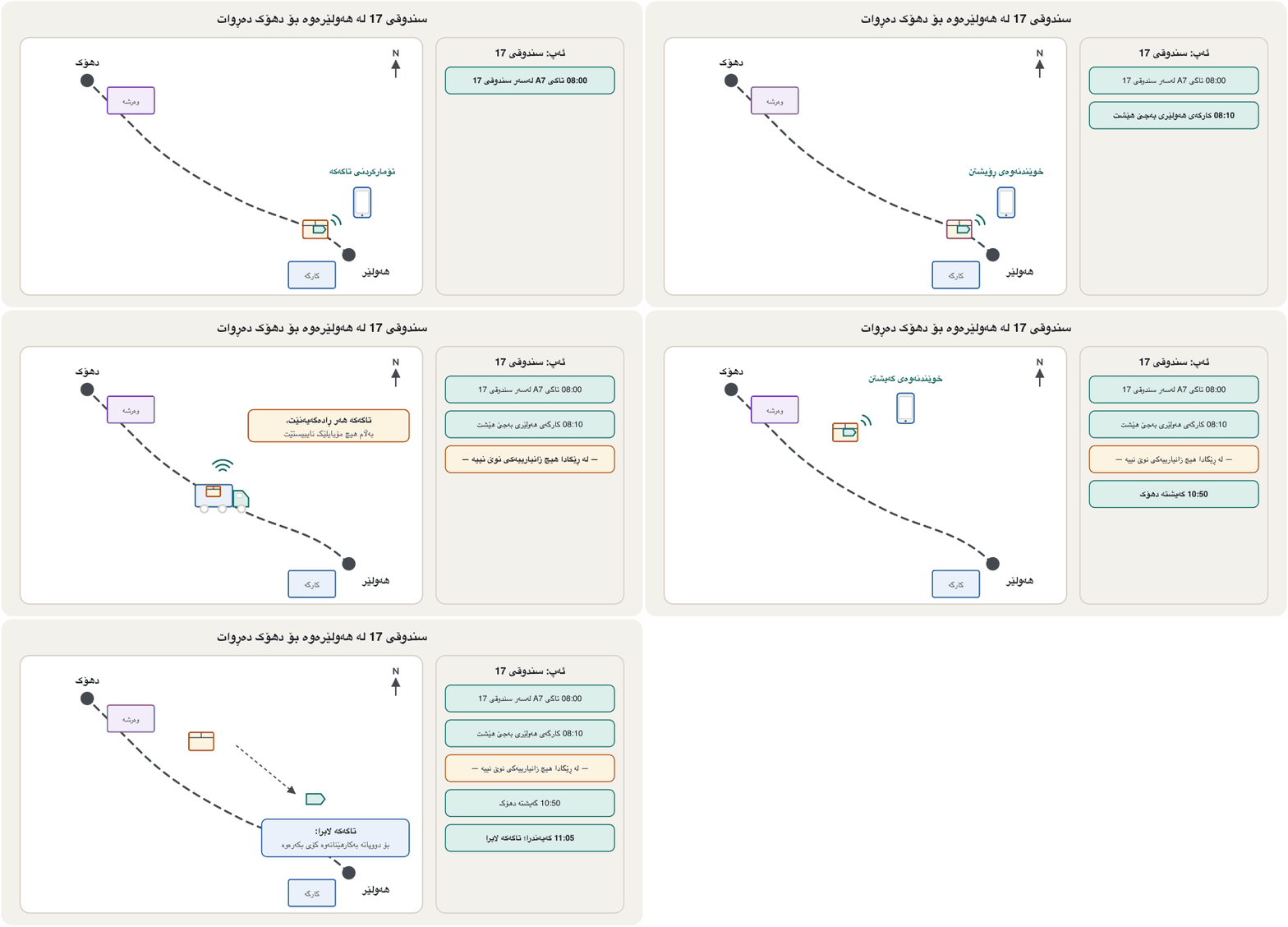
سەیری گەشتی سندوقی 17 بکە. مۆبایلەکەی کارگەی هەولێر تاگەکە تۆمار دەکات، خوێندنەوەیەک لە دەرگاکەدا ڕۆیشتنەکە تۆمار دەکات و مۆبایلەکەی وەرشەکە لە دهۆک گەیشتنەکە تۆمار دەکات. لە ڕێگادا کەس گوێی لە تاگەکە نابێت، چونکە BLE تەنیا چەند مەترێک دەگرێتەوە. بۆ زانیاریی ڕاستەوخۆ لە ڕێگادا، بارهەڵگرەکە پێویستی بە دەبێت کە پەیوەندیی هەبێت: ئەمە پێی دەوترێت IoTـی خانەیی.
Why BLE wins on batteriesبۆچی BLE لە پاتریدا دەیباتەوە
BLE's benefits fit small devices well:
سوودەکانی BLE زۆر لەگەڵ ئامێری بچووک دەگونجێن:
- Low cost — good for disposable tags and for competitive, cheap product lines.
- High data rates — 1 to 2 Mbit/s while sending: high compared with the few kbit/s of LPWAN, though far below Wi-Fi.
- Long battery life — months to years on a coin cell, because the radio is off most of the time.
- تێچووی کەم — باشە بۆ تاگی یەکجاری و بۆ بەرهەمی هەرزان و ڕکابەر.
- بەرز — 1 تا 2 Mbit/s لە کاتی ناردندا: لە چاو چەند kbit/sـی بەرزە، هەرچەندە زۆر لە خوار .
- تەمەنی درێژی — چەند مانگ تا چەند ساڵ بە دوگمەیی، چونکە ڕادیۆکە زۆربەی کاتەکان کوژاوەیە.
BLE's range is usually about 10 m, but it depends on the radio, its power, the antenna and the walls: the Bluetooth SIG gives anything from less than a metre to more than a kilometre, using the long-range (Coded) mode added in Bluetooth 5 in 2016. As of November 2026 the newest version is Bluetooth 7.0 (November 2026), which adds an optional faster mode, High Data Throughput, nearly four times the old top speed (up to 7.5 Mbit/s); products with it are expected from 2027. New features are optional, so a version number alone does not tell you what a product supports.
BLE زۆرجار نزیکەی 10 مەترە، بەڵام پشت بە ڕادیۆکە، هێزەکەی، و دیوارەکان دەبەستێت: Bluetooth SIG لە کەمتر لە مەترێکەوە تا زیاتر لە کیلۆمەترێک دەڵێت، بە دۆخی دووریی زۆر (Coded) کە لە 2016ـدا لە 5ـدا زیاد کرا. تا تشرینی دووەمی 2026 نوێترین وەشان 7.0ـە (تشرینی دووەمی 2026)، کە دۆخێکی خێراتری ئارەزوومەندانە زیاد دەکات بە نزیکەی چوار ئەوەندەی خێرایی پێشوو و چاوەڕێ دەکرێت لە 2027ـەوە لە بەرهەمەکاندا بێت؛ تایبەتمەندییە نوێیەکان ئارەزوومەندانەن، بۆیە تەنیا ژمارەی وەشان پێت ناڵێت بەرهەمێک پشتگیریی چی دەکات.
Why BLE wins on batteriesبۆچی BLE لە پاتریدا دەیباتەوە
Estimate battery life yourselfتەمەنی پاتری خۆت مەزەندە بکە
A device is either awake, with a high current, or asleep, with a tiny one. Its average current decides how long the battery lasts:
ئامێرێک یان بەئاگایە و زۆرە، یان خەوتووە و زۆر کەمە. تێکڕای دیاری دەکات چەند دەمێنێت:
is the average current, one whole cycle (), the battery capacity in mAh and the battery life in hours.
تێکڕای ، یەک سووڕی تەواوە ()، توانای بە mAh و تەمەنی بە کاتژمێر.
Awake: about 7 mA for 3 ms (0.003 s) once every second. Asleep: 0.002 mA for the rest of the second.
بەئاگا: نزیکەی 7 mA بۆ 3 ms (0.003 s) چرکەی جارێک. خەوتوو: 0.002 mA بۆ باقیی چرکەکە.
Average current:
تێکڕای :
Battery life with a coin cell of about 220 mAh: about 9,600 hours, a little over a year.
تەمەنی بە دوگمەیی نزیکەی 220 mAh: نزیکەی 9,600 کاتژمێر، کەمێک زیاتر لە ساڵێک.
The bars in the figure come from the same method. Wi-Fi waking for 2 s at 150 mA every 10 minutes gives , so a 2,500 mAh battery lasts about 4,900 hours, around 7 months.
شریتەکانی وێنەکە بە هەمان ڕێگا دەرهێنراون. کە هەر 10 خولەک بۆ 2 s بە 150 mA بەئاگا دێت تێکڕای دەدات، بۆیە 2,500 mAh نزیکەی 4,900 کاتژمێر دەمێنێت، نزیکەی 7 مانگ.
Wi-Fi or BLE?وایفای یان BLE؟
Two questions decide most cases. Is the device plugged in, or does it move a lot of data such as video? Choose Wi-Fi. Does it run on a small battery, send a little data now and then, and have a phone or hub within a few tens of metres? Choose BLE. Many products carry both radios: BLE to set them up from a phone, Wi-Fi to do the work — many smart plugs and Matter devices are set up this way. If neither fits, the device is too far from phones and routers: see cellular IoT and LPWAN. The full trade-off between range, speed and power is in Range, Speed and Power.
دوو پرسیار زۆربەی حاڵەتەکان یەکلا دەکەنەوە. ئایا ئامێرەکە بە کارەباوە بەستراوە، یان زۆر وەک ڤیدیۆ دەگوازێتەوە؟ هەڵبژێرە. ئایا بە بچووک کار دەکات، کەم جار بە جار دەنێرێت و مۆبایلێک یان هەبێک لە دووریی چەند دە مەترێکدا هەیە؟ BLE هەڵبژێرە. زۆر بەرهەم هەردوو ڕادیۆکەیان تێدایە: BLE بۆ ڕێکخستنیان لە مۆبایلەوە، بۆ کارکردن — زۆر و ئامێری بەم شێوەیە ڕێک دەخرێن. ئەگەر هیچیان نەگونجا، ئامێرەکە لە مۆبایل و زۆر دوورە: بڕوانە IoTـی خانەیی و ڕایەڵەی فراوانی کەموزە. هاوسەنگیی تەواوی نێوان ، خێرایی و وزە لە وانەی هەڵبژاردنی تەکنەلۆجیایەکی بێتەلدایە.
Common mistakesهەڵە باوەکان
- 'BLE is just slower Bluetooth.' It is a different radio, with its own channels and roles, made for short bursts. Classic Bluetooth still carries most audio.
- 'Bluetooth always reaches 10 m.' 10 m is typical indoors. Range depends on the radio, its power, the antenna and the walls: from under a metre to over a kilometre.
- 'A BLE tracker knows where it is.' A plain BLE tag has no GPS; the phone or gateway that hears it supplies the place and the time.
- 'The Wi-Fi logo means the device is secure.' It means the device passed interoperability tests and supports WPA3. The maker's app, cloud and updates are not covered.
- 'A Wi-Fi 6 router makes all my devices save battery.' Features such as target wake time work only when both ends support Wi-Fi 6.
- 'Bluetooth Smart is a different technology from BLE.' It is an old marketing name for BLE.
- 'A coin cell can run a Wi-Fi sensor.' Wi-Fi works in bursts of 100–240 mA; a small coin cell is built for tiny currents. Use mains power or a bigger battery, and sleep between messages.
- «BLE تەنیا هێواشترە.» ڕادیۆیەکی جیاوازە، بە کەناڵ و ڕۆڵی خۆیەوە، بۆ ناردنی کورت دروست کراوە. کلاسیک هێشتا زۆربەی دەنگ دەگوازێتەوە.
- « هەمیشە 10 مەتر دەگرێتەوە.» 10 مەتر لە ناو بینادا باوە. پشت بە ڕادیۆکە، هێزەکەی، و دیوارەکان دەبەستێت: لە کەمتر لە مەترێکەوە تا زیاتر لە کیلۆمەترێک.
- «تراکەری BLE دەزانێت لە کوێیە.» ئاسایی نییە؛ ئەو مۆبایل یان دەیبیستێت شوێن و کاتەکە دەدات.
- «لۆگۆی واتە ئامێرەکە پارێزراوە.» واتە ئامێرەکە تاقیکردنەوەکانی دەرچووە و پشتگیریی WPA3 دەکات. ، هەور و نوێکردنەوەکانی دروستکەرەکە ناگرێتەوە.
- « 6 وا دەکات هەموو ئامێرەکانم بپارێزن.» تایبەتمەندییەکانی وەک تەنیا کاتێک کار دەکەن کە هەردوو لا پشتگیریی 6 بکەن.
- «Bluetooth Smart تەکنەلۆجیایەکی جیاوازە لە BLE.» ناوێکی کۆنی بازرگانیی BLEـیە.
- « دوگمەیی دەتوانێت کار پێ بکات.» لە کاتی ناردندا بۆ ماوەیەکی کورت 100–240 mA دەکێشێت؛ دوگمەیی بچووک بۆ زۆر کەم دروست کراوە. کارەبای ماڵ یان گەورەتر بەکار بهێنە و لە نێوان پەیامەکاندا بخەوێنە.
Exercisesڕاهێنانەکان
Choose Wi-Fi or BLE for each device and give one reason: (a) a doorbell camera on mains power; (b) a heart-rate chest strap while running, with the phone in a pocket; (c) a handheld barcode scanner in a warehouse; (d) a tag on a museum painting that a visitor's phone app reads nearby.
بۆ هەر ئامێرێک یان BLE هەڵبژێرە و هۆکارێک بڵێ: (a) کامێرای زەنگی دەرگا بە کارەبای ماڵ؛ (b) پشتێنی دڵلێدانپێوی سنگ لە کاتی ڕاکردندا، کە مۆبایلەکە لە گیرفاندایە؛ (c) دەستی لە کۆگایەکدا؛ (d) تاگێک لەسەر تابلۆیەکی مۆزەخانە کە مۆبایلی سەردانکەرێک لە نزیکەوە دەیخوێنێتەوە.
Show answerوەڵامەکە پیشان بدە
- (a) Wi-Fi: video is a lot of data and the camera is plugged in.
- (b) BLE: a few bytes a second, a small battery and the phone is less than a metre away.
- (c) Wi-Fi: the warehouse already has access points everywhere and each scan must reach the stock system at once.
- (d) BLE: a beacon that only advertises; the visitor's phone hears it within a few metres.
- (a) : ڤیدیۆ زۆرە و کامێراکە بە کارەباوە بەستراوە.
- (b) BLE: چرکەی چەند ، بچووک و مۆبایلەکە کەمتر لە مەترێک دوورە.
- (c) : کۆگاکە پێشتر لە هەموو شوێنێک هەیە و هەر خوێندنەوەیەک دەبێت دەستبەجێ بگاتە سیستەمی کۆگا.
- (d) BLE: بیکنێک کە تەنیا ڕادەگەیەنێت؛ مۆبایلی سەردانکەر لە دووریی چەند مەترێکدا دەیبیستێت.
A BLE sensor wakes every 10 s for 4 ms at 6 mA and sleeps at 0.003 mA. Its coin cell holds 220 mAh. Find the average current and the battery life.
BLE هەر 10 s جارێک بۆ 4 ms بە 6 mA بەئاگا دێت و بە 0.003 mA دەخەوێت. پاترییە دوگمەییەکەی 220 mAh هەڵدەگرێت. تێکڕای و تەمەنی بدۆزەرەوە.
Hintئاماژە
Use with .
بەکار بهێنە کە .
Show answerوەڵامەکە پیشان بدە
About 5.4 µA on average, so the coin cell lasts roughly four and a half years by the numbers.
نزیکەی 5.4 µA بە تێکڕایی، بۆیە بەپێی ژمارەکان پاترییە دوگمەییەکە نزیکەی چوار ساڵ و نیو دەمێنێت.
The Erbil factory wants to see where Box 17 is during the trip to Duhok, not only at the start and the end. Explain why the BLE tag alone cannot do it, and suggest two ways to fix it.
کارگەکەی هەولێر دەیەوێت بزانێت سندوقی 17 لە کاتی گەشتەکەیدا بۆ دهۆک لە کوێیە، نەک تەنیا لە سەرەتا و کۆتاییدا. ڕوون بکەرەوە بۆچی بە تەنیا ناتوانێت ئەمە بکات و دوو ڕێگە بۆ چارەسەرکردنی پێشنیار بکە.
Show answerوەڵامەکە پیشان بدە
The tag only advertises to devices a few metres away and has no GPS, so it is heard only where a phone or gateway is near.
تاگەکە تەنیا بۆ ئامێرەکانی چەند مەتر دوورتر ڕادەگەیەنێت و نییە، بۆیە تەنیا لەو شوێنانە دەبیسترێت کە مۆبایل یان لێ نزیکە.
- Put a gateway in the truck that hears the tags and sends their IDs with the truck's GPS position over the mobile network.
- Or let the driver's phone run the app as a moving gateway; or use a cellular or LPWAN tracker with GPS on the pallet.
- لەناو بارهەڵگرەکەدا دابنێ کە گوێی لە تاگەکان بێت و ناسنامەکانیان لەگەڵ شوێنی بارهەڵگرەکە بە بنێرێت.
- یان با مۆبایلی شۆفێرەکە وەک جووڵاو کار پێ بکات؛ یان تراکەرێکی خانەیی یان بە لەسەر پالێتەکە دابنێ.
Karwan finds two cheap cameras. One is Wi-Fi CERTIFIED; the other only says 'works with Wi-Fi'. What does the certified one guarantee, and what must Karwan still check for both?
کاروان دوو کامێرای هەرزان دەدۆزێتەوە. یەکێکیان Wi-Fi CERTIFIEDـە؛ ئەوی تر تەنیا دەڵێت «لەگەڵ کار دەکات». کامێرا پەسەندکراوەکە چ گەرەنتییەک دەدات و کاروان هێشتا دەبێت چی بۆ هەردووکیان بپشکنێت؟
Show answerوەڵامەکە پیشان بدە
The certified camera was tested by an independent lab to work with other certified Wi-Fi devices and supports WPA3. For both cameras Karwan must still check that the maker sends security updates, how the app and cloud protect the video, and whether the default password can be changed.
کامێرا پەسەندکراوەکە لەلایەن تاقیگەیەکی سەربەخۆوە تاقی کراوەتەوە کە لەگەڵ ئامێرە پەسەندکراوەکانی تری کار دەکات و پشتگیریی WPA3 دەکات. بۆ هەردوو کامێراکە کاروان هێشتا دەبێت بپشکنێت کە دروستکەرەکە نوێکردنەوەی دەنێرێت، و هەورەکە چۆن ڤیدیۆکە دەپارێزن و ئایا وشەی نهێنیی بنەڕەتی دەگۆڕدرێت.
Summaryپوختە
- Wi-Fi is IEEE 802.11 (b, g, n, ac, ax, be); most IoT boards use 802.11n (Wi-Fi 4) at 2.4 GHz, and new chips bring Wi-Fi 6.
- Interoperability is Wi-Fi's foundation; Wi-Fi Alliance certification tests it and requires WPA3, but not the maker's app or cloud.
- Wi-Fi 6/6E serve crowds of devices (OFDMA) and let sensors sleep (target wake time); Wi-Fi radios still draw 100–240 mA, so most Wi-Fi IoT devices are plugged in.
- Bluetooth Classic streams audio; BLE (since 4.0, 2010) sends small bursts and sleeps, running months to years on a coin cell.
- BLE peripherals advertise; a central (phone or gateway) scans, connects and reads their characteristics; beacons only advertise.
- Industrial BLE: light control, proximity monitors and disposable asset trackers — a tag is seen only where a phone or gateway is near.
- Battery life = capacity ÷ average current: sleeping most of the time is what saves energy.
- بریتییە لە IEEE 802.11 (b، g، n، ac، ax، be)؛ زۆربەی بۆردەکانی IoT 802.11n ( 4) لەسەر 2.4 GHz بەکار دەهێنن و 6 دەهێنن.
- بنەمای ؛ پەسەندکردنی Wi-Fi Alliance تاقیی دەکاتەوە و WPA3 بە پێویست دەزانێت، بەڵام و هەوری دروستکەرەکە ناگرێتەوە.
- 6/6E خزمەتی قەرەباڵغیی ئامێرەکان دەکەن (OFDMA) و ڕێگە دەدەن بخەون ()؛ ڕادیۆکانی هێشتا 100–240 mA دەکێشن، بۆیە زۆربەی ئامێرەکانی IoTـی بە کارەباوە بەستراون.
- کلاسیک دەنگ دەگوازێتەوە؛ BLE (لە 4.0، 2010ـەوە) ناردنی کورت دەکات و دەخەوێت، چەند مانگ تا چەند ساڵ بە دوگمەیی کار دەکات.
- BLE ڕادەگەیەنن؛ (مۆبایل یان ) دەپشکنێت، پەیوەندی دەکات و تایبەتمەندییەکانیان دەخوێنێتەوە؛ بیکنەکان تەنیا ڕادەگەیەنن.
- BLEـی پیشەسازی: کۆنترۆڵی ڕووناکی، چاودێریی نزیکی و تراکەری یەکجاری — تاگێک تەنیا لەو شوێنانە دەبینرێت کە مۆبایل یان لێ نزیکە.
- تەمەنی = توانا ÷ تێکڕای : خەوتنی زۆربەی کاتەکان ئەوەیە کە وزە دەپارێزێت.
Lesson complete!وانەکە تەواو بوو!
Well done. Review the key terms, then go on to the next lesson.دەستخۆش. سەیرێکی زاراوە سەرەکییەکان بکەرەوە، پاشان بڕۆ بۆ وانەی داهاتوو.
Key termsزاراوە سەرەکییەکان
RFID, Zigbee and Other Mesh ProtocolsRFID، Zigbee و پرۆتۆکۆڵەکانی تری ڕایەڵەی چنراو
Related lecturesوانە پەیوەندیدارەکان
- RFID, Zigbee and Other Mesh ProtocolsRFID، Zigbee و پرۆتۆکۆڵەکانی تری ڕایەڵەی چنراو
- Cellular IoT: 4G, 5G, LTE-M and NB-IoTIoTـی خانەیی: 4G، 5G، LTE-M و NB-IoT
- From Smoke Signals to Device-to-Cloudلە نیشانەی دووکەڵەوە تا پەیوەندیی ئامێر بۆ هەور
- Point-to-Point, Star and Mesh Networksپەیوەندیی خاڵ بۆ خاڵ، ڕایەڵەی ئەستێرەیی و ڕایەڵەی چنراو
- Who Writes the Rules? IoT Standardsکێ یاساکان دەنووسێت؟ ستانداردەکانی IoT
- Layers: Organising an IoT Systemچینەکان: ڕێکخستنی سیستەمێکی IoT
- Low-Power Wide-Area Networks (LPWAN)ڕایەڵە فراوانە کەموزەکان
- Wireless LANs: Wi-Fi Standards, Access Points and Securityڕایەڵەی بێتەلی ناوچەیی: ستانداردەکانی وایفای، خاڵەکانی دەستڕاگەیشتن و ئاسایش
- Cables and Wireless: Transmission Mediaکێبڵ و بێتەل: هۆکارەکانی گواستنەوە
References and further readingسەرچاوەکان و خوێندنەوەی زیاتر
- IoT Analytics (28 October 2025): State of IoT 2025 — connected devices and connectivity shares
- Wi-Fi Alliance: Wi-Fi CERTIFIED (certification and interoperability)
- Wi-Fi Alliance: Wi-Fi CERTIFIED 6 (OFDMA, target wake time, IoT)
- Wi-Fi Alliance: Security (WPA3 is mandatory for Wi-Fi CERTIFIED devices)
- Wi-Fi Alliance: Wi-Fi CERTIFIED HaLow
- Espressif: ESP32 Series Datasheet v5.3 (Table 4-2 power modes, Table 5-4 RF current)
- Espressif: ESP32-S3 (2.4 GHz 802.11 b/g/n, Bluetooth 5 LE)
- Espressif: ESP32-C6 (Wi-Fi 6 with target wake time, Bluetooth LE, 802.15.4)
- Arduino Docs: UNO R4 WiFi (ESP32-S3 radio module)
- Nordic Semiconductor: nRF52832 product brief (radio and system currents)
- Bluetooth SIG: Bluetooth technology overview (Classic and LE)
- Bluetooth SIG: Understanding Bluetooth range
- Bluetooth SIG: The Bluetooth Low Energy Primer (roles, advertising, GATT)
- Bluetooth SIG: Core Specification (7.0 is the latest, November 2026)
- Wikipedia: Bluetooth (version history: 4.0 in 2010, 5 in 2016, 6.0 in 2024, 6.3 in May 2026, 7.0 in November 2026)
- audioXpress: Bluetooth SIG adopts High Data Throughput (4 November 2026)
This lecture is a first edition. The Kurdish text and terminology are waiting for review by Kurdish IT teachers.ئەم وانەیە چاپی یەکەمە. دەقە کوردییەکە و زاراوەکانی چاوەڕێی پێداچوونەوەی مامۆستایانی کوردی بواری IT ن.