Chapterبەش 3 · Lectureوانە 3.3
Microprocessor or Microcontroller?مایکرۆپرۆسێسەر یان مایکرۆکۆنترۆڵەر؟
A microprocessor is a CPU on one chip that needs memory and input/output chips around it; a microcontroller puts a whole small computer on one chip. Look inside both, from the Intel 4004 to today's 24-core processors and the ATmega328P; learn why embedded systems choose microcontrollers, why they are programmed in C and C++, how they run with a main loop and interrupts or a small RTOS, and how they get firmware over the air; then compare the chips IoT builders use in 2026, from the Arduino UNO to the ESP32, the Raspberry Pi Pico 2 and the Raspberry Pi 5.
مایکرۆپرۆسێسەر لەسەر یەک کە پێویستی بە و / هەیە لە دەوریدا؛ بچووکی تەواو دەخاتە سەر یەک . سەیری ناوەوەی هەردووکیان بکە، لە Intel 4004ـەوە تا پرۆسێسەرە 24 ناوکییەکانی ئەمڕۆ و ATmega328P؛ فێر ببە بۆچی هەڵدەبژێرن، بۆچی بە C و C++ بۆ دەنووسرێت، چۆن بە سەرەکی و یان بچووک کار دەکەن و چۆن بە ڕادیۆ وەردەگرن؛ پاشان ئەو بەراورد بکە کە دروستکەرانی IoT لە 2026دا بەکاریان دەهێنن، لە Arduino UNOـەوە تا ESP32، Raspberry Pi Pico 2 و Raspberry Pi 5.
What you will learnچی فێر دەبیت
- Explain what a microprocessor is and why it needs memory and input/output chips around it.
- Name the parts inside a microcontroller and compare it with a microprocessor point by point.
- Explain how constraints lead embedded designers to microcontrollers, to C and C++, and to no operating system or a small RTOS.
- Describe a foreground/background system and how a safe over-the-air firmware update works.
- Compare the Arduino UNO R3 and R4, the ESP32 family, the Raspberry Pi Pico 2 and the Raspberry Pi 5, and explain why the Pi 5 is not a microcontroller.
- ڕوون بکەیتەوە مایکرۆپرۆسێسەر چییە و بۆچی پێویستی بە و / هەیە لە دەوریدا.
- بەشەکانی ناو ناو ببەیت و خاڵ بە خاڵ لەگەڵ مایکرۆپرۆسێسەر بەراوردی بکەیت.
- ڕوون بکەیتەوە چۆن سنوورەکان دیزاینەرانی دەبەن بەرەو ، C و C++ و بێ یان بچووک.
- سیستەمی پێشەوە و پشتەوە وەسف بکەیت و ڕوون بکەیتەوە چۆن بە سەلامەتی کار دەکات.
- Arduino UNO R3 و R4، خێزانی ESP32، Raspberry Pi Pico 2 و Raspberry Pi 5 بەراورد بکەیت و ڕوون بکەیتەوە بۆچی Raspberry Pi 5 نییە.
One chip that thinks, or a whole computer on one chip?چیپێک کە بیر دەکاتەوە، یان کۆمپیوتەرێکی تەواو لەسەر یەک چیپ؟
Open a laptop and you find one processor chip with helpers all around it: memory, a storage drive, a Wi-Fi chip and more. Open a TV remote and you find one small chip and almost nothing else. Both chips run programs. The laptop's is a microprocessor; the remote's is a microcontroller.
بکەرەوە: پرۆسێسەر دەبینیت و لە دەوریدا چەندین یاریدەدەر: ، ، و زیاتر. ڕیمۆتێکی تیڤی بکەرەوە: تەنیا بچووک دەبینیت و نزیکەی هیچی تر. هەردوو جێبەجێ دەکەن. هی مایکرۆپرۆسێسەرە؛ هی ڕیمۆتەکە .
This lesson opens both. You will see why almost every embedded system uses a microcontroller, how microcontrollers are programmed, how they run without Windows or Android, how they receive new firmware, and which chips IoT builders use in 2026. The short version is in Microcontrollers; here we go deeper.
ئەم وانەیە هەردووکیان دەکاتەوە. دەبینیت بۆچی نزیکەی هەموو بەکار دەهێنێت، چۆن بۆ دەنووسرێت، چۆن بێ Windows یان Android کار دەکەن، چۆن نوێ وەردەگرن و دروستکەرانی IoT لە 2026دا کام بەکار دەهێنن. کورتەکەی لە مایکرۆکۆنترۆڵەرەکان هەیە؛ لێرەدا قووڵتر دەڕۆین.
The microprocessor: a CPU on one chipمایکرۆپرۆسێسەر: CPU لەسەر یەک چیپ
A microprocessor is a CPU built on a single chip. Each processor core inside it does three things again and again: it fetches an instruction from memory, decodes it and executes it (The fetch–decode–execute cycle). Early microprocessors had one core; today's have many, so a better definition is: one or more processor cores on one chip.
مایکرۆپرۆسێسەر کە لەسەر یەک دروست کراوە. هەر لەناویدا سێ کار دووپاتە و دووپاتە دەکات: لە دەهێنێت، شیی دەکاتەوە و جێبەجێی دەکات (سووڕی ڕێکارنامە). یەکەم مایکرۆپرۆسێسەرەکان یەک ناوکیان هەبوو؛ ئەوانەی ئەمڕۆ چەندین ناوکیان هەیە، بۆیە پێناسەیەکی باشتر ئەمەیە: یەک یان چەند لەسەر یەک .
A microprocessor can do general-purpose computing, but it cannot work alone: the program and the data live in memory chips outside it, and keyboards, screens and networks reach it through other chips on the board. The parts inside — the control unit, the registers and the ALU — are explained in Inside the CPU.
مایکرۆپرۆسێسەر دەتوانێت کاری ژمێرکاریی گشتی بکات، بەڵام بە تەنیا کار ناکات: و لە دەرەوەیدا دەژین و ، شاشە و لە ڕێی ترەوە لەسەر بۆردەکە پێی دەگەن. بەشەکانی ناوەوەی — ، و ALU — لە ناو CPU ڕوون کراونەتەوە.
The microprocessor: a CPU on one chipمایکرۆپرۆسێسەر: CPU لەسەر یەک چیپ
From 4 bits to 24 coresلە 4 بیتەوە تا 24 ناوک
The Intel 4004, sold from November 1971, was the first microprocessor sold as a part. It was 4-bit, had about 2,300 transistors and ran at up to 740 kHz — roughly 92,000 instructions a second. It was made for a printing calculator, and even it needed helpers: a 4001 ROM chip held the program, a 4002 RAM chip held the data and a 4003 chip scanned the keyboard and drove the printer.
Intel 4004، کە لە نۆڤەمبەری 1971ـەوە فرۆشرا، یەکەم مایکرۆپرۆسێسەر بوو کە وەک پارچەیەک بفرۆشرێت. 4 بوو، نزیکەی 2,300 تێدابوو و تا 740 kHz کاری دەکرد — نزیکەی 92,000 لە چرکەیەکدا. بۆ دروست کرابوو کە ئەنجامەکانی چاپ دەکرد. تەنانەت ئەویش پێویستی بە یاریدەدەر بوو: 4001 هەڵدەگرت، 4002 هەڵدەگرت و 4003 دەپشکنی و کار پێ دەکرد.
Fifty years later the idea is the same, only much bigger. Today's chips still need RAM modules, an SSD and a motherboard — and a cooler, because they turn 100 to 250 watts into heat. The newest numbers are in Cores.
پەنجا ساڵ دواتر بیرۆکەکە هەمان شتە، تەنیا زۆر گەورەتر. ئەمڕۆ هێشتا پێویستیان بە ، SSD و هەیە — هەروەها ساردکەرەوە، چونکە 100 تا 250 وات دەکەن بە گەرمی. نوێترین ژمارەکان لە ناوکەکان هەن.
| Chip | Bits | Coresناوک | Clock | Needs around itئەوەی لە دەوریدا پێویستیەتی |
|---|---|---|---|---|
| Intel 4004 (1971) | 4 | 1 | 740 kHz | ROM, RAM and I/O chips (4001, 4002, 4003) ROM، RAM و I/O (4001، 4002، 4003) |
| Intel Core i9-13900K (2022) | 64 | 24 (8 performance, 16 efficient)24 (8 خێرا، 16 کەمخەرج) | up to 5.8 GHzتا 5.8 GHz | RAM, SSD, motherboard, cooler; 125 W, up to 253 WRAM، SSD، ، ساردکەرەوە؛ 125 W، تا 253 W |
| AMD Ryzen 5 7600X (2022) | 64 | 6 | up to 5.3 GHzتا 5.3 GHz | RAM, SSD, motherboard, cooler; 105 WRAM، SSD، ، ساردکەرەوە؛ 105 W |
The microcontroller: a whole computer on one chipمایکرۆکۆنترۆڵەر: کۆمپیوتەرێکی تەواو لەسەر یەک چیپ
A microcontroller (MCU) puts a complete small computer on one chip. Next to its processor core — usually one, though some popular IoT chips have two — the same piece of silicon holds memory blocks (flash for the program, SRAM for the data, often a little EEPROM for settings), digital and analog inputs and outputs, and basic peripherals such as timers and serial ports, all joined by a system bus. The ATmega328P of the Arduino UNO R3 is a classic example:
(MCU) بچووکی تەواو دەخاتە سەر یەک . لە تەنیشت — زۆرجار یەک دانە، هەرچەندە هەندێک بەناوبانگی IoT دوویان هەیە — هەمان پارچە سیلیکۆن بلۆکەکانی ( بۆ ، بۆ و زۆرجار کەمێک بۆ ڕێکخستنەکان)، و دیجیتاڵ و و سەرەتایی وەک و دەرچەکانی لەخۆ دەگرێت، هەموویان بە پێکەوە بەستراون. ATmega328Pـی Arduino UNO R3 نموونەیەکی ناسراوە:
Microcontrollers are made for control: switching things on and off, reading sensors, moving motors and showing information on a small screen. You find them behind the buttons and display of a microwave oven, in a TV remote, in a car's engine control (A petrol engine's control unit) and running a washing machine's programs. How the ADC turns a voltage into a number comes in Reading Analog Signals.
بۆ کۆنترۆڵکردن دروست کراون: هەڵکردن و کوژاندنەوەی شتەکان، خوێندنەوەی ، جووڵاندنی و پیشاندانی زانیاری لەسەر شاشەیەکی بچووک. لە پشت دوگمە و شاشەی مایکرۆوەیڤ، لەناو ڕیمۆتی تیڤی، لە کۆنترۆڵی بزوێنەری ئۆتۆمبێل (یەکەی کۆنترۆڵی بزوێنەری بەنزین) و لە بەڕێوەبردنی بەرنامەکانی جلشۆردا دەیاندۆزیتەوە. ئەوەی ADC چۆن دەکات بە ژمارە، لە خوێندنەوەی سیگناڵەکانی ئەنالۆگ فێر دەبیت.
Microprocessor and microcontroller side by sideمایکرۆپرۆسێسەر و مایکرۆکۆنترۆڵەر لە تەنیشت یەکتر
| Pointخاڵ | Microprocessorمایکرۆپرۆسێسەر | Microcontroller |
|---|---|---|
| On the chipلەسەر | one or more fast cores, with cacheیەک یان چەند ناوکێکی خێرا، لەگەڵ | a core with memory, inputs, outputs and timersناوکێک لەگەڵ ، ، و |
| Memory | outside: gigabytes of RAM and an SSDلە دەرەوە: چەند گیگابایتێک RAM و SSD | inside: kilobytes to a few megabytesلەناوەوە: کیلۆبایت تا چەند مێگابایتێک |
| Inputs and outputs و | through other chips on the boardلە ڕێی ترەوە لەسەر بۆردەکە | pins on the chip itself, some with an ADC or PWMپین لەسەر خودی ، هەندێکیان بە ADC یان PWM |
| Speedخێرایی | gigahertzگیگاهێرتز | megahertz (16 to 240 MHz in this lesson)مێگاهێرتز (لەم وانەیەدا 16 تا 240 MHz) |
| Software | a full operating system and many programs تەواو و چەندین | one program, with no OS or a small RTOSیەک ، بێ یان لەگەڵ بچووک |
| Powerوزە | tens to hundreds of wattsدەیان تا سەدان وات | milliwatts running, microwatts or less asleepمیلیوات لە کاتی کارکردندا، مایکرۆوات یان کەمتر لە |
| Priceنرخ | hundreds of dollarsسەدان دۆلار | cents to a few dollarsچەند سەنتێک تا چەند دۆلارێک |
| Typical usesبەکارهێنانی باو | PCs, laptops, servers (phones use SoCs)PC، ، (مۆبایل بەکار دەهێنێت) | appliances, toys, sensors, car parts, IoT devicesئامێرەکانی ماڵ، یاری، ، پارچەی ئۆتۆمبێل، ئامێرەکانی IoT |
Constraints choose the chipسنوورەکان چیپەکە هەڵدەبژێرن
Embedded systems live with tight limits on cost, size and weight, power and energy, and their environment (The four limits on every embedded system). These limits shape three choices: the chip, the programming language and the operating system.
لەگەڵ سنووری توند لەسەر تێچوو، قەبارە و کێش، و و ژینگەکەیان دەژین (چوار سنوورەکەی هەموو سیستەمێکی چەسپێنراو). ئەم سنوورانە سێ هەڵبژاردن دیاری دەکەن: ، و .
The first choice is clear: microcontrollers are used rather than microprocessors. A microcontroller already includes the peripherals that talk to other devices, so it can react to a button or a sensor quickly and efficiently. And because its RAM and ROM — today usually flash — are on the chip, no separate memory chips are needed: the circuit board becomes smaller, simpler and cheaper.
هەڵبژاردنی یەکەم ڕوونە: لە جیاتی مایکرۆپرۆسێسەر بەکار دەهێنرێت. خۆی تێدایە کە قسە لەگەڵ ئامێرەکانی تر دەکەن، بۆیە دەتوانێت بە خێرایی و بە کارایی کاردانەوەی هەبێت بۆ یان . هەروەها چونکە و — کە ئەمڕۆ زۆرجار — لەسەر ، پێویست بە جیا ناکات: بۆردەکە بچووکتر، سادەتر و هەرزانتر دەبێت.
C and C++, and a little assemblyC و C++، لەگەڵ کەمێک زمانی ئەسێمبلی
The second choice is the language. Microcontrollers are programmed mostly in C, and today also in C++ — Arduino sketches are C++. A compiler turns the program into the chip's own machine code, so the code is small and fast, and a cheaper microcontroller with less memory is enough. A smartwatch programmed in C needs less memory and power than if it were written in Java, which first becomes bytecode and needs a virtual machine running beside the program (Java: compile with javac, run on the JVM).
هەڵبژاردنی دووەم زمانەکەیە. زۆربەیان بە C و ئەمڕۆ هەروەها بە C++ بۆ دەنووسرێت — Arduino بە C++ دەنووسرێن. دەکات بە خودی ، بۆیە کۆدەکە بچووک و خێرایە و هەرزانتر بە کەمترەوە بەسە. کاتژمێرێکی هۆشمەند کە بە C نووسرابێت و وزەی کەمتری پێویستە وەک لەوەی بە Java بنووسرێت، کە سەرەتا دەبێتە و پێویستی بە هەیە لە تەنیشت کار بکات (Java: کۆمپایلکردن بە javac، جێبەجێکردن لەسەر JVM).
Where every microsecond or byte counts, engineers write a few performance-critical parts in assembly language: it is even lower-level than C, one line per machine instruction, and it gives full control (Low-level and high-level languages). As of 2026, MicroPython also runs on larger microcontrollers such as the Pico 2 and the ESP32 family; Java is rare on microcontrollers.
لەو شوێنانەی هەر مایکرۆچرکەیەک یان گرنگە، ئەندازیاران چەند بەشێکی هەستیار بە دەنووسن: لە C نزمترە، هەر دێڕێک یەک ئامێرە و کۆنترۆڵی تەواو دەدات (زمانە ئاستنزمەکان و زمانە ئاستبەرزەکان). تا 2026، هەروەها MicroPython لەسەر گەورەتری وەک Pico 2 و خێزانی ESP32 کار دەکات؛ Java لەسەر دەگمەنە.
No operating system: a main loop and interruptsبێ سیستەمی وەگەڕخەر: خولی سەرەکی و پچڕاندنەکان
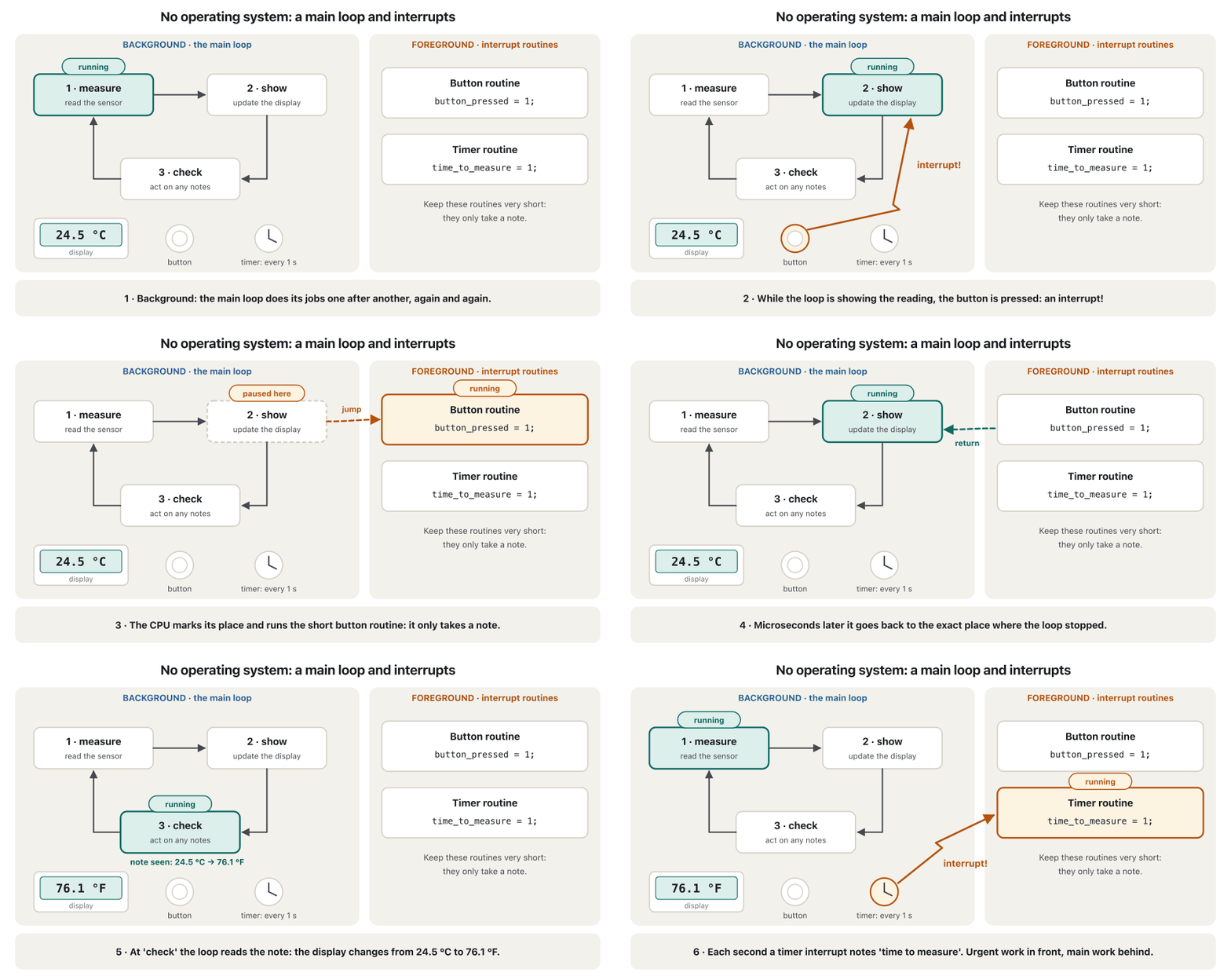
The third choice is the operating system — usually none. A digital thermometer does not need Android: it checks the temperature, shows it and maybe beeps. Its firmware can be a simple scheduler that decides when each task runs, or even just a main loop plus interrupts. An interrupt is a signal — from a timer, a pin or a peripheral — that makes the processor pause the loop, run a short routine and go back. With no operating system to notice a frozen loop, many boards use a watchdog timer that resets them: see Lab: The Watchdog Timer.
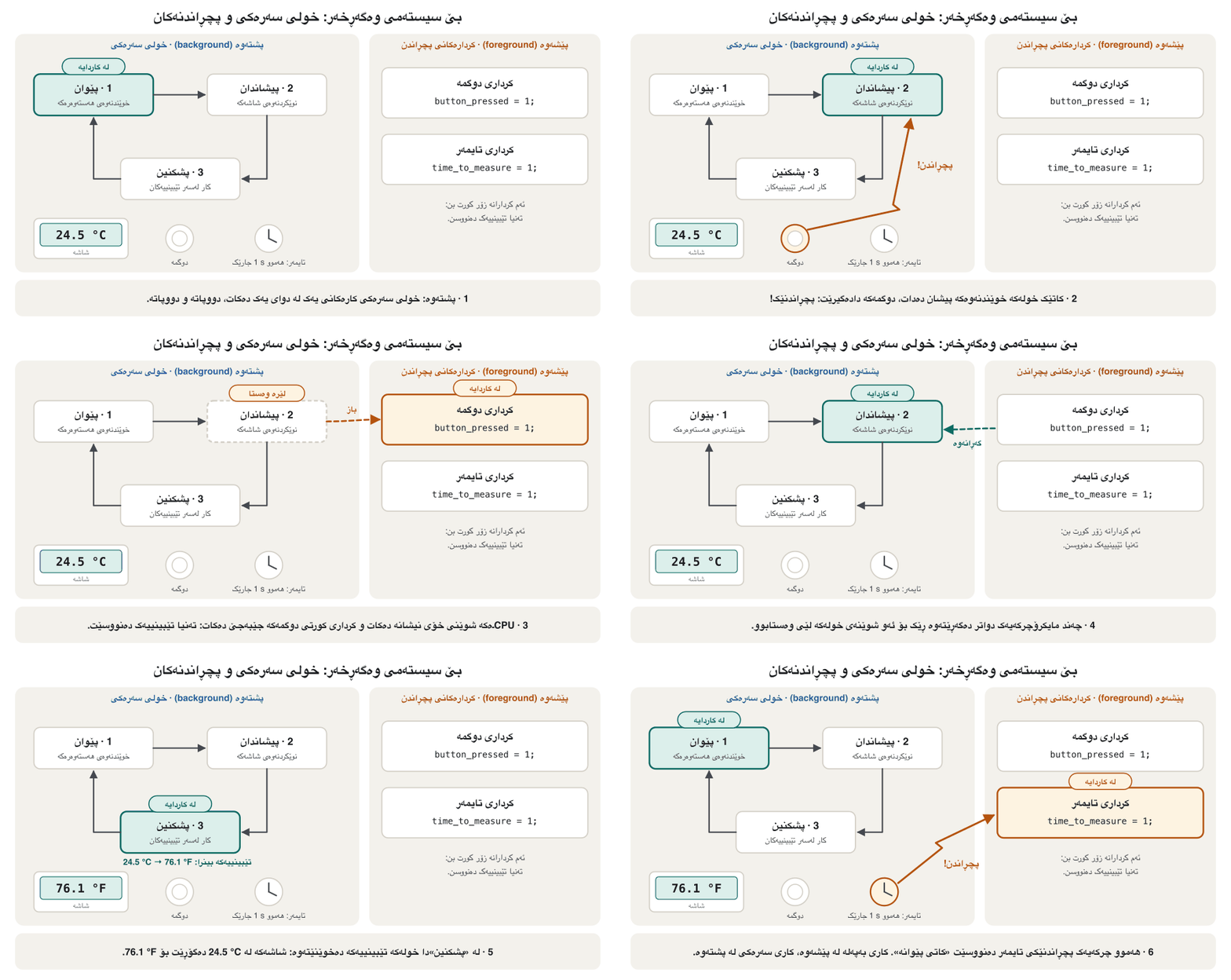
هەڵبژاردنی سێیەم — زۆرجار هیچ. گەرمیپێوێکی دیجیتاڵی پێویستی بە Android نییە: پلەی گەرمی دەپێوێت، پیشانی دەدات و لەوانەیە بیپ بکات. دەتوانێت بەرنامەیەکی سادەی بێت کە بڕیار دەدات هەر ئەرکێک کەی کار بکات، یان تەنیا سەرەکی لەگەڵ . — لە ، پینێک یان — کە ناچار دەکات ڕابگرێت، کورت جێبەجێ بکات و بگەڕێتەوە. چونکە هیچ نییە هەست بە گیرخواردوو بکات، زۆر بۆرد بەکار دەهێنن کە بۆردەکە دەکات: بڕوانە تاقیگە: تایمەری پاسەوان.
Engineers call this a foreground/background system. The main loop is the background (task level): it does the jobs one after another, again and again. The interrupt routines are the foreground (interrupt level): urgent work is done there at once. Most high-volume, low-cost microcontroller products — microwave ovens, toys, simple phones — are built this way. Watch one:
ئەندازیاران ئەمە ناو دەنێن سیستەمی پێشەوە و پشتەوە (foreground/background system). سەرەکی پشتەوەیە (ئاستی ئەرک): کارەکان یەک لە دوای یەک دەکات، دووپاتە و دووپاتە. پێشەوەن (ئاستی ): کاری بەپەلە یەکسەر لەوێ دەکرێت. زۆربەی ئەو بەرهەمە هەرزانانەی کە بە ژمارەیەکی زۆر دروست دەکرێن — مایکرۆوەیڤ، یاری منداڵان، مۆبایلی سادە — بەم شێوەیە دروست کراون. سەیری یەکێکیان بکە:
When one loop is not enough: a small RTOSکاتێک یەک خول بەس نییە: سیستەمێکی وەگەڕخەری کاتی ڕاستەقینەی بچووک
In one big loop, a job must wait for its turn: if one pass of the loop takes 50 ms, a reading can wait up to 50 ms, and every change to the code changes the timing. Devices that juggle more use a small real-time operating system (RTOS). Its scheduler always runs the most urgent task that is ready, so deadlines are met even while a long job is busy (Real time means meeting a deadline).
لە گەورەدا، هەر کارێک دەبێت چاوەڕێی نۆرەی خۆی بکات: ئەگەر یەک سووڕانەوەی 50 ms بخایەنێت، خوێندنەوەیەک دەکرێت تا 50 ms چاوەڕێ بکات و هەر گۆڕانێک لە کۆدەکەدا کاتەکان دەگۆڕێت. ئەو ئامێرانەی کاری زیاتر بەڕێوە دەبەن بچووک بەکار دەهێنن. نۆرەدانەکەی هەمیشە بەپەلەترین ئەرکی ئامادە جێبەجێ دەکات، بۆیە کاتە دیاریکراوەکان دەپارێزرێن تەنانەت کاتێک کارێکی درێژ لە کاردایە (کاتی ڕاستەقینە واتە گەیشتن بە کاتی دیاریکراو).
Two well-known open-source examples: FreeRTOS (MIT licence, maintained by AWS, for more than 40 processor families; Espressif's ESP-IDF for the ESP32 is built on it) and Zephyr (Apache 2.0 licence, more than 1,000 boards). Arm ended Mbed in July 2026, so Arduino moved the boards that used it, such as the GIGA and the Nano 33 BLE, to a new core built on Zephyr; that core became stable in July 2026, and the old Mbed cores are being retired (as of November 2026; The same four, with today's names). A drone's autopilot runs on an RTOS too (The drone's brain).
دوو نموونەی بەناوبانگی : FreeRTOS (مۆڵەتی MIT، AWS بەڕێوەی دەبات، بۆ زیاتر لە 40 خێزانی پرۆسێسەر؛ ESP-IDFـی Espressif بۆ ESP32 لەسەری دروست کراوە) و Zephyr (مۆڵەتی Apache 2.0، زیاتر لە 1,000 بۆرد). Arm لە تەممووزی 2026دا کۆتایی بە Mbed هێنا، بۆیە Arduino ئەو بۆردانەی Mbedـیان بەکار دەهێنا، وەک GIGA و Nano 33 BLE، گواستەوە بۆ بنەمایەکی نوێ کە لەسەر Zephyr دروست کراوە. ئەو بنەمایە لە تەممووزی 2026دا جێگیر بوو و بنەما کۆنەکانی Mbed وەلا دەنرێن (تا تشرینی دووەمی 2026؛ هەمان چوارەکە، بە ناوەکانی ئەمڕۆ). لەسەر کار دەکات (مێشکی درۆن).
Firmware updates over the airنوێکردنەوەی بێتەلی پتەوواڵە
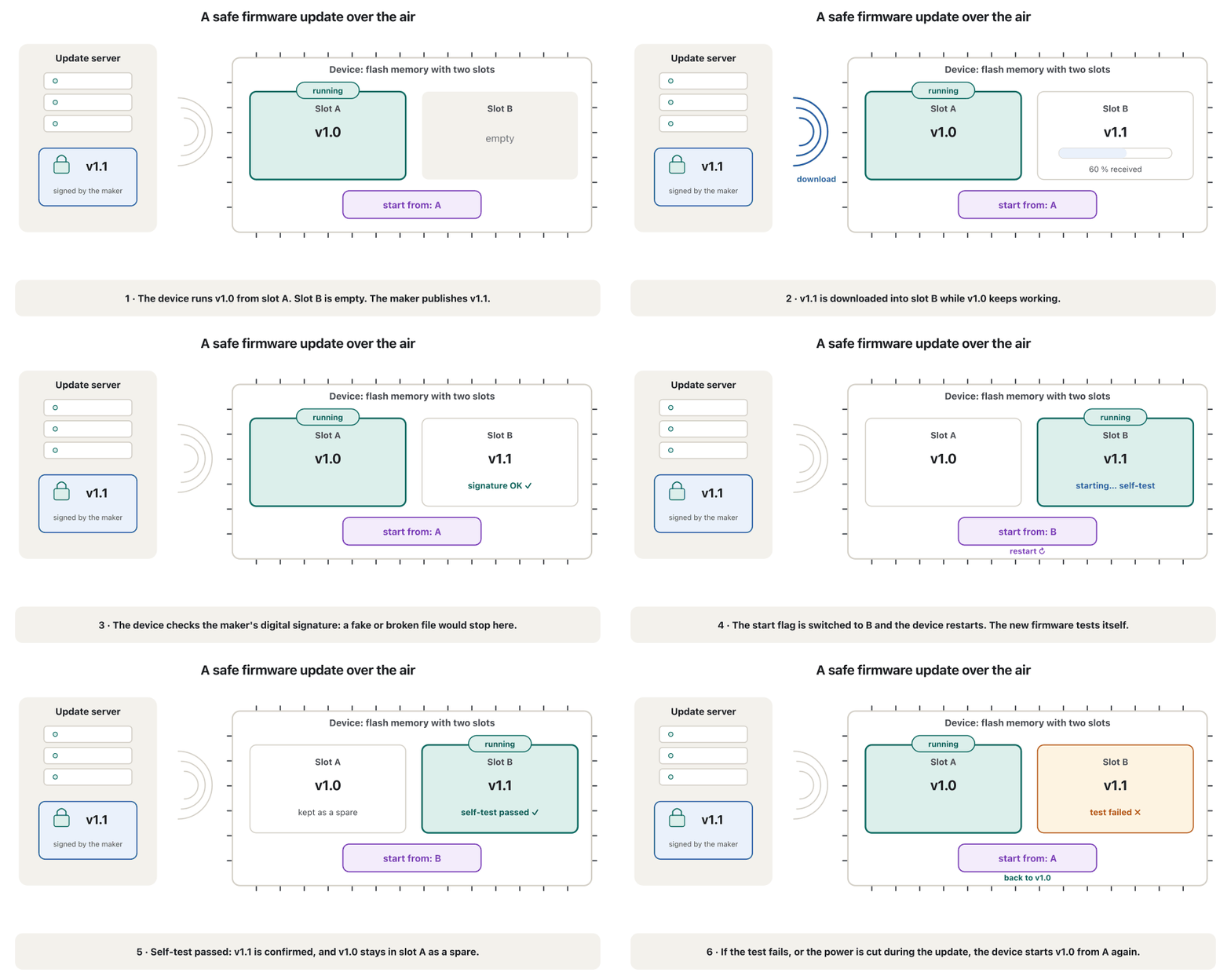
Firmware is kept in flash memory, so it can be replaced (Hardware plus software: firmware). Connected devices receive new firmware through their radio — an over-the-air (OTA) update — to fix bugs, close security holes and add features. A safe update never overwrites the only working copy. On an ESP32, for example, the flash has two app slots:
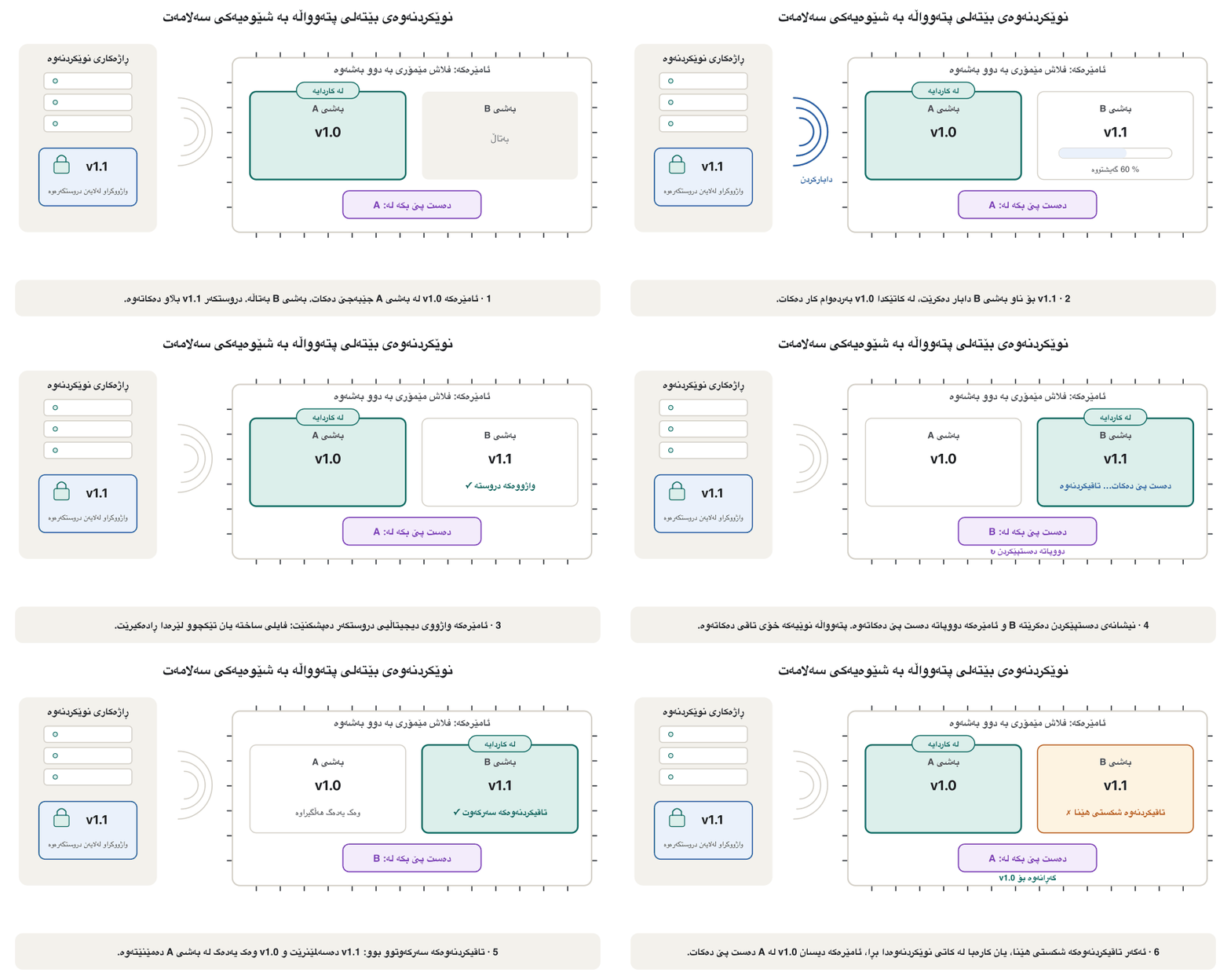
لە هەڵدەگیرێت، بۆیە دەکرێت بگۆڕدرێت (ڕەقەواڵە و نەرمەواڵە: پتەوواڵە). ئامێرە بەستراوەکان نوێ لە ڕێی ڕادیۆکەیانەوە وەردەگرن — (OTA) — بۆ چاککردنی ، داخستنی و زیادکردنی تایبەتمەندی. سەلامەت هەرگیز تاکە کۆپیی کارکردوو ناسڕێتەوە. بۆ نموونە لە ESP32دا، دوو بەشی جیا بۆ هەیە:
- The device keeps running the old firmware from slot A while it downloads the new one into slot B.
- It checks the file and the maker's digital signature, so a broken or fake file is refused.
- It switches its start flag to B and restarts.
- If the new firmware fails its self-test, it rolls back to A. A power cut in the middle cannot ruin the device, because the old copy stays whole.
- ئامێرەکە بەردەوام کۆن لە بەشی A جێبەجێ دەکات، لە کاتێکدا نوێیەکە بۆ بەشی B دابار دەکات.
- فایلەکە و دروستکەر دەپشکنێت، بۆیە فایلی تێکچوو یان ساختە ڕەت دەکرێتەوە.
- نیشانەی دەستپێکردنی دەگۆڕێت بۆ B و دووپاتە دەست پێ دەکاتەوە.
- ئەگەر نوێیەکە لە تاقیکردنەوەی خۆیدا شکستی هێنا، دەگەڕێتەوە بۆ A. بڕانی کارەبا لە ناوەڕاستدا ناتوانێت ئامێرەکە تێک بدات، چونکە کۆپییە کۆنەکە بە تەواوی دەمێنێتەوە.
Why updates matter so much for security is explained in Updates: closing holes over the air. If new firmware hangs, a watchdog timer resets the board instead of leaving it frozen: see Lab: The Watchdog Timer.
بۆچی ئەوەندە بۆ ئاسایش گرنگن، لە نوێکردنەوە: داخستنی کونەکان بە بێتەلی ڕوون کراوەتەوە. ئەگەر نوێیەکە گیر بخوات، بۆردەکە دەکات لەبری ئەوەی بە گیرخواردوویی بیهێڵێتەوە: بڕوانە تاقیگە: تایمەری پاسەوان.
Firmware updates over the airنوێکردنەوەی بێتەلی پتەوواڵە
Updates and the lawنوێکردنەوە و یاسا
Updates are becoming a legal duty too. Under the EU Cyber Resilience Act, makers have had to report actively exploited security holes in their products since 11 September 2026, and from 11 December 2027 connected products sold in the EU must receive security updates (as of November 2026; When standards meet the law).
خەریکە دەبێتە ئەرکێکی یاساییش. بەپێی ، لە 11ی ئەیلوولی 2026ـەوە دروستکەران دەبێت ئەو ڕاپۆرت بکەن کە لە بەرهەمەکانیاندا بە کردەوە بەکار دەهێنرێن. لە 11ی کانوونی یەکەمی 2027ـیشەوە هەر بەرهەمێکی بەستراو کە لە EU دەفرۆشرێت دەبێت ئاسایش وەربگرێت (تا تشرینی دووەمی 2026؛ کاتێک ستاندارد دەگاتە یاسا).
Why microcontrollers win: five reasonsبۆچی مایکرۆکۆنترۆڵەرەکان سەردەکەون: پێنج هۆ
So in most embedded systems a microcontroller is the best solution, because it offers:
کەواتە لە زۆربەی باشترین چارەسەرە، چونکە ئەمانە دەدات:
- Low development and manufacturing cost — one cheap chip instead of many; an RP2350 chip cost about one dollar in 2024.
- Easy porting and updating — porting means moving the program to a different device or a newer version: when a smart fan moves to a newer microcontroller of the same family, most of the code is reused, and new firmware can be sent over the air.
- A light footprint — it needs little memory, power and space: a small fitness tracker uses very little storage and power.
- Relatively low power consumption — great for battery devices: a smart door sensor can run for a year on a small battery. The ESP32-C3, for example, draws only about 5 µA in deep sleep.
- Satisfactory performance for low-end products — a low-end product is basic and cheap, with fewer features or lower performance than others: the lower end of a range. Microcontrollers work well for such simple systems that do not need much computing power.
- تێچووی کەمی گەشەپێدان و بەرهەمهێنان — هەرزان لەبری چەندین دانە؛ RP2350 لە 2024دا نزیکەی یەک دۆلار بوو.
- و ئاسان — واتە گواستنەوەی بۆ ئامێرێکی جیاواز یان وەشانێکی نوێتر: کاتێک پانکەیەکی هۆشمەند دەگوازرێتەوە بۆ نوێتری هەمان خێزان، زۆربەی کۆدەکە دووپاتە بەکار دێتەوە و نوێ دەتوانرێت بە ڕادیۆ بنێردرێت.
- شوێنپێیەکی سووک — ، وزە و شوێنی کەمی پێویستە: ئامێرێکی بچووکی چاودێریی وەرزش شوێنی خەزنکردن و وزەیەکی زۆر کەم بەکار دەبات.
- بە بەراورد کەم — بۆ ئامێری پاتریدار زۆر باشە: هۆشمەندی دەرگا دەتوانێت ساڵێک بە بچووک کار بکات. بۆ نموونە ESP32-C3 لە خەوی قووڵدا تەنیا نزیکەی 5 µA دەکێشێت.
- توانای بەس بۆ بەرهەمە سادەکان — بەرهەمی ئاستنزم سادە و هەرزانە، بە تایبەتمەندی یان توانای کەمتر لە بەرهەمەکانی تر: خوارەوەی ڕیزێک بەرهەم. بۆ ئەم جۆرە سیستەمە سادانە باش کار دەکەن کە پێویستیان بە توانای ژمێرکاریی زۆر نییە.
Microcontrollers you will meet (as of November 2026)ئەو مایکرۆکۆنترۆڵەرانەی دەیانبینیت (تا تشرینی دووەمی 2026)
These chips are behind the boards of this course and many IoT products (figures from the makers' data sheets). Since the classic picture of one core and no radio, two things changed: many now have two cores, and many carry a radio.
ئەم لە پشت بۆردەکانی ئەم کۆرسە و زۆر بەرهەمی IoTـەوەن (ژمارەکان لە دروستکەرانەوەن). بەراورد بە وێنە کۆنەکەی «یەک ناوک و بێ ڕادیۆ»، دوو شت گۆڕاون: زۆریان ئێستا دوو ناوکیان هەیە و زۆریان ڕادیۆیەک هەڵدەگرن.
| Chip (board) (بۆرد) | Coresناوک | Clock | Memory on the chip لەسەر | Radioڕادیۆ |
|---|---|---|---|---|
| ATmega328P (Arduino UNO R3) | 1 × 8-bit AVR1 × AVRـی 8 | 16 MHz | 32 KB flash, 2 KB SRAM, 1 KB EEPROM32 KB فلاش، 2 KB SRAM، 1 KB EEPROM | noneنییە |
| Renesas RA4M1 (Arduino UNO R4 Minima, WiFi) | 1 × 32-bit Arm Cortex-M41 × Arm Cortex-M4ـی 32 | 48 MHz | 256 KB flash, 32 KB SRAM, 8 KB EEPROM256 KB فلاش، 32 KB SRAM، 8 KB EEPROM | none (UNO R4 WiFi: an ESP32-S3 module)نییە (UNO R4 WiFi: مۆدیولێکی ESP32-S3) |
| Espressif ESP32-S3 | 2 × 32-bit Xtensa LX72 × Xtensa LX7ـی 32 | up to 240 MHzتا 240 MHz | 512 KB SRAM | Wi-Fi 4, Bluetooth LE 5 |
| Espressif ESP32-C3 | 1 × 32-bit RISC-V1 × RISC-Vـی 32 | up to 160 MHzتا 160 MHz | 400 KB SRAM | Wi-Fi 4, Bluetooth LE 5 |
| Espressif ESP32-C6 | 32-bit RISC-V + a low-power coreRISC-Vـی 32 + ناوکێکی کەمخەرج | up to 160 MHzتا 160 MHz | 512 KB SRAM | Wi-Fi 6, Bluetooth LE 5, Thread, Zigbee |
| Raspberry Pi RP2350 (Pico 2) | 2 × Arm Cortex-M33, or 2 × Hazard3 RISC-V2 × Arm Cortex-M33، یان 2 × Hazard3 RISC-V | 150 MHz | 520 KB SRAM; 4 MB flash on the board520 KB SRAM؛ 4 MB فلاش لەسەر بۆردەکە | none (Pico 2 W: Wi-Fi, Bluetooth 5.2)نییە (Pico 2 W: ، Bluetooth 5.2) |
The boards themselves — pins, 3.3 V or 5 V, USB and the Arduino IDE — come in Arduino Boards and the Arduino IDE; your first sketch, in Lab: Blink an LED.
بۆردەکان خۆیان — پین، 3.3 V یان 5 V، USB و Arduino IDE — لە بۆردەکانی Arduino و Arduino IDE دێن؛ یەکەم لە تاقیگە: هەڵکردنی LEDـێک دەنووسیت.
Raspberry Pi 5: a computer, not a microcontrollerRaspberry Pi 5: کۆمپیوتەرێکە، نەک مایکرۆکۆنترۆڵەر
People often put a Raspberry Pi and an Arduino in the same box, but they are different kinds of machine. The Raspberry Pi 5 (October 2023) is a single-board computer. Its Broadcom BCM2712 is a system on a chip with four 64-bit Arm Cortex-A76 cores at 2.4 GHz — the same kind of cores as in phones. Its RAM (1 to 16 GB) is a separate chip, its programs and files sit on a microSD card or an SSD, and it boots a full operating system, Raspberry Pi OS (Linux). It needs a 5 V, 5 A (27 W) power supply.
خەڵک زۆرجار Raspberry Pi و Arduino لە یەک سندووقدا دادەنێن، بەڵام دوو جۆر ئامێری جیاوازن. Raspberry Pi 5 (ئۆکتۆبەری 2023) . BCM2712ـی Broadcom بە چوار ناوکی Arm Cortex-A76ـی 64 لەسەر 2.4 GHz — هەمان جۆرە ناوکی ناو مۆبایل. (1 تا 16 GB) جیایە، و لەسەر microSD یان SSDـیەکن و تەواو، Raspberry Pi OS (Linux)، بووت دەکات. پێویستی بە 5 V، 5 A (27 W) هەیە.
The Raspberry Pi Pico 2 (August 2024) is a microcontroller board: its RP2350 holds the cores and 520 KB of SRAM on one chip, runs one program from flash as soon as it has power, needs no operating system and is happy with the power from a USB port. Both boards have GPIO pins; what decides is the chip.
Raspberry Pi Pico 2 (ئابی 2024) : RP2350ـەکەی ناوکەکان و 520 KB لەسەر یەک هەڵدەگرێت، هەر کە کارەبای پێ گەیشت لە فلاشەوە جێبەجێ دەکات، پێویستی بە نییە و کارەبای دەرچەیەکی USB بەسیەتی. هەردوو بۆردەکە هەیە؛ ئەوەی بڕیار دەدات .
Raspberry Pi 5: a computer, not a microcontrollerRaspberry Pi 5: کۆمپیوتەرێکە، نەک مایکرۆکۆنترۆڵەر
Cortex-M or Cortex-A?Cortex-M یان Cortex-A؟
Arm, whose designs are inside most of the chips above, sorts its processor cores into three families. Cortex-M cores are made for microcontrollers: low power, quick and predictable reactions to interrupts — a Cortex-M4 starts its interrupt routine about 12 clock cycles after the signal, a quarter of a microsecond at the UNO R4's 48 MHz — and no memory management unit (MMU) for virtual memory, so they run firmware with no OS or with an RTOS. Cortex-A cores are application processors: with an MMU they run Linux and Android, as in phones and the Raspberry Pi 5. Cortex-R cores sit between them, for hard real-time jobs such as car safety systems, modems and storage controllers.
Arm، کە دیزاینەکانی لەناو زۆربەی ئەو سەرەوەدایە، خۆی دەکات بە سێ خێزان. ناوکەکانی Cortex-M بۆ دروست کراون: وزەی کەم، کاردانەوەی خێرا و پێشبینیکراو بۆ — Cortex-M4 نزیکەی 12 لێدانی کاتژمێر دوای دەست پێ دەکات، واتە چارەکە مایکرۆچرکەیەک لەسەر 48 MHzـی UNO R4 — و MMUـیان نییە (ئەو بەشەی دابین دەکات)، بۆیە بێ یان لەگەڵ جێبەجێ دەکەن. ناوکەکانی Cortex-A بۆ و سیستەمی گەورەن: بە MMUـەوە Linux و Android جێبەجێ دەکەن، وەک لە مۆبایل و Raspberry Pi 5دا. ناوکەکانی Cortex-R لە نێوانیاندان، بۆ کاری توند وەک سیستەمەکانی سەلامەتیی ئۆتۆمبێل، مۆدێم و کۆنترۆڵکەری خەزنکردن.
Common mistakesهەڵە باوەکان
| Mistakeهەڵە | Betterباشتر |
|---|---|
| "A microprocessor has exactly one core."«مایکرۆپرۆسێسەر تەنیا یەک ناوکی هەیە.» | Early ones did; today's have many — the Core i9-13900K has 24. A microprocessor is one or more cores on one chip.یەکەمەکان وا بوون؛ ئەوانەی ئەمڕۆ چەندین ناوکیان هەیە — Core i9-13900K 24 ناوکی هەیە. مایکرۆپرۆسێسەر یەک یان چەند ناوکە لەسەر یەک . |
| "A microcontroller is just a slow microprocessor."« تەنیا مایکرۆپرۆسێسەرێکی هێواشە.» | It is a whole small computer: a core plus memory, inputs, outputs and timers on one chip. بچووکی تەواوە: ناوکێک لەگەڵ ، ، و لەسەر یەک . |
| "A Raspberry Pi 5 is a big Arduino."«Raspberry Pi 5 Arduinoـیەکی گەورەیە.» | It is a single-board computer that runs Linux. The Pico 2 and the Arduino boards are microcontroller boards. کە Linux جێبەجێ دەکات. Pico 2 و بۆردەکانی Arduino . |
| "Embedded code is mostly written in Java."«کۆدی زۆربەی بە Java دەنووسرێت.» | Mostly C and C++, with a little assembly, and MicroPython on larger chips. Java needs a virtual machine and is rare on microcontrollers.زۆربەی بە C و C++، لەگەڵ کەمێک و MicroPython لەسەر گەورەتر. Java پێویستی بە هەیە و لەسەر دەگمەنە. |
| "Without an operating system a chip can do only one thing."«بێ تەنیا دەتوانێت یەک کار بکات.» | A main loop with interrupts, or a small RTOS, handles several jobs on time. سەرەکی لەگەڵ ، یان بچووک، چەند کارێک لە کاتی خۆیدا بەڕێوە دەبات. |
| "An interrupt routine should do all the work."« دەبێت هەموو کارەکە بکات.» | Keep it very short: take a note and return. The main loop does the rest.زۆر کورتی بکەرەوە: تێبینییەک بنووسە و بگەڕێوە. سەرەکی ئەوەی تر دەکات. |
| "An OTA update simply overwrites the old firmware."« بە سادەیی کۆن دەسڕێتەوە.» | A safe update writes the new version beside the old one, checks its signature and keeps the old one to roll back to. سەلامەت وەشانە نوێیەکە لە تەنیشت کۆنەکە دەنووسێت، واژووەکەی دەپشکنێت و کۆنەکە دەهێڵێتەوە بۆ گەڕانەوە. |
Exercisesڕاهێنانەکان
For each chip, say whether it is a microcontroller, a microprocessor or the system on a chip of a single-board computer, and give one reason: (a) ATmega328P; (b) Intel Core i9-13900K; (c) RP2350; (d) Broadcom BCM2712; (e) ESP32-C3; (f) Intel 4004.
بۆ هەر بڵێ ، مایکرۆپرۆسێسەرە یان ؛ هۆیەکیش بهێنەوە: (أ) ATmega328P؛ (ب) Intel Core i9-13900K؛ (ج) RP2350؛ (د) Broadcom BCM2712؛ (ه) ESP32-C3؛ (و) Intel 4004.
Show answerوەڵامەکە پیشان بدە
- (a) microcontroller — 32 KB of flash, 2 KB of SRAM and 23 I/O pins on the chip;
- (b) microprocessor — 24 fast cores, but its RAM, storage and I/O are other chips;
- (c) microcontroller — 520 KB of SRAM and I/O on the chip; it runs one program from flash;
- (d) the system on a chip of a single-board computer (Raspberry Pi 5) — Cortex-A cores, separate RAM, runs Linux;
- (e) microcontroller — a RISC-V core, 400 KB of SRAM and a Wi-Fi and Bluetooth radio on one chip;
- (f) microprocessor — it needed separate ROM, RAM and I/O chips.
- (أ) — 32 KB ، 2 KB و 23 پینی I/O لەسەر ؛
- (ب) مایکرۆپرۆسێسەر — 24 ناوکی خێرا، بەڵام RAM، شوێنی خەزنکردن و I/Oـەکەی ترن؛
- (ج) — 520 KB و I/O لەسەر ؛ لە فلاشەوە جێبەجێ دەکات؛
- (د) (Raspberry Pi 5) — ناوکی Cortex-A، RAMـی جیا، Linux جێبەجێ دەکات؛
- (ه) — ناوکێکی RISC-V، 400 KB و ڕادیۆیەکی و Bluetooth لەسەر یەک ؛
- (و) مایکرۆپرۆسێسەر — پێویستی بە جیای ROM، RAM و I/O بوو.
An Arduino UNO R3 has 2 KB of SRAM; a Raspberry Pi 5 can have 8 GB of RAM. How many times more memory is that? (1 KB = 1,024 bytes; 1 GB = 1,024 × 1,024 × 1,024 bytes.)
Arduino UNO R3 2 KB هەیە؛ Raspberry Pi 5 دەتوانێت 8 GB RAMـی هەبێت. ئەمە چەند جار زیاترە؟ (1 KB = 1,024 ؛ 1 GB = 1,024 × 1,024 × 1,024 .)
Hintئاماژە
Write both in powers of two: 2 KB = bytes and 8 GB = bytes.
هەردووکیان بە توانی 2 بنووسە: 2 KB = و 8 GB = .
Show answerوەڵامەکە پیشان بدە
About 4.2 million times more memory, and the Pi's RAM is a separate chip, while the UNO's 2 KB sit inside the microcontroller.
نزیکەی 4.2 ملیۆن جار زیاتر. هەروەها RAMـی Raspberry Pi جیایە، لە کاتێکدا 2 KBـەکەی UNO لەناو .
Choose a chip from this lesson for each product and give one reason: (a) a soil-moisture sensor in a field that must run on two AA batteries for years; (b) a Matter smart plug that speaks Wi-Fi and Thread; (c) a door camera that recognises faces itself and serves a web page; (d) a remote-control toy car.
بۆ هەر بەرهەمێک لەم وانەیە هەڵبژێرە و هۆیەک بهێنەوە: (أ) شێی خاک لە کێڵگەیەکدا کە دەبێت چەند ساڵێک بە دوو پاتریی AA کار بکات؛ (ب) Matter کە بە و Thread قسە دەکات؛ (ج) کامێرایەکی دەرگا کە خۆی ڕووخسارەکان دەناسێتەوە و پەڕەیەکی وێب پیشکەش دەکات؛ (د) ئۆتۆمبێلێکی یاریی کە بە ڕیمۆت دەڕوات.
Show answerوەڵامەکە پیشان بدە
- (a) a low-power microcontroller that sleeps between readings — it draws microamperes while asleep; the radio is chosen in Range, Speed and Power;
- (b) the ESP32-C6 — Wi-Fi 6 and an IEEE 802.15.4 radio for Thread on one chip;
- (c) a single-board computer such as the Raspberry Pi 5 — video and face recognition need fast application cores, gigabytes of RAM and Linux;
- (d) a small microcontroller such as the ATmega328P or the RP2350 — it only reads the radio receiver and drives the motors.
- (أ) کەمخەرج کە لە نێوان خوێندنەوەکاندا دەخەوێت — لە چەند مایکرۆئەمپێرێک دەکێشێت؛ ڕادیۆکە لە هەڵبژاردنی تەکنەلۆجیایەکی بێتەل هەڵدەبژێردرێت؛
- (ب) ESP32-C6 — 6 و ڕادیۆیەکی IEEE 802.15.4 بۆ Thread لەسەر یەک ؛
- (ج) وەک Raspberry Pi 5 — ڤیدیۆ و پێویستیان بە ناوکی خێرا، چەند گیگابایتێک RAM و Linux هەیە؛
- (د) بچووک وەک ATmega328P یان RP2350 — تەنیا دەخوێنێتەوە و کار پێ دەکات.
A digital thermometer measures every second, shows the reading, switches between Celsius and Fahrenheit when its button is pressed, and beeps when the reading is steady. Which jobs go into interrupt routines, and which into the main loop? Why?
گەرمیپێوێکی دیجیتاڵی هەموو چرکەیەک دەپێوێت، خوێندنەوەکە پیشان دەدات، کاتێک دادەگیرێت لە نێوان سیلیزی و فەهرەنهایتدا دەگۆڕێت و کاتێک خوێندنەوەکە جێگیر بوو بیپ دەکات. کام کارانە دەچنە ناو و کامیان دەچنە ناو سەرەکی؟ بۆچی؟
Show answerوەڵامەکە پیشان بدە
Interrupt routines (foreground): the timer tick every second and the button press — each one only takes a note (sets a flag). Main loop (background): reading the sensor, converting and showing the value, switching the unit when the button note is set, and beeping. The routines stay short so that no interrupt is missed; the slower work waits for its turn in the loop.
(پێشەوە): لێدانی هەموو چرکەیەک و پەستانی — هەریەکەیان تەنیا تێبینییەک دەنووسێت (ئاڵایەک دادەنێت). سەرەکی (پشتەوە): خوێندنەوەی ، گۆڕین و پیشاندانی بەهاکە، گۆڕینی یەکەکە کاتێک تێبینیی هەیە، هەروەها بیپکردن. کورت دەمێننەوە بۆ ئەوەی هیچ لەدەست نەچێت؛ کارە هێواشترەکان چاوەڕێی نۆرەی خۆیان لە دەکەن.
Summaryپوختە
- A microprocessor is one or more CPU cores on one chip: it fetches, decodes and executes, but its memory and I/O are other chips — from the Intel 4004 (1971, 4-bit) to today's 24-core, 64-bit desktop chips.
- A microcontroller is a whole small computer on one chip: a core with flash, SRAM, often EEPROM, digital and analog I/O, timers and serial ports — such as the ATmega328P (16 MHz, 32 KB flash, 2 KB SRAM).
- Constraints lead embedded systems to microcontrollers, to C and C++ (with a little assembly) and to no OS — a main loop with interrupts, the foreground/background system — or a small RTOS such as FreeRTOS or Zephyr.
- Firmware in flash can be updated over the air; a safe update keeps the old copy, checks the digital signature and can roll back.
- Microcontrollers win on cost, porting and updating, footprint, power and good-enough performance. In 2026 many have two cores and a radio (ESP32-S3, ESP32-C6, RP2350); the Raspberry Pi 5 is a single-board computer with Cortex-A cores, not a microcontroller.
- مایکرۆپرۆسێسەر یەک یان چەند ناوکی لەسەر یەک : دەهێنێت، شی دەکاتەوە و جێبەجێ دەکات، بەڵام و I/Oـەکەی ترن — لە Intel 4004ـەوە (1971، 4 ) تا مێزیی 24 ناوکی و 64 ئەمڕۆ.
- بچووکی تەواوە لەسەر یەک : ناوکێک لەگەڵ ، ، زۆرجار ، I/Oـی دیجیتاڵ و ، و دەرچەکانی — وەک ATmega328P (16 MHz، 32 KB فلاش، 2 KB SRAM).
- سنوورەکان دەبەن بەرەو ، C و C++ (لەگەڵ کەمێک ) و بێ — سەرەکی لەگەڵ ، واتە سیستەمی پێشەوە و پشتەوە — یان بچووکی وەک FreeRTOS یان Zephyr.
- لە دەکرێت بە ڕادیۆ نوێ بکرێتەوە؛ سەلامەت کۆپییە کۆنەکە دەهێڵێتەوە، دەپشکنێت و دەتوانێت بگەڕێتەوە.
- بە تێچوو، و ، شوێنپێ، وزە و توانای بەس سەردەکەون. لە 2026دا زۆریان دوو ناوک و ڕادیۆیەکیان هەیە (ESP32-S3، ESP32-C6، RP2350)؛ Raspberry Pi 5 بە ناوکی Cortex-A، نەک .
What is the difference between a microprocessor and a microcontroller?جیاوازیی نێوان مایکرۆپرۆسێسەر و مایکرۆکۆنترۆڵەر چییە؟
A microprocessor is CPU cores on a chip that need separate memory and I/O chips; a microcontroller puts the core, memory, inputs, outputs and timers on one chip.
مایکرۆپرۆسێسەر ناوکی لەسەر کە پێویستی بە جیای و I/O هەیە؛ ناوک، ، ، و دەخاتە سەر یەک .
What is a foreground/background system?سیستەمی پێشەوە و پشتەوە چییە؟
Firmware with no operating system: a main loop does the jobs one after another (the background), and short interrupt routines handle urgent events at once (the foreground).
بێ : سەرەکی کارەکان یەک لە دوای یەک دەکات (پشتەوە) و کورتی ڕووداوە بەپەلەکان یەکسەر بەڕێوە دەبەن (پێشەوە).
Why do Cortex-M cores not run Linux?بۆچی ناوکەکانی Cortex-M Linux جێبەجێ ناکەن؟
They have no memory management unit for virtual memory, which Linux needs; they run firmware with no OS or a small RTOS.
MMUـیان نییە بۆ ، کە Linux پێویستی پێیەتی؛ بێ یان لەگەڵ بچووک جێبەجێ دەکەن.
Lesson complete!وانەکە تەواو بوو!
Well done. Review the key terms, then go on to the next lesson.دەستخۆش. سەیرێکی زاراوە سەرەکییەکان بکەرەوە، پاشان بڕۆ بۆ وانەی داهاتوو.
Key termsزاراوە سەرەکییەکان
Arduino Boards and the Arduino IDEبۆردەکانی Arduino و Arduino IDE
Related lecturesوانە پەیوەندیدارەکان
- Embedded Systems at Work: a Bike Computer and a Car Engineسیستەمە چەسپێنراوەکان لە کاردا: کۆمپیوتەری پاسکیل و بزوێنەری ئۆتۆمبێل
- Inside an IoT System: Building Blocks and the Data Pathناو سیستەمێکی IoT: پێکهاتە سەرەکییەکان و ڕێڕەوی دراوە
- Arduino Boards and the Arduino IDEبۆردەکانی Arduino و Arduino IDE
- The CPU: Control Unit, ALU and CoresCPU: یەکەی جڵەوکردن، ALU و ناوکەکانی پرۆسێسەر
- How a Computer Runs a Programکۆمپیوتەر چۆن بەرنامەیەک جێبەجێ دەکات
- Memory: RAM, ROM and Cacheبیرگە: RAM، ROM و کاش
- Programming Languagesزمانەکانی بەرنامەسازی
- How Code Becomes a Running Program: Compilers and Interpretersچۆن کۆد دەبێت بە بەرنامەیەک کە کار دەکات: کۆمپایلەرەکان و ئینتەرپرێتەرەکان
- The Flight Controller: Sensors, Control Loops and Autopilotsکۆنترۆڵکەری فڕین: هەستەوەرەکان، خولەکانی کۆنترۆڵ و فڕۆکەوانی خۆکار
- Who Writes the Rules? IoT Standardsکێ یاساکان دەنووسێت؟ ستانداردەکانی IoT
- Keeping IoT Devices Safe and Privateئامێرەکانی IoT: ئاسایش و تایبەتێتی
References and further readingسەرچاوەکان و خوێندنەوەی زیاتر
- Wikipedia: Intel 4004 (15 Nov 1971, 4-bit, 2,300 transistors, 740 kHz, about 92,000 instructions/s; MCS-4: 4001 ROM, 4002 RAM, 4003 shift register)
- Intel ARK: Core i9-13900K specifications (24 cores: 8 P + 16 E, 32 threads, 5.8 GHz, 64-bit, Q4 2022, 125 W base / 253 W turbo)
- Wikipedia: List of AMD Ryzen processors (Ryzen 5 7600X: 6 cores, 4.7/5.3 GHz, 105 W, 27 Sep 2022)
- Arduino UNO R3 user manual / datasheet SKU A000066 (ATmega328P: AVR at up to 16 MHz, 32 kB flash, 2 kB SRAM, 1 kB EEPROM, timers, USART, SPI, I2C)
- Wikipedia: ATmega328 (8-bit AVR, 23 GPIO, 6-channel 10-bit ADC, 3 timers, about 20 MIPS at 20 MHz)
- Arduino docs: UNO R4 Minima (Renesas RA4M1, Arm Cortex-M4, 48 MHz, 256 kB flash, 32 kB SRAM, 8 kB EEPROM; the first UNO with a 32-bit microcontroller)
- Wikipedia: Microcontroller (definition; milliwatts running, nanowatts asleep; interrupts and real-time response)
- Espressif: ESP32-S3 (dual-core Xtensa LX7 up to 240 MHz, 512 KB SRAM, 2.4 GHz Wi-Fi 802.11 b/g/n, Bluetooth 5 LE)
- Espressif: ESP32-C3 datasheet (single-core 32-bit RISC-V up to 160 MHz, 400 KB SRAM, 802.11 b/g/n, Bluetooth 5 LE; deep sleep 5 µA; 23 mA at 160 MHz)
- Espressif: ESP32-C6 (RISC-V up to 160 MHz plus a 20 MHz low-power core, 512 KB SRAM, Wi-Fi 6, Bluetooth 5 LE, IEEE 802.15.4 for Thread and Zigbee)
- Raspberry Pi: Pico 2 (RP2350, dual Cortex-M33 or Hazard3 RISC-V at 150 MHz, 520 KB SRAM, 4 MB flash; Pico 2 W with Wi-Fi and Bluetooth 5.2)
- Raspberry Pi news, 8 August 2024: Raspberry Pi Pico 2, our new $5 microcontroller board (RP2350 price per chip)
- Raspberry Pi 5 product page (BCM2712, 4 × Cortex-A76 at 2.4 GHz, 1–16 GB LPDDR4X, microSD and PCIe, 40-pin GPIO, 5 V / 5 A USB-C)
- Raspberry Pi news, September 2023: Introducing Raspberry Pi 5 (on sale from the end of October 2023; RP1 I/O controller)
- Arm: CPU processors — Cortex-A (application), Cortex-R (real-time), Cortex-M (microcontrollers)
- Wikipedia: ARM Cortex-M (no MMU, optional MPU; interrupt latency 12 cycles on Cortex-M3/M4/M33)
- Micrium uC/OS-III documentation (Silicon Labs): Foreground/Background Systems
- FreeRTOS: real-time operating system for microcontrollers (MIT licence, maintained by AWS)
- Zephyr Project (open-source RTOS, Apache 2.0, more than 1,000 boards)
- Arm: Mbed OS (end of life in July 2026)
- Elektor, 9 December 2024: Arduino cores with Zephyr OS — beta release (Mbed-based boards move to Zephyr)
- ESP-IDF Programming Guide: Over The Air Updates (OTA) — two app slots, rollback, signed images
- ESP-IDF Programming Guide: FreeRTOS overview (FreeRTOS is integrated into ESP-IDF)
- MicroPython: quick reference for the ESP32 (ESP32, ESP32-C3, -C6, -S2, -S3)
- European Commission: Cyber Resilience Act (in force 10 December 2024; reporting obligations from 11 September 2026; main obligations from 11 December 2027), checked November 2026
- Arduino blog, 29 July 2026: Arduino Core on Zephyr 0.90.0 is officially stable and leaving beta (GIGA R1 WiFi, Nano 33 BLE; deprecation of the Mbed-based cores)
This lecture is a first edition. The Kurdish text and terminology are waiting for review by Kurdish IT teachers.ئەم وانەیە چاپی یەکەمە. دەقە کوردییەکە و زاراوەکانی چاوەڕێی پێداچوونەوەی مامۆستایانی کوردی بواری IT ن.