Chapterبەش 6 · Lectureوانە 6.10
LoRaWAN: the Network Behind LoRaLoRaWAN: ڕایەڵەکەی پشت LoRa
LoRaWAN turns the LoRa radio into a network: the MAC layer and its rules, an open standard of the LoRa Alliance and ITU-T Y.4480, LoRa and LoRaWAN in the layer model, the architecture of end devices, gateways and network, application and join servers, OTAA and ABP, device classes A, B and C, strengths and limits (duty cycle and fair use), community networks such as The Things Network, and a sketch that sends a packed reading from the MKR WAN 1310.
ڕادیۆی دەکات بە : چینی MAC و یاساکانی، LoRa Alliance و ITU-T Y.4480، و لە مۆدێلی چینەکاندا، تەلارسازیی ، دەروازەکان و ، ئەپ و پەیوەستبوون، OTAA و ABP، پۆلەکانی A، B و C، خاڵە بەهێز و سنوورەکان ( و بەکارهێنانی گونجاو)، کۆمەڵگەیی وەک The Things Network و کە خوێندنەوەیەکی پەستێنراو لە MKR WAN 1310ـەوە دەنێرێت.
What you will learnچی فێر دەبیت
- Explain how LoRaWAN extends the LoRa radio with a MAC layer, and place both in the layer model.
- Describe who maintains LoRaWAN (LoRa Alliance, ITU-T Y.4480) and what an open standard is.
- Trace a message through end devices, gateways, backhaul and the network, application and join servers.
- Compare OTAA and ABP, and choose a device class (A, B or C) for a job.
- Weigh LoRaWAN’s strengths and limits, including duty cycle and fair-use airtime budgets.
- ڕوون بکەیتەوە چۆن ڕادیۆی بە چینی MAC فراوان دەکات و هەردووکیان لە مۆدێلی چینەکاندا دابنێیت.
- باس بکەیت کێ بەڕێوە دەبات (LoRa Alliance، ITU-T Y.4480) و چییە.
- شوێنی پەیامێک لە ناو ، دەروازەکان، و ، ئەپ و پەیوەستبوون هەڵبگریت.
- OTAA و ABP بەراورد بکەیت و پۆلێکی ئامێر (A، B یان C) بۆ کارێک هەڵبژێریت.
- خاڵە بەهێز و سنوورەکانی هەڵبسەنگێنیت، لەوانە و بودجەی بەکارهێنانی گونجاو.
From a radio to a networkلە ڕادیۆیەکەوە بۆ ڕایەڵەیەک
In the last lesson you met LoRa, a radio that sends small messages over many kilometres. But a radio alone is not a network. LoRaWAN (LoRa for Wide Area Networks) is a software protocol that uses the LoRa radio as its physical layer and adds everything else: rules for sending, gateways that collect the messages, servers that check and deliver them, and security. With it, a sensor in a field can reach the internet.
لە وانەی پێشوودا ناسی، ڕادیۆیەک کە پەیامی بچووک بۆ چەندین کیلۆمەتر دەنێرێت. بەڵام ڕادیۆ بە تەنیا نییە. (LoRa for Wide Area Networks، واتە بۆ ناوچەی فراوان) کە ڕادیۆی وەک بەکار دەهێنێت و هەموو شتەکانی تری بۆ زیاد دەکات: یاسای ناردن، دەروازە بۆ کۆکردنەوەی پەیامەکان، بۆ پشکنین و گەیاندنیان و . بەم شێوەیە لە ناو کێڵگەیەکدا دەگاتە .
The open network protocol on top of radios: its layer decides when devices send, encrypts messages with AES-128 and carries them through to a . It is maintained by the LoRa Alliance and is the ITU standard Y.4480.
پرۆتۆکۆڵی ڕایەڵەی کراوەیە لەسەر ڕادیۆکانی : چینی بڕیار دەدات ئامێرەکان کەی بنێرن، پەیامەکان بە AES-128 شفرە دەکات و بە دەیانگەیەنێتە . LoRa Alliance دەیپارێزێت و ستانداردی ITU Y.4480ـە.
LoRa on its own is like a pair of walkie-talkies: two people can talk across many kilometres, but only to each other — the walkie-talkies have no road to the internet. LoRaWAN is like a post-office system built on top of them. Local post offices (the gateways) collect every letter; a central sorting office (the network server) checks it, removes copies and sends it on; and it arrives at the right address (your app). In short: LoRa is the voice, LoRaWAN is the brain.
بە تەنیا وەک دوو بێسیم وایە: دوو کەس لە دووریی چەندین کیلۆمەترەوە قسە دەکەن، بەڵام تەنیا لەگەڵ یەکتر — بێسیمەکان ڕێگەیان بۆ نییە. وەک سیستەمێکی پۆستە وایە کە لەسەر ئەوان دروست کراوە. پۆستەخانە ناوچەییەکان () هەموو نامەیەک کۆ دەکەنەوە؛ بنکەیەکی ناوەندیی جیاکردنەوە () دەیپشکنێت، کۆپییە زیادەکان لادەبات و دەینێرێت؛ ئینجا دەگاتە ناونیشانی ڕاست (ئەپەکەت). بە کورتی: دەنگەکەیە، مێشکەکەیە.
Where the analogy stops workingسنووری ئەم نموونەیە
A post office keeps letters until you collect them and asks for a stamp. LoRaWAN servers pass messages on at once, and each device may send only a little every day.
پۆستەخانە نامەکان هەڵدەگرێت تا دێیت وەریان دەگریت و پوولیشی دەوێت. پەیامەکان یەکسەر دەنێرن و هەر ئامێرێک ڕۆژانە تەنیا کەمێک دەتوانێت بنێرێت.
The MAC layer: traffic rules for the airچینی MAC: یاسای هاتوچۆ بۆ هەوا
LoRaWAN is a specification: a detailed document that says exactly how something must work. It extends LoRa by adding a MAC layer (medium access control). Like traffic rules on a road, the MAC layer decides how devices share the air: when a device may send, when it must listen, how it saves battery, how its messages are protected and how they find their way to the internet. Every LoRaWAN device follows the same rulebook, written in software.
بەڵگەنامەیەکی تایبەتمەندییە (specification): نووسراوێکی ورد کە دەڵێت شتێک ڕێک دەبێت چۆن کار بکات. فراوان دەکات بە زیادکردنی چینی MAC (). وەک یاسای هاتوچۆ لەسەر ڕێگا، چینی MAC دیاری دەکات ئامێرەکان چۆن هەوا بەش دەکەن: ئامێرێک کەی دەتوانێت بنێرێت، کەی دەبێت گوێ بگرێت، چۆن پاشەکەوت دەکات، پەیامەکانی چۆن دەپارێزرێن و چۆن ڕێگەی خۆیان بۆ دەدۆزنەوە. هەموو ئامێرێکی پەیڕەوی هەمان یاساکان دەکات، کە بە نووسراون.
Without rules, many radios would talk at once and nobody would understand anything. LoRaWAN does not give devices turns, though: a device sends whenever it has something to say (this simple method is called ALOHA). The rules keep every message short and rare, so two messages seldom meet, and messages with different spreading factors can even be heard at the same time (spreading factor).
بەبێ یاسا، زۆر ڕادیۆ پێکەوە قسە دەکەن و کەس لە هیچ تێناگات. بەڵام نۆبە بە ئامێرەکان نادات: ئامێرێک هەر کاتێک شتێکی هەبێت بیڵێت دەینێرێت (ئەم ڕێگە سادەیە پێی دەڵێن ALOHA). یاساکان هەموو پەیامێک کورت و دەگمەن دەهێڵنەوە، بۆیە دوو پەیام کەم بەریەک دەکەون و پەیامی خاوەن جیاواز تەنانەت لە هەمان کاتدا دەبیسترێن (فاکتەری بڵاوکردنەوە).
An open standard, and an ITU standard tooستانداردێکی کراوە، هەروەها ستانداردی ITU
The LoRaWAN specification is an open standard: anyone may read it and build devices or servers that follow it. It is not open-source software — a standard is a document, not program code — although free, open-source LoRaWAN network servers do exist, such as The Things Stack and ChirpStack. The LoRa radio underneath stays Semtech’s proprietary technology.
تایبەتمەندیی : هەموو کەس دەتوانێت بیخوێنێتەوە و ئامێر یان دروست بکات کە پەیڕەوی بکەن. نییە — بەڵگەنامەیە، نەک کۆدی بەرنامە — هەرچەندە و بێبەرانبەر هەن، وەک The Things Stack و ChirpStack. ڕادیۆی لە خوارەوە هەر Semtech دەمێنێتەوە.
Since 2015 the specification has been written and kept up to date by the LoRa Alliance: an open, non-profit association of companies and experts that fixes problems, adds features, certifies devices and promotes LoRaWAN as a leading open global standard for secure LPWAN connectivity. It has hundreds of member companies from many industries: chip makers such as Semtech, cloud companies, network operators and device makers. The list changes every year.
لە 2015ـەوە تایبەتمەندییەکە لەلایەن LoRa Allianceـەوە دەنووسرێت و نوێ دەکرێتەوە: کۆمەڵەیەکی کراوە و نابازرگانیی کۆمپانیا و پسپۆڕان کە کێشەکان چاک دەکات، تایبەتمەندیی نوێ زیاد دەکات، ئامێرەکان پەسەند دەکات و وەک جیهانیی پێشەنگ بۆ پەیوەندیی ئاسایشداری بڵاو دەکاتەوە. سەدان کۆمپانیای ئەندامی هەیە لە زۆر بواری جیاوازەوە: دروستکەرانی چیپ وەک Semtech، کۆمپانیاکانی هەور، کۆمپانیاکانی و دروستکەرانی ئامێر. لیستەکە هەموو ساڵێک دەگۆڕێت.
In November 2021 the ITU, the United Nations agency for telecommunications, approved LoRaWAN as Recommendation ITU-T Y.4480, Low power protocol for wide area wireless networks (approved on 29 November and announced on 7 December 2021). Y.4480 is technically the same as LoRaWAN 1.0.4. So LoRaWAN is an international standard as well as an industry one (who writes IoT standards).
لە تشرینی دووەمی 2021ـدا ، دەزگای نەتەوە یەکگرتووەکان بۆ پەیوەندییە دوورەکان، وەک ڕاسپاردەی ITU-T Y.4480 پەسەند کرد، بە ناوی Low power protocol for wide area wireless networks (لە 29ی تشرینی دووەم پەسەند کرا و لە 7ی کانوونی یەکەمی 2021 ڕاگەیەندرا). Y.4480 لە ڕووی تەکنیکییەوە هەمان 1.0.4ـە. کەواتە هەم پیشەسازییە، هەم نێودەوڵەتی (کێ ستانداردەکانی IoT دەنووسێت).
LoRa and LoRaWAN in the layer modelLoRa و LoRaWAN لە مۆدێلی OSIـدا
Network engineers describe communication in layers; the best-known set is the seven-layer OSI model (the seven layers). LoRa and LoRaWAN fill only its bottom: LoRa is the physical layer, which turns bits into radio chirps; LoRaWAN is the MAC layer, the lower part of the data link layer (the MAC sublayer), which organises who sends and when, and checks and addresses the messages. Your application and its data sit on top.
ئەندازیارانی پەیوەندی بە چین وەسف دەکەن؛ ناسراوترینیان حەوت چینییە (حەوت چینەکە). و تەنیا بنەکەی پڕ دەکەنەوە: ، کە دەکات بە ڕادیۆیی؛ چینی MACـە، بەشی خوارەوەی (ژێرچینی MAC)، کە ڕێک دەخات کێ و کەی بنێرێت و پەیامەکان دەپشکنێت و ناونیشانیان بۆ دادەنێت. ئەپەکەت و لە سەرووی ئەوانەوەن.
Unlike a Wi-Fi device, a LoRaWAN device has no IP layer of its own: an IPv6 header alone (40 bytes) would fill most of a 51-byte message. The gateways and servers connect it to the IP internet (layer models in IoT).
بە پێچەوانەی ئامێرێکی ، ئامێرێکی چینی IPـی خۆی نییە: تەنیا (40 ) زۆربەی پەیامێکی 51 پڕ دەکاتەوە. دەروازەکان و بە IPـەوە دەیبەستنەوە (مۆدێلی چینەکان لە IoTـدا).
LoRa and LoRaWAN in the layer modelLoRa و LoRaWAN لە مۆدێلی OSIـدا
LoRa or LoRaWAN? Five differencesLoRa یان LoRaWAN؟ پێنج جیاوازی
| Aspectلایەن | LoRa | LoRaWAN |
|---|---|---|
| What it isچییە | a radio modulation for long range on low power ڕادیۆیی بۆ دووریی زۆر بە وزەی کەم | a network protocol and network architecture و تەلارسازیی |
| Layerچین | physical layer | MAC layer (data link)چینی MAC () |
| Works alone?بە تەنیا کار دەکات؟ | yes: a radio can use LoRa without LoRaWANبەڵێ: ڕادیۆیەک دەتوانێت بەبێ بەکار بهێنێت | no: it runs on top of the LoRa radioنەخێر: لەسەر ڕادیۆی کار دەکات |
| Between whomلە نێوان کێدا | two LoRa devices, or a device and a gatewayدوو ئامێری ، یان ئامێرێک و دەروازەیەک | an end device and the LoRaWAN server و |
| Who owns itهی کێیە | Semtech (proprietary)Semtech (خاوەندار) | LoRa Alliance (open standard)LoRa Alliance () |
So a pair of drone radios or two sensors talking directly use LoRa only (LoRa alone); a meter that sends through a gateway to a server uses LoRaWAN.
کەواتە دوو ڕادیۆی دڕۆن یان دوو کە ڕاستەوخۆ قسە دەکەن تەنیا بەکار دەهێنن (LoRa بە تەنیا)؛ پێوەرێک کە لە ڕێگەی دەروازەیەکەوە بۆ دەنێرێت بەکار دەهێنێت.
The architecture: devices, gateways and serversتەلارسازی: ئامێر، دەروازە و ڕاژەکارەکان
A LoRaWAN network has four kinds of parts. On the hardware side are the end devices — battery sensors and actuators such as water meters, smoke alarms and parking sensors — and the gateways that hear them. On the software side are the servers: the network server, the application server and the join server. Gateways reach the network server over a backhaul: Ethernet, Wi-Fi, a 4G or 5G mobile link, fibre or a radio link (3G networks are being switched off).
چوار جۆر بەشی هەیە. لە لای هەن — و وەک پێوەری ئاو، ئاگادارکەری دووکەڵ و پارکینگ — لەگەڵ ، کە دەیانبیستن. لە لای هەن: ، و . دەروازەکان بە دەگەنە : Ethernet، ، بەستەرێکی مۆبایلی 4G یان 5G، فایبەر یان بەستەرێکی ڕادیۆیی ( 3G دەکوژێنرێنەوە).
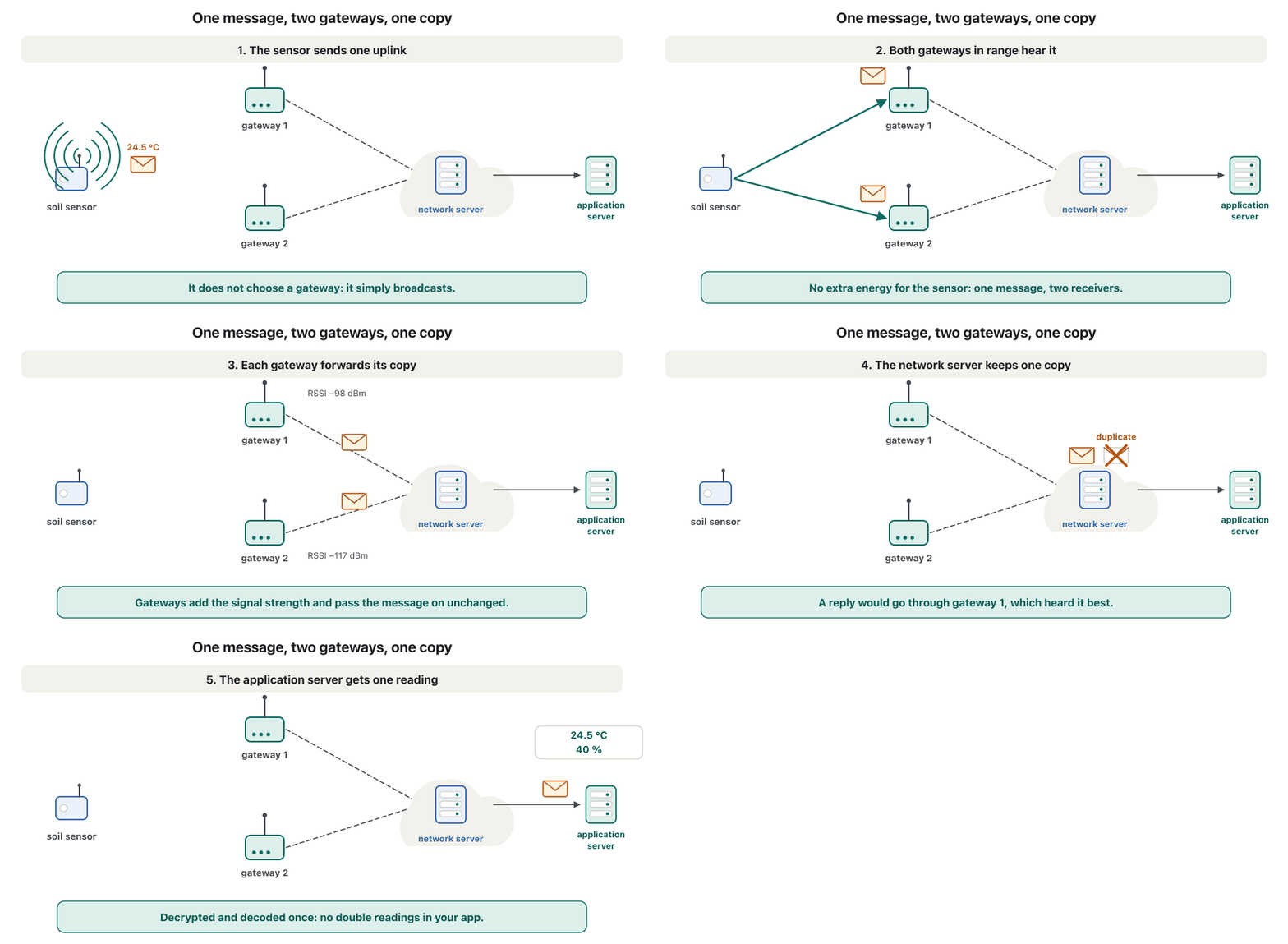
End devices broadcast their messages: they do not choose a gateway, and every gateway in range may pick a message up. Many such stars around gateways, all joined to one server, form a star of stars (stars in IoT).
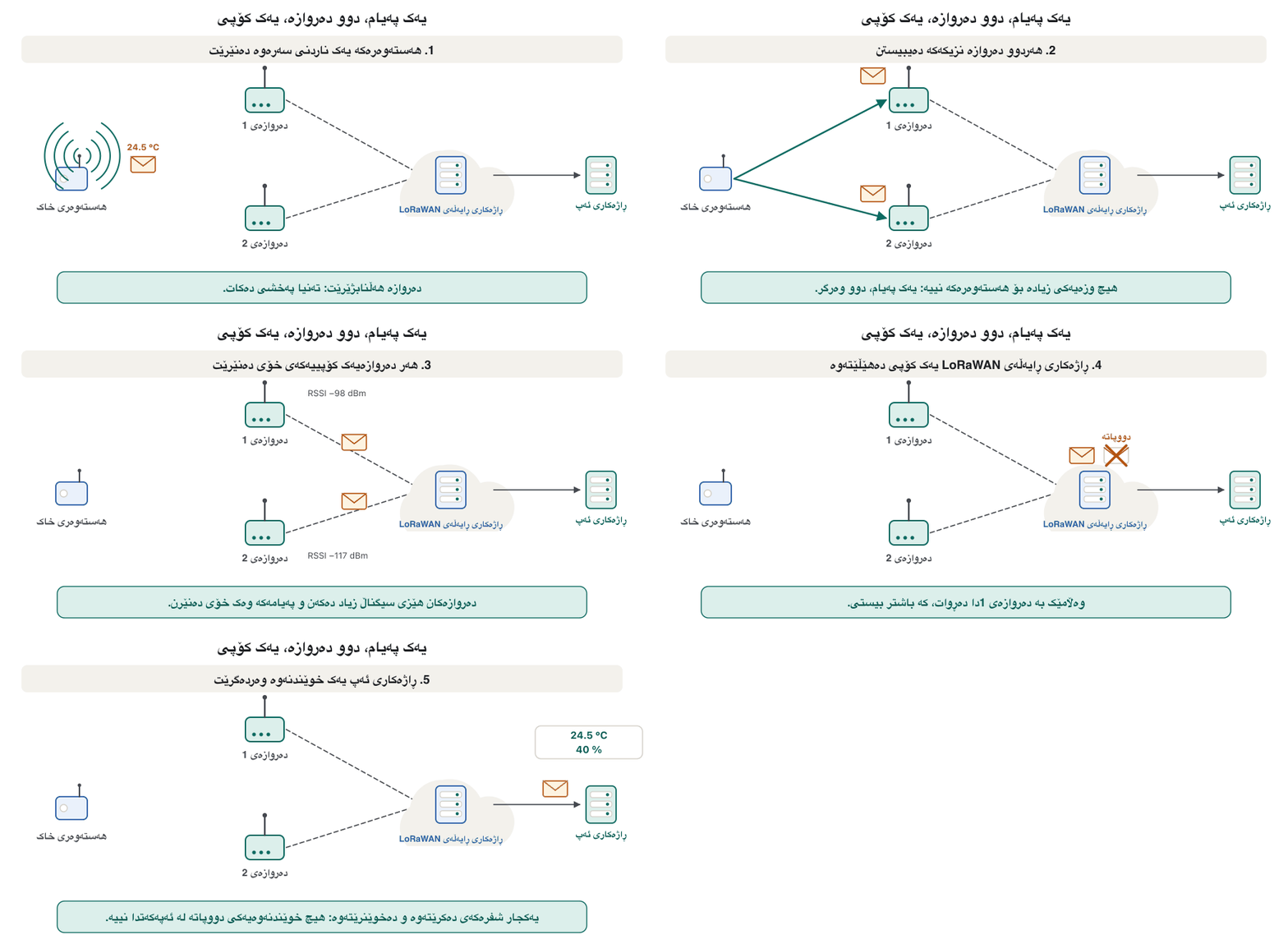
پەیامەکانیان پەخش دەکەن (): دەروازە هەڵنابژێرن و هەر دەروازەیەک کە ئەوەندە نزیک بێت دەتوانێت پەیامەکە وەربگرێت. زۆر ئەستێرەی لەم جۆرە بە دەوری دەروازەکاندا، کە هەموویان بە یەک بەستراون، ئەستێرەیەک لە ئەستێرەکان پێک دەهێنن (ئەستێرە لە IoTـدا).
The architecture: devices, gateways and serversتەلارسازی: ئامێر، دەروازە و ڕاژەکارەکان
Gateways: simple messengersدەروازەکان: نامەبەری سادە
Gateways are simply passages to the core network: they have no built-in intelligence. A gateway receives every LoRa message it can hear, adds how strong the signal was, and forwards it unchanged — it cannot even read the encrypted data. This brings two big advantages:
دەروازەکان تەنیا ڕێڕەوێکن بۆ ناوەکی: هیچ زیرەکییەکیان تێدا نییە. دەروازەیەک هەموو پەیامێکی کە بیبیستێت وەردەگرێت، هێزی بۆ زیاد دەکات و وەک خۆی دەینێرێت — تەنانەت ناتوانێت شفرەکراو بخوێنێتەوە. ئەمە دوو سوودی گەورەی هەیە:
- Cheap, simple hardware: a gateway is mostly a radio and a small computer, so communities and companies can install many.
- No roaming or hand-off: a device does not need to know which gateway hears it. Several gateways can receive the same packet at no extra energy cost to the device, and nothing has to be handed over or synchronised when it moves — unlike a phone moving from one mobile tower to the next ().
- هەرزان و سادە: دەروازەیەک زۆربەی ڕادیۆیەک و بچووکە، بۆیە کۆمەڵگە و کۆمپانیاکان دەتوانن زۆری دابنێن.
- بێ و : ئامێرەکە پێویست ناکات بزانێت کام دەروازە دەیبیستێت. چەند دەروازەیەک دەتوانن هەمان وەربگرن بێ ئەوەی وزەی زیاتری ئامێرەکە بخوات و کاتێک دەجووڵێت هیچ شتێک ڕادەست ناکرێت و هاوکات ناکرێت — بە پێچەوانەی مۆبایلێک کە لە تاوەرێکی مۆبایلەوە دەچێتە تاوەرێکی تر.
The animation follows one reading heard by two gateways. The network server keeps one copy and throws the duplicate away; it remembers which gateway heard the device best, for any reply.
یەک خوێندنەوە بەدوادا دەچێت کە دوو دەروازە دەیبیستن. یەک کۆپی دەهێڵێتەوە و دووپاتەکە فڕێ دەدات؛ لە بیری دەمێنێت کام دەروازە ئامێرەکەی باشتر بیستووە، بۆ هەر وەڵامێک.
The architecture: devices, gateways and serversتەلارسازی: ئامێر، دەروازە و ڕاژەکارەکان
Network, application and join serversڕاژەکارەکانی ڕایەڵە، ئەپ و پەیوەستبوون
The network server is the central part of every LoRaWAN network and carries all its intelligence. It removes duplicates; checks each message’s integrity code and counter; acknowledges messages that ask for it; tells each device which data rate and spreading factor to use (ADR, adaptive data rate); chooses the best gateway for each reply; and sends the data on to the other servers.
بەشی ناوەندیی هەموو و هەموو زیرەکییەکەی هەڵگرتووە. دووپاتەکان لادەبات؛ کۆدی پشکنین و ژمارەی هەر پەیامێک دەپشکنێت؛ بۆ ئەو پەیامانەی داوای دەکەن دەنێرێت؛ بە هەر ئامێرێک دەڵێت کام و کام بەکار بهێنێت (ADR، adaptive data rate)؛ باشترین دەروازە بۆ هەر وەڵامێک هەڵدەبژێرێت و دەنێرێت بۆ تر.
The application server handles the application layer: it decrypts and decodes the uplink data, turning bytes back into readings, and it queues, encodes and encrypts downlink data for the devices. The join server, added in LoRaWAN 1.1 and usable with 1.0.4, keeps each device’s secret root key, checks join requests and creates fresh session keys: one for the network server and one for the application server.
بەڕێوە دەبات: شفرەی دەکاتەوە و دەیخوێنێتەوە، واتە دەکاتەوە بە خوێندنەوە؛ هەروەها بۆ ئامێرەکان ڕیز دەکات، کۆد دەکات و شفرە دەکات. ، کە لە 1.1ـدا هات و لەگەڵ 1.0.4یش بەکار دێت، ڕەگی نهێنیی هەر ئامێرێک دەپارێزێت، داواکاریی پەیوەستبوون دەپشکنێت و نوێ دروست دەکات: یەکێک بۆ و یەکێک بۆ .
Joining the network: OTAA and ABPپەیوەستبوون بە ڕایەڵەوە: OTAA و ABP
LoRaWAN protects every message with AES-128, a strong symmetric cipher (symmetric encryption). A device uses two session keys. The network session key (NwkSKey) adds a check code (MIC) to every message, so the network can see that it is genuine and unchanged. The application session key (AppSKey) encrypts the data itself, all the way to the application server. Every message also carries a counter that only goes up, so an old message sent again — a — is rejected. LoRaWAN 1.1 splits the network key into three for even stronger separation.
هەموو پەیامێک بە -128 دەپارێزێت، کە هاوچەشنی بەهێزە (شفرەکردنی هاوچەشن). ئامێرێک دوو بەکار دەهێنێت. (NwkSKey) کۆدێکی پشکنین (MIC) بۆ هەموو پەیامێک زیاد دەکات، بۆ ئەوەی ببینێت ڕاستەقینەیە و نەگۆڕاوە. ئەپ (AppSKey) خودی شفرە دەکات، هەتا . هەر پەیامێکیش ژمارەیەک هەڵدەگرێت کە تەنیا بەرز دەبێتەوە، بۆیە پەیامێکی کۆن کە دووپاتە بنێردرێتەوە — — ڕەت دەکرێتەوە. 1.1 دەکات بە سێ، بۆ جیاکردنەوەیەکی بەهێزتر.
A device gets its keys in one of two ways, called activation:
ئامێرێک بە یەکێک لەم دوو ڕێگەیە وەردەگرێت، کە پێیان دەڵێن :
- OTAA (over-the-air activation, recommended): the device holds its DevEUI, JoinEUI and a root key, the AppKey. It sends a Join-request; the join server checks it and answers with an encrypted Join-accept that gives the device an address. Both sides then compute fresh session keys. The root key itself never travels by radio.
- ABP (activation by personalisation): the address and both session keys are written into the device, and it sends at once with no join. Simpler, but less secure: the same keys for the device’s whole life, tied to one network, and a stolen key stays valid.
- OTAA (over-the-air activation، پێشنیارکراو): ئامێرەکە DevEUI، JoinEUI و ڕەگ، واتە AppKey، هەڵدەگرێت. Join-request دەنێرێت؛ دەیپشکنێت و بە Join-acceptـێکی شفرەکراو وەڵام دەداتەوە کە ناونیشانێک دەداتە ئامێرەکە. پاشان هەردوو لا نوێ دەژمێرن. خودی ڕەگەکە هەرگیز بە ڕادیۆ نانێردرێت.
- ABP (activation by personalisation): ناونیشان و هەردوو لە ناو ئامێرەکەدا دەنووسرێن و بەبێ پەیوەستبوون یەکسەر دەنێرێت. سادەترە، بەڵام ئاسایشی کەمترە: هەمان بۆ هەموو تەمەنی ئامێرەکە، بەستراوە بە یەک و دزراو هەر بەکار دێت.
Device classes A, B and Cپۆلەکانی ئامێری LoRaWAN: A، B و C
LoRaWAN devices differ in when they listen for downlinks. This choice is called the device’s class:
ئامێرەکانی لەوەدا جیاوازن کە کەی گوێ لە دەگرن. ئەم هەڵبژاردنە پێی دەڵێن :
- Class A (every device must support it): after each uplink the device opens two short receive windows, RX1 about 1 second and RX2 about 2 seconds after it finished sending (the default delays). The network replies in one of them; then the device sleeps until its next uplink. Lowest power: a battery can last years.
- Class B: like Class A, plus extra receive windows at scheduled times, called ping slots. Gateways send a time beacon every 128 seconds, so the devices and the network agree on the clock. More power than A; used for meters and street lights.
- Class C: listens almost all the time, except while sending. Downlinks arrive almost at once, but the radio is always on, so these devices are usually mains-powered: alarms, street-light controllers.
- پۆلی A (هەموو ئامێرێک دەبێت پشتگیری بکات): دوای هەر ئامێرەکە دوو پەنجەرەی کورتی وەرگرتن دەکاتەوە، RX1 نزیکەی 1 چرکە و RX2 نزیکەی 2 چرکە دوای تەواوبوونی ناردن (دواکەوتنە بنەڕەتییەکان). لە یەکێکیاندا وەڵام دەداتەوە؛ پاشان ئامێرەکە دەخەوێت تا داهاتوو. کەمترین وزە: چەند ساڵێک دەمێنێت.
- پۆلی B: وەک پۆلی A، لەگەڵ پەنجەرەی وەرگرتنی زیادە لە کاتی دیاریکراودا، کە پێیان دەڵێن ping slot. دەروازەکان هەر 128 چرکە جارێک ئاماژەیەکی کات (beacon) دەنێرن، بۆ ئەوەی ئامێرەکان و لەسەر کاتژمێر ڕێک بکەون. وزەی لە A زیاترە؛ بۆ پێوەر و گڵۆپی شەقام بەکار دێت.
- پۆلی C: نزیکەی هەموو کاتێک گوێ دەگرێت، جگە لە کاتی ناردن. نزیکەی یەکسەر دەگەن، بەڵام ڕادیۆکە هەمیشە هەڵکراوە، بۆیە ئەم ئامێرانە زۆربەی جار بە کارەبای ماڵ کار دەکەن: زەنگی ئاگاداری، کۆنترۆڵەری گڵۆپی شەقام.
Why LoRaWAN is popularبۆچی LoRaWAN بەناوبانگە
- Long range on low power: low-powered sensors and a coverage area measured in kilometres.
- Licence-free bands: no licence and no up-front fee for the frequencies (free, but with rules).
- Long battery life: thanks to low power, sensor batteries often last years — 2 to 5 years is common for Class A and B devices, and more when they send rarely.
- Many devices per gateway: one gateway is designed to serve thousands of end devices.
- Easy and fast to deploy: a simple architecture, wireless devices and cheap gateways.
- Bigger messages than Sigfox: 51 to 222 bytes in Europe, depending on the data rate, against Sigfox’s 12 bytes (payload, Sigfox).
- Open: an open alliance and an open standard that many makers implement, instead of one company’s network, as with Sigfox; hundreds of companies back it.
- دووریی زۆر بە وزەی کەم: کەموزە و ناوچەیەکی داپۆشراو کە بە کیلۆمەتر دەپێورێت.
- : نە مۆڵەت و نە پارەی پێشوەختە بۆ (بێبەرانبەر، بەڵام بە یاسا).
- درێژخایەن: بەهۆی وزەی کەمەوە، زۆربەی جار چەند ساڵێک دەمێنێت — 2 تا 5 ساڵ بۆ ئامێرەکانی پۆلی A و B باوە و ئەگەر بە دەگمەن بنێرن زیاتریش.
- زۆر ئامێر بۆ هەر دەروازەیەک: یەک دەروازە بۆ خزمەتکردنی هەزاران دیزاین کراوە.
- دانانی ئاسان و خێرا: تەلارسازییەکی سادە، ئامێری و دەروازەی هەرزان.
- پەیامی گەورەتر لە : لە ئەورووپا 51 تا 222 ، بەپێی ، بەرامبەر 12 (قەبارەی پەیام، Sigfox).
- کراوە: هاوپەیمانییەکی کراوە و کە زۆر دروستکەر جێبەجێی دەکەن، لە جیاتی یەک کۆمپانیا وەک ؛ سەدان کۆمپانیا پشتگیری دەکەن.
Why LoRaWAN is popularبۆچی LoRaWAN بەناوبانگە
Free bands, but not unlimited messagesباندی بێمۆڵەت، بەڵام پەیامی بێسنوور نا
So the real limit depends on the airtime of each message. Under the 30-second budget, a 10-byte reading fits about 486 times a day at SF7, but only about 20 times at SF12.
کەواتە سنووری ڕاستەقینە بەستراوە بە هەر پەیامێک. بە بودجەی 30 چرکە، خوێندنەوەیەکی 10 نزیکەی 486 جار لە ڕۆژێکدا بە SF7 جێی دەبێتەوە، بەڵام تەنیا نزیکەی 20 جار بە SF12.
What LoRaWAN is not forLoRaWAN بۆ چی نییە
- Large data: one message carries at most 222 bytes, and only 51 at the slowest rates — no photos, audio or video.
- Continuous monitoring: devices send now and then, not a constant stream. Only Class C devices listen all the time, and they need mains power.
- Real-time control: LoRaWAN cannot promise low latency (delay) or low jitter, the variation of the delay from one message to the next. A Class A device hears a command only after its next uplink.
- Protected airwaves: the open bands are shared, so other radios can cause interference and the data rate may drop. Mobile operators using GSM, 4G or 5G pay governments large licence fees for frequencies that only they may use, so their links are protected; LoRa’s open bands need no licence, but anyone may use them.
- گەورە: یەک پەیام زۆرترین 222 هەڵدەگرێت و لە خاوترین خێراییەکاندا تەنیا 51 — نە وێنە، نە دەنگ، نە ڤیدیۆ.
- چاودێریی بەردەوام: ئامێرەکان جارجار دەنێرن، نەک بە بەردەوامی. تەنیا ئامێرەکانی پۆلی C هەموو کاتێک گوێ دەگرن و کارەبای ماڵیان پێویستە.
- کۆنترۆڵی : ناتوانێت بەڵێنی کەم یان کەم بدات، واتە گۆڕانی لە پەیامێکەوە بۆ پەیامێکی تر. ئامێرێکی پۆلی A تەنیا دوای داهاتووی گوێی لە فەرمانێک دەبێت.
- هەوای پارێزراو: باندە کراوەکان هاوبەشن، بۆیە ڕادیۆکانی تر دەتوانن دروست بکەن و دابەزێت. کۆمپانیاکانی مۆبایل کە ، 4G یان 5G بەکار دەهێنن پارەیەکی زۆری مۆڵەت بە حکومەت دەدەن بۆ ئەو تەنیا خۆیان بەکاریان دەهێنن، بۆیە بەستەرەکانیان پارێزراوە؛ باندە کراوەکانی مۆڵەتیان ناوێت، بەڵام هەموو کەس دەتوانێت بەکاریان بهێنێت.
Public, community and private networksڕایەڵەکانی گشتی، کۆمەڵگەیی و تایبەت
To use LoRaWAN you need a gateway within reach and a network server. There are three ways to get them: a public operator that sells coverage, a community network built by volunteers, or your own private network — your own gateway and an open-source network server.
بۆ بەکارهێنانی پێویستت بە دەروازەیەکی نزیک و هەیە. سێ ڕێگە هەیە بۆ بەدەستهێنانیان: کۆمپانیایەکی گشتی کە داپۆشین دەفرۆشێت، کۆمەڵگەیی کە خۆبەخشان دروستیان کردووە، یان تایبەتی خۆت — دەروازەی خۆت و .
The best-known community network is The Things Network (TTN), a free, open LoRaWAN network that runs on The Things Stack. As of November 2026 its website lists more than 250,000 members in over 150 countries. Anyone can register devices for free, and anyone can add a gateway, which extends the coverage for everyone.
ناسراوترین کۆمەڵگەیی The Things Networkـە (TTN)، کراوە و بێبەرانبەر کە لەسەر The Things Stack کار دەکات. تا تشرینی دووەمی 2026 ماڵپەڕەکەی زیاتر لە 250,000 ئەندام لە زیاتر لە 150 وڵاتدا پیشان دەدات. هەموو کەس دەتوانێت بە بێبەرانبەری ئامێر تۆمار بکات و هەموو کەس دەتوانێت دەروازەیەک زیاد بکات، کە داپۆشین بۆ هەمووان فراوان دەکات.
Useful places to look: the LoRa Alliance (lora-alliance.org); The Things Network (thethingsnetwork.org); TTN Mapper’s coverage heatmap (ttnmapper.org/heatmap), which shows where gateways have heard devices; and TTN’s Kurdistan Region community (thethingsnetwork.org/community/kurdistan), founded in 2019. As of November 2026 its page lists only a few online gateways, so a project here usually brings its own. Before installing one, check the frequency rules for Iraq (regional plans).
شوێنی بەسوود بۆ گەڕان: LoRa Alliance (lora-alliance.org)؛ The Things Network (thethingsnetwork.org)؛ نەخشەی گەرمیی داپۆشینی TTN Mapper (ttnmapper.org/heatmap)، کە پیشان دەدات دەروازەکان لە کوێ ئامێریان بیستووە؛ هەروەها کۆمەڵگەی هەرێمی کوردستانی TTN (thethingsnetwork.org/community/kurdistan)، کە لە 2019 دامەزراوە. تا تشرینی دووەمی 2026 لاپەڕەکەی تەنیا چەند دەروازەیەکی سەرهێڵ پیشان دەدات، بۆیە پرۆژەیەک لێرە زۆربەی جار دەروازەی خۆی دەهێنێت. پێش دانانی، یاساکانی بۆ عێراق بپشکنە (پلانە هەرێمییەکان).
Sending a reading from the MKR WAN 1310ناردنی خوێندنەوەیەک لە MKR WAN 1310ـەوە
Now the device side, end to end. In Packing a reading you packed a DHT11 reading into 3 bytes. This sketch for the MKR WAN 1310 uses the MKRWAN library to join a network with OTAA and send those 3 bytes every 15 minutes. First register the device in your network’s console (for example TTN): you type in the board’s DevEUI, which the sketch prints, and the console gives you the JoinEUI and the AppKey for the secrets file.
ئێستا لای ئامێرەکە، لە سەرەتاوە تا کۆتایی. لە پەستاوتنی خوێندنەوەیەک خوێندنەوەیەکی DHT11ـت پەستاندە ناو 3 . ئەم بۆ MKR WAN 1310 MKRWAN بەکار دەهێنێت بۆ ئەوەی بە OTAA پەیوەست بێت بە و ئەو 3 هەر 15 خولەک جارێک بنێرێت. سەرەتا ئامێرەکە لە کۆنسۆڵی تۆمار بکە (بۆ نموونە لە TTNـدا): DevEUIـی بۆردەکە، کە چاپی دەکات، دەنووسیت و کۆنسۆڵەکە JoinEUI و AppKey بۆ فایلی نهێنییەکان دەداتێ.
// Keys from your network console. Never share this file or put it on the internet.
#define SECRET_APP_EUI "0000000000000000"                   // JoinEUI (AppEUI): 16 hex digits
#define SECRET_APP_KEY "00000000000000000000000000000000"   // AppKey: 32 hex digits
Explain the codeڕوونکردنەوەی کۆدەکە
- Lineدێڕی 2-3
Placeholders: paste your own values from the console. Never upload this file to GitHub or share it: anyone with the AppKey can pretend to be your device.
جێگرەوەن: نرخەکانی خۆت لە کۆنسۆڵەکەوە دابنێ. هەرگیز ئەم فایلە مەخە سەر GitHub و بە کەسی مەدە: هەر کەسێک AppKeyـی هەبێت دەتوانێت خۆی وەک ئامێرەکەت پیشان بدات.
// Join a LoRaWAN network by OTAA and send a packed DHT11 reading every 15 minutes (MKR WAN 1310)
#include <MKRWAN.h>
#include <DHT.h>
#include "arduino_secrets.h"   // SECRET_APP_EUI and SECRET_APP_KEY

LoRaModem modem;
DHT dht(2, DHT11);                       // DHT11 data pin on pin 2

void setup() {
  Serial.begin(115200);
  while (!Serial);                       // wait for the Serial Monitor
  dht.begin();
  if (!modem.begin(EU868)) {             // the frequency plan of your region
    Serial.println("The LoRa module did not start");
    while (true) {}
  }
  Serial.print("Device EUI: ");
  Serial.println(modem.deviceEUI());     // copy it into the network console
  if (!modem.joinOTAA(SECRET_APP_EUI, SECRET_APP_KEY)) {
    Serial.println("Join failed: move near a window and try again");
    while (true) {}
  }
  Serial.println("Joined the network");
}

void loop() {
  float t = dht.readTemperature();
  float h = dht.readHumidity();
  if (isnan(t) || isnan(h)) {            // no reading: send nothing this time
    Serial.println("DHT11 read failed");
    delay(2000);
    return;
  }
  int16_t t10 = (int16_t)round(t * 10);  // 24.5 -> 245
  uint8_t payload[3];
  payload[0] = (t10 >> 8) & 0xFF;        // high byte
  payload[1] = t10 & 0xFF;               // low byte
  payload[2] = (uint8_t)round(h);        // humidity in %

  modem.setPort(1);                      // FPort 1 = "our reading format"
  modem.beginPacket();
  modem.write(payload, 3);
  int err = modem.endPacket(false);      // false = unconfirmed uplink
  if (err > 0) {
    Serial.println("Sent 3 bytes");
  } else {
    Serial.println("Not sent: wait and try again later");
  }
  delay(15UL * 60UL * 1000UL);           // the next reading in 15 minutes
}
Explain the codeڕوونکردنەوەی کۆدەکە
- Lineدێڕی 11
Waits until the Serial Monitor is opened. On a battery in the field no computer opens it, so delete this line there, or the board waits for ever and never sends.
چاوەڕێ دەکات تا دەکرێتەوە. لەسەر لە کێڵگەدا هیچ نایکاتەوە، بۆیە لەوێ ئەم دێڕە بسڕەوە، دەنا بۆردەکە بۆ هەمیشە چاوەڕێ دەکات و هەرگیز نانێرێت.
- Lineدێڕی 13
EU868must match your region’s frequency plan (for Iraq the LoRa Alliance suggests EU868 or EU433).EU868دەبێت لەگەڵ ناوچەکەت یەک بگرێتەوە (بۆ عێراق LoRa Alliance EU868 یان EU433 پێشنیار دەکات).- Lineدێڕی 19
joinOTAA()sends the Join-request and waits for the Join-accept; it returns 0 if no gateway answered.joinOTAA()Join-request دەنێرێت و چاوەڕێی Join-accept دەکات؛ ئەگەر هیچ دەروازەیەک وەڵامی نەدایەوە 0 دەگەڕێنێتەوە.- Lineدێڕی 34-38
The same 3-byte packing as in the LoRa lesson: temperature × 10 in two bytes, humidity in one.
هەمان پەستاوتنی 3 وانەی : پلەی گەرمی × 10 لە دوو ، شێ لە یەکێکدا.
- Lineدێڕی 40
The port (FPort) tells the server which message format this is.
پۆرتەکە (FPort) بە دەڵێت ئەمە کام شێوازی پەیامە.
- Lineدێڕی 43
false= an unconfirmed uplink: no acknowledgement, so no downlink is used.false= بێ دڵنیاکردنەوە: نییە، بۆیە هیچ بەکار نایەت.- Lineدێڕی 49
Every 15 minutes: 96 messages a day, well inside the duty cycle and the fair-use budget.
هەر 15 خولەک: 96 پەیام لە ڕۆژێکدا، بە باشی لە ناو و بودجەی بەکارهێنانی گونجاودا.
What you will see. The CêIT checker cannot imitate a LoRa radio or a network, so this sketch was only checked for mistakes in the code, not run. From its code: the Serial Monitor first shows Device EUI: and the board’s ID; if a gateway hears the join, Joined the network; then Sent 3 bytes every 15 minutes. With no gateway in range the join fails and the sketch stops with its message. In the network’s console each uplink appears with its counter, port 1, the three bytes and the gateways that heard it with their signal strength.
چی دەبینیت. پشکنەری CêIT ناتوانێت لاسایی ڕادیۆی یان بکاتەوە، بۆیە ئەم تەنیا بۆ هەڵەی کۆد پشکنرا، نەک کارپێکرا. بەپێی کۆدەکەی: سەرەتا Device EUI: و ناسنامەی بۆردەکە پیشان دەدات؛ ئەگەر دەروازەیەک پەیوەستبوونەکە ببیستێت، Joined the network؛ پاشان هەر 15 خولەک جارێک Sent 3 bytes. ئەگەر هیچ دەروازەیەک ئەوەندە نزیک نەبێت، پەیوەستبوون سەرناکەوێت و بە پەیامەکەی خۆی ڕادەوەستێت. لە کۆنسۆڵی هەر بە ژمارەکەی، پۆرتی 1، سێ و ئەو دەروازانەی بیستوویانە لەگەڵ هێزی دەردەکەوێت.
Sending a reading from the MKR WAN 1310ناردنی خوێندنەوەیەک لە MKR WAN 1310ـەوە
Turning the bytes back into a readingگەڕاندنەوەی بایتەکان بۆ خوێندنەوە
On the network side, The Things Stack can run a small JavaScript function, a payload formatter, on every uplink. decodeUplink() receives the bytes and the port and returns the reading as JSON. The application server then passes it on, for example by MQTT or a webhook — the protocols of the next lesson, Sending IoT data.
لە لای ، The Things Stack دەتوانێت بچووکی JavaScript، واتە شیکەرەوەی (payload formatter)، لەسەر هەموو کار پێ بکات. decodeUplink() و پۆرتەکە وەردەگرێت و خوێندنەوەکە وەک JSON دەگەڕێنێتەوە. پاشان دەینێرێت، بۆ نموونە بە MQTT یان webhook — وانەی داهاتوو، ناردنی دراوەی IoT.
// Uplink payload formatter: turns our 3 bytes back into a reading
function decodeUplink(input) {
  var b = input.bytes;
  if (input.fPort !== 1 || b.length !== 3) {
    return { errors: ["unknown message format"] };
  }
  var t10 = (b[0] << 8) | b[1];      // 0x00F5 = 245
  if (t10 > 32767) t10 -= 65536;     // negative temperatures
  return {
    data: { temperature: t10 / 10, humidity: b[2] }
  };
}[00 F5 28] port 1 → {"data":{"temperature":24.5,"humidity":40}}
[FF CC 5A] port 1 → {"data":{"temperature":-5.2,"humidity":90}}
[01] port 2 → {"errors":["unknown message format"]}Run with Node.js on CêIT’s computer (The Things Stack uses JavaScript ES5.1, which this code follows).
بە Node.js لەسەر CêIT کارپێکراوە (The Things Stack JavaScriptـی ES5.1 بەکار دەهێنێت و ئەم کۆدە پەیڕەوی دەکات).
Explain the codeڕوونکردنەوەی کۆدەکە
- Lineدێڕی 4-6
Reject anything that is not our 3-byte format on port 1.
هەر شتێک کە شێوازی 3 ئێمە لەسەر پۆرتی 1 نەبێت ڕەت دەکرێتەوە.
- Lineدێڕی 7-8
Join the two bytes; numbers above 32767 are negative in 16-bit two’s complement.
دوو پێکەوە دەلکێنرێن؛ ژمارەی سەرووی 32767 لە 16 نەرێنین.
Common mistakesهەڵە باوەکان
Exercisesڕاهێنانەکان
Put these in order for one reading from a water meter: (a) the application server decrypts and decodes it; (b) two gateways hear it; (c) the meter broadcasts an uplink; (d) the network server removes the duplicate; (e) your app shows the reading; (f) the gateways forward it over the backhaul.
ئەمانە بۆ یەک خوێندنەوەی پێوەرێکی ئاو ڕیز بکە: (a) شفرەکەی دەکاتەوە و دەیخوێنێتەوە؛ (b) دوو دەروازە دەیبیستن؛ (c) پێوەرەکە پەخش دەکات؛ (d) دووپاتەکە لادەبات؛ (e) ئەپەکەت خوێندنەوەکە پیشان دەدات؛ (f) دەروازەکان بە دەینێرن.
Show answerوەڵامەکە پیشان بدە
c → b → f → d → a → e. The meter broadcasts; both gateways hear it and forward their copies; the network server keeps one; the application server decrypts and decodes it; your app shows it.
c → b → f → d → a → e. پێوەرەکە پەخشی دەکات؛ هەردوو دەروازەکە دەیبیستن و کۆپییەکانیان دەنێرن؛ یەکێکیان دەهێڵێتەوە؛ شفرەکەی دەکاتەوە و دەیخوێنێتەوە؛ ئەپەکەت پیشانی دەدات.
Which device class fits each device? (a) a battery water meter that reports once a day; (b) a mains-powered street-light controller that must switch within seconds of a command; (c) a battery parking sensor that sometimes needs a new setting within a few minutes.
کام بۆ هەر ئامێرێک گونجاوە؟ (a) پێوەرێکی ئاوی کە ڕۆژانە جارێک خوێندنەوە دەنێرێت؛ (b) کۆنترۆڵەرێکی گڵۆپی شەقام کە بە کارەبای ماڵ کار دەکات و دەبێت لە ماوەی چەند چرکەیەکدا دوای فەرمانێک بیگۆڕێت؛ (c) پارکینگی کە جارجار لە ماوەی چەند خولەکێکدا ڕێکخستنێکی نوێی دەوێت.
Show answerوەڵامەکە پیشان بدە
(a) Class A: lowest power, and commands can wait for the daily uplink. (b) Class C: always listening, and mains power pays for it. (c) Class B: scheduled ping slots give replies within minutes and still save battery.
(a) پۆلی A: کەمترین وزە و فەرمانەکان دەتوانن چاوەڕێی ڕۆژانە بکەن. (b) پۆلی C: هەمیشە گوێ دەگرێت و کارەبای ماڵ تێچووەکەی دەدات. (c) پۆلی B: کاتی گوێگرتنی دیاریکراو لە ماوەی چەند خولەکێکدا وەڵام دەگەیەنێت و هێشتا پاشەکەوت دەکات.
A sensor on The Things Network sends a 10-byte reading at SF9, which takes 205.8 ms on air. (a) How many readings a day fit into the 30-second fair-use budget? (b) Is one reading every 10 minutes allowed?
لەسەر The Things Network خوێندنەوەیەکی 10 بە SF9 دەنێرێت، کە 205.8 ms دەخایەنێت. (a) چەند خوێندنەوە لە ڕۆژێکدا لە بودجەی 30 چرکەیی بەکارهێنانی گونجاودا جێیان دەبێتەوە؟ (b) ئایا هەر 10 خولەک خوێندنەوەیەک ڕێگەپێدراوە؟
Show answerوەڵامەکە پیشان بدە
Yes, but only just: 144 readings use 29.6 of the 30 seconds. A lower SF (if the gateway hears it) would leave room for more.
بەڵێ، بەڵام بە زەحمەت: 144 خوێندنەوە 29.6 چرکە لە 30 چرکەکە بەکار دەهێنن. SFـێکی نزمتر (ئەگەر دەروازەکە بیبیستێت) جێی زیاتر دەهێڵێتەوە.
A company will move its 500 sensors from The Things Network to its own private network next year. Which activation should the sensors use now, and why?
کۆمپانیایەک ساڵی داهاتوو 500 خۆی لە The Things Networkـەوە دەگوازێتەوە بۆ تایبەتی خۆی. ئێستا کام بەکار بهێنن و بۆچی؟
Show answerوەڵامەکە پیشان بدە
OTAA. The company only registers the same DevEUIs and AppKeys on its new join server, and the sensors rejoin and get new session keys. With ABP every sensor would carry keys tied to the old network and would have to be reprogrammed one by one.
OTAA. کۆمپانیاکە تەنیا هەمان DevEUI و AppKey لەسەر نوێی تۆمار دەکات و دووپاتە پەیوەست دەبنەوە و نوێ وەردەگرن. بە ABP هەر بەستراو بە کۆنەکەی هەڵگرتووە و دەبێت یەک بە یەک دووپاتە پرۆگرام بکرێتەوە.
Rewrite this sentence so that it is true: “LoRaWAN is open-source software with no message limit, and each message carries 100 bytes.”
ئەم ڕستەیە بە ڕاستی بنووسەرەوە: « بێ سنووری پەیام و هەر پەیامێک 100 هەڵدەگرێت.»
Show answerوەڵامەکە پیشان بدە
“LoRaWAN is an open standard of the LoRa Alliance (also ITU-T Y.4480). There is no fixed message count, but airtime is limited by the duty cycle and network fair-use rules. In Europe a message carries 51 to 222 bytes, depending on the data rate.”
« LoRa Allianceـە (هەروەها ITU-T Y.4480). ژمارەیەکی جێگیری پەیام نییە، بەڵام بە و یاسای بەکارهێنانی گونجاوی سنووردارە. لە ئەورووپا پەیامێک بەپێی 51 تا 222 هەڵدەگرێت.»
Summaryپوختە
- LoRaWAN is the network protocol on the LoRa radio: LoRa is the voice (physical layer), LoRaWAN the brain (MAC layer).
- An open standard of the LoRa Alliance since 2015, and ITU-T Y.4480 since November 2021 (= LoRaWAN 1.0.4).
- Architecture: end devices → gateways → backhaul → network server → application server, with a join server for keys. Devices broadcast; the network server removes duplicates.
- Security: AES-128 with two session keys; join by OTAA (recommended) or ABP.
- Classes: A listens after each uplink (lowest power), B also at scheduled times, C almost always (mains power).
- Strengths: kilometres, licence-free, years on a battery, cheap gateways, open. Limits: small messages, limited airtime, not real-time, shared bands.
- Community networks such as The Things Network: 30 s of uplink airtime and 10 downlinks per device per day.
- لەسەر ڕادیۆی : دەنگەکەیە ()، مێشکەکە (چینی MAC).
- LoRa Allianceـە لە 2015ـەوە و ITU-T Y.4480ـە لە تشرینی دووەمی 2021ـەوە (= 1.0.4).
- تەلارسازی: ← دەروازەکان ← ← ← ، لەگەڵ بۆ . ئامێرەکان پەخش دەکەن؛ دووپاتەکان لادەبات.
- ئاسایش: AES-128 بە دوو ؛ پەیوەستبوون بە OTAA (پێشنیارکراو) یان ABP.
- پۆلەکان: A دوای هەر گوێ دەگرێت (کەمترین وزە)، B هەروەها لە کاتی دیاریکراودا، C نزیکەی هەمیشە (کارەبای ماڵ).
- خاڵە بەهێزەکان: چەند کیلۆمەتر، بێمۆڵەت، چەند ساڵ بە ، دەروازەی هەرزان، کراوە. سنوورەکان: پەیامی بچووک، سنووردار، نییە، باندی هاوبەش.
- کۆمەڵگەیی وەک The Things Network: ڕۆژانە 30 چرکە و 10 بۆ هەر ئامێرێک.
Next: how the readings travel on from the server to apps and databases — Sending IoT data: HTTP, JSON and MQTT.
داهاتوو: خوێندنەوەکان چۆن لە دەچن بۆ ئەپ و — ناردنی دراوەی IoT: HTTP، JSON و MQTT.
Lesson complete!وانەکە تەواو بوو!
Well done. Review the key terms, then go on to the next lesson.دەستخۆش. سەیرێکی زاراوە سەرەکییەکان بکەرەوە، پاشان بڕۆ بۆ وانەی داهاتوو.
Key termsزاراوە سەرەکییەکان
Sending IoT Data: HTTP, JSON and MQTTناردنی دراوەی IoT: HTTP، JSON و MQTT
Related lecturesوانە پەیوەندیدارەکان
- Point-to-Point, Star and Mesh Networksپەیوەندیی خاڵ بۆ خاڵ، ڕایەڵەی ئەستێرەیی و ڕایەڵەی چنراو
- Who Writes the Rules? IoT Standardsکێ یاساکان دەنووسێت؟ ستانداردەکانی IoT
- Layers: Organising an IoT Systemچینەکان: ڕێکخستنی سیستەمێکی IoT
- Sending IoT Data: HTTP, JSON and MQTTناردنی دراوەی IoT: HTTP، JSON و MQTT
- Arduino Boards and the Arduino IDEبۆردەکانی Arduino و Arduino IDE
- Range, Speed and Power: Choosing a Wireless Technologyمەودای سیگناڵ، خێرایی و وزە: هەڵبژاردنی تەکنەلۆجیایەکی بێتەل
- Encryption, Hashing and Digital Signaturesشفرەکردن، هاشکردن و واژووە دیجیتاڵییەکان
- OSI Layers 1–3: Physical, Data Link and Networkچینەکانی 1 تا 3ی OSI: چینی فیزیکی، چینی بەستەری دراوە و چینی ڕایەڵە
References and further readingسەرچاوەکان و خوێندنەوەی زیاتر
- LoRa Alliance: About LoRaWAN (open standard, MAC layer, star-of-stars, ITU recognition)
- LoRa Alliance: Technical specifications (TS001-1.0.4 LoRaWAN L2, RP002-1.0.5 Regional Parameters)
- LoRa Alliance: RP002-1.0.5 LoRaWAN Regional Parameters (RECEIVE_DELAY1 1 s, RECEIVE_DELAY2 2 s)
- ITU-T Recommendation Y.4480 (11/2021): Low power protocol for wide area wireless networks
- The Things Network: LoRaWAN architecture (network, application and join servers, deduplication, backhaul)
- The Things Network: Device classes
- ThingPark: Supported classes of LoRaWAN devices (Class B beacon every 128 s)
- The Things Network: End device activation (OTAA and ABP, AES-128 root keys)
- The Things Network: Duty cycle and Fair Use Policy
- The Things Network (community figures, November 2026)
- The Things Network: Kurdistan Region community
- TTN Mapper: coverage heatmap
- The Things Industries: JavaScript uplink payload formatters
- Arduino MKRWAN library: LoraSendAndReceive example and LoRaModem API
This lecture is a first edition. The Kurdish text and terminology are waiting for review by Kurdish IT teachers.ئەم وانەیە چاپی یەکەمە. دەقە کوردییەکە و زاراوەکانی چاوەڕێی پێداچوونەوەی مامۆستایانی کوردی بواری IT ن.