Chapterبەش 5 · Lectureوانە 5.1
Sensors: How Things Feel the Worldهەستەوەرەکان: شتەکان چۆن هەست بە جیهان دەکەن
What a sensor is and how it turns the physical world into electrical signals; the transducer inside it and the sensor node around it; the sensors of a car; five families of sensors; passive and active sensors in both of their meanings; and analog versus digital outputs.
چییە و چۆن جیهانی فیزیکی دەکاتە کارەبایی؛ ئەو لە ناویدایە و ئەو دەوری دەدات؛ ئۆتۆمبێل؛ پێنج خێزانی ؛ و بە هەردوو واتاکەیان؛ هەروەها و .
What you will learnچی فێر دەبیت
- Define a sensor and explain how sensors bridge the physical and the digital world.
- Tell a sensor, a transducer and a sensor node apart.
- Name the sensors of a modern car and five families of sensors with examples.
- Classify a sensor as passive or active, and say which of the two meanings you use.
- Tell analog sensors from digital sensors by their output.
- پێناسە بکەیت و ڕوونی بکەیتەوە چۆن جیهانی فیزیکی و جیهانی بەیەکەوە دەبەستن.
- ، و لە یەکتر جیا بکەیتەوە.
- ئۆتۆمبێلێکی نوێ و پێنج خێزانی بە نموونەوە ناو ببەیت.
- وەک ناچالاک یان چالاک پۆلێن بکەیت و بڵێیت کام لە دوو واتاکە بەکار دەهێنیت.
- لە بەپێی جیا بکەیتەوە.
How does a thing feel the world?شتێک چۆن هەست بە جیهان دەکات؟
Rain starts, and a car's wipers begin to move by themselves. You walk into a dark room, and your phone dims its screen. You come close to a shop door, and it slides open. Each time something in the physical world changed — water on the glass, less light, a person nearby — and a sensor turned that change into an electrical signal that a small computer could read and act on.
باران دەست پێ دەکات و جامسڕەکانی ئۆتۆمبێلێک خۆیان دەکەونە کار. دەچیتە ژوورێکی تاریکەوە و مۆبایلەکەت شاشەکەی کز دەکات. لە دەرگای دووکانێک نزیک دەبیتەوە و دەرگاکە خۆی دەکرێتەوە. هەر جارێک شتێک لە جیهانی فیزیکیدا گۆڕا — ئاو لەسەر جامەکە، ڕووناکیی کەمتر، کەسێکی نزیک — و ئەو گۆڕانەی کرد بە کارەبایی کە بچووک بتوانێت بیخوێنێتەوە و کاری لەسەر بکات.
You met sensors in Emerging technologies and as one of the building blocks of every IoT device (Sensors measure, actuators move). This lesson looks closer: what a sensor really does, what is inside it and around it, which kinds there are, and the words books use to sort them.
لە تەکنەلۆجیا نوێیەکانـدا ناسی و لە وانەیەکی پێشوودا بینیت کە یەکێکە لە پارچە بنەڕەتییەکانی هەموو ئامێرێکی IoT (هەستەوەرەکان دەپێون، جووڵێنەرەکان دەجووڵێنن). ئەم وانەیە لە نزیکەوە سەیری دەکات: بەڕاستی چی دەکات، چی لە ناویدا و چی لە دەوریدایە، چ جۆرێکی هەیە و کتێبەکان بە چ وشانێک پۆلێنیان دەکەن.
What a sensor isهەستەوەر چییە
A sensor is a device that converts a physical quantity of a process or system — temperature, pressure, vibration, light — into a representative electrical signal. Representative means that the signal follows the quantity in a known way: when the temperature rises by 1 °C, the output of a TMP36 temperature sensor rises by 10 mV (the TMP36 data sheet).
ئامێرێکە کە بڕێکی فیزیکیی پرۆسەیەک یان سیستەمێک — پلەی گەرمی، پەستان، لەرینەوە، ڕووناکی — دەگۆڕێت بۆ کارەبایی کە نوێنەرایەتیی بڕەکە دەکات. نوێنەرایەتی دەکات واتە بە شێوەیەکی ناسراو بەدوای بڕەکەدا دەڕوات: کاتێک پلەی گەرمی 1 °C بەرز دەبێتەوە، TMP36 بە 10 mV بەرز دەبێتەوە (پەڕەی تایبەتمەندییەکانی TMP36).
The signal is used in two ways: to know the value — a weather station shows 31 °C and saves it — or to control the process — a fan switches on when the room passes 30 °C. The international vocabulary of measurement (VIM) describes the sensor as the part of a measuring system that is directly affected by the thing being measured.
بە دوو شێوە بەکار دێت: بۆ زانینی بڕەکە — وێستگەیەکی کەشناسی 31 °C پیشان دەدات و هەڵیدەگرێت — یان بۆ کۆنترۆڵکردنی پرۆسەکە — پانکەیەک هەڵدەبێت کاتێک ژوورەکە لە 30 °C تێدەپەڕێت. فەرهەنگی نێودەوڵەتیی پێوان (VIM) وەک ئەو بەشەی سیستەمی پێوان دەناسێنێت کە ڕاستەوخۆ کاریگەریی ئەو شتەی لەسەرە کە دەپێورێت.
What a sensor isهەستەوەر چییە
The transducer inside: one energy into anotherگۆڕەری وزەی ناوەوە: وزەیەک بۆ وزەیەکی تر
Inside every sensor there is a transducer: a part that changes one form of energy into another. In a microphone, sound moves a thin membrane, and the membrane's movement becomes a voltage. The measurement vocabulary calls such a part a measuring transducer and gives the thermocouple as an example: heat goes in, a few millivolts come out.
لە ناو هەموو هەیە: پارچەیەک کە جۆرێکی وزە دەگۆڕێت بۆ جۆرێکی تر. لە دەنگ پەردەیەکی تەنک دەجووڵێنێت و جووڵەی پەردەکە دەبێتە . فەرهەنگی پێوان بەم پارچەیە دەڵێت پێوان و وەک نموونە دەهێنێتەوە: گەرمی دەچێتە ژوورەوە و چەند ملیڤۆڵتێک دێتە دەرەوە.
Transducers work in both directions. An input transducer, such as a microphone, brings energy from the world into the circuit: that is a sensor. An output transducer, such as a loudspeaker, a motor or a buzzer, turns electrical energy into sound or movement: that is an actuator (the lesson on actuators). In shops and tutorials, "sensor" often means the whole small module: the transducer plus the electronics around it.
لە هەردوو ئاراستەدا کار دەکەن. ، وەک ، وزە لە جیهانەوە دەهێنێتە ناو : ئەوە . ، وەک ، یان ، دەکاتە دەنگ یان جووڵە: ئەوە (وانەی جووڵێنەرەکان). لە دووکان و فێرکارییەکاندا «» زۆرجار واتە هەموو مۆدیولە بچووکەکە: لەگەڵ ئەو ئەلیکترۆنیاتەی دەوریدایە.
The bridge between two worldsپردی نێوان دوو جیهان
Sensors are the parts of an IoT system that bridge the physical world and the digital world, and they are its foundation: they are the devices that gather the data from the surroundings, and without them there is nothing to send, store or analyse. Several sensors sit in the process or system being watched — a field, a machine, a home. They feed the IoT hardware platform, a microcontroller board that reads them; the board sends the data over a wireless link to a gateway, and the gateway passes it on to a cloud server.
ئەو بەشانەی سیستەمێکی IoTـن کە جیهانی فیزیکی و جیهانی بەیەکەوە دەبەستن و بناغەی سیستەمەکەن: ئەو ئامێرانەن کە لە دەوروبەر کۆ دەکەنەوە و بەبێ ئەوان هیچ شتێک نییە بۆ ناردن، هەڵگرتن یان شیکردنەوە. چەند لە ناو ئەو پرۆسە یان سیستەمەدان کە چاودێری دەکرێت — کێڵگەیەک، ئامێرێک، ماڵێک. ئەوان دەدەنە پلاتفۆڕمی IoT، واتە بۆردێکی کە دەیانخوێنێتەوە؛ بۆردەکە بە بەستەرێکی دەنێرێت بۆ و دەیگوازێتەوە بۆ هەور.
Every step of that journey is in The IoT data path in seven steps. Sensors are everywhere now partly because their prices keep falling, which makes low-cost IoT projects possible in many more places (Why IoT became possible now).
هەموو هەنگاوێکی ئەو گەشتە لە ڕێڕەوی دراوە لە IoTـدا بە حەوت هەنگاوـدا هەیە. ئێستا لە هەموو شوێنێکن، بەشێکی لەبەر ئەوەیە کە نرخەکانیان بەردەوام دادەبەزێت و ئەمەش پڕۆژەی هەرزانی IoT لە زۆر شوێنی زیاتردا دەکاتە شتێکی گونجاو (بۆچی IoT ئێستا بووە بە ڕاستی).
The bridge between two worldsپردی نێوان دوو جیهان
What IoT sensors are used forهەستەوەرەکانی IoT بۆ چی بەکار دێن
- Remote use, in real time. The data lets people watch and use a device from far away while things happen: a farmer in Koya checks the soil moisture of a field 20 km away on a phone.
- Analysis in the cloud. Software in the cloud makes sense of the data and sends the result to the users: "pump 3 is vibrating more than last week".
- Trends and insights. Over weeks and months the data shows trends, from the efficiency and energy use of a factory to a runner's performance and a patient's health.
- بەکارهێنان لە دوورەوە، لە کاتی خۆیدا. ڕێگە دەدەن خەڵک لە دوورەوە چاودێریی ئامێرێک بکەن و بەکاری بهێنن لە کاتێکدا ڕووداوەکان ڕوو دەدەن: جووتیارێک لە کۆیە شێی خاکی کێڵگەیەک لە 20 km دوورەوە لەسەر مۆبایلەکەی دەپشکنێت.
- شیکاری لە هەوردا. لە هەوردا واتای دەدۆزێتەوە و ئەنجامەکە بۆ بەکارهێنەران دەنێرێت: «پەمپی 3 لە هەفتەی ڕابردوو زیاتر دەلەرێتەوە».
- ئاڕاستە و تێگەیشتن. بە درێژایی هەفتە و مانگەکان ئاڕاستەکان پیشان دەدەن، لە کارایی و کارگەیەکەوە تا ئەدای ڕاکەرێک و تەندروستیی نەخۆشێک.
A car full of sensorsئۆتۆمبێلێک پڕ لە هەستەوەر
A modern car shows many sensors working together, each one feeding a job:
ئۆتۆمبێلێکی نوێ نموونەیەکی باشی کارکردنی چەندین پێکەوەیە و هەریەکەیان کارێک دەکات:
- a rain sensor behind the windscreen shines infrared light into the glass. Dry glass reflects all of it back, but raindrops let some escape, so less light returns and the wipers start;
- crash sensors — accelerometers — feel the sudden, violent slowing of a crash, far stronger than any braking, and fire the airbags;
- lane and parking assistance: a camera behind the windscreen watches the lines of the lane, and ultrasonic sensors in the bumpers time the echo of a sound to find the distance to a wall.
- باران لە پشت جامی پێشەوە ڕووناکیی دەخاتە ناو جامەکەوە. جامی وشک هەمووی دەگەڕێنێتەوە، بەڵام دڵۆپەکانی باران ڕێگە دەدەن هەندێکی دەرچێت، بۆیە ڕووناکیی کەمتر دەگەڕێتەوە و جامسڕەکان دەکەونە کار؛
- پێکدادان — — هەست بە خاوبوونەوەی لەناکاو و توندی پێکدادانێک دەکەن (زۆر بەهێزتر لە هەر وەستاندنێکی ئاسایی) و کیسەکانی هەوا دەتەقێننەوە؛
- یارمەتیی هێڵی ڕێگا و پارککردن: کامێرایەک لە پشت جامی پێشەوە سەیری هێڵەکانی ڕێگاکە دەکات و لە دادەرەکاندا کاتی دەنگدانەوەی دەنگێک دەپێون بۆ ئەوەی دووری دیوارێک بزانن.
A typical petrol or diesel car has about 60 to 100 sensors, 15 to 30 of them for the engine, and electric cars with driver assistance can have two or three times as many (TE Connectivity, checked November 2026). They report to dozens of small computers, the electronic control units: up to about 150 in a luxury car (A petrol engine's control unit). Crash calls and connected cars are in Safer cars.
ئۆتۆمبێلێکی ئاسایی کە بە بەنزین یان دیزڵ کار دەکات نزیکەی 60 تا 100 هەیە کە 15 تا 30یان بۆ بزوێنەرەکەن. ئۆتۆمبێلی کارەبایی کە یارمەتیی شۆفێر دەدەن دەکرێت دوو یان سێ هێندە زیاتریان هەبێت (TE Connectivity، پشکنراو لە تشرینی دووەمی 2026). ئەم دەدەنە دەیان بچووک، واتە : تا نزیکەی 150 لە ئۆتۆمبێلێکی گراندا (یەکەی کۆنترۆڵی ئەلیکترۆنیی بزوێنەری بەنزین). پەیوەندیکردنی خۆکار دوای پێکدادان و ئۆتۆمبێلی بەستراو لە ئۆتۆمبێلی سەلامەتترـدان.
Sensor or sensor node?هەستەوەر یان نۆدی هەستەوەر؟
A sensor on its own only senses. When a sensor works together with a microcontroller, a power supply and a unit that transmits the data, the whole unit is called a sensor node. Its main job is to collect, process and transmit the data from its surroundings to other sensor nodes or to a base station.
بە تەنیا خۆی هەر هەست دەکات. کاتێک لەگەڵ ، و یەکەیەک کە دەنێرێت پێکەوە کار دەکەن، بە هەموو یەکەکە دەوترێت . کاری سەرەکیی ئەوەیە لە دەوروبەری کۆ بکاتەوە، چارەسەری بکات و بینێرێت بۆ تر یان بۆ .
In short: a sensor only senses; a sensor node senses and communicates. The sensor cannot think or send anything by itself. The node can measure, check its readings and report them on its own, often for months or years on one battery, with a small microcontroller as its mini-computer.
بە کورتی: تەنیا هەست دەکات؛ هەست دەکات و پەیوەندیش دەکات. خۆی ناتوانێت بیر بکاتەوە یان هیچ شتێک بنێرێت. نۆدەکە دەتوانێت بپێوێت، خوێندنەوەکانی بپشکنێت و خۆی ڕاپۆرتیان بدات، زۆرجار بۆ چەند مانگ یان چەند ساڵێک بە یەک ، بە بچووک کە کۆمپیوتەرە بچووکەکەیەتی.
A sensor is like an eye: it sees, but tells nobody. A sensor node is like a shepherd with a phone on a hill: he watches the flock (senses), decides what matters (processes) and calls the village when wolves come (transmits).
وەک چاو وایە: دەبینێت، بەڵام بە کەس ناڵێت. وەک شوانێک وایە کە مۆبایلێکی پێیە و لەسەر گردێکە: سەیری مێگەلەکە دەکات (هەست دەکات)، بڕیار دەدات چی گرنگە (چارەسەر دەکات) و کاتێک گورگ دێت پەیوەندی بە گوندەکەوە دەکات (دەنێرێت).
Where the analogy stops workingسنووری ئەم نموونەیە
A shepherd chooses freely what to report; a node only does what its program says.
شوان بە ئازادی هەڵدەبژێرێت چی ڕاپۆرت بدات؛ نۆد تەنیا ئەوە دەکات کە دەیڵێت.
Sensor or sensor node?هەستەوەر یان نۆدی هەستەوەر؟
Watch a node work: measure, process, sendسەیری کارکردنی نۆدێک بکە: پێوان، چارەسەرکردن، ناردن
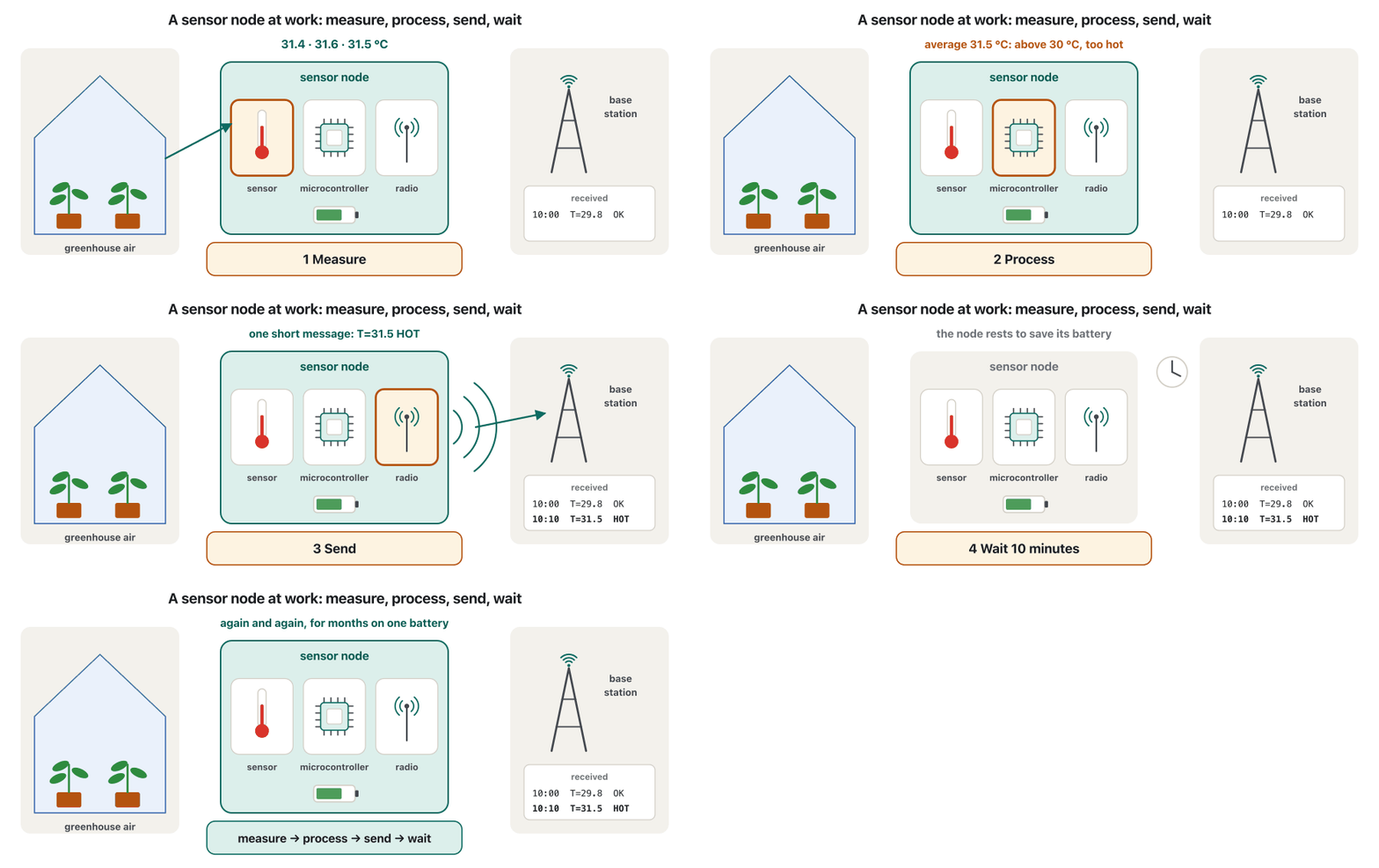
Here is one sensor node in a greenhouse doing its jobs in a loop. The sensor measures the air temperature three times, the microcontroller averages the readings and checks them against a limit, and the radio sends one short message to the base station. Then the node rests to save its battery, and the loop starts again.
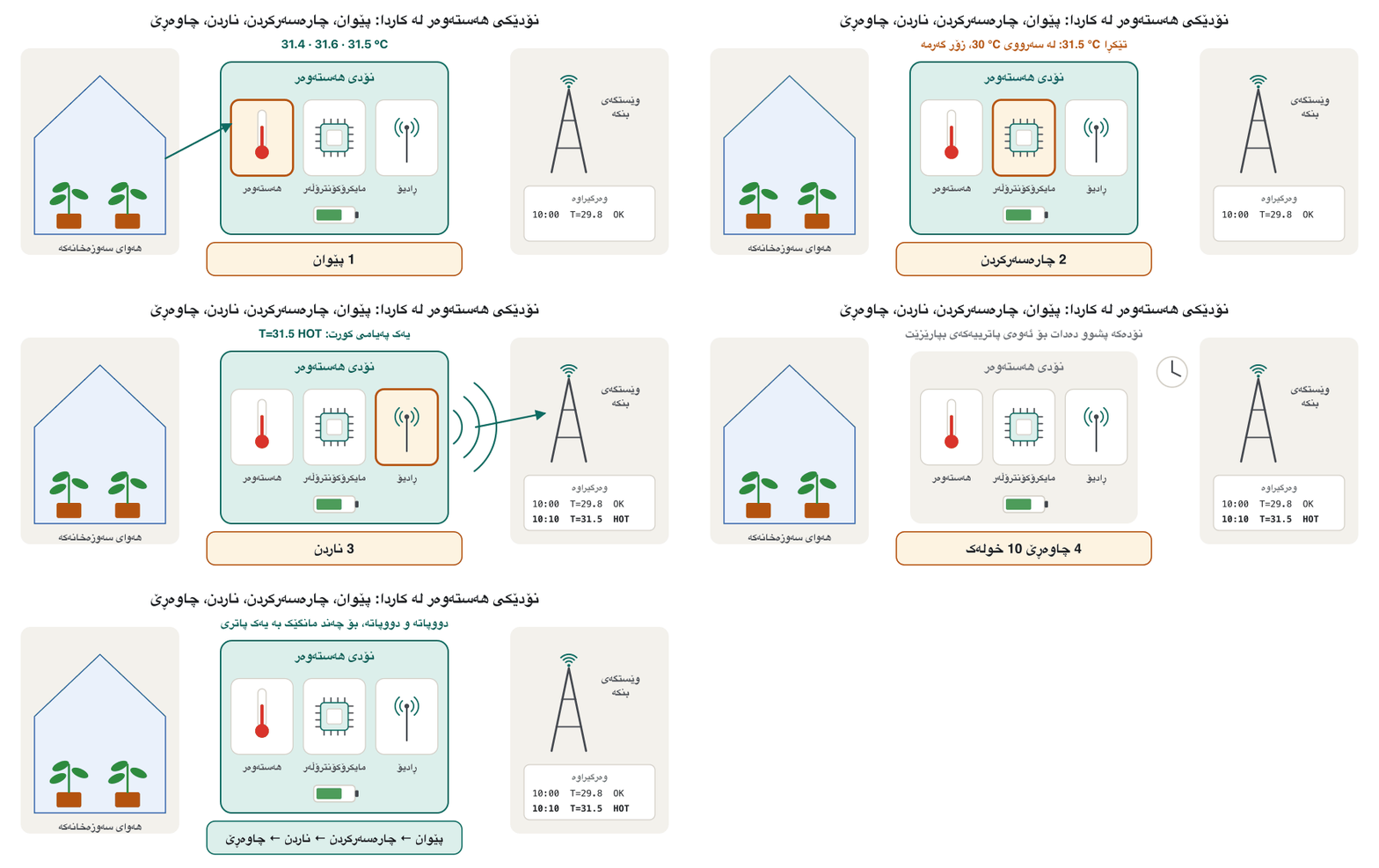
ئەمە لە سەوزەخانەیەکدا کە کارەکانی لە خولێکدا دەکات. سێ جار پلەی گەرمیی هەوا دەپێوێت، تێکڕای خوێندنەوەکان دەدۆزێتەوە و بە سنوورێک بەراوردیان دەکات و ڕادیۆکە یەک پەیامی کورت دەنێرێت بۆ . پاشان نۆدەکە پشوو دەدات بۆ ئەوەی بپارێزێت و خولەکە دیسان دەست پێ دەکاتەوە.
Five families of sensorsپێنج خێزانی هەستەوەر
Sensors can be grouped by what they measure. Five common families:
دەکرێت بەپێی ئەو شتەی دەیپێون گرووپ بکرێن. پێنج خێزانی باو:
- Location — a GPS receiver works out where it is (GPS: finding a place by satellite).
- Biometric — fingerprint, iris and face readers recognise a person (Data collection devices and biometric readers).
- Acoustic (sound) — a microphone.
- Environmental — temperature, humidity and air pressure.
- Motion — an accelerometer feels speeding up, slowing down and tilt; a gyroscope feels turning.
- شوێن — وەرگری دەدۆزێتەوە لە کوێیە (GPS: دۆزینەوەی شوێن بە مانگی دەستکرد).
- — خوێنەرەوەی پەنجەمۆر، گلێنە و ڕووخسار کەسێک دەناسنەوە (ئامێرەکانی کۆکردنەوەی دراوە و خوێنەرەوە بایۆمەترییەکان).
- دەنگی — .
- ژینگەیی — پلەی گەرمی، و .
- جووڵە — هەست بە خێرابوون، خاوبوونەوە و لاربوونەوە دەکات؛ هەست بە سووڕانەوە دەکات.
Five families of sensorsپێنج خێزانی هەستەوەر
Two motion sensors on one chip: the MPU-6050دوو هەستەوەری جووڵە لەسەر یەک چیپ: MPU-6050
Motion sensors are tiny. The GY-521 board used in many school labs carries one MPU-6050 chip with a 3-axis accelerometer and a 3-axis gyroscope inside: six readings in all. The chip converts its readings itself and sends the numbers to the Arduino over two wires (I²C), so the board reads it as a digital sensor. Drones use the same pair, called an IMU, to stay level (The IMU: gyroscope and accelerometer).
جووڵە زۆر بچووکن. بۆردی GY-521، کە لە زۆر تاقیگەی قوتابخانەدا بەکار دێت، یەک MPU-6050 هەڵدەگرێت کە سێ تەوەرە و سێ تەوەرەی تێدایە: کۆی گشتی شەش خوێندنەوە. خۆی خوێندنەوەکانی دەگۆڕێت و ژمارەکان بە دوو وایەر () دەنێرێت بۆ ، بۆیە بۆردەکە وەک دەیخوێنێتەوە. هەمان جووتیان بەکار دێنن، کە پێی دەوترێت ، بۆ ئەوەی ڕێک بمێننەوە (یەکەی پێوانی بارنەگۆڕین: جایرۆسکۆپ و ئەکسێلەرۆمیتەر).
As of November 2026 the MPU-6050 chip itself is no longer made — distributors such as DigiKey list it as obsolete — but GY-521 boards are still sold for teaching, and newer motion chips do the same job.
لە تشرینی دووەمی 2026ـدا خودی MPU-6050 چیتر دروست ناکرێت — فرۆشیارانی وەک DigiKey وەک کۆنبوو ناوی دەبەن — بەڵام بۆردەکانی GY-521 هێشتا بۆ فێرکردن دەفرۆشرێن و نوێی جووڵە هەمان کار دەکەن.
Passive or active? The electronics meaningناچالاک یان چالاک؟ واتای ئەلیکترۆنیک
Books sort sensors as passive or active, but they use these words in two different ways. In electronics and measurement books the question is: does the sensor need power from outside to make its signal?
کتێبەکان دەکەن بە ناچالاک و چالاک، بەڵام ئەم دوو وشەیە بە دوو شێوەی جیاواز بەکار دەهێنن. لە کتێبەکانی ئەلیکترۆنیک و پێواندا پرسیارەکە ئەمەیە: ئایا بۆ دروستکردنی پێویستی بە وزەی دەرەکی هەیە؟
- Passive (self-generating) — no outside power: the measured energy itself makes the signal. A thermocouple makes a few millivolts from heat, a piezo disc makes a voltage when it is pressed or shaken, and a solar cell makes a current from light.
- Active — needs an outside supply, called excitation. Its resistance or capacitance changes, and only a current through it turns that change into a voltage. A thermistor, an RTD and an LDR in a voltage divider are active, and so is every module with its own chip, such as the TMP36 or the DHT11.
- (خۆبەرهەمهێن) — بێ وزەی دەرەکی: خودی ئەو وزەیەی دەپێورێت دروست دەکات. لە گەرمییەوە چەند ملیڤۆڵتێک دروست دەکات، قرسی پیزۆ کاتێک دەپەستێنرێت یان دەلەرێنرێت دروست دەکات و لە ڕووناکییەوە دروست دەکات.
- — پێویستی بە دەرەکی هەیە کە پێی دەوترێت ورووژاندن. یان توانای هەڵگرتنی بارگەکەی دەگۆڕێت و تەنیا کە پێیدا تێدەپەڕێت ئەو گۆڕانە دەکاتە . ، و لە چالاکن، هەروەها هەموو مۆدیولێک کە خۆی هەیە، وەک TMP36 یان .
Careful with the examples: "temperature" alone does not tell you which kind it is — a thermocouple is passive, a thermistor is active. And a battery is not a sensor at all: it is the power source that an active sensor needs.
ئاگاداری نموونەکان بە: «پلەی گەرمی» بە تەنیا پێت ناڵێت کام جۆرە — ناچالاکە و چالاکە. هەروەها هەرگیز نییە: ئەو سەرچاوەی وزەیەیە کە پێویستی پێیەتی.
Passive or active? The electronics meaningناچالاک یان چالاک؟ واتای ئەلیکترۆنیک
The remote-sensing meaning: does it send out energy?واتای هەستکردنی دوور: وزە دەنێرێتە دەرەوە؟
Robotics and remote sensing — satellites, drones, self-driving cars — use the words differently. An active sensor sends out its own energy and measures what comes back; a passive sensor only receives energy that is already there. NASA's Earth-observation pages say the same: active instruments emit energy and study the returning signal, passive instruments detect energy from the natural environment.
و هەستکردنی دوور — مانگی دەستکرد، ، — ئەم وشانە بە شێوەیەکی تر بەکار دەهێنن. وزەی خۆی دەنێرێتە دەرەوە و ئەوە دەپێوێت کە دەگەڕێتەوە؛ تەنیا ئەو وزەیە وەردەگرێت کە پێشتر هەیە. پەڕەکانی چاودێریی زەویی NASA هەمان شت دەڵێن: ئامێرە چالاکەکان وزە دەنێرن و گەڕاوەکە دەخوێننەوە، ئامێرە ناچالاکەکان وزەی ژینگەی سروشتی وەردەگرن.
- Active: an ultrasonic sensor such as the HC-SR04 (it sends a burst of sound and times the echo), radar, LiDAR.
- Passive: a PIR motion sensor (it only feels the infrared heat of a body), a camera in daylight, a microphone.
- چالاک: وەک HC-SR04 (دەنگێکی کورت دەنێرێت و کاتی دەنگدانەوەکە دەپێوێت)، ، .
- ناچالاک: (تەنیا هەست بە گەرمیی لەشێک دەکات)، کامێرا لە ڕووناکیی ڕۆژدا، .
The HC-SR04 in the photo has a transmitter (T) and a receiver (R). It works from 5 V and measures from 2 cm to 4 m. AI agents use the same idea, which that course calls active sensing.
HC-SR04ـەکەی ناو وێنەکە ناردەرێک (T) و وەرگرێکی (R) هەیە. بە 5 V کار دەکات و لە 2 cm تا 4 m دەپێوێت. هەمان بیرۆکە بەکار دەهێنن، کە ئەو کۆرسە پێی دەڵێت هەستپێکردنی چالاک.
Passive or active? The electronics meaningناچالاک یان چالاک؟ واتای ئەلیکترۆنیک
One sensor, two labelsیەک هەستەوەر، دوو ناو
Because the two meanings ask different questions, one sensor can get two different labels. An LDR needs a supply, so it is active in the electronics meaning, but it sends nothing out, so it is passive in the remote-sensing meaning. Always say which meaning you use.
چونکە دوو واتاکە دوو پرسیاری جیاواز دەکەن، یەک دەتوانێت دوو ناوی جیاواز وەربگرێت. پێویستی بە هەیە، بۆیە بە واتای ئەلیکترۆنیک چالاکە، بەڵام هیچ شتێک نانێرێتە دەرەوە، بۆیە بە واتای هەستکردنی دوور ناچالاکە. هەمیشە بڵێ کام واتا بەکار دەهێنیت.
Do not mix either meaning with a passive component, a part that cannot amplify, such as a resistor or an LDR (Sensing Light with an LDR), or with an active buzzer, one that has its own tone circuit (Active or passive buzzer?). They only share the words.
هیچ کام لە دوو واتاکە تێکەڵ مەکە لەگەڵ ، واتە پارچەیەک کە ناتوانێت بەهێز بکات، وەک یان (هەستکردن بە ڕووناکی بە LDR)، یان لەگەڵ چالاک، کە سووڕی دەنگی خۆی هەیە (بەزەری چالاک یان ناچالاک؟). تەنیا وشەکانیان هاوبەشە.
Analog or digital output?دەرخستەی ئەنالۆگ یان دیجیتاڵ؟
Sensors also differ in the kind of signal they give. An analog sensor's output is a continuous function of its input: as the temperature rises smoothly, its voltage rises smoothly too. A TMP36 temperature sensor, an LDR, an analog pressure sensor, a joystick and a piezo disc are analog.
لە جۆری ئەو دەیدەنیشدا جیاوازن. بە بەردەوامی و بێ پچڕان بەدوای دەڕوات: کاتێک پلەی گەرمی بە نەرمی بەرز دەبێتەوە، بە نەرمی بەرز دەبێتەوە. TMP36، ، پەستان، جۆیستیک و قرسی پیزۆ .
A digital sensor answers in binary: 0s and 1s. It was designed to overcome the weaknesses of analog signals — noise, and the need for a converter on the board — so besides its analog sensing element it carries extra electronics that turn the reading into bits. The DHT11, the MPU-6050, an ultrasonic module, an infrared obstacle module and a slotted encoder are digital. How analog and digital signals differ in general is taught in Analog and Digital Signals.
بە وەڵام دەداتەوە: 0 و 1. بۆ زاڵبوون بەسەر لاوازییەکانی دیزاین کراوە — و پێویستی بە گۆڕەرێک لەسەر بۆردەکە — بۆیە جگە لە پارچە هەستکەرە ، ئەلیکترۆنیاتی زیادە هەڵدەگرێت کە خوێندنەوەکە دەکاتە . ، MPU-6050، مۆدیولێکی سەروودەنگی، مۆدیولێکی بۆ دۆزینەوەی ڕێگر و کونکراو . جیاوازیی گشتیی نێوان و لە سیگناڵەکانی ئەنالۆگ و دیجیتاڵـدا فێر دەکرێت.
Reading an analog sensor needs the board's converter: Reading Analog Signals: the ADC and analogRead(). Two sensors of this chapter are next in labs: the LDR (Sensing Light with an LDR) and the DHT11 (Temperature and Humidity: the DHT11 and a 16×2 LCD).
خوێندنەوەی پێویستی بە گۆڕەری بۆردەکە هەیە: خوێندنەوەی سیگناڵەکانی ئەنالۆگ: ADC و analogRead(). دوو ئەم بەشە لە تاقیگەکانی داهاتوودا دێن: (هەستکردن بە ڕووناکی بە LDR) و (پلەی گەرمی و شێ: DHT11 و LCDـی 16×2).
Analog or digital output?دەرخستەی ئەنالۆگ یان دیجیتاڵ؟
Inside a digital sensorناوەوەی هەستەوەرێکی دیجیتاڵ
A digital sensor is really an analog sensor with a small converter and a little logic packed next to it. The sensing element makes an analog signal, an amplifier makes it bigger, an analog-to-digital converter turns it into a number, and an interface sends the bits to the board over one or two wires.
لە ڕاستیدا کە گۆڕەرێکی بچووک و کەمێک لۆجیکی لە تەنیشتەوە دانراوە. پارچە هەستکەرەکە دروست دەکات، گەورەتری دەکات، دەیکاتە ژمارەیەک و بە یەک یان دوو وایەر دەنێرێت بۆ بۆردەکە.
That extra electronics brings benefits: bits survive noise and long wires better, the board needs no converter of its own, and the maker can store each sensor's calibration inside it — the DHT22's data sheet says every sensor is calibrated in a chamber at the factory and keeps its calibration numbers in its own memory. The costs: a library or protocol to read it, and usually slower readings. You meet the converter itself in Reading Analog Signals: the ADC and analogRead().
ئەو ئەلیکترۆنیاتە زیادەیە سوودی هەیە: باشتر بەرگەی و وایەری درێژ دەگرن، بۆردەکە پێویستی بە گۆڕەری خۆی نییە و دروستکەر دەتوانێت هەر لە ناو خۆیدا هەڵبگرێت — DHT22 دەڵێت هەموو لە کارگەدا لە ژوورێکی تایبەتدا دەکرێت و ژمارەکانی لە خۆیدا هەڵدەگرێت. تێچووەکانی: یان بۆ خوێندنەوەی و زۆرجار خوێندنەوەی هێواشتر. خودی گۆڕەرەکە لە خوێندنەوەی سیگناڵەکانی ئەنالۆگ: ADC و analogRead()ـدا دەبینیت.
Common mistakesهەڵە باوەکان
| Mistakeهەڵە | Betterباشتر |
|---|---|
| A sensor and a sensor node are the same thing. و هەمان شتن. | A sensor only senses; a node adds a microcontroller, power and a radio, so it can process and send. تەنیا هەست دەکات؛ نۆد ، وزە و ڕادیۆ زیاد دەکات، بۆیە دەتوانێت چارەسەر بکات و بنێرێت. |
| "Passive" always means the same thing.«ناچالاک» هەمیشە هەمان واتای هەیە. | Say which meaning: needs no outside power (electronics) or sends nothing out (remote sensing).بڵێ کام واتا: پێویستی بە وزەی دەرەکی نییە (ئەلیکترۆنیک) یان هیچ نانێرێتە دەرەوە (هەستکردنی دوور). |
| A battery is an example of an active sensor. نموونەی . | A battery is a power source; an active sensor is, for example, a thermistor powered by it. سەرچاوەی وزەیە؛ بۆ نموونە کە وزەی لێ وەردەگرێت. |
| Every temperature sensor is passive.هەموو ناچالاکە. | A thermocouple is passive; a thermistor, an RTD and a TMP36 need a supply. ناچالاکە؛ ، و TMP36 پێویستیان بە هەیە. |
| A loudspeaker is a sensor because it has a transducer. چونکە هەیە. | Output transducers are actuators; only input transducers are sensors. ؛ تەنیا . |
| A digital sensor has no analog part. هیچ بەشێکی نییە. | It has an analog sensing element; its own electronics turn the reading into bits.پارچەیەکی هەستکەری هەیە؛ ئەلیکترۆنیاتی خۆی خوێندنەوەکە دەکاتە . |
| Reading an analog sensor with digitalRead().خوێندنەوەی بە digitalRead(). | Use analogRead() on an analog pin; digitalRead() only gives HIGH or LOW.analogRead() لەسەر بەکار بهێنە؛ digitalRead() تەنیا HIGH یان LOW دەدات. |
| Thinking a car has only a few sensors.وا بزانیت ئۆتۆمبێل تەنیا چەند هەیە. | A typical car has about 60–100; cars with driver assistance far more.ئۆتۆمبێلێکی ئاسایی نزیکەی 60 تا 100 هەیە؛ ئۆتۆمبێلی یارمەتیدەری شۆفێر زۆر زیاتر. |
Exercisesڕاهێنانەکان
For each sensor, say passive or active in the electronics meaning, then in the remote-sensing meaning: a thermocouple, an LDR in a voltage divider, an HC-SR04, a PIR motion sensor, a solar cell.
بۆ هەر بڵێ ناچالاکە یان چالاک بە واتای ئەلیکترۆنیک، پاشان بە واتای هەستکردنی دوور: ، لە ، HC-SR04، ، .
Hintئاماژە
Ask two questions: does it need a supply to make its signal? Does it send out its own energy?
دوو پرسیار بکە: بۆ دروستکردنی پێویستی بە هەیە؟ وزەی خۆی دەنێرێتە دەرەوە؟
Show answerوەڵامەکە پیشان بدە
| Sensor | Electronicsئەلیکترۆنیک | Remote sensingهەستکردنی دوور |
|---|---|---|
| thermocouple | passiveناچالاک | passiveناچالاک |
| LDR in a divider لە | activeچالاک | passiveناچالاک |
| HC-SR04 | activeچالاک | activeچالاک |
| PIR moduleمۆدیولی PIR | active (its module needs power)چالاک (مۆدیولەکەی پێویستی بە وزەیە) | passiveناچالاک |
| solar cell | passiveناچالاک | passiveناچالاک |
A beekeeper near Rawanduz wants each hive to report its weight and inside temperature every hour for a year, far from any Wi-Fi. List the four parts of the sensor node and what each one does.
هەنگەوانێک نزیک ڕەواندز دەیەوێت هەر کەندوویەک هەموو کاتژمێرێک کێش و پلەی گەرمیی ناوەوەی ڕاپۆرت بدات بۆ ماوەی ساڵێک، دوور لە هەر . چوار پارچەی بنووسە و بڵێ هەریەکەیان چی دەکات.
Show answerوەڵامەکە پیشان بدە
- Sensors: a weight sensor under the hive and a temperature sensor inside it.
- Microcontroller: reads both, averages them, packs one short message.
- Power: a battery, ideally with a small solar cell, because it must run for a year.
- Radio: a long-range, low-power radio such as LoRa, sending to a base station or gateway (LPWAN).
- : کێش لە ژێر کەندووەکە و لە ناویدا.
- : هەردووکیان دەخوێنێتەوە، تێکڕایان دەدۆزێتەوە و یەک پەیامی کورت ئامادە دەکات.
- وزە: ، باشتر لەگەڵ بچووک، چونکە دەبێت ساڵێک کار بکات.
- ڕادیۆ: ڕادیۆیەکی دووربڕ و کەموزە وەک LoRa کە بۆ یان دەنێرێت (LPWAN).
A rain sensor sees 80 % of its infrared light come back. A minute later it sees 55 %. What happened on the windscreen, and what should the car do?
باران دەبینێت 80 %ی ڕووناکیی دەگەڕێتەوە. خولەکێک دواتر 55 % دەبینێت. چی لەسەر جامی پێشەوە ڕوویدا و ئۆتۆمبێلەکە چی بکات؟
Show answerوەڵامەکە پیشان بدە
Water landed on the glass and let part of the light escape instead of reflecting back, so less light returned. More rain means less light: the car should start the wipers, or make them faster.
ئاو کەوتە سەر جامەکە و ڕێگەی دا بەشێک لە ڕووناکییەکە دەرچێت لەبری ئەوەی بگەڕێتەوە، بۆیە ڕووناکیی کەمتر گەڕایەوە. بارانی زیاتر واتە ڕووناکیی کەمتر: ئۆتۆمبێلەکە دەبێت جامسڕەکان بخاتە کار، یان خێراتریان بکات.
Which of these are transducers, and is each an input (sensor) or an output (actuator)? A microphone, a loudspeaker, an LED, a thermocouple.
کام لەمانە و هەریەکەیان () یان ()؟ ، ، ، .
Show answerوەڵامەکە پیشان بدە
- Microphone: input transducer (sound → electrical): a sensor.
- Loudspeaker: output transducer (electrical → sound): an actuator.
- LED: output transducer (electrical → light).
- Thermocouple: input transducer (heat → electrical): a passive sensor.
- : (دەنگ ← کارەبا): .
- : (کارەبا ← دەنگ): .
- : (کارەبا ← ڕووناکی).
- : (گەرمی ← کارەبا): .
Name one sensor from each of the five families that you can find in your phone, your school or your home. For each, say whether the board would read it as analog or digital.
یەک لە هەر یەکێک لە پێنج خێزانەکە ناو ببە کە لە مۆبایلەکەت، قوتابخانەکەت یان ماڵەکەتدا هەیە. بۆ هەریەکەیان بڵێ بۆرد وەک دەیخوێنێتەوە یان .
Show answerوەڵامەکە پیشان بدە
Example answer: location — the phone's GPS receiver (digital, sends numbers); biometric — the fingerprint reader (digital); acoustic — the microphone (analog inside, digital after the phone's converter); environmental — a TMP36 in a lab (analog) or a DHT11 (digital); motion — the phone's accelerometer (digital chip). Many sensors are analog inside but reach the processor as digital numbers.
وەڵامی نموونەیی: شوێن — وەرگری مۆبایل (، ژمارە دەنێرێت)؛ — خوێنەرەوەی پەنجەمۆر ()؛ دەنگی — (لە ناوەوە ، دوای گۆڕەری مۆبایلەکە )؛ ژینگەیی — TMP36 لە تاقیگەدا () یان ()؛ جووڵە — مۆبایل ( ). زۆر لە ناوەوە بەڵام وەک ژمارەی دەگەنە ئامێرەکە.
Summaryپوختە
- A sensor converts a physical quantity into a representative electrical signal, used to know a value or to control a process. Inside it, a transducer changes one energy into another.
- Sensors bridge the physical and the digital world: process → microcontroller board → gateway → cloud.
- Uses: remote use in real time, analysis in the cloud, trends and insights. A typical car has about 60–100 sensors.
- A sensor node = sensor + microcontroller + power supply + radio: it collects, processes and transmits. A sensor only senses; a node senses and communicates.
- Five families: location, biometric, acoustic, environmental, motion.
- Passive/active has two meanings: needs outside power or not (electronics); sends out its own energy or not (remote sensing). Say which one you use.
- Analog sensors give a continuous output and need the board's ADC; digital sensors convert inside and send bits.
- بڕێکی فیزیکی دەگۆڕێت بۆ کارەبایی کە نوێنەرایەتیی دەکات و بۆ زانینی نرخێک یان کۆنترۆڵکردنی پرۆسەیەک بەکار دێت. لە ناویدا وزەیەک دەگۆڕێت بۆ وزەیەکی تر.
- جیهانی فیزیکی و دەبەستنەوە: پرۆسە ← بۆردی ← ← هەور.
- بەکارهێنانەکان: بەکارهێنان لە دوورەوە لە کاتی خۆیدا، شیکاری لە هەوردا، ئاڕاستە و تێگەیشتن. ئۆتۆمبێلێکی ئاسایی نزیکەی 60 تا 100 هەیە.
- = + + + ڕادیۆ: کۆ دەکاتەوە، چارەسەر دەکات و دەنێرێت. تەنیا هەست دەکات؛ نۆد هەست دەکات و پەیوەندیش دەکات.
- پێنج خێزان: شوێن، ، دەنگی، ژینگەیی، جووڵە.
- ناچالاک/چالاک دوو واتای هەیە: پێویستی بە وزەی دەرەکی هەیە یان نا (ئەلیکترۆنیک)؛ وزەی خۆی دەنێرێتە دەرەوە یان نا (هەستکردنی دوور). بڵێ کامیان بەکار دەهێنیت.
- بەردەوام دەدەن و پێویستیان بە ADCـی بۆردەکە هەیە؛ لە ناوەوە دەگۆڕن و دەنێرن.
What is the difference between a sensor and a transducer?جیاوازیی نێوان هەستەوەر و گۆڕەری وزە چییە؟
A transducer changes one form of energy into another; a sensor uses an input transducer to measure a quantity and give a signal. A loudspeaker is a transducer but not a sensor.
جۆرێکی وزە دەگۆڕێت بۆ جۆرێکی تر؛ بەکار دەهێنێت بۆ پێوانی بڕێک و دانی . بەڵام نییە.
Why is an LDR called active in one book and passive in another?بۆچی LDR لە کتێبێکدا چالاک و لە کتێبێکی تردا ناچالاکە؟
The books use different meanings: it needs a supply (active, electronics), but sends no energy out (passive, remote sensing).
کتێبەکان واتای جیاواز بەکار دەهێنن: پێویستی بە هەیە (چالاک، ئەلیکترۆنیک)، بەڵام هیچ وزەیەک نانێرێتە دەرەوە (ناچالاک، هەستکردنی دوور).
What makes a sensor node more than a sensor?چی نۆدی هەستەوەر دەکات بە شتێک زیاتر لە هەستەوەر؟
A microcontroller to process, a power supply and a radio to transmit, so it can report by itself.
بۆ چارەسەرکردن، و ڕادیۆیەک بۆ ناردن، بۆیە دەتوانێت خۆی ڕاپۆرت بدات.
Lesson complete!وانەکە تەواو بوو!
Well done. Review the key terms, then go on to the next lesson.دەستخۆش. سەیرێکی زاراوە سەرەکییەکان بکەرەوە، پاشان بڕۆ بۆ وانەی داهاتوو.
Key termsزاراوە سەرەکییەکان
Accuracy, Precision, Range: Reading a Sensor's Data Sheetڕاستیی پێوان، وردیی پێوان و مەودای پێوان: خوێندنەوەی پەڕەی تایبەتمەندییەکانی هەستەوەرێک
Related lecturesوانە پەیوەندیدارەکان
- Accuracy, Precision, Range: Reading a Sensor's Data Sheetڕاستیی پێوان، وردیی پێوان و مەودای پێوان: خوێندنەوەی پەڕەی تایبەتمەندییەکانی هەستەوەرێک
- Reading Analog Signals: the ADC and analogRead()خوێندنەوەی سیگناڵەکانی ئەنالۆگ: ADC و analogRead()
- Sensing Light with an LDRهەستکردن بە ڕووناکی بە LDR
- Temperature and Humidity: the DHT11 and a 16x2 LCDپلەی گەرمی و شێ: DHT11 و LCDـێکی 16x2
- Actuators: DC Motors, Encoders and Servosجووڵێنەرەکان: ماتۆڕەکانی DC، کۆدکەرەکانی هەنگاوبەهەنگاو و ماتۆڕەکانی سێرڤۆ
- Embedded Systems at Work: a Bike Computer and a Car Engineسیستەمە چەسپێنراوەکان لە کاردا: کۆمپیوتەری پاسکیل و بزوێنەری ئۆتۆمبێل
- Where IoT Is Used, and What Makes It HardIoT لە کوێ بەکار دێت و چی قورسی دەکات
- What Is the Internet of Things?ئینتەرنێتی شتەکان چییە؟
- Emerging Technologies: IoT, VR/AR, Robots and Blockchainتەکنەلۆجیا نوێیەکان: ئینتەرنێتی شتەکان، ڕاستیی گریمانەیی/ڕاستیی زیادکراو، ڕۆبۆتەکان و بلۆکچەین
- Agents, Sensors and Actuators; Rational Agentsئەیجێنتەکان، هەستەوەرەکان و جووڵێنەرەکان؛ ئەیجێنتە عەقڵانییەکان
- Touch, Pen, Voice, Video and Scanningدەستلێدان، قەڵەم، دەنگ، ڤیدیۆ و سکانکردن
- Computer Communicationsپەیوەندیی کۆمپیوتەر
- Analog and Digital Signalsسیگناڵەکانی ئەنالۆگ و دیجیتاڵ
- The Flight Controller: Sensors, Control Loops and Autopilotsکۆنترۆڵکەری فڕین: هەستەوەرەکان، خولەکانی کۆنترۆڵ و فڕۆکەوانی خۆکار
- How AI Sees: Sensors, Computer Vision and Detectionژیریی دەستکرد چۆن دەبینێت: هەستەوەرەکان، بینایی کۆمپیوتەر و دۆزینەوە
References and further readingسەرچاوەکان و خوێندنەوەی زیاتر
- JCGM 200:2012 (VIM 3), 3.8 sensor
- JCGM 200:2012 (VIM 3), 3.7 measuring transducer (thermocouple, strain gauge)
- TE Connectivity: Sensor technology transforming vehicle architectures (60 to 100 sensors per car, 15 to 30 for the engine)
- eeNews Europe (15 May 2019): Number of automotive ECUs continues to rise (IHS Markit: up to 150 ECUs in a luxury vehicle)
- Wikipedia: Rain sensor (total internal reflection of infrared light in the windscreen)
- NASA Earthdata: Remote sensing (active and passive instruments)
- Analog Devices: Practical Design Techniques for Sensor Signal Conditioning, section 1 (active sensors need excitation; passive sensors are self-generating)
- SparkFun: Ultrasonic Distance Sensor HC-SR04 (2 cm to 400 cm, 5 V, 15 mA)
- DigiKey: TDK InvenSense MPU-6050 (6-axis accelerometer and gyroscope, I²C; part status obsolete)
- Aosong AM2302 (DHT22) data sheet (calibrated in a chamber, coefficients in OTP memory), copy hosted by Adafruit
This lecture is a first edition. The Kurdish text and terminology are waiting for review by Kurdish IT teachers.ئەم وانەیە چاپی یەکەمە. دەقە کوردییەکە و زاراوەکانی چاوەڕێی پێداچوونەوەی مامۆستایانی کوردی بواری IT ن.