Chapterبەش 2 · Lectureوانە 2.5
Who Writes the Rules? IoT Standardsکێ یاساکان دەنووسێت؟ ستانداردەکانی IoT
Why IoT needs shared standards and who writes them: IEEE radios, 3GPP cellular IoT, IETF RFCs (today's JSON and HTTP numbers, 6LoWPAN, RPL, CoAP), alliances from the Bluetooth SIG to the CSA's Matter, NIST's AES and Ascon, ISO/IEC and ITU, ETSI, oneM2M, W3C and OASIS, the EU Cyber Resilience Act, and how open standards protect you from lock-in.
بۆچی IoT پێویستی بە هاوبەشە و کێ دەیاننووسێت: ڕادیۆکانی ، IoTـی مۆبایلیی ، (ژمارەکانی ئەمڕۆی و ، ، ، )، هاوپەیمانییەکان لە Bluetooth SIGـەوە تا CSA، و Asconـی ، ISO/IEC و ، ETSI، oneM2M، و OASIS، و چۆن لە قەتیسبوون دەتپارێزن.
What you will learnچی فێر دەبیت
- Explain why IoT devices need shared standards and what a standards organization does.
- Name the main IoT standards bodies and what each one writes.
- Give today's RFC numbers for JSON, HTTP and HTTPS and explain how RFCs replace each other.
- Describe how an industry alliance certifies products, with Matter over Wi-Fi and Thread as an example.
- Explain how laws such as the EU Cyber Resilience Act and open standards affect the devices you build or buy.
- ڕوون بکەیتەوە بۆچی ئامێرەکانی IoT پێویستیان بە هاوبەشە و چی دەکات.
- دامەزراوە سەرەکییەکانی ستانداردی IoT ناو بهێنیت و بڵێیت هەریەکەیان چی دەنووسێت.
- ژمارەکانی ئەمڕۆی بۆ ، و بڵێیت و ڕوون بکەیتەوە چۆن جێگەی یەکتر دەگرنەوە.
- وەسف بکەیت هاوپەیمانییەکی پیشەسازی چۆن بەرهەمەکان پەسەند دەکات، بە نموونەی لەسەر و .
- ڕوون بکەیتەوە یاساکانی وەک و چۆن کار دەکەنە سەر ئەو ئامێرانەی دروستیان دەکەیت یان دەیانکڕیت.
Why IoT needs shared rulesبۆچی IoT پێویستی بە ڕێسای هاوبەشە
The IoT spans a vast amount of technology: radios, networks, data formats, security and apps, made by thousands of companies. For devices and software from different makers to work together (interoperability), the way they talk (the protocols) and the way they connect (the interfaces) must be standardised.
IoT تەکنەلۆجیایەکی زۆر زۆر دەگرێتەوە: ڕادیۆ، ، شێوەی ، و ، کە هەزاران کۆمپانیا دروستیان دەکەن. بۆ ئەوەی ئامێر و دروستکەری جیاواز پێکەوە کار بکەن ()، دەبێت ئەو شێوازەی قسە دەکەن () و ئەو شێوازەی پێکەوە دەبەسترێن () ستاندارد بکرێن.
A standard is an agreed document that says exactly how something must work. Think of electric plugs: where every country has its own shape, travellers carry a bag of adapters; with one agreed shape, any plug fits any socket. A standards organization is a body that writes and publishes such documents.
بەڵگەنامەیەکی ڕێککەوتنلەسەرکراوە کە بە وردی دەڵێت شتێک چۆن کار بکات. بیر لە فیشی کارەبا بکەرەوە: کاتێک هەر وڵاتێک شێوەی تایبەتی خۆی هەیە، گەشتیاران جانتایەک ئەداپتەر لەگەڵ خۆیان دەبەن؛ بە یەک شێوەی ڕێککەوتنلەسەرکراو، هەموو فیشێک لە هەموو پریزێک دەچێت. دامەزراوەیەکە کە بەڵگەنامەی لەم جۆرە دەنووسێت و بڵاو دەکاتەوە.
A map of the rule-writersنەخشەی نووسەرانی ڕێساکان
Many organisations write IoT rules, each for one part of the system. Some are formal international or regional bodies whose members are countries or national standards institutes (ITU, ISO and IEC, and in Europe ETSI). Some are partnerships of standards bodies (3GPP, oneM2M). The IEEE is an engineering association, the IETF an open internet community, NIST a government laboratory whose standards the whole world uses, and many are industry alliances of companies (Bluetooth SIG, LoRa Alliance, Connectivity Standards Alliance, Thread Group, OASIS). Who writes general networking rules is also explained in Protocols, Layers and the OSI Idea.
زۆر دامەزراوە ڕێساکانی IoT دەنووسن، هەریەکەیان بۆ بەشێکی سیستەمەکە. هەندێکیان دامەزراوەی فەرمیی نێودەوڵەتی یان ناوچەیین کە ئەندامەکانیان وڵاتان یان دامەزراوە نیشتمانییەکانی ستاندارکردنن (، و IEC، لە ئەوروپاش ETSI). هەندێکیان هاوبەشیی (، oneM2M). کۆمەڵەیەکی ئەندازیارییە، کۆمەڵگەیەکی کراوەی ئینتەرنێتە، تاقیگەیەکی حکوومییە کە هەموو جیهان بەکار دەهێنێت و زۆریشیان هاوپەیمانیی پیشەسازیی کۆمپانیاکانن (Bluetooth SIG، LoRa Alliance، Connectivity Standards Alliance، Thread Group، OASIS). ئەوەی کێ ڕێسا گشتییەکانی دەنووسێت لە وانەی پرۆتۆکۆڵ، چین و بیرۆکەی OSIـیش ڕوون کراوەتەوە.
IEEE: the radiosIEEE: ڕادیۆکان
The IEEE (Institute of Electrical and Electronics Engineers) mainly writes the access-network rules: how devices use a radio or a cable. Its 802.11 family is Wi-Fi (Wi-Fi 6 is 802.11ax; Wi-Fi 7 is 802.11be, published as a standard in July 2025). Its 802.15.4 standard, revised in 2024, defines low-rate, low-power radios, usually in licence-free ISM bands such as 2.4 GHz. Zigbee is often called an IEEE standard, but it is not: Zigbee, Thread and 6LoWPAN are built on the 802.15.4 radio by other bodies (the CSA, the Thread Group and the IETF). In the same way, Bluetooth was once also published as IEEE 802.15.1, but today only the Bluetooth SIG writes it. More in Wi-Fi and Bluetooth for IoT.
(Institute of Electrical and Electronics Engineers) بە زۆری ڕێساکانی ڕایەڵەی دەستگەیشتن دەنووسێت: ئامێرەکان چۆن ڕادیۆ یان کێبڵ بەکار دەهێنن. خێزانی 802.11ـی ( 6 بریتییە لە 802.11ax؛ 7 بریتییە لە 802.11be، کە لە تەممووزی 2025ـدا وەک ستاندارد بڵاو کرایەوە). ستانداردی ، کە لە 2024ـدا نوێ کرایەوە، ڕادیۆی خێرایی نزم و کەموزە پێناسە دەکات، بە زۆری لە بێمۆڵەتدا، وەک 2.4 GHz. زۆرجار دەوترێت ستانداردێکی IEEEـیە، بەڵام وا نییە: ، و دامەزراوەی تر لەسەر ڕادیۆی 802.15.4 دروستیان کردوون (CSA، Thread Group و ). بە هەمان شێوە جاران وەک IEEE 802.15.1ـیش بڵاو کرابووەوە، بەڵام ئەمڕۆ تەنیا Bluetooth SIG دەینووسێت. زیاتر لە وایفای و Bluetooth بۆ IoT.
3GPP: cellular networks and their IoT versions3GPP: ڕایەڵەکانی مۆبایل و وەشانەکانی IoT
3GPP (3rd Generation Partnership Project) is a partnership of telecom standards bodies from several regions. It defines the standards and the architecture of cellular voice and data networks, from 3G to 4G (LTE) and 5G, and publishes them in numbered releases. For the IoT it made lighter versions of these specifications: LTE-M and NB-IoT, completed in Release 13 in June 2016, for devices that send little data and must run for years on a battery. Later, 5G added RedCap (Release 17, 2022), a simpler kind of 5G device, and 5G-Advanced began with Release 18 (2024). The details are in Cellular IoT.
(3rd Generation Partnership Project) هاوبەشیی پەیوەندییە لە چەند ناوچەیەکەوە. و تەلارسازیی دەنگ و پێناسە دەکات، لە 3Gـەوە تا 4G (LTE) و 5G و بە وەشانی ژمارەدار بڵاویان دەکاتەوە. بۆ IoT وەشانی سووکتری ئەم تایبەتمەندییانەی دروست کرد: و ، کە لە Release 13ـدا لە حوزەیرانی 2016 تەواو بوون، بۆ ئەو ئامێرانەی کەم دەنێرن و دەبێت چەند ساڵێک بە کار بکەن. دواتر 5G RedCapـی زیاد کرد (Release 17، 2022)، کە جۆرێکی سادەتری ئامێری 5Gـە و 5G-Advanced بە Release 18 (2024) دەستی پێ کرد. وردەکارییەکان لە IoTـی مۆبایلیدان.
IETF: the internet's rules, written as RFCsIETF: ڕێساکانی ئینتەرنێت، بە شێوەی RFC
The IETF (Internet Engineering Task Force) is responsible for almost all internet protocols. It publishes them in numbered documents called Requests for Comments (RFCs). An RFC is never edited after it is published: when a protocol improves, a new RFC with a new number replaces (obsoletes) the old one. So always check that you have the current number:
(Internet Engineering Task Force) بەرپرسیارە لە نزیکەی هەموو ئینتەرنێت. لە بەڵگەنامەی ژمارەداردا بڵاویان دەکاتەوە کە پێیان دەوترێت Requests for Comments (). دوای بڵاوکردنەوە هەرگیز دەستکاری ناکرێت: کاتێک باشتر دەکرێت، نوێ بە ژمارەیەکی نوێوە جێگەی کۆنەکە دەگرێتەوە. بۆیە هەمیشە دڵنیا بەرەوە کە ژمارە نوێیەکەت لایە:
- JSON (JavaScript Object Notation), the data format that IoT devices and platforms exchange: RFC 4627 (2006) → RFC 7159 (2014) → today RFC 8259 (2017, Internet Standard STD 90).
- HTTP/1.1: RFC 2616 (1999) → RFC 7230–7235 (2014) → today RFC 9110 (HTTP semantics) and RFC 9112 (HTTP/1.1), both from 2022.
- HTTPS (HTTP over TLS): RFC 2818 (2000) → today defined inside RFC 9110.
- (JavaScript Object Notation)، ئەو شێوەی ئامێر و IoT ئاڵوگۆڕی پێ دەکەن: RFC 4627 (2006) ← RFC 7159 (2014) ← ئەمڕۆ RFC 8259 (2017، Internet Standard STD 90).
- HTTP/1.1: RFC 2616 (1999) ← RFC 7230–7235 (2014) ← ئەمڕۆ RFC 9110 (واتای HTTP) و RFC 9112 (HTTP/1.1)، هەردووکیان لە 2022ـەوە.
- ( لەسەر ): RFC 2818 (2000) ← ئەمڕۆ لەناو RFC 9110ـدا پێناسە کراوە.
How HTTP and JSON are used is taught in What is HTTP? and JSON: the language of APIs. The IETF also described the four ways IoT devices communicate (RFC 7452, 2015): see Four ways IoT devices talk.
چۆنیەتیی بەکارهێنانی و لە وانەکانی HTTP چییە؟ و JSON: زمانی APIـەکان فێر دەکرێت. هەروەها چوار شێوەی پەیوەندیکردنی ئامێرەکانی IoTـی وەسف کردووە (RFC 7452، 2015): بڕوانە چوار شێوەی قسەکردنی ئامێرەکانی IoT.
IETF: the internet's rules, written as RFCsIETF: ڕێساکانی ئینتەرنێت، بە شێوەی RFC
IETF rules for tiny devices: 6LoWPAN, RPL and CoAPڕێساکانی IETF بۆ ئامێرە بچووکەکان: 6LoWPAN، RPL و CoAP
The IETF also wrote the protocols that bring the internet to small, battery-powered devices:
هەروەها ئەو نووسیوە کە ئینتەرنێت دەگەیەننە ئامێرە بچووکە پاتریدارەکان:
- 6LoWPAN (RFC 4944, 2007; header compression RFC 6282, 2011): IPv6 needs every link to carry packets of at least 1,280 bytes, but an IEEE 802.15.4 frame holds at most 127 bytes. 6LoWPAN squeezes the headers and cuts big packets into fragments, so every sensor can have its own IPv6 address.
- RPL (RFC 6550, 2012): a routing protocol for low-power and lossy networks. It builds a tree of routes so that messages can hop through a mesh to the border router.
- CoAP (RFC 7252, 2014): a light web protocol for constrained devices, with GET, POST, PUT and DELETE like HTTP, but with tiny messages over UDP.
- (RFC 4944، 2007؛ پەستاندنی سەردێڕ RFC 6282، 2011): داوا دەکات هەموو بەستەرێک لانیکەم 1,280 هەڵبگرێت، بەڵام IEEE 802.15.4 زۆرترین 127 جێی دەبێتەوە. سەردێڕەکان دەپەستێنێت و دەکات بە پارچە، بۆ ئەوەی هەر ناونیشانی تایبەتی خۆی هەبێت.
- (RFC 6550، 2012): بۆ کەموزە و پڕ لە ونبوون. درەختێکی ڕێگاکان دروست دەکات بۆ ئەوەی پەیامەکان بتوانن بە ناو باز بدەن تا دەگەنە .
- (RFC 7252، 2014): سووکی وێب بۆ ئامێرە سنووردارەکان، وەک داواکاریی GET، POST، PUT و DELETEـی هەیە، بەڵام پەیامەکانی زۆر بچووکن و لە ڕێی UDPـەوە دەڕۆن.
MQTT, the other famous IoT protocol, is not from the IETF: OASIS publishes it (see More rule-writers).
، ناسراوی تری IoT، هی نییە: OASIS بڵاوی دەکاتەوە (بڕوانە نووسەرانی تری ڕێساکان).
Industry alliances: from Bluetooth to LoRaWANهاوپەیمانییە پیشەسازییەکان: لە Bluetoothـەوە تا LoRaWAN
Standardisation is also driven by industry alliances: groups of companies that write a specification together and certify products. The Bluetooth SIG writes Bluetooth, the wireless personal-area network technology. The LoRa Alliance writes LoRaWAN, for long-range, two-way communication with battery-powered devices; since 2021 LoRaWAN is also an ITU recommendation (ITU-T Y.4480). The Wi-Fi Alliance certifies Wi-Fi products and names the generations. The Connectivity Standards Alliance (CSA), called the Zigbee Alliance until 2021, writes Zigbee and Matter, and the Thread Group writes Thread.
ستاندارکردن هەروەها لەلایەن هاوپەیمانییە پیشەسازییەکانەوە پێش دەخرێت: کۆمەڵە کۆمپانیایەک کە پێکەوە تایبەتمەندییەک دەنووسن و بەرهەمەکان پەسەند دەکەن. Bluetooth SIG دەنووسێت، تەکنەلۆجیای بێتەل. LoRa Alliance دەنووسێت، بۆ پەیوەندیی دوولایەنە بۆ دووریی زۆر لەگەڵ ئامێری ؛ لە 2021ـەوە ڕاسپاردەیەکی (ITU-T Y.4480). Wi-Fi Alliance بەرهەمەکانی پەسەند دەکات و ناو لە نەوەکانی دەنێت. Connectivity Standards Alliance (CSA)، کە تا 2021 ناوی Zigbee Alliance بوو، و دەنووسێت و Thread Group دەنووسێت.
Industry alliances: from Bluetooth to LoRaWANهاوپەیمانییە پیشەسازییەکان: لە Bluetoothـەوە تا LoRaWAN
Matter: one language for the smart homeMatter: یەک زمان بۆ ماڵی هۆشمەند
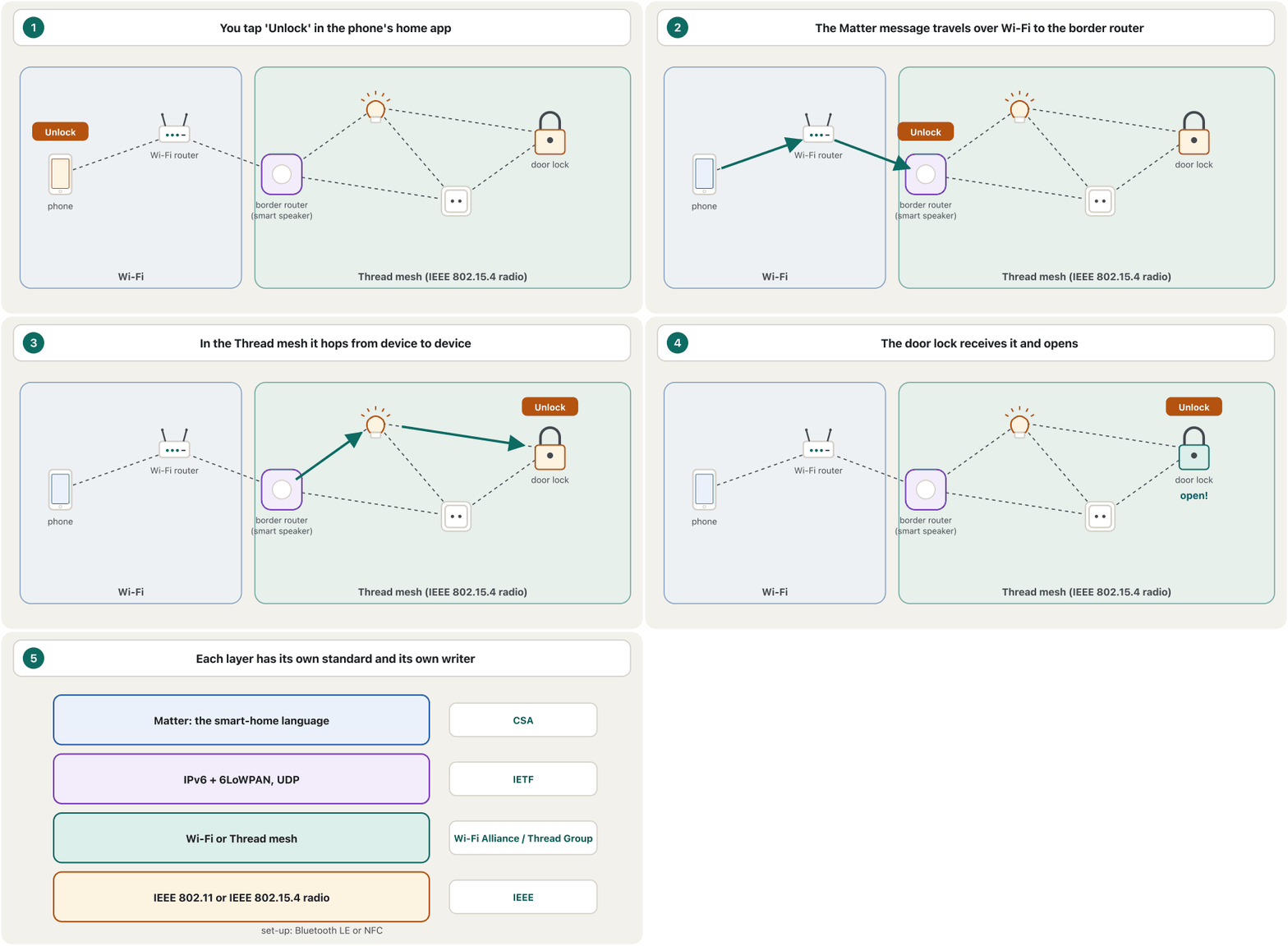
Matter is the CSA's smart-home standard. It began in December 2019 as Project CHIP (Connected Home over IP), backed by Amazon, Apple, Google and the Zigbee Alliance; Matter 1.0 came in October 2022. New versions arrive about twice a year: Matter 1.5 (November 2025) added cameras, and Matter 1.6 (June 2026) is the newest as of November 2026. A Matter device works with every Matter app, whatever its brand.
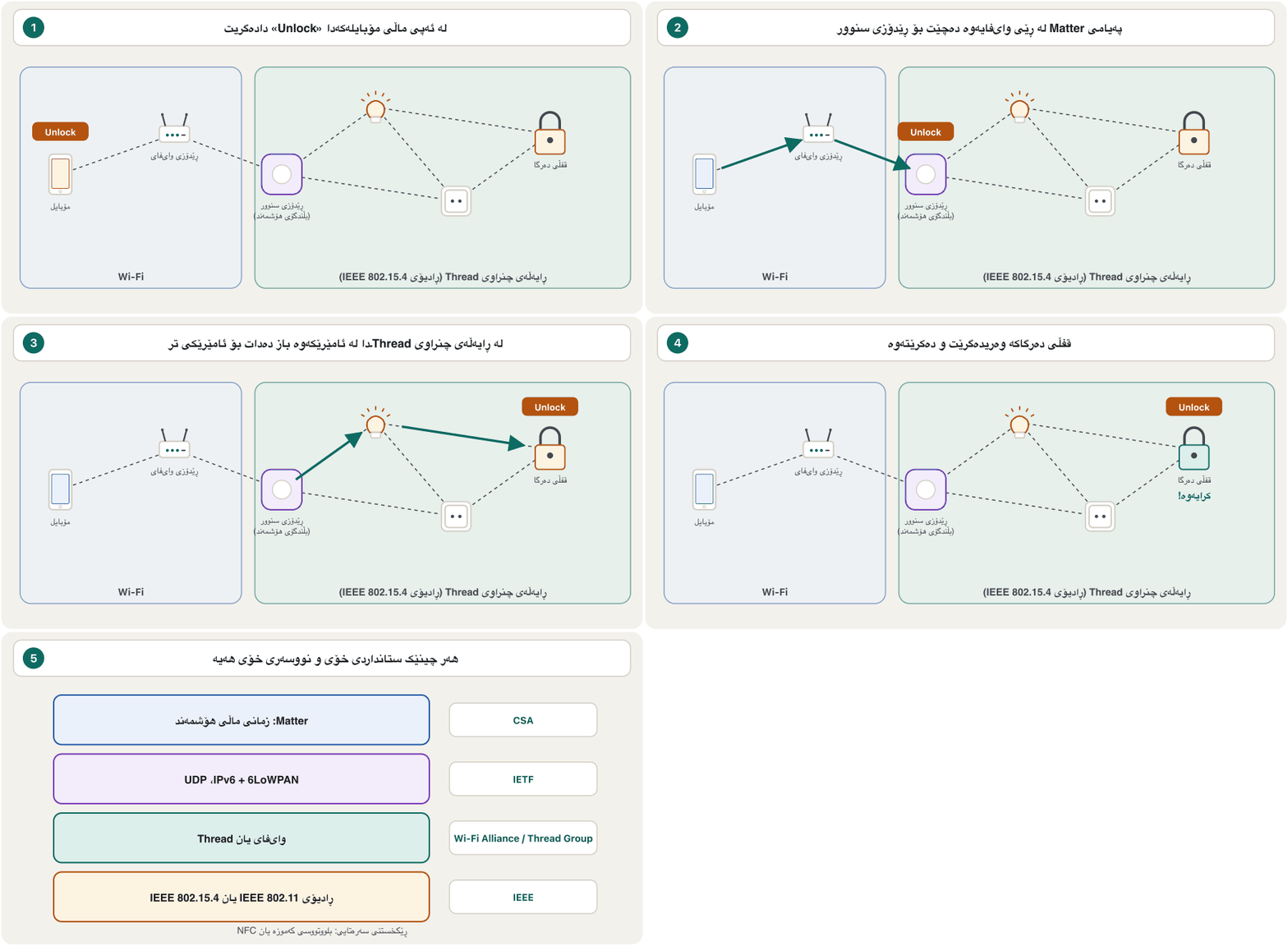
CSAـیە. لە کانوونی یەکەمی 2019ـدا وەک Project CHIP (Connected Home over IP) دەستی پێ کرد، بە پشتگیریی Amazon، Apple، Google و Zigbee Alliance؛ 1.0 لە تشرینی یەکەمی 2022ـدا هات. وەشانی نوێ نزیکەی ساڵی دوو جار دێن: 1.5 (تشرینی دووەمی 2025) کامێرای زیاد کرد و 1.6 (حوزەیرانی 2026) تا تشرینی دووەمی 2026 نوێترینە. ئامێرێکی لەگەڵ هەموو کار دەکات، مارکەکەی هەرچی بێت.
Matter runs over IP on Wi-Fi, Ethernet or Thread, a low-power IPv6 mesh on the IEEE 802.15.4 radio. A border router, often a smart speaker or a TV box, joins the Thread mesh to the home network. Bluetooth LE, and since Matter 1.6 also NFC, is used only for the first set-up.
لەسەر IP کار دەکات، بە ، Ethernet یان ، کە کەموزەی لەسەر ڕادیۆی IEEE 802.15.4. ، زۆرجار بڵندگۆیەکی هۆشمەند یان ئامێرێکی تەلەفزیۆن، بە ماڵەکەوە دەبەستێتەوە. و لە 1.6ـەوە NFCـیش تەنیا بۆ ڕێکخستنی سەرەتایی بەکار دێن.
NIST: security building blocksNIST: بەردی بناغەی ئاسایش
NIST, the US National Institute of Standards and Technology, defines encryption standards that the whole world uses. The Advanced Encryption Standard (AES), FIPS 197 from 2001 (editorially updated in 2023), protects data on computers, phones and many IoT chips. For small devices where AES may not perform well, NIST published a lightweight cryptography standard in August 2025: SP 800-232, based on the Ascon family, which encrypts a message and checks that it was not changed in one step (Ascon-AEAD128) and also offers hash functions. NIST also wrote the definitions of cloud computing (SP 800-145) and of fog computing (SP 500-325) used in Cloud, Fog and Edge Computing. How encryption works is taught in Cryptography Basics.
، دامەزراوەی نیشتمانیی ستاندارد و تەکنەلۆجیای ئەمریکا، ستانداردی پێناسە دەکات کە هەموو جیهان بەکاری دەهێنێت. Advanced Encryption Standard ()، FIPS 197 لە 2001ـەوە (لە 2023ـدا لە ڕووی نووسینەوە نوێ کرایەوە)، لەسەر کۆمپیوتەر، مۆبایل و زۆر IoT دەپارێزێت. بۆ ئامێرە بچووکەکان کە لەوانەیە باش کار نەکات، لە ئابی 2025ـدا ستانداردێکی بڵاو کردەوە: SP 800-232، لەسەر بنەمای خێزانی Ascon، کە پەیامێک لە یەک هەنگاودا شفرە دەکات و دەپشکنێت کە نەگۆڕدراوە (Ascon-AEAD128) و پێشکەش دەکات. هەروەها پێناسەکانی (SP 800-145) و (SP 500-325)ـی نووسیوە کە لە هەورەژمێرکاری، ژمێرکاریی تەم و ژمێرکاریی لێوار بەکار هاتوون. چۆنیەتیی کارکردنی لە بنەماکانی کریپتۆگرافی فێر دەکرێت.
ISO/IEC and ITU: reference models and recommendationsISO/IEC و ITU: مۆدێلەکانی پێوەر و ڕاسپاردەکان
ISO, the International Organization for Standardization, works with the IEC through a joint committee on IoT (JTC 1/SC 41). Together they publish the IoT reference architecture ISO/IEC 30141 (2nd edition, 2024; see ISO/IEC 30141). ISO also gave us the OSI model (ISO/IEC 7498-1), a general networking model rather than an IoT architecture, and adopted MQTT 3.1.1 as ISO/IEC 20922 (2016). The ITU, the United Nations agency for information and communication technologies, publishes recommendations and reference models for IoT communication: its Y.4000 series covers IoT and smart cities, from Y.4000 (the IoT overview, formerly Y.2060; see the ITU-T model) to Y.4480 (LoRaWAN, 2021). Its Study Group 20 works on IoT, digital twins and smart cities.
، ڕێکخراوی نێودەوڵەتیی ستاندارکردن، لە ڕێی لیژنەیەکی هاوبەشەوە (JTC 1/SC 41) لەگەڵ IEC لەسەر IoT کار دەکات. پێکەوە تەلارسازیی پێوەری IoT بڵاو دەکەنەوە: ISO/IEC 30141 (چاپی دووەم، 2024؛ بڕوانە ISO/IEC 30141). هەروەها پێ بەخشیوین (ISO/IEC 7498-1)، کە مۆدێلێکی گشتیی نەک تەلارسازییەکی IoT و 3.1.1ـی وەک ISO/IEC 20922 (2016) پەسەند کرد. ، ئاژانسی نەتەوە یەکگرتووەکان بۆ تەکنەلۆجیای زانیاری و پەیوەندی، ڕاسپاردە و بۆ پەیوەندیی IoT بڵاو دەکاتەوە: زنجیرەی Y.4000ـی IoT و دەگرێتەوە، لە Y.4000ـەوە (تێڕوانینی گشتیی IoT، پێشتر Y.2060؛ بڕوانە مۆدێلی ITU-T) تا Y.4480 (، 2021). گرووپی لێکۆڵینەوەی 20ـی لەسەر IoT، دووانەی دیجیتاڵی و کار دەکات.
More rule-writers: ETSI, oneM2M, W3C and OASISنووسەرانی تری ڕێساکان: ETSI، oneM2M، W3C و OASIS
Four more names you will meet:
چوار ناوی تر کە تووشیان دەبیت:
- ETSI, the European Telecommunications Standards Institute, wrote ETSI EN 303 645, the baseline for consumer IoT security: no universal default passwords, a way to report vulnerabilities, software updates and more (see ETSI EN 303 645: the baseline for consumer IoT).
- oneM2M, a partnership founded in 2012 by eight standards bodies from Asia, Europe and North America (ETSI among them), standardises a common service layer, the middleware between devices and apps. Its Release 2 was also published by ITU-T as the Y.4500 series.
- W3C, which writes the Web's standards, published the Web of Things Thing Description (see The Web of Things).
- OASIS publishes MQTT, the publish/subscribe protocol (see MQTT: publish and subscribe); version 5.0 has been an OASIS Standard since March 2019.
- ETSI، دامەزراوەی ئەوروپیی ستانداردەکانی پەیوەندی، نووسیوە، بنەمای ئامێرەکانی IoTـی بەکاربەران: هیچ گشتی نەبێت، ڕێگایەک بۆ ڕاپۆرتکردنی ، و زیاتر (بڕوانە ETSI EN 303 645: بنچینەی ئاسایش بۆ IoTـی بەکاربەر).
- oneM2M، هاوبەشییەک کە لە 2012ـدا هەشت لە ئاسیا، ئەوروپا و ئەمریکای باکوور دایانمەزراند (ETSIـش لە نێویاندایە)، چینێکی خزمەتگوزاریی هاوبەش ستاندارد دەکات، واتە ئەو لە نێوان ئامێر و . Release 2ـی ئەو لەلایەن ITU-Tـەوە وەک زنجیرەی Y.4500ـیش بڵاو کرایەوە.
- ، کە وێب دەنووسێت، Thing Descriptionـی بڵاو کردەوە (بڕوانە وێبی شتەکان).
- OASIS بڵاو دەکاتەوە، بڵاوکردنەوە و بەشداربوون (بڕوانە MQTT: بڵاوکردنەوە و بەشداربوون)؛ وەشانی 5.0 لە ئازاری 2019ـەوە ستانداردی OASISـە.
When standards meet the law: the EU Cyber Resilience Actکاتێک ستاندارد دەگاتە یاسا: یاسای خۆڕاگریی سایبەریی ئەوروپا
Standards are voluntary, but laws can make makers follow them. The EU Cyber Resilience Act (Regulation (EU) 2024/2847) covers products with digital elements, from smart toys and cameras to routers and apps. It entered into force on 10 December 2024; since 11 September 2026 makers must report actively exploited vulnerabilities; and from 11 December 2027 all its main duties apply, such as secure design and security updates. Harmonised standards, many being written by ETSI, will show how to meet it, and alliances follow: Matter's Product Security 1.1 (2026) was aligned with these deadlines. The UK has also banned easy-to-guess default passwords since 29 April 2024. EU law does not apply in Iraq, but makers often sell the same product everywhere, so these rules often reach shops in Kurdistan too.
ئارەزوومەندانەن، بەڵام یاسا دەتوانێت دروستکەران ناچار بکات پەیڕەویان بکەن. (Regulation (EU) 2024/2847) ئەو بەرهەمانە دەگرێتەوە کە بەشی دیجیتاڵییان تێدایە، لە یاریی هۆشمەند و کامێراوە تا و . لە 10ی کانوونی یەکەمی 2024ـەوە کاری پێ دەکرێت؛ لە 11ی ئەیلوولی 2026ـەوە دروستکەران دەبێت هەر کە بە کردەوە بەکار بهێنرێت ڕاپۆرت بکەن؛ لە 11ی کانوونی یەکەمی 2027ـیشەوە هەموو ئەرکە سەرەکییەکانی دەست پێ دەکەن، وەک دیزاینی پارێزراو و . هاوئاهەنگکراوەکان، کە زۆربەیان ETSI دەیاننووسێت، پیشان دەدەن چۆن پابەندی ببیت و هاوپەیمانییەکانیش بەدوایدا دێن: Product Security 1.1ـی (2026) لەگەڵ ئەم کاتانەدا ڕێک خراوە. شانشینی یەکگرتووش لە 29ی نیسانی 2024ـەوە ئاسان بۆ تەخمینکردنی قەدەغە کردووە. یاسای ئەوروپا لە عێراقدا جێبەجێ ناکرێت، بەڵام دروستکەران زۆرجار هەمان بەرهەم لە هەموو شوێنێک دەفرۆشن، بۆیە ئەم ڕێسایانە زۆرجار دەگەنە دووکانەکانی کوردستانیش.
Such laws ask makers to send security updates for years, so devices must be able to receive firmware updates over the air. The UK rules, the EU rules for radio products and the US Cyber Trust Mark are compared in Laws and labels.
ئەم یاسایانە داوا لە دروستکەران دەکەن بۆ چەندین ساڵ بنێرن، بۆیە ئامێرەکان دەبێت بتوانن نوێکردنەوەی بێتەلی پتەوواڵە وەربگرن. یاساکانی شانشینی یەکگرتوو، یاساکانی ئەوروپا بۆ بەرهەمە ڕادیۆییەکان و Cyber Trust Markـی ئەمریکا لە بەشی یاسا و نیشانەکان بەراورد کراون.
Why open standards protect youبۆچی ستانداردە کراوەکان دەتپارێزن
Cloud IoT services come and go. Google closed its Cloud IoT Core on 16 August 2023: from that day devices could no longer connect to its MQTT and HTTP bridges. Microsoft stopped new Azure IoT Central apps on 23 September 2026, and existing ones work only until 20 September 2029. If your devices speak open standards (MQTT or HTTP over TLS, JSON), moving to another service means changing an address and keys; if they depend on one company's own kit, every device may need new firmware. This trap is called vendor lock-in. Choose open standards, and keep your important logic in your own code.
خزمەتگوزارییەکانی هەوری IoT دێن و دەڕۆن. Google لە 16ی ئابی 2023ـدا Cloud IoT Coreـی داخست: لەو ڕۆژەوە ئامێرەکان نەیانتوانی بە پردەکانی و ئەوەوە ببەسترێن. Microsoft لە 23ی ئەیلوولی 2026ـەوە ڕێگەی بە دروستکردنی ئەپی نوێی Azure IoT Central نەدا و ئەپە هەبووەکانیش تەنیا تا 20ی ئەیلوولی 2029 کار دەکەن. ئەگەر ئامێرەکانت بە قسە بکەن ( یان لەسەر ، )، گواستنەوە بۆ خزمەتگوزارییەکی تر واتە گۆڕینی ناونیشانێک و ؛ ئەگەر پشت بە ئامرازی تایبەتی یەک کۆمپانیا ببەستن، لەوانەیە هەموو ئامێرێک نوێی پێویست بێت. ئەم تەڵەیە پێی دەوترێت . هەڵبژێرە و لۆجیکە گرنگەکەت لە کۆدی خۆتدا بهێڵەوە.
Common mistakesهەڵە باوەکان
- 'Zigbee is an IEEE standard.' The radio underneath is IEEE 802.15.4; Zigbee itself is written by the CSA (the former Zigbee Alliance).
- 'Bluetooth is IEEE 802.15.1.' It once was also published that way; today only the Bluetooth SIG writes it.
- 'HTTP is RFC 2616 and JSON is RFC 4627.' Those RFCs are obsolete: HTTP is RFC 9110 and RFC 9112, HTTPS is in RFC 9110, and JSON is RFC 8259.
- 'NIST is the National Institute of Standards and Technologies.' The name is Technology, singular.
- 'The OSI model is ISO's IoT architecture.' ISO/IEC 30141 is the IoT reference architecture; the OSI model is a general networking model.
- 'A certified device is secure forever.' Certification checks a product at one moment; the maker must keep sending security updates.
- « ستانداردێکی IEEEـیە.» ڕادیۆکەی ژێرەوە IEEE 802.15.4ـە؛ خودی CSA دەینووسێت (Zigbee Allianceـی پێشوو).
- « IEEE 802.15.1ـە.» جارێک بەو شێوەیەش بڵاو کرابووەوە؛ ئەمڕۆ تەنیا Bluetooth SIG دەینووسێت.
- « RFC 2616ـە و RFC 4627ـە.» ئەو کۆن بوون: RFC 9110 و RFC 9112ـە، لە RFC 9110ـدایە و RFC 8259ـە.
- « واتە National Institute of Standards and Technologies.» ناوەکە Technologyـیە، بە تاک.
- « تەلارسازیی IoTـی ISOـیە.» ISO/IEC 30141 تەلارسازیی پێوەری IoTـیە؛ مۆدێلێکی گشتیی .
- «ئامێرێکی پەسەندکراو بۆ هەمیشە پارێزراوە.» پەسەندکردن بەرهەمێک لە یەک کاتدا دەپشکنێت؛ دروستکەر دەبێت بەردەوام بنێرێت.
Exercisesڕاهێنانەکان
Name the organisation behind each: (a) Wi-Fi 7; (b) NB-IoT; (c) JSON; (d) Matter; (e) AES; (f) LoRaWAN; (g) MQTT; (h) the IoT reference architecture ISO/IEC 30141.
دامەزراوەی پشت هەریەکەیان ناو بهێنە: (a) 7؛ (b) ؛ (c) ؛ (d) ؛ (e) ؛ (f) ؛ (g) ؛ (h) تەلارسازیی پێوەری IoT ISO/IEC 30141.
Show answerوەڵامەکە پیشان بدە
(a) IEEE (802.11be), with Wi-Fi Alliance certification; (b) 3GPP; (c) IETF (RFC 8259); (d) the CSA; (e) NIST (FIPS 197); (f) the LoRa Alliance (also ITU-T Y.4480); (g) OASIS (version 3.1.1 also ISO/IEC 20922); (h) ISO and IEC (JTC 1/SC 41).
(a) (802.11be)، لەگەڵ پەسەندکردنی Wi-Fi Alliance؛ (b) ؛ (c) (RFC 8259)؛ (d) CSA؛ (e) (FIPS 197)؛ (f) LoRa Alliance (هەروەها ITU-T Y.4480)؛ (g) OASIS (وەشانی 3.1.1 هەروەها ISO/IEC 20922)؛ (h) و IEC (JTC 1/SC 41).
A report written years ago says: 'Our sensors send JSON (RFC 4627) over HTTP/1.1 (RFC 2616) and HTTPS (RFC 2818).' Rewrite the sentence with today's references.
ڕاپۆرتێک کە چەند ساڵ لەمەوبەر نووسراوە دەڵێت: « (RFC 4627) لە ڕێی HTTP/1.1 (RFC 2616) و (RFC 2818)ـەوە دەنێرن.» ڕستەکە بە سەرچاوەکانی ئەمڕۆ بنووسەرەوە.
Show answerوەڵامەکە پیشان بدە
'Our sensors send JSON (RFC 8259) over HTTP/1.1 (RFC 9110 and RFC 9112), protected with HTTPS (defined in RFC 9110).'
« (RFC 8259) لە ڕێی HTTP/1.1ـەوە (RFC 9110 و RFC 9112) دەنێرن، بە پاراستنی (کە لە RFC 9110ـدا پێناسە کراوە).»
Three smart locks cost the same. A works only with its maker's app and cloud. B is Matter-certified and works over Thread. C uses Wi-Fi, and its manual says the password of every lock is 'admin'. Which would you buy, and why?
سێ قفڵی هۆشمەند هەمان نرخیان هەیە. A تەنیا لەگەڵ و هەوری دروستکەرەکەی کار دەکات. B پەسەندکراوی و لەسەر کار دەکات. C بەکار دەهێنێت و ڕێنماییەکەی دەڵێت هەموو قفڵێک «admin»ـە. کامەیان دەکڕیت و بۆچی؟
Show answerوەڵامەکە پیشان بدە
B. It was tested against an open standard, works with any Matter app and keeps working locally over Thread. A risks vendor lock-in if the maker's cloud closes. C has a universal default password, which ETSI EN 303 645 forbids and UK law has banned since April 2024: avoid it.
B. بەراورد بە پشکنراوە، لەگەڵ هەر کار دەکات و لە ڕێی بە ناوخۆیی کار دەکات. A ئەگەری هەیە ئەگەر هەوری دروستکەرەکەی دابخرێت. C گشتیی هەیە، کە ڕێگەی پێ نادات و یاسای شانشینی یەکگرتوو لە نیسانی 2024ـەوە قەدەغەی کردووە: لێی دوور بکەوەرەوە.
IPv6 needs packets of at least 1,280 bytes. If each IEEE 802.15.4 frame can carry 80 bytes of the packet after its own headers, how many fragments does one full 1,280-byte packet need? Why does header compression help?
لانیکەم 1,280 پێویستە. ئەگەر هەر IEEE 802.15.4 دوای سەردێڕەکانی خۆی بتوانێت 80 لە هەڵبگرێت، تەواوی 1,280 چەند پارچەی پێویستە؟ بۆچی پەستاندنی سەردێڕ یارمەتی دەدات؟
Show answerوەڵامەکە پیشان بدە
16 fragments. Every byte saved in the headers leaves more room for data in each small frame, so fewer frames are sent: less radio time and longer battery life.
16 پارچە. هەر کە لە سەردێڕەکاندا پاشەکەوت بکرێت جێگەی زیاتر بۆ لە هەر بچووکدا دەهێڵێتەوە، بۆیە کەمتر دەنێردرێت: کاتی ڕادیۆی کەمتر و تەمەنی درێژتری .
Summaryپوختە
- IoT devices from different makers can work together only if they follow shared standards; standards organizations write them.
- IEEE: radios (802.11 Wi-Fi, 802.15.4). 3GPP: cellular, including LTE-M and NB-IoT (Release 13, 2016). IETF: internet protocols as RFCs: JSON = RFC 8259, HTTP = RFC 9110 + 9112, plus 6LoWPAN, RPL and CoAP.
- Alliances write and certify: Bluetooth SIG, LoRa Alliance (LoRaWAN, also ITU-T Y.4480), Wi-Fi Alliance, CSA (Zigbee and Matter, newest version 1.6 in June 2026) and the Thread Group.
- NIST: AES (FIPS 197) and Ascon lightweight cryptography (SP 800-232, 2025). ISO/IEC: ISO/IEC 30141 and the OSI model. ITU: the Y.4000 series. Also ETSI (EN 303 645), oneM2M, W3C and OASIS (MQTT).
- Laws such as the EU Cyber Resilience Act (reporting since September 2026, full duties from December 2027) push makers to follow standards; open standards protect you from vendor lock-in.
- ئامێرەکانی IoT لە دروستکەری جیاوازەوە تەنیا ئەو کاتە پێکەوە کار دەکەن کە هاوبەش ڕەچاو بکەن؛ دەیاننووسن.
- : ڕادیۆکان (802.11 ، 802.15.4). : ، لەوانە و (Release 13، 2016). : ئینتەرنێت بە شێوەی : = RFC 8259، = RFC 9110 + 9112، لەگەڵ ، و .
- هاوپەیمانییەکان دەنووسن و پەسەند دەکەن: Bluetooth SIG، LoRa Alliance (، هەروەها ITU-T Y.4480)، Wi-Fi Alliance، CSA ( و ، نوێترین وەشان 1.6 لە حوزەیرانی 2026) و Thread Group.
- : (FIPS 197) و Ascon (SP 800-232، 2025). ISO/IEC: ISO/IEC 30141 و . : زنجیرەی Y.4000. هەروەها ETSI (EN 303 645)، oneM2M، و OASIS ().
- یاساکانی وەک (ڕاپۆرتکردن لە ئەیلوولی 2026ـەوە، هەموو ئەرکەکان لە کانوونی یەکەمی 2027ـەوە) دروستکەران پاڵ دەنێن بۆ پەیڕەوکردنی ؛ لە دەتپارێزن.
Lesson complete!وانەکە تەواو بوو!
Well done. Review the key terms, then go on to the next lesson.دەستخۆش. سەیرێکی زاراوە سەرەکییەکان بکەرەوە، پاشان بڕۆ بۆ وانەی داهاتوو.
Key termsزاراوە سەرەکییەکان
What Is an Embedded System?سیستەمی چەسپێنراو چییە؟
Related lecturesوانە پەیوەندیدارەکان
- Where IoT Is Used, and What Makes It HardIoT لە کوێ بەکار دێت و چی قورسی دەکات
- Keeping IoT Devices Safe and Privateئامێرەکانی IoT: ئاسایش و تایبەتێتی
- Sending IoT Data: HTTP, JSON and MQTTناردنی دراوەی IoT: HTTP، JSON و MQTT
- Cellular IoT: 4G, 5G, LTE-M and NB-IoTIoTـی خانەیی: 4G، 5G، LTE-M و NB-IoT
- RFID, Zigbee and Other Mesh ProtocolsRFID، Zigbee و پرۆتۆکۆڵەکانی تری ڕایەڵەی چنراو
- LoRaWAN: the Network Behind LoRaLoRaWAN: ڕایەڵەکەی پشت LoRa
- Protocols, Layers and the OSI Ideaپرۆتۆکۆڵەکان، چینەکان و بیرۆکەی OSI
- HTTP and the Request–Response CycleHTTP و سووڕی داواکاری و وەڵام
- Web APIs and JSONAPIـی وێب و JSON
- Encryption, Hashing and Digital Signaturesشفرەکردن، هاشکردن و واژووە دیجیتاڵییەکان
- Emerging Technologies: IoT, VR/AR, Robots and Blockchainتەکنەلۆجیا نوێیەکان: ئینتەرنێتی شتەکان، ڕاستیی گریمانەیی/ڕاستیی زیادکراو، ڕۆبۆتەکان و بلۆکچەین
References and further readingسەرچاوەکان و خوێندنەوەی زیاتر
- RFC 8259: The JavaScript Object Notation (JSON) Data Interchange Format (2017, STD 90)
- RFC 9110: HTTP Semantics (2022, STD 97)
- RFC 9112: HTTP/1.1 (2022, STD 99)
- RFC 2616 and RFC 4627 (obsoleted): rfc-editor.org info pages
- RFC 4944: Transmission of IPv6 Packets over IEEE 802.15.4 Networks (2007)
- RFC 6550: RPL, IPv6 Routing Protocol for Low-Power and Lossy Networks (2012)
- RFC 7252: The Constrained Application Protocol (CoAP) (2014)
- IEEE 802.15.4-2024: IEEE Standard for Low-Rate Wireless Networks
- IEEE 802.11be-2024 (Wi-Fi 7), published 22 July 2025
- 3GPP: Standardization of NB-IoT completed (June 2016, Release 13)
- 3GPP: Releases
- Connectivity Standards Alliance: Matter
- CSA (17 June 2026): Matter 1.6
- Wikipedia: Matter (standard), version history
- Wikipedia: Connectivity Standards Alliance
- OpenThread: Thread primer
- NIST FIPS 197: Advanced Encryption Standard (2001; update 2023)
- NIST SP 800-232: Ascon-Based Lightweight Cryptography Standards for Constrained Devices (2025)
- ISO/IEC 30141:2024 (ISO committee page)
- ITU-T Y.4480: Low power protocol for wide area wireless networks (11/2021)
- oneM2M: Why oneM2M
- OASIS: MQTT Version 5.0 (OASIS Standard, 7 March 2019)
- mqtt.org: MQTT specifications
- European Commission: Cyber Resilience Act
- ETSI: Consumer IoT security
- InfoQ (19 August 2022): Google Cloud IoT Core to be discontinued on 16 August 2023
- Microsoft Learn: Azure IoT Central is evolving (key dates)
This lecture is a first edition. The Kurdish text and terminology are waiting for review by Kurdish IT teachers.ئەم وانەیە چاپی یەکەمە. دەقە کوردییەکە و زاراوەکانی چاوەڕێی پێداچوونەوەی مامۆستایانی کوردی بواری IT ن.