Chapterبەش 6 · Lectureوانە 6.1
From Smoke Signals to Device-to-Cloudلە نیشانەی دووکەڵەوە تا پەیوەندیی ئامێر بۆ هەور
IoT starts with connectivity, and no single way of connecting suits every device. Follow communication from shouting and smoke signals through Chappe’s towers, Morse’s electric telegraph, Marconi’s radio and a 40 kg car phone, then learn the four ways IoT devices talk today: device-to-device, device-to-cloud, device-to-gateway and back-end data sharing.
IoT بە پەیوەندییەوە دەست پێ دەکات و هیچ شێوازێکی پەیوەندیکردن بۆ هەموو ئامێرێک گونجاو نییە. چیرۆکی پەیوەندی لە هاوارکردن و نیشانەی دووکەڵەوە، بە بورجەکانی Chappe، کارەبایی Morse، ڕادیۆی Marconi و تەلەفۆنێکی 40 کیلۆیی ئۆتۆمبێلدا بخوێنەوە، پاشان فێری ئەو چوار شێوەیە ببە کە ئامێرەکانی IoT ئەمڕۆ پێی قسە دەکەن: ، ، و .
What you will learnچی فێر دەبیت
- Explain why IoT has no one-size-fits-all communication solution.
- Describe the main steps in the history of long-distance communication, from smoke signals to the first automatic car phone, with their dates.
- Identify the sender, code, channel and receiver of any communication system, old or new.
- Name and compare the four IoT communication models of RFC 7452, with an example of each.
- Choose a suitable communication model for an IoT product and name one advantage and one risk.
- ڕوون بکەیتەوە بۆچی IoT یەک چارەسەری پەیوەندیی بۆ هەموو بارێک نییە.
- هەنگاوە سەرەکییەکانی مێژووی پەیوەندیی دوورمەودا، لە نیشانەی دووکەڵەوە تا یەکەم تەلەفۆنی خۆکاری ئۆتۆمبێل، لەگەڵ مێژووەکانیان وەسف بکەیت.
- نێرەر، کۆد، کەناڵ و وەرگری هەر سیستەمێکی پەیوەندی، کۆن یان نوێ، دیاری بکەیت.
- چوار مۆدێلی پەیوەندیی IoT لە 7452 ناو بهێنیت و بەراوردیان بکەیت، بە نموونەیەک بۆ هەریەکەیان.
- مۆدێلێکی پەیوەندیی گونجاو بۆ بەرهەمێکی IoT هەڵبژێریت و سوودێک و مەترسییەکی ناو بهێنیت.
IoT starts with connectivityIoT بە پەیوەندییەوە دەست پێ دەکات
A sensor that cannot send its reading is just a thermometer on a wall. The Internet of Things starts with connectivity: every thing must be able to send its data and receive commands. In Inside an IoT System you saw that the right link depends on distance, on how much data there is and on power.
کە نەتوانێت خوێندنەوەکەی بنێرێت، تەنیا گەرمیپێوێکە بە دیوارەوە. بە پەیوەندی دەست پێ دەکات: هەموو شتێک دەبێت بتوانێت بنێرێت و فەرمان وەربگرێت. لە ناو سیستەمێکی IoT بینیت کە پەیوەندیی گونجاو بە دووری، بە بڕی و بە وزەوە بەندە.
IoT is very diverse, with many kinds of things and many needs. So there is no one-size-fits-all communication solution: no single way of communicating works perfectly for every IoT system or situation. A smartwatch, a soil sensor far out in a field and a moving car need very different links.
IoT زۆر هەمەچەشنە و شتی جۆراوجۆر و پێویستیی جۆراوجۆری تێدایە. بۆیە یەک چارەسەری پەیوەندی بۆ هەموو بارێک نییە: هیچ شێوازێکی پەیوەندیکردن نییە کە بۆ هەموو سیستەم و بارێکی IoT بە تەواوی گونجاو بێت. کاتژمێرێکی هۆشمەند، خاک لە ناو کێڵگەیەکی دووردا و ئۆتۆمبێلێکی جووڵاو پێویستیان بە پەیوەندیی زۆر جیاواز هەیە.
Communication holds societies togetherپەیوەندی کۆمەڵگاکان پێکەوە دەبەستێتەوە
Before devices talked, people did. Communication is the glue that holds societies together. We communicate through written words, spoken language, pictures, moving pictures, shared experiences and more, and it has always been an essential part of human civilisation.
پێش ئەوەی ئامێرەکان قسە بکەن، مرۆڤەکان دەیانکرد. پەیوەندی ئەو چەسپەیە کە کۆمەڵگاکان پێکەوە دەبەستێتەوە. ئێمە بە وشەی نووسراو، زمانی گوتراو، وێنە، وێنەی جووڵاو، ئەزموونی هاوبەش و زۆر ڕێگای تر پەیوەندی دەکەین و پەیوەندی هەمیشە بەشێکی بنەڕەتیی شارستانییەتی مرۆڤ بووە.
The road from shouting to the Internet of Things took thousands of years. Each new step carried messages farther, faster and with more information, and each one solved a problem of the step before it. The next screens walk along this road.
ڕێگای نێوان هاوارکردن و هەزاران ساڵی خایاند. هەر هەنگاوێکی نوێ پەیامەکانی دوورتر، خێراتر و بە زیاترەوە گواستەوە و هەریەکەیان کێشەیەکی هەنگاوی پێشووی چارەسەر کرد. شاشەکانی داهاتوو بەم ڕێگایەدا دەڕۆن.
Shouting, fire and smokeهاوار، ئاگر و دووکەڵ
In the earliest days people shouted to be heard beyond their immediate surroundings, but a voice does not carry far. When people learned to master fire, they used smoke signals: puffs of smoke from a fire in special patterns, each pattern with a different meaning, to send a message far away. One way to make separate puffs is to cover the fire with a blanket for a moment and then lift it.
لە سەرەتاکاندا مرۆڤەکان هاواریان دەکرد بۆ ئەوەی لە دەوروبەری نزیکی خۆیان دوورتر دەنگیان ببیسترێت، بەڵام دەنگ زۆر دوور ناڕوات. کاتێک مرۆڤ فێری کۆنترۆڵکردنی ئاگر بوو، نیشانەی دووکەڵی بەکار هێنا: دووکەڵی ئاگرێک بە چەند شێوەیەکی تایبەت، کە هەر شێوەیەک واتایەکی جیاوازی هەبوو، بۆ ناردنی پەیام بۆ شوێنی دوور. ڕێگایەک بۆ دروستکردنی پەڵەی جیاجیای دووکەڵ ئەوەیە کە ئاگرەکە بۆ ساتێک بە بەتانییەک دابپۆشیت و پاشان هەڵیبگریتەوە.
In ancient China, soldiers in beacon towers along the Great Wall passed smoke signals from tower to tower to warn the army when the Wall was being attacked. Native Americans, Greeks and Romans used smoke signals too. A smoke signal can only say what both sides agreed before. The code in the picture is an invented example, not a real historical code.
لە چینی کۆندا سەربازەکانی ناو بورجەکانی ئاگادارکردنەوە بە درێژایی دیواری گەورەی چین نیشانەی دووکەڵیان لە بورجێکەوە بۆ بورجێکی تر دەگواستەوە بۆ ئەوەی سوپا ئاگادار بکەنەوە کاتێک هێرش دەکرایە سەر دیوارەکە. گەلە ڕەسەنەکانی ئەمریکا، یۆنانییەکان و ڕۆمانییەکانیش نیشانەی دووکەڵیان بەکار هێناوە. نیشانەی دووکەڵ تەنیا ئەوە دەڵێت کە هەردوو لا پێشتر لەسەری ڕێککەوتوون. کۆدەکەی ناو وێنەکە نموونەیەکی داهێنراوە، نەک کۆدێکی مێژوویی ڕاستەقینە.
Chappe’s optical telegraphتەلەگرافی بینراوی Chappe
A telegraph sends written messages over long distances using a code, long before phones or the internet existed. The word comes from Greek tele “far” and graph “to write”: a telegraph is “writing from far away”.
پەیامی نووسراو بە کۆدێک بۆ شوێنی دوور دەنێرێت، زۆر پێش ئەوەی مۆبایل یان هەبێت. وشەکە لە یۆنانییەوە هاتووە: tele واتە «دوور» و graph واتە «نووسین»، کەواتە واتە «نووسین لە دوورەوە».
Claude Chappe (1763–1805), a French engineer and cleric (a man of the church), turned an old idea into reality: the semaphore visual telegraph of the 1790s. Semaphore means sending signals that people can see, with arms, flags or lights. On each tower stood a post with a long movable beam and a short arm at each end; every position of the beam and arms stood for a letter, a number or a word in a codebook. The towers stood on hills, usually 8 to 16 km (5 to 10 miles) apart, and operators read the next tower through a telescope.
Claude Chappe (1763–1805)، ئەندازیار و پیاوێکی ئایینیی فەرەنسی، بیرۆکەیەکی کۆنی کردە ڕاستی: بینراوی سیمافۆر لە 1790ـەکاندا. سیمافۆر واتە ناردنی نیشانەیەک کە خەڵک بیبینن، بە باسک، ئاڵا یان ڕووناکی. لەسەر هەر بورجێک ستوونێک هەبوو بە دارێکی درێژی جووڵاو و باسکێکی کورت لە هەر سەرێکیدا؛ هەر شێوەیەکی دارەکە و باسکەکان واتای پیتێک، ژمارەیەک یان وشەیەکی ناو کتێبێکی کۆدی هەبوو. بورجەکان لەسەر گرد بوون و زۆرجار 8 تا 16 km (5 تا 10 میل) لە یەکتر دوور بوون. کارمەندەکان بورجی دواتریان بە دووربین دەخوێندەوە.
Chappe’s optical telegraphتەلەگرافی بینراوی Chappe
98 signals and a codebook98 سیگناڵ و کتێبێکی کۆد
The long beam (the regulator) had 2 positions and each short arm (an indicator) 7, so one tower could show signals; 6 were kept for service messages, which left 92. Operators did not spell words letter by letter: each code word was sent as two signals, a page and a line in a codebook of words and phrases. A few simple symbols built a large vocabulary, just as a few bits do today.
دارە درێژەکە (ڕێکخەر) 2 شێوەی هەبوو و هەر باسکێکی کورت (نیشاندەر) 7 شێوە، کەواتە یەک بورج دەیتوانی پیشان بدات؛ 6یان بۆ پەیامی خزمەتگوزاری هەڵگیرابوون و 92 مایەوە. کارمەندەکان وشەکانیان پیت بە پیت نەدەنووسی: هەر وشەیەکی کۆد بە دوو دەنێردرا، لاپەڕەیەک و دێڕێک لە کتێبێکی کۆددا کە وشە و دەستەواژەی تێدا بوو. چەند هێمایەکی سادە فەرهەنگێکی گەورەیان دروست دەکرد، ڕێک وەک چەند ئەمڕۆ.
Chappe first called his machine the tachygraphe, “fast writer”; the French statesman Miot de Mélito suggested télégraphe, “far writer”, and that name stayed.
Chappe سەرەتا ناوی ئامێرەکەی نابوو tachygraphe، واتە «نووسەری خێرا»؛ دەوڵەتمەداری فەرەنسی Miot de Mélito ناوی télégrapheـی پێشنیار کرد، واتە «نووسەر لە دوورەوە». ئەو ناوە مایەوە.
Chappe’s optical telegraphتەلەگرافی بینراوی Chappe
Tower to tower, like a relay raceبورج بە بورج، وەک ڕاکردنی دەستاودەست
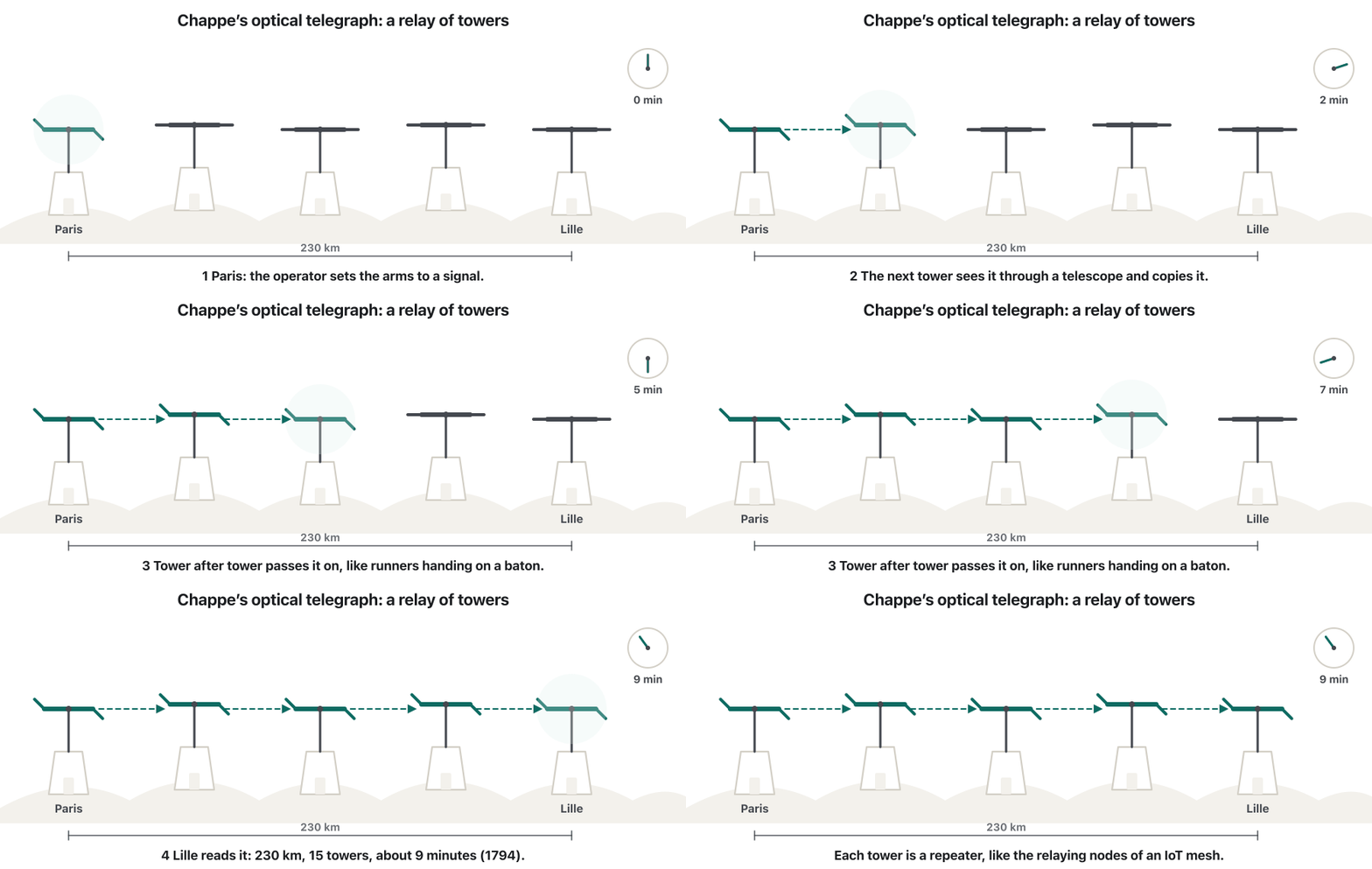
How did a message cross a whole country? Like a relay race. The operator in the first tower set the arms. The operator in the next tower watched them through his telescope, set his own arms to the same position, and the tower after him did the same. Messages passed from tower to tower, hundreds of kilometres in minutes: much faster than a rider on horseback.
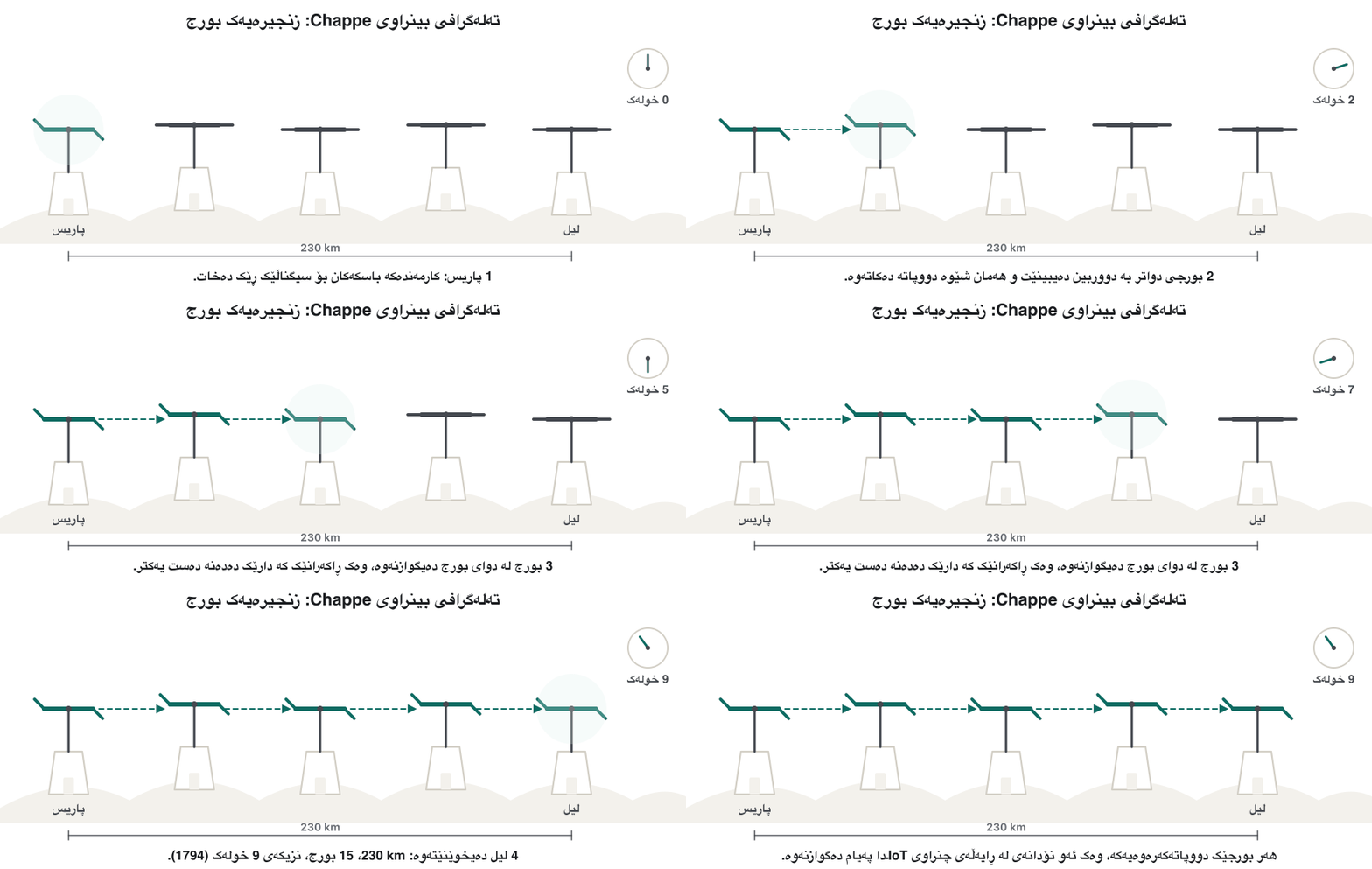
پەیامێک چۆن هەموو وڵاتێکی دەبڕی؟ وەک ڕاکردنی دەستاودەست. کارمەندی بورجی یەکەم باسکەکانی ڕێک دەخست. کارمەندی بورجی دواتر بە دووربینەکەی سەیری دەکردن، باسکەکانی خۆی دەخستە هەمان شێوە و بورجی دوای ئەویش هەمان کاری دەکرد. پەیامەکان لە بورجێکەوە بۆ بورجێکی تر دەڕۆیشتن، سەدان کیلۆمەتر لە چەند خولەکێکدا: زۆر خێراتر لە سوارێکی ئەسپ.
The first line, Paris to Lille (230 km), opened in 1794; its 15 towers carried a short message in about 9 minutes. News that needed 4 days by horse from Strasbourg to Paris arrived in about 2 hours. By 1844 France had 534 towers on more than 5,000 km of lines. Every tower was a repeater: it received a signal and sent it on, just like the relaying nodes of an IoT mesh network.
یەکەم هێڵ، پاریس بۆ لیل (230 km)، لە 1794دا کرایەوە؛ 15 بورجەکەی پەیامێکی کورتیان لە نزیکەی 9 خولەکدا دەگەیاند. هەواڵێک کە بە ئەسپ لە Strasbourgـەوە بۆ پاریس 4 ڕۆژی دەویست، لە نزیکەی 2 کاتژمێردا دەگەیشت. تا 1844 فەرەنسا 534 بورجی لەسەر زیاتر لە 5,000 km هێڵ هەبوو. هەر بورجێک بوو: وەردەگرت و دەینارد بۆ پێشەوە، ڕێک وەک ئەو نۆدانەی لە ڕایەڵەی چنراوی IoTـدا پەیام دەگوازنەوە.
Morse and the electric telegraphMorse و تەلەگرافی کارەبایی
Optical telegraphs stopped at night and in fog. The electric telegraph sent signals as pulses of electric current along a wire, day and night, in any weather. In Britain, William Cooke and Charles Wheatstone ran the first commercial electric telegraph, along a railway line, from 1838.
لە شەو و لە تەمدا دەوەستان. کارەبایی وەک لێدانی بە درێژایی وایەرێک دەنارد، شەو و ڕۆژ و لە هەموو کەشێکدا. لە بەریتانیا William Cooke و Charles Wheatstone لە 1838ـەوە یەکەم کارەبایی بازرگانییان بە درێژایی هێڵێکی شەمەندەفەر بەڕێوە برد.
In the USA, the painter and inventor Samuel Morse (1791–1872) built a line from Washington to Baltimore. On 24 May 1844 he sent the words “What hath God wrought” along it. Morse and his partner Alfred Vail also gave the telegraph its alphabet, Morse code, which turned every letter into short and long signals. Morse’s line was one of the first, and his code spread across the world.
لە ئەمریکا وێنەکێش و داهێنەر Samuel Morse (1791–1872) هێڵێکی لە واشنتۆنەوە بۆ باڵتیمۆر دروست کرد. لە 24ـی ئایاری 1844دا ئەم وشانەی پێدا نارد: «What hath God wrought» (خودا چی کرد). Morse و هاوبەشەکەی Alfred Vail ئەلفوبێیەکیشیان بۆ دانا، کە ـە و هەموو پیتێکی دەکردە کورت و درێژ. هێڵەکەی Morse یەکێک بوو لە یەکەمەکان و کۆدەکەی بە هەموو جیهاندا بڵاو بووەوە.
Morse and the electric telegraphMorse و تەلەگرافی کارەبایی
Dots and dashesخاڵ و هێڵ
In Morse code every letter is a short pattern of dots (short signals) and dashes (long signals, three times as long as a dot). The most common English letters got the shortest codes, so messages were quicker to send: E is a single dot and T a single dash. The operator pressed a key to let the current flow; at the far end a sounder clicked, or a register marked the dots and dashes on a paper tape. Skilled operators read the clicks by ear.
لە دا هەر پیتێک شێوەیەکی کورتە لە خاڵ ( کورت) و هێڵ ( درێژ، سێ ئەوەندەی خاڵێک). باوترین پیتەکانی ئینگلیزی کورتترین کۆدیان وەرگرت، بۆ ئەوەی ناردنی پەیام خێراتر بێت: E تەنیا یەک خاڵە و T تەنیا یەک هێڵ. کارمەندەکە کلیلێکی دادەگرت بۆ ئەوەی بڕوات؛ لە سەرەکەی تر دەنگدەرێک کرتەی دەکرد، یان تۆمارکەرێک خاڵ و هێڵەکانی لەسەر پارچە کاغەزێک نیشانە دەکرد. کارمەندە شارەزاکان کرتەکانیان بە گوێ دەخوێندەوە.
The international form of the code was agreed in 1865 and became the language of telegraphs and of early radio; ships used it for distress calls until 1999. The distress signal SOS is · · · − − − · · ·, sent as one run. You can make an LED blink it in the exercises of the first Arduino lab.
شێوە نێودەوڵەتییەکەی کۆدەکە لە 1865دا لەسەری ڕێککەوتن و بوو بە زمانی و ڕادیۆی سەرەتایی؛ کەشتییەکان تا 1999 بۆ داوای فریاکەوتن بەکاریان دەهێنا. فریاکەوتنی SOS بریتییە لە · · · − − − · · · و وەک یەک زنجیرە دەنێردرێت. دەتوانیت وا لێ بکەیت بیترووکێنێت لە ڕاهێنانەکانی یەکەم تاقیگەی Arduino.
Marconi: messages without wiresMarconi: پەیام بەبێ وایەر
A wire must be laid to every place you want to reach, and nobody can lay a wire to a ship at sea. The Italian inventor Guglielmo Marconi (1874–1937) sent telegraph signals with radio waves instead, through the air. In 1895 his signals reached about 3 km (2 miles); in 1896 he applied for a British patent and soon started a company.
دەبێت وایەر بۆ هەموو ئەو شوێنانە ڕابکێشرێت کە دەتەوێت پێیان بگەیت و کەس ناتوانێت وایەر بۆ کەشتییەک لە ناو دەریادا ڕابکێشێت. داهێنەری ئیتاڵی Guglielmo Marconi (1874–1937) لە جیاتی ئەوە بە بە ناو هەوادا نارد. لە 1895دا گەیشتنە نزیکەی 3 km (2 میل)؛ لە 1896دا داوای مافی داهێنانی بەریتانی کرد و زوو کۆمپانیایەکی دامەزراند.
Ships soon carried radio: in 1912 the radio operators of the sinking Titanic called for help with it. In 1909 Marconi shared the Nobel Prize in Physics with Ferdinand Braun for their work on wireless telegraphy. Every wireless technology in this chapter, from Bluetooth to LoRa, still sends its bits on radio waves.
زوو کەشتییەکان ڕادیۆیان هەڵگرت: لە 1912دا کارمەندانی ڕادیۆی کەشتیی Titanic کە نوقم دەبوو بەو ڕادیۆیە داوای یارمەتییان کرد. لە 1909دا Marconi و Ferdinand Braun خەڵاتی نۆبڵی فیزیایان پێکەوە وەرگرت بۆ کارەکانیان لەسەر . هەموو تەکنەلۆجیایەکی ئەم بەشە، لە تا ، هێشتا بە دەنێرێت.
Marconi: messages without wiresMarconi: پەیام بەبێ وایەر
1901: across the Atlantic1901: بە سەر زەریای ئەتڵەسیدا
On 12 December 1901 Marconi reported that a signal from his station at Poldhu in Cornwall (England) had reached him at Signal Hill, St John’s, in Newfoundland: about 3,500 km across the Atlantic Ocean. The message was the Morse letter S, three short clicks, heard in an earphone connected to an antenna held up by a kite.
لە 12ـی کانوونی یەکەمی 1901دا Marconi ڕایگەیاند کە لە وێستگەکەی Poldhu لە Cornwall (ئینگلتەرا)ـەوە لە Signal Hill لە St John’s لە Newfoundland پێی گەیشتووە: نزیکەی 3,500 km بە سەر زەریای ئەتڵەسیدا. پەیامەکە پیتی S بوو بە ، سێ کرتەی کورت، کە لە گوێگرێکدا بیسترا کە بە بەسترابوو و کایتێک بەرزی کردبووەوە.
Nobody else could check that first result, so some historians still doubt it. But it showed the idea that changed everything after it: radio needs no wire at all, so it can reach ships, aircraft, phones and, today, billions of IoT devices.
هیچ کەسێکی تر نەیتوانی ئەو یەکەم ئەنجامە بپشکنێت، بۆیە هەندێک مێژوونووس هێشتا گومانیان لێی هەیە. بەڵام ئەو بیرۆکەیەی پیشان دا کە هەموو شتێکی دوای خۆی گۆڕی: ڕادیۆ هیچ وایەرێکی ناوێت، بۆیە دەگاتە کەشتی، فڕۆکە، مۆبایل و ئەمڕۆش ملیاران ئامێری IoT.
A phone that weighed 40 kgتەلەفۆنێک بە کێشی 40 کیلۆ
Radio soon carried voices too. In 1956 Sweden opened MTA, the first fully automatic mobile phone system: a driver simply dialled the number. Ericsson, one of its makers, counts it as its very first mobile phone. The phone weighed about 40 kg, as big as a suitcase. It was far too heavy to carry, so it was built into a car, and the equipment often cost as much as the car itself.
زوو ڕادیۆ دەنگیشی گواستەوە. لە 1956دا سوید MTAـی کردەوە، یەکەم سیستەمی تەلەفۆنی مۆبایلی تەواو خۆکار: شۆفێرەکە تەنیا ژمارەکەی لێ دەدا. Ericsson، کە یەکێک بوو لە دروستکەرانی، بە یەکەم مۆبایلی خۆی دادەنێت. تەلەفۆنەکە نزیکەی 40 کیلۆ قورس بوو و بە قەبارەی جانتایەکی سەفەر بوو. ئەوەندە قورس بوو کە هەڵنەدەگیرا، بۆیە لە ناو ئۆتۆمبێلدا دادەنرا و ئامێرەکە زۆرجار بە ئەندازەی خودی ئۆتۆمبێلەکە نرخی بوو.
It reached about 25–30 km, needed about 8 seconds to connect a call and never had more than a few hundred users. Phones you could hold in one hand came later; the first handheld call was made in 1973 (From calls to apps). Today a phone weighs about 0.2 kg, and a whole IoT radio fits on a fingertip.
نزیکەی 25–30 km دەگەیشت، نزیکەی 8 چرکەی بۆ پەیوەندیکردن دەویست و هەرگیز لە چەند سەد بەکارهێنەرێک زیاتری نەبوو. ئەو مۆبایلانەی بە یەک دەست هەڵدەگیران دواتر هاتن؛ یەکەم پەیوەندیی مۆبایلی دەستی لە 1973دا کرا (لە پەیوەندیی تەلەفۆنییەوە بۆ ئەپ). ئەمڕۆ مۆبایلێک نزیکەی 0.2 کیلۆ کێشی هەیە و هەموو ڕادیۆیەکی IoT لەسەر سەری پەنجەیەک جێی دەبێتەوە.
What never changed: sender, code, channel, receiverئەوەی هەرگیز نەگۆڕا: نێرەر، کۆد، کەناڵ، وەرگر
From smoke to radio, every system on this road has the same four parts: a sender, a code that both sides agreed on, a channel that carries the signal and a receiver. An IoT device has them too. Its agreed code is called a protocol: the rules both sides follow (the five components of data communication).
لە دووکەڵەوە تا ڕادیۆ، هەموو سیستەمێکی سەر ئەم ڕێگایە هەمان چوار بەشی هەیە: نێرەرێک، کۆدێک کە هەردوو لا لەسەری ڕێککەوتوون، ێک کە دەگوازێتەوە و وەرگرێک. ئامێرێکی IoTـیش هەمان بەشەکانی هەیە. کۆدە ڕێککەوتووەکەی پێی دەگوترێت : ئەو یاسایانەی هەردوو لا پەیڕەوی دەکەن (پێنج پێکهاتەکەی پەیوەندیی دراوە).
| Systemسیستەم | Senderنێرەر | Codeکۆد | Channelکەناڵ | Receiverوەرگر |
|---|---|---|---|---|
| Smoke signalsنیشانەی دووکەڵ | a soldier on a towerسەربازێک لەسەر بورجێک | number of puffsژمارەی جارەکانی دووکەڵ | light through the airڕووناکی بە ناو هەوادا | the next towerبورجی دواتر |
| Chappe’s telegraph Chappe | an operatorکارمەندێک | arm positions + codebookشێوەی باسکەکان + کتێبی کۆد | light, seen through a telescopeڕووناکی، بە دووربین | the next towerبورجی دواتر |
| Electric telegraph کارەبایی | an operator with a keyکارمەندێک بە کلیلێکەوە | Morse code | electric current in a wire لە وایەردا | a sounder or registerدەنگدەر یان تۆمارکەر |
| Marconi’s radioڕادیۆی Marconi | a transmitter stationوێستگەیەکی ناردن | Morse code | radio waves | a receiver with an antennaوەرگرێک بە |
| IoT sensor IoT | a sensor node | a protocol (e.g. LoRaWAN, Bluetooth LE) (وەک ، ) | radio waves | a gateway or a phone یان مۆبایل |
What changed is distance, speed and how much information one signal carries. A smoke signal could say three things; a LoRa sensor sends an exact temperature from 10 km away.
ئەوەی گۆڕا دووری، خێرایی و بڕی ئەو کە یەک هەڵیدەگرێت. نیشانەی دووکەڵ دەیتوانی سێ شت بڵێت؛ پلەی گەرمیی ورد لە 10 km دوورەوە دەنێرێت.
Four ways IoT devices talkچوار شێوەی قسەکردنی ئامێرەکانی IoT
Now to the things themselves. IoT devices connect and communicate in a few typical patterns, called communication models. The Internet Architecture Board (IAB), which advises on the design of the internet, described four of them in RFC 7452 (March 2015): device-to-device, device-to-cloud, device-to-gateway and back-end data sharing (who writes RFCs).
ئێستا دەگەینە خودی شتەکان. ئامێرەکانی IoT بە چەند شێوەیەکی باو پەیوەندی دەکەن، کە پێیان دەگوترێت مۆدێلەکانی پەیوەندی. دەستەی تەلارسازیی (IAB)، کە ڕاوێژ لەبارەی دیزاینی دەدات، چواریانی لە 7452دا (ئازاری 2015) وەسف کردووە: ، ، و (کێ RFCـەکان دەنووسێت).
The models answer one question: who talks to whom? Most products use one of them, or a mix. The next screens look at each one.
مۆدێلەکان وەڵامی یەک پرسیار دەدەنەوە: کێ لەگەڵ کێ قسە دەکات؟ زۆربەی بەرهەمەکان یەکێکیان بەکار دەهێنن، یان تێکەڵەیەکیان. شاشەکانی داهاتوو سەیری هەریەکەیان دەکەن.
Four ways IoT devices talkچوار شێوەی قسەکردنی ئامێرەکانی IoT
Device-to-device: talking directlyپەیوەندیی ئامێر بۆ ئامێر: قسەکردنی ڕاستەوخۆ
In device-to-device communication two or more devices talk directly to each other, with no server between them. They usually use a short-range, low-power radio such as Bluetooth Low Energy, Zigbee or Z-Wave. Typical applications: light bulbs and switches, thermostats and door locks; or a heart-rate chest strap sending to a sports watch.
لە دا دوو یان زیاتر لە دوو ئامێر ڕاستەوخۆ قسە لەگەڵ یەکتر دەکەن و هیچ لە نێوانیاندا نییە. زۆرجار ڕادیۆیەکی کورتمەودا و کەموزە بەکار دەهێنن، وەک ، یان . بەکارهێنانە باوەکان: گڵۆپ و ، و قفڵی دەرگا؛ یان پشتێنێکی سنگ کە لێدانی دڵ بۆ کاتژمێرێکی وەرزشی دەنێرێت.
RFC 7452’s own example is a light switch from one company turning on a bulb from another. That works only if both speak the same protocol: interoperability (Different makers, one language). The link is fast and needs no internet, but the devices must be near each other, and nothing reaches your phone when you are away.
نموونەکەی خودی RFC 7452 گڵۆپە لە کۆمپانیایەکەوە کە گڵۆپێکی کۆمپانیایەکی تر دادەگیرسێنێت. ئەمە تەنیا کاتێک کار دەکات کە هەردووکیان هەمان بەکار بهێنن: (دروستکەری جیاواز، یەک زمان). پەیوەندییەکە خێرایە و ناوێت، بەڵام ئامێرەکان دەبێت نزیکی یەکتر بن و کاتێک لە ماڵەوە نیت هیچ شتێک ناگاتە مۆبایلەکەت.
Four ways IoT devices talkچوار شێوەی قسەکردنی ئامێرەکانی IoT
Device-to-cloud: straight to the internetپەیوەندیی ئامێر بۆ هەور: ڕاستەوخۆ بۆ ئینتەرنێت
In device-to-cloud communication the device connects straight to a cloud service on the internet, usually through the home Wi-Fi router or a mobile network. The maker’s cloud stores the data and lets you control the device from an app anywhere. Typical applications: a smart thermostat you set from work, a smart TV that streams films and gets updates.
لە دا ئامێرەکە ڕاستەوخۆ بە خزمەتگوزارییەکی هەورەوە لەسەر پەیوەست دەبێت، زۆرجار لە ڕێگەی ماڵەوە یان . هەوری کۆمپانیاکە هەڵدەگرێت و ڕێگەت پێ دەدات لە هەر شوێنێک بە ئامێرەکە کۆنترۆڵ بکەیت. بەکارهێنانە باوەکان: هۆشمەند کە لە شوێنی کارەوە ڕێکی دەخەیت و کە فیلم پەخش دەکات و وەردەگرێت.
It is simple for the user, but the device depends on the company. If the internet is down, remote control stops; if the company closes its cloud service, the device may stop working. When one company makes both the device and the cloud, nothing else needs to understand them, which can lock you in (Why open standards protect you). More in The cloud paradigm.
بۆ بەکارهێنەر سادەیە، بەڵام ئامێرەکە پشت بە کۆمپانیاکە دەبەستێت. ئەگەر بپچڕێت، کۆنترۆڵکردن لە دوورەوە دەوەستێت؛ ئەگەر کۆمپانیاکە خزمەتگوزارییە هەورییەکەی دابخات، لەوانەیە ئامێرەکە لە کار بکەوێت. کاتێک یەک کۆمپانیا هەم ئامێرەکە و هەم هەورەکە دروست دەکات، پێویست ناکات هیچ شتێکی تر لێیان تێبگات، ئەمەش دەکرێت ببێتە هۆی (بۆچی ستانداردە کراوەکان دەتپارێزن). زیاتر لە پارادایمی هەور.
Four ways IoT devices talkچوار شێوەی قسەکردنی ئامێرەکانی IoT
Device-to-gateway: a helper in the middleپەیوەندیی ئامێر بۆ دەروازە: یارمەتیدەرێک لە ناوەڕاستدا
In device-to-gateway communication the device talks to a nearby gateway with a short, low-power radio, and the gateway sends the data on to the cloud. The gateway can be an app on your phone or a small box called a hub. Typical application: a fitness tracker sends your steps to your phone over Bluetooth LE, and the phone app uploads them over Wi-Fi or 4G.
لە دا ئامێرەکە بە ڕادیۆیەکی کورتمەودا و کەموزە قسە لەگەڵ نزیک دەکات و بۆ هەور دەنێرێت. دەکرێت بێت لەسەر مۆبایلەکەت یان سندوقێکی بچووک کە پێی دەگوترێت hub. بەکارهێنانی باو: بازنێکی وەرزشی هەنگاوەکانت بە بۆ مۆبایلەکەت دەنێرێت و مۆبایلەکە بە یان 4G هەڵباریان دەکات بۆ هەور.
The gateway translates between radios (Zigbee or BLE on one side, Wi-Fi or Ethernet on the other) and can add security, so the tiny device needs only a cheap radio and a small battery. A phone is a moving gateway: when it is away, the tracker keeps its data until they meet again. Home hubs are also where fog computing happens.
لە نێوان ڕادیۆکاندا وەرگێڕان دەکات ( یان BLE لە لایەک، یان Ethernet لە لایەکی تر) و دەتوانێت زیاد بکات، بۆیە ئامێرە بچووکەکە تەنیا پێویستی بە ڕادیۆیەکی هەرزان و بچووک هەیە. مۆبایل جووڵاوە: کاتێک دوورە، بازنەکە لای خۆی هەڵدەگرێت تا دووپاتە بە یەک دەگەنەوە. hubـی ماڵەوە ئەو شوێنەشە کە ژمێرکاریی تەمـی تێدا ڕوو دەدات.
Four ways IoT devices talkچوار شێوەی قسەکردنی ئامێرەکانی IoT
Back-end data sharing: clouds that shareهاوبەشکردنی دراوە لە بەشی پشتەوە: هەورانێک کە هاوبەشی دەکەن
The fourth model is about the clouds, not the devices. In back-end data sharing the data that one company’s cloud collected is shared with another company’s service through an API, an agreed way for programs to ask each other for data. RFC 7452 compares it with web “mashups”, which combine data from several services.
مۆدێلی چوارەم لەبارەی هەورەکانە، نەک ئامێرەکان. لە دا ئەو هەوری کۆمپانیایەک کۆی کردووەتەوە، لە ڕێگەی ـەوە لەگەڵ خزمەتگوزاریی کۆمپانیایەکی تر هاوبەش دەکرێت؛ ڕێگایەکی ڕێککەوتووە بۆ ئەوەی داوای لە یەکتر بکەن. RFC 7452 بەراوردی دەکات لەگەڵ وێب، کە چەند خزمەتگوزارییەک تێکەڵ دەکەن.
Example: your watch uploads your steps to the watch maker’s cloud. A health app from another company asks: “Allow us to read your steps?” If you agree, the two clouds exchange the data through the API, and the app shows your steps beside your meals. The permission uses a standard called OAuth 2.0: the app gets a key to this data only, never your password, and you can take it back. It is personal data, so share only what you choose (IoT security and privacy).
نموونە: کاتژمێرەکەت هەنگاوەکانت بۆ هەوری کۆمپانیای دروستکەری کاتژمێرەکە دەنێرێت. تەندروستیی کۆمپانیایەکی تر دەپرسێت: «ڕێگە دەدەیت هەنگاوەکانت بخوێنینەوە؟» ئەگەر ڕازی بیت، هەردوو هەورەکە لە ڕێگەی ئاڵوگۆڕ دەکەن و هەنگاوەکانت لە تەنیشت ژەمەکانتەوە پیشان دەدات. ستانداردێک بەکار دەهێنێت بە ناوی OAuth 2.0: کلیلێک تەنیا بۆ ئەم وەردەگرێت، هەرگیز وەرناگرێت و دەتوانیت بگەڕێنیتەوە. ئەمە کەسییە، بۆیە تەنیا ئەوە هاوبەش بکە کە خۆت هەڵیدەبژێریت (ئاسایش و تایبەتێتیی IoT).
Four ways IoT devices talkچوار شێوەی قسەکردنی ئامێرەکانی IoT
The four models side by sideچوار مۆدێلەکە لە تەنیشت یەکەوە
| Modelمۆدێل | Who talks to whomکێ لەگەڵ کێ قسە دەکات | Internet needed? پێویستە؟ | Exampleنموونە | Watch outئاگاداربە |
|---|---|---|---|---|
| Device-to-device | device ↔ deviceئامێر بۆ ئامێر | Noنەخێر | switch and bulb; strap and watch و گڵۆپ؛ پشتێن و کاتژمێر | must be near; same protocolدەبێت نزیک بن؛ هەمان |
| Device-to-cloud | device → cloudئامێر بۆ هەور | Yesبەڵێ | smart thermostat, smart TV هۆشمەند، | depends on the maker’s cloudپشت بە هەوری کۆمپانیاکە دەبەستێت |
| Device-to-gateway | device → gateway → cloudئامێر بۆ بۆ هەور | Only the gatewayتەنیا | fitness tracker and phone; Zigbee hubبازنی وەرزشی و مۆبایل؛ hubـی | the gateway is one more box that can fail سندوقێکی ترە کە دەکرێت تێک بچێت |
| Back-end data sharing | cloud ↔ cloud (API)هەور بۆ هەور () | Yesبەڵێ | watch data in a health app کاتژمێر لە تەندروستیدا | privacy: share only with permission: تەنیا بە هاوبەش بکە |
Real products often mix models. A Zigbee bulb may obey its switch directly (device-to-device) and report to its hub (device-to-gateway), while the hub’s company shares energy data with your electricity app (back-end data sharing).
بەرهەمە ڕاستەقینەکان زۆرجار مۆدێلەکان تێکەڵ دەکەن. گڵۆپێکی دەکرێت ڕاستەوخۆ گوێ لە بگرێت () و ڕاپۆرت بۆ hubـەکەی بنێرێت ()، لە کاتێکدا کۆمپانیای hubـەکە وزە لەگەڵ کارەباکەت هاوبەش دەکات ().
Common mistakesهەڵە باوەکان
- “Morse invented the telegraph.” Chappe’s optical telegraph worked from 1794, and Cooke and Wheatstone ran a commercial electric telegraph from 1838. Morse’s line of 1844 was one of the first, and his code became the world standard.
- “Semaphore means flags.” Chappe’s towers used wooden arms; signalling with two hand flags is a later system used at sea.
- “Device-to-device needs the internet.” The devices talk directly; no router, internet or cloud is involved.
- “Device-to-gateway is the same as device-to-cloud.” In device-to-gateway the device cannot reach the internet itself; the gateway translates its radio and adds security.
- “In back-end data sharing the device sends to two clouds.” The device sends to one cloud; the clouds share through an API, with permission.
- “One model is the best.” There is no one-size-fits-all: choose by distance, power and who must see the data, and mix models when it helps.
- «Morse داهێنا.» بینراوی Chappe لە 1794ـەوە کاری دەکرد و Cooke و Wheatstone لە 1838ـەوە کارەبایی بازرگانییان هەبوو. هێڵەکەی Morse لە 1844دا یەکێک بوو لە یەکەمەکان و کۆدەکەی بوو بە ستانداردی جیهانی.
- «سیمافۆر واتە ئاڵا.» بورجەکانی Chappe باسکی دارینیان بەکار دەهێنا؛ ناردنی نیشانە بە دوو ئاڵای دەستی سیستەمێکی دواترە کە لە دەریادا بەکار دێت.
- « دەوێت.» ئامێرەکان ڕاستەوخۆ قسە دەکەن؛ هیچ ، یان هەورێک بەشدار نییە.
- « هەمان .» لە ئامێرەکە خۆی ناگاتە ؛ ڕادیۆکەی وەردەگێڕێت و زیاد دەکات.
- «لە ئامێرەکە بۆ دوو هەور دەنێرێت.» ئامێرەکە بۆ یەک هەور دەنێرێت؛ هەورەکان لە ڕێگەی و بە هاوبەشی دەکەن.
- «یەک مۆدێل باشترینە.» یەک چارەسەر بۆ هەموو بارێک نییە: بەپێی دووری، وزە و ئەوەی کێ دەبێت ببینێت هەڵبژێرە و کاتێک سوودی هەبێت مۆدێلەکان تێکەڵ بکە.
Exercisesڕاهێنانەکان
Name the communication model of each: (a) a Zigbee motion sensor turns on a hallway light directly; (b) a smart plug sends its energy use to the maker’s cloud over Wi-Fi; (c) a Bluetooth glucose sensor sends readings to the patient’s phone app, which uploads them; (d) an electricity company’s cloud gives a solar-panel app the meter readings, after the owner agrees; (e) a smart TV downloads updates from its maker.
مۆدێلی پەیوەندیی هەریەکەیان بنووسە: (a) جووڵەی ڕاستەوخۆ گڵۆپی ڕاڕەوێک دادەگیرسێنێت؛ (b) بە بڕی وزەی بەکارهاتووی خۆی بۆ هەوری کۆمپانیاکە دەنێرێت؛ (c) شەکری خوێن بە خوێندنەوەکان بۆ مۆبایلی نەخۆشەکە دەنێرێت و هەڵباریان دەکات بۆ هەور؛ (d) هەوری کۆمپانیایەکی کارەبا خوێندنەوەکانی پێوەرەکە دەدات بە پانێڵی خۆر، دوای ئەوەی خاوەنەکەی ڕازی دەبێت؛ (e) لە دروستکەرەکەی دابار دەکات.
Show answerوەڵامەکە پیشان بدە
(a) device-to-device; (b) device-to-cloud; (c) device-to-gateway (the phone is the gateway); (d) back-end data sharing; (e) device-to-cloud.
(a) ؛ (b) ؛ (c) (مۆبایلەکە )؛ (d) ؛ (e) .
The Paris–Lille line was 230 km long and carried a short message in about 9 minutes. (a) What was the message’s average speed in km/h? (b) News from Strasbourg took 4 days on horseback but about 2 hours by telegraph. How many times faster was the telegraph?
هێڵی پاریس–لیل 230 km درێژ بوو و پەیامێکی کورتی لە نزیکەی 9 خولەکدا دەگەیاند. (a) خێرایی مامناوەندیی پەیامەکە چەند km/h بوو؟ (b) هەواڵی Strasbourg بە ئەسپ 4 ڕۆژی دەویست، بەڵام بە نزیکەی 2 کاتژمێر. چەند جار خێراتر بوو؟
Hintئاماژە
Change 9 minutes into hours first: 9 ÷ 60.
سەرەتا 9 خولەک بگۆڕە بۆ کاتژمێر: 9 ÷ 60.
Show answerوەڵامەکە پیشان بدە
(a) About 1,500 km/h, faster than a modern airliner, although the towers only passed a few symbols a minute. (b) About 48 times faster.
(a) نزیکەی 1,500 km/h، لە فڕۆکەیەکی ئەمڕۆ خێراتر، هەرچەندە بورجەکان لە خولەکێکدا تەنیا چەند هێمایەکیان دەگواستەوە. (b) نزیکەی 48 جار خێراتر.
Chappe’s towers had 92 signals for messages, and every code word was sent as two signals: first the page, then the line. (a) How many different words and phrases could the codebook hold? (b) With three-signal code words, how many would it be?
بورجەکانی Chappe 92 بۆ پەیام هەبوو و هەر وشەیەکی کۆد بە دوو دەنێردرا: سەرەتا لاپەڕە، پاشان دێڕ. (a) کتێبی کۆدەکە دەیتوانی چەند وشە و دەستەواژەی جیاواز هەڵبگرێت؟ (b) ئەگەر هەر وشەیەکی کۆد سێ بوایە، چەند دەبوو؟
Show answerوەڵامەکە پیشان بدە
(a) 8,464; (b) 778,688. Every extra symbol multiplies the choices, just as every extra bit doubles the values a binary number can hold.
(a) 8,464؛ (b) 778,688. هەر هێمایەکی زیادە ئەگەرەکان چەند هێندە دەکات، ڕێک وەک ئەوەی هەر زیادە ژمارەی بەهاکانی ژمارەیەکی دوانی دوو هێندە دەکات.
A farmer near Halabja wants to see the soil moisture of his greenhouse on his phone. The greenhouse has electricity and home Wi-Fi reaches it weakly. Suggest a communication model, and give one advantage and one risk of your choice.
جووتیارێک لە نزیک هەڵەبجە دەیەوێت شێی خاکی سەوزەخانەکەی لەسەر مۆبایلەکەی ببینێت. سەوزەخانەکە کارەبای هەیە و ماڵەوە بە لاوازی پێی دەگات. مۆدێلێکی پەیوەندی پێشنیار بکە و سوودێک و مەترسییەکی هەڵبژاردنەکەت بنووسە.
Show answerوەڵامەکە پیشان بدە
One good answer: device-to-gateway. Battery soil sensors send by Zigbee or Bluetooth LE to a small gateway with mains power near the house, and the gateway uploads over Wi-Fi to a cloud the phone can read. Advantage: the sensors need only low-power radios, so their batteries last. Risk: if the gateway fails, no data arrives (a single point of failure). Device-to-cloud with Wi-Fi sensors also works if the signal is strong enough, but each sensor then needs Wi-Fi and more power.
وەڵامێکی باش: . خاک کە هەیە بە یان بۆ بچووک دەنێرن کە لە نزیک ماڵەکە کارەبای هەیە و بە بۆ هەورێکی دەنێرێت کە مۆبایلەکە دەیخوێنێتەوە. سوود: تەنیا پێویستیان بە ڕادیۆی کەموزەیە، بۆیە زۆر دەمێننەوە. مەترسی: ئەگەر تێک بچێت، هیچ ناگات (). بە کار دەکات ئەگەر بەس بەهێز بێت، بەڵام ئەو کاتە هەر پێویستی بە و وزەی زیاتر هەیە.
Summaryپوختە
- IoT starts with connectivity, and there is no one-size-fits-all solution: distance, data and power decide the link.
- Long-distance communication grew from shouting and smoke signals to Chappe’s optical telegraph (1794), the electric telegraph and Morse code (1838–1844), Marconi’s radio across the Atlantic (1901) and a 40 kg car phone (1956).
- Every system has a sender, an agreed code (today a protocol), a channel and a receiver; Chappe’s towers were repeaters, like mesh nodes.
- RFC 7452 names four IoT communication models: device-to-device (directly), device-to-cloud (straight to a cloud service), device-to-gateway (through a phone or hub) and back-end data sharing (cloud to cloud through APIs, with permission).
- Next: how many devices are linked together, in point-to-point, star and mesh networks.
- IoT بە پەیوەندییەوە دەست پێ دەکات و یەک چارەسەر بۆ هەموو بارێک نییە: دووری، و وزە پەیوەندییەکە دیاری دەکەن.
- پەیوەندیی دوورمەودا لە هاوارکردن و نیشانەی دووکەڵەوە گەشەی کرد بۆ بینراوی Chappe (1794)، کارەبایی و (1838–1844)، ڕادیۆی Marconi بە سەر ئەتڵەسیدا (1901) و تەلەفۆنێکی 40 کیلۆیی ئۆتۆمبێل (1956).
- هەموو سیستەمێک نێرەر، کۆدێکی ڕێککەوتوو (ئەمڕۆ )، کەناڵ و وەرگری هەیە؛ بورجەکانی Chappe بوون، وەک نۆدەکانی .
- 7452 چوار مۆدێلی پەیوەندیی IoT ناو دەبات: (ڕاستەوخۆ)، (ڕاستەوخۆ بۆ خزمەتگوزارییەکی هەور)، (لە ڕێگەی مۆبایل یان hubـەوە) و (هەور بۆ هەور لە ڕێگەی ، بە ).
- دواتر: چەندین ئامێر چۆن پێکەوە دەبەسترێن، لە پەیوەندیی خاڵ بۆ خاڵ، ڕایەڵەی ئەستێرەیی و ڕایەڵەی چنراو.
Lesson complete!وانەکە تەواو بوو!
Well done. Review the key terms, then go on to the next lesson.دەستخۆش. سەیرێکی زاراوە سەرەکییەکان بکەرەوە، پاشان بڕۆ بۆ وانەی داهاتوو.
Key termsزاراوە سەرەکییەکان
Point-to-Point, Star and Mesh Networksپەیوەندیی خاڵ بۆ خاڵ، ڕایەڵەی ئەستێرەیی و ڕایەڵەی چنراو
Related lecturesوانە پەیوەندیدارەکان
- Point-to-Point, Star and Mesh Networksپەیوەندیی خاڵ بۆ خاڵ، ڕایەڵەی ئەستێرەیی و ڕایەڵەی چنراو
- Range, Speed and Power: Choosing a Wireless Technologyمەودای سیگناڵ، خێرایی و وزە: هەڵبژاردنی تەکنەلۆجیایەکی بێتەل
- A Short History of IoT, and How Many Devices There Areمێژوویەکی کورتی ئینتەرنێتی شتەکان و ژمارەی ئامێرەکانی
- Where Should the Thinking Happen?بیرکردنەوە دەبێت لە کوێ ڕووبدات؟
- Cloud, Fog and Edge Computingهەورەژمێرکاری، ژمێرکاریی تەم و ژمێرکاریی لێوار
- Layers: Organising an IoT Systemچینەکان: ڕێکخستنی سیستەمێکی IoT
- Who Writes the Rules? IoT Standardsکێ یاساکان دەنووسێت؟ ستانداردەکانی IoT
- Lab: Blink an LED and Build a Traffic Lightتاقیگە: LEDـێک بترووکێنە و گڵۆپێکی هاتوچۆ دروست بکە
- Mobile Technology and Wireless Networksتەکنەلۆژیای مۆبایل و ڕایەڵە بێتەلەکان
- Computer Communicationsپەیوەندیی کۆمپیوتەر
- Data Communication: Modes, Switching and Protocolsپەیوەندیی دراوە: شێوازەکانی ناردن، سویچکردن و پرۆتۆکۆڵەکان
- Data Communication and What Makes a Network Goodپەیوەندیی دراوە و پێوەرەکانی ڕایەڵەیەکی باش
- Wi-Fi and Bluetooth Low Energy for IoTوایفای و بلووتووسی کەموزە بۆ IoT
- Keeping IoT Devices Safe and Privateئامێرەکانی IoT: ئاسایش و تایبەتێتی
References and further readingسەرچاوەکان و خوێندنەوەی زیاتر
- RFC 7452: Architectural Considerations in Smart Object Networking (IAB, March 2015)
- Ericsson history: The Lauhrén system (MTA, Stockholm 1956)
- Wikipedia: Chappe telegraph
- Wikipedia: Claude Chappe
- Wikipedia: Electrical telegraph (Cooke and Wheatstone 1838; Morse 1844)
- Wikipedia: Morse code
- Wikipedia: Guglielmo Marconi
- Wikipedia: Smoke signal
- IoT Analytics (28 October 2025): State of IoT 2025, number of connected IoT devices
This lecture is a first edition. The Kurdish text and terminology are waiting for review by Kurdish IT teachers.ئەم وانەیە چاپی یەکەمە. دەقە کوردییەکە و زاراوەکانی چاوەڕێی پێداچوونەوەی مامۆستایانی کوردی بواری IT ن.