Chapterبەش 1 · Lectureوانە 1.3
Where IoT Is Used, and What Makes It HardIoT لە کوێ بەکار دێت و چی قورسی دەکات
Nine areas where IoT is used — safer cars, health and wearables, smart meters, smart lighting, smart farming, the industrial internet and M2M, smart appliances — an old forecast of home devices, two public-safety uses (patrol robots and wildfire sensors), and the nine challenges of IoT with today's answers.
نۆ بوار کە IoTـی تێدا بەکار دێت — ئۆتۆمبێلی سەلامەتتر، تەندروستی و ، ، ڕووناکردنەوەی هۆشمەند، ، و M2M، ئامێری ماڵیی هۆشمەند — پێشبینییەکی کۆنی ئامێرەکانی ماڵ، دوو بەکارهێنانی ئاسایشی گشتی ( پاسەوان و ئاگری دارستان) و نۆ ئاستەنگەکەی IoT لەگەڵ وەڵامەکانی ئەمڕۆ.
What you will learnچی فێر دەبیت
- Name the nine common application areas of IoT, give an example of each, and describe two public-safety uses: patrol robots and wildfire sensors.
- Explain how smart meters, connected street lights, smart farms and predictive maintenance save resources.
- Describe the nine challenges of IoT and why energy management and power consumption belong together.
- Estimate battery life from a battery capacity and an average current.
- نۆ بوارە باوەکەی بەکارهێنانی IoT ناو بهێنیت، بۆ هەریەکەیان نموونەیەک بهێنیتەوە و دوو بەکارهێنانی ئاسایشی گشتی ڕوون بکەیتەوە: پاسەوان و ئاگری دارستان.
- ڕوون بکەیتەوە ، گڵۆپی بەستراوی شەقام، کێڵگەی هۆشمەند و چۆن سەرچاوە پاشەکەوت دەکەن.
- نۆ ئاستەنگەکەی IoT وەسف بکەیت و بڵێیت بۆچی بەڕێوەبردنی وزە و پێکەوەن.
- تەمەنی لە تواناکەی و تێکڕای بخەمڵێنیت.
IoT is everywhere: nine areasIoT لە هەموو شوێنێکە: نۆ بوار
Where is IoT used? Almost everywhere. A common way to group its uses is the nine areas in the wheel: safer cars, fitness and health, portable and wearable electronics, resource management, the industrial internet, machine to machine (M2M), smart lighting, smart farming and smart appliances. Many of them come together in a smart city — see Smart cities. Beyond the wheel, IoT also helps public safety, with patrol robots and fire sensors on the mountains. The next screens visit the areas one by one; then we look at what makes IoT hard.
IoT لە کوێ بەکار دێت؟ نزیکەی لە هەموو شوێنێک. ڕێگایەکی باو بۆ پۆلێنکردنی بەکارهێنانەکانی ئەو نۆ بوارەیە کە لە بازنەکەدان: ئۆتۆمبێلی سەلامەتتر، وەرزش و تەندروستی، ئامێری ئەلیکترۆنیی هەڵگیراو و لەبەرکراو، بەڕێوەبردنی سەرچاوەکان، ، (M2M)، ڕووناکردنەوەی هۆشمەند، و ئامێری ماڵیی هۆشمەند. زۆربەیان لە کۆ دەبنەوە — بڕوانە شارە هۆشمەندەکان. لە دەرەوەی بازنەکەش IoT یارمەتی ئاسایشی گشتی دەدات، بە پاسەوان و ئاگر لەسەر شاخەکان. شاشەکانی داهاتوو یەک بە یەک سەردانی ئەم بوارانە دەکەن؛ پاشان سەیری ئەوە دەکەین کە چی IoT قورس دەکات.
Safer carsئۆتۆمبێلی سەلامەتتر
A modern car is full of sensors, and more and more cars are connected. Crash sensors fire the airbags; tyre-pressure sensors warn of a flat tyre; cameras and radar help the driver keep a safe distance. Connected cars can also call for help: since 31 March 2018, every new car model approved for sale in the European Union must have eCall. After a serious crash, the car's sensors start a call to the emergency number 112 by themselves over the mobile network and send the car's position and direction of travel — even if nobody inside can speak. Self-driving cars go further: they depend on dozens of sensors.
ئۆتۆمبێلی نوێ پڕە لە و ئۆتۆمبێلی زیاتر و زیاتر بەستراون. پێکدادان باڵۆنە هەواییەکان دەکەنەوە؛ پەستانی تایە لە تایەی بێ هەوا ئاگادارت دەکەنەوە؛ کامێرا و یارمەتیی شۆفێر دەدەن دووریی سەلامەت ڕابگرێت. ئۆتۆمبێلی بەستراو دەتوانێت داوای یارمەتیش بکات: لە 31ی ئاداری 2018ـەوە هەموو مۆدێلێکی نوێی ئۆتۆمبێل کە لە یەکێتیی ئەورووپا بۆ فرۆشتن پەسەند دەکرێت دەبێت eCallـی هەبێت. دوای پێکدادانێکی سەخت، ئۆتۆمبێلەکە خۆیان لە ڕێی پەیوەندی بە ژمارەی فریاکەوتنی 112ـەوە دەکەن و شوێن و ئاڕاستەی ڕۆیشتنی ئۆتۆمبێلەکە دەنێرن — تەنانەت ئەگەر کەسی ناوەوە نەتوانێت قسە بکات. ئۆتۆمبێلە خۆگەڕەکان هەنگاوێک پێشترن: پشت بە دەیان دەبەستن.
Since 2026, new car types in the EU must make this call over 4G or 5G, because 2G and 3G networks are closing — see Connected cars.
لە 2026ـەوە، جۆرە نوێکانی ئۆتۆمبێل لە یەکێتیی ئەورووپا دەبێت ئەم پەیوەندییە لە ڕێی 4G یان 5Gـەوە بکەن، چونکە 2G و 3G دادەخرێن — بڕوانە ئۆتۆمبێلی بەستراو.
Fitness, health and wearable electronicsوەرزش، تەندروستی و ئەلیکترۆنیی لەبەرکراو
Portable and wearable electronics — smart watches, fitness bands, rings, glasses, even clothes — carry small sensors that measure the body. A fitness band counts steps and heartbeats; some smart watches notice a hard fall and can call for help; a continuous glucose monitor, a tiny sensor under the skin of the arm or belly, estimates blood sugar every few minutes and sends it to the patient's phone. With the patient's permission, doctors can watch such readings from far away, so problems are found early. Inside a hospital the same idea saves time: bedside monitors send each patient's heart rate, oxygen level and blood pressure over the hospital network to the nurses' station and to the doctor's phone, so a doctor busy on another floor is alerted at once when a patient gets worse. Health data is very personal, so who may see it matters — see Privacy.
ئامێری ئەلیکترۆنیی هەڵگیراو و لەبەرکراو — کاتژمێری هۆشمەند، بازنی وەرزشی، ئەڵقە، چاویلکە و تەنانەت جلوبەرگ — بچووک هەڵدەگرن کە جەستە دەپێون. بازنێکی وەرزشی هەنگاو و لێدانی دڵ دەژمێرێت؛ هەندێک کاتژمێری هۆشمەند هەست بە کەوتنێکی توند دەکەن و دەتوانن داوای یارمەتی بکەن؛ پێوەری بەردەوامی شەکری خوێن، کە زۆر بچووکە لە ژێر پێستی باسک یان سکدا، هەر چەند خولەکێک جارێک شەکری خوێن دەخەمڵێنێت و دەینێرێت بۆ مۆبایلی نەخۆشەکە. بە ڕەزامەندیی نەخۆش، پزیشکان دەتوانن لە دوورەوە چاودێریی ئەم خوێندنەوانە بکەن، بۆیە کێشەکان زوو دەدۆزرێنەوە. لە ناو نەخۆشخانەدا هەمان بیرۆکە کات دەپارێزێت: ئامێرەکانی چاودێریی تەنیشت جێگا لێدانی دڵ، ئاستی ئۆکسجین و پەستانی خوێنی هەر نەخۆشێک لە ڕێگەی نەخۆشخانەکەوە دەنێرن بۆ بنکەی پەرستاران و مۆبایلی پزیشکەکە، بۆیە پزیشکێک کە لە نهۆمێکی تردا سەرقاڵە یەکسەر ئاگادار دەکرێتەوە کاتێک بارودۆخی نەخۆشێک خراپتر دەبێت. تەندروستی زۆر تایبەتە، بۆیە ئەوەی کێ بۆی هەیە بیبینێت گرنگە — بڕوانە تایبەتێتی.
Resource management: meters for electricity, water and gasبەڕێوەبردنی سەرچاوەکان: پێوەری کارەبا، ئاو و گاز
A smart meter measures how much electricity, water or gas a home uses and sends the readings to the company by itself — many record the use every 15 minutes or every hour — so nobody has to come and read the meter. The readings show when a city uses the most, so power can be planned; a water meter that keeps counting at three in the morning points to a leak. Companies manage their goods the same way: tagged boxes report where they are, as in Ashton's idea.
بڕی ئەو کارەبا، ئاو یان گازە دەپێوێت کە ماڵێک بەکاری دەهێنێت و خۆی خوێندنەوەکان بۆ کۆمپانیاکە دەنێرێت — زۆرێکیان هەر 15 خولەک یان هەر کاتژمێرێک جارێک بەکارهێنانەکە تۆمار دەکەن — بۆیە پێویست ناکات کەس بێت و پێوەرەکە بخوێنێتەوە. خوێندنەوەکان پیشان دەدەن شار کەی زۆرترین کارەبا بەکار دەهێنێت، بۆیە دەتوانرێت پلان بۆ کارەبا دابنرێت؛ پێوەرێکی ئاو کە لە کاتژمێر سێی بەیانیدا هێشتا دەژمێرێت ئاماژە بە دزەیەک دەکات. کۆمپانیاکان بە هەمان شێوە کاڵاکانیان بەڕێوە دەبەن: سندووقە تاگدارەکان ڕادەگەیەنن لە کوێن، وەک لە بیرۆکەکەی Ashtonـدا.
Smart lightingڕووناکردنەوەی هۆشمەند
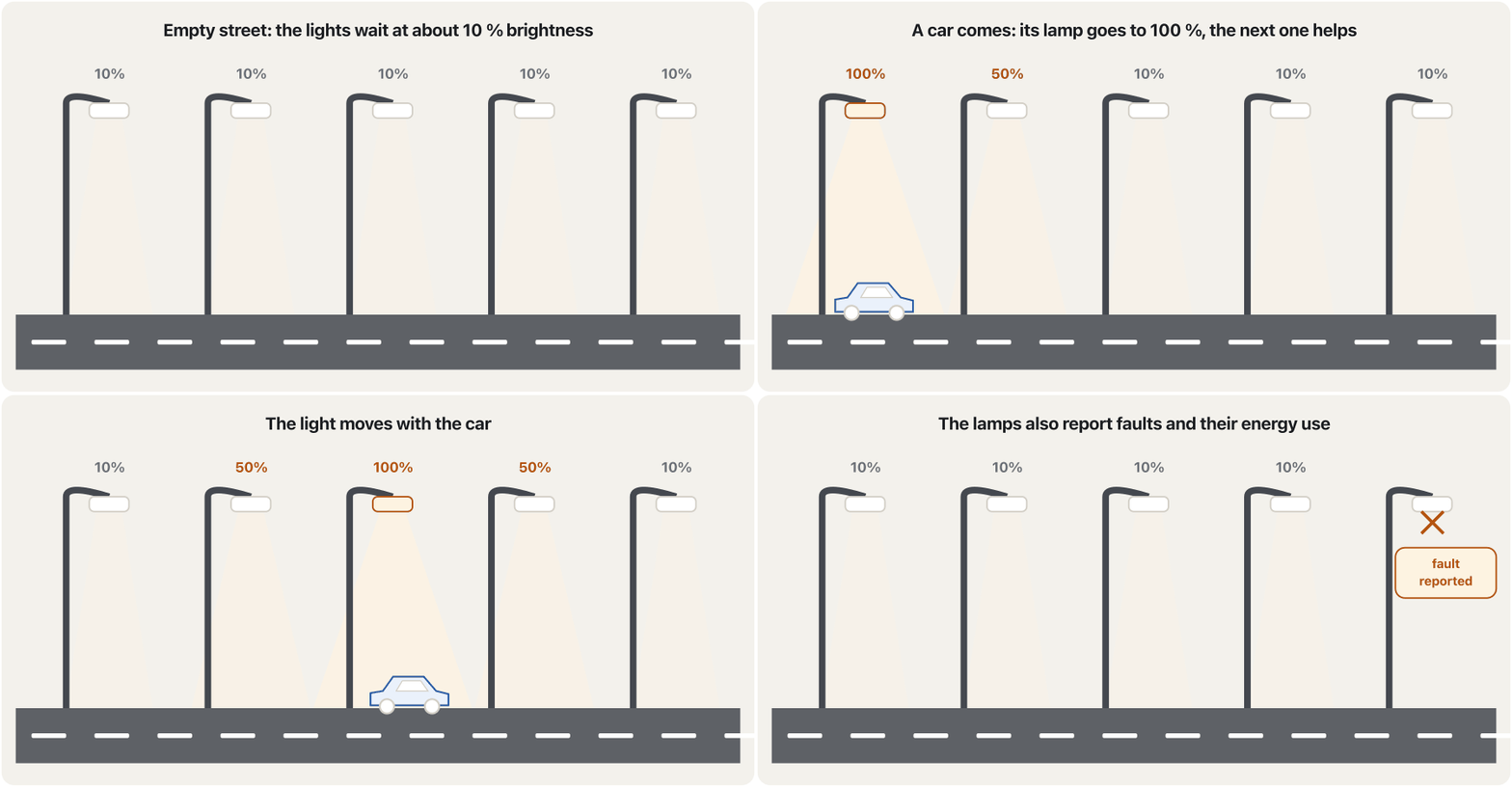
Street lights burn all night, even on empty streets. Connected street lights can measure and report their own energy use and send a message when a lamp breaks, so it is repaired quickly. Some systems also dim the lights when nobody is there and brighten them when a sensor sees a person or a car: in one EU-funded project the lamps waited at about 10 % brightness, and the project reported energy savings of up to 80 % compared with lights that stay fully on. At home, smart bulbs follow a schedule or a phone app. The animation shows the idea:
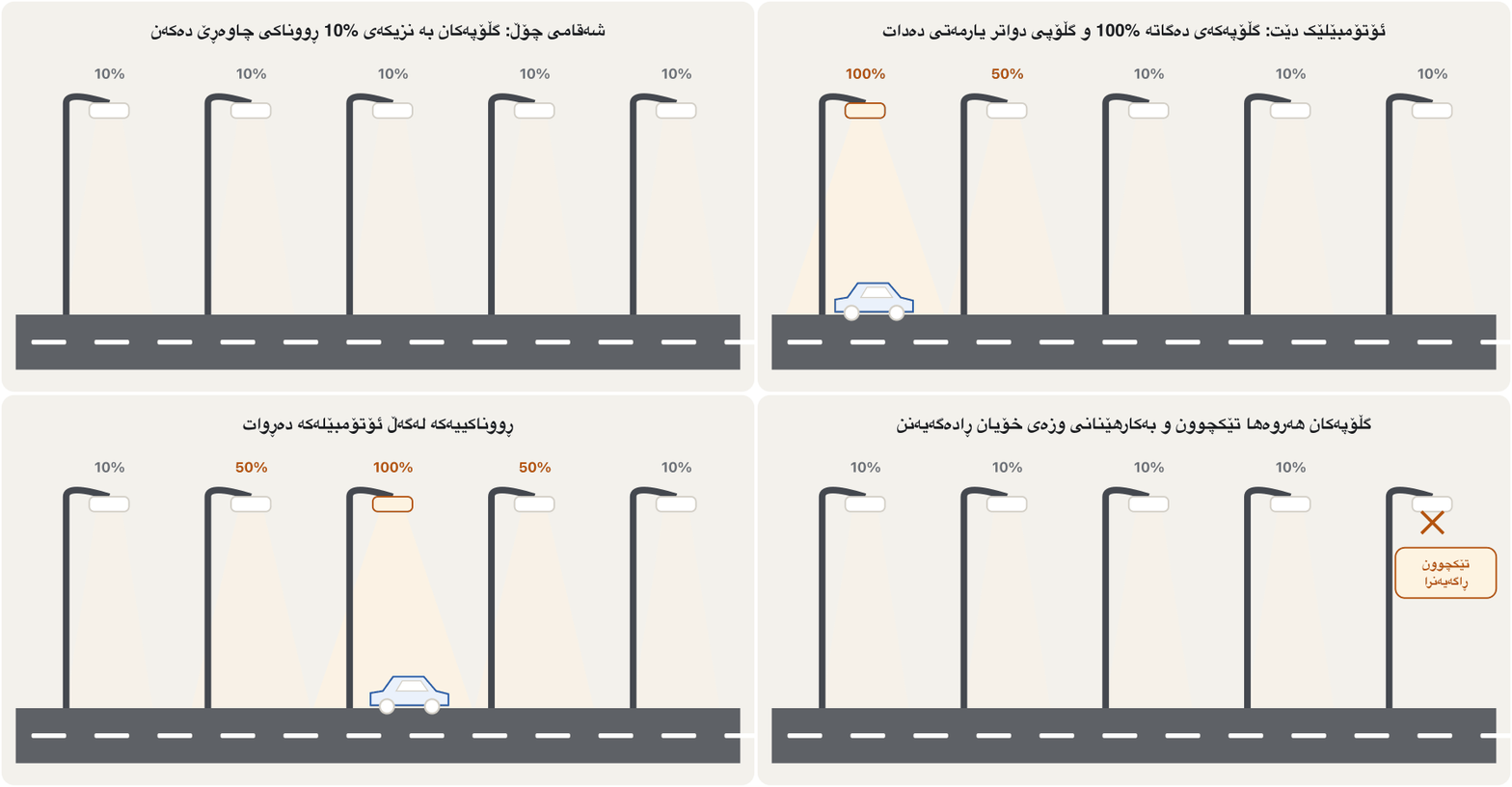
گڵۆپەکانی شەقام بە درێژایی شەو داگیرساون، تەنانەت لە شەقامی چۆڵیشدا. گڵۆپی بەستراوی شەقام دەتوانێت خۆی بپێوێت و ڕابگەیەنێت و کاتێک گڵۆپێک تێکدەچێت نامە بنێرێت، بۆیە خێرا چاک دەکرێتەوە. هەندێک سیستەم هەروەها کاتێک کەس نییە گڵۆپەکان کز دەکەن و کاتێک مرۆڤێک یان ئۆتۆمبێلێک دەبینێت ڕووناکیان دەکەنەوە: لە پرۆژەیەکدا کە یەکێتیی ئەورووپا پشتگیریی کرد، گڵۆپەکان بە نزیکەی 10% ڕووناکی چاوەڕێیان دەکرد و پرۆژەکە ڕایگەیاند کە تا 80% وزە پاشەکەوت دەکات بە بەراورد لەگەڵ گڵۆپی هەمیشە تەواو داگیرساو. لە ماڵەوە، گڵۆپی هۆشمەند پەیڕەوی خشتەیەکی کات یان مۆبایل دەکات. بیرۆکەکە پیشان دەدات:
How a whole city uses such sensors is in Smart cities; the light sensor that tells a lamp it is getting dark is in Where LDRs sense light.
شارێکی تەواو چۆن ئەم جۆرە بەکار دەهێنێت لە شارە هۆشمەندەکانـدا هاتووە؛ ئەو بە گڵۆپەکە دەڵێت تاریک دادێت لە LDR لە کوێ هەست بە ڕووناکی دەکاتـدا هاتووە.
Smart farmingکشتوکاڵی ورد
Water is precious on farms, especially in dry summers. In smart farming, soil-moisture sensors in each part of a field report how wet the soil is, a small weather station adds rain, wind and temperature, and a gateway sends everything to the farmer's phone. Valves then water only the dry zone, so less water and less fertiliser are wasted. The same idea watches greenhouses (the greenhouse example) and animals: collars on cows can report where they are and how much they move.
ئاو لە کێڵگەکاندا گرانبەهایە، بەتایبەتی لە هاوینە وشکەکاندا. لە ، شێی خاک لە هەر بەشێکی کێڵگەکەدا ڕادەگەیەنن خاکەکە چەندە تەڕە، وێستگەیەکی بچووکی کەشوهەوا باران، با و گەرمی زیاد دەکات و هەمووی دەنێرێت بۆ مۆبایلی جووتیارەکە. پاشان دەریچەکان تەنیا ڕووبەرە وشکەکە ئاو دەدەن، بۆیە ئاو و پەینی کەمتر بەفیڕۆ دەچێت. هەمان بیرۆکە چاودێریی گوڵخانەکان (نموونەی گوڵخانەکە) و ئاژەڵەکانیش دەکات: ملوانکەی سەر مانگا دەتوانێت ڕابگەیەنێت لە کوێیە و چەندە دەجووڵێت.
From the air, a drone camera can find the sick plants in a whole field: Farms: finding sick plants.
لە ئاسمانەوە، کامێرای دەتوانێت ڕووەکە نەخۆشەکانی هەموو کێڵگەیەک بدۆزێتەوە: کێڵگە: دۆزینەوەی ڕووەکی نەخۆش.
Industrial internet and machine to machine (M2M)ئینتەرنێتی شتەکانی پیشەسازی و پەیوەندیی مەکینە بۆ مەکینە
In factories, power plants and mines, the industrial internet (industrial IoT) puts sensors on machines. A vibration sensor on a motor shows the vibration slowly rising over the weeks; long before the motor breaks, the system warns that it needs a repair. This is predictive maintenance: repairing at the right time instead of after a breakdown.
لە کارگە، وێستگەی کارەبا و کانەکاندا، لەسەر ئامێرەکان دادەنێت. لەرینەوە لەسەر پیشان دەدات کە لەرینەوەکە بە درێژایی هەفتەکان هێواش هێواش زیاد دەکات؛ زۆر پێش ئەوەی تێکبچێت، سیستەمەکە ئاگادار دەکاتەوە کە پێویستی بە چاککردنەوەیە. ئەمە : چاککردنەوە لە کاتی گونجاودا لەبری دوای تێکچوون.
Machine to machine (M2M) means machines exchanging data with each other automatically, with no person in the loop, often over mobile networks. A vending machine can tell the supplier's server that it is nearly empty, and the server sends a truck; cash machines and meters report in the same way. M2M is one of the roots of today's IoT.
(M2M) واتە مەکینەکان بە شێوەی خۆکار لەگەڵ یەکتر ئاڵوگۆڕ دەکەن، بێ ئەوەی مرۆڤ لە ناو بازنەکەدا بێت، زۆرجار لە ڕێی . ئامێرێکی فرۆشتن دەتوانێت بە دابینکەرەکە بڵێت خەریکە بەتاڵ دەبێت و بارهەڵگرێک دەنێرێت؛ ئامێرەکانی پارە (ATM) و پێوەرەکانیش بە هەمان شێوە ڕاپۆرت دەدەن. M2M یەکێکە لە ڕەگەکانی IoTـی ئەمڕۆ.
Trade uses the same idea: a GPS tracker on a lorry reports its position over the mobile network, so a merchant sees where the goods are and when they will arrive — like the rider's dot on the map of a delivery app such as Talabat. How such trackers work: Fleets.
بازرگانیش هەمان بیرۆکە بەکار دەهێنێت: تراکەرێکی لەسەر بارهەڵگرێک شوێنی خۆی لە ڕێگەی ڕادەگەیەنێت، بۆیە بازرگانێک دەبینێت کاڵاکان لە کوێن و کەی دەگەنە جێ — وەک خاڵی گەیەنەرەکە لەسەر نەخشەی گەیاندنی وەک Talabat. ئەم تراکەرانە چۆن کار دەکەن: ئۆتۆمبێلەکانی کۆمپانیا.
Smart appliances at homeئامێری ماڵیی هۆشمەند
Smart appliances connect the home: a washing machine sends a message when the wash is finished, an oven can be preheated from the phone on the way home, a fridge camera shows what is missing while you are in the bazaar, and a smart plug switches the water heater on at the right time. A security camera at home in Duhok can be watched live on your phone while you are in Erbil, and it sends an alert when it sees movement at the door — but first change its default password: see Unique passwords.
ئامێری ماڵیی هۆشمەند ماڵ دەبەستێتەوە: جلشۆرێک کاتێک شوشتن تەواو دەبێت نامە دەنێرێت، دەتوانرێت فڕنێک لە ڕێگای گەڕانەوە بۆ ماڵ لە مۆبایلەوە گەرم بکرێت، کامێرای ناو سەلاجە پیشانت دەدات چی کەمە کاتێک لە بازاڕیت و ئاوگەرمکەرەوەکە لە کاتی گونجاودا هەڵدەکات. کامێرایەکی چاودێری لە ماڵەکەت لە دهۆک دەتوانیت لە هەولێرەوە بە ڕاستەوخۆ لەسەر مۆبایلەکەت ببینیت و کاتێک جووڵە لە بەردەم دەرگا دەبینێت ئاگادارت دەکاتەوە — بەڵام سەرەتا بگۆڕە: تێپەڕەوشەکانی تایبەت ببینە.
How many connected devices does a home have? In 2013 the OECD forecast that a family of four with two teenagers, which had about 10 connected devices in 2012, would have about 25 in 2017 and 50 by 2022. A 2022 survey of US homes counted about 22 on average — less than half of the forecast.
ماڵێک چەند ئامێری بەستراوی هەیە؟ لە 2013دا OECD پێشبینیی کرد خێزانێکی چوار کەسی بە دوو هەرزەکارەوە، کە لە 2012دا نزیکەی 10 ئامێری بەستراوی هەبوو، لە 2017دا نزیکەی 25 و تا 2022 نزیکەی 50 ئامێری دەبێت. ڕاپرسییەکی 2022 لە ماڵە ئەمریکییەکان بە تێکڕا نزیکەی 22 ئامێری ژمارد — کەمتر لە نیوەی پێشبینییەکە.
Public safety: patrol robotsئاسایشی گشتی: ڕۆبۆتی پاسەوان
Cities also use IoT for safety. In April 2016 a Chinese defence university showed AnBot, a patrol robot about 1.5 m tall, and from 2017 one patrolled the departure hall of Shenzhen's airport day and night. It moves along a route by itself, its cameras and microphones watch for trouble and can help find wanted people, and anyone can press its SOS button: the police are alerted at once over the network, without a phone call.
شارەکان IoT بۆ ئاسایشیش بەکار دەهێنن. لە نیسانی 2016دا زانکۆیەکی بەرگریی چینی AnBotـی نیشان دا، پاسەوان بە بەرزیی نزیکەی 1.5 m و لە 2017ـەوە یەکێکیان شەو و ڕۆژ لە هۆڵی ڕۆیشتنی فڕۆکەخانەی Shenzhen دەگەڕا. خۆی بە ڕێگایەکدا دەجووڵێت، کامێرا و چاودێریی کێشە دەکەن و دەتوانن یارمەتی دۆزینەوەی کەسانی داواکراو بدەن و هەر کەسێک دەتوانێت دوگمەی SOSـەکەی دابگرێت: پۆلیس یەکسەر لە ڕێگەی ئاگادار دەکرێتەوە، بەبێ پەیوەندیی تەلەفۆنی.
Such a robot is an IoT device on wheels: sensors, a network link and a server in a control room, where a person decides what to do. Cameras that recognise faces in crowds also raise serious privacy questions — who is watched, and who keeps the video? See Face recognition: from your own phone to a whole crowd.
ڕۆبۆتێکی وا ئامێرێکی IoTـیە لەسەر تایە: ، پەیوەندیی و لە ژووری کۆنترۆڵدا، کە لەوێ مرۆڤێک بڕیار دەدات چی بکرێت. ئەو کامێرایانەی ڕووخسار لە ناو قەرەباڵغیدا دەناسنەوە پرسیاری گەورەی دروست دەکەن — کێ چاودێری دەکرێت و کێ ڤیدیۆکە هەڵدەگرێت؟ ناسینەوەی ڕووخسار: لە مۆبایلی خۆتەوە بۆ هەموو قەرەباڵغییەک ببینە.
Fires on the mountains: sensors that smell smokeئاگر لە شاخ: بۆنکردنی دووکەڵ بە هەستەوەر
On 29 July 2024, at about 3 a.m., a fire broke out on Goyzha, the forested mountain above Sulaimani. Strong wind spread it over about 200 dunams before civil defence teams brought it under control hours later, and fires come back to Goyzha and Azmar almost every summer. At night, nobody may see a fire until it is already large.
لە 29ی تەممووزی 2024دا، نزیکەی کاتژمێر 3ی بەرەبەیان، ئاگر لە گۆیژە کەوتەوە، ئەو شاخە دارستانییەی بەسەر سلێمانیدا دەڕوانێت. بای بەهێز بەسەر نزیکەی 200 دۆنمدا بڵاوی کردەوە پێش ئەوەی تیمەکانی بەرگریی شارستانی چەند کاتژمێرێک دواتر کۆنترۆڵی بکەن؛ ئاگر نزیکەی هەموو هاوینێک دەگەڕێتەوە بۆ گۆیژە و ئەزمەڕ. بە شەو لەوانەیە کەس ئاگرێک نەبینێت تا گەورە دەبێت.
IoT can help. Small sensors with a solar panel, spread across the slopes, «smell» the gases and fine smoke of a fire within minutes, even before flames are seen. The alert hops from sensor to sensor to a gateway, which sends it to a server; the server tells the civil defence the exact place — and, where a region has them, firefighting helicopters that carry water. Dryad's Silvanet system works like this; by the company's own count, more than 30,000 of its sensors had been made and installed by May 2026. From the air, drones with heat cameras help too: Fighting fires.
IoT دەتوانێت یارمەتی بدات. بچووک بە پانێڵێکی کە بەسەر لێژاییەکاندا بڵاو کراونەتەوە، لە چەند خولەکێکدا «بۆنی» گاز و دووکەڵی وردی ئاگر دەکەن، تەنانەت پێش ئەوەی بڵێسە ببینرێت. ئاگادارییەکە لە بۆ یەکێکی تر دەڕوات تا دەگاتە و ئەویش دەینێرێت بۆ ؛ شوێنی وردی ئاگرەکە بە بەرگریی شارستانی ڕادەگەیەنێت — هەروەها لەو ناوچانەی هەیانە، بە هەلیکۆپتەری ئاگرکوژێنەوە کە ئاو هەڵدەگرن. سیستەمی Silvanetـی کۆمپانیای Dryad بەم شێوەیە کار دەکات؛ بەپێی ژماردنی خودی کۆمپانیاکە، تا ئایاری 2026 زیاتر لە 30,000 دروست کرابوو و دانرابوو. لە ئاسمانیشەوە بە یارمەتی دەدەن: ئاگرکوژاندنەوە.
What makes IoT hard: nine challengesچی IoT قورس دەکات: نۆ ئاستەنگ
Building IoT is not easy. Engineers usually name these challenges: (1) connectivity, (2) efficient energy management, (3) security, (4) complexity, (5) the large number of chips needed, (6) the big-data demand, (7) the computation requirement, (8) power consumption and (9) standards. Two of them — energy management and power consumption — are really two sides of one problem, energy, so the next screens teach them together.
دروستکردنی IoT ئاسان نییە. ئەندازیاران بە زۆری ئەم ئاستەنگانە ناو دەبەن: (1) پەیوەستبوون، (2) بەڕێوەبردنی کارای وزە، (3) ، (4) ئاڵۆزی، (5) ژمارەی زۆری ئەو پێویستن، (6) داواکاریی ، (7) پێویستیی ژمێرکاری، (8) و (9) . دوانیان — بەڕێوەبردنی وزە و — لە ڕاستیدا دوو ڕووی یەک کێشەن، کە وزەیە، بۆیە شاشەکانی داهاتوو پێکەوە فێریان دەکەن.
Connectivity, complexity and standardsپەیوەستبوون، ئاڵۆزی و ستانداردەکان
Connectivity means making sure devices can actually reach each other. A home may hold a lamp that speaks Zigbee, a lock that speaks Bluetooth and a camera on Wi-Fi, each from a different maker with its own app. Complexity follows: building radio, protocols, security, cloud, apps and updates into one product is a big job. The answer is official standards, such as network protocols, that every maker follows, so devices work together — this is called interoperability. For smart homes, the Matter standard (2022), backed by Amazon, Apple, Google and many others, lets one app control devices from different makers. More in Who Writes the Rules? IoT Standards and Layers.
پەیوەستبوون واتە دڵنیابوون لەوەی ئامێرەکان بەڕاستی دەگەنە یەکتر. لەوانەیە ماڵێک گڵۆپێکی تێدا بێت کە بە قسە دەکات، قوفڵێک کە بە قسە دەکات و کامێرایەک لەسەر ، هەریەکەیان لە کۆمپانیایەکی جیاواز و بە تایبەتی خۆی. ئاڵۆزی بەدوایدا دێت: خستنە ناوی ڕادیۆ، ، ، هەور، و لە یەک بەرهەمدا کارێکی گەورەیە. چارەسەرەکە فەرمییەکانە، وەک ، کە هەموو کۆمپانیایەک پەیڕەویان دەکات، بۆیە ئامێرەکان پێکەوە کار دەکەن — ئەمە پێی دەوترێت . بۆ ، Matter (2022)، کە Amazon، Apple، Google و زۆری تر پشتگیریی دەکەن، ڕێگە دەدات یەک ئامێری کۆمپانیای جیاواز کۆنترۆڵ بکات. زیاتر لە کێ یاساکان دەنووسێت؟ ستانداردەکانی IoT و چینەکان.
Energy: making batteries lastوزە: درێژکردنەوەی تەمەنی پاتری
Most IoT devices run on batteries, often in places that are hard to reach, such as a field, a bridge or a water pipe. So energy must be managed carefully: low-power chips, low-power radios and, above all, sleeping. A sensor that wakes up for one second every ten minutes to measure and send, and sleeps the rest of the time, lasts far longer than one that stays awake. With a 2,000 mAh battery:
زۆربەی ئامێرەکانی IoT بە کار دەکەن، زۆرجار لە شوێنی دوور لە دەستپێگەیشتن، وەک کێڵگەیەک، پردێک یان بۆرییەکی ئاو. بۆیە دەبێت وزە بە وردی بەڕێوە ببرێت: کەموزە، ڕادیۆی کەموزە و لە هەمووی گرنگتر خەوتن. کە هەر دە خولەک جارێک بۆ یەک چرکە هەڵدەستێت تا بپێوێت و بنێرێت و لە کاتەکانی تردا دەخەوێت، زۆر زیاتر دەمێنێتەوە لە کە هەمیشە بەئاگایە. بە 2,000 mAh:
Average current over one 10-minute cycle (600 s): 1 s at 20 mA and 599 s asleep at 0.01 mA. The battery then lasts about 46,000 hours — about 5 years in theory. Always awake at 20 mA it would last 2,000 ÷ 20 = 100 hours: about 4 days.
تێکڕای لە یەک خولی 10 خولەکیدا (600 چرکە): 1 چرکە بە 20 mA و 599 چرکە خەوتن بە 0.01 mA. ئیتر نزیکەی 46,000 کاتژمێر دەمێنێت — بە تیۆری نزیکەی 5 ساڵ. ئەگەر هەمیشە بە 20 mA بەئاگا بێت تەنیا کاتژمێر دەمێنێت: نزیکەی 4 ڕۆژ.
Energy: making batteries lastوزە: درێژکردنەوەی تەمەنی پاتری
When batteries are not enough: harvesting energyکاتێک پاتری بەس نییە: کۆکردنەوەی وزە
Some devices make their own power. Energy harvesting turns light, heat, movement or radio waves around a device into a little electricity — a small solar panel on a field sensor is the most common example. Others are charged without a cable by wireless charging. Low-power chips and longer battery life make these options possible. The power sources of IoT devices are compared in Inside an IoT System.
هەندێک ئامێر خۆیان وزەی خۆیان دروست دەکەن. ڕووناکی، گەرمی، جووڵە یان دەوروبەری ئامێرێک دەکاتە کەمێک کارەبا — پانێڵێکی بچووکی لەسەر کێڵگە باوترین نموونەیە. هەندێکی تر بە بێ کێبڵ چارج دەکرێن. کەموزە و تەمەنی درێژتری ئەم ڕێگایانە دەکەنە شتێکی گونجاو. سەرچاوەکانی وزەی ئامێرەکانی IoT لە ناوەوەی سیستەمێکی IoTـدا بەراورد کراون.
Security on small chipsئاسایش لەسەر چیپی بچووک
Every connected thing is a small computer on a network, and attackers look for weak ones. IoT needs high security levels, but a sensor has a tiny chip, little memory and a small battery, so the heavy encryption used on servers may not fit. That is why new authentication and encryption methods were designed for limited hardware: in August 2025 NIST, the US standards body, published its lightweight cryptography standard, based on the Ascon algorithms, for small devices such as IoT sensors. The weakest spot is often simpler: default passwords that nobody changes — the Mirai botnet took over cameras and routers that way in 2016. Basics: IoT security basics; the full lesson: Keeping IoT Devices Safe and Private.
هەموو شتێکی بەستراو بچووکە لەسەر و هێرشبەران بەدوای لاوازەکانیاندا دەگەڕێن. IoT پێویستی بە ئاستێکی بەرزی هەیە، بەڵام زۆر بچووک، کەم و بچووکی هەیە، بۆیە لەوانەیە ئەو قورسەی لەسەر بەکار دێت جێی نەبێتەوە. بۆیە ڕێگای نوێی و بۆ سنووردار دیزاین کران: لە ئابی 2025دا NIST، دەزگای ئەمریکا، بڵاو کردەوە، کە لەسەر Ascon بنیات نراوە، بۆ ئامێری بچووکی وەک IoT. لاوازترین خاڵ زۆرجار سادەترە: کە کەس نایانگۆڕێت — بۆتنێتی Mirai لە 2016دا بەم شێوەیە کامێرا و داگیر کرد. بنەماکان: بنەماکانی ئاسایشی IoT؛ وانە تەواوەکە: پاراستنی ئامێرەکانی IoT و تایبەتێتی.
Billions of chips, floods of dataملیاران چیپ، لافاوی دراوە
Three more challenges come from scale. IoT needs a huge number of chips, so chips must become even cheaper and smaller. All those devices create big data: IDC once forecast 79.4 zettabytes of IoT data for 2025 (how that number was misread), so data centres need more and more storage. And making sense of the data needs a lot of computation — high-performance computing such as cloud computing. A smart answer is to process data close to the device and send only what matters, which Cloud, Fog and Edge Computing explains.
سێ ئاستەنگی تر لە قەبارەوە دێن. IoT پێویستی بە ژمارەیەکی زۆر زۆری هەیە، بۆیە دەبێت هێشتا هەرزانتر و بچووکتر ببن. هەموو ئەو ئامێرانە دروست دەکەن: IDC جارێک پێشبینیی 79.4 IoT بۆ 2025 کرد (ئەو ژمارەیە چۆن هەڵە خوێندرایەوە)، بۆیە پێویستیان بە زیاتر و زیاتر هەیە. هەروەها تێگەیشتن لەم هەموو ژمێرکاریی زۆری پێویستە — ژمێرکاریی بە توانای بەرز وەک هەورەژمێرکاری. وەڵامێکی زیرەکانە ئەوەیە لە نزیک ئامێرەکە چارەسەر بکرێت و تەنیا ئەوەی گرنگە بنێردرێت، کە ژمێرکاریی هەور، تەم و لێوار ڕوونی دەکاتەوە.
Common mistakesهەڵە باوەکان
- 'IoT is mainly for homes.' Factories, farms, cities, cars and hospitals are among its biggest users.
- 'More sensors always mean better results.' More devices also bring more data to store, more batteries to change and more devices to protect.
- 'Energy management and power consumption are different problems.' They are two sides of one problem: running as long as possible on little energy.
- 'Small devices cannot be protected.' They can — with unique passwords, updates and lightweight cryptography designed for small chips.
- 'An old forecast tells you today's number.' The forecast of 50 devices per home by 2022 was more than twice the real count.
- «IoT بە زۆری بۆ ماڵە.» کارگە، کێڵگە، شار، ئۆتۆمبێل و نەخۆشخانەکان لە گەورەترین بەکارهێنەرانین.
- « زیاتر هەمیشە ئەنجامی باشتر دەدات.» ئامێری زیاتر زیاتر بۆ خەزنکردن، زیاتر بۆ گۆڕین و ئامێری زیاتر بۆ پاراستنیش دەهێنێت.
- «بەڕێوەبردنی وزە و دوو کێشەی جیاوازن.» دوو ڕووی یەک کێشەن: کارکردن بۆ ماوەیەکی هەرچی درێژتر بە وزەیەکی کەم.
- «ئامێری بچووک ناپارێزرێت.» دەپارێزرێت — بە جیاواز بۆ هەر ئامێرێک، و کە بۆ بچووک دیزاین کراوە.
- «پێشبینییەکی کۆن ژمارەی ئەمڕۆت پێ دەڵێت.» پێشبینیی 50 ئامێر بۆ هەر ماڵێک تا 2022 زیاتر لە دوو هێندەی ژمارە ڕاستەقینەکە بوو.
Exercisesڕاهێنانەکان
Which application area is each example? (a) A bracelet that sends a patient's pulse to a clinic. (b) Lamps that brighten when a car comes. (c) A vending machine that orders its own refills. (d) Sensors that water only the dry part of a field. (e) A motor that warns before it breaks.
هەر نموونەیەک سەر بە کام بوارە؟ (a) بازنێک کە لێدانی دڵی نەخۆشێک بۆ کلینیکێک دەنێرێت. (b) گڵۆپ کە کاتێک ئۆتۆمبێلێک دێت ڕووناک دەبنەوە. (c) ئامێرێکی فرۆشتن کە خۆی داوای پڕکردنەوە دەکات. (d) کە تەنیا بەشە وشکەکەی کێڵگە ئاو دەدەن. (e) کە پێش تێکچوون ئاگادار دەکاتەوە.
Show answerوەڵامەکە پیشان بدە
(a) fitness and health, with a wearable; (b) smart lighting; (c) machine to machine (M2M); (d) smart farming; (e) the industrial internet (predictive maintenance).
(a) وەرزش و تەندروستی، بە ؛ (b) ڕووناکردنەوەی هۆشمەند؛ (c) (M2M)؛ (d) ؛ (e) ().
A sensor's battery holds 1,000 mAh. (a) How long does it last if the sensor is always awake at 10 mA? (b) How long if, thanks to sleeping, its average current is only 0.02 mA?
1,000 mAh هەڵدەگرێت. (a) ئەگەر هەمیشە بە 10 mA بەئاگا بێت چەند دەمێنێت؟ (b) ئەگەر بەهۆی خەوتنەوە تێکڕای تەنیا 0.02 mA بێت چەند دەمێنێت؟
Hintئاماژە
Battery life in hours = capacity in mAh ÷ current in mA.
تەمەنی بە کاتژمێر = توانا بە mAh ÷ بە mA.
Show answerوەڵامەکە پیشان بدە
(a) about 100 hours, a little over 4 days; (b) about 50,000 hours, almost 6 years in theory.
(a) نزیکەی 100 کاتژمێر، کەمێک زیاتر لە 4 ڕۆژ؛ (b) نزیکەی 50,000 کاتژمێر، بە تیۆری نزیکەی 6 ساڵ.
Choose one problem in your town or village — water, traffic, electricity, rubbish or farming. Design a small IoT solution: what would you measure, where would the data go, and which two challenges from this lesson would be hardest?
یەک کێشە لە شار یان گوندەکەت هەڵبژێرە — ئاو، هاتوچۆ، کارەبا، خاشاک یان کشتوکاڵ. چارەسەرێکی بچووکی IoT دیزاین بکە: چی دەپێویت، بۆ کوێ دەچێت و کام دوو ئاستەنگی ئەم وانەیە قورسترین دەبن؟
Show answerوەڵامەکە پیشان بدە
Example: village water tanks. Measure the water level in each tank with a level sensor; send the readings over a low-power wide-area network or the mobile network to the water office, which sends a truck before a tank is empty. Hardest challenges: energy (no electricity on the roofs, so batteries with a small solar panel) and connectivity (no Wi-Fi in the village, so a long-range radio).
نموونە: تانکەکانی ئاوی گوندێک. ئاستی ئاوی هەر تانکێک بە ئاست بپێوە؛ خوێندنەوەکان لە ڕێی یان بنێرە بۆ فەرمانگەی ئاو، کە پێش بەتاڵبوونی تانکێک تانکەرێک دەنێرێت. قورسترین ئاستەنگەکان: وزە (کارەبا لەسەر سەربانەکان نییە، بۆیە لەگەڵ پانێڵێکی بچووکی ) و پەیوەستبوون ( لە گوندەکەدا نییە، بۆیە ڕادیۆیەک کە درێژ بێت).
Summaryپوختە
- IoT is used in nine common areas: safer cars, fitness and health, wearables, resource management, the industrial internet, M2M, smart lighting, smart farming and smart appliances.
- eCall, smart meters, connected street lights and soil sensors save lives and resources by measuring and reporting by themselves; predictive maintenance fixes machines before they break.
- An old forecast of 50 devices per home by 2022 was too high: real US homes had about 22.
- IoT also serves public safety: patrol robots with cameras and an SOS button that alerts the police, and solar-powered sensors that smell a wildfire within minutes and alert the civil defence through a gateway.
- Nine challenges: connectivity, energy management, security, complexity, many chips, big data, computation, power consumption and standards — energy management and power consumption are one problem.
- Answers include sleeping devices and energy harvesting, lightweight cryptography and unique passwords, shared standards such as Matter, and processing data near the device.
- IoT لە نۆ بواری باودا بەکار دێت: ئۆتۆمبێلی سەلامەتتر، وەرزش و تەندروستی، ، بەڕێوەبردنی سەرچاوەکان، ، M2M، ڕووناکردنەوەی هۆشمەند، و ئامێری ماڵیی هۆشمەند.
- eCall، ، گڵۆپی بەستراوی شەقام و خاک بە پێوان و ڕاگەیاندنی خۆکار ژیان و سەرچاوە دەپارێزن؛ ئامێرەکان پێش تێکچوون چاک دەکاتەوە.
- پێشبینییەکی کۆنی 50 ئامێر بۆ هەر ماڵێک تا 2022 زۆر بەرز بوو: ماڵە ئەمریکییە ڕاستەقینەکان نزیکەی 22یان هەبوو.
- IoT خزمەتی ئاسایشی گشتیش دەکات: پاسەوان بە کامێرا و دوگمەی SOS کە پۆلیس ئاگادار دەکاتەوە و بە وزەی خۆر کە لە چەند خولەکێکدا بۆنی ئاگری دارستان دەکەن و لە ڕێگەی بەرگریی شارستانی ئاگادار دەکەنەوە.
- نۆ ئاستەنگ: پەیوەستبوون، بەڕێوەبردنی وزە، ، ئاڵۆزی، زۆر، ، ژمێرکاری، و — بەڕێوەبردنی وزە و یەک کێشەن.
- وەڵامەکان: ئامێری خەوتوو و ، و جیاواز، هاوبەشی وەک Matter و لە نزیک ئامێرەکەوە.
Lesson complete!وانەکە تەواو بوو!
Well done. Review the key terms, then go on to the next lesson.دەستخۆش. سەیرێکی زاراوە سەرەکییەکان بکەرەوە، پاشان بڕۆ بۆ وانەی داهاتوو.
Key termsزاراوە سەرەکییەکان
Inside an IoT System: Building Blocks and the Data Pathناو سیستەمێکی IoT: پێکهاتە سەرەکییەکان و ڕێڕەوی دراوە
Related lecturesوانە پەیوەندیدارەکان
- A Short History of IoT, and How Many Devices There Areمێژوویەکی کورتی ئینتەرنێتی شتەکان و ژمارەی ئامێرەکانی
- Inside an IoT System: Building Blocks and the Data Pathناو سیستەمێکی IoT: پێکهاتە سەرەکییەکان و ڕێڕەوی دراوە
- Keeping IoT Devices Safe and Privateئامێرەکانی IoT: ئاسایش و تایبەتێتی
- Who Writes the Rules? IoT Standardsکێ یاساکان دەنووسێت؟ ستانداردەکانی IoT
- Cloud, Fog and Edge Computingهەورەژمێرکاری، ژمێرکاریی تەم و ژمێرکاریی لێوار
- Emerging Technologies: IoT, VR/AR, Robots and Blockchainتەکنەلۆجیا نوێیەکان: ئینتەرنێتی شتەکان، ڕاستیی گریمانەیی/ڕاستیی زیادکراو، ڕۆبۆتەکان و بلۆکچەین
References and further readingسەرچاوەکان و خوێندنەوەی زیاتر
- Lithuania 112: eCall system (mandatory in new car types in the EU since 31 March 2018)
- NIDDK: Continuous glucose monitoring
- Apple Support: Use Fall Detection with Apple Watch
- U.S. Department of Energy: Connected Streetlighting Systems
- CORDIS (EU): Smart City Control System (SCCS) for green lighting
- BBVA: Infographic, the Internet of Things in the connected home (OECD forecast)
- Deloitte press release (2022): US households have 22 connected devices on average
- Connectivity Standards Alliance: Matter
- NIST SP 800-232: Ascon-Based Lightweight Cryptography Standards for Constrained Devices (2025)
- TelecomTV: IDC forecast of IoT data in 2025 (2019)
- Popular Science: China debuts AnBot, the police robot (April 2016)
- NPR: New robot patrols Chinese airport (26 February 2017)
- Rudaw: Large fire erupts in Sulaimani's famed Mount Goizha (29 July 2024)
- Dryad Networks: Gen-4-Pro Silvanet wildfire sensor (press release, 11 May 2026)
This lecture is a first edition. The Kurdish text and terminology are waiting for review by Kurdish IT teachers.ئەم وانەیە چاپی یەکەمە. دەقە کوردییەکە و زاراوەکانی چاوەڕێی پێداچوونەوەی مامۆستایانی کوردی بواری IT ن.