Chapterبەش 2 · Lectureوانە 2.3
Cloud, Fog and Edge Computingهەورەژمێرکاری، ژمێرکاریی تەم و ژمێرکاریی لێوار
Three places where an IoT system can do its thinking: far away in the cloud, near the ground in the fog, or on the things themselves at the edge. Smart meters, a smart home and a smart car show each paradigm, NIST's fog model adds mist computing, and a factory shows why most systems use all three.
سێ شوێن کە سیستەمێکی IoT دەتوانێت بیرکردنەوەکەی تێدا بکات: لە دوورەوە لە هەوردا، لە نزیک زەوی لە تەمدا، یان لەسەر خودی شتەکان لە لێواردا. ، و ئۆتۆمبێلێکی هۆشمەند هەر پیشان دەدەن، مۆدێلی تەمی زیاد دەکات و کارگەیەکیش پیشان دەدات بۆچی زۆربەی سیستەمەکان هەر سێکیان بەکار دەهێنن.
What you will learnچی فێر دەبیت
- Explain what a computing paradigm is and name the three IoT paradigms.
- Describe where processing, storage and control happen in the cloud, fog and edge paradigms, with an example of each.
- Explain the cost and latency limits of the pure cloud model and calculate how far a moving car travels while it waits.
- Describe NIST's fog model: fog nodes, their characteristics and mist computing.
- Choose a sensible mix of edge, fog and cloud for a real system.
- ڕوون بکەیتەوە ژمێرکاری چییە و سێ IoT ناو بهێنیت.
- وەسف بکەیت لە هەور، تەم و لێوار ، و کۆنترۆڵ لە کوێ ڕوو دەدەن و بۆ هەریەکەیان نموونەیەک بهێنیتەوە.
- سنوورەکانی تێچوو و لە مۆدێلی هەوری پەتیدا ڕوون بکەیتەوە و بژمێریت ئۆتۆمبێلێکی جووڵاو لە کاتی چاوەڕوانیدا چەند دەڕوات.
- مۆدێلی تەمی وەسف بکەیت: نۆدەکانی تەم، تایبەتمەندییەکانیان و .
- تێکەڵەیەکی گونجاو لە لێوار، تەم و هەور بۆ سیستەمێکی ڕاستەقینە هەڵبژێریت.
Three places to do the thinkingسێ شوێن بۆ بیرکردنەوە
In Where Should the Thinking Happen? you met three places where an IoT system can think: on the device, on a nearby gateway or in the cloud. This lesson studies them as three computing paradigms. A paradigm is a model, or a way of thinking, that most people in a field follow at a certain time. When almost everyone believed that the Earth was the centre of the universe, that was a paradigm; when people accepted that the Earth goes round the Sun, a new paradigm took its place.
لە وانەی بیرکردنەوە دەبێت لە کوێ ڕووبدات؟ سێ شوێنت ناسی کە سیستەمێکی IoT دەتوانێت بیری تێدا بکاتەوە: لەسەر ئامێرەکە، لەسەر نزیک یان لە هەوردا. ئەم وانەیە وەک سێ ژمێرکاری لێیان دەکۆڵێتەوە. مۆدێلێکە، یان شێوازێکی بیرکردنەوەیە، کە زۆربەی خەڵکی بوارێک لە کاتێکی دیاریکراودا پەیڕەوی دەکەن. کاتێک نزیکەی هەمووان باوەڕیان وابوو زەوی ناوەندی گەردوونە، ئەوە بوو؛ کاتێک خەڵک قبووڵیان کرد کە زەوی بە دەوری خۆردا دەسووڕێتەوە، نوێ جێگەی گرتەوە.
IoT designers have three such models. Think of the sky: the cloud is high up and far away; fog is a cloud that lies close to the ground; and the edge is the ground itself, where the things are. The higher the thinking happens, the more computing power it has, but the longer an answer takes to come back.
دیزاینەرانی IoT سێ مۆدێلی لەم جۆرەیان هەیە. بیر لە ئاسمان بکەرەوە: هەور بەرز و دوورە؛ تەم هەورێکە کە لە نزیک زەوییەوە دەمێنێتەوە؛ لێواریش خودی زەوییە، ئەو شوێنەی شتەکانی لێیە. بیرکردنەوە هەرچەند لە شوێنێکی بەرزتر ڕوو بدات، توانای ژمێرکاریی زیاترە، بەڵام وەڵامەکەی درەنگتر دەگەڕێتەوە.
The cloud paradigm: send everything upپارادایمی هەور: هەموو شتێک بنێرە بۆ سەرەوە
In the cloud computing paradigm the devices stay simple. Five things are always true:
لە ئامێرەکان سادە دەمێننەوە. پێنج شت هەمیشە ڕاستن:
- The IoT devices simply send (ship) their sensed data straight into the cloud.
- They do little processing themselves.
- All data processing is done on powerful servers in the cloud.
- Storage, control, analytics and the dashboards that show the data (visualisation) all live in the cloud.
- The networking infrastructure (Wi-Fi, the mobile network, a gateway) only forwards the information from the device to the cloud service.
- ئامێرەکانی IoT بە سادەیی ئەو هەستیان پێ کردووە ڕاستەوخۆ دەنێرن بۆ هەور.
- خۆیان کەم دەکەن.
- هەموو لەسەر بەهێزی هەور ئەنجام دەدرێت.
- ، کۆنترۆڵ، و ئەو پیشان دەدەن هەموویان لە هەوردان.
- ژێرخانی (، ، ) تەنیا زانیارییەکان لە ئامێرەکەوە دەگوازێتەوە بۆ خزمەتگوزارییەکەی هەور.
What the cloud itself is (data centres full of servers that you rent over the internet) is explained in Cloud Computing, with NIST's official definition (SP 800-145, 2011).
هەور خۆی چییە ( پڕ لە کە لە ڕێی بە کرێ دەیانگریت) لە هەورەژمێرکاری ڕوون کراوەتەوە، لەگەڵ پێناسە فەرمییەکەی (SP 800-145، ساڵی 2011).
The cloud paradigm: send everything upپارادایمی هەور: هەموو شتێک بنێرە بۆ سەرەوە
Example: meters that read themselvesنموونە: پێوەرێک کە خۆی دەخوێنێتەوە
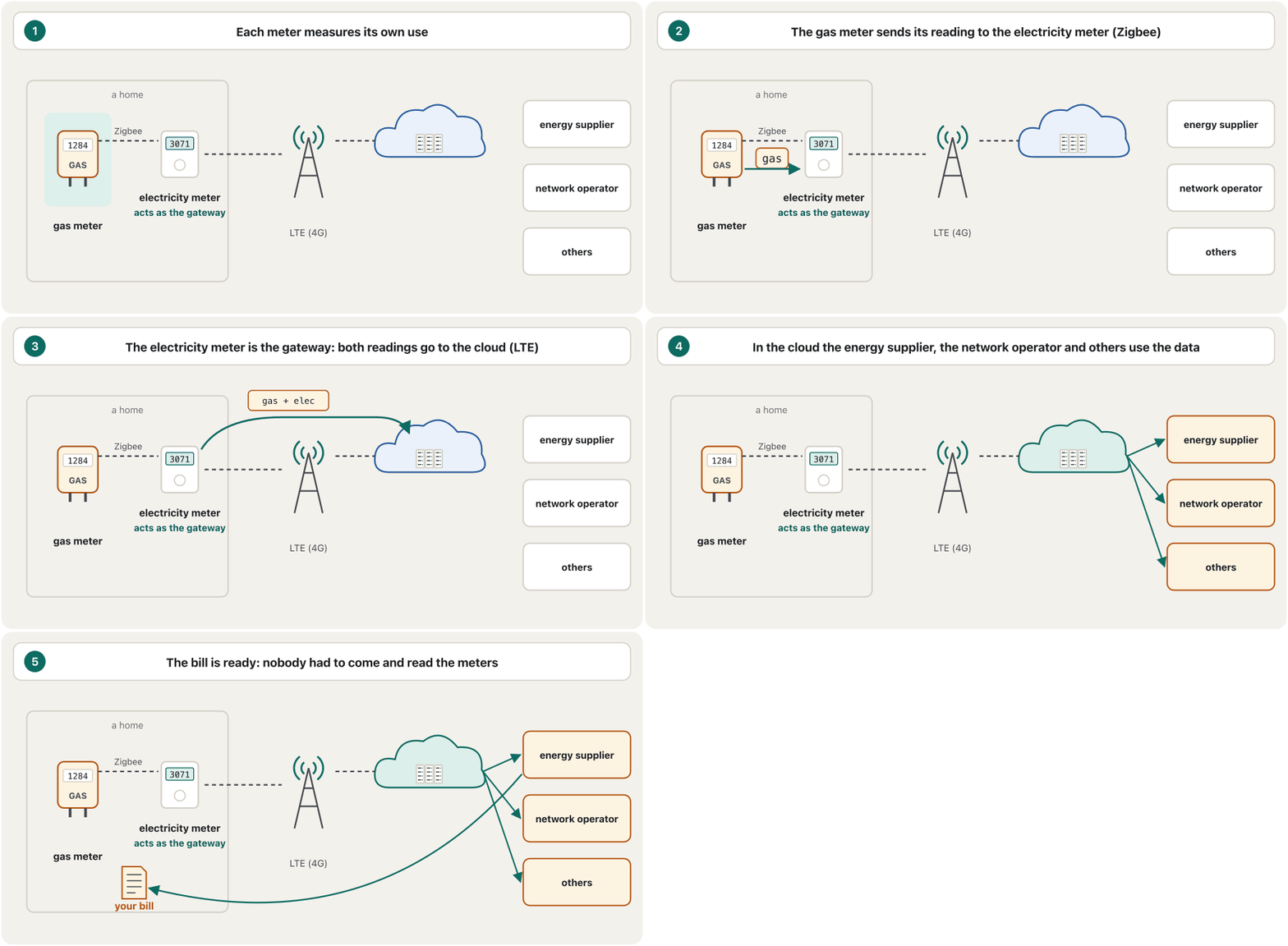
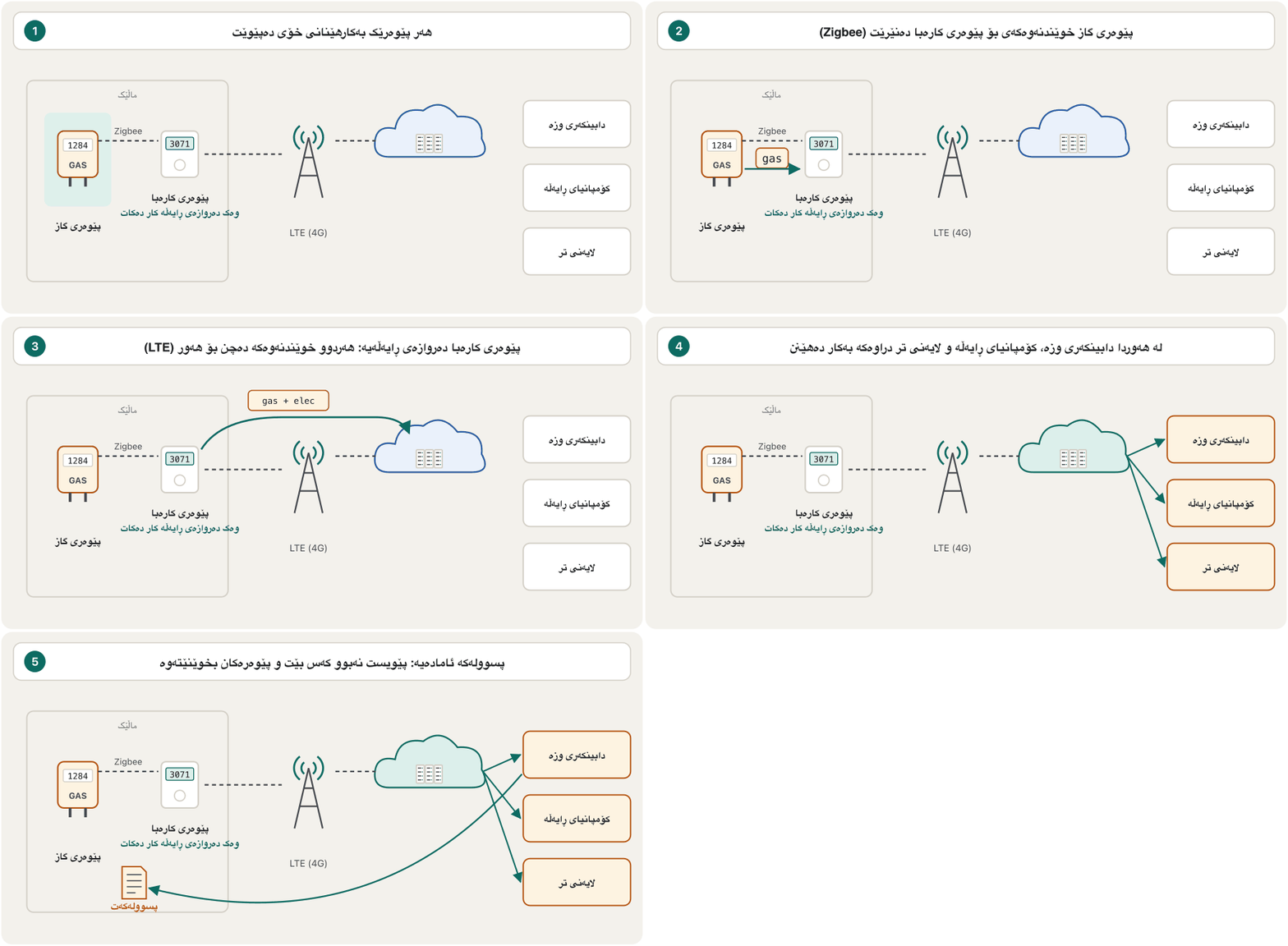
A home has two smart meters, one for gas and one for electricity. The gas meter sends its numbers to the electricity meter over a short Zigbee radio link. The electricity meter is the gateway: it forwards the readings of both meters straight into the cloud over an LTE (4G) mobile connection, and all the processing happens there. In the cloud several users take the data: the energy supplier makes your bill, the network operator plans the power grid, and other companies that need metering information can use it too. Nobody has to visit the home to read the meters.
ماڵێک دوو هەیە، یەکێک بۆ گاز و یەکێک بۆ کارەبا. پێوەری گازەکە ژمارەکانی لە ڕێی بەستەرێکی ڕادیۆیی کورتی دەنێرێت بۆ پێوەری کارەباکە. پێوەری کارەبا : خوێندنەوەی هەردوو پێوەرەکە لە ڕێی پەیوەندییەکی مۆبایلی LTE (4G)ـەوە ڕاستەوخۆ دەگوازێتەوە بۆ هەور و هەموو لەوێ ڕوو دەدات. لە هەوردا چەند بەکارهێنەرێک وەردەگرن: دابینکەری وزە پسوولەکەت ئامادە دەکات، کۆمپانیای تۆڕی کارەبا پلان دەکات و کۆمپانیاکانی تریش کە زانیاریی پێوانیان پێویستە دەتوانن بەکاری بهێنن. پێویست ناکات کەس بێتە ماڵەکە بۆ خوێندنەوەی پێوەرەکان.
Smart meters are coming to Kurdistan too: the Runaki project for 24-hour electricity, started in 2024, relies on smart meters, so the bill follows the measured use.
بۆ کوردستانیش دێن: پڕۆژەی ڕووناکی بۆ کارەبای 24 کاتژمێری، کە لە 2024ـدا دەستی پێ کرد، پشت بە دەبەستێت، بۆیە پسوولەکە بەپێی بەکارهێنانی پێوراو دەبێت.
The cloud paradigm: send everything upپارادایمی هەور: هەموو شتێک بنێرە بۆ سەرەوە
Where the cloud struggles: cost and delayهەور لە کوێ ئاستەنگی هەیە: تێچوو و دواکەوتن
The cloud paradigm is simple, but it has scalability problems as the data grows. The first is cost: every reading must travel, be stored and be processed, and providers charge for all three, so a thousand cameras or a million meters make the bill grow fast. The second is latency (delay): every decision waits for a round trip to a data centre that may be in another country. That does not suit applications with real-time limits, where an answer must come before a deadline (see Real time means meeting a deadline).
هەور سادەیە، بەڵام کاتێک زیاد دەکات کێشەی هەیە. یەکەمیان تێچووە: هەر خوێندنەوەیەک دەبێت بگوازرێتەوە، خەزن بکرێت و بۆ بکرێت و پارە بۆ هەر سێکیان وەردەگرن، بۆیە هەزار کامێرا یان ملیۆنێک پێوەر پسوولەکە بە خێرایی گەورە دەکەن. دووەمیان : هەر بڕیارێک چاوەڕێی چوون و هاتنەوەیەک دەکات بۆ کە لەوانەیە لە وڵاتێکی تر بێت. ئەمە لەگەڵ ئەو بەکارهێنانانەدا ناگونجێت کە سنووری هەیە، واتە دەبێت وەڵام پێش کاتێکی دیاریکراو بگات (بڕوانە کاتی ڕاستەقینە واتە گەیشتن بە کاتی دیاریکراو).
Example: a car at 100 km/h covers 27.8 metres every second. If its brakes waited 100 ms for an answer from the cloud, the car would travel almost 3 metres before anything happened, and if the connection dropped, no answer would come at all.
نموونە: ئۆتۆمبێلێک بە خێرایی 100 km/h هەر چرکەیەک 27.8 مەتر دەبڕێت. ئەگەر برێکەکانی 100 ms چاوەڕێی وەڵامێک لە هەورەوە بکەن، ئۆتۆمبێلەکە نزیکەی 3 مەتر دەڕوات پێش ئەوەی هیچ ڕوو بدات و ئەگەر پەیوەندییەکە بپچڕێت، هەرگیز وەڵامێک نایەت.
Distance = speed × time; 100 km/h ÷ 3.6 = 27.8 m/s.
ماوە = خێرایی × کات؛ 100 km/h ÷ 3.6 = 27.8 m/s.
The fog paradigm: a cloud close to the groundپارادایمی تەم: هەورێک لە نزیک زەوی
Fog is a cloud that sits low, close to the ground. The fog computing paradigm borrows that picture. It keeps cloud-like computing, but moves part of it near the place where the data is made: some of the processing is offloaded (handed over) to the devices themselves or to gateways and small local computers, instead of everything travelling to a far data centre.
تەم هەورێکە کە نزم و نزیک زەوی دەمێنێتەوە. ئەو وێنەیە وەردەگرێت. ژمێرکاریی وەک هەور دەهێڵێتەوە، بەڵام بەشێکی دەباتە نزیک ئەو شوێنەی لێ دروست دەبێت: بەشێک لە ڕادەستی خودی ئامێرەکان یان و کۆمپیوتەری بچووکی ناوخۆیی دەکرێت، لە جیاتی ئەوەی هەموو شتێک بچێت بۆ دوور.
So data processing has moved closer to where the information is generated: near the sensors and machines. The fog is still part of the same internet-based system, like the cloud, only nearer to you.
کەواتە نزیکتر کراوەتەوە لەو شوێنەی زانیارییەکەی لێ بەرهەم دێت: لە نزیک و ئامێرەکانەوە. تەم هێشتا بەشێکە لە هەمان سیستەمی پشت بە بەستوو، وەک هەور، تەنیا نزیکترە لێتەوە.
The fog paradigm: a cloud close to the groundپارادایمی تەم: هەورێک لە نزیک زەوی
What the fog does with the dataتەم چی لە دراوە دەکات
Typical fog processing turns many raw readings into a few useful ones:
ئاسایی تەم زۆر خوێندنەوەی خاو دەکاتە چەند خوێندنەوەیەکی بەسوود:
- Aggregation: combine many readings into one, for example one average a minute.
- Compression: make the data smaller before it is sent.
- Statistics: work out the minimum, maximum and average.
- Noise removal: smooth out random jumps caused by electrical noise.
- کۆکردنەوە: زۆر خوێندنەوە دەکاتە یەک، بۆ نموونە یەک تێکڕا لە هەر خولەکێکدا.
- : پێش ناردن بچووکتر دەکات.
- : کەمترین، زۆرترین و تێکڕا دەردەهێنێت.
- لابردنی : ئەو بازدانە هەڕەمەکییانە ساف دەکاتەوە کە دروستیان دەکات.
The fog can also act locally, for example switch on a fan or sound an alarm at once, without shipping the data to the cloud and waiting for a result. Still, IoT devices are small embedded systems, so the cloud is still used for the main data processing and long-term storage.
تەم هەروەها دەتوانێت لە شوێنی خۆیدا کار بکات، بۆ نموونە دەستبەجێ پەنکەیەک هەڵبکات یان زەنگێکی ئاگادارکردنەوە لێ بدات، بەبێ ناردنی بۆ هەور و چاوەڕوانیی ئەنجام. لەگەڵ ئەوەشدا ئامێرەکانی IoT بچووکن، بۆیە هەور هێشتا بۆ سەرەکیی و درێژخایەن بەکار دێت.
The fog paradigm: a cloud close to the groundپارادایمی تەم: هەورێک لە نزیک زەوی
Fog at work: a camera, a weather station and a watchتەم لە کاردا: کامێرا، وێستگەی کەشوهەوا و کاتژمێر
- A smart camera at home recognises a stranger by itself and alerts you at once, instead of sending all its video to a server; only the important clips go to the cloud later.
- A weather station takes thousands of temperature readings, one every second, but sends only the hourly average to the cloud.
- A smartwatch checks your heart rate itself, but sends your whole health history to a cloud server, where doctors or apps can study it. Small devices do the simple work locally and still need the cloud for heavy calculations and for keeping all the data.
- کامێرایەکی هۆشمەند لە ماڵەوە خۆی کەسێکی نەناسراو دەناسێتەوە و دەستبەجێ ئاگادارت دەکاتەوە، لە جیاتی ئەوەی هەموو ڤیدیۆکەی بنێرێت بۆ ؛ تەنیا کلیپە گرنگەکان دواتر دەچن بۆ هەور.
- وێستگەیەکی کەشوهەوا هەزاران خوێندنەوەی پلەی گەرمی وەردەگرێت، هەر چرکەیەک یەکێک، بەڵام تەنیا تێکڕای هەر کاتژمێرێک دەنێرێت بۆ هەور.
- کاتژمێرێکی هۆشمەند خۆی لێدانی دڵت دەپشکنێت، بەڵام هەموو مێژووی تەندروستیت دەنێرێت بۆ هەور، کە پزیشک یان دەتوانن لێی بکۆڵنەوە. ئامێرە بچووکەکان کارە سادەکان لە شوێنی خۆیان دەکەن و هێشتا بۆ ژمێریاریی قورس و هەڵگرتنی هەموو پێویستیان بە هەورە.
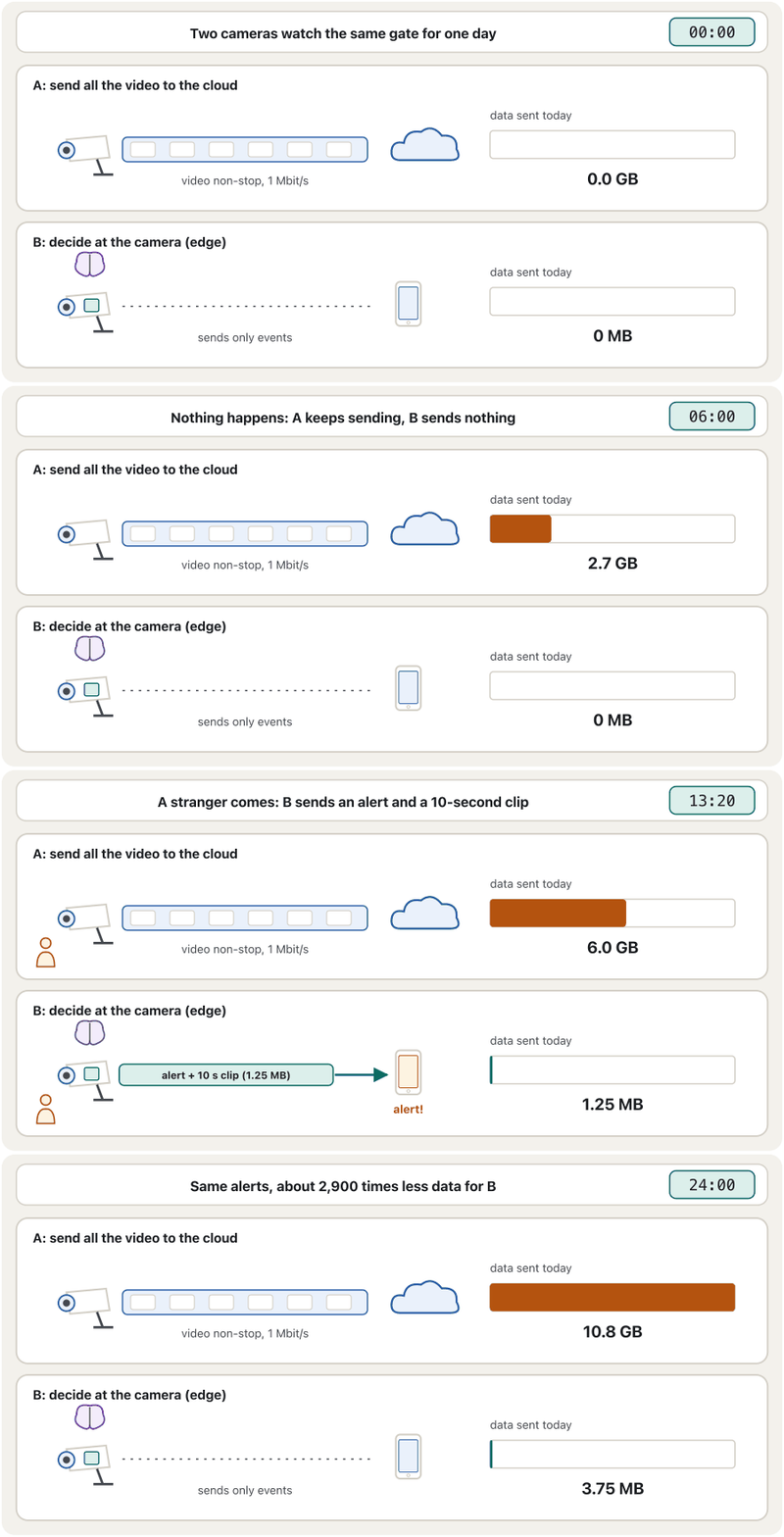
Where Should the Thinking Happen? gave real monthly numbers for a doorbell. The animation follows one day at a gate with two cameras. Camera A streams its video to the cloud at 1 Mbit/s. Camera B decides by itself and sends only an alert and a 10-second clip (about 1.25 MB) when someone comes.
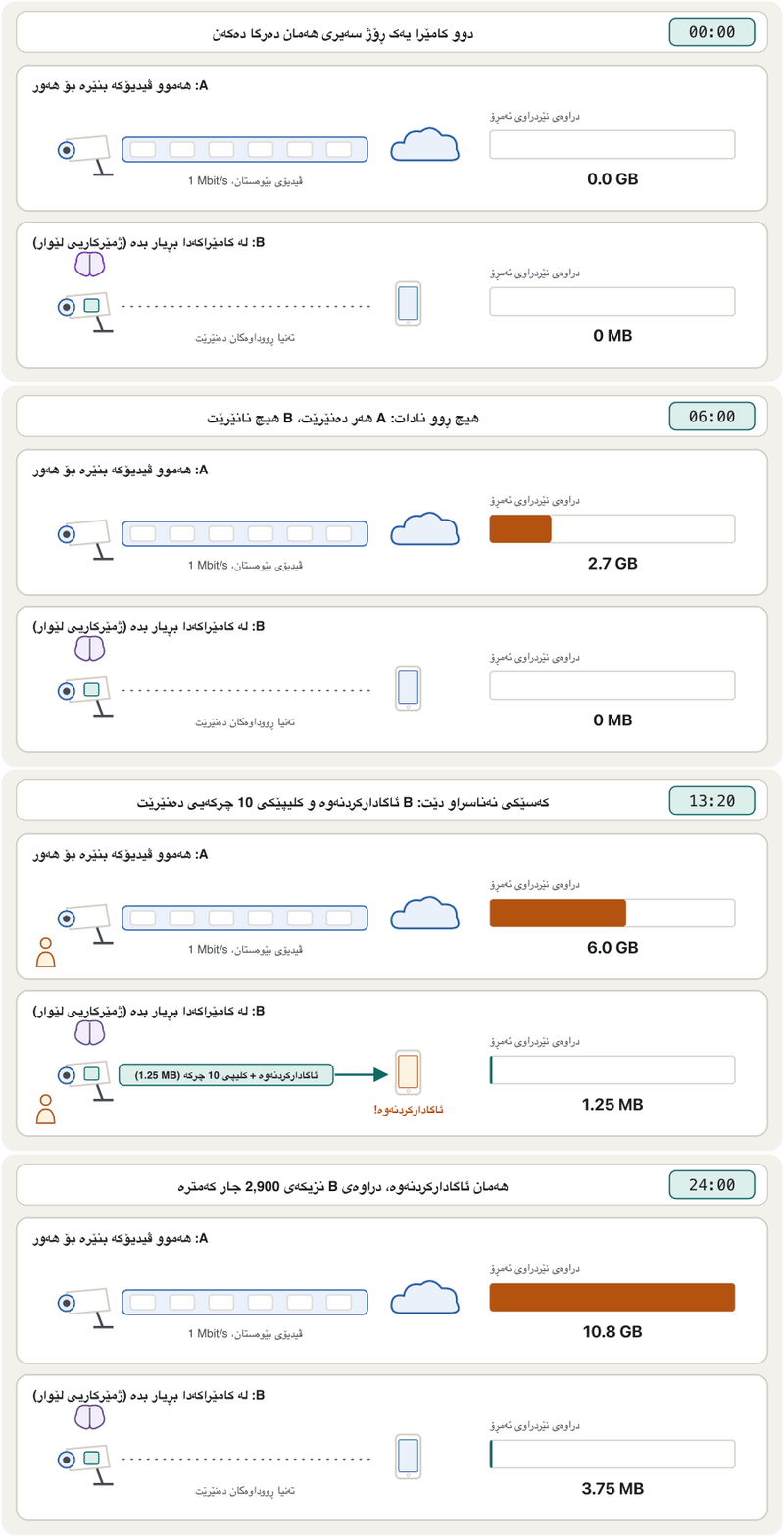
وانەی بیرکردنەوە دەبێت لە کوێ ڕووبدات؟ ژمارەی ڕاستەقینەی مانگانەی زەنگێکی دەرگای پیشان دا. یەک ڕۆژ لە دەرگایەکدا بە دوو کامێراوە پیشان دەدات. کامێرای A ڤیدیۆکەی بە 1 Mbit/s بۆ هەور دەنێرێت. کامێرای B خۆی بڕیار دەدات و تەنیا کاتێک کەسێک دێت ئاگادارکردنەوەیەک و کلیپێکی 10 چرکەیی (نزیکەی 1.25 MB) دەنێرێت.
Camera A in one day (8 bits = 1 byte). Camera B with three visitors: 3 × 1.25 MB = 3.75 MB, almost 3,000 times less.
کامێرای A لە یەک ڕۆژدا (8 بیت = 1 بایت). کامێرای B بە سێ میوانەوە: 3 × 1.25 MB = 3.75 MB، نزیکەی 3,000 جار کەمتر.
The fog paradigm: a cloud close to the groundپارادایمی تەم: هەورێک لە نزیک زەوی
Example: a smart home with a gatewayنموونە: ماڵێکی هۆشمەند بە دەروازەیەکی ڕایەڵەوە
In a smart home, the devices talk to a gateway (a hub) in the house. Your phone, connected to the gateway, has a direct line to the smart bulb, so it switches the bulb on or off at once, without sending the command up to the cloud and back. In the same way, the smart doorbell rings the bell unit inside by talking to it directly through the gateway.
لە ئامێرەکان قسە لەگەڵ (هەبێکی ماڵ) دەکەن کە لەناو ماڵەکەدایە. مۆبایلەکەت، کە بە بەستراوە، هێڵێکی ڕاستەوخۆی هەیە بۆ گڵۆپە هۆشمەندەکە، بۆیە دەستبەجێ گڵۆپەکە هەڵدەکات یان دەیکوژێنێتەوە، بەبێ ناردنی فەرمانەکە بۆ هەور و گەڕانەوەی. بە هەمان شێوە زەنگە هۆشمەندەکەی دەرگا لە ڕێی ڕاستەوخۆ قسە لەگەڵ زەنگی ناوەوە دەکات و لێی دەدات.
The cloud stays useful for jobs that are not urgent: keeping the history, sending software updates and letting you control the house from far away. Why the local path matters when the internet fails is shown in Where Should the Thinking Happen?.
هەور بۆ ئەو کارانەی پەلەیان نییە هەر بەسوودە: هەڵگرتنی مێژوو، ناردنی و کۆنترۆڵکردنی ماڵەکە لە دوورەوە. بۆچی ڕێگا ناوخۆییەکە کاتێک دەپچڕێت گرنگە لە وانەی بیرکردنەوە دەبێت لە کوێ ڕووبدات؟ ڕوون کراوەتەوە.
The official picture: NIST's fog modelوێنە فەرمییەکە: مۆدێلی تەمی NIST
In 2018 the US National Institute of Standards and Technology (NIST) published Fog Computing Conceptual Model (SP 500-325). It describes fog computing as a layered model that sits between the smart end devices and the cloud and is made of fog nodes. A fog node can be physical, such as a gateway, a switch, a router or a local server, or virtual, such as a virtual machine. Fog nodes know where they are, can work alone or in groups (clusters), and give the devices near them computing, storage and, when needed, a connection to the cloud. Fog is not compulsory: some systems use it, some go straight from the devices to the cloud, and some work with no cloud at all.
لە 2018ـدا دامەزراوەی نیشتمانیی ستاندارد و تەکنەلۆجیای ئەمریکا () بەڵگەنامەی Fog Computing Conceptual Modelـی (SP 500-325) بڵاو کردەوە. وەک مۆدێلێکی چینچین وەسف دەکات کە لە نێوان و هەوردایە و لە نۆدەکانی تەم پێک دێت. نۆدی تەم دەتوانێت ماددی بێت، وەک ، ، یان ناوخۆیی، یان گریمانەیی، وەک . نۆدەکانی تەم دەزانن لە کوێن، دەتوانن بە تەنیا یان بە کۆمەڵ (کڵەستەر) کار بکەن و توانای ژمێرکاری، و کاتێک پێویست بێت پەیوەندی بە هەورەوە دەدەنە ئامێرەکانی نزیکیان. تەم ناچاری نییە: هەندێک سیستەم بەکاری دەهێنن، هەندێکیان لە ئامێرەکانەوە ڕاستەوخۆ دەچن بۆ هەور و هەندێکیشیان بەبێ هیچ هەورێک کار دەکەن.
The official picture: NIST's fog modelوێنە فەرمییەکە: مۆدێلی تەمی NIST
Six marks of fog computingشەش نیشانەی ژمێرکاریی تەم
NIST names six things that make fog computing what it is:
شەش شت دەژمێرێت کە دەکەنە ئەوەی کە هەیە:
- Knows its location, so it answers fast: the nodes sit near the devices, so the delay is low.
- Spread over many places: for example nodes along a highway that stream video to passing cars.
- Many kinds of devices and networks (heterogeneity).
- Interoperability and federation: nodes of different providers work together.
- Real-time interactions instead of slow batch work.
- Grows and shrinks in groups of nodes (scalability of clusters).
- شوێنی خۆی دەزانێت، بۆیە خێرا وەڵام دەداتەوە: نۆدەکان لە نزیک ئامێرەکانەوەن، بۆیە کەمە.
- لە زۆر شوێندا بڵاوە: بۆ نموونە نۆدەکان بە درێژایی ڕێگایەکی خێرا کە ڤیدیۆ بۆ ئۆتۆمبێلە تێپەڕەکان دەنێرن.
- جۆری زۆری ئامێر و (جیاوازی).
- و هاوپەیمانی: نۆدەکانی دابینکەری جیاواز پێکەوە کار دەکەن.
- کارلێکی لە جیاتی کاری هێواشی بەکۆمەڵ.
- بە کۆمەڵەی نۆدەکان گەورە و بچووک دەبێت ( کڵەستەرەکان).
Like the cloud, fog can be offered as software, platform or infrastructure services, and a fog node can be private, community, public or hybrid, the same models you met in Cloud Computing.
وەک هەور، تەمیش دەتوانرێت وەک خزمەتگوزاریی ، پلاتفۆرم یان ژێرخان پێشکەش بکرێت و نۆدی تەم دەتوانێت تایبەت، کۆمەڵگەیی، گشتی یان تێکەڵ بێت، هەمان ئەو مۆدێلانەی لە هەورەژمێرکاری بینیتن.
The official picture: NIST's fog modelوێنە فەرمییەکە: مۆدێلی تەمی NIST
Mist: the lightest layer of fogمژ: سووکترین چینی تەم
NIST also names mist computing: a light, simple form of fog that sits right at the edge of the network, even closer to the devices. Mist uses microcomputers and microcontrollers, which pass their results to fog nodes and, from there, to the cloud. Like fog, mist is optional.
هەروەها ناو دەنێت: شێوەیەکی سووک و سادەی تەم کە ڕێک لە لێواری ، تەنانەت نزیکتر لە ئامێرەکانەوە. مژ و کۆمپیوتەری زۆر بچووک بەکار دەهێنێت، کە ئەنجامەکانیان دەدەنە نۆدەکانی تەم و لەوێشەوە بۆ هەور. وەک تەم، مژیش ناچاری نییە.
Example, a farm near Duhok: the microcontroller in each soil sensor reports only when the moisture changes (mist); the gateway in the farm hut averages the field and starts the pump (fog); the cloud keeps the season's history and brings the weather forecast.
نموونە، کێڵگەیەک لە نزیک دهۆک: ناو هەر خاک تەنیا کاتێک شێی خاکەکە دەگۆڕێت ڕاپۆرت دەدات (مژ)؛ ناو کەپری کێڵگەکە تێکڕای کێڵگەکە دەردەهێنێت و پەمپەکە هەڵدەکات (تەم)؛ هەوریش مێژووی وەرزەکە هەڵدەگرێت و پێشبینیی کەشوهەوا دەهێنێت.
The edge paradigm: the thing thinks for itselfپارادایمی لێوار: شتەکە خۆی بیر دەکاتەوە
In the edge computing paradigm, computation and intelligence run at the device level. The data is processed where it is collected, and only key information or summaries are sent up to the cloud. This gives the fastest answers, keeps working when the internet is down and keeps private data on the device.
لە ژمێرکاری و ژیری لە ئاستی ئامێرەکەدا کار دەکەن. لەو شوێنەی کۆ دەکرێتەوە بۆ دەکرێت و تەنیا زانیاریی سەرەکی یان پوختە دەنێردرێت بۆ هەور. ئەمە خێراترین وەڵام دەدات، کاتێک پچڕاوە هەر کار دەکات و تایبەت لەسەر ئامێرەکە دەهێڵێتەوە.
The edge paradigm: the thing thinks for itselfپارادایمی لێوار: شتەکە خۆی بیر دەکاتەوە
Example: a car that decides by itselfنموونە: ئۆتۆمبێلێک کە خۆی بڕیار دەدات
A smart vehicle is the classic edge example: most of its processing is done on the vehicle itself. Its inputs are cameras, radar, LiDAR (Light Detection and Ranging, a laser that measures distances), the human–computer interface (screens, buttons, voice) and GPS. With them the car's computers run the engine, show information on the driver's head-up display, work the brakes and control the comfort system (air conditioning, seats), all locally, without offloading anything to the cloud.
ئۆتۆمبێلی هۆشمەند نموونە ناسراوەکەی لێوارە: زۆربەی لەسەر خودی ئۆتۆمبێلەکە ئەنجام دەدرێت. نێوخستەکانی بریتین لە کامێرا، ، (Light Detection and Ranging، لەیزەرێک کە دووری دەپێوێت)، (شاشە، دوگمە، دەنگ) و . بەمانە کۆمپیوتەرەکانی ئۆتۆمبێلەکە بزوێنەرەکە کار پێ دەکەن، زانیاری لەسەر شاشەی بەردەم شۆفێر پیشان دەدەن، برێکەکان بەکار دەهێنن و سیستەمی ئاسوودەیی (هەوای ناو ئۆتۆمبێل، کورسییەکان) کۆنترۆڵ دەکەن، هەمووی لە شوێنی خۆیدا، بەبێ ناردنی هیچ شتێک بۆ هەور.
The car still sends summaries and key information to the cloud for processing, storage and analysis. If a fault develops, say a sensor starts to fail, the car acts on it at once and also reports it to the cloud, where the maker can study faults from thousands of cars. This is the agent loop sense → decide → act from Agents, Sensors and Actuators, running inside the car.
ئۆتۆمبێلەکە هێشتا پوختە و زانیاریی سەرەکی دەنێرێت بۆ هەور بۆ ، و شیکاری. ئەگەر تێکچوونێک دروست ببێت، بۆ نموونە خەریکە تێک بچێت، ئۆتۆمبێلەکە دەستبەجێ کاردانەوەی دەبێت و هەروەها بۆ هەوری ڕاپۆرت دەکات، کە دروستکەرەکە دەتوانێت لەوێ لە تێکچوونەکانی هەزاران ئۆتۆمبێل بکۆڵێتەوە. ئەمە هەمان خولی هەستکردن ← بڕیاردان ← کە لە ئەیجێنتەکان، هەستەوەرەکان و جووڵێنەرەکان فێری بوویت، بەڵام لەناو ئۆتۆمبێلەکەدا.
Cloud, fog and edge side by sideهەور، تەم و لێوار لە تەنیشت یەکەوە
Where Should the Thinking Happen? compared reaction time, data and privacy for the device, the gateway and the cloud. Now that the three places have their names, here is what each paradigm runs on, what it is good at and where it is weak:
وانەی بیرکردنەوە دەبێت لە کوێ ڕووبدات؟ کاتی کاردانەوە، و بۆ ئامێر، و هەور بەراورد کرد. ئێستا کە سێ شوێنەکە ناوی خۆیان هەیە، ئەمە ئەوەیە کە هەر لەسەر چی کار دەکات، باش بۆ چییە و لاوازییەکەی لە کوێیە:
| Questionپرسیار | Cloudهەور | Fogتەم | Edgeلێوار |
|---|---|---|---|
| Runs onلەسەر چی کار دەکات | servers in far data centres دوور | gateways, routers, local servers، ، ناوخۆیی | a microcontroller or small computer inside the thing یان کۆمپیوتەرێکی بچووک لەناو شتەکەدا |
| How many (NIST's picture)چەندن (وێنەکەی ) | tensدەیان | thousandsهەزاران | millionsملیۆنان |
| Typical jobsکارە ئاساییەکان | storage, long-term analytics, dashboards، شیکاریی درێژخایەن، | aggregation, compression, statistics, noise removal, local controlکۆکردنەوە، ، ، لابردنی ، کۆنترۆڵی ناوخۆیی | sensing and instant decisionsهەستکردن و بڕیاری دەستبەجێ |
| Main weaknessلاوازیی سەرەکی | cost and delay grow with the dataتێچوو و لەگەڵ زیاد دەکەن | more boxes to install, manage and protectسندوقی زیاتر بۆ دانان، بەڕێوەبردن و پاراستن | little power; every device must be updatedتوانای کەم؛ دەبێت هەموو ئامێرێک نوێ بکرێتەوە |
| Example in this lessonنموونە لەم وانەیەدا | smart meters and bills و پسوولە | home hub, weather-station averageهەبی ماڵ، تێکڕای وێستگەی کەشوهەوا | a car's brakesبرێکی ئۆتۆمبێل |
Cloud, fog and edge side by sideهەور، تەم و لێوار لە تەنیشت یەکەوە
Most real systems use all threeزۆربەی سیستەمە ڕاستەقینەکان هەر سێکیان بەکار دەهێنن
These paradigms are not rivals; most real systems combine them. Take a cement factory in Sulaymaniyah. At the edge, the controller of each motor stops it within milliseconds when it shakes dangerously. In the fog, a gateway in the control room averages the vibration every minute, raises alarms and shows the operators a dashboard. In the cloud, the company compares all its plants, predicts which motor will need repair (predictive maintenance) and writes monthly reports. Put each job where its deadline fits: milliseconds at the edge, seconds in the fog, hours to months in the cloud. The wider trade-offs (cost, networking, trust) are in Where Should the Thinking Happen?.
ئەم پارادایمانە ڕکابەری یەکتر نین؛ زۆربەی سیستەمە ڕاستەقینەکان تێکەڵیان دەکەن. کارگەیەکی چیمەنتۆ لە سلێمانی وەربگرە. لە لێواردا کۆنترۆڵەری هەر لە چەند میلیچرکەیەکدا دەیوەستێنێت کاتێک بە مەترسییەوە دەلەرزێت. لە تەمدا لە ژووری کۆنترۆڵدا هەر خولەکێک تێکڕای لەرینەوەکە دەردەهێنێت، ئاگادارکردنەوە دەدات و پیشانی کارمەندان دەدات. لە هەوردا کۆمپانیاکە هەموو کارگەکانی بەراورد دەکات، پێشبینی دەکات کام ماتۆڕ پێویستی بە چاککردنەوە دەبێت () و ڕاپۆرتی مانگانە دەنووسێت. هەر کارێک لەو شوێنەدا دابنێ کە کاتە دیاریکراوەکەی تێیدا جێی دەبێتەوە: میلیچرکە لە لێوار، چرکە لە تەم، کاتژمێر تا مانگ لە هەوردا. هاوسەنگییە فراوانترەکان (تێچوو، ، متمانە) لە وانەی بیرکردنەوە دەبێت لە کوێ ڕووبدات؟ باس کراون.
Common mistakesهەڵە باوەکان
- 'Fog and edge are the same thing.' In NIST's model the edge is the devices themselves and fog is the layer of nodes between them and the cloud, although many companies use 'edge' for both.
- 'Fog replaces the cloud.' The cloud still does the main processing and keeps the long-term data; fog handles the near and urgent part.
- 'Edge computing means no internet at all.' Edge devices still send summaries and receive updates; they just do not need the internet to decide.
- 'The cloud is the most powerful, so always use it.' Power is not the only need: delay, the cost of moving data, working offline and privacy matter too.
- 'More data in the cloud is always better.' Thousands of identical readings cost money to send and store; a fog node can keep only what changes.
- «تەم و لێوار یەک شتن.» لە مۆدێلی لێوار خودی ئامێرەکانە و تەم چینی نۆدەکانە لە نێوان ئەوان و هەوردا، هەرچەندە زۆر کۆمپانیا «لێوار» بۆ هەردووکیان بەکار دەهێنن.
- «تەم جێگەی هەور دەگرێتەوە.» هەور هێشتا سەرەکی دەکات و درێژخایەن هەڵدەگرێت؛ تەم بەشە نزیک و بەپەلەکە دەکات.
- « واتە هیچ نییە.» ئامێرەکانی لێوار هێشتا پوختە دەنێرن و وەردەگرن؛ تەنیا بۆ بڕیاردان پێویستیان بە نییە.
- «هەور بەهێزترینە، بۆیە هەمیشە بەکاری بهێنە.» توانا تەنیا پێویستی نییە: ، تێچووی گواستنەوەی ، کارکردن بەبێ هێڵ و گرنگن.
- « زیاتر لە هەوردا هەمیشە باشترە.» هەزاران خوێندنەوەی وەک یەک ناردن و هەڵگرتنیان پارەی تێ دەچێت؛ نۆدێکی تەم دەتوانێت تەنیا ئەوەی دەگۆڕێت بهێڵێتەوە.
Exercisesڕاهێنانەکان
Where does each job belong? (a) A smart lock opens for the right phone even when the internet is down. (b) Erbil's traffic office compares a year of car counts from every junction to plan new roads. (c) A controller box at one junction counts cars and changes the light timing every minute. (d) A smartwatch detects a fall and calls for help. (e) A greenhouse gateway combines 20 sensors into one average per minute.
هەر کارێک سەر بە کوێیە؟ (a) قفڵێکی هۆشمەند بۆ مۆبایلە دروستەکە دەکرێتەوە تەنانەت کاتێک پچڕاوە. (b) فەرمانگەی هاتوچۆی هەولێر ژمارەی ئۆتۆمبێلەکانی ساڵێکی هەموو چوارڕیانەکان بەراورد دەکات بۆ پلاندانانی ڕێگای نوێ. (c) سندوقێکی کۆنترۆڵ لە چوارڕیانێکدا ئۆتۆمبێلەکان دەژمێرێت و هەر خولەکێک کاتی گڵۆپەکان دەگۆڕێت. (d) کاتژمێرێکی هۆشمەند کەوتنێک دەدۆزێتەوە و داوای یارمەتی دەکات. (e) سەوزەخانەیەک 20 دەکاتە یەک تێکڕا لە هەر خولەکێکدا.
Show answerوەڵامەکە پیشان بدە
(a) edge, the decision is made in the lock itself; (b) cloud, a year of data from the whole city; (c) fog, a local controller near the lights that serves one junction; (d) edge, the watch must react even with no connection; (e) fog, a gateway aggregating many sensors.
(a) لێوار، بڕیارەکە لەناو خودی قفڵەکەدا دەدرێت؛ (b) هەور، ساڵێکی هەموو شارەکە؛ (c) تەم، کۆنترۆڵەرێکی ناوخۆیی لە نزیک گڵۆپەکانەوە کە خزمەتی یەک چوارڕیان دەکات؛ (d) لێوار، کاتژمێرەکە دەبێت تەنانەت بەبێ پەیوەندیش کاردانەوەی هەبێت؛ (e) تەم، کە زۆر کۆ دەکاتەوە.
A shop has 8 cameras, each streaming 4 Mbit/s. (a) How much data do they send to the cloud in one day? (b) An edge box instead sends 20 clips of 5 MB a day in total. How much is that? (c) How many times less data is it?
دووکانێک 8 کامێرای هەیە و هەریەکەیان 4 Mbit/s دەنێرێت. (a) لە یەک ڕۆژدا چەند دەنێرن بۆ هەور؟ (b) لە جیاتی ئەوە سندوقێکی لێوار سەرجەم 20 کلیپی 5 MB لە ڕۆژێکدا دەنێرێت. ئەمە چەندە؟ (c) چەند جار کەمترە؟
Hintئاماژە
One camera at 4 Mbit/s sends 43.2 GB a day.
یەک کامێرا بە 4 Mbit/s لە ڕۆژێکدا 43.2 GB دەنێرێت.
Show answerوەڵامەکە پیشان بدە
(a) 345.6 GB a day; (b) 100 MB; (c) about 3,456 times less (1 GB = 1,000 MB).
(a) 345.6 GB لە ڕۆژێکدا؛ (b) 100 MB؛ (c) نزیکەی 3,456 جار کەمتر (1 GB = 1,000 MB).
A delivery drone flies at 54 km/h. How far does it fly while it waits 250 ms for an answer from a far server?
دڕۆنێکی گەیاندن بە خێرایی 54 km/h دەفڕێت. لە کاتێکدا 250 ms چاوەڕێی وەڵامێک لە دوور دەکات، چەند دەفڕێت؟
Show answerوەڵامەکە پیشان بدە
About 3.75 m, enough to hit something; obstacle avoidance must run on the drone itself (edge).
نزیکەی 3.75 m، بەس بۆ ئەوەی بەر شتێک بکەوێت؛ دوورکەوتنەوە لە بەربەستەکان دەبێت لەسەر خودی دڕۆنەکە کار بکات (لێوار).
A farm near Duhok has 30 soil sensors and one water pump, but the mobile signal is weak. Which jobs would you give to mist, fog and cloud? Give one job each and a reason.
کێڵگەیەک لە نزیک دهۆک 30 خاک و یەک پەمپی ئاوی هەیە، بەڵام سیگناڵی مۆبایل لاوازە. کام کار دەدەیتە مژ، تەم و هەور؟ بۆ هەریەکەیان کارێک و هۆکارێک بنووسە.
Show answerوەڵامەکە پیشان بدە
A possible answer: mist, each sensor's microcontroller sends only changes, which saves battery and radio time; fog, a gateway at the farm averages the field and starts the pump by itself, so watering does not depend on the weak signal; cloud, once a day the gateway uploads a summary for the season's history, the weather forecast and the farmer's phone app.
وەڵامێکی گونجاو: مژ، هەر تەنیا گۆڕانکارییەکان دەنێرێت، کە و کاتی ڕادیۆ پاشەکەوت دەکات؛ تەم، لە کێڵگەکەدا تێکڕای کێڵگەکە دەردەهێنێت و خۆی پەمپەکە هەڵدەکات، بۆیە ئاودان پشت بە سیگناڵە لاوازەکە نابەستێت؛ هەور، ڕۆژی جارێک پوختەیەک هەڵبار دەکات بۆ مێژووی وەرزەکە، پێشبینیی کەشوهەوا و مۆبایلی جووتیارەکە.
Summaryپوختە
- A paradigm is a shared model or way of thinking. IoT has three: cloud, fog and edge computing.
- Cloud: simple devices send everything; processing, storage, control and analytics live on powerful far servers (smart meters → bills). It struggles with growing cost and with latency for real-time jobs.
- Fog: cloud-like computing near the devices, in gateways and local computers: aggregation, compression, statistics, noise removal and quick local action (a smart-home hub).
- Edge: the device itself senses, decides and acts, and sends only summaries (a smart car).
- NIST SP 500-325 (2018) defines fog nodes between devices and cloud, six essential characteristics and mist computing, the lightest layer on microcontrollers at the network edge.
- Real systems mix all three: milliseconds at the edge, seconds in the fog, hours to months in the cloud.
- مۆدێل یان شێوازێکی هاوبەشی بیرکردنەوەیە. IoT سێیانی هەیە: ، و .
- هەور: ئامێری سادە هەموو شتێک دەنێرێت؛ ، ، کۆنترۆڵ و لەسەر بەهێزی دوورن ( ← پسوولە). لەگەڵ زیادبوونی تێچوو و بۆ کارەکانی ئاستەنگی هەیە.
- تەم: ژمێرکاریی وەک هەور لە نزیک ئامێرەکانەوە، لە و کۆمپیوتەری ناوخۆییدا: کۆکردنەوە، ، ، لابردنی و کاری خێرای ناوخۆیی (هەبی ).
- لێوار: خودی ئامێرەکە هەست دەکات، بڕیار دەدات و کار دەکات و تەنیا پوختە دەنێرێت (ئۆتۆمبێلی هۆشمەند).
- SP 500-325 (2018) نۆدەکانی تەم لە نێوان ئامێرەکان و هەوردا، شەش تایبەتمەندیی بنەڕەتی و پێناسە دەکات، سووکترین چین لەسەر لە لێواری .
- سیستەمە ڕاستەقینەکان هەر سێکیان تێکەڵ دەکەن: میلیچرکە لە لێوار، چرکە لە تەم، کاتژمێر تا مانگ لە هەوردا.
Lesson complete!وانەکە تەواو بوو!
Well done. Review the key terms, then go on to the next lesson.دەستخۆش. سەیرێکی زاراوە سەرەکییەکان بکەرەوە، پاشان بڕۆ بۆ وانەی داهاتوو.
Key termsزاراوە سەرەکییەکان
Layers: Organising an IoT Systemچینەکان: ڕێکخستنی سیستەمێکی IoT
Related lecturesوانە پەیوەندیدارەکان
- Cloud Computingهەورەژمێرکاری
- The Questions Behind Every IoT Designئەو پرسیارانەی لە پشت هەموو دیزاینێکی IoTـەوەن
- Layers: Organising an IoT Systemچینەکان: ڕێکخستنی سیستەمێکی IoT
- Storing IoT Readings in the Cloudهەڵگرتنی خوێندنەوەکانی IoT لە هەوردا
- Agents, Sensors and Actuators; Rational Agentsئەیجێنتەکان، هەستەوەرەکان و جووڵێنەرەکان؛ ئەیجێنتە عەقڵانییەکان
- Mobile Cloud and Backend-as-a-Serviceهەورەژمێرکاریی مۆبایل و BaaS
References and further readingسەرچاوەکان و خوێندنەوەی زیاتر
- NIST SP 500-325: Fog Computing Conceptual Model (March 2018)
- NIST SP 800-145: The NIST Definition of Cloud Computing (2011)
- IEEE 1934-2018: Adoption of OpenFog Reference Architecture for Fog Computing
- OMG (18 January 2024): Integration of the Industry IoT Consortium with the Digital Twin Consortium
- Wikipedia: OpenFog Consortium
- AWS documentation: What is AWS IoT Greengrass?
- Microsoft Learn: What is Azure IoT Edge
- AL-Monitor (9 July 2025): Iraq's Kurdistan enjoys all-day state electricity
This lecture is a first edition. The Kurdish text and terminology are waiting for review by Kurdish IT teachers.ئەم وانەیە چاپی یەکەمە. دەقە کوردییەکە و زاراوەکانی چاوەڕێی پێداچوونەوەی مامۆستایانی کوردی بواری IT ن.