Chapterبەش 2 · Lectureوانە 2.4
Layers: Organising an IoT Systemچینەکان: ڕێکخستنی سیستەمێکی IoT
Why IoT systems are built from modules and layers: managing complexity, sharing resources and interoperability. The four layers of this course with a fan, the 3-, 4- and 5-layer teaching models on one greenhouse, middleware, the official ITU-T Y.2060 (Y.4000) reference model, ISO/IEC 30141 and where the OSI model fits.
بۆچی سیستەمەکانی IoT لە مۆدیوڵ و دروست دەکرێن: کۆنترۆڵکردنی ئاڵۆزی، هاوبەشکردنی سەرچاوەکان و . چوار چینەکەی ئەم کۆرسە بە پەنکەیەکەوە، مۆدێلە فێرکارییەکانی 3، 4 و 5 چینی لەسەر یەک سەوزەخانە، ، فەرمییەکەی ITU-T Y.2060 (Y.4000)، ISO/IEC 30141 و شوێنی .
What you will learnچی فێر دەبیت
- Explain why IoT systems need a modular, layered design: complexity, flexibility and maintainability.
- Name the four layers of this course and place the parts of a real system in them.
- Compare the 3-, 4- and 5-layer teaching models and explain what middleware does.
- Describe the ITU-T Y.2060 (Y.4000) reference model with its management and security capabilities, and say what ISO/IEC 30141 adds.
- Explain how the IoT layers relate to the OSI and TCP/IP models.
- ڕوون بکەیتەوە بۆچی سیستەمەکانی IoT پێویستیان بە و چینچینە: ئاڵۆزی، نەرمی و چاککراوی.
- چوار چینەکەی ئەم کۆرسە ناو بهێنیت و بەشەکانی سیستەمێکی ڕاستەقینە تێیاندا دابنێیت.
- مۆدێلە فێرکارییەکانی 3، 4 و 5 چینی بەراورد بکەیت و ڕوون بکەیتەوە چی دەکات.
- ITU-T Y.2060 (Y.4000) لەگەڵ تواناکانی بەڕێوەبردن و وەسف بکەیت و بڵێیت ISO/IEC 30141 چی زیاد دەکات.
- ڕوون بکەیتەوە IoT چ پەیوەندییەکیان بە و مۆدێلی هەیە.
When many parts must work togetherکاتێک زۆر بەش دەبێت پێکەوە کار بکەن
Think of the smart greenhouse near Halabja from Inside an IoT System: soil and air sensors, fans, a pump, a gateway, a cloud server and the farmer's phone app. They must all work together, and that makes the system complex: it has many parts that become messy if they are not organised.
بیر لەو سەوزەخانە هۆشمەندەی نزیک هەڵەبجە بکەرەوە کە لە وانەی ناو سیستەمێکی IoT بینیت: خاک و هەوا، پەنکە، پەمپ، ، هەور و مۆبایلی جووتیارەکە. هەموویان دەبێت پێکەوە کار بکەن و ئەمە سیستەمەکە ئاڵۆز دەکات: زۆر بەشی هەیە کە ئەگەر ڕێک نەخرێن تێکدەچڕژێن.
So IoT developers modularise their systems, for two reasons: to manage the complexity, and to keep the system flexible (easy to change) and maintainable (easy to fix or update). Without that, every change touches every part, and after a few years nobody can manage the program any more.
بۆیە گەشەپێدەرانی IoT سیستەمەکانیان بەش بەش دەکەن، لەبەر دوو هۆ: بۆ کۆنترۆڵکردنی ئاڵۆزییەکە و بۆ ئەوەی سیستەمەکە نەرم بمێنێتەوە (گۆڕینی ئاسان بێت) و چاککراو بێت (چاککردن و ئاسان بێت). بەبێ ئەمە هەر گۆڕانکارییەک دەست لە هەموو بەشەکان دەدات و دوای چەند ساڵێک کەس ناتوانێت بەڕێوە ببات.
One big room or many rooms?ژوورێکی گەورە یان چەند ژوورێک؟
Imagine a big building where everything is in one giant room without walls: the stove next to the bed, the shower next to the sofa. It is hard to organise, to fix or to extend. Now divide it into rooms. You can work on the kitchen alone, add a new room, or change something without disturbing the whole building. That is modular design: breaking something into smaller parts (modules) that can work on their own.
بینایەکی گەورە بهێنە بەرچاوت کە هەموو شتێکی لە یەک ژووری گەورەی بێ دیواردایە: تەباخ لە تەنیشت جێگە و دووش لە تەنیشت قەنەفە. ڕێکخستن، چاککردن و فراوانکردنی قورسە. ئێستا بیکە بە چەند ژوورێک. دەتوانیت بە تەنیا کار لەسەر چێشتخانەکە بکەیت، ژوورێکی نوێ زیاد بکەیت یان شتێک بگۆڕیت بەبێ ئەوەی هەموو بیناکە تێک بدەیت. ئەمە : دابەشکردنی شتێک بۆ چەند بەشێکی بچووکتر (مۆدیوڵ) کە دەتوانن بە سەربەخۆیی کار بکەن.
A greenhouse system is like the building: the sensors, the radio, the rules and the app are its rooms. A new app is a new room; a better sensor is a renovated kitchen.
سیستەمی سەوزەخانەکە وەک بیناکەیە: ، ڕادیۆکە، ڕێساکان و ژوورەکانین. نوێ ژوورێکی نوێیە؛ باشتر چێشتخانەیەکی نۆژەنکراوەیە.
Where the analogy stops workingسنووری ئەم نموونەیە
Rooms still share walls, pipes and doors. Modules share their interfaces, the 'doors' between them: if you change an interface, the neighbouring modules must change too.
ژوورەکان هێشتا دیوار، بۆری و دەرگا هاوبەش دەکەن. مۆدیوڵەکانیش خۆیان هاوبەش دەکەن، واتە «دەرگاکانی» نێوانیان: ئەگەر بگۆڕیت، دەبێت مۆدیوڵە دراوسێکانیش بگۆڕدرێن.
From rooms to floors: layered designلە ژوورەوە بۆ نهۆم: دیزاینی چینچین
A typical way to organise an IoT system is a layered system design: you logically separate all its components into layers, like the floors of a building. Each layer has one job, uses the layer below it and serves the layer above it through clear interfaces. Instead of building everything together in one place, each layer is simpler and easier to work with.
ڕێگایەکی باو بۆ ڕێکخستنی سیستەمێکی IoT دیزاینی چینچینە: هەموو پێکهاتەکانی بە شێوەیەکی لۆجیکی لە جیا دەکەیتەوە، وەک نهۆمەکانی بینایەک. هەر یەک کاری هەیە، چینی خوارەوەی خۆی بەکار دەهێنێت و لە ڕێی ڕوونەوە خزمەتی چینی سەرەوەی دەکات. لە جیاتی ئەوەی هەموو شتێک پێکەوە لە یەک شوێندا دروست بکەیت، هەر چینێک سادەتر و کارکردن لەگەڵی ئاسانترە.
Layers bring three benefits:
سێ سوود دەهێنن:
- They break up complexity: each layer is a smaller problem.
- They make it easier to share resources: one network and one cloud can serve many apps.
- They promote interoperability: parts from different makers can work together when they follow the rules of their layer.
- ئاڵۆزی دابەش دەکەن: هەر چینێک کێشەیەکی بچووکترە.
- هاوبەشکردنی سەرچاوەکان ئاسانتر دەکەن: یەک و یەک هەور دەتوانن خزمەتی چەند بکەن.
- زیاد دەکەن: پارچەی دروستکەری جیاواز دەتوانن پێکەوە کار بکەن کاتێک ڕێساکانی چینەکەی خۆیان ڕەچاو دەکەن.
Four layers and a fanچوار چین و پەنکەیەک
This course uses four layers. Follow one example through them: a fan that cools a room when it is too hot.
ئەم کۆرسە چوار چین بەکار دەهێنێت. نموونەیەک لە ناویاندا ببینە: پەنکەیەک کە کاتێک ژوورێک زۆر گەرم دەبێت فێنکی دەکاتەوە.
- Hardware layer: the physical part, the sensors and the outputs, for example a temperature sensor and the fan.
- Communication layer: helps the devices talk to each other and to the system, for example over Wi-Fi or Bluetooth.
- Processing layer: the brain, where the decisions are made, on a microprocessor or a cloud server.
- Application layer: where the user works with the system, for example a mobile app with a button that switches the fan on.
- چینی : بەشە ماددییەکە، و دەرچوونەکان، بۆ نموونە پلەی گەرمی و پەنکەکە.
- چینی پەیوەندی: یارمەتی ئامێرەکان دەدات قسە لەگەڵ یەکتر و لەگەڵ سیستەمەکە بکەن، بۆ نموونە لە ڕێی یان .
- چینی : مێشکەکە، ئەو شوێنەی بڕیارەکانی تێدا دەدرێت، لەسەر یان هەور.
- : ئەو شوێنەی بەکارهێنەر کاری لەگەڵ سیستەمەکە دەکات، بۆ نموونە مۆبایل بە دوگمەیەکەوە کە پەنکەکە هەڵدەکات.
Four layers and a fanچوار چین و پەنکەیەک
Follow a reading up and a command downبەدوای خوێندنەوەیەکدا بۆ سەرەوە و فەرمانێکدا بۆ خوارەوە
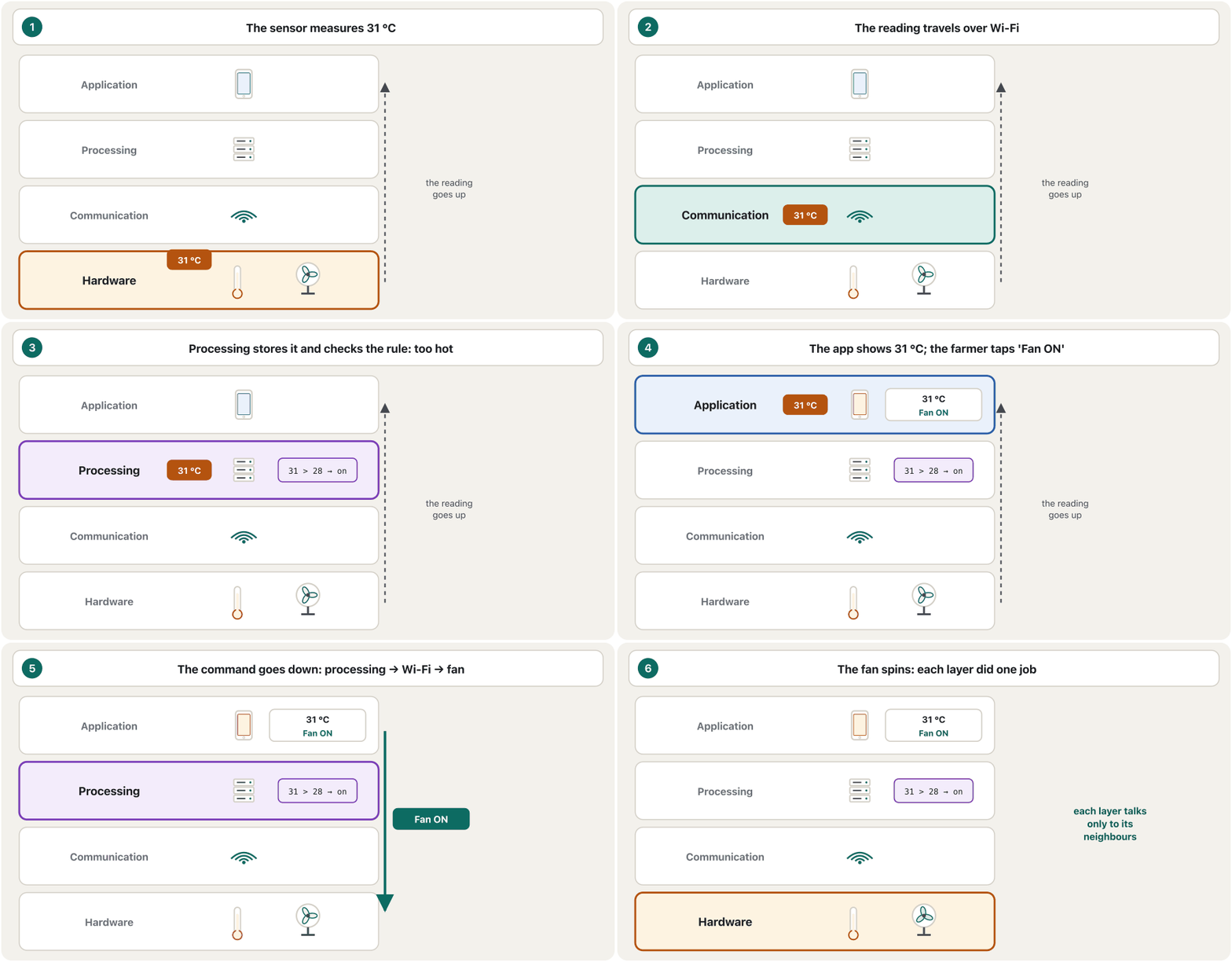
Watch one reading travel. The sensor measures 31 °C; the reading crosses Wi-Fi; the processing layer stores it and checks the rule 'above 28 °C is too hot'; the app shows it. The farmer taps 'Fan ON', and the command comes back down the same layers to the fan. Each layer does one job and talks only to the layers next to it. The same journey in seven steps, seen from the data's side, is in Follow one reading.
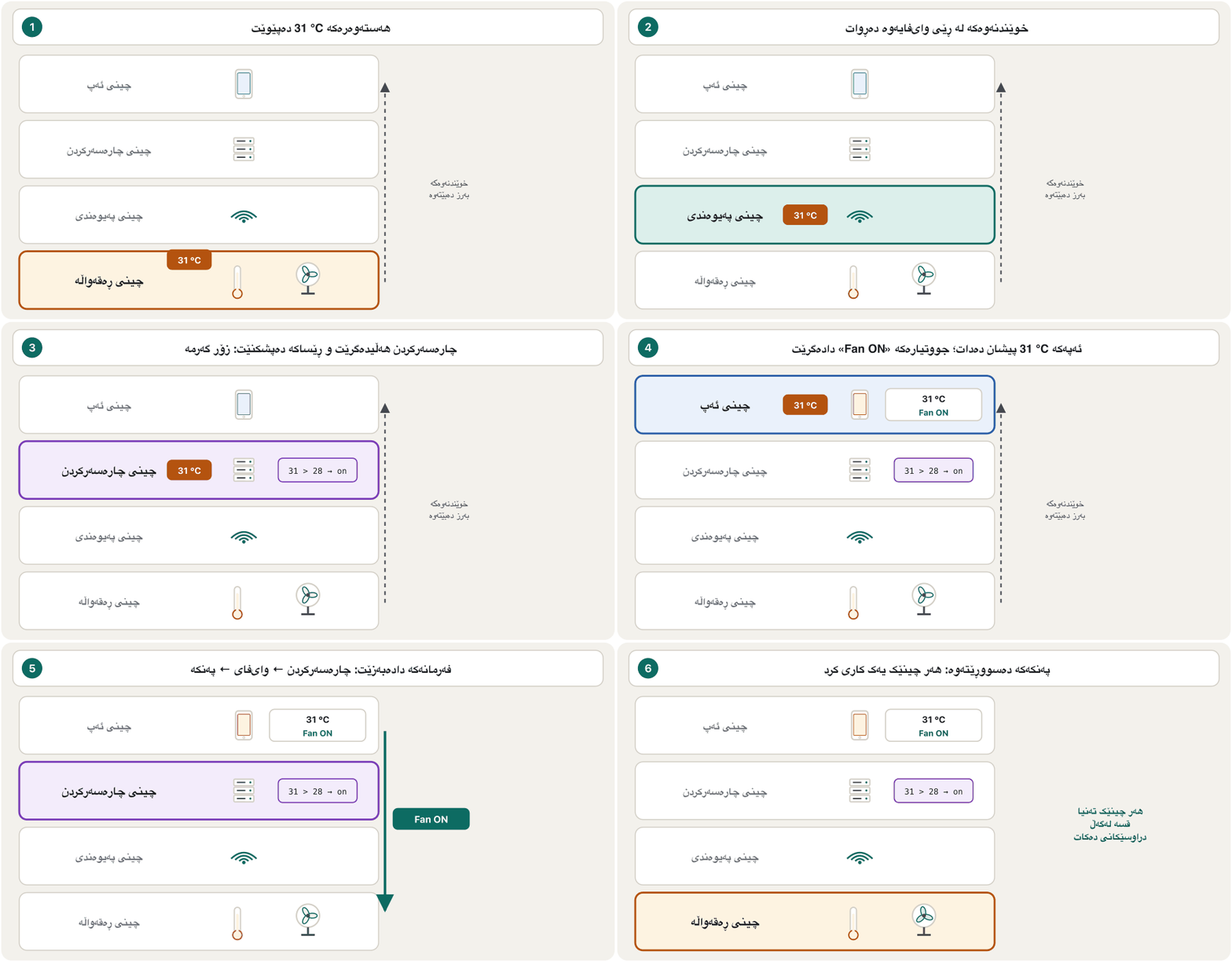
سەیری گەشتی یەک خوێندنەوە بکە. 31 °C دەپێوێت؛ خوێندنەوەکە بە ناو تێدەپەڕێت؛ چینی هەڵیدەگرێت و ڕێسای «سەروو 28 °C زۆر گەرمە» دەپشکنێت؛ پیشانی دەدات. جووتیارەکە «Fan ON» دادەگرێت و فەرمانەکە بە هەمان چینەکاندا دادەبەزێت بۆ پەنکەکە. هەر چینێک یەک کار دەکات و تەنیا قسە لەگەڵ چینەکانی تەنیشتی دەکات. هەمان گەشت بە حەوت هەنگاو، لە لای ، لە بەشی بەدوای یەک خوێندنەوەدا بڕۆ هەیە.
Different makers, one languageدروستکەری جیاواز، یەک زمان
Interoperability means that the parts of a system can work together even when they are made by different companies or work in different ways. Layers make it possible: if every part follows the agreed rules of its layer, for example Wi-Fi (IEEE 802.11) for communication and MQTT for messages, then a sensor from one maker, a fan controller from another and a cloud service from a third can talk to each other. Who writes those rules is the subject of Who Writes the Rules? IoT Standards.
واتە بەشەکانی سیستەمێک دەتوانن پێکەوە کار بکەن تەنانەت کاتێک کۆمپانیای جیاواز دروستیان کردوون یان بە شێوەی جیاواز کار دەکەن. ئەمە ممکن دەکەن: ئەگەر هەر پارچەیەک ڕێسا ڕێککەوتنلەسەرکراوەکانی چینەکەی خۆی ڕەچاو بکات، بۆ نموونە (IEEE 802.11) بۆ پەیوەندی و بۆ پەیامەکان، ئەوا لە دروستکەرێکەوە، کۆنترۆڵەرێکی پەنکە لە دروستکەرێکی ترەوە و خزمەتگوزارییەکی هەور لە سێیەمێکەوە دەتوانن قسە لەگەڵ یەکتر بکەن. ئەوەی کێ ئەو ڕێسایانە دەنووسێت لە وانەی کێ یاساکان دەنووسێت؟ ستانداردەکانی IoT باس کراوە.
Three, four or five layers?سێ، چوار یان پێنج چین؟
Books do not agree on one number of layers. The common teaching models are:
کتێبەکان لەسەر یەک ژمارەی ڕێک ناکەون. مۆدێلە فێرکارییە باوەکان ئەمانەن:
- Three layers: perception (sensors and actuators that sense and act on the world), network (moves and processes the data) and application (the services for the user). The simplest model.
- Four layers: a separate processing (or support) layer is added in the middle. The four layers of this course are one version.
- Five layers: perception, transport, processing, application and business, which manages the whole system: price plans, profit and the users' privacy.
- سێ چین: ( و کە هەست بە جیهان دەکەن و کاری تێدا دەکەن)، ( دەگوازێتەوە و چارەسەری دەکات) و (خزمەتگوزارییەکان بۆ بەکارهێنەر). سادەترین مۆدێلە.
- چوار چین: چینێکی جیای (یان پشتگیری) لە ناوەڕاستدا زیاد دەکرێت. چوار چینەکەی ئەم کۆرسە یەکێکن لەم جۆرە.
- پێنج چین: ، گواستنەوە، ، و چینی بازرگانی، کە هەموو سیستەمەکە بەڕێوە دەبات: نرخەکان، قازانج و بەکارهێنەران.
These are teaching models, not one official standard: the same part can sit in a different layer in another book. The idea stays the same: sensing at the bottom, people at the top.
ئەمانە مۆدێلی فێرکارین، نەک یەک فەرمی: لەوانەیە هەمان بەش لە کتێبێکی تردا لە چینێکی جیاوازدا بێت. بیرۆکەکە وەک خۆی دەمێنێتەوە: هەستکردن لە خوارەوە، خەڵک لە سەرەوە.
Three, four or five layers?سێ، چوار یان پێنج چین؟
The middle floor: middlewareنهۆمی ناوەڕاست: نەرمەواڵەی نێوەندی
In the five-layer model the processing layer is also called the middleware layer. Middleware is software in the middle: below it are many devices that speak different protocols (MQTT, HTTP, CoAP, LoRaWAN); above it are many apps. It stores, analyses and processes the data and gives every app the same common services: storing readings, managing devices, rules and alerts, and one API to read it all.
لە مۆدێلی پێنج چینیدا بە چینی دەوترێت چینی . ئەو کە لە ناوەڕاستدایە: لە خوارییەوە زۆر ئامێر هەن کە بە جیاواز قسە دەکەن (، ، ، )؛ لە سەرییەوە زۆر هەن. هەڵدەگرێت، شی دەکاتەوە و چارەسەری دەکات و هەمان خزمەتگوزاریی هاوبەش دەداتە هەموو : هەڵگرتنی خوێندنەوەکان، بەڕێوەبردنی ئامێرەکان، ڕێسا و ئاگادارکردنەوە و یەک بۆ خوێندنەوەی هەمووی.
Without middleware, every app would have to talk to every kind of device by itself. Cloud IoT platforms such as AWS IoT Core or Azure IoT Hub are middleware you rent; the oneM2M standard describes a common service layer of this kind (see More rule-writers).
بەبێ ، دەبوو هەر خۆی قسە لەگەڵ هەموو جۆرە ئامێرێک بکات. هەوری IoT وەک AWS IoT Core یان Azure IoT Hub کە بە کرێ دەیانگریت؛ oneM2M چینێکی خزمەتگوزاریی هاوبەشی لەم جۆرە وەسف دەکات (بڕوانە نووسەرانی تری ڕێساکان).
The official reference model: ITU-T Y.2060مۆدێلی پێوەر فەرمییەکە: ITU-T Y.2060
A reference model is an agreed general picture that real designs are compared with. In 2012 the International Telecommunication Union (ITU) published Recommendation ITU-T Y.2060, Overview of the Internet of things. In 2016 it was renumbered Y.4000 without changes, and it is still in force. Its IoT reference model has four layers:
وێنەیەکی گشتیی ڕێککەوتنلەسەرکراوە کە دیزاینە ڕاستەقینەکان لەگەڵیدا بەراورد دەکرێن. لە 2012ـدا یەکێتیی نێودەوڵەتیی پەیوەندییەکان () ڕاسپاردەی ITU-T Y.2060ـی بڵاو کردەوە، بە ناوی Overview of the Internet of things. لە 2016ـدا بەبێ گۆڕانکاری ژمارەکەی کرا بە Y.4000 و هێشتا کاری پێ دەکرێت. IoTـی ئەم ڕاسپاردەیە چوار چینی هەیە:
- Application layer: the IoT applications.
- Service support and application support layer: generic support used by many applications, such as data processing and data storage, plus specific support for particular applications.
- Network layer: networking capabilities (access, mobility, authentication) and transport capabilities (carrying the data).
- Device layer: device capabilities and gateway capabilities, for example protocol conversion between a Zigbee device and an LTE network.
- : ئەپەکانی IoT.
- چینی پشتگیریی خزمەتگوزاری و پشتگیریی ئەپ: پشتگیریی گشتی کە زۆر ئەپ بەکاری دەهێنن، وەک و ، لەگەڵ پشتگیریی تایبەت بۆ هەندێک ئەپی دیاریکراو.
- : توانای (دەستگەیشتن، جووڵە، ) و توانای گواستنەوە (هەڵگرتن و بردنی ).
- چینی ئامێر: توانای ئامێر و توانای ، بۆ نموونە گۆڕینی لە نێوان ئامێرێکی و LTEـدا.
The four layers of this course map onto it almost one to one: hardware ≈ device, communication ≈ network, processing ≈ service and application support, application ≈ application.
چوار چینەکەی ئەم کۆرسە نزیکەی یەک بە یەک لەسەری جێگیر دەبن: ≈ ئامێر، پەیوەندی ≈ ، ≈ پشتگیریی خزمەتگوزاری و ئەپ، ئەپ ≈ ئەپ.
The official reference model: ITU-T Y.2060مۆدێلی پێوەر فەرمییەکە: ITU-T Y.2060
Two pillars beside every layerدوو کۆڵەکە لە تەنیشت هەموو چینێکەوە
Beside the four layers, Y.2060 draws two kinds of capabilities that every layer needs:
لە تەنیشت چوار چینەکەوە، Y.2060 دوو جۆر توانا دادەنێت کە هەموو چینێک پێویستی پێیانە:
- Management capabilities: the classic fault, configuration, accounting, performance and security management (FCAPS), plus device management (switching devices on or off from far away, diagnostics, firmware and software updates), managing the local network, and controlling traffic so that urgent data gets through.
- Security capabilities at every layer: at the application layer authorization, authentication, confidentiality and integrity of data, privacy protection, security audit and anti-virus; at the network layer authorization, authentication and protection of the data and the signalling; at the device layer authentication, authorization, device integrity validation, access control, confidentiality and integrity.
- توانای بەڕێوەبردن: بەڕێوەبردنی کلاسیکیی تێکچوون، ، هەژمارکردنی بەکارهێنان، کارایی و (FCAPS)، لەگەڵ بەڕێوەبردنی ئامێرەکان (هەڵکردن و کوژاندنەوەی ئامێر لە دوورەوە، دۆزینەوەی کێشە، و )، بەڕێوەبردنی ناوخۆیی و کۆنترۆڵکردنی هاتوچۆی بۆ ئەوەی بەپەلە تێبپەڕێت.
- توانای لە هەموو چینێکدا: لە ، ، و ، پاراستنی ، پشکنینی و ؛ لە ، و پاراستنی و پەیامەکانی کۆنترۆڵ؛ لە چینی ئامێردا ، ، پشتڕاستکردنەوەی دروستیی ئامێر، ، و .
Example: from its office, the farm company updates the firmware of every sensor in its greenhouses (management), and every sensor proves who it is before it may send (security). They are pillars, not layers, because every layer needs them.
نموونە: کۆمپانیای کشتوکاڵییەکە لە نووسینگەکەیەوە هەموو سەوزەخانەکانی نوێ دەکاتەوە (بەڕێوەبردن) و هەر پێش ئەوەی ڕێگەی ناردنی پێ بدرێت دەیسەلمێنێت کە کێیە (). ئەمانە کۆڵەکەن، نەک چین، چونکە هەموو چینێک پێویستی پێیانە.
ISO/IEC 30141: one system, several drawingsISO/IEC 30141: یەک سیستەم، چەند نەخشە
ISO and IEC publish the international IoT reference architecture, ISO/IEC 30141 Internet of Things (IoT): Reference architecture, written by their joint committee JTC 1/SC 41 (Internet of things and digital twin). The first edition came in 2018; the current second edition was published in August 2024. It is more than a stack of layers: it starts from the main characteristics of IoT, builds a foundational view and then describes the same system in five more views, including a construction view with design patterns. In July 2025 ISO marked it 'to be revised', so a third edition is being prepared.
و IEC تەلارسازیی پێوەری نێودەوڵەتیی IoT بڵاو دەکەنەوە، ISO/IEC 30141 Internet of Things (IoT): Reference architecture، کە لیژنە هاوبەشەکەیان JTC 1/SC 41 (Internet of things and digital twin) نووسیویەتی. چاپی یەکەم لە 2018 هات؛ چاپی دووەمی ئێستا لە ئابی 2024ـدا بڵاو کرایەوە. لە ڕیزێک زیاترە: لە تایبەتمەندییە سەرەکییەکانی IoTـەوە دەست پێ دەکات، دیدێکی بنەڕەتی دروست دەکات و پاشان هەمان سیستەم بە پێنج دیدی تر وەسف دەکات، لەوانە دیدێکی دروستکردن بە نموونەی دیزاینەوە. لە تەممووزی 2025ـدا نیشانەی «پێویستی بە پێداچوونەوە هەیە»ـی لێ دا، بۆیە چاپی سێیەم ئامادە دەکرێت.
An architect does not draw a building once. There is a floor plan, a plan of the electric wiring and a plan of the water pipes: one building, several views, each for a different worker.
ئەندازیاری تەلارساز بینایەک تەنیا جارێک ناکێشێت. نەخشەی ژوورەکان، نەخشەی کارەبا و نەخشەی بۆری ئاو هەیە: یەک بینا، چەند دیدێک، هەریەکەیان بۆ کرێکارێکی جیاواز.
Where the analogy stops workingسنووری ئەم نموونەیە
A building's drawings rarely change once it is built; an IoT system keeps changing, so its views must be kept up to date.
نەخشەکانی بینایەک دوای دروستکردنی کەم دەگۆڕێن؛ سیستەمێکی IoT بەردەوام دەگۆڕێت، بۆیە دەبێت دیدەکانی نوێ بکرێنەوە.
IoT layers and the OSI modelچینەکانی IoT و مۆدێلی OSI
You will also meet the OSI model, ISO's seven-layer model of network communication (physical, data link, network, transport, session, presentation and application), and the four-layer TCP/IP model used on the internet. They explain how a message crosses a network between two computers. In an IoT system that whole story sits inside one floor: the communication layer. Sensing, deciding and the apps are outside the OSI model. The Computer Networks course explains the layers one by one in The OSI model and The TCP/IP Model.
هەروەها تووشی دەبیت، مۆدێلی حەوت چینیی بۆ پەیوەندیی (، ، ، ، ، و )، هەروەها مۆدێلی چوار چینیی کە لە بەکار دێت. ئەمانە ڕوون دەکەنەوە پەیامێک چۆن لە نێوان دوو کۆمپیوتەردا بە ناو دەڕوات. لە سیستەمێکی IoTـدا هەموو ئەم چیرۆکە لەناو یەک نهۆمدایە: چینی پەیوەندی. هەستکردن، بڕیاردان و لە دەرەوەی . کۆرسی کۆمپیوتەر چینەکان یەک بە یەک لە مۆدێلی OSI و مۆدێلی TCP/IP ڕوون دەکاتەوە.
Common mistakesهەڵە باوەکان
- 'There is one official number of IoT layers.' The 3-, 4- and 5-layer models are teaching models; ITU-T Y.2060 has four layers plus two capability pillars, and ISO/IEC 30141 uses views.
- 'A layer is a box you can touch.' Layers are logical: one device, such as a gateway, can do work in several layers.
- 'Security is one more layer on top.' Security, like management, is needed at every layer, which is why ITU draws it as a pillar beside them.
- 'The OSI model is an IoT model.' OSI and TCP/IP describe only how data crosses a network: the communication part of an IoT system.
- 'Modules make a system more complicated.' There are more parts, but each one is simpler, and fixing or changing one part becomes easier.
- «یەک ژمارەی فەرمیی چینەکانی IoT هەیە.» مۆدێلەکانی 3، 4 و 5 چینی مۆدێلی فێرکارین؛ ITU-T Y.2060 چوار چین و دوو کۆڵەکەی توانای هەیە و ISO/IEC 30141 دید بەکار دەهێنێت.
- «چین سندوقێکە دەتوانیت دەستی لێ بدەیت.» لۆجیکین: یەک ئامێر، وەک ، دەتوانێت لە چەند چینێکدا کار بکات.
- « چینێکی ترە لە سەرەوە.» ، وەک بەڕێوەبردن، لە هەموو چینێکدا پێویستە، بۆیە ITU وەک کۆڵەکەیەک لە تەنیشتیانەوە دەیکێشێت.
- « مۆدێلێکی IoTـیە.» و تەنیا وەسفی ئەوە دەکەن کە چۆن بە ناو دەڕوات: بەشی پەیوەندیی سیستەمێکی IoT.
- «مۆدیوڵەکان سیستەم ئاڵۆزتر دەکەن.» بەشەکان زیاتر دەبن، بەڵام هەریەکەیان سادەترە و چاککردن یان گۆڕینی بەشێک ئاسانتر دەبێت.
Exercisesڕاهێنانەکان
Put each part of the smart greenhouse into one of the four layers of this course: a soil sensor, a LoRaWAN radio, the rule 'dry soil → start the pump', the farmer's app, the pump, a database of readings.
هەر بەشێکی سەوزەخانە هۆشمەندەکە بخە ناو یەکێک لە چوار چینەکەی ئەم کۆرسە: خاک، ڕادیۆیەکی ، ڕێسای «خاکی وشک ← پەمپ هەڵبکە»، جووتیارەکە، پەمپەکە، خوێندنەوەکان.
Show answerوەڵامەکە پیشان بدە
Hardware: the soil sensor and the pump. Communication: the LoRaWAN radio. Processing: the rule and the database of readings. Application: the farmer's app.
: خاک و پەمپەکە. پەیوەندی: ڕادیۆی . : ڕێساکە و خوێندنەوەکان. ئەپ: جووتیارەکە.
Which layer changes in each case? (a) A new app for the agronomist. (b) Wi-Fi is replaced by 4G. (c) A better soil sensor with the same interface. (d) A new rule: 'frost → switch on the heater'.
لە هەر حاڵەتێکدا کام چین دەگۆڕێت؟ (a) نوێ بۆ پسپۆڕی کشتوکاڵ. (b) بە 4G دەگۆڕدرێت. (c) باشتری خاک بە هەمان . (d) ڕێسایەکی نوێ: «سەرما ← گەرمکەرەوە هەڵبکە».
Show answerوەڵامەکە پیشان بدە
(a) application; (b) communication; (c) hardware; (d) processing. In each case the other layers can stay as they are.
(a) ئەپ؛ (b) پەیوەندی؛ (c) ؛ (d) . لە هەر حاڵەتێکدا چینەکانی تر دەتوانن وەک خۆیان بمێننەوە.
A car park in Erbil shows drivers where the free spaces are. Describe it in the five-layer model: what is in each layer?
شوێنێکی ڕاگرتنی ئۆتۆمبێل لە هەولێر بە شۆفێران پیشان دەدات شوێنە چۆڵەکان لە کوێن. بە مۆدێلی پێنج چینی وەسفی بکە: لە هەر چینێکدا چی هەیە؟
Show answerوەڵامەکە پیشان بدە
A possible answer. Perception: a sensor above each space detects a car. Transport: LoRaWAN or the mobile network carries the changes. Processing: a server counts the free spaces on each floor. Application: the drivers' app and a screen at the entrance show the numbers. Business: the price per hour, reports for the city and privacy rules for camera images and number plates.
وەڵامێکی گونجاو. : لە سەرووی هەر شوێنێکەوە ئۆتۆمبێل دەدۆزێتەوە. گواستنەوە: یان گۆڕانکارییەکان دەگوازێتەوە. : شوێنە چۆڵەکانی هەر نهۆمێک دەژمێرێت. ئەپ: شۆفێران و شاشەیەک لە بەردەم دەرگای چوونەژوورەوەدا ژمارەکان پیشان دەدەن. بازرگانی: نرخی هەر کاتژمێرێک، ڕاپۆرت بۆ شارەوانی و ڕێساکانی بۆ وێنەی کامێرا و ژمارەی ئۆتۆمبێلەکان.
Match the four layers of this course with the layers of ITU-T Y.2060, and name the two capabilities that run beside all of them.
چوار چینەکەی ئەم کۆرسە بە چینەکانی ITU-T Y.2060ـەوە ببەستەوە و ناوی ئەو دوو توانایە بهێنە کە لە تەنیشت هەموویانەوەن.
Show answerوەڵامەکە پیشان بدە
Hardware ≈ device layer; communication ≈ network layer; processing ≈ service support and application support layer; application ≈ application layer. Beside them: management capabilities and security capabilities.
≈ چینی ئامێر؛ پەیوەندی ≈ ؛ ≈ چینی پشتگیریی خزمەتگوزاری و پشتگیریی ئەپ؛ ئەپ ≈ . لە تەنیشتیانەوە: توانای بەڕێوەبردن و توانای .
Summaryپوختە
- IoT systems have many parts; modular design keeps them manageable, flexible and maintainable, like a building divided into rooms.
- A layered design separates the components into layers: it breaks up complexity, makes it easier to share resources and promotes interoperability.
- This course uses four layers: hardware, communication, processing and application. A reading goes up through them; a command comes down.
- Textbooks also teach 3-layer (perception, network, application) and 5-layer (adding transport, processing and business) models; the processing layer is also called middleware.
- The official reference model ITU-T Y.2060 (Y.4000) has device, network, service and application support, and application layers, with management and security capabilities beside them; ISO/IEC 30141 (2nd ed. 2024) describes IoT in several views.
- The OSI and TCP/IP models describe only the communication part of an IoT system.
- سیستەمەکانی IoT بەشی زۆریان هەیە؛ بە بەڕێوەبراو، نەرم و چاککراوی دەیانهێڵێتەوە، وەک بینایەک کە کراوە بە ژوور.
- دیزاینی چینچین پێکهاتەکان لە جیا دەکاتەوە: ئاڵۆزی دابەش دەکات، هاوبەشکردنی سەرچاوەکان ئاسان دەکات و زیاد دەکات.
- ئەم کۆرسە چوار چین بەکار دەهێنێت: ، پەیوەندی، و ئەپ. خوێندنەوەیەک بە ناویاندا بەرز دەبێتەوە؛ فەرمانێک دادەبەزێت.
- کتێبەکان مۆدێلی 3 چینی (، ، ئەپ) و 5 چینیش (بە زیادکردنی گواستنەوە، و بازرگانی) فێر دەکەن؛ بە چینی دەوترێت .
- فەرمییەکە ITU-T Y.2060 (Y.4000) چینەکانی ئامێر، ، پشتگیریی خزمەتگوزاری و ئەپ و ئەپی هەیە، لەگەڵ تواناکانی بەڕێوەبردن و لە تەنیشتیانەوە؛ ISO/IEC 30141 (چاپی دووەم، 2024) IoT بە چەند دیدێک وەسف دەکات.
- و مۆدێلی تەنیا بەشی پەیوەندیی سیستەمێکی IoT وەسف دەکەن.
Lesson complete!وانەکە تەواو بوو!
Well done. Review the key terms, then go on to the next lesson.دەستخۆش. سەیرێکی زاراوە سەرەکییەکان بکەرەوە، پاشان بڕۆ بۆ وانەی داهاتوو.
Key termsزاراوە سەرەکییەکان
Who Writes the Rules? IoT Standardsکێ یاساکان دەنووسێت؟ ستانداردەکانی IoT
Related lecturesوانە پەیوەندیدارەکان
- Cloud, Fog and Edge Computingهەورەژمێرکاری، ژمێرکاریی تەم و ژمێرکاریی لێوار
- Who Writes the Rules? IoT Standardsکێ یاساکان دەنووسێت؟ ستانداردەکانی IoT
- The Questions Behind Every IoT Designئەو پرسیارانەی لە پشت هەموو دیزاینێکی IoTـەوەن
- Protocols, Layers and the OSI Ideaپرۆتۆکۆڵەکان، چینەکان و بیرۆکەی OSI
- The TCP/IP Model and How It Maps to OSIمۆدێلی TCP/IP و چۆنییەتیی یەکگرتنەوەی لەگەڵ OSI
- Data Communication: Modes, Switching and Protocolsپەیوەندیی دراوە: شێوازەکانی ناردن، سویچکردن و پرۆتۆکۆڵەکان
References and further readingسەرچاوەکان و خوێندنەوەی زیاتر
- ITU-T Y.2060 (06/2012): Overview of the Internet of things (renumbered Y.4000, 2016)
- ITU-T: Recommendation Y.2060 / Y.4000 summary page
- ISO/IEC 30141:2024 Internet of Things (IoT) — Reference architecture (ISO committee page)
- dos Santos et al. (2020): Internet of Things Architectures: A Comparative Study (arXiv 2004.12936)
- oneM2M: Why oneM2M (common M2M service layer)
- Microsoft Learn: Azure IoT Central is evolving (IoT Hub as the platform)
This lecture is a first edition. The Kurdish text and terminology are waiting for review by Kurdish IT teachers.ئەم وانەیە چاپی یەکەمە. دەقە کوردییەکە و زاراوەکانی چاوەڕێی پێداچوونەوەی مامۆستایانی کوردی بواری IT ن.