Chapterبەش 6 · Lectureوانە 6.8
How Bits Ride on Radio Waves: Modulationبیتەکان چۆن سواری شەپۆلە ڕادیۆییەکان دەبن: مۆدیولەیشن
How a reading such as 24 °C becomes bits (00011000) and then a radio wave. The carrier wave and its three properties, amplitude, frequency and phase modulation (ASK, FSK, PSK) with their strengths, the radio as the physical layer, and why battery-powered IoT radios prefer FSK and chirps.
چۆن خوێندنەوەیەکی وەک 24 °C دەبێتە (00011000) و پاشان . و سێ تایبەتمەندییەکەی، ، و (ASK، FSK، PSK) لەگەڵ خاڵە بەهێزەکانیان، ڕادیۆ وەک و بۆچی ڕادیۆکانی IoT کە بە کار دەکەن FSK و پێ باشە.
What you will learnچی فێر دەبیت
- Describe the three steps of data transmission: data, bits, electromagnetic waves.
- Name the three properties of a carrier wave and explain that frequency is not speed.
- Explain AM, FM and PM and their digital forms ASK, FSK and PSK, and recognise each on a drawing.
- Explain what a radio (PHY) does when it sends and receives.
- Explain why battery-powered IoT radios prefer constant-height modulations.
- سێ هەنگاوی ناردنی باس بکەیت: ، ، .
- سێ تایبەتمەندیی ناو ببەیت و ڕوون بکەیتەوە کە خێرایی نییە.
- AM، FM و PM و شێوە دیجیتاڵییەکانیان ASK، FSK و PSK ڕوون بکەیتەوە و هەریەکەیان لەسەر وێنە بناسیتەوە.
- ڕوون بکەیتەوە ڕادیۆ () لە کاتی ناردن و وەرگرتندا چی دەکات.
- ڕوون بکەیتەوە بۆچی ڕادیۆکانی IoT کە بە کار دەکەن ئەو پێ باشترە کە بەرزیی شەپۆل ناگۆڕێت.
From 24 °C to a radio waveلە 24 °Cـەوە تا شەپۆلێکی ڕادیۆیی
A sensor in a greenhouse measures 24 °C. A moment later the number is on a gateway hundreds of metres away, with no cable between them. How? Data transmission means sending information by changing it into signals, and a wireless device does it in three steps: the data becomes bits (0s and 1s), and the bits become electromagnetic waves that travel through the air.
لە گوڵخانەیەکدا 24 °C دەپێوێت. چرکەیەک دواتر ژمارەکە لەسەر کە سەدان مەتر دوورە، بەبێ هیچ کێبڵێک لە نێوانیاندا. چۆن؟ ناردنی واتە ناردنی زانیاری بە گۆڕینی بۆ و ئامێرێکی ئەمە بە سێ هەنگاو دەکات: دەبێتە (0 و 1)، پاشان دەبنە کە بە هەوادا دەڕۆن.
The last step, from bits to a wave, is called modulation, and the part of the device that does it is the radio. This lesson explains both. Analog and digital signals themselves are taught in Analog and digital signals.
دوایین هەنگاو، لە بۆ شەپۆل، پێی دەوترێت و ئەو بەشەی ئامێرەکە کە دەیکات ڕادیۆیە. ئەم وانەیە هەردووکیان ڕوون دەکاتەوە. خودی و دیجیتاڵ لە سیگناڵەکانی ئەنالۆگ و دیجیتاڵ فێر دەکرێن.
Step 1: the data becomes bitsهەنگاوی 1: دراوەکە دەبێتە بیتەکان
Computers and radios work with two values only, so 24 must be written in binary. With eight bits, the place values are 128, 64, 32, 16, 8, 4, 2 and 1. Since 24 = 16 + 8, the two bits for 16 and 8 are 1 and all the others are 0: 24 = 00011000.
و ڕادیۆکان تەنیا بە دوو بەها کار دەکەن، بۆیە دەبێت 24 بە بنووسرێت. بە هەشت ، بەهای شوێنەکان 128، 64، 32، 16، 8، 4، 2 و 1ن. چونکە 24 = 16 + 8، ئەو دوو بۆ 16 و 8ن دەبنە 1 و هەموو ئەوانی تر 0ن: 24 = 00011000.
Eight bits can hold any whole number from 0 to 255. How to convert step by step is taught in Decimal to binary; how a sensor’s voltage became a number in the first place is in the ADC. Real devices often send 24.5 °C as 245 in 16 bits so the decimal survives; packing readings into few bytes is shown in LoRa.
هەشت دەتوانێت هەر لە 0 تا 255 هەڵبگرێت. گۆڕین هەنگاو بە هەنگاو لە دەیی بۆ دووانی فێر دەکرێت؛ چۆنیەتیی بوونی بە ژمارە لە گۆڕەری ئەنالۆگ بۆ دیجیتاڵدایە. ئامێرە ڕاستەقینەکان زۆرجار 24.5 °C وەک 245 بە 16 دەنێرن بۆ ئەوەی ژمارەی دوای خاڵەکە نەفەوتێت؛ پەستاوتنی خوێندنەوەکان بۆ ناو چەند کەم لە LoRa پیشان دراوە.
Step 2: a carrier waveهەنگاوی 2: شەپۆلی هەڵگر
A radio sends a carrier wave: a steady sine wave at one fixed frequency, for example 868 MHz. On its own it carries nothing, like a blank page. To write bits on it, the radio changes one of its three properties:
ڕادیۆ دەنێرێت: جێگیر لەسەر یەک نەگۆڕ، بۆ نموونە 868 MHz. بە تەنیا هیچ هەڵناگرێت، وەک پەڕەیەکی سپی. بۆ نووسینی لەسەری، ڕادیۆکە یەکێک لە سێ تایبەتمەندییەکەی دەگۆڕێت:
- Amplitude: the height of the wave.
- Frequency: how many cycles it makes per second, that is, how fast it wiggles.
- Phase: where in its cycle the wave is at a given moment — its position, or angle.
- : بەرزیی شەپۆلەکە.
- : چەند خول لە چرکەیەکدا دەکات، واتە چەند خێرا دەلەرێتەوە.
- : شەپۆلەکە لە ساتێکی دیاریکراودا لە کوێی خولەکەیدایە — شوێنەکەی، یان گۆشەکەی.
Careful: frequency is not the wave’s speed. Every radio wave travels at the speed of light, about 300,000 km per second. 868 MHz means 868 million cycles every second; a higher frequency only wiggles more often. Waves in general are described in Describing waves.
وریا بە: خێرایی شەپۆلەکە نییە. هەموو بە خێرایی ڕووناکی دەڕوات، نزیکەی 300000 km لە چرکەیەکدا. 868 MHz واتە 868 ملیۆن خول لە هەر چرکەیەکدا؛ بەرزتر تەنیا زیاتر دەلەرێتەوە. شەپۆل بە گشتی لە وەسفکردنی شەپۆل ڕوون کراوەتەوە.
Step 3: modulation, three ways to carry bitsهەنگاوی 3: مۆدیولەیشن، سێ ڕێگە بۆ هەڵگرتنی بیتەکان
Changing a so it carries data: its , or phase is changed to stand for the bits. A radio's does this when it sends and the reverse (demodulation) when it receives.
گۆڕینی بۆ ئەوەی هەڵبگرێت: ، یان دەگۆڕدرێت تاکو بیتەکان پیشان بدات. ڕادیۆیەک لە کاتی ناردندا ئەمە دەکات و لە کاتی وەرگرتندا پێچەوانەکەی.
To send bits over radio waves we must modulate the wave: change its behaviour so that it represents the data. There are three main types. Amplitude modulation (AM) changes the height of the wave, frequency modulation (FM) changes how fast it wiggles, and phase modulation (PM) changes its position in the cycle. Each changes the wave differently to carry information.
بۆ ناردنی بە دەبێت شەپۆلەکە مۆدیولەیت بکەین: ڕەفتاری بگۆڕین بۆ ئەوەی نیشان بدات. سێ جۆری سەرەکی هەیە. بەرزیی شەپۆلەکە دەگۆڕێت، خێرایی لەرینەوەکەی دەگۆڕێت و شوێنەکەی لە خولدا دەگۆڕێت. هەریەکەیان شەپۆلەکە بە شێوەیەکی جیاواز دەگۆڕێت بۆ هەڵگرتنی زانیاری.
AM and FM radio stations change the wave smoothly to follow a voice. For digital data the wave only switches between a few fixed states, and the same three ideas are then called ASK, FSK and PSK: amplitude-, frequency- and phase-shift keying.
وێستگە ڕادیۆییەکانی AM و FM شەپۆلەکە بە نەرمی دەگۆڕن بۆ ئەوەی بە دوای دەنگێکدا بڕوات. بۆ دیجیتاڵ شەپۆلەکە تەنیا لە نێوان چەند دۆخێکی نەگۆڕدا دەگۆڕێت و ئەو کاتە هەمان سێ بیرۆکە پێیان دەوترێت ASK، FSK و PSK.
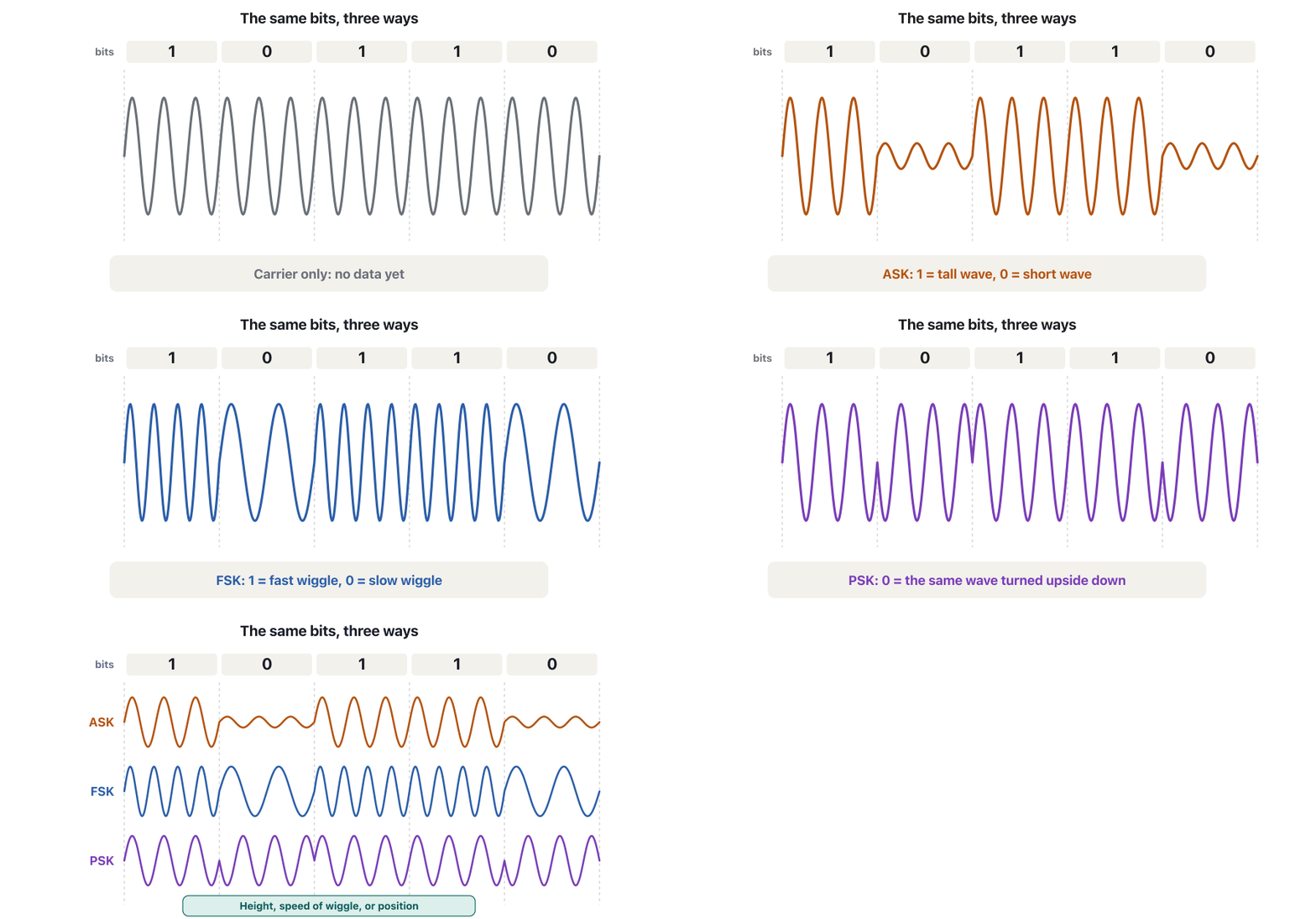
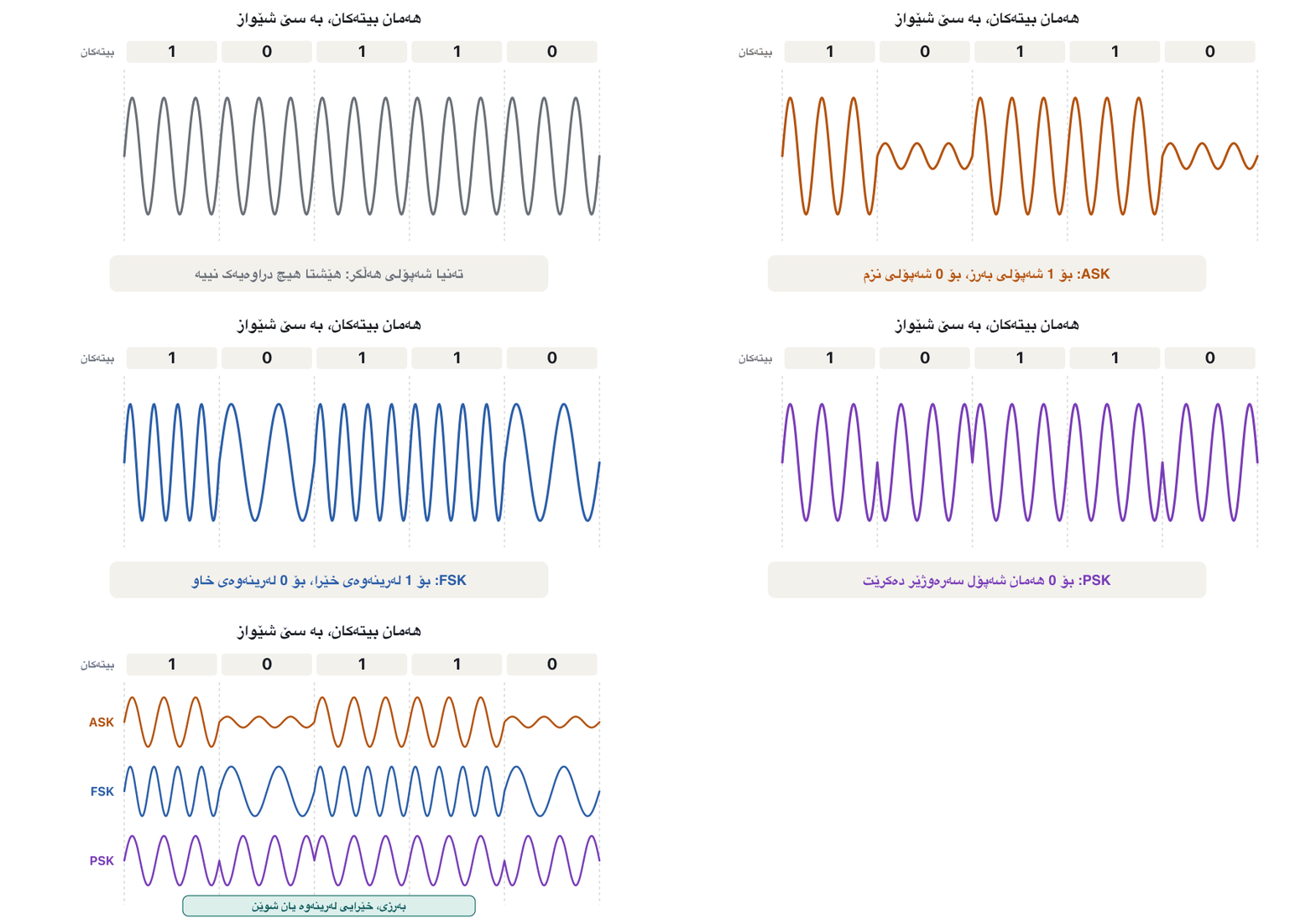
You want to send yes/no answers to a friend across a noisy bazaar using only your voice. You can shout loudly for “yes” and softly for “no” (amplitude), or use a high note for “yes” and a low note for “no” (frequency). Your friend only has to tell the two apart.
دەتەوێت تەنیا بە دەنگت وەڵامی بەڵێ/نەخێر بۆ هاوڕێیەک بنێریت لەو بەری بازاڕێکی پڕ لە ژاوەژاو. دەتوانیت بۆ «بەڵێ» بە بەرزی و بۆ «نەخێر» بە نزمی هاوار بکەیت ()، یان بۆ «بەڵێ» دەنگێکی زیل و بۆ «نەخێر» دەنگێکی بەم بەکار بهێنیت (). هاوڕێکەت تەنیا دەبێت ئەو دووانە لە یەک جیا بکاتەوە.
Where the analogy stops workingسنووری ئەم نموونەیە
A voice has no everyday version of phase, and a radio changes its wave millions of times faster than a voice.
دەنگ وەشانێکی ڕۆژانەی نییە و ڕادیۆ شەپۆلەکەی ملیۆنان جار خێراتر لە دەنگ دەگۆڕێت.
Step 3: modulation, three ways to carry bitsهەنگاوی 3: مۆدیولەیشن، سێ ڕێگە بۆ هەڵگرتنی بیتەکان
ASK: change the heightASK: گۆڕینی بەرزی
In ASK a 1 is sent as a tall wave and a 0 as a short one. In its simplest form, on-off keying, the radio is simply on for 1 and off for 0, like Morse code with a torch. ASK needs very little hardware, so many cheap 433 MHz remote controls use it, and many fibre-optic links switch light on and off the same way.
لە ASKـدا 1 وەک شەپۆلێکی بەرز و 0 وەک شەپۆلێکی نزم دەنێردرێت. لە سادەترین شێوەیدا، کلیلکردنی هەڵکردن و کوژاندنەوە (on-off keying)، ڕادیۆکە بۆ 1 هەڵدەکرێت و بۆ 0 دەکوژێنرێتەوە، وەک بە چرایەک. ASK ئامێری زۆر کەمی پێویستە، بۆیە زۆرێک لە ڕیمۆتە هەرزانەکانی 433 MHz بەکاری دەهێنن و زۆرێک لە بەستەرەکانی بە هەمان شێوە ڕووناکی هەڵ دەکەن و دەیکوژێننەوە.
Its weakness is noise. Electrical noise, other radios and fading all change the height of a wave, and height is exactly what the receiver measures. A burst of noise can make a 0 look like a 1.
لاوازییەکەی . ، ڕادیۆی تر و لاوازبوونی هەموویان بەرزیی شەپۆل دەگۆڕن و بەرزیش ڕێک ئەو شتەیە کە وەرگرەکە دەیپێوێت. کەمێک دەتوانێت 0ـێک وەک 1 دەربخات.
Step 3: modulation, three ways to carry bitsهەنگاوی 3: مۆدیولەیشن، سێ ڕێگە بۆ هەڵگرتنی بیتەکان
FSK: change the frequencyFSK: گۆڕینی لەرەلەر
In FSK the radio switches between two frequencies, one for 0 and one for 1, while the height stays the same. A receiver listens for “which tone?”, so noise that changes heights does not fool it. Most radios smooth the jumps between tones (GFSK), so the signal stays inside its channel.
لە FSKـدا ڕادیۆکە لە نێوان دوو دەگۆڕێت، یەکێک بۆ 0 و یەکێک بۆ 1، لە کاتێکدا بەرزییەکە وەک خۆی دەمێنێتەوە. وەرگر گوێ دەگرێت بزانێت «کام دەنگە؟»، بۆیە ئەو بەرزی دەگۆڕێت هەڵی ناخەڵەتێنێت. زۆربەی ڕادیۆکان بازدانی نێوان دەنگەکان نەرم دەکەن (GFSK) بۆ ئەوەی لە ناو خۆیدا بمێنێتەوە.
Because the height never changes, the transmitter’s amplifier can run flat out, where it wastes the least battery. That is why FSK and GFSK are everywhere in IoT: Bluetooth LE, Z-Wave and many sub-GHz sensors use them, Sigfox uses GFSK for its downlink, and LoRaWAN offers an FSK data rate of 50 kbit/s besides LoRa.
چونکە بەرزییەکە هەرگیز ناگۆڕێت، نێرەرەکە دەتوانێت بە تەواوی هێز کار بکات، کە لەوێدا کەمترین بەفیڕۆ دەدات. بۆیە FSK و GFSK لە هەموو شوێنێکی IoTـدا هەن: ، و زۆر خوار 1 GHz بەکاریان دەهێنن، بۆ GFSK بەکار دەهێنێت و جگە لە ڕێژەیەکی FSKـی 50 kbit/sـیش پێشکەش دەکات.
Step 3: modulation, three ways to carry bitsهەنگاوی 3: مۆدیولەیشن، سێ ڕێگە بۆ هەڵگرتنی بیتەکان
PSK: change the phasePSK: گۆڕینی فاز
In PSK height and frequency stay the same, but the wave jumps to a different point of its cycle. In the simplest form, BPSK, a 0 is the same wave turned upside down: shifted by 180°. QPSK uses four phases, so each change carries two bits.
لە PSKـدا بەرزی و وەک خۆیان دەمێننەوە، بەڵام شەپۆلەکە باز دەدات بۆ خاڵێکی تری خولەکەی. لە سادەترین شێوەیدا، BPSK، 0 هەمان شەپۆلە بە سەرەوژێری: 180° جووڵاوە. QPSK چوار بەکار دەهێنێت، بۆیە هەر گۆڕانێک دوو هەڵدەگرێت.
BPSK survives the most noise of these methods, but the receiver must keep very exact time to know where each cycle should be. Differential PSK (DBPSK) makes this easier: the receiver only checks whether the phase changed from one bit to the next. Sigfox sends its uplinks with DBPSK, and Zigbee at 2.4 GHz uses a four-phase form (O-QPSK).
BPSK لە نێو ئەم شێوازانەدا زۆرترین بەرگە دەگرێت، بەڵام وەرگرەکە دەبێت کاتێکی زۆر ورد بپارێزێت بۆ ئەوەی بزانێت هەر خولێک دەبێت لە کوێ بێت. PSKـی جیاوازی (DBPSK) ئەمە ئاسانتر دەکات: وەرگرەکە تەنیا دەپشکنێت ئایا لە بۆ دواتر گۆڕاوە. بە DBPSK دەنێرێت و لە 2.4 GHzـدا شێوەیەکی چوار-فازی (O-QPSK) بەکار دەهێنێت.
The radio is the physical layerڕادیۆ چینی فیزیکییە
So what is a radio? It is the hardware part — the physical layer (PHY) — that takes your bits and runs an algorithm to turn them into modulated electromagnetic waves, then sends them out through the antenna. On the other side another radio demodulates the wave: it measures the heights, tones or phases and turns them back into bits. This is how Wi-Fi, Bluetooth, LoRa and 4G all send data wirelessly; they differ in how they modulate.
کەواتە ڕادیۆ چییە؟ بەشێکی — (PHY) — کە وەردەگرێت و جێبەجێ دەکات بۆ گۆڕینیان بۆ مۆدیولەیتکراو، پاشان لە ڕێگەی دەیاننێرێت. لە لای ترەوە ڕادیۆیەکی تر شەپۆلەکە دەکات: بەرزی، دەنگ یان دەپێوێت و دەیانکاتەوە بە . ، ، و 4G هەموویان بەم شێوەیە بە بێتەلی دەنێرن؛ لە شێوازی جیاوازن.
The PHY is the lowest layer of a network. Everything above it — addresses, the rules for who may send when, the app’s data — belongs to higher layers; see The physical layer. A modem does the same job over a cable: How modulation works.
نزمترین چینی . هەموو شتێک لە سەرووییەوە — ناونیشان، یاساکانی کێ و کەی دەتوانێت بنێرێت، ئەپەکە — هی چینە بەرزترەکانە؛ بڕوانە چینی فیزیکی. هەمان کار بە کێبڵ دەکات: مۆدیولەیشن چۆن کار دەکات.
Why IoT radios like simple FSK and chirpsبۆچی ڕادیۆکانی IoT FSKـی سادە و جریوەکانیان پێ باشە
Wi-Fi, 4G and 5G change height and phase together (QAM) and spread the data over hundreds of narrow carriers (OFDM), so each change of the wave carries many bits; see QAM and OFDM. That needs a strong, clean signal and an amplifier that keeps every height exact, which costs power.
، 4G و 5G بەرزی و پێکەوە دەگۆڕن () و بەسەر سەدان تەسکدا بڵاو دەکەنەوە ()، بۆیە هەر گۆڕانێکی شەپۆل زۆر هەڵدەگرێت؛ بڕوانە QAM و OFDM. ئەمە بەهێز و پاکی پێویستە، لەگەڵ کە هەموو بەرزییەک ورد بپارێزێت و ئەمەش وزەی دەوێت.
A battery sensor 10 km from its gateway has the opposite problem: a weak signal and a tiny battery. So LPWAN radios choose waves whose height never changes: FSK, and LoRa’s chirps, whose frequency sweeps smoothly up or down (LoRa). The amplifier can then run flat out, where it wastes the least energy; the chips stay simple and cheap; and slow changes give every bit more energy, so it is understood farther away (the trade-off). Sigfox goes another way: very slow, very narrow DBPSK.
کە 10 km لە دوورە کێشەی پێچەوانەی هەیە: لاواز و بچووک. بۆیە ڕادیۆکانی ئەو شەپۆلانە هەڵدەبژێرن کە بەرزییان هەرگیز ناگۆڕێت: FSK و ، کە بە نەرمی بەرز یان نزم دەبێتەوە (LoRa). ئەو کاتە دەتوانێت بە تەواوی هێز کار بکات، کە لەوێدا کەمترین وزە بەفیڕۆ دەدات؛ سادە و هەرزان دەمێننەوە. هەروەها گۆڕانی خاو وزەی زیاتر دەداتە هەر ، بۆیە لە دووریی زیاتریشدا دەناسرێتەوە (هاوسەنگییەکە). ڕێگەیەکی تر دەگرێت: DBPSKـی زۆر خاو و زۆر تەسک.
Which radio uses which modulationکام ڕادیۆ کام مۆدیولەیشن بەکار دەهێنێت
Here are the radios of this chapter and what they change on the wave. Notice how the battery-powered IoT radios prefer methods that keep the height steady.
لێرەدا ڕادیۆکانی ئەم بەشە و ئەوەی لەسەر شەپۆلەکە دەیگۆڕن دانراون. سەرنج بدە چۆن ڕادیۆکانی IoT کە بە کار دەکەن ئەو شێوازانەیان پێ باشە کە بەرزی جێگیر دەهێڵنەوە.
| Technologyتەکنەلۆجیا | Modulation | What changesچی دەگۆڕێت |
|---|---|---|
| Simple 433 MHz remote controlsڕیمۆتی سادەی 433 MHz | ASK, often on-off keyingASK، زۆرجار هەڵکردن و کوژاندنەوە | heightبەرزی |
| GFSK | frequency | |
| FSK / GFSK | frequency | |
| Zigbee (2.4 GHz) (2.4 GHz) | O-QPSK (four phases)O-QPSK (چوار فاز) | phase |
| DBPSK up, GFSK downDBPSK بۆ سەرەوە، GFSK بۆ خوارەوە | phase / frequency / | |
| frequency, sweeping smoothly، بە نەرمی دەگۆڕێت | ||
| NB-IoT, LTE-M، | QPSK (LTE-M also 16-QAM) on OFDM, as in 4GQPSK ( هەروەها 16-QAM) لەسەر ، وەک 4G | phase (and height) (و بەرزی) |
| Wi-Fi 6 and 7 6 و 7 | up to 1024- and 4096-QAM on OFDMتا 1024-QAM و 4096-QAM لەسەر | height and phaseبەرزی و |
Common mistakesهەڵە باوەکان
Exercisesڕاهێنانەکان
(a) Write 25 in eight-bit binary. (b) Describe in words how the first four bits would look with ASK, with FSK and with BPSK.
(a) 25 بە هەشت بنووسە. (b) بە وشە باس بکە چوار یەکەم بە ASK، بە FSK و بە BPSK چۆن دەردەکەون.
Show answerوەڵامەکە پیشان بدە
(a) 25 = 16 + 8 + 1 = 00011001. (b) The first four bits are 0 0 0 1. ASK: three short waves, then a tall one. FSK: three slow wiggles, then a fast one, all the same height. BPSK: the wave upside down for the three 0s, then it flips by 180° for the 1.
(a) 25 = 16 + 8 + 1 = 00011001. (b) چوار یەکەم 0 0 0 1ن. ASK: سێ شەپۆلی نزم، پاشان یەکێکی بەرز. FSK: سێ لەرینەوەی خاو، پاشان یەکێکی خێرا، هەموویان بە هەمان بەرزی. BPSK: شەپۆلەکە بۆ سێ 0ـەکە سەرەوژێرە، پاشان بۆ 1ـەکە 180° وەردەگەڕێت.
Which modulation is each? (a) The height never changes, but the wave wiggles faster for each 1. (b) The wave is sometimes almost flat. (c) Same height, same speed, but the wave suddenly flips where the bit changes.
هەریەکەیان کام ؟ (a) بەرزییەکە هەرگیز ناگۆڕێت، بەڵام شەپۆلەکە بۆ هەر 1ـێک خێراتر دەلەرێتەوە. (b) شەپۆلەکە هەندێک جار نزیکەی تەختە. (c) هەمان بەرزی، هەمان خێرایی، بەڵام شەپۆلەکە لەو شوێنەی دەگۆڕێت لەناکاو وەردەگەڕێت.
Show answerوەڵامەکە پیشان بدە
(a) FSK; (b) ASK, on-off keying; (c) PSK (BPSK).
(a) FSK؛ (b) ASK، هەڵکردن و کوژاندنەوە؛ (c) PSK (BPSK).
Sigfox sends about 100 bits per second on an 868 MHz carrier. (a) How long does one bit last? (b) How many carrier cycles is that? (c) What does this tell you about the pictures in this lesson?
نزیکەی 100 لە چرکەیەکدا لەسەر 868 MHz دەنێرێت. (a) یەک چەند دەخایەنێت؟ (b) ئەوە چەند خولی ؟ (c) ئەمە چی لەسەر وێنەکانی ئەم وانەیە پێ دەڵێیت؟
Show answerوەڵامەکە پیشان بدە
(c) The pictures draw two to four cycles per bit so you can see them; a real bit holds millions.
(c) وێنەکان بۆ هەر دوو تا چوار خول دەکێشن بۆ ئەوەی ببینرێن؛ ڕاستەقینە ملیۆنان خولی تێدایە.
Summaryپوختە
- Data transmission: data → bits → electromagnetic waves. 24 °C becomes 00011000 (16 + 8).
- A carrier wave has three properties: amplitude (height), frequency (cycles per second) and phase (position in the cycle). Frequency is not speed.
- Modulation changes one of them to carry bits: AM/ASK (height), FM/FSK (frequency), PM/PSK (phase).
- ASK is simple but noise-sensitive; FSK keeps a steady height and saves battery; PSK resists noise best but needs exact timing (DBPSK eases it).
- The radio is the physical layer (PHY): it runs the algorithm that modulates bits into waves; the receiver demodulates them.
- Battery IoT radios prefer steady-height waves (FSK, LoRa chirps); Wi-Fi and 4G use QAM and OFDM for speed.
- ناردنی : ← ← . 24 °C دەبێتە 00011000 (16 + 8).
- سێ تایبەتمەندیی هەیە: (بەرزی)، (خول لە چرکەیەکدا) و (شوێن لە خولدا). خێرایی نییە.
- یەکێکیان دەگۆڕێت بۆ هەڵگرتنی : AM/ASK (بەرزی)، FM/FSK ()، PM/PSK ().
- ASK سادەیە بەڵام هەستیارە بە ؛ FSK بەرزی جێگیر دەهێڵێتەوە و پاشەکەوت دەکات؛ PSK باشترین بەرگری دژ بە هەیە بەڵام کاتی وردی دەوێت (DBPSK ئاسانی دەکات).
- ڕادیۆ (PHY): ئەو جێبەجێ دەکات کە بە شەپۆل مۆدیولەیت دەکات؛ وەرگر دەکات.
- ڕادیۆکانی IoT کە بە کار دەکەن شەپۆلی بەرزی جێگیریان پێ باشە (FSK، )؛ و 4G بۆ خێرایی و بەکار دەهێنن.
Next: LoRa, the long-range radio that modulates with chirps.
دواتر: LoRa، ئەو ڕادیۆیەی بۆ دووریی زۆر دەنێرێت و بە مۆدیولەیت دەکات.
Lesson complete!وانەکە تەواو بوو!
Well done. Review the key terms, then go on to the next lesson.دەستخۆش. سەیرێکی زاراوە سەرەکییەکان بکەرەوە، پاشان بڕۆ بۆ وانەی داهاتوو.
Key termsزاراوە سەرەکییەکان
LoRa: Long Range on Little PowerLoRa: دووریی زۆر بە وزەی کەم
Related lecturesوانە پەیوەندیدارەکان
- LoRa: Long Range on Little PowerLoRa: دووریی زۆر بە وزەی کەم
- Range, Speed and Power: Choosing a Wireless Technologyمەودای سیگناڵ، خێرایی و وزە: هەڵبژاردنی تەکنەلۆجیایەکی بێتەل
- From Smoke Signals to Device-to-Cloudلە نیشانەی دووکەڵەوە تا پەیوەندیی ئامێر بۆ هەور
- Computer Communicationsپەیوەندیی کۆمپیوتەر
- Analog and Digital Signalsسیگناڵەکانی ئەنالۆگ و دیجیتاڵ
- From Decimal to Binary, Octal and Hexلە دەییەوە بۆ دووانی، هەشتی و شانزەیی
- Modems and Routersمۆدێمەکان و ڕێدۆزەکان
- OSI Layers 1–3: Physical, Data Link and Networkچینەکانی 1 تا 3ی OSI: چینی فیزیکی، چینی بەستەری دراوە و چینی ڕایەڵە
- Reading Analog Signals: the ADC and analogRead()خوێندنەوەی سیگناڵەکانی ئەنالۆگ: ADC و analogRead()
References and further readingسەرچاوەکان و خوێندنەوەی زیاتر
- Wikipedia: Amplitude-shift keying (on-off keying, noise sensitivity)
- Wikipedia: Frequency-shift keying (GFSK in Bluetooth, IEEE 802.15.4, Z-Wave)
- Wikipedia: Phase-shift keying (BPSK, QPSK, DBPSK; O-QPSK in IEEE 802.15.4)
- Wikipedia: Constant envelope (power amplifiers at saturation)
- Wikipedia: Chirp spread spectrum
- Wikipedia: Sigfox (DBPSK and GFSK)
- LoRa Alliance: RP002-1.0.5 LoRaWAN Regional Parameters (FSK 50 kbit/s data rate)
- 3GPP (2016): 3GPP Standards for the Internet-of-Things (eMTC 16-QAM, NB-IoT OFDMA)
This lecture is a first edition. The Kurdish text and terminology are waiting for review by Kurdish IT teachers.ئەم وانەیە چاپی یەکەمە. دەقە کوردییەکە و زاراوەکانی چاوەڕێی پێداچوونەوەی مامۆستایانی کوردی بواری IT ن.