Chapterبەش 1 · Lectureوانە 1.2
A Short History of IoT, and How Many Devices There Areمێژوویەکی کورتی ئینتەرنێتی شتەکان و ژمارەی ئامێرەکانی
The connected drinks machine (1982), the internet toaster (1990), the Cambridge coffee pot (1991), the name 'Internet of Things' (1999) and the first internet fridge (2000); then today's real device numbers, why two firms can count the same year very differently, and why the big forecasts failed.
ئامێری خواردنەوەی بەستراو (1982)، تۆستەری (1990)، قۆری قاوەی Cambridge (1991)، ناوی «» (1999) و یەکەم سەلاجەی (2000)؛ پاشان ژمارەی ڕاستەقینەی ئامێرەکانی ئەمڕۆ، بۆچی دوو کۆمپانیا هەمان ساڵ زۆر بە جیاوازی دەژمێرن و بۆچی پێشبینییە گەورەکان هەڵە دەرچوون.
What you will learnچی فێر دەبیت
- Tell the story of the first connected things, from 1982 to 2000, with their dates and places.
- Explain who named the Internet of Things, when, and why RFID was part of the idea.
- Give today's number of IoT devices and say what is and is not counted.
- Explain why old IoT forecasts failed and check a growth claim yourself.
- چیرۆکی یەکەم شتە بەستراوەکان لە 1982ـەوە تا 2000 بگێڕیتەوە، لەگەڵ ساڵ و شوێنەکانیان.
- ڕوون بکەیتەوە کێ ناوی دانا، کەی و بۆچی بەشێک بوو لە بیرۆکەکە.
- ژمارەی ئەمڕۆی ئامێرەکانی IoT بڵێیت و بڵێیت چی دەژمێردرێت و چی ناژمێردرێت.
- ڕوون بکەیتەوە بۆچی پێشبینییە کۆنەکانی IoT هەڵە دەرچوون و خۆت بانگەشەیەکی گەشە بپشکنیت.
IoT is older than its nameIoT لە ناوەکەی کۆنترە
The words 'Internet of Things' first appeared in 1999, but people connected things to networks long before that. The first experiments were small and playful — a drinks machine, a toaster, a coffee pot — and each one solved a real everyday problem. Together they show the pattern that every IoT system still follows. This lesson walks along the timeline, then looks at how many devices are connected today.
وشەکانی «» یەکەمجار لە 1999دا دەرکەوتن، بەڵام خەڵک زۆر پێش ئەوە شتیان بە بەستبووەوە. یەکەم تاقیکردنەوەکان بچووک و گەمەئامێز بوون — ئامێرێکی خواردنەوە، تۆستەرێک، قۆرییەکی قاوە — و هەریەکەیان کێشەیەکی ڕاستەقینەی ڕۆژانەی چارەسەر کرد. پێکەوە ئەو نەخشەیە پیشان دەدەن کە هەموو سیستەمێکی IoT تا ئێستاش پەیڕەوی دەکات. ئەم وانەیە بە درێژایی هێڵی کاتدا دەڕوات، پاشان سەیری ئەوە دەکات کە ئەمڕۆ چەند ئامێر بەستراون.
1982: the drinks machine that answered from far away1982: ئامێری خواردنەوە کە لە دوورەوە وەڵامی دەدایەوە
At Carnegie Mellon University in Pittsburgh, USA, the computer science department had a Coca-Cola machine far from most offices. People often walked all the way there only to find it empty — or just refilled with warm bottles. In 1982 a few students and staff connected it to the department's computer. They fitted micro-switches — tiny switches that the bottles press — under each of the machine's six columns. The computer read the switches and kept a status for each column: EMPTY; the time since the column was refilled; or COLD once the bottles had been inside for about three hours.
لە زانکۆی Carnegie Mellon لە پیتسبێرگی ئەمریکا، بەشی زانستی ئامێرێکی فرۆشتنی کۆکاکۆلای هەبوو کە لە زۆربەی ژوورەکانەوە دوور بوو. خەڵک زۆرجار هەموو ڕێگاکەیان دەبڕی و دەیانبینی بەتاڵە — یان تازە بوتڵی گەرمی تێکراوەتەوە. لە 1982دا چەند خوێندکار و فەرمانبەرێک بە بەشەکەوە بەستیانەوە. لە ژێر هەریەک لە شەش ڕیزی بوتڵەکانی ئامێرەکەدا دانا کە بوتڵەکان دایاندەگرن. دەخوێندەوە و بۆ هەر ڕیزێک دۆخێکی هەڵدەگرت: EMPTY (بەتاڵ)؛ ئەو کاتەی لە پڕکردنەوەی ڕیزەکەوە تێپەڕیوە؛ یان COLD (سارد) کاتێک بوتڵەکان نزیکەی سێ کاتژمێر لە ناویدا مابوونەوە.
From any computer on the department's network — and through the ARPANET, the network that grew into the internet — anyone could type finger coke and see the status before walking over.
لە هەر سەر بەشەکەوە — و لە ڕێی ARPANETـەوە، ئەو دواتر بووە — هەر کەسێک دەیتوانی finger coke بنووسێت و پێش ڕۆیشتن دۆخەکە ببینێت.
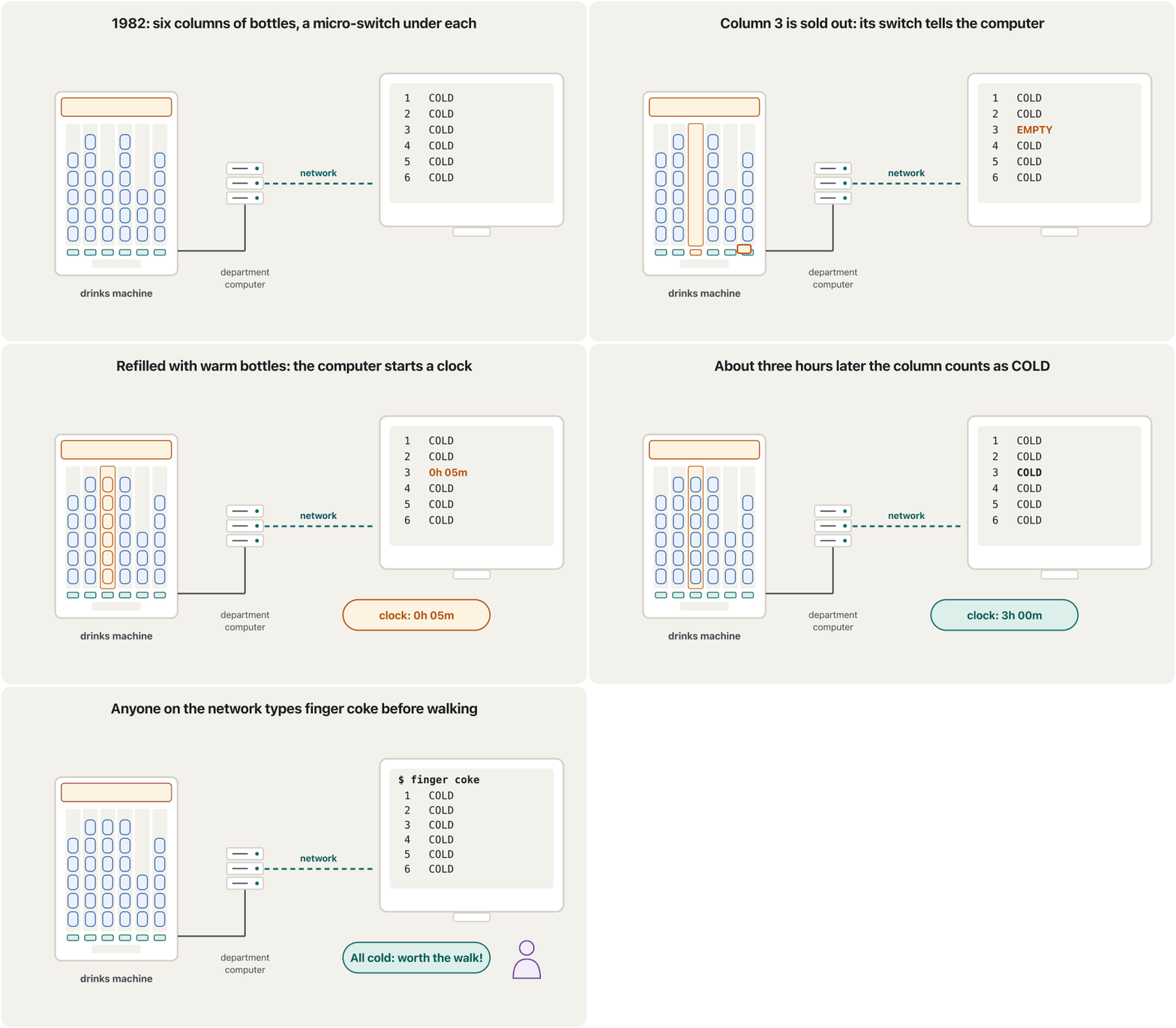
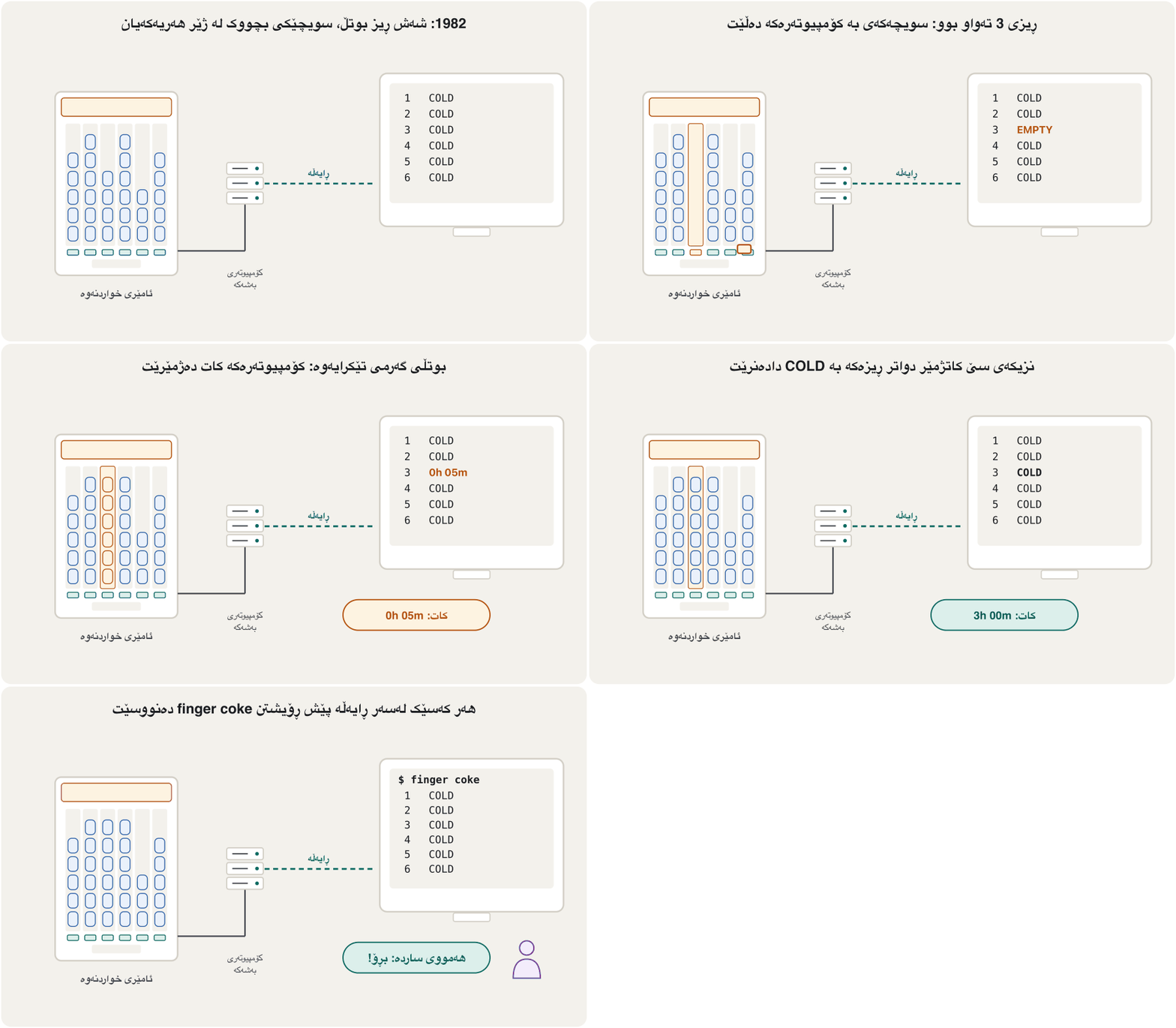
1982: the drinks machine that answered from far away1982: ئامێری خواردنەوە کە لە دوورەوە وەڵامی دەدایەوە
The same four parts as todayهەمان چوار بەشی ئەمڕۆ
The drinks machine already had the four parts of every IoT system. A sensor measured the world (the micro-switches); a computer processed the readings (it timed the columns); a network carried the data; and an application showed it to people where they were (finger). Today the parts are smaller and often wireless, but the pattern is the same — you will meet it again in Inside an IoT System.
ئامێری خواردنەوەکە پێشتر ئەو چوار بەشەی هەبوو کە هەموو سیستەمێکی IoT هەیەتی. جیهانی دەپێوا ()؛ خوێندنەوەکانی چارەسەر دەکرد (کاتی ڕیزەکانی دەژمارد)؛ دەگواستەوە؛ لە شوێنی خۆیانەوە پیشانی خەڵکی دەدا (finger). ئەمڕۆ بەشەکان بچووکترن و زۆرجار ، بەڵام نەخشەکە هەمانە — دووپاتە لە ناوەوەی سیستەمێکی IoTـدا دەیبینیتەوە.
1990: a toaster on the internet1990: تۆستەرێک لەسەر ئینتەرنێت
In 1989 the organiser of Interop, a big networking show in the USA, challenged the engineer John Romkey to connect a toaster to the internet — it would be a star of next year's show. At Interop 1990, Romkey and Simon Hackett showed a toaster connected with TCP/IP, the internet's own protocols. From a computer they could switch its power on over the network; the longer the power stayed on, the darker the toast. A person still had to put the bread in — so in 1991 a small robot crane, also controlled over the internet, was added to drop the bread into the slot.
لە 1989دا ڕێکخەری Interop، پیشانگایەکی گەورەی لە ئەمریکا، داوای لە ئەندازیار John Romkey کرد تۆستەرێک بە ببەستێت؛ ئەگەر بیکردایە، دەبووە ئەستێرەی پیشانگای ساڵی داهاتوو. لە Interopـی 1990دا Romkey و Simon Hackett تۆستەرێکیان پیشان دا کە بە ، خودی ، بەسترابوو. لە دەیانتوانی لە ڕێی کارەباکەی هەڵبکەن؛ تا کارەبا زیاتر بمایەتەوە، نانەکە سوورتر دەبووەوە. هێشتا دەبوو مرۆڤێک نانەکە دابنێت — بۆیە لە 1991دا قولاپێکی ڕۆبۆتیی بچووک، کە ئەویش لە ڕێی کۆنترۆڵ دەکرا، زیاد کرا بۆ ئەوەی نانەکە بخاتە ناو کونەکەوە.
The drinks machine only reported (sensing). The toaster was controlled (acting). IoT devices do both.
ئامێری خواردنەوەکە تەنیا ڕاپۆرتی دەدا (هەستکردن). تۆستەرەکە کۆنترۆڵ دەکرا (کارکردن). ئامێرەکانی IoT هەردووکیان دەکەن.
1991: the Trojan Room coffee pot1991: قۆری قاوەی ژووری Trojan
At the University of Cambridge Computer Laboratory in England, people working on other floors kept climbing the stairs to the coffee pot outside the 'Trojan Room', only to find it empty. In 1991 they pointed a small camera at the pot and connected it to a computer on the laboratory's network. A little program called XCoffee showed a tiny black-and-white picture of the pot on everyone's screen, updated about three times a minute. Now nobody had to climb the stairs for an empty pot.
لە تاقیگەی زانکۆی Cambridge لە ئینگلتەرا، ئەوانەی لە نهۆمەکانی تردا کاریان دەکرد هەر بە پلیکانەدا سەردەکەوتن بۆ لای قۆری قاوەکەی دەرەوەی «ژووری Trojan» و دەیانبینی بەتاڵە. لە 1991دا کامێرایەکی بچووکیان ئاراستەی قۆرییەکە کرد و بە سەر تاقیگەکەوە بەستیانەوە. بچووک بە ناوی XCoffee وێنەیەکی ڕەش و سپیی زۆر بچووکی قۆرییەکەی لەسەر هەمووان پیشان دەدا، کە نزیکەی سێ جار لە خولەکێکدا نوێ دەبووەوە. ئیتر کەس پێویستی نەدەکرد بۆ قۆرییەکی بەتاڵ بە پلیکانەدا سەربکەوێت.
1991: the Trojan Room coffee pot1991: قۆری قاوەی ژووری Trojan
From the lab network to the World Wide Webلە ڕایەڵەی تاقیگەوە بۆ وێب
In November 1993 the picture was put on the World Wide Web, so anyone in the world could watch the pot in a web browser. It became one of the first famous webcams, watched by people in many countries. The camera was switched off on 22 August 2001, when the laboratory moved to a new building, and the coffee machine was sold in an online auction.
لە تشرینی دووەمی 1993دا وێنەکە خرایە سەر ، بۆیە هەر کەسێک لە جیهاندا دەیتوانی لە سەیری قۆرییەکە بکات. بووە یەکێک لە یەکەم کە ناوبانگیان دەرکرد و خەڵکی زۆر وڵات سەیریان دەکرد. کامێراکە لە 22ی ئابی 2001دا کوژێندرایەوە، کاتێک تاقیگەکە گواسترایەوە بۆ باڵەخانەیەکی نوێ؛ ئامێری قاوەکەش لە مەزادێکی ئۆنلایندا فرۆشرا.
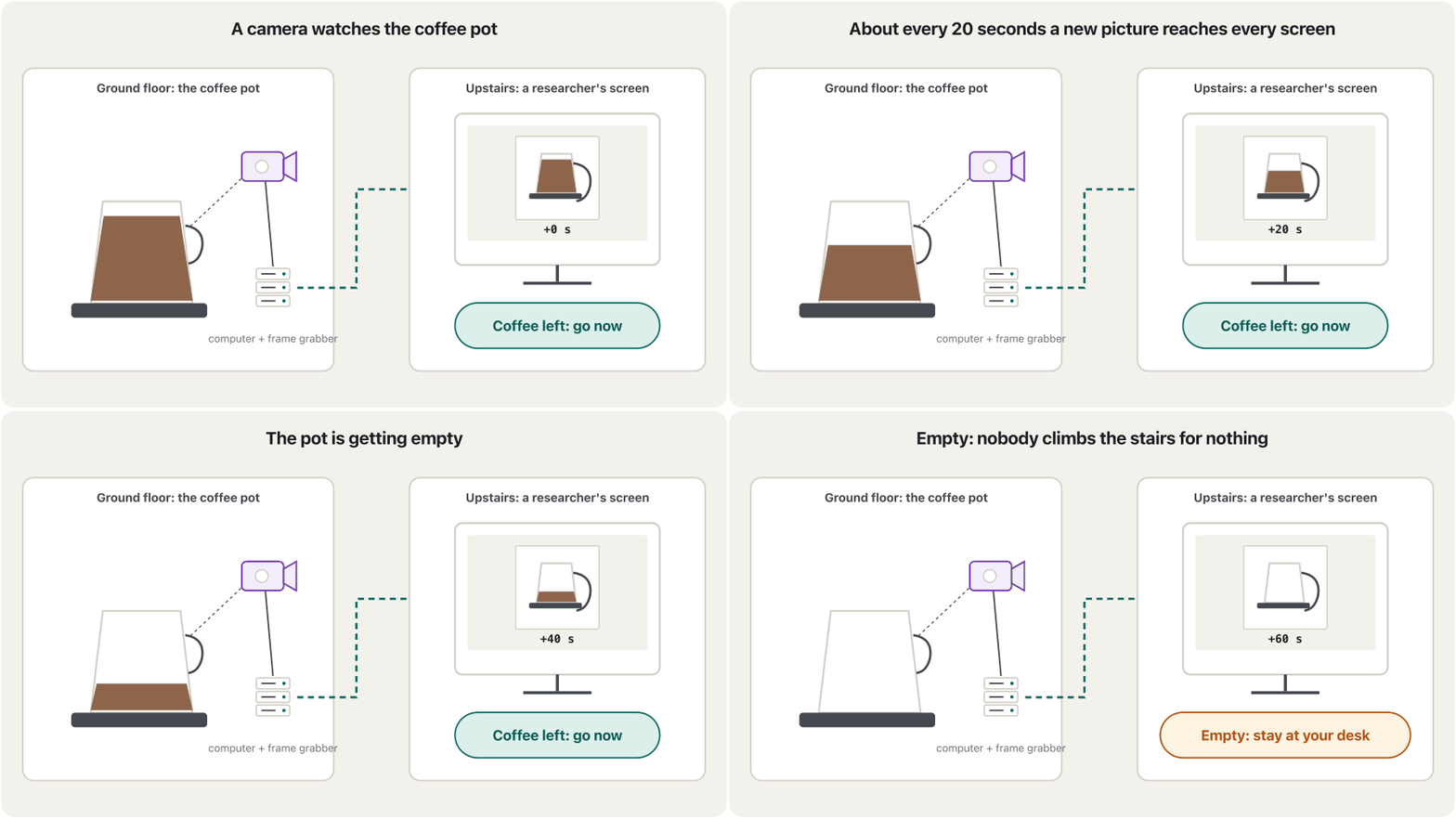
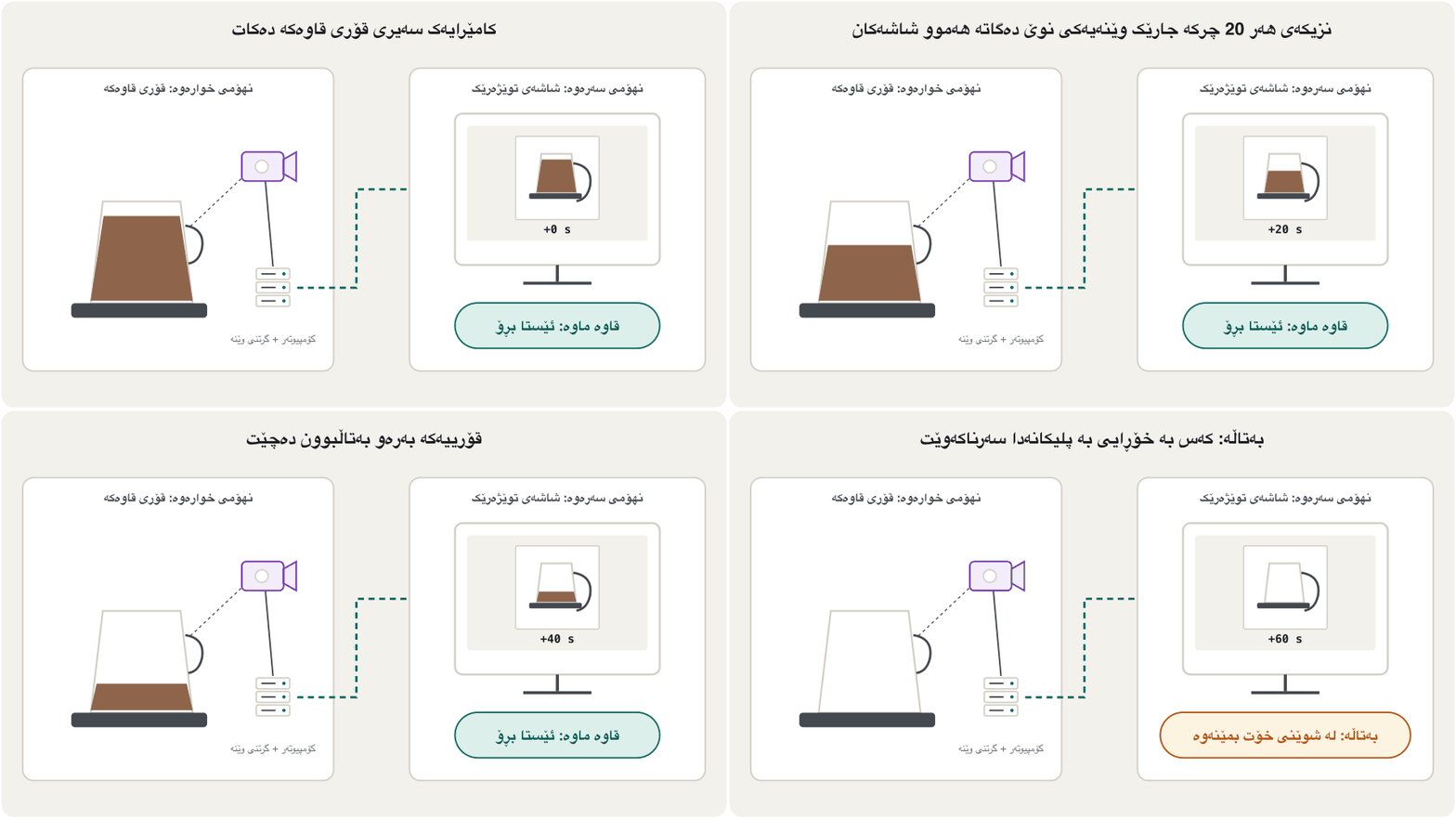
1999: a name for the idea1999: ناوێک بۆ بیرۆکەکە
In 1999 Kevin Ashton was working on the supply chain of the company Procter & Gamble. He had noticed that one shade of lipstick always seemed to be sold out in shops, although the warehouses had plenty. His idea: put a cheap RFID chip — a tag that a radio reader can identify from a distance — on every product, so that computers could follow each one through the supply chain by themselves. In 1999 the internet was the most exciting new topic, so he called his presentation to the company's managers 'Internet of Things'. The name stuck.
لە 1999دا Kevin Ashton لەسەر کۆمپانیای Procter & Gamble کاری دەکرد. سەرنجی دابوو کە ڕەنگێکی سووراو هەمیشە لە دووکانەکاندا نەمابوو، هەرچەندە لە کۆگاکاندا زۆر هەبوو. بیرۆکەکەی ئەوە بوو: هەرزانی — کە خوێنەرەوەیەکی ڕادیۆیی لە دوورەوە دەیناسێتەوە — لەسەر هەموو کاڵایەک دابنرێت، بۆ ئەوەی خۆیان بتوانن بە درێژایی بەدوای هەریەکەیاندا بچن. لە 1999دا سەرنجڕاکێشترین بابەتی نوێ بوو، بۆیە ناوی پێشکەشکردنەکەی بۆ بەڕێوەبەرانی کۆمپانیاکە نا «». ناوەکە مایەوە.
1999: a name for the idea1999: ناوێک بۆ بیرۆکەکە
How tags track productsتاگەکان چۆن بەدوای کاڵاکاندا دەچن
Ashton's idea in one picture: every box carries an RFID tag, and readers at the factory door, the warehouse and the shop notice each tag that passes. The computer then knows — without anyone counting — how many boxes are on the shelf and how many are waiting in the warehouse, so it can order more before the shelf is empty. Ashton then helped set up the Auto-ID Center at MIT, where companies developed these tags together. How RFID tags work: RFID tags and RFID and Zigbee.
بیرۆکەکەی Ashton لە یەک وێنەدا: هەر سندووقێک پێوەیە و خوێنەرەوەکان لە دەرگای کارگە، کۆگا و دووکاندا هەست بە هەر تاگێک دەکەن کە تێدەپەڕێت. ئیتر — بێ ئەوەی کەس بژمێرێت — دەزانێت چەند سندووق لەسەر ڕەفەکەیە و چەندیان لە کۆگادا چاوەڕێن؛ بۆیە دەتوانێت پێش بەتاڵبوونی ڕەفەکە داوای زیاتر بکات. پاشان Ashton یارمەتیی دامەزراندنی Auto-ID Centerـی دا لە MIT، کە کۆمپانیاکان پێکەوە ئەم تاگانەیان تێیدا پەرە پێ دەدا. چۆن کار دەکەن: تاگەکانی RFID و RFID و Zigbee.
2000: the first internet fridge2000: یەکەم سەلاجەی ئینتەرنێت
At the start of the 21st century, the 'Internet of Things' became a popular topic in newspapers and magazines, and several big developments prepared its future. In June 2000 LG Electronics in South Korea launched the Internet Digital DIOS, known as the world's first internet-connected refrigerator. It had a screen with a TV in its door and a network (LAN) port; a camera kept track of the food inside; it showed the temperature, how fresh the food was and recipes; and family members could leave video messages on it.
لە سەرەتای سەدەی بیست و یەکەمدا «» بووە بابەتێکی بەناوبانگ لە ڕۆژنامە و گۆڤارەکاندا و چەند گەشەسەندنێکی گەورە ڕێگای داهاتووی خۆش کرد. لە حوزەیرانی 2000دا کۆمپانیای LG Electronics لە کۆریای باشوور Internet Digital DIOSـی بڵاو کردەوە، کە وەک یەکەم سەلاجەی بەستراو بە لە جیهاندا ناسراوە. شاشەیەکی بە تیڤییەوە لە دەرگاکەیدا بوو لەگەڵ ؛ کامێرایەک ئاگای لە خواردنەکانی ناوەوە بوو؛ پلەی گەرمی، تازەیی خواردن و ڕێنمایی چێشتلێنانی پیشان دەدا؛ ئەندامانی خێزانیش دەیانتوانی نامەی ڤیدیۆیی لەسەری جێ بهێڵن.
The response was lukewarm: at the time, few families saw why a fridge needed the internet. Being first is not the same as being useful — a lesson that IoT designers still learn.
وەڵامی خەڵک سارد بوو: لەو کاتەدا خێزانی کەم دەیانزانی بۆچی سەلاجە پێویستی بە هەیە. یەکەم بوون هەمان سوودبەخش بوون نییە — وانەیەک کە دیزاینەرانی IoT تا ئێستاش فێری دەبن.
How many things are connected today?ئەمڕۆ چەند شت بەستراوە؟
Counting IoT devices is hard, so always check who counted and what they counted. The research firm IoT Analytics counts connected IoT devices but not phones, computers or tablets. In October 2025 it reported about 18.5 billion devices in 2024 and about 21.1 billion at the end of 2025 — 14 % more in one year — and it forecast about 39 billion by 2030. As of November 2026 these are its latest published counts; its February 2026 report gave the same 21.1 billion for the end of 2025. With about 8 billion people on Earth, that is already more than two IoT devices per person. Reports that also count phones and computers give much bigger totals.
ژماردنی ئامێرەکانی IoT قورسە، بۆیە هەمیشە بپشکنە کێ ژماردوویەتی و چی ژماردووە. کۆمپانیای توێژینەوەی IoT Analytics ئامێرە بەستراوەکانی IoT دەژمێرێت بەڵام مۆبایل، و ناژمێرێت. لە تشرینی یەکەمی 2025دا ڕایگەیاند کە لە 2024دا نزیکەی 18.5 ملیار ئامێر هەبوو و لە کۆتایی 2025دا گەیشتە نزیکەی 21.1 ملیار — لە یەک ساڵدا 14% زیاتر — هەروەها پێشبینیی کرد تا 2030 بگاتە نزیکەی 39 ملیار. تا تشرینی دووەمی 2026 ئەمانە دوایین ژمارە بڵاوکراوەکانی ئەو کۆمپانیایەن؛ ڕاپۆرتەکەی شوباتی 2026ـیشی هەمان 21.1 ملیاری بۆ کۆتایی 2025 دووپات کردەوە. لەگەڵ نزیکەی 8 ملیار مرۆڤ لەسەر زەوی، ئەمە ئێستا زیاتر لە دوو ئامێری IoTـە بۆ هەر کەسێک. ئەو ڕاپۆرتانەی مۆبایل و دەژمێرن ژمارەی زۆر گەورەتر دەدەن.
A short version of these numbers, with how the devices connect, is in How many things are connected?
کورتەیەکی ئەم ژمارانە، لەگەڵ ئەوەی ئامێرەکان چۆن دەبەسترێن، لە بەشی چەند شت بەستراوە؟ هەیە.
How many things are connected today?ئەمڕۆ چەند شت بەستراوە؟
Same year, different countsهەمان ساڵ، ژماردنی جیاواز
Two numbers for the same year show how much the method matters. For 2023, the research firm Frost & Sullivan estimated about 41.8 billion active IoT-connected devices, while IoT Analytics counted 16.6 billion. IoT Analytics counts a gateway once instead of every sensor behind it, and it leaves out phones, computers, tablets, RFID and NFC tags, and about 23 billion wired end devices. A firm that counts more kinds of things gets a much bigger total — so before you repeat a number, ask what was counted.
دوو ژمارە بۆ هەمان ساڵ پیشان دەدەن ڕێگای ژماردن چەند گرنگە. بۆ ساڵی 2023، کۆمپانیای توێژینەوەی Frost & Sullivan نزیکەی 41.8 ملیار ئامێری چالاکی بەستراو بە IoTـی خەملاند، لە کاتێکدا IoT Analytics 16.6 ملیاری ژمارد. IoT Analytics هەر یەک جار دەژمێرێت نەک هەر کە لە پشتییەوەیە و مۆبایل، ، ، و و نزیکەی 23 ملیار وایەردار ناژمێرێت. کۆمپانیایەک کە جۆری زیاتر بژمێرێت کۆی گەورەتر وەردەگرێت — بۆیە پێش ئەوەی ژمارەیەک دووپاتە بکەیتەوە، بپرسە چی ژمێردراوە.
Forecasts are guessesپێشبینی تەنیا خەمڵاندنە
About ten years ago many forecasts were far too high. A widely shared 2016 forecast promised about 75 billion IoT devices by 2025. In 2019 the research firm IDC forecast 41.6 billion devices for 2025, and some popular summaries even spoke of '80 billion devices'. Others expected IoT to grow by more than 30 % every year, or to pass 100 billion devices by 2030. Reality was slower: about 21 billion devices at the end of 2025, growing by 12–14 % a year.
نزیکەی دە ساڵ لەمەوبەر زۆرێک لە پێشبینییەکان زۆر بەرز بوون. پێشبینییەکی بڵاوی ساڵی 2016 بەڵێنی نزیکەی 75 ملیار ئامێری IoTـی تا 2025 دا. لە 2019دا کۆمپانیای توێژینەوەی IDC پێشبینیی 41.6 ملیار ئامێری بۆ 2025 کرد و هەندێک کورتەی بڵاو تەنانەت باسیان لە «80 ملیار ئامێر» کرد. هەندێکی تر چاوەڕێیان دەکرد IoT ساڵانە زیاتر لە 30% گەشە بکات، یان تا 2030 لە 100 ملیار ئامێر تێپەڕێت. ڕاستییەکە هێواشتر بوو: نزیکەی 21 ملیار ئامێر لە کۆتایی 2025دا، بە گەشەی ساڵانەی 12–14%.
Forecasts are guessesپێشبینی تەنیا خەمڵاندنە
Why forecasts missبۆچی پێشبینییەکان هەڵە دەردەچن
Where did '80 billion devices' come from? IDC's forecast had two numbers: 41.6 billion devices and 79.4 zettabytes of data that those devices would produce. The amount of data was mistaken for the number of devices. (One zettabyte is bytes — a billion terabytes.)
«80 ملیار ئامێر» لە کوێوە هات؟ پێشبینییەکەی IDC دوو ژمارەی تێدا بوو: 41.6 ملیار ئامێر و 79.4 کە ئەو ئامێرانە بەرهەمی دەهێنن. بڕی لەگەڵ ژمارەی ئامێرەکان تێکەڵ کرا. (یەک دەکاتە — ملیارێک .)
Forecasts also miss because firms count different things (see Same year, different counts), excitement pushes numbers up, and the real economy changes: in 2025 IoT Analytics itself lowered its forecast because companies delayed spending and demand in China was weaker than expected. You can check a growth claim yourself — from 18.5 billion in 2024:
پێشبینییەکان هەروەها هەڵە دەردەچن چونکە کۆمپانیاکان شتی جیاواز دەژمێرن (هەمان ساڵ، ژماردنی جیاواز ببینە)، هەیەجانی بازاڕ ژمارەکان بەرز دەکاتەوە و ئابووریی ڕاستەقینە دەگۆڕێت: لە 2025دا IoT Analytics خۆی پێشبینییەکەی دابەزاند، چونکە کۆمپانیاکان خەرجییان دواخست و داواکاری لە چین لاوازتر بوو لە چاوەڕوانی. خۆت دەتوانیت بانگەشەیەکی گەشە بپشکنیت — لە 18.5 ملیاری 2024ـەوە:
With 30 % growth there would have been about 24.1 billion devices; the real growth of 14 % gives about 21.1 billion — exactly what was counted.
بە گەشەی 30% دەبووە نزیکەی 24.1 ملیار ئامێر؛ گەشە ڕاستەقینەکەی 14% نزیکەی 21.1 ملیار دەدات — ڕێک ئەوەی ژمێردرا.
Money: market forecasts and big companiesپارە: پێشبینیی بازاڕ و کۆمپانیا گەورەکان
Money forecasts are even harder. In 2019 one market-research firm forecast that the IoT market would be worth about 1.1 trillion US dollars by 2026. IoT Analytics measured what companies actually spent on IoT in 2025: about 324 billion dollars (reported in February 2026 — the latest figure as of November 2026). The two numbers do not even measure the same thing — one counts far more products and services than the other. When you read a market number, ask: who counted, what did they count, and when?
پێشبینیی پارە لەوەش قورسترە. لە 2019دا کۆمپانیایەکی توێژینەوەی بازاڕ پێشبینیی کرد کە بەهای بازاڕی IoT تا 2026 بگاتە نزیکەی 1.1 ترلیۆن دۆلاری ئەمریکی. IoT Analytics پێوای کە کۆمپانیاکان لە 2025دا بەڕاستی چەندیان بۆ IoT خەرج کردووە: نزیکەی 324 ملیار دۆلار (لە شوباتی 2026دا بڵاو کرایەوە و تا تشرینی دووەمی 2026 دوایین ژمارەیە). ئەم دوو ژمارەیە تەنانەت هەمان شت ناپێون — یەکێکیان بەرهەم و خزمەتگوزاریی زۆر زیاتر لەوی تر دەژمێرێت. کاتێک ژمارەیەکی بازاڕ دەخوێنیتەوە، بپرسە: کێ ژماردی، چی ژمارد و کەی؟
In the late 2010s big technology companies — Google, Cisco, Microsoft, Dell, Apple and Facebook (renamed Meta in 2021) — invested heavily in IoT. Plans change, too: Google closed its Cloud IoT Core service on 16 August 2023, and its customers had to move their devices to other platforms.
لە کۆتایی ساڵانی 2010دا کۆمپانیا گەورەکانی تەکنەلۆجیا — Google، Cisco، Microsoft، Dell، Apple و Facebook (کە لە 2021دا ناوی گۆڕا بۆ Meta) — پارەیەکی زۆریان لە IoT وەبەرهێنا. پلانەکانیش دەگۆڕێن: Google لە 16ی ئابی 2023دا خزمەتگوزاریی Cloud IoT Coreـی داخست و کڕیارەکانی ناچار بوون ئامێرەکانیان بگوازنەوە بۆ پلاتفۆرمی تر.
Common mistakesهەڵە باوەکان
- 'IoT began in 1999.' Only the name dates from 1999. Connected things are older: the drinks machine reported over the network in 1982.
- 'The first IoT device was a toaster.' The drinks machine (1982) came earlier. The toaster (1990) is famous as the first appliance controlled over the internet.
- 'The machine reported cans of Coke.' It held glass bottles, in six columns, each with its own micro-switch.
- 'The coffee-pot camera was on the Web from the start.' From 1991 it showed pictures on the laboratory's own network; it went on the World Wide Web in 1993.
- 'A forecast is a fact.' Check who made it, when and what it counts — the famous 75-billion forecast for 2025 was more than three times too high.
- « لە 1999دا دەستی پێ کرد.» تەنیا ناوەکە هی 1999ـە. شتە بەستراوەکان کۆنترن: ئامێری خواردنەوەکە لە 1982دا لە ڕێی ڕاپۆرتی دەدا.
- «یەکەم ئامێری IoT تۆستەرێک بوو.» ئامێری خواردنەوەکە (1982) زووتر بوو. تۆستەرەکە (1990) وەک یەکەم ئامێری ماڵی کە لە ڕێی کۆنترۆڵ کرا بەناوبانگە.
- «ئامێرەکە قوتووی کۆکای ڕادەگەیاند.» بوتڵی شووشەی تێدا بوو، لە شەش ڕیزدا، هەر ڕیزێک خۆی هەبوو.
- «کامێرای قۆری قاوەکە لە سەرەتاوە لەسەر وێب بوو.» لە 1991ـەوە وێنەکانی لەسەر خودی تاقیگەکە پیشان دەدا؛ لە 1993دا چووە سەر .
- «پێشبینی ڕاستییە.» بپشکنە کێ کردوویەتی، کەی و چی دەژمێرێت — پێشبینییە بەناوبانگەکەی 75 ملیار بۆ 2025 زیاتر لە سێ هێندە بەرز بوو.
Exercisesڕاهێنانەکان
Put these events in order of time and write the year of each: the internet fridge; the drinks machine at Carnegie Mellon; the name 'Internet of Things'; the coffee pot on the World Wide Web; the internet toaster; the coffee-pot camera on the laboratory network.
ئەم ڕووداوانە بە پێی کات ڕیز بکە و ساڵی هەریەکەیان بنووسە: سەلاجەی ؛ ئامێری خواردنەوەکەی Carnegie Mellon؛ ناوی «»؛ قۆری قاوەکە لەسەر ؛ تۆستەری ؛ کامێرای قۆری قاوە لەسەر تاقیگە.
Show answerوەڵامەکە پیشان بدە
- 1982 — the drinks machine at Carnegie Mellon
- 1990 — the internet toaster (Interop)
- 1991 — the coffee-pot camera on the laboratory network
- 1993 — the coffee pot on the World Wide Web
- 1999 — the name 'Internet of Things' (Kevin Ashton)
- 2000 — the internet fridge (LG)
- 1982 — ئامێری خواردنەوەکەی Carnegie Mellon
- 1990 — تۆستەری (Interop)
- 1991 — کامێرای قۆری قاوە لەسەر تاقیگە
- 1993 — قۆری قاوەکە لەسەر
- 1999 — ناوی «» (Kevin Ashton)
- 2000 — سەلاجەی (LG)
There were about 18.5 billion IoT devices in 2024. (a) How many would there be one year later with 30 % growth? (b) With 14 % growth? (c) Which result matches the count for the end of 2025?
لە 2024دا نزیکەی 18.5 ملیار ئامێری IoT هەبوو. (a) بە گەشەی 30% ساڵێک دواتر چەند دەبوو؟ (b) بە گەشەی 14%؟ (c) کام ئەنجام لەگەڵ ژمارەی کۆتایی 2025 یەک دەگرێتەوە؟
Hintئاماژە
Growth of 30 % means multiplying by 1.30.
گەشەی 30% واتە لێکدان لە 1.30.
Show answerوەڵامەکە پیشان بدە
(a) about 24.1 billion; (b) about 21.1 billion; (c) (b) — IoT Analytics counted about 21.1 billion at the end of 2025.
(a) نزیکەی 24.1 ملیار؛ (b) نزیکەی 21.1 ملیار؛ (c) (b) — IoT Analytics لە کۆتایی 2025دا نزیکەی 21.1 ملیاری ژمارد.
For each early device, say whether it mainly sensed, acted, or did both, and name the part that did it: the drinks machine, the toaster, the coffee pot, the internet fridge.
بۆ هەریەک لەم ئامێرە سەرەتاییانە بڵێ بە زۆری هەستی دەکرد، کاری دەکرد یان هەردووکی. ناوی ئەو بەشەش بهێنە کە ئەو کارەی دەکرد: ئامێری خواردنەوە، تۆستەر، قۆری قاوە، سەلاجەی .
Show answerوەڵامەکە پیشان بدە
- Drinks machine — sensed: micro-switches under the columns.
- Toaster — acted: its power was switched on by a command over the network (and from 1991 a robot crane added the bread).
- Coffee pot — sensed: a camera took pictures of the pot.
- Internet fridge — both: a camera and temperature sensing, and a screen that showed information and messages.
- ئامێری خواردنەوە — هەستی دەکرد: ژێر ڕیزەکان.
- تۆستەر — کاری دەکرد: کارەباکەی بە فەرمانێک لە ڕێی هەڵدەکرا (و لە 1991ـەوە قولاپێکی ڕۆبۆتی نانەکەی دادەنا).
- قۆری قاوە — هەستی دەکرد: کامێرایەک وێنەی قۆرییەکەی دەگرت.
- سەلاجەی — هەردووکی: کامێرا و پێوانی پلەی گەرمی، لەگەڵ شاشەیەک کە زانیاری و نامەی پیشان دەدا.
Summaryپوختە
- Connected things came before the name: the Carnegie Mellon drinks machine (1982), Romkey's toaster (1990) and the Cambridge coffee pot (1991, on the Web from 1993).
- Kevin Ashton named the Internet of Things in 1999 while proposing RFID tags to follow products through the supply chain.
- LG's Internet Digital DIOS (2000) was the first internet fridge — first, but not yet useful to most families.
- About 21.1 billion IoT devices were counted at the end of 2025 (not counting phones and computers); about 39 billion are forecast for 2030.
- Old forecasts of 75, 80 or 100 billion failed; always ask who counted, what they counted and when.
- شتە بەستراوەکان پێش ناوەکە هاتن: ئامێری خواردنەوەکەی Carnegie Mellon (1982)، تۆستەرەکەی Romkey (1990) و قۆری قاوەکەی Cambridge (1991، لە 1993ـەوە لەسەر وێب).
- Kevin Ashton لە 1999دا ناوی دانا، کاتێک پێشنیاری کرد بۆ بەدواداچوونی کاڵاکان بە درێژایی .
- Internet Digital DIOSـی LG (2000) یەکەم سەلاجەی بوو — یەکەم، بەڵام هێشتا بۆ زۆربەی خێزانەکان سوودبەخش نەبوو.
- لە کۆتایی 2025دا نزیکەی 21.1 ملیار ئامێری IoT ژمێردران (بەبێ مۆبایل و )؛ پێشبینی دەکرێت تا 2030 بگەنە نزیکەی 39 ملیار.
- پێشبینییە کۆنەکانی 75، 80 یان 100 ملیار هەڵە دەرچوون؛ هەمیشە بپرسە کێ ژماردی، چی ژمارد و کەی.
Lesson complete!وانەکە تەواو بوو!
Well done. Review the key terms, then go on to the next lesson.دەستخۆش. سەیرێکی زاراوە سەرەکییەکان بکەرەوە، پاشان بڕۆ بۆ وانەی داهاتوو.
Key termsزاراوە سەرەکییەکان
Where IoT Is Used, and What Makes It HardIoT لە کوێ بەکار دێت و چی قورسی دەکات
Related lecturesوانە پەیوەندیدارەکان
- Where IoT Is Used, and What Makes It HardIoT لە کوێ بەکار دێت و چی قورسی دەکات
- Emerging Technologies: IoT, VR/AR, Robots and Blockchainتەکنەلۆجیا نوێیەکان: ئینتەرنێتی شتەکان، ڕاستیی گریمانەیی/ڕاستیی زیادکراو، ڕۆبۆتەکان و بلۆکچەین
- RFID, Zigbee and Other Mesh ProtocolsRFID، Zigbee و پرۆتۆکۆڵەکانی تری ڕایەڵەی چنراو
- What Is a Computer? Data, Input, Processing, Outputکۆمپیوتەر چییە؟ دراوە، نێوخستە، چارەسەرکردن، دەرخستە
References and further readingسەرچاوەکان و خوێندنەوەی زیاتر
- Carnegie Mellon University: The "Only" Coke Machine on the Internet
- Carnegie Mellon University: The Coke machine, a longer history
- Living Internet: The Internet toaster
- Wikipedia: John Romkey
- University of Cambridge Computer Laboratory: The Trojan Room coffee pot
- Wikipedia: Trojan Room coffee pot
- IEEE ETHW: Kevin Ashton
- Wikipedia: Internet Digital DIOS
- Phys.org (AFP, 2011): LG unveils smart fridge
- IoT Analytics: Number of connected IoT devices (State of IoT 2025)
- TelecomTV: IDC forecast, 41.6 billion IoT devices generating 79.4 ZB of data in 2025 (2019)
- PR Newswire (2019): IoT market to reach US$1,111.3 bn by 2026 (Fortune Business Insights)
- IoT Analytics (4 February 2026): State of Enterprise IoT — enterprise IoT market grew 13 % to $324 bn in 2025; 21.1 billion connected IoT devices at the end of 2025
- InfoQ (2022): Google Cloud IoT Core to be discontinued on 16 August 2023
- IoT Analytics: State of IoT Summer 2024 — 16.6 billion connected IoT devices at the end of 2023, what is counted (3 September 2024)
- Frost & Sullivan: The top growth opportunities for IoT in 2023 (41.76 billion active IoT-connected devices)
This lecture is a first edition. The Kurdish text and terminology are waiting for review by Kurdish IT teachers.ئەم وانەیە چاپی یەکەمە. دەقە کوردییەکە و زاراوەکانی چاوەڕێی پێداچوونەوەی مامۆستایانی کوردی بواری IT ن.