Chapterبەش 4 · Lectureوانە 4.1
The Six Trigonometric Functionsشەش نەخشە سێگۆشەییەکە
Radians and the unit circle first; then sine, cosine, tangent, cotangent, secant and cosecant, each with its domain, range, period and exact graph — including the corrected cosecant row of the notes.
سەرەتا و ؛ پاشان ، ، ، ، و ، هەریەکەیان لەگەڵ ، ، و هێڵکارییە وردەکەی — لەگەڵ ڕاستکردنەوەی ڕیزی لە تێبینییەکاندا.
What you will learnچی فێر دەبیت
- Explain what one radian is and convert between degrees and radians.
- Read and from the unit circle and give exact values at the common angles.
- Define , , and from sine and cosine and say where each one is undefined.
- State the domain, range and period of all six functions and recognise their graphs.
- ڕوونی بکەیتەوە یەک چییە و و بۆ یەکتر بگۆڕیت.
- و لەسەر بخوێنیتەوە و نرخە وردەکانی گۆشە باوەکان بڵێیت.
- ، ، و لە و پێناسە بکەیت و بڵێیت هەریەکەیان لە کوێ پێناسە نەکراوە.
- ، و هەر شەش بڵێیت و هێڵکارییەکانیان بناسیتەوە.
Functions that repeatنەخشەکان کە دووبارە دەبنەوە
Many things repeat in cycles. A seat on a Ferris wheel goes up and down again and again. The hands of a clock come back to the same place every 12 hours. In IT, the electricity in a wall socket, sound, radio and are all waves that repeat. The trigonometric functions are the functions that describe this kind of repeating motion.
زۆر شت بە شێوەی خولی دووبارە دەبنەوە. کورسییەکی چەرخ و فەلەک جار لە دوای جار بەرز و نزم دەبێتەوە. میلەکانی کاتژمێر هەموو 12 کاتژمێرێک دەگەڕێنەوە هەمان شوێن. لە ITـدا کارەبای پریزی دیوار، دەنگ، ڕادیۆ و هەموویان شەپۆلن و دووبارە دەبنەوە. ئەم جۆرە جووڵە دووبارەبووەوەیە وەسف دەکەن.
Think of a Ferris wheel in a park. Watch one seat while the wheel turns. Its height above the centre of the wheel goes up, comes down, goes below the centre and comes back. After one full turn everything repeats exactly. For a wheel of radius 1, that height is the sine of the angle the wheel has turned.
بیر لە چەرخ و فەلەکێکی ناو پارکێک بکەرەوە. کاتێک چەرخەکە دەسووڕێتەوە سەیری یەک کورسی بکە. بەرزییەکەی لە سەرووی ناوەندی چەرخەکەوە بەرز دەبێتەوە، دادەبەزێت، دەچێتە خوار ناوەندەکە و دەگەڕێتەوە. دوای سووڕانەوەیەکی تەواو هەموو شتێک وەک خۆی دووبارە دەبێتەوە. بۆ چەرخێک بە نیوەتیرەی 1، ئەو بەرزییە ئەو گۆشەیەیە کە چەرخەکە پێی سووڕاوەتەوە.
Where the analogy stops workingسنووری ئەم نموونەیە
A real wheel has a radius of many metres and its centre is high above the ground, so the real height is the sine wave stretched and raised (see vertical stretch and shifting up). Here only the angle matters, not the speed of the wheel.
چەرخی ڕاستەقینە نیوەتیرەکەی چەند مەترێکە و ناوەندەکەی زۆر لە زەوییەوە بەرزە، بۆیە بەرزییە ڕاستەقینەکە هەمان شەپۆلی ، بەڵام درێژکراوەتەوە و بەرزکراوەتەوە (بڕوانە درێژکردنەوەی ستوونی و کشانەوە بەرەو سەرەوە). لێرەدا تەنها گۆشەکە گرنگە، نەک خێرایی چەرخەکە.
Functions that repeatنەخشەکان کە دووبارە دەبنەوە
The six functions and their short namesشەش نەخشەکە و ناوە کورتەکانیان
The notes list them as function family number 6. There are six of them: sine (), cosine (), tangent (), cotangent (), secant () and cosecant (). Sine and cosine come first; the other four are built from them. Before we can define them, we need a way to measure angles that works well in calculus: radians.
تێبینییەکان ئەمانە وەک خێزانی ژمارە 6ی دەناسێنن. شەشیان هەن: ()، ()، ()، ()، () و (). و سەرەتان؛ چوارەکەی تر لەوانەوە دروست دەکرێن. پێش ئەوەی پێناسەیان بکەین، پێویستمان بە ڕێگایەکی پێوانی گۆشە هەیە کە لە کالکولەسدا باش کار بکات: .
One of the six functions sine, cosine, tangent, cotangent, secant and cosecant. They link an angle θ to the point on the , and their values repeat (they are periodic).
یەکێک لە شەش نەخشەکەی ، ، ، ، و . گۆشەی θ بە خاڵی لەسەر دەبەستنەوە و نرخەکانیان دووبارە دەبنەوە ( هەیە).
Measuring angles in radiansپێوانی گۆشە بە ڕادیان
At school you measured angles in degrees: a full turn is 360°. Calculus uses a second unit, the radian. The notes already use it when they write angles such as and , but they never define it — so here it is.
لە قوتابخانە گۆشەت بە دەپێوا: سووڕانەوەیەکی تەواو 360°ـە. کالکولەس یەکەیەکی دووەم بەکار دەهێنێت: . تێبینییەکان کاتێک گۆشەی وەک و دەنووسن هەر ئەم یەکەیە بەکار دەهێنن، بەڵام هیچ کات پێناسەی ناکەن — بۆیە لێرەدا پێناسەی دەکەین.
A unit for angles: one radian is the angle at the centre of a circle that cuts off an arc as long as the radius. A full turn is radians = 360°.
یەکەیەکی پێوانی گۆشەیە: یەک ڕادیان ئەو گۆشەیەیە لە ناوەندی بازنەدا کە کەوانەیەک بە درێژیی نیوەتیرە دەبڕێت. سووڕانەوەیەکی تەواو ڕادیانە = 360°.
Why does a full turn equal radians? The circumference of a circle is . So exactly radius-lengths (about 6.28) fit around the circle. A full turn is radians, half a turn is radians and a quarter turn is radians.
بۆچی سووڕانەوەیەکی تەواو دەکاتە ؟ چێوەی بازنە ـە. واتە ڕێک جار درێژیی نیوەتیرە (نزیکەی 6.28) بە دەوری بازنەکەدا جێدەبێتەوە. سووڕانەوەیەکی تەواو ، نیو سووڕانەوە و چارەکە سووڕانەوەیەک .
What one radian is (the arc as long as the radius), why a full turn is 2π radians, and how radians relate to degrees.
یەک چییە (ئەو گۆشەیەی کەوانەکەی هێندەی نیوەتیرە درێژە)، بۆچی خولێکی تەواو ، هەروەها چ پەیوەندییەکیان بە هەیە.
Watch 0:00–2:14: degrees, what one radian is (0:46) and how radians relate to degrees (1:59). The rest converts degrees and radians, the next screen.
لە 0:00 تا 2:14 سەیر بکە: ، یەک چییە (0:46) و پەیوەندیی بە (1:59). ئەوەی دواتر دێت و بۆ یەکتر دەگۆڕێت، کە بابەتی شاشەی داهاتووە.
Measuring angles in radiansپێوانی گۆشە بە ڕادیان
Converting degrees and radiansگۆڕینی پلە و ڕادیان بۆ یەکتر
Because rad, divide both sides by 180 to get one degree, or by to get one radian:
لەبەر ئەوەی radـە، هەردوو لا دابەشی 180 بکە بۆ ئەوەی یەک بدۆزیتەوە، یان دابەشی بکە بۆ یەک :
From degrees to radians: multiply by . From radians back to degrees: multiply by .
لە بۆ : لێکدان لە بکە. لە بۆ : لێکدان لە بکە.
- 150° to radians150° بۆ ڕادیان
(divide 150 and 180 by 30).
(150 و 180 دابەشی 30 بکە).
- to degrees بۆ پلە
. The cancels.
. لە و لادەچێت.
- 1 radian in degrees1 ڕادیان بە پلە
. One radian is a bit less than 60°.
. یەک کەمێک لە 60° کەمترە.
| Degrees | Radians |
|---|---|
| 0° | |
| 30° | |
| 45° | |
| 60° | |
| 90° | |
| 120° | |
| 135° | |
| 150° | |
| 180° | |
| 270° | |
| 360° |
The unit circle: and بازنەی یەکە: و
The unit circle is the circle with radius 1 and its centre at the origin. Put an angle on it like this: start on the positive x-axis and turn anticlockwise by (a negative angle turns clockwise). The arm you turned meets the circle at exactly one point . This one point gives the two basic functions:
ئەو بازنەیەیە کە نیوەتیرەکەی 1ـە و ناوەندەکەی . گۆشەی بەم شێوەیە لەسەری دابنێ: لە لای موجەبی x دەست پێبکە و بەپێچەوانەی ئاڕاستەی میلی کاتژمێر بسووڕێ (گۆشەی سالب بە ئاڕاستەی میلی کاتژمێر دەسووڕێت). ئەو قۆڵەی سووڕاندت ڕێک لە یەک خاڵدا بازنەکە دەبڕێت: . ئەم یەک خاڵە دوو دەدات:
Each angle gives exactly one point, so and are real functions: one input angle, one output number. You may turn as far as you like in either direction, so every real number is an allowed angle: the domain of both is .
هەر گۆشەیەک ڕێک یەک خاڵ دەدات، بۆیە و ڕاستەقینەن: یەک گۆشە دێتە ژوورەوە و یەک ژمارە دەردەچێت. دەتوانیت بە هەر دوو ئاڕاستەکەدا تا هەر کوێ بتەوێت بسووڕێیت، بۆیە هەموو گۆشەیەکی ڕێگەپێدراوە: هەردووکیان ـە.
The unit circle: and بازنەی یەکە: و
Exact values at the common anglesنرخە وردەکان لە گۆشە باوەکاندا
For a few angles the point is known exactly; they come from the half-square (45°) and half-equilateral (30°–60°) triangles. Learn the first-quadrant values below — every other quadrant has the same numbers with signs that depend on the quadrant.
بۆ چەند گۆشەیەک خاڵی بە وردی دەزانرێت؛ لە سێگۆشەی نیوەی چوارگۆشە (45°) و نیوەی سێگۆشەی یەکلا (30°–60°)ـەوە دێن. نرخەکانی چارەکی یەکەمی خوارەوە فێربە — هەموو چارەکەکانی تر هەمان ژمارەیان هەیە، تەنها هێماکانیان بەپێی چارەکەکە دەگۆڕێت.
| undefinedپێناسە نەکراوە |
Example: the point at (120°) is the mirror image of the point at in the y-axis: . So and .
نموونە: خاڵی (120°) وێنەی ئاوێنەیی خاڵی ـە بەرامبەر y: . کەواتە و .
In Kurdish: how to find the exact sine, cosine and tangent of the common angles without a calculator.
بە کوردی: چۆن نرخی وردی ، و گۆشە باوەکان بەبێ دەدۆزیتەوە.
Sorani; exact values of sin, cos and tan at the common angles, worked without a calculator.
بە سۆرانی: نرخە وردەکانی ، و لە گۆشە باوەکاندا، بەبێ دەدۆزرێنەوە.
The unit circle: and بازنەی یەکە: و
Watch sine being drawnسەیری کێشانی ساین بکە
Now let travel once around the unit circle, from to . Its height is copied across to a graph whose horizontal axis is the angle . The copied heights draw the graph of sine.
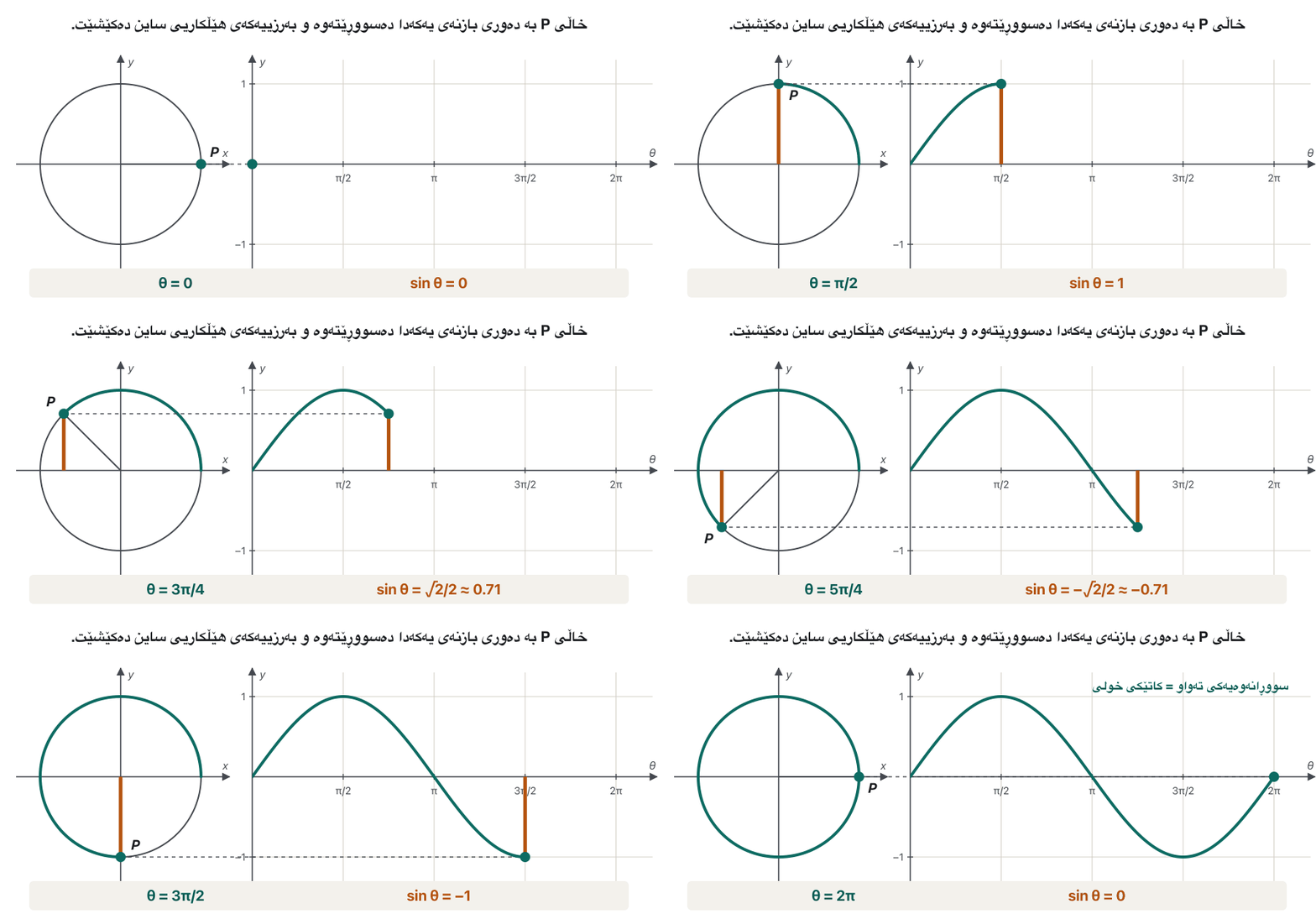
ئێستا با جارێک بە دەوری بگەڕێت، لە ـەوە تا . بەرزییەکەی، واتە ، دەگوازرێتەوە بۆ هێڵکارییەک کە ئاسۆییەکەی گۆشەی ـە. ئەو بەرزییە گوازراوانە هێڵکاریی دەکێشن.
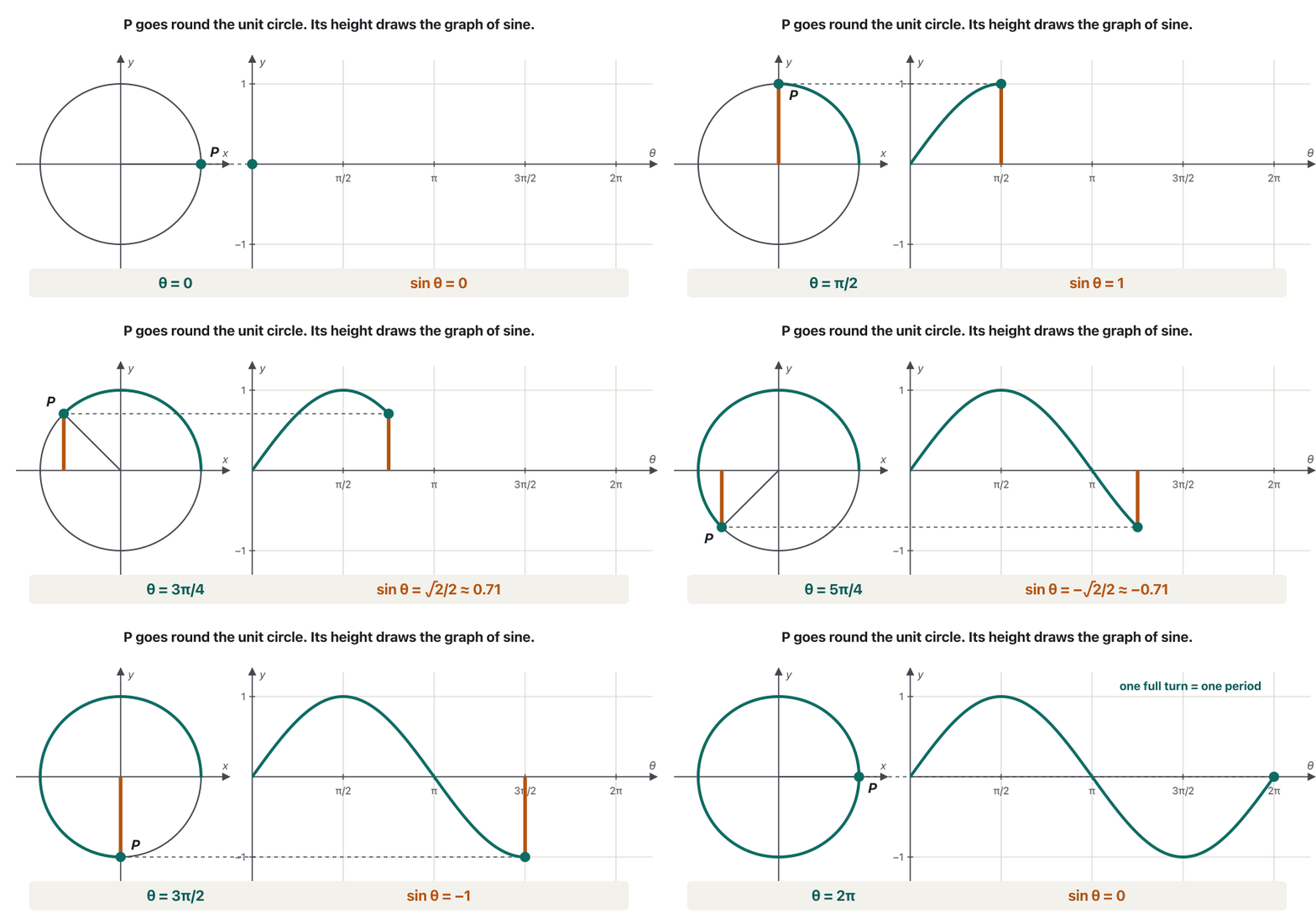
- The height never goes above or below : the range of sine is .
- After one full turn () is back where it started, so the curve repeats: the period of sine is .
- Cosine is the same story told with the x-coordinate (the shadow of P on the x-axis).
- بەرزییەکە هەرگیز لە زیاتر و لە کەمتر نابێت: ـە.
- دوای سووڕانەوەیەکی تەواو () دەگەڕێتەوە شوێنی دەستپێکی، بۆیە هێڵکارییەکە دووبارە دەبێتەوە: ـە.
- هەمان چیرۆکە بەڵام بە x (سێبەری P لەسەر x).
Why بۆچی
The point lies on the unit circle, so its distance from the origin is 1. By Pythagoras' theorem in the right triangle under , . Now write for and for :
خاڵی لەسەر ، بۆیە دووریی لە 1ـە. بەپێی فیساغۆرس لە سێگۆشە گۆشەوەستاوەکەی ژێر دا، . ئێستا لە جیاتی بنووسە و لە جیاتی بنووسە :
This is true for every angle . It is the most used identity in trigonometry.
ئەمە بۆ هەموو گۆشەیەکی ڕاستە. بەکارهاتووترین لە سێگۆشەزانیدا.
Given and . Put it into the identity: .
دراوە: و . بیخە ناو : .
So . The angle is in the first quadrant, where cosine is positive: .
کەواتە . گۆشەکە لە چارەکی یەکەمدایە، کە تێیدا موجەبە: .
The next lesson, Trigonometric identities, builds seven more identities on this one.
وانەی داهاتوو، هاوئەنجامە سێگۆشەییەکان، حەوت تر لەسەر ئەمە بنیات دەنێت.
Four more functions from sine and cosineچوار نەخشەی تر لە ساین و کۆساینەوە
The other four trigonometric functions are quotients and of sine and cosine — that is, of the coordinates of :
چوار تر لە دابەشکردنی و یان لە ئەوانەوە دێن — واتە لە ـەوە:
A fraction is undefined when its denominator is 0. On the unit circle, at the top and bottom of the circle (): there and are undefined. on the x-axis (): there and are undefined. Here and below, is any integer ().
پێناسە نەکراوە کاتێک 0 بێت. لەسەر ، ـە لە سەرەوە و خوارەوەی بازنەکە (): لەوێ و پێناسە نەکراون. ـە لەسەر x (): لەوێ و پێناسە نەکراون. لێرە و لە خوارەوە هەر دەتوانێت بێت ().
With and (the example above): and .
بە و (نموونەکەی سەرەوە): و .
and .
و .
Domain, range and period of all sixبوار، مەودا و کاتی خولیی هەر شەشیان
A function is periodic if its values repeat. Its period is the length of the shortest piece that repeats:
خولاوەیە ئەگەر نرخەکانی دووبارە ببنەوە. درێژیی کورتترین پارچەیە کە دووبارە دەبێتەوە:
The smallest positive number p with for every x: after each period the graph repeats. A function with a period is periodic.
بچووکترین ژمارەی موجەبی p کە بۆ هەموو x : دوای هەر کاتێکی خولی هێڵکارییەکە دووبارە دەبێتەوە. نەخشەیەک کە کاتی خولیی هەبێت پێی دەوترێت نەخشەی خولاوە.
| Function | Domain | Range | Period |
|---|---|---|---|
The notes write the domain of and as with odd. That is the same set as “all ”: an odd number is , and .
تێبینییەکان و بەم شێوەیە دەنووسن: کە تێیدا تاکە. ئەمە هەمان وەک «هەموو »: ژمارەی تاک ـە و .
Domain, range and period of all sixبوار، مەودا و کاتی خولیی هەر شەشیان
Why these ranges and periods?مەودا و کاتی خولی: ئەم نرخانە لە کوێوە دێن؟
- Ranges. The coordinates of are between and , so and stay in . Dividing 1 by a number between and (not 0) gives a number whose absolute value is at least 1, so and are never strictly between and . and are slopes, and a slope can be any real number.
- Periods. After a full turn () is back, so , , and repeat every . After only half a turn () moves to , and : and already repeat every .
- . لە نێوان و دان، بۆیە و لە ناو دا دەمێننەوە. دابەشکردنی 1 بەسەر ژمارەیەک لە نێوان و (جگە لە 0) ژمارەیەک دەدات کە لانیکەم 1ـە، بۆیە و هەرگیز بە تەواوی لە نێوان و دا نین. و و دەتوانێت هەر بێت.
- . دوای سووڕانەوەیەکی تەواو () دەگەڕێتەوە، بۆیە ، ، و هەموو جارێک دووبارە دەبنەوە. دوای تەنها نیو سووڕانەوە () دەچێتە و : بۆیە و هەموو جارێک دووبارە دەبنەوە.
Domain, range and period of all sixبوار، مەودا و کاتی خولیی هەر شەشیان
The cosecant row, correctedڕاستکردنەوەی ڕیزی کۆسێکانت
The graphs of sine and cosineهێڵکاریی ساین و کۆساین
Next to each function the notes say “Draw graph”. Here are the graphs, computed point by point. Start with sine and cosine, the two smooth waves.
تێبینییەکان لە تەنیشت هەر دەڵێن «هێڵکارییەکەی بکێشە». ئەمانە هێڵکارییەکانن کە خاڵ بە خاڵ هەژمار کراون. بە و دەست پێدەکەین، دوو شەپۆلە نەرمەکە.
- Sine crosses the x-axis at ; cosine at .
- Cosine is sine moved to the left (a horizontal shift): .
- Sine is an odd function (symmetric about the origin, ); cosine is an even function (symmetric about the y-axis, ). See even and odd functions.
- لە x دەبڕێت؛ لە .
- هەمان کە بەرەو چەپ جووڵێنراوە (کشانەوەیەکی ئاسۆیی): .
- (بەرامبەر هاوجێیە، )؛ (بەرامبەر y هاوجێیە، ). بڕوانە نەخشە جووتەکان و نەخشە تاکەکان.
How the graphs of sine and cosine come from the unit circle: waves between −1 and 1 that repeat every 2π.
چۆن و لە دروست دەبن: شەپۆلێک لە نێوان و کە دوای هەر دووبارە دەبێتەوە.
Watch 0:00–4:45, graphing sine and cosine; the transformations after 4:45 are outside this lesson.
لە 0:00 تا 4:45 سەیر بکە: کێشانی و ؛ دوای 4:45 لە دەرەوەی ئەم وانەیەن.
The graphs of sine and cosineهێڵکاریی ساین و کۆساین
The graphs of tangent and cotangentهێڵکاریی تانجێنت و کۆتانجێنت
Where a function is undefined because of a zero denominator, its graph shoots up or down along a vertical asymptote. has asymptotes where ; where . Between two asymptotes the graph runs through every real number, so the range of both is , and the same branch repeats every .
لەو شوێنانەی بەهۆی سفرەوە پێناسە نەکراوە، هێڵکارییەکەی بە درێژایی ستوونی بەرەو سەرەوە یان خوارەوە دەڕوات. لەو شوێنانەی ـە هەیە؛ لەو شوێنانەی ـە. لە نێوان دوو هێڵکارییەکە بە هەموو تێدەپەڕێت، بۆیە هەردووکیان ـە و هەمان لق هەموو جارێک دووبارە دەبێتەوە.
A line that a graph gets closer and closer to but never reaches, usually drawn dashed.
هێڵێکە کە هێڵکارییەک هەتا دێت لێی نزیکتر دەبێتەوە بەڵام هەرگیز پێی ناگات؛ زۆرجار بە هێڵی پچڕپچڕ دەکێشرێت.
The graphs of sine and cosineهێڵکاریی ساین و کۆساین
The graphs of secant and cosecantهێڵکاریی سێکانت و کۆسێکانت
Draw from and from . Where is or , is also or (the turning points). Where gets close to 0, becomes huge, so there is an asymptote. The band between and stays empty: that is the range you see in the picture.
لە ـەوە و لە ـەوە بکێشە. لەو شوێنانەی یەکسانە بە یان ، ـیش یان ـە (خاڵە وەرچەرخانەکان). کاتێک لە 0 نزیک دەبێتەوە، زۆر گەورە دەبێت، بۆیە دروست دەبێت. پشتێنەی نێوان و بەتاڵ دەمێنێتەوە: بۆیە ـە، وەک لە وێنەکەدا دەیبینیت.
Radians in your codeڕادیان لە کۆدەکەتدا
Common mistakesهەڵە باوەکان
| Mistakeهەڵە | Why it is wrongبۆچی هەڵەیە | Correctڕاست |
|---|---|---|
Using degrees where radians are expected (calculator in DEG mode, math.sin(30) for 30°)بەکارهێنانی لە شوێنی ( لە دۆخی DEG، math.sin(30) بۆ 30°) | (30 radians), but (30 )، بەڵام | Convert: rad; in calculus, work in radiansبیگۆڕە: rad؛ لە کالکولەسدا بە کار بکە |
| Range of is ـە | is never strictly between and هەرگیز بە تەواوی لە نێوان و دا نییە | |
| “ is a very big number”« ژمارەیەکی زۆر گەورەیە» | and you cannot divide by 0 و ناتوانیت بەسەر 0دا دابەش بکەیت | is undefined at ; the graph has an asymptote there لە پێناسە نەکراوە؛ هێڵکارییەکە لەوێ هەیە |
| Reading as خوێندنەوەی وەک | The square belongs to the value of دووجاکە هی نرخی ـە | |
| Writing for نووسینی بۆ | is the inverse function (an angle), not the (گۆشەیەک)، نەک | ; see inverse functions؛ بڕوانە پێچەوانەکانی نەخشە |
| Forgetting what is in لەبیرکردنی ئەوەی چییە لە | Without it the set of excluded points is not definedبەبێ ئەو، خاڵە لابراوەکان دیار نییە | Always add “” ( is any integer)هەمیشە «» زیاد بکە ( هەر ) |
| Reading as the y-coordinate on a circle of radius 5خوێندنەوەی وەک y لەسەر بازنەیەک بە نیوەتیرەی 5 | The definition needs radius 1پێناسەکە نیوەتیرەی 1ی پێویستە | On radius : and بە نیوەتیرەی : و |
Exercisesڕاهێنانەکان
Convert: (a) 210° to radians, (b) to radians, (c) to degrees, (d) 2 rad to degrees (one decimal).
بیگۆڕە: (أ) 210° بۆ ، (ب) بۆ ، (ج) بۆ ، (د) 2 rad بۆ (بە یەک ژمارەی دوای ).
Hintئاماژە
Multiply by or by .
لێکدان لە یان بکە.
Show answerوەڵامەکە پیشان بدە
Find exactly: , , , , , .
بە وردی بیدۆزەرەوە: ، ، ، ، ، .
Hintئاماژە
Find the point P first, then read or divide its coordinates.
سەرەتا خاڵی P بدۆزەرەوە، پاشان بخوێنەوە یان دابەشیان بکە.
Show answerوەڵامەکە پیشان بدە
- (point ).
- (third quadrant: both coordinates negative).
- .
- .
- .
- (defined, because the denominator is 1).
- (خاڵی ).
- (چارەکی سێیەم: هەردوو سالبن).
- .
- .
- .
- (پێناسە کراوە، چونکە ، واتە ، یەکسانە بە 1).
and . Find the other five values.
و . پێنج نرخەکەی تر بدۆزەرەوە.
Hintئاماژە
Use , then choose the sign of from the quadrant.
بەکار بهێنە، پاشان هێمای بەپێی چارەکەکە هەڵبژێرە.
Show answerوەڵامەکە پیشان بدە
is in quadrant II, where sine is positive, so .
لە چارەکی دووەمدایە، کە تێیدا موجەبە، بۆیە .
Exercisesڕاهێنانەکان
Exercises: graphs, code and periodsڕاهێنانەکان: هێڵکاری، کۆد و کاتی خولی
The notes ask you to draw each graph. Sketch on using the graph of . Mark the asymptotes and the turning points.
تێبینییەکان داوا دەکەن هێڵکاریی هەر بکێشیت. هێڵکاریی لەسەر بە یارمەتیی هێڵکاریی بکێشە. و خاڵە وەرچەرخانەکان نیشان بدە.
Show answerوەڵامەکە پیشان بدە
Draw lightly. Its zeros become vertical asymptotes of .
بە کاڵی بکێشە. سفرەکانی، واتە ، دەبنە .
Where ( and ), ; where ( and ), . These are the turning points.
لەو شوێنانەی ـە ( و )، ـە؛ لەو شوێنانەی ـە ( و )، ـە. ئەمانە خاڵە وەرچەرخانەکانن.
Above each positive arch of sine draw a U opening upwards; below each negative arch draw an upside-down U. Each branch approaches the asymptotes. Compare with the graph of .
لە سەرووی هەر کەوانەیەکی موجەبی شێوەی U بکێشە کە بەرەو سەرەوە کراوەیە؛ لە ژێر هەر کەوانەیەکی سالب U ـی سەرەوخوار بکێشە. هەر لقێک لە نزیک دەبێتەوە. لەگەڵ هێڵکاریی بەراوردی بکە.
Karwan wants the height of a 10 m ladder at 30° to the ground. He types 10 * math.sin(30) into Python and gets about m. What went wrong, and what is the right answer?
کاروان دەیەوێت بەرزیی پەیژەیەکی 10 مەتری بزانێت کە بە گۆشەی 30° لەگەڵ زەوی دانراوە. لە Pythonـدا دەنووسێت 10 * math.sin(30) و نزیکەی مەتر وەردەگرێت. چی هەڵە بوو و وەڵامی ڕاست چییە؟
Show answerوەڵامەکە پیشان بدە
math.sin expects radians, so it computed the sine of 30 radians. Use 10 * math.sin(math.radians(30)). It prints 4.999999999999999, which is 5 up to a tiny rounding error: , so the height is 5 m.
math.sin چاوەڕێی دەکات، بۆیە 30 هەژمار کرد. 10 * math.sin(math.radians(30)) بەکار بهێنە. 4.999999999999999 چاپ دەکات، کە دەکاتە 5 بە زۆر بچووکەوە: ، بۆیە بەرزییەکە 5 مەترە.
Explain why has period although and have period .
ڕوونی بکەرەوە بۆچی ـە لە کاتێکدا و ـە.
Show answerوەڵامەکە پیشان بدە
Adding turns half way round to . Both coordinates change sign, so . and themselves change sign after , so they need the full to repeat.
زیادکردنی خاڵی نیو سووڕانەوە دەسووڕێنێت بۆ . هێمای هەردوو دەگۆڕێت، بۆیە . بەڵام خودی و دوای هێمایان دەگۆڕێت، بۆیە بۆ دووبارەبوونەوە پێویستیان بە ـی تەواوە.
Give the range and the period of (a) , (b) and (c) . Use what you know about stretching, compressing and reflecting graphs.
و ئەمانە بنووسە: (أ) ، (ب) و (ج) . ئەوەی دەربارەی درێژکردنەوە، پەستاندن و وێنەدانەوەی هێڵکاری دەیزانیت بەکاری بهێنە.
Hintئاماژە
A number outside the function changes the heights; a number inside, next to , changes the period.
ژمارەیەک لە دەرەوەی بەرزییەکان دەگۆڕێت؛ ژمارەیەک لە ناوەوە، لە تەنیشت ، دەگۆڕێت.
Show answerوەڵامەکە پیشان بدە
- (a) Every height is multiplied by 3 (a vertical stretch): range , period still .
- (b) The wave is compressed horizontally by 2, so one full wave fits in : range , period .
- (c) The cosine wave is flipped in the x-axis: the heights change sign, so the range is still and the period .
- (أ) هەموو بەرزییەک لێکدانی 3 دەکرێت ( ستوونی): ، هێشتا ـە.
- (ب) شەپۆلەکە بە ئاسۆیی بە 2 دەپەستێنرێت، بۆیە شەپۆلێکی تەواو لە دا جێدەبێتەوە: ، .
- (ج) شەپۆلی بەرامبەر x هەڵدەگەڕێتەوە: هێمای بەرزییەکان دەگۆڕێت، بۆیە هێشتا ـە و .
Summaryپوختە
- Radians measure angles by arc length on the unit circle: rad, a full turn is .
- The angle gives the point on the unit circle, so .
- , , , ; each is undefined where its denominator is 0.
- , : domain , range , period . , : range , period . , : range , period .
- The domain of is and its range is not (correction to the notes).
- گۆشە بە درێژیی کەوانە لەسەر دەپێوێت: rad، سووڕانەوەی تەواو ـە.
- گۆشەی خاڵی لەسەر دەدات، بۆیە .
- ، ، ، ؛ هەریەکەیان لەو شوێنەی 0 بێت پێناسە نەکراوە.
- ، : ، ، . ، : ، . ، : ، .
- بریتییە لە و نییە (ڕاستکردنەوەی تێبینییەکان).
Why is a full turn radians?بۆچی سووڕانەوەی تەواو ڕادیانە؟
The circumference is , so radius-lengths fit around the circle, and one radian is the angle of one radius-length of arc.
چێوەی بازنە ـە، بۆیە جار درێژیی نیوەتیرە بە دەوری بازنەکەدا جێدەبێتەوە و یەک گۆشەی کەوانەیەکە بە درێژیی یەک نیوەتیرە.
Where is undefined, and why? لە کوێ پێناسە نەکراوە و بۆچی؟
At , because there and .
لە ، چونکە لەوێ ـە و .
Can equal ?دەکرێت یەکسان بێت بە ؟
No. is the y-coordinate of a point on the unit circle, so it is always between and .
نەخێر. yـی خاڵێکە لەسەر ، بۆیە هەمیشە لە نێوان و دایە.
Videoڤیدیۆ
Watch a videoسەیری ڤیدیۆیەک بکە
A video that viewers liked a lot and praised in their comments, chosen for this lesson.ڤیدیۆیەک کە بینەران زۆریان پێ خۆش بووە و لە کۆمێنتەکانیاندا ستایشیان کردووە، بۆ ئەم وانەیە هەڵبژێردراوە.
Sine and cosine from the unit circle, why calculus uses radians, the graphs, exact values, and tan, cot, sec, csc with their graphs.
و لە ، بۆچی کالکولەس بەکار دەهێنێت، ، نرخە وردەکان، هەروەها ، ، و لەگەڵ هێڵکارییەکانیان.
Watch 0:40–14:36: unit-circle definitions, radians, Pythagoras, graphs, special triangles, the other four functions and their graphs. Stops before identities and the sponsor.
لە 0:40 تا 14:36 سەیر بکە: پێناسەکان لەسەر ، ، فیساغۆرس، ، سێگۆشە تایبەتەکان، چوار تر و هێڵکارییەکانیان. پێش و ڕیکلامی سپۆنسەر ڕادەوەستێت.
Lesson complete!وانەکە تەواو بوو!
Well done. Review the key terms, then go on to the next lesson.دەستخۆش. سەیرێکی زاراوە سەرەکییەکان بکەرەوە، پاشان بڕۆ بۆ وانەی داهاتوو.
Key termsزاراوە سەرەکییەکان
Trigonometric Identitiesهاوئەنجامە سێگۆشەییەکان
Related lecturesوانە پەیوەندیدارەکان
- Trigonometric Identitiesهاوئەنجامە سێگۆشەییەکان
- Inverse Functions and Inverse Trigonometric Functionsپێچەوانەکانی نەخشە و نەخشە سێگۆشەییە پێچەوانەکان
- Graphs of Linear and Power Functions; Even and Odd Functionsهێڵکاریی نەخشە هێڵییەکان و نەخشەکانی هێز؛ نەخشە جووتەکان و نەخشە تاکەکان
- Stretching, Compressing and Reflecting Graphsدرێژکردنەوە، پەستاندن و وێنەدانەوەی هێڵکاری
References and further readingسەرچاوەکان و خوێندنەوەی زیاتر
- OpenStax, Calculus Volume 1, 1.3 Trigonometric Functions (radian measure, the six functions, identities, graphs and periods)
- OpenStax, Precalculus 2e, 5.1 Angles (radian measure, standard position, arc length)
- OpenStax, Precalculus 2e, 6.2 Graphs of the Other Trigonometric Functions (domains, ranges and asymptotes of tan, sec, csc, cot)
- Python documentation: math — Mathematical functions (trigonometric functions take radians; math.radians, math.degrees)
This lecture is a first edition. The Kurdish text and terminology are waiting for review by Kurdish IT teachers.ئەم وانەیە چاپی یەکەمە. دەقە کوردییەکە و زاراوەکانی چاوەڕێی پێداچوونەوەی مامۆستایانی کوردی بواری IT ن.