Chapterبەش 2 · Lectureوانە 2.1
Protocols, Layers and the OSI Ideaپرۆتۆکۆڵەکان، چینەکان و بیرۆکەی OSI
What a protocol is, why networking is split into layers, what a reference model is for, and the seven layers of the OSI model: their order, three groups, peers and interfaces, with memory aids, the post-office picture and the organisations that write the rules.
چییە، بۆچی کاری بە چین دابەش دەکرێت، بۆ چییە و حەوت چینەکەی : ڕیزبەندییان، سێ گرووپەکەیان، و ، لەگەڵ ڕێگەی لەبەرکردن، وێنەی پۆستەخانە و ئەو ڕێکخراوانەی یاساکان دەنووسن.
What you will learnچی فێر دەبیت
- Define a protocol and explain why both sides need the same one.
- Explain why communication is divided into layers, with everyday examples.
- Say what a reference model is for and how it differs from a network architecture.
- Name the seven OSI layers in order, with their units of data and three groups.
- Explain peer-to-peer communication, interfaces, and the headers added on the way down.
- Name the organisations that write networking standards: ISO, ITU-T, IETF and IEEE.
- پێناسە بکەیت و ڕوونی بکەیتەوە بۆچی هەردوو لا پێویستیان بە هەمان هەیە.
- ڕوونی بکەیتەوە بۆچی پەیوەندی بە چین دابەش دەکرێت، بە نموونەی ڕۆژانە.
- بڵێیت بۆ چییە و چ جیاوازییەکی لەگەڵ تەلارسازیی هەیە.
- حەوت چینەکەی OSI بە ڕیز ناو ببەیت، لەگەڵ یەکەکانی و سێ گرووپەکەیان.
- پەیوەندیی بۆ ، و ئەو سەردێڕانەی لە کاتی دابەزیندا زیاد دەکرێن ڕوون بکەیتەوە.
- ئەو ڕێکخراوانە ناو ببەیت کە دەنووسن: ISO، ITU-T، IETF و IEEE.
What is a protocol?پرۆتۆکۆڵ چییە؟
Two people can only talk if they agree on how: which language, who speaks first, how to say “I did not understand”. Devices are the same. A protocol is an agreement between two sides so that they can communicate. In a network it is a set of rules for exchanging information between devices: the format of each message, its order and timing, and what to do when something goes wrong.
دوو کەس تەنیا کاتێک دەتوانن قسە بکەن کە لەسەر چۆنییەتییەکەی ڕێک کەوتبن: بە کام زمان، کێ یەکەم قسە دەکات، چۆن بڵێن «تێنەگەیشتم». ئامێرەکانیش وان. ڕێککەوتنێکە لە نێوان دوو لادا تاکو بتوانن پەیوەندی بکەن. لە کۆمەڵێک یاسایە بۆ ئاڵوگۆڕکردنی زانیاری لە نێوان ئامێرەکاندا: شێوەی هەر نامەیەک، ڕیز و کاتەکەی و ئەوەی کە دەبێت بکرێت کاتێک شتێک هەڵە دەڕوات.
The word comes from diplomacy, where a protocol is the formal procedure of official meetings: who greets whom, who speaks first, how an agreement is signed. It keeps meetings calm and orderly. Network protocols do the same for data, even in a huge, busy network. A classroom example: the protocol between a teacher and a student is the language they share; without it, they would not understand each other.
وشەکە لە دیپلۆماسییەوە هاتووە، کە لەوێ ڕێوشوێنی فەرمیی کۆبوونەوە فەرمییەکانە: کێ سڵاو لە کێ دەکات، کێ یەکەم قسە دەکات، ڕێککەوتن چۆن واژۆ دەکرێت. کۆبوونەوەکان ئارام و ڕێکوپێک دەهێڵێتەوە. هەمان کار بۆ دەکەن، تەنانەت لە زۆر گەورە و قەرەباڵغدا. نموونەیەکی پۆل: نێوان مامۆستا و قوتابی ئەو زمانەیە کە هەردووکیان دەیزانن؛ بەبێ ئەو لە یەکتر تێناگەن.
You met protocols as the fifth component of data communication in The five components. The jobs that protocols must do — format, addressing, flow control, access control and error control — are listed in Why protocols?.
وەک پێکهاتەی پێنجەمی لە پێنج پێکهاتەکەدا ناسی. ئەو کارانەی دەبێت بیکەن — شێوە، ناونیشانکردن، ، و — ڕیز کراون لە بۆچی پرۆتۆکۆڵ؟.
A set of rules that computers follow to talk to each other. Both sides must use the same protocol to understand the message.
کۆمەڵێک یاسایە کە کۆمپیوتەرەکان بۆ قسەکردن لەگەڵ یەکتر پەیڕەوی دەکەن. هەردوو لا دەبێت هەمان یاسا بەکار بهێنن تا لە پەیامەکە تێبگەن.
Why split the job into layers?بۆچی کارەکە بە چین دابەش دەکەین؟
Sending a photo from Sulaymaniyah to Duhok is not one simple job. Something must turn it into bits, put the bits on cables and radio, find a path through many networks, check that nothing is lost and show the photo at the other end. When communication is this complex, we divide the task into layers: each layer does one part of the job, with one protocol for each layer.
ناردنی وێنەیەک لە سلێمانییەوە بۆ دهۆک کارێکی سادەی یەک هەنگاو نییە. شتێک دەبێت بیکاتە ، بخاتە سەر کێبڵ و ڕادیۆ، ڕێگایەک بە ناو چەندین بدۆزێتەوە، دڵنیا ببێتەوە کە هیچ شتێک ون نەبووە و لە سەرەکەی ترەوە وێنەکە پیشان بدات. کاتێک پەیوەندی ئەوەندە ئاڵۆزە، کارەکە دابەش دەکەین بۆ چەند چینێک: هەر چینێک بەشێک لە کارەکە دەکات، بە یەک بۆ هەر چینێک.
Each layer uses the services of the layer below it and serves the layer above it. The two examples on the next screens show the idea with people instead of computers.
هەر چینێک خزمەتگوزارییەکانی چینی خوارەوەی خۆی بەکار دەهێنێت و خزمەت بە چینی سەرەوەی خۆی دەکات. دوو نموونەکەی پەردەکانی داهاتوو بیرۆکەکە بە مرۆڤ پیشان دەدەن، لە جیاتی .
Why split the job into layers?بۆچی کارەکە بە چین دابەش دەکەین؟
Example 1: one layer is enoughنموونەی 1: یەک چین بەسە
Dilan speaks only Kurdish and Hana only English, but both learned sign language as children. They meet in a tea house and talk with signs, and now and then they look at a two-language dictionary. They are face to face, so one layer of communication is enough. Its protocol is sign language: both know the same signs.
دیلان تەنیا کوردی دەزانێت و هانا تەنیا ئینگلیزی، بەڵام هەردووکیان لە منداڵیدا زمانی ئاماژەیان فێر بووە. لە چایخانەیەکدا یەکتر دەبینن و بە ئاماژە قسە دەکەن، جار جاریش سەیری فەرهەنگێکی دوو زمانە دەکەن. ڕووبەڕوون، بۆیە یەک چین پەیوەندی بەسە. زمانی ئاماژەیە: هەردووکیان هەمان ئاماژەکان دەزانن.
Why split the job into layers?بۆچی کارەکە بە چین دابەش دەکەین؟
Example 2: three layers, one job eachنموونەی 2: سێ چین، هەریەکە کارێک
Now Hana moves to Duhok and Dilan stays in Sulaymaniyah. They write letters, and nobody else should read them. Each friend keeps a small machine that turns a letter into a secret code and back. Now three layers work together:
ئێستا هانا دەچێتە دهۆک و دیلان لە سلێمانی دەمێنێتەوە. نامە بۆ یەکتر دەنووسن و نابێت کەسی تر بیانخوێنێتەوە. هەریەکەیان ئامێرێکی بچووکی هەیە کە نامە دەکاتە کۆدێکی نهێنی و دەیگەڕێنێتەوە. ئێستا سێ چین پێکەوە کار دەکەن:
- Layer 3 — the friends write and read the letters, each in her own language.
- Layer 2 — the machines turn the language into the secret code and back. Both machines must use the same code.
- Layer 1 — the post office carries the coded letters in its vans. It never reads them.
- چینی 3 — هاوڕێکان نامەکان دەنووسن و دەخوێننەوە، هەریەکە بە زمانی خۆی.
- چینی 2 — ئامێرەکان زمانەکە دەکەنە کۆدی نهێنی و دەیگەڕێننەوە. هەردوو ئامێرەکە دەبێت هەمان کۆد بەکار بهێنن.
- چینی 1 — پۆستەخانە نامە کۆدکراوەکان بە ئۆتۆمبێلەکانی دەگوازێتەوە. هەرگیز نایانخوێنێتەوە.
Notice two things. Each layer has its own protocol with its partner on the other side: the friends' language, the machines' code, the post office's addresses. And only layer 1 really travels; the upper layers talk to each other through the layers below them.
دوو شت ببینە. هەر چینێک خۆی لەگەڵ هاوبەشەکەی لە لاکەی تر هەیە: زمانی هاوڕێکان، کۆدی ئامێرەکان، ناونیشانەکانی پۆستەخانە. هەروەها تەنیا چینی 1 بە ڕاستی گەشت دەکات؛ چینەکانی سەرەوە لە ڕێگەی چینەکانی خوارەوەیانەوە قسە لەگەڵ یەکتر دەکەن.
What a reference model is forمۆدێلی پێوەر بۆ چییە؟
A reference model is a framework — a guide — that divides the complex job of networking into simpler parts. It says what must be done at each layer, not exactly how. Engineers use it as a guide when they build networks and when they troubleshoot them. The real layers and protocols that a network uses are called its network architecture: they define the message formats, protocols and standards needed for interoperability.
چوارچێوەیەکە — ڕێبەرێکە — کە کاری ئاڵۆزی دابەش دەکات بۆ چەند بەشێکی سادەتر. دەڵێت لە هەر چینێکدا چی دەبێت بکرێت، نەک بە وردی چۆن. ئەندازیاران لە کاتی دروستکردنی و لە کاتی وەک ڕێبەر بەکاری دەهێنن. ئەو چین و ڕاستەقینانەی بەکاریان دەهێنێت پێیان دەگوترێت تەلارسازیی : شێوەی نامەکان، و ئەو بۆ پێویستن دیاری دەکەن.
Two models matter in this course: the OSI model, this chapter, and the TCP/IP model, which the Internet really runs on — see The TCP/IP Model.
دوو مۆدێل لەم کۆرسەدا گرنگن: (ئەم بەشە) و مۆدێلی ، کە بە ڕاستی لەسەری کار دەکات — بڕوانە مۆدێلی TCP/IP.
What a reference model is forمۆدێلی پێوەر بۆ چییە؟
What a layered model gives usمۆدێلێکی چیندار چیمان پێ دەدات
Why do engineers bother with a layered model? Because it brings real benefits:
بۆچی ئەندازیاران خۆیان بە مۆدێلێکی چیندارەوە ماندوو دەکەن؟ چونکە سوودی ڕاستەقینەی هەیە:
- Interoperability. Products from different companies work together, because each one follows the standard rules of its layer.
- Different hardware and software can communicate, because they only have to agree at the edges of each layer.
- A change in one layer does not affect the others. A new kind of cable or Wi-Fi does not need a new web browser.
- Less complexity: the job is cut into smaller parts, so it is easier to learn, to teach and to understand.
- Clear jobs: each layer has its own function and supports the layers next to it, so you know where each protocol fits.
- . بەرهەمی کۆمپانیای جیاواز پێکەوە کار دەکەن، چونکە هەریەکەیان پەیڕەوی چینی خۆی دەکات.
- و جیاواز دەتوانن پەیوەندی بکەن، چونکە تەنیا لە سنووری هەر چینێکدا دەبێت ڕێک بکەون.
- گۆڕانکاری لە چینێکدا کار ناکاتە سەر ئەوانی تر. جۆرێکی نوێی کێبڵ یان پێویستی بە نوێ نییە.
- ئاڵۆزیی کەمتر: کارەکە دەکرێتە چەند بەشێکی بچووکتر، بۆیە فێربوون، فێرکردن و تێگەیشتنی ئاسانترە.
- کاری ڕوون: هەر چینێک کاری خۆی هەیە و پشتگیریی چینەکانی تەنیشتی دەکات، بۆیە دەزانیت هەر لە کوێ جێی دەبێتەوە.
The OSI modelمۆدێلی OSI
The OSI model — Open Systems Interconnection — was published in 1984 by the International Organization for Standardization (ISO) as the standard ISO 7498; today it is ISO/IEC 7498-1. The ITU-T publishes the same model as Recommendation X.200. It is a clear map and set of directions for how data moves between two devices in interconnected networks, in seven layers — seven steps that every message goes through.
— Open Systems Interconnection، واتە بەیەکەوەبەستنی سیستەمە کراوەکان — لە ساڵی 1984 لەلایەن (ڕێکخراوی نێودەوڵەتیی ستانداردکردن) وەک ISO 7498 بڵاو کرایەوە؛ ئەمڕۆ ISO/IEC 7498-1ـە. ITU-T هەمان مۆدێل وەک ڕاسپاردەی X.200 بڵاو دەکاتەوە. نەخشە و ڕێبەرێکی ڕوونە بۆ ئەوەی چۆن لە نێوان دوو ئامێردا لە بەیەکەوەبەستراودا دەگوازرێتەوە، لە حەوت چیندا — حەوت هەنگاو کە هەموو نامەیەک پێیاندا تێدەپەڕێت.
Open means that connection is open to — allowed between — systems of any maker. An open system is a set of protocols that lets any two different systems communicate, whatever is inside them: like an Arab and a Kurd who agree on one shared language so that they understand each other. Do not mix up the two names: ISO is the organisation, OSI is the model. The short name ISO is the same in every language; ISO brings together the national standards bodies of more than 170 countries.
کراوە واتە پەیوەندی کراوەیە — ڕێگەپێدراوە — لە نێوان سیستەمەکانی هەر دروستکەرێکدا. سیستەمی کراوە کۆمەڵێک کە ڕێگە دەدات هەر دوو سیستەمێکی جیاواز پەیوەندی بکەن، هەرچییەک لە ناویاندا بێت: وەک عەرەبێک و کوردێک کە لەسەر زمانێکی هاوبەش ڕێک دەکەون تا لە یەکتر تێبگەن. دوو ناوەکە تێکەڵ مەکە: ISO ڕێکخراوەکەیە، OSI مۆدێلەکەیە. ناوی کورتی ISO لە هەموو زمانێکدا وەک یەکە؛ ISO نیشتمانیی زیاتر لە 170 وڵات کۆ دەکاتەوە.
ISO's seven-layer of network communication, from the at the bottom to the at the top. Real protocols are compared with it.
حەوت چینیی ISOـیە بۆ پەیوەندیی ڕایەڵە، لە لە خوارەوە تا لە سەرەوە. پرۆتۆکۆڵە ڕاستەقینەکان لەگەڵیدا بەراورد دەکرێن.
The seven OSI layers from the application down to the physical layer: what each one does and which protocols belong to it, with a sentence to remember them.
حەوت چینەکەی ، لە تا : هەر چینێک چی دەکات و کام سەر بەوێن، لەگەڵ ڕستەیەک بۆ لەبەرکردنیان.
Whole video: the seven layers, from top to bottom.
هەموو ڤیدیۆکە: حەوت چینەکە، لە سەرەوە بۆ خوارەوە.
The OSI modelمۆدێلی OSI
The seven layers, in orderحەوت چینەکە، بە ڕیز
The seven layers are separate but related, and they are numbered from the bottom. Read from the top they are: 7 Application, 6 Presentation, 5 Session, 4 Transport, 3 Network, 2 Data link, 1 Physical. Each layer is responsible for one part of moving the data, and each has its own name for the unit of data it handles — its PDU (protocol data unit). Whole books are written about each layer; this chapter gives the aims and the jobs of each, one by one.
حەوت چینەکە جیان بەڵام پەیوەندییان بە یەکەوە هەیە و لە خوارەوە ژمارە دەکرێن. لە سەرەوە بیانخوێنیتەوە: 7 ، 6 ، 5 ، 4 ، 3 ، 2 ، 1 . هەر چینێک بەرپرسە لە بەشێک لە گواستنەوەی ، هەریەکەش ناوی خۆی هەیە بۆ ئەو یەکەیەی کە کاری لەسەر دەکات — واتە . لەسەر هەر چینێک کتێبی تەواو نووسراوە؛ ئەم بەشە ئامانج و کارەکانی هەر چینێک یەک بە یەک دەخاتە ڕوو.
The OSI modelمۆدێلی OSI
Memory aids for the seven namesڕێگەی لەبەرکردنی حەوت ناوەکە
Students remember the order with a sentence whose words start with the same letters as the layers. From layer 7 down: All People Seem To Need Data Processing. From layer 1 up: Please Do Not Throw Sausage Pizza Away, Please Do Not Touch Steve's Pet Alligator, or Please Do Not Tell Secret Passwords (to) Anyone. None of them is official: use the one you remember best, or make your own.
قوتابیان ڕیزەکە بە ڕستەیەک لە بیر دەگرن کە وشەکانی بە هەمان پیتی ناوە ئینگلیزییەکانی چینەکان دەست پێ دەکەن. لە چینی 7ـەوە بەرەو خوارەوە: All People Seem To Need Data Processing. لە چینی 1ـەوە بەرەو سەرەوە: Please Do Not Throw Sausage Pizza Away، Please Do Not Touch Steve's Pet Alligator یان Please Do Not Tell Secret Passwords (to) Anyone. هیچیان فەرمی نین: ئەوەیان بەکار بهێنە کە باشتر لە بیرت دەمێنێت، یان یەکێکی تایبەت بە خۆت دروست بکە.
The OSI modelمۆدێلی OSI
Three groups of layersسێ گرووپی چین
The seven layers fall into three groups. Layers 1–3 — physical, data link and network — are the network support layers: they deal with the physical side of moving data from one device to another. Layers 5–7 — session, presentation and application — are the user support layers: they let unrelated software systems work together. Layer 4, transport, links the two groups: it makes sure that what the lower layers delivered is in a form the upper layers can use.
حەوت چینەکە دەکەونە سێ گرووپەوە. چینەکانی 1 تا 3 — ، و — چینەکانی پشتگیریی : کار لەسەر لایەنی فیزیکیی گواستنەوەی لە ئامێرێکەوە بۆ ئامێرێکی تر دەکەن. چینەکانی 5 تا 7 — ، و — چینەکانی پشتگیریی بەکارهێنەرن: ڕێگە دەدەن سیستەمی جیاواز کە پەیوەندییان بە یەکەوە نییە پێکەوە کار بکەن. چینی 4، ، دوو گرووپەکە پێکەوە دەبەستێت: دڵنیا دەبێتەوە کە ئەوەی چینەکانی خوارەوە گەیاندوویانە بە شێوەیەکە کە چینەکانی سەرەوە بتوانن بەکاری بهێنن.
Another way to see it: layers 7 down to 3 are mostly software, while layers 2 and 1 are software and hardware together — the chip of a network card and the cable itself. Many books call 5–7 the upper layers and 1–3 the lower layers. The routers in the middle of a path use only layers 1–3.
ڕێگەیەکی تری بینین: چینەکانی 7 تا 3 زیاتر ، بەڵام چینەکانی 2 و 1 و پێکەوە — و خودی کێبڵەکە. زۆر کتێب چینەکانی 5 تا 7 بە چینەکانی سەرەوە و 1 تا 3 بە چینەکانی خوارەوە ناو دەبەن. ناوەڕاستی ڕێگا تەنیا چینەکانی 1 تا 3 بەکار دەهێنن.
Layer to layer: peers and interfacesچین بۆ چین: تاکەکان و نێوبەستەکان
Inside one machine, each layer calls on the services of the layer just below it: layer 3 uses layer 2 and serves layer 4. Between two machines, layer x on one side communicates with layer x on the other side, following the agreed rules of that layer — its protocol. The processes that talk at the same layer on the two machines are called peer-to-peer processes: peers, because they are equals doing the same job.
لە ناو یەک ئامێردا هەر چینێک داوای خزمەتگوزاری لە چینی ڕاستەوخۆ ژێر خۆی دەکات: چینی 3 چینی 2 بەکار دەهێنێت و خزمەت بە چینی 4 دەکات. لە نێوان دوو ئامێردا چینی x لە لایەکەوە لەگەڵ چینی x لە لاکەی ترەوە پەیوەندی دەکات و پەیڕەوی یاسا ڕێککەوتووەکانی ئەو چینە دەکات — واتە . ئەو لە هەمان چیندا لەسەر دوو ئامێرەکە قسە دەکەن پێیان دەگوترێت بۆ : ، چونکە یەکسانن و هەمان کار دەکەن.
Between each pair of neighbouring layers there is an interface. It defines what information and services a layer must give to the layer above it. Messages go down through the interfaces of the sender and up through the interfaces of the receiver. On the way, the intermediary devices — routers, for example — usually use only the first three layers.
لە نێوان هەر دوو چینێکی دراوسێدا هەیە. دیاری دەکات چینێک دەبێت چ زانیاری و خزمەتگوزارییەک بداتە چینی سەرەوەی خۆی. نامەکان لە نێرەردا بە دادەبەزن و لە وەرگردا بە سەردەکەون. لە ڕێگادا — بۆ نموونە — زۆرجار تەنیا سێ چینی یەکەم بەکار دەهێنن.
Layer to layer: peers and interfacesچین بۆ چین: تاکەکان و نێوبەستەکان
Service, interface, protocolخزمەتگوزاری، نێوبەستە، پرۆتۆکۆڵ
Three words describe every layer exactly. Think of the counter of a post office:
سێ وشە هەموو چینێک بە وردی وەسف دەکەن. بیر لە پەنجەرەی پۆستەخانەیەک بکەرەوە:
| Wordوشە | What it meansواتاکەی | At the post-office counterلە پەنجەرەی پۆستەخانەدا |
|---|---|---|
| Serviceخزمەتگوزاری | what the layer does for the layer above — not howچی بۆ چینی سەرەوە دەکات — نەک چۆن | “We deliver letters inside Kurdistan in two days.”«نامە لە ناو کوردستاندا لە دوو ڕۆژدا دەگەیەنین.» |
| Interface | how the layer above asks for the service: what it gives and what result it gets backچینی سەرەوە چۆن داوای خزمەتگوزارییەکە دەکات: چی دەدات و چ ئەنجامێک وەردەگرێتەوە | the form you fill in: name, address, weight — and the receipt you getئەو فۆرمەی پڕی دەکەیتەوە: ناو، ناونیشان، کێش — و ئەو پسوولەیەی وەریدەگریت |
| Protocol | how the layer talks to its peer on the other side to give the serviceچینەکە چۆن لەگەڵ لە لاکەی تر قسە دەکات بۆ پێشکەشکردنی خزمەتگوزارییەکە | the rules between post offices: bag labels, postcodes, routesیاساکانی نێوان پۆستەخانەکان: لیبڵی جانتا، کۆدی پۆستە، ڕێگاکان |
Because the three are kept apart, a layer can change how it works — its protocol — and the layer above does not notice, as long as the service and the interface stay the same.
چونکە ئەم سێیە جیا ڕاگیراون، چینێک دەتوانێت چۆنییەتیی کارکردنی خۆی — — بگۆڕێت بەبێ ئەوەی چینی سەرەوە هەست بکات، بە مەرجێک خزمەتگوزارییەکە و وەک خۆیان بمێننەوە.
Layer to layer: peers and interfacesچین بۆ چین: تاکەکان و نێوبەستەکان
Down, across and upخوارەوە، بە ناودا، سەرەوە
When Aram sends a photo from his phone, the data goes down the seven layers of the phone, from layer 7 to layer 1, across the medium as bits, and up the seven layers of Hana's laptop, from layer 1 to layer 7. On the way down, layers add their own control information: a header at the front — in the OSI model from layer 6 down to layer 2, and many applications add one too — and at layer 2 usually also a trailer at the end. Layer 1 turns the whole package into signals. On the way up, each layer reads and removes the part meant for it and passes the rest up.
کاتێک ئارام وێنەیەک لە مۆبایلەکەیەوە دەنێرێت، بە حەوت چینەکەی مۆبایلەکەدا دادەبەزێت، لە چینی 7ـەوە تا چینی 1، وەک بە ناو دەڕوات و بە حەوت چینەکەی هانادا سەردەکەوێت، لە چینی 1ـەوە تا چینی 7. لە کاتی دابەزیندا چینەکان زانیاریی کۆنترۆڵی خۆیان زیاد دەکەن: سەردێڕێک لە پێشەوە — لە لە چینی 6ـەوە تا چینی 2، زۆر یەکێک زیاد دەکەن — و لە چینی 2دا زۆرجار لە کۆتاییدا. چینی 1 هەموو بارەکە دەکاتە . لە کاتی سەرکەوتندا هەر چینێک ئەو بەشەی بۆ خۆیەتی دەیخوێنێتەوە و لای دەبات و ئەوەی دەمێنێتەوە دەیداتە سەرەوە.
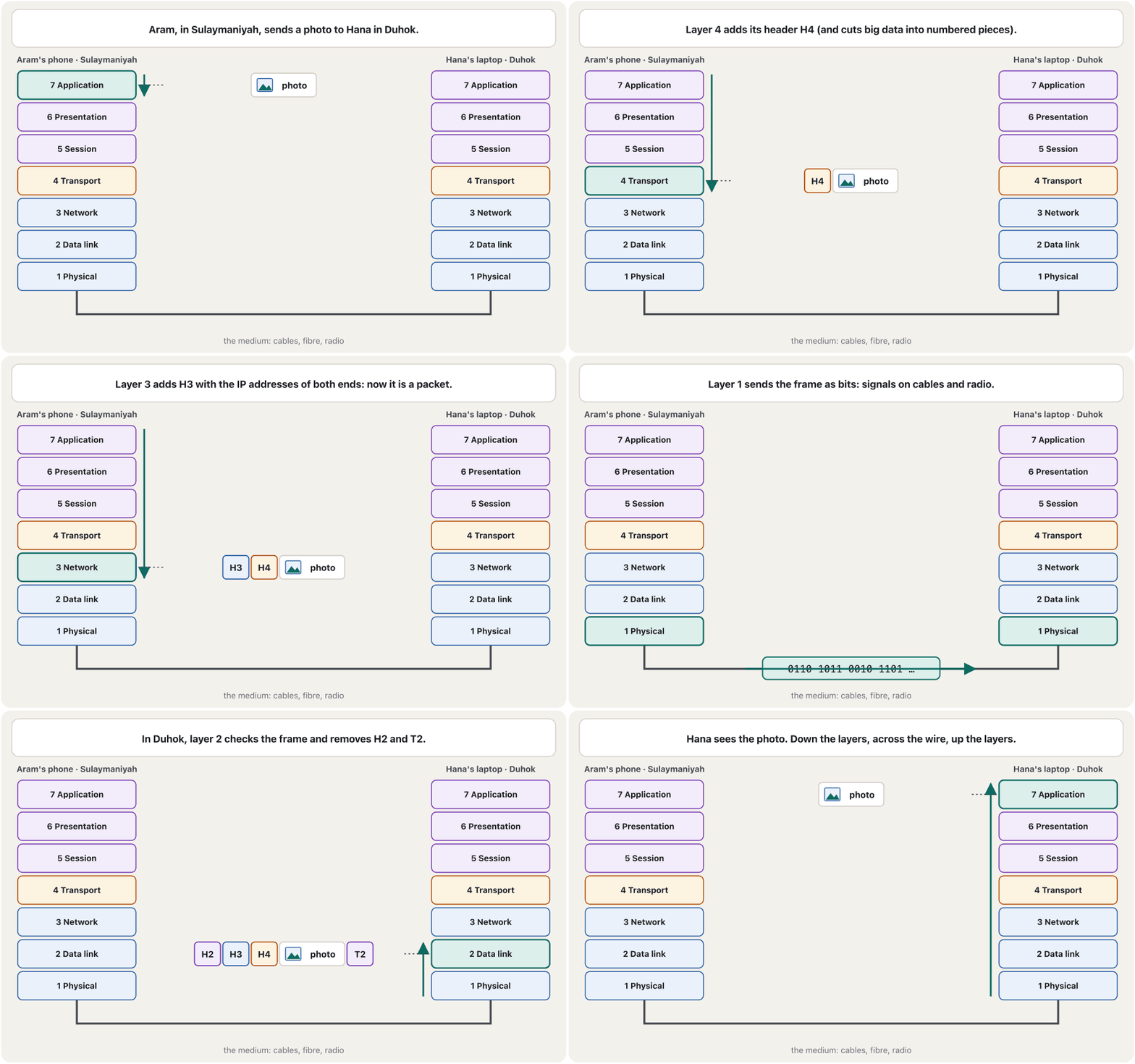
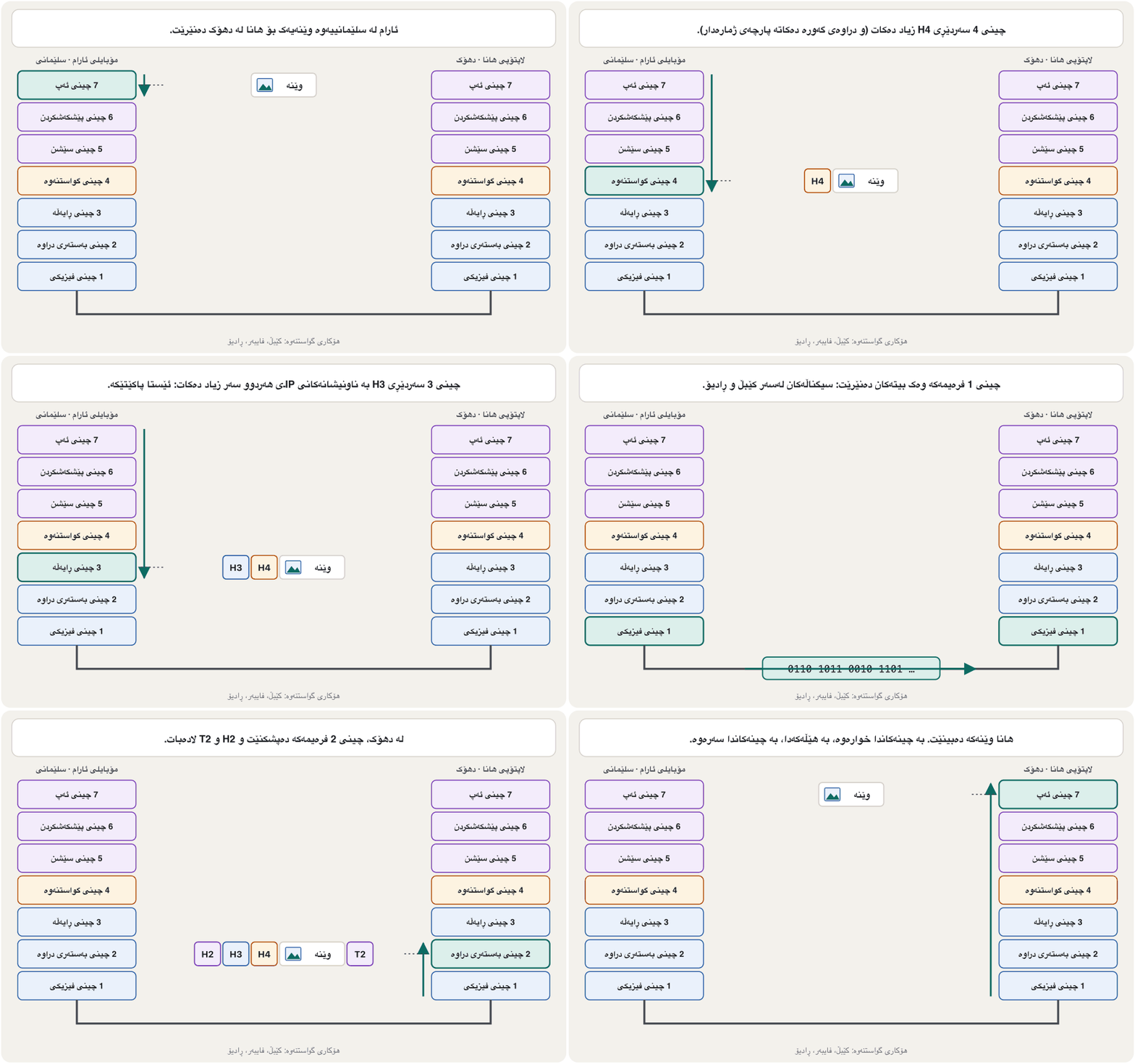
This wrapping is called encapsulation. The full story, with real headers and the name of each unit, is in Encapsulation, PDUs and Addresses at Each Layer.
ئەم کارە پێی دەگوترێت . هەموو چیرۆکەکە، بە سەردێڕی ڕاستەقینە و ناوی هەر یەکەیەکەوە، لە وانەی پێچانەوە، یەکەکانی دراوەی پرۆتۆکۆڵ و ناونیشانەکان لە هەر چینێکدا هەیە.
The post office: seven countersپۆستەخانە: حەوت پەنجەرە
Picture the OSI model as a post office with seven counters, one above the other. Aram sends a 20-page letter from Sulaymaniyah to Hana in Duhok, and each counter does one job for the counter above it.
وەک پۆستەخانەیەک بهێنە پێش چاوت کە حەوت پەنجەرەی هەیە، یەک لە سەر یەک. ئارام نامەیەکی 20 لاپەڕەیی لە سلێمانییەوە بۆ هانا لە دهۆک دەنێرێت و هەر پەنجەرەیەک کارێک بۆ پەنجەرەکەی سەرووی خۆی دەکات.
7 Application: Aram writes the letter. 6 Presentation: it is put into a language Hana can read. 5 Session: first make sure that Hana is there to receive it. 4 Transport: the pages are numbered and sent one per envelope, like registered mail: delivery is tracked, and a lost or damaged page is sent again. 3 Network: the sorting centre reads the postcode, “Duhok 42001”, and sends each envelope on towards Duhok. 2 Data link: each local office decides which van carries the bag on the next stretch. 1 Physical: vans and roads really carry the paper.
7 : ئارام نامەکە دەنووسێت. 6 : دەکرێتە ئەو زمانەی هانا دەتوانێت بیخوێنێتەوە. 5 : سەرەتا دڵنیا دەبنەوە کە هانا هەیە تا وەری بگرێت. 4 : لاپەڕەکان ژمارە دەکرێن و هەریەکە لە زەرفێکدا دەنێردرێت، وەک پۆستی تۆمارکراو: گەیاندنەکە بەدواداچوونی بۆ دەکرێت و لاپەڕەیەکی ونبوو یان تێکچوو دووپاتە دەنێردرێتەوە. 3 : ناوەندی جیاکردنەوە کۆدی پۆستە («دهۆک 42001») دەخوێنێتەوە و هەر زەرفێک بەرەو دهۆک دەنێرێت. 2 : هەر پۆستەخانەیەکی ناوچە بڕیار دەدات کام ئۆتۆمبێل جانتاکە بۆ پارچە ڕێگای دواتر دەبات. 1 : ئۆتۆمبێل و ڕێگاکان بە ڕاستی کاغەزەکە دەگوازنەوە.
Where the analogy stops workingسنووری ئەم نموونەیە
In a real network all seven “counters” are inside each device and work in microseconds; nothing waits in a queue for a clerk. And a network can send to many receivers at once, not only to one address.
لە ڕاستەقینەدا هەموو حەوت «پەنجەرە»کە لە ناو هەر ئامێرێکدان و لە چەند مایکرۆچرکەیەکدا کار دەکەن؛ هیچ شتێک لە ڕیزدا چاوەڕێی فەرمانبەرێک ناکات. هەروەها دەتوانێت لە یەک کاتدا بۆ چەندین وەرگر بنێرێت، نەک تەنیا بۆ یەک ناونیشان.
Why learn OSI in 2026?بۆچی لە 2026دا OSI فێر ببین؟
The Internet does not run on OSI's own protocols — they were never widely used. It runs on TCP/IP. So some people call OSI obsolete, that is, out of date. Yet networking books, certifications such as CCNA and Network+, and engineers keep using its layer numbers, because they are a shared language for talking about networks: which protocols and devices can work together, how vendors' products compare, and where a problem lies. A company sells “a layer 3 switch” or “a layer 7 firewall”; a technician says “it's a layer 1 problem” when a cable is loose.
لەسەر تایبەتەکانی OSI کار ناکات — ئەوانە هەرگیز بە بەرفراوانی بەکار نەهێنران. لەسەر TCP/IP کار دەکات. بۆیە هەندێک کەس OSI بە بەسەرچوو ناو دەبەن، واتە کۆن و لەکارکەوتوو. بەڵام کتێبەکانی ، بڕوانامەکانی وەک CCNA و Network+ و ئەندازیاران بەردەوام ژمارەی چینەکانی بەکار دەهێنن، چونکە زمانێکی هاوبەشن بۆ قسەکردن لەبارەی : کام و ئامێر دەتوانن پێکەوە کار بکەن، بەرهەمی کۆمپانیاکان چۆن بەراورد دەکرێن و کێشەیەک لە کوێیە. کۆمپانیایەک «» یان « چینی 7» دەفرۆشێت؛ تەکنیککارێک کاتێک کێبڵێک شلە دەڵێت «کێشەکە لە چینی 1دایە».
Who writes the rules?کێ یاساکان دەنووسێت؟
Protocols only work if everyone builds them the same way, so they are written down as standards by standards organisations:
تەنیا کاتێک کار دەکەن کە هەمووان بە هەمان شێوە دروستیان بکەن، بۆیە وەک لەلایەن دەنووسرێنەوە:
- ISO, the International Organization for Standardization, wrote the OSI model: ISO/IEC 7498-1.
- ITU-T, the standards arm of the International Telecommunication Union, publishes the same model as X.200, and many telecom standards.
- IETF, the Internet Engineering Task Force, writes the Internet's protocols — IP, TCP, HTTP and more — and publishes them free as numbered RFCs; anyone can take part.
- IEEE writes the standards of layers 1 and 2 for local networks: IEEE 802.3 (Ethernet) and IEEE 802.11 (Wi-Fi).
- ، ڕێکخراوی نێودەوڵەتیی ستانداردکردن، نووسی: ISO/IEC 7498-1.
- ITU-T، بەشی یەکێتیی نێودەوڵەتیی پەیوەندییە دوورەکان ()، هەمان مۆدێل وەک X.200 بڵاو دەکاتەوە، لەگەڵ زۆر پەیوەندی.
- ، دەستەی ئەندازیاریی ، دەنووسێت — IP، TCP، HTTP و زۆری تر — و بە بێبەرانبەر وەک ـی ژمارەدار بڵاویان دەکاتەوە؛ هەر کەسێک دەتوانێت بەشداری بکات.
- چینەکانی 1 و 2 بۆ دەنووسێت: IEEE 802.3 (Ethernet) و IEEE 802.11 ().
RFC 1122 (1989) describes the Internet with four layers — application, transport, internet and link — and its application layer does the work of OSI's top layers. The two models are compared in The TCP/IP Model.
RFC 1122 (1989) بە چوار چین وەسف دەکات — ، ، چینی و چینی بەستەر — و کاری چینەکانی سەرەوەی OSI دەکات. دوو مۆدێلەکە لە وانەی مۆدێلی TCP/IP بەراورد کراون.
Common mistakesهەڵە باوەکان
- ISO or OSI? ISO is the organisation; OSI is its model.
- Swapping layers 3 and 4. Transport (4) sits above network (3): “Seem To Need” — Session, Transport, Network.
- Thinking the Internet runs on OSI's protocols. It runs on TCP/IP; OSI is the map that we use to describe it.
- Thinking routers use all seven layers. Routers on the way use layers 1–3; layers 4–7 work only in the two end hosts.
- Saying the receiver adds the headers. The sender adds them on the way down; the receiver removes them on the way up.
- Calling a memory aid a standard. “Please Do Not Throw Sausage Pizza Away” only helps you remember; any sentence will do.
- Looking for a session or presentation layer in TCP/IP. There is none: applications and TLS do those jobs.
- ISO یان OSI؟ ISO ڕێکخراوەکەیە؛ OSI مۆدێلەکەیەتی.
- ئاڵوگۆڕکردنی چینەکانی 3 و 4. (4) لە سەرووی (3): «Seem To Need» — Session، Transport، Network.
- وا بزانیت لەسەر OSI کار دەکات. لەسەر TCP/IP کار دەکات؛ OSI ئەو نەخشەیەیە کە بۆ وەسفکردنی بەکاری دەهێنین.
- وا بزانیت هەموو حەوت چینەکە بەکار دەهێنن. سەر ڕێگا چینەکانی 1 تا 3 بەکار دەهێنن؛ چینەکانی 4 تا 7 تەنیا لە دوو سەرەتا و کۆتاییدا کار دەکەن.
- وتنی ئەوەی کە وەرگر سەردێڕەکان زیاد دەکات. نێرەر لە کاتی دابەزیندا زیادیان دەکات؛ وەرگر لە کاتی سەرکەوتندا لایان دەبات.
- ناونانی ڕێگەیەکی لەبەرکردن بە . «Please Do Not Throw Sausage Pizza Away» تەنیا یارمەتیت دەدات لە بیرت بمێنێت؛ هەر ڕستەیەکی تر دەبێت.
- گەڕان بەدوای یان لە TCP/IPـدا. نییە: و ئەو کارانە دەکەن.
Exercisesڕاهێنانەکان
Write the seven OSI layers in order, from 7 down to 1. Then give the unit of data (PDU) of layers 4, 3, 2 and 1.
حەوت چینەکەی OSI بە ڕیز بنووسە، لە 7ـەوە تا 1. پاشان یەکەی ()ی چینەکانی 4، 3، 2 و 1 بنووسە.
Show answerوەڵامەکە پیشان بدە
- 7 application, 6 presentation, 5 session, 4 transport, 3 network, 2 data link, 1 physical.
- Units: layer 4 segment, layer 3 packet, layer 2 frame, layer 1 bits. Layers 5–7 simply call it data.
- 7 ، 6 ، 5 ، 4 ، 3 ، 2 ، 1 .
- یەکەکان: چینی 4 ، چینی 3 ، چینی 2 ، چینی 1 . چینەکانی 5 تا 7 تەنیا پێی دەڵێن .
Karwan in Erbil sends a chat message with a photo to Lana in Duhok. Using the post-office picture, write one line for each of the seven layers: what happens there?
کاروان لە هەولێرەوە نامەیەکی چات لەگەڵ وێنەیەک بۆ لانا لە دهۆک دەنێرێت. بە یارمەتیی وێنەی پۆستەخانەکە، بۆ هەر یەکێک لە حەوت چینەکە دێڕێک بنووسە: لەوێ چی ڕوو دەدات؟
Show answerوەڵامەکە پیشان بدە
- 7 Application7 چینی ئەپ
The chat app takes the text and the photo Karwan wants to send.
چاتەکە ئەو دەق و وێنەیە وەردەگرێت کە کاروان دەیەوێت بینێرێت.
- 6 Presentation6 چینی پێشکەشکردن
The text is coded as UTF-8 so Kurdish letters arrive intact; the photo is compressed and the message is encrypted.
دەقەکە بە UTF-8 کۆد دەکرێت تا پیتە کوردییەکان ساغ بگەن؛ وێنەکە دەپەستێنرێت و نامەکە بە دەپارێزرێت.
- 5 Session5 چینی سێشن
The conversation with the chat server is opened (or kept open) and managed.
گفتوگۆ لەگەڵ چاتەکە دەکرێتەوە (یان کراوە دەهێڵرێتەوە) و بەڕێوە دەبرێت.
- 4 Transport4 چینی گواستنەوە
The data is cut into numbered segments; lost ones are sent again.
دەکرێتە چەند ژمارەدار؛ ونبووەکان دووپاتە دەنێردرێنەوە.
- 3 Network3 چینی ڕایەڵە
Each packet gets the IP addresses of both ends, and routers choose the path.
هەر هەردوو سەر وەردەگرێت و ڕێگاکە هەڵدەبژێرن.
- 2 Data link2 چینی بەستەری دراوە
On every hop the packet travels in a frame, from one MAC address to the next.
لە هەر لە ناو دەڕوات، لە بۆ ئەوی دواتر.
- 1 Physical1 چینی فیزیکی
The bits travel as radio waves (Wi-Fi, 4G) and as light in fibre.
وەک (، 4G) و وەک ڕووناکی لە فایبەردا دەڕۆن.
Use a bank's cash machine (ATM) to explain the three words service, interface and protocol.
ئامێری پارەی بانکێک (ATM) بەکار بهێنە بۆ ڕوونکردنەوەی سێ وشەکە: خزمەتگوزاری، و .
Show answerوەڵامەکە پیشان بدە
- Service: you can take out money from your account.
- Interface: what you use to ask for it — the card, the PIN, the buttons and the screen — and what you get back: notes and a receipt.
- Protocol: the rules by which the machine talks to the bank's computer to check your account — you never see them, and the bank can change them without changing the buttons.
- خزمەتگوزاری: دەتوانیت پارە لە حسابەکەت دەربهێنیت.
- : ئەوەی بۆ داواکردنی بەکاری دەهێنیت — کارت، PIN، دوگمەکان و شاشەکە — و ئەوەی وەریدەگریتەوە: پارە و پسوولە.
- : ئەو یاسایانەی ئامێرەکە پێیان لەگەڵ بانکەکە قسە دەکات بۆ پشکنینی حسابەکەت — هەرگیز نایانبینیت و بانکەکە دەتوانێت بیانگۆڕێت بەبێ گۆڕینی دوگمەکان.
OSI stands for ___.OSI کورتکراوەی ___ـە.
Open Systems Interconnection.
Open Systems Interconnection، واتە بەیەکەوەبەستنی سیستەمە کراوەکان.
How many layers does the OSI reference model have?مۆدێلی پێوەری OSI چەند چینی هەیە؟
Seven.
حەوت.
Data goes from device A to device B. Which is the fifth layer to receive it at B?دراوە لە ئامێری Aـەوە دەچێت بۆ ئامێری B. پێنجەم چین کە لە B وەری دەگرێت کامەیە؟
The session layer (1, 2, 3, 4, then 5).
(1، 2، 3، 4، پاشان 5).
Which layer links the network support layers and the user support layers?کام چین چینەکانی پشتگیریی ڕایەڵە و پشتگیریی بەکارهێنەر پێکەوە دەبەستێت؟
The transport layer (layer 4).
(چینی 4).
Which layers do the intermediate nodes on a path usually use?نۆدەکانی ڕایەڵەی نێوەندی سەر ڕێگا زۆرجار کام چینانە بەکار دەهێنن؟
Only the first three: physical, data link and network.
تەنیا سێ چینی یەکەم: ، و .
Is OSI a protocol suite that runs the Internet?ئایا OSI کۆمەڵە پرۆتۆکۆڵێکە کە ئینتەرنێت بەڕێوە دەبات؟
No. It is a reference model; the Internet runs on the TCP/IP suite.
نەخێر. ؛ لەسەر کۆمەڵەی TCP/IP کار دەکات.
Summaryپوختە
- A protocol is an agreed set of rules for exchanging information; both sides must use the same one.
- Complex communication is divided into layers, each with its own protocol; each layer uses the one below and serves the one above.
- A reference model says what must be done; a network architecture such as TCP/IP is the real set of layers and protocols.
- The OSI model (ISO, 1984; ISO/IEC 7498-1, ITU-T X.200) has seven layers: application, presentation, session, transport, network, data link, physical.
- Layers 1–3 support the network, layers 5–7 support the user, and layer 4 joins them; routers use only layers 1–3.
- Peers talk at the same layer through the layers below; interfaces join neighbouring layers; headers are added going down and removed going up.
- ISO, ITU-T, the IETF (RFCs) and the IEEE write the standards; TCP/IP has no separate session or presentation layer.
- کۆمەڵە یاسایەکی ڕێککەوتووە بۆ ئاڵوگۆڕکردنی زانیاری؛ هەردوو لا دەبێت هەمان بەکار بهێنن.
- پەیوەندیی ئاڵۆز دابەش دەکرێت بۆ چەند چینێک، هەریەکە بە خۆی؛ هەر چینێک چینی خوارەوە بەکار دەهێنێت و خزمەت بە چینی سەرەوە دەکات.
- دەڵێت چی دەبێت بکرێت؛ تەلارسازییەکی وەک TCP/IP کۆمەڵە چین و ڕاستەقینەکەیە.
- (ISO، 1984؛ ISO/IEC 7498-1، ITU-T X.200) حەوت چینی هەیە: ، ، ، ، ، و .
- چینەکانی 1 تا 3 پشتگیریی دەکەن، چینەکانی 5 تا 7 پشتگیریی بەکارهێنەر دەکەن و چینی 4 پێکیانەوە دەبەستێت؛ تەنیا چینەکانی 1 تا 3 بەکار دەهێنن.
- لە هەمان چیندا لە ڕێگەی چینەکانی خوارەوە قسە دەکەن؛ چینە دراوسێکان پێکەوە دەبەستن؛ سەردێڕەکان لە دابەزیندا زیاد دەکرێن و لە سەرکەوتندا لادەبرێن.
- ISO، ITU-T، (RFC) و دەنووسن؛ TCP/IP و جیای نییە.
Lesson complete!وانەکە تەواو بوو!
Well done. Review the key terms, then go on to the next lesson.دەستخۆش. سەیرێکی زاراوە سەرەکییەکان بکەرەوە، پاشان بڕۆ بۆ وانەی داهاتوو.
Key termsزاراوە سەرەکییەکان
OSI Layers 1–3: Physical, Data Link and Networkچینەکانی 1 تا 3ی OSI: چینی فیزیکی، چینی بەستەری دراوە و چینی ڕایەڵە
Related lecturesوانە پەیوەندیدارەکان
- OSI Layers 1–3: Physical, Data Link and Networkچینەکانی 1 تا 3ی OSI: چینی فیزیکی، چینی بەستەری دراوە و چینی ڕایەڵە
- OSI Layers 4 and 5: Transport and Sessionچینەکانی 4 و 5ی OSI: چینی گواستنەوە و چینی سێشن
- OSI Layers 6 and 7: Presentation and Applicationچینەکانی 6 و 7ی OSI: چینی پێشکەشکردن و چینی ئەپ
- The TCP/IP Model and How It Maps to OSIمۆدێلی TCP/IP و چۆنییەتیی یەکگرتنەوەی لەگەڵ OSI
- Encapsulation, PDUs and Addresses at Each Layerپێچانەوە، یەکەکانی دراوەی پرۆتۆکۆڵ و ناونیشانەکان لە هەر چینێکدا
- Data Communication: Modes, Switching and Protocolsپەیوەندیی دراوە: شێوازەکانی ناردن، سویچکردن و پرۆتۆکۆڵەکان
- Layers: Organising an IoT Systemچینەکان: ڕێکخستنی سیستەمێکی IoT
- Networksڕایەڵەکان
- The Internet and the Webئینتەرنێت و وێب
References and further readingسەرچاوەکان و خوێندنەوەی زیاتر
- ITU-T Recommendation X.200 (07/94): Open Systems Interconnection — Basic Reference Model: The basic model (in force)
- RFC 1122: Requirements for Internet Hosts — Communication Layers (IETF, 1989)
- RFC 1958: Architectural Principles of the Internet (IAB, 1996)
- IETF: Introduction to the IETF
- Wikipedia: OSI model (history, layers, ISO 7498 and X.200, 1984)
- Wikipedia: International Organization for Standardization (members, the name ISO)
- Wikipedia: IEEE 802 (the data link and physical layers; working groups 802.3 and 802.11)
- Cisco Press: Introduction to Networks Companion Guide (CCNAv7), chapter 3: Protocols and Models
This lecture is a first edition. The Kurdish text and terminology are waiting for review by Kurdish IT teachers.ئەم وانەیە چاپی یەکەمە. دەقە کوردییەکە و زاراوەکانی چاوەڕێی پێداچوونەوەی مامۆستایانی کوردی بواری IT ن.