Chapterبەش 4 · Lectureوانە 4.10
EIGRP: Cisco’s Advanced Distance-Vector ProtocolEIGRP: مەودای ئاڕاستەی پێشکەوتووی Cisco
What EIGRP is (advanced distance vector, not link state; RFC 7868, 2016), what makes it advanced, neighbours and the AS number, the neighbour, topology and routing tables, the composite metric (bandwidth + delay, K1 = K3 = 1) with a worked example checked in Python, why hop count is only a limit, DUAL with successor, feasible successor, FD, RD and the feasibility condition, failover, AD 90/170/5, configuration with wildcards, a three-router lab with a serial backup, verification and a failover test, VLSM, a comparison with OSPF and the common mistakes.
چییە ( پێشکەوتوو، نەک ؛ RFC 7868، 2016)، چی دەیکاتە پێشکەوتوو، دراوسێکان و ژمارەی AS، ، و ، ( + ، K1 = K3 = 1) بە نموونەیەکی کارپێکراو کە بە پشکنراوە، بۆچی ژمارەی تەنیا سنوورێکە، DUAL لەگەڵ ، ، FD، RD و ، گۆڕینی ڕێگا لە کاتی تێکچوون، AD 90/170/5، ڕێکخستن بە ، تاقیکردنەوەیەکی سێ بە یەدەگێکی زنجیرەیی، پشکنین و تاقیکردنەوەی تێکچوون، ، بەراوردێک لەگەڵ و هەڵە باوەکان.
What you will learnچی فێر دەبیت
- Place EIGRP among routing protocols and explain what makes it an advanced distance-vector protocol.
- Describe the three EIGRP tables and compute the default composite metric.
- Find the successor, feasible distance and feasible successors with the feasibility condition.
- Configure EIGRP with an AS number, network lines with wildcards, a router ID and passive interfaces, and save.
- Verify EIGRP with show ip eigrp neighbors, show ip eigrp topology and show ip route, and test a failover.
- شوێنی لە نێوان دیاری بکەیت و ڕوون بکەیتەوە چی دەیکاتە پێشکەوتوو.
- سێ خشتەکەی وەسف بکەیت و بنەڕەتی بژمێریت.
- ، و بە بدۆزیتەوە.
- بە ژمارەی AS، دێڕەکانی network بە ، و ڕێک بخەیت و پاشەکەوتی بکەیت.
- بە show ip eigrp neighbors، show ip eigrp topology و show ip route بپشکنیت و گۆڕینی ڕێگا لە کاتی تێکچوون تاقی بکەیتەوە.
EIGRP: Cisco’s advanced distance-vector protocolEIGRP: مەودای ئاڕاستەی پێشکەوتووی Cisco
EIGRP (Enhanced Interior Gateway Routing Protocol) is an interior routing protocol that Cisco built to replace its old IGRP (inside and between autonomous systems). It is an advanced distance-vector protocol (the family tree): like RIP it learns routes from its neighbours, not from a map of the whole network — it is not link state. But it adds a cleverer algorithm, DUAL, and a better metric. For years it was Cisco-only; in May 2016 Cisco published it as the informational RFC 7868, and a few others now implement it (the open-source FRRouting suite, for example), yet in practice you still meet it mostly in Cisco networks.
(Enhanced Interior Gateway Routing Protocol) ناوخۆییە کە Cisco دروستی کرد بۆ ئەوەی جێگەی IGRPـی کۆنی خۆی بگرێتەوە (لە ناو و لە نێوان سیستەمە سەربەخۆکاندا). پێشکەوتووە (داری خێزانەکە): وەک ڕێگاکان لە دراوسێکانییەوە فێر دەبێت، نەک لە نەخشەی هەموو — نییە. بەڵام زیرەکتر، DUAL و باشتری بۆ زیاد دەکات. بۆ چەندین ساڵ تەنیا هی Cisco بوو؛ لە ئایاری 2016 Cisco وەک RFC 7868ـی زانیاری بڵاوی کردەوە و ئێستا چەند لایەنێکی تریش جێبەجێی دەکەن (بۆ نموونە کۆمەڵەی سەرچاوەکراوەی FRRouting)، بەڵام لە ڕاستیدا هێشتا زۆرتر لە Ciscoـدا دەیبینیت.
What makes it “advanced”چی دەیکاتە «پێشکەوتوو»
RIP sends its whole table every 30 seconds, change or not. EIGRP keeps quiet: after the first exchange it sends small hellos to stay in touch, and an update only when something changes — only the changed routes, and only to the routers that need them (partial, bounded updates). Updates are sent reliably: the neighbour acknowledges them. DUAL keeps a backup route ready, so EIGRP converges very fast. Every route carries its mask, and EIGRP can even share traffic over paths of unequal cost.
هەموو خشتەکەی هەر 30 چرکە جارێک دەنێرێت، گۆڕان هەبێت یان نا. بێدەنگ دەمێنێتەوە: دوای یەکەم ئاڵوگۆڕ بچووک دەنێرێت بۆ ئەوەی پەیوەندی بمێنێت و نوێکردنەوە تەنیا کاتێک شتێک بگۆڕێت — تەنیا ڕێگا گۆڕاوەکان و تەنیا بۆ ئەو پێویستیان پێیەتی (نوێکردنەوەی بەشی و سنووردار). نوێکردنەوەکان بە دڵنیایی دەنێردرێن: دراوسێکە بۆ دەکات. DUAL ڕێگایەکی یەدەگ ئامادە دەهێڵێتەوە، بۆیە زۆر خێرا دەگاتە . هەموو ڕێگایەک ماسکەکەی هەڵدەگرێت و تەنانەت دەتوانێت هاتوچۆ بەسەر ڕێگای تێچوو-جیاوازدا دابەش بکات.
Neighbours: hellos and the AS numberدراوسێکان: پاکێتەکانی سڵاو و ژمارەی AS
EIGRP routers find each other with hellos sent to the multicast address 224.0.0.10, every 5 seconds on Ethernet. If no hello arrives for the hold time (15 seconds, three hellos), the neighbour is declared dead. Two routers become neighbours only if they use the same autonomous-system number and the same K values (metric weights), share the subnet of the link and, if authentication is on, the same key. When a neighbour comes up, IOS logs a %DUAL-5-NBRCHANGE message.
بە یەکتری دەدۆزنەوە، کە بۆ ناونیشانی 224.0.0.10 دەنێردرێن، لەسەر هەر 5 چرکە جارێک. ئەگەر تا کۆتایی hold time (15 چرکە، سێ hello) هیچ helloـیەک نەگات، دراوسێکە بە مردوو دادەنرێت. دوو تەنیا کاتێک دەبنە دراوسێ کە هەمان ژمارەی و هەمان بەهاکانی K () بەکار بهێنن، بەستەرەکە هاوبەش بکەن و، ئەگەر هەبێت، هەمان کلیل. کاتێک دراوسێیەک دروست دەبێت، IOS پەیامی %DUAL-5-NBRCHANGE تۆمار دەکات.
An EIGRP router is like a family in a neighbourhood: it knows the houses next door (its neighbour routers) and trusts what they say about the way to the bazaar — “through me it is 10 minutes” — and it remembers a second neighbour whose way is also safe. It does not keep a map of the whole city; that is what a link-state router does.
وەک خێزانێکە لە گەڕەکێکدا: ماڵەکانی تەنیشتی دەناسێت () و باوەڕ بەوە دەکات کە لەبارەی ڕێگای بازاڕ دەیڵێن — «لە ڕێگەی منەوە 10 خولەکە» — و دراوسێیەکی دووەمیش لە بیر دەهێڵێتەوە کە ڕێگاکەی ئەویش سەلامەتە. نەخشەی هەموو شار هەڵناگرێت؛ ئەوە کاری .
Where the analogy stops workingسنووری ئەم نموونەیە
Real neighbours are only the routers on a shared link that pass the checks; a house next door is not automatically a neighbour router.
دراوسێی ڕاستەقینە تەنیا ئەو کە لەسەر بەستەرێکی هاوبەشن و پشکنینەکان تێدەپەڕێنن؛ ماڵی تەنیشت خۆکارانە نابێتە .
Three tablesسێ خشتە
Every EIGRP router keeps three tables. The neighbour table lists the routers around it. The topology table keeps every route that each neighbour has offered — not a map of the domain as in OSPF, but each neighbour’s distance to each network — together with the best path and the backups. The routing table receives only the best route for each network, with code D.
هەموو سێ خشتە هەڵدەگرێت. ئەو ڕیز دەکات کە بە دەوریدان. هەموو ئەو ڕێگایانە هەڵدەگرێت کە هەر دراوسێیەک پێشکەشی کردووە — نەک نەخشەی هەموو پاوانەکە وەک لە ، بەڵکو هەر دراوسێیەک بۆ هەر — لەگەڵ باشترین ڕێڕەو و یەدەگەکان. تەنیا باشترین ڕێگا بۆ هەر وەردەگرێت، بە کۆدی D.
| Tableخشتە | Main fieldsخانە سەرەکییەکان | Meaningواتا |
|---|---|---|
| Neighbourدراوسێ | H, Address, Interface, Hold, Uptime, SRTT, RTO, Q Cnt, Seq Num | handle (order learned), the neighbour’s address and my interface, seconds left before it is declared dead, how long it has been up, smooth round-trip time and retransmit timeout, packets waiting, last sequence numberژمارەی ڕیز، ناونیشانی دراوسێ و من، ئەو چرکانەی دەمێننەوە پێش ئەوەی بە مردوو دابنرێت، لە کەیەوە کار دەکات، کاتی چوون و هاتنی ناوەندی و کاتی دووپاتە ناردن، چاوەڕوان، دوایین ژمارەی زنجیرە |
| Topologyتۆپۆلۆجی | P/A, prefix, FD, via (FD/RD), interface | Passive = stable, Active = recomputing; my best metric; for each path, my metric through it / the neighbour’s reported distancePassive = جێگیر، Active = خەریکی ژمێردنەوە؛ باشترین من؛ بۆ هەر ڕێڕەوێک، من لە ڕێگەیەوە / دراوسێ |
| Routing | D, prefix, [90/metric], via next hop | protocol code, network, administrative distance / metric, next hop and exit interfaceکۆدی ، ، / ، و |
The metric: bandwidth plus delayپێوانە: پانایی باند لەگەڵ دواکەوتن
EIGRP’s composite metric can mix five values (bandwidth, load, delay, reliability and, in wide metrics, more), each switched on by a weight called a K value. By default only two are on: K1 = K3 = 1, K2 = K4 = K5 = 0. So the default metric uses the slowest bandwidth along the path and the sum of the delays of the outgoing interfaces. Both are scaled and the result is multiplied by 256 — a habit inherited from IGRP.
دەتوانێت پێنج بەها تێکەڵ بکات (، بار، ، متمانەپێکراوی و لە wide metricsـدا زیاتر)، کە هەریەکەیان بە کێشێک بە ناوی بەهای K هەڵدەکرێت. بە شێوەی بنەڕەتی تەنیا دوویان هەڵکراون: K1 = K3 = 1، K2 = K4 = K5 = 0. بۆیە بنەڕەتی هێواشترین لەسەر ڕێڕەوەکە و کۆی دەرچوون بەکار دەهێنێت. هەردووکیان بە ژمارەی جێگیر دابەش دەکرێن و ئەنجامەکە لە 256 دەدرێت — ڕاهاتنێک کە لە IGRPـەوە ماوەتەوە.
Default K values: K1 = K3 = 1, K2 = K4 = K5 = 0 (RFC 7868 §5.5). Fractions are rounded down.
بەها بنەڕەتییەکانی K: K1 = K3 = 1، K2 = K4 = K5 = 0 (RFC 7868 §5.5). کەرتەکان بەرەو خوار دەبڕدرێن.
The metric: bandwidth plus delayپێوانە: پانایی باند لەگەڵ دواکەوتن
Worked example: one path’s metricنموونەی کارپێکراو: پێوانەی یەک ڕێڕەو
In this lesson’s lab, R1 reaches R3’s LAN 192.168.3.0/24 through R2 over three GigabitEthernet interfaces (R1’s Gi0/1, R2’s Gi0/2 and R3’s Gi0/0). The slowest bandwidth is 1,000,000 kbit/s and the three delays add up to 30 µs.
لە تاقیکردنەوەی ئەم وانەیەدا، R1 لە ڕێگەی R2ـەوە بەسەر سێ GigabitEthernetـدا دەگاتە R3، 192.168.3.0/24 (Gi0/1ـی R1، Gi0/2ـی R2 و Gi0/0ـی R3). هێواشترین 1,000,000 kbit/sـە و سێ دەکەنە 30 µs.
# Classic EIGRP metric with the default K values (K1 = K3 = 1, K2 = K4 = K5 = 0)
def metric(bandwidths_kbps, delays_usec):
    bw = 10**7 // min(bandwidths_kbps)        # slowest link on the path
    delay = sum(delays_usec) // 10            # tens of microseconds
    return 256 * (bw + delay)

GIG = (1_000_000, 10)      # GigabitEthernet: 1,000,000 kbit/s, 10 microseconds
SERIAL = (1544, 20_000)    # Serial (T1 default): 1544 kbit/s, 20,000 microseconds

def path(*links):
    return metric([l[0] for l in links], [l[1] for l in links])

print("R3 LAN, connected on R3      ", path(GIG))
print("R2 to R3 LAN (reported to R1) ", path(GIG, GIG))
print("R1 via R2 (Gi, Gi, LAN)       ", path(GIG, GIG, GIG))
print("R1 via R3 (serial, LAN) ", path(SERIAL, GIG))R3 LAN, connected on R3 2816 R2 to R3 LAN (reported to R1) 3072 R1 via R2 (Gi, Gi, LAN) 3328 R1 via R3 (serial, LAN) 2170112
Explain the codeڕوونکردنەوەی کۆدەکە
- Lineدێڕی 3-4
//is whole-number division, as on the router: 10,000,000 / 1544 = 6476.//دابەشکردنی ژمارەی تەواوە، وەک لەسەر : 10,000,000 / 1544 = 6476.- Lineدێڕی 16
The serial path: 256 × (6476 + 2001) = 2,170,112 — far worse, but kept as a backup.
ڕێڕەوە زنجیرەییەکە: 256 × (6476 + 2001) = 2,170,112 — زۆر خراپترە، بەڵام وەک یەدەگ دەهێڵدرێتەوە.
The metric: bandwidth plus delayپێوانە: پانایی باند لەگەڵ دواکەوتن
Hop count is only a limitژمارەی بازەکان تەنیا سنوورێکە
EIGRP does not choose paths by hop count, and it is not limited to RIP’s 15 hops. It counts hops only as a safety limit: a route that has crossed more routers than the maximum hop count is treated as unreachable. The default is 100; metric maximum-hops can raise it up to 255. show ip protocols shows the K values and this limit (IOS 15 output, first lines):
ڕێڕەو بە ژمارەی هەڵنابژێرێت و بە 15 بازی سنووردار نییە. تەنیا وەک سنوورێکی سەلامەتی دەژمێرێت: ڕێگایەک کە بە زیاتر لە زۆرترین ژمارەی تێپەڕیبێت وەک نەگەیشتوو دادەنرێت. بنەڕەت 100ـە؛ metric maximum-hops دەتوانێت تا 255 بەرزی بکاتەوە. show ip protocols بەهاکانی K و ئەم سنوورە پیشان دەدات ( IOS 15، یەکەم دێڕەکان):
R1#show ip protocols
Routing Protocol is "eigrp 100"
  Outgoing update filter list for all interfaces is not set
  Incoming update filter list for all interfaces is not set
  Default networks flagged in outgoing updates
  Default networks accepted from incoming updates
  EIGRP-IPv4 Protocol for AS(100)
    Metric weight K1=1, K2=0, K3=1, K4=0, K5=0
    NSF-aware route hold timer is 240
    Router-ID: 1.1.1.1
    Topology : 0 (base)
      Active Timer: 3 min
      Distance: internal 90 external 170
      Maximum path: 4
      Maximum hopcount 100
      Maximum metric variance 1

  Automatic Summarization: disabled
...
Explain the codeڕوونکردنەوەی کۆدەکە
- Lineدێڕی 8
Only K1 (bandwidth) and K3 (delay) are on.
تەنیا K1 () و K3 () هەڵکراون.
- Lineدێڕی 15
The hop limit: 100 unless
metric maximum-hopschanges it (1–255).سنووری : 100ـە مەگەر
metric maximum-hopsبیگۆڕێت (1–255).- Lineدێڕی 18
Auto-summary is off by default since IOS 15.0(1)M.
auto-summary لە IOS 15.0(1)Mـەوە بە شێوەی بنەڕەتی کوژاوەتەوە.
DUAL: successor and feasible successorDUAL: جێنشین و جێنشینی گونجاو
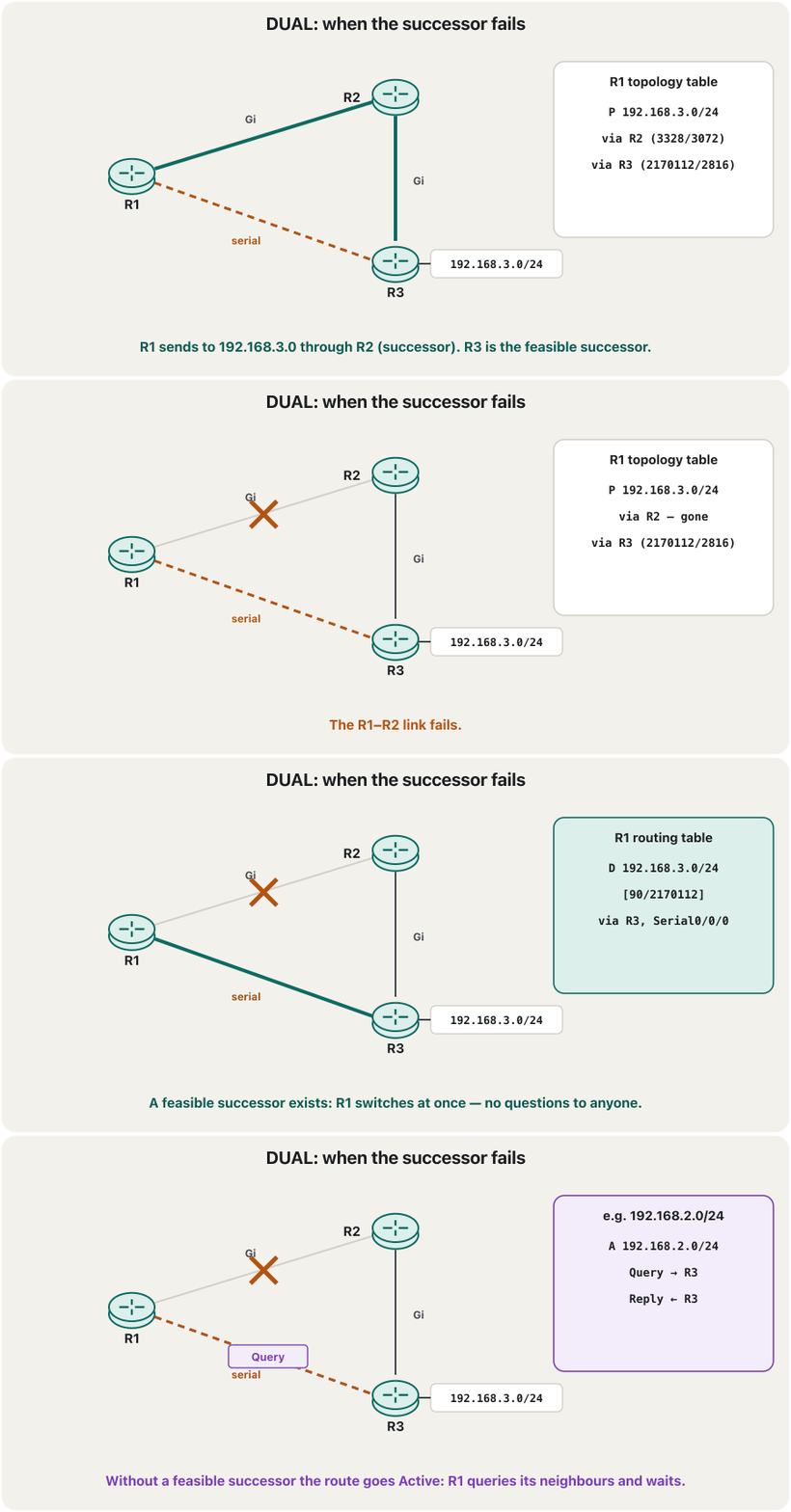
For every network, EIGRP compares what its neighbours offer. The neighbour’s own metric is its reported distance (RD); RD plus the link to that neighbour is the total through it. The lowest total is the feasible distance (FD), and the neighbour that gives it is the successor: its route goes into the routing table. Any other neighbour whose RD is lower than the FD is a feasible successor — a backup that is proved loop-free and kept ready. This test is the feasibility condition, and the algorithm that applies it is DUAL.
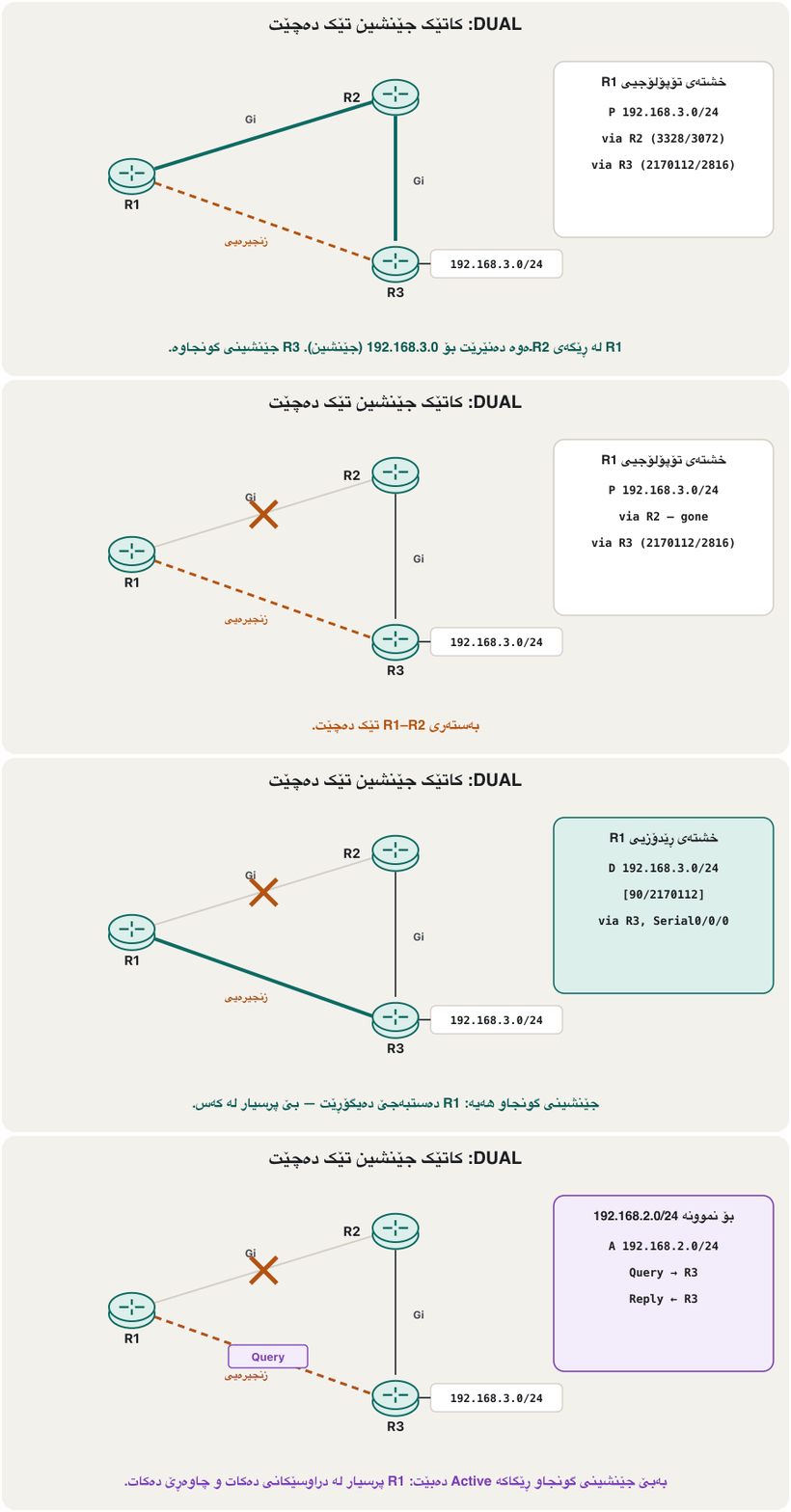
بۆ هەر ، ئەوەی دراوسێکانی پێشکەشی دەکەن بەراورد دەکات. خودی دراوسێ (RD)ـیەتی؛ RD لەگەڵ بەستەرەکەی بەرەو ئەو دراوسێیە کۆی ڕێگاکەیە لە ڕێگەی ئەوەوە. کەمترین کۆ (FD)ـە و ئەو دراوسێیەی پێی دەدات ـە: ڕێگاکەی دەچێتە ناو . هەر دراوسێیەکی تر کە RDـەکەی لە FD کەمتر بێت ـە — یەدەگێک کە بێئەڵقەبوونی سەلمێنراوە و ئامادە هەڵگیراوە. ئەم پشکنینە ـە و ئەو جێبەجێی دەکات DUALـە.
In EIGRP, a backup route that is proved loop-free (the neighbour's reported distance is lower than the successor's feasible distance), so it can take over at once if the successor fails.
لە ، ڕێگایەکی یەدەگە کە سەلمێنراوە بێئەڵقەیە (مەودای ڕاگەیەنراوی دراوسێکەی لە مەودای گونجاوی کەمترە)، بۆیە دەتوانێت دەستبەجێ جێگەی بگرێتەوە ئەگەر جێنشینەکە تێک بچێت.
DUAL: successor and feasible successorDUAL: جێنشین و جێنشینی گونجاو
Why the condition worksبۆچی مەرجەکە کار دەکات
If a neighbour is closer to the destination than I am (its RD is lower than my FD), its path cannot run back through me — otherwise its distance would include mine and be larger. So that path is loop-free. A neighbour whose RD is equal to or higher than my FD might be routing through me, so DUAL does not trust it as a ready backup, even if its path is in fact fine. The small numbers below show the rule.
ئەگەر دراوسێیەک لە من نزیکتر بێت لە مەبەستەکە (RDـەکەی لە FDـی من کەمتر بێت)، ڕێڕەوەکەی ناتوانێت بە مندا بگەڕێتەوە — ئەگەر نا هی منیشی تێدا دەبوو و گەورەتر دەبوو. بۆیە ئەو ڕێڕەوە بێئەڵقەیە. دراوسێیەک کە RDـەکەی یەکسان یان زیاتر بێت لە FDـی من لەوانەیە بە مندا بڕوات، بۆیە DUAL وەک یەدەگێکی ئامادە متمانەی پێ ناکات، تەنانەت ئەگەر ڕێڕەوەکەی لە ڕاستیدا باش بێت. ژمارە بچووکەکانی خوارەوە یاساکە پیشان دەدەن.
DUAL: successor and feasible successorDUAL: جێنشین و جێنشینی گونجاو
When the successor failsکاتێک جێنشین تێک دەچێت
If the successor’s link fails and a feasible successor exists, the router switches to it at once — no messages, no waiting. That is why EIGRP converges so fast. If there is no feasible successor, the route goes Active: the router sends queries to its neighbours and waits for their replies before it chooses a new path. This takes longer, and in a large network queries can spread far — one reason to design with summaries and stub routers.
ئەگەر بەستەری تێک بچێت و هەبێت، دەستبەجێ دەیگۆڕێت بۆ ئەو — بێ پەیام، بێ چاوەڕوانی. بۆیە ئەوەندە خێرا دەگاتە . ئەگەر نەبێت، ڕێگاکە Active دەبێت: پرسیار (query) بۆ دراوسێکانی دەنێرێت و چاوەڕێی وەڵامـەکانیان (reply) دەکات پێش ئەوەی ڕێڕەوێکی نوێ هەڵبژێرێت. ئەمە کاتی زیاتر دەبات و لە گەورەدا پرسیارەکان دەتوانن بە دووریدا بڵاو ببنەوە — هۆیەک بۆ دیزاینکردن بە کورتە و stub.
AD 90, 170 and 5AD 90، 170 و 5
EIGRP uses three administrative distances. Internal routes — learned inside the EIGRP AS — have 90 and appear as D. External routes, brought in from another source (redistributed), have 170 and appear as D EX. A summary that this router makes itself (with ip summary-address eigrp … on an interface, summaries in each protocol) has 5 and points to Null0, an interface that drops packets for parts of the summary that do not exist.
سێ مەودای بەڕێوەبەری بەکار دەهێنێت. ڕێگا ناوخۆییەکان — کە لە ناو ASـی فێر بوون — 90یان هەیە و وەک D دەردەکەون. ڕێگا دەرەکییەکان، کە لە سەرچاوەیەکی ترەوە هێنراونەتە ناوەوە (redistribute)، 170یان هەیە و وەک D EX دەردەکەون. کورتەیەک کە خودی ئەم دروستی دەکات (بە ip summary-address eigrp … لەسەر ، کورتە لە هەر پرۆتۆکۆڵێکدا) 5ـی هەیە و ئاماژە بۆ Null0 دەکات، کە بۆ ئەو بەشانەی کورتەکە فڕێ دەدات کە بوونیان نییە.
Configuring EIGRPڕێکخستنی EIGRP
Start the process with router eigrp <AS number> — the number names the EIGRP domain and must be the same on every router that should talk. Then add a network line for each network to run EIGRP on. A line without a wildcard (network 172.16.0.0) takes the whole classful network; with subnets, add the wildcard mask to choose exactly (network 172.16.1.0 0.0.0.255). Set eigrp router-id, make LAN ports passive, and type no auto-summary — the default since IOS 15.0(1)M, but older images and many labs still need it.
بە router eigrp <AS number> دەست پێ بکە — ژمارەکە ناوی پاوانی و دەبێت لەسەر هەموو ئەو دەبێت قسە بکەن هەمان بێت. پاشان بۆ هەر کە لەسەر کار بکات دێڕێکی network زیاد بکە. دێڕێک بەبێ (network 172.16.0.0) هەموو پۆلدارەکە دەگرێت؛ لەگەڵ ، ماسکی پێچەوانە زیاد بکە بۆ هەڵبژاردنی ورد (network 172.16.1.0 0.0.0.255). eigrp router-id دابنێ، بکە بە و no auto-summary بنووسە — لە IOS 15.0(1)Mـەوە بنەڕەتە، بەڵام وێنە کۆنەکانی IOS و زۆرێک لە تاقیکردنەوەکان هێشتا پێویستیان پێیەتی.
Router(config)#router eigrp 100
Router(config-router)#network 172.16.0.0
Router(config-router)#network 10.0.0.0
Router(config-router)#network 192.168.1.0 0.0.0.255
Router(config-router)#no auto-summary
Explain the codeڕوونکردنەوەی کۆدەکە
- Lineدێڕی 1
100 = the autonomous-system number (1–65535); every neighbour must use 100 too.
100 = ژمارەی (1–65535)؛ هەموو دراوسێیەک دەبێت 100 بەکار بهێنێت.
- Lineدێڕی 2-3
Without a wildcard: every interface in 172.16.0.0/16 and in 10.0.0.0/8 (the classful networks).
بەبێ : هەموو لە 172.16.0.0/16 و 10.0.0.0/8 ().
- Lineدێڕی 4
With a wildcard: only interfaces in 192.168.1.0/24 (255.255.255.255 − 255.255.255.0 = 0.0.0.255).
بە : تەنیا لە 192.168.1.0/24 (255.255.255.255 − 255.255.255.0 = 0.0.0.255).
Lab: three routers with a slow backup linkتاقیکردنەوە: سێ ڕێدۆز بە بەستەرێکی یەدەگی هێواش
Build a triangle in Packet Tracer: R1, R2 and R3 (2911 routers) each have a LAN on Gi0/0. R1–R2 and R2–R3 are GigabitEthernet /30 links. R1 and R3 are also joined by a slow serial link (an HWIC-2T card; R1 has the DCE end, so it gives the clock — serial links). All three run EIGRP in AS 100. Expect R1 to reach R3’s LAN through R2, with the serial link as the feasible successor.
لە Packet Tracerـدا سێگۆشەیەک دروست بکە: R1، R2 و R3 ( 2911) هەریەکەیان لەسەر Gi0/0 هەیە. R1–R2 و R2–R3 بەستەری GigabitEthernetی /30ـن. R1 و R3 بە بەستەرێکی زنجیرەیی هێواشیش بەیەکەوە بەستراون (کارتی HWIC-2T؛ سەری DCE لای R1ـە، بۆیە ئەو کاتژمێرەکە دەدات — بەستەری زنجیرەیی). هەر سێکیان لە AS 100دا کار پێ دەکەن. چاوەڕێ بکە R1 لە ڕێگەی R2ـەوە بگاتە R3 و بەستەرە زنجیرەییەکە بێت.
Lab: three routers with a slow backup linkتاقیکردنەوە: سێ ڕێدۆز بە بەستەرێکی یەدەگی هێواش
Configure the three routersسێ ڕێدۆزەکە ڕێک بخە
R1 is shown in full. On R2 a single line, network 10.1.0.0 0.0.255.255, catches both of its 10.1.x.x links — wildcards can be wide as well as exact. R2 and R3 start after enable, configure terminal and hostname, as on R1.
R1 بە تەواوی پیشان دراوە. لەسەر R2 تاکە دێڕێک، network 10.1.0.0 0.0.255.255، هەردوو بەستەری 10.1.x.xـی دەگرێت — دەتوانن فراوان بن وەک چۆن ورد دەبن. R2 و R3 دوای enable، configure terminal و hostname دەست پێ دەکەن، وەک R1.
Router>enable
Router#configure terminal
Enter configuration commands, one per line.  End with CNTL/Z.
Router(config)#hostname R1
R1(config)#interface gigabitEthernet 0/0
R1(config-if)#ip address 192.168.1.1 255.255.255.0
R1(config-if)#no shutdown
R1(config-if)#interface gigabitEthernet 0/1
R1(config-if)#ip address 10.1.12.1 255.255.255.252
R1(config-if)#no shutdown
R1(config-if)#interface serial 0/0/0
R1(config-if)#ip address 10.1.13.1 255.255.255.252
R1(config-if)#clock rate 64000
R1(config-if)#no shutdown
R1(config-if)#exit
R1(config)#router eigrp 100
R1(config-router)#eigrp router-id 1.1.1.1
R1(config-router)#network 192.168.1.0 0.0.0.255
R1(config-router)#network 10.1.12.0 0.0.0.3
R1(config-router)#network 10.1.13.0 0.0.0.3
R1(config-router)#passive-interface gigabitEthernet 0/0
R1(config-router)#no auto-summary
R1(config-router)#end
R1#copy running-config startup-config
Destination filename [startup-config]?
Building configuration...
[OK]
Explain the codeڕوونکردنەوەی کۆدەکە
- Lineدێڕی 13
R1 has the DCE end of the serial cable, so it sets the clock.
سەری DCEـی کێبڵە زنجیرەییەکە لای R1ـە، بۆیە کاتژمێرەکە دادەنێت.
- Lineدێڕی 16
AS 100 — the same number on R2 and R3.
AS 100 — هەمان ژمارە لەسەر R2 و R3.
- Lineدێڕی 18-20
One line per network, each with its wildcard (/24 → 0.0.0.255, /30 → 0.0.0.3).
بۆ هەر یەک دێڕ، هەریەکە بە (
/24← 0.0.0.255،/30← 0.0.0.3).- Lineدێڕی 21
The LAN port sends no hellos; 192.168.1.0/24 is still advertised.
هیچ helloـیەک نانێرێت؛ 192.168.1.0/24 هەر ڕادەگەیەنرێت.
R2(config)#interface g0/0
R2(config-if)#ip address 192.168.2.1 255.255.255.0
R2(config-if)#no shutdown
R2(config-if)#interface g0/1
R2(config-if)#ip address 10.1.12.2 255.255.255.252
R2(config-if)#no shutdown
R2(config-if)#interface g0/2
R2(config-if)#ip address 10.1.23.1 255.255.255.252
R2(config-if)#no shutdown
R2(config-if)#router eigrp 100
R2(config-router)#eigrp router-id 2.2.2.2
R2(config-router)#network 192.168.2.0 0.0.0.255
R2(config-router)#network 10.1.0.0 0.0.255.255
R2(config-router)#passive-interface g0/0
R2(config-router)#no auto-summary
%DUAL-5-NBRCHANGE: EIGRP-IPv4 100: Neighbor 10.1.12.1 (GigabitEthernet0/1) is up: new adjacency
R2(config-router)#end
R2#copy running-config startup-config

R3(config)#interface g0/0
R3(config-if)#ip address 192.168.3.1 255.255.255.0
R3(config-if)#no shutdown
R3(config-if)#interface g0/2
R3(config-if)#ip address 10.1.23.2 255.255.255.252
R3(config-if)#no shutdown
R3(config-if)#interface s0/0/0
R3(config-if)#ip address 10.1.13.2 255.255.255.252
R3(config-if)#no shutdown
R3(config-if)#router eigrp 100
R3(config-router)#eigrp router-id 3.3.3.3
R3(config-router)#network 192.168.3.0 0.0.0.255
R3(config-router)#network 10.1.23.0 0.0.0.3
R3(config-router)#network 10.1.13.0 0.0.0.3
R3(config-router)#passive-interface g0/0
R3(config-router)#no auto-summary
%DUAL-5-NBRCHANGE: EIGRP-IPv4 100: Neighbor 10.1.23.1 (GigabitEthernet0/2) is up: new adjacency
%DUAL-5-NBRCHANGE: EIGRP-IPv4 100: Neighbor 10.1.13.1 (Serial0/0/0) is up: new adjacency
R3(config-router)#end
R3#copy running-config startup-config
Explain the codeڕوونکردنەوەی کۆدەکە
- Lineدێڕی 13
One wide wildcard: every interface whose address starts with 10.1 — Gi0/1 and Gi0/2.
یەک فراوان: هەموو کە ناونیشانەکەی بە 10.1 دەست پێ بکات — Gi0/1 و Gi0/2.
- Lineدێڕی 16
R2 and R1 are neighbours.
R2 و R1 دراوسێن.
- Lineدێڕی 36-37
R3 meets R2 on Gi0/2 and R1 over the serial link.
R3 لەسەر Gi0/2 بە R2 و بەسەر بەستەرە زنجیرەییەکەدا بە R1 دەگات.
Lab: three routers with a slow backup linkتاقیکردنەوە: سێ ڕێدۆز بە بەستەرێکی یەدەگی هێواش
show ip eigrp neighborsshow ip eigrp neighbors: دراوسێکان
R1 should list two neighbours. H is the order in which they were learned, Hold counts down from 15 and is reset by every hello, Uptime says how long the neighbour has been up, SRTT and RTO are the measured round-trip time and the retransmit timer, Q Cnt should be 0 (nothing waiting) and Seq Num is the last sequence number received. Your times will differ. Packet Tracer prints the older names in these headings and log lines (IP-EIGRP neighbors for process 100, IP-EIGRP 100 instead of EIGRP-IPv4 100); the fields are the same.
R1 دەبێت دوو دراوسێ ڕیز بکات. H ڕیزبەندیی فێربوونیانە، Hold لە 15ـەوە بەرەو خوار دەژمێرێت و هەر helloـیەک دەیگەڕێنێتەوە، Uptime دەڵێت دراوسێکە لە کەیەوە کار دەکات، SRTT و RTO کاتی چوون و هاتنی پێوانەکراو و دووپاتە ناردنن، Q Cnt دەبێت 0 بێت (هیچ شتێک چاوەڕوان نییە) و Seq Num دوایین ژمارەی زنجیرەی وەرگیراوە. کاتەکانی تۆ جیاواز دەبن. Packet Tracer ناوە کۆنەکان لەم سەردێڕ و دێڕەکانی تۆماردا دەنووسێت (IP-EIGRP neighbors for process 100، IP-EIGRP 100 لە جیاتی EIGRP-IPv4 100)؛ خانەکان هەمان شتن.
R1#show ip eigrp neighbors
EIGRP-IPv4 Neighbors for AS(100)
H   Address                 Interface              Hold Uptime   SRTT   RTO  Q  Seq
                                                   (sec)         (ms)       Cnt Num
1   10.1.13.2               Se0/0/0                  13 00:04:51   36   216  0  12
0 10.1.12.2 Gi0/1 12 00:05:30 1 100 0 14Lab: three routers with a slow backup linkتاقیکردنەوە: سێ ڕێدۆز بە بەستەرێکی یەدەگی هێواش
show ip eigrp topologyshow ip eigrp topology: خشتەی تۆپۆلۆجی
The topology table shows, for each network, its state (P = passive, stable), how many successors it has and the FD. Under it, each path: the neighbour, (my metric through it / its reported distance) and the interface. Only successors and feasible successors are listed. 192.168.3.0/24 has both; 192.168.2.0/24 has no feasible successor, because R3 reports 3072, which is not lower than the FD of 3072.
بۆ هەر دۆخەکەی (P = passive، جێگیر)، ژمارەی و FD پیشان دەدات. لە ژێریدا هەر ڕێڕەوێک: دراوسێکە، ( من لە ڕێگەیەوە / ) و . تەنیا و ڕیز دەکرێن. 192.168.3.0/24 هەردووکیانی هەیە؛ 192.168.2.0/24 نییە، چونکە R3 3072 ڕادەگەیەنێت، کە لە FDـی 3072 کەمتر نییە.
R1#show ip eigrp topology
EIGRP-IPv4 Topology Table for AS(100)/ID(1.1.1.1)
Codes: P - Passive, A - Active, U - Update, Q - Query, R - Reply,
       r - reply Status, s - sia Status

P 10.1.12.0/30, 1 successors, FD is 2816
        via Connected, GigabitEthernet0/1
P 10.1.13.0/30, 1 successors, FD is 2169856
        via Connected, Serial0/0/0
P 10.1.23.0/30, 1 successors, FD is 3072
        via 10.1.12.2 (3072/2816), GigabitEthernet0/1
        via 10.1.13.2 (2170112/2816), Serial0/0/0
P 192.168.1.0/24, 1 successors, FD is 2816
        via Connected, GigabitEthernet0/0
P 192.168.2.0/24, 1 successors, FD is 3072
        via 10.1.12.2 (3072/2816), GigabitEthernet0/1
P 192.168.3.0/24, 1 successors, FD is 3328
        via 10.1.12.2 (3328/3072), GigabitEthernet0/1
        via 10.1.13.2 (2170112/2816), Serial0/0/0
Explain the codeڕوونکردنەوەی کۆدەکە
- Lineدێڕی 10-12
10.1.23.0/30 also has a feasible successor: R3 reports 2816 < 3072.
10.1.23.0/30یش هەیە: R3 2816 ڕادەگەیەنێت < 3072.
- Lineدێڕی 15-16
Only one path: R3’s RD (3072) equals the FD, so it is not a feasible successor and is not shown.
تەنیا یەک ڕێڕەو: RDـی R3 (3072) یەکسانە بە FD، بۆیە نییە و پیشان نادرێت.
Lab: three routers with a slow backup linkتاقیکردنەوە: سێ ڕێدۆز بە بەستەرێکی یەدەگی هێواش
show ip route eigrp — and a failover testshow ip route eigrp — و تاقیکردنەوەی گۆڕینی ڕێگا
In the routing table, D marks EIGRP routes, [90/…] gives the AD and the metric. Now test DUAL: shut R1’s Gi0/1. The neighbour R2 goes down, and the routes move to the serial link at once — 192.168.3.0 and 10.1.23.0 through their feasible successor, the others after a quick query to R3. Turn the interface back on afterwards.
لە ، D ڕێگاکانی نیشان دەدات، [90/…] AD و دەدات. ئێستا DUAL تاقی بکەرەوە: Gi0/1ـی R1 بکوژێنەوە. دراوسێ R2 دەکەوێت و ڕێگاکان دەستبەجێ دەچنە سەر بەستەرە زنجیرەییەکە — 192.168.3.0 و 10.1.23.0 لە ڕێگەی ، ئەوانی تر دوای پرسیارێکی خێرا لە R3. دوای ئەوە هەڵبکەرەوە.
R1#show ip route eigrp
Codes: L - local, C - connected, S - static, R - RIP, M - mobile, B - BGP
       D - EIGRP, EX - EIGRP external, O - OSPF, IA - OSPF inter area

Gateway of last resort is not set

      10.0.0.0/8 is variably subnetted, 5 subnets, 2 masks
D        10.1.23.0/30 [90/3072] via 10.1.12.2, 00:04:10, GigabitEthernet0/1
D     192.168.2.0/24 [90/3072] via 10.1.12.2, 00:04:12, GigabitEthernet0/1
D 192.168.3.0/24 [90/3328] via 10.1.12.2, 00:03:58, GigabitEthernet0/1R1(config)#interface gigabitEthernet 0/1
R1(config-if)#shutdown
%LINK-5-CHANGED: Interface GigabitEthernet0/1, changed state to administratively down
%LINEPROTO-5-UPDOWN: Line protocol on Interface GigabitEthernet0/1, changed state to down
%DUAL-5-NBRCHANGE: EIGRP-IPv4 100: Neighbor 10.1.12.2 (GigabitEthernet0/1) is down: interface down
R1(config-if)#end
R1#show ip route eigrp
...
10.0.0.0/8 is variably subnetted, 4 subnets, 2 masks
D 10.1.12.0/30 [90/2170368] via 10.1.13.2, 00:00:05, Serial0/0/0
D 10.1.23.0/30 [90/2170112] via 10.1.13.2, 00:00:06, Serial0/0/0
D 192.168.2.0/24 [90/2170368] via 10.1.13.2, 00:00:05, Serial0/0/0
D 192.168.3.0/24 [90/2170112] via 10.1.13.2, 00:00:06, Serial0/0/0
R1#configure terminal
Enter configuration commands, one per line. End with CNTL/Z.
R1(config)#interface gigabitEthernet 0/1
R1(config-if)#no shutdownExplain the codeڕوونکردنەوەی کۆدەکە
- Lineدێڕی 5
R2 is lost as a neighbour.
R2 وەک دراوسێ لەدەست دەچێت.
- Lineدێڕی 10-13
Every route now uses the serial link; the metrics jump because the slowest bandwidth is now 1544 kbit/s.
هەموو ڕێگایەک ئێستا بەستەرە زنجیرەییەکە بەکار دەهێنێت؛ بەرز دەبنەوە چونکە هێواشترین ئێستا 1544 kbit/sـە.
- Lineدێڕی 14-17
Switch Gi0/1 back on; R2 returns and the fast path wins again.
Gi0/1 دووپاتە هەڵبکەرەوە؛ R2 دەگەڕێتەوە و ڕێڕەوە خێراکە دووپاتە دەباتەوە.
VLSM: EIGRP carries the maskVLSM: EIGRP ماسکەکە هەڵدەگرێت
EIGRP is classless: every route it advertises carries its mask, so one network can be cut into subnets of different sizes — /30 for router links, /24 for LANs — and every router still learns each subnet exactly. That is what VLSM needs (VLSM). Not every routing protocol can do this: classful protocols such as RIPv1 (and Cisco’s old IGRP) send no masks, so the receiver must guess the mask from the address class and VLSM breaks (classful and classless).
بێپۆلە: هەموو ڕێگایەک کە ڕای دەگەیەنێت ماسکەکەی هەڵدەگرێت، بۆیە دەکرێت یەک بکرێتە قەبارە جیاواز — /30 بۆ بەستەرەکانی ، /24 بۆ — و هەموو هێشتا هەر بە وردی فێر دەبێت. ئەوە ئەو شتەیە کە پێویستی پێیەتی (VLSM). هەموو ناتوانێت ئەمە بکات: پۆلداری وەک RIPv1 (و IGRPـی کۆنی Cisco) هیچ ماسکێک نانێرن، بۆیە وەرگر دەبێت ماسکەکە لە پۆلی ناونیشانەکەوە مەزەندە بکات و VLSM تێک دەچێت (پۆلدار و بێپۆل).
EIGRP and OSPF side by sideEIGRP و OSPF لە تەنیشت یەکتری
Both are fast, classless interior protocols for networks of any size, and both use network lines with wildcards. They differ in almost everything else:
هەردووکیان ناوخۆیی خێرا و بێپۆلن بۆ هەر قەبارەیەک و هەردووکیان دێڕەکانی network بە بەکار دەهێنن. لە نزیکەی هەموو شتێکی تردا جیاوازن:
| Featureتایبەتمەندی | EIGRP | OSPF |
|---|---|---|
| Familyخێزان | advanced distance vector پێشکەوتوو | link state |
| Standardستاندارد | Cisco; RFC 7868 (informational, 2016)Cisco؛ RFC 7868 (بۆ زانیاری، 2016) | open standard, RFC 2328، RFC 2328 |
| Algorithm | DUAL | Dijkstra (SPF) (SPF) |
| Metric | bandwidth + delay + | cost from bandwidthتێچوو لە |
| AD | 90 internal, 170 external, 5 summary90 ناوخۆیی، 170 دەرەکی، 5 کورتە | 110 |
| Hellos | 224.0.0.10, every 5 s224.0.0.10، هەر 5 چرکە | 224.0.0.5, every 10 s224.0.0.5، هەر 10 چرکە |
| Number in the commandژمارەی ناو | AS number — must matchژمارەی AS — دەبێت وەک یەک بێت | process ID — localژمارەی — ناوخۆیی |
| Structureپێکهاتە | flat; summaries on any interfaceڕووتەخت؛ کورتە لەسەر هەر | areas; summaries at ABRs and ASBRsناوچە؛ کورتە لە ABR و ASBRـەکاندا |
| Backup pathڕێڕەوی یەدەگ | feasible successor, ready at once، دەستبەجێ ئامادە | recomputed with SPFبە SPF دووپاتە دەژمێردرێتەوە |
| Load balancing | equal and unequal costتێچوو-یەکسان و تێچوو-جیاواز | equal cost onlyتەنیا تێچوو-یەکسان |
Common mistakesهەڵە باوەکان
Exercisesڕاهێنانەکان
R5 has three paths to 172.16.8.0/24: via A (total 5120, RD 2816), via B (total 6400, RD 3584), via C (total 7680, RD 5376). Which is the successor, what is the FD, and which neighbours are feasible successors?
R5 سێ ڕێڕەوی بۆ 172.16.8.0/24 هەیە: لە ڕێگەی A (کۆ 5120، RD 2816)، لە ڕێگەی B (کۆ 6400، RD 3584)، لە ڕێگەی C (کۆ 7680، RD 5376). کامەیە، FD چەندە و کام دراوسێ ؟
Hintئاماژە
The lowest total wins; then compare every other RD with that total.
کەمترین کۆ دەباتەوە؛ پاشان هەموو RDـێکی تر لەگەڵ ئەو کۆیە بەراورد بکە.
Show answerوەڵامەکە پیشان بدە
Successor: A, so FD = 5120. B: 3584 < 5120 → feasible successor. C: 5376 ≥ 5120 → not a feasible successor (only a possible path; it would need a query).
: A، بۆیە FD = 5120. B: 3584 < 5120 ← . C: 5376 ≥ 5120 ← نییە (تەنیا ڕێڕەوێکی ئەگەرییە؛ پێویستی بە پرسیار دەبێت).
A path crosses two FastEthernet interfaces and one GigabitEthernet interface. What is its classic EIGRP metric? Check it with Python.
ڕێڕەوێک بە دوو FastEthernet و یەک GigabitEthernetـدا تێدەپەڕێت. کلاسیکیی چەندە؟ بە بیپشکنە.
Show answerوەڵامەکە پیشان بدە
Slowest bandwidth: FastEthernet, 100,000 kbit/s → 10,000,000 / 100,000 = 100. Delays: 100 + 100 + 10 = 210 µs → 21. Metric = 256 × (100 + 21) = 30,976. In Python: 256 * (10**7 // 100_000 + 210 // 10) → 30976.
هێواشترین : FastEthernet، 100,000 kbit/s ← 10,000,000 / 100,000 = 100. : 100 + 100 + 10 = 210 µs ← 21. = 256 × (100 + 21) = 30,976. لە : 256 * (10**7 // 100_000 + 210 // 10) ← 30976.
A student wrote: “EIGRP is Cisco-only, it is a link-state protocol, and it works on hop count — 100 by default, at most 224. VLSM does not support every routing protocol.” Rewrite each claim correctly.
قوتابییەک نووسیویەتی: « تەنیا هی Ciscoـیە، و لەسەر بنەمای ژمارەی کار دەکات — بنەڕەت 100، زۆرترین 224. VLSM پشتگیریی هەموو ناکات.» هەر بانگەشەیەک بە دروستی بنووسەوە.
Show answerوەڵامەکە پیشان بدە
- Cisco created it and it is mostly found on Cisco routers, but it is published (RFC 7868, 2016) and others such as FRRouting implement it.
- It is an advanced distance-vector protocol, not link state.
- Its metric is bandwidth + delay; hop count is only a limit: 100 by default, up to 255.
- Word order: not every routing protocol supports VLSM — classful ones such as RIPv1 cannot; EIGRP can.
- Cisco دروستی کرد و زۆرتر لەسەر Cisco هەیە، بەڵام بڵاوکراوەتەوە (RFC 7868، 2016) و لایەنی تری وەک FRRouting جێبەجێی دەکەن.
- پێشکەوتووە، نەک .
- + ؛ ژمارەی تەنیا سنوورێکە: بنەڕەت 100، تا 255.
- ڕیزبەندیی وشەکان: هەموو پشتگیریی VLSM ناکات — پۆلدارەکانی وەک RIPv1 ناتوانن؛ دەتوانێت.
R4 joins R2 on 10.1.24.0/30 (R2 Gi0/3 = .1, R4 Gi0/1 = .2) and has the LAN 192.168.4.0/24 on Gi0/0. Which line must R2 add (if any), and what is R4’s EIGRP configuration?
R4 لەسەر 10.1.24.0/30 بە R2ـەوە دەبەسترێت (R2 Gi0/3 = .1، R4 Gi0/1 = .2) و 192.168.4.0/24ـی لەسەر Gi0/0 هەیە. R2 کام دێڕ زیاد بکات (ئەگەر هەبێت) و R4 چییە؟
Show answerوەڵامەکە پیشان بدە
R2 needs nothing new: its network 10.1.0.0 0.0.255.255 already catches 10.1.24.1. R4:
R2 پێویستی بە هیچی نوێ نییە: network 10.1.0.0 0.0.255.255ـەکەی پێشتر 10.1.24.1 دەگرێت. R4:
R4(config)#router eigrp 100
R4(config-router)#eigrp router-id 4.4.4.4
R4(config-router)#network 10.1.24.0 0.0.0.3
R4(config-router)#network 192.168.4.0 0.0.0.255
R4(config-router)#passive-interface gigabitEthernet 0/0
R4(config-router)#no auto-summary
R4(config-router)#end
R4#copy running-config startup-configFrom R1’s topology table in this lesson: why does 192.168.2.0/24 show only one path although R3 also offers one? What happens to it when R1–R2 fails?
لە R1 لەم وانەیەدا: بۆچی 192.168.2.0/24 تەنیا یەک ڕێڕەو پیشان دەدات هەرچەندە R3یش یەکێک پێشکەش دەکات؟ کاتێک R1–R2 تێک دەچێت چی بەسەر دێت؟
Show answerوەڵامەکە پیشان بدە
R3 reports 3072, equal to R1’s FD (3072), so it fails the feasibility condition and is not shown. When R1–R2 fails, the route goes Active, R1 queries R3, R3 replies, and R1 installs 192.168.2.0/24 via the serial link with metric 2,170,368.
R3 3072 ڕادەگەیەنێت، کە یەکسانە بە FDـی R1 (3072)، بۆیە تێناپەڕێنێت و پیشان نادرێت. کاتێک R1–R2 تێک دەچێت، ڕێگاکە Active دەبێت، R1 پرسیار لە R3 دەکات، R3 وەڵام دەداتەوە و R1 192.168.2.0/24 لە ڕێگەی بەستەرە زنجیرەییەکەوە بە 2,170,368 دادەمەزرێنێت.
Summaryکورتە
- EIGRP is Cisco’s advanced distance-vector protocol (RFC 7868, informational, 2016): classless, fast, partial updates only on change.
- Neighbours: hellos to 224.0.0.10 every 5 s, hold 15 s; same AS number and K values. Three tables: neighbour, topology, routing.
- Metric (K1 = K3 = 1): 256 × (10⁷ / slowest bandwidth + total delay / 10). Hop count is only a limit (100, up to 255).
- DUAL: FD = best total; successor = best neighbour; feasible successor = RD < FD, a ready loop-free backup; otherwise Active and queries.
- AD 90 (D), 170 (D EX), 5 (summary).
router eigrp 100(AS must match) →eigrp router-id→network … wildcard→passive-interface→no auto-summary; check withshow ip eigrp neighbors,show ip eigrp topology,show ip route eigrp; save.
- پێشکەوتووی Ciscoـیە (RFC 7868، بۆ زانیاری، 2016): بێپۆل، خێرا، نوێکردنەوەی بەشی تەنیا لە کاتی گۆڕان.
- دراوسێکان: hello بۆ 224.0.0.10 هەر 5 چرکە، hold 15 چرکە؛ هەمان ژمارەی AS و بەهاکانی K. سێ خشتە: ، و .
- (K1 = K3 = 1): 256 × (10⁷ / هێواشترین + کۆی / 10). ژمارەی تەنیا سنوورێکە (100، تا 255).
- DUAL: FD = باشترین کۆ؛ = باشترین دراوسێ؛ = RD < FD، یەدەگێکی ئامادەی بێئەڵقە؛ ئەگەر نا Active و پرسیار.
- AD 90 (D)، 170 (D EX)، 5 (کورتە).
router eigrp 100(AS دەبێت وەک یەک بێت) ←eigrp router-id←network … wildcard←passive-interface←no auto-summary؛ بەshow ip eigrp neighbors،show ip eigrp topology،show ip route eigrpبیپشکنە؛ پاشەکەوتی بکە.
Next: routing between autonomous systems — BGP and autonomous systems.
دواتر: لە نێوان — BGP و سیستەمە سەربەخۆکان.
Lesson complete!وانەکە تەواو بوو!
Well done. Review the key terms, then go on to the next lesson.دەستخۆش. سەیرێکی زاراوە سەرەکییەکان بکەرەوە، پاشان بڕۆ بۆ وانەی داهاتوو.
Key termsزاراوە سەرەکییەکان
BGP: Routing Between Autonomous SystemsBGP: ڕێدۆزی لە نێوان سیستەمە سەربەخۆکاندا
Related lecturesوانە پەیوەندیدارەکان
- Distance Vector and Link State: Bellman-Ford and Dijkstraمەودای ئاڕاستە و بارودۆخی بەستەر: بێڵمان-فۆرد و دایکسترا
- RIP: The Simplest Routing ProtocolRIP: سادەترین پرۆتۆکۆڵی ڕێدۆزی
- Route Summarizationڕاپوختکردن
- Multi-Area OSPF and Virtual LinksOSPFـی فرەناوچەیی و بەستەرە گریمانەییەکان
- More Subnetting: Bigger Networks, Exam Questions and VLSMژێرڕایەڵەسازیی زیاتر: ڕایەڵە گەورەکان، پرسیاری تاقیکردنەوە و VLSM
- Static Routesڕێگە جێگیرەکان
- BGP: Routing Between Autonomous SystemsBGP: ڕێدۆزی لە نێوان سیستەمە سەربەخۆکاندا
References and further readingسەرچاوەکان و خوێندنەوەی زیاتر
- RFC 7868: Cisco’s Enhanced Interior Gateway Routing Protocol (EIGRP), informational, May 2016
- Cisco: Enhanced Interior Gateway Routing Protocol (EIGRP) technical overview — metric, feasible successors, timers (updated 31 Aug 2023)
- Cisco IOS IP Routing: EIGRP Command Reference (metric maximum-hops, auto-summary, eigrp router-id)
- FRRouting documentation: EIGRP (eigrpd, RFC 7868)
- Cisco: Understand how the passive-interface feature works in EIGRP
This lecture is a first edition. The Kurdish text and terminology are waiting for review by Kurdish IT teachers.ئەم وانەیە چاپی یەکەمە. دەقە کوردییەکە و زاراوەکانی چاوەڕێی پێداچوونەوەی مامۆستایانی کوردی بواری IT ن.