Chapterبەش 4 · Lectureوانە 4.5
Route Summarizationڕاپوختکردن
One route for many networks: why routers summarize (bandwidth, CPU, stability), the binary method on the Venice–Florence–Milan–Rome example with correct network addresses, summaries that are too wide and Null0 discard routes, checking with Python, summary static routes, automatic classful summarization and no auto-summary, discontiguous networks and suboptimal routing, manual summaries in RIP, EIGRP and OSPF, and supernets (CIDR).
یەک ڕێگە بۆ چەندین : بۆچی ڕاپوخت دەکەن (، CPU، جێگیری)، ڕێگای لەسەر نموونەی ڤینس–فلۆرێنس–میلان–ڕۆم بە دروست، زۆر فراوان و ڕێگەی فڕێدانی Null0، پشکنین بە ، پوختکراو، خۆکاری پۆلدار و no auto-summary، و نەگونجاو، دەستی لە ، و . هەروەها سوپەرنێت ().
What you will learnچی فێر دەبیت
- Explain what route summarization is and why it saves bandwidth, CPU and memory and makes networks more stable.
- Find the summary route of a set of networks in binary, with a correct network address.
- Recognise over-broad summaries and use a Null0 discard route and summary static routes.
- Explain automatic classful summarization, discontiguous networks and suboptimal routing, and use no auto-summary.
- Name the manual summary commands of RIP, EIGRP and OSPF and relate summarization to CIDR and supernets.
- ڕوون بکەیتەوە چییە و بۆچی ، CPU و پاشەکەوت دەکات و جێگیرتر دەکات.
- کۆمەڵێک بە بدۆزیتەوە، بە دروست.
- زۆر فراوانەکان بناسیتەوە و ڕێگەی فڕێدانی Null0 و پوختکراو بەکار بهێنیت.
- خۆکاری پۆلدار، و نەگونجاو ڕوون بکەیتەوە و no auto-summary بەکار بهێنیت.
- دەستی لە ، و ناو ببەیت و پەیوەندیی بە و سوپەرنێتەوە ڕوون بکەیتەوە.
One route for many networksیەک ڕێگە بۆ چەندین ڕایەڵە
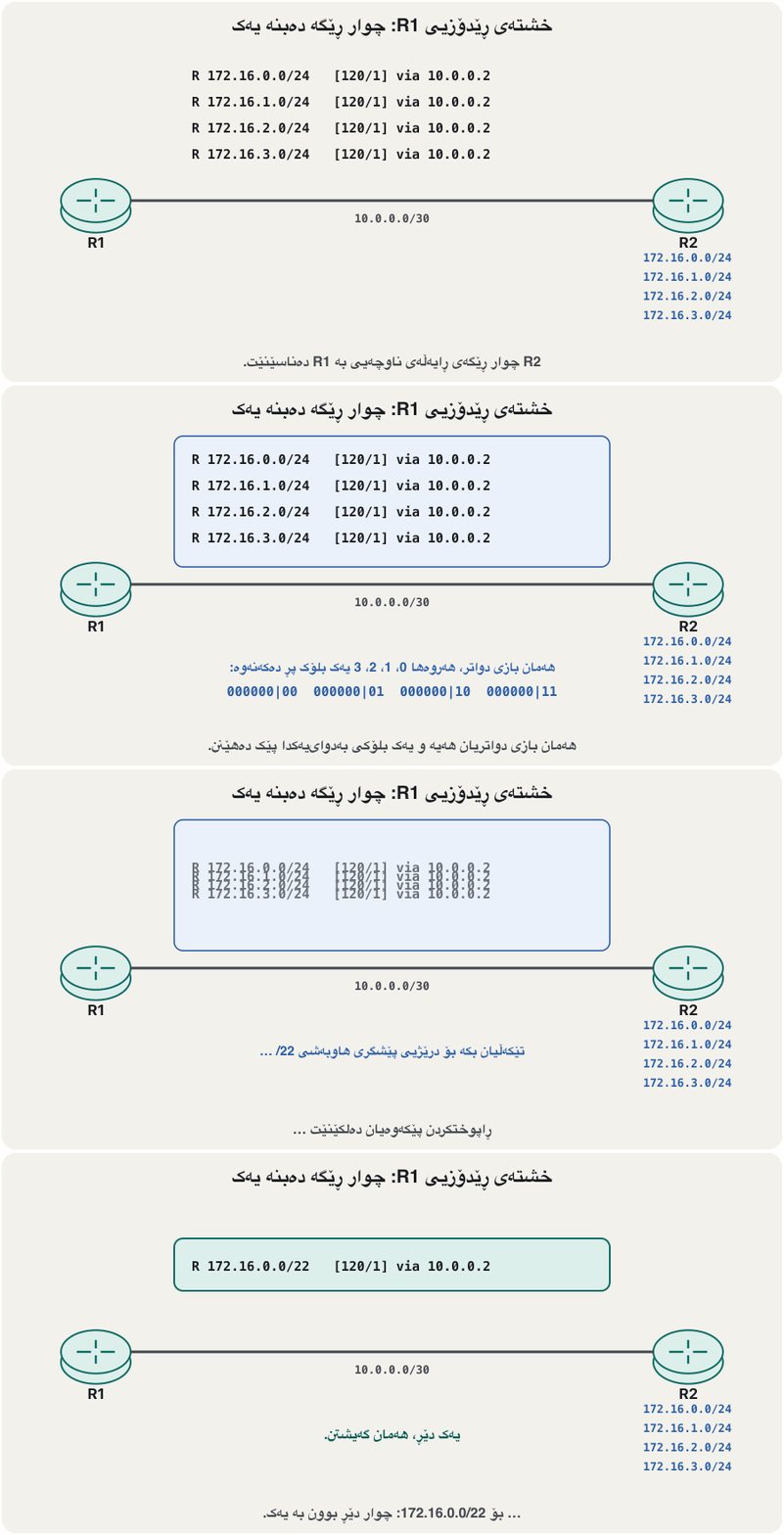
Routers on the Internet know a huge number of routes, and every router keeps the routes it learns in its routing table. If each router advertised every single network one by one, the tables and the updates would grow without end. Route summarization advertises many networks as one route instead. The new route is called a summary route: its prefix keeps only the bits that all the networks share, so one line in a routing table stands for all of them.
لە ژمارەیەکی زۆر زۆر ڕێگە دەناسن و هەر ئەو ڕێگانەی فێریان دەبێت لە هەڵیان دەگرێت. ئەگەر هەر هەموو دانە بە دانە بناسێنێت، خشتەکان و نوێکردنەوەکان بێ کۆتایی گەورە دەبن. لە جیاتی ئەوە چەندین وەک یەک ڕێگە دەناسێنێت. ڕێگە نوێیەکە پێی دەگوترێت : تەنیا ئەو دەهێڵێتەوە کە هەموو هاوبەشن، بۆیە یەک دێڕ لە جێی هەموویان دەگرێتەوە.
Replacing many routes with one summary route that covers them all, found by keeping their common leading bits (for example 192.168.24.0/24 to 192.168.31.0/24 become 192.168.24.0/21). It gives smaller tables, fewer updates and a more stable network.
گۆڕینی چەندین ڕێگا بە یەک ڕێگای پوختکراو کە هەموویان دادەپۆشێت، کە بە هێشتنەوەی بیتە هاوبەشە سەرەتاییەکانیان دەدۆزرێتەوە (بۆ نموونە 192.168.24.0/24 تا 192.168.31.0/24 دەبنە 192.168.24.0/21). خشتەی بچووکتر، نوێکردنەوەی کەمتر و ڕایەڵەیەکی جێگیرتر دەدات.
Why summarize: bandwidth, CPU and stabilityبۆچی ڕاپوخت بکەین: پانایی باند، CPU و جێگیری
- Smaller updates, less bandwidth. Each route a router advertises makes its update packets bigger. A few routes are no problem; all the routes of the Internet would be.
- Smaller routing tables, less CPU and memory. A shorter table is searched faster, so routing takes less time.
- More stability. If one small network behind Venice goes up and down, routers that know only the summary hear nothing about it: the change stays local.
- نوێکردنەوەی بچووکتر، کەمتر. هەر ڕێگەیەک کە دەیناسێنێت نوێکردنەوەکەی گەورەتر دەکات. چەند ڕێگەیەک کێشە نییە؛ هەموو ڕێگەکانی کێشە دەبوون.
- بچووکتر، CPU و کەمتر. خشتەیەکی کورتتر خێراتر دەگەڕدرێت، بۆیە کاتی کەمتری دەوێت.
- جێگیریی زیاتر. ئەگەر بچووک لە پشت ڤینس بێت و بڕوات، ئەو تەنیا دەناسن هیچی لێ نابیستن: گۆڕانەکە ناوخۆیی دەمێنێتەوە.
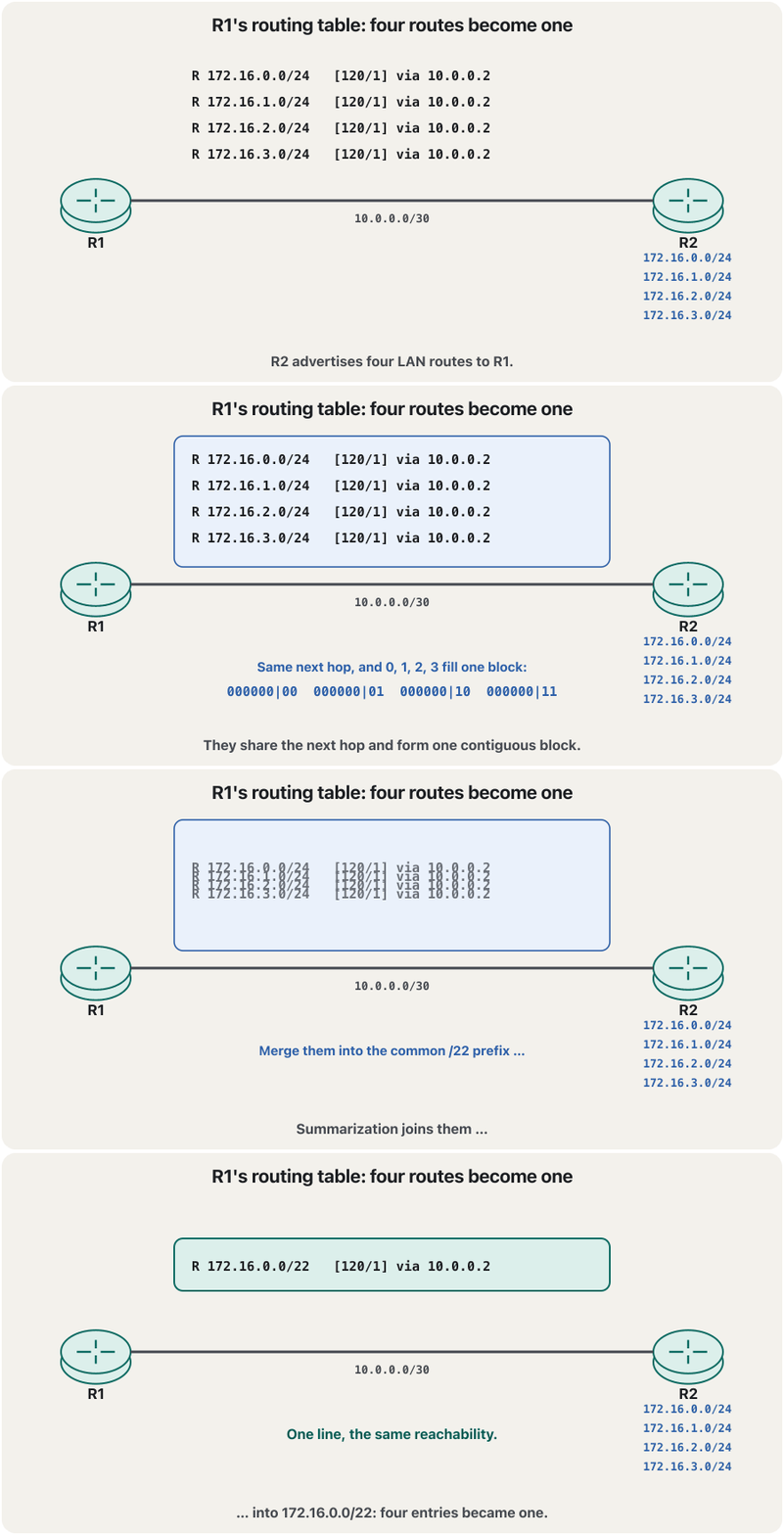
Summarization loses no destination: every network is still reachable through the summary route. It only removes the detail that other routers do not need.
هیچ شوێنێکی مەبەست لەدەست نادات: هەموو هێشتا لە ڕێی دەگیرێت. تەنیا ئەو وردەکارییە لادەبات کە تر پێویستیان پێی نییە.
The method: write the networks in binary, keep the common bitsڕێگاکە: ڕایەڵەکان بە دووانی بنووسە، بیتە هاوبەشەکان بهێڵەرەوە
To find a summary, compare the networks bit by bit from the left — the same binary you used for subnet masks.
بۆ دۆزینەوەی ، لە چەپەوە بە بەراورد بکە — هەمان کە بۆ ماسکی ژێرڕایەڵە بەکارت هێنا.
Write every network address in binary (only the octets that differ really need it).
هەموو بە بنووسە (تەنیا هەر کە جیاوازە بەڕاستی پێویستی پێیەتی).
Count the bits that are the same in all of them, from the left, until the first bit that differs.
ئەو لە هەموویاندا وەک یەکن لە چەپەوە بژمێرە، تا یەکەم کە جیاوازە.
That count is the prefix length of the summary.
ئەو ژمارەیە .
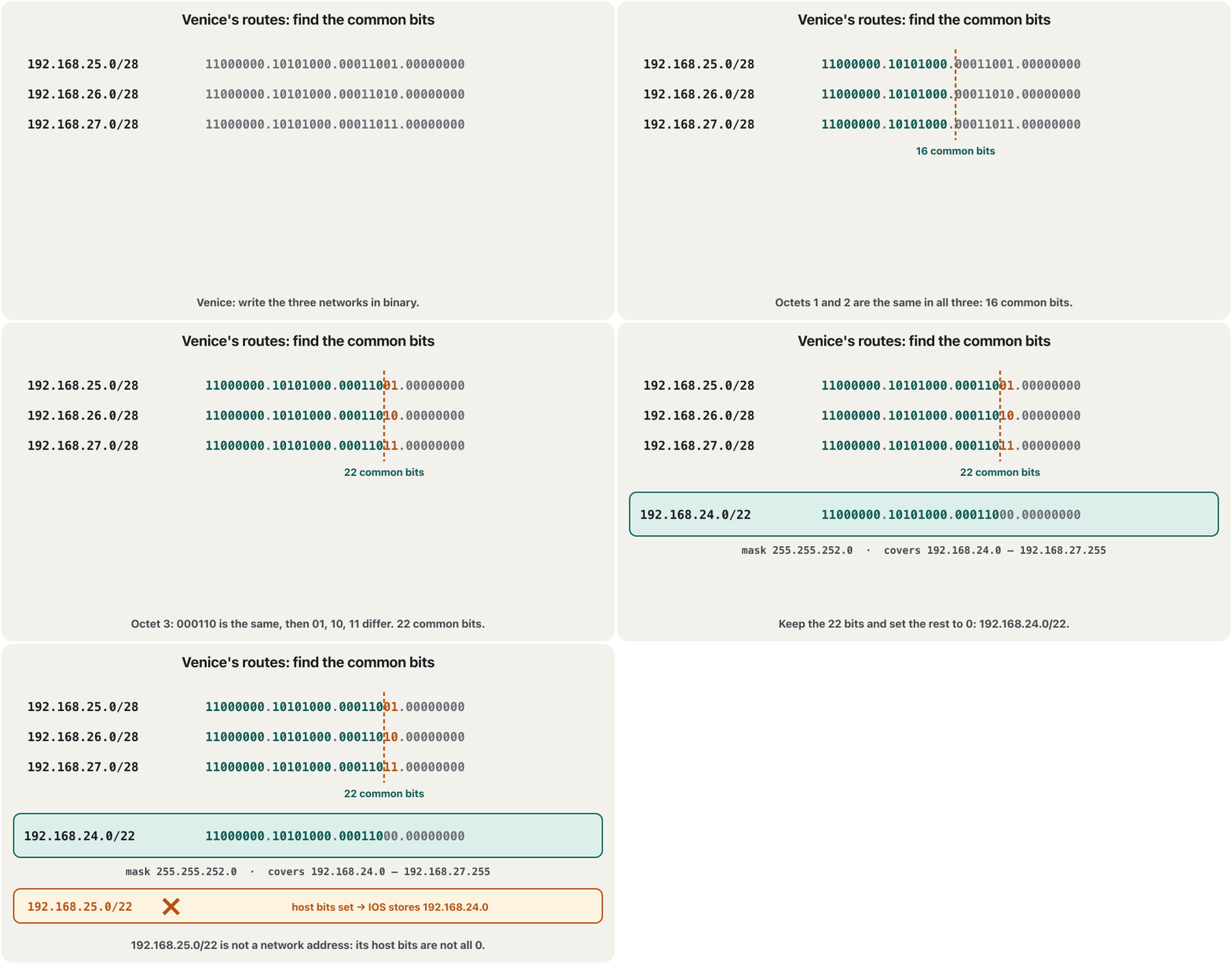
Keep the common bits and set every bit after them to 0: that is the summary's network address.
بهێڵەرەوە و هەموو دوای ئەوان بکە بە 0: ئەوە .
/24ـی بەدواییەکدا یەک /22ـی ورد دەدەن.CêITWorked example 1: Veniceنموونەی کارپێکراو 1: ڤینس
Four routers stand in four cities. Venice has three networks: 192.168.25.0/28, 192.168.26.0/28 and 192.168.27.0/28. The first two octets (192.168) are the same, so only the third octet needs binary: 25 = 00011001, 26 = 00011010, 27 = 00011011. The first six bits agree, so 16 + 6 = 22 bits are common. Now the important step: keep those 22 bits and set the rest to 0. The third octet becomes 00011000 = 24, so Venice's summary route is 192.168.24.0/22.
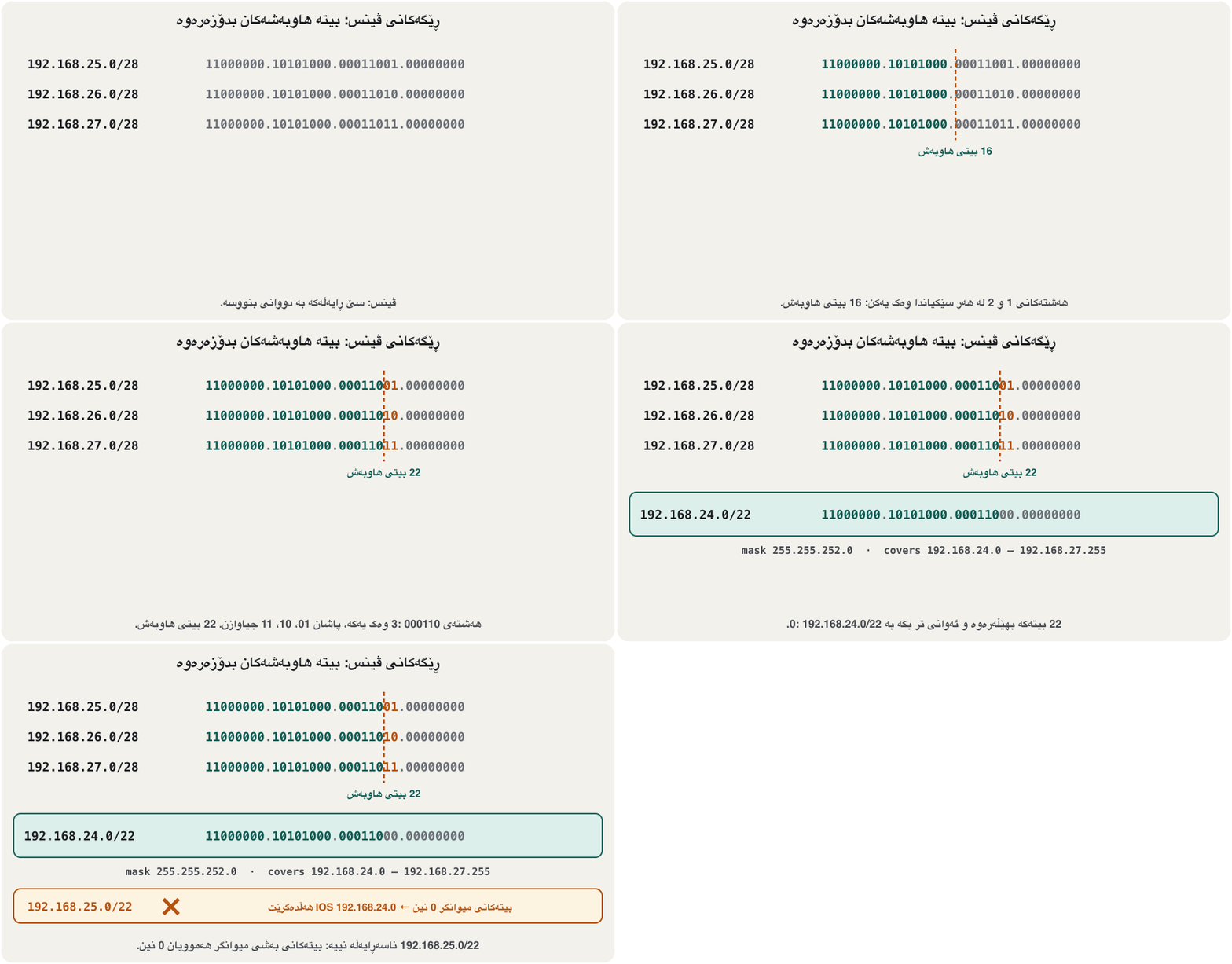
چوار لە چوار شاردان. ڤینس سێ هەیە: 192.168.25.0/28، 192.168.26.0/28 و 192.168.27.0/28. دوو یەکەم (192.168) وەک یەکن، بۆیە تەنیا سێیەم پێویستی بە هەیە: 25 = 00011001، 26 = 00011010، 27 = 00011011. شەش یەکەم یەکدەگرنەوە، بۆیە 16 + 6 = 22 هاوبەشن. ئێستا هەنگاوە گرنگەکە: ئەو 22 بهێڵەرەوە و ئەوانی تر بکە بە 0. سێیەم دەبێتە 00011000 = 24، بۆیە ڤینس 192.168.24.0/22ـە.
Worked example 2: Florenceنموونەی کارپێکراو 2: فلۆرێنس
Florence has 192.168.30.0/29, 192.168.30.8/29 and 192.168.30.16/29. Here the first three octets are equal, so only the fourth octet needs binary: 0 = 00000000, 8 = 00001000, 16 = 00010000. Three more bits agree, so 24 + 3 = 27 bits are common. The rest is already zero, so the summary is 192.168.30.0/27 (mask 255.255.255.224), which covers 192.168.30.0 to 192.168.30.31.
فلۆرێنس 192.168.30.0/29، 192.168.30.8/29 و 192.168.30.16/29ـی هەیە. لێرەدا سێ یەکەم یەکسانن، بۆیە تەنیا چوارەم پێویستی بە هەیە: 0 = 00000000، 8 = 00001000، 16 = 00010000. سێ تریش یەکدەگرنەوە، بۆیە 24 + 3 = 27 هاوبەشن. ئەوانی تر پێشتر سفرن، بۆیە 192.168.30.0/27ـە (ماسک 255.255.255.224) کە لە 192.168.30.0 تا 192.168.30.31 دەگرێتەوە.
Worked example 3: Milan sends one route to Romeنموونەی کارپێکراو 3: میلان یەک ڕێگە دەنێرێت بۆ ڕۆم
Milan now receives two summaries: 192.168.24.0/22 from Venice and 192.168.30.0/27 from Florence. It summarizes them again. Third octets: 24 = 00011000 and 30 = 00011110 — the first five bits agree, so 16 + 5 = 21 bits are common. Setting the rest to zero gives 192.168.24.0/21 (mask 255.255.248.0): third octets 24 to 31. Milan sends Rome this one route instead of six — three from Venice and three from Florence.
میلان ئێستا دوو وەردەگرێت: 192.168.24.0/22 لە ڤینسەوە و 192.168.30.0/27 لە فلۆرێنسەوە. دووپاتە ڕاپوختیان دەکاتەوە. سێیەم: 24 = 00011000 و 30 = 00011110 — پێنج یەکەم یەکدەگرنەوە، بۆیە 16 + 5 = 21 هاوبەشن. سفرکردنی ئەوانی تر 192.168.24.0/21 دەدات (ماسک 255.255.248.0): سێیەم 24 تا 31. میلان ئەم یەک ڕێگەیە دەنێرێت بۆ ڕۆم لە جیاتی شەش — سێ هی ڤینس و سێ هی فلۆرێنس.
When a summary covers more than existsکاتێک ڕێگەی پوختکراو زیاتر لەوەی هەیە دەگرێتەوە
Take four networks: 192.168.1.0/24, 192.168.2.0/24, 192.168.3.0/24 and 192.168.4.0/24. Their common prefix is 21 bits, so the summary is 192.168.0.0/21. That is correct — but a /21 holds eight /24 networks (192.168.0 to 192.168.7), and only four of them exist. Venice's /22 is even wider than its networks: three /28 blocks hold 48 addresses, but 192.168.24.0/22 covers 1,024 — all of 192.168.24.0 to 192.168.27.255. A packet for a missing part still follows the summary to the router that sent it. An exact cover needs three routes (192.168.1.0/24, 192.168.2.0/23, 192.168.4.0/24): fewer lines, or more precision — you choose.
چوار وەربگرە: 192.168.1.0/24، 192.168.2.0/24، 192.168.3.0/24 و 192.168.4.0/24. هاوبەشیان 21 ، بۆیە 192.168.0.0/21ـە. ئەمە دروستە — بەڵام /21 هەشت /24 لەخۆ دەگرێت (192.168.0 تا 192.168.7) و تەنیا چواریان هەن. /22ـی ڤینس زۆر فراوانترە لە خۆی: سێ بلۆکی /28 48 ناونیشانیان تێدایە، بەڵام 192.168.24.0/22 هەموو 1024 ناونیشانی 192.168.24.0 تا 192.168.27.255 دەگرێتەوە. بۆ بەشێکی نەبوو هێشتا بەدوای دەچێت بۆ ئەو ناردوویەتی. گرتنەوەی ورد سێ ڕێگەی دەوێت (192.168.1.0/24، 192.168.2.0/23، 192.168.4.0/24): دێڕی کەمتر، یان وردیی زیاتر — خۆت هەڵدەبژێریت.
Check every summary with Pythonهەموو ڕێگەیەکی پوختکراو بە Python بپشکنە
Python's ipaddress module can check your work. The function below widens the first network one bit at a time with supernet() until it contains all the others — the smallest summary. collapse_addresses() gives the exact cover instead. This is the same module the subnetting lesson uses.
مۆدیولی ipaddressـی دەتوانێت کارەکەت بپشکنێت. خوارەوە یەکەم بە supernet() هەر جارە یەک فراوانتر دەکات تا هەموو ئەوانی تر لەخۆ بگرێت — بچووکترین . collapse_addresses() لە جیاتی ئەوە گرتنەوەی ورد دەدات. ئەمە هەمان مۆدیولە کە وانەی ژێرڕایەڵەسازی بەکاری دەهێنێت.
import ipaddress as ip

def summary(nets):
    nets = [ip.ip_network(n) for n in nets]
    s = nets[0]
    while not all(n.subnet_of(s) for n in nets):
        s = s.supernet()            # one bit shorter each time
    return s

venice = ["192.168.25.0/28", "192.168.26.0/28", "192.168.27.0/28"]
florence = ["192.168.30.0/29", "192.168.30.8/29", "192.168.30.16/29"]
four = ["192.168.1.0/24", "192.168.2.0/24", "192.168.3.0/24", "192.168.4.0/24"]

for name, nets in [("Venice", venice), ("Florence", florence), ("Four /24s", four)]:
    s = summary(nets)
    print(f"{name:9} -> {str(s):16} mask {s.netmask}")
print("Milan     ->", summary(["192.168.24.0/22", "192.168.30.0/27"]))
print("Exact cover of the four /24s:",
      [str(n) for n in ip.collapse_addresses(ip.ip_network(n) for n in four)])
try:
    ip.ip_network("192.168.25.0/22")
except ValueError as e:
print("Error:", e)Venice -> 192.168.24.0/22 mask 255.255.252.0 Florence -> 192.168.30.0/27 mask 255.255.255.224 Four /24s -> 192.168.0.0/21 mask 255.255.248.0 Milan -> 192.168.24.0/21 Exact cover of the four /24s: ['192.168.1.0/24', '192.168.2.0/23', '192.168.4.0/24'] Error: 192.168.25.0/22 has host bits set
Explain the codeڕوونکردنەوەی کۆدەکە
- Lineدێڕی 3-8
Start from the first network and make the prefix one bit shorter until every network fits inside.
لە یەکەم دەست پێ بکە و هەر جارە یەک کورت بکەرەوە تا هەموو لە ناویدا جێی دەبێتەوە.
- Lineدێڕی 18-19
collapse_addresses joins only what really fits together: the exact cover.
collapse_addressesتەنیا ئەوە پێکەوە دەلکێنێت کە بەڕاستی پێکەوە دەگونجێن: گرتنەوەی ورد.- Lineدێڕی 20-23
A network with host bits set is refused — the classic mistake 192.168.25.0/22.
کە تێدایە ڕەت دەکرێتەوە — هەڵەی 192.168.25.0/22.
Use it to check answers, not instead of the method: in an exam, and at the router's command line, you do the binary in your head.
بۆ پشکنینی وەڵامەکان بەکاری بهێنە، نەک لە جیاتی ڕێگاکە: لە تاقیکردنەوەدا و لە هێڵی ، لە مێشکی خۆتدا دەکەیت.
A summary static routeڕێگەیەکی جێگیری پوختکراو
Summaries are not only for routing protocols. With static routes, Rome needs only one line to reach all six networks: a static route to 192.168.24.0/21 via Milan. On Milan, a second static route to the same /21 that points to Null0 — a virtual interface that silently drops packets — catches packets for the empty parts of the summary. The real /22 and /27 routes are longer, so by the longest prefix match they still win; only packets for networks that do not exist hit Null0, instead of bouncing between Milan's default route and Rome until their TTL runs out.
تەنیا بۆ نییە. بە ڕێگە جێگیرەکان، ڕۆم تەنیا یەک دێڕی پێویستە بۆ گەیشتن بە هەر شەش : بۆ 192.168.24.0/21 لە ڕێی میلانەوە. لەسەر میلان، دووەم بۆ هەمان /21 کە ئاماژە بە Null0 دەکات — گریمانەیی کە بە بێدەنگی فڕێ دەدات — بەشە بەتاڵەکانی دەگرێت. ڕێگە ڕاستەقینەکانی /22 و /27 درێژترن، بۆیە بە گونجانی درێژترین پێشگر هەر دەبەنەوە؛ تەنیا نەبوو دەگەنە Null0، لە جیاتی ئەوەی لە نێوان میلان و ڕۆمدا بێن و بڕۆن تا TTLـیان تەواو دەبێت.
Rome(config)#ip route 192.168.24.0 255.255.248.0 10.0.0.1
Rome(config)#end
Rome#copy running-config startup-config
Destination filename [startup-config]?
Building configuration...
[OK]
Rome#show ip route static
...
S     192.168.24.0/21 [1/0] via 10.0.0.1
Explain the codeڕوونکردنەوەی کۆدەکە
- Lineدێڕی 1
255.255.248.0 is /21; 10.0.0.1 is Milan.
255.255.248.0 بریتییە لە
/21؛ 10.0.0.1 میلانە.
Milan(config)#ip route 0.0.0.0 0.0.0.0 10.0.0.2
Milan(config)#ip route 192.168.24.0 255.255.248.0 Null0
Milan(config)#end
Milan#copy running-config startup-config
Destination filename [startup-config]?
Building configuration...
[OK]
Milan#show ip route static
...
S*    0.0.0.0/0 [1/0] via 10.0.0.2
S     192.168.24.0/21 is directly connected, Null0
Explain the codeڕوونکردنەوەی کۆدەکە
- Lineدێڕی 2
Packets for the empty parts of 192.168.24.0/21 are dropped here.
بەشە بەتاڵەکانی 192.168.24.0/21 لێرە فڕێ دەدرێن.
Automatic summarization at the classful boundaryڕاپوختکردنی خۆکار لە سنووری پۆلدا
Old, classful routing protocols (classful and classless) summarize by themselves at the boundary of the address class: when an update leaves one major network (say class A 10.0.0.0) on an interface of another major network, the subnets 10.1.1.0/24 and 10.1.2.0/24 are advertised only as 10.0.0.0/8. RIP version 1 always does this, because its updates carry no mask. On Cisco IOS, RIP version 2 also has auto-summary switched on by default, so every RIPv2 lab types no auto-summary. Classic EIGRP summarized automatically too, but since IOS 15.0(1)M its auto-summary is off by default.
کۆن و پۆلدار (پۆلدار و بێپۆل) لە سنووری پۆلی ناونیشانی IPـدا خۆیان ڕاپوخت دەکەن: کاتێک نوێکردنەوەیەک لە سەرەکییەوە (بۆ نموونە پۆلی A 10.0.0.0) لەسەر سەرەکیی تر دەردەچێت، 10.1.1.0/24 و 10.1.2.0/24 تەنیا وەک 10.0.0.0/8 دەناسێنرێن. وەشانی 1ی هەمیشە ئەمە دەکات، چونکە نوێکردنەوەکانی هیچ ماسکێک هەڵناگرن. لەسەر Cisco IOS، وەشانی 2ی auto-summaryـی بە بنەڕەت هەڵکراوە، بۆیە هەموو تاقیگەیەکی RIPv2 no auto-summary دەنووسێت. کلاسیکیش خۆکار ڕاپوختی دەکرد، بەڵام لە IOS 15.0(1)Mـەوە auto-summaryـی بە بنەڕەت کوژاوەتەوە.
R1(config)#router rip
R1(config-router)#version 2
R1(config-router)#no auto-summary
R1(config-router)#end
R1#show ip protocols
...
  Automatic network summarization is not in effect
Explain the codeڕوونکردنەوەی کۆدەکە
- Lineدێڕی 3
Works only with version 2; RIPv1 cannot stop summarizing.
تەنیا لەگەڵ وەشانی 2 کار دەکات؛ RIPv1 ناتوانێت ڕاپوختکردن ڕابگرێت.
The trap: discontiguous networksتەڵەکە: ڕایەڵە لێکدابڕاوەکان
Auto-summary becomes dangerous when the subnets of one classful network are separated by another network — a discontiguous network. Below, 172.16.1.0/24 is behind R1 and 172.16.2.0/24 behind R3, with class C links in between. Both R1 and R3 advertise only 172.16.0.0/16. R2 now has two equal routes to the same /16 and shares packets between them: about half of the packets for 172.16.2.10 go to R1, which has no such network, and are lost. The cure is no auto-summary on every RIPv2 router, so the real /24 subnets are advertised.
auto-summary مەترسیدار دەبێت کاتێک یەک پۆلدار بە تر لێک جیا کراونەتەوە — . لە خوارەوە، 172.16.1.0/24 لە پشت R1ـە و 172.16.2.0/24 لە پشت R3. بەستەری پۆلی C لە نێوانیاندایە. R1 و R3 هەردووکیان تەنیا 172.16.0.0/16 دەناسێنن. R2 ئێستا دوو ڕێگەی یەکسانی بۆ هەمان /16 هەیە و لە نێوانیاندا دابەش دەکات: نزیکەی نیوەی 172.16.2.10 دەچن بۆ R1 کە وای نییە و ون دەبن. چارەسەر no auto-summaryـە لەسەر هەموو RIPv2، بۆ ئەوەی /24 بناسێنرێن.
A classful network whose subnets are separated from each other by a different major network. Automatic summarization breaks it, because both sides advertise the same classful route.
پۆلدار کە بە سەرەکیی جیاواز لە یەکتر جیا کراونەتەوە. خۆکار تێکی دەدات، چونکە هەردوو لا هەمان ڕێگەی پۆلدار دەناسێنن.
R2#show ip route rip
R     172.16.0.0/16 [120/1] via 192.168.23.3, 00:00:12, GigabitEthernet0/1
                    [120/1] via 192.168.12.1, 00:00:21, GigabitEthernet0/0

! after no auto-summary on R1 and R3:
R2#show ip route rip
      172.16.0.0/24 is subnetted, 2 subnets
R        172.16.1.0 [120/1] via 192.168.12.1, 00:00:08, GigabitEthernet0/0
R        172.16.2.0 [120/1] via 192.168.23.3, 00:00:19, GigabitEthernet0/1
Explain the codeڕوونکردنەوەی کۆدەکە
- Lineدێڕی 2-3
One /16, two next hops: R2 load-shares, and half the packets go the wrong way.
یەک
/16، دوو : R2 بار دابەش دەکات و نیوەی بە ڕێگەی هەڵەدا دەڕۆن.- Lineدێڕی 7-9
Each subnet now has its own route with the right next hop.
ئێستا هەر ڕێگەی خۆی هەیە بە دروست.
Suboptimal routing: when a summary hides the better pathڕێدۆزیی نەگونجاو: کاتێک ڕێگەی پوختکراو ڕێگا باشترەکە دەشارێتەوە
You travel from Arbat to Sulaimani airport. The main road takes 30 minutes; the road through the city takes 45, but you take it because you like the view. You arrive, but later than you could have: that is a suboptimal decision — not the best one available.
لە عەربەتەوە دەچیت بۆ فڕۆکەخانەی سلێمانی. ڕێگای سەرەکی 30 خولەک دەخایەنێت؛ ڕێگای ناو شار 45، بەڵام هەڵیدەبژێریت چونکە دیمەنەکەیت پێ خۆشە. دەگەیت، بەڵام درەنگتر لەوەی دەتوانرا: ئەمە نەگونجاوترین بڕیارـە — باشترینی بەردەست نییە.
Where the analogy stops workingسنووری ئەم نموونەیە
A router does not choose for the view: it chooses wrongly only because it lacks information — here, because a summary hid the details.
لەبەر دیمەن هەڵنابژێرێت: تەنیا لەبەر کەمیی زانیاری بە هەڵە هەڵدەبژێرێت — لێرەدا چونکە وردەکارییەکانی شاردۆتەوە.
A suboptimal routing decision is choosing a worse path while a better one exists. Summaries can cause it: below, R2 and R3 both send R1 the summary 10.1.0.0/22 with the same metric, so R1 cannot see that 10.1.2.0/24 is right behind R3, and may send its traffic through R2 — one hop more. With detailed routes (no auto-summary, no manual summary there) R1 picks the direct path. In the four-city example Rome has only one path, so it cannot choose wrongly; it simply forwards everything to Milan.
نەگونجاوترین بڕیاری هەڵبژاردنی ڕێگایەکی خراپترە لە کاتێکدا باشتر هەیە. دەتوانن ببنە هۆی ئەمە: لە خوارەوە، R2 و R3 هەردووکیان 10.1.0.0/22 بە هەمان بۆ R1 دەنێرن، بۆیە R1 نابینێت کە 10.1.2.0/24 ڕاست لە پشت R3ـە و لەوانەیە هاتوچۆکەی بە R2دا بنێرێت — یەک زیاتر. بە ڕێگەی ورد (no auto-summary، بێ دەستی لەوێ) R1 ڕێگا ڕاستەوخۆکە هەڵدەبژێرێت. لە نموونەی چوار شارەکەدا ڕۆم تەنیا یەک ڕێگای هەیە، بۆیە ناتوانێت بە هەڵە هەڵبژێرێت؛ بە سادەیی هەموو شتێک دەنێرێت بۆ میلان.
Manual summaries in RIP, EIGRP and OSPF at a glanceڕاپوختکردنی دەستی لە RIP، EIGRP و OSPF بە کورتی
With auto-summary off, you decide where to summarize. Each protocol has its own command; the protocol lessons configure them in full.
کاتێک auto-summary کوژاوەتەوە، خۆت بڕیار دەدەیت لە کوێ ڕاپوخت بکەیت. هەر تایبەتی خۆی هەیە؛ وانەکانی بە تەواوی ڕێکیان دەخەن.
| Protocol | Command (example) (نموونە) | Where it goesلە کوێ دەنووسرێت |
|---|---|---|
| RIPv2 | ip summary-address rip 10.1.0.0 255.255.252.0 | Interface mode; not shorter than the classful network (no supernets)باری ؛ لە پۆلدار کورتتر نا (سوپەرنێت نا) |
| EIGRP | ip summary-address eigrp 1 192.168.24.0 255.255.248.0 | Interface mode (classic EIGRP); adds a Null0 summary route with AD 5باری ( کلاسیک)؛ Null0 بە AD 5 زیاد دەکات |
| OSPF | area 1 range 192.168.24.0 255.255.248.0 | Router mode, only on an area border router (summary-address on an ASBR)باری router، تەنیا لەسەر (summary-address لەسەر ASBR) |
| Staticجێگیر | ip route 192.168.24.0 255.255.248.0 10.0.0.1 | Global configuration, on any router، لەسەر هەر |
RIP on Cisco IOS refuses a summary shorter than the classful network, so Venice's 192.168.24.0/22 (which joins parts of four class C networks) cannot be a RIP summary; EIGRP, OSPF and static routes can use it. The details wait in EIGRP (summary routes have AD 5) and OSPF areas (summaries at the ABR).
لەسەر Cisco IOS کە لە پۆلدار کورتتر بێت ڕەت دەکاتەوە، بۆیە 192.168.24.0/22ـی ڤینس (کە بەشی چوار پۆلی C پێکەوە دەلکێنێت) ناتوانێت بێت؛ ، و دەتوانن بەکاری بهێنن. وردەکارییەکان لە EIGRP (ڕێگەی پوختکراو AD 5ـی هەیە) و ناوچەکانی OSPF (ڕاپوختکردن لەسەر ABR) چاوەڕێن.
Summarization and CIDR: supernetsڕاپوختکردن و CIDR: سوپەرنێت
Summarization is CIDR used for routing: any prefix length is allowed, so networks can be joined across the old class borders. A summary whose prefix is shorter than the class default is called a supernet: Milan's 192.168.24.0/21 joins eight class C networks (192.168.24.0 to 192.168.31.0). On the Internet, providers announce their address blocks the same way — one route for many customers — which keeps the global routing table manageable. Summarizing works best when addresses are planned in contiguous blocks, which is why VLSM plans and summaries go together.
CIDRـە کە بۆ بەکار دێت: هەر ڕێگە پێدراوە، بۆیە دەکرێت بە سەر سنوورە کۆنەکانی پۆلدا پێکەوە بلکێنرێن. کە لە بنەڕەتی پۆل کورتتر بێت پێی دەگوترێت سوپەرنێت (supernet): 192.168.24.0/21ـی میلان هەشت پۆلی C پێکەوە دەلکێنێت (192.168.24.0 تا 192.168.31.0). لە ، بلۆکی ناونیشانەکانیان بە هەمان شێوە دەناسێنن — یەک ڕێگە بۆ چەندین کڕیار — و ئەمە جیهانی بە کۆنترۆڵکراوی دەهێڵێتەوە. باشترین کار دەکات کاتێک ناونیشانەکان بە بلۆکی بەدواییەکدا پلان کراون، بۆیە پلانەکانی VLSM و پێکەوە دەڕۆن.
Common mistakesهەڵە باوەکان
- Counting common bits in decimal. 25, 26, 27 look alike in decimal; only binary shows that 24–27 share six bits.
- Forgetting that a summary can be too wide. Packets for the empty parts follow the summary; add a Null0 route where they would loop.
- Leaving auto-summary on in RIPv2 labs. Discontiguous subnets then break; type
no auto-summary. - Summarizing networks that are in different places. A summary must point to one direction where all its networks really are.
- Trying a supernet in RIP. IOS RIP refuses summaries shorter than the classful network; use a static route, EIGRP or OSPF.
- ژماردنی بە . 25، 26، 27 بە لە یەک دەچن؛ تەنیا پیشان دەدات کە 24–27 شەش هاوبەشن.
- لەبیرکردنی ئەوەی دەکرێت زۆر فراوان بێت. بەشە بەتاڵەکان بەدوای دەڕۆن؛ لەو شوێنەی دەسووڕێنەوە ڕێگەیەکی Null0 زیاد بکە.
- هێشتنەوەی auto-summary لە تاقیگەکانی RIPv2. ئەوسا تێک دەچن؛
no auto-summaryبنووسە. - ڕاپوختکردنی کە لە شوێنی جیاوازن. دەبێت ئاماژە بە یەک ئاڕاستە بکات کە هەموو بەڕاستی لەوێن.
- هەوڵدان بۆ سوپەرنێت لە . IOS کورتتر لە پۆلدار ڕەت دەکاتەوە؛ ، یان بەکار بهێنە.
Exercisesڕاهێنانەکان
Summarize 192.168.1.0/24, 192.168.2.0/24, 192.168.3.0/24 and 192.168.4.0/24 into one route. Which addresses does your summary cover that do not belong to the four networks? Which routes would cover them exactly?
192.168.1.0/24، 192.168.2.0/24، 192.168.3.0/24 و 192.168.4.0/24 ڕاپوخت بکە بۆ یەک ڕێگە. کام ناونیشان دەگرێتەوە کە سەر بە چوار نین؟ کام ڕێگانە بە وردی دەیانگرنەوە؟
Show answerوەڵامەکە پیشان بدە
Third octets: 1 = 00000001, 2 = 00000010, 3 = 00000011, 4 = 00000100. The first five bits are common, so 16 + 5 = 21: 192.168.0.0/21 (255.255.248.0). It also covers 192.168.0.0/24, 192.168.5.0/24, 192.168.6.0/24 and 192.168.7.0/24. The exact cover is 192.168.1.0/24, 192.168.2.0/23 and 192.168.4.0/24 (checked with collapse_addresses).
سێیەم: 1 = 00000001، 2 = 00000010، 3 = 00000011، 4 = 00000100. پێنج یەکەم هاوبەشن، بۆیە 16 + 5 = 21: 192.168.0.0/21 (255.255.248.0). هەروەها 192.168.0.0/24، 192.168.5.0/24، 192.168.6.0/24 و 192.168.7.0/24یش دەگرێتەوە. گرتنەوەی ورد 192.168.1.0/24، 192.168.2.0/23 و 192.168.4.0/24ـە (بە collapse_addresses پشکنراوە).
Someone wrote: Venice → 192.168.25.0/22, Florence → 192.168.30.0/27, Milan → 192.168.25.0/21. Which answers are wrong, and why?
کەسێک نووسیویەتی: ڤینس ← 192.168.25.0/22، فلۆرێنس ← 192.168.30.0/27، میلان ← 192.168.25.0/21. کام وەڵامانە هەڵەن و بۆچی؟
Show answerوەڵامەکە پیشان بدە
Venice and Milan are wrong: after the common bits every bit must be 0, so they are 192.168.24.0/22 and 192.168.24.0/21. Florence's 192.168.30.0/27 is right, because its host bits are already 0.
ڤینس و میلان هەڵەن: دوای هەموو دەبێت 0 بێت، بۆیە 192.168.24.0/22 و 192.168.24.0/21ن. 192.168.30.0/27ـی فلۆرێنس دروستە، چونکە پێشتر 0ن.
A campus uses 10.1.4.0/24, 10.1.5.0/24, 10.1.6.0/24 and 10.1.7.0/24 behind one router. Give the summary route and its mask, and the static route an upstream router R5 would use (next hop 10.0.0.1).
کەمپەسێک 10.1.4.0/24، 10.1.5.0/24، 10.1.6.0/24 و 10.1.7.0/24 لە پشت یەک بەکار دەهێنێت. و ماسکەکەی بدە. هەروەها بنووسە کە سەرەوەی R5 بەکاری دەهێنێت ( 10.0.0.1).
Show answerوەڵامەکە پیشان بدە
4 = 00000100 … 7 = 00000111: 16 + 6 = 22 common bits → 10.1.4.0/22, mask 255.255.252.0 — an exact summary.
4 = 00000100 … 7 = 00000111: 16 + 6 = 22 هاوبەش ← 10.1.4.0/22، ماسک 255.255.252.0 — ورد.
R5(config)#ip route 10.1.4.0 255.255.252.0 10.0.0.1
R5(config)#end
R5#copy running-config startup-config
Destination filename [startup-config]?
Building configuration...
[OK]Summarize 172.16.32.0/24 to 172.16.36.0/24 (five networks). Give the single smallest summary and the exact cover.
172.16.32.0/24 تا 172.16.36.0/24 (پێنج ) ڕاپوخت بکە. بچووکترین تاکە و گرتنەوەی ورد بدە.
Show answerوەڵامەکە پیشان بدە
32 = 00100000 … 36 = 00100100: 16 + 5 = 21 bits → 172.16.32.0/21 (covers 32–39, three more than needed). Exact cover: 172.16.32.0/22 + 172.16.36.0/24.
32 = 00100000 … 36 = 00100100: 16 + 5 = 21 ← 172.16.32.0/21 (32–39 دەگرێتەوە، سێ زیاتر لە پێویست). گرتنەوەی ورد: 172.16.32.0/22 + 172.16.36.0/24.
In the discontiguous lab, a ping from R2 to 172.16.2.10 succeeds only some of the time. Explain why in two sentences, and give the command that fixes it.
لە تاقیگەی ، لە R2ـەوە بۆ 172.16.2.10 تەنیا هەندێک جار سەرکەوتوو دەبێت. بە دوو ڕستە ڕوونی بکەرەوە بۆچی. پاشان ئەو بدە کە چاکی دەکاتەوە.
Show answerوەڵامەکە پیشان بدە
With auto-summary R1 and R3 both advertise 172.16.0.0/16, so R2 has two equal paths and sends about half the packets to R1, which drops them. no auto-summary under router rip (version 2) on the routers makes them advertise 172.16.1.0/24 and 172.16.2.0/24 separately.
بە auto-summary، R1 و R3 هەردووکیان 172.16.0.0/16 دەناسێنن، بۆیە R2 دوو ڕێگەی یەکسانی هەیە و نزیکەی نیوەی دەنێرێت بۆ R1 کە فڕێیان دەدات. no auto-summary لە ژێر router rip (وەشانی 2) لەسەر وایان لێ دەکات 172.16.1.0/24 و 172.16.2.0/24 جیا جیا بناسێنن.
Summaryکورتە
- Route summarization advertises many networks as one summary route: smaller updates (bandwidth), smaller tables (CPU, memory) and more stability, with no destination lost.
- Method: write the networks in binary, count the common leading bits (the prefix), set the rest to 0.
- Venice → 192.168.24.0/22, Florence → 192.168.30.0/27, Milan → 192.168.24.0/21 (never 192.168.25.0/x: host bits).
- A summary can be wider than the real networks (192.168.0.0/21 for .1–.4); a Null0 discard route stops loops for the empty parts.
- RIPv1 always and RIPv2 by default (Cisco IOS) summarize at classful boundaries;
no auto-summarystops it — needed for discontiguous networks. - A summary can cause suboptimal routing: it hides which router is closer to each subnet.
- Manual summaries:
ip summary-address rip|eigrp …on interfaces,area … rangeon an OSPF ABR, or a static route; a supernet is a summary shorter than the class default (CIDR).
- چەندین وەک یەک دەناسێنێت: نوێکردنەوەی بچووکتر ()، خشتەی بچووکتر (CPU، ) و جێگیریی زیاتر، بێ لەدەستدانی هیچ شوێنێکی مەبەست.
- ڕێگا: بە بنووسە، بژمێرە ()، ئەوانی تر بکە بە 0.
- ڤینس ← 192.168.24.0/22، فلۆرێنس ← 192.168.30.0/27، میلان ← 192.168.24.0/21 (هەرگیز 192.168.25.0/x: ).
- دەکرێت لە فراوانتر بێت (192.168.0.0/21 بۆ
.1–.4)؛ ڕێگەیەکی فڕێدانی Null0 سووڕانەوەی بەشە بەتاڵەکان ڕادەگرێت. - RIPv1 هەمیشە و RIPv2 بە بنەڕەت (Cisco IOS) لە سنووری پۆلدا ڕاپوخت دەکەن؛
no auto-summaryڕایدەگرێت — بۆ پێویستە. - دەتوانێت ببێتە هۆی نەگونجاو: دەیشارێتەوە کام لە هەر نزیکترە.
- دەستی:
ip summary-address rip|eigrp …لەسەر ،area … rangeلەسەر ABRـی ، یان ؛ سوپەرنێت کورتتر لە بنەڕەتی پۆل ().
Lesson complete!وانەکە تەواو بوو!
Well done. Review the key terms, then go on to the next lesson.دەستخۆش. سەیرێکی زاراوە سەرەکییەکان بکەرەوە، پاشان بڕۆ بۆ وانەی داهاتوو.
Key termsزاراوە سەرەکییەکان
OSPF: Cost, Router IDs and Link-State AdvertisementsOSPF: تێچوو، ناسێنەرەکانی ڕێدۆز و LSAـەکان
Related lecturesوانە پەیوەندیدارەکان
- More Subnetting: Bigger Networks, Exam Questions and VLSMژێرڕایەڵەسازیی زیاتر: ڕایەڵە گەورەکان، پرسیاری تاقیکردنەوە و VLSM
- Static Routesڕێگە جێگیرەکان
- Reading the Routing Table: Route Sources, Metrics and ADخوێندنەوەی خشتەی ڕێدۆزی: سەرچاوەکانی ڕێگە، پێوانە و مەودای بەڕێوەبەری
- Securing Routing Updates: RIP Authentication and Passive Interfacesپاراستنی نوێکردنەوەکانی ڕێدۆزی: پشتڕاستکردنەوەی ناسنامەی RIP و نێوبەستە ناچالاکەکان
- EIGRP: Cisco’s Advanced Distance-Vector ProtocolEIGRP: مەودای ئاڕاستەی پێشکەوتووی Cisco
- Multi-Area OSPF and Virtual LinksOSPFـی فرەناوچەیی و بەستەرە گریمانەییەکان
- How Routers Learn Routes: Routing Protocols, Metrics and Loopsڕێدۆزەکان چۆن ڕێگەکان فێر دەبن: پرۆتۆکۆڵەکانی ڕێدۆزی، پێوانەکان و ئەڵقەکانی ڕێدۆزی
References and further readingسەرچاوەکان و خوێندنەوەی زیاتر
- Cisco IP Routing: RIP Configuration Guide (IOS XE) — automatic summary enabled by default, ip summary-address rip, no supernet advertisement
- Cisco IOS IP Routing: RIP Command Reference — auto-summary (RIP), ip summary-address rip
- RFC 4632: Classless Inter-domain Routing (CIDR) — address aggregation
- RFC 2453: RIP Version 2 — subnet masks in updates, supernet routes
- Python documentation: ipaddress — supernet(), subnet_of(), collapse_addresses()
This lecture is a first edition. The Kurdish text and terminology are waiting for review by Kurdish IT teachers.ئەم وانەیە چاپی یەکەمە. دەقە کوردییەکە و زاراوەکانی چاوەڕێی پێداچوونەوەی مامۆستایانی کوردی بواری IT ن.