Chapterبەش 5 · Lectureوانە 5.6
More Subnetting: Bigger Networks, Exam Questions and VLSMژێرڕایەڵەسازیی زیاتر: ڕایەڵە گەورەکان، پرسیاری تاقیکردنەوە و VLSM
Subnetting beyond class C: the interesting octet moves to the third and second octets, the class B and class A examples, a Packet Tracer build, how many bits to borrow, real exam questions with every answer checked — one has no correct option — a ten-address drill checked with Python, and VLSM: subnets of different sizes, biggest first, with /30 or /31 router links.
لە دەرەوەی پۆلی C: بۆ سێیەم و دووەم دەچێت، نموونەکانی پۆلی B و پۆلی A، دروستکردن لە Packet Tracerـدا، چەند قەرز بکەیت، پرسیاری ڕاستەقینەی تاقیکردنەوە کە هەموو وەڵامێکیان پشکنراوە — یەکێکیان وەڵامی دروستی نییە — ڕاهێنانێکی دە ناونیشان کە بە پشکنراوە و : قەبارە جیاواز، گەورەترین یەکەم، لەگەڵ بەستەری بە /30 یان /31.
What you will learnچی فێر دەبیت
- Analyse a subnetting question: what is given, what is asked, borrowed bits and block size.
- Subnet class B and class A networks, working in the third or second octet.
- Find the subnet, broadcast address and usable range of any address with a prefix.
- Solve exam questions on network, subnet and host bits — and recognise a broken question.
- Design a VLSM plan, biggest first, with /30 or /31 router links.
- پرسیارێکی شی بکەیتەوە: چی زانراوە، چی داواکراوە، چەند قەرز دەکرێت و قەبارەی بلۆک چەندە.
- پۆلی B و پۆلی A بکەیت بە ، بە کارکردن لە سێیەم یان دووەمدا.
- ، و مەودای بەکارهاتووی هەر ناونیشانێک لەگەڵ بدۆزیتەوە.
- پرسیارەکانی تاقیکردنەوە لەسەر ، و چارەسەر بکەیت — و پرسیارێکی هەڵە بناسیتەوە.
- پلانێکی دیزاین بکەیت، گەورەترین یەکەم، لەگەڵ بەستەری بە
/30یان/31.
The method in one cardڕێگەکە لە یەک کارتدا
You can already cut a class C network into subnets step by step (Subnetting Step by Step). This lesson uses the same six steps on bigger networks, on real exam questions and on subnets of different sizes (VLSM).
تۆ پێشتر دەتوانیت پۆلی C هەنگاو بە هەنگاو بکەیت بە چەند (ژێرڕایەڵەسازی هەنگاو بە هەنگاو). ئەم وانەیە هەمان شەش هەنگاو بەکار دەهێنێت بۆ ، بۆ پرسیاری ڕاستەقینەی تاقیکردنەوە و بۆ قەبارە جیاواز ().
Two words do most of the work. The block size (in class often called the magic number) is 256 minus the mask's value in the interesting octet — the octet where the mask stops being 255 (The magic number). In a class C example that is always the 4th octet. In this lesson it moves.
دوو وشە زۆربەی کارەکە دەکەن. قەبارەی بلۆک (کە لە پۆلدا زۆرجار پێی دەگوترێت ) بریتییە لە 256 لابردنی بەهای لە — ئەو کە تێیدا لە 255 دەگۆڕێت (ژمارەی جادوویی). لە نموونەیەکی پۆلی C هەمیشە چوارەمە. لەم وانەیەدا جێگۆڕکێ دەکات.
Read the question first: given and askedسەرەتا پرسیارەکە بخوێنەوە: زانراو و داواکراو
Before any arithmetic, find two things. Given: an address with its prefix length (192.168.1.77/25) — or, when no prefix is written, a subnet mask (255.255.255.128). Asked: the subnets, the subnet one address lives in, its broadcast address, or a number of bits.
پێش هەر ژماردنێک دوو شت بدۆزەرەوە. زانراو: ناونیشانێک لەگەڵ (192.168.1.77/25) — یان ئەگەر نەنووسرابوو، (255.255.255.128). داواکراو: ، ئەو ناونیشانێک تێیدایە، یان ژمارەیەک .
Mask. Write the mask of the prefix: /25 = 255.255.255.128. Exam questions often add 'class C': the old default mask (/24) only tells you how many bits were borrowed: 25 − 24 = 1.
. بنووسە:
/25= 255.255.255.128. پرسیاری تاقیکردنەوە زۆرجار دەڵێت «پۆلی C»: بنەڕەتیی کۆن (/24) تەنیا پێت دەڵێت چەند قەرز کراوە: .Count. S borrowed bits give subnets; H host bits give usable hosts: subnets of hosts.
بژمێرە. S قەرزکراو دەدات؛ H بەکارهاتوو دەدات: ، هەریەکە .
Block size. 256 minus the mask in the interesting octet: 256 − 128 = 128. When all borrowed bits are in one octet, 256 ÷ (number of subnets) gives the same: 256 ÷ 2 = 128.
قەبارەی بلۆک. 256 لابردنی لە : . کاتێک هەموو ئەو قەرز کراون لە یەک ، (256 دابەش بە ژمارەی ) هەمان ژمارە دەدات.
List. Start at the first network address (192.168.1.0) and add the block: 192.168.1.128. Each broadcast is the next network address − 1 (192.168.1.127); the last one ends in 255.
ڕیزیان بکە. لە یەکەم (192.168.1.0) دەست پێ بکە و بلۆکەکە زیاد بکە: 192.168.1.128. هەر داهاتووە لابردنی 1 (192.168.1.127)؛ دوایینیان بە 255 کۆتایی دێت.
.77ی تێدایە.CêITThe answer also says where 192.168.1.77 lives: 77 is less than 128, so it is in subnet 1 (192.168.1.0/25, broadcast 192.168.1.127). The method for that question is in Which subnet is this address in?.
وەڵامەکە ئەوەش دەڵێت کە 192.168.1.77 لە کوێدایە: 77 لە 128 کەمترە، بۆیە لە یەکەمدایە (192.168.1.0/25، 192.168.1.127). ڕێگەی ئەو پرسیارە لە ئەم ناونیشانە لە کام ژێرڕایەڵەدایە؟ هەیە.
Bigger networks: the interesting octet movesڕایەڵە گەورەکان: هەشتە گۆڕاوەکە جێگۆڕکێ دەکات
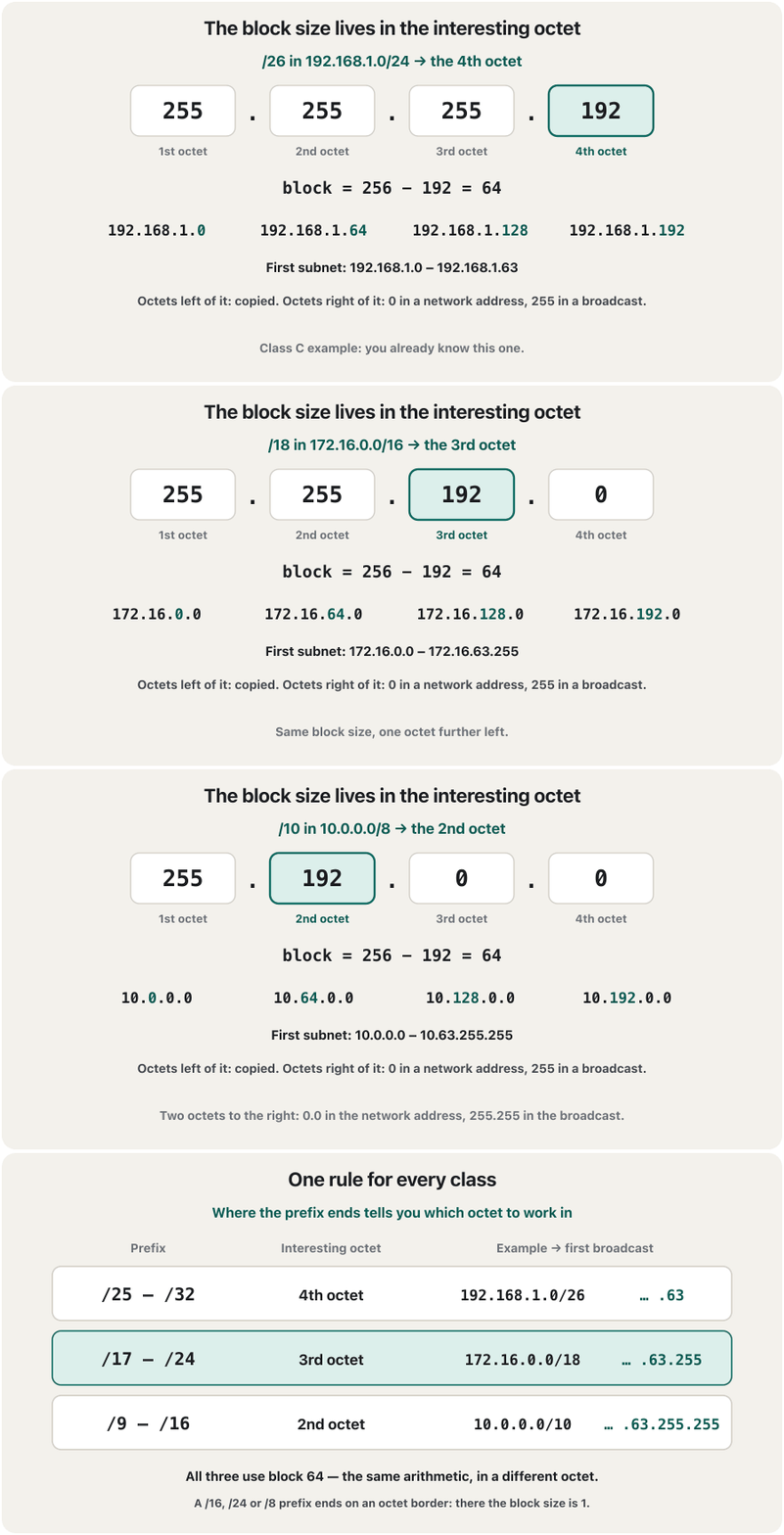
Nothing changes in the method for class B or class A networks. What changes is where you work: the block size always lives in the interesting octet. You find it from the prefix length:
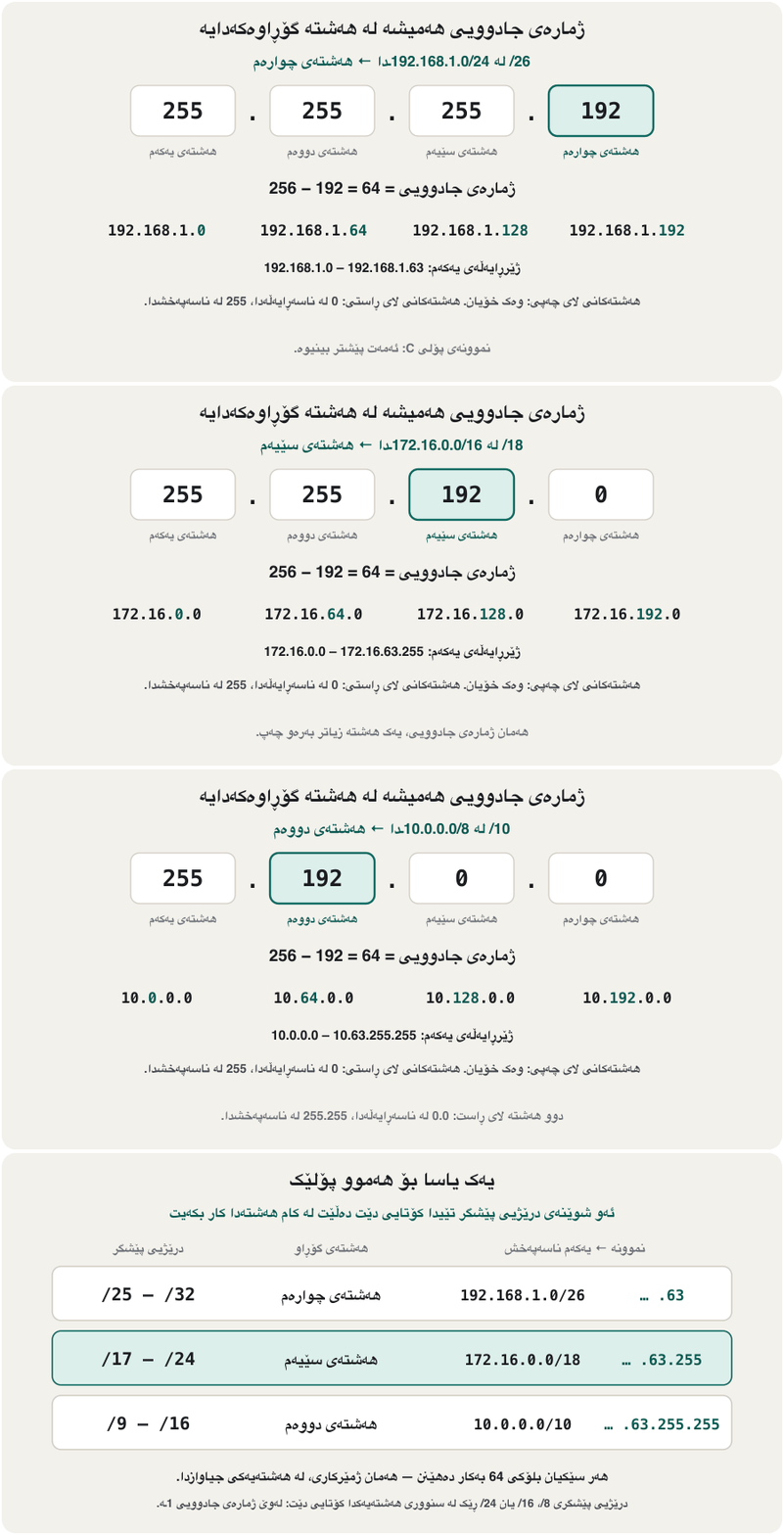
لە ڕێگەکەدا هیچ شتێک بۆ پۆلی B یان پۆلی A ناگۆڕێت. ئەوەی دەگۆڕێت ئەو شوێنەیە کە تێیدا کار دەکەیت: قەبارەی بلۆک هەمیشە لە . لە دەیدۆزیتەوە:
- /25 to /32: the 4th octet (/26 = 255.255.255.192).
- /17 to /24: the 3rd octet (/18 = 255.255.192.0).
- /9 to /16: the 2nd octet (/10 = 255.192.0.0).
/25تا/32: چوارەم (/26= 255.255.255.192)./17تا/24: سێیەم (/18= 255.255.192.0)./9تا/16: دووەم (/10= 255.192.0.0).
Octets to the left of it are copied from the address — the network octets never change. Octets to the right of it are 0 in every network address and 255 in every broadcast address.
ئەو لە چەپیـن وەک خۆیان لە ناونیشانەکەوە دەگوازرێنەوە — هەرگیز ناگۆڕێن. ئەوانەی لە ڕاستیـن لە هەموو 0ـن و لە هەموو 255.
Class B: 172.16.0.0/16 cut into /17, /18 and /24پۆلی B: 172.16.0.0/16 دەبڕدرێت بە /17، /18 و /24
Take the private class B block 172.16.0.0/16. Borrowing 1 bit gives /17 (255.255.128.0): the third octet is interesting and the block size is 128. Borrow 2 bits for /18 or 8 bits for /24:
بلۆکی تایبەتی پۆلی B، 172.16.0.0/16، وەربگرە. قەرزکردنی 1 /17 دەدات (255.255.128.0): سێیەم و قەبارەی بلۆک 128ـە. بۆ /18 دوو و بۆ /24 هەشت قەرز بکە:
| New prefix نوێ | Mask | SS (قەرزکراو) | Subnets | Block (3rd octet)بلۆک ( سێیەم) | Usable hosts each هەریەکە |
|---|---|---|---|---|---|
| /17 | 255.255.128.0 | 1 | 2 | 128 | |
| /18 | 255.255.192.0 | 2 | 4 | 64 | |
| /24 | 255.255.255.0 | 8 | 256 | 1 |
The two /17 subnets are 172.16.0.0–172.16.127.255 and 172.16.128.0–172.16.255.255. So 172.16.0.200/17 lives in 172.16.0.0/17 (broadcast 172.16.127.255) and 172.16.128.200/17 in 172.16.128.0/17 (broadcast 172.16.255.255). The /18 subnets start at 172.16.0.0, 172.16.64.0, 172.16.128.0 and 172.16.192.0; the /24 subnets at 172.16.0.0, 172.16.1.0 … 172.16.255.0.
دوو /17 بریتین لە 172.16.0.0 تا 172.16.127.255 و 172.16.128.0 تا 172.16.255.255. بۆیە 172.16.0.200/17 لە 172.16.0.0/17ـدایە ( 172.16.127.255) و 172.16.128.200/17 لە 172.16.128.0/17ـدا ( 172.16.255.255). /18 لە 172.16.0.0، 172.16.64.0، 172.16.128.0 و 172.16.192.0 دەست پێ دەکەن؛ هی /24 لە 172.16.0.0، 172.16.1.0 … 172.16.255.0.
Class A: 10.0.0.0/8 cut into /9, /10 and /16پۆلی A: 10.0.0.0/8 دەبڕدرێت بە /9، /10 و /16
With the private class A block 10.0.0.0/8 the interesting octet is the second one for prefixes /9 to /16. The block sizes are the same numbers as in class C — just one octet further left:
لەگەڵ بلۆکی تایبەتی پۆلی A، 10.0.0.0/8، بۆ /9 تا /16 دووەم . قەبارەی بلۆکەکان هەمان ژمارەکانی پۆلی Cـن — تەنیا یەک زیاتر بەرەو چەپ:
| New prefix نوێ | Mask | SS (قەرزکراو) | Subnets | Block (2nd octet)بلۆک ( دووەم) | Usable hosts each هەریەکە |
|---|---|---|---|---|---|
| /9 | 255.128.0.0 | 1 | 2 | 128 | |
| /10 | 255.192.0.0 | 2 | 4 | 64 | |
| /16 | 255.255.0.0 | 8 | 256 | 1 |
The two /9 subnets are 10.0.0.0–10.127.255.255 and 10.128.0.0–10.255.255.255. The four /10 subnets: 10.0.0.0–10.63.255.255, 10.64.0.0–10.127.255.255, 10.128.0.0–10.191.255.255 and 10.192.0.0–10.255.255.255. The /16 subnets run from 10.0.0.0/16 to 10.255.0.0/16. Because the interesting octet is the second, the third and fourth octets are 0.0 in a network address and 255.255 in a broadcast.
دوو /9 بریتین لە 10.0.0.0 تا 10.127.255.255 و 10.128.0.0 تا 10.255.255.255. چوار /10: 10.0.0.0 تا 10.63.255.255، 10.64.0.0 تا 10.127.255.255، 10.128.0.0 تا 10.191.255.255 و 10.192.0.0 تا 10.255.255.255. /16 لە 10.0.0.0/16ـەوە تا 10.255.0.0/16 دەڕۆن. لەبەر ئەوەی دووەم ، سێیەم و چوارەم لە 0.0ـن و لە 255.255.
Is every .255 a broadcast? A /17 labئایا هەموو .255ـێک ناسەپەخشە؟ تاقیگەیەکی /17
In a /24, every address ending in .255 is a broadcast. In bigger subnets that is no longer true. In this Packet Tracer practice two /17 subnets sit behind one router: PC6 172.16.127.254, PC7 172.16.15.255 and the router interface 172.16.0.1 in the first; the router interface 172.16.128.1, PC8 172.16.255.254 and PC9 172.16.200.255 in the second.
لە /24ـدا هەموو ناونیشانێک کە بە .255 کۆتایی بێت . لە ئەمە ئیتر ڕاست نییە. لەم ڕاهێنانەی Packet Tracerـدا دوو /17 لە پشت یەک : PC6 172.16.127.254، PC7 172.16.15.255 و 172.16.0.1 لە یەکەمدا؛ 172.16.128.1، PC8 172.16.255.254 و PC9 172.16.200.255 لە دووەمدا.
PC7 and PC9 end in .255 but they are ordinary hosts: their host bits are not all 1. A /17 has 15 host bits (the last 7 bits of the third octet and the whole fourth octet), so in 172.16.0.0/17 only 172.16.127.255 has all host bits 1. In the same way an address ending in .0, such as 172.16.1.0/17, can be a host.
PC7 و PC9 بە .255 کۆتایی دێن، بەڵام ئاسایین: هەموو 1 نین. /17 پازدە هەیە (7 کۆتایی سێیەم و هەموو چوارەم)، بۆیە لە 172.16.0.0/17ـدا تەنیا 172.16.127.255 هەموو 1ـن. بە هەمان شێوە ناونیشانێک کە بە .0 کۆتایی بێت، وەک 172.16.1.0/17، دەتوانێت بێت.
.255 کۆتایی دێت، بەڵام ناونیشانێکی دروستی .CêITBuild it in Packet Tracer: one router, four subnetsلە Packet Tracerـدا دروستی بکە: یەک ڕێدۆز، چوار ژێرڕایەڵە
To see subnets work, build them. Example 1 splits 192.168.1.0/24 into two /25s: the router interface 192.168.1.1 is the default gateway of subnet 1 (PC2 192.168.1.5, PC3 192.168.1.126) and 192.168.1.129 of subnet 2 (PC4 192.168.1.150, PC5 192.168.1.244). Every device uses the mask 255.255.255.128.
بۆ ئەوەی ببینیت چۆن کار دەکەن، دروستیان بکە. نموونەی یەکەم 192.168.1.0/24 دەکات بە دوو /25: 192.168.1.1 یەکەمە (PC2 192.168.1.5، PC3 192.168.1.126) و 192.168.1.129 هی دووەم (PC4 192.168.1.150، PC5 192.168.1.244). هەموو ئامێرێک 255.255.255.128 بەکار دەهێنێت.
Example 2 cuts the same /24 into four /26s (192.168.1.200/26 lives in the fourth, 192.168.1.192–192.168.1.255). Put one switch in each subnet and connect each switch to its own router interface. Give each interface the first usable address of its subnet, and give each PC an address from its range, the mask 255.255.255.192 and that interface as its default gateway.
نموونەی دووەم هەمان /24 دەبڕێت بە چوار /26 (192.168.1.200/26 لە چوارەمیاندایە، 192.168.1.192 تا 192.168.1.255). لە هەر دابنێ و هەر بە تایبەتی ببەستەوە. یەکەم ناونیشانی بەکارهاتووی هەر بدە بە ، بە هەر PCـێکیش ناونیشانێک لە مەوداکەی، 255.255.255.192 و ئەو وەک .
What you will see: a ping inside one subnet works at once. A ping to another subnet works only through the router, so it fails when a PC has no gateway, the wrong gateway or the wrong mask. The very first ping may lose a reply while ARP finds the MAC address. You can try the same idea in the CêIT network lab: two subnets joined by a router.
ئەوەی دەیبینیت: لە ناو یەک یەکسەر کار دەکات. بۆ تر تەنیا بە ناو کار دەکات، بۆیە سەرناکەوێت ئەگەر PCـێک نەبێت، دەروازەی هەڵەی هەبێت یان هەڵەی هەبێت. لەوانەیە یەکەم وەڵامێکی لێ ون بێت تا دەدۆزێتەوە. دەتوانیت هەمان بیرۆکە لە تاقیگەی ڕایەڵەی CêIT تاقی بکەیتەوە: دوو کە پێکیانەوە دەبەستێت.
How many bits must you borrow?دەبێت چەند بیت قەرز بکەیت؟
Turn the question round: you know how many subnets you need. Borrow the smallest S with (Borrowing host bits). For hosts it works the same way: keep the smallest H with .
پرسیارەکە پێچەوانە بکەرەوە: دەزانیت چەند پێویستە. بچووکترین S قەرز بکە کە بێت، N ژمارەی (قەرزکردنی بیتەکانی میوانگر). بۆ هەروایە: بچووکترین H بهێڵەرەوە کە لە ژمارەی کەمتر نەبێت.
- 172.16.0.0 needs 7 subnets. is too few; is enough → borrow 3 bits → /19, mask 255.255.224.0, block 32 in the third octet: 172.16.0.0, 172.16.32.0, 172.16.64.0 … 172.16.224.0 (eight subnets, one spare), 8,190 hosts each.
- 10.0.0.0 needs 10 subnets. is too few; → borrow 4 bits → /12, mask 255.240.0.0, block 16 in the second octet: 10.0.0.0, 10.16.0.0, 10.32.0.0 … 10.240.0.0, 1,048,574 hosts each.
- 172.16.0.0 پێویستی بە 7 هەیە. کەمە؛ بەسە ← 3 قەرز بکە ←
/19، 255.255.224.0، بلۆکی 32 لە سێیەمدا: 172.16.0.0، 172.16.32.0، 172.16.64.0 … 172.16.224.0 (هەشت ، یەکێکیان زیادە)، هەریەکە 8,190 . - 10.0.0.0 پێویستی بە 10 هەیە. کەمە؛ ← 4 قەرز بکە ←
/12، 255.240.0.0، بلۆکی 16 لە دووەمدا: 10.0.0.0، 10.16.0.0، 10.32.0.0 … 10.240.0.0، هەریەکە 1,048,574 .
Exam questions: network, subnet and host bitsپرسیاری تاقیکردنەوە: بیتەکانی ڕایەڵە، ژێرڕایەڵە و میوانگر
Some questions ask for N, S and H: network bits (from the old class), subnet bits (borrowed) and host bits. They always add up to 32. N is 8 for class A, 16 for class B and 24 for class C — the old default masks (classes). Then S = prefix length − N and H = 32 − prefix length.
هەندێک پرسیار N، S و H دەپرسن: (لە پۆلە کۆنەکەوە)، (قەرزکراو) و . کۆیان هەمیشە 32ـە. N بۆ پۆلی A هەشتە، بۆ پۆلی B شانزە و بۆ پۆلی C بیست و چوار — بنەڕەتیی کۆن (پۆلەکان). پاشان و .
Worked: 10.55.66.77 with the mask 255.255.0.0, using classful logic. 10 is class A, so N = 8. The mask has 16 ones, so S = 16 − 8 = 8 and H = 32 − 16 = 16.
نموونەی کارپێکراو: 10.55.66.77 لەگەڵ 255.255.0.0، بە لۆجیکی پۆل. 10 پۆلی Aـیە، بۆیە . 16 یەکی تێدایە، بۆیە و .
A class B network must be subnetted to give 100 subnets and 100 hosts per subnet. Which two combinations work? (a) N = 16, S = 7, H = 7; (b) N = 16, S = 8, H = 8; (c) N = 16, S = 9, H = 7; (d) N = 8, S = 7, H = 17.
پۆلی B دەبێت بکرێت بە بۆ ئەوەی 100 و بۆ هەر 100 بدات. کام دوو ئەگەر دەگونجێن؟ (a) ؛ (b) ؛ (c) ؛ (d) .
Hintئاماژە
Check three things: N for class B, , — and the total of 32.
سێ شت بپشکنە: N بۆ پۆلی B، ، — و کۆی 32.
Show answerوەڵامەکە پیشان بدە
(b) and (c). Class B fixes N = 16. You need , so S ≥ 7, and , so H ≥ 7; and N + S + H = 32 means S + H = 16. (b) gives 256 subnets of 254 hosts and (c) 512 subnets of 126 hosts. (a) adds up to only 30 bits, and (d) has N = 8, which is class A.
(b) و (c). پۆلی B دیاری دەکات. پێویستت بە ـە، بۆیە ؛ هەروەها ، بۆیە ؛ واتە . (b) 256 254 و (c) 512 126 دەدەن. کۆی (a) تەنیا 30 ، (d)یش ـی هەیە کە هی پۆلی Aـیە.
Which subnet is the address in? /30, /20 and /15ناونیشانەکە لە کام ژێرڕایەڵەدایە؟ /30، /20 و /15
A frequent exam task: find the subnet that an address 'resides' in, and its broadcast. The method is the one in Which subnet is this address in? — in the interesting octet, take the largest multiple of the block size that is not bigger than the address's value. Here it is used in the fourth, third and second octets:
ئەرکێکی باوی تاقیکردنەوە: ئەو بدۆزەرەوە کە ناونیشانێک تێیدا «دەژی»، لەگەڵ . ڕێگەکە هەمان ڕێگەی ئەم ناونیشانە لە کام ژێرڕایەڵەدایە؟ـە — لە گەورەترین چەندجارەی قەبارەی بلۆک وەربگرە کە لە بەهای ناونیشانەکە گەورەتر نەبێت. لێرەدا لە چوارەم، سێیەم و دووەمدا بەکار دێت:
- 192.168.44.97/30 — 4th octet, block 4. 96 is the largest multiple of 4 that is ≤ 97 → subnet 192.168.44.96, hosts 192.168.44.97–192.168.44.98, broadcast 192.168.44.99.
- 172.31.77.201/20 — 3rd octet, block 16. 64 ≤ 77 < 80 → subnet 172.31.64.0, broadcast 172.31.79.255.
- 100.100.77.20/15 — 2nd octet, block 2. 100 is a multiple of 2 → subnet 100.100.0.0, broadcast 100.101.255.255. (100.100.x.x lies in 100.64.0.0/10, the shared address space of ISPs — not a public address.)
- 192.168.44.97/30 — چوارەم، بلۆکی 4. 96 گەورەترین چەندجارەی 4ـە کە لە 97 گەورەتر نییە ← 192.168.44.96، 192.168.44.97 و 192.168.44.98، 192.168.44.99.
- 172.31.77.201/20 — سێیەم، بلۆکی 16. ← 172.31.64.0، 172.31.79.255.
- 100.100.77.20/15 — دووەم، بلۆکی 2. 100 چەندجارەی 2ـە ← 100.100.0.0، 100.101.255.255. ناونیشانەکانی 100.100.x.x لە 100.64.0.0/10ـدان، مەودای ناونیشانی هاوبەشـی — ناونیشانی گشتی نین.
When no option is rightکاتێک هیچ وەڵامێک ڕاست نییە
Now a real exam-style question: Which is the broadcast address of the subnet in which 172.31.77.201/20 resides? The options were 172.31.201.255, 172.31.255.255, 172.32.77.255 and 172.15.255.255. Compute first: /20 → third octet, block 16; 77 lies in 64–79; the broadcast is 172.31.79.255. It is not among the options: the question is broken.
ئێستا پرسیارێکی ڕاستەقینەی شێوە تاقیکردنەوە: ئەو 172.31.77.201/20ـی تێدایە کامەیە؟ وەڵامەکان 172.31.201.255، 172.31.255.255، 172.32.77.255 و 172.15.255.255 بوون. سەرەتا بژمێرە: /20 ← سێیەم، بلۆکی 16؛ 77 لە 64 تا 79ـدایە؛ 172.31.79.255ـە. لە ناو وەڵامەکاندا نییە: پرسیارەکە هەڵەیە.
- A /20 keeps the first 16 bits, so the answer must start with 172.31 — that rules out 172.32.77.255 and 172.15.255.255.
- A /20 broadcast has a third octet of 15, 31, 47, 63, 79 … 255 (one less than a multiple of 16) — that rules out 172.31.201.255.
- 172.31.255.255 is the broadcast of another /20 (172.31.240.0/20) — or of 172.16.0.0/12, the answer you get if you wrongly use the block of 16 in the second octet.
/20یەکەم 16 وەک خۆی دەهێڵێتەوە، بۆیە وەڵامەکە دەبێت بە 172.31 دەست پێ بکات — ئەمە 172.32.77.255 و 172.15.255.255 لادەبات.- سێیەمی
/20یەکێکە لە 15، 31، 47، 63، 79 … 255 (یەک کەمتر لە چەندجارەیەکی 16) — ئەمە 172.31.201.255 لادەبات. - 172.31.255.255
/20ـێکی ترە (172.31.240.0/20) — یان هی 172.16.0.0/12، ئەو وەڵامەی دەستت دەکەوێت ئەگەر بە هەڵە بلۆکی 16 لە دووەمدا بەکار بهێنیت.
Drill: ten addresses, every numberڕاهێنان: دە ناونیشان، هەموو ژمارەکان
A classroom drill gives ten addresses. For each one find: the old class (from the first octet), the mask of its prefix, the network address, the broadcast address, the first and last usable addresses and the number of usable hosts. The class is only the old name of the first octet — the prefix decides the subnet.
ڕاهێنانێکی پۆل دە ناونیشان دەدات. بۆ هەریەکەیان ئەمانە بدۆزەرەوە: پۆلە کۆنەکەی (لە یەکەمەوە)، ، ، ، یەکەم و دوایین ناونیشانی بەکارهاتوو و ژمارەی بەکارهاتوو. پۆل تەنیا ناوە کۆنەکەی یەکەمە — دیاری دەکات.
Work out all six numbers for: (1) 192.168.1.50/27, (2) 10.200.120.100/15, (3) 172.20.70.155/20, (4) 10.120.11.90/10, (5) 10.10.10.130/12, (6) 10.20.250.254/13, (7) 203.0.113.200/30, (8) 10.80.10.11/16, (9) 172.17.10.10/24, (10) 198.51.100.220/28.
هەر شەش ژمارەکە بدۆزەرەوە بۆ: (1) 192.168.1.50/27، (2) 10.200.120.100/15، (3) 172.20.70.155/20، (4) 10.120.11.90/10، (5) 10.10.10.130/12، (6) 10.20.250.254/13، (7) 203.0.113.200/30، (8) 10.80.10.11/16، (9) 172.17.10.10/24، (10) 198.51.100.220/28.
Hintئاماژە
Find the interesting octet first: /27, /30 and /28 → 4th; /20 and /24 → 3rd; /15, /10, /12, /13 and /16 → 2nd.
سەرەتا بدۆزەرەوە: /27، /30 و /28 ← چوارەم؛ /20 و /24 ← سێیەم؛ /15، /10، /12، /13 و /16 ← دووەم.
Show answerوەڵامەکە پیشان بدە
| Addressناونیشان | Classپۆل | Mask | Network | Broadcast | Usable rangeمەودای بەکارهاتوو | Hosts |
|---|---|---|---|---|---|---|
| 192.168.1.50/27 | C | 255.255.255.224 | 192.168.1.32 | 192.168.1.63 | .33 – .62 | 30 |
| 10.200.120.100/15 | A | 255.254.0.0 | 10.200.0.0 | 10.201.255.255 | 10.200.0.1 – 10.201.255.254 | 131,070 |
| 172.20.70.155/20 | B | 255.255.240.0 | 172.20.64.0 | 172.20.79.255 | 172.20.64.1 – 172.20.79.254 | 4,094 |
| 10.120.11.90/10 | A | 255.192.0.0 | 10.64.0.0 | 10.127.255.255 | 10.64.0.1 – 10.127.255.254 | 4,194,302 |
| 10.10.10.130/12 | A | 255.240.0.0 | 10.0.0.0 | 10.15.255.255 | 10.0.0.1 – 10.15.255.254 | 1,048,574 |
| 10.20.250.254/13 | A | 255.248.0.0 | 10.16.0.0 | 10.23.255.255 | 10.16.0.1 – 10.23.255.254 | 524,286 |
| 203.0.113.200/30 | C | 255.255.255.252 | 203.0.113.200 | 203.0.113.203 | .201 – .202 | 2 |
| 10.80.10.11/16 | A | 255.255.0.0 | 10.80.0.0 | 10.80.255.255 | 10.80.0.1 – 10.80.255.254 | 65,534 |
| 172.17.10.10/24 | B | 255.255.255.0 | 172.17.10.0 | 172.17.10.255 | .1 – .254 | 254 |
| 198.51.100.220/28 | C | 255.255.255.240 | 198.51.100.208 | 198.51.100.223 | .209 – .222 | 14 |
Drill: ten addresses, every numberڕاهێنان: دە ناونیشان، هەموو ژمارەکان
Check every answer with Pythonهەموو وەڵامێک بە Python بپشکنە
Python's ipaddress module, part of every Python 3, does the same arithmetic. This short program prints the mask, the network and broadcast addresses, the usable range and the number of hosts for each address:
مۆدیولی ipaddressـی ، کە بەشێکە لە هەموو Python 3ـێک، هەمان ژمێرکاری دەکات. ئەم کورتە بۆ هەر ناونیشانێک ، و ، مەودای بەکارهاتوو و ژمارەی چاپ دەکات:
import ipaddress

def describe(text):
    iface = ipaddress.ip_interface(text)    # address + prefix
    net = iface.network                      # the subnet it lives in
    first = net.network_address + 1
    last = net.broadcast_address - 1
    hosts = net.num_addresses - 2
    print(f"{text:18} {str(net.netmask):15} {str(net.network_address):14}"
          f" {str(net.broadcast_address):16} {str(first)}-{str(last)}  {hosts:,}")

for a in ["192.168.1.50/27", "172.20.70.155/20", "10.10.10.130/12",
          "172.31.77.201/20", "100.100.77.20/15"]:
describe(a)192.168.1.50/27 255.255.255.224 192.168.1.32 192.168.1.63 192.168.1.33-192.168.1.62 30 172.20.70.155/20 255.255.240.0 172.20.64.0 172.20.79.255 172.20.64.1-172.20.79.254 4,094 10.10.10.130/12 255.240.0.0 10.0.0.0 10.15.255.255 10.0.0.1-10.15.255.254 1,048,574 172.31.77.201/20 255.255.240.0 172.31.64.0 172.31.79.255 172.31.64.1-172.31.79.254 4,094 100.100.77.20/15 255.254.0.0 100.100.0.0 100.101.255.255 100.100.0.1-100.101.255.254 131,070
Explain the codeڕوونکردنەوەی کۆدەکە
- Lineدێڕی 4
ip_interface keeps the address and its prefix together; .network is the subnet it lives in.
ip_interfaceناونیشانەکە و پێکەوە هەڵدەگرێت؛.networkئەو کە تێیدایە.- Lineدێڕی 8
num_addresses − 2 = usable hosts (the network and broadcast addresses are not hosts).
num_addresses − 2= بەکارهاتوو ( و نین).
Use it to check your own answers, not instead of the method: in an exam, and when you type addresses into a router, you must do it in your head.
بۆ پشکنینی وەڵامەکانی خۆت بەکاری بهێنە، نەک لە جیاتی ڕێگەکە: لە تاقیکردنەوەدا و کاتێک ناونیشان لە دەنووسیت، دەبێت لە مێشکی خۆتدا بیکەیت.
VLSM: subnets of different sizesVLSM: ژێرڕایەڵەکانی قەبارە جیاواز
With one mask for every subnet, every subnet has the size of the largest one you need. A company in Sulaymaniyah has Sales (100 hosts), Engineering (50), Accounts (25), Management (10) and two links between its routers, and only 192.168.10.0/24. A /26 for everything gives four subnets of 62 hosts: Sales does not fit, Management wastes 52 addresses, and nothing is left for the links.
بە یەک بۆ هەموو ، هەموو قەبارەی گەورەترین پێویستی هەیە. کۆمپانیایەک لە سلێمانی بەشی فرۆشتن (100 )، ئەندازیاری (50)، ژمێریاری (25)، بەڕێوەبردن (10) و دوو بەستەری نێوان هەیە، تەنیا 192.168.10.0/24ـیشی هەیە. /26 بۆ هەمووان چوار 62 دەدات: فرۆشتن جێی نابێتەوە، بەڕێوەبردن 52 ناونیشان بەفیڕۆ دەدات و هیچ بۆ بەستەرەکان نامێنێتەوە.
VLSM (variable-length subnet masking) cuts a network into subnets of different sizes — you subnet a subnet. It belongs to classless addressing (CIDR): every route carries its own prefix length, so routing protocols must send the mask with each route (RIPv2, OSPF and EIGRP do; RIPv1 did not — see classful and classless routing protocols). The opposite job — joining many subnets into one shorter prefix — is route summarization.
(Variable-Length Subnet Masking) دەبڕێت بە قەبارە جیاواز — دەکەیتە . بەشێکە لە ناونیشانکردنی بێپۆل (CIDR): هەموو ڕێگەیەک خۆی هەڵدەگرێت، بۆیە دەبێت لەگەڵ هەر ڕێگەیەک بنێرن (RIPv2، و دەینێرن؛ RIPv1 نەیدەنارد — بڕوانە پرۆتۆکۆڵەکانی ڕێدۆزیی پۆلدار و بێپۆل). کاری پێچەوانەکەی — کۆکردنەوەی چەندین لە یەک کورتتردا — ڕاپوختکردنـە.
The VLSM method: biggest firstڕێگەی VLSM: گەورەترین یەکەم
List every subnet you need — the router-to-router links too — with its number of hosts.
هەموو ئەو پێویستتن بنووسە — بەستەرەکانی نێوان — لەگەڵ ژمارەی .
Give each one the smallest block that fits: hosts + 2, rounded up to a power of 2 (100 → 128 = /25, 50 → 64 = /26, 25 → 32 = /27, 10 → 16 = /28; a router link → /30, or /31).
بە هەریەکەیان بچووکترین بلۆک بدە کە جێی دەبێتەوە: + 2، بەرەو سەرەوە بۆ توانێکی 2 (بۆ نموونە 100 ← 128 =
/25، 50 ← 64 =/26، 25 ← 32 =/27، 10 ← 16 =/28؛ بەستەرێکی ←/30یان/31).Sort them from the largest block to the smallest.
ڕیزیان بکە لە گەورەترین بلۆکەوە بۆ بچووکترین.
Hand out the blocks in that order, each starting where the last one ended.
بلۆکەکان بەو ڕیزە دابەش بکە، هەریەکە لەو شوێنەوە دەست پێ دەکات کە پێشووەکە کۆتایی هات.
Write down each network address, mask, usable range and broadcast address, and keep the rest as spare.
بۆ هەریەکەیان ، ، مەودای بەکارهاتوو و بنووسە و ئەوەی دەمێنێتەوە بۆ یەدەگ ڕابگرە.
Why biggest first? A block of addresses must start at a multiple of : a /26 can start only at .0, .64, .128 or .192. Going from large to small, every block ends exactly where the next, smaller block may start, so nothing is wasted and nothing overlaps. In another order you leave holes — or you write an impossible subnet such as 192.168.10.32/26, which is really part of 192.168.10.0/26.
بۆچی گەورەترین یەکەم؟ بلۆکێکی ناونیشان دەبێت لە چەندجارەیەکی دەست پێ بکات: /26 تەنیا لە .0، .64، .128 یان .192 دەست پێ دەکات. ئەگەر لە گەورەوە بۆ بچووک بڕۆیت، هەموو بلۆکێک ڕێک لەو شوێنە کۆتایی دێت کە بلۆکی دواتر و بچووکتر دەتوانێت دەستی پێ بکات، بۆیە هیچ شتێک بەفیڕۆ ناچێت و هیچ شتێک یەکتر نابڕن. بە ڕیزێکی تر کەلێن بەجێ دەهێڵیت — یان مەحاڵ دەنووسیت وەک 192.168.10.32/26، کە لە ڕاستیدا بەشێکە لە 192.168.10.0/26.
A full VLSM design worked by hand: sort the subnets from biggest to smallest, give each the smallest block that fits, and write down every range, in decimal only.
دیزاینێکی تەواوی بە دەست: لە گەورەترینەوە بۆ بچووکترین ڕیز بکە، بچووکترین بلۆکی گونجاو بدە بە هەر یەکێکیان و هەموو مەوداکان بنووسە، تەنیا بە ژمارەی دەیی.
Whole video (30 min): the biggest-first method on a worked example.
هەموو ڤیدیۆکە (30 خولەک): ڕێگای «گەورەترین یەکەم» لەسەر نموونەیەکی چارەسەرکراو.
Worked design: a company in Sulaymaniyahدیزاینی کارپێکراو: کۆمپانیایەک لە سلێمانی
The company has three buildings. Building A (router R1) holds Sales, 100 hosts, and Engineering, 50 hosts; building B (R2) holds Accounts, 25 hosts; building C (R3) holds Management, 10 hosts. R1 is linked to R2 and to R3. The block is 192.168.10.0/24. Biggest first:
کۆمپانیاکە سێ بینای هەیە. بینای A ( R1) فرۆشتن (100 ) و ئەندازیاری (50 ) لەخۆ دەگرێت؛ بینای B (R2) ژمێریاری (25 )؛ بینای C (R3) بەڕێوەبردن (10 ). R1 بە R2 و بە R3 بەستراوە. بلۆکەکە 192.168.10.0/24ـە. گەورەترین یەکەم:
| Subnet | Hosts needed پێویست | Prefix (block) (بلۆک) | Network address | Usable rangeمەودای بەکارهاتوو | Broadcast |
|---|---|---|---|---|---|
| Salesفرۆشتن | 100 | /25 (128) | 192.168.10.0 | 192.168.10.1 – 192.168.10.126 | 192.168.10.127 |
| Engineeringئەندازیاری | 50 | /26 (64) | 192.168.10.128 | 192.168.10.129 – 192.168.10.190 | 192.168.10.191 |
| Accountsژمێریاری | 25 | /27 (32) | 192.168.10.192 | 192.168.10.193 – 192.168.10.222 | 192.168.10.223 |
| Managementبەڕێوەبردن | 10 | /28 (16) | 192.168.10.224 | 192.168.10.225 – 192.168.10.238 | 192.168.10.239 |
| Link R1–R2بەستەری R1–R2 | 2 | /30 (4) | 192.168.10.240 | 192.168.10.241 – 192.168.10.242 | 192.168.10.243 |
| Link R1–R3بەستەری R1–R3 | 2 | /30 (4) | 192.168.10.244 | 192.168.10.245 – 192.168.10.246 | 192.168.10.247 |
Common mistakesهەڵە باوەکان
| Mistakeهەڵە | What is trueڕاستییەکە |
|---|---|
| Working out the block size in the wrong octet.دۆزینەوەی قەبارەی بلۆک لە هەڵەدا. | Find the interesting octet first: /25–/32 the 4th, /17–/24 the 3rd, /9–/16 the 2nd.سەرەتا بدۆزەرەوە: /25 تا /32 چوارەم، /17 تا /24 سێیەم، /9 تا /16 دووەم. |
'Every address that ends in .255 is a broadcast.'«هەموو ناونیشانێک کە بە .255 کۆتایی بێت .» | Only when all host bits are 1. 172.16.15.255/17 is an ordinary host.تەنیا کاتێک هەموو 1 بن. 172.16.15.255/17 ئاساییە. |
| Copy slips such as 192.160.1.4 for 192.168.1.4 when listing subnets.هەڵەی نووسینەوە وەک 192.160.1.4 لە جیاتی 192.168.1.4 لە کاتی ڕیزکردنی . | Octets to the left of the interesting octet never change: check them in every row. لای چەپی هەرگیز ناگۆڕێن: لە هەموو دێڕێکدا بیانپشکنە. |
Forgetting the −2: hosts in a /25.لەبیرکردنی −2: لە /25ـێکدا. | Usable hosts = = 126; the network and broadcast addresses are not hosts (a /31 link is the exception). بەکارهاتوو = = 126؛ و نین (بەستەری /31 جیاوازە). |
| Borrowing too few bits: 2 bits for 7 subnets.قەرزکردنی کەم: 2 بۆ 7 . | Take the smallest S with : S = 3.بچووکترین S وەربگرە کە : . |
| VLSM in any order, or subnets that start anywhere. بە هەر ڕیزێک، یان کە لە هەر شوێنێک دەست پێ بکەن. | Biggest first; a block of starts at a multiple of .گەورەترین یەکەم؛ بلۆکی لە چەندجارەیەکی دەست پێ دەکات. |
| Picking the nearest option when none is right.هەڵبژاردنی نزیکترین وەڵام کاتێک هیچیان ڕاست نین. | Compute first. If no option matches, write the correct answer and say so.سەرەتا بژمێرە. ئەگەر هیچ وەڵامێک یەک نەگرتەوە، وەڵامی دروست بنووسە و بیڵێ. |
'A /31 is not valid.'«/31 دروست نییە.» | It is valid on point-to-point links (RFC 3021, 2000): both addresses are hosts.لە بەستەری دروستە (RFC 3021، ساڵی 2000): هەردوو ناونیشانەکە . |
| Using a router's built-in switch ports for different subnets.بەکارهێنانی سویچی ناو بۆ جیاواز. | Give every subnet its own router interface (or use VLANs).بە هەر تایبەتی بدە (یان بەکار بهێنە). |
Exercisesڕاهێنانەکان
Make subnets from 192.168.1.0 with the mask 255.255.255.224. Give the prefix length, the number of subnets, the block size, the hosts per subnet and every subnet.
192.168.1.0 لەگەڵ 255.255.255.224 بکە بە . ، ژمارەی ، قەبارەی بلۆک، هەر و هەموو بنووسە.
Show answerوەڵامەکە پیشان بدە
224 = 11100000, so the prefix is /27: S = 3 → 8 subnets, block 256 − 224 = 32, H = 5 → hosts each.
224 = 11100000، بۆیە /27ـە: ← 8 ، بلۆک ، ← هەریەکە .
| Network address | Usable rangeمەودای بەکارهاتوو | Broadcast |
|---|---|---|
| 192.168.1.0 | 192.168.1.1 – 192.168.1.30 | 192.168.1.31 |
| 192.168.1.32 | 192.168.1.33 – 192.168.1.62 | 192.168.1.63 |
| 192.168.1.64 | 192.168.1.65 – 192.168.1.94 | 192.168.1.95 |
| 192.168.1.96 | 192.168.1.97 – 192.168.1.126 | 192.168.1.127 |
| 192.168.1.128 | 192.168.1.129 – 192.168.1.158 | 192.168.1.159 |
| 192.168.1.160 | 192.168.1.161 – 192.168.1.190 | 192.168.1.191 |
| 192.168.1.192 | 192.168.1.193 – 192.168.1.222 | 192.168.1.223 |
| 192.168.1.224 | 192.168.1.225 – 192.168.1.254 | 192.168.1.255 |
For the mask 255.255.255.240: count its ones and write its prefix, and write the octet 240 as a sum of place values. Then list the first three and the last subnet of 192.168.1.0/24 with it. Do the same for 255.255.255.252.
بۆ 255.255.255.240: یەکەکانی بژمێرە و بنووسە، 240یش وەک کۆی بەهای شوێنەکان بنووسە. پاشان یەکەم سێ و دوایین 192.168.1.0/24 بەو بنووسە. هەمان کار بۆ 255.255.255.252 بکە.
Show answerوەڵامەکە پیشان بدە
- 255.255.255.240 = 11111111.11111111.11111111.11110000: 8 + 8 + 8 + 4 = /28; 240 = 128 + 64 + 32 + 16 (4 bits borrowed). 16 subnets of 16: 192.168.1.0–.15, .16–.31, .32–.47 … the last is 192.168.1.240–192.168.1.255.
- 255.255.255.252 = …11111100: /30, 6 bits borrowed, 64 subnets of 4: 192.168.1.0–.3, 192.168.1.4–.7 … the last is 192.168.1.252–192.168.1.255. Every row keeps 192.168.1 — a row that reads 192.160.1.4 is a copying slip.
- 255.255.255.240 = 11111111.11111111.11111111.11110000: ، واتە
/28؛ (4 قەرز کراوە). 16 16 ناونیشانی: 192.168.1.0 تا 192.168.1.15، 192.168.1.16 تا 192.168.1.31، 192.168.1.32 تا 192.168.1.47 … دوایینیان 192.168.1.240 تا 192.168.1.255. - 255.255.255.252 = …11111100:
/30، 6 قەرز کراوە، 64 4 ناونیشانی: 192.168.1.0 تا 192.168.1.3، 192.168.1.4 تا 192.168.1.7 … دوایینیان 192.168.1.252 تا 192.168.1.255. هەموو دێڕێک 192.168.1 دەهێڵێتەوە — دێڕێک کە 192.160.1.4 بێت هەڵەی نووسینەوەیە.
Give the mask, the network address, the broadcast address and the number of usable hosts of 172.16.77.130/21.
، ، و ژمارەی بەکارهاتووی 172.16.77.130/21 بنووسە.
Show answerوەڵامەکە پیشان بدە
/21 = 255.255.248.0: third octet, block 8. 72 ≤ 77 < 80 → network 172.16.72.0, broadcast 172.16.79.255, hosts.
/21 = 255.255.248.0: سێیەم، بلۆکی 8. ← 172.16.72.0، 172.16.79.255، .
Plan 172.16.32.0/23 for four LANs of 200, 100, 50 and 25 hosts and three router-to-router links. Use biggest first and /30 links.
172.16.32.0/23 پلان بکە بۆ چوار 200، 100، 50 و 25 و سێ بەستەری نێوان . گەورەترین یەکەم و بەستەری /30 بەکار بهێنە.
Hintئاماژە
200 → 256 (/24), 100 → 128 (/25), 50 → 64 (/26), 25 → 32 (/27), links → 4 (/30).
200 ← 256 (/24)، 100 ← 128 (/25)، 50 ← 64 (/26)، 25 ← 32 (/27)، بەستەرەکان ← 4 (/30).
Show answerوەڵامەکە پیشان بدە
| Subnet | Prefix | Network address | Usable rangeمەودای بەکارهاتوو | Broadcast |
|---|---|---|---|---|
| LAN A (200) | /24 | 172.16.32.0 | 172.16.32.1 – 172.16.32.254 | 172.16.32.255 |
| LAN B (100) | /25 | 172.16.33.0 | 172.16.33.1 – 172.16.33.126 | 172.16.33.127 |
| LAN C (50) | /26 | 172.16.33.128 | 172.16.33.129 – 172.16.33.190 | 172.16.33.191 |
| LAN D (25) | /27 | 172.16.33.192 | 172.16.33.193 – 172.16.33.222 | 172.16.33.223 |
| Link 1 | /30 | 172.16.33.224 | 172.16.33.225 – 172.16.33.226 | 172.16.33.227 |
| Link 2 | /30 | 172.16.33.228 | 172.16.33.229 – 172.16.33.230 | 172.16.33.231 |
| Link 3 | /30 | 172.16.33.232 | 172.16.33.233 – 172.16.33.234 | 172.16.33.235 |
Spare: 172.16.33.236/30 and 172.16.33.240/28. The /24 for LAN A uses the whole third octet 32; everything else fits in 172.16.33.0/24.
یەدەگ: 172.16.33.236/30 و 172.16.33.240/28. /24ـی A هەموو سێیەمی 32 دەگرێت؛ هەموو ئەوانی تر لە 172.16.33.0/24ـدا جێیان دەبێتەوە.
Why does 192.168.1.0/24 not need the 'class' step any more?بۆچی 192.168.1.0/24 ئیتر پێویستی بە هەنگاوی «پۆل» نییە؟
Since CIDR (1993) the prefix length alone gives the mask. Exam questions still say 'class C' as a short name for the old default /24.
لە (1993) بەتەنیا دەدات. پرسیاری تاقیکردنەوە هێشتا «پۆلی C» وەک ناوێکی کورت بۆ /24ـی بنەڕەتیی کۆن بەکار دەهێنن.
In 10.0.0.0/16 subnets, what are the last two octets of every network address?لە ژێرڕایەڵەکانی 10.0.0.0/16ـدا دوو هەشتەی کۆتایی هەموو ناسەڕایەڵەیەک چین؟
0.0 — the interesting octet is the second, and everything to its right is 0 in a network address (255.255 in a broadcast).
0.0 — دووەمە و هەرچی لای ڕاستی بێت لە 0ـە (لە 255.255).
Summaryپوختە
- Read the question first: what is given (address/prefix or mask) and what is asked.
- The block size (256 − the mask octet) lives in the interesting octet: 4th for /25–/32, 3rd for /17–/24, 2nd for /9–/16.
- Octets to its left are copied; octets to its right are 0 in a network address and 255 in a broadcast — so x.x.15.255/17 can be a host.
- Bits to borrow: the smallest S with ≥ the subnets you need; hosts: ; .
- Compute first, then compare with the options; a question can be broken (172.31.77.201/20 → 172.31.79.255).
- VLSM gives each subnet the size it needs: biggest first, links as /30 or /31.
- Check answers with Python's ipaddress — but learn to do it in your head.
- سەرەتا پرسیارەکە بخوێنەوە: چی زانراوە (ناونیشان و یان ) و چی داواکراوە.
- قەبارەی بلۆک ( لابردنی ) لە : چوارەم بۆ
/25تا/32، سێیەم بۆ/17تا/24، دووەم بۆ/9تا/16. - لای چەپی وەک خۆیانن؛ ئەوانەی لای ڕاستی لە 0ـن و لە 255 — بۆیە
x.x.15.255/17دەکرێت بێت. - قەرزکردن: بچووکترین S کە لە ژمارەی کەمتر نەبێت؛ : ؛ .
- سەرەتا بژمێرە، پاشان بەراوردی وەڵامەکان بکە؛ دەکرێت پرسیارێک هەڵە بێت (172.31.77.201/20 ← 172.31.79.255).
- بە هەر ئەو قەبارەیە دەدات کە پێویستیەتی: گەورەترین یەکەم، بەستەرەکان وەک
/30یان/31. - وەڵامەکان بە
ipaddressـی بپشکنە — بەڵام فێر ببە لە مێشکتدا بیکەیت.
Lesson complete!وانەکە تەواو بوو!
Well done. Review the key terms, then go on to the next lesson.دەستخۆش. سەیرێکی زاراوە سەرەکییەکان بکەرەوە، پاشان بڕۆ بۆ وانەی داهاتوو.
Key termsزاراوە سەرەکییەکان
IPv6 Addresses: Format and Typesناونیشانەکانی IPv6: شێوە و جۆرەکان
Related lecturesوانە پەیوەندیدارەکان
- Address Classes, and Why CIDR Replaced Themپۆلەکانی ناونیشانی IP و بۆچی CIDR جێگەیانی گرتەوە
- IPv4 Addresses in Depthناونیشانەکانی IPv4 بە وردی
- Route Summarizationڕاپوختکردن
- Project: Subnet, Route and NAT a Company Networkپڕۆژە: ژێرڕایەڵەسازی، ڕێدۆزی و NATـی ڕایەڵەی کۆمپانیایەک
- How a Packet Finds Its Way: Gateways and Routing Tablesپاکێت چۆن ڕێگای خۆی دەدۆزێتەوە: دەروازەی بنەڕەتی و خشتەکانی ڕێدۆزی
- How Routers Learn Routes: Routing Protocols, Metrics and Loopsڕێدۆزەکان چۆن ڕێگەکان فێر دەبن: پرۆتۆکۆڵەکانی ڕێدۆزی، پێوانەکان و ئەڵقەکانی ڕێدۆزی
- VLANs: Many Networks on One SwitchVLAN: چەند ڕایەڵەیەک لەسەر یەک سویچ
- IPv6 Addresses: Format and Typesناونیشانەکانی IPv6: شێوە و جۆرەکان
References and further readingسەرچاوەکان و خوێندنەوەی زیاتر
- RFC 4632 (BCP 122, 2006): Classless Inter-domain Routing (CIDR) — prefixes of any length; masks or prefix lengths must be carried in routing protocols
- RFC 3021 (2000): Using 31-Bit Prefixes on IPv4 Point-to-Point Links
- Cisco: Configure IP Addresses and Unique Subnets for New Users (document 13788, updated 7 July 2023) — fixed-mask and VLSM examples, largest first
- Cisco Press: Introduction to Networks Companion Guide (CCNAv7), chapter 11 IPv4 Addressing
- Python documentation: ipaddress — IPv4/IPv6 manipulation library
This lecture is a first edition. The Kurdish text and terminology are waiting for review by Kurdish IT teachers.ئەم وانەیە چاپی یەکەمە. دەقە کوردییەکە و زاراوەکانی چاوەڕێی پێداچوونەوەی مامۆستایانی کوردی بواری IT ن.