Chapterبەش 2 · Lectureوانە 2.3
The CPU: Control Unit, ALU and CoresCPU: یەکەی جڵەوکردن، ALU و ناوکەکانی پرۆسێسەر
What the processor does and what it is made of: the microprocessor and the system on a chip; the control unit, the ALU, registers and cache (with memory outside the CPU); the machine cycle in one picture; multi-core chips and why more cores help; 8-, 16-, 32- and 64-bit processors with corrected dates; and who makes processors in 2026 (x86-64 and Arm).
پرۆسێسەر چی دەکات و لە چی پێک دێت: مایکرۆپرۆسێسەر و ؛ ، ALU، و ( لە دەرەوەی )؛ لە یەک وێنەدا؛ فرەناوک و بۆچی ناوکی زیاتر یارمەتی دەدات؛ پرۆسێسەری 8، 16، 32 و 64 بیت بە بەرواری ڕاستکراوە؛ و لە 2026ـدا کێ پرۆسێسەر دروست دەکات (x86-64 و Arm).
What you will learnچی فێر دەبیت
- Say what the CPU does and why "brain" is only a comparison.
- Name the parts inside a CPU core and what each does, with RAM outside the CPU.
- List the five functions of the control unit and the two parts of the ALU.
- Describe the machine cycle: fetch, decode, execute, store.
- Explain multi-core processors and when more cores make a computer faster.
- Compare 32-bit and 64-bit processors and the x86-64 and Arm families.
- بڵێیت چی دەکات و بۆچی «مێشک» تەنها بەراوردێکە.
- بەشەکانی ناو ناوکێکی و کاری هەریەکەیان ناو ببەیت، بە لە دەرەوەی .
- پێنج کارەکەی و دوو بەشەکەی ALU بژمێریت.
- وەسف بکەیت: هێنان، شیکردنەوە، جێبەجێکردن، هەڵگرتن.
- پرۆسێسەری فرەناوک ڕوون بکەیتەوە و کەی ناوکی زیاتر خێراتر دەکات.
- پرۆسێسەری 32 بیت و 64 بیت و خێزانەکانی x86-64 و Arm بەراورد بکەیت.
What the CPU doesCPU چی دەکات
The main chip of a that carries out the instructions of . People often call it the "brain" of the computer.
چیپی سەرەکیی کە ڕێنماییەکانی جێبەجێ دەکات. زۆرجار پێی دەوترێت «مێشکی کۆمپیوتەر».
The CPU (central processing unit), or processor, runs the instructions of every program. The slides list its features: it is considered the brain of the computer, it performs all types of data processing, and it controls the operation of all parts of the computer. Every click, every letter you type and every frame of a video passes through it as instructions.
(یەکەی ناوەندیی ) یان پرۆسێسەر، هەموو جێبەجێ دەکات. سلایدەکان تایبەتمەندییەکانی ڕیز دەکەن: بە مێشکی دادەنرێت، هەموو جۆرەکانی ئەنجام دەدات و جڵەوی کارکردنی هەموو بەشەکانی دەکات. هەموو کرتەیەک، هەموو پیتێک کە دەینووسیت و هەموو وێنەیەکی ڤیدیۆ وەک بەناویدا تێدەپەڕن.
Picture a busy kebab shop. The master cook reads each order slip and decides what to do next (the control unit). His hands cut, weigh and grill (the ALU). The few skewers in his hands right now are the registers, and the small tray right beside the grill is the cache. The counter in front of the grill, where everything for the lunch rush is laid out, is RAM; the storeroom at the back is storage. The order slips are the program.
بیر لە کەبابخانەیەکی قەرەباڵغ بکەرەوە. وەستاکە هەر پسوولەیەکی داواکاری دەخوێنێتەوە و بڕیار دەدات دواتر چی بکات (). دەستەکانی دەبڕن، دەکێشن و دەبرژێنن (ALU). ئەو چەند شیشەی ئێستا بە دەستییەوەن و سینییە بچووکەکەی تەنیشت مەنقەڵەکە . پێشخانەکەی بەردەم مەنقەڵەکە، کە هەموو پێداویستییەکانی کاتی قەرەباڵغیی نیوەڕۆی لەسەر ڕیز کراوە، ؛ کۆگاکەی دواوە . پسوولەکانی داواکاری .
Where the analogy stops workingسنووری ئەم نموونەیە
A cook thinks and improvises. A CPU never does: it follows its instructions exactly, one after another, billions of times a second, and does nothing without them. "Brain" is only a picture.
وەستا بیر دەکاتەوە و شت لە خۆیەوە دادەهێنێت. هەرگیز وا ناکات: ڕێک، یەک لە دوای یەک، ملیارەها جار لە چرکەیەکدا جێبەجێ دەکات و بەبێ ئەوان هیچ ناکات. «مێشک» تەنها وێنەیەکە.
A simple Kurdish (Sorani) explanation of what a processor is and why every smart device needs one.
ڕوونکردنەوەیەکی سادە بە کوردیی سۆرانی کە پرۆسێسەر چییە و بۆچی هەموو ئامێرێکی زیرەک پێویستی پێیەتی.
In Kurdish (Sorani).
بە کوردیی سۆرانی.
A whole CPU on one chipهەموو CPU لەسەر یەک چیپ
A microprocessor is a CPU built on a single chip. The first one sold, the Intel 4004 of 1971, had about 2,300 transistors; a 2026 processor has billions. On a desktop the chip sits in the CPU socket on the motherboard, and a cooling unit (a heat sink and fan, or a liquid cooler) sits on top of it, because it turns electricity into heat (see Heat and cooling).
مایکرۆپرۆسێسەر کە لەسەر یەک دروست کراوە. یەکەمیان کە فرۆشرا، Intel 4004ـی ساڵی 1971، نزیکەی 2,300 هەبوو؛ پرۆسێسەرێکی 2026 ملیاران هەیە. لە لە سەر دادەنرێت و یەکەیەکی ساردکردنەوە ( و پانکە، یان ساردکەرەوەی شلەیی) لەسەری دادەنرێت، چونکە کارەبا دەکات بە گەرما (بڕوانە گەرمی و ساردکردنەوە).
In phones, tablets and Apple's Macs, the processor goes one step further: it is a system on a chip (SoC). One chip holds the CPU cores, the graphics processor (GPU), an AI engine (NPU), the memory controller, often the modem, and the RAM in the same package. A desktop PC spreads these jobs over separate chips joined by the motherboard. GPUs and NPUs are explained in Graphics processors.
لە مۆبایل، و Macـەکانی Appleـدا پرۆسێسەر هەنگاوێک زیاتر دەڕوات: (SoC). یەک ، (GPU)، بزوێنەری ()، کۆنترۆڵکەری ، زۆرجار و لە هەمان پاکێجدا هەڵدەگرێت. ئەم کارانە بەسەر چەند جیادا دابەش دەکات کە پێکەوەیان دەبەستێتەوە. GPU و NPU لە یەکەکانی چارەسەرکردنی وێنەیی ڕوون کراونەتەوە.
A whole CPU on one chipهەموو CPU لەسەر یەک چیپ
Moore's law: twice as many transistorsیاسای مور: دوو هێندە ترانزیستۆر
In 1965 Gordon Moore, who later co-founded Intel, noticed that the number of parts on a chip was doubling every year. In 1975 he changed his forecast to doubling about every two years. This observation, called Moore's law, held for decades: from about 2,300 transistors in the Intel 4004 (1971) to 28 billion in Apple's M4 (2024). It is not a law of nature, only a trend that chip makers worked hard to keep. Since about 2010 the pace has slowed, because transistors are now so tiny that each step costs much more; makers add more cores and special units (GPU, NPU) instead.
لە 1965دا گۆردن مور، کە دواتر یەکێک لە دامەزرێنەرانی Intel بوو، تێبینیی کرد کە ژمارەی پارچەکانی سەر هەموو ساڵێک دوو هێندە دەبێت. لە 1975دا پێشبینییەکەی گۆڕی بۆ نزیکەی هەر دوو ساڵ جارێک دوو هێندە. ئەم تێبینییە، کە پێی دەوترێت یاسای مور (Moore's law)، چەندین دەیە ڕاست دەرچوو: لە نزیکەی 2,300 لە Intel 4004 (1971)ـەوە تا 28 ملیار لە M4ـی Apple (2024). یاسایەکی سروشتی نییە، تەنها ئاڕاستەیەکە کە دروستکەرانی زۆر هەوڵیان دا بیپارێزن. لە نزیکەی 2010ـەوە خێراییەکەی کەم بووەتەوە، چونکە ئێستا ئەوەندە بچووکن کە هەر هەنگاوێک زۆر گرانترە؛ بۆیە دروستکەران لە جیاتی ئەوە ناوکی زیاتر و یەکەی تایبەت (GPU، NPU) زیاد دەکەن.
Moore's law: why the number of transistors on a chip doubled every year or two, and the physical limits that now slow it down.
یاسای مور (Moore): بۆچی ژمارەی لەسەر هەر ساڵێک یان دوو ساڵ جارێک دوو هێندە دەبوو؛ هەروەها ئەو سنوورە فیزیکییانەی ئێستا خاوی دەکەنەوە.
Moore's law and its limits today.
یاسای مور (Moore) و سنوورەکانی لە ئەمڕۆدا.
A whole CPU on one chipهەموو CPU لەسەر یەک چیپ
Microcontrollers: a tiny computer on one chipمایکرۆکۆنترۆڵەر: کۆمپیوتەرێکی بچووک لەسەر یەک چیپ
A microprocessor is only the CPU: a PC adds RAM, storage and input/output chips around it on the motherboard. A microcontroller puts a whole small computer on one chip: a simple processor core, a little RAM, flash memory that holds its one program, timers and input/output pins. It is slow and has little memory, but it is very cheap and uses so little power that a battery can last for years. That is why the embedded computers in washing machines, microwaves, remote controls, toys and car parts are microcontrollers.
مایکرۆپرۆسێسەر تەنها : ، و و لە دەوری لەسەر زیاد دەکات. مایکرۆکۆنترۆڵەر (microcontroller) بچووکی تەواو لەسەر یەک دادەنێت: سادە، کەمێک ، کە تاکە هەڵدەگرێت، کاتپێو و پینەکانی و . خاوە و کەمە، بەڵام زۆر هەرزانە و ئەوەندە کەم کارەبا بەکار دەهێنێت کە پاترییەک دەتوانێت چەند ساڵێک بەس بێت. بۆیە سیستەمە چەسپێنراوەکانی ناو جلشۆر، مایکرۆوەیڤ، ڕیمۆت، یاری منداڵان و پارچەکانی ئۆتۆمبێل مایکرۆکۆنترۆڵەرن.
| Featureتایبەتمەندی | Microprocessor (a PC's CPU)مایکرۆپرۆسێسەر ( ) | Microcontrollerمایکرۆکۆنترۆڵەر |
|---|---|---|
| On the chipلەسەر | Fast cores and cache; RAM and storage are separateناوکی خێرا و ؛ و جیان | Small core, RAM, flash, timers and I/O pins togetherناوکی بچووک، ، فلاش، کاتپێو و پینی و پێکەوە |
| Power and priceکارەبا و نرخ | Tens of watts; expensiveدەیان وات؛ گران | Tiny power; a few cents to a few dollarsکارەبای زۆر کەم؛ چەند سەنتێک تا چەند دۆلارێک |
| Typical useبەکارهێنانی باو | PCs, laptops, servers (phones use SoCs)، ، (مۆبایل SoC بەکار دەهێنێت) | Washing machines, remotes, toys, sensors, car partsجلشۆر، ڕیمۆت، یاری، ، پارچەکانی ئۆتۆمبێل |
Inside the CPUناو CPU
The lecture notes name the CPU's major components: the arithmetic logic unit (ALU), which runs all calculations and comparison logic and connects to the control unit; the control unit, which coordinates activities inside the processor; the I/O unit (bus interface), which manages data entering and leaving the processor; and the registers, high-speed storage areas for the 1s and 0s being processed. Modern processors add caches (Cache: a small, very fast memory) and repeat the whole set as several cores.
تێبینییەکانی وانەکە پارچە سەرەکییەکانی ناو دەبەن: (ALU) کە هەموو حیساب و بەراوردکردنە لۆجیکییەکان جێبەجێ دەکات و بە بەستراوە؛ کە چالاکییەکانی ناو پرۆسێسەرەکە ڕێک دەخات؛ یەکەی و ( ) کە ئەو دێتە ناو پرۆسێسەر و لێی دەردەچێت بەڕێوە دەبات؛ و ، شوێنی هەڵگرتنی زۆر خێرا بۆ ئەو 1 و 0ـانەی کاریان لەسەر دەکرێت. پرۆسێسەرە نوێکان (کاش: بیرگەیەکی بچووک و زۆر خێرا) زیاد دەکەن و هەموو کۆمەڵەکە وەک چەند دووبارە دەکەنەوە.
Inside the CPUناو CPU
The control unitیەکەی جڵەوکردن
The part of the that directs all the other parts. It fetches each from , works out what it means and tells the , the memory and the input and output devices what to do. It does not calculate or store data itself.
ئەو بەشەی کە هەموو بەشەکانی تر بەڕێوە دەبات. هەر لە دەهێنێت، مانای دەدۆزێتەوە و بە ، ، و دەڵێت چی بکەن. خۆی حیساب ناکات و هەڵناگرێت.
The control unit controls the operation of all parts of the computer but does not process data itself. The slides give its five functions:
جڵەوی کارکردنی هەموو بەشەکانی دەکات، بەڵام خۆی ناکات. سلایدەکان پێنج کارەکەی دەدەن:
- It controls the transfer of data and instructions among the other units.
- It manages and coordinates all the units of the computer.
- It obtains the instructions from memory, interprets them and directs the operation of the computer.
- It communicates with input/output devices for the transfer of data or results from storage.
- It does not process or store data.
- گواستنەوەی و لە نێوان یەکەکانی تردا کۆنترۆڵ دەکات.
- هەموو یەکەکانی بەڕێوە دەبات و ڕێکیان دەخات.
- لە دەهێنێت، لێکیان دەداتەوە و ئاڕاستەی کارکردنی دەکات.
- لەگەڵ ئامێرەکانی و پەیوەندی دەکات بۆ گواستنەوەی یان ئەنجامەکان لە .
- خۆی ناکات و هەڵی ناگرێت.
The course's Kurdish report says the same in one line: as its name says, the control unit directs all the computer's operations, and every device and part works under it. It does this by sending control signals: tiny electrical "go" and "stop" messages to the ALU, the registers, memory and the devices, in step with the processor's clock.
ڕاپۆرتە کوردییەکەی کۆرسەکە هەمان شت بە یەک دێڕ دەڵێت: وەک ناوەکەی ئاماژەی پێدەدات، جڵەوی هەموو کارەکانی دەکات و هەموو ئامێر و بەشەکان لە ژێر فەرمانیدا کار دەکەن. ئەمە بە ناردنی جڵەوکردن دەکات: پەیامی کارەبایی بچووکی «دەست پێبکە» و «بوەستە» بۆ ALU، ، و ئامێرەکان، هاوکات لەگەڵ پرۆسێسەر.
Inside the CPUناو CPU
The arithmetic logic unit (ALU)یەکەی ژیربێژیی بیرکارییانە (ALU)
The part of the that does the actual work on data: such as adding and dividing, and such as comparing two numbers.
ئەو بەشەی کە کاری ڕاستەقینە لەسەر دەکات: وەک کۆکردنەوە و دابەشکردن، هەروەها وەک بەراوردکردنی دوو ژمارە.
The ALU has two parts:
ALU دوو بەشی هەیە:
| Partبەش | Operationsکارەکان | Exampleنموونە |
|---|---|---|
| Arithmeticژمێرەیی | add, subtract, multiply, divideکۆکردنەوە، لێدەرکردن، لێکدان، دابەشکردن | 7 + 5 = 12 |
| Logicلۆجیکی | AND, OR, NOT, compare, shiftAND، OR، NOT، بەراورد، جووڵاندن (shift) | 7 > 5 → true |
| Status flags دۆخ | record facts about the last result: zero? negative? too big (overflow)?ڕاستییەکانی دوایین ئەنجام تۆمار دەکەن: سفرە؟ نەرێنییە؟ زۆر گەورەیە (overflow)؟ | 5 − 5 = 0 → Z = 1 |
A shift moves all the bits one place: shifting 0101 (5) one place left gives 1010 (10), so a left shift doubles a binary number. Comparing "Is 7 greater than 5?" is a logical operation; the answer, true or false, is kept as a status flag that the next instruction can test. Inside, the ALU is built from logic gates.
جووڵاندن (shift) هەموو یەک شوێن دەجووڵێنێت: جووڵاندنی (5) یەک شوێن بۆ چەپ (10) دەدات، بۆیە جووڵاندن بۆ چەپ ژمارەیەکی دوو هێندە دەکات. بەراوردکردنی «ئایا 7 لە 5 گەورەترە؟» ؛ وەڵامەکە، ڕاست یان هەڵە، وەک دۆخ هەڵدەگیرێت کە دواتر دەتوانێت بیپشکنێت. لە ناوەوە ALU لە دروست کراوە.
Inside the CPUناو CPU
Registers and word sizeتۆمارگەکان و قەبارەی وشە
A group of flip-flops that stores one binary word, for example 8, 32 or 64 bits. A processor keeps the numbers it is working on in registers.
کۆمەڵێک کە یەک هەڵدەگرێت، بۆ نموونە 8، 32 یان 64 بیت. ئەو ژمارانەی کاریان لەسەر دەکات لە تۆمارگەکاندا هەڵیان دەگرێت.
Registers are the fastest storage of all: a few dozen tiny boxes inside each core that hold the 1s and 0s the core is working on right now. Some are general-purpose; others have special jobs, such as holding the address of the next instruction. The number of bits a processor handles at one time is its register size, also called its word size (see Words).
خێراترین شوێنی هەڵگرتنن: چەند دەیەیەک سندوقی زۆر بچووک لەناو هەر ناوکێکدا کە ئەو 1 و 0ـانە هەڵدەگرن کە ناوکەکە ئێستا کاریان لەسەر دەکات. هەندێکیان گشتین؛ هەندێکی تر کاری تایبەتیان هەیە، وەک هەڵگرتنی دواتر. ژمارەی ئەو پرۆسێسەرێک لە یەک کاتدا مامەڵەیان لەگەڵ دەکات پێی دەوترێت قەبارەی یان قەبارەی (بڕوانە وشەکان).
Registers come in many kinds, each with a short name. They are taught one by one in Registers and buses.
چەندین جۆریان هەیە و هەریەکەیان ناوێکی کورتی هەیە. یەک بە یەک لە تۆمارگەکان و تێپەڕگەکان فێر دەکرێن.
The machine cycle in one pictureسووڕی ڕێکارنامە لە یەک وێنەدا
A program is a long list of small instructions (load a number, add two numbers, store the result…). The CPU runs them one after another with the same four steps, called the machine cycle or instruction cycle: fetch the next instruction from memory, decode it, execute it, and store the result. Then it starts again with the next instruction.
لیستێکی درێژی بچووکە (ژمارەیەک بار بکە، دوو ژمارە کۆ بکەرەوە، ئەنجامەکە هەڵبگرە…). یەک لە دوای یەک بە هەمان چوار هەنگاو جێبەجێیان دەکات کە پێیان دەوترێت : دواتر لە دەهێنێت، شیی دەکاتەوە، جێبەجێی دەکات و ئەنجامەکە هەڵدەگرێت. پاشان بە دواتر دەست پێدەکاتەوە.
The control unit does the fetching and decoding, the ALU does the executing, and registers hold the numbers in between. To watch a real program (5 + 2 = 7) move through RAM, the registers and the ALU step by step, go to How a computer runs a program. How many cycles a CPU does per second is its clock speed: see Processor speed.
و شیکردنەوە دەکات، ALU جێبەجێکردن دەکات و ژمارەکان لە نێوانیاندا هەڵدەگرن. بۆ بینینی ڕاستەقینە (5 + 2 = 7) کە هەنگاو بە هەنگاو بە ، و ALUـدا دەڕوات، بڕۆ بۆ کۆمپیوتەر چۆن بەرنامەیەک جێبەجێ دەکات. ئەوەی لە چرکەیەکدا چەند سووڕ دەکات : بڕوانە خێرایی پرۆسێسەر.
Cores: several processors on one chipناوکەکانی پرۆسێسەر: چەند پرۆسێسەرێک لەسەر یەک چیپ
One complete processing unit inside a chip, with its own , and . A chip with several cores (dual-core, quad-core, octa-core…) can work on several tasks at the same time.
یەکەیەکی تەواوی چارەسەرکردنە لەناو چیپی ، بە ، و خۆیەوە. چیپێک کە چەند ناوکی هەبێت (دوو ناوک، چوار ناوک، هەشت ناوک…) دەتوانێت لە هەمان کاتدا کار لەسەر چەند ئەرکێک بکات.
The latest processor technology puts more than one CPU core onto a single chip. Each core is a complete processor with its own control unit, ALU and registers. The names count the cores: dual-core (2), triple-core or tri-core (3), quad-core (4), hexa-core (6), octa-core (8) and deca-core (10).
تەکنەلۆجیای نوێی پرۆسێسەر زیاتر لە یەک لەسەر یەک دادەنێت. هەر ناوکێک پرۆسێسەرێکی تەواوە بە ، ALU و خۆیەوە. ناوەکان ژمارەی ناوکەکان دەڵێن: dual-core (2)، triple-core یان tri-core (3)، quad-core (4)، hexa-core (6)، octa-core (8) و deca-core (10).
The lecture notes add some history: a dual-core processor combines two CPUs in one unit, and the first quad-core systems from Intel and AMD were sometimes two dual-core processors, either on the same motherboard or in one socket; newer chips put all four cores on one piece of silicon. In 2026, laptop and desktop chips commonly have 8 to 24 cores, and phones 6 to 10. For example, Intel's Core Ultra 9 285K (2024) has 24 cores: 8 fast performance cores and 16 efficient cores. Apple's M6 (August 2026) has 12: 2 "super" cores and 4 performance cores for speed, and 6 efficiency cores.
تێبینییەکانی وانەکە کەمێک مێژوو زیاد دەکەن: پرۆسێسەری dual-core دوو لە یەک یەکەدا کۆ دەکاتەوە و یەکەم سیستەمە quad-coreـەکانی Intel و AMD هەندێک جار دوو پرۆسێسەری dual-core بوون، یان لەسەر هەمان یان لە یەک سۆکێتدا؛ نوێترەکان هەر چوار ناوکەکە لەسەر یەک پارچە سیلیکۆن دادەنێن. لە 2026ـدا و زۆرجار 8 تا 24 ناوکیان هەیە و مۆبایل 6 تا 10. بۆ نموونە Core Ultra 9 285Kـی Intel (2024) 24 ناوکی هەیە: 8 ناوکی بەهێز و 16 ناوکی کەمخەرج. M6ـی Apple (ئابی 2026) 12 ناوکی هەیە: 2 «سوپەر ناوک» و 4 ناوکی بەهێز بۆ خێرایی و 6 ناوکی کەمخەرج.
Cores: several processors on one chipناوکەکانی پرۆسێسەر: چەند پرۆسێسەرێک لەسەر یەک چیپ
Why more cores help, and when they do notبۆچی ناوکی زیاتر یارمەتی دەدات و کەی نایدات
Watch a job of 8 separate tasks, such as exporting 8 photos. One core does them one at a time; four cores do four at once.
سەیری کارێکی 8 ئەرکی جیا بکە، وەک هەناردەکردنی 8 وێنە. یەک ناوک یەک یەک دەیانکات؛ چوار ناوک چوار دانە پێکەوە.
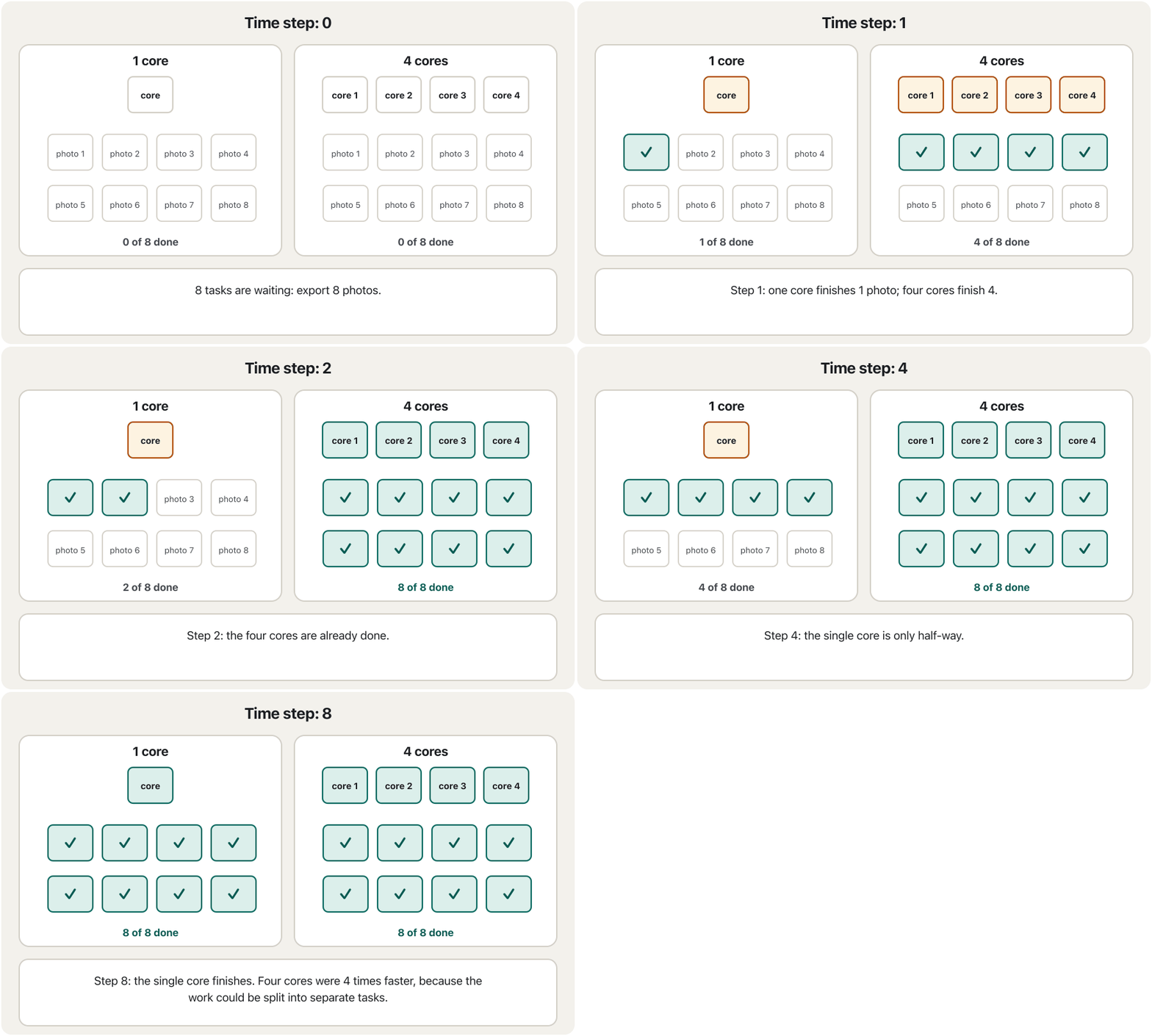
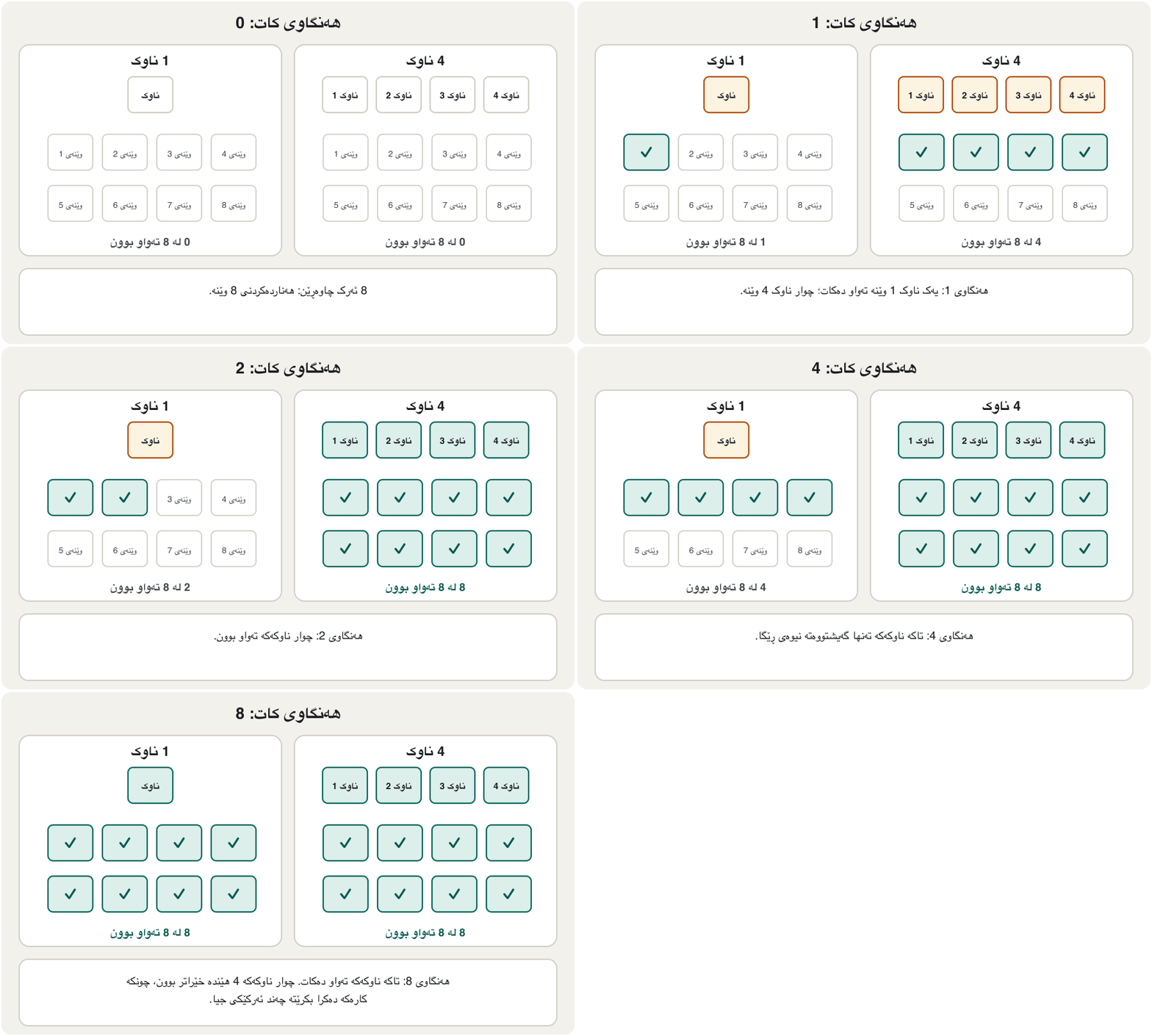
One baker can put one tray in the oven at a time. Four bakers with four ovens bake four trays at once, so a big order of 40 loaves is ready four times sooner.
یەک نانەوا لە یەک کاتدا یەک سینی دەخاتە فڕنەکەوە. چوار نانەوا بە چوار فڕن چوار سینی پێکەوە دەپێژن، بۆیە داواکارییەکی گەورەی 40 نان چوار هێندە زووتر ئامادە دەبێت.
Where the analogy stops workingسنووری ئەم نموونەیە
One single loaf is not ready any faster with four bakers. In the same way, a program that does one thing at a time uses only one core, however many the chip has.
یەک نان بە چوار نانەوا زووتر ئامادە نابێت. بە هەمان شێوە، کە لە یەک کاتدا تەنها یەک کار دەکات تەنها یەک ناوک بەکار دەهێنێت، چەند ناوکی هەبێت گرنگ نییە.
Many chips also run two threads per core (Hyper-Threading), and mix fast and efficient cores. These, together with clock speed and cache, decide how fast a processor feels: see cores and threads.
زۆر لە هەر ناوکێکدا دوو بەڕێوە دەبەن (Hyper-Threading) و ناوکی خێرا و کەمخەرج تێکەڵ دەکەن. ئەمانە لەگەڵ و دیاری دەکەن پرۆسێسەرێک چەند خێرا هەست دەکرێت: بڕوانە ناوک و دەزووەکان.
8, 16, 32 and 64-bit processorsپرۆسێسەری 8، 16، 32 و 64 بیت
A 64-bit processor works on 64 bits at a time and uses 64-bit memory addresses; a 32-bit one uses 32 bits. Each extra bit doubles the number of different values: with bits you can write values.
پرۆسێسەری 64 لە یەک کاتدا لەسەر 64 کار دەکات و 64 بەکار دەهێنێت؛ پرۆسێسەری 32 32 بەکار دەهێنێت. هەر زیادە ژمارەی بەها جیاوازەکان دوو هێندە دەکات: بە دەتوانیت بەها بنووسیت.
A 32-bit address can point to about 4.3 billion bytes (4 GiB); a 64-bit address to about 18 quintillion (16 EiB). The same rule for address lines is shown in How many addresses can n lines reach?.
ناونیشانێکی 32 دەتوانێت ئاماژە بۆ نزیکەی 4.3 ملیار بکات (4 GiB)؛ ناونیشانێکی 64 بۆ نزیکەی 18 کوینتیلیۆن (16 EiB). هەمان ڕێسا بۆ هێڵەکانی ناونیشان لە n هێڵ دەگەنە چەند ناونیشان؟ پیشان دراوە.
That is why a 32-bit program cannot use more than 4 GiB of memory, why 32-bit PCs usually stopped at 4 GB of RAM, and why every modern PC and phone is 64-bit: Windows 11 requires a 64-bit processor.
بۆیە 32 ناتوانێت زیاتر لە 4 GiB بەکار بهێنێت، 32 زۆرجار لە 4 GB دەوەستان و هەموو و مۆبایلێکی نوێ 64 : Windows 11 پرۆسێسەری 64 پێویستە.
A 32-bit processor uses 32-bit memory addresses, and each address points to one byte. How many bytes can it reach? Write the answer in GiB (1 GiB = 2^30 bytes).
پرۆسێسەرێکی 32 32 بەکار دەهێنێت و هەر ناونیشانێک ئاماژە بۆ یەک دەکات. دەتوانێت بگاتە چەند ؟ وەڵامەکە بە GiB بنووسە ( ).
Hintئاماژە
Divide the powers of two by subtracting the exponents.
بۆ دابەشکردنی توانەکانی 2، لە یەک دەربکە.
Show answerوەڵامەکە پیشان بدە
So a 32-bit system can address at most 4 GiB (4,294,967,296 bytes) of memory. Why GiB and not GB: 1,000 or 1,024?
بۆیە سیستەمێکی 32 زۆرترین 4 GiB ( ) ناونیشان دەکات. بۆچی GiB و نەک GB: 1,000 یان 1,024؟
8, 16, 32 and 64-bit processorsپرۆسێسەری 8، 16، 32 و 64 بیت
From 4-bit to 64-bitلە 4 بیتەوە بۆ 64 بیت
The word size of processors grew step by step. The lecture notes give some milestones; the table adds the chips that began each step.
قەبارەی پرۆسێسەرەکان هەنگاو بە هەنگاو گەورە بوو. تێبینییەکانی وانەکە هەندێک وێستگە دەهێنن؛ خشتەکە ئەو زیاد دەکات کە هەر هەنگاوێکیان دەست پێکرد.
| Yearساڵ | Stepهەنگاو |
|---|---|
| 1971 | Intel 4004: the first microprocessor, 4-bitIntel 4004: یەکەم مایکرۆپرۆسێسەر، 4 |
| 1974 | The Intel 8080 chip: 8-bit computing Intel 8080: کۆمپیوتەرکاریی 8 |
| 1978 | Intel 8086: 16-bit, the start of the x86 familyIntel 8086: 16 ، سەرەتای خێزانی x86 |
| 1985 | Windows 1.0 already runs on Intel's 16-bit 8086 familyWindows 1.0 لەسەر خێزانی 8086ـی 16 Intel کار دەکات |
| 1985 | Intel 80386: x86 becomes 32-bitIntel 80386: x86 دەبێتە 32 |
| 1992 | Windows 3.1 (6 April 1992)Windows 3.1 (6ی نیسانی 1992) |
| 1995 | Windows 95, which Microsoft calls "the 32-bit OS"Windows 95 کە Microsoft پێی دەڵێت « 32 » |
| 2003 | AMD Athlon 64 (23 September): the first 64-bit PC processorAMD Athlon 64 (23ی ئەیلوول): یەکەم پرۆسێسەری 64 بۆ |
| 2005 | First dual-core PC processors (AMD Athlon 64 X2, Intel Pentium D)یەکەم پرۆسێسەرە dual-coreـەکانی (AMD Athlon 64 X2، Intel Pentium D) |
| 2009 | Mac OS X Snow Leopard: most built-in apps become 64-bitMac OS X Snow Leopard: زۆربەی بنەڕەتییەکان دەبنە 64 |
| 2013 | iPhone 5s with the A7 (announced 10 September 2013): the first 64-bit smartphoneiPhone 5s بە A7 (ڕاگەیەندرا لە 10ی ئەیلوولی 2013): یەکەم 64 |
| 2019 | macOS Catalina stops running 32-bit appsmacOS Catalina ئیتر 32 ناکاتەوە |
8, 16, 32 and 64-bit processorsپرۆسێسەری 8، 16، 32 و 64 بیت
Dates the notes got wrongئەو بەروارانەی تێبینییەکان بە هەڵە نووسیویانن
Who makes processors in 2026لە 2026ـدا کێ پرۆسێسەر دروست دەکات
The slides name the leading makers of PC processor chips: Intel and AMD. They are still the two makers of x86-64 processors for Windows and Linux PCs. But most computers people carry today use Arm processors, designed with Arm's instruction set and made by several companies.
سلایدەکان دروستکەرە سەرەکییەکانی پرۆسێسەری ناو دەبەن: Intel و AMD. هێشتا ئەم دووانە دروستکەری پرۆسێسەرەکانی x86-64ـن بۆ Windows و Linux. بەڵام زۆربەی ئەو ئەمڕۆ خەڵک لەگەڵ خۆیان دەیبەن پرۆسێسەری Arm بەکار دەهێنن کە بە Arm دیزاین کراون و چەند کۆمپانیایەک دروستیان دەکەن.
| Familyخێزان | Makers and chips (examples)دروستکەر و (نموونە) | Where you find themلە کوێ دەیانبینیت |
|---|---|---|
| x86-64 | Intel Core Ultra (Series 3 in 2026), AMD RyzenIntel Core Ultra (Series 3 لە 2026)، AMD Ryzen | most Windows and Linux desktops and laptops, serversزۆربەی و Windows و Linux، |
| Arm64 | Apple M-series (M6, August 2026)M-seriesـی Apple (M6، ئابی 2026) | every Mac Apple sells since 2023, iPadهەموو ئەو Macـانەی Apple لە 2023ـەوە دەیفرۆشێت، iPad |
| Arm64 | Qualcomm Snapdragon XSnapdragon Xـی Qualcomm | Windows Copilot+ laptops Windows Copilot+ |
| Arm64 | Apple A-series, Qualcomm Snapdragon, MediaTek Dimensity, Samsung Exynos, Google TensorA-seriesـی Apple، Qualcomm Snapdragon، MediaTek Dimensity، Samsung Exynos، Google Tensor | smartphones and tablets و |
Common mistakesهەڵە باوەکان
| Mistakeهەڵە | What is trueڕاستییەکە |
|---|---|
| "RAM is part of the CPU."« بەشێکە لە .» | The CPU holds only registers and cache. RAM is outside it (on the board, or beside it in an SoC package). تەنها و تێدایە. لە دەرەوەیەتی (لەسەر بۆردەکە، یان لە تەنیشتیەوە لە پاکێجی SoCـدا). |
| "The control unit does the maths."« حیسابەکە دەکات.» | The ALU calculates and compares; the control unit only directs.ALU حیساب و بەراورد دەکات؛ تەنها ئاڕاستە دەکات. |
| "8 cores means 8 times faster."«8 ناوک واتە 8 هێندە خێراتر.» | Only for work that can be split into separate tasks; one-step-at-a-time programs use one core.تەنها بۆ کارێک کە بکرێتە چەند ئەرکێکی جیا؛ هەنگاو بە هەنگاو یەک ناوک بەکار دەهێنن. |
| "x86 means 32-bit."«x86 واتە 32 .» | x86 is the whole Intel/AMD family; x86-64 is its 64-bit form.x86 هەموو خێزانی Intel/AMDـە؛ x86-64 شێوە 64 . |
| "Only Intel and AMD make processors."«تەنها Intel و AMD پرۆسێسەر دروست دەکەن.» | Apple, Qualcomm, MediaTek, Samsung and Google make Arm chips used in phones, tablets, Macs and some Windows laptops.Apple، Qualcomm، MediaTek، Samsung و Google Arm دروست دەکەن کە لە مۆبایل، ، Mac و هەندێک Windowsـدا بەکاردێن. |
| "The CPU thinks like a brain."« وەک مێشک بیر دەکاتەوە.» | It follows instructions exactly and very fast; "brain" is only a comparison. ڕێک و زۆر خێرا جێبەجێ دەکات؛ «مێشک» تەنها بەراوردێکە. |
Exercisesڕاهێنانەکان
Which part of the CPU does each job? (a) adds the prices in a shopping app; (b) gets the next instruction from memory; (c) holds the two numbers being added right now; (d) checks whether your password matches; (e) keeps recently used data close to the cores.
هەر کارێک کاری کام بەشی ؟ (أ) نرخەکان لە بازاڕکردندا کۆ دەکاتەوە؛ (ب) دواتر لە دەهێنێت؛ (ج) ئەو دوو ژمارەیەی ئێستا کۆ دەکرێنەوە هەڵدەگرێت؛ (د) دەپشکنێت ئایا دروستە؛ (هـ) تازە بەکارهاتوو لە نزیک ناوکەکان دەهێڵێتەوە.
Show answerوەڵامەکە پیشان بدە
- (a) the ALU (arithmetic)
- (b) the control unit (fetch)
- (c) registers
- (d) the ALU (logical comparison)
- (e) the cache
- (أ) ALU، چونکە کۆکردنەوە
- (ب) ، لە هەنگاوی
- (ج) لە
- (د) ALU، چونکە بەراوردکردن
- (هـ) لە
This is a question from the course's own quiz. Write five to eight sentences about the CPU, using this lesson.
ئەمە پرسیارێکی تاقیکردنەوە بچووکەکەی خودی کۆرسەکەیە. بە یارمەتیی ئەم وانەیە پێنج تا هەشت ڕستە دەربارەی بنووسە.
Show answerوەڵامەکە پیشان بدە
A model answer: The CPU (processor) runs the instructions of programs and controls the other parts of the computer. It is one chip, a microprocessor; in phones it is part of a system on a chip. Inside it are the control unit, which fetches and decodes instructions and directs the other parts; the ALU, which does arithmetic and logical operations; the registers, its fastest storage; and caches. RAM is outside the CPU. It repeats the machine cycle (fetch, decode, execute, store) billions of times a second. Modern CPUs have several cores and are 64-bit. The main families are x86-64 (Intel, AMD) and Arm (Apple, Qualcomm and phone makers).
وەڵامی نموونە: (پرۆسێسەر) جێبەجێ دەکات و جڵەوی بەشەکانی تری دەکات. یەک ، مایکرۆپرۆسێسەرێک؛ لە مۆبایلدا بەشێکە لە . لە ناویدا هەیە کە دەهێنێت و شییان دەکاتەوە و ئاڕاستەی بەشەکانی تر دەکات؛ ALU کە و دەکات؛ کە خێراترین شوێنی هەڵگرتنین؛ و . لە دەرەوەی . (، شیکردنەوە، جێبەجێکردن، هەڵگرتن) ملیارەها جار لە چرکەیەکدا دووبارە دەکاتەوە. پرۆسێسەرە نوێکان چەند ناوکیان هەیە و 64 . خێزانە سەرەکییەکان x86-64 (Intel، AMD) و Armـن (Apple، Qualcomm و دروستکەرانی مۆبایل).
How many different values can an 8-bit register hold? And a 16-bit register?
8 چەند بەهای جیاواز هەڵدەگرێت؟ و 16 ؟
Show answerوەڵامەکە پیشان بدە
Each extra bit doubles the count.
هەر زیادە ژمارەکە دوو هێندە دەکات.
Explain the difference between a microprocessor and a microcontroller in two sentences. Then say why a smart washing machine uses a microcontroller and not a laptop processor.
بە دوو ڕستە جیاوازیی نێوان مایکرۆپرۆسێسەر و مایکرۆکۆنترۆڵەر ڕوون بکەرەوە. پاشان بڵێ بۆچی جلشۆرێکی هۆشمەند مایکرۆکۆنترۆڵەر بەکار دەهێنێت، نەک پرۆسێسەری .
Show answerوەڵامەکە پیشان بدە
A microprocessor is only the CPU; RAM, storage and input/output are separate chips around it. A microcontroller has a small CPU, memory, flash for its program and input/output pins on one chip. A washing machine runs one simple program (water, heat, timer, motor), so a cheap, low-power microcontroller is enough; a laptop processor would cost far more, use more power and still need many extra chips.
مایکرۆپرۆسێسەر تەنها ؛ ، و / جیان لە دەوریدا. مایکرۆکۆنترۆڵەر پرۆسێسەرێکی بچووک، ، فلاش بۆ و پینی و لەسەر یەک هەیە. جلشۆر تەنها سادە جێبەجێ دەکات (ئاو، گەرما، کات، بزوێنەر)، بۆیە مایکرۆکۆنترۆڵەرێکی هەرزان و کەمخەرج بەسە؛ پرۆسێسەری زۆر گرانتر دەبێت، کارەبای زیاتر بەکار دەهێنێت و هێشتا پێویستی بە چەندین زیادە هەیە.
Summaryپوختە
- The CPU (processor) runs program instructions and directs the other parts. "Brain" is only a comparison.
- A microprocessor is a CPU on one chip; phones and Macs use a system on a chip (CPU, GPU, NPU, memory controller).
- Moore's law: transistors per chip doubled about every two years (2,300 in 1971, tens of billions today); the pace has slowed since about 2010.
- A microcontroller is a whole small computer on one chip (CPU, RAM, flash, I/O pins): cheap and low-power, the brain of embedded devices.
- Inside: the control unit (fetches, decodes, directs; does not process or store data), the ALU (arithmetic, logic, flags), registers and caches. RAM is outside.
- Every instruction goes through fetch, decode, execute and store, billions of times a second.
- Multi-core chips (dual, quad, hexa, octa, deca…) do several tasks at once; 2026 PCs have about 8 to 24 cores.
- 64-bit processors handle 64 bits at once and can address far more than 4 GiB; x86-64 (Intel, AMD) and Arm64 are the two big families.
- (پرۆسێسەر) جێبەجێ دەکات و ئاڕاستەی بەشەکانی تر دەکات. «مێشک» تەنها بەراوردێکە.
- مایکرۆپرۆسێسەر لەسەر یەک ؛ مۆبایل و Mac بەکار دەهێنن (، GPU، NPU، کۆنترۆڵکەری ).
- یاسای مور: ژمارەی لەسەر هەر نزیکەی هەر دوو ساڵ جارێک دوو هێندە بوو (2,300 لە 1971، دەیان ملیار ئەمڕۆ)؛ لە نزیکەی 2010ـەوە خاو بووەتەوە.
- مایکرۆکۆنترۆڵەر بچووکی تەواوە لەسەر یەک (، ، فلاش، پینی و ): هەرزان و کەمخەرج، مێشکی .
- لە ناوەوە: (دەهێنێت، شی دەکاتەوە، ئاڕاستە دەکات؛ ناکات و هەڵی ناگرێت)، ALU (ژمێرەیی، لۆجیکی، )، و . لە دەرەوەیە.
- هەموو بە ، شیکردنەوە، جێبەجێکردن و هەڵگرتندا تێدەپەڕێت، ملیارەها جار لە چرکەیەکدا.
- فرەناوک (dual، quad، hexa، octa، deca…) لە یەک کاتدا چەند ئەرکێک دەکەن؛ 2026 نزیکەی 8 تا 24 ناوکیان هەیە.
- پرۆسێسەری 64 لە یەک کاتدا 64 مامەڵە دەکات و دەتوانێت زۆر زیاتر لە 4 GiB ناونیشان بکات؛ x86-64 (Intel، AMD) و Arm64 دوو خێزانە گەورەکەن.
Name the four parts of a CPU core in today's model.چوار بەشەکەی ناوکێکی CPU لە مۆدێلی ئەمڕۆدا ناو ببە.
Control unit, ALU, registers and cache.
، ALU، و .
What are the five functions of the control unit in the slides?پێنج کارەکەی یەکەی جڵەوکردن لە سلایدەکاندا چین؟
It controls the transfer of data and instructions; manages and coordinates all units; obtains, interprets and directs instructions; communicates with I/O devices; and does not process or store data itself.
گواستنەوەی و کۆنترۆڵ دەکات؛ هەموو یەکەکان بەڕێوە دەبات و ڕێکیان دەخات؛ دەهێنێت، لێکیان دەداتەوە و ئاڕاستە دەکات؛ لەگەڵ ئامێرەکانی و پەیوەندی دەکات؛ و خۆی ناکات و هەڵی ناگرێت.
What is 2 to the power 32, and why does it matter? چەندە و بۆچی گرنگە؟
4,294,967,296: the number of addresses a 32-bit processor has, which limits it to 4 GiB of memory.
: ژمارەی ئەو ناونیشانانەی پرۆسێسەرێکی 32 هەیەتی، کە سنووردار دەکات بە 4 GiB.
Which company shipped the first 64-bit PC processor, and when?کام کۆمپانیا یەکەم پرۆسێسەری 64 بیتی کۆمپیوتەری کەسی فرۆشت و کەی؟
AMD, with the Athlon 64, launched on 23 September 2003.
AMD، بە Athlon 64 کە لە 23ی ئەیلوولی 2003 دەرچوو.
Videoڤیدیۆ
Watch a videoسەیری ڤیدیۆیەک بکە
A video that viewers liked a lot and praised in their comments, chosen for this lesson.ڤیدیۆیەک کە بینەران زۆریان پێ خۆش بووە و لە کۆمێنتەکانیاندا ستایشیان کردووە، بۆ ئەم وانەیە هەڵبژێردراوە.
The CPU inside a real laptop: a look at the chip and its die, and a simple analogy for how its parts work together.
لەناو ڕاستەقینەدا: سەیرێکی و تەختە سیلیکۆنەکەی ناوی (die)، لەگەڵ لێکچواندنێکی سادە بۆ ئەوەی بەشەکانی چۆن پێکەوە کار دەکەن.
Plays 0:00–9:47: the CPU in a real laptop, the chip's die and an analogy for its parts. The rest of the 36-minute video goes much deeper.
لە 0:00 تا 9:47 پەخش دەبێت: لەناو ڕاستەقینەدا، تەختە سیلیکۆنەکەی ناو (die) و لێکچواندنێک بۆ بەشەکانی. باقی ئەم ڤیدیۆ 36 خولەکییە زۆر قووڵتر دەڕوات.
Lesson complete!وانەکە تەواو بوو!
Well done. Review the key terms, then go on to the next lesson.دەستخۆش. سەیرێکی زاراوە سەرەکییەکان بکەرەوە، پاشان بڕۆ بۆ وانەی داهاتوو.
Key termsزاراوە سەرەکییەکان
Processor Speed, Cache, GPUs and Coolingخێرایی پرۆسێسەر، کاش، GPU و ساردکردنەوە
Related lecturesوانە پەیوەندیدارەکان
- Processor Speed, Cache, GPUs and Coolingخێرایی پرۆسێسەر، کاش، GPU و ساردکردنەوە
- Registers and Busesتۆمارگەکان و تێپەڕگەکان
- How a Computer Runs a Programکۆمپیوتەر چۆن بەرنامەیەک جێبەجێ دەکات
- The System Unit, Motherboard and Power Supplyکەیس، بۆردی سەرەکی و سەرچاوەی وزە
- Memory: RAM, ROM and Cacheبیرگە: RAM، ROM و کاش
- Bits, Bytes and Storage Unitsبیتەکان، بایتەکان و یەکەکانی خەزنکردن
- Logic Gates, Truth Tables and the NOT Gateگەیتە لۆجیکییەکان، خشتەکانی ڕاستی و گەیتی NOT
- Inside the Computerناو کۆمپیوتەرەکە
- Types of Computersجۆرەکانی کۆمپیوتەر
References and further readingسەرچاوەکان و خوێندنەوەی زیاتر
- Wikipedia: Central processing unit (components, instruction cycle, ALU, multi-core)
- Wikipedia: Intel 4004
- Wikipedia: Intel 8080
- Microsoft Learn: Windows on Arm documentation
- Apple Newsroom: Apple introduces M6 and M5 Ultra (25 August 2026)
- Apple Newsroom: the Mac Pro completes the Mac transition to Apple silicon (5 June 2023)
- Intel ARK: Core Ultra 9 processor 285K specifications
- Intel ARK: Core Ultra Series 3 processors
- Intel: AVX-512 instructions (32 vector registers, 512 bits wide)
- AMD press release: Athlon 64, the world's first 64-bit PC processor (2003)
- Apple Newsroom: Apple announces iPhone 5s (10 September 2013)
- Apple Newsroom: Apple unveils Mac OS X Snow Leopard (8 June 2009)
- Apple Support: 32-bit app compatibility with macOS (Catalina)
- The Old New Thing: Windows 1.0 ran on the 8086
- Computer History Museum: This day in history, 6 April 1992 (Windows 3.1)
- Microsoft (archive): History of Windows (Windows 95, the 32-bit OS)
- Microsoft: Windows 11 specifications (64-bit processor required)
- Wikipedia: Moore's law (1965 and 1975 forecasts; slowdown since about 2010)
- Wikipedia: Transistor count (microprocessor table)
- Wikipedia: Microcontroller
- Wikipedia: Athlon 64 X2 (first dual-core desktop CPUs, May 2005, same month as Intel's Pentium D)
This lecture is a first edition. The Kurdish text and terminology are waiting for review by Kurdish IT teachers.ئەم وانەیە چاپی یەکەمە. دەقە کوردییەکە و زاراوەکانی چاوەڕێی پێداچوونەوەی مامۆستایانی کوردی بواری IT ن.