Chapterبەش 1 · Lectureوانە 1.3
What Is a Computer? Data, Input, Processing, Outputکۆمپیوتەر چییە؟ دراوە، نێوخستە، چارەسەرکردن، دەرخستە
What a computer is, where its name comes from and a short history of computers; data and information; the information processing cycle (input, processing, output, storage) and the five functions of every computer, followed through a calculator and a bookshop receipt; arithmetic and logical operations; and the Kurdish words for these ideas.
چییە، ناوەکەی لە کوێوە هاتووە و کورتەیەک لە مێژووی؛ و ؛ (، ، ، ) و پێنج کارەکەی هەموو ، بە نموونەی و پسوولەی کتێبفرۆشییەک؛ و ؛ هەروەها وشە کوردییەکانی ئەم بیرۆکانە.
What you will learnچی فێر دەبیت
- Define a computer and explain the words electronic, digital, programmed and general purpose.
- Outline how computers developed, from gears and punched cards to the microprocessor and today's connected devices.
- Tell data from information.
- Describe the information processing cycle and the five functions of a computer with an example.
- Classify operations as arithmetic or logical.
- Follow a sale from data to information and work out the totals.
- پێناسە بکەیت و وشەکانی ئەلیکترۆنی، دیجیتاڵی، بەرنامەبۆدانراو و بۆ هەموو مەبەستێک ڕوون بکەیتەوە.
- ڕوونی بکەیتەوە چۆن گەشەی کرد، لە چەرخ و کارتی کونکراوەوە تا مایکرۆپرۆسێسەر و ئامێرە پەیوەستەکانی ئەمڕۆ.
- لە جیا بکەیتەوە.
- و پێنج کارەکەی بە نموونەیەکەوە باس بکەیت.
- کارەکانی وەک یان پۆلێن بکەیت.
- بەدوای فرۆشتنێکدا لە تا بچیت و کۆکان حیساب بکەیت.
What is a computer?کۆمپیوتەر چییە؟
The course material defines a computer in several ways. Put together, they say: a computer is an electronic, digital device that is programmed to take in data (input), process it into useful information, give out the result (output) and store data for later use.
کەرەستەی کۆرسەکە بە چەند شێوەیەک پێناسەی دەکات. ئەگەر پێکەوە کۆیان بکەینەوە، دەڵێن: ئامێرێکی ئەلیکترۆنی و دیجیتاڵییە کە تێدا دانراوە بۆ ئەوەی وەربگرێت ()، بیکات بە بەسوود ()، ئەنجامەکە دەربخات () و بۆ بەکارهێنانی دواتر هەڵبگرێت ().
An electronic machine that takes in , works on it by following a , stores it and gives out results.
ئامێرێکی ئەلیکترۆنییە کە وەردەگرێت، بەپێی کاری لەسەر دەکات، هەڵیدەگرێت و ئەنجامەکەی دەردەخات.
A Kurdish (Sorani) explanation of what a computer is and how it works, answering common beginner questions.
بە کوردیی سۆرانی ڕوون دەکاتەوە چییە و چۆن کار دەکات؛ وەڵامی ئەو پرسیارانەش دەداتەوە کە فێرخوازانی سەرەتایی زۆر دەیکەن.
In Kurdish (Sorani).
بە کوردیی سۆرانی.
What is a computer?کۆمپیوتەر چییە؟
What each word meansهەر وشەیەک چ واتایەکی هەیە
Each word in this definition matters:
هەر وشەیەکی ئەم پێناسەیە گرنگە:
- Electronic: it works with electric signals in chips, not with moving gears like an old mechanical calculator.
- Digital: it stores everything — numbers, letters, pictures, sounds — as numbers made of 0s and 1s.
- Programmed: a program has been put into it — a set of rules and instructions to follow. A computer works under the control of instructions stored in its own memory.
- General purpose: the same machine can run any kind of program: a calculator now, a video call a minute later.
- Processes and presents: to process means to count, calculate, analyse and interpret step by step. The results are presented — shown at once, made available, or kept to be used in the future.
- ئەلیکترۆنی: بە ئاماژەی کارەبایی لە ناو کار دەکات، نەک بە چەرخی جووڵاو وەک میکانیکیی کۆن.
- دیجیتاڵی: هەموو شتێک (ژمارە، پیت، وێنە، دەنگ) وەک ژمارەی پێکهاتوو لە 0 و 1 هەڵدەگرێت.
- تێدا دانراوە: خراوەتە ناوی، واتە کۆمەڵێک یاسا و کە پەیڕەویان بکات. لە ژێر کۆنترۆڵی کار دەکات کە لە خۆیدا هەڵگیراون.
- بۆ هەموو مەبەستێک: هەمان ئامێر دەتوانێت هەر جۆرە جێبەجێ بکات: ئێستا ، خولەکێک دواتر پەیوەندیی ڤیدیۆیی.
- چارەسەر دەکات و دەیخاتە ڕوو: واتە ژماردن، حیسابکردن، شیکردنەوە و لێکدانەوە هەنگاو بە هەنگاو. ئەنجامەکان دەخرێنە ڕوو: یەکسەر پیشان دەدرێن، بەردەست دەکرێن یان بۆ بەکارهێنانی داهاتوو هەڵدەگیرێن.
What is a computer?کۆمپیوتەر چییە؟
Where the word “computer” comes fromوشەی «کۆمپیوتەر» لە کوێوە هاتووە
The English word computer comes from compute, to count or calculate. Before machines did this work, a computer was a person: the word is recorded from 1613 for someone who did calculations. Until the middle of the 20th century, teams of human computers — many of them women — worked out tables for science, engineering and war. The word moved to calculating machines, and from about 1945 it has meant the programmable electronic machine we use today.
وشەی ئینگلیزیی computer لە computeـەوە هاتووە، واتە ژماردن یان حیسابکردن. پێش ئەوەی ئامێرەکان ئەم کارە بکەن، computer مرۆڤێک بوو: وشەکە لە ساڵی 1613ـەوە بۆ کەسێک تۆمار کراوە کە حیسابی دەکرد. تا ناوەڕاستی سەدەی بیستەم، تیمی ئەو مرۆڤانەی بە ئینگلیزی پێیان دەوترا human computers، واتە ئەو کەسانەی کاریان حیسابکردن بوو (زۆربەیان ئافرەت)، خشتەیان بۆ زانست، ئەندازیاری و جەنگ دەردەهێنا. دواتر وشەکە گوازرایەوە بۆ ئامێرە حیسابکەرەکان و لە نزیکەی 1945ـەوە واتای ئەو ئامێرە ئەلیکترۆنییە بەرنامەبۆدانراوەیە کە ئەمڕۆ بەکاری دەهێنین.
Kurdish and Arabic follow the same idea. The course's Kurdish report notes that a computer can be called بژمێر or ژمێرەر in Kurdish — “the one that counts”. (CêIT keeps ژمێرەر for a counter in programming, and uses the international word computer for the machine.) In Arabic it is حاسوب, from حساب (counting), because it counts — calculates and processes — data; it was also called حاسبة (calculator).
کوردی و عەرەبیش هەمان بیرۆکە پەیڕەو دەکەن. ڕاپۆرتە کوردییەکەی کۆرسەکە ئاماژە بەوە دەکات کە دەکرێت بە کوردی بە بوترێت بژمێر یان ژمێرەر، واتە «ئەوەی دەژمێرێت». (لە CêITـدا وشەی «ژمێرەر» بۆ گۆڕاوی ژماردن لە بەرنامەسازیدا بەکار دێت، بۆیە بە ئامێرەکە دەڵێین .) بە عەرەبی حاسوبـە کە لە حساب (ژماردن)ـەوە هاتووە، چونکە دەژمێرێت، واتە حیسابی دەکات و دەکات؛ بە حاسبةـش (حاسیبە) ناوی براوە.
So the name tells you the oldest job of every computer: calculating. The simplest example is adding 1 and 1 to get 2 — a sum we will follow through the whole computer in this lesson.
کەواتە ناوەکە کۆنترین کاری هەموو پێت دەڵێت: حیسابکردن. سادەترین نموونە کۆکردنەوەی 1 و 1ـە کە دەکاتە 2، حیسابێک کە لەم وانەیەدا لە ناو هەموو بەدوایدا دەچین.
A short history of computersکورتەیەک لە مێژووی کۆمپیوتەر
People built calculating machines long before electricity. Each big step since then has made computers smaller, faster and cheaper, until a computer fits in your pocket. The timeline shows six steps.
مرۆڤ زۆر پێش کارەبا ئامێری حیسابکردنی دروست کرد. لەو کاتەوە هەر هەنگاوێکی گەورە بچووکتر، خێراتر و هەرزانتر کردووە، تا ئەوەی لە گیرفانتدا جێی دەبێتەوە. هێڵی کاتەکە شەش هەنگاو پیشان دەدات.
How computers changed from room-sized machines of 1945 to today's chips, with a clear overview of the big ages of computer history.
چۆن لە ئامێرە گەورەکانی ساڵی 1945 کە ژوورێکیان پڕ دەکردەوە گەیشتنە ئەمڕۆ؛ لەگەڵ وێنەیەکی ڕوونی سەردەمە گەورەکانی مێژووی .
Plays 0:00–6:27: computers from 1945 to 2026 and the eight ages of their evolution. Stops before the details of each age and the sponsor.
لە 0:00 تا 6:27 پەخش دەبێت: لە 1945ـەوە تا 2026 و هەشت سەردەمەکەی گەشەکردنیان. پێش وردەکاریی هەر سەردەمێک و ڕیکلامی سپۆنسەر ڕادەوەستێت.
A short history of computersکورتەیەک لە مێژووی کۆمپیوتەر
Gears, punched cards and tubesچەرخ، کارتی کونکراو و لوولەی بۆشایی
- 1642, Pascal's calculator: Blaise Pascal built a machine of toothed wheels that added and subtracted. It multiplied and divided by repeating additions and subtractions.
- Punched cards: a punched card is a stiff paper card that stores data as holes in fixed places — a hole or no hole. Weaving looms read patterns from them from 1804, and for over a century they were the main way to store data and programs.
- 1834–1837, Babbage's Analytical Engine: Charles Babbage designed a general-purpose machine that would read its program from punched cards. It had a store for numbers (memory) and a mill for arithmetic (processor), but it was never built.
- 1890, Hollerith's tabulating machine: Herman Hollerith's electric machine counted the United States census from punched cards. His company later became part of IBM. Punched cards were also how businesses first kept their records by machine: see the history of databases.
- 1945–1946, ENIAC: one of the first electronic general-purpose computers. It used about 18,000 vacuum tubes (glass bulbs that work as switches), filled a large room and weighed about 27 tonnes.
- 1945–1948, the stored program: John von Neumann described a computer that keeps its program in memory together with the data; the first program stored this way ran in Manchester in 1948. Computers still work like this.
- 1642، پاسکاڵ: بلێز پاسکاڵ ئامێرێکی لە چەرخی ددانەدار دروست کرد کە کۆکردنەوە و لێدەرکردنی دەکرد. لێکدان و دابەشکردنی بە دووبارەکردنەوەی کۆکردنەوە و لێدەرکردن دەکرد.
- کارتی کونکراو: کارتێکی کاغەزی ڕەقە کە وەک کون لە شوێنی دیاریکراودا هەڵدەگرێت: کون هەیە یان نییە. لە 1804ـەوە ئامێری چنین نەخشەکانی لێ دەخوێندەوە و زیاتر لە سەدەیەک ڕێگای سەرەکیی هەڵگرتنی و بوو.
- 1834 تا 1837، ماکینەی شیکاریی بابیج: چارڵز بابیج ئامێرێکی دیزاین کرد کە بۆ هەموو مەبەستێک بوو و لە کارتی کونکراو دەخوێندەوە. کۆگایەکی (store) بۆ ژمارەکان () و ئاشێکی (mill) بۆ حیسابکردن (پرۆسێسەر) هەبوو، بەڵام هەرگیز دروست نەکرا.
- 1890، ماکینەی خشتەسازیی هۆلێریس: ئامێرە کارەباییەکەی هێرمان هۆلێریس سەرژمێریی ویلایەتە یەکگرتووەکانی بە یارمەتیی کارتی کونکراو ژمارد. کۆمپانیاکەی دواتر بوو بە بەشێک لە IBM. کارتی کونکراو یەکەم ڕێگای کۆمپانیاکانیش بوو بۆ هەڵگرتنی بە ئامێر: بڕوانە مێژووی بنکەدراوەکان.
- 1945 تا 1946، ENIAC: یەکێک لە یەکەم کە بۆ هەموو مەبەستێک بوون. نزیکەی 18,000 لوولەی بۆشایی (گڵۆپی شووشەیی کە ڕێگە بە کارەبا دەدەن یان دەیوەستێنن) تێدا بوو، ژوورێکی گەورەی پڕ دەکردەوە و نزیکەی 27 تەن بوو.
- 1945 تا 1948، هەڵگیراو: جۆن ڤۆن نیومان وەسف کرد کە لەگەڵ لە هەڵدەگرێت؛ یەکەم کە بەم شێوەیە هەڵگیرا لە 1948دا لە مانچستەر کاری کرد. هێشتا هەروا کار دەکەن.
Calculating machines before electronics: the abacus, the step reckoner, Babbage's engines and Hollerith's punched-card tabulating machine.
ئامێرەکانی هەژمارکردن پێش ئەلیکترۆنیک: چۆتکە، Step Reckonerـی Leibniz، ئامێرەکانی Babbage و ئامێری خشتەکاریی Hollerith کە بە کارتی کونکراو کاری دەکرد.
Plays 2:28–11:20: from the abacus to Babbage's engines and Hollerith's punched cards. Stops before the end credits.
لە 2:28 تا 11:20 پەخش دەبێت: لە چۆتکەوە تا ئامێرەکانی Babbage و کارتە کونکراوەکانی Hollerith. پێش ناوی بەشداربووان لە کۆتایی ڤیدیۆکە ڕادەوەستێت.
A short history of computersکورتەیەک لە مێژووی کۆمپیوتەر
Transistors, chips and computers for everyoneترانزیستۆرەکان، چیپەکان و کۆمپیوتەر بۆ هەمووان
- 1947, the transistor: a tiny electronic switch, invented at Bell Labs. From the late 1950s transistors replaced tubes, so computers became smaller, cooler and far more reliable.
- 1958–1959, the integrated circuit (IC): many transistors are made together on one small chip of silicon.
- 1971, the microprocessor: with large-scale integration (LSI) a whole CPU fits on one chip. The first one sold, the Intel 4004, had about 2,300 transistors. In the 1980s very-large-scale integration (VLSI) passed a million; a 2024 chip such as Apple's M4 has about 28 billion. See A whole CPU on one chip and Moore's law.
- 1981 and 1984, personal computers: the IBM PC (1981) brought computers into offices and homes, and the Apple Macintosh (1984) made the mouse and the graphical user interface popular. See Personal computers.
- 1991 to today, everything connected: the World Wide Web opened to the public in 1991 and smartphones spread after 2007. Today computers are everywhere — in watches, TVs, cars and washing machines. This is called ubiquitous computing.
- 1947، : پارچەیەکی ئەلیکترۆنیی زۆر بچووک کە ڕێگە بە کارەبا دەدات یان دەیوەستێنێت و لە Bell Labs داهێنرا. لە کۆتایی ساڵانی 1950ـەوە جێگەی لوولەکانیان گرتەوە، بۆیە بچووکتر، ساردتر و زۆر متمانەپێکراوتر بوون.
- 1958 تا 1959، سووڕی یەکگرتوو (IC): چەندین پێکەوە لەسەر یەک بچووکی سیلیکۆن دروست دەکرێن.
- 1971، مایکرۆپرۆسێسەر: بە تێکەڵکردنی گەورە (LSI) هەموو لەسەر یەک جێی بووەوە. یەکەمیان کە فرۆشرا، Intel 4004، نزیکەی 2,300 هەبوو. لە ساڵانی 1980دا تێکەڵکردنی زۆر گەورە (VLSI) لە ملیۆنێک تێپەڕی؛ 2024 وەک M4ـی Apple نزیکەی 28 ملیار هەیە. سەیری هەموو CPU لەسەر یەک چیپ و یاسای مور بکە.
- 1981 و 1984، کەسی: IBM PC (1981) هێنایە ناو نووسینگە و ماڵەکان و Apple Macintosh (1984) و باو کرد. سەیری کۆمپیوتەری کەسی بکە.
- لە 1991ـەوە تا ئەمڕۆ، هەموو شتێک پەیوەستە: لە 1991دا بۆ خەڵک کرایەوە و دوای 2007 بڵاو بوونەوە. ئەمڕۆ لە هەموو شوێنێکە: لە کاتژمێر، تەلەفزیۆن، ئۆتۆمبێل و جلشۆردا. بەمە دەوترێت بەکارهێنانی لە هەموو شوێنێک (ubiquitous computing).
The people behind these machines are in other lessons: early programmers in A short history of programming and the mathematicians in Mathematicians built computing.
ئەو کەسانەی لە پشت ئەم ئامێرانەوە بوون لە وانەکانی تردان: یەکەم لە کورتەیەک لە مێژووی بەرنامەسازی و بیرکارزانەکان لە بیرکارزانەکان و زانستی کۆمپیوتەر.
Data and informationدراوە و زانیاری
What you put into a computer is called data (in Kurdish ). Data are raw facts and figures that have not been processed yet, so people cannot know anything from them yet. Characters, pictures, words and pieces of text are all data.
ئەوەی دەیخەیتە ناو پێی دەوترێت . کۆمەڵێک ڕاستی و ژمارەی خاون کە هێشتا بۆ نەکراوە، بۆیە خەڵک هێشتا ناتوانن هیچیان لێ بزانن. ، وێنە، وشە و پارچە نووسین هەموویان .
After processing, through arithmetic and logical operations, the output is called information. It now has meaning, and people can understand it. The Kurdish word shows this beautifully: زانیاری comes from زانین, to know — information is what we can know from the data.
دوای ، لە ڕێگەی و ، پێی دەوترێت . ئێستا واتای هەیە و خەڵک دەتوانن لێی تێبگەن. وشە کوردییەکە ئەمە بە جوانی پیشان دەدات: زانیاری لە زانینـەوە هاتووە؛ ئەوەیە کە دەتوانین لە بیزانین.
The difference between data and information — with six differences and the hierarchy of data from bits to databases — is taught in full in Data and information in the Database Administration course.
جیاوازیی نێوان و (بە شەش جیاوازی و پلەبەندیی لە تا ) بە تەواوی لە دراوە و زانیاری لە کۆرسی بەڕێوەبردنی فێر دەکرێت.
The information processing cycle (IPOS)سووڕی چارەسەرکردنی زانیاری (IPOS)
Every computer, from a calculator to a data centre, repeats the same four basic jobs. Together they are called the information processing cycle, or IPOS for short: Input, Processing, Output and Storage. The computer collects data (input), works on it (processing), produces information (output) and keeps what is needed for later (storage).
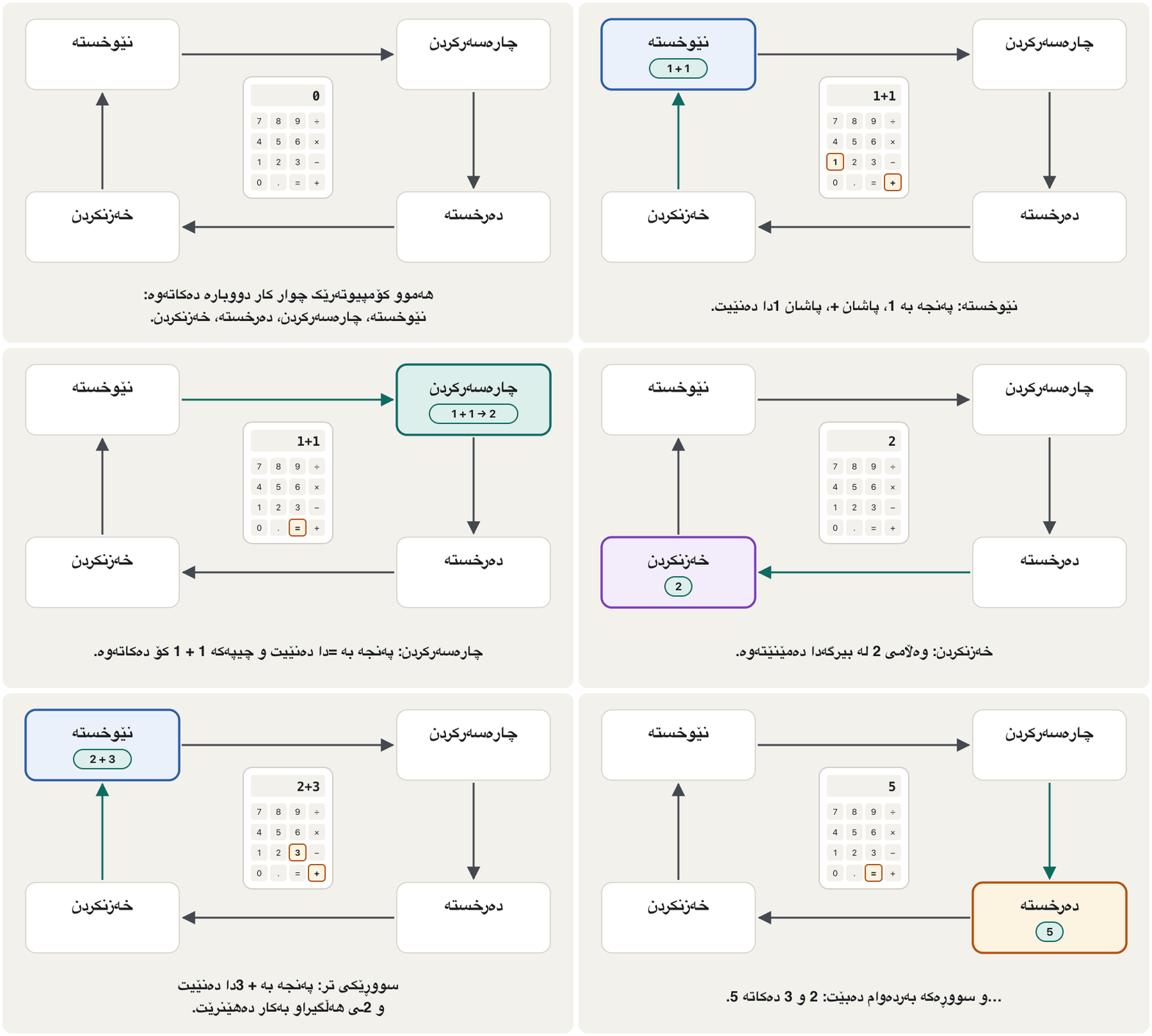
هەموو ، لە تا ناوەندێکی ، هەمان چوار کاری بنەڕەتی دووبارە دەکاتەوە. پێکەوە پێیان دەوترێت ، یان بە کورتی IPOS: Input ()، Processing ()، Output () و Storage (). کۆدەکاتەوە ()، کاری لەسەر دەکات ()، بەرهەم دەهێنێت () و ئەوەی بۆ دواتر پێویستە هەڵی دەگرێت ().
The simplest example in the course is a calculator. You press 1, then +, then 1: that is data input. When you press =, it shows 2 at once — processing and output happen in a moment. The answer also stays in memory, so you can go on calculating with it: that is storage.
سادەترین نموونەی کۆرسەکە . پەنجە بە 1، پاشان +، پاشان 1دا دەنێیت: ئەمە . کاتێک پەنجە بە =دا دەنێیت، یەکسەر 2 پیشان دەدات: و لە ساتێکدا ڕوو دەدەن. وەڵامەکە لە دەمێنێتەوە، بۆیە دەتوانیت حیسابکردن پێی بەردەوام بکەیت: ئەمە .
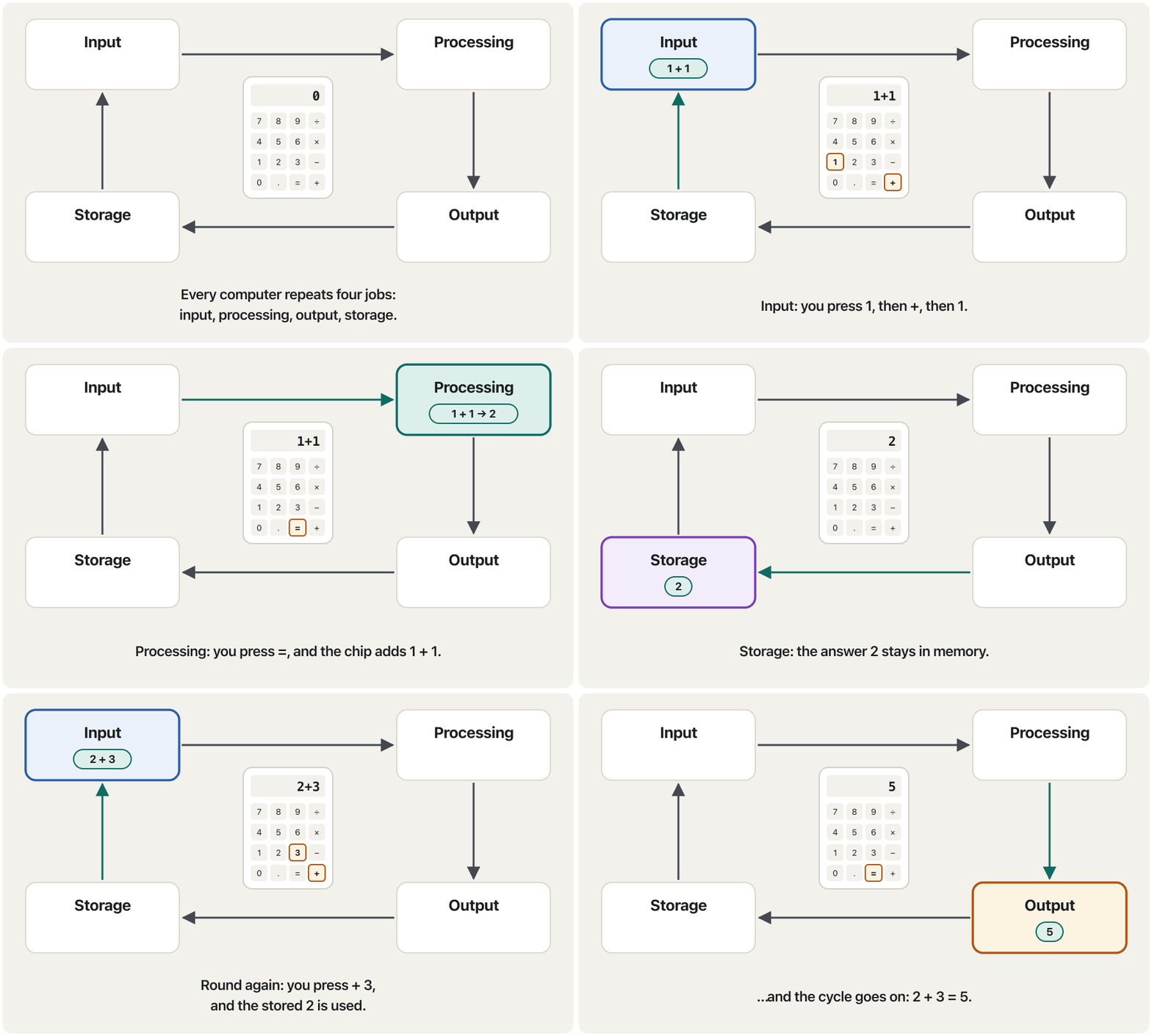
The four basic jobs that every computer repeats: , , and . It is also called the IPOS cycle.
ئەو چوار کارە بنەڕەتییەیە کە هەموو کۆمپیوتەرێک دووبارەیان دەکاتەوە: ، ، و . پێی دەوترێت سووڕی IPOSـیش.
The information processing cycle (IPOS)سووڕی چارەسەرکردنی زانیاری (IPOS)
Five functions of every computerپێنج کارەکەی هەموو کۆمپیوتەرێک
The course material also describes the cycle as five functions that every digital computer carries out. The fifth one is easy to forget: something must control the other four.
کەرەستەی کۆرسەکە سووڕەکە وەک پێنج کاریش وەسف دەکات کە هەموو دیجیتاڵی ئەنجامیان دەدات. پێنجەمیان ئاسان لە بیر دەچێت: شتێک دەبێت کۆنترۆڵی چوارەکەی تر بکات.
| Functionکار | What happensچی ڕوو دەدات | In the calculatorلە |
|---|---|---|
| 1. Take inputیەکەم: وەرگرتنی | data and instructions are entered into the computer و دەخرێنە ناو | you press 1, + and 1پەنجە بە 1، + و 1دا دەنێیت |
| 2. Storeدووەم: هەڵگرتن | data and instructions are saved in memory, ready to be used when needed و لە هەڵدەگیرێن، ئامادە بۆ بەکارهێنان هەر کاتێک پێویست بوو | the two 1s and the + are held in memoryهەردوو 1ـەکە و + لە ڕادەگیرێن |
| 3. Processسێیەم: | arithmetic and logical operations turn the data into useful information و دەکەن بە بەسوود | the chip adds کۆ دەکاتەوە |
| 4. Outputچوارەم: دانی | the results are given to the user, for example on a screen or on paperئەنجامەکان دەدرێن بە ، بۆ نموونە لەسەر یان لەسەر کاغەز | 2 appears on the display2 لەسەر دەردەکەوێت |
| 5. Controlپێنجەم: کۆنترۆڵ | directs the order and the way in which the four steps above happenڕیزبەندی و شێوازی ڕوودانی چوار هەنگاوەکەی سەرەوە ڕێک دەخات | the chip's control part decides what to do with each key, and whenبەشی کۆنترۆڵی بڕیار دەدات چی بە هەر دوگمەیەک بکات و کەی |
Inside the computer, the control unit of the CPU does the fifth job. You will see how in The CPU and in How a computer runs a program.
لە ناو ، CPU کاری پێنجەم دەکات. لە CPU و کۆمپیوتەر چۆن بەرنامەیەک جێبەجێ دەکات دەبینیت چۆن.
Input: putting data inنێوخستە: خستنە ناوەوەی دراوە
Input means putting in or entering: it is any data, or any instruction, that goes into a computer or a program. When you create an account on a social media site, it asks you to type your name. That typing is input. Your phone's camera taking a photo, a microphone recording your voice and a barcode reader at the bazaar are input too.
واتە خستنەناو یان داخڵکردن: هەر یان هەر کە دەچێتە ناو یان . کاتێک لە ماڵپەڕێکی هەژمار دروست دەکەیت، داوات لێ دەکات ناوی خۆت بنووسیت. ئەو نووسینە . وێنەگرتن بە کامێرای مۆبایلەکەت، تۆمارکردنی دەنگت بە مایکرۆفۆن و لە بازاڕدا هەروەها .
Devices that do this work are input devices. The two most common are:
ئەو ئامێرانەی ئەم کارە دەکەن . دوو باوترینیان ئەمانەن:
- The mouse: every click inputs data, which the computer turns into information on the screen — a menu opens, a file is selected.
- The keyboard: pressing any key inputs data, for example typing your name and age, which then appears on the screen.
- : هەر کە لەسەر دەیکات بە : لیستێک دەکرێتەوە، هەڵدەبژێردرێت.
- : پەنجەنان بە هەر دوگمەیەکدا ، بۆ نموونە نووسینی ناو و تەمەنت کە پاشان لەسەر دەردەکەوێت.
Any device that sends or commands into a computer, such as a , , or .
هەر ئامێرێکە کە یان فەرمان دەنێرێتە ناو ، وەک ، ، یان .
Chapter 3 of this course looks at all kinds of input — keyboards, touch screens, pens, voice and scanners — in Input, output and devices that do both.
بەشی 3ی ئەم کۆرسە سەیری هەموو جۆرەکانی دەکات (، ، قەڵەم، دەنگ و ) لە نێوخستە، دەرخستە و ئەو ئامێرانەی هەردووکیان دەکەن.
Processing: arithmetic and logical operationsچارەسەرکردن: کارە ژمێرەییەکان و کارە لۆجیکییەکان
To process means to do something step by step until it is finished. Processing is the step in which the computer works on the input data, step by step and by following a program, to turn it into information.
واتە ئەنجامدانی شتێک هەنگاو بە هەنگاو تا کۆتایی. ئەو هەنگاوەیە کە تێیدا هەنگاو بە هەنگاو و بە پەیڕەوکردنی کار لەسەر دەکات بۆ ئەوەی بیکات بە .
Some sources divide the work of processing into two main kinds of operation, chosen according to the type of data:
هەندێک سەرچاوە کاری دابەش دەکەن بۆ دوو جۆری سەرەکی کە بەپێی جۆری هەڵدەبژێردرێن:
| Kindجۆر | What it doesچی دەکات | Examplesنموونە |
|---|---|---|
| Arithmetic operations | calculations on numbers; the answer is a numberحیسابکردن لەسەر ژمارەکان؛ وەڵامەکە ژمارەیە | addition, subtraction, multiplication, division: کۆکردنەوە، لێدەرکردن، لێکدان، دابەشکردن: |
| Logical operations | comparisons and tests; the answer is true or falseبەراوردکردن و پشکنین؛ وەڵامەکە ڕاست یان هەڵەیە | greater than, less than, equal to, NOT (the opposite): is ? trueگەورەتر، بچووکتر، یەکسان، NOT (پێچەوانە): ئایا ؟ ڕاستە |
Most real jobs use both kinds. To check whether a student passed, the computer first adds the coursework and exam marks (arithmetic), then compares the total with 50 (logical). Logical operations are built from logic gates, which the Logic Design course explains; in Python you will write them with operators.
زۆربەی کارە ڕاستەقینەکان هەردوو جۆرەکە بەکار دەهێنن. بۆ زانینی ئەوەی قوتابییەک دەرچووە یان نا، سەرەتا نمرەی کۆششی ساڵ و تاقیکردنەوە کۆ دەکاتەوە ()، پاشان کۆکە لەگەڵ 50 بەراورد دەکات (). لە دروست دەکرێن کە کۆرسی دیزاینی لۆجیکی دیجیتاڵ ڕوونیان دەکاتەوە؛ لە Pythonـدا بە کارپێکەرەکان دەیاننووسیت.
Output: getting results outدەرخستە: دەرهێنانی ئەنجامەکان
Output is the opposite of input: it is the processed data — the information — that comes out of the computer. Picture a photo studio. The photographer takes your photo with a camera (input), edits it on the computer (processing) and prints it for you on the printer (output). That printing-out is called output in IT.
پێچەوانەی : ئەو چارەسەرکراوەیە، واتە ئەو کە لە دێتە دەرەوە. وێنای ستۆدیۆیەکی وێنەگرتن بکە. وێنەگرەکە بە کامێرا وێنەت دەگرێت ()، لەسەر دەستکاریی دەکات () و بە بۆت چاپ دەکات (). ئەو دەرهێنانە لە ITـدا پێی دەوترێت .
Common output devices are the monitor, the printer, speakers and headphones, and projectors: see the ways we get output. Some devices, such as a touch screen, do both input and output.
باو بریتین لە ، ، و و : سەیری ڕێگاکانی وەرگرتنی دەرخستە بکە. هەندێک ئامێر، وەک ، هەم نێوخستە و هەم دەرخستە دەکەن.
Any device that shows or gives out results from the computer, such as a , or .
هەر ئامێرێکە کە ئەنجامەکانی پیشان دەدات یان دەیانداتە دەرەوە، وەک ، یان .
Storage and controlخەزنکردن و کۆنترۆڵ
Storage means saving data and instructions so that they are available whenever they are needed. While you work, the computer keeps data in its main memory (RAM), which is fast but forgets everything when the power goes off. To keep your work, it saves it to storage such as an SSD, a hard disk, a memory card or the cloud, which keeps data without power. Chapter 4 explains the difference in Storage versus memory.
واتە هەڵگرتنی و بۆ ئەوەی هەر کاتێک پێویست بوون بەردەست بن. لە کاتی کارکردندا، لە سەرەکیدا (RAM) ڕادەگرێت کە خێرایە بەڵام کاتێک کارەبا دەبڕێت هەموو شتێک لەبیر دەکات. بۆ پاراستنی کارەکەت، لە شوێنێکی وەک SSD، دیسکی ڕەق، کارتی یان هەوردا هەڵی دەگرێت کە بەبێ کارەبا دەپارێزێت. بەشی 4 ئەم جیاوازییە لە خەزنکردن بەرامبەر بیرگە ڕوون دەکاتەوە.
Control is the job that directs everything else: which step comes next, where each piece of data goes and when. Without control, input, processing, output and storage would be like players with no plan.
کۆنترۆڵ ئەو کارەیە کە هەموو کارەکانی تر ئاراستە دەکات: کام هەنگاو دواتر دێت، هەر پارچەیەکی بۆ کوێ دەچێت و کەی. بەبێ کۆنترۆڵ، ، ، و وەک یاریزانی بێ پلان دەبوون.
At a busy roundabout in the city centre, a traffic officer decides which line of cars moves and when. The cars do the travelling; the officer does not carry anyone. The computer's control unit is like that officer: it moves no data itself but tells every part what to do and when.
لە فلکەیەکی قەرەباڵغی ناوەڕاستی شاردا، پۆلیسێکی هاتوچۆ بڕیار دەدات کام ڕیزی ئۆتۆمبێل بجووڵێت و کەی. ئۆتۆمبێلەکان گەشتەکە دەکەن؛ پۆلیسەکە کەس هەڵناگرێت. وەک ئەو پۆلیسەیە: خۆی هیچ ناگوازێتەوە، بەڵام بە هەموو بەشێک دەڵێت چی بکات و کەی.
Where the analogy stops workingسنووری ئەم نموونەیە
A traffic officer can use judgement when something unusual happens. The control unit cannot: it only follows the instructions of the program, billions of times a second.
پۆلیسی هاتوچۆ دەتوانێت کاتێک شتێکی نائاسایی ڕوو دەدات بە بیرکردنەوەی خۆی بڕیار بدات. ناتوانێت: تەنها جێبەجێ دەکات، ملیاران جار لە چرکەیەکدا.
A whole cycle at a bookshopسووڕێکی تەواو لە کتێبفرۆشییەکدا
The course follows one sale from data to information. Here is the same idea in a bookshop in Hewlêr. A student buys 2 notebooks at 1,500 dinars each, 1 pen at 750, 1 dictionary at 12,000 and 3 pencils at 250 each, and pays with a 20,000-dinar note.
کۆرسەکە بەدوای یەک فرۆشتندا دەچێت لە تا . ئەمە هەمان بیرۆکەیە لە کتێبفرۆشییەکی هەولێردا. قوتابییەک 2 دەفتەر هەر یەکە بە 1,500 دینار، 1 پێنووس بە 750، 1 فەرهەنگ بە 12,000 و 3 قەڵەمڕەساس هەر یەکە بە 250 دەکڕێت و 20,000 دینار دەدات.
- Step 1 — input (data)هەنگاوی 1: نێوخستە (دراوە)
The cashier scans each item and types the amount received. The computer now has only data: item codes, prices, quantities and 20,000.
فرۆشیارەکە هەموو کاڵایەک سکان دەکات و بڕی پارەی وەرگیراو دەنووسێت. ئێستا تەنها هەیە: کۆدی کاڵاکان، نرخەکان، ژمارەکان و 20,000.
- Step 2 — processing and storageهەنگاوی 2: چارەسەرکردن و خەزنکردن
The computer stores the data, works out each line, adds the lines, calculates the change and stores the result:
هەڵدەگرێت، هەر دێڕێک حیساب دەکات، دێڕەکان کۆ دەکاتەوە، پارەی گەڕاوە حیساب دەکات و ئەنجامەکە هەڵدەگرێت:
Multiplying and adding are arithmetic operations. Checking that the money received is at least the total () is a logical operation.
لێکدان و کۆکردنەوە . پشکنینی ئەوەی کە پارەی وەرگیراو لانیکەم بەقەد کۆکەیە () .
- Step 3 — output (information)هەنگاوی 3: دەرخستە (زانیاری)
The printer prints a receipt: every item with its line total, the total of 16,500 dinars and the change of 3,500. The student can read and understand it — it is information.
پسوولەیەک چاپ دەکات: هەموو کاڵایەک لەگەڵ کۆی دێڕەکەی، کۆی گشتیی 16,500 دینار و پارەی گەڕاوەی 3,500. قوتابییەکە دەتوانێت بیخوێنێتەوە و لێی تێبگات: .
Kurdish words for these ideasوشە کوردییەکانی ئەم بیرۆکانە
The course's Kurdish report ends with a small glossary. Some of its words are the same as the CêIT terms; others are older or different choices. CêIT uses its terminology list so that every lesson says the same thing, and keeps the report's words as alternatives you may meet elsewhere:
ڕاپۆرتە کوردییەکەی کۆرسەکە بە فەرهەنگۆکێکی بچووک کۆتایی دێت. هەندێک لە وشەکانی هەمان زاراوەکانی CêITـن؛ هەندێکی تریان هەڵبژاردنی کۆنتر یان جیاوازن. CêIT لیستی زاراوەکانی خۆی بەکار دەهێنێت بۆ ئەوەی هەموو وانەیەک هەمان شت بڵێت و وشەکانی ڕاپۆرتەکە وەک وشەی جێگرەوە دەهێڵێتەوە کە لەوانەیە لە شوێنی تر بیانبینیت:
| Englishئینگلیزی | CêIT termزاراوەی CêIT | In the reportلە ڕاپۆرتەکەدا |
|---|---|---|
| Process / processing | پرۆسێس، پرۆسێسکردن (doing something step by step until the end)پرۆسێس، پرۆسێسکردن (ئەنجامدانی شتێک هەنگاو بە هەنگاو تا کۆتایی) | |
| Computer, calculator | ، حاسیبە | بژمێر |
| Input | تێخستە | |
| Inputting | putting in, enteringنێوخستن، داخڵکردن | تێخستن |
| Output | دەرخستە (the same)دەرخستە (هەمان وشە) | |
| Outputting | bringing outدەرخستن | دەرخستن (the same)دەرخستن (هەمان وشە) |
| Data | the sameهەمان وشە | |
| Information | the sameهەمان وشە | |
| Character | the sameهەمان وشە | |
| Text | textدەق | نووسین |
| Keyboard | تەختەکلیل | |
| Key | ، دوگمە | کلیل |
| Mouse | مشک | |
| Logic | logicلۆجیک، ژیربێژی | ژیربێژی |
Common mistakesهەڵە باوەکان
| Mistakeهەڵە | What is trueڕاستییەکە |
|---|---|
| “A printer is an input device.”« .» | A printer brings information out on paper: it is an output device. لەسەر کاغەز دەردەهێنێت: . |
| “Data and information are the same thing.”« و هەمان شتن.» | Data are raw facts; information is data that has been processed and has meaning. ڕاستیی خاون؛ ئەو کە بۆ کراوە و واتای هەیە. |
| “Processing means only doing sums.”« تەنها واتە حیسابکردن.» | Processing uses arithmetic operations and logical operations such as comparing. و وەک بەراوردکردن بەکار دەهێنێت. |
| “The cycle is input, processing, output — that's all.”«سووڕەکە ، و ؛ هەر ئەوەندە.» | IPOS also has storage, and the five-function list adds control.IPOS تێدایە و لیستی پێنج کارەکە کۆنترۆڵیش زیاد دەکات. |
| “My work is safe because I can see it on the screen.”«کارەکەم سەلامەتە چونکە لەسەر دەیبینم.» | Until you save it, it is only in memory and is lost when the power goes off.تا هەڵی نەگریت، تەنها لە و کاتێک کارەبا دەبڕێت ون دەبێت. |
| “A computer understands what it does.”« لەوە تێدەگات کە دەیکات.» | It follows its program exactly; the meaning is in the minds of the people who use the results. خۆی ڕێک پەیڕەو دەکات؛ واتاکە لە مێشکی ئەو کەسانەدایە کە ئەنجامەکان بەکار دەهێنن. |
Exercisesڕاهێنانەکان
For each device, name the input, the processing, the output and what is stored: (a) a cash machine (ATM) when you take out money; (b) the digital scale at a fruit shop; (c) your phone when you take a photo.
بۆ هەر ئامێرێک ، ، و ئەوەی هەڵدەگیرێت بنووسە: (أ) ئامێری ATM کاتێک پارە دەردەهێنیت؛ (ب) تەرازووی دیجیتاڵی لە میوەفرۆشییەکدا؛ (ج) مۆبایلەکەت کاتێک وێنەیەک دەگریت.
Show answerوەڵامەکە پیشان بدە
| Deviceئامێر | Input | Processing | Output | Storage |
|---|---|---|---|---|
| (a) ATM(أ) ATM | card, PIN, amountکارت، PIN، بڕی پارە | checks the PIN and the balance (logical), subtracts the amount (arithmetic)PIN و باڵانس دەپشکنێت ()، بڕەکە لێ دەردەکات () | cash, receipt, message on the screenپارە، پسوولە، پەیام لەسەر | the new balance and a record of the withdrawalباڵانسی نوێ و تۆمارێکی دەرهێنانەکە |
| (b) Scale(ب) تەرازوو | the weight from the sensor, the price per kiloکێش لە ، نرخی هەر کیلۆیەک | weight × price per kiloکێش × نرخی کیلۆ | the price on the display or a printed labelنرخەکە لەسەر یان لەیبڵێکی چاپکراو | the price list (and the day's sales on some scales)لیستی نرخەکان (و فرۆشی ڕۆژەکە لە هەندێک تەرازوودا) |
| (c) Phone camera(ج) کامێرای مۆبایل | light through the lens; your tap on the buttonڕووناکی لە ڕێگەی عەدەسەکەوە؛ پەنجەنانت بە دوگمەکەدا | turns the light into numbers, sharpens and compresses the pictureڕووناکی دەکات بە ژمارە، وێنەکە ڕوونتر و پەستێنراو دەکات | the photo on the screenوێنەکە لەسەر | the photo file in the gallery (and perhaps in the cloud) وێنەکە لە گەلەریدا (و لەوانەیە لە هەوردا) |
Say whether each operation is arithmetic or logical: (a) ; (b) is the student's age 18 or more?; (c) ; (d) is the password typed equal to the saved password?; (e) the average of five marks; (f) which of two names comes first in alphabetical order?
بڵێ هەر یەکێک لەمانە یان : (أ) ؛ (ب) ئایا تەمەنی قوتابییەکە 18 یان زیاترە؟؛ (ج) ؛ (د) ئایا ئەو نووسراوە یەکسانە بە هەڵگیراوەکە؟؛ (هـ) تێکڕای پێنج نمرە؛ (و) لە نێوان دوو ناودا کامیان بەپێی ڕیزبەندیی ئەلفوبێ یەکەم دێت؟
Show answerوەڵامەکە پیشان بدە
- (a) arithmetic: 100; (c) arithmetic: 2,250; (e) arithmetic: add the five marks and divide by 5.
- (b), (d) and (f) are logical: each is a comparison whose answer is true or false (which name comes first is a series of “less than” comparisons of letters).
- (أ) : 100؛ (ج) : 2,250؛ (هـ) : پێنج نمرەکە کۆ بکەرەوە و دابەشی بکە بەسەر 5دا.
- (ب)، (د) و (و) : هەر یەکەیان بەراوردێکە کە وەڵامەکەی ڕاست یان هەڵەیە (ئەوەی کام ناو یەکەم دێت زنجیرەیەک بەراوردی «بچووکتر»ـە لە نێوان پیتەکاندا).
At a tea house, a group orders 3 teas at 500 dinars, 2 sandwiches at 2,500 dinars and 1 bottle of water at 250 dinars. They pay with a 10,000-dinar note. Work out the total and the change, and say which numbers are data and which are information.
لە چایخانەیەکدا، کۆمەڵێک 3 چا بە 500 دینار، 2 سەندویچ بە 2,500 دینار و 1 بوتڵ ئاو بە 250 دینار داوا دەکەن. 10,000 دینار دەدەن. کۆی گشتی و پارەی گەڕاوە حیساب بکە و بڵێ کام ژمارانە و کامیان .
Show answerوەڵامەکە پیشان بدە
The total is 6,750 dinars and the change is 3,250 dinars.
کۆی گشتی 6,750 دینارە و پارەی گەڕاوە 3,250 دینار.
The quantities, the prices and the 10,000 are data. The total and the change, worked out and printed on the bill, are information.
ژمارەی شتەکان، نرخەکان و 10,000 . کۆی گشتی و پارەی گەڕاوە کە حیساب کراون و لەسەر پسوولەکە چاپ کراون .
A classmate's notes say: “The printer is an input device, because the photographer puts the photo into it.” Correct the sentence and explain.
تێبینییەکانی هاوپۆلێک دەڵێن: « ، چونکە وێنەگرەکە وێنەکە دەخاتە ناوییەوە.» ڕستەکە ڕاست بکەرەوە و ڕوونی بکەرەوە.
Show answerوەڵامەکە پیشان بدە
“The printer is an output device.” The photo goes into the computer as input from the camera. The printer receives the processed result from the computer and brings it out on paper for people — that is output.
« .» وێنەکە وەک لە کامێراکەوە دەچێتە ناو . ئەنجامە چارەسەرکراوەکە لە وەردەگرێت و لەسەر کاغەز بۆ خەڵک دەریدەهێنێت: ئەمە .
Match each word to its description. Words: (1) information processing cycle; (2) computer; (3) IT. Descriptions: (a) the machine at the heart of IT, which processes data; (b) turns raw facts into information through input, processing, output and storage; (c) computing joined with fast communication links that carry data, sound and video.
هەر وشەیەک بە وەسفەکەیەوە ببەستەوە. وشەکان: (1) ؛ (2) ؛ (3) IT. وەسفەکان: (أ) ئەو ئامێرەی لە دڵی ITـدایە و دەکات؛ (ب) ڕاستییە خاوەکان دەکات بە بە ، ، و ؛ (ج) کارکردنی کە بە هێڵی پەیوەندیی خێراوە بەستراوە و ، دەنگ و ڤیدیۆ دەگوازێتەوە.
Show answerوەڵامەکە پیشان بدە
(1) b; (2) a; (3) c. Description (c) is the course's definition of ICT; today IT and ICT mean almost the same thing (IT and ICT).
(1) ب؛ (2) أ؛ (3) ج. وەسفی (ج) پێناسەی کۆرسەکەیە بۆ ICT؛ ئەمڕۆ IT و ICT نزیکەی هەمان واتایان هەیە (IT و ICT).
“A computer is an electronic device made of only five hardware parts, and it cannot be programmed.” Is this true or false? Explain.
« ئامێرێکی ئەلیکترۆنییە کە تەنها لە پێنج پارچەی پێک هاتووە و ناتوانرێت تێدا دابنرێت.» ئەمە ڕاستە یان هەڵە؟ ڕوونی بکەرەوە.
Show answerوەڵامەکە پیشان بدە
False. A computer needs software as well as hardware, and being programmed is exactly what makes it a computer: change the program and the same machine does a different job (What each word means).
هەڵەیە. جگە لە پێویستی بە هەیە و دانانی تێیدا ڕێک ئەوەیە کە دەیکات بە : بگۆڕە و هەمان ئامێر کارێکی تر دەکات (هەر وشەیەک چ واتایەکی هەیە).
Summaryپوختە
- A computer is an electronic, digital, programmed device that takes data in, processes it into information, gives out results and stores data for later.
- The word comes from compute; in Kurdish بژمێر, in Arabic حاسوب — the machine that counts.
- Computers grew from gears and punched cards through vacuum tubes, transistors and chips to the microprocessor (1971) and today's connected devices.
- Data are raw facts; information is processed data with meaning (زانیاری from زانین).
- The information processing cycle is input, processing, output and storage (IPOS); the five functions add control.
- Processing uses arithmetic operations (answers are numbers) and logical operations (answers are true or false).
- A printer is an output device. Memory holds work in progress; storage keeps it when the power is off.
- ئامێرێکی ئەلیکترۆنی، دیجیتاڵی و بەرنامەبۆدانراوە کە وەردەگرێت، دەیکات بە ، ئەنجامەکان دەردەخات و بۆ دواتر هەڵدەگرێت.
- وشەکە لە computeـەوە هاتووە؛ بە کوردی بژمێر، بە عەرەبی حاسوب: ئەو ئامێرەی دەژمێرێت.
- لە چەرخ و کارتی کونکراوەوە، بە لوولەی بۆشایی، و ، گەیشتە مایکرۆپرۆسێسەر (1971) و ئامێرە پەیوەستەکانی ئەمڕۆ.
- ڕاستیی خاون؛ چارەسەرکراوە کە واتای هەیە (زانیاری لە زانینەوە).
- بریتییە لە ، ، و (IPOS)؛ پێنج کارەکە کۆنترۆڵیش زیاد دەکەن.
- (وەڵامەکان ژمارەن) و (وەڵامەکان ڕاست یان هەڵەن) بەکار دەهێنێت.
- . ئەو کارە ڕادەگرێت کە لە ئەنجامداندایە؛ کاتێک کارەبا نییە دەیپارێزێت.
What are the four steps of IPOS, and which fifth function does the course add?چوار هەنگاوەکەی IPOS چین و کۆرسەکە کام کاری پێنجەم زیاد دەکات؟
Input, processing, output and storage; the fifth function is control.
، ، و ؛ کاری پێنجەم کۆنترۆڵە.
Give one arithmetic and one logical operation from the bookshop example.لە نموونەی کتێبفرۆشییەکەدا کارێکی ژمێرەیی و کارێکی لۆجیکی بنووسە.
Arithmetic: . Logical: is the 20,000 paid at least the total of 16,500? (true)
ژمێرەیی: . ژیربێژی: ئایا 20,000ـی دراو لانیکەم بەقەد کۆی 16,500ـە؟ (ڕاستە)
Why does the Kurdish word زانیاری suit the idea of information?بۆچی وشەی کوردیی زانیاری لەگەڵ بیرۆکەی زانیاری دەگونجێت؟
It comes from زانین, to know: information is what people can know and understand from processed data.
لە زانینەوە هاتووە: ئەوەیە کە خەڵک دەتوانن لە چارەسەرکراو بیزانن و لێی تێبگەن.
Lesson complete!وانەکە تەواو بوو!
Well done. Review the key terms, then go on to the next lesson.دەستخۆش. سەیرێکی زاراوە سەرەکییەکان بکەرەوە، پاشان بڕۆ بۆ وانەی داهاتوو.
Key termsزاراوە سەرەکییەکان
What Computers Do Well and Where They Fall Shortکۆمپیوتەرەکان لە چیدا باشن و لە کوێدا کەم دەهێنن
Related lecturesوانە پەیوەندیدارەکان
- Data and Informationدراوە و زانیاری
- Computers Around Usکۆمپیوتەرەکان لە دەوروبەرماندا
- What Is Programming?بەرنامەسازی چییە؟
- What Computers Do Well and Where They Fall Shortکۆمپیوتەرەکان لە چیدا باشن و لە کوێدا کەم دەهێنن
- Logic Gates, Truth Tables and the NOT Gateگەیتە لۆجیکییەکان، خشتەکانی ڕاستی و گەیتی NOT
- Input, Output and Devices That Do Bothنێوخستە، دەرخستە و ئەو ئامێرانەی هەردووکیان دەکەن
- The CPU: Control Unit, ALU and CoresCPU: یەکەی جڵەوکردن، ALU و ناوکەکانی پرۆسێسەر
- Types of Computersجۆرەکانی کۆمپیوتەر
References and further readingسەرچاوەکان و خوێندنەوەی زیاتر
- Wikipedia: Computer (definition; etymology — a person who computes, 1613; the machine sense)
- Tutorialspoint: Computer Fundamentals — overview (five functions of a computer); the source of the course's Kurdish report
- KITN: Kurdish dictionary of technology terms (used by the course's Kurdish report)
- Vejin: Kurdish lexicon (used by the course's Kurdish report)
- Harvard CS50's Understanding Technology (archived course): hardware unit
- Computer History Museum: The Engines (Babbage's Analytical Engine, 1834; store and mill; punched cards)
- Smithsonian: Tabulating equipment, from Herman Hollerith to IBM
- Computer History Museum: Timeline of computer history (ENIAC 1946, Manchester Baby 1948, Intel 4004 1971, IBM PC 1981, Macintosh 1984)
- Computer History Museum: This day in history, 14 February 1946 (ENIAC unveiled)
- Wikipedia: Transistor count (Intel 4004, Intel 80486, Apple M4)
This lecture is a first edition. The Kurdish text and terminology are waiting for review by Kurdish IT teachers.ئەم وانەیە چاپی یەکەمە. دەقە کوردییەکە و زاراوەکانی چاوەڕێی پێداچوونەوەی مامۆستایانی کوردی بواری IT ن.