Chapterبەش 2 · Lectureوانە 2.5
The TCP/IP Model and How It Maps to OSIمۆدێلی TCP/IP و چۆنییەتیی یەکگرتنەوەی لەگەڵ OSI
TCP/IP is the protocol suite the Internet really runs on. Where it came from, its four layers as RFC 1122 names them and the five-layer textbook stack, how they map onto the seven OSI layers (OSI's network and data link layers become internet and link), the job, unit and protocols of each layer — today's and history — the hourglass with IP at its waist, a corrected comparison of the two models and the devices at each layer.
TCP/IP ئەو کۆمەڵە کە بە ڕاستی لەسەری کار دەکات. لە کوێوە هات، چوار چینەکەی وەک RFC 1122 ناویان دەبات و ستوونی پێنج چینیی کتێبەکان، چۆن لەگەڵ حەوت چینەکەی OSI یەک دەگرنەوە ( و OSI دەبنە چینی و چینی بەستەر)، کار، یەکە و هەر چینێک — ئەمڕۆ و مێژوو — کاتژمێرە لمییەکە کە لە کەمەرەکەیدایە، بەراوردێکی ڕاستکراوەی دوو مۆدێلەکە و ئامێرەکانی هەر چینێک.
What you will learnچی فێر دەبیت
- Explain what the TCP/IP protocol suite is, where it came from and why it is older than OSI.
- Name the four layers of RFC 1122 and the five-layer textbook stack, and answer both kinds of exam question.
- Map the TCP/IP layers onto the OSI layers and point out the key parallels.
- Describe the job, unit of data and main protocols of each TCP/IP layer, and tell today's protocols from history.
- Compare OSI and TCP/IP correctly, and say which devices work at which layer.
- ڕوونی بکەیتەوە کۆمەڵە TCP/IP چییە، لە کوێوە هات و بۆچی لە OSI کۆنترە.
- چوار چینەکەی RFC 1122 و ستوونی پێنج چینیی کتێبەکان ناو بهێنیت و وەڵامی هەردوو جۆری پرسیاری تاقیکردنەوە بدەیتەوە.
- چینەکانی TCP/IP لەگەڵ چینەکانی OSI یەک بخەیتەوە و هاوتا سەرەکییەکان دیاری بکەیت.
- کار، یەکەی و سەرەکییەکانی هەر چینێکی TCP/IP وەسف بکەیت و ئەمڕۆ لە مێژوو جیا بکەیتەوە.
- OSI و TCP/IP بە دروستی بەراورد بکەیت و بڵێیت کام ئامێر لە کام چیندا کار دەکات.
TCP/IP: the Internet's protocol suiteTCP/IP: کۆمەڵە پرۆتۆکۆڵی ئینتەرنێت
A protocol is a set of rules that makes communication possible and efficient. Real networks need many of them, working together in layers. TCP/IP is the Internet's family — its suite — of protocols, named after two of its members: TCP, the Transmission Control Protocol, and IP, the Internet Protocol. It is the most widely used protocol suite in the world: the Internet uses it to join networks across the planet. A first look is in TCP/IP: the rules everyone follows; this lesson shows its layers and how they match OSI.
کۆمەڵێک یاسایە کە پەیوەندیکردن دەکاتە شتێکی گونجاو و کارا. ڕاستەقینە پێویستیان بە زۆریان هەیە کە لە چینەکاندا پێکەوە کار بکەن. خێزانی — کۆمەڵە — و ناوەکەی لە دوو ئەندامی وەرگیراوە: (Transmission Control Protocol) و (Internet Protocol). بەکارهاتووترین کۆمەڵە جیهانە: بەکاری دەهێنێت بۆ بەستنەوەی لە سەرانسەری زەویدا. یەکەم ناساندنی لە TCP/IP: ئەو یاسایانەی هەمووان پەیڕەویان دەکەنـدایە؛ ئەم وانەیە چینەکانی و چۆنییەتیی گونجانیان لەگەڵ OSI پیشان دەدات.
Where TCP/IP came fromTCP/IP لە کوێوە هات
TCP/IP grew out of research paid for by the US defence research agency DARPA (called ARPA until 1972), to join the defence department's different computer networks. Vint Cerf and Bob Kahn published its design in 1974; in 1978 the one big protocol was split into TCP and IP; and on 1 January 1983 the ARPANET switched to TCP/IP. ISO published the OSI model in 1984 (ISO 7498; ISO/IEC 7498-1 since 1994). So TCP/IP is older than OSI, and it was not built from the OSI model: it was a working system first, and its four layers were described later, in RFC 1122 (1989).
TCP/IP لە توێژینەوەیەکەوە سەری هەڵدا کە دەزگای توێژینەوەی بەرگریی ئەمریکا، DARPA (تا 1972 ناوی ARPA بوو)، پارەی بۆ دابین کرد بۆ بەستنەوەی جۆراوجۆری وەزارەتی بەرگری. Vint Cerf و Bob Kahn لە 1974دا دیزاینەکەیان بڵاو کردەوە؛ لە 1978دا ئەو یەک گەورەیە دابەش کرا بۆ و ؛ لە 1ی کانوونی دووەمی 1983ـیشدا ARPANET گۆڕا بۆ TCP/IP. ISO لە 1984ـدا بڵاو کردەوە (ISO 7498؛ لە 1994ـەوە ISO/IEC 7498-1). کەواتە TCP/IP کۆنترە لە OSI و لەسەر بنەمای دروست نەکراوە: سەرەتا سیستەمێکی کارا بوو و چوار چینەکەی دواتر لە RFC 1122ـدا (1989) وەسف کران.
The four layers of TCP/IPچوار چینەکەی TCP/IP
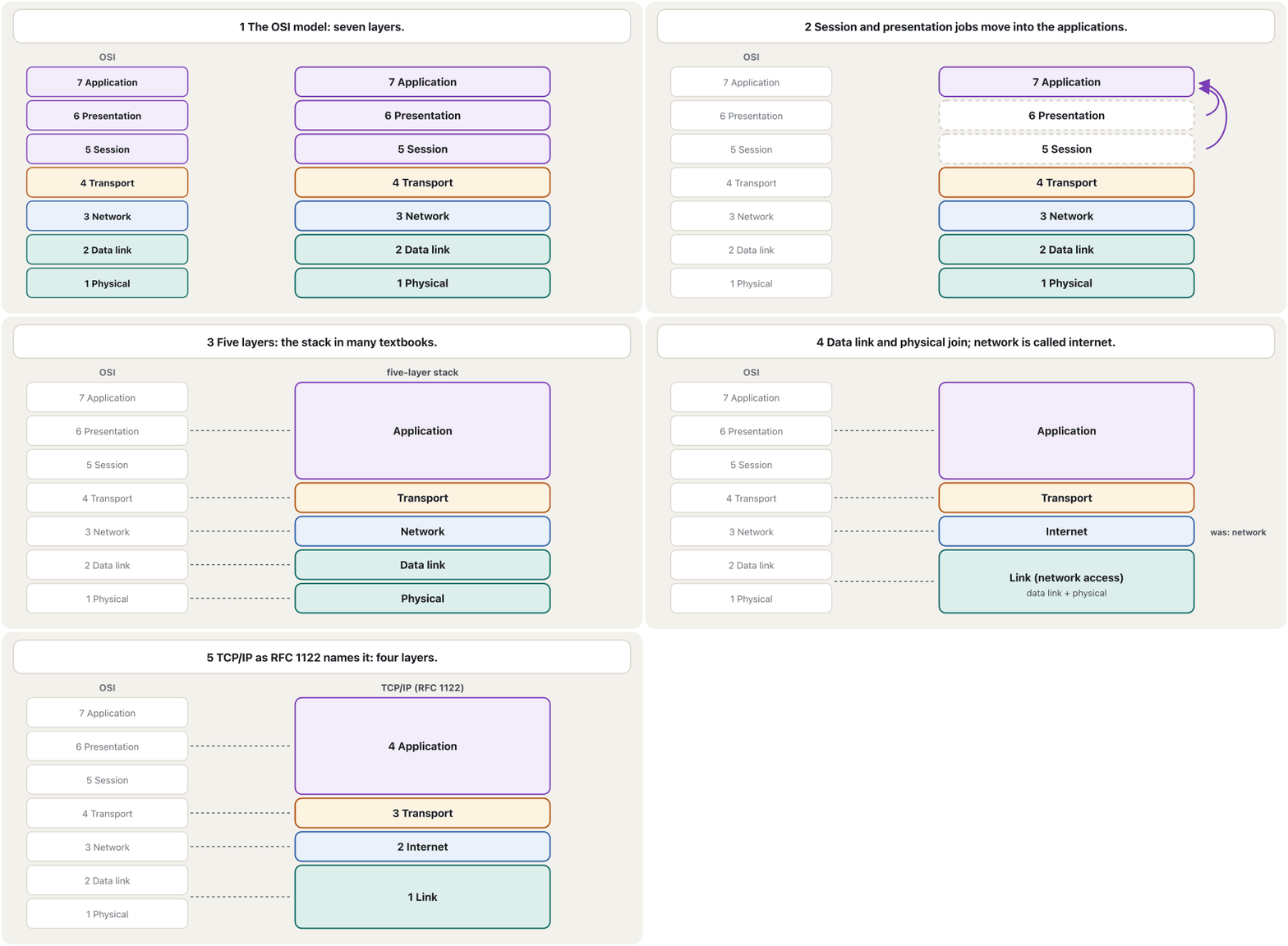
RFC 1122, the Internet's own description of a host, names four layers, from the top: application, transport, internet and link. Many books number them from the bottom — 1 link, 2 internet, 3 transport, 4 application — and use older names for the bottom layer: network access (in Cisco courses), host-to-network or network interface. The original TCP/IP suite was described in the same four layers: host-to-network, internet, transport and application.
RFC 1122، وەسفی خودی بۆ ، چوار چین ناو دەبات، لە سەرەوە: ، ، چینی و چینی بەستەر. زۆر کتێب لە خوارەوە ژمارەیان دەکەن — 1 چینی بەستەر، 2 چینی ، 3 ، 4 — و بۆ چینی خوارەوە ناوی کۆنتر بەکار دەهێنن: دەستگەیشتن بە (لە کۆرسەکانی Cisco)، بۆ یان . کۆمەڵە TCP/IPـی ئەسڵی هەر بەم چوار چینە وەسف کرابوو: بۆ ، چینی ، و .
How the four layers map onto OSIچۆن چوار چینەکە لەگەڵ OSI یەک دەگرنەوە
Put the two models side by side. TCP/IP's application layer covers OSI layers 7, 6 and 5: the formats, the encryption and the sessions are done inside the applications. Transport matches OSI's transport layer 4, and internet matches OSI's network layer 3 — these are the key parallels. The link layer covers OSI's data link and physical layers 2 and 1: TCP/IP itself does not define them and uses whatever the underlying network defines — Ethernet, Wi-Fi and so on.
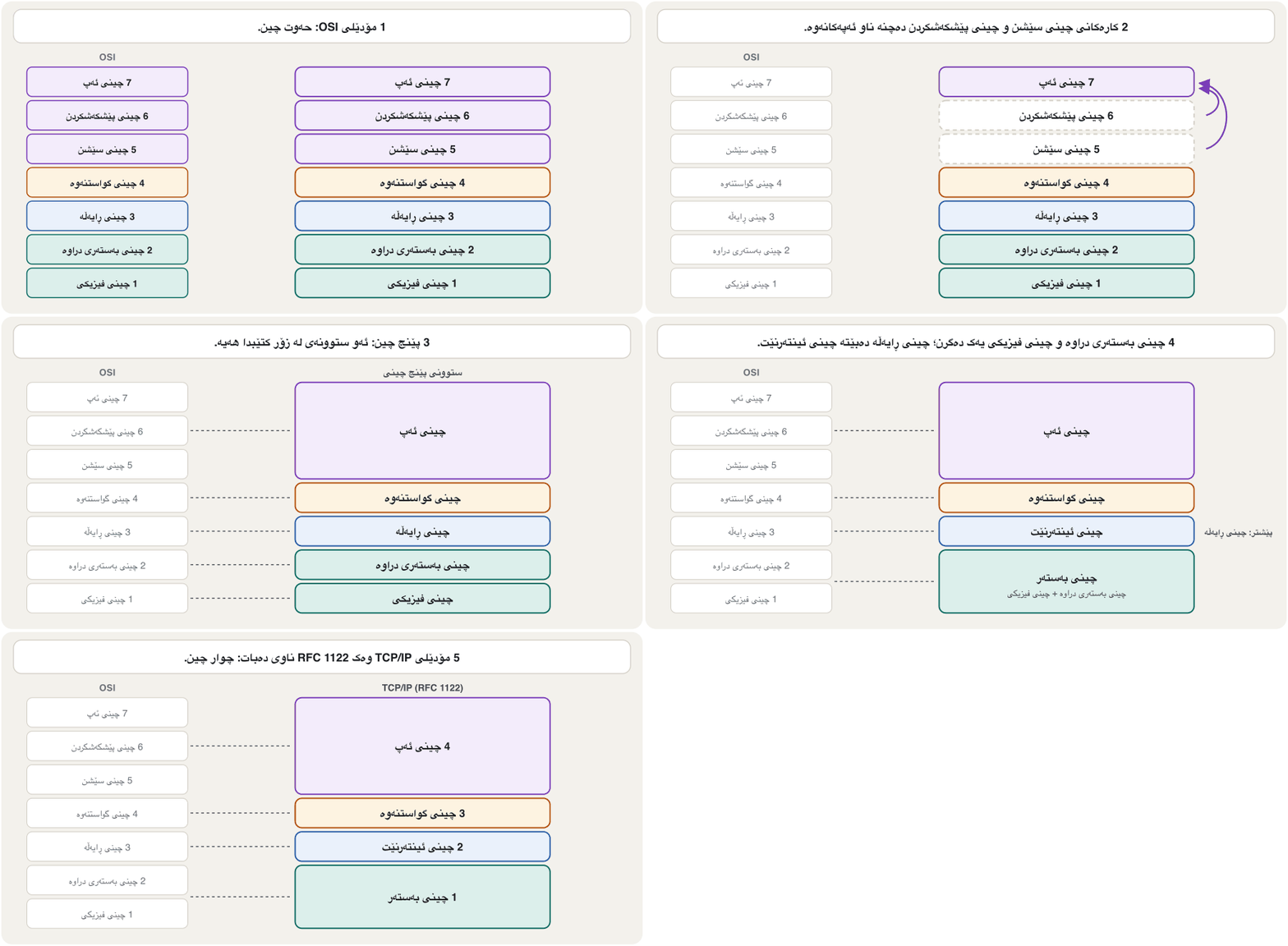
دوو مۆدێلەکە لە تەنیشت یەک دابنێ. TCP/IP چینەکانی 7، 6 و 5ی OSI دەگرێتەوە: شێوە، و لەناو دەکرێن. لەگەڵ چینی 4ی OSI یەک دەگرێتەوە و چینی لەگەڵ 3ی OSI — ئەمانە هاوتا سەرەکییەکانن. چینی بەستەر و OSI، واتە چینەکانی 2 و 1، دەگرێتەوە: خودی TCP/IP دیارییان ناکات و ئەوە بەکار دەهێنێت کە ژێرەوە دیاری دەکات — Ethernet، و هتد.
Some figures shade OSI 5 and 6 as “not present in the model”: TCP/IP has no separate layers for them. RFC 1122 itself says that its application layer combines the functions of OSI's top two layers; most books include the session layer too.
هەندێک وێنە OSI 5 و 6 بە «لە مۆدێلەکەدا نییە» ڕەنگ دەکەن: TCP/IP چینی جیای بۆیان نییە. خودی RFC 1122 دەڵێت کارەکانی دوو چینە سەرەوەکەی OSI پێکەوە دەکات؛ زۆربەی کتێبەکان دەخەنە سەری.
Four layers or five? Two exam answersچوار چین یان پێنج؟ دوو وەڵامی تاقیکردنەوە
How many layers does TCP/IP have? It depends on the book. RFC 1122 and Cisco courses say four: application, transport, internet, link. Many university textbooks, such as Kurose and Ross's Computer Networking and Forouzan's Data Communications and Networking, teach a five-layer “Internet protocol stack” — application, transport, network, data link and physical — because, compared with OSI, it helps to keep the bottom layer's two jobs apart.
TCP/IP چەند چینی هەیە؟ بەندە بە کتێبەکەوە. RFC 1122 و کۆرسەکانی Cisco دەڵێن چوار: ، ، چینی ، چینی بەستەر. زۆر کتێبی زانکۆیی، وەک Computer Networkingـی Kurose و Ross و Data Communications and Networkingـی Forouzan، «ستوونی »ی پێنج چینی فێر دەکەن — ، ، ، و — چونکە لە بەراورد لەگەڵ OSIـدا باشترە دوو کارەکەی چینی خوارەوە لێک جیا بکرێنەوە.
What each layer doesهەر چینێک چی دەکات
Each TCP/IP layer has one kind of job, its own unit of data and its own kind of address. The next four screens look at the layers one by one, from the top.
هەر چینێکی TCP/IP یەک جۆر کاری هەیە، یەکەی خۆی و جۆرێک ناونیشانی خۆی. چوار شاشەی داهاتوو چینەکان یەک یەک لە سەرەوە دەخەنە ڕوو.
What each layer doesهەر چینێک چی دەکات
The application layer: everything the program needsچینی ئەپ: هەموو ئەوەی بەرنامەکە پێویستیەتی
TCP/IP's application layer handles the high-level protocols and also the issues of representation, encoding and dialog control that OSI spreads over layers 5 to 7: all application-related issues are combined into one layer, which makes sure the data is properly packaged for the layer below. Its protocols include HTTP, DNS, DHCP, FTP and TFTP, SMTP, SNMP and SSH. A router also uses some of them itself: TFTP or FTP to copy its software, SSH (in the past Telnet) to be managed, SNMP to be monitored and DNS to look up names.
TCP/IP ئاست بەرز دەگرێتە ئەستۆ، هەروەها بابەتەکانی نواندن، کۆدکردن و کە OSI بەسەر چینەکانی 5 تا 7دا دابەشیان دەکات: هەموو بابەتەکانی لە یەک چیندا کۆ کراونەتەوە و دڵنیا دەبێتەوە کە بە دروستی بۆ چینی خوارەوە ئامادە کراوە. بریتین لە ، ، ، و ، ، SNMP و . خۆیشی هەندێکیان بەکار دەهێنێت: یان بۆ کۆپیکردنی ، (لە ڕابردوودا ) بۆ بەڕێوەبردنی، SNMP بۆ چاودێریکردنی و بۆ دۆزینەوەی ناوەکان.
The unit at this layer is a message (the data itself). Session jobs are explained in where session work happens today and presentation jobs in where TLS really sits.
یەکەی ئەم چینە پەیامـە (خودی ). کارەکانی لە ئەمڕۆ کاری سێشن لە کوێ دەکرێتـدا و کارەکانی پیشاندان لە TLS لە ڕاستیدا لە کوێدایەـدا ڕوون کراونەتەوە.
What each layer doesهەر چینێک چی دەکات
The transport layer: TCP, UDP and QUICچینی گواستنەوە: TCP، UDP و QUIC
The transport layer deals with the quality-of-service issues of reliability, flow control and error correction, end to end between two programs. TCP gives a connection-oriented, reliable service: it sets up a connection, numbers the data and sends lost pieces again. UDP gives a connectionless, unreliable service: no connection and no resending, but quick and light. TCP's unit is a segment, UDP's a datagram; TCP can also be seen as one long data stream. Newer transports sit here too: QUIC, carried in UDP and used by HTTP/3, and SCTP, used for signalling in telephone and mobile networks.
بابەتەکانی جۆریی خزمەتگوزاری دەگرێتە ئەستۆ: متمانە، و چاککردنەوەی هەڵە، لە سەرێکەوە بۆ سەرەکەی تر لە نێوان دوو بەرنامەدا. خزمەتگوزارییەکی و متمانەپێکراو دەدات: پەیوەندییەک دادەمەزرێنێت، ژمارە دەکات و پارچە ونبووەکان دووپاتە دەنێرێتەوە. خزمەتگوزارییەکی و بێ گەرەنتی دەدات: بێ پەیوەندی و بێ ، بەڵام خێرا و سووک. یەکەی و یەکەی ؛ دەتوانرێت وەک یەک ڕەوتی درێژی ببینرێت. گواستنەوەی نوێتریش لێرەن: ، کە بە دەگوازرێتەوە و HTTP/3 بەکاری دەهێنێت، هەروەها SCTP، کە بۆ ئاماژەدان لە تەلەفۆن و مۆبایلدا بەکار دێت.
Their headers, ports and handshakes are taught in TCP and UDP, ports and sockets and TCP connections.
سەردێڕ، و تەوقەکردنەکانیان لە TCP و UDP، پۆرتەکان و سۆکێتەکان و پەیوەندییەکانی TCPـدا فێر دەبیت.
What each layer doesهەر چینێک چی دەکات
The internet layer: IP and its helpersچینی ئینتەرنێت: IP و یاریدەدەرەکانی
The internet layer lets a host send packets into any network of the internetwork and have them arrive at the destination, whatever path and networks they cross. It uses logical addresses — IP addresses — and routes: routers keep a routing table, filled in by hand or by a routing protocol. Its main protocol is IP (IPv4 and IPv6), with helpers: ICMP reports errors and answers tests such as ping, routing protocols such as OSPF and BGP share routes, and IGMP joins multicast groups. RIP is a routing protocol too, although its messages ride in UDP (port 520). ARP, which finds the MAC address that belongs to an IP address, works between this layer and the link layer. RARP is history: DHCP replaced it.
چینی ڕێگە دەدات بنێرێتە ناو هەر لەناو و بگەنە مەبەست، بە هەر ڕێگا و تێپەڕن. ناونیشانی لۆجیکی — — و ڕێگا بەکار دەهێنێت: هەڵدەگرن کە بە دەست یان بە پڕ دەکرێتەوە. سەرەکییەکەی ( و )، لەگەڵ یاریدەدەر: هەڵە ڕاپۆرت دەکات و وەڵامی تاقیکردنەوەی وەک دەداتەوە، وەک و ڕێگا هاوبەش دەکەن و IGMP بەشداری لە گرووپەکانی دەکات. ، هەرچەندە پەیامەکانی بە دەگوازرێنەوە ( 520). ، کە سەر بە دەدۆزێتەوە، لە نێوان ئەم چینە و چینی بەستەردا کار دەکات. RARP مێژووە: جێگەی گرتەوە.
What each layer doesهەر چینێک چی دەکات
The link layer: getting across one linkچینی بەستەر: تێپەڕین بە یەک بەستەردا
The link (network access) layer deals with everything an IP packet needs to actually cross the physical link — all the details of OSI's physical and data link layers: the electrical, mechanical, procedural and functional rules; the data rate, distances and connectors; frames and physical (MAC) addresses; synchronisation, flow control and error control. Its unit is the frame, sent as bits. In LANs today this means Ethernet and Wi-Fi; in access and wide-area links PPP or PPPoE, HDLC on serial router links, fibre and 4G/5G. Token Ring and FDDI (LANs), X.25, Frame Relay and ATM (WANs) and 1970s packet radio are history. Proxy ARP — a router answering ARP for hosts behind it — is rarely needed today.
چینی بەستەر (دەستگەیشتن بە ) هەموو ئەو شتانە دەگرێتە ئەستۆ کە IP پێویستیەتی بۆ ئەوەی بە ڕاستی بە بەستەرە فیزیکییەکەدا تێپەڕێت — هەموو وردەکارییەکانی و OSI: یاسا کارەبایی، میکانیکی، ڕێوشوێنی و کردارییەکان؛ ، دووری و ؛ و ناونیشانی فیزیکی ()؛ هاوکاتکردن، و . یەکەکەی کە وەک دەنێردرێت. ئەمڕۆ لە ئەمە واتە و ؛ لە بەستەرەکانی دەستگەیشتن و ناوچەی فراواندا یان PPPoE، لەسەر بەستەری زنجیرەیی نێوان ، فایبەر و 4G/5G. Token Ring و FDDI ()، X.25، Frame Relay و ATM () و ڕادیۆی ساڵانی 1970 مێژوون. Proxy ARP — کە لە جیاتی ئەو لە پشتیەوەن وەڵامی دەداتەوە — ئەمڕۆ کەم پێویست دەبێت.
Protocols at each layer: today and historyپرۆتۆکۆڵەکان لە هەر چینێکدا: ئەمڕۆ و مێژوو
Older lists of TCP/IP protocols mix today's protocols with history. Here they are sorted:
لیستە کۆنەکانی TCP/IP ئەمڕۆ و مێژوو تێکەڵ دەکەن. لێرەدا ڕیز کراون:
| Layerچین | In use todayئەمڕۆ بەکار دێن | History or lab onlyمێژوو یان تەنیا بۆ تاقیگە |
|---|---|---|
| Application | HTTP and HTTPS, DNS, DHCP, SMTP, IMAP and POP3, FTP and SFTP, TFTP (inside trusted networks), SSH, SNMP, NFSHTTP و HTTPS، DNS، DHCP، SMTP، IMAP و POP3، FTP و SFTP، TFTP (لەناو متمانەپێکراودا)، SSH، SNMP، NFS | Telnet (labs only), rloginTelnet (تەنیا بۆ تاقیگە)، rlogin |
| Transport | TCP, UDP, QUIC (on UDP), SCTP (telephone signalling)TCP، UDP، QUIC (لەسەر UDP)، SCTP (ئاماژەدانی تەلەفۆن) | —هیچ |
| Internetچینی | IPv4, IPv6, ICMP, IGMP, routing protocols: OSPF, BGP, RIP (small networks and labs)IPv4، IPv6، ICMP، IGMP، : OSPF، BGP، RIP ( بچووک و تاقیگە) | RARPRARP، کە جێگەی گرتەوە |
| Linkچینی بەستەر | Ethernet, Wi-Fi, PPP and PPPoE, HDLC, 4G/5G, fibre (PON); ARP and Proxy ARP between internet and linkEthernet، Wi-Fi، PPP و PPPoE، HDLC، 4G/5G، فایبەر (PON)؛ ARP و Proxy ARP لە نێوان چینی و چینی بەستەردا | Token Ring, FDDI, X.25, Frame Relay, ATM, packet radioToken Ring، FDDI، X.25، Frame Relay، ATM، ڕادیۆی |
Telnet and rlogin send everything, passwords included, as plain text; SSH replaced them. The same family of protocols also appears in A family of protocols you use every day.
و rlogin هەموو شتێک، ، وەک دەنێرن؛ جێگەیانی گرتەوە. هەمان خێزانی لە خێزانێک پرۆتۆکۆڵ کە هەموو ڕۆژێک بەکاریان دەهێنیتـیشدا هەیە.
The hourglass: one IP in the middleکاتژمێرە لمییەکە: یەک IP لە ناوەڕاستدا
Draw TCP/IP's protocols and you get an hourglass. At the top are many applications; below them TCP, UDP and QUIC; at the narrow waist only IP; below it many kinds of link; at the bottom copper, radio and light. Because every application meets every link at IP, a new application works on every network at once, and a new kind of link carries every application. The Internet's architects wrote in RFC 1958 (1996) that ideally there should be one, and only one, protocol at the Internet level. Some protocols use two transports: DNS normally uses UDP port 53 and switches to TCP for large answers, and HTTP/3 runs over QUIC in UDP.
ئەگەر TCP/IP بکێشیت، کاتژمێرێکی لمی دروست دەبێت. لە سەرەوە زۆر هەن؛ لە ژێریانەوە ، و ؛ لە کەمەرە تەنگەکەدا تەنیا ؛ لە ژێر ئەویشەوە زۆر جۆری بەستەر؛ لە بنەوەش مس، ڕادیۆ و ڕووناکی. چونکە هەموو لە بە هەموو بەستەرێک دەگات، نوێ یەکسەر لەسەر هەموو کار دەکات و جۆرێکی نوێی بەستەر هەموو هەڵدەگرێت. دیزاینەرانی لە RFC 1958 (1996)دا نووسیان کە باشترین حاڵەت ئەوەیە تەنیا یەک لە ئاستی هەبێت. هەندێک دوو گواستنەوە بەکار دەهێنن: بە ئاسایی 53ی بەکار دەهێنێت و بۆ وەڵامی گەورە دەگۆڕێت بۆ ؛ HTTP/3ـیش لەسەر لەناو کار دەکات.
OSI and TCP/IP comparedبەراوردی OSI و TCP/IP
| Aspectلایەن | OSI model | TCP/IPمۆدێلی TCP/IP |
|---|---|---|
| What it isچییە | a reference model for describing networks بۆ وەسفکردنی | a working protocol suite: it runs the Internetکۆمەڵە کارا: بەڕێوە دەبات |
| Full nameناوی تەواو | Open Systems InterconnectionOpen Systems Interconnection: بەیەکەوەبەستنی سیستەمە کراوەکان | Transmission Control Protocol / Internet ProtocolTransmission Control Protocol / Internet Protocol: کۆنترۆڵی گواستنەوە / |
| Who made itکێ دروستی کرد | ISO (with ITU-T, as X.200)ISO (لەگەڵ ITU-T، وەک X.200) | DARPA-funded researchers; today the IETF, in RFCsتوێژەران بە پارەی DARPA؛ ئەمڕۆ IETF، لە RFCـەکاندا |
| Whenکەی | published in 1984لە 1984دا بڵاو کرایەوە | designed from 1974, used on the ARPANET from 1983 — before OSIلە 1974ـەوە دیزاین کرا، لە 1983ـەوە لەسەر ARPANET — پێش OSI |
| Layersچینەکان | 7حەوت | 4 (RFC 1122); 5 in many textbooks4 (RFC 1122)؛ لە زۆر کتێبدا 5 |
| Routing | network layer | internet layerچینی |
| Session and presentation و | separate layers 5 and 6چینی جیای 5 و 6 | no separate layers: inside the applications and TLSچینی جیا نییە: لەناو و |
| Data link and physical و | two layers, 2 and 1دوو چین، 2 و 1 | one link layerیەک چینی بەستەر |
| Connection modesجۆرەکانی پەیوەندی | classic design: network layer both, transport connection-oriented only (a connectionless transport was added in 1987)دیزاینی کلاسیک: هەردووکیان، تەنیا (گواستنەوەی لە 1987دا زیاد کرا) | internet layer connectionless (IP); transport both: TCP and UDPچینی ()؛ گواستنەوە هەردووکیان: و |
| Service, interface, protocolخزمەتگوزاری، ، | clearly separatedبە ڕوونی لێک جیا کراونەتەوە | not strictly separatedبە توندی لێک جیا نەکراونەتەوە |
| Header sizesقەبارەی سەردێڕ | a model has no header of its ownمۆدێل سەردێڕی خۆی نییە | protocols do: an IPv4 header and a TCP header are each at least 20 bytes هەیانە: سەردێڕی IPv4 و سەردێڕی TCP هەر یەکەیان لانیکەم 20 |
In short: OSI is the map engineers talk with; TCP/IP is the road network the traffic really uses.
بە کورتی: OSI ئەو نەخشەیەیە کە ئەندازیاران پێی قسە دەکەن؛ TCP/IP ئەو تۆڕی ڕێگایانەیە کە هاتوچۆ بە ڕاستی بەکاری دەهێنێت.
How the models meet real equipmentمۆدێلەکان چۆن بە ئامێرە ڕاستەقینەکان دەگەن
In a real network each kind of device works up to a certain layer. Computers, phones and servers use all the layers; a special gateway can join networks that use different protocols. A router works at layer 3 and splits a network into smaller broadcast domains; a switch or a bridge works at layer 2 and splits it into smaller collision domains (a network card works at layer 2 too, but splits nothing); a hub, a repeater and the cables work at layer 1 and form one collision domain and one broadcast domain. More in collision and broadcast domains.
لە ڕاستەقینەدا هەر جۆرە ئامێرێک تا چینێکی دیاریکراو کار دەکات. ، مۆبایل و هەموو چینەکان بەکار دەهێنن؛ تایبەت دەتوانێت ئەو بەیەکەوە ببەستێت کە جیاواز بەکار دەهێنن. لە چینی 3دا کار دەکات و دابەش دەکات بۆ چەند بچووکتر؛ یان لە چینی 2دا کار دەکەن و دابەشی دەکەن بۆ چەند بچووکتر ( لە چینی 2دا کار دەکات، بەڵام هیچ دابەش ناکات)؛ ، و کێبڵەکان لە چینی 1دا کار دەکەن و یەک و یەک پێک دەهێنن. زیاتر لە پاوانەکانی پێکدادان و پاوانەکانی پەخشـدا.
- Words to remember — 7: browsers and their services; 6: a common data format; 5: dialogues; 4: quality of service and reliability; 3: path selection, routing and addressing; 2: frames and media access; 1: signals and media. Memory aid: “All People Seem To Need Data Processing” (memory aids).
- Older textbook tables list 1990s protocols — IPX, AppleTalk, NetWare, EtherTalk, the NDIS and ODI drivers — and even put SQL, a database language, at layer 5. Today the rows hold HTTP(S), DNS, TLS, IPv4/IPv6, Ethernet and Wi-Fi.
- وشەکانی لەبیرکردن — 7: و خزمەتگوزارییەکانیان؛ 6: شێوەیەکی هاوبەشی ؛ 5: گفتوگۆ؛ 4: جۆریی خزمەتگوزاری و متمانە؛ 3: هەڵبژاردنی ڕێگا، و ناونیشانکردن؛ 2: و ؛ 1: و . یارمەتیدەری لەبیرکردن: «All People Seem To Need Data Processing» (یارمەتیدەرەکانی لەبیرکردن).
- خشتە کۆنەکانی کتێبەکان ساڵانی 1990 ڕیز دەکەن — IPX، AppleTalk، NetWare، EtherTalk، درایڤەرەکانی NDIS و ODI — و تەنانەت SQL، کە زمانێکی ، دەخەنە چینی 5ـەوە. ئەمڕۆ ڕیزەکان HTTP(S)، DNS، TLS، IPv4/IPv6، Ethernet و لەخۆ دەگرن.
Common mistakesهەڵە باوەکان
- “TCP/IP is just two protocols.” It is a whole suite, named after TCP and IP.
- “TCP/IP was built from the OSI model.” TCP/IP came first; OSI was published in 1984.
- Answering “4” or “5” without naming the model. RFC 1122 has four layers; many textbooks teach five.
- Thinking the internet layer means “the Internet”. It is the layer of IP and routing — OSI's network layer.
- Putting session or presentation layers into TCP/IP. Their jobs live in the applications and in TLS.
- Listing Token Ring, FDDI, X.25, Frame Relay, ATM or RARP as current choices. They are history.
- “The web always uses TCP.” HTTP/3 runs over QUIC, which travels in UDP.
- «TCP/IP تەنیا دوو .» کۆمەڵەیەکی تەواوە کە ناوی لە و وەرگیراوە.
- «TCP/IP لەسەر بنەمای دروست کرا.» TCP/IP یەکەم جار هات؛ OSI لە 1984دا بڵاو کرایەوە.
- وەڵامدانەوە بە «4» یان «5» بەبێ ناوهێنانی مۆدێلەکە. RFC 1122 چوار چینی هەیە؛ زۆر کتێب پێنج فێر دەکەن.
- بیرکردنەوە لەوەی چینی واتە «». چینی و — OSI.
- دانانی یان لە TCP/IPـدا. کارەکانیان لە و .
- ڕیزکردنی Token Ring، FDDI، X.25، Frame Relay، ATM یان RARP وەک هەڵبژاردەی ئەمڕۆ. مێژوون.
- «وێب هەمیشە بەکار دەهێنێت.» HTTP/3 لەسەر کار دەکات کە بە دەگوازرێتەوە.
Exercisesڕاهێنانەکان
Put each protocol into its TCP/IP layer: DNS, UDP, ICMP, Wi-Fi, HTTP, IP, TCP, PPP, DHCP, ARP, SSH, QUIC.
هەر بخەرە چینی خۆی لە : DNS، UDP، ICMP، Wi-Fi، HTTP، IP، TCP، PPP، DHCP، ARP، SSH، QUIC.
Show answerوەڵامەکە پیشان بدە
- Application: DNS, HTTP, DHCP, SSH.
- Transport: UDP, TCP, QUIC (QUIC rides on UDP).
- Internet: IP, ICMP.
- Link: Wi-Fi, PPP. ARP works between internet and link (books put it in either).
- : DNS، HTTP، DHCP، SSH.
- : UDP، TCP، QUIC (QUIC لەسەر UDP دەڕوات).
- چینی : IP، ICMP.
- چینی بەستەر: Wi-Fi، PPP. ARP لە نێوان چینی و چینی بەستەردا کار دەکات (کتێبەکان دەیخەنە هەر یەکێکیان).
Exam question: “Differentiate between the OSI model and the TCP/IP model. How do the layers compare?” Write a short model answer.
پرسیاری تاقیکردنەوە: «جیاوازیی نێوان و مۆدێلی ڕوون بکەرەوە. چینەکان چۆن بەراورد دەکرێن؟» وەڵامێکی نموونەیی کورت بنووسە.
Show answerوەڵامەکە پیشان بدە
OSI (ISO, 1984) is a seven-layer reference model; TCP/IP (DARPA research, 1974–1983, now the IETF) is the suite that runs the Internet, with four layers in RFC 1122 (five in many textbooks). TCP/IP's application layer covers OSI 7, 6 and 5; its transport layer matches OSI 4; its internet layer matches OSI 3; its link layer covers OSI 2 and 1. TCP/IP has no separate session or presentation layer, and its transport layer offers both TCP (connection-oriented) and UDP (connectionless).
OSI (ISO، 1984) حەوت چینییە؛ TCP/IP (توێژینەوەی DARPA، 1974 تا 1983، ئێستا IETF) ئەو کۆمەڵەیەیە کە بەڕێوە دەبات، بە چوار چین لە RFC 1122ـدا (لە زۆر کتێبدا پێنج). TCP/IP OSI 7، 6 و 5 دەگرێتەوە؛ لەگەڵ OSI 4 یەک دەگرێتەوە؛ چینی لەگەڵ OSI 3؛ چینی بەستەرەکەی OSI 2 و 1 دەگرێتەوە. TCP/IP و جیای نییە و هەم () و هەم () پێشکەش دەکات.
One test asks: “How many layers are present in the Internet protocol stack (TCP/IP model)? 4, 7, 6, 8.” Another asks the same with the options 5, 7, 6, 10. What do you answer in each, and why?
تاقیکردنەوەیەک دەپرسێت: «لە ستوونی (مۆدێلی ) چەند چین هەیە؟ 4، 7، 6، 8.» یەکێکی تر هەمان پرسیار بە هەڵبژاردەکانی 5، 7، 6، 10 دەکات. لە هەر یەکەیاندا چی وەڵام دەدەیتەوە و بۆچی؟
Show answerوەڵامەکە پیشان بدە
First test: 4 — the TCP/IP model of RFC 1122. Second test: 5 — the five-layer textbook stack, which splits the link layer into data link and physical. Both are conventions; neither 7 (that is OSI) nor 6, 8 or 10 is right.
تاقیکردنەوەی یەکەم: 4 — مۆدێلی TCP/IPـی RFC 1122. تاقیکردنەوەی دووەم: 5 — ستوونی پێنج چینیی کتێبەکان، کە چینی بەستەر دەکات بە و . هەردووکیان ڕێککەوتنن؛ نە 7 (ئەوە OSIـیە) و نە 6، 8 یان 10 ڕاست نین.
Which layers are an addition in the OSI model compared with the TCP/IP model?کام چینانە لە مۆدێلی OSIـدا زیادن بە بەراورد لەگەڵ مۆدێلی TCP/IP؟
The session and presentation layers.
و .
In the TCP/IP model, which layer matches OSI's network layer?لە مۆدێلی TCP/IPـدا کام چین لەگەڵ چینی ڕایەڵەی OSI یەک دەگرێتەوە؟
The internet layer.
چینی .
TCP/IP is a ___ of protocols.TCP/IP ___ە لە پرۆتۆکۆڵەکان.
A suite.
کۆمەڵەیەک (suite).
Was TCP/IP developed before or after OSI?TCP/IP پێش OSI پەرەی پێدرا یان دوای ئەو؟
Before.
پێش.
Name the unit of data at each TCP/IP layer.یەکەی دراوە لە هەر چینێکی TCP/IPـدا ناو بهێنە.
Application: message; transport: segment (TCP) or datagram (UDP); internet: packet; link: frame, sent as bits.
: پەیام؛ : () یان ()؛ چینی : ؛ چینی بەستەر: ، کە وەک دەنێردرێت.
Summaryپوختە
- TCP/IP is the Internet's protocol suite, named after TCP and IP; it grew from DARPA-funded research and ran the ARPANET from 1983, before OSI appeared in 1984.
- RFC 1122 names four layers: application, transport, internet, link (network access). Many textbooks teach five: application, transport, network, data link, physical.
- Mapping: application = OSI 7–5; transport = OSI 4; internet = OSI 3; link = OSI 2–1. The key parallels are transport and network.
- Units: message, segment or datagram, packet, frame and bits. Protocols: HTTP, DNS, DHCP, SMTP, SSH; TCP, UDP, QUIC; IP, ICMP, routing protocols; Ethernet, Wi-Fi, PPP.
- IP is the narrow waist of the hourglass: any application runs over any link. Token Ring, FDDI, X.25, Frame Relay, ATM, RARP, Telnet and rlogin are history.
- کۆمەڵە و ناوی لە و وەرگیراوە؛ لە توێژینەوەیەکی DARPAـوە سەری هەڵدا و لە 1983ـەوە ARPANETـی بەڕێوە دەبرد، پێش ئەوەی OSI لە 1984دا دەربکەوێت.
- RFC 1122 چوار چین ناو دەبات: ، ، چینی ، چینی بەستەر (دەستگەیشتن بە ). زۆر کتێب پێنج فێر دەکەن: ، ، ، ، .
- یەکگرتنەوە: = OSI 7 تا 5؛ = OSI 4؛ چینی = OSI 3؛ چینی بەستەر = OSI 2 و 1. هاوتا سەرەکییەکان و .
- یەکەکان: پەیام، یان ، ، و . : HTTP، DNS، DHCP، SMTP، SSH؛ TCP، UDP، QUIC؛ IP، ICMP، ؛ Ethernet، ، PPP.
- کەمەرە تەنگەکەی کاتژمێرە لمییەکەیە: هەر لەسەر هەر بەستەرێک کار دەکات. Token Ring، FDDI، X.25، Frame Relay، ATM، RARP، Telnet و rlogin مێژوون.
Lesson complete!وانەکە تەواو بوو!
Well done. Review the key terms, then go on to the next lesson.دەستخۆش. سەیرێکی زاراوە سەرەکییەکان بکەرەوە، پاشان بڕۆ بۆ وانەی داهاتوو.
Key termsزاراوە سەرەکییەکان
Encapsulation, PDUs and Addresses at Each Layerپێچانەوە، یەکەکانی دراوەی پرۆتۆکۆڵ و ناونیشانەکان لە هەر چینێکدا
Related lecturesوانە پەیوەندیدارەکان
- Protocols, Layers and the OSI Ideaپرۆتۆکۆڵەکان، چینەکان و بیرۆکەی OSI
- OSI Layers 1–3: Physical, Data Link and Networkچینەکانی 1 تا 3ی OSI: چینی فیزیکی، چینی بەستەری دراوە و چینی ڕایەڵە
- OSI Layers 4 and 5: Transport and Sessionچینەکانی 4 و 5ی OSI: چینی گواستنەوە و چینی سێشن
- Encapsulation, PDUs and Addresses at Each Layerپێچانەوە، یەکەکانی دراوەی پرۆتۆکۆڵ و ناونیشانەکان لە هەر چینێکدا
- TCP and UDPTCP و UDP
- How a Packet Finds Its Way: Gateways and Routing Tablesپاکێت چۆن ڕێگای خۆی دەدۆزێتەوە: دەروازەی بنەڕەتی و خشتەکانی ڕێدۆزی
- Collision Domains and Broadcast Domainsپاوانەکانی پێکدادان و پاوانەکانی پەخش
- Data Communication: Modes, Switching and Protocolsپەیوەندیی دراوە: شێوازەکانی ناردن، سویچکردن و پرۆتۆکۆڵەکان
- The Internet and the Webئینتەرنێت و وێب
References and further readingسەرچاوەکان و خوێندنەوەی زیاتر
- RFC 1122: Requirements for Internet Hosts — Communication Layers (October 1989), section 1.1.3: application, transport, internet and link layers
- RFC 1958: Architectural Principles of the Internet (June 1996) — “one, and only one, protocol at the Internet level”
- Wikipedia: Internet protocol suite — DARPA research, Cerf and Kahn 1974, the 1978 split, flag day 1 January 1983, four- and five-layer models
- Wikipedia: OSI model — ISO 7498 (1984), ISO/IEC 7498-1 and X.200; comparison with TCP/IP
- Wikipedia: DARPA — founded as ARPA in 1958, renamed DARPA in March 1972
- Wikipedia: Hourglass model — IP as the Internet's spanning layer
- ITU-T Recommendation X.200 (07/94): the OSI Basic Reference Model
- IEC webstore: ISO/IEC 8602:1995, OSI connectionless-mode transport protocol (replaces the first edition of 1987)
- Kurose and Ross, Computer Networking: A Top-Down Approach, 9th edition (Pearson, 2025) — section 1.5, protocol layers (five-layer stack)
- Cisco Press: Introduction to Networks Companion Guide (CCNAv7) — chapter 3, Protocols and Models
- RFC 9000: QUIC — QUIC packets are carried in UDP datagrams (2021)
- RFC 9776: Internet Group Management Protocol, Version 3 (2025)
- Wikipedia: Token Ring — IEEE 802.5 (1989), eclipsed by Ethernet
This lecture is a first edition. The Kurdish text and terminology are waiting for review by Kurdish IT teachers.ئەم وانەیە چاپی یەکەمە. دەقە کوردییەکە و زاراوەکانی چاوەڕێی پێداچوونەوەی مامۆستایانی کوردی بواری IT ن.