Chapterبەش 6 · Lectureوانە 6.4
Data Communication: Modes, Switching and Protocolsپەیوەندیی دراوە: شێوازەکانی ناردن، سویچکردن و پرۆتۆکۆڵەکان
How data travels between devices: the message, the medium and the protocol; simplex, half-duplex and full-duplex transmission; why networks use switching, and how circuit switching and packet switching differ; why protocols are needed (format, addressing, flow control, access control); and the protocols you meet every day, from HTTP and DNS to PPP.
چۆن لە نێوان ئامێرەکاندا دەڕوات: نامە، و ؛ ناردنی ، و ؛ بۆچی بەکار دەهێنن و جیاوازیی و چییە؛ بۆچی پێویستن (شێوەی ، ناونیشاندان، ، )؛ هەروەها ئەو هەموو ڕۆژێک دەیانبینیت، لە و هەتا .
What you will learnچی فێر دەبیت
- Name the parts of data communication and explain the message, the medium and the protocol.
- Tell simplex, half duplex and full duplex apart and give everyday examples of each.
- Explain why networks use switching and compare circuit switching with packet switching.
- Explain why protocols are needed: data format, addressing, flow control and access control.
- Say what HTTP/HTTPS, FTP/SFTP, SMTP, POP3, IMAP, PPP, TCP/IP, VoIP and DNS each do.
- Work with data-rate units and with bandwidth in hertz.
- بەشەکانی ناو ببەیت و نامە، و ڕوون بکەیتەوە.
- ، و لە یەکتر جیا بکەیتەوە و بۆ هەر یەکێکیان نموونەی ڕۆژانە بهێنیتەوە.
- ڕوونی بکەیتەوە بۆچی بەکار دەهێنن و لەگەڵ بەراورد بکەیت.
- ڕوونی بکەیتەوە بۆچی پێویستن: شێوەی ، ناونیشاندان، و .
- بڵێیت /، /، ، ، ، ، ، و هەریەکەیان چی دەکەن.
- بە یەکەکانی و بە بە کار بکەیت.
What is data communication?پەیوەندیی دراوە چییە؟
Every time Shilan sends a voice message, prints her homework from her phone or joins a lesson online, devices are exchanging data. Data communication means two or more connected devices exchanging data: computers, phones, printers, routers, smart TVs, cameras and many more.
هەر جارێک شیلان نامەیەکی دەنگی دەنێرێت، ئەرکەکەی لە مۆبایلەکەیەوە چاپ دەکات یان بە ئۆنلاین دەچێتە وانەیەکەوە، ئامێرەکان ئاڵوگۆڕ دەکەن. ئاڵوگۆڕکردنی لە نێوان دوو ئامێری بەستراو یان زیاتردا: ، مۆبایل، ، ، ، کامێرا و زۆری تر.
You met the parts of every communication system in What computer communications means: a sender, a receiver, the message, the medium that carries it and the protocol, the rules both sides follow. The sender and the receiver are both nodes: devices on a network that can send, receive or pass on data. This lesson looks more closely at the message, the medium and the protocol, and then asks two new questions: in which direction can data flow, and how does it find its way through a big network?
بەشەکانی هەموو سیستەمێکی پەیوەندیت لە پەیوەندیی کۆمپیوتەر چییە؟ـدا ناسی: نێرەر، وەرگر، نامە، کە نامەکە دەبات و ، واتە ئەو یاسایانەی هەردوو لا پەیڕەوی دەکەن. نێرەر و وەرگر هەردووکیان : ئامێرێکن لەسەر کە دەتوانن بنێرن، وەربگرن یان بیگوازنەوە. ئەم وانەیە وردتر سەیری نامە، و دەکات و پاشان دوو پرسیاری نوێ دەکات: بە کام ئاڕاستەدا دەڕوات و چۆن ڕێگای خۆی لە ناو گەورەدا دەدۆزێتەوە؟
Exchanging between two or more connected devices, such as computers, phones and printers. The data travels over a cable or by radio, and both sides follow the same .
ئاڵوگۆڕکردنی لە نێوان دوو ئامێر یان زیاتردا کە پێکەوە بەستراون، وەک ، مۆبایل و . بە کێبڵ یان بە شەپۆلی ڕادیۆیی دەڕوات و هەردوو لا پەیڕەوی هەمان دەکەن.
What is data communication?پەیوەندیی دراوە چییە؟
The message, the medium and the protocolنامە، هۆکاری گواستنەوە و پرۆتۆکۆڵ
The message is the data being sent. It can be text, numbers, a picture, sound, video or a mix of these (multimedia). Inside the devices every message becomes bits, so the network itself only ever carries 0s and 1s.
نامە ئەو کە دەنێردرێت. دەکرێت دەق، ژمارە، وێنە، دەنگ، ڤیدیۆ یان تێکەڵەیەک لەمانە بێت (). لە ناو ئامێرەکاندا هەموو نامەیەک دەبێتە ، بۆیە خودی تەنها 0 و 1 دەگوازێتەوە.
The medium (also called the link or the channel) is the path the message travels on. It is either wired — twisted-pair, coaxial or fibre-optic cable — or wireless — radio waves, microwaves or infrared. Each medium is explained in Cables and Wireless: Transmission Media.
(کە بەستنەوە یان کەناڵیشی پێ دەوترێت) ئەو ڕێگایەیە کە نامەکە پێیدا دەڕوات. یان بە وایەرە — ، یان — یان — شەپۆلی ڕادیۆیی، مایکرۆوەیڤ یان ژێرسوور. هەر یەکێک لەم هۆکارانە لە کێبڵ و بێتەل: هۆکارەکانی گواستنەوەـدا ڕوون کراوەتەوە.
The protocol is a set of rules that every device taking part agrees to follow: how the data is packed, how it is addressed, how fast it is sent and what happens when something goes wrong. Without shared rules, two devices are like two people speaking different languages on the same phone line: the line works, but nothing is understood. You already know two protocols by name: Ethernet (sending on the cables of a local network) and HTTP (fetching web pages).
کۆمەڵێک یاسایە کە هەموو ئامێرێکی بەشدار ڕێک دەکەوێت پەیڕەوی بکات: چۆن دەپێچرێتەوە، چۆن ناونیشانی بۆ دادەنرێت، بە چ خێراییەک دەنێردرێت و کاتێک شتێک هەڵە دەچێت چی ڕوو دەدات. بەبێ یاسای هاوبەش، دوو ئامێر وەک دوو کەسن کە لەسەر یەک هێڵی تەلەفۆن بە دوو زمانی جیاواز قسە دەکەن: هێڵەکە کار دەکات، بەڵام هیچ شتێک تێناگەیەنرێت. ناوی دوو دەزانیت: (ناردن لەسەر کێبڵەکانی ) و (هێنانی ).
Transmission modes: three ways data can flowشێوازەکانی ناردن: سێ ڕێگای ڕۆیشتنی دراوە
Between any two devices, data can flow in one of three ways. These are called transmission modes:
لە نێوان هەر دوو ئامێرێکدا، بە یەکێک لەم سێ ڕێگایە دەڕوات. پێیان دەوترێت :
- Simplex — one way only. One side always sends, the other always receives.
- Half duplex — both ways, but by turns: while one side sends, the other listens.
- Full duplex — both ways at the same moment.
- — تەنها بە یەک ئاڕاستە. لایەک هەمیشە دەنێرێت و لاکەی تر هەمیشە وەردەگرێت.
- — بە هەردوو ئاڕاستە، بەڵام بە نۆرە: کاتێک لایەک دەنێرێت، لاکەی تر گوێ دەگرێت.
- — بە هەردوو ئاڕاستە لە هەمان کاتدا.
Transmission modes: three ways data can flowشێوازەکانی ناردن: سێ ڕێگای ڕۆیشتنی دراوە
Simplex: one way onlyیەکلایەنە: تەنها یەک ئاڕاستە
In simplex mode, data travels in one direction only. One side is always the sender and the other always the receiver; the receiver can never answer over the same link. Because nothing ever comes back, the sender can use the whole capacity of the link.
لە تەنها بە یەک ئاڕاستە دەڕوات. لایەک هەمیشە نێرەرە و لاکەی تر هەمیشە وەرگر؛ وەرگرەکە هەرگیز ناتوانێت بە هەمان بەستنەوە وەڵام بداتەوە. لەبەر ئەوەی هیچ شتێک ناگەڕێتەوە، نێرەرەکە دەتوانێت هەموو توانای بەستنەوەکە بەکار بهێنێت.
- A radio or TV station broadcasting to thousands of homes.
- GPS satellites: your phone only receives their signals and never sends anything back to them.
- A computer sending sound to a pair of wired speakers.
- The school loudspeaker: the office speaks, the classrooms only listen.
- وێستگەیەکی ڕادیۆ یان تیڤی کە بۆ هەزاران ماڵ پەخش دەکات.
- مانگە دەستکردەکانی : مۆبایلەکەت تەنها وەردەگرێت و هەرگیز هیچ شتێکیان بۆ نانێرێتەوە.
- کە دەنگ بۆ دوو بە وایەر دەنێرێت.
- بڵندگۆی قوتابخانە: نووسینگەکە قسە دەکات و پۆلەکان تەنها گوێ دەگرن.
Simplex is like a one-way street in the old bazaar: cars may only enter from one end, and every car moves the same way.
وەک شەقامێکی یەک ئاڕاستەیە لە بازاڕی کۆندا: ئۆتۆمبێل تەنها لە سەرێکەوە دەتوانێت بچێتە ژوورەوە و هەموو ئۆتۆمبێلەکان بە هەمان ئاڕاستەدا دەڕۆن.
Where the analogy stops workingسنووری ئەم نموونەیە
A driver can break the rule and reverse; a simplex link has no way back at all.
شۆفێرێک دەتوانێت یاساکە بشکێنێت و بگەڕێتەوە دواوە؛ بەستنەوەیەکی هیچ ڕێگایەکی گەڕانەوەی نییە.
Transmission modes: three ways data can flowشێوازەکانی ناردن: سێ ڕێگای ڕۆیشتنی دراوە
Half duplex: both ways, by turnsدوولایەنەی نۆرەیی: هەردوو ئاڕاستە، بە نۆرە
In half duplex mode, both sides can send and both can receive, but not at the same moment. They take turns: while one sends, the other must listen. A half-duplex link is like a simplex link whose direction can be switched round.
لە هەردوو لا دەتوانن بنێرن و هەردووکیان دەتوانن وەربگرن، بەڵام نەک لە هەمان کاتدا. نۆرە دەگرن: کاتێک لایەک دەنێرێت، لاکەی تر دەبێت گوێ بگرێت. بەستنەوەیەکی وەک بەستنەوەیەکی وایە کە دەتوانرێت ئاڕاستەکەی بگۆڕدرێت.
- Walkie-talkie. You hold the button to talk, and while you hold it you cannot hear. When you finish you say "over", which means "my turn is finished, now you".
- A shared cable. On the old bus cable or a hub, every computer shares one path, so only one can send at a time (see A bus is not a line).
- A Wi-Fi channel. The phones and laptops on one Wi-Fi channel take turns to send on it.
- بێسیم. دوگمەکە دادەگریت بۆ قسەکردن و تا دایگریت ناتوانیت گوێت لێ بێت. کە تەواو بوویت دەڵێیت «over» (ئۆڤەر)، واتە «نۆرەی من تەواو بوو، ئێستا تۆ».
- کێبڵێکی هاوبەش. لەسەر کێبڵی یان ، هەموو یەک ڕێگا بەش دەکەن، بۆیە لە یەک کاتدا تەنها یەکێکیان دەتوانێت بنێرێت (بڕوانە ڕایەڵەی هێڵی و ڕایەڵەی زنجیرەیی جیاوازن).
- کەناڵێکی . مۆبایل و لەسەر یەک کەناڵی بە نۆرە لەسەری دەنێرن.
Half duplex is like the narrow bridge over a stream on a village road. Cars from both sides may cross, but not at the same time: one side waits while the other crosses, and the drivers flash their lights to say "your turn".
وەک پردە تەسکەکەی سەر جۆگەیەکە لە ڕێگای گوندێکدا. ئۆتۆمبێلی هەردوو لا دەتوانن بپەڕنەوە، بەڵام نەک لە هەمان کاتدا: لایەک چاوەڕێ دەکات تا لاکەی تر دەپەڕێتەوە و شۆفێرەکان بە گڵۆپ ئاماژە دەدەن «نۆرەی تۆیە».
Where the analogy stops workingسنووری ئەم نموونەیە
On a bridge the drivers decide by looking; on a network a protocol must decide whose turn it is, because devices cannot see each other.
لەسەر پرد شۆفێرەکان بە سەیرکردن بڕیار دەدەن؛ لەسەر دەبێت بڕیار بدات نۆرەی کێیە، چونکە ئامێرەکان یەکتر نابینن.
Transmission modes: three ways data can flowشێوازەکانی ناردن: سێ ڕێگای ڕۆیشتنی دراوە
Full duplex: both ways at onceدوولایەنەی هاوکات: هەردوو ئاڕاستە لە یەک کاتدا
In full duplex mode, both sides send and receive at the same moment. A phone call is the everyday example: you and your friend can laugh at the same time and still hear each other.
لە هەردوو لا لە هەمان کاتدا دەنێرن و وەردەگرن. پەیوەندیی تەلەفۆن نموونە ڕۆژانەکەیە: تۆ و هاوڕێکەت دەتوانن لە هەمان کاتدا پێبکەنن و هێشتا گوێتان لە یەکتر بێت.
There are two ways to build it. Either each direction gets its own path — today's Ethernet cables and fibre links usually have separate wire pairs or separate fibres for each direction — or the two directions share one channel, for example by using different frequencies (as many mobile networks do) or by electronically cancelling your own signal.
دوو ڕێگا هەیە بۆ دروستکردنی. یان هەر ئاڕاستەیەک ڕێگای تایبەتی خۆی هەیە — کێبڵەکانی و بەستنەوەکانی فایبەری ئەمڕۆ زۆرجار جووتە وایەری جیا یان فایبەری جیایان بۆ هەر ئاڕاستەیەک هەیە — یان هەردوو ئاڕاستە یەک کەناڵ بەش دەکەن، بۆ نموونە بە بەکارهێنانی جیاواز (وەک زۆرێک لە ) یان بە لابردنی ئەلیکترۆنیی خۆت.
On a modern network switch every port works in full duplex: the computer and the switch send to each other at the same time on their own cable, so their signals never collide. This is one reason switches replaced hubs — see Hub or switch?.
لە ئەمڕۆدا هەموو بە کار دەکات: و لە هەمان کاتدا لەسەر کێبڵی تایبەتی خۆیان بۆ یەکتر دەنێرن، بۆیە هەرگیز بەریەک ناکەون. ئەمە یەکێکە لە هۆکارەکانی ئەوەی شوێنی یان گرتەوە — بڕوانە هەب یان سویچ؟.
Full duplex is like a two-lane road between two towns: cars travel in both directions at the same time, each in its own lane, and nobody waits for anybody.
وەک ڕێگایەکی دوو هێڵە لە نێوان دوو شارۆچکەدا: ئۆتۆمبێلەکان لە هەمان کاتدا بە هەردوو ئاڕاستەدا دەڕۆن، هەریەکە لە هێڵی خۆیدا و کەس چاوەڕێی کەس ناکات.
Where the analogy stops workingسنووری ئەم نموونەیە
Some full-duplex links have no separate lanes at all: both directions share one channel and the electronics keep them apart.
هەندێک بەستنەوەی هیچ هێڵێکی جیایان نییە: هەردوو ئاڕاستە یەک کەناڵ بەش دەکەن و ئەلیکترۆنیاتەکە لە یەکتریان جیا دەکاتەوە.
Transmission modes: three ways data can flowشێوازەکانی ناردن: سێ ڕێگای ڕۆیشتنی دراوە
The three modes side by sideسێ شێوازەکە لە تەنیشت یەکتر
| Modeشێواز | Directionsئاڕاستەکان | Both at the same time?هەردووکیان لە یەک کاتدا؟ | Everyday examplesنموونەی ڕۆژانە | Road pictureوێنەی ڕێگا |
|---|---|---|---|---|
| Simplex | Oneیەک | — | Radio and TV broadcast, GPS, wired speakersپەخشی ڕادیۆ و تیڤی، ، بە وایەر | One-way streetشەقامی یەک ئاڕاستە |
| Half duplex | Twoدوو | No — by turnsنەخێر — بە نۆرە | Walkie-talkie, a hub or bus cable, a Wi-Fi channelبێسیم، کێبڵی یان ، کەناڵێکی | Narrow bridgeپردی تەسک |
| Full duplex | Twoدوو | Yesبەڵێ | Phone and video calls, a switch port, a fibre linkپەیوەندیی تەلەفۆن و ڤیدیۆ، ، بەستنەوەی فایبەر | Two-lane roadڕێگای دوو هێڵ |
Half duplex sends both ways by turns, full duplex both ways at once: a hub works in half duplex, a switch port in full duplex.
بە هەردوو ئاڕاستە دەنێرێت بەڵام یەک لە دوای یەک، هەردووکیان لە یەک کاتدا: بە کار دەکات و بە .
Whole video (4:23): half duplex and full duplex compared, with a hub and a switch. Simplex is not in it.
هەموو ڤیدیۆکە (4:23): و بەراورد دەکرێن، لەگەڵ و . تێیدا نییە.
Why switching? Not a wire for every pairبۆچی سویچکردن؟ وایەرێک بۆ هەر جووتێک نا
How can any phone in a city call any other phone? The simplest idea is a separate wire between every two phones. That is a full mesh, and the number of wires grows much faster than the number of phones: devices need links (the formula is explained in How many links does a full mesh need?).
چۆن هەر تەلەفۆنێک لە شارێکدا دەتوانێت پەیوەندی بە هەر تەلەفۆنێکی ترەوە بکات؟ سادەترین بیرۆکە وایەرێکی جیایە لە نێوان هەر دوو تەلەفۆنێکدا. ئەوە و ژمارەی وایەرەکان زۆر خێراتر لە ژمارەی تەلەفۆنەکان زیاد دەکات: ئامێر بەستنەوەیان پێویستە (یاساکە لە ڕایەڵەی چنراوی تەواو چەند بەستنەوەی پێویستە؟ـدا ڕوون کراوەتەوە).
A small town with 1,000 phones would need almost half a million wires, and each new phone would need 1,000 more.
شارۆچکەیەکی بچووک بە 1,000 تەلەفۆنەوە نزیکەی نیو ملیۆن وایەری پێویست دەبوو و هەر تەلەفۆنێکی نوێ 1,000 وایەری تری دەویست.
So networks do something smarter. Each device is joined only to a nearby node — a telephone exchange in the past, a switch or a router today — and the nodes are joined to each other. When two devices want to talk, their data is passed from node to node along a route through the network. This is switching: the route is used only while it is needed, and the same links serve many people. There are two main ways to do it: circuit switching and packet switching.
بۆیە کارێکی زیرەکانەتر دەکەن. هەر ئامێرێک تەنها بە نزیکەوە دەبەسترێت — لە ڕابردوودا ناوەندێکی تەلەفۆن، ئەمڕۆ یان — و بە یەکترەوە دەبەسترێن. کاتێک دوو ئامێر دەیانەوێت پەیوەندی بکەن، بە ڕێگایەکدا بە ناو لە بۆ یەکێکی تر دەگوازرێتەوە. ئەمە : ڕێگاکە تەنها کاتی پێویست بەکار دێت و هەمان بەستنەوەکان خزمەتی زۆر کەس دەکەن. دوو ڕێگای سەرەکی هەیە بۆ ئەنجامدانی: و .
Passing data from device to device through the nodes of a over a route that is set up only when needed, instead of laying a separate wire between every two devices. The two main kinds are and .
گواستنەوەی لە ئامێرێکەوە بۆ ئامێرێکی تر بە ناو ، بە ڕێگایەک کە تەنها کاتی پێویست دادەنرێت، لە جیاتی ئەوەی لە نێوان هەر دوو ئامێرێکدا وایەرێکی جیا ڕابکێشرێت. دوو جۆری سەرەکیی هەیە: و .
Circuit switching: a line kept for youسویچکردنی هێڵ: هێڵێک تەنها بۆ تۆ
In circuit switching, the network first sets up a complete path — a circuit — between the two ends, link by link through the nodes. Only then can they talk. The circuit belongs to these two alone until they hang up, even while nobody is speaking, and every bit of the conversation follows the same path.
لە ، سەرەتا ڕێگایەکی تەواو — هێڵێک — لە نێوان هەردوو سەرەکەدا، بەستنەوە بە بەستنەوە بە ناو ، دادەمەزرێنێت. تەنها دوای ئەوە دەتوانن قسە بکەن. هێڵەکە هەتا تەلەفۆنەکە دادەخەن تەنها هی ئەم دووانەیە، تەنانەت کاتێک کەس قسە ناکات. هەموو گفتوگۆکەش بە هەمان ڕێگادا دەڕوات.
The classic example is the old landline telephone. When you dialled a number, the equipment in the telephone exchanges looked for a free line all the way to the other phone and held it for the whole call. If no line was free, you heard the busy tone and had to try again later. Long-distance calls were charged by the minute, because you were holding a line that nobody else could use.
نموونە ناسراوەکە تەلەفۆنی ماڵی کۆنە. کاتێک ژمارەیەکت لێدەدا، ئامێرەکانی ناوەندەکانی تەلەفۆن بە درێژایی ڕێگا هەتا تەلەفۆنەکەی تر بەدوای هێڵێکی بەتاڵدا دەگەڕان و بۆ هەموو پەیوەندییەکە دەیانگرت. ئەگەر هیچ هێڵێک بەتاڵ نەبوایە، دەنگی سەرقاڵیت دەبیست و دەبوو دواتر هەوڵ بدەیتەوە. پەیوەندیی دوور بە خولەک پارەی لێ وەردەگیرا، چونکە هێڵێکت گرتبوو کە کەسی تر نەیدەتوانی بەکاری بهێنێت.
Circuit switching: a line kept for youسویچکردنی هێڵ: هێڵێک تەنها بۆ تۆ
A circuit-switched call, step by stepپەیوەندییەک بە سویچکردنی هێڵ، هەنگاو بە هەنگاو
Every circuit-switched call goes through the same three phases.
هەموو پەیوەندییەک بە بە هەمان سێ قۆناغدا تێدەپەڕێت.
- Set upدامەزراندن
You dial. Each exchange on the way reserves a free piece of line, until the whole path to the other phone is ready.
ژمارەکە لێدەدەیت. هەر ناوەندێکی سەر ڕێگا پارچەیەکی بەتاڵی هێڵ دەگرێت، هەتا هەموو ڕێگاکە بۆ تەلەفۆنەکەی تر ئامادە دەبێت.
- Talkقسەکردن
Your voice flows over the reserved path with a short, steady delay. Nothing else can use the path.
دەنگت بە ڕێگا گیراوەکەدا بە کورت و جێگیرەوە دەڕوات. هیچ شتێکی تر ناتوانێت ڕێگاکە بەکار بهێنێت.
- Releaseئازادکردن
You hang up. Every exchange frees its piece of the path for the next caller.
تەلەفۆنەکە دادەخەیت. هەر ناوەندێک بەشەکەی خۆی لە ڕێگاکە بۆ پەیوەندیکەری دواتر ئازاد دەکات.
Circuit switching is like hiring a whole minibus from Slemani to Hewler just for your family. The seats are yours for the whole trip, even the empty ones: no stranger gets on, and the bus never stops to wait for anybody. But you pay for every seat, used or not.
وەک ئەوە وایە پاسێکی بچووکی تەواو لە سلێمانییەوە بۆ هەولێر تەنها بۆ خێزانەکەت بگریت. کورسییەکان بە درێژایی گەشتەکە هی تۆن، بەتاڵەکانیشیان: هیچ نەناسراوێک سوار نابێت و پاسەکە هەرگیز بۆ چاوەڕێکردنی کەس ناوەستێت. بەڵام پارەی هەموو کورسییەک دەدەیت، بەکاربهێنرێت یان نا.
Where the analogy stops workingسنووری ئەم نموونەیە
On a busy holiday there may be no free minibus at all — just as a busy telephone network runs out of free lines and gives you the busy tone.
لە ڕۆژێکی قەرەباڵغی جەژندا لەوانەیە هیچ پاسێکی بەتاڵ نەمێنێت — هەروەک چۆن قەرەباڵغی تەلەفۆن هێڵی بەتاڵی نامێنێت و دەنگی سەرقاڵیت پێ دەبیستێنێت.
Packet switching: the Internet's wayسویچکردنی پاکێت: ڕێگای ئینتەرنێت
In packet switching, nothing is reserved in advance. The sender cuts the message into small pieces called packets. Each packet has two parts: a header, with the addresses of the sender and the receiver, the packet's number and other control information, and the payload, a piece of the data itself.
لە هیچ شتێک پێشوەخت ناگیرێت. نێرەرەکە نامەکە دەکاتە چەند پارچەیەکی بچووک کە پێیان دەوترێت . هەر دوو بەشی هەیە: کە ناونیشانی نێرەر و وەرگر، ژمارەی و زانیاریی ڕێکخستنی تری تێدایە، هەروەها ناوەڕۆک (payload) کە پارچەیەکە لە خودی .
Each packet travels on its own. At every router the header is read and the packet is sent on along the best link at that moment, so the packets of one message may take different routes and arrive out of order. The receiver uses the numbers to put them back in order and asks again for any that were lost. A link is busy only while a packet is crossing it; in between, other people's packets use it. The Internet works this way.
هەر بە تەنها دەڕوات. لە هەر دەخوێنرێتەوە و بە باشترین بەستنەوەی ئەو کاتە دەنێردرێت، بۆیە یەک نامە لەوانەیە بە ڕێگای جیاوازدا بڕۆن و بێ ڕیز بگەن. وەرگرەکە بە ژمارەکان دووبارە ڕیزیان دەکاتەوە و داوای ئەوانە دەکاتەوە کە ون بوون. بەستنەوەیەک تەنها کاتێک سەرقاڵە کە پێیدا تێدەپەڕێت؛ لە نێوانیاندا خەڵکی تر بەکاری دەهێنن. بەم شێوەیە کار دەکات.
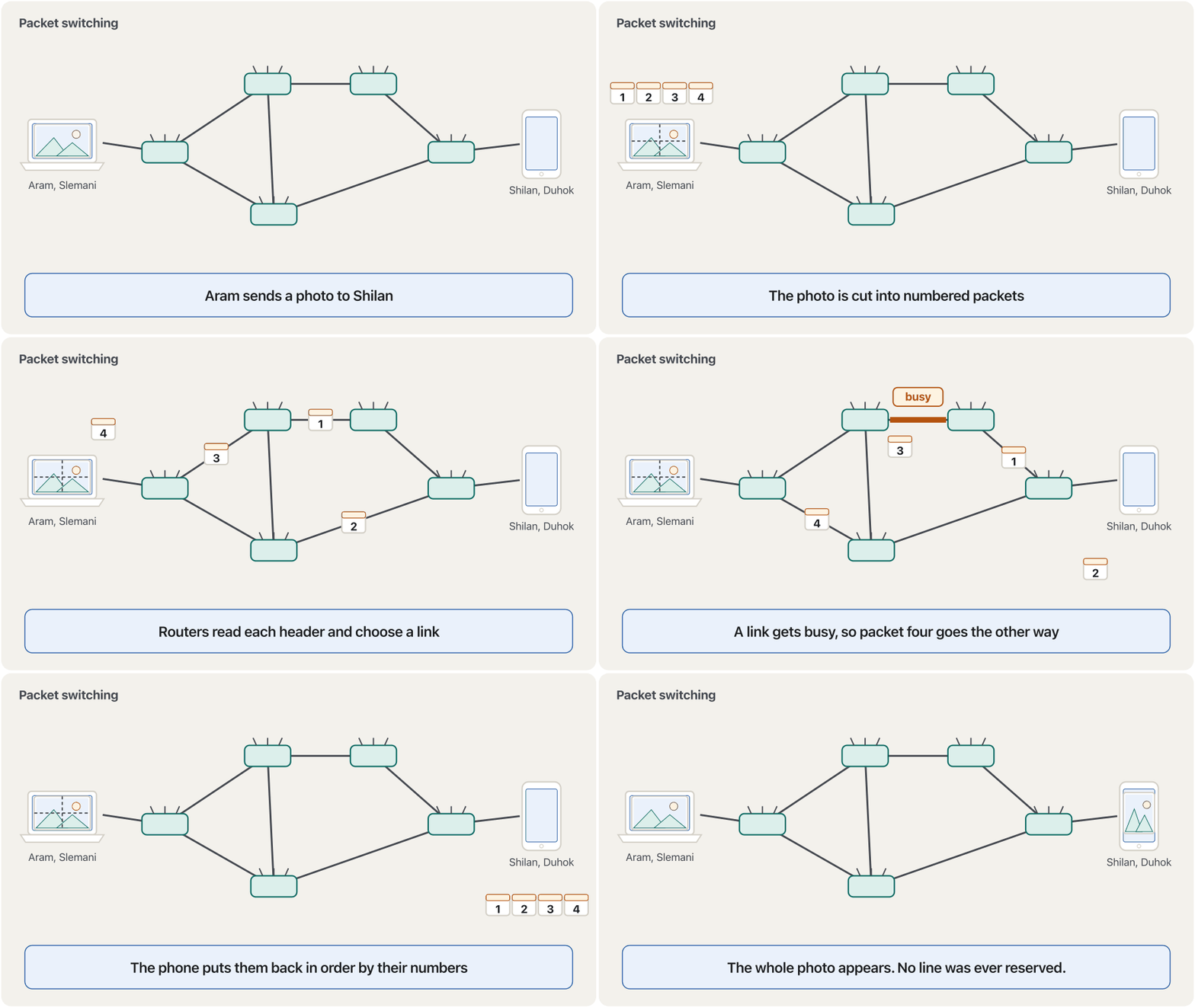
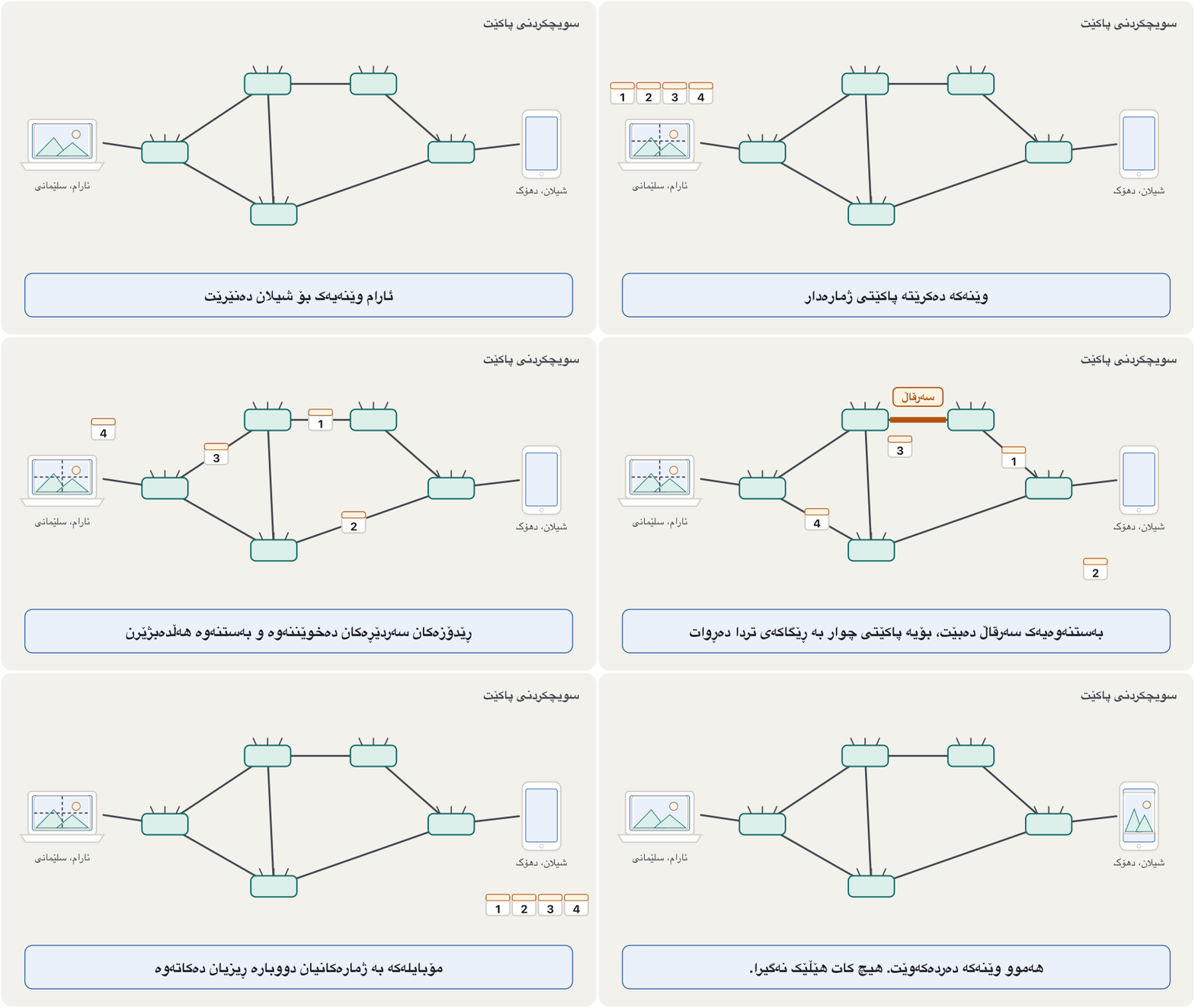
Packet switching: the Internet's wayسویچکردنی پاکێت: ڕێگای ئینتەرنێت
Where packet switching came fromسویچکردنی پاکێت لە کوێوە هات؟
In the early 1960s Paul Baran of the RAND Corporation in the USA looked for a network that would keep working even if some of its nodes were destroyed. His answer: cut messages into blocks and let every block find its own way. In 1965 Donald Davies of the National Physical Laboratory in the UK had the same idea on his own and gave the pieces their name: packets. The ARPANET, the ancestor of the Internet, was built on packet switching. Its first message went from UCLA to SRI on 29 October 1969; it was meant to be "login", but the system crashed after "lo".
لە سەرەتای ساڵانی 1960دا Paul Baran لە کۆمپانیای RAND لە ئەمریکا بەدوای دەگەڕا کە کار بکات تەنانەت ئەگەر هەندێک لە وێران ببن. وەڵامەکەی ئەمە بوو: نامەکان بکە بە چەند پارچەیەک و ڕێگە بدە هەر پارچەیەک ڕێگای خۆی بدۆزێتەوە. لە ساڵی 1965دا Donald Davies لە تاقیگەی نیشتمانیی فیزیا (NPL) لە بەریتانیا بە تەنها هەمان بیرۆکەی بۆ هات و ناوی ئەم پارچانەی نا . ARPANET، باپیرەی ، لەسەر دروست کرا. یەکەم نامەی لە ڕێکەوتی 29ی تشرینی یەکەمی 1969دا لە UCLAـەوە بۆ SRI چوو؛ دەبوو «login» بێت، بەڵام سیستەمەکە دوای «lo» تێکچوو.
Circuit or packet? Side by sideسویچکردنی هێڵ یان سویچکردنی پاکێت؟ لە تەنیشت یەکتر
| Featureتایبەتمەندی | Circuit switching | Packet switching |
|---|---|---|
| Set-up before sendingدامەزراندن پێش ناردن | Yes: the whole path is reserved firstبەڵێ: سەرەتا هەموو ڕێگاکە دەگیرێت | No: packets leave at onceنەخێر: یەکسەر دەڕۆن |
| Pathڕێگا | One fixed path for the whole callیەک ڕێگای جێگیر بۆ هەموو پەیوەندییەکە | Each packet may take a different pathلەوانەیە هەر ڕێگایەکی جیاواز بگرێت |
| Sharing the linksبەشکردنی بەستنەوەکان | No: the circuit is privateنەخێر: هێڵەکە تایبەتە | Yes: everyone's packets share themبەڵێ: هەمووان بەشیان دەکەن |
| When nobody sendsکاتێک کەس نانێرێت | The capacity is wastedتواناکە بەفیڕۆ دەچێت | Others use the capacityخەڵکی تر تواناکە بەکار دەهێنن |
| Delay | Short and steadyکورت و جێگیر | Changes with traffic; packets can queueبەپێی قەرەباڵغی دەگۆڕێت؛ ڕیز دەگرن |
| If a link breaksئەگەر بەستنەوەیەک بپچڕێت | The call drops and must be set up againپەیوەندییەکە دەبڕێت و دەبێت دووبارە دابمەزرێتەوە | Routers send the next packets another way دواتر بە ڕێگایەکی تردا دەنێرن |
| Typical chargeنرخدانانی باو | By time (minutes)بەپێی کات (خولەک) | By amount of data (or a flat monthly fee)بەپێی بڕی (یان بڕێکی جێگیری مانگانە) |
| Examplesنموونەکان | The old landline telephone network کۆنی تەلەفۆنی ماڵ | The Internet, Wi-Fi, chat apps, VoIP calls، ، چات، پەیوەندیی |
Circuit switching keeps one telephone line for the whole call; packet switching cuts data into packets that may travel different paths.
یەک هێڵی تەلەفۆن بۆ هەموو کاتی پەیوەندییەکە دەهێڵێتەوە؛ دەکاتە چەند کە لەوانەیە بە ڕێگای جیاواز بڕۆن.
Whole video (4:28): the telephone network (circuit) compared with the Internet (packets).
هەموو ڤیدیۆکە (4:28): تەلەفۆن () بەراورد بە ().
Why protocols? Rules for everyone on the wayبۆچی پرۆتۆکۆڵەکان؟ یاسا بۆ هەموو کەسێکی سەر ڕێگا
A protocol is an agreed set of rules that the sender, the receiver and every device in between follow. The two ends may sit on different networks in different countries, be made by different companies and run at different speeds. They can only work together if they agree on the details beforehand. Protocols are needed for:
کۆمەڵێک یاسای ستانداردە کە نێرەر، وەرگر و هەموو ئامێرێکی نێوانیان پەیڕەوی دەکەن. لەوانەیە دوو سەرەکە لەسەر جیاواز لە وڵاتی جیاوازدا بن، کۆمپانیای جیاواز دروستی کردبن و بە خێرایی جیاواز کار بکەن. تەنها کاتێک دەتوانن پێکەوە کار بکەن کە پێشوەخت لەسەر وردەکارییەکان ڕێک کەوتبن. بۆ ئەمانە پێویستن:
- Data format — how the bits are grouped and what each part means, so the receiver can read what was sent.
- Addressing — how devices name each other, and how each node decides whether the data is for itself or must be passed on.
- Flow control — a fast sender must not drown a slow receiver.
- Access control — on a shared medium, deciding who may send at each moment.
- Error control and order — checking that everything arrived undamaged, asking again for missing pieces and putting packets back in order.
- شێوەی — چۆن کۆ دەکرێنەوە و هەر بەشێک واتای چییە، بۆ ئەوەی وەرگرەکە بتوانێت ئەوەی نێردراوە بخوێنێتەوە.
- ناونیشاندان — ئامێرەکان چۆن یەکتر دەناسێنن و هەر نۆدێک چۆن بڕیار دەدات کە بۆ خۆیەتی یان دەبێت بینێرێت بۆ نۆدێکی تر.
- — نێرەرێکی خێرا نابێت وەرگرێکی خاو نوقم بکات.
- — لەسەر هاوبەش، بڕیاردان لەوەی لە هەر کاتێکدا کێ دەتوانێت بنێرێت.
- کۆنترۆڵی هەڵە و ڕیز — پشکنینی ئەوەی هەموو شتێک بێ زیان گەیشتووە، داواکردنەوەی پارچە ونبووەکان و ڕیزکردنەوەی .
If all of these rules were written into one huge protocol, nobody could build or repair it. So each protocol does one job, and they work as a team: one moves the bits over the cable or the radio, one addresses and routes the packets, one checks them and puts them in order, one fetches the web page.
ئەگەر هەموو ئەم یاسایانە لە یەک زۆر گەورەدا بنووسرانایە، کەس نەیدەتوانی دروستی بکات یان چاکی بکاتەوە. بۆیە هەر یەک کار دەکات و وەک تیمێک پێکەوە کار دەکەن: یەکێکیان بە کێبڵ یان ڕادیۆدا دەگوازێتەوە، یەکێکیان ناونیشان بۆ دادەنێت و ڕێگایان بۆ دەدۆزێتەوە، یەکێکیان دەیانپشکنێت و ڕیزیان دەکاتەوە و یەکێکیان دەهێنێت.
Why protocols? Rules for everyone on the wayبۆچی پرۆتۆکۆڵەکان؟ یاسا بۆ هەموو کەسێکی سەر ڕێگا
Flow control and access control in actionکۆنترۆڵی ڕەوت و کۆنترۆڵی نۆرەی ناردن لە کاردا
Flow control. A school server sends a video at 1,000 Mbit/s to an old tablet that can take only about 100 Mbit/s over weak Wi-Fi. If nothing stops the server, the tablet's small waiting area in memory (its buffer) fills up and the extra packets are simply thrown away. With flow control the tablet keeps telling the server how much more it can accept, and the server waits when it must. On the Internet, TCP does this.
. قوتابخانە ڤیدیۆیەک بە 1,000 Mbit/s دەنێرێت بۆ کۆن کە بە لاواز تەنها نزیکەی 100 Mbit/s وەردەگرێت. ئەگەر هیچ شتێک ڕانەگرێت، شوێنە بچووکەکەی چاوەڕێکردنی لە () پڕ دەبێت و فڕێ دەدرێن. بە ، بەردەوام بە دەڵێت چەندی تر دەتوانێت وەربگرێت و کاتێک پێویست بێت چاوەڕێ دەکات. لەسەر ، TCP ئەم کارە دەکات.
Access control (in full, medium access control). On a shared medium — one Wi-Fi channel, or the old shared cable of a bus network — two devices that send at the same moment collide: their signals mix and both messages are lost. Access-control rules decide whose turn it is. Wi-Fi devices listen before they send and, if the channel is busy, wait a short random time and try again. Old Ethernet on a shared cable noticed collisions and sent again after a random wait. A switch port is private and full duplex, so it needs no turn-taking at all.
. لەسەر هاوبەش — یەک کەناڵی یان کێبڵە هاوبەشە کۆنەکەی — دوو ئامێر کە لە هەمان کاتدا دەنێرن بەریەک دەکەون: تێکەڵ دەبن و هەردوو نامەکە ون دەبن. یاساکانی بڕیار دەدەن نۆرەی کێیە. ئامێرەکانی پێش ناردن گوێ دەگرن و ئەگەر کەناڵەکە سەرقاڵ بێت، کاتێکی کورتی هەڕەمەکی چاوەڕێ دەکەن و دووبارە هەوڵ دەدەنەوە. کۆن لەسەر کێبڵی هاوبەش هەستی بە بەریەککەوتن دەکرد و دوای چاوەڕێکردنێکی هەڕەمەکی دووبارە دەینارد. تایبەتە و ، بۆیە هیچ پێویستی بە نۆرەگرتن نییە.
A family of protocols you use every dayخێزانێک پرۆتۆکۆڵ کە هەموو ڕۆژێک بەکاریان دەهێنیت
No single protocol does everything. Each has one job, and they work together like the players of a football team. These are the ones you meet most often. The three e-mail protocols get one row each here; how an e-mail really travels from Aram to Shilan is explained in How E-mail Works.
هیچ بە تەنها هەموو کارێک ناکات. هەریەکەیان یەک کاری هەیە و وەک یاریزانانی تیمێکی تۆپی پێ پێکەوە کار دەکەن. ئەمانە ئەوانەن کە زۆرتر دەیانبینیت. سێ لێرەدا هەریەکەیان یەک ڕیزی هەیە؛ چۆن بەڕاستی لە ئارامەوە دەگاتە شیلان، لە ئیمەیڵ چۆن کار دەکاتـدا ڕوون کراوەتەوە.
| Protocol | What it doesچی دەکات | Where you meet itلە کوێ دەیبینیت | Read moreزیاتر بخوێنەوە |
|---|---|---|---|
| / | Fetches web pages and other web files: the browser asks, the server answers. HTTPS is HTTP inside an encrypted TLS connection (the padlock). و تری وێب دەهێنێت: داوا دەکات و وەڵام دەداتەوە. هەمان لە ناو پەیوەندییەکی شفرەکراودا (قوفڵەکە). | Every websiteهەموو | HTTPS: the secure versionHTTPS: وەشانە پارێزراوەکە |
| / | Copies files between a client and a server after a login. FTP sends even the password as plain text; SFTP does the same job over an encrypted SSH connection. Web browsers stopped opening ftp:// links in 2021. لە نێوان و دوای چوونەژوورەوە کۆپی دەکات. تەنانەت وەک دەقی ئاسایی دەنێرێت؛ هەمان کار بە پەیوەندییەکی SSHـی شفرەکراو دەکات. لە ساڵی 2021ەوە بەستەری ftp:// ناکەنەوە. | Uploading a website to a hosting companyبارکردنی بۆ کۆمپانیایەکی | — |
| Sends e-mail: from your mail app to your mail server, then from server to server. Like a post office, it reads the "envelope" (the addresses), not the letter inside. دەنێرێت: لە بۆ ، پاشان لە بۆ یەکێکی تر. وەک پۆستەخانە «زەرفەکە» دەخوێنێتەوە (ناونیشانەکان)، نەک نامەکەی ناوی. | Every e-mail you sendهەموو کە دەینێریت | Envelope and headerزەرف و سەردێڕ | |
| Downloads e-mail to one device and usually deletes it from the server. بۆ یەک ئامێر دادەبەزێنێت و زۆرجار لە دەیسڕێتەوە. | Older mail set-upsڕێکخستنی کۆنی | POP3 or IMAP?POP3 یان IMAP؟ | |
| Keeps e-mail on the server and syncs it, so your phone and your laptop show the same folders. لەسەر دەهێڵێتەوە و هاوکاتی دەکات، بۆیە مۆبایل و هەمان بوخچەکان پیشان دەدەن. | Mail on several devices لەسەر چەند ئامێرێک | POP3 or IMAP?POP3 یان IMAP؟ |
The protocols you use every day and the job of each: HTTP/HTTPS, FTP, SMTP, DNS, DHCP, SSH, TCP/IP, POP3 and IMAP.
ئەو ڕۆژانە بەکاریان دەهێنیت و کاری هەر یەکەیان: /، ، ، ، ، SSH، ، و .
Plays 0:26-7:13: what a protocol is, then HTTP/HTTPS, FTP, SMTP, DNS, DHCP, SSH, TCP/IP, POP3/IMAP.
لە 0:26 تا 7:13 پەخش دەبێت: چییە، پاشان /، ، ، ، ، SSH، و /.
A family of protocols you use every dayخێزانێک پرۆتۆکۆڵ کە هەموو ڕۆژێک بەکاریان دەهێنیت
Underneath: the protocols that carry everythingلە ژێرەوە: ئەو پرۆتۆکۆڵانەی هەموو شتێک دەگوازنەوە
Behind the apps you use, more protocols do the carrying: they give packets addresses and routes, turn names into addresses, carry calls and move the bits over a cable or through the air.
لە پشت ، تر کاری گواستنەوە دەکەن: ناونیشان و ڕێگا بۆ دادەنێن، ناو دەکەنە ناونیشان، پەیوەندیی دەنگی دەگوازنەوە و بە کێبڵ یان بە ناو هەوادا دەبەن.
| Protocol | What it doesچی دەکات | Where you meet itلە کوێ دەیبینیت | Read moreزیاتر بخوێنەوە |
|---|---|---|---|
| A direct link between exactly two devices, with a login check.بەستنەوەیەکی ڕاستەوخۆ لە نێوان تەنها دوو ئامێردا، لەگەڵ پشکنینی چوونەژوورەوە. | Dial-up modems; many DSL and fibre lines (as PPPoE) هێڵی تەلەفۆن؛ زۆرێک لە هێڵەکانی DSL و فایبەر (وەک PPPoE) | PPP, belowPPP، لە خوارەوە | |
| The Internet's family of protocols: IP addresses and routes the packets; TCP numbers them, checks them and has lost ones sent again.خێزانی : IP ناونیشان بۆ دادەنێت و دەیانگەیەنێت؛ TCP ژمارەیان دەکات، دەیانپشکنێت و ئەوانەی ون بوون دووبارە دەنێردرێنەوە. | Everything on the Internetهەموو شتێک لەسەر | TCP/IP: the rules everyone followsTCP/IP: ئەو یاسایانەی هەمووان پەیڕەوی دەکەن | |
| Voice and video calls sent as packets.پەیوەندیی دەنگی و ڤیدیۆیی کە وەک دەنێردرێت. | WhatsApp and Viber calls; VoLTE calls on 4Gپەیوەندییەکانی WhatsApp و Viber؛ پەیوەندیی VoLTE لەسەر 4G | Calls as dataپەیوەندیی دەنگی وەک دراوە | |
| Turns a name such as www.example.com into an IP address.ناوێکی وەک www.example.com دەکاتە . | Every time you type a web addressهەر جارێک ناونیشانی وێبێک دەنووسیت | Domain names and DNSناوەکانی دۆمەین و DNS | |
| / | Rules for sending inside a local network, on a cable or by radio, including whose turn it is to send.یاساکانی ناردن لە ناو ، بە کێبڵ یان بە ڕادیۆ، لەوانە ئەوەی نۆرەی کێیە بنێرێت. | Home, school and office networks ماڵ، قوتابخانە و ئۆفیس | Wi-Fi generationsنەوەکانی وایفای |
A family of protocols you use every dayخێزانێک پرۆتۆکۆڵ کە هەموو ڕۆژێک بەکاریان دەهێنیت
PPP: a direct line between two devicesPPP: بەستنەوەیەکی ڕاستەوخۆ لە نێوان دوو ئامێردا
PPP (Point-to-Point Protocol) is for a link with exactly two ends, such as a modem and the provider's equipment, or two routers joined by one line. There is nobody else on the link, so PPP needs no turn-taking: the link works in both directions at once. Before any data flows, PPP prepares the link in phases:
( خاڵ بۆ خاڵ) بۆ بەستنەوەیەکە کە تەنها دوو سەری هەیە، وەک و ئامێرەکانی دابینکەرەکە، یان دوو کە بە یەک هێڵ پێکەوە بەستراون. کەسی تر لەسەر بەستنەوەکە نییە، بۆیە پێویستی بە نۆرەگرتن نییە: بەستنەوەکە لە یەک کاتدا بە هەردوو ئاڕاستە کار دەکات. پێش ئەوەی هیچ بڕوات، بەستنەوەکە بە چەند قۆناغێک ئامادە دەکات:
- Establishدامەزراندن
The two ends agree on settings, such as the largest packet size.
دوو سەرەکە لەسەر ڕێکخستنەکان ڕێک دەکەون، وەک گەورەترین قەبارەی .
- Authenticateپشتڕاستکردنەوەی ناسنامە
If the provider requires it, the caller proves who it is, usually with a username and a password.
ئەگەر دابینکەرەکە داوای بکات، پەیوەندیکەرەکە دەیسەلمێنێت کێیە، زۆرجار بە و .
- Set up the networkئامادەکردنی ڕایەڵە
They agree on the network protocol, for example which IP address the home side will use.
لەسەر ڕێک دەکەون، بۆ نموونە لای ماڵەوە کام بەکار دەهێنێت.
- Carry dataگواستنەوەی دراوە
Packets now flow in both directions.
ئێستا بە هەردوو ئاڕاستە دەڕۆن.
- Closeداخستن
Either side can end the link.
هەر لایەک دەتوانێت بەستنەوەکە کۆتایی پێ بهێنێت.
A family of protocols you use every dayخێزانێک پرۆتۆکۆڵ کە هەموو ڕۆژێک بەکاریان دەهێنیت
PPP today: PPPoE on home routersPPP ئەمڕۆ: PPPoE لەسەر ڕێدۆزەکانی ماڵەوە
In the days of dial-up, every home computer reached its internet provider through a modem and PPP. Today many home routers still log in to the provider with PPPoE (PPP over Ethernet) on DSL and fibre lines. That is why the router's settings page may ask for a username and a password from your provider.
لە سەردەمی dial-upدا (پەیوەندی بە هێڵی تەلەفۆن)، هەموو ماڵەوە بە و دەگەیشتە . ئەمڕۆش زۆرێک لە ماڵەوە لەسەر هێڵەکانی DSL و فایبەر بە PPPoE ( لەسەر ) دەچنە ژوورەوەی دابینکەرەکە. هەر لەبەر ئەمەیە لاپەڕەی ڕێکخستنەکانی لەوانەیە و بخوازێت کە دابینکەرەکەت پێی داویت.
Common mistakesهەڵە باوەکان
| Mistakeهەڵە | What is trueڕاستییەکە |
|---|---|
| "Half duplex means half the speed."« واتە نیوەی خێرایی.» | Each turn uses the whole link; what is lost is the time spent waiting for a turn.هەر نۆرەیەک هەموو بەستنەوەکە بەکار دەهێنێت؛ ئەوەی لەدەست دەچێت کاتی چاوەڕێکردنە بۆ نۆرە. |
| "All the packets of a message travel the same road."«هەموو نامەیەک بە هەمان ڕێگادا دەڕۆن.» | They may take different routes and arrive out of order; the receiver puts them back in order.لەوانەیە بە ڕێگای جیاوازدا بڕۆن و بێ ڕیز بگەن؛ وەرگرەکە دووبارە ڕیزیان دەکاتەوە. |
| "Packet switching is better in every way."« لە هەموو ڕوویەکەوە باشترە.» | It shares the links well, but its delay changes with traffic. Circuit switching gives a steady delay, which is why calls over packets need priority rules to sound smooth.بەستنەوەکان بە باشی بەش دەکات، بەڵام بەپێی قەرەباڵغی دەگۆڕێت. جێگیر دەدات، بۆیە پەیوەندیی دەنگی بە پێویستی بە یاسای پێشینەیی هەیە تا بە ڕوونی ببیسترێت. |
| "The protocol is the cable."« کێبڵەکەیە.» | The cable is the medium; the protocol is the set of rules for using it.کێبڵەکە ؛ کۆمەڵە یاسایەکە بۆ بەکارهێنانی. |
| "1 Gbit/s is 1,024 Mbit/s."«1 Gbit/s یەکسانە بە 1,024 Mbit/s.» | Data rates use decimal prefixes: . پێشگرە دەییەکان بەکار دەهێنێت: . |
| "A bandwidth of 500 MHz means 500 Mbit/s."« 500 MHz واتە 500 Mbit/s.» | Hertz measure a range of frequencies; bit/s measure data. More hertz usually allow more bits per second, but they are different units. لێرەدا بۆشایی نێوان نزمترین و بەرزترین دەپێوێت؛ bit/s بڕی دەپێوێت. زیاتر زۆرجار ڕێگە بە زیاتر لە چرکەیەکدا دەدات، بەڵام دوو یەکەی جیاوازن. |
Exercisesڕاهێنانەکان
What is data communication? Name its five components and point each one out in this example: Dilan sends Hana a WhatsApp voice message over 4G.
چییە؟ پێنج پێکهێنەرەکەی ناو ببە و هەر یەکێکیان لەم نموونەیەدا دەستنیشان بکە: دیلان نامەیەکی دەنگیی WhatsApp بە 4G بۆ هانا دەنێرێت.
Show answerوەڵامەکە پیشان بدە
Data communication means two or more connected devices exchanging data. Its five components:
ئاڵوگۆڕکردنی لە نێوان دوو ئامێری بەستراو یان زیاتردا. پێنج پێکهێنەرەکەی:
- Sender — Dilan's phone.
- Receiver — Hana's phone.
- Message — the recorded voice, turned into bits.
- Medium — radio waves to the masts, then cables and fibre between them.
- Protocols — the 4G rules, TCP/IP and the app's own rules.
- نێرەر — مۆبایلەکەی دیلان.
- وەرگر — مۆبایلەکەی هانا.
- نامە — دەنگە تۆمارکراوەکە کە کراوەتە .
- — شەپۆلی ڕادیۆیی بۆ بورجەکان، پاشان کێبڵ و فایبەر لە نێوانیاندا.
- — یاساکانی 4G، و یاساکانی خودی .
Which transmission mode lets data flow in both directions at the same time? Give two examples, and name the mode of a walkie-talkie.
کام ڕێگە دەدات لە هەمان کاتدا بە هەردوو ئاڕاستەدا بڕوات؟ دوو نموونە بهێنەوە و شێوازی بێسیم ناو ببە.
Show answerوەڵامەکە پیشان بدە
Full duplex, for example a phone or video call and the link between a computer and a switch port. A walkie-talkie is half duplex: both ways, but by turns.
، بۆ نموونە پەیوەندیی تەلەفۆن یان ڤیدیۆ و بەستنەوەی نێوان و . بێسیم : هەردوو ئاڕاستە، بەڵام بە نۆرە.
Among a LAN, a MAN and a WAN, which usually gives the highest speed, and which covers the largest area? Explain why.
لە نێوان ، و ، کامیان زۆرجار بەرزترین خێرایی دەدات و کامیان گەورەترین ناوچە دەگرێتەوە؟ هۆکارەکەی ڕوون بکەرەوە.
Show answerوەڵامەکە پیشان بدە
A LAN is usually the fastest for each device: the cables are short, few people share them, and 1–10 Gbit/s Ethernet and fast Wi-Fi are normal; its delay is also the lowest. A WAN covers the largest area — cities, countries, the whole world; the Internet is the biggest WAN. A MAN covers one city and sits in between. See Networks by size: from PAN to WAN.
زۆرجار بۆ هەر ئامێرێک خێراترینە: کێبڵەکان کورتن، کەسانێکی کەم بەشیان دەکەن و 1 تا 10 Gbit/s و خێرا ئاساییە؛ کەمترینە. گەورەترین ناوچە دەگرێتەوە — شار، وڵات، هەموو جیهان؛ گەورەترین . یەک شار دەگرێتەوە و لە نێوانیاندایە. بڕوانە ڕایەڵەکان بەپێی قەبارە: لە PANـەوە تا WAN.
SMTP sends e-mail. Find two other e-mail protocols and say what each one does.
دەنێرێت. دوو تری بدۆزەرەوە و بڵێ هەریەکەیان چی دەکات.
Show answerوەڵامەکە پیشان بدە
POP3 downloads the mail to one device and usually removes it from the server. IMAP keeps the mail on the server and syncs it on every device. (Mail apps also send through SMTP on a special submission port.) The whole journey of an e-mail is in How E-mail Works, and the two are compared in POP3 or IMAP?.
بۆ یەک ئامێر دادەبەزێنێت و زۆرجار لە لای دەبات. لەسەر دەهێڵێتەوە و لەسەر هەموو ئامێرێک هاوکاتی دەکات. ( بە لەسەر تایبەتی ناردنیش دەنێرن.) هەموو گەشتی لە ئیمەیڵ چۆن کار دەکاتـدا هاتووە و ئەم دووانە لە POP3 یان IMAP؟ـدا بەراورد کراون.
Which transmission mode is each one? (a) an FM radio station; (b) a walkie-talkie; (c) a video call; (d) GPS satellites and your phone; (e) computers on an old shared bus cable; (f) a computer and its switch port.
هەر یەکێک لەمانە کام ؟ (أ) وێستگەیەکی ڕادیۆی FM؛ (ب) بێسیم؛ (ج) پەیوەندییەکی ڤیدیۆیی؛ (د) مانگە دەستکردەکانی و مۆبایلەکەت؛ (هـ) لەسەر کێبڵێکی هاوبەشی کۆنی ؛ (و) و لە .
Show answerوەڵامەکە پیشان بدە
(a) simplex; (b) half duplex; (c) full duplex; (d) simplex — the phone only receives; (e) half duplex; (f) full duplex.
(أ) ؛ (ب) ؛ (ج) ؛ (د) — مۆبایلەکە تەنها وەردەگرێت؛ (هـ) ؛ (و) .
Which kind of switching does each use? (a) a call on the old landline network of the 1990s; (b) Shilan sending a 20 MB file by e-mail; (c) watching an online lesson; (d) a WhatsApp call.
هەر یەکێک لەمانە کام جۆری بەکار دەهێنێت؟ (أ) پەیوەندییەک لەسەر تەلەفۆنی ماڵ لە ساڵانی 1990دا؛ (ب) شیلان 20 MB بە دەنێرێت؛ (ج) سەیرکردنی وانەیەکی ئۆنلاین؛ (د) پەیوەندییەکی WhatsApp.
Show answerوەڵامەکە پیشان بدە
(a) circuit switching — a line was held for the whole call; (b), (c) and (d) packet switching. The WhatsApp call is VoIP: the voice travels as packets over the Internet.
(أ) — هێڵێک بۆ هەموو پەیوەندییەکە گیرابوو؛ (ب)، (ج) و (د) . پەیوەندیی WhatsApp : دەنگەکە وەک بە ناو دەڕوات.
On a Windows computer, open Command Prompt (see Open Command Prompt) and type the command below. What does each line of the result show? Run it again a few minutes later: is the list exactly the same?
لەسەر Windows، Command Prompt بکەرەوە (بڕوانە کردنەوەی Command Prompt) و ئەم فەرمانەی خوارەوە بنووسە. هەر دێڕێکی ئەنجامەکە چی پیشان دەدات؟ چەند خولەکێک دواتر دووبارە جێبەجێی بکەرەوە: ئایا لیستەکە ڕێک وەک خۆیەتی؟
tracert www.wikipedia.orgShow answerوەڵامەکە پیشان بدە
Each numbered line is one hop: a router your packets pass on the way to the server. The three times are round trips in milliseconds to that router, and its name or IP address is at the end. A line of stars (* * *) means that router did not answer this test, not that the packets were lost. The list is often the same, but routes can change when links are busy or broken — packet switching at work. (tracert is the Windows name; on a Mac or Linux the command is traceroute.)
هەر دێڕێکی ژمارەدار یەک hopـە: کە لە ڕێگای پێیدا تێدەپەڕن. سێ کاتەکە چوون و هاتنەوەن بە ملیچرکە بۆ ئەو و ناوەکەی یان لە کۆتاییدایە. دێڕێک لە ئەستێرە (* * *) واتە ئەو وەڵامی ئەم تاقیکردنەوەیەی نەداوەتەوە، نەک ون بووبن. لیستەکە زۆرجار وەک خۆیەتی، بەڵام ڕێگاکان دەگۆڕێن کاتێک بەستنەوەکان سەرقاڵ یان پچڕاو دەبن — ئەمە لە کاردا. (tracert ناوی Windowsـە؛ لەسەر Mac یان Linux فەرمانەکە tracerouteـە.)
Exercisesڕاهێنانەکان
Exercises with numbers: rates and bandwidthڕاهێنان بە ژمارە: خێرایی و پانایی باند
A link carries 18 Gbps. How many bits per second is that?
بەستنەوەیەک 18 Gbps دەگوازێتەوە. ئەمە چەند لە چرکەیەکدایە؟
Show answerوەڵامەکە پیشان بدە
G (giga) means , so 18 Gbps is eighteen thousand million bits every second.
G (گیگا) واتە ، بۆیە 18 Gbps واتە هەژدە هەزار ملیۆن لە هەر چرکەیەکدا.
A signal contains frequencies from 500 MHz to 1 GHz. What is its bandwidth?
نێوان 500 MHz و 1 GHzـی تێدایە. چەندە؟
Show answerوەڵامەکە پیشان بدە
In the signal sense, bandwidth is the width of the frequency range: highest minus lowest. Change both to the same unit first. See How fast? Bandwidth and latency.
بە واتای ، بۆشایی نێوان نزمترین و بەرزترین : بەرزترین لێدەرکراو لە نزمترین. سەرەتا هەردووکیان بکە بە هەمان یەکە. بڕوانە چەند خێرا؟ پانایی باند و دواکەوتن.
At the ideal speed of 18 Gbit/s, how long would a 1.5 GB film take to arrive?
بە خێرایی ئایدیاڵی 18 Gbit/s، فیلمێکی 1.5 GB چەند کاتی دەوێت تا بگات؟
Show answerوەڵامەکە پیشان بدە
Two thirds of a second in theory. Real downloads are slower: the server, the Wi-Fi and the other users on the way all set limits.
لە تیۆریدا دوو لەسەر سێی چرکەیەک. دابەزاندنی ڕاستەقینە خاوترە: ، و بەکارهێنەرانی تری سەر ڕێگا هەموویان سنوور دادەنێن.
Write two or three sentences on each: (a) HTTP — and what the letters stand for; (b) bandwidth; (c) Bluetooth; (d) DNS; (e) data transfer rate. Then explain what a protocol is, with an example.
دوو یان سێ ڕستە لەسەر هەر یەکێکیان بنووسە: (أ) — و پیتەکانی بۆ چی کورت کراونەتەوە؛ (ب) ؛ (ج) ؛ (د) ؛ (هـ) . پاشان ڕوونی بکەرەوە چییە، بە نموونەیەکەوە.
Show answerوەڵامەکە پیشان بدە
- HTTP — HyperText Transfer Protocol, the request–response protocol of the Web: the browser (client) asks for a page and the web server answers. Tim Berners-Lee created it at CERN in 1989–1991; the IETF now publishes its standards, and HTTPS is the encrypted form.
- Bandwidth — for a signal, the range of frequencies a channel carries, in hertz (highest minus lowest); in everyday speech, how many bits per second a connection can carry. A wider band can carry more data.
- Bluetooth — a short-range radio link (often about 10 m) in the 2.4 GHz band for earbuds, mice, keyboards and watches. It uses radio waves, not infrared — see Bluetooth, mobile networks and satellites.
- DNS — the Domain Name System turns a name such as www.example.com into the IP address that computers use, like a phone book — see Domain names and DNS.
- Data transfer rate — the number of bits actually moved from sender to receiver each second (bit/s, kbit/s, Mbit/s, Gbit/s, with decimal prefixes). MBps (megabytes per second) is 8 times bigger than Mbps.
- Protocol — a set of agreed rules for communication. Example: HTTP fixes exactly how a browser asks for a page and how the server must answer, so any browser works with any web server.
- — HyperText Transfer Protocol، داواکاری و وەڵامی وێب: () داوای دەکات و وەڵام دەداتەوە. Tim Berners-Lee لە CERN لە نێوان 1989 و 1991دا دروستی کرد؛ ئێستا IETF ستانداردەکانی بڵاو دەکاتەوە و شێوە شفرەکراوەکەیەتی.
- — بۆ ، بۆشایی نێوان نزمترین و بەرزترین ئەو کە کەناڵێک دەیانگوازێتەوە، بە (بەرزترین لێدەرکراو لە نزمترین)؛ لە قسەی ڕۆژانەدا، ئەوەیە کە پەیوەندییەک دەتوانێت لە هەر چرکەیەکدا چەند بگوازێتەوە. باندی پانتر دەتوانێت زیاتر بگوازێتەوە.
- — بەستنەوەیەکی ڕادیۆیی بۆ دووریی کورت (زۆرجار نزیکەی 10 مەتر) لە باندی 2.4 GHzـدا بۆ ، ، و کاتژمێر. شەپۆلی ڕادیۆیی بەکار دەهێنێت نەک ژێرسوور — بڕوانە Bluetooth، ڕایەڵەکانی مۆبایل و مانگی دەستکرد.
- — سیستەمی (Domain Name System) ناوێکی وەک www.example.com دەکاتە ئەو کە بەکاری دەهێنن، وەک دەفتەری تەلەفۆن — بڕوانە ناوەکانی دۆمەین و DNS.
- — ژمارەی ئەو کە لە هەر چرکەیەکدا بەڕاستی لە نێرەرەوە دەگەنە وەرگر (bit/s، kbit/s، Mbit/s، Gbit/s، بە پێشگرە دەییەکان). MBps (مێگابایت لە چرکەیەکدا) 8 هێندەی Mbpsـە.
- — کۆمەڵێک یاسای ڕێککەوتوو بۆ پەیوەندیکردن. نموونە: بە وردی دیاری دەکات کە چۆن داوای دەکات و دەبێت چۆن وەڵام بداتەوە، بۆیە هەر لەگەڵ هەر کار دەکات.
Summaryپوختە
- Data communication is the exchange of data between connected devices; the message, the medium and the protocol are three of its five parts.
- Simplex: one way only. Half duplex: both ways by turns. Full duplex: both ways at once.
- Switching passes data from node to node, because a wire between every pair would need links.
- Circuit switching reserves one path for the whole call: a steady delay, but wasted capacity in silences.
- Packet switching cuts messages into numbered packets that share the links, may take different routes and are put back in order; the Internet works this way.
- Protocols fix the data format, addressing, flow control, access control and error control.
- Everyday protocols: HTTP/HTTPS, FTP/SFTP, SMTP, POP3, IMAP, PPP, TCP/IP, VoIP, DNS, Ethernet and Wi-Fi.
- Data rates use decimal prefixes (); bandwidth in hertz is a range of frequencies.
- ئاڵوگۆڕکردنی لە نێوان ئامێرە بەستراوەکاندا؛ نامە، و سێ لە پێنج بەشەکەین.
- : تەنها یەک ئاڕاستە. : هەردوو ئاڕاستە بە نۆرە. : هەردوو ئاڕاستە لە یەک کاتدا.
- لە نۆدێکەوە بۆ نۆدێکی تر دەگوازێتەوە، چونکە وایەرێک لە نێوان هەر جووتێکدا بەستنەوەی پێویست دەبوو.
- یەک ڕێگا بۆ هەموو پەیوەندییەکە دەگرێت: جێگیر، بەڵام تواناکەی لە بێدەنگیدا بەفیڕۆ دەچێت.
- نامەکان دەکاتە ژمارەدار کە بەستنەوەکان بەش دەکەن، لەوانەیە بە ڕێگای جیاوازدا بڕۆن و دووبارە ڕیز دەکرێنەوە؛ بەم شێوەیە کار دەکات.
- شێوەی ، ناونیشاندان، ، و کۆنترۆڵی هەڵە دیاری دەکەن.
- : /، /، ، ، ، ، ، ، ، و .
- پێشگرە دەییەکان بەکار دەهێنێت ()؛ بە بۆشایی نێوان نزمترین و بەرزترین .
Why is a switch port full duplex but an old hub half duplex?بۆچی دەرچەی سویچ دوولایەنەی هاوکاتە بەڵام هەبی کۆن دوولایەنەی نۆرەییە؟
A switch gives each computer its own cable and port, with separate paths for each direction, so nobody shares. A hub repeats every signal to everyone on one shared path, so only one can send at a time.
بە هەر کێبڵ و تایبەتی خۆی دەدات، بە ڕێگای جیا بۆ هەر ئاڕاستەیەک، بۆیە کەس هیچ شتێک بەش ناکات. هەموو لەسەر یەک ڕێگای هاوبەش بۆ هەمووان دووبارە دەکاتەوە، بۆیە لە یەک کاتدا تەنها یەک کەس دەتوانێت بنێرێت.
Why can the Internet keep working when one link breaks?بۆچی ئینتەرنێت دەتوانێت کار بکات کاتێک بەستنەوەیەک دەپچڕێت؟
Because of packet switching: no path is fixed, so routers simply send the next packets another way.
لەبەر : هیچ ڕێگایەک جێگیر نییە، بۆیە دواتر بە ڕێگایەکی تردا دەنێرن.
What does PPP add to a direct link?PPP چی بۆ بەستنەوەیەکی ڕاستەوخۆ زیاد دەکات؟
It sets up the link, can check who is calling (authentication) and then carries packets in both directions.
بەستنەوەکە دادەمەزرێنێت، دەتوانێت بپشکنێت کێ پەیوەندی دەکات () و پاشان بە هەردوو ئاڕاستە دەگوازێتەوە.
Videoڤیدیۆ
Watch a videoسەیری ڤیدیۆیەک بکە
A video that viewers liked a lot and praised in their comments, chosen for this lesson.ڤیدیۆیەک کە بینەران زۆریان پێ خۆش بووە و لە کۆمێنتەکانیاندا ستایشیان کردووە، بۆ ئەم وانەیە هەڵبژێردراوە.
In Kurdish: the five parts of every data communication: message, sender, receiver, medium and protocol.
بە کوردی: پێنج پێکهاتەکەی : نامە، نێرەر، وەرگر، و .
Kurdish (Sorani) video, 7:54: the five parts of data communication (message, sender, receiver, medium, protocol) on one diagram.
ڤیدیۆیەکی کوردیی سۆرانی (7:54): پێنج پێکهاتەکەی (نامە، نێرەر، وەرگر، ، ) لەسەر یەک نەخشە.
Lesson complete!وانەکە تەواو بوو!
Well done. Review the key terms, then go on to the next lesson.دەستخۆش. سەیرێکی زاراوە سەرەکییەکان بکەرەوە، پاشان بڕۆ بۆ وانەی داهاتوو.
Key termsزاراوە سەرەکییەکان
Types of Networks: LAN, WAN and Moreجۆرەکانی ڕایەڵە: ڕایەڵەی ناوچەیی، ڕایەڵەی فراوان و زیاتر
Related lecturesوانە پەیوەندیدارەکان
- How E-mail Worksئیمەیڵ چۆن کار دەکات
- Network Hardware: NICs, Switches and Routersڕەقەواڵەی ڕایەڵە: کارتی ڕایەڵە، سویچ و ڕێدۆز
- Network Topologiesتۆپۆلۆجییەکانی ڕایەڵە
- Types of Networks: LAN, WAN and Moreجۆرەکانی ڕایەڵە: ڕایەڵەی ناوچەیی، ڕایەڵەی فراوان و زیاتر
- The Internet and the Webئینتەرنێت و وێب
- HTTP and the Request–Response CycleHTTP و سووڕی داواکاری و وەڵام
- Browsers, Web Servers and URLsتۆڕگەڕەکان، ڕاژەکارەکانی وێب و URL
- Cellular Networks and Mobile Generationsڕایەڵەکانی مۆبایل و نەوەکانی ڕایەڵەی مۆبایل
- Bits, Bytes and Storage Unitsبیتەکان، بایتەکان و یەکەکانی خەزنکردن
- IP Addresses and MAC Addressesناونیشانەکانی IP و ناونیشانەکانی MAC
- The Command Line: Command Prompt Basicsڕووکاری هێڵی فەرمان: بنەماکانی Command Prompt
References and further readingسەرچاوەکان و خوێندنەوەی زیاتر
- Wikipedia: Duplex (telecommunications) — simplex, half duplex, full duplex and how full duplex is built
- Wikipedia: Packet switching — header and payload, comparison with circuit switching, Baran, Davies and the ARPANET
- Leonard Kleinrock (UCLA): The first words on the Internet, 29 October 1969
- RFC 1661: The Point-to-Point Protocol (PPP), STD 51, July 1994
- RFC 5321: Simple Mail Transfer Protocol (envelope and content)
- Mozilla Security Blog: Stopping FTP support in Firefox 90 (2021)
- Microsoft Learn: tracert
- NIST: Prefixes for binary multiples (k = 1000 vs Ki = 1024; data rates)
This lecture is a first edition. The Kurdish text and terminology are waiting for review by Kurdish IT teachers.ئەم وانەیە چاپی یەکەمە. دەقە کوردییەکە و زاراوەکانی چاوەڕێی پێداچوونەوەی مامۆستایانی کوردی بواری IT ن.