Chapterبەش 3 · Lectureوانە 3.3
Kinds of Functions: Polynomial, Algebraic and Transcendentalجۆرەکانی نەخشە: ڕادەدار، جەبری و ناجەبری
How functions are sorted into algebraic and transcendental families, what a polynomial and its degree are, and why roots, rational functions and need care.
چۆن پۆلێن دەکرێن بۆ خێزانی جەبری و ناجەبری، و پلەکەی چین و بۆچی ڕەگەکان، و وریایی دەوێن.
What you will learnچی فێر دەبیت
- Tell algebraic functions from transcendental functions.
- Decide whether a function is a polynomial and find its degree and leading coefficient.
- Name the four transcendental families and write logarithms in standard notation.
- Explain why is not an exponential function.
- لە جیا بکەرەوە.
- بڕیار بدە ئایا و پلە و بدۆزەرەوە.
- چوار خێزانە ناجەبرییەکە بناسە و بە نووسینی ستاندارد بنووسە.
- ڕوونی بکەرەوە بۆچی نییە.
Two big families of functionsدوو خێزانی گەورەی نەخشەکان
The notes sort functions into two groups: algebraic functions and transcendental functions. Knowing the family of a function tells you a lot before you calculate anything: what its graph roughly looks like, which numbers its domain must leave out, and which rules you may use on it.
تێبینییەکانی وانەکە دەکەنە دوو گرووپ: و . ئەگەر بزانیت سەر بە کام خێزانە، پێش هەر ژماردنێک زۆر شت دەزانیت: نزیکەی چۆنە، دەبێت کام ژمارانە دەربهێنێت و کام یاسایانەی لەسەر بەکار دەهێنرێت.
In an old bazaar the shops of one trade sit together: goldsmiths in one lane, spice sellers in another. Once you know which lane a shop is in, you know what it sells before you go inside. Function families work the same way: once you know that is a polynomial, you already know it is defined for every real x.
لە بازاڕە کۆنەکاندا دوکانەکانی یەک پیشە پێکەوە دادەنرێن: زێڕنگرەکان لە کۆڵانێک و بەهاراتفرۆشەکان لە کۆڵانێکی تر. هەر کە زانیت دوکانێک لە کام کۆڵاندایە، پێش ئەوەی بچیتە ژوورەوە دەزانیت چی دەفرۆشێت. خێزانەکانی بە هەمان شێوە کار دەکەن: هەر کە زانیت ، دەزانیت بۆ هەموو xـێکی ڕاستی پێناسە کراوە.
Where the analogy stops workingسنووری ئەم نموونەیە
A shop can sell goods from two trades, and a formula can mix families too: has the algebraic part , but adding the transcendental part makes the whole function transcendental.
دوکانێک دەکرێت کاڵای دوو پیشە بفرۆشێت و فۆرمولەیەکیش دەکرێت خێزانەکان تێکەڵ بکات: بەشی جەبریی ـی تێدایە، بەڵام زیادکردنی بەشی ناجەبریی هەموو دەکاتە .
Algebraic functionsنەخشە جەبرییەکان
A function built from x with a finite number of additions, subtractions, multiplications, divisions, powers and roots.
نەخشەیەکە کە لە x بە ژمارەیەکی سنووردار لە کۆکردنەوە، لێدەرکردن، لێکدان، دابەشکردن، توان و ڕەگ دروست دەکرێت.
An algebraic function is built from the independent variable x with a finite number of steps, using only the four basic operations , powers and roots. Examples: , , , .
لە x بە ژمارەیەکی سنووردار هەنگاو دروست دەکرێت و تەنها کۆکردنەوە، لێدەرکردن، لێکدان و دابەشکردن () لەگەڵ و ڕەگەکان بەکار دەهێنێت. نموونە: ، ، ، .
Polynomials and their degreeڕادەدارەکان و پلەکەیان
The simplest algebraic functions are the polynomials. A function is a polynomial of degree n if it can be written as
سادەترین . بە پلەی nـە ئەگەر بتوانرێت بەم شێوەیە بنووسرێت
The numbers are the coefficients. The exponents are whole numbers . The highest exponent n is the degree, and its coefficient , the leading coefficient, must not be 0.
ژمارەکانی . : . بەرزترین ، n، و ، ، و نابێت 0 بێت.
Example: in the degree is 3, the coefficients are 4, −5, 2 and 7, and the leading coefficient is 4. Why must ? If it were 0, the highest term would disappear and the degree would be smaller. A polynomial does not have to look like the formula: multiplies out to , a polynomial of degree 2.
نموونە: لە ـدا پلەکە 3ـە، ، ، و ن و 4ـە. بۆچی دەبێت بێت؟ ئەگەر 0 بوایە، بەرزترین بڕ نەدەما و پلەکە بچووکتر دەبوو. پێویست ناکات ڕووکەشی وەک فۆرمولەکە بێت: کە دەیکەینەوە دەبێتە ، بە پلەی 2.
| Degree | Nameناو | Exampleنموونە |
|---|---|---|
| 0 | constant function | |
| 1 | linear function | |
| 2 | quadratic function | |
| 3 | cubic function |
Every polynomial is defined for all real numbers: no division by x and no roots means nothing to exclude. The graphs of the first few kinds are drawn in Graphs of basic functions.
هەموو بۆ هەموو پێناسە کراوە: نە دابەشکردن لەسەر x هەیە و نە ڕەگ، بۆیە هیچ شتێک دەرناهێنرێت. هێڵکاریی ئەم جۆرانە لە هێڵکاریی نەخشە سەرەتاییەکان کێشراون.
Defines a polynomial, its terms and coefficients, and how the highest exponent gives its degree and name.
پێناسەی ، بڕەکانی و ، هەروەها چۆن گەورەترین و ناوەکەی دیاری دەکات.
Plays 0:00–2:40: what a polynomial is, classifying, degree; stops before solving equations.
لە 0:00 تا 2:40 پەخش دەبێت: چییە، پۆلێنکردنی و ؛ پێش چارەسەرکردنی ڕادەوەستێت.
Polynomials and their degreeڕادەدارەکان و پلەکەیان
Algebraic, but not polynomialsجەبری، بەڵام ڕادەدار نین
The notes give four examples right after the polynomial definition: , , and . All four are algebraic, but only two are polynomials:
تێبینییەکان دوای پێناسەی چوار نموونە دەدەن: ، ، و . هەر چوارکیان جەبرین، بەڵام تەنها دووانیان :
| Function | Algebraic?جەبرییە؟ | Polynomial?؟ | Whyبۆچی |
|---|---|---|---|
| yesبەڵێ | yes, degree 3بەڵێ، پلە 3 | whole-number powers onlyتەنها | |
| yesبەڵێ | yes, degree 2بەڵێ، پلە 2 | equals یەکسانە بە | |
| yesبەڵێ | noنەخێر | a cube root is the power , not a whole number ـە، نەک | |
| yesبەڵێ | noنەخێر | a square root, and division by an expression with x و دابەشکردن بەسەر کە xـی تێدایە |
Another important algebraic family is the rational functions: one polynomial divided by another, , such as or . Their domain leaves out the zeros of the denominator, as you saw in Domain, range and image.
خێزانێکی گرنگی تری جەبری : دابەش بەسەر تردا، ، وەک یان . سفرەکانی دەردەهێنێت، وەک لە بوار، مەودا و وێنە بینیت.
Transcendental functionsنەخشە ناجەبرییەکان
A function that is not algebraic is called transcendental: no finite combination of , powers and roots can produce it. The notes list four families:
کە جەبری نەبێت پێی دەوترێت : هیچ تێکەڵەیەکی سنوورداری ، توان و ڕەگ ناتوانێت دروستی بکات. تێبینییەکان چوار خێزان دەژمێرن:
| Familyخێزان | Examples from the notesنموونەکانی تێبینییەکان | Taught inلە کوێ دەخوێنرێت |
|---|---|---|
| 1. Trigonometric | Trigonometric functionsوانەی نەخشە سێگۆشەییەکان | |
| 2. Inverse trigonometric | Inverse functionsوانەی پێچەوانەکانی نەخشە | |
| 3. Exponential | Exponential functionsوانەی نەخشە توانییەکان | |
| 4. Logarithmic | Logarithmsوانەی لۆگاریتمەکان |
Transcendental functionsنەخشە ناجەبرییەکان
Writing logarithms correctlyنووسینی ڕاستی لۆگاریتمەکان
The notes write logarithms as , and . Standard books, calculators and programming languages write the base as a small number after "log": . The logarithm with base e has its own short name, the natural logarithm .
تێبینییەکان بە ، و دەنووسن. کتێبە ستانداردەکان، ئامێرەکانی ژماردن و زمانەکانی وەک ژمارەیەکی بچووک دوای «log» دەنووسن: . بە e ناوێکی کورتی تایبەتی هەیە، .
The last example, , is a logarithm applied to a trigonometric function, and the result is again transcendental. (Combinations can sometimes cancel out, though: for , , which is algebraic.)
دوا نموونە، ، کە لەسەر جێبەجێ کراوە و ئەنجامەکەی دیسان ناجەبرییە. (بەڵام هەندێک جار تێکەڵکردن یەکتر هەڵدەوەشێنێتەوە: بۆ ، کە جەبرییە.)
Transcendental functionsنەخشە ناجەبرییەکان
Is an exponential function?ئایا نەخشەیەکی توانییە؟
The notes list as exponential functions. The first two are; the third is not. An exponential function has a constant base and the variable in the exponent: with and . A power function is the other way round: variable base, constant exponent, like .
تێبینییەکان وەک دەژمێرن. دوو یەکەمیان وان؛ سێیەمیان نا. نەگۆڕی هەیە و لە : کە و . پێچەوانەکەیەتی: گۆڕاوە و نەگۆڕە، وەک .
| Function | Base | Exponent | Kindجۆر |
|---|---|---|---|
| constant 2، 2 | variable x، x | exponential (transcendental) (ناجەبری) | |
| variable x، x | constant 2، 2 | power function (algebraic) (جەبری) | |
| variable x، x | variable x، x | neither; transcendentalهیچیان نییە؛ ناجەبری |
Algebraic or transcendental? Sorting practiceجەبری یان ناجەبری؟ ڕاهێنانی پۆلێنکردن
Watch the examples of the notes being sorted into the two families. The last card, , lands in the transcendental bin with a note.
سەیری پۆلێنکردنی نموونەکانی تێبینییەکان بکە بۆ ناو دوو خێزانەکە. دوا کارت، ، بە تێبینییەکەوە دەکەوێتە ناو سەبەتەی ناجەبری.
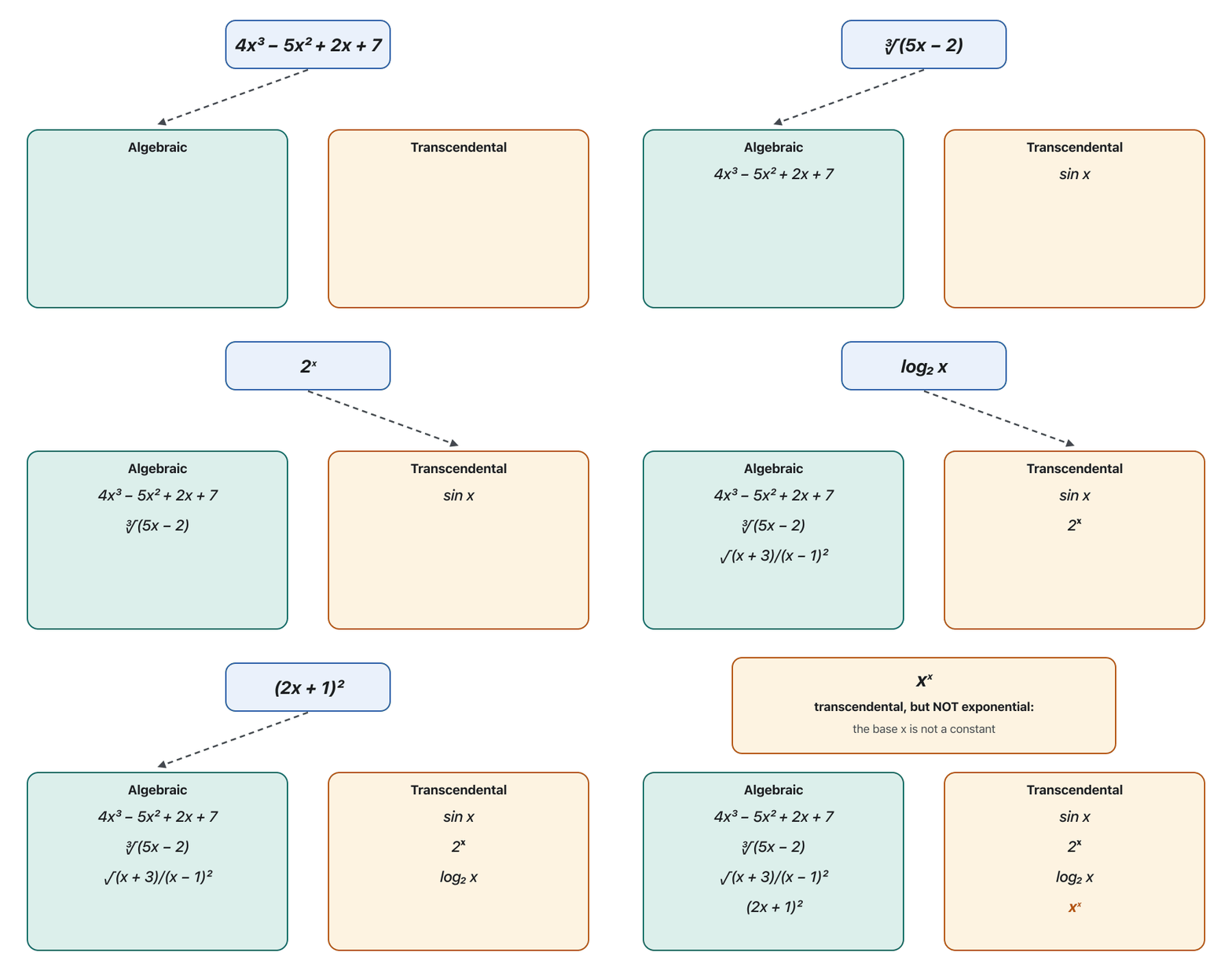
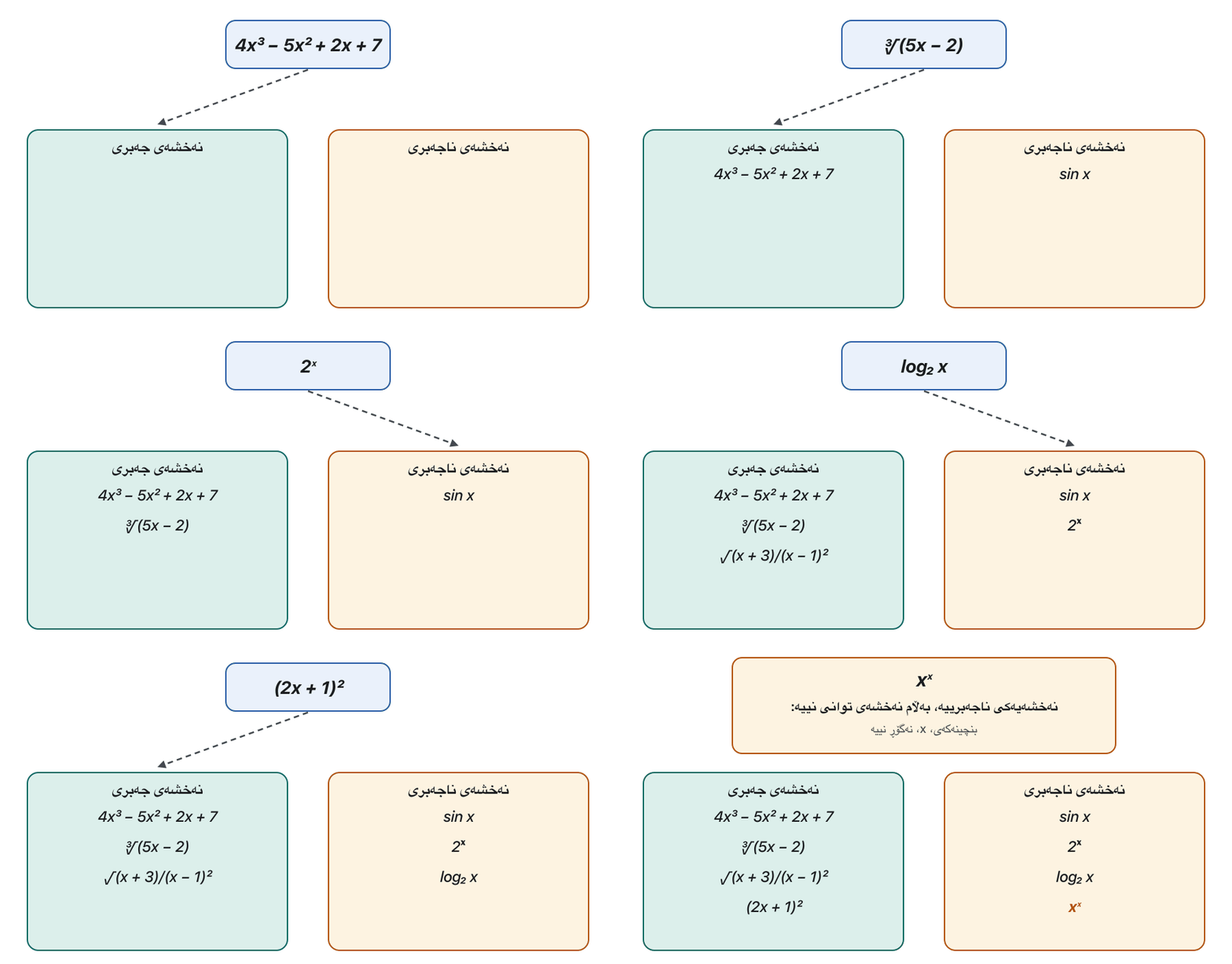
Look for , , and their inverses, a logarithm, or x in an exponent. If any appears, the function is transcendental.
بەدوای ، ، و پێچەوانەکانیاندا، یان x لە بگەڕێ. ئەگەر یەکێکیان هەبوو، ناجەبرییە.
Otherwise it uses only , powers and roots: it is algebraic.
ئەگەر نا، تەنها ، توان و ڕەگ بەکار دەهێنێت: جەبرییە.
For an algebraic function, ask: are all powers of x whole numbers , with no x in a denominator and no roots of x? Then it is a polynomial, and its degree is the highest power.
بۆ بپرسە: ئایا هەموو x و ـن، x لە نییە و ڕەگی x نییە؟ ئەو کاتە و پلەکەی بەرزترین .
Common mistakesهەڵە باوەکان
| Mistakeهەڵە | What is trueڕاستییەکە |
|---|---|
| "Every algebraic function is a polynomial."«هەموو .» | Roots and divisions by x-expressions are algebraic but not polynomials: , .ڕەگ و دابەشکردن بەسەر کە xـی تێدایە جەبرین بەڵام نین: ، . |
| " is exponential."« .» | Exponential needs a constant base; is transcendental but not exponential. نەگۆڕی دەوێت؛ ناجەبرییە بەڵام نییە. |
| "The degree of is 4."«پلەی 4ـە.» | The degree is the highest power (3); 4 is the leading coefficient.پلە بەرزترین (3)؛ 4 . |
| "Any formula with e or π is transcendental."«هەر فۆرمولەیەک e یان πـی تێدا بێت ناجەبرییە.» | and are polynomials; only the position of x counts. و ؛ تەنها شوێنی x گرنگە. |
| "."« یەکسانە بە .» | is the inverse function . ، واتە . |
Exercisesڕاهێنانەکان
Is each function algebraic or transcendental? For the polynomials, give the degree. (a) (b) (c) (d) (e) (f) (g) (h)
هەر خوارەوە جەبرییە یان ناجەبری؟ بۆ پلەکە بنووسە. (أ) (ب) (ج) (د) (هـ) (و) (ز) (ح)
Show answerوەڵامەکە پیشان بدە
| Function | Answerوەڵام |
|---|---|
| algebraic, polynomial of degree 5جەبری، بە پلەی 5 | |
| algebraic, a rational function (not a polynomial)جەبری، ( نییە) | |
| algebraic, not a polynomialجەبری، نییە | |
| algebraic, polynomial of degree 0 (constant)جەبری، بە پلەی 0 () | |
| transcendental (x in an exponent)ناجەبری (x لە ) | |
| transcendental (sine)ناجەبری () | |
| algebraic (), not a polynomialجەبری ()، نییە | |
| transcendental (logarithm)ناجەبری () |
Find the degree and the leading coefficient: (a) (b) (c)
پلە و بدۆزەرەوە: (أ) (ب) (ج)
Hintئاماژە
Multiply out or combine like terms before you read the highest power.
پێش خوێندنەوەی بەرزترین ، بیکەرەوە یان بڕە هاوشێوەکان کۆ بکەرەوە.
Show answerوەڵامەکە پیشان بدە
Always simplify first: in (c) the two terms combine into . ( is short for "degree".)
هەمیشە سەرەتا سادەی بکەرەوە: لە (ج)ـدا دوو بڕەکەی دەبنە . ( کورتکراوەی degreeـە، واتە پلە.)
A student wrote: ", and are all exponential functions, because each has x in the exponent." What is wrong?
خوێندکارێک نووسیویەتی: «، و هەموویان ، چونکە لە هەر یەکەیاندا x لە .» هەڵەکە چییە؟
Show answerوەڵامەکە پیشان بدە
Having x in the exponent is not enough: the base must also be a constant , . and qualify; has the variable base x, so it is not exponential. It is still transcendental.
بوونی x لە بەس نییە: دەبێت ، بێت. و مەرجەکەیان تێدایە؛ گۆڕاوی xـی هەیە، بۆیە نییە. بەڵام هەر ناجەبرییە.
Is a polynomial?
ئایا ؟
Show answerوەڵامەکە پیشان بدە
No. It is a rational function. For it simplifies to , but at it is not defined (division by 0), while is. Because the domains differ, f and are not the same function; see equal functions in Equal, constant, one-to-one and onto functions.
نەخێر. . بۆ سادە دەبێتەوە بۆ ، بەڵام لە ـدا پێناسە نەکراوە (دابەشکردن لەسەر 0)، لە کاتێکدا پێناسە کراوە. چونکە جیاوازن، f و هەمان نین؛ بڕوانە بەشی یەکسان لە وانەی نەخشەکانی یەکسان، نەگۆڕ، یەک بۆ یەک و گشتگر.
Summaryکورتە
- Functions split into algebraic (finitely many , powers and roots of x) and transcendental (everything else).
- A polynomial has whole-number powers; its degree is n and its leading coefficient .
- Roots and rational functions are algebraic but not polynomials.
- Transcendental families: trigonometric, inverse trigonometric, exponential (, constant base) and logarithmic (, ).
- is transcendental but not exponential.
- دابەش دەبن بۆ جەبری (ژمارەیەکی سنووردار ، توان و ڕەگی x) و ناجەبری (هەموو ئەوانی تر).
- تەنها هەیە؛ پلەکەی nـە و ـە.
- ڕەگەکان و جەبرین بەڵام نین.
- خێزانە ناجەبرییەکان: ، ، (، نەگۆڕ) و (، ).
- ناجەبرییە بەڵام نییە.
Is a polynomial?ئایا ڕادەدارە؟
No. It is algebraic, but a cube root is a fractional power.
نەخێر. جەبرییە، بەڵام کەرتییە.
What decides whether or ?چی بڕیار دەدات یان ؟
Where x is: in the exponent (exponential) or in the base (power function).
شوێنی x: لە () یان لە ().
How do you write the logarithm with base e?لۆگاریتم بە بنچینەی e چۆن دەنووسیت؟
, the natural logarithm.
، .
Lesson complete!وانەکە تەواو بوو!
Well done. Review the key terms, then go on to the next lesson.دەستخۆش. سەیرێکی زاراوە سەرەکییەکان بکەرەوە، پاشان بڕۆ بۆ وانەی داهاتوو.
Key termsزاراوە سەرەکییەکان
Piecewise Functions: Absolute Value, Floor and Ceilingنەخشە ڕێسا پەلدارەکان: نرخی ڕووت، نەخشەی گەورەترین ژمارەی تەواو و نەخشەی بچووکترین ژمارەی تەواو
Related lecturesوانە پەیوەندیدارەکان
- Domain, Range and Imageبوار، مەودا و وێنە
- Graphs of Linear and Power Functions; Even and Odd Functionsهێڵکاریی نەخشە هێڵییەکان و نەخشەکانی هێز؛ نەخشە جووتەکان و نەخشە تاکەکان
- The Six Trigonometric Functionsشەش نەخشە سێگۆشەییەکە
- Inverse Functions and Inverse Trigonometric Functionsپێچەوانەکانی نەخشە و نەخشە سێگۆشەییە پێچەوانەکان
- Exponential Functions and the Number eنەخشە توانییەکان و ژمارەی e
- Logarithms and Their Rulesلۆگاریتمەکان و یاساکانیان
References and further readingسەرچاوەکان و خوێندنەوەی زیاتر
This lecture is a first edition. The Kurdish text and terminology are waiting for review by Kurdish IT teachers.ئەم وانەیە چاپی یەکەمە. دەقە کوردییەکە و زاراوەکانی چاوەڕێی پێداچوونەوەی مامۆستایانی کوردی بواری IT ن.