Chapterبەش 2 · Lectureوانە 2.8
Geometric, Harmonic and Quadratic Meansناوەندی ئەندازەیی، ناوەندی هارمۆنیک و ناوەندی دووجایی
Three more averages and the question each one answers: the geometric mean for growth (computed with logarithms), the harmonic mean for speeds and rates, and the quadratic mean (RMS) for errors and voltage — for raw and grouped data, with the course's examples corrected, the true order , the HAGWQ formula card and Python.
سێ تێکڕای تر و ئەو پرسیارەی هەر یەکێکیان وەڵامی دەداتەوە: بۆ گەشە (بە )، بۆ خێرایی و ڕێژە و (RMS) بۆ هەڵە و — بۆ ڕەسەن و پۆلێنکراو، بە نموونە ڕاستکراوەکانی کۆرسەکە، ڕیزبەندیی ڕاستی ، کارتی یاساکانی HAGWQ و Python.
What you will learnچی فێر دەبیت
- Compute the geometric mean with logarithms, and the harmonic and quadratic means, for ungrouped and grouped data.
- Choose the right mean for growth rates, speeds and signed errors, and explain why.
- State and use the order as a check on your answers.
- Compute the means in Python with
statistics.geometric_mean,harmonic_meanandfmean.
- بە ، و بۆ و بدۆزیتەوە.
- گونجاو بۆ ڕێژەی گەشە، خێرایی و هەڵەی نیشانەدار هەڵبژێریت و هۆکارەکەی ڕوون بکەیتەوە.
- ڕیزبەندیی بڵێیت و وەک پشکنینێک بۆ وەڵامەکانت بەکاری بهێنیت.
- لە Pythonـدا بە
statistics.geometric_mean،harmonic_meanوfmeanبدۆزیتەوە.
Four means, four questionsچوار ناوەند، چوار پرسیار
The arithmetic mean answers one question: which single value, used times, gives the same sum? But data do not always combine by adding. Growth rates combine by multiplying, speeds over equal distances combine through times, and errors with + and − signs only make sense when squared. Each case has its own mean, and each mean keeps a different total unchanged:
ناوەند وەڵامی یەک پرسیار دەداتەوە: کام تاکە نرخ، کە جار بەکار بهێنرێت، هەمان کۆ دەدات؟ بەڵام هەمیشە بە کۆکردنەوە یەک ناگرن. ڕێژەی گەشە بە لێکدان یەک دەگرێت، خێرایی لەسەر دووریی یەکسان لە ڕێگەی کاتـەوە یەک دەگرێت و هەڵەکان کە نیشانەی + و −یان هەیە تەنها کاتێک واتایان هەیە کە دووجا بکرێن. هەر حاڵەتێک خۆی هەیە و هەر کۆیەکی جیاواز وەک خۆی دەهێڵێتەوە:
| Mean | What stays the sameچی وەک خۆی دەمێنێتەوە | Typical useبەکارهێنانی باو |
|---|---|---|
| Arithmetic (هێمای ) | marks, prices, heightsنمرە، نرخ، باڵا | |
| Geometric (هێمای ) | growth rates, ratiosڕێژەی گەشە، ڕێژەکان | |
| Harmonic (هێمای ) | speeds, rates per unitخێرایی، ڕێژە بۆ هەر یەکەیەک | |
| Quadratic (هێمای ) | errors, electric voltageهەڵەکان، کارەبا |
The geometric mean: the mean of multiplyingناوەندی ئەندازەیی: ناوەندی لێکدان
The geometric mean of positive numbers is the -th root of their product:
بۆ ژمارەی ئەرێنی ڕەگی ـەمی لێکدانەکەیانە:
The -th root of the product of positive values: . It suits growth rates and ratios.
ڕەگی ـەمی لێکدانی نرخی ئەرێنییە: . بۆ ڕێژەی گەشە و ڕێژەکان گونجاوە.
Why it exists. A phone shop sells 100 phones in its first year. Sales grow by 50% () and then fall by 20% (), so the third year has . The arithmetic mean of the two changes, +15%, predicts — wrong. The geometric mean of the multipliers, , means +9.54% a year, and exactly.
بۆچی هەیە. دوکانێکی مۆبایل لە ساڵی یەکەمدا 100 مۆبایل دەفرۆشێت. فرۆشتن 50% زیاد دەکات ()، پاشان 20% کەم دەکات ()، بۆیە ساڵی سێیەم دەبێت. دوو گۆڕانەکە، +15%، پێشبینیی دەکات — هەڵەیە. بۆ ژمارە لێکدەرەکان، ، واتە ساڵانە +9.54%. ئەمە ڕێک دەدات.
The geometric mean averages growth rates by multiplying and taking the n-th root; the harmonic mean gives the true average speed over equal distances.
تێکڕای ڕێژەکانی گەشە دەدۆزێتەوە بە لێکدانیان و دەرهێنانی ڕەگی ؛ تێکڕای ڕاستەقینەی خێرایی بۆ دووریی یەکسان دەدات.
Watch 3:25–8:59: the geometric mean of growth rates
لە 3:25 تا 8:59 سەیر بکە: بۆ ڕێژەکانی گەشە.
The geometric mean: the mean of multiplyingناوەندی ئەندازەیی: ناوەندی لێکدان
Computing G with logarithmsدۆزینەوەی G بە لۆگاریتم
Multiplying many values gives huge numbers (100 values around 67 have a product with about 183 digits). A logarithm turns the product into a sum (rule 6 of Π), so we average the logs instead and turn back at the end:
لێکدانی زۆر نرخ ژمارەی زۆر گەورە دەدات (لێکدانی 100 نرخی نزیک لە 67 نزیکەی 183 هەیە). لۆگاریتم لێکدان دەکاتە کۆ (یاسای 6ی Π)، بۆیە لە جیاتی ئەوە تێکڕای دەدۆزینەوە و لە کۆتاییدا دەگەڕێینەوە:
So is the ordinary mean of the logs. The last step, , is the antilog (the key on a calculator).
کەواتە ئاسایی . دوایین هەنگاو، ، پێچەوانەی (دوگمەی لە ).
| 3 | 5 | 8 | 3 | 7 | 2 | Sumکۆ | |
|---|---|---|---|---|---|---|---|
| 0.4771 | 0.6990 | 0.9031 | 0.4771 | 0.8451 | 0.3010 | 3.7024 |
Check without logs: .
پشکنین بەبێ : .
The geometric mean: the mean of multiplyingناوەندی ئەندازەیی: ناوەندی لێکدان
The geometric mean of grouped dataناوەندی ئەندازەیی بۆ دراوەی پۆلێنکراو
For a frequency table, each log is counted times — the same idea as the grouped arithmetic mean:
بۆ ، هەر جار هەژمار دەکرێت — هەمان بیرۆکەی پۆلێنکراو:
| Class | ||||
|---|---|---|---|---|
| 60–62 | 5 | 61 | 1.7853 | 8.9266 |
| 63–65 | 18 | 64 | 1.8062 | 32.5112 |
| 66–68 | 42 | 67 | 1.8261 | 76.6951 |
| 69–71 | 27 | 70 | 1.8451 | 49.8176 |
| 72–74 | 8 | 73 | 1.8633 | 14.9066 |
| Totalکۆ | 100 | 182.8573 |
The harmonic mean: the mean of ratesناوەندی هارمۆنیک: ناوەندی ڕێژەکان
The harmonic mean is the number of values divided by the sum of their reciprocals:
ژمارەی نرخەکانە دابەش بە کۆی هەڵگەڕاوەکانیان:
Why it exists. A taxi drives 120 km from town A to town B at 60 km/h and comes back at 40 km/h. The trip takes hours for 240 km, so the average speed is 48 km/h — the harmonic mean of 60 and 40 — and not 50. The slow half of the road takes more of the time, so it counts more.
بۆچی هەیە. تەکسییەک 120 km لە شاری Aـەوە بۆ شاری B بە خێرایی 60 km/h دەڕوات و بە 40 km/h دەگەڕێتەوە. گەشتەکە بۆ 240 km کاتژمێر دەخایەنێت، بۆیە تێکڕای خێرایی 48 km/hـە — 60 و 40 — نەک 50. نیوە هێواشەکەی ڕێگاکە کاتی زیاتر دەبات، بۆیە زیاتر هەژمار دەکرێت.
The number of values divided by the sum of their reciprocals: . It suits averages of speeds and rates.
ژمارەی نرخەکانە دابەش بە کۆی پێچەوانەکانیان: . بۆ تێکڕای خێرایی و ڕێژەکان گونجاوە.
The geometric mean averages growth rates by multiplying and taking the n-th root; the harmonic mean gives the true average speed over equal distances.
تێکڕای ڕێژەکانی گەشە دەدۆزێتەوە بە لێکدانیان و دەرهێنانی ڕەگی ؛ تێکڕای ڕاستەقینەی خێرایی بۆ دووریی یەکسان دەدات.
Watch 8:59–14:29: the harmonic mean for speeds over equal distances
لە 8:59 تا 14:29 سەیر بکە: بۆ خێرایی لە دووریی یەکساندا.
The harmonic mean: the mean of ratesناوەندی هارمۆنیک: ناوەندی ڕێژەکان
Examples (8) and (9)نموونەکانی (8) و (9)
- Reciprocalsهەڵگەڕاوەکان
Example (8): . Their reciprocals are 0.3333, 0.2, 0.1667, 0.1667, 0.1429, 0.1, 0.0833.
نموونەی (8): . 0.3333، 0.2، 0.1667، 0.1667، 0.1429، 0.1، 0.0833ن.
- Add themکۆیان بکەرەوە
- Divide by the sum دابەشی کۆکە بکە
For grouped data each reciprocal counts times:
بۆ هەر جار هەژمار دەکرێت:
| 61 | 64 | 67 | 70 | 73 | Sumکۆ | |
|---|---|---|---|---|---|---|
| 5 | 18 | 42 | 27 | 8 | 100 | |
| 0.0820 | 0.2813 | 0.6269 | 0.3857 | 0.1096 | 1.4855 |
With unrounded terms the sum is 1.48539; the rounded column adds up to 1.4855. The term is exactly half-way: this course rounds 5 or more up, so it is 0.2813 (the rule). The notes print 0.2812, which is round half to even, the rule that Python's round() uses (why). Both are rounding, not mistakes, and is computed from the unrounded sum, so it does not change.
بە بڕگە نزیکنەکراوەکان کۆکە 1.48539ـە؛ کۆی ستوونە نزیککراوەکە 1.4855ـە. بڕگەی ڕێک لە نیوەدایە: ئەم کۆرسە 5 یان زیاتر بەرەو سەرەوە دەبات، بۆیە دەبێتە 0.2813 (یاساکە). تێبینییەکان 0.2812 دەنووسن کە ، ئەو یاسایەی round()ـی Python بەکاری دەهێنێت (بۆچی). هەردووکیان ، نەک هەڵە. لە کۆی نزیکنەکراوەوە دەژمێردرێت، بۆیە ناگۆڕێت.
The quadratic mean (root mean square)ناوەندی دووجایی (ڕەگی تێکڕای دووجاکان)
The quadratic mean squares every value, takes the mean of the squares, then takes the square root. That is why it is also called the root mean square (RMS):
هەموو نرخێک دووجا دەکات، دووجاکان دەدۆزێتەوە، پاشان وەردەگرێت. لەبەر ئەمە پێی دەڵێن ڕەگی تێکڕای دووجاکان (RMS):
Left: ungrouped data. Right: grouped data, where each square is counted times.
چەپ: . ڕاست: ، کە هەر دووجایەک جار هەژمار دەکرێت.
Why it exists. A weather app's forecasts miss the real temperature by and degrees on five days. The plain mean of these errors is 0, as if the app were perfect. Squaring removes the signs: degrees, the typical size of a miss. This is the RMSE that machine learning uses to score predictions.
بۆچی هەیە. پێشبینییەکانی بەرنامەیەکی کەشوهەوا لە پێنج ڕۆژدا بە و پلە لە پلەی گەرمیی ڕاستەقینە لادەدەن. ئاسایی ئەم هەڵانە 0ـە، وەک ئەوەی بەرنامەکە بێ هەڵە بێت. دووجاکردن نیشانەکان لادەبات: پلە، کە قەبارەی ئاسایی هەڵەیەکە. ئەمە هەمان RMSEـە کە فێربوونی ئامێر بۆ هەڵسەنگاندنی پێشبینییەکان بەکاری دەهێنێت.
The quadratic mean (root mean square)ناوەندی دووجایی (ڕەگی تێکڕای دووجاکان)
Examples (10) and (11)نموونەکانی (10) و (11)
Example (10). The notes write “” — the square-root sign was lost; 4.47 is , not 20.
نموونەی (10). تێبینییەکان «» دەنووسن — نیشانەی ونبووە؛ 4.47 ـە، نەک 20.
| 61 | 5 | 3721 | 18605 |
| 64 | 18 | 4096 | 73728 |
| 67 | 42 | 4489 | 188538 |
| 70 | 27 | 4900 | 132300 |
| 73 | 8 | 5329 | 42632 |
| Totalکۆ | 100 | 455803 |
The order of the means: ڕیزبەندیی ناوەندەکان:
For positive data the four means always come in the same order, and they are all equal only when all the values are equal:
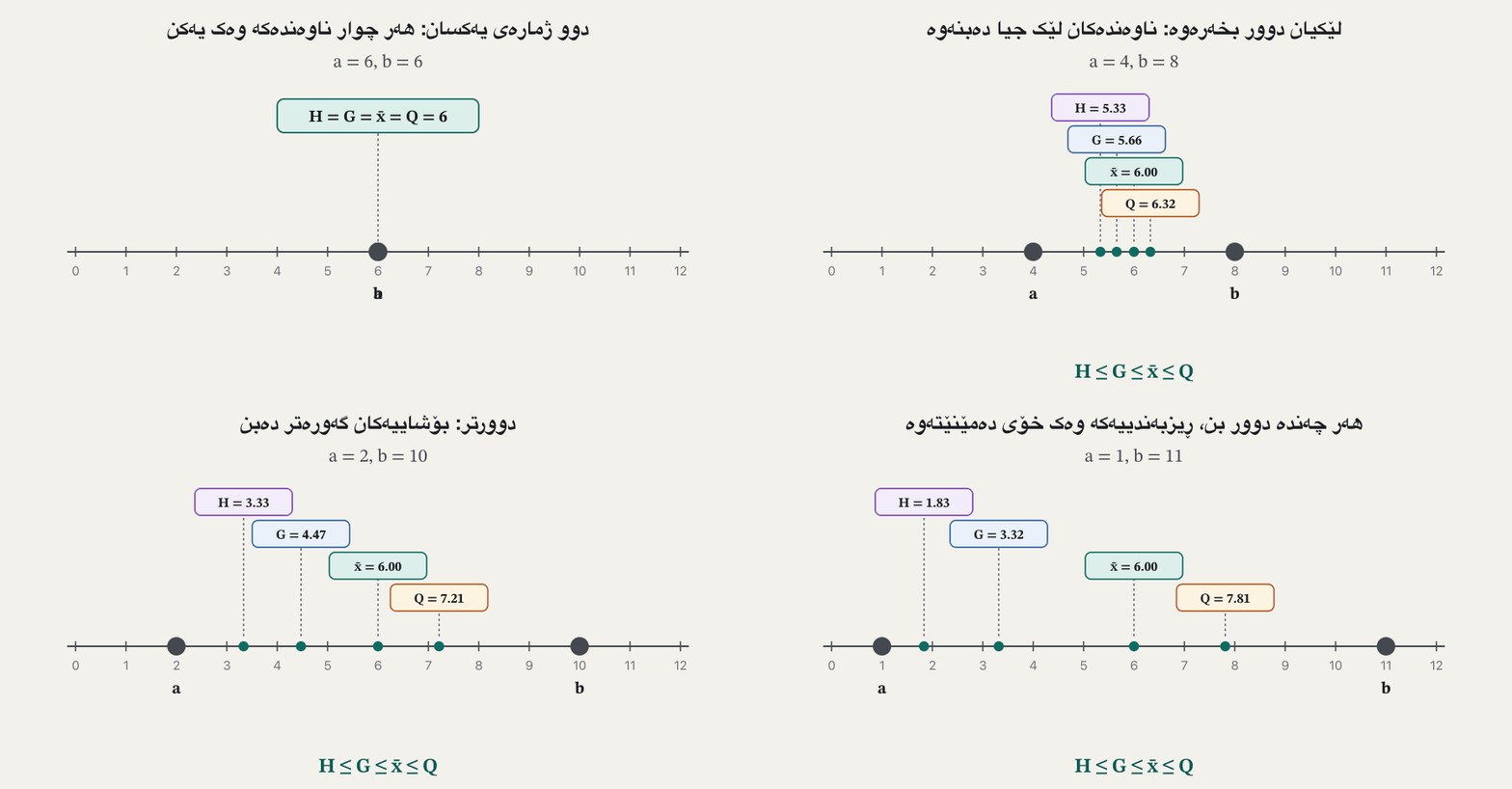
بۆ ئەرێنی هەر چوار هەمیشە بە هەمان ڕیز دێن و تەنها کاتێک هەموویان یەکسانن کە هەموو نرخەکان یەکسان بن:
The order of the means: ڕیزبەندیی ناوەندەکان:
Watching the order holdسەیرکردنی ڕیزبەندییەکە
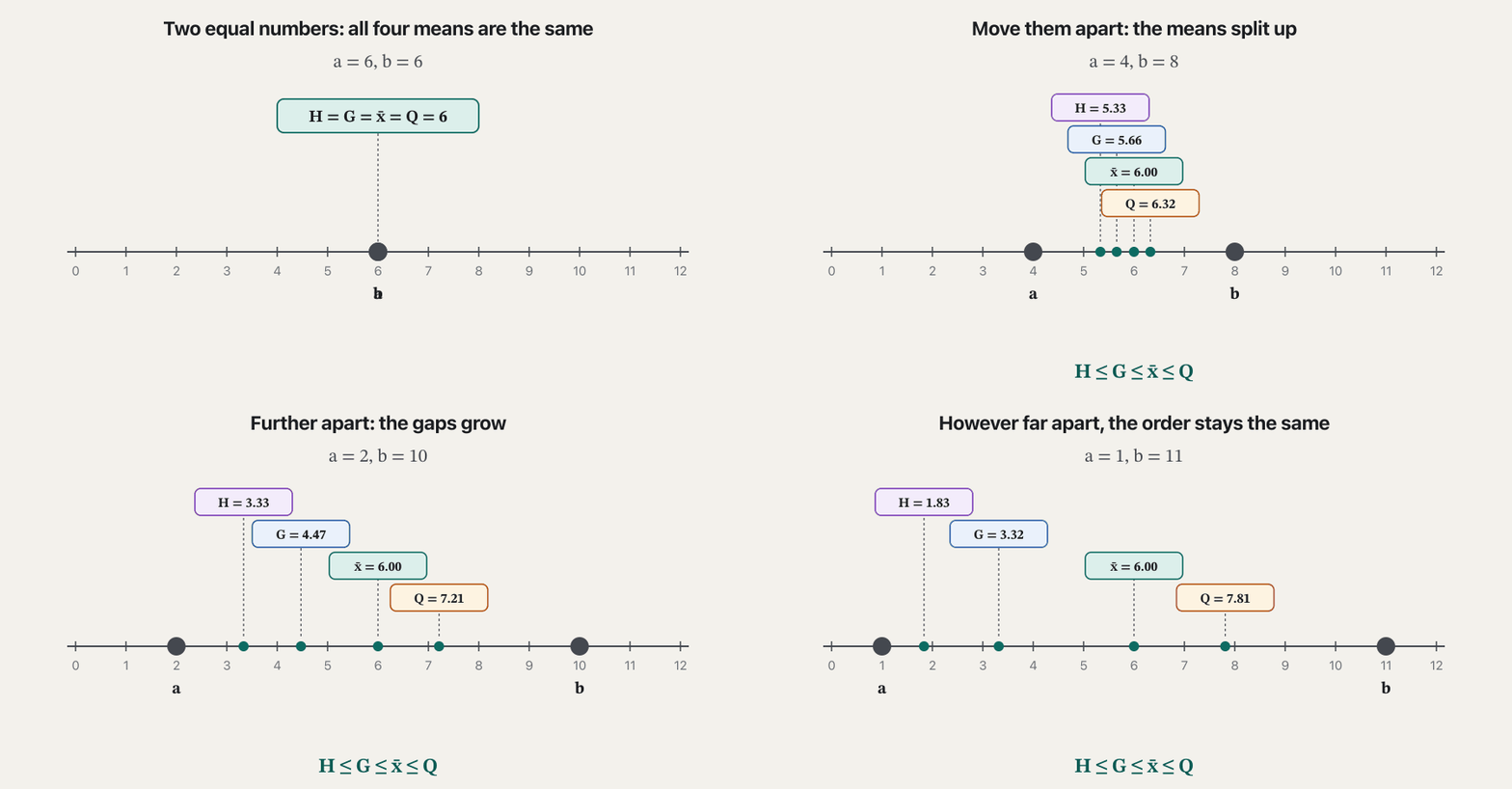
For two numbers you can see why: , and . Every gap is a square of , so it is zero only when .
بۆ دوو ژمارە دەتوانیت هۆکارەکە ببینیت: ، و . هەر بۆشاییەک دووجای ـە، بۆیە تەنها کاتێک سفرە کە .
A semicircle picture shows why, for two positive numbers, the harmonic ≤ geometric ≤ arithmetic ≤ quadratic mean, equal only when the numbers are equal.
وێنەیەکی نیوەبازنە پیشان دەدات بۆچی بۆ دوو هەمیشە (، ، ، )؛ تەنها کاتێک یەکسانن کە ژمارەکان یەکسان بن.
Watch 0:00–7:40: one picture shows H ≤ G ≤ mean ≤ Q for two numbers a and b
لە 0:00 تا 7:40 سەیر بکە: یەک وێنە بۆ دوو ژمارەی و پیشان دەدات.
Which mean when?کام ناوەند کەی؟
| Situationحاڵەت | Right mean ڕاست | Exampleنموونە |
|---|---|---|
| Values that add up to a meaningful totalنرخ کە کۆکەیان واتادارە | Arithmetic (ژمێرەیی) | marks, salaries, rainfallنمرە، مووچە، بارانبارین |
| Values that multiply: growth, interest, ratiosنرخ کە لێک دەدرێن: گەشە، سوود، ڕێژە | Geometric | yearly growth of sales or usersگەشەی ساڵانەی فرۆشتن یان بەکارهێنەران |
| Rates over equal amounts (km, litres, tasks)ڕێژە لەسەر بڕی یەکسان (km، لیتر، ئەرک) | Harmonic | average speed, price per item bought for equal moneyتێکڕای خێرایی، نرخی دانەیەک کە بە پارەی یەکسان کڕدراوە |
| Sizes of values with + and − signsقەبارەی نرخ کە نیشانەی + و −یان هەیە | Quadratic (RMS) (RMS) | prediction errors, AC voltageهەڵەی پێشبینی، |
Rates over equal times are averaged with the ordinary mean: driving one hour at 60 km/h and one hour at 40 km/h gives 50 km/h. The question is always: what is shared equally — the distance or the time?
ڕێژەکان لەسەر کاتی یەکسان بە ئاسایی تێکڕا دەکرێن: یەک کاتژمێر بە 60 km/h و یەک کاتژمێر بە 40 km/h دەکاتە 50 km/h. پرسیارەکە هەمیشە ئەمەیە: چی بە یەکسانی بەش کراوە — دوورییەکە یان کاتەکە؟
The means in Pythonناوەندەکان لە Pythonـدا
The statistics module has geometric_mean() (Python 3.8+) and harmonic_mean(), which takes weights from Python 3.10. There is no ready quadratic mean, but it is one line with math.sqrt(). For grouped data, use the frequencies as weights:
statistics geometric_mean() (Python 3.8+) و harmonic_mean()ـی هەیە کە لە Python 3.10ـەوە weights وەردەگرێت. بۆ ئامادە نییە، بەڵام بە math.sqrt() یەک دێڕە. بۆ ، وەک بەکار بهێنە:
import math
import statistics as st

x = [3, 5, 8, 3, 7, 2]                        # Example (6)
print(round(st.geometric_mean(x), 4))
print(round(10 ** (sum(math.log10(v) for v in x) / len(x)), 4))

print(round(st.harmonic_mean([3, 5, 6, 6, 7, 10, 12]), 4))   # Example (8)
print(st.harmonic_mean([60, 40]))             # the trip

q = [1, 3, 4, 5, 7]                           # Example (10)
print(round(math.sqrt(st.fmean([v * v for v in q])), 4))

X = [61, 64, 67, 70, 73]                      # Table (12)
F = [5, 18, 42, 27, 8]
H = st.harmonic_mean(X, weights=F)
G = 10 ** st.fmean([math.log10(v) for v in X], weights=F)
A = st.fmean(X, weights=F)
Q = math.sqrt(st.fmean([v * v for v in X], weights=F))
print([round(m, 4) for m in (H, G, A, Q)])
print(H <= G <= A <= Q)4.1407 4.1407 5.8683 48.0 4.4721 [67.3226, 67.3865, 67.45, 67.5132] True
Explain the codeڕوونکردنەوەی کۆدەکە
- Lineدێڕی 5-6
Two ways to get G for Example (6): the built-in function and the log method of the notes. Both give 4.1407.
دوو ڕێگا بۆ Gـی نموونەی (6): ئامادەکە و ڕێگای لە تێبینییەکاندا. هەردووکیان 4.1407 دەدەن.
- Lineدێڕی 8-9
The harmonic mean of Example (8), and of the two speeds of the trip: 48.0.
نموونەی (8) و دوو خێراییەکەی گەشتەکە: 48.0.
- Lineدێڕی 11-12
= square root of the mean of the squares.
= دووجاکان.
- Lineدێڕی 14-21
The grouped versions for Table (12), with the frequencies as weights, and the order check.
وەشانە پۆلێنکراوەکان بۆ خشتەی (12)، وەک ، لەگەڵ پشکنینی ڕیزبەندی.
A formula card: HAGWQکارتێکی یاساکان: HAGWQ
To remember the five means of this chapter, the course's study notes use the word HAGWQ: Harmonic, Arithmetic, Geometric, Weighted, Quadratic — with one column for grouped data and one for ungrouped data.
بۆ لەبیرمانی پێنج ئەم بەندە، تێبینییەکانی خوێندنی کۆرسەکە وشەی HAGWQ بەکار دەهێنن: Harmonic، Arithmetic، Geometric، Weighted، Quadratic — ستوونێک بۆ و ستوونێک بۆ .
| Mean | Grouped (G)پۆلێنکراو (G) | Ungrouped (U)پۆلێننەکراو (U) |
|---|---|---|
| H harmonicH، واتە | ||
| A arithmeticA، واتە | ||
| G geometricG، واتە | ||
| W weightedW، واتە | ||
| Q quadraticQ، واتە |
Read across a row: the grouped formula is the ungrouped one with every value counted times, and replaced by . (On the original card the ungrouped weighted mean was left empty; it is filled in here.)
بە درێژایی ڕیزێک بیخوێنەرەوە: یاسای پۆلێنکراو هەمان یاسای پۆلێننەکراوە کە هەر نرخێک جار هەژمار دەکرێت و بە دەگۆڕدرێت. (لە کارتە ڕەسەنەکەدا پۆلێننەکراو بەتاڵ جێهێڵرابوو؛ لێرەدا پڕ کراوەتەوە.)
Common mistakesهەڵە باوەکان
| Mistakeهەڵە | What goes wrongچی تێک دەچێت | Do this insteadلە جیاتی ئەوە |
|---|---|---|
| Stopping at وەستان لە | 0.6171 is a log, not the mean0.6171 ، نەک | Finish with بە تەواوی بکە |
| Rounding logs to 2 placesنزیککردنەوەی بۆ 2 | Small errors are multiplied by large frequenciesهەڵە بچووکەکان لە دەدرێن و گەورە دەبن | Keep 4 places, round only the final answer4 خانە بهێڵەرەوە، تەنها وەڵامی کۆتایی نزیک بکەرەوە |
| instead of لە جیاتی | A different number altogetherژمارەیەکی بە تەواوی جیاواز | Divide each by its own , then addهەر ـێک دابەشی ـی خۆی بکە، پاشان کۆیان بکەرەوە |
| Forgetting the square root in لەبیرکردنی لە ـدا | You get the mean square (20 instead of 4.47)تێکڕای دووجاکان وەردەگریت (20 لە جیاتی 4.47) | Always finish with the square rootهەمیشە بە تەواوی بکە |
| or with a zero or negative value یان بە نرخی سفر یان نەرێنی | The formulas break downیاساکان تێک دەچن | Use and only for positive data و تەنها بۆ ئەرێنی بەکار بهێنە |
| Averaging speeds with the arithmetic meanتێکڕای خێرایی بە | 50 km/h instead of 48 km/h50 km/h لە جیاتی 48 km/h | Ask what is equal: distance → , time → بپرسە چی یەکسانە: دووری ← ، کات ← |
Exercisesڕاهێنانەکان
An online shop had 100 customers. The number grew by 20% in the first year, by 25% in the second and fell by 10% in the third (). What is the average yearly growth?
فرۆشگایەکی ئۆنلاین 100 کڕیاری هەبوو. ژمارەکە لە ساڵی یەکەمدا 20%، لە ساڵی دووەمدا 25% زیادی کرد و لە ساڵی سێیەمدا 10% کەمی کرد (). تێکڕای گەشەی ساڵانە چەندە؟
Hintئاماژە
Use the multipliers 1.2, 1.25 and 0.9.
ژمارە لێکدەرەکانی 1.2، 1.25 و 0.9 بەکار بهێنە.
Show answerوەڵامەکە پیشان بدە
About +10.52% a year: . The arithmetic mean of the multipliers, 1.1167, would predict 139.2 customers — too many.
نزیکەی +10.52% لە ساڵێکدا: . ژمارە لێکدەرەکان، 1.1167، پێشبینیی 139.2 کڕیار دەکات — زیاترە لە ڕاستی.
A weather app missed the temperature by and degrees. Find the arithmetic mean of the errors and their quadratic mean. Which one tells you how good the app is?
بەرنامەیەکی کەشوهەوا پلەی گەرمی بە و پلە بە هەڵە پێشبینی کرد. هەڵەکان و بۆیان بدۆزەرەوە. کامیان پێت دەڵێت بەرنامەکە چەند باشە؟
Show answerوەڵامەکە پیشان بدە
Mean error: . Quadratic mean: degrees. Q tells you the typical size of a miss; the mean only says the misses are balanced.
تێکڕای هەڵە: . : پلە. Q قەبارەی ئاسایی هەڵەیەک پیشان دەدات؛ تەنها دەڵێت هەڵەکان هاوسەنگن.
Use the classes of Example (5) without the weights: midpoints 3, 5, 7, 9, 11 with frequencies 4, 5, 6, 3, 2. Find , , and and check the order.
نموونەی (5) بەبێ بەکار بهێنە: 3، 5، 7، 9، 11 بە 4، 5، 6، 3، 2. ، ، و بدۆزەرەوە و ڕیزبەندییەکە بپشکنە.
Hintئاماژە
Make the columns , , and .
ستوونەکانی ، ، و دروست بکە.
Show answerوەڵامەکە پیشان بدە
Order: , so holds.
ڕیزبەندی: ، کەواتە ڕاستە.
A minibus drives 60 km at 30 km/h and the next 60 km at 90 km/h. Find its average speed in two ways: from the total time, and with the harmonic mean.
مینیپاسێک 60 km بە 30 km/h دەڕوات و 60 kmـی دواتر بە 90 km/h. تێکڕای خێراییەکەی بە دوو ڕێگا بدۆزەرەوە: لە کۆی کاتەکەوە و بە .
Show answerوەڵامەکە پیشان بدە
Time: h, so km/h. Harmonic mean: km/h.
کات: کاتژمێر، کەواتە km/h. : km/h.
A summary sheet says: “for positive values, ”. Use Example (10)'s data 1, 3, 4, 5, 7 to show that this is wrong, and write the correct order.
پەڕەیەکی کورتە دەڵێت: «بۆ نرخی ئەرێنی، ». بە نموونەی (10)، 1، 3، 4، 5، 7، پیشانی بدە کە ئەمە هەڵەیە و ڕیزبەندیی ڕاست بنووسە.
Show answerوەڵامەکە پیشان بدە
For 1, 3, 4, 5, 7: and , so is above , not below . With Python, and . Correct order: .
بۆ 1، 3، 4، 5، 7: و ، کەواتە لە سەرووی ـەوەیە، نەک لە خوار . بە Python، و . ڕیزبەندیی ڕاست: .
Summaryپوختە
- Geometric mean , computed with : for growth and ratios, positive data only.
- Harmonic mean : for rates over equal amounts, such as average speed over equal distances.
- Quadratic mean (RMS) : for the size of values with signs — errors, AC voltage.
- Grouped versions count every term times and divide by .
- For positive data (the notes print it the wrong way round); equal only when all values are equal.
- Corrected values: Example (6) , Example (7) , Example (9) .
- ، بە دەدۆزرێتەوە: بۆ گەشە و ڕێژە، تەنها ئەرێنی.
- : بۆ ڕێژە لەسەر بڕی یەکسان، وەک تێکڕای خێرایی لەسەر دووریی یەکسان.
- (RMS) : بۆ قەبارەی نرخی نیشانەدار — هەڵە، .
- وەشانە پۆلێنکراوەکان هەر بڕگەیەک جار هەژمار دەکەن و دابەشی دەکەن.
- بۆ ئەرێنی (تێبینییەکان بە پێچەوانەوە چاپی دەکەن)؛ تەنها کاتێک یەکسانن کە هەموو نرخەکان یەکسان بن.
- نرخە ڕاستکراوەکان: نموونەی (6) ، نموونەی (7) ، نموونەی (9) .
Why do we use logarithms for the geometric mean?بۆچی لۆگاریتم بۆ ناوەندی ئەندازەیی بەکار دەهێنین؟
A log turns the long product into a sum, so the numbers stay small: is just the mean of the logs.
لێکدانە درێژەکە دەکاتە کۆ، بۆیە ژمارەکان بچووک دەمێننەوە: تەنها .
You drive equal distances at 60 and 40 km/h. Average speed?دووریی یەکسان بە 60 و 40 km/h لێدەخوڕیت. تێکڕای خێرایی؟
48 km/h, the harmonic mean — not 50.
48 km/h، — نەک 50.
Which of the four means is the largest?کام لە چوار ناوەندەکە گەورەترینە؟
The quadratic mean (unless all values are equal).
(مەگەر هەموو نرخەکان یەکسان بن).
Videoڤیدیۆ
Watch a videoسەیری ڤیدیۆیەک بکە
A video that viewers liked a lot and praised in their comments, chosen for this lesson.ڤیدیۆیەک کە بینەران زۆریان پێ خۆش بووە و لە کۆمێنتەکانیاندا ستایشیان کردووە، بۆ ئەم وانەیە هەڵبژێردراوە.
A mean is the value that keeps the total unchanged: growth needs the geometric mean, speeds the harmonic mean, errors the root mean square.
تێکڕا ئەو نرخەیە کە کۆی گشتی وەک خۆی دەهێڵێتەوە: بۆ گەشە پێویستە، بۆ خێرایی و بۆ هەڵەکان .
Whole video: why there are several means and which question each one answers
هەموو ڤیدیۆکە: بۆچی چەند جۆرێک تێکڕا هەیە و هەر یەکەیان وەڵامی کام پرسیار دەداتەوە.
Lesson complete!وانەکە تەواو بوو!
Well done. Review the key terms, then go on to the next lesson.دەستخۆش. سەیرێکی زاراوە سەرەکییەکان بکەرەوە، پاشان بڕۆ بۆ وانەی داهاتوو.
Key termsزاراوە سەرەکییەکان
The Median and the Modeناوەڕاستە و باو
Related lecturesوانە پەیوەندیدارەکان
References and further readingسەرچاوەکان و خوێندنەوەی زیاتر
- Wikipedia: Pythagorean means (HM ≤ GM ≤ AM, equality only for equal values; quadratic mean above AM)
- Wikipedia: Geometric mean (computing with logarithms, average growth rates)
- Wikipedia: Harmonic mean (average speed over equal distances, weighted harmonic mean)
- Wikipedia: Root mean square (quadratic mean, mains voltage, RMS error)
- Python documentation: statistics — geometric_mean, harmonic_mean, fmean
- Python 3.13 documentation: statistics.geometric_mean (the page still says a zero raises StatisticsError; Python 3.13 returns 0.0)
This lecture is a first edition. The Kurdish text and terminology are waiting for review by Kurdish IT teachers.ئەم وانەیە چاپی یەکەمە. دەقە کوردییەکە و زاراوەکانی چاوەڕێی پێداچوونەوەی مامۆستایانی کوردی بواری IT ن.