Chapterبەش 2 · Lectureوانە 2.1
What Is Statistics? Data, Populations and Samplesئامار چییە؟ دراوە، کۆمەڵگە و نموونە
The definition of statistics and where it works (quality control, social research, data mining, speech recognition, compression), then the basic ideas every later lesson needs: population and sample, parameter and statistic, descriptive and inferential statistics, kinds of data, sampling methods, bias and free software.
پێناسەی و ئەو شوێنانەی کاری تێدا دەکات (، توێژینەوەی کۆمەڵایەتی، ، ، )، پاشان بیرۆکە بنەڕەتییەکان کە هەموو وانەکانی داهاتوو پێویستیانە: و ، و ، و ، جۆرەکانی ، ڕێگاکانی ، و بێبەرانبەر.
What you will learnچی فێر دەبیت
- Define statistics and give examples of its use in daily life and in computing.
- Tell population from sample, and parameter from statistic.
- Tell descriptive from inferential statistics.
- Classify data as qualitative, discrete or continuous.
- Name common sampling methods and recognise a biased sample.
- پێناسە بکەیت و نموونەی بەکارهێنانی لە ژیانی ڕۆژانە و لە بواری بهێنیتەوە.
- لە و لە جیا بکەیتەوە.
- لە جیا بکەیتەوە.
- پۆلێن بکەیت بۆ ، یان .
- ڕێگا باوەکانی ناو بهێنیت و کە تێدایە بناسیتەوە.
What is statistics?ئامار چییە؟
The science of collecting, organising, presenting and analysing , and of drawing sound conclusions and decisions from it.
زانستی کۆکردنەوە و ڕێکخستن و پیشاندان و شیکردنەوەی ، هەروەها گەیشتن بە ئەنجام و بڕیاری دروست لەسەر بنەمای ئەو دراوانە.
The lecturer's definition: statistics is concerned with scientific methods for collecting, organising, presenting and analysing , and for drawing valid conclusions and making decisions on the basis of that analysis. The essay says the same from another side: statistics is the branch of mathematics that interprets, analyses and studies data after they have been collected and organised, so that we can make the best decision about them.
پێناسەی مامۆستاکە: پەیوەندیی بە ڕێگا زانستییەکانی کۆکردنەوە، ڕێکخستن، پیشاندان و شیکردنەوەی هەیە، هەروەها بە گەیشتن بە ئەنجامی دروست و بڕیاردان لەسەر بنەمای ئەو شیکردنەوەیە. نامیلکەکە هەمان شت لە لایەکی ترەوە دەڵێت: ئەو لقەی بیرکارییە کە دوای کۆکردنەوە و ڕێکخستنی ، لێکیان دەداتەوە، شیان دەکاتەوە و لێیان دەکۆڵێتەوە، بۆ ئەوەی باشترین بڕیار لەسەریان بدەین.
- Collectکۆکردنەوە
Measure or ask: marks, prices, heights, answers to a survey.
بپێوە یان پرسیار بکە: نمرە، نرخ، باڵا، وەڵامی ڕاپرسییەک.
- Organiseڕێکخستن
Put the raw values in order, in a list or a table: see Frequency tables.
نرخە خاوەکان ڕیز بکە، لە لیستێک یان خشتەیەکدا: بڕوانە خشتەکانی دووبارەبوونەوە.
- Presentپیشاندان
Show them with tables and graphs so people can see the pattern: see Histograms and cumulative frequency graphs.
بە خشتە و هێڵکاری پیشانیان بدە تا خەڵک نەخشەکە ببینن: بڕوانە هیستۆگرامەکان.
- Analyseشیکردنەوە
Calculate averages and spread, such as the mean and the range; look for patterns.
- Conclude and decideئەنجامگیری و بڕیاردان
Say what the data show, how sure you are, and what to do.
بڵێ چی پیشان دەدەن، چەند دڵنیایت و چی بکەیت.
What statistics is for, a short history, and its two big parts: descriptive statistics that sum up data and inferential statistics that draw conclusions.
بۆ چییە، مێژوویەکی کورتی، هەروەها دوو بەشە گەورەکەی: کە کورت دەکاتەوە و کە دەرئەنجام وەردەگرێت.
Statistics is everywhereئامار لە هەموو شوێنێکە
Statistics is a practical science. It is hard to name a field that does not use it: medicine, sociology, astronomy, weather forecasting, agriculture and psychology all lean on it, and without it you could not study most sciences in practice. It is also very old: rulers counted people, harvests and soldiers long before computers existed.
زانستێکی کردەییە. ئاستەمە بوارێک ناو ببەیت کە بەکاری نەهێنێت: پزیشکی، کۆمەڵناسی، گەردوونناسی، پێشبینیی کەشوهەوا، کشتوکاڵ و دەروونناسی هەموویان پشتی پێ دەبەستن و بەبێ ئەو ناتوانیت زۆربەی زانستەکان بە کردەیی بخوێنیت. زۆریش کۆنە: فەرمانڕەواکان زۆر پێش هاتنی خەڵک، بەرهەم و سەربازیان دەژمارد.
. A shipment of 10,000 tins of food arrives at the border. Opening every tin would destroy the shipment, so inspectors test a few dozen chosen at random. Statistics tells them whether those few are enough to accept or reject the whole load.
. بارێکی 10,000 قوتوو خۆراک دەگاتە سنوور. کردنەوەی هەموو قوتوویەک هەموو بارەکە لەناو دەبات، بۆیە پشکنەرەکان چەند دەیەیەکیان بە هەڕەمەکی هەڵدەبژێرن و تاقییان دەکەنەوە. پێیان دەڵێت ئایا ئەو چەند قوتووە بەسە بۆ وەرگرتن یان ڕەتکردنەوەی هەموو بارەکە.
Society. To understand divorce, researchers measure how often it happens, list its causes and find which cause has the strongest effect. Only then can a city plan help, such as family counselling.
کۆمەڵگە. بۆ تێگەیشتن لە جیابوونەوە، توێژەران دەپێون چەند جار ڕوو دەدات، هۆکارەکانی ڕیز دەکەن و دەدۆزنەوە کام هۆکار کاریگەری بەهێزتری هەیە. تەنها ئەو کاتە شارێک دەتوانێت پلانی یارمەتیدان دابنێت، وەک ڕاوێژی خێزانی.
Statistics is everywhereئامار لە هەموو شوێنێکە
Data behind everyday decisionsدراوە لە پشت بڕیارە ڕۆژانەکان
Many decisions around you are made from data, often by a program and in seconds. When you take money from an ATM, the bank updates your balance at once. A weather office studies satellite data before it forecasts rain. And a taxi app uses dynamic pricing: it counts how many people are asking for a ride and how many drivers are free nearby. On a rainy evening, many riders and few free drivers mean a higher fare; the higher price brings more drivers out, and when demand drops the fare falls again.
زۆرێک لە بڕیارەکانی دەوروبەرت لەسەر بنەمای دەدرێن، زۆرجار لەلایەن و لە چەند چرکەیەکدا. کاتێک پارە لە ATM دەردەهێنیت، بانکەکە یەکسەر باڵانسی هەژمارەکەت نوێ دەکاتەوە. فەرمانگەی کەشناسی پێش ئەوەی پێشبینیی باران بکات مانگە دەستکردەکان شی دەکاتەوە. تەکسیش بەکار دەهێنێت: دەژمێرێت چەند کەس داوای سواربوون دەکەن و چەند شۆفێری بەتاڵ لە نزیکن. لە ئێوارەیەکی باراناویدا سەرنشینی زۆر و شۆفێری بەتاڵی کەم واتە کرێی بەرزتر؛ نرخە بەرزەکە شۆفێری زیاتر دەهێنێتە سەر ڕێگا و کاتێک داواکاری کەم دەبێتەوە کرێکە دادەبەزێتەوە.
Statistics in computingئامار لە بواری کۆمپیوتەردا
The essay names three places where computing uses statistics:
نامیلکەکە سێ شوێن ناو دەبات کە بواری تێدا بەکار دەهێنێت:
- : searching large amounts of data for useful patterns. A supermarket's records may show that people who buy tea on Friday often buy sugar too, so the shop puts them near each other.
- : turning speech into text, as voice assistants such as Siri and Google's Gemini and the dictation (voice typing) key of your phone's keyboard do. The system compares the sound with what it learned from huge amounts of recorded speech and picks the most probable words.
- : making files smaller, for example when you compress a folder into a ZIP file. Compression uses the statistics of the data: symbols that appear often get short codes.
- : گەڕان لە بڕێکی زۆری بۆ نەخشی بەسوود. تۆمارەکانی سوپەرمارکێتێک لەوانەیە پیشان بدەن کە ئەوانەی ڕۆژی هەینی چا دەکڕن زۆرجار شەکریش دەکڕن، بۆیە دوکانەکە لە نزیک یەکتر دایاندەنێت.
- : گۆڕینی قسە بۆ دەق، وەک ئەوەی وەک Siri و Geminiـی Google و دوگمەی نووسینی دەنگیی مۆبایلەکەت دەیکەن. سیستەمەکە دەنگەکە لەگەڵ ئەوەی لە بڕێکی زۆری قسەی تۆمارکراوەوە فێری بووە بەراورد دەکات و ئەو وشانە هەڵدەبژێرێت کە لە هەموو زیاترە.
- : بچووککردنەوەی ، بۆ نموونە کاتێک دەپەستێنیت بۆ ZIP. بەکار دەهێنێت: ئەو زۆر دووبارە دەبنەوە کۆدی کورتیان پێ دەدرێت.
Statistics in computingئامار لە بواری کۆمپیوتەردا
Speech recognition todayناسینەوەی ئاخاوتن ئەمڕۆ
The essay's author wrote that he could not go deeper because statistics is too detailed for that level. This course does go deeper, one step at a time; how probability powers speech recognition and predictive text is in Probability in computing.
نووسەری نامیلکەکە نووسیویەتی کە نەیتوانیوە زیاتر بچێتە قووڵاییەوە، چونکە بۆ ئەو ئاستە زۆر وردە. ئەم خولە هەنگاو بە هەنگاو دەچێتە قووڵاییەوە؛ چۆن و دەجووڵێنێت لە ئەگەر لە بواری کۆمپیوتەردادایە.
How statistics shrinks a fileئامار چۆن فایلێک بچووک دەکاتەوە
Here is the idea behind compression with a tiny example. The word BANANA has 6 letters. In ordinary text each letter takes 8 , so the word needs bits. Count the letters first: A appears 3 times, N twice and B once. Now give the most frequent letter the shortest code (this is the idea of Huffman coding):
ئەمە بیرۆکەی بە نموونەیەکی زۆر بچووک. وشەی BANANA 6 پیتی هەیە. لە دەقی ئاساییدا هەر پیتێک 8 دەگرێت، بۆیە وشەکە پێویستە. سەرەتا پیتەکان بژمێرە: A سێ جار دەردەکەوێت، N دوو جار و B یەک جار. ئێستا کورتترین کۆد بدە بە دووبارەترین پیت (ئەمە بیرۆکەی کۆدکردنی Huffmanـە):
| Letterپیت | Times it appearsچەند جار دەردەکەوێت | Codeکۆد | Bits used بەکارهاتوو |
|---|---|---|---|
| A | 3 | 0 | |
| N | 2 | 11 | |
| B | 1 | 10 |
The whole word now needs only bits instead of 48. Because no code is the beginning of another code (0, 10, 11), the computer can still read the bits back without mistakes. Real compression tools such as ZIP use the same idea on large files: they count how often each pattern appears, then spend fewer bits on common patterns.
هەموو وشەکە ئێستا تەنها پێویستە لە جیاتی 48. چونکە هیچ کۆدێک سەرەتای کۆدێکی تر نییە (0، 10، 11)، هێشتا دەتوانێت بێ هەڵە بخوێنێتەوە. ئامرازە ڕاستەقینەکانی وەک ZIP هەمان بیرۆکە لەسەر فایلی گەورە بەکار دەهێنن: دەژمێرن هەر نەخشێک چەند جار دەردەکەوێت، پاشان کەمتر بۆ نەخشە باوەکان خەرج دەکەن.
Population and sampleکۆمەڵگە و نموونە
The is the whole group of people or things a question is about, for example all 4,000 students of a university. Its size is written . Measuring every member is a . Usually that is too slow, too expensive or impossible, so we measure a : a smaller group chosen from the population, for example 120 students. Its size is written .
هەموو ئەو کەس یان شتانەیە کە پرسیارێک دەربارەیانە، بۆ نموونە هەموو 4,000 خوێندکارەکەی زانکۆیەک. قەبارەکەی بە دەنووسرێت. پێوانی هەموو ئەندامێک . زۆرجار ئەمە زۆر هێواش، زۆر گران یان مەحاڵە، بۆیە دەپێوین: گرووپێکی بچووکتر کە لە هەڵدەبژێردرێت، بۆ نموونە 120 خوێندکار. قەبارەکەی بە دەنووسرێت.
Parameter and statisticپارامیتەر و پێوەری نموونە
A number that describes the whole population is a , such as the population mean (“mu”). It is usually unknown. A number calculated from a sample is a , such as the sample mean (“x-bar”). We use the statistic to estimate the parameter. A memory trick: population goes with parameter, sample with statistic.
ژمارەیەک کە هەموو وەسف دەکات ، وەک («میو»). زۆرجار نەزانراوە. ژمارەیەک کە لە حساب دەکرێت ، وەک («ئێکس بار»). بەکار دەهێنین بۆ خەمڵاندنی . ڕێگایەکی ئاسان بۆ لەبیرنەکردن: لەگەڵ ، لەگەڵ .
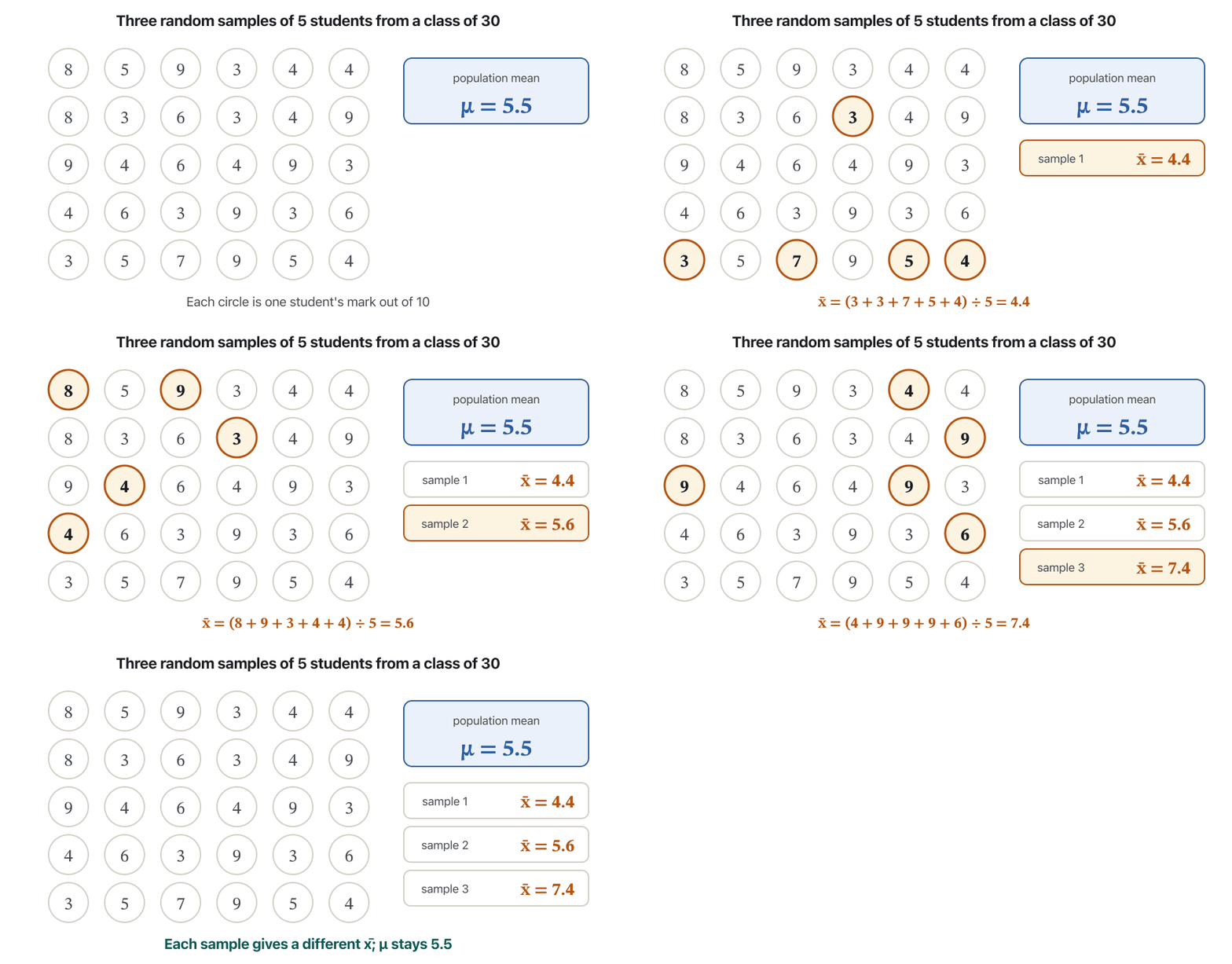
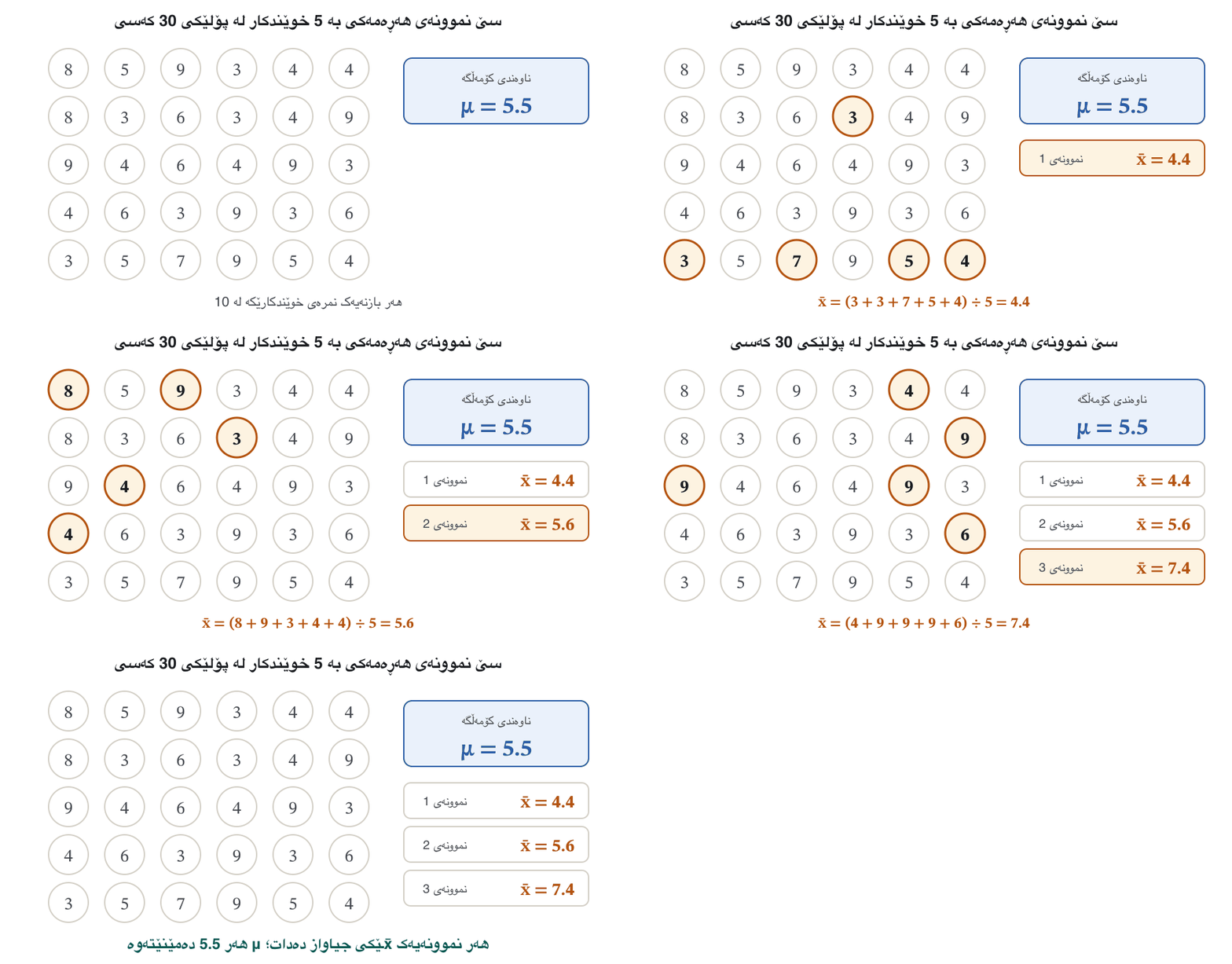
Two samples from the same population almost never give the same statistic. This sampling variation is normal. Bigger random samples tend to land closer to the true parameter, but they still vary a little.
دوو لە هەمان بە دەگمەن هەمان دەدەن. ئەم جیاوازیی ئاساییە. گەورەتر زیاتر لە ڕاستەقینەکە نزیک دەبنەوە، بەڵام هێشتا کەمێک جیاوازن.
Population or sample, parameter or statistic: the symbols μ and x̄, σ and s, p and p̂, N and n, with a short quiz.
یان ، یان : و ، و ، و ، و ، لەگەڵ چەند پرسیارێکی کورت.
Descriptive and inferential statisticsئاماری وەسفی و ئاماری ئەنجامگیری
Statistics has two big parts. organises and summarises data with tables, graphs and numbers such as averages: “the mean mark of our class was 6.2”. uses a sample and the rules of to draw conclusions about a whole population and to say how sure we can be: “about 60% of the city's students use a phone for studying, give or take 4%”.
دوو بەشی گەورەی هەیە. بە خشتە، هێڵکاری و ژمارەی وەک ڕێک دەخات و پوختە دەکات: « نمرەی پۆلەکەمان 6.2 بوو». و یاساکانی بەکار دەهێنێت بۆ گەیشتن بە ئەنجام دەربارەی هەموو و بۆ ئەوەی بڵێین چەند دڵنیاین: «نزیکەی 60%ـی خوێندکارانی شارەکە مۆبایل بۆ خوێندن بەکار دەهێنن، کەم یان زیاد 4%».
| Compareبەراورد | ||
|---|---|---|
| Questionپرسیار | What do these data look like?ئەم چۆنە؟ | What can we say about everyone, from these data?لەم دەربارەی هەمووان چی دەتوانین بڵێین؟ |
| Toolsئامراز | Tables, graphs, mean, median, spreadخشتە، هێڵکاری، ، ، | Probability, estimates, margins of error، خەمڵاندن، ڕێژەی هەڵە |
| In this courseلەم خولەدا | Chapters 2 and 3بەشەکانی 2 و 3 | Not taught yet: it needs the probability chapters (4 and 5) firstهێشتا نەخوێنراوە: پێویستی بە بەشەکانی (4 و 5) هەیە |
Variables and kinds of dataگۆڕاوەکان و جۆرەکانی دراوە
A is a characteristic that can differ from one member to another: height, phone brand, number of siblings. Each value you record is an , and all the values together are the . (Data are raw facts; once they are processed into meaning they become information: see Data and information.)
تایبەتمەندییەکە کە لە ئەندامێکەوە بۆ ئەندامێکی تر جیاواز دەبێت: باڵا، جۆری مۆبایل، ژمارەی خوشک و برا. هەر نرخێک تۆمار دەکەیت و هەموو نرخەکان پێکەوە . ( ڕاستیی خاون؛ کاتێک بۆ واتا دەگۆڕدرێن دەبنە : بڕوانە دراوە و زانیاری.)
- (categorical): words or groups. An average makes no sense: there is no “mean phone brand”.
- : counted, so only separate values such as 0, 1, 2, 3 (goals, siblings, phone calls).
- : measured, so any value in a range is possible, limited only by the measuring tool (height 1.72 m, time 9.58 s).
- (پۆلێنی): وشە یان گرووپ. واتای نییە: « جۆری مۆبایل» نییە.
- : دەژمێردرێت، بۆیە تەنها نرخی جیاکراوە وەک 0، 1، 2، 3 (گۆڵ، خوشک و برا، پەیوەندیی تەلەفۆنی).
- : دەپێوردرێت، بۆیە هەر نرخێک لە دەکرێت، تەنها ئامرازی پێوانەکە سنووری دادەنێت (باڵا 1.72 m، کات 9.58 s).
How to tell discrete data, which are counted, from continuous data, which are measured, with many everyday examples and graphs.
چۆن ، کە دەژمێردرێت، لە ، کە دەپێورێت، جیا دەکەیتەوە، لەگەڵ زۆر نموونەی ڕۆژانە و چەند .
Variables and kinds of dataگۆڕاوەکان و جۆرەکانی دراوە
Where data come fromدراوە لە کوێوە دێن
Before any statistics, someone must collect the data. There are three common sources:
پێش هەر کارێکی ، دەبێت کەسێک کۆ بکاتەوە. سێ سەرچاوەی باو هەیە:
- Paper records that already exist, such as a school's attendance books or a clinic's forms. Someone types them into a spreadsheet, and the typing must be checked for mistakes.
- Digital files that already exist, for example a CSV file exported from a shop's sales system. CSV is plain text: one record per line and the values separated by commas, so almost any program can open it.
- New data recorded by software: an online form, a survey app, a phone that counts your steps or a sensor saves each answer or reading the moment it happens.
- تۆماری کاغەزی کە پێشتر هەن، وەک دەفتەری ئامادەبوونی قوتابخانەیەک یان فۆرمەکانی نۆرینگەیەک. کەسێک دەیانخاتە ناو و دەبێت نووسینەکە بۆ هەڵە بپشکنرێت.
- دیجیتاڵی کە پێشتر هەن، بۆ نموونە CSV کە لە سیستەمی فرۆشتنی دوکانێکەوە دەرهێنراوە. CSV دەقی سادەیە: هەر لە دێڕێکدا و نرخەکان بە کۆما لێک جیا کراونەتەوە، بۆیە نزیکەی هەموو دەتوانێت بیکاتەوە.
- نوێ کە تۆماری دەکات: ئۆنلاین، ڕاپرسی، مۆبایلێک کە هەنگاوەکانت دەژمێرێت یان هەر وەڵامێک یان خوێندنەوەیەک هەر لەو کاتەدا هەڵدەگرێت کە ڕوو دەدات.
Whatever the source, note where and when each value came from: the conclusions can only be as good as the data.
سەرچاوەکە هەرچییەک بێت، بنووسە هەر نرخێک لە کوێوە و کەی هاتووە: ئەنجامەکان تەنها هێندەی باشن.
How to choose a sampleچۆن نموونەیەک هەڵبژێرین
A sample is useful only if it looks like the population. The safest way is with chance: a , in which every group of members has the same chance of being chosen (like drawing names from a bag). Other common methods:
تەنها کاتێک بەسوودە کە لە بچێت. سەلامەتترین ڕێگا بە هەڕەمەکی: ، کە تێیدا هەموو گرووپێکی ئەندامی هەمان هەڵبژاردنیان هەیە (وەک دەرهێنانی ناو لە تووڕەکەیەک). ڕێگا باوەکانی تر:
| Methodڕێگا | How it worksچۆن کار دەکات | Exampleنموونە |
|---|---|---|
| (simple) (سادە) | Every member has the same chance; use a random-number generator.هەموو ئەندامێک هەمان هەیە؛ بەکار بهێنە. | Draw 120 student numbers at random from 4,000.120 ژمارەی خوێندکار بە هەڕەمەکی لە 4,000 دەربهێنە. |
| Split into groups (strata), then sample each group in proportion.دابەشی بکە بۆ گرووپ (چین)، پاشان لە هەر گرووپێک بەپێی قەبارەکەی نموونە وەربگرە. | 60 first-years and 40 second-years when they are 60% and 40%.60 خوێندکاری قۆناغی یەک و 40 خوێندکاری قۆناغی دوو کاتێک 60% و 40%ـن. | |
| Pick whole ready-made groups at random and measure everyone in them.چەند گرووپێکی ئامادەی تەواو بە هەڕەمەکی هەڵبژێرە و هەموو ئەندامەکانیان بپێوە. | Choose 3 of 20 classes and ask every student in those 3.3 لە 20 پۆل هەڵبژێرە و پرسیار لە هەموو خوێندکارێکی ئەو 3 پۆلە بکە. | |
| Random start, then every k-th member of a list.دەستپێکی هەڕەمەکی، پاشان هەر ئەندامی kـەمی لیستێک. | Customers 7, 17, 27, … from a list of 500 (50 people).کڕیارەکانی 7، 17، 27، … لە لیستی 500 کەس (50 کەس). | |
| Whoever is easiest to reach. Not random, often biased.هەر کەسێک ئاسانتر دەست بکەوێت. هەڕەمەکی نییە، زۆرجار تێدایە. | Asking only your friends.تەنها پرسیار لە هاوڕێکانت بکەیت. |
How to choose a sampleچۆن نموونەیەک هەڵبژێرین
With or without replacementلەگەڵ گەڕاندنەوە یان بەبێ گەڕاندنەوە
Sampling can be (a chosen member goes back and could be chosen again) or (each member at most once, as in most surveys). With a large population the two give almost the same results. Why this matters for probabilities is shown in Without replacement.
دەکرێت بێت (ئەندامی هەڵبژێردراو دەگەڕێتەوە و دەکرێت دووبارە هەڵبژێردرێتەوە) یان (هەر ئەندامێک تەنها یەک جار، وەک زۆربەی ڕاپرسییەکان). کاتێک گەورە بێت، ئەم دووانە نزیکەی هەمان ئەنجام دەدەن. بۆچی ئەمە بۆ گرنگە لە بەبێ گەڕاندنەوەدا پیشان دراوە.
Sampling biasلاسەنگیی نموونەگیری
A mistake in that makes some members of the more likely to be chosen, so the sample does not look like the population.
هەڵەیەکە لە کە وا دەکات هەندێک ئەندامی زیاتر هەڵبژێردرێن، بۆیە نموونەکە لە کۆمەڵگەکە ناچێت.
A sample is biased when some members of the population are less likely to be chosen than others, so the sample tells a wrong story. Common causes:
تێدایە کاتێک هەندێک ئەندامی هەڵبژاردنیان کەمترە لە ئەوانی تر، بۆیە چیرۆکێکی هەڵە دەگێڕێتەوە. هۆکارە باوەکان:
- Convenience: asking only the people near you, such as students in the canteen at noon.
- Self-selection: online or call-in polls where only people with strong feelings answer.
- Wording: a question that pushes people towards one answer.
- Non-response: many chosen people never answer, and they may differ from those who do.
- : پرسیارکردن تەنها لەو کەسانەی لە نزیکتن، وەک خوێندکارانی کافتریا لە کاتی نیوەڕۆدا.
- خۆهەڵبژاردن: ڕاپرسیی ئۆنلاین یان تەلەفۆنی کە تەنها خاوەن هەستی بەهێز وەڵام دەدەنەوە.
- دەستەواژە: پرسیارێک کە خەڵک بەرەو یەک وەڵام پاڵ دەنێت.
- وەڵام نەدانەوە: زۆر لەو کەسانەی هەڵبژێردراون هەرگیز وەڵام نادەنەوە و لەوانەیە جیاواز بن لەوانەی وەڵام دەدەنەوە.
Software for statisticsنەرمەواڵە بۆ ئامار
The essay's list of links mentions IBM SPSS Statistics, a well-known statistics package. It is commercial. Students can do the same work with free tools: PSPP (free software under the GNU GPL, made as an alternative to SPSS), JASP (free and open source, from the University of Amsterdam), a such as LibreOffice Calc or Excel, or a few lines of Python with the built-in statistics module:
لیستی بەستەرەکانی نامیلکەکە IBM SPSS Statistics ناو دەبات کە بەرنامەیەکی ناسراوی . بازرگانییە (بە پارەیە). خوێندکاران دەتوانن هەمان کار بە ئامرازی بێبەرانبەر بکەن: PSPP ( ئازاد بە مۆڵەتی GNU GPL، وەک جێگرەوەی SPSS دروست کراوە)، JASP (بێبەرانبەر و ، لە زانکۆی ئەمستردام)، وەک LibreOffice Calc یان Excel، یان چەند دێڕێکی Python بە ئامادەی statistics:
import statistics

marks = [3, 3, 7, 5, 4]      # one sample: 5 students' marks out of 10
print(statistics.mean(marks))
print(statistics.median(marks))4.4 4
Explain the codeڕوونکردنەوەی کۆدەکە
- Lineدێڕی 4
meanadds the values and divides by how many there are: .meanنرخەکان کۆ دەکاتەوە و دابەشیان دەکات بەسەر ژمارەیاندا: .- Lineدێڕی 5
medianis the middle value after sorting: 3, 3, 4, 5, 7.medianنرخی ناوەڕاست دەدات دوای ڕیزکردن: 3، 3، 4، 5، 7.
The mean, the median and mode and the rest are taught properly later in this chapter; Python itself is taught in the Python track.
ناوەند، ناوەڕاستە و باو و ئەوانی تر دواتر لەم بەشەدا بە تەواوی دەخوێنرێن؛ خودی Python لە بەشی Pythonـدا دەخوێنرێت.
Common mistakesهەڵە باوەکان
| Mistakeهەڵە | What is trueڕاستییەکە |
|---|---|
| Mixing up population and sample.تێکەڵکردنی و . | The population is everyone the question is about; the sample is the part you actually measure. هەموو ئەوانەن کە پرسیارەکە دەربارەیانە؛ ئەو بەشەیە کە بە ڕاستی دەیپێویت. |
| Calling the sample mean a parameter.ناونانی بە . | comes from a sample, so it is a statistic; is the parameter. لە دێت، بۆیە ؛ . |
| Expecting every sample to give the same answer.چاوەڕوانکردنی ئەوەی هەموو هەمان وەڵام بدات. | Sampling variation is normal; random samples differ a little.جیاوازیی ئاساییە؛ کەمێک جیاوازن. |
| Thinking a huge sample cannot be wrong.پێتوابێت زۆر گەورە هەڵە نابێت. | A huge biased sample is still biased. زۆر گەورە کە تێدا بێت، هەر تێدایە. |
| Treating numbers that are labels as quantitative (phone numbers, ID numbers).ژمارەیەک کە تەنها ناوە وەک سەیر بکەیت (ژمارەی مۆبایل، ژمارەی ناسنامە). | They are qualitative: their mean means nothing.: هیچ واتایەکی نییە. |
Exercisesڕاهێنانەکان
Classify each variable as qualitative, quantitative discrete or quantitative continuous: (a) favourite football club, (b) number of goals in a match, (c) time to run 100 m, (d) mobile-network company, (e) weight of a bag of rice.
هەر دیاری بکە کە ، پچڕاو یان بەردەوامە: (أ) یانەی تۆپی پێی دڵخواز، (ب) ژمارەی گۆڵەکانی یارییەک، (ج) کاتی ڕاکردنی 100 مەتر، (د) کۆمپانیای ، (هـ) کێشی گونییەک برنج.
Show answerوەڵامەکە پیشان بدە
- (a) qualitative, (b) discrete, (c) continuous, (d) qualitative, (e) continuous.
- (أ) ، (ب) ، (ج) ، (د) ، (هـ) .
To estimate the average monthly mobile bill of all 9,000 students of a university, Dilan asks 150 randomly chosen students and finds an average of 14,000 dinars. Name the population, the sample, the parameter and the statistic.
بۆ خەمڵاندنی پسوولەی مانگانەی مۆبایلی هەموو 9,000 خوێندکارەکەی زانکۆیەک، دیلان پرسیار لە 150 خوێندکاری هەڕەمەکی دەکات و 14,000 دینار دەدۆزێتەوە. ، ، و دیاری بکە.
Show answerوەڵامەکە پیشان بدە
- Population: all 9,000 students ().
- Sample: the 150 students asked ().
- Parameter: the true mean bill of all 9,000 students, (unknown).
- Statistic: the sample mean dinars.
- : هەموو 9,000 خوێندکارەکە ().
- : ئەو 150 خوێندکارەی پرسیاریان لێ کرا ().
- : ڕاستەقینەی پسوولەی هەموو 9,000 خوێندکارەکە، (نەزانراو).
- : دینار.
A TV channel asks viewers to send a text message: “Do you watch our channel every day?” 92% answer yes. Why is 92% not a good estimate for all viewers in Kurdistan?
کەناڵێکی تەلەفزیۆنی داوا لە بینەران دەکات نامەیەک بنێرن: «ئایا هەموو ڕۆژێک کەناڵەکەمان سەیر دەکەیت؟» 92% دەڵێن بەڵێ. بۆچی 92% خەمڵاندنێکی باش نییە بۆ هەموو بینەرانی کوردستان؟
Show answerوەڵامەکە پیشان بدە
The sample selects itself: only people who were watching that channel saw the question, and the most loyal fans are the most likely to answer. People who rarely watch it are missing, so the result is biased upwards.
خۆی هەڵدەبژێرێت: تەنها ئەوانەی ئەو کەناڵەیان سەیر دەکرد پرسیارەکەیان بینی و دڵسۆزترین هەوادارەکان زیاتر وەڵام دەدەنەوە. ئەوانەی کەم سەیری دەکەن تێیدا نین، بۆیە ئەنجامەکە لە ڕاستییەکە بەرزترە ().
In the word ABACA, A appears 3 times, B once and C once. Using the codes A = 0, B = 10, C = 11, how many bits does the word need? How many would 8 bits per letter need?
لە وشەی ABACAـدا A سێ جار، B یەک جار و C یەک جار دەردەکەوێت. بە کۆدەکانی A = 0، B = 10، C = 11، وشەکە چەند پێویستە؟ بە 8 بۆ هەر پیتێک چەند دەبێت؟
Show answerوەڵامەکە پیشان بدە
With these codes the word needs 7 bits; with 8 bits per letter it needs 40 bits.
بەم کۆدانە وشەکە 7 پێویستە؛ بە 8 بۆ هەر پیتێک 40 پێویستە.
Exercisesڕاهێنانەکان
Exercises: collecting and processing dataڕاهێنان: کۆکردنەوە و کارکردن لەسەر دراوە
(a) A university with 500 students gives scholarships to students who scored above 75% in each of the last two years and whose family income is below a set limit. List the steps, from collecting the data to the final list of winners. (b) A bank wants to know how popular it is in Erbil. Which data would it collect, and how would it summarise them?
(أ) زانکۆیەک کە 500 خوێندکاری هەیە بورسی خوێندن دەدات بەو خوێندکارانەی لە هەریەک لە دوو ساڵی ڕابردوودا لە 75% زیاتریان هێناوە و داهاتی خێزانەکەیان لە سنوورێکی دیاریکراو کەمترە. هەنگاوەکان لە کۆکردنەوەی تا لیستی کۆتایی براوەکان بنووسە. (ب) بانکێک دەیەوێت بزانێت لە هەولێر چەند بەناوبانگە. کام کۆ دەکاتەوە و چۆن پوختەیان دەکاتەوە؟
Show answerوەڵامەکە پیشان بدە
- (a) Decide the data: student ID, the average mark of each of the two years, and the family income with proof.
- Collect: the marks from the exam office's records (an existing file); the income from a form that each applicant fills in.
- Organise: one table with one row per student and one column per variable; look for missing or mistyped values.
- Process: keep only the students whose two averages are both above 75% and whose income is below the limit.
- Present: the list of winners, checked by a second person before it is published. Income is private data, so only the committee sees it.
- (b) The bank needs the number of families in the city (from official statistics) and the number of families with an account at the bank (its own records); their ratio shows the share of families it serves. It can add the average balance per account, and the median too, because a few very large accounts pull the mean up, and then compare the districts.
- (أ) دیاری بکە: ژمارەی خوێندکار، نمرەی هەریەک لە دوو ساڵەکە و داهاتی خێزان لەگەڵ بەڵگە.
- کۆی بکەرەوە: نمرەکان لە تۆمارەکانی بەشی تاقیکردنەوە ( پێشوو)؛ داهات لە کە هەر داواکارێک پڕی دەکاتەوە.
- ڕێکی بخە: یەک خشتە، بۆ هەر خوێندکارێک یەک و بۆ هەر یەک ؛ بەدوای نرخی ونبوو یان هەڵە نووسراودا بگەڕێ.
- کاری لەسەر بکە: تەنها ئەو خوێندکارانە بهێڵەرەوە کە هەردوو لە 75% زیاترە و داهاتیان لە سنوورەکە کەمترە.
- پیشانی بدە: لیستی براوەکان، کە پێش بڵاوکردنەوە کەسێکی دووەم دەیپشکنێت. داهات تایبەتە، بۆیە تەنها لیژنەکە دەیبینێت.
- (ب) بانکەکە پێویستی بە ژمارەی خێزانەکانی شارەکە هەیە (لە ) و ژمارەی ئەو خێزانانەی هەژماریان لە بانکەکەدا هەیە (لە تۆمارەکانی خۆیەوە)؛ ڕێژەی ئەم دووانە پیشان دەدات چ بەشێک لە خێزانەکان خزمەت دەکات. دەتوانێت باڵانس بۆ هەر هەژمارێک زیاد بکات، ، چونکە چەند هەژمارێکی زۆر گەورە بەرز دەکەنەوە، پاشان ناوچەکان بەراورد بکات.
Your class must choose one student to present the end-of-year event. Three skills matter: speaking, writing and organising. How would you collect the data, and how can a skill become a number?
پۆلەکەت دەبێت خوێندکارێک هەڵبژێرێت بۆ پێشکەشکردنی ئاهەنگی کۆتایی ساڵ. سێ کارامەیی گرنگن: قسەکردن، نووسین و ڕێکخستن. چۆن کۆ دەکەیتەوە و چۆن کارامەییەک دەبێتە ژمارە؟
Show answerوەڵامەکە پیشان بدە
Let every classmate (or a small panel) rate each candidate on each skill on a scale from 1 to 5, with a short description of each level (1 means weak, 5 means excellent). Collect the ratings with a paper or online form, one per rater, so that nobody is influenced by the others. Organise them in a table: one row per candidate, one column per skill. Summarise each candidate, for example with the median rating per skill and a total. Careful: a rating is an ordered category, not a measurement. A 4 is better than a 2 but not "twice as good", so the median is a safe summary.
با هەموو هاوپۆلێک (یان لیژنەیەکی بچووک) هەر کاندیدێک لەسەر هەر کارامەییەک لە 1 تا 5 نمرە بدات، لەگەڵ ڕوونکردنەوەیەکی کورت بۆ هەر ئاستێک (1 واتە لاواز، 5 واتە نایاب). نمرەکان بە کاغەزی یان ئۆنلاین کۆ بکەرەوە، بۆ هەر نمرەدەرێک یەکێک، بۆ ئەوەی کەس کاریگەری لەسەر کەس نەبێت. لە خشتەیەکدا ڕێکیان بخە: بۆ هەر کاندیدێک یەک و بۆ هەر کارامەییەک یەک . هەر کاندیدێک پوختە بکە، بۆ نموونە بە نمرەی هەر کارامەییەک و کۆی گشتی. ئاگاداربە: نمرەدان پۆلێکی ڕیزکراوە، نەک پێوانە. 4 لە 2 باشترە، بەڵام «دوو هێندە باشتر» نییە، بۆیە پوختەیەکی سەلامەتە.
Summaryپوختە
- Statistics collects, organises, presents and analyses data, then draws conclusions and makes decisions.
- It is used everywhere: quality control, social research, data mining, speech recognition and data compression.
- Population (size ) versus sample (size ); parameter () versus statistic ().
- Descriptive statistics summarises; inferential statistics generalises with probability.
- Data are qualitative or quantitative; quantitative data are discrete (counted) or continuous (measured).
- Choose samples at random (simple, stratified, cluster, systematic); convenience samples are often biased, and size does not cure bias.
- کۆ دەکاتەوە، ڕێک دەخات، پیشان دەدات و شی دەکاتەوە، پاشان ئەنجام وەردەگرێت و بڕیار دەدات.
- لە هەموو شوێنێک بەکار دێت: ، توێژینەوەی کۆمەڵایەتی، ، و .
- (قەبارە ) بەرانبەر (قەبارە )؛ () بەرانبەر ().
- پوختە دەکات؛ بە گشتگیر دەکات.
- یان یان ؛ یان (دەژمێردرێت) یان (دەپێوردرێت).
- بە هەڕەمەکی هەڵبژێرە (، ، ، )؛ زۆرجار تێدایە و قەبارە چارەسەر ناکات.
Next: the notation that every statistics formula uses, Subscripts and sigma (Σ) notation.
دواتر: ئەو نووسینەی هەموو فۆرمولەیەکی بەکاری دەهێنێت، ژێرنووسەکان و نیشانەی سیگما.
Videoڤیدیۆ
Watch a videoسەیری ڤیدیۆیەک بکە
A video that viewers liked a lot and praised in their comments, chosen for this lesson.ڤیدیۆیەک کە بینەران زۆریان پێ خۆش بووە و لە کۆمێنتەکانیاندا ستایشیان کردووە، بۆ ئەم وانەیە هەڵبژێردراوە.
A five-minute overview: descriptive and inferential statistics, population, sample, parameter and statistic, and the kinds of data.
کورتەیەکی پێنج خولەکی: و ، ، ، و ، هەروەها جۆرەکانی .
Watch 0:00-4:06. Chapters: 0:27 descriptive vs inferential, 1:08 key definitions, 1:53 qualitative vs quantitative, 3:21 discrete vs continuous. (2:33 nominal/ordinal is extra.)
لە 0:00 تا 4:06 سەیر بکە. بەشەکان: 0:27 بەرامبەر ، 1:08 پێناسە سەرەکییەکان، 1:53 بەرامبەر ، 3:21 بەرامبەر . (بەشی 2:33 دەربارەی ناوی و ڕیزبەندی زیادەیە.)
Lesson complete!وانەکە تەواو بوو!
Well done. Review the key terms, then go on to the next lesson.دەستخۆش. سەیرێکی زاراوە سەرەکییەکان بکەرەوە، پاشان بڕۆ بۆ وانەی داهاتوو.
Key termsزاراوە سەرەکییەکان
Subscripts and Sigma (Σ) Notationژێرنووسەکان و نیشانەی سیگما (Σ)
Related lecturesوانە پەیوەندیدارەکان
- Mathematics and Computers: Why IT Students Need Mathsبیرکاری و کۆمپیوتەر: بۆچی خوێندکاری IT پێویستی بە بیرکارییە؟
- Subscripts and Sigma (Σ) Notationژێرنووسەکان و نیشانەی سیگما (Σ)
- Data and Informationدراوە و زانیاری
- Databases and Dataبنکەدراوەکان و دراوە
- Probability in Computing: Speech, Predictive Text and Riskبەکارهێنانی ئەگەر لە بواری کۆمپیوتەردا: ئاخاوتن، پێشبینیی دەق و مەترسی
References and further readingسەرچاوەکان و خوێندنەوەی زیاتر
- OpenStax Introductory Statistics 2e, 1.1 Definitions of statistics, probability and key terms
- OpenStax Introductory Statistics 2e, 1.2 Data, sampling and variation in data and sampling
- Microsoft Support: End of support for Cortana
- Python documentation: statistics — Mathematical statistics functions
- Wikipedia: PSPP (free alternative to SPSS)
- JASP: a fresh way to do statistics
- Google Keyword blog (14 March 2025): mobile users move from Google Assistant to Gemini
- Wikipedia: Dynamic pricing (surge pricing in ride-hailing; airline fares)
- RFC 4180: Common Format and MIME Type for Comma-Separated Values (CSV) Files
- Wikipedia: Likert scale (rating scales; single items are ordinal)
This lecture is a first edition. The Kurdish text and terminology are waiting for review by Kurdish IT teachers.ئەم وانەیە چاپی یەکەمە. دەقە کوردییەکە و زاراوەکانی چاوەڕێی پێداچوونەوەی مامۆستایانی کوردی بواری IT ن.