Chapterبەش 1 · Lectureوانە 1.2
Data Communication and What Makes a Network Goodپەیوەندیی دراوە و پێوەرەکانی ڕایەڵەیەکی باش
How a message becomes a signal and back again (the communication model), what data communication needs to work (delivery, accuracy, timeliness and steady delay), its five components, and the three criteria of a good network: performance, reliability and security.
نامەیەک چۆن دەبێتە و دەگەڕێتەوە (مۆدێلی پەیوەندی)، پێویستی بە چییە تا کار بکات (گەیاندن، دروستی، گەیاندنی لەکاتی خۆیدا و جێگیر)، پێنج پێکهاتەکەی و سێ پێوەرەکەی باش: ئەدا، و .
What you will learnچی فێر دەبیت
- Follow a message through the seven steps of the communication model.
- Define data communication and name its three characteristics and jitter.
- Name the five components of a data communication system.
- Explain the three network criteria: performance, reliability and security.
- Use the English and Kurdish words of the topic correctly.
- نامەیەک بە حەوت هەنگاوەکەی مۆدێلی پەیوەندیدا ببەیت.
- پێناسە بکەیت و سێ تایبەتمەندییەکەی و ناو ببەیت.
- پێنج پێکهاتەکەی سیستەمێکی ناو ببەیت.
- سێ پێوەرەکەی ڕوون بکەیتەوە: ئەدا، و .
- وشە ئینگلیزی و کوردییەکانی بابەتەکە بە دروستی بەکار بهێنیت.
From Aram to Shilan: the communication modelلە ئارامەوە بۆ شیلان: مۆدێلی پەیوەندی
Aram, a student in Erbil, sends the message Silaw! to his friend Shilan in Sulaymaniyah. It feels instant, but the message passes through seven steps. This chain is called the communication model:
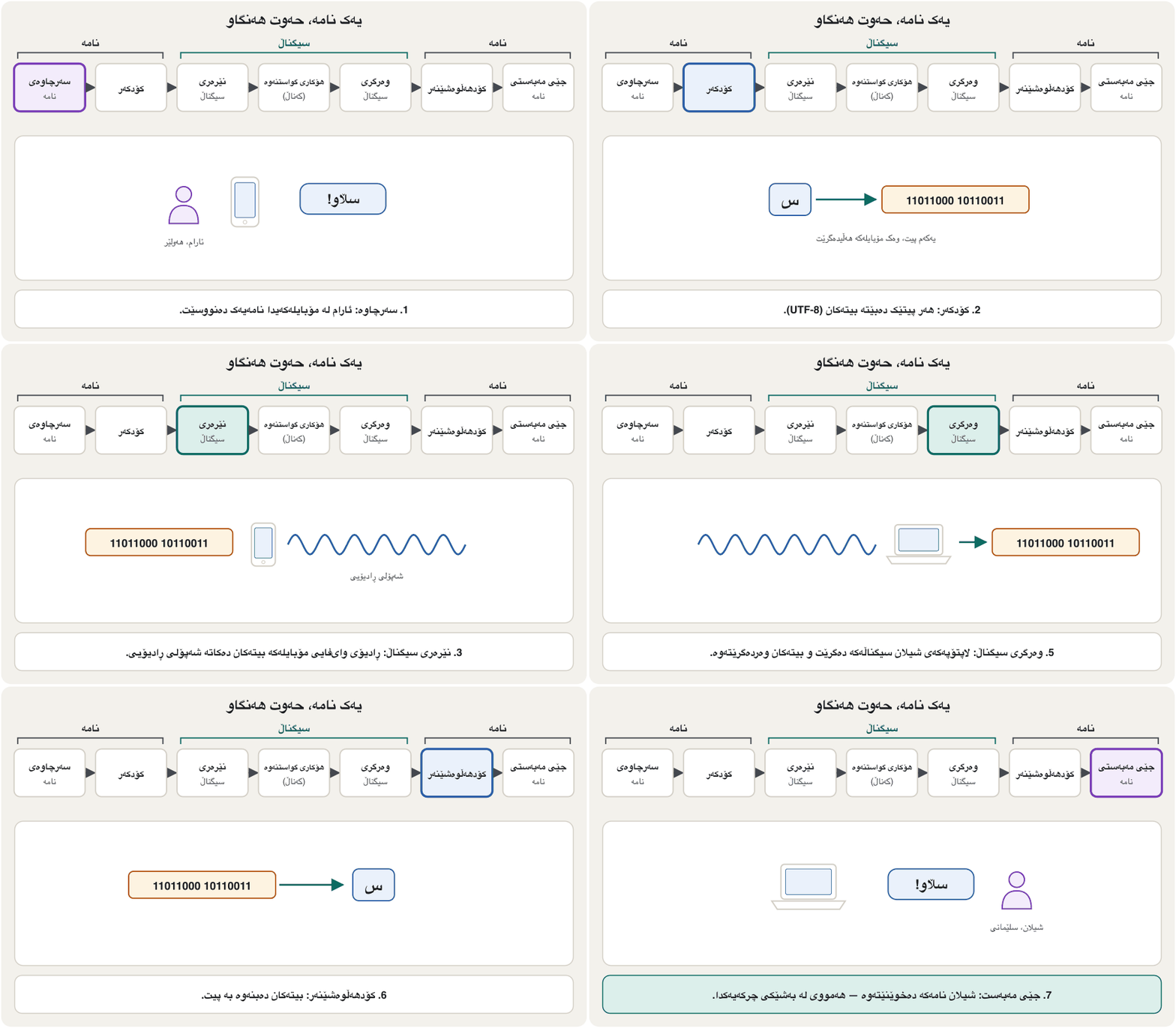
ئارام، خوێندکارێک لە هەولێر، نامەی «سڵاو!» بۆ هاوڕێکەی، شیلان، لە سلێمانی دەنێرێت. وا هەست دەکرێت دەستبەجێ دەگات، بەڵام نامەکە بە حەوت هەنگاودا تێدەپەڕێت. ئەم زنجیرەیە پێی دەوترێت مۆدێلی پەیوەندی:
- Message source — where the message starts: Aram typing in a chat app.
- Encoder — turns the message into a code the machine can send: letters into bits, with a character encoding such as UTF-8.
- Transmitter — turns the bits into a signal for the medium: the phone’s Wi-Fi radio sends radio waves.
- Transmission medium, “the channel” — carries the signal: radio, copper cables, fibre.
- Receiver — picks up the signal and turns it back into bits: the Wi-Fi card in Shilan’s laptop.
- Decoder — turns the bits back into letters.
- Message destination — where the message ends: Shilan reading it.
- سەرچاوەی نامە — شوێنی دەستپێکی نامەکە: ئارام کە لە چاتدا دەنووسێت.
- کۆدکەر — نامەکە دەکاتە کۆدێک کە ئامێرەکە بتوانێت بینێرێت: پیت دەکاتە ، بە وەک UTF-8.
- نێرەری — دەکاتە بۆ : ڕادیۆی مۆبایلەکە دەنێرێت.
- ، «کەناڵەکە» — دەبات: ڕادیۆ، کێبڵی مس، فایبەر.
- وەرگری — وەردەگرێت و دەیکاتەوە بە : کارتی ناو شیلان.
- کۆدهەڵوەشێنەر — دەکاتەوە بە پیت.
- جێی مەبەستی نامە — شوێنی کۆتایی نامەکە: شیلان کە دەیخوێنێتەوە.
From Aram to Shilan: the communication modelلە ئارامەوە بۆ شیلان: مۆدێلی پەیوەندی
Watch the message travelسەیری گەشتی نامەکە بکە
Here are the seven steps one at a time. Watch how the message changes form: letters, then bits, then a radio wave, light in a fibre, a radio wave again, bits, and finally letters on Shilan’s screen.
ئەمانە حەوت هەنگاوەکەن، یەک لە دوای یەک. سەیر بکە نامەکە چۆن شێوە دەگۆڕێت: پیت، پاشان ، پاشان ، ڕووناکی لە ناو فایبەردا، دیسان ، و لە کۆتاییدا پیت لەسەر شاشەکەی شیلان.
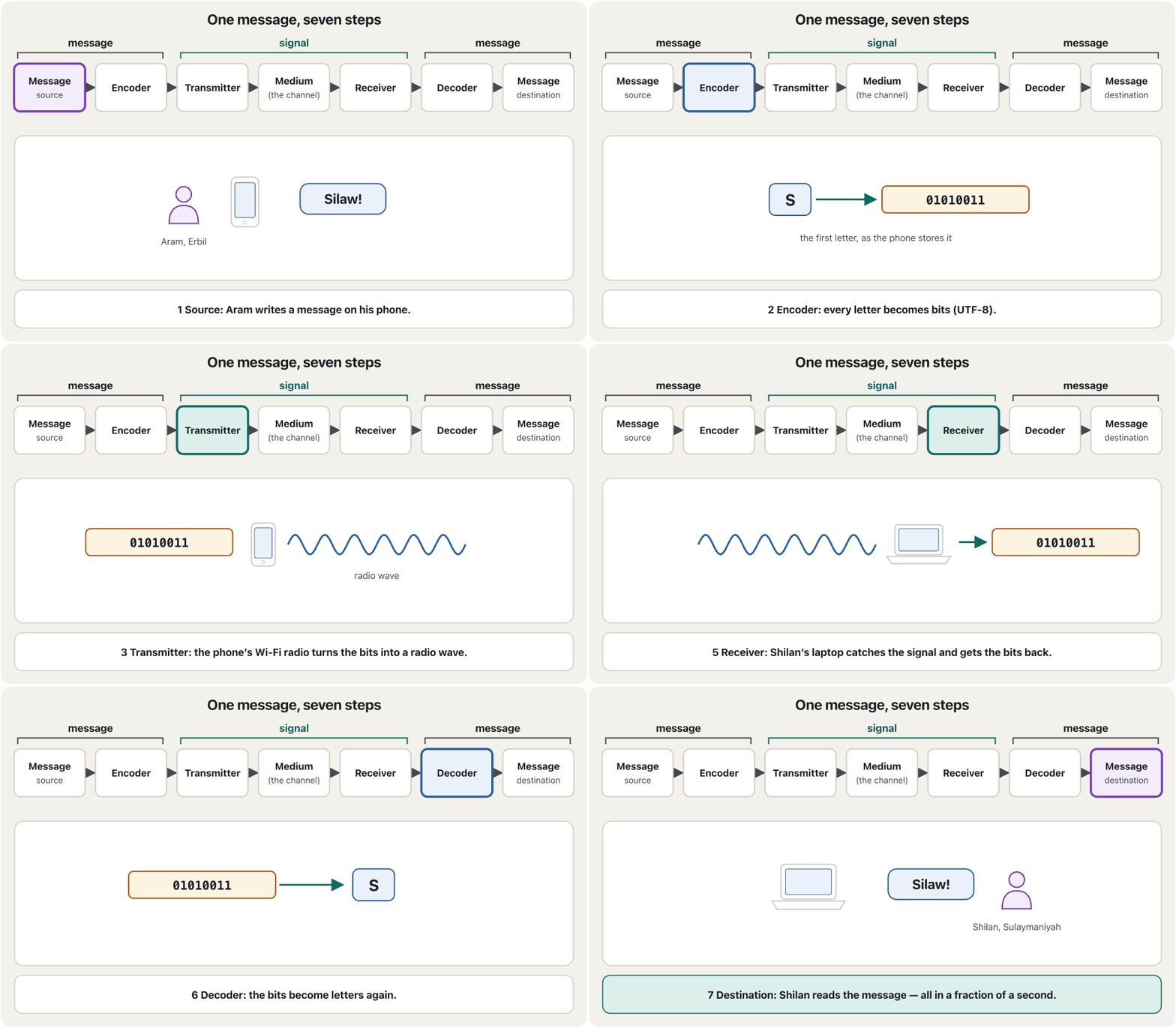
Every step must work. If the encoder and the decoder disagree — say one of them uses an old character set — Shilan sees strange symbols instead of Silaw!. If the medium is cut, nothing arrives at all.
هەموو هەنگاوێک دەبێت کار بکات. ئەگەر کۆدکەر و کۆدهەڵوەشێنەر ڕێک نەکەون — بۆ نموونە یەکێکیان کۆن بەکار بهێنێت — شیلان لە جیاتی «سڵاو!» هێمای سەیر دەبینێت. ئەگەر بپچڕێت، هیچ شتێک ناگات.
What is data communication?پەیوەندیی دراوە چییە؟
Data communication is the exchange of data — in the form of 0s and 1s — between two or more devices over a transmission medium, wired or wireless. The devices cannot do it alone: they must be part of a communication system of hardware, software and agreed rules.
ئاڵوگۆڕکردنی — بە شێوەی 0 و 1 — لە نێوان دوو ئامێر یان زیاتردا بە ڕێگەی ، بە وایەر یان . ئامێرەکان بە تەنیا ناتوانن ئەمە بکەن: دەبێت بەشێک بن لە سیستەمێکی پەیوەندی کە لە ، و یاسای ڕێککەوتوو پێکهاتووە.
How well such a system works depends on three fundamental characteristics — delivery, accuracy and timeliness — and, for voice and video, on a fourth one, jitter. They are the next screens.
چەند باش کار کردنی سیستەمێکی وا پشت بە سێ تایبەتمەندیی بنەڕەتی دەبەستێت — گەیاندن، دروستی و گەیاندنی لەکاتی خۆیدا — بۆ دەنگ و ڤیدیۆش پشت بە چوارەمێک دەبەستێت، . ئەمانە پەردەکانی داهاتوون.
Exchanging between two or more connected devices, such as computers, phones and printers. The data travels over a cable or by radio, and both sides follow the same .
ئاڵوگۆڕکردنی لە نێوان دوو ئامێر یان زیاتردا کە پێکەوە بەستراون، وەک ، مۆبایل و . بە کێبڵ یان بە شەپۆلی ڕادیۆیی دەڕوات و هەردوو لا پەیڕەوی هەمان دەکەن.
A first look at data communication is in What is data communication? in the IT course.
یەکەم سەیرکردنی لە پەیوەندیی دراوە چییە؟ـی کۆرسی هەیە.
What is data communication?پەیوەندیی دراوە چییە؟
The five components (recap)پێنج پێکهاتەکە (بیرخستنەوە)
Every act of data communication has five components. You met them in Five components; here is the short version, with Aram’s message:
هەموو کردارێکی پێنج پێکهاتەی هەیە. لە پێنج پێکهاتەدا ناسیوتن؛ ئەمە کورتەکەیەتی، لەگەڵ نامەکەی ئارام:
| Componentپێکهاتە | What it isچییە | In Aram’s messageلە نامەکەی ئارامدا |
|---|---|---|
| Messageنامە | the information to communicate: text, numbers, pictures, sound, videoئەو دەگوازرێتەوە: دەق، ژمارە، وێنە، دەنگ، ڤیدیۆ | “Silaw!”«سڵاو!» |
| Senderنێرەر | the device that sends it: a computer, a phone, a video camera …ئەو ئامێرەی دەینێرێت: ، مۆبایل، کامێرای ڤیدیۆ … | Aram’s phoneمۆبایلەکەی ئارام |
| Receiverوەرگر | the device that receives it: a computer, a phone, a television …ئەو ئامێرەی وەری دەگرێت: ، مۆبایل، تەلەفزیۆن … | Shilan’s laptop شیلان |
| Medium | the physical path: twisted-pair wire, coaxial cable, fibre-optic cable, laser, radio waves (satellite, microwave)ڕێگا فیزیکییەکە: ، ، ، ، (مانگی دەستکرد، مایکرۆوەیڤ) | Wi-Fi, cables, fibre، کێبڵ، فایبەر |
| Protocol | the set of rules both sides agree onئەو کۆمەڵە یاسایەی هەردوو لا لەسەری ڕێک دەکەون | the Wi-Fi, Internet and chat-app rulesیاساکانی ، و چاتەکە |
Without a protocol, two devices may be connected and still not communicate — like two people on one phone line who speak different languages.
بەبێ ، لەوانەیە دوو ئامێر پێکەوە بەسترابن و هێشتا پەیوەندی نەکەن — وەک دوو کەس لەسەر یەک هێڵی تەلەفۆن کە بە دوو زمانی جیاواز قسە دەکەن.
These parts are as old as communication itself — from smoke signals to the Internet: see What never changed.
ئەم بەشانە هێندەی خودی پەیوەندی کۆنن — لە نیشانەی دووکەڵەوە تا : بڕوانە ئەوەی هەرگیز نەگۆڕا.
Delivery, accuracy, timelinessگەیاندن، دروستی، گەیاندنی لەکاتی خۆیدا
- Delivery: the data must reach the correct destination — and only that one. A bank transfer that lands in the wrong account has failed, however fast it was.
- Accuracy: the data must arrive exactly as it was sent. Data that is changed on the way and not corrected is useless — one wrong bit can change a number in a payment.
- Timeliness: data must arrive in time. Late data is useless: for video, audio and voice, timely delivery means delivering the data as it is produced, in real time — a goal in a live match must reach you while the match is still on.
- گەیاندن: دەبێت بگاتە جێی مەبەستی دروست — و تەنیا ئەوێ. گواستنەوەیەکی بانکی کە دەچێتە هەژمارێکی هەڵە شکستی هێناوە، هەر چەندە خێرا بووبێت.
- دروستی: دەبێت ڕێک وەک ئەوەی نێردرا بگات. کە لە ڕێگادا بگۆڕدرێت و ڕاست نەکرێتەوە بێسوودە — یەک هەڵە دەتوانێت ژمارەیەک لە پارەدانێکدا بگۆڕێت.
- گەیاندنی لەکاتی خۆیدا: دەبێت لە کاتی خۆیدا بگات. دواکەوتوو بێسوودە: بۆ ڤیدیۆ، دەنگ و قسەکردن، گەیاندنی لەکاتی خۆیدا واتە گەیاندنی هەر کە دروست دەبێت، لە — گۆڵێک لە یارییەکی ڕاستەوخۆدا دەبێت بگاتە لات تا یارییەکە هێشتا بەردەوامە.
Networks protect these with addresses (delivery), checksums and resending lost data (accuracy), and fast links that give live traffic priority (timeliness). You will meet each tool later in the course.
ئەمانە دەپارێزن بە ناونیشان (گەیاندن)، و (دروستی)، هەروەها بە بەستنەوەی خێرا کە پێشینە دەدەنە هاتوچۆی ڕاستەوخۆ (گەیاندنی لەکاتی خۆیدا). هەر یەکێک لەم ئامرازانە لە درێژەی کۆرسەکەدا دەبینیت.
Delivery, accuracy, timelinessگەیاندن، دروستی، گەیاندنی لەکاتی خۆیدا
The fourth one: jitterچوارەمیان: لەرزینی دواکەوتن
For voice and video there is a fourth characteristic: jitter, the variation in delay from one packet to the next. A video call sends a small packet of picture and sound every few milliseconds. If every packet takes 40 ms, the call is smooth. If one takes 40 ms, the next 62 ms and the next 38 ms, the picture runs out and the call stutters — even though the delay is never very long.
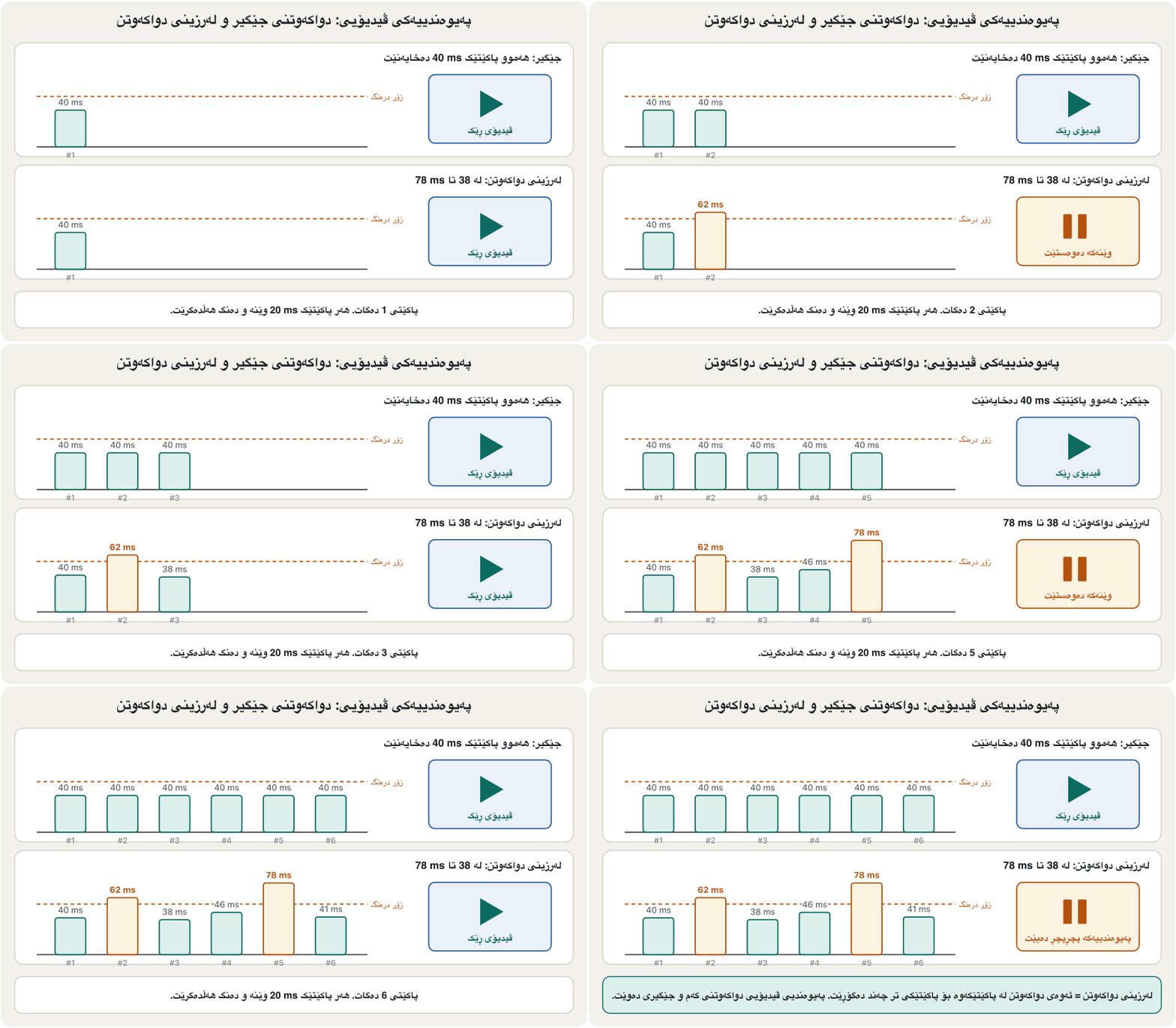
بۆ دەنگ و ڤیدیۆ تایبەتمەندییەکی چوارەم هەیە: ، گۆڕانی لە بۆ تر. پەیوەندییەکی ڤیدیۆیی هەر چەند ملیچرکەیەک جارێک بچووکی وێنە و دەنگ دەنێرێت. ئەگەر هەموو 40 ms بخایەنێت، پەیوەندییەکە ڕێکە. ئەگەر یەکێکیان 40 ms، دواتر 62 ms و دواتر 38 ms بخایەنێت، وێنەکە پێش گەیشتنی دواتر تەواو دەبێت و پەیوەندییەکە پچڕپچڕ دەبێت — هەرچەندە هەرگیز زۆر درێژ نییە.
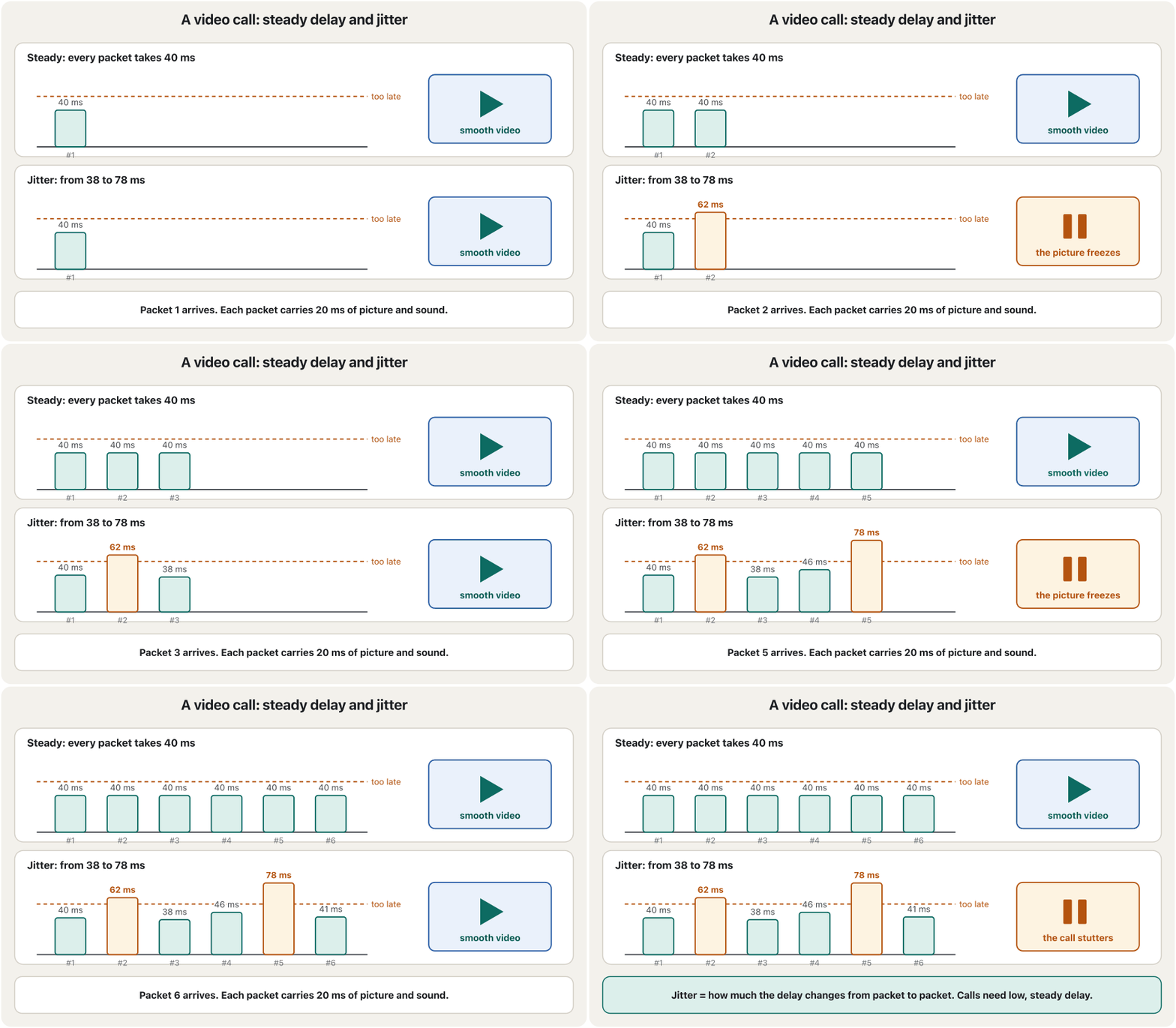
Video players and call apps fight jitter with buffering: they wait a moment before playing, so that late packets still arrive in time. Delay itself (latency) and the speed of links are measured in How Fast Is a Network?.
لێدەرەکانی ڤیدیۆ و پەیوەندی بە بەرەنگاری دەبنەوە: پێش لێدان کەمێک چاوەڕێ دەکەن، بۆ ئەوەی لە کاتی خۆیدا بگەن. خودی و خێرایی بەستنەوەکان لە ڕایەڵە چەند خێرایە؟دا دەپێورێن.
The words of this topicوشەکانی ئەم بابەتە
Here are the words of this lesson in English and Kurdish. Some are CêIT technical terms — tap them for their definitions — and the others are everyday Kurdish words used with an exact meaning:
ئەمانە وشەکانی ئەم وانەیەن بە ئینگلیزی و کوردی. هەندێکیان زاراوەی تەکنیکیی CêITـن — دەستیان لێ بدە بۆ پێناسەکانیان — ئەوانی تریش وشەی ڕۆژانەی کوردین کە بە واتایەکی ورد بەکار دێن:
| Englishئینگلیزی | Kurdishکوردی | Meaningواتا |
|---|---|---|
| Source, sender | سەرچاوە، نێرەر (نێردەر) | the device that sends data to the destinationئەو ئامێرەی بەرەو جێی مەبەست دەنێرێت |
| Destination, receiver | جێی مەبەست، وەرگر | the device that receives the data from the sourceئەو ئامێرەی لە سەرچاوەوە وەردەگرێت |
| Data | (داتا) | information in a form computers can process and send: 0s and 1s بە شێوەیەک کە بتوانێت مامەڵەی لەگەڵ بکات و بینێرێت: 0 و 1 |
| Digit | one symbol of a number: 0 or 1 in binary, 0–9 in decimalیەک هێمای ژمارەیەک: 0 یان 1 لە ، 0–9 لە دەییدا | |
| Encoding | (بەکۆدکردن) | turning information into a code, for example letters into bits; it is not encryptionگۆڕینی بۆ کۆد، بۆ نموونە پیت بۆ ؛ نییە |
| Transmission | گواستنەوە | sending bits, packets or data to another placeناردنی ، یان بۆ شوێنێکی تر |
| Security | protecting the data and the networkپاراستنی و | |
| Instance | میناک | one example or case of somethingنموونەیەک یان حاڵەتێک لە شتێک |
What makes a network good? Three criteriaچی ڕایەڵەیەک باش دەکات؟ سێ پێوەر
Data communication looks at one message. To judge a whole network, engineers use three criteria: performance, reliability and security.
سەیری یەک نامە دەکات. ئەندازیاران بۆ هەڵسەنگاندنی هەموو سێ پێوەر بەکار دەهێنن: ئەدا، و .
What makes a network good? Three criteriaچی ڕایەڵەیەک باش دەکات؟ سێ پێوەر
Performance: transit time and response timeئەدا: ماوەی گەیشتن و ماوەی وەڵامدانەوە
Performance can be measured in many ways. Two simple ones are the transit time, the time a message needs to travel from one device to another, and the response time, the time from a question to its answer.
ئەدا بە زۆر ڕێگا دەپێورێت. دوو ڕێگای سادە بریتین لە ماوەی گەیشتن، کە ئەو کاتەیە نامەیەک پێویستیەتی بۆ ڕۆیشتن لە ئامێرێکەوە بۆ ئامێرێکی تر و ماوەی وەڵامدانەوە، کە ماوەی نێوان پرسیارێک و وەڵامەکەیەتی.
What makes a network good? Three criteriaچی ڕایەڵەیەک باش دەکات؟ سێ پێوەر
What decides performanceچی ئەدا دیاری دەکات
Four things decide performance:
چوار شت ئەدا دیاری دەکەن:
- Number of users: many people using a network at the same moment can slow the response time of a network that was not built for heavy traffic — think of the university website on results day.
- Transmission medium: the medium sets the highest data rate. Ethernet grew from 10 to 100, 1,000 and 10,000 Mb/s; in 2026 desks get 1 Gb/s (2.5 to 10 Gb/s is spreading), Wi-Fi 7 reaches several Gb/s, and data centres use 400 and 800 Gb/s (as of November 2026; 1.6 Tb/s Ethernet is in its last approval stage at the IEEE).
- Hardware: the speed and capacity of the switches, routers and servers.
- Software: the programs that handle the data at the sender, the receiver and every node between them.
- ژمارەی : کاتێک زۆر کەس لە هەمان ساتدا بەکار دەهێنن کە بۆ هاتوچۆی قورس دروست نەکراوە، ماوەی وەڵامدانەوە خاو دەبێت — بیر لە زانکۆ بکەرەوە لە ڕۆژی دەرچوونی ئەنجامەکاندا.
- : بەرزترین خێرایی دیاری دەکات. Ethernet لە 10ـەوە گەیشتە 100، 1,000 و 10,000 Mb/s؛ لە 2026دا مێزەکان 1 Gb/s وەردەگرن (2.5 تا 10 Gb/s بڵاو دەبێتەوە)، Wi-Fi 7 دەگاتە چەند Gb/sـێک و 400 و 800 Gb/s بەکار دەهێنن (تا نۆڤەمبەری 2026؛ Ethernetـی 1.6 Tb/s لە دوایین قۆناغی پەسەندکردنیدایە لە IEEE).
- : خێرایی و توانای ، و .
- : ، کە لە نێرەر، وەرگر و هەموو نێوانیاندا مامەڵە لەگەڵ دەکەن.
Engineers also speak of throughput — how much data really gets through each second — and delay (latency); both are measured in How Fast Is a Network?, which also shows the four delays at every router. A first look: Bandwidth and latency.
ئەندازیاران باسی ـیش دەکەن — لە هەر چرکەیەکدا بە ڕاستی چەند تێدەپەڕێت — هەروەها ؛ هەردووکیان لە ڕایەڵە چەند خێرایە؟دا دەپێورێن، کە چوار جۆر دواکەوتن لە هەر ڕێدۆزێکداـیش پیشان دەدات. یەکەم سەیرکردن: پانایی باند و دواکەوتن.
What makes a network good? Three criteriaچی ڕایەڵەیەک باش دەکات؟ سێ پێوەر
Reliability: fail rarely, recover fastپشتپێبەستراوی: کەم تێکچوون، خێرا چاکبوونەوە
Reliability is measured in three ways:
بە سێ ڕێگا دەپێورێت:
- Frequency of failure: all networks fail now and then, but a network that fails often is of little use.
- Recovery time: how long it takes to restore the service after a failure. A network that recovers quickly is more useful than one that does not.
- Robustness in a catastrophe: a network must be protected from events such as fire, floods and earthquakes. One protection against unforeseen damage is a reliable backup — copies of the data and of the network software and settings, kept in another place.
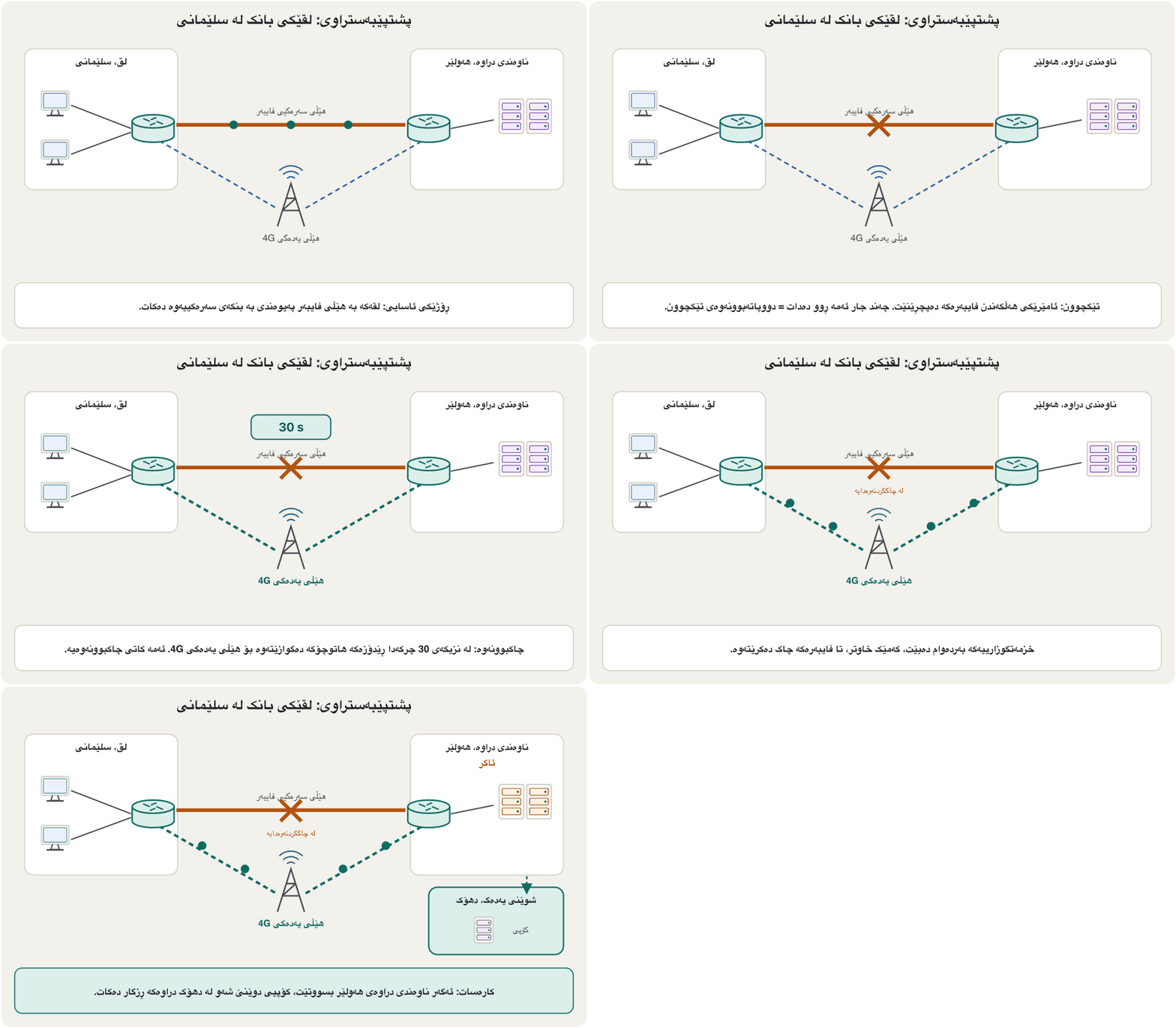
- دووپاتەبوونەوەی تێکچوون: هەموو جار جار تێکدەچێت، بەڵام کە زوو زوو تێکبچێت سوودی کەمە.
- کاتی چاکبوونەوە: گەڕاندنەوەی خزمەتگوزارییەکە دوای تێکچوون چەند دەخایەنێت. کە خێرا چاک دەبێتەوە لەوە بەسوودترە کە خێرا چاک نابێتەوە.
- بەرگەگرتن لە کارەساتدا: دەبێت لە ڕووداوی وەک ئاگر، لافاو و بوومەلەرزە بپارێزرێت. یەکێک لە ڕێگاکانی پاراستن لە زیانی چاوەڕواننەکراو جێی متمانەیە — کۆپیی و و ڕێکخستنەکانی ، کە لە شوێنێکی تردا هەڵدەگیرێن.
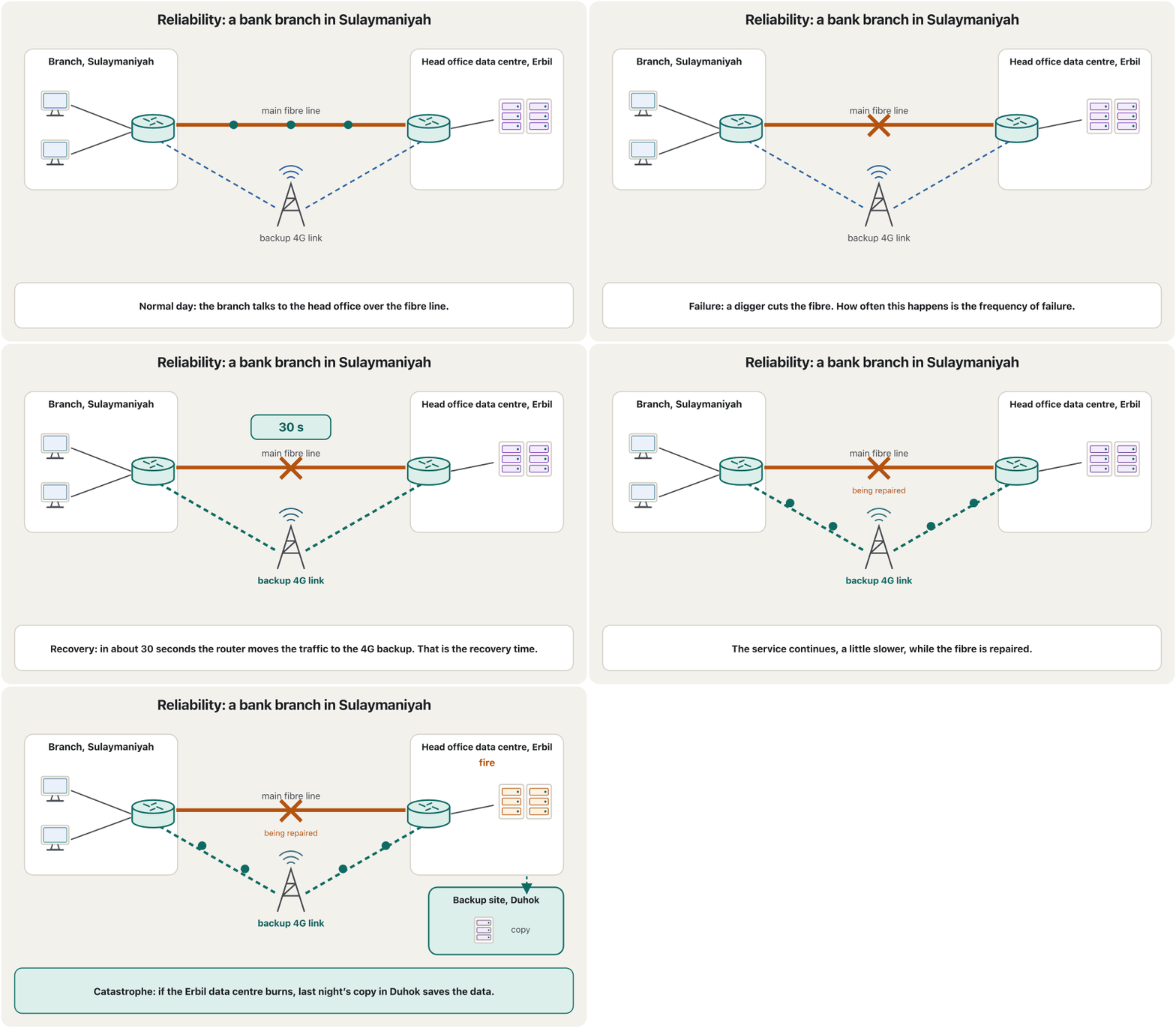
That is why banks pay for two links and a second data centre: redundancy — spare parts that take over — shortens the recovery time, and backups in another city survive a catastrophe.
بۆیە بانکەکان پارە بۆ دوو هێڵ و دووەم دەدەن: یەدەگداری — پارچەی یەدەگ کە شوێنەکە دەگرنەوە — کاتی چاکبوونەوە کورت دەکاتەوە و لە شارێکی تردا بەرگەی کارەسات دەگرن.
What makes a network good? Three criteriaچی ڕایەڵەیەک باش دەکات؟ سێ پێوەر
Security: keep out the uninvitedئاسایش: ڕێگرتن لە بانگهێشتنەکراوان
Security means protecting the data and the network from two big threats:
واتە پاراستنی و لە دوو گەورە:
- Unauthorised access: someone gets into a system without permission. Protection works at several levels: at the lowest level, user IDs and passwords (today with multi-factor authentication); at a higher level, encryption, which keeps the data unreadable even when someone captures it.
- Malware: a network can be reached from many points, so harmful code — viruses, worms, ransomware and more — can arrive and spread. Hardware and software made for the job protect against it: firewalls, anti-malware programs and regular updates.
- : کەسێک بەبێ مۆڵەت دەچێتە ناو سیستەمێکەوە. پاراستن لە چەند ئاستێکدا کار دەکات: لە نزمترین ئاستدا ناسنامەی و (ئەمڕۆ لەگەڵ )؛ لە ئاستێکی بەرزتردا ، کە نەخوێندراو دەهێڵێتەوە تەنانەت کاتێک کەسێک دەستی بەسەردا دەگرێت.
- : دەکرێت لە زۆر خاڵەوە بگەیتە ، بۆیە کۆدی زیانبەخش — ، ، و زیاتر — دەتوانێت بگات و بڵاو ببێتەوە. و تایبەت بەم کارە لێی دەپارێزن: ، و بەردەوام.
Encryption is often called the last line of defence: when every other layer has failed and a thief holds the data, encrypted data still cannot be read. That does not make it a low-level technique, and it does not make the other layers unnecessary. Strong security uses defence in depth — many different layers, so that one failure is not a disaster. See Defence in depth and The CIA triad.
زۆرجار پێی دەوترێت دوایین هێڵی بەرگری: کاتێک هەموو چینەکانی تر شکستیان هێناوە و دزێک بەدەستەوەیە، شفرەکراو هێشتا ناخوێندرێتەوە. ئەمە نایکاتە تەکنیکێکی ئاست نزم و چینەکانی تریش لە پێویستی ناخات. بەهێز بەکار دەهێنێت — چەندین چینی جیاواز، بۆ ئەوەی یەک شکست نەبێتە کارەسات. بڕوانە بەرگریی چەندچین و سێگۆشەی CIA.
Common mistakesهەڵە باوەکان
- Mixing up the two models. The communication model (seven steps) follows one message; the five components list what every communication needs. Each is the right answer to a different question.
- Thinking a fast network is always a good network. Performance is one criterion; reliability and security matter as much.
- Calling the transmission mode a network criterion. It describes one link.
- Confusing transit time with response time. Transit time is one way; response time is the question, the work to prepare the answer and the answer.
- Thinking encryption alone is enough — or that it is a low-level technique. It is one strong layer of defence in depth.
- Calling every threat a “virus”. Viruses are one kind of malware, next to worms, ransomware, spyware and others.
- Mixing up encoding and encryption. Encoding (such as UTF-8) turns information into a code that everyone can read back; encryption hides it from everyone without the key.
- تێکەڵکردنی دوو مۆدێلەکە. مۆدێلی پەیوەندی (حەوت هەنگاو) بەدوای یەک نامەدا دەڕوات؛ پێنج پێکهاتەکە ئەوە دەژمێرن کە هەموو پەیوەندییەک پێویستیەتی. هەریەکەیان وەڵامی دروستی پرسیارێکی جیاوازە.
- وا بزانیت خێرا هەمیشە باشە. ئەدا یەک پێوەرە؛ و بە هەمان ئەندازە گرنگن.
- بە پێوەری دانان. یەک بەستنەوە وەسف دەکات.
- تێکەڵکردنی ماوەی گەیشتن و ماوەی وەڵامدانەوە. ماوەی گەیشتن یەک ئاڕاستەیە؛ ماوەی وەڵامدانەوە پرسیارەکە، کاری ئامادەکردنی وەڵام و وەڵامەکەیە.
- وا بزانیت بە تەنیا بەسە — یان تەکنیکێکی ئاست نزمە. یەکێکە لە چینە بەهێزەکانی .
- هەموو بە «» ناو بردن. تەنیا جۆرێکە لە ، لە تەنیشت ، ، و ئەوانی تر.
- تێکەڵکردنی و . (وەک UTF-8) دەکاتە کۆدێک کە هەمووان دەتوانن بیخوێننەوە؛ لە هەموو کەسێک دەیشارێتەوە کە کلیلەکەی نییە.
Exercisesڕاهێنانەکان
What is data communication? Name its three fundamental characteristics and the fourth one that matters for video.
چییە؟ سێ تایبەتمەندییە بنەڕەتییەکەی ناو ببە، لەگەڵ چوارەمیان کە بۆ ڤیدیۆ گرنگە.
Show answerوەڵامەکە پیشان بدە
Data communication is the exchange of data (0s and 1s) between two or more devices over a transmission medium, wired or wireless; the devices must be part of a communication system. Characteristics: delivery (to the right destination), accuracy (unchanged) and timeliness (in time; real time for voice and video). For video and voice, jitter — the variation in delay — must also be low.
ئاڵوگۆڕکردنی (0 و 1) لە نێوان دوو ئامێر یان زیاتردا بە ڕێگەی ، بە وایەر یان ؛ ئامێرەکان دەبێت بەشێک بن لە سیستەمێکی پەیوەندی. تایبەتمەندییەکان: گەیاندن (بۆ جێی مەبەستی دروست)، دروستی (بێ گۆڕان) و گەیاندنی لەکاتی خۆیدا (بۆ دەنگ و ڤیدیۆ لە ). بۆ ڤیدیۆ و دەنگ، — گۆڕانی — دەبێت کەمیش بێت.
What are the network elements? Give two correct ways to answer.
توخمەکانی چین؟ دوو ڕێگای دروستی وەڵامدانەوە بنووسە.
Show answerوەڵامەکە پیشان بدە
1) The five components of data communication: message, sender, receiver, medium and protocol. 2) The parts of a network: devices (end devices and intermediary devices), media and services — see The parts of every network. Say which list you are using.
1) پێنج پێکهاتەکەی : نامە، نێرەر، وەرگر، و . 2) بەشەکانی : ئامێرەکان ( و )، و خزمەتگوزارییەکان — بڕوانە بەشەکانی هەموو ڕایەڵەیەک. بڵێ کام لیست بەکار دەهێنیت.
Your mother in Duhok calls you in Erbil on her mobile phone. Write what happens at each of the seven steps of the communication model.
دایکت لە دهۆکەوە بە مۆبایلەکەی پەیوەندیت پێوە دەکات لە هەولێر. بنووسە لە هەر یەکێک لە حەوت هەنگاوەکەی مۆدێلی پەیوەندیدا چی ڕوو دەدات.
Show answerوەڵامەکە پیشان بدە
- Sourceسەرچاوە
Your mother speaks.
دایکت قسە دەکات.
- Encoderکۆدکەر
The phone’s microphone and codec turn her voice into bits.
و مۆبایلەکە دەنگەکەی دەکەن بە .
- Transmitterنێرەری سیگناڵ
The phone’s radio sends the bits as radio waves to the nearest base station.
ڕادیۆی مۆبایلەکە وەک دەنێرێت بۆ نزیکترین .
- Mediumهۆکاری گواستنەوە
Radio to the base station, then fibre between the cities, then radio again near you.
ڕادیۆ تا ، پاشان فایبەر لە نێوان شارەکاندا، پاشان دیسان ڕادیۆ لە نزیکی تۆ.
- Receiverوەرگری سیگناڵ
Your phone’s radio picks up the signal and gets the bits back.
ڕادیۆی مۆبایلەکەت وەردەگرێت و وەردەگرێتەوە.
- Decoderکۆدهەڵوەشێنەر
The codec turns the bits back into sound.
دەکاتەوە بە دەنگ.
- Destinationجێی مەبەست
You hear her voice.
تۆ گوێت لە دەنگی دەبێت.
An Internet café in Duhok has three problems: (a) every evening pages load slowly while 30 customers play online games; (b) the router breaks twice a week and is fixed after two hours each time; (c) a customer reads another customer’s e-mails on a shared PC. Which criterion does each problem hurt, and what would you improve?
لە دهۆک سێ کێشەی هەیە: (أ) هەموو ئێوارەیەک کاتێک 30 مشتەری یاریی ئۆنلاین دەکەن لاپەڕەکان خاو دەکرێنەوە؛ (ب) هەفتەی دوو جار تێکدەچێت و هەر جارێک دوای دوو کاتژمێر چاک دەکرێتەوە؛ (ج) مشتەرییەک مشتەرییەکی تر لەسەر هاوبەش دەخوێنێتەوە. هەر کێشەیەک زیان بە کام پێوەر دەگەیەنێت و چی باشتر دەکەیت؟
Show answerوەڵامەکە پیشان بدە
- (a) Performance (number of users, the Internet line): a faster line, or rules that give web pages priority over games.
- (b) Reliability (frequency of failure and recovery time): a better router and a spare one ready to plug in, so recovery takes minutes, not hours.
- (c) Security (unauthorised access): every customer logs out at the end, the PC is reset between customers, and e-mail is used only over HTTPS with multi-factor authentication.
- (أ) ئەدا (ژمارەی ، هێڵی ): هێڵێکی خێراتر، یان یاسایەک کە پێشینە بە بدات بەسەر یارییەکاندا.
- (ب) (دووپاتەبوونەوەی تێکچوون و کاتی چاکبوونەوە): باشتر و یەدەگی ئامادە، بۆ ئەوەی چاکبوونەوە چەند خولەکێک بخایەنێت نەک چەند کاتژمێرێک.
- (ج) (): هەموو مشتەرییەک لە کۆتاییدا دەچێتە دەرەوە، لە نێوان مشتەرییەکاندا ڕێک دەخرێتەوە و تەنیا بە و بەکار دێت.
Which of these is not a network criterion: performance, reliability, security, transmission mode?کامیان پێوەری ڕایەڵە نییە: ئەدا، پشتپێبەستراوی، ئاسایش، شێوازی ناردن؟
Transmission mode.
.
Fill the gaps: the effectiveness of a data communication system depends on ___, ___ and ___.بۆشاییەکان پڕ بکەرەوە: کاریگەریی سیستەمێکی پەیوەندیی دراوە پشت بە ___، ___ و ___ دەبەستێت.
Delivery, accuracy and timeliness.
گەیاندن، دروستی و گەیاندنی لەکاتی خۆیدا.
Name the three measures of reliability.سێ پێوانەکەی پشتپێبەستراوی ناو ببە.
Frequency of failure, recovery time after a failure, and robustness in a catastrophe.
دووپاتەبوونەوەی تێکچوون، کاتی چاکبوونەوە دوای تێکچوون و بەرگەگرتن لە کارەساتدا.
Summaryپوختە
- The communication model has seven steps: source, encoder, transmitter, medium, receiver, decoder, destination. Between the encoder and the decoder the message is a signal.
- Data communication is the exchange of 0s and 1s over a medium. It needs delivery, accuracy and timeliness — and low jitter for voice and video.
- Its five components are the message, the sender, the receiver, the medium and the protocol.
- A good network is judged by performance (transit time, response time; users, medium, hardware, software), reliability (failures, recovery time, catastrophes) and security (unauthorised access, malware). The transmission mode is not a criterion.
- Encryption is the last line of defence for the data, inside defence in depth — never the only layer.
- مۆدێلی پەیوەندی حەوت هەنگاوی هەیە: سەرچاوە، کۆدکەر، نێرەری ، ، وەرگری ، کۆدهەڵوەشێنەر و جێی مەبەست. لە نێوان کۆدکەر و کۆدهەڵوەشێنەردا نامەکە .
- ئاڵوگۆڕکردنی 0 و 1ـە بە ڕێگەی . پێویستی بە گەیاندن، دروستی و گەیاندنی لەکاتی خۆیدا هەیە — بۆ دەنگ و ڤیدیۆش کەم.
- پێنج پێکهاتەکەی بریتین لە نامە، نێرەر، وەرگر، و .
- باش بە ئەدا (ماوەی گەیشتن، ماوەی وەڵامدانەوە؛ ، ، ، )، (تێکچوون، کاتی چاکبوونەوە، کارەسات) و (، ) هەڵدەسەنگێنرێت. پێوەر نییە.
- دوایین هێڵی بەرگرییە بۆ ، لە ناو — هەرگیز تاکە چین نییە.
Lesson complete!وانەکە تەواو بوو!
Well done. Review the key terms, then go on to the next lesson.دەستخۆش. سەیرێکی زاراوە سەرەکییەکان بکەرەوە، پاشان بڕۆ بۆ وانەی داهاتوو.
Key termsزاراوە سەرەکییەکان
Links: Point-to-Point, Multipoint and Transmission Modesبەستنەوەکان: پەیوەندیی خاڵ بۆ خاڵ، پەیوەندیی فرەخاڵ و شێوازەکانی ناردن
Related lecturesوانە پەیوەندیدارەکان
- Data Communication: Modes, Switching and Protocolsپەیوەندیی دراوە: شێوازەکانی ناردن، سویچکردن و پرۆتۆکۆڵەکان
- Computer Communicationsپەیوەندیی کۆمپیوتەر
- How Fast Is a Network? Delay, Bandwidth and Throughputڕایەڵە چەند خێرایە؟ دواکەوتن، پانایی باند و ڕێژەی تێپەڕین
- Links: Point-to-Point, Multipoint and Transmission Modesبەستنەوەکان: پەیوەندیی خاڵ بۆ خاڵ، پەیوەندیی فرەخاڵ و شێوازەکانی ناردن
- Confidentiality, Integrity and Availabilityبەنهێنی مانەوە، دروستی و بەردەستبوون
- Security by Obscurity, by Legislation, and the Trade-off Triangleئاسایش بە شاردنەوە، ئاسایش بە یاسا و سێگۆشەی هاوسەنگی
References and further readingسەرچاوەکان و خوێندنەوەی زیاتر
- Cisco Press: Introduction to Networks Companion Guide (CCNAv7), chapter 1: Network Components; Reliable Networks
- Forouzan, Data Communications and Networking with TCP/IP Protocol Suite, 6th ed. (McGraw Hill) — data communication characteristics, components and network criteria
- NIST CSRC Glossary: defense-in-depth
- IEEE P802.3df: 400 Gb/s and 800 Gb/s Ethernet (approved 16 February 2024)
- Wi-Fi Alliance: Wi-Fi CERTIFIED 7
- IEEE P802.3dj Task Force: 200 Gb/s, 400 Gb/s, 800 Gb/s and 1.6 Tb/s Ethernet (in IEEE SA ballot in 2026; approval expected at the end of 2026)
This lecture is a first edition. The Kurdish text and terminology are waiting for review by Kurdish IT teachers.ئەم وانەیە چاپی یەکەمە. دەقە کوردییەکە و زاراوەکانی چاوەڕێی پێداچوونەوەی مامۆستایانی کوردی بواری IT ن.