Chapterبەش 1 · Lectureوانە 1.1
Mobile Technology and Wireless Networksتەکنەلۆژیای مۆبایل و ڕایەڵە بێتەلەکان
What mobile technology is and how phones grew from call-only devices into multitasking computers; telecommunication (transmitter, channel, receiver over wire, radio or light); wireless networks, what they give and what they cost; and the four sizes WPAN, WLAN, WMAN and WWAN, followed through one voice message.
چییە و مۆبایل چۆن لە ئامێرێکی تەنها بۆ پەیوەندیی تەلەفۆنییەوە بوو بە ؛ (نێرەر، کەناڵ و وەرگر بە وایەر، ڕادیۆ یان ڕووناکی)؛ ، ئەوەی دەیدەن و نرخەکەیان؛ هەروەها چوار قەبارەکە WPAN، WLAN، WMAN و WWAN، کە لەگەڵ یەک نامەی دەنگیدا هەنگاو بە هەنگاو دەیانبینین.
What you will learnچی فێر دەبیت
- Explain what mobile technology is and how phones became multitasking devices.
- Describe telecommunication with its three parts and its three kinds of channel.
- Say what a wireless network is, what it gives and what it costs.
- Tell WPAN, WLAN, WMAN and WWAN apart and give a mobile example of each.
- ڕوونی بکەیتەوە چییە و مۆبایل چۆن بوو بە ئامێرێکی .
- وەسفی بکەیت بە سێ بەشەکەی و سێ جۆرە کەناڵەکەیەوە.
- بڵێیت چییە، چی دەدات و نرخەکەی چییە.
- WPAN، WLAN، WMAN و WWAN لە یەکتر جیا بکەیتەوە و بۆ هەریەکەیان نموونەیەکی مۆبایل بهێنیتەوە.
What is mobile technology?تەکنەلۆژیای مۆبایل چییە؟
The technology of devices that people carry and use on the move, such as and , together with the that connect them. Phones grew from simple devices for calls and text messages into devices for maps, the , games and chat.
ئەو تەکنەلۆژیایەیە کە ئامێرە هەڵگیراوەکان دەگرێتەوە، وەک و ، لەگەڵ ئەو پێکیانەوە دەبەستن. مۆبایل لە ئامێرێکی سادە بۆ پەیوەندیکردن و ناردنی نامەوە گەشەی کرد و بووە ئامێرێکی بۆ نەخشە، ، یاری و چات.
Think of the phone in your pocket. You carry it everywhere and use it while you walk, ride in a taxi or sit in a tea house. That is mobile technology: devices you use on the move — smartphones, tablets, smartwatches — together with the wireless networks that connect them. Most of it serves cellular communication: calls and data over a mobile network, and everything that is built on top of them.
بیر لەو مۆبایلە بکەرەوە کە لە گیرفانتدایە. هەموو شوێنێک لەگەڵ خۆتی دەبەیت و لە کاتی ڕۆیشتن، سواربوونی تەکسی یان دانیشتن لە چایخانەدا بەکاری دەهێنیت. ئەمە : ئەو ئامێرانەی لە کاتی جووڵەدا بەکاریان دەهێنیت — ، و کاتژمێری زیرەک — لەگەڵ کە پێکیانەوە دەبەستن. زۆربەی ئەم تەکنەلۆژیایە لە خزمەتی پەیوەندیی خانەییدایە: پەیوەندیی تەلەفۆنی و لە ڕێگەی ، هەروەها هەموو ئەو شتانەی لەسەر ئەوان دروست کراون.
Phones did not start like this. The first mobile phones could only make voice calls. Then came short text messages. Step by step the phone became a multitasking device: one small computer that finds your way with GPS navigation, opens websites, runs games and carries instant messaging apps — often all at the same time.
مۆبایل لە سەرەتاوە بەم شێوەیە نەبوو. یەکەم مۆبایلەکان تەنها دەیانتوانی پەیوەندیی دەنگی بکەن. دواتر هاتن. هەنگاو بە هەنگاو مۆبایل بوو بە ئامێرێکی : بچووک کە بە ڕێگات بۆ دەدۆزێتەوە، دەکاتەوە، یاری کارپێدەکات و لەسەرە — زۆرجار هەمووی لە هەمان کاتدا.
What is mobile technology?تەکنەلۆژیای مۆبایل چییە؟
From calls to apps: a short historyلە پەیوەندیی تەلەفۆنییەوە بۆ ئەپ: مێژوویەکی کورت
The change took about fifty years. These dates help you see the steps:
ئەم گۆڕانە نزیکەی پەنجا ساڵی خایاند. ئەم ڕێکەوتانە یارمەتیت دەدەن هەنگاوەکان ببینیت:
| Yearساڵ | What happenedچی ڕوویدا |
|---|---|
| 1973 | An engineer at Motorola makes the first call from a handheld mobile phone.ئەندازیارێکی کۆمپانیای Motorola یەکەم پەیوەندی لە مۆبایلێکی دەستییەوە دەکات. |
| 1979 | The first commercial cellular network opens in Tokyo (1G: analogue voice).یەکەم بازرگانی لە تۆکیۆ دەکرێتەوە (1G: دەنگی ). |
| 1983 | The first handheld mobile phone goes on sale in the USA. It is heavy and gives about 30 minutes of talk time.یەکەم مۆبایلی دەستی لە ئەمریکا دەخرێتە بازاڕەوە. قورسە و نزیکەی ٣٠ خولەک قسەکردن دەدات. |
| 1991 | 2G: GSM, the first digital mobile network, opens in Finland.2G: ، یەکەم ، لە فینلەندا دەکرێتەوە. |
| 1992 | The first SMS text message is sent.یەکەم دەنێردرێت. |
| 1994 | The IBM Simon goes on sale: a touchscreen, a calendar and e-mail. It is often called the first smartphone.IBM Simon دەخرێتە بازاڕەوە: ، ڕۆژژمێر و هەیە. زۆرجار بە یەکەم ناو دەبرێت. |
| 2007 | The iPhone arrives with a large touchscreen and a full web browser.iPhone دێتە بازاڕەوە، بە گەورە و تەواوەوە. |
| 2008 | Apple's App Store (July) and the first Android phone (October) open the age of apps.App Storeـی Apple (تەممووز) و یەکەم مۆبایلی Android (تشرینی یەکەم) سەردەمی دەست پێدەکەن. |
| 2019 | The first full 5G networks open (South Korea, April).یەکەم 5G بە تەواوی دەکرێنەوە (کۆریای باشوور، نیسان). |
| 2026 | About 5.8 billion people — roughly 70% of the world — have a mobile subscription (GSMA).نزیکەی ٥٫٨ ملیار کەس — نزیکەی ٧٠٪ی خەڵکی جیهان — مۆبایلیان هەیە (GSMA). |
Telecommunication: communicating at a distanceدوورپەیوەندی: پەیوەندی لە دوورەوە
Sending signals, messages, sounds, pictures or any other information over a distance by wire, radio, optical fibre or other electromagnetic systems. Phone calls, television and the all depend on it.
ناردنی سیگناڵ، پەیام، دەنگ، وێنە یان هەر زانیارییەکی ترە بۆ شوێنێکی دوور بە وایەر، ڕادیۆ، یان سیستەمی ئەلیکترۆموگناتیسیی تر. پەیوەندیی تەلەفۆنی، تەلەفیزیۆن و هەموویان پشتی پێ دەبەستن.
Tele is Greek for 'far'. Telecommunication means sending information of any kind over a distance: signs, signals, messages, words, writing, pictures and sounds. The information can travel by wire, by radio, by light inside an optical fibre, or by other electromagnetic systems. This is almost word for word the official definition of the ITU, the United Nations agency for telecommunications, which first defined the word in 1932.
وشەی tele بە یۆنانی واتە «دوور». واتە ناردنی هەر جۆرە بۆ شوێنێکی دوور: نیشانە، ، پەیام، وشە، نووسین، وێنە و دەنگ. دەتوانێت بە وایەر، بە ڕادیۆ، بە ڕووناکی لە ناو یان بە سیستەمی ئەلیکترۆموگناتیسیی تر بڕوات. ئەمە نزیکەی وشە بە وشە پێناسە فەرمییەکەی ITUـیە، دەزگای نەتەوە یەکگرتووەکان بۆ ، کە یەکەم جار لە ساڵی ١٩٣٢دا ئەم وشەیەی پێناسە کرد.
Every telecommunication system has the same three parts. A transmitter turns the information into a signal. A channel (also called the medium) carries the signal. A receiver turns the signal back into information. In a phone call, your phone's microphone and radio are the transmitter; the air, the towers and the cables are the channel; your friend's phone is the receiver.
هەموو سیستەمێکی هەمان سێ بەشی هەیە. نێرەر دەکات بە . (یان ) دەگوازێتەوە. وەرگر دەکاتەوە بە . لە پەیوەندییەکی تەلەفۆنیدا و ڕادیۆی مۆبایلەکەت نێرەرن؛ هەوا و تاوەرەکان و کێبڵەکان کەناڵن؛ مۆبایلی هاوڕێکەشت وەرگرە.
The computer's view of these three parts is in Computer Communications; cables, fibre and radio are compared in Transmission Media.
ئەم سێ بەشە لە دیدی لە پەیوەندییەکانی کۆمپیوتەر ڕوون کراونەتەوە؛ کێبڵ، و ڕادیۆ لە هۆکارەکانی گواستنەوە بەراورد کراون.
Wireless networksڕایەڵە بێتەلەکان
A computer whose devices are joined by radio waves instead of cables. By the area they cover there are four sizes: , WLAN (), and .
کۆمپیوتەرییە کە ئامێرەکانی بە شەپۆلی ڕادیۆیی پێکەوە دەبەسترێن نەک بە کێبڵ. بەپێی ئەو ناوچەیەی دەیگرێتەوە چوار قەبارەی هەیە: ، WLAN ()، و .
In a wireless network the devices are not joined by cables of any kind. They talk to each other through radio waves (a few very short links use infrared light instead). Your phone, a laptop on the campus Wi-Fi and a smartwatch all join networks this way. The kinds of radio wave and how far they reach are compared in Transmission Media.
لە ئامێرەکان بە هیچ جۆرە کێبڵێک پێکەوە نەبەستراون. لە ڕێگەی شەپۆلی ڕادیۆییەوە قسە لەگەڵ یەکتر دەکەن (هەندێک بەستنەوەی زۆر کورت لە جیاتی ئەوە ڕووناکیی ژێرسوور بەکار دەهێنن). مۆبایلەکەت، لەسەر کەمپەس و کاتژمێرێکی زیرەک هەموویان بەم شێوەیە دەچنە ناو . جۆرەکانی شەپۆلی ڕادیۆیی و ئەوەی تا کوێ دەگەن لە هۆکارەکانی گواستنەوە بەراورد کراون.
Usually only the last part is wireless. Your home Wi-Fi router is joined to the internet provider by a cable or by a radio link, and every mobile tower is joined to the rest of the network by fibre. The wireless part is the link that lets you move.
زۆرجار تەنها بەشی کۆتایی . ماڵەوەت بە کێبڵ یان بە پەیوەندییەکی ڕادیۆیی بە دابینکەری بەستراوە و هەموو بە بە بەشەکانی تری بەستراوە. بەشە ئەو بەستنەوەیەیە کە ڕێگە دەدات تۆ بجووڵێیت.
How a phone turns a message into radio waves, how antennas and cell towers pass it on, and how cables carry the rest.
مۆبایل چۆن نامەیەک دەکاتە شەپۆلی ڕادیۆیی، ئەنتێن و تاوەرەکانی مۆبایل چۆن دەیگوازنەوە و کێبڵەکان چۆن لە باقی ڕێگاکەدا دەیبەن.
Whole video: radio waves, antennas and cell towers; only the last link is wireless.
هەموو ڤیدیۆکە: شەپۆلی ڕادیۆیی، ئەنتێن و تاوەرەکانی مۆبایل؛ تەنها بەستنەوەی کۆتایی .
Wireless networksڕایەڵە بێتەلەکان
What wireless gives and what it costsئەوەی بێتەل دەیدات و نرخەکەی
| What wireless gives youئەوەی پێت دەدات | What it costsنرخەکەی |
|---|---|
| You can move: walk, travel and work anywhere in range.دەتوانیت بجووڵێیت: بڕۆیت، گەشت بکەیت و لە هەر شوێنێکی ناو مەوداکەدا کار بکەیت. | The air is shared: nearby networks on the same frequencies disturb each other (interference).هەوا هاوبەشە: کە هەمان بەکار دەهێنن تێکی یەکتر دەدەن. |
| No cables to lay: quick and cheap to set up, even in old buildings and villages.پێویست بە ڕاکێشانی کێبڵ ناکات: دامەزراندنی خێرا و هەرزانە، تەنانەت لە باڵەخانەی کۆن و گوندەکانیشدا. | Anyone nearby can receive the radio waves, so the data must be protected with passwords and encryption.هەر کەسێک لە نزیکەوە بێت دەتوانێت شەپۆلە ڕادیۆییەکان وەربگرێت، بۆیە دەبێت بە و بپارێزرێت. |
| It is easy to add many devices.زیادکردنی چەندین ئامێر ئاسانە. | Walls and distance weaken the signal; a cable is usually steadier.دیوار و دووری لاواز دەکەن؛ کێبڵ زۆرجار جێگیرترە. |
| It works for things that move: phones, cars, drones.بۆ شتی جووڵاو دەگونجێت: مۆبایل، ئۆتۆمبێل، درۆن. | The radio uses battery power.ڕادیۆکە وزەی پاتری بەکار دەهێنێت. |
A cable is like a private pipe between two people: only they hear each other. Wireless is like talking out loud in a busy tea house. It is easy — no pipes to lay, and you can walk around — but everyone nearby hears you, and when two tables shout at the same time, nobody understands anything.
کێبڵ وەک بۆرییەکی تایبەتە لە نێوان دوو کەسدا: تەنها خۆیان گوێیان لە یەکتر دەبێت. وەک قسەکردنە بە دەنگی بەرز لە چایخانەیەکی قەرەباڵغدا. ئاسانە — بۆری ڕاناکێشیت و دەتوانیت بگەڕێیت — بەڵام هەموو ئەوانەی لە نزیکتن گوێیان لێت دەبێت و کاتێک دوو مێز لە هەمان کاتدا هاوار دەکەن، کەس هیچ تێناگات.
Where the analogy stops workingسنووری ئەم نموونەیە
Unlike people in a tea house, devices can encrypt what they say, so a stranger hears only noise. And radio passes through walls, which voices mostly do not.
بە پێچەوانەی خەڵکی چایخانەوە، ئامێرەکان دەتوانن قسەکانیان بە بپارێزن، بۆیە کەسێکی نامۆ تەنها ژاوەژاو دەبیستێت. هەروەها ڕادیۆ بە ناو دیواردا تێدەپەڕێت، بەڵام دەنگی مرۆڤ زۆرجار تێناپەڕێت.
Four sizes of wireless networkچوار قەبارەی ڕایەڵەی بێتەل
Wireless networks are grouped by the area they cover. The names are the same as for wired networks (PAN, LAN, MAN, WAN), with a W for wireless in front. The sizes themselves are taught in Types of Networks and the English words in Technical English; here we look at how a mobile device uses the wireless ones.
بەپێی ئەو ناوچەیەی دەیگرنەوە پۆلێن دەکرێن. ناوەکانیان هەمان ناوی (PAN، LAN، MAN، WAN)، بەڵام پیتی W بە واتای wireless () لە پێشیانەوەیە. خودی قەبارەکان لە جۆرەکانی ڕایەڵە فێر دەکرێن و وشە ئینگلیزییەکان لە ئینگلیزیی تەکنیکی؛ لێرەدا سەیر دەکەین چۆن جۆرە بەکار دەهێنێت.
| Typeجۆر | Area it coversناوچەی دەیگرێتەوە | Typical technologyتەکنەلۆژیای باو | Mobile exampleنموونەی مۆبایل |
|---|---|---|---|
| WPAN | Around one person, about 10 mدەوری یەک کەس، نزیکەی ١٠ مەتر | Bluetooth (also infrared) (هەروەها ژێرسوور) | Your phone sends sound to your earbuds or data to your smartwatch.مۆبایلەکەت دەنگ دەنێرێت بۆ گوێگرەکانت یان بۆ کاتژمێرە زیرەکەکەت. |
| WLAN | One home, café, school building or campusیەک ماڵ، کافێ، باڵەخانەی قوتابخانە یان کەمپەس | Wi-Fi | Your phone joins the tea house's Wi-Fi.مۆبایلەکەت دەچێتە سەر چایخانەکە. |
| WMAN | A city or a large campus; it joins whole buildingsشارێک یان کەمپەسێکی گەورە؛ باڵەخانەکان پێکەوە دەبەستێت | Radio links between rooftops and towers (WiMAX in the 2000s; today mostly 4G/5G fixed wireless access)پەیوەندیی ڕادیۆیی لە نێوان سەربان و تاوەرەکاندا (لە ساڵانی ٢٠٠٠دا WiMAX؛ ئەمڕۆ زیاتر 4G/5Gـی جێگیر بۆ ماڵ) | A provider's tower brings the internet to homes through small antennas on the roofs.تاوەری دابینکەرێک لە ڕێگەی ئەنتێنی بچووکی سەر سەربانەکانەوە دەگەیەنێتە ماڵەکان. |
| WWAN | A whole country or moreهەموو وڵاتێک یان زیاتر | Mobile networks (4G, 5G); satellites (4G، 5G)؛ مانگی دەستکرد | Mobile data on the road from Erbil to Sulaimani. مۆبایل لەسەر ڕێگای هەولێر بۆ سلێمانی. |
Four sizes of wireless networkچوار قەبارەی ڕایەڵەی بێتەل
Practice: which network is it?ڕاهێنان: کام ڕایەڵەیە؟
One message, four networksیەک نامە، چوار ڕایەڵە
Shilan sits in a tea house in Sulaimani. She speaks into her Bluetooth earbuds and sends a voice message to a friend. Watch how many networks carry it:
شیلان لە چایخانەیەک لە سلێمانی دانیشتووە. گوێگرەکانی بە بە مۆبایلەکەیەوە بەستراون. قسە دەکات بۆ ناو گوێگرەکان و نامەیەکی دەنگی بۆ هاوڕێیەکی دەنێرێت. سەیر بکە چەند نامەکە دەگوازنەوە:
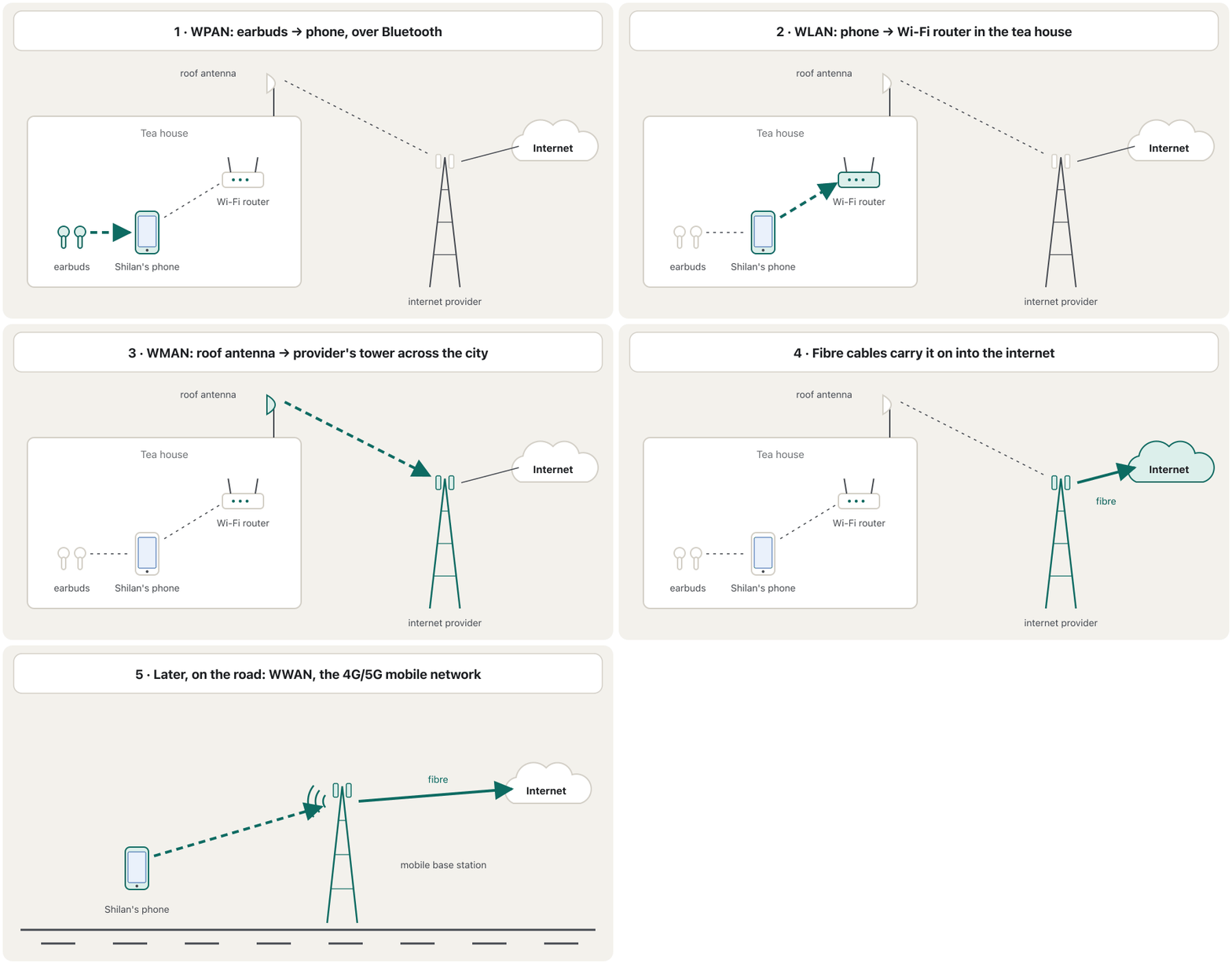
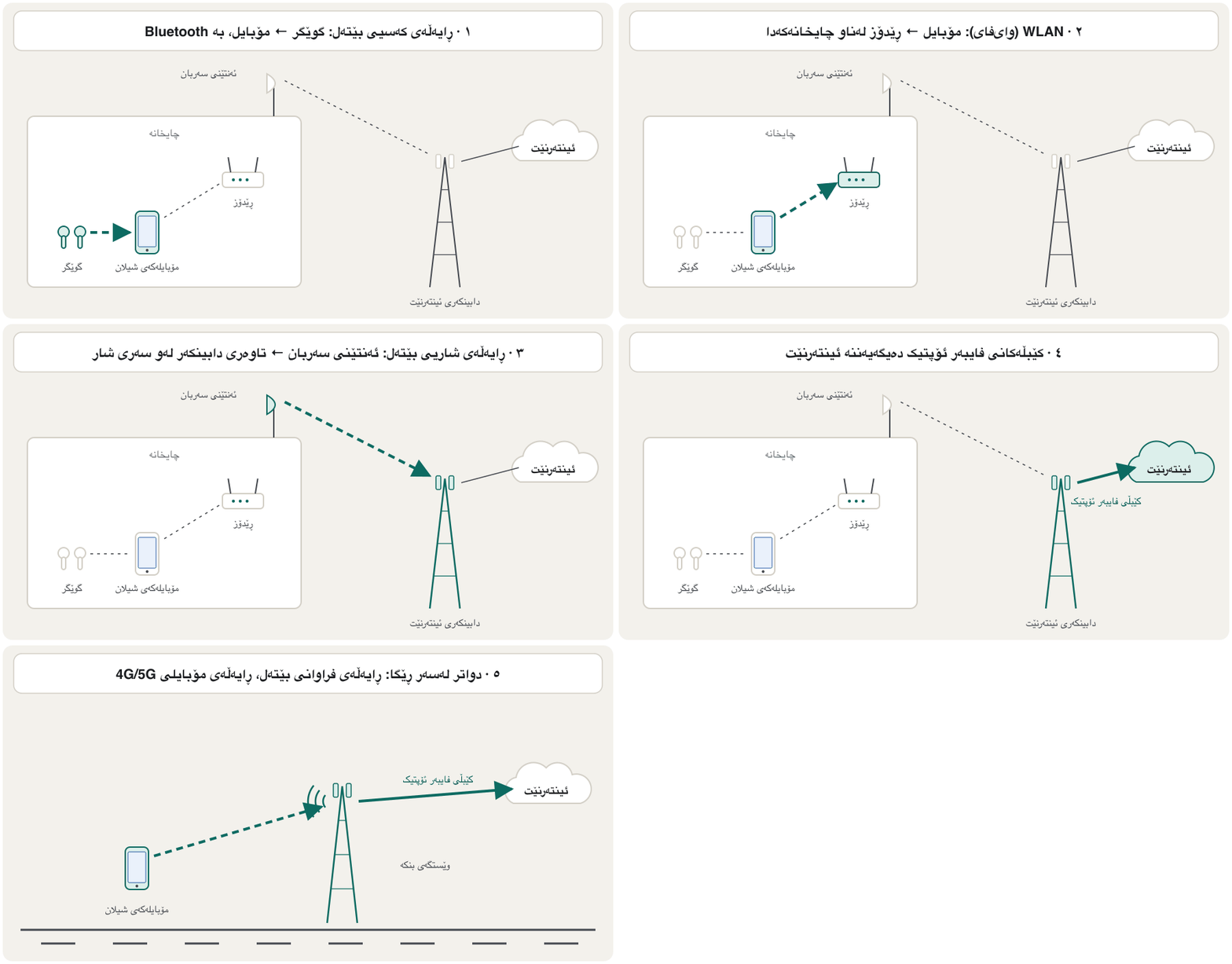
Notice two things. First, the long-distance part after the provider is usually fibre, not radio. Second, the phone chooses for itself: inside, it prefers the Wi-Fi it knows; outside, it moves to the mobile network without Shilan doing anything.
سەرنجی دوو شت بدە. یەکەم، بەشە دوورەکە دوای دابینکەرەکە زۆرجار ، نەک ڕادیۆ. دووەم، مۆبایلەکە خۆی هەڵدەبژێرێت: لە ژوورەوە ئەو دەیناسێت پێی باشترە؛ لە دەرەوە بەبێ ئەوەی شیلان هیچ بکات دەچێتە سەر .
Common mistakesهەڵە باوەکان
| Mistakeهەڵە | Why it is wrongبۆچی هەڵەیە | Remember insteadلە جیاتی ئەوە بیرت بێت |
|---|---|---|
| 'Wireless' means no cable is used anywhere.«» واتە لە هیچ شوێنێک کێبڵ بەکار نایەت. | Only the last link to your device is wireless; towers and routers are joined by cables and fibre.تەنها بەستنەوەی کۆتایی بۆ ئامێرەکەت ؛ تاوەر و بە کێبڵ و بەستراون. | Wireless is the part that lets you move. ئەو بەشەیە کە ڕێگە دەدات بجووڵێیت. |
| Wi-Fi and the internet are the same thing. و هەمان شتن. | Wi-Fi is only a local network (a WLAN); the internet comes through the provider behind it. تەنها (WLAN)؛ لە ڕێگەی ئەو دابینکەرەوە دێت کە لە پشتیەوەیە. | You can be on Wi-Fi with no internet, when the router's own connection is down.دەکرێت لەسەر بیت و نەبێت، کاتێک پەیوەندیی بە دابینکەرەوە پچڕابێت. |
| Bluetooth is a kind of Wi-Fi. جۆرێکە لە . | They are different technologies for different sizes: Bluetooth links devices around one person (WPAN); Wi-Fi covers a building (WLAN).دوو تەکنەلۆژیای جیاوازن بۆ دوو قەبارەی جیاواز: ئامێرەکانی دەوری یەک کەس دەبەستێتەوە ()؛ باڵەخانەیەک دەگرێتەوە (WLAN). | Name a network by the area it covers. بەپێی ئەو ناوچەیەی دەیگرێتەوە ناو بنێ. |
| Telecommunication means only telephone calls. تەنها واتای پەیوەندیی تەلەفۆنییە. | It means sending any information at a distance: TV, radio, internet data, SMS.مەبەست لێی ناردنی هەر بۆ دوور: تەلەفزیۆن، ڕادیۆ، ، . | Look for the three parts: transmitter, channel, receiver.بەدوای سێ بەشەکەدا بگەڕێ: نێرەر، کەناڵ، وەرگر. |
| A bigger network is always better. گەورەتر هەمیشە باشترە. | Each size has its job. A WWAN works almost everywhere but uses your mobile data; home Wi-Fi does not.هەر قەبارەیەک کاری خۆی هەیە. نزیکەی لە هەموو شوێنێک کار دەکات بەڵام مۆبایلەکەت خەرج دەکات؛ ماڵەوە خەرجی ناکات. | Use the network that fits the place and the job.ئەو بەکار بهێنە کە لەگەڵ شوێن و کارەکە دەگونجێت. |
Exercisesڕاهێنانەکان
Which kind of wireless network (WPAN, WLAN, WMAN or WWAN) is used in each case? (a) A Bluetooth keyboard types on a tablet. (b) Students in the college library use the library Wi-Fi. (c) A taxi driver follows a map app on the road from Duhok to Zakho. (d) A city sends video from traffic cameras to its control centre over radio links between poles. (e) A smartwatch counts your steps and sends them to your phone. (f) A ship far out at sea gets internet from a satellite.
لە هەر حاڵەتێکدا کام جۆرە (WPAN، WLAN، WMAN یان WWAN) بەکار دێت؟ (أ) لەسەر دەنووسێت. (ب) خوێندکاران لە کتێبخانەی کۆلێژدا کتێبخانەکە بەکار دەهێنن. (ج) شۆفێرێکی تەکسی لەسەر ڕێگای دهۆک بۆ زاخۆ نەخشە بەکار دەهێنێت. (د) شارێک ڤیدیۆی کامێراکانی هاتووچۆ بە پەیوەندیی ڕادیۆیی لە نێوان ستوونەکاندا دەنێرێت بۆ ناوەندی کۆنترۆڵ. (هـ) کاتژمێرێکی زیرەک هەنگاوەکانت دەژمێرێت و دەیاننێرێت بۆ مۆبایلەکەت. (و) کەشتییەک لە ناوەڕاستی دەریادا لە مانگێکی دەستکردەوە وەردەگرێت.
Hintئاماژە
Ask: how big is the area between the two ends?
پرسیار بکە: ناوچەی نێوان هەردوو سەرەکە چەند گەورەیە؟
Show answerوەڵامەکە پیشان بدە
- (a) WPAN — a short Bluetooth link between two devices of one person.
- (b) WLAN — Wi-Fi inside one building.
- (c) WWAN — the mobile network covers the whole road.
- (d) WMAN — radio links across a city.
- (e) WPAN — Bluetooth around one person.
- (f) WWAN — satellite internet covers huge areas.
- (أ) — بەستنەوەیەکی کورتی لە نێوان دوو ئامێری یەک کەسدا.
- (ب) WLAN — لە ناو یەک باڵەخانەدا.
- (ج) — هەموو ڕێگاکە دەگرێتەوە.
- (د) — پەیوەندیی ڕادیۆیی بە درێژایی شارێکدا.
- (هـ) — بە دەوری یەک کەسدا.
- (و) — مانگی دەستکرد ناوچەی زۆر گەورە دەگرێتەوە.
Dilan watches a football match at home through a satellite dish. Name the transmitter, the channel and the receiver, and say which kind of channel it is.
دیلان لە ماڵەوە لە ڕێگەی دیشێکەوە سەیری یارییەکی تۆپی پێ دەکات. نێرەر، کەناڵ و وەرگر دیاری بکە و بڵێ کەناڵەکە چ جۆرێکە.
Show answerوەڵامەکە پیشان بدە
- Transmitter: the TV station, which sends the match up to a satellite, and the satellite, which sends it down again.
- Channel: radio waves (microwaves) through space and the air — a wireless channel.
- Receiver: the dish and the TV receiver, which turn the signal back into picture and sound.
- نێرەر: وێستگە تەلەفزیۆنییەکە، کە یارییەکە بەرەو مانگێکی دەستکرد دەنێرێت، هەروەها مانگە دەستکردەکە کە دووبارە دەینێرێتەوە خوارەوە.
- کەناڵ: شەپۆلی ڕادیۆیی (مایکرۆوەیڤ) بە ناو بۆشایی ئاسمان و هەوادا — کەناڵێکی .
- وەرگر: دیشەکە و ئامێری وەرگری تەلەفزیۆنەکە، کە دەکەنەوە بە وێنە و دەنگ.
A smartphone has a Bluetooth radio, a Wi-Fi radio and a mobile-network radio. Why is one radio not enough?
ڕادیۆیەکی ، ڕادیۆیەکی و ڕادیۆیەکی تێدایە. بۆچی یەک ڕادیۆ بەس نییە؟
Show answerوەڵامەکە پیشان بدە
Each radio is built for a different size of network. Bluetooth reaches only around you but uses very little battery — right for earbuds and watches. Wi-Fi covers a building, is fast and does not use your mobile data. The mobile network (WWAN) works almost everywhere, even on the road. The phone switches between them to get the best link for each place and job.
هەر ڕادیۆیەک بۆ قەبارەیەکی جیاوازی دروست کراوە. تەنها دەوروبەرت دەگرێتەوە، بەڵام وزەیەکی زۆر کەمی پاتری بەکار دەهێنێت — بۆ گوێگر و کاتژمێر گونجاوە. باڵەخانەیەک دەگرێتەوە، خێرایە و مۆبایلەکەت خەرج ناکات. () نزیکەی لە هەموو شوێنێک کار دەکات، تەنانەت لەسەر ڕێگاش. مۆبایلەکە لە نێوانیاندا دەگۆڕێت بۆ ئەوەی بۆ هەر شوێن و کارێک باشترین بەستنەوە بەدەست بهێنێت.
Summary and reviewپوختە و پێداچوونەوە
- Mobile technology = devices we use on the move plus the wireless networks that connect them. Phones grew from call-only devices into multitasking computers.
- Telecommunication = sending any information at a distance by wire, radio, light (optical fibre) or other electromagnetic systems: transmitter → channel → receiver.
- A wireless network joins devices without cables, usually by radio. Usually only the last link is wireless.
- By area: WPAN (one person, Bluetooth) < WLAN (one building, Wi-Fi) < WMAN (a city) < WWAN (a country: 4G/5G, satellite).
- = ئەو ئامێرانەی لە کاتی جووڵەدا بەکاریان دەهێنین لەگەڵ کە پێکیانەوە دەبەستن. مۆبایل لە ئامێرێکی تەنها بۆ پەیوەندیی تەلەفۆنییەوە گەشەی کرد و بوو بە .
- = ناردنی هەر بۆ دوور بە وایەر، ڕادیۆ، ڕووناکی () یان سیستەمی ئەلیکترۆموگناتیسیی تر: نێرەر ← کەناڵ ← وەرگر.
- ئامێرەکان بەبێ کێبڵ پێکەوە دەبەستێت، زۆرجار بە ڕادیۆ. زۆرجار تەنها بەستنەوەی کۆتایی .
- بەپێی ناوچە: (یەک کەس، ) < WLAN (یەک باڵەخانە، ) < (شارێک) < (وڵاتێک: 4G/5G، مانگی دەستکرد).
What are the three parts of every telecommunication system?سێ بەشەکەی هەموو سیستەمێکی دوورپەیوەندی چین؟
A transmitter (turns information into a signal), a channel or medium (carries it) and a receiver (turns it back into information).
نێرەر ( دەکات بە )، کەناڵ یان ناوەند (دەیگوازێتەوە) و وەرگر (دەیکاتەوە بە ).
Why does your home Wi-Fi still need a cable or radio link to a provider?بۆچی وایفایی ماڵەوەت هێشتا پێویستی بە کێبڵ یان پەیوەندیی ڕادیۆیی هەیە بۆ دابینکەرێک؟
Wi-Fi is only a local network (WLAN). The internet reaches the router through the provider's link behind it.
تەنها (WLAN). لە ڕێگەی بەستنەوەی دابینکەرەکەوە، کە لە پشتیەوەیە، دەگاتە .
Which network does a 4G or 5G phone use on the road between two cities?مۆبایلێکی 4G یان 5G لەسەر ڕێگای نێوان دوو شار کام ڕایەڵە بەکار دەهێنێت؟
A WWAN: the mobile network.
: .
Lesson complete!وانەکە تەواو بوو!
Well done. Review the key terms, then go on to the next lesson.دەستخۆش. سەیرێکی زاراوە سەرەکییەکان بکەرەوە، پاشان بڕۆ بۆ وانەی داهاتوو.
Key termsزاراوە سەرەکییەکان
Cellular Networks and Mobile Generationsڕایەڵەکانی مۆبایل و نەوەکانی ڕایەڵەی مۆبایل
Related lecturesوانە پەیوەندیدارەکان
- Cellular Networks and Mobile Generationsڕایەڵەکانی مۆبایل و نەوەکانی ڕایەڵەی مۆبایل
- Networksڕایەڵەکان
- The Internet and the Webئینتەرنێت و وێب
- Types of Networks: LAN, WAN and Moreجۆرەکانی ڕایەڵە: ڕایەڵەی ناوچەیی، ڕایەڵەی فراوان و زیاتر
- Cables and Wireless: Transmission Mediaکێبڵ و بێتەل: هۆکارەکانی گواستنەوە
- Computer Communicationsپەیوەندیی کۆمپیوتەر
References and further readingسەرچاوەکان و خوێندنەوەی زیاتر
- Wikipedia: Telecommunications (ITU definition; transmitter, medium, receiver)
- Wikipedia: Wireless network (WPAN, WLAN, WMAN, WWAN, cellular, satellite)
- Wikipedia: Cellular network
- Wikipedia: History of mobile phones
- Wikipedia: GSM (first network, Finland 1991; first SMS 1992)
- Wikipedia: App Store (Apple) — opened 10 July 2008
- Wikipedia: Google Play — Android Market opened 22 October 2008
- GSMA Intelligence: The Mobile Economy 2026 (5.8 billion unique mobile subscribers)
- Ericsson: Fixed wireless access (FWA over 4G LTE and 5G)
- Wikipedia: WiMAX (IEEE 802.16; operators moved to LTE in the 2010s)
This lecture is a first edition. The Kurdish text and terminology are waiting for review by Kurdish IT teachers.ئەم وانەیە چاپی یەکەمە. دەقە کوردییەکە و زاراوەکانی چاوەڕێی پێداچوونەوەی مامۆستایانی کوردی بواری IT ن.