Chapterبەش 3 · Lectureوانە 3.3
Coefficient of Variation and Momentsهاوکۆلکەی گۆڕان و مۆمێنتەکان
Comparing spread when means or units differ with the coefficient of variation (the course's Statistics-vs-Mathematics example, corrected and concluded), where the C.V may and may not be used, then moments about a constant, about zero and about the mean, the link , and Examples 7 (mean corrected to 46) and 8.
بەراوردکردنی کاتێک یان یەکەکان جیاوازن بە (نموونەی بەرامبەر بیرکاریی کۆرسەکە، ڕاستکراو و بە ئەنجام)، C.V لە کوێ بەکار دێت و لە کوێ نا، پاشان دەربارەی ، دەربارەی سفر و دەربارەی ، پەیوەندیی و نموونەکانی 7 ( ڕاستکراوە بۆ 46) و 8.
What you will learnچی فێر دەبیت
- Compute and interpret the coefficient of variation for a population and a sample.
- Decide when the C.V is meaningful and when it is not.
- Compute moments about a constant, about zero and about the mean, for raw and grouped data.
- Use to link the moments and to check a calculation.
- بۆ و بژمێریت و لێکی بدەیتەوە.
- بڕیار بدەیت C.V کەی واتادارە و کەی نا.
- دەربارەی ، سفر و بۆ خاو و پۆلێنکراو بژمێریت.
- پەیوەندیی بەکاربهێنیت بۆ بەستنەوەی و پشکنینی ژماردنێک.
When standard deviations cannot be comparedکاتێک لادانە پێوانەییەکان بەراورد ناکرێن
The standard deviation is in the units of the data. That is useful, but it makes some comparisons impossible. Are a group's heights (S.D. 7 cm) more spread out than their weights (S.D. 9 kg)? Centimetres and kilograms cannot be compared.
بە یەکەی . ئەمە بەسوودە، بەڵام هەندێک بەراورد مەحاڵ دەکات. ئایا باڵای کۆمەڵێک (S.D 7 سم) پەرتترە لە کێشیان (S.D 9 کگم)؟ سانتیمەتر و کیلۆگرام بەراورد ناکرێن.
Even with the same unit, the size of the mean matters. A spread of 1,000 dinars is huge for a 2,000-dinar sandwich and tiny for a 50-million-dinar car. What we need is the spread relative to the mean.
تەنانەت بە هەمان یەکە، گەورەیی گرنگە. جیاوازیی 1,000 دینار بۆ ساندویچێکی 2,000 دیناری زۆر گەورەیە و بۆ ئۆتۆمبێلێکی 50 ملیۆن دیناری زۆر بچووک. ئەوەی پێویستمانە بە بەراورد لەگەڵ .
The coefficient of variationهاوکۆلکەی گۆڕان
The coefficient of variation (C.V), also called the relative standard deviation (RSD), is a standardized measure of the dispersion of a frequency or probability distribution: the standard deviation divided by the mean, usually written as a percentage.
(C.V)، کە پێی دەوترێت (RSD)ـیش، پێوەرێکی ستانداردکراوی دابەشبوونێکی یان : دابەش بە ، زۆرجار وەک دەنووسرێت.
The divided by the , usually as a percentage: . It compares the spread of data with different units or sizes.
دابەش بە ، زۆرجار وەک ڕێژەی سەدی: . بۆ بەراوردکردنی پەرتبوونی دراوەی یەکە یان قەبارەی جیاواز بەکار دێت.
Left: a population; right: a sample. The notes write in both lines; for a whole population the mean is . When the mean could be negative, its absolute value is used.
چەپ: ؛ ڕاست: . تێبینییەکان لە هەردوو دێڕەکەدا دەنووسن؛ بۆ هەموو ـە. کاتێک دەکرێت نەرێنی بێت، بەکار دێت.
Because S.D. and mean have the same unit, the units cancel: the C.V is a pure number. That makes it the tool for comparing the variability of different distributions and for deciding which one is more homogeneous — the one with the smaller C.V.
چونکە S.D و هەمان یەکەیان هەیە، یەکەکان لادەچن: C.V ژمارەیەکی پەتییە. ئەمە دەیکاتە ئامراز بۆ بەراوردکردنی گۆڕانی دابەشبوونە جیاوازەکان و بۆ بڕیاردان کامیان یەکدەستترە — ئەوەی C.V ـی بچووکترە.
The coefficient of variation divides the standard deviation by the mean, so data with different means or units can be compared.
دابەش بە دەکات، بۆیە دەتوانیت بە جیاواز یان یەکەی جیاوازەوە بەراورد بکەیت.
Whole video: what the C.V is and two examples
هەموو ڤیدیۆکە: (C.V) چییە، لەگەڵ دوو نموونە.
Where the C.V is used — and where it is notC.V لە کوێ بەکار دێت — و لە کوێ نا
- Analytical chemistry: the %RSD of repeated measurements of one sample shows the precision and repeatability of a test (an assay). A lab may accept a method only if its %RSD stays below a limit.
- Engineering and physics: quality-assurance studies, and ANOVA gauge R&R studies, which ask how much of the variation in measurements comes from the measuring instrument and the people using it (repeatability and reproducibility).
- Computing: a server answering in ms (C.V 10%) is steadier than one answering in ms (C.V 20%), although the second is faster.
- کیمیای شیکاری: %RSD ـی پێوانە دووبارەکان لەسەر یەک نموونەی ماددە وردی و توانای دووبارەکردنەوەی تاقیکردنەوەیەک (assay) نیشان دەدات. تاقیگەیەک دەکرێت ڕێگایەک تەنها قبوڵ بکات ئەگەر %RSD ـەکەی لە خوار سنوورێک بمێنێتەوە.
- ئەندازیاری و فیزیا: لێکۆڵینەوەکانی دڵنیاکردنەوەی جۆرایەتی و لێکۆڵینەوەکانی gauge R&R بە ANOVA، کە دەپرسن چەند لە گۆڕانی پێوانەکان لە ئامرازی پێوان و ئەو کەسانەوە دێت کە بەکاری دەهێنن (repeatability و reproducibility).
- : کە لە ms وەڵام دەداتەوە (C.V 10%) جێگیرترە لەوەی لە ms وەڵام دەداتەوە (C.V 20%)، هەرچەندە دووەمیان خێراترە.
When the C.V must not be usedکەی C.V بەکار نایەت
Example 6: Statistics or Mathematics — which marks vary more?نموونەی 6: ئامار یان بیرکاری — نمرەکانی کامیان زیاتر جیاوازن؟
Final-exam results of two subjects in the same stage:
ئەنجامی تاقیکردنەوەی کۆتایی دوو وانە لە هەمان قۆناغدا:
| Measureپێوەر | Statistics | Mathematicsبیرکاری |
|---|---|---|
| Mean | 78 | 73 |
| S.D. | 8 | 7.6 |
Which subject has the larger dispersion? The S.D.s (8 and 7.6) belong to different means, so compare the C.V:
کام وانە گەورەتری هەیە؟ S.D ـەکان (8 و 7.6) هی دوو جیاوازن، بۆیە C.V بەراورد بکە:
Conclusion: the Mathematics marks are relatively more spread (), although their S.D. is smaller. The Statistics marks are the more homogeneous group. The difference is small: the two subjects vary almost equally.
ئەنجام: نمرەکانی بیرکاری بە بەراورد پەرتترن ()، هەرچەندە S.D ـەکەیان بچووکترە. نمرەکانی کۆمەڵە یەکدەستترەکەن. جیاوازییەکە بچووکە: دوو وانەکە نزیکەی بە یەکسانی جیاوازن.
Moments: one family of averagesمۆمێنتەکان: یەک خێزانی تێکڕا
The course now gives a general tool. For any frequency distribution we can take the deviations from some point A, raise them to a power r, and average them. The result is the r-th moment about A. Several numbers you already know are moments: the mean, the mean of squares, the variance.
کۆرسەکە ئێستا ئامرازێکی گشتی دەدات. بۆ هەر دابەشبوونێکی دەتوانین لە خاڵێکی A وەربگرین، بیانگەیەنینە r و تێکڕایان وەربگرین. ئەنجامەکە r ـەم دەربارەی Aیە. چەند ژمارەیەک کە پێشتر دەیانناسیت : ، تێکڕای دووجاکان، .
An average of powers of deviations: the -th moment about is (or ). The first moment about 0 is the ; the second about the mean is the .
تێکڕای توانەکانی لادانە: مۆمێنتی ـەم دەربارەی دەکاتە (یان ). یەکەم مۆمێنت دەربارەی 0 ؛ دووەم مۆمێنت دەربارەی .
In physics, a moment is a weight times its distance from a pivot. Put the values on a seesaw as equal weights. The first moment about the pivot measures how much the seesaw tips; it is zero exactly when the pivot is at the balance point — the mean. The second moment measures how far the weights sit from the pivot, which is the idea of spread.
لە فیزیادا یەکسانە بە کێش لێکدراو لە دووری لە خاڵی سووڕانەوە. نرخەکان وەک کێشی یەکسان بخەرە سەر جووڵانەیەک. یەکەم دەربارەی خاڵی سووڕانەوە دەپێوێت جووڵانەکە چەند لار دەبێتەوە؛ ڕێک کاتێک سفرە کە خاڵی سووڕانەوە لەسەر خاڵی هاوسەنگی بێت — . دووەم دەپێوێت کێشەکان چەند لە خاڵی سووڕانەوە دوورن، کە بیرۆکەی .
Where the analogy stops workingسنووری ئەم نموونەیە
A real seesaw has a fixed pivot; in statistics we may put A anywhere, and the moments change with A.
جووڵانەی ڕاستەقینە خاڵی سووڕانەوەی چەسپاوی هەیە؛ لە دەتوانین A لە هەر شوێنێک دابنێین و بە A دەگۆڕێن.
Moments as one family: the first describes the centre, the second the spread, the third the lean and the fourth the tails of the data.
وەک یەک خێزان: یەکەم چەقی وەسف دەکات، دووەم ، سێیەم بەرەو کام لا لارە و چوارەم کلکەکانی چۆنن.
Watch 0:00–12:10: the idea behind moments
لە 0:00 تا 12:10 سەیر بکە: بیرۆکەی پشت .
1) Moments about a constant A1) مۆمێنتەکان دەربارەی نەگۆڕێکی A
The general, first and second moments about A for ungrouped data (also called non-central moments).
گشتی، یەکەم و دووەم دەربارەی A بۆ (پێیان دەوترێت ناناوەندیش).
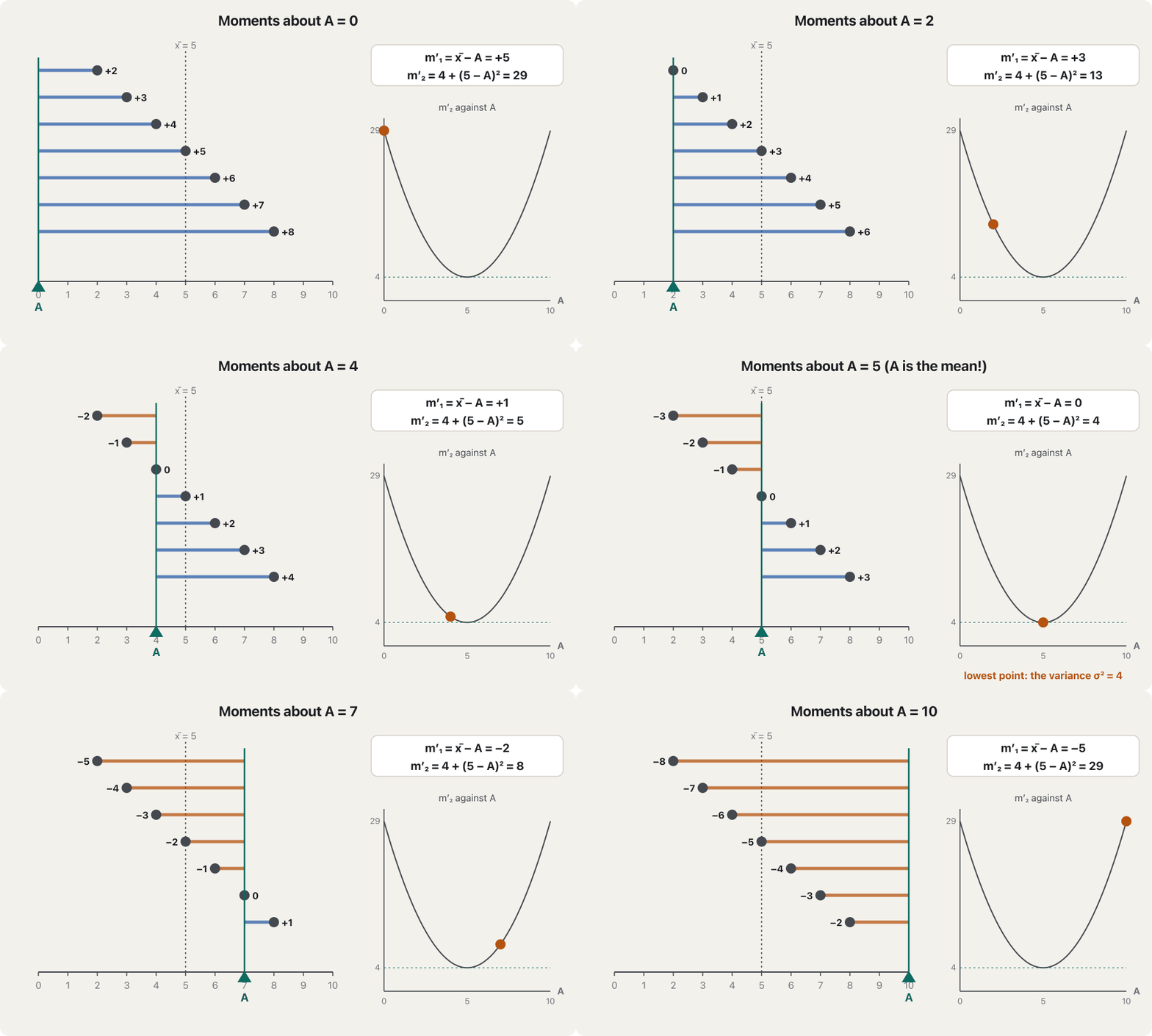
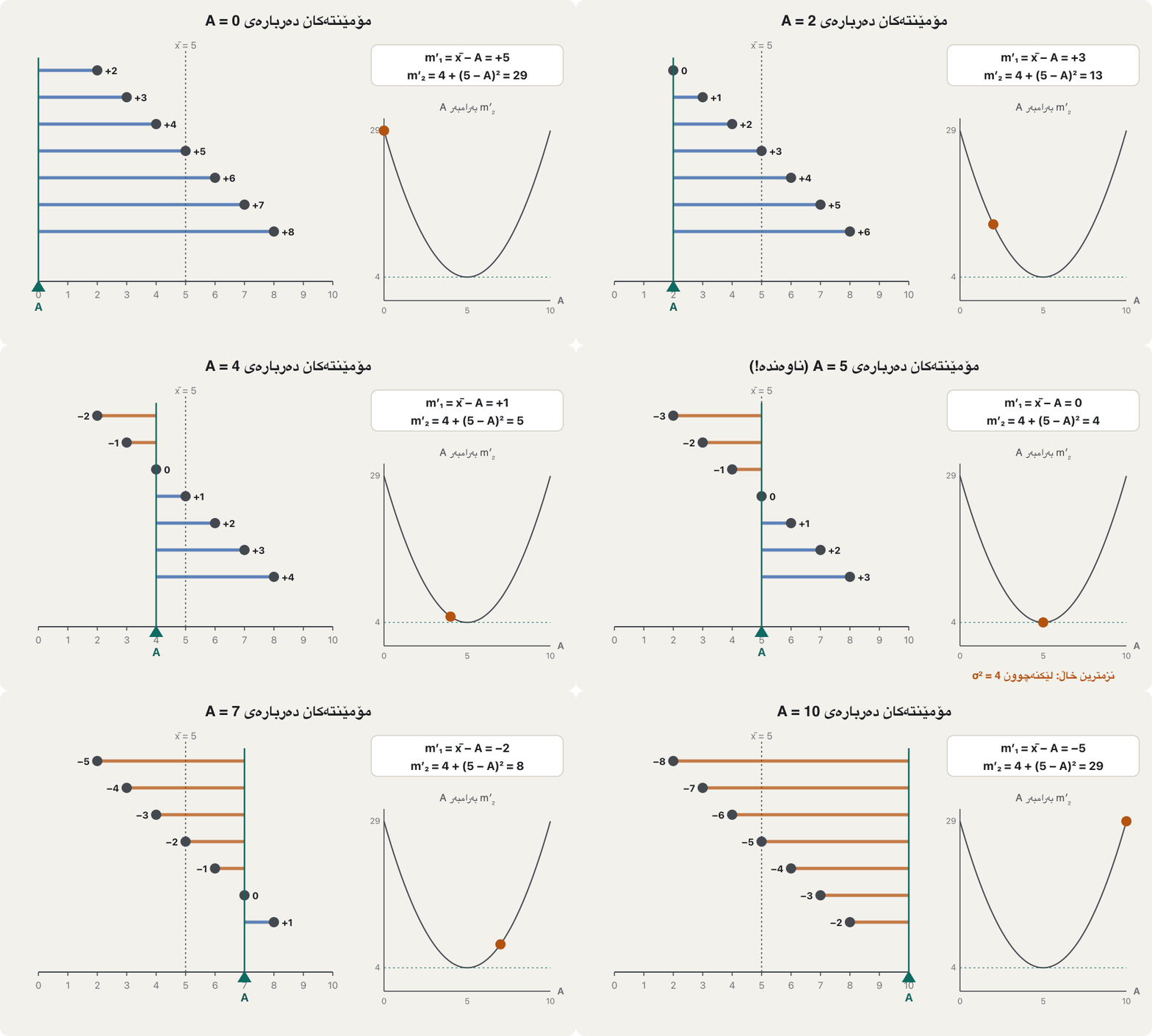
The first moment about A is simply : how far the mean is from A, with a sign. The second moment about A is smallest when A is the mean. Watch both as A slides along the axis:
یەکەم دەربارەی A تەنها ـە: چەند لە A دوورە، لەگەڵ نیشانەکەی. دووەم دەربارەی A کاتێک بچووکترینە کە A بێت. سەیری هەردووکیان بکە کاتێک A بە درێژایی دەخزێت:
2) Moments about zero2) مۆمێنتەکان دەربارەی سفر
Taking gives the raw moments: the first is the mean, the second is the mean of the squares.
وەرگرتنی دەدات: یەکەمیان ، دووەمیان تێکڕای دووجاکانە.
You have met before: the quadratic mean is its square root, .
پێشتر ت ناسیوە: ناوەندی دووجایی ، .
3) Moments about the mean3) مۆمێنتەکان دەربارەی ناوەند
The central moments. The first is always 0 (deviations from the mean cancel); the second is the variance with divisor n.
. یەکەمیان هەمیشە 0ـە ( لە یەکتر دەسڕنەوە)؛ دووەمیان بە دابەشکەری n.
The third and fourth central moments describe the shape: measures lopsidedness (skewness) and how peaked or heavy-tailed the data are (kurtosis). Both are taught in the next lesson, Skewness and kurtosis.
سێیەم و چوارەم ناوەندی شێوە وەسف دەکەن: دەپێوێت چەند بەلایەکدا لار بووە () و شێوەی لووتکە و قورسیی کلکەکان دەپێوێت (). هەردووکیان لە وانەی داهاتوودا دەخوێندرێن: ناهاوجێبوون و پلەی لووتکەیی.
Example 7: three kinds of moments on one tableنموونەی 7: سێ جۆری مۆمێنت لەسەر یەک خشتە
Find the first and second moments about the mean, about and about zero for Table (8): classes 20–30, 30–40, 40–50, 50–60, 60–70 with frequencies 8, 26, 30, 20, 16.
یەکەم و دووەم دەربارەی ، دەربارەی و دەربارەی سفر بۆ خشتەی (8) بدۆزەرەوە: 20–30، 30–40، 40–50، 50–60، 60–70 بە 8، 26، 30، 20، 16.
Example 7: three kinds of moments on one tableنموونەی 7: سێ جۆری مۆمێنت لەسەر یەک خشتە
About دەربارەی
| Class | |||||||
|---|---|---|---|---|---|---|---|
| 20–30 | 8 | 25 | 200 | 625 | 5000 | ||
| 30–40 | 26 | 35 | 910 | 225 | 5850 | ||
| 40–50 | 30 | 45 | 1350 | 25 | 750 | ||
| 50–60 | 20 | 55 | 1100 | 5 | 100 | 25 | 500 |
| 60–70 | 16 | 65 | 1040 | 15 | 240 | 225 | 3600 |
| Σ | 100 | 4600 | 15700 |
Check: ✓ — this only works with the mean 46.
پشکنین: ✓ — ئەمە تەنها بە 46 ڕاست دەردەچێت.
Example 7: three kinds of moments on one tableنموونەی 7: سێ جۆری مۆمێنت لەسەر یەک خشتە
About zeroدەربارەی سفر
| Class | ||||
|---|---|---|---|---|
| 20–30 | 8 | 25 | 625 | 5000 |
| 30–40 | 26 | 35 | 1225 | 31850 |
| 40–50 | 30 | 45 | 2025 | 60750 |
| 50–60 | 20 | 55 | 3025 | 60500 |
| 60–70 | 16 | 65 | 4225 | 67600 |
| Σ | 100 | 225700 |
Example 7: three kinds of moments on one tableنموونەی 7: سێ جۆری مۆمێنت لەسەر یەک خشتە
About the mean (H.W 2 and 3)دەربارەی ناوەند (ئەرکی ماڵەوەی 2 و 3)
The notes leave the moments about the mean as H.W 2 and H.W 3. With :
تێبینییەکان دەربارەی وەک ئەرکی ماڵەوەی 2 و 3 بەجێ دەهێڵن. بە :
| 25 | 8 | 441 | 3528 | ||
| 35 | 26 | 121 | 3146 | ||
| 45 | 30 | 1 | 30 | ||
| 55 | 20 | 9 | 180 | 81 | 1620 |
| 65 | 16 | 19 | 304 | 361 | 5776 |
| Σ | 100 | 0 | 14100 |
Two quicker routes give the same 141 and show how the moments are linked (next screen): and .
دوو ڕێگای خێراتر هەمان 141 دەدەن و نیشان دەدەن چۆن بەیەکەوە بەستراون (پەڕەی داهاتوو): و .
One formula links them allیەک فۆرمولە هەموویان دەبەستێتەوە
Split each deviation from A into two parts, , square and average. The cross term disappears because the deviations from the mean add up to 0, and what remains is:
هەر لە A بکە بە دوو بەش، ، دووجای بکە و تێکڕا وەربگرە. بەشی ناوەڕاست نامێنێت چونکە کۆی لە 0ـە و ئەوەی دەمێنێتەوە ئەمەیە:
The second moment about any point is the variance plus the squared distance from that point to the mean. So it is smallest at , where it equals the variance — the U-curve of the animation.
دووەم دەربارەی هەر خاڵێک یەکسانە بە کۆی و دووجای دووریی ئەو خاڵە لە . بۆیە لە بچووکترینە و لەوێدا یەکسانە بە — چەماوە U ـییەکەی جووڵەکە.
With this is the shortcut of the variance lesson: . Example 7: . It also explains a coincidence in Example 8 (next screen).
بە ئەمە دەبێتە ڕێگا کورتەکەی وانەی لێکنەچوون: . نموونەی 7: . هەروەها ڕێکەوتێک لە نموونەی 8 ڕوون دەکاتەوە (پەڕەی داهاتوو).
Example 8 (H.W 4): moments of raw dataنموونەی 8 (ئەرکی ماڵەوەی 4): مۆمێنتەکانی دراوەی خاو
Find the first and second moments about the mean, about and about zero for Table (9), the values 2, 3, 5, 4, 7, 8, 6.
یەکەم و دووەم دەربارەی ، دەربارەی و دەربارەی سفر بۆ خشتەی (9) بدۆزەرەوە، واتە نرخەکانی 2، 3، 5، 4، 7، 8، 6.
Hintئاماژە
Use and to check.
بۆ پشکنین و بەکاربهێنە.
Show answerوەڵامەکە پیشان بدە
Why is both about 10 and about 0? Both points are 5 away from the mean: .
بۆچی هەم دەربارەی 10 و هەم دەربارەی 0؟ هەردوو خاڵ 5 لە دوورن: .
Moments in Pythonمۆمێنتەکان لە Pythonـدا
One small function covers every case: any power r, any point A, with or without frequencies. It reproduces Examples 7 and 8:
یەک بچووک هەموو حاڵەتەکان دەگرێتەوە: هەر r، هەر خاڵێکی A، لەگەڵ یان بەبێ . نموونەکانی 7 و 8 دووبارە دەکاتەوە:
def moment(values, r, about=0, freqs=None):
    """r-th moment of the values about the point `about`."""
    if freqs is None:
        freqs = [1] * len(values)
    n = sum(freqs)
    return sum(f * (x - about) ** r for f, x in zip(freqs, values)) / n

data = [2, 3, 5, 4, 7, 8, 6]                    # Example 8
mean = moment(data, 1)                          # first moment about 0
for A, name in [(10, "A = 10"), (0, "zero"), (mean, "the mean")]:
    print(f"about {name}: m1 = {moment(data, 1, A)}, m2 = {moment(data, 2, A)}")

X = [25, 35, 45, 55, 65]                        # Example 7 (grouped)
F = [8, 26, 30, 20, 16]
xbar = moment(X, 1, 0, F)
print("Example 7 mean:", xbar)
print("about 50:", moment(X, 1, 50, F), moment(X, 2, 50, F))
print("about 0: ", moment(X, 2, 0, F))
print("central: ", moment(X, 1, xbar, F), moment(X, 2, xbar, F))about A = 10: m1 = -5.0, m2 = 29.0 about zero: m1 = 5.0, m2 = 29.0 about the mean: m1 = 0.0, m2 = 4.0 Example 7 mean: 46.0 about 50: -4.0 157.0 about 0: 2257.0 central: 0.0 141.0
Explain the codeڕوونکردنەوەی کۆدەکە
- Lineدێڕی 1-6
With no frequencies every value counts once;
nis the number of values .بەبێ هەر نرخێک یەک جار هەژمار دەکرێت؛
nژمارەی نرخەکانە، .- Lineدێڕی 9
The first moment about 0 is the mean.
یەکەم دەربارەی 0 .
- Lineدێڕی 13-19
Grouped data: midpoints X with frequencies F (Example 7).
: X لەگەڵ F (نموونەی 7).
Common mistakesهەڵە باوەکان
| Mistakeهەڵە | Why it is wrongبۆچی هەڵەیە | Correctدروست |
|---|---|---|
| Comparing S.D.s of data with different means or unitsبەراوردکردنی S.D ـی بە یان یەکەی جیاواز | cm and kg cannot be comparedسم و کگم بەراورد ناکرێن | Compare the C.V, C.V بەراورد بکە، |
| Using the C.V for °C or a mean near 0بەکارهێنانی C.V بۆ °C یان نزیک لە 0 | The zero is arbitrary; the ratio means nothingسفرەکە هەڕەمەکییە؛ ڕێژەکە هیچ واتایەکی نییە | Only ratio-scale data with a positive meanتەنها پێوەری ڕێژەیی بە ئەرێنی |
| Reading as a powerخوێندنەوەی وەک | r is the order of the momentr پلەی | Write or یان بنووسە |
| Forgetting F in grouped momentsلەبیرکردنی F لە پۆلێنکراو | Each midpoint stands for F valuesهەر نوێنەری F نرخە | |
| Expecting about the meanچاوەڕوانیی دەربارەی | Deviations from the mean cancel لە یەکتر دەسڕنەوە | always: a free checkهەمیشە : پشکنینێکی بەخۆڕایی |
| A slip in (4400)هەڵەیەکی بچووک لە (4400) | Every moment about the mean changesهەموو دەربارەی دەگۆڕێت | Check: must agree for every Aپشکنین: دەبێت بۆ هەموو A ـیەک ڕێک بێت |
Exercisesڕاهێنانەکان
Classes A and B both have mean 70, with and . Find their coefficients of variation. Does the C.V tell you anything the S.D. did not?
پۆلەکانی A و B هەردووکیان 70یان هەیە، بە و . هەریەکەیان بدۆزەرەوە. ئایا C.V شتێکت پێ دەڵێت کە S.D نەیگوت؟
Show answerوەڵامەکە پیشان بدە
, . With equal means the C.V gives the same ranking as the S.D.; it becomes necessary only when the means or units differ.
، . بە یەکسان C.V هەمان ڕیزبەندیی S.D دەدات؛ تەنها کاتێک پێویست دەبێت کە یان یەکەکان جیاواز بن.
The Group B table of the practice lesson has and (from the variance lesson) . Find the sample C.V. Is the class homogeneous?
خشتەی گرووپی B لە وانەی ڕاهێنان ی هەیە و (لە وانەی لێکنەچوون) . C.V ـی بدۆزەرەوە. ئایا پۆلەکە یەکدەستە؟
Show answerوەڵامەکە پیشان بدە
. The typical distance from the mean is almost half of the mean: the marks are very spread out, far from homogeneous (compare the 10% of Example 6).
. دووریی ئاسایی لە نزیکەی نیوەی : نمرەکان زۆر پەرتن، زۆر دوورن لە یەکدەستی (بەراوردی بکە لەگەڵ 10%ی نموونەی 6).
Find the third moment about the mean, , for Example 8 (2, 3, 5, 4, 7, 8, 6) and for Example 7. What do the signs suggest?
سێیەم دەربارەی ، ، بۆ نموونەی 8 (2، 3، 5، 4، 7، 8، 6) و بۆ نموونەی 7 بدۆزەرەوە. نیشانەکان چی پیشان دەدەن؟
Show answerوەڵامەکە پیشان بدە
Example 8: deviations ; cubes add up to 0, so : the data are symmetric. Example 7: , so : a longer tail on the right. Skewness is the topic of the next lesson, Skewness and kurtosis.
نموونەی 8: ؛ سێجاکانیان کۆیان 0ـە، بۆیە : هاوجێیە. نموونەی 7: ، بۆیە : کلکێکی درێژتر لە لای ڕاست. بابەتی وانەی داهاتووە: ناهاوجێبوون و پلەی لووتکەیی.
Summaryپوختە
- C.V: the S.D. divided by the mean, times 100 (population , sample ): a unit-free measure of relative spread; the group with the smaller C.V is the more homogeneous one.
- Use it only for ratio-scale data with a positive mean (not °C). Uses: %RSD in chemistry, quality assurance, gauge R&R.
- Example 6: C.V 10.26% (Statistics) vs 10.41% (Mathematics) — Mathematics is relatively more spread.
- Moments: about A. About 0: is the mean and the mean of squares. About the mean: and is the variance. Grouped: put F in the numerator and the denominator.
- Link: . Example 7 (mean 46): about 50 the first two moments are and 157; about 0, 46 and 2257; about the mean, 0 and 141.
- For a random variable the same moments are weighted by probabilities: Moments of a random variable.
- C.V: S.D دابەش بە ، لێکدراو لە 100 ( ، ): پێوەرێکی بێ یەکەی ڕێژەیی؛ ئەو کۆمەڵەیەی C.V ـی بچووکترە یەکدەستترە.
- تەنها بۆ پێوەری ڕێژەیی بە ئەرێنی بەکاری بهێنە (نەک °C). بەکارهێنانەکان: %RSD لە کیمیا، دڵنیاکردنەوەی جۆرایەتی، gauge R&R.
- نموونەی 6: C.V 10.26% () بەرامبەر 10.41% (بیرکاری) — بیرکاری بە بەراورد پەرتترە.
- : دەربارەی A. دەربارەی 0: و تێکڕای دووجاکانە. دەربارەی : و . پۆلێنکراو: F لە سەرەوە و خوارەوەی کەرتەکە دابنێ.
- پەیوەندی: . نموونەی 7 ( 46): دوو یەکەم دەربارەی 50، و 157ن؛ دەربارەی 0، 46 و 2257؛ دەربارەی ، 0 و 141.
- بۆ هەمان بە کێش دەکرێن: مۆمێنتەکانی گۆڕاوێکی هەڕەمەکی.
Why is the C.V unit-free?بۆچی C.V بێ یەکەیە؟
Because the S.D. and the mean have the same unit, which cancels in the division.
چونکە S.D و هەمان یەکەیان هەیە کە لە دابەشکردنەکەدا لادەچێت.
About which point is the second moment smallest?دووەم مۆمێنت دەربارەی کام خاڵ بچووکترینە؟
About the mean, where it equals the variance.
دەربارەی ، کە لەوێدا یەکسانە بە .
What do the third and fourth central moments describe?سێیەم و چوارەم مۆمێنتی ناوەندی چی وەسف دەکەن؟
The shape: skewness and kurtosis, in Skewness and kurtosis.
شێوە: و ، لە ناهاوجێبوون و پلەی لووتکەیی.
Lesson complete!وانەکە تەواو بوو!
Well done. Review the key terms, then go on to the next lesson.دەستخۆش. سەیرێکی زاراوە سەرەکییەکان بکەرەوە، پاشان بڕۆ بۆ وانەی داهاتوو.
Key termsزاراوە سەرەکییەکان
Skewness, Kurtosis and the Mean–Median–Mode Relationناهاوجێبوون، پلەی لووتکەیی و پەیوەندیی نێوان ناوەند، ناوەڕاستە و باو
Related lecturesوانە پەیوەندیدارەکان
- Skewness, Kurtosis and the Mean–Median–Mode Relationناهاوجێبوون، پلەی لووتکەیی و پەیوەندیی نێوان ناوەند، ناوەڕاستە و باو
- Moments, Variance and Standard Deviation of a Random Variableمۆمێنتەکان، لێکنەچوون و لادانی پێوانەیی گۆڕاوێکی هەڕەمەکی
- Measuring Spread: Range and Mean Deviationپێوانی پەرتبوون: مەودا و لادانی نێوانەیی
- Geometric, Harmonic and Quadratic Meansناوەندی ئەندازەیی، ناوەندی هارمۆنیک و ناوەندی دووجایی
- The Arithmetic Mean and the Weighted Meanناوەند و ناوەندی قورسکراو
- Practice: One Data Set from Table to Averagesڕاهێنان: یەک کۆمەڵەدراوە لە خشتەوە بۆ پێوەرەکانی ڕووکردنە چەق
References and further readingسەرچاوەکان و خوێندنەوەی زیاتر
This lecture is a first edition. The Kurdish text and terminology are waiting for review by Kurdish IT teachers.ئەم وانەیە چاپی یەکەمە. دەقە کوردییەکە و زاراوەکانی چاوەڕێی پێداچوونەوەی مامۆستایانی کوردی بواری IT ن.