Chapterبەش 5 · Lectureوانە 5.5
Moments, Variance and Standard Deviation of a Random Variableمۆمێنتەکان، لێکنەچوون و لادانی پێوانەیی گۆڕاوێکی هەڕەمەکی
How far a random variable wanders from its expected value: moments about a point, about zero and about the mean, the variance and its shortcut , the standard deviation, why the mean is the best centre, rules for and sums, with the course's Examples 12–18, a corrected board calculation and a Python check.
چەند لە دوور دەکەوێتەوە: دەربارەی خاڵێک، دەربارەی سفر و دەربارەی ، و ڕێگا کورتەکەی ، ، بۆچی باشترین خاڵە بۆ پێوانی دووری، یاساکانی و کۆکان، لەگەڵ نموونەکانی 12–18ی کۆرسەکە، ژمێرکارییەکی ڕاستکراوەی سەر تەختە و پشکنینێک بە Python.
What you will learnچی فێر دەبیت
- Compute moments of a random variable about a point, about zero and about the mean, for a pmf and for a density.
- Find the variance and standard deviation with the definition and with the shortcut, and explain the difference between and .
- Use and the sum rule for independent variables.
- Spot and correct mistakes in moment calculations.
- دەربارەی خاڵێک، سفر و بژمێریت، بۆ و بۆ چڕی.
- و بە پێناسەکە و بە ڕێگا کورتەکە بدۆزیتەوە و جیاوازیی نێوان و ڕوون بکەیتەوە.
- و یاسای کۆ بۆ کە سەربەخۆن بەکاربهێنیت.
- هەڵەکانی ژمێرکاریی بدۆزیتەوە و ڕاستیان بکەیتەوە.
Same expected value, different riskهەمان نرخی پێشبینیکراو، مەترسیی جیاواز
The expected value tells you where a random variable is centred. It does not tell you how far its values wander from that centre. Look at two games. In both, : on average you neither win nor lose.
نرخی پێشبینیکراو پێت دەڵێت لە کوێدا ناوەندی گرتووە. بەڵام پێت ناڵێت نرخەکانی چەند لەو ناوەندە دوور دەکەونەوە. سەیری دوو یاری بکە. لە هەردووکیاندا ـە: بە تێکڕا نە دەبەیتەوە و نە دەدۆڕێنیت.
Game A usually ends close to 0; Game B always ends 3 points away from its average. That difference is the risk of the game. For data you measured spread with the variance and standard deviation; this lesson builds the same tools for a random variable, from its probabilities.
یاریی A زۆربەی جار لە نزیک 0 کۆتایی دێت؛ یاریی B هەمیشە 3 خاڵ لە تێکڕاکەی دوور کۆتایی دێت. ئەو جیاوازییە یارییەکەیە. بۆ بڵاوبوونەوەت بە لێکنەچوون و لادانی پێوانەیی پێوا؛ ئەم وانەیە هەمان ئامراز بۆ دروست دەکات، بە بەکارهێنانی .
Two taxi drivers both earn 40,000 dinars a day on average. The first earns between 35,000 and 45,000 almost every day; the second earns 10,000 on some days and 70,000 on others. Only the first can plan his month easily. The variance is the number that separates them.
دوو شۆفێری تەکسی هەردووکیان بە تێکڕا ڕۆژانە 40,000 دینار پەیدا دەکەن. یەکەمیان نزیکەی هەموو ڕۆژێک لە نێوان 35,000 و 45,000 دایە؛ دووەمیان هەندێک ڕۆژ 10,000 و هەندێک ڕۆژ 70,000 پەیدا دەکات. تەنها یەکەمیان دەتوانێت بە ئاسانی پلانی مانگەکەی دابنێت. ئەو ژمارەیەیە کە لێکیان جیا دەکاتەوە.
Where the analogy stops workingسنووری ئەم نموونەیە
Real incomes have no fixed table of probabilities; the point is only that the average alone is not enough.
داهاتی ڕاستەقینە خشتەیەکی جێگیری نییە؛ مەبەست تەنها ئەوەیە کە تێکڕا بە تەنها بەس نییە.
Moments: one family of expectationsمۆمێنتەکان: یەک خێزانی نرخە پێشبینیکراوەکان
The course measures spread with moments. A moment is the expected value of a power of the distance from a chosen point . The power says which moment it is (first, second, …):
کۆرسەکە بڵاوبوونەوە بە دەپێوێت. دووریی نێوان و خاڵێکی هەڵبژێردراوی ـیە. دەڵێت کام (یەکەم، دووەم، …):
The -th moment of X about , for It is the expected value of , so the rule does all the work.
ـەمی X دەربارەی ، بۆ . ئەمە ـە، بۆیە یاسای هەموو کارەکە دەکات.
Three choices of the point get their own names. You met the same three for data in Moments; here the weights are probabilities instead of frequencies.
سێ هەڵبژاردنی خاڵی ناوی تایبەتیان هەیە. هەمان سێیانت بۆ لە مۆمێنتەکان بینی؛ لێرەدا نەک .
| Name in the courseناو لە کۆرسەکەدا | Point خاڵی | Formulaفۆرمولە | Special casesحاڵەتە تایبەتەکان |
|---|---|---|---|
| (a) Non-central moment(أ) | any constant with هەر کە | Examples 12 and 13: about نموونەکانی 12 و 13: دەربارەی | |
| (b) Moment about the origin(ب) دەربارەی سفر | : the mean; : : ؛ : | ||
| (c) Central moment(ج) | : always 0; : the variance: هەمیشە 0؛ : |
Moments about a point: Example 12مۆمێنتەکان دەربارەی خاڵێک: نموونەی 12
Example 12. for . Find the second non-central moment about 2, that is and . Work it as a table: one column for the squared distance, one for that times the probability.
نموونەی 12. بۆ . دووەم دەربارەی 2 بدۆزەرەوە، واتە و . وەک خشتەیەک کاری لەسەر بکە: ستوونێک بۆ دووجای دووری و ستوونێک بۆ لێکدانی ئەو دووجایە لە .
| Sumکۆ |
Moments about a point: Example 12مۆمێنتەکان دەربارەی خاڵێک: نموونەی 12
Find the mistake on the boardهەڵەکە لەسەر تەختەکە بدۆزەرەوە
The same Example 12 was also worked on the class whiteboard. The four terms were written as . Compare it with the table on the previous screen. Which term is wrong?
هەمان نموونەی 12 لەسەر تەختەی پۆلیش شیکرایەوە. چوار بەشەکە بەم شێوەیە نووسران: . لەگەڵ خشتەکەی پەڕەی پێشوو بەراوردی بکە. کام بەش هەڵەیە؟
Moments about a point: Example 12مۆمێنتەکان دەربارەی خاڵێک: نموونەی 12
Example 13: the same moment for a densityنموونەی 13: هەمان مۆمێنت بۆ چڕییەک
Example 13. X has density for . Find the second moment about 2. First check that is a density, as on the board:
نموونەی 13. X ئەم چڕییەی هەیە: بۆ . دووەم دەربارەی 2 بدۆزەرەوە. سەرەتا بپشکنە کە چڕییە، وەک لەسەر تەختەکە:
Expand the square, multiply by 2x, then use the power rule on each term.
دووجاکە بکەرەوە، لە لێکی بدە، پاشان یاسای توان لەسەر هەر بەشێک بەکاربهێنە.
The notes and the board stop half-way; the working is finished above. If the integrals feel new, the power rule is explained with densities.
تێبینییەکان و تەختەکە لە نیوەی ڕێگادا دەوەستن؛ کارەکە لە سەرەوە تەواو کراوە. گەر نوێن بۆت، یاسای توان بە چڕییەکان ڕوون کراوەتەوە.
Moments about zero: Examples 14 and 15مۆمێنتەکان دەربارەی سفر: نموونەکانی 14 و 15
Put and the distance to the point is just the value itself: . This is the moment about the origin. For it is the mean ; for it is , the expected value of the square.
دابنێ و دووری تا خاڵەکە تەنها خودی نرخەکەیە: . ئەمە دەربارەی سفرـە. بۆ دەبێتە ؛ بۆ دەبێتە ، دووجا.
- Example 14: نموونەی 14:
Second moment about zero, worked as on the board:
دووەم دەربارەی سفر، وەک سەر تەختەکە:
- And the first moment about zeroو مۆمێنتی یەکەم دەربارەی سفر
The same table with instead of gives the mean:
هەمان خشتە بە لە جیاتی دەدات:
- Example 15: نموونەی 15:
Second moment about zero of the density:
دووەم دەربارەی سفر بۆ چڕییەکە:
In Kurdish: for the discrete uniform distribution (like a die), find E(X), then E(X squared), then the variance from E(X squared) minus the squared mean.
بە کوردی: بۆ پچڕاو (وەک بەردەزار)، بدۆزەرەوە، پاشان ، پاشان بە .
Plays 12:00-19:35: the mean (N + 1)/2 and the moment about the origin E(X^2) = (N + 1)(2N + 1)/6 of f(x) = 1/N, then V(X) = E(X^2) - (EX)^2 = (N^2 - 1)/12.
لە 12:00 تا 19:35 پەخش دەبێت: و دەربارەی سفر بۆ ، پاشان .
Central moments: Examples 16 and 17مۆمێنتە ناوەندییەکان: نموونەکانی 16 و 17
Now take the point a at the centre, . These are the central moments . The first one is always 0. On the board, for with :
ئێستا خاڵی a لە ناوەند دابنێ، . ئەمانە ـن، . یەکەمیان هەمیشە 0ـە. لەسەر تەختەکە، بۆ بە :
Example 16. The negative distances (left of 3) and the positive ones (right of 3) cancel exactly.
نموونەی 16. دوورییە سالبەکان (چەپی 3) و موجەبەکان (ڕاستی 3) ڕێک یەکتر دەسڕنەوە.
Example 17, for on , whose mean is (H.W 9 of the expected-value lesson).
نموونەی 17، بۆ لەسەر ، کە ـە (ئەرکی ماڵەوەی 9ی وانەی ).
This is no accident. The course left it as a homework question, "how??". By the rules of expectation, for every random variable:
ئەمە ڕێکەوت نییە. کۆرسەکە وەک پرسیارێکی ئەرکی ماڵەوە جێی هێشت: «چۆن؟؟». بە یاساکانی نرخی پێشبینیکراو، بۆ هەموو :
The first central moment is always 0, so it tells nothing about spread. That is why the spread is measured with the second central moment.
یەکەم هەمیشە 0ـە، بۆیە هیچ دەربارەی بڵاوبوونەوە ناڵێت. لەبەر ئەوە بڵاوبوونەوە بە دووەم دەپێورێت.
Variance and standard deviation of Xلێکنەچوون و لادانی پێوانەیی X
The variance of X is its second central moment: the expected value of the squared distance from the mean. The standard deviation is its square root, which brings the unit back to the unit of X.
ی X دووەمیەتی: دووجای دووری لە . ئەوەیە، کە یەکەکە دەگەڕێنێتەوە بۆ یەکەی X.
Every squared distance is weighted by its probability. Values far from count a lot, values near count little.
هەر دووجایەکی دووری بە قورس دەکرێت. نرخە دوورەکان لە زۆر هەژمار دەکرێن و نرخە نزیکەکان کەم.
This is the same idea as the population variance of data. If X picks one of data values at random, each has probability , and is exactly . Data give a variance from what happened; a random variable gives it from what can happen and how likely it is.
ئەمە هەمان بیرۆکەی لێکنەچوونی کۆمەڵگەی دراوەـە. گەر بە هەڕەمەکی یەکێک لە نرخی هەڵبژێرێت، هەریەکەیان ـی هەیە و ڕێک دەکاتە . لەوەوە دەدات کە ڕوویداوە؛ لەوەوە دەیدات کە دەکرێت ڕوو بدات و چەندە.
The shortcut: Example 18ڕێگای کورت: نموونەی 18
The course gives a second formula that is quicker by hand: the variance is "the mean of the square minus the square of the mean". It follows from the rules of expectation, because is a constant:
کۆرسەکە فۆرمولەیەکی دووەم دەدات کە بە دەست خێراترە: « دووجا کەم دووجای »ـە. لە یاساکانی دەردەچێت، چونکە :
Expand the square, use term by term, then put .
دووجاکە بکەرەوە، بەش بە بەش بەکاربهێنە، پاشان دابنێ.
Example 18. For , , find and . Both moments are already known (Example 14 and the board):
نموونەی 18. بۆ ، ، و بدۆزەرەوە. هەردوو پێشتر زانراون (نموونەی 14 و تەختەکە):
Check with the definition: . Same answer. For the density on the shortcut gives and .
بە پێناسەکە بیپشکنە: . هەمان وەڵام. بۆ چڕیی لەسەر ڕێگا کورتەکە دەدات و .
A probability table worked column by column: x times P(x) for the mean, x squared times P(x), then the variance and the standard deviation.
خشتەیەکی ستوون بە ستوون: بۆ ، ، پاشان و .
From 0:25: the table with columns x, P(x), xP(x), x^2 and x^2 P(x), then sigma^2 = Sum x^2 P(x) - mu^2 and sigma, the shortcut of Example 18.
لە 0:25ـەوە: خشتەکە بە ستوونەکانی ، ، ، و ، پاشان و ، ڕێگا کورتەکەی نموونەی 18.
Why measure from the mean?بۆچی لە ناوەندەوە دەپێوین؟
You can measure the second moment about any point . Move along the axis and watch change for :
دەتوانیت دووەم دەربارەی هەر خاڵێکی بپێویت. بەسەر تەوەرەکەدا بجووڵێنە و سەیری گۆڕانی بکە بۆ :
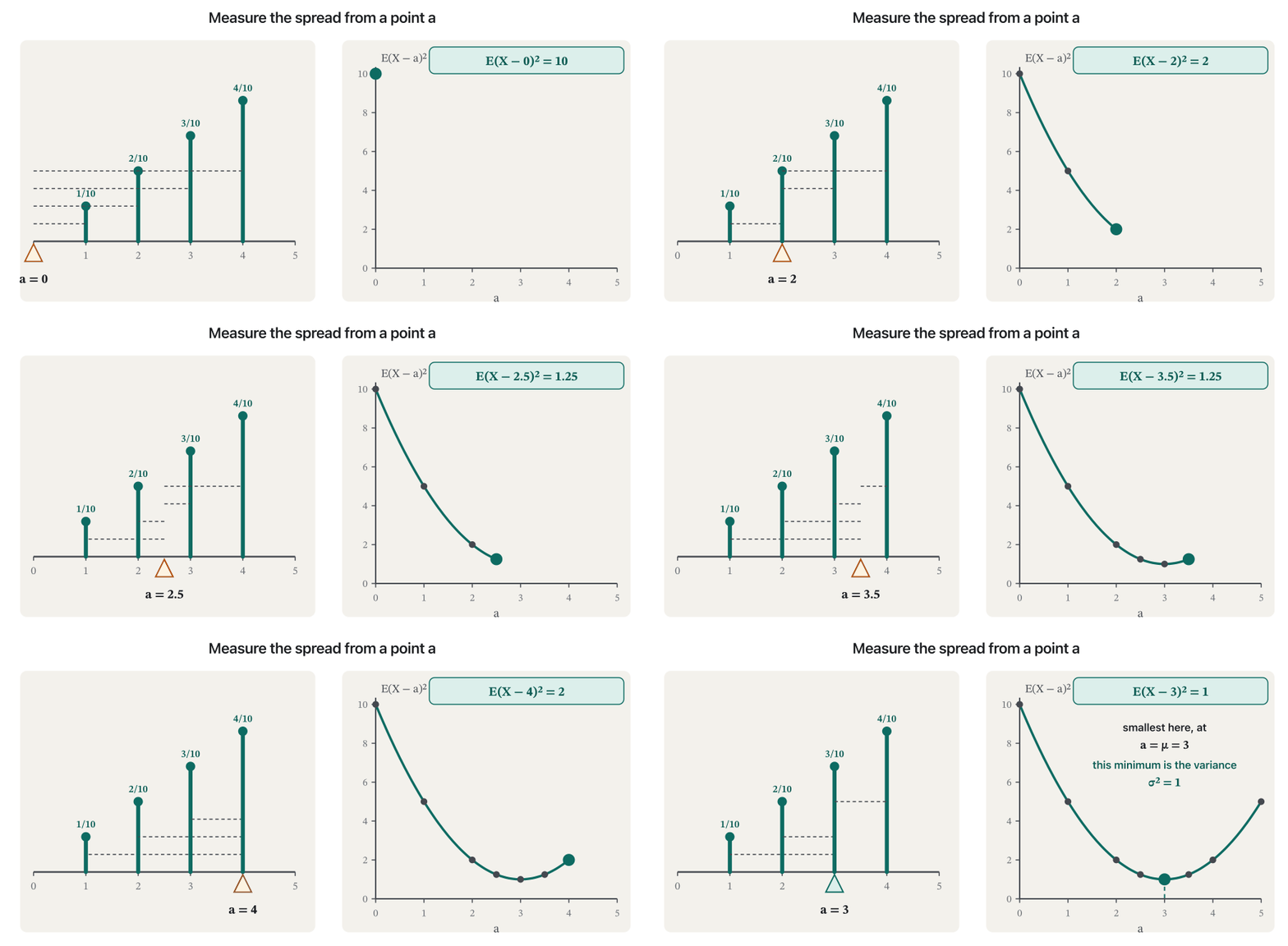
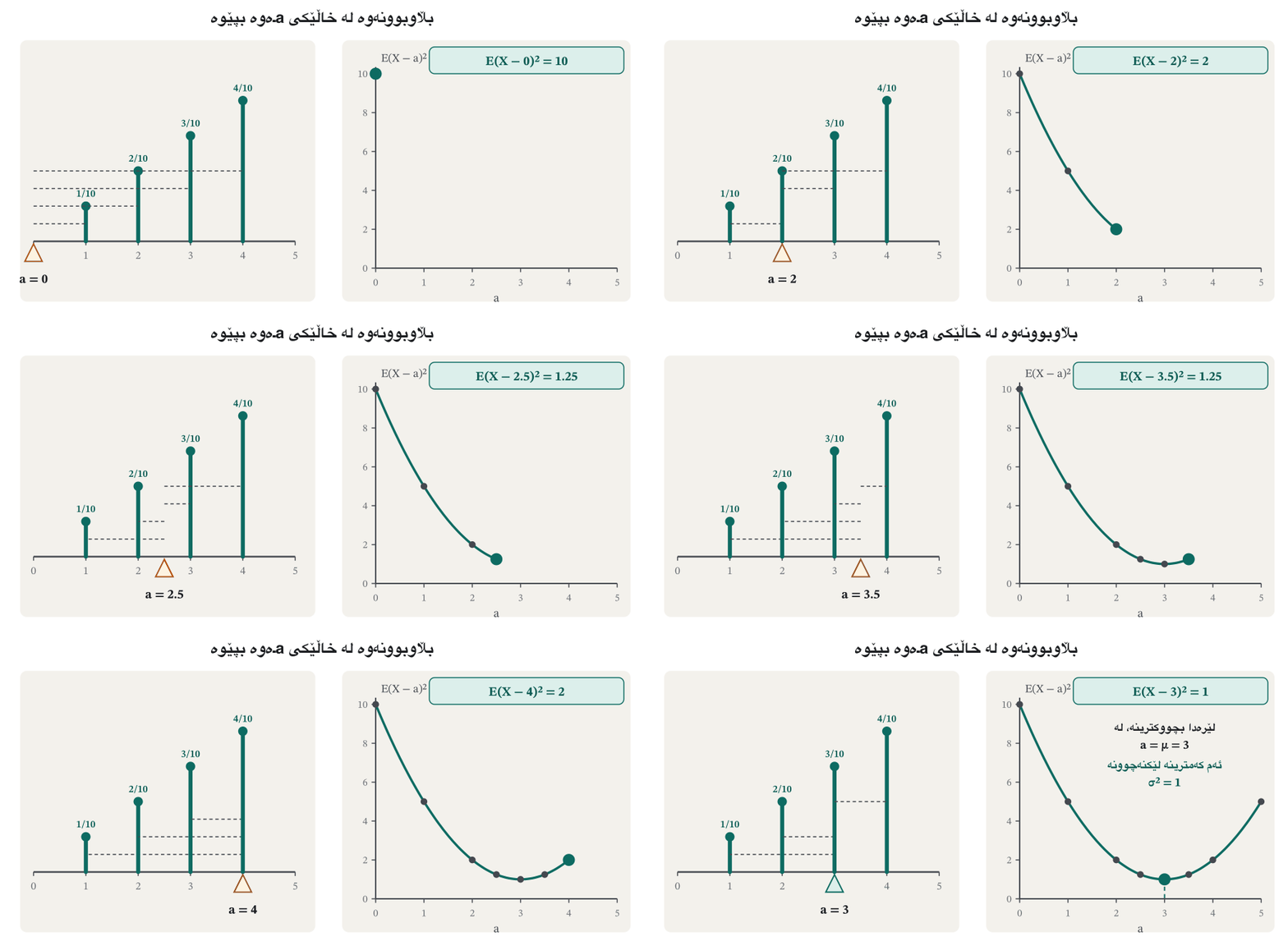
The curve is a parabola, and the shortcut explains it. Expanding as before gives a formula that holds for every point :
چەماوەکە و ڕێگا کورتەکە ڕوونی دەکاتەوە. کردنەوەی دووجاکە وەک پێشوو فۆرمولەیەک دەدات کە بۆ هەموو خاڵێکی ڕاستە:
The first part never changes; the second part is 0 only when . So the mean is the point from which the squared distances are smallest on average.
بەشی یەکەم هەرگیز ناگۆڕێت؛ بەشی دووەم تەنها کاتێک 0ـە کە . کەواتە ئەو خاڵەیە کە تێکڕای دووجای دوورییەکان لێیەوە بچووکترینە.
It also checks the earlier examples in one line: Example 12, ; Example 14 (), ; Example 13, .
هەروەها نموونەکانی پێشوو بە یەک دێڕ دەپشکنێت: نموونەی 12، ؛ نموونەی 14 ، ؛ نموونەی 13، .
Rules for the varianceیاساکانی لێکنەچوون
These rules are the model version of the properties for data. Here and are constants:
ئەم یاسایانە وەشانی مۆدێلی تایبەتمەندییەکانی دراوەـن. لێرەدا و :
| Ruleیاسا | Formulaفۆرمولە | In wordsبە وشە |
|---|---|---|
| Shift and scaleجووڵاندن و گەورەکردن | Adding moves every value and the mean together: no change in spread. Multiplying by stretches every distance by .زیادکردنی هەموو نرخەکان و پێکەوە دەجووڵێنێت: بڵاوبوونەوە ناگۆڕێت. لێکدان لە هەموو دوورییەک هێندە درێژ دەکات. | |
| Independent sumکۆی سەربەخۆ | Only when and are independent (variances add, standard deviations do not).تەنها کاتێک و سەربەخۆ بن ( کۆ دەکرێتەوە، نا). | |
| Constant | A value that never changes has no spread.نرخێک کە هەرگیز ناگۆڕێت بڵاوبوونەوەی نییە. |
Example 11 of the expected-value lesson ( with ): , so . Then : the does nothing and the multiplies the variance by 4. For one die , and for the sum of two independent dice .
نموونەی 11ی وانەی ( بە ): ، بۆیە . پاشان : هیچ ناکات و 4 هێندە دەکات. بۆ یەک بەردەزار و بۆ کۆی دوو بەردەزاری سەربەخۆ .
One special case appears in the next lesson: a variable that is 1 with probability and 0 with probability has variance , and by the sum rule independent copies have variance . The binomial distribution works this out.
حاڵەتێکی تایبەت لە وانەی داهاتوودا دێت: گۆڕاوێک کە بە دەبێتە 1 و بە دەبێتە 0، ـە و بە یاسای کۆ، وێنەی سەربەخۆی ـیان هەیە. دابەشبوونی دووڕادەیی ئەمە بە وردی ڕوون دەکاتەوە.
Checking with Pythonپشکنین بە Python
A few lines of Python compute exact moments with fractions, and a simulation shows that the formulas describe real long runs:
چەند دێڕێکی Python بە کەرتی ورد دەژمێرێت و تاقیکردنەوەیەکی لاسایی نیشان دەدات کە فۆرمولەکان زنجیرە درێژە ڕاستەقینەکان وەسف دەکەن:
from fractions import Fraction
import random
import statistics

def mean_var(pmf):
    """pmf = {value: probability}. Returns E(X), E(X^2) and Var(X)."""
    assert sum(pmf.values()) == 1, "not a pmf: probabilities must add up to 1"
    ex = sum(x * p for x, p in pmf.items())
    ex2 = sum(x**2 * p for x, p in pmf.items())
    return ex, ex2, ex2 - ex**2

x10 = {x: Fraction(x, 10) for x in range(1, 5)}       # P(x) = x/10
die = {x: Fraction(1, 6) for x in range(1, 7)}         # one fair die
for name, pmf in [("x/10", x10), ("die", die)]:
    ex, ex2, var = mean_var(pmf)
    print(f"{name:5} E(X) = {ex}, E(X^2) = {ex2}, Var(X) = {var}")

# check x/10 by simulation: 100,000 draws
random.seed(1)
draws = random.choices(list(x10), weights=list(x10.values()), k=100_000)
print("simulated mean     =", round(statistics.fmean(draws), 3))
print("simulated variance =", round(statistics.pvariance(draws), 3))x/10 E(X) = 3, E(X^2) = 10, Var(X) = 1 die E(X) = 7/2, E(X^2) = 91/6, Var(X) = 35/12 simulated mean = 2.999 simulated variance = 0.997
Explain the codeڕوونکردنەوەی کۆدەکە
- Lineدێڕی 5-10
The pmf is a dictionary {value: probability}. The function
mean_varchecks that the probabilities add up to 1, then uses the shortcut .بە شێوەی
{value: probability}.mean_varدەپشکنێت کە کۆی 1ـە، پاشان ڕێگا کورتەکەی بەکار دەهێنێت.- Lineدێڕی 12-13
Fractionkeeps exact values, so the die gives instead of 2.9166….Fractionنرخە وردەکان دەپارێزێت، بۆیە بەردەزار دەدات نەک 2.9166….- Lineدێڕی 19-22
random.choicesdraws 100,000 values with the pmf's probabilities as weights.statistics.pvariance() of the draws lands close to the exact 1.random.choicesبە وەک کێش 100,000 نرخ دەردەهێنێت.statistics.pvariance() بۆ ئەو نرخانە لە 1ـی ورد نزیک دەبێتەوە.
Common mistakesهەڵە باوەکان
| Mistakeهەڵە | Why it is wrongبۆچی هەڵەیە | Correctڕاست |
|---|---|---|
| Writing نووسینی | For : 10 against 1بۆ : 10 بەرامبەر 1 | |
| Using بەکارهێنانی | Square first, then average: they differ by the varianceسەرەتا دووجا، پاشان تێکڕا: جیاوازییەکەیان | |
| Forgetting to square a distanceلەبیرکردنی دووجاکردنی دوورییەک | The board's for ـی سەر تەختەکە بۆ | |
| Calling the point and the powerناونانی بە خاڵ و بە | in the notes means لە تێبینییەکاندا واتە | |
| Reporting the variance as the S.D.نووسینی وەک | Units are squaredیەکەکان دووجان | |
| Writing نووسینی | Shifts do not spread; scales are squaredجووڵاندن بڵاو ناکاتەوە؛ گەورەکردن دووجا دەبێت | |
| A negative variance سالب | An average of squares cannot be negativeتێکڕای دووجاکان ناتوانێت سالب بێت | Recheck and و دووبارە بپشکنەوە |
Exercisesڕاهێنانەکان
Find the variance and the standard deviation of the number shown by one fair die.
و ئەو ژمارەیە بدۆزەرەوە کە بەردەزارێکی دادپەروەر نیشانی دەدات.
Hintئاماژە
You know already. Find first.
پێشتر دەزانیت. سەرەتا بدۆزەرەوە.
Show answerوەڵامەکە پیشان بدە
X has density for (Example 10 of the expected-value lesson, ). Find and .
X ئەم چڕییەی هەیە: بۆ (نموونەی 10ی وانەی ، ). و بدۆزەرەوە.
Show answerوەڵامەکە پیشان بدە
In the expected-value lesson a repair costs 120,000 dinars with probability 0.1 and nothing otherwise, so the expected cost is 12,000 dinars. Find the standard deviation of the cost. What does it say?
لە وانەی چاککردنەوە بە 0.1 تێچووی 120,000 دینارە و ئەگینا هیچ، بۆیە تێچووی چاوەڕوانکراو 12,000 دینارە. تێچووەکە بدۆزەرەوە. چی دەڵێت؟
Show answerوەڵامەکە پیشان بدە
The typical distance from the average cost is 36,000 dinars, three times the average itself. For one customer the cost is very uncertain; that uncertainty is what a warranty removes.
دووریی ئاسایی لە تێچووی تێکڕا 36,000 دینارە، سێ هێندەی خودی تێکڕاکە. بۆ یەک کڕیار تێچووەکە زۆر نادیارە؛ ئەو نادیارییە ئەوەیە کە گەرەنتی لای دەبات.
For () find . What does its sign tell you?
بۆ () بدۆزەرەوە. نیشانەکەی چی پێت دەڵێت؟
Show answerوەڵامەکە پیشان بدە
Negative: the long tail is on the left (the value 1 lies far below the mean). This is the idea behind skewness.
سالبە: کلکە درێژەکە لە چەپە (نرخی 1 زۆر لە خوار ). ئەمە بیرۆکەی پشت ناهاوجێبوونـە.
Show that for any constant .
نیشانی بدە کە بۆ هەر : .
Hintئاماژە
Write as .
وەک بنووسە.
Show answerوەڵامەکە پیشان بدە
The middle term vanishes because the first central moment is 0.
بەشی ناوەڕاست نامێنێت چونکە یەکەم 0ـە.
Summaryپوختە
- The r-th moment about a is (a sum or an integral). : moments about the origin; : central moments; any other : non-central.
- The first central moment is always 0: .
- Variance ; standard deviation in the unit of X.
- : the second moment is smallest about the mean.
- ; for independent X and Y, variances add; a Bernoulli variable has variance .
- Course results for : , , (not the board's ), , . For : , , 0, .
- ـەم دەربارەی دەکاتە (کۆ یان ). : دەربارەی سفر؛ : ؛ ـی تر: ناناوەندی.
- یەکەم هەمیشە 0ـە: .
- ؛ بە یەکەی X.
- : دووەم دەربارەی بچووکترینە.
- ؛ بۆ و ـی سەربەخۆ کۆ دەکرێتەوە؛ گۆڕاوی بێرنۆلی ـیە.
- ئەنجامەکانی کۆرسەکە بۆ : ، ، (نەک ـی تەختەکە)، ، . بۆ : ، ، 0، .
Lesson complete!وانەکە تەواو بوو!
Well done. Review the key terms, then go on to the next lesson.دەستخۆش. سەیرێکی زاراوە سەرەکییەکان بکەرەوە، پاشان بڕۆ بۆ وانەی داهاتوو.
Key termsزاراوە سەرەکییەکان
The Binomial Distribution (Supplementary)دابەشبوونی دووڕادەیی (زیادە)
Related lecturesوانە پەیوەندیدارەکان
- Coefficient of Variation and Momentsهاوکۆلکەی گۆڕان و مۆمێنتەکان
- Continuous Random Variables and Density Functionsگۆڕاوە هەڕەمەکییە بەردەوامەکان و نەخشەی چڕیی ئەگەر
- The Binomial Distribution (Supplementary)دابەشبوونی دووڕادەیی (زیادە)
- Skewness, Kurtosis and the Mean–Median–Mode Relationناهاوجێبوون، پلەی لووتکەیی و پەیوەندیی نێوان ناوەند، ناوەڕاستە و باو
References and further readingسەرچاوەکان و خوێندنەوەی زیاتر
- OpenStax, Introductory Statistics 2e, 4.2 Mean or Expected Value and Standard Deviation (standard deviation of a discrete distribution)
- MIT OpenCourseWare 18.05 (Spring 2022), Reading 5a: Variance of Discrete Random Variables (spread, Var(aX + b), Bernoulli variance, E[X²] − E[X]²)
- Python documentation: statistics — pvariance, fmean; random.choices
This lecture is a first edition. The Kurdish text and terminology are waiting for review by Kurdish IT teachers.ئەم وانەیە چاپی یەکەمە. دەقە کوردییەکە و زاراوەکانی چاوەڕێی پێداچوونەوەی مامۆستایانی کوردی بواری IT ن.