Chapterبەش 4 · Lectureوانە 4.4
Combinationsگونجێنەکان
Selections where order does not matter: why every group of hides permutations, the formula , choosing is leaving , Pascal's triangle, committees with "at least" conditions, two groups chosen together, the basket problem, combinations in probability (the midterm committee) and math.comb in Python.
هەڵبژاردن کە ڕیز تێیدا گرنگ نییە: بۆچی هەر گرووپێکی دانەیی دەشارێتەوە، ، هەڵبژاردنی واتە بەجێهێشتنی ، ، لیژنە بە مەرجی «لانیکەم»، دوو گرووپ کە پێکەوە هەڵدەبژێردرێن، کێشەی سەبەتەکە، لە (لیژنەکەی تاقیکردنەوەی نیوەی وەرز) و math.comb لە Pythonـدا.
What you will learnچی فێر دەبیت
- Decide whether a counting question needs combinations or permutations.
- Compute by cancelling, and use and Pascal's triangle.
- Solve committee problems with "at least" conditions by cases or by the complement.
- Use combinations to find probabilities when every group is equally likely.
- بڕیار بدە ئایا پرسیارێکی ژماردن پێویستی بە هەیە یان بە .
- بە سڕینەوە بژمێرە و و بەکاربهێنە.
- کێشەی لیژنە بە مەرجی «لانیکەم» بە حاڵەت یان بە چارەسەر بکە.
- بەکاربهێنە بۆ دۆزینەوەی کاتێک هەموو گرووپێک بێت.
When order does not matterکاتێک ڕیز گرنگ نییە
In Counting and Permutations you counted arrangements: the order of the objects mattered. First, second and third place in a race are different results, so ABC and BAC are counted separately. That kind of count is a permutation.
لە ژماردن و گۆڕینەکان ڕیزکردنەکانت ژمارد: ڕیزی شتەکان گرنگ بوو. پلەی یەکەم، دووەم و سێیەم لە پێشبڕکێیەکدا ئەنجامی جیاوازن، بۆیە ABC و BAC جیا دەژمێردرێن. ئەو جۆرە ژماردنە .
Many questions ask only which objects are chosen, not in which order: a committee of 3 students, 4 questions to answer from a paper, 3 colours to buy. A committee of Aram, Dilan and Lana is the same committee however you list the names. Such a selection is a combination.
زۆر پرسیار تەنها دەپرسن کام شتانە هەڵدەبژێردرێن، نەک بە چ ڕیزێک: لیژنەیەکی 3 قوتابی، 4 پرسیار بۆ وەڵامدانەوە لە پەڕەیەک، 3 ڕەنگ بۆ کڕین. لیژنەی ئارام، دیلان و لانا هەمان لیژنەیە، ناوەکان بە هەر ڕیزێک بنووسیت. هەڵبژاردنی وا .
A selection of objects where order does not matter: .
هەڵبژاردنی چەند شتێکە کە ڕیزەکەیان گرنگ نییە: .
A combination of objects from different objects is a selection made without regard to order.
شت لە شتی جیاواز هەڵبژاردنێکە کە ڕیزەکەی لەبەرچاو ناگیرێت.
You choose 3 kinds of pastry from 5 for a box. The box does not care which kind you pointed at first: it holds the same 3 kinds. But if the shopkeeper lines them up in the window from left to right, the order now shows, and every order is a different window.
لە 5 جۆر شیرینی 3 جۆر بۆ قوتوویەک هەڵدەبژێریت. قوتووەکە گرنگی پێ نادات کام جۆرت یەکەم جار پیشان دا: هەمان 3 جۆری تێدایە. بەڵام گەر دوکاندارەکە لە جامەخانەکەدا لە چەپەوە بۆ ڕاست ڕیزیان بکات، ئێستا ڕیزەکە دەردەکەوێت و هەر ڕیزێک جامەخانەیەکی جیاوازە.
Where the analogy stops workingسنووری ئەم نموونەیە
In real shops you may buy two pieces of the same kind. A combination here chooses different objects, each at most once.
لە دوکانی ڕاستەقینەدا دەکرێت دوو پارچەی هەمان جۆر بکڕیت. لێرەدا شتی جیاواز هەڵدەبژێرێت، هەر یەکەیان تەنها یەک جار.
From permutations to combinations: لە گۆڕینەکانەوە بۆ گونجێنەکان:
Take the five letters A, B, C, D, E. Arranging 3 of them in a row gives arrangements. Now ignore the order. The arrangements ABC, ACB, BAC, BCA, CAB and CBA are all the same group {A, B, C}. Every group of 3 letters can be ordered in ways, so the 60 arrangements fall into groups.
پێنج پیتی A، B، C، D، E وەربگرە. ڕیزکردنی 3 دانەیان لە ڕیزێکدا ڕیزکردن دەدات. ئێستا ڕیزەکە پشتگوێ بخە. ABC، ACB، BAC، BCA، CAB و CBA هەموویان هەمان گرووپی {A، B، C}ن. هەر گرووپێکی 3 پیتی بە ڕێگا ڕیز دەکرێت، بۆیە 60 ڕیزکردنەکە دەبنە گرووپ.
The same reasoning works for any and : each combination of objects can be arranged in orders, so
هەمان بیرکردنەوە بۆ هەر و ـێک کار دەکات: هەر شت بە ڕیز ڕیز دەکرێت، بۆیە
is the number of all objects and the number chosen (). Read as "n choose r". The lecture notes write it ; calculators show nCr. All mean the same number, which is also called a binomial coefficient.
ژمارەی هەموو شتەکانە و ژمارەی هەڵبژێردراوەکان (). وەک «n هەڵبژێرە r» بخوێنەوە. تێبینییەکانی وانە بە دەینووسن و nCr نیشان دەدات. هەموویان هەمان ژمارەن کە پێی دەوترێت .
Computing without huge numbersژماردنی بەبێ ژمارەی زۆر گەورە
Example (9). How many 3-member committees can be chosen from a class of 20? Writing out is not needed: most of it cancels.
نموونەی (9). چەند لیژنەی 3 ئەندامی لە پۆلێکی 20 کەسی هەڵدەبژێردرێت؟ پێویست ناکات بنووسیت: زۆربەی دەسڕێتەوە.
Keep only factors on top, counting down from , and divide by .
تەنها هۆکار لە سەرەوە بهێڵەرەوە، لە ـەوە بەرەو خوار بژمێرە و دابەشی بکە.
- Is it a selection?هەڵبژاردنە؟
A committee has no first or second member, so order does not matter: use combinations.
لیژنە ئەندامی یەکەم و دووەمی نییە، بۆیە ڕیز گرنگ نییە: بەکاربهێنە.
- Find and و بدۆزەرەوە
students to choose from, places on the committee.
قوتابی کە لێیان هەڵدەبژێردرێت، شوێن لە لیژنەکەدا.
- Cancel, then multiplyبیسڕەوە، پاشان لێک بدە
. Cancel first if you like: , then .
. گەر پێت باشە پێشتر بیسڕەوە: ، پاشان .
Two values are worth remembering. : there is exactly one way to choose nothing. : there is exactly one way to take everything. Both follow from the formula because (see Why zero factorial is 1).
دوو نرخ شایەنی لەبیرکردنن. : ڕێک یەک ڕێگا هەیە بۆ هەڵنەبژاردنی هیچ. : ڕێک یەک ڕێگا هەیە بۆ وەرگرتنی هەمووی. هەردووکیان لە دێن، چونکە (بڕوانە بۆچی یەکسانە بە 1).
Choosing is leaving هەڵبژاردنی واتە بەجێهێشتنی
Choosing which 8 of 10 questions to answer is the same as choosing which 2 to skip: every choice of 8 leaves exactly one set of 2 behind. So
هەڵبژاردنی ئەوەی کام 8 پرسیار لە 10 وەڵام بدەیتەوە هەمان هەڵبژاردنی ئەوەیە کام 2 بەجێ بهێڵیت: هەر هەڵبژاردنێکی 8 دانە ڕێک یەک کۆمەڵەی 2 دانە بەجێ دەهێڵێت. بۆیە
Example (10). An exam paper has two parts, P and Q, with 10 questions each. A student must answer 8 questions from P and 4 from Q. In how many ways can the questions be chosen?
نموونەی (10). پەڕەیەکی تاقیکردنەوە دوو بەشی P و Qـی هەیە و هەر بەشێک 10 پرسیاری تێدایە. قوتابی دەبێت 8 پرسیار لە P و 4 پرسیار لە Q وەڵام بداتەوە. بە چەند ڕێگا پرسیارەکان هەڵدەبژێردرێن؟
The choice in P and the choice in Q are made one after the other, so the fundamental counting principle multiplies them (the multiplication principle).
هەڵبژاردن لە P و هەڵبژاردن لە Q یەک لە دوای یەک دەکرێن، بۆیە لێکیان دەدات (بڕوانە ئەو یاسایە).
Pascal's triangleسێگۆشەی پاسکاڵ
Write the numbers in row , one row under the other, and you get Pascal's triangle. You can build it without any factorials:
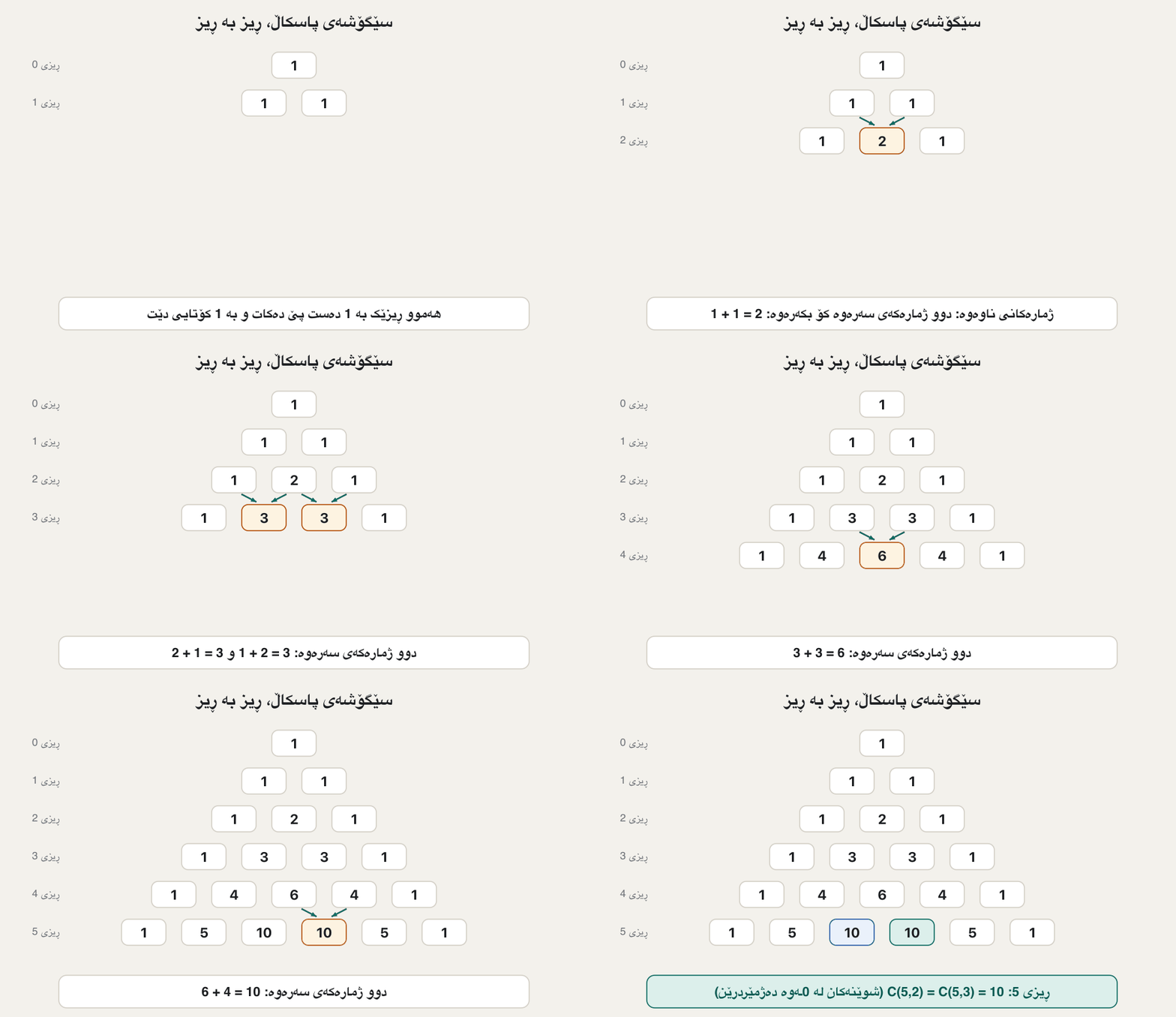
ژمارەکانی لە ڕیزی ـدا بنووسە، ڕیزێک لە ژێر ڕیزێکی تر، ئەوە دروست دەبێت. بەبێ هیچ دروست دەکرێت:
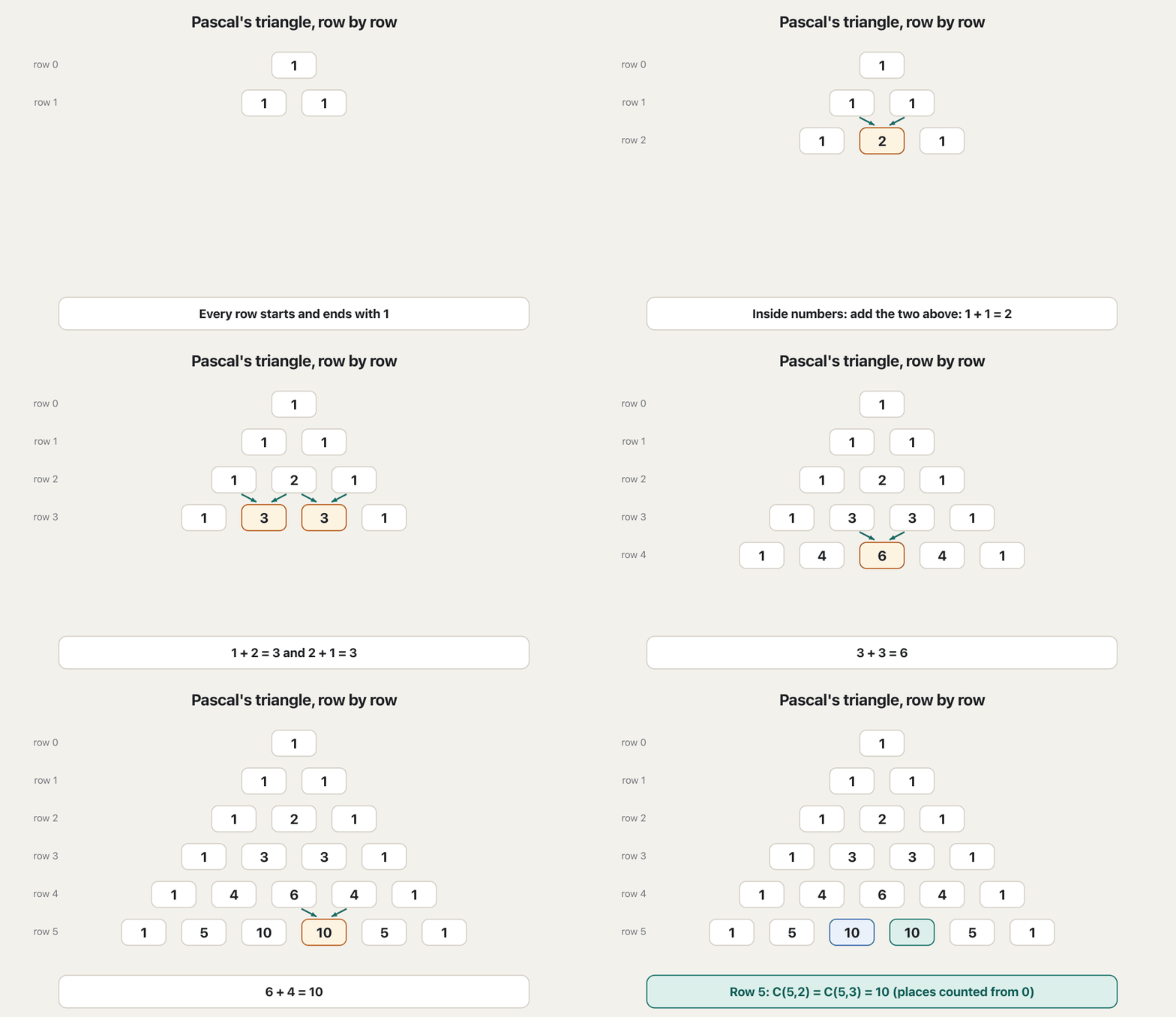
Why? Pick one special object, say A. A group of either contains A (choose the other from the remaining ) or does not (choose all from the remaining ).
بۆچی؟ شتێکی تایبەت هەڵبژێرە، بۆ نموونە A. گرووپێکی دانەیی یان Aـی تێدایە ( شتەکەی تر لەو شتەی تر هەڵدەبژێریت) یان نا (هەموو شتەکە لەو شتەی تر هەڵدەبژێریت).
How Pascal's triangle is built by adding the two numbers above, and how its rows give the combination numbers.
چۆن دروست دەکرێت بە کۆکردنەوەی ئەو دوو ژمارەیەی سەرەوە، هەروەها ڕیزەکانی چۆن ژمارەکانی دەدەن.
Building the triangle from 0:36, binomial coefficients from 1:08, patterns and probability uses after that.
دروستکردنی سێگۆشەکە لە 0:36ـەوە، لە 1:08ـەوە، پاشان تایبەتمەندییە سەرنجڕاکێشەکانی و بەکارهێنانی لە .
Pascal's triangleسێگۆشەی پاسکاڵ
What the rows tell youڕیزەکانی سێگۆشەی پاسکاڵ چی دەڵێن
- Each row reads the same from both ends: that is .
- Row adds up to (row 5: ): every object is either in or out of a group. You will use this in Example (12).
- Row also counts coin tosses: in tosses, of the head–tail sequences have exactly heads, because you choose which tosses are heads (3 tosses: HHT, HTH, THH are the ways to get 2 heads). This is where the binomial distribution comes from: Coins.
- هەر ڕیزێک لە هەردوو سەرەوە وەک یەک دەخوێنرێتەوە: ئەوە ـە.
- کۆی ڕیزی دەکاتە (ڕیزی 5: ): هەر شتێک یان لە ناو گرووپەکەدایە یان لە دەرەوە. لە نموونەی (12)دا بەکاری دەهێنیت.
- ڕیزی هەروەها هەڵدانی دراو دەژمێرێت: لە هەڵداندا، زنجیرە لە زنجیرەی شێر و خەت ڕێک شێریان تێدایە، چونکە هەڵدەبژێریت کام هەڵدان شێر بن (3 هەڵدان: HHT، HTH و THH ئەو ڕێگایەن کە 2 شێر دەدەن). لێرەوە دێت: دراوەکان.
Example (8): colour sets or painting plans?نموونەی (8): کۆمەڵەی ڕەنگ یان پلانی بۆیاخکردن؟
Example (8) in the notes: three rooms are to be painted, each a different colour, choosing from 7 colours. The notes answer with a combination:
نموونەی (8) لە تێبینییەکاندا: سێ ژوور بۆیاخ دەکرێن، هەر یەکەیان بە ڕەنگێکی جیاواز، لە ناو 7 ڕەنگدا. تێبینییەکان بە وەڵام دەدەنەوە:
So always ask: does swapping two chosen objects give a different result? If yes, count permutations. If no, count combinations.
کەواتە هەمیشە بپرسە: ئایا ئاڵوگۆڕی دوو شتی هەڵبژێردراو ئەنجامێکی جیاواز دەدات؟ گەر بەڵێ، بژمێرە. گەر نەخێر، بژمێرە.
Committees with conditions: "at least"لیژنە بە مەرجەوە: «لانیکەم»
H.W (1). A class has 9 men and 3 women. (a) How many committees of 4 students can be formed? (b) How many of them contain at least 2 women?
ئەرکی ماڵەوەی (1). پۆلێک 9 پیاو و 3 ئافرەتی تێدایە. (أ) چەند لیژنەی 4 قوتابی پێک دێت؟ (ب) چەند دانەیان لانیکەم 2 ئافرەتیان تێدایە؟
- (a) Read the question(أ) پرسیارەکە بخوێنەوە
It asks for 4 students, whatever their gender, so add the two groups: . It is a selection, so use combinations, and 4 students are chosen, so .
داوای 4 قوتابی دەکات، ڕەگەزیان هەرچی بێت، بۆیە دوو گرووپەکە کۆ بکەرەوە: . هەڵبژاردنە، بۆیە بەکاربهێنە و 4 قوتابی هەڵدەبژێردرێن، بۆیە .
- (a) Compute(أ) بیژمێرە
committees.
لیژنە.
- (b) Split "at least 2" into cases(ب) «لانیکەم 2» بکە بە چەند حاڵەتێک
At least 2 women means exactly 2 or exactly 3. Exactly 2: choose 2 of 3 women and 2 of 9 men, . Exactly 3: . Total .
لانیکەم 2 ئافرەت واتە ڕێک 2 یان ڕێک 3. ڕێک 2: 2 لە 3 ئافرەت و 2 لە 9 پیاو هەڵبژێرە، . ڕێک 3: . کۆ .
Committees with conditions: "at least"لیژنە بە مەرجەوە: «لانیکەم»
Count what you do not wantئەوەی نایەوێت بیژمێرە
- (b) Or count what you do not want(ب) یان ئەوەی نایەوێت بیژمێرە
From all 495 committees take away those with no woman, , and those with exactly one, : .
لە هەموو 495 لیژنەکە ئەو لیژنەیە دەربکە کە هیچ ئافرەتێکیان تێدا نییە. هەروەها ئەو لیژنەیەش دەربکە کە ڕێک یەک ئافرەتیان تێدایە: .
Both methods give 117; a Python check that lists all 495 committees one by one agrees (see the Python screen). The second method is the complement idea: count the opposite and subtract. It is fastest when the opposite has few cases.
هەردوو ڕێگاکە 117 دەدەن؛ پشکنینێکی Python کە هەموو 495 لیژنەکە یەک یەک دەنووسێت هەمان وەڵام دەدات (بڕوانە شاشەی Python). ڕێگای دووەم بیرۆکەی بەکاردەهێنێت: پێچەوانەکە بژمێرە و لێی دەربکە. کاتێک پێچەوانەکە حاڵەتی کەمی هەبێت خێراترینە.
Football teams and a basket of ballsتیمی تۆپی پێ و سەبەتەیەک تۆپ
Example (11). 20 boys come to try out for the football team. How many different teams of 11 can be chosen?
نموونەی (11). 20 کوڕ بۆ تاقیکردنەوەی تیمی تۆپی پێ دێن. چەند تیمی جیاوازی 11 کەسی هەڵدەبژێردرێت؟
The notes stop at the fraction; the value is 167,960. Computing needs only 9 factors on top.
تێبینییەکان لە دەوەستن؛ نرخەکەی 167,960ـە. ژماردنی تەنها 9 هۆکاری لە سەرەوە پێویستە.
Example (12). A child has 6 numbered balls and throws some of them into a basket. In how many ways can the basket be filled? The notes add up the cases "1 ball, 2 balls, …, 6 balls":
نموونەی (12). منداڵێک 6 تۆپی ژمارەداری هەیە و هەندێکیان فڕێ دەداتە ناو سەبەتەیەک. سەبەتەکە بە چەند ڕێگا پڕ دەبێت؟ تێبینییەکان حاڵەتەکانی «1 تۆپ، 2 تۆپ، …، 6 تۆپ» کۆ دەکەنەوە:
Combinations in probability: the midterm committeeگونجێنەکان لە ئەگەردا: لیژنەکەی تاقیکردنەوەی نیوەی وەرز
When every group of is equally likely, a probability is "favourable groups ÷ all groups", and combinations count both. Midterm Q2B: you and 3 friends are among 100 people running for a 4-person committee. If the 4 winners are chosen at random, what is the probability that you and your 3 friends win all 4 seats?
کاتێک هەموو گرووپێکی دانەیی بێت، دەکاتە «گرووپە گونجاوەکان ÷ هەموو گرووپەکان» و هەردووکیان دەژمێرن. پرسیاری 2Bـی تاقیکردنەوەی نیوەی وەرز: تۆ و 3 هاوڕێت لە ناو 100 کەسدان کە بۆ لیژنەیەکی 4 کەسی خۆیان کاندید کردووە. گەر 4 براوەکە بە هەڕەمەکی هەڵبژێردرێن، ئەوە چەندە کە تۆ و 3 هاوڕێکەت هەر 4 کورسییەکە ببەنەوە؟
All winning groups are equally likely, and exactly one of them is your group.
هەموو گرووپە براوەکە و ڕێک یەکێکیان گرووپەکەی ئێوەیە.
The same idea counts mixed groups. A box holds 4 red and 6 blue balls and you take 3 without looking. Let R be the number of red balls you get: . The homework about defective items in Expected Value uses exactly this count.
هەمان بیرۆکە گرووپی تێکەڵ دەژمێرێت. سندووقێک 4 تۆپی سوور و 6 تۆپی شینی تێدایە و بەبێ سەیرکردن 3 دانە دەردەهێنیت. با R ژمارەی ئەو تۆپە سوورانە بێت کە دەریاندەهێنیت: . ئەرکی ماڵەوەی کەرەستە بێکەڵکەکان لە نرخی پێشبینیکراو ڕێک ئەم ژماردنە بەکاردەهێنێت.
Combinations in Pythonگونجێنەکان لە Pythonـدا
Python's math module has comb(n, k) and perm(n, k) (since Python 3.8), and itertools.combinations lists the groups themselves. Listing is a good way to check a formula on a small case.
math لە Pythonـدا comb(n, k) و perm(n, k)ـی هەیە (لە Python 3.8ـەوە) و itertools.combinations خودی گرووپەکان دەنووسێت. نووسینی هەموویان ڕێگایەکی باشە بۆ پشکنینی لەسەر حاڵەتێکی بچووک.
from itertools import combinations
from math import comb, perm

letters = "ABCDE"
groups = ["".join(g) for g in combinations(letters, 3)]
print(len(groups), "groups:", groups)
print("perm(5, 3) =", perm(5, 3), "| comb(5, 3) =", comb(5, 3))
print("comb(10, 8) == comb(10, 2):", comb(10, 8) == comb(10, 2))

# H.W 1(b): 9 men and 3 women, committees of 4 with at least 2 women
people = ["M"] * 9 + ["W"] * 3
count = sum(1 for c in combinations(range(12), 4)
            if sum(people[i] == "W" for i in c) >= 2)
print("listed one by one:", count)
print("by formula:", comb(3, 2) * comb(9, 2) + comb(3, 3) * comb(9, 1))

print("committee of 4 from 100:", comb(100, 4))
print(f"P(our 4 win) = 1/{comb(100, 4)} = {1 / comb(100, 4):.2e}")10 groups: ['ABC', 'ABD', 'ABE', 'ACD', 'ACE', 'ADE', 'BCD', 'BCE', 'BDE', 'CDE'] perm(5, 3) = 60 | comb(5, 3) = 10 comb(10, 8) == comb(10, 2): True listed one by one: 117 by formula: 117 committee of 4 from 100: 3921225 P(our 4 win) = 1/3921225 = 2.55e-07
Explain the codeڕوونکردنەوەی کۆدەکە
- Lineدێڕی 5
combinations(letters, 3)produces each group once, in alphabetical order, as a tuple such as ('A', 'B', 'C').combinations(letters, 3)هەر گرووپێک یەک جار دروست دەکات، بە ڕیزی ئەلفوبێ، وەک وەک ('A', 'B', 'C').- Lineدێڕی 11-14
Lists all 495 committees of H.W 1 and counts those with at least 2 women: the brute-force check of 117.
هەموو 495 لیژنەکەی ئەرکی ماڵەوەی 1 دەنووسێت و ئەوانە دەژمێرێت کە لانیکەم 2 ئافرەتیان تێدایە: پشکنینی 117 بە ژماردنی هەمووی.
- Lineدێڕی 18
:.2eprints the tiny probability in scientific notation.:.2eزۆر بچووکەکە بە نووسینی زانستی چاپ دەکات.
New to import and loops in Python? See Modules and The for loop.
گەر import و لە Pythonـدا نوێن بۆت، بڕوانە مۆدیوڵەکان و خولی for.
Common mistakesهەڵە باوەکان
| Mistakeهەڵە | Why it is wrongبۆچی هەڵەیە | Do this insteadلەبری ئەوە ئەمە بکە |
|---|---|---|
| Using for a committee or a hand of objectsبەکارهێنانی بۆ لیژنە یان دەستەیەک شت | Each group is counted times, once for every order.هەر گرووپێک جار دەژمێردرێت، یەک جار بۆ هەر ڕیزێک. | Ask whether swapping two chosen objects changes the result; if not, use .بپرسە ئایا ئاڵوگۆڕی دوو شتی هەڵبژێردراو ئەنجامەکە دەگۆڕێت؛ گەر نا، بەکاربهێنە. |
| Using when positions differ (Example 8 with distinct rooms)بەکارهێنانی کاتێک شوێنەکان جیاوازن (نموونەی 8 بە ژووری جیاواز) | Different rooms or posts make the order matter.ژوور یان پۆستی جیاواز ڕیز گرنگ دەکەن. | Count permutations: . بژمێرە: . |
| "At least 2" as "pick 2, then any others" (135)«لانیکەم 2» وەک «2 هەڵبژێرە، پاشان هەر کەسێکی تر» (135) | Groups with more than 2 are counted several times.گرووپی زیاتر لە 2 چەند جار دەژمێردرێن. | Add exact cases, or subtract the unwanted cases from the total (117).حاڵەتە ڕێکەکان کۆ بکەرەوە، یان حاڵەتە نەویستراوەکان لە کۆ دەربکە (117). |
| Adding the counts of two groups chosen together (H.W 2: )کۆکردنەوەی ژمارەی دوو گرووپ کە پێکەوە هەڵدەبژێردرێن (ئەرکی ماڵەوەی 2: ) | Both choices happen in the same committee.هەردوو هەڵبژاردن لە هەمان لیژنەدا ڕوو دەدەن. | Multiply: .لێکیان بدە: . |
| Probability of one person's success used for a whole group () سەرکەوتنی یەک کەس بۆ هەموو گرووپێک بەکارهێنراوە () | The group must win together.گرووپەکە دەبێت پێکەوە ببەنەوە. | Favourable groups ÷ all groups: .گرووپە گونجاوەکان ÷ هەموو گرووپەکان: . |
Exercisesڕاهێنانەکان
A club has 5 women and 7 men (12 members). How many committees with 2 women and 3 men can be formed?
یانەیەک 5 ئافرەت و 7 پیاوی هەیە (12 ئەندام). چەند لیژنە بە 2 ئافرەت و 3 پیاو پێک دێت؟
Hintئاماژە
Count the women's choices and the men's choices separately.
هەڵبژاردنی ئافرەتان و هەڵبژاردنی پیاوان جیا جیا بژمێرە.
Show answerوەڵامەکە پیشان بدە
| Groupگرووپ | Chooseهەڵبژاردن | Waysڕێگاکان |
|---|---|---|
| 5 women5 ئافرەت | 2 of them (A)2 دانەیان (A) | |
| 7 men7 پیاو | 3 of them (B)3 دانەیان (B) | |
| committeeلیژنە | A and B togetherA و B پێکەوە |
Every pair of women can sit with every trio of men, so the counts multiply (the fundamental counting principle): 350 committees.
هەر جووتێک ئافرەت دەتوانن لەگەڵ هەر سێیەکی پیاوان دابنیشن، بۆیە ژمارەکان لێک دەدرێن (): 350 لیژنە.
How many committees of 5 can be chosen from 8 people?
چەند لیژنەی 5 کەسی لە 8 کەس هەڵدەبژێردرێت؟
Show answerوەڵامەکە پیشان بدە
, (). Choosing 5 to serve is choosing 3 to stay out.
، (). هەڵبژاردنی 5 کەس بۆ لیژنەکە هەمان هەڵبژاردنی 3 کەسە بۆ دەرەوە.
A department offers 5 maths electives and 3 programming electives. (a) In how many ways can a student pick 3 electives of any kind? (b) In how many ways can they pick 2 maths and 1 programming elective?
بەشێک 5 وانەی هەڵبژاردەی بیرکاری و 3 وانەی هەڵبژاردەی پێشکەش دەکات. (أ) قوتابییەک بە چەند ڕێگا 3 وانەی هەڵبژاردە لە هەر جۆرێک هەڵدەبژێرێت؟ (ب) بە چەند ڕێگا 2 وانەی بیرکاری و 1 وانەی هەڵدەبژێرێت؟
Show answerوەڵامەکە پیشان بدە
(a) All 8 electives form one pool. (b) Two separate choices, multiplied, like Example (10).
(أ) هەموو 8 وانەکە یەک کۆگان. (ب) دوو هەڵبژاردنی جیا کە لێک دەدرێن، وەک نموونەی (10).
A box has 4 red and 6 blue balls. Shilan takes 3 balls at once. With R the number of red balls, she writes . What went wrong, and what is the right answer?
سندووقێک 4 تۆپی سوور و 6 تۆپی شینی تێدایە. شیلان 3 تۆپ پێکەوە دەردەهێنێت. با R ژمارەی تۆپە سوورەکان بێت. شیلان دەنووسێت: . چی هەڵە بوو و وەڵامی ڕاست چییە؟
Hintئاماژە
What is the opposite of "at least one red"?
پێچەوانەی «لانیکەم یەک سوور» چییە؟
Show answerوەڵامەکە پیشان بدە
A probability can never be more than 1, so something is counted many times. "Pick one red, then any 2 of the other 9" counts a group with 2 or 3 red balls more than once. Use the complement: no red means all 3 blue.
هیچ لە 1 زیاتر نابێت، بۆیە شتێک چەند جار ژمێردراوە. «یەک سوور هەڵبژێرە، پاشان هەر 2 دانەیەک لە 9ـەکەی تر» گرووپێک کە 2 یان 3 تۆپی سووری تێدایە زیاتر لە جارێک دەژمێرێت. بەکاربهێنە: هیچ سوورێک واتە هەر 3 دانەکە شین.
Summaryپوختە
- A combination is a selection where order does not matter; a permutation is an arrangement where it does.
- : every group of hides orders ().
- , , and Pascal's rule .
- Choices from separate groups multiply (9450, 350); "at least" = add exact cases or subtract the unwanted ones (117).
- With equally likely groups, the probability is favourable groups ÷ all groups (, not ).
- هەڵبژاردنێکە کە ڕیز تێیدا گرنگ نییە؛ ڕیزکردنێکە کە ڕیز تێیدا گرنگە.
- : هەر گرووپێکی دانەیی ڕیز دەشارێتەوە ().
- ، و یاسای پاسکاڵ .
- هەڵبژاردن لە گرووپی جیاواز لێک دەدرێن (9450، 350)؛ «لانیکەم» = حاڵەتە ڕێکەکان کۆ بکەرەوە یان نەویستراوەکان دەربکە (117).
- بە گرووپی ، بریتییە لە گرووپە گونجاوەکان ÷ هەموو گرووپەکان (، نەک ).
Why is Example (8)'s 35 not the number of ways to paint the rooms?بۆچی 35ـی نموونەی (8) ژمارەی ڕێگاکانی بۆیاخکردنی ژوورەکان نییە؟
35 counts which colours are bought. The rooms are different, so each set can be assigned in ways: 210 painting plans.
35 دەژمێرێت کام ڕەنگانە دەکڕدرێن. ژوورەکان جیاوازن، بۆیە هەر کۆمەڵەیەک بە ڕێگا دابەش دەکرێت: 210 پلانی بۆیاخکردن.
How do you get 63 in Example (12) in one step?چۆن 63ـی نموونەی (12) بە یەک هەنگاو دەدۆزیتەوە؟
Each of 6 balls is in or out: , minus the empty basket: 63.
هەر یەکێک لە 6 تۆپەکە لە ناوەوەیە یان لە دەرەوە: ، کەمکردنەوەی سەبەتەی بەتاڵ: 63.
Videoڤیدیۆ
Watch a videoسەیری ڤیدیۆیەک بکە
A video that viewers liked a lot and praised in their comments, chosen for this lesson.ڤیدیۆیەک کە بینەران زۆریان پێ خۆش بووە و لە کۆمێنتەکانیاندا ستایشیان کردووە، بۆ ئەم وانەیە هەڵبژێردراوە.
What a combination is (order does not matter) and a quick way to compute nCr by cancelling before you multiply.
چییە (ڕیزبەندی گرنگ نییە) و ڕێگایەکی خێرا بۆ ژماردنی : پێش لێکدان، ژمارەکان کورت بکەرەوە.
An example from 0:22, the rule at 3:14 and more examples from 5:11; the cancelling shortcut is the method of the "Computing C(n,r)" screen.
نموونەیەک لە 0:22ـەوە، یاساکە لە 3:14 و نموونەی زیاتر لە 5:11ـەوە؛ ڕێگای کورتکردنەوەکە هەمان ڕێگایە کە لە شاشەی «ژماردنی » بەکار دێت.
Lesson complete!وانەکە تەواو بوو!
Well done. Review the key terms, then go on to the next lesson.دەستخۆش. سەیرێکی زاراوە سەرەکییەکان بکەرەوە، پاشان بڕۆ بۆ وانەی داهاتوو.
Key termsزاراوە سەرەکییەکان
The Axioms of Probability and the Complement Ruleبەڵگەنەویستەکانی ئەگەر و یاسای تەواوکەر
Related lecturesوانە پەیوەندیدارەکان
References and further readingسەرچاوەکان و خوێندنەوەی زیاتر
- MIT OpenCourseWare 18.05, Class 1 reading: Counting and Sets (rule of product, permutations, combinations, inclusion-exclusion)
- Python documentation: math — Mathematical functions (comb and perm, added in 3.8; soft-deprecated aliases since 3.15)
- Python documentation: math.integer — integer-specific mathematics functions (comb, perm; 0 when k > n)
- OpenStax, Introductory Statistics 2e, 3.5 Tree and Venn Diagrams (drawing without replacement)
- MacTutor History of Mathematics: Abu Bekr ibn Muhammad ibn al-Husayn Al-Karaji (the general construction of Pascal's triangle)
- Wikimedia Commons: Yanghui triangle (Zhu Shijie's 1303 drawing, public domain)
This lecture is a first edition. The Kurdish text and terminology are waiting for review by Kurdish IT teachers.ئەم وانەیە چاپی یەکەمە. دەقە کوردییەکە و زاراوەکانی چاوەڕێی پێداچوونەوەی مامۆستایانی کوردی بواری IT ن.