Chapterبەش 4 · Lectureوانە 4.7
Conditional Probability, Independence and the Multiplication Ruleئەگەری مەرجدار، سەربەخۆیی و یاسای لێکدانی ئەگەر
How information shrinks the sample space, with Examples (20), (21) and (22), the general multiplication rule, independent events and their three tests, a coin has no memory, midterm Q1.4, why disjoint events are dependent, drawing with and without replacement (the box homework and its two wrong numbers) and tree diagrams.
چۆن زانیاری بچووک دەکاتەوە، لەگەڵ نموونەکانی (20)، (21) و (22)، بە شێوە گشتییەکەی، و سێ تاقیکردنەوەکەیان، دراو بیرەوەریی نییە، پرسیاری 1.4ـی تاقیکردنەوەی نیوەی وەرز، بۆچی بەستراون، دەرهێنان و (ئەرکی سندووقەکە و دوو ژمارە هەڵەکەی) و .
What you will learnچی فێر دەبیت
- Compute conditional probabilities by reducing the sample space and with the formula .
- Use the general multiplication rule for draws without replacement and tree diagrams.
- Test whether two events are independent, and explain why disjoint events are dependent.
- بژمێرە بە بچووککردنەوەی و بە .
- بە شێوە گشتییەکەی بۆ دەرهێنان و بەکاربهێنە.
- تاقی بکەرەوە ئایا دوو سەربەخۆن و ڕوونی بکەرەوە بۆچی بەستراون.
New information changes probabilitiesزانیاریی نوێ ئەگەرەکان دەگۆڕێت
A friend rolls a die behind a book. The chance that it shows 6 is . Now your friend says: "It is even." The roll is one of 2, 4, 6, and they are still equally likely, so the chance of a 6 is now . The information threw away the impossible outcomes and shrank the sample space.
هاوڕێیەکت لە پشت کتێبێکەوە بەردەزارێک هەڵدەدات. ئەوەی 6 نیشان بدات ـە. ئێستا هاوڕێکەت دەڵێت: «جووتە.» ئەنجامەکە یەکێکە لە 2، 4، 6 و هێشتا هەمان هەیە، بۆیە 6 ئێستا ـە. زانیارییەکە ئەستەمەکانی فڕێ دا و بچووک کردەوە.
The probability of when we already know that happened: , with .
ئەگەری ـە کاتێک دەزانین ڕوویداوە: ، بە مەرجی .
Written and read "the probability of A given B". The vertical bar means "given that".
بە دەنووسرێت و دەخوێنرێتەوە « A بە مەرجی B». هێڵە ستوونییەکە واتە «بەو مەرجەی کە».
Write E for "even". Order matters inside the bar: , because a 6 is always even.
با E «جووت» بێت. ڕیز لە ناو هێڵەکەدا گرنگە: ، چونکە 6 هەمیشە جووتە.
A taxi driver at the Erbil bus station guesses where a passenger is going. Before the passenger speaks, every district is possible. As soon as the passenger says "near the citadel", most districts drop out and the driver's guesses about the remaining ones get sharper. Conditional probability does the same: the condition removes outcomes, and the chances are re-shared among the ones that are left.
شۆفێرێکی تەکسی لە گەراجی هەولێر مەزەندە دەکات سەرنشینێک بۆ کوێ دەچێت. پێش ئەوەی سەرنشینەکە قسە بکات، هەموو گەڕەکێک دەگونجێت. هەر کە سەرنشینەکە دەڵێت «نزیک قەڵا»، زۆربەی گەڕەکەکان لادەچن و مەزەندەکانی شۆفێرەکە دەربارەی ئەوانەی ماون وردتر دەبن. هەمان کار دەکات: مەرجەکە لادەبات و لە نێوان ئەوانەی ماون دووبارە دابەش دەکرێنەوە.
Where the analogy stops workingسنووری ئەم نموونەیە
In the taxi the new chances are a feeling; in probability they are computed exactly with a formula.
لە تەکسییەکەدا نوێیەکان تەنها هەستن؛ لە بە بە وردی دەژمێردرێن.
The formula and Example (22)فۆرمولەکە و نموونەی (22)
Example (22). Two dice are rolled; is the first die and the second. Find the probability that , knowing that .
نموونەی (22). دوو بەردەزار هەڵدەدرێن؛ بەردەزاری یەکەمە و دووەم. بدۆزەرەوە، بە زانینی ئەوەی .
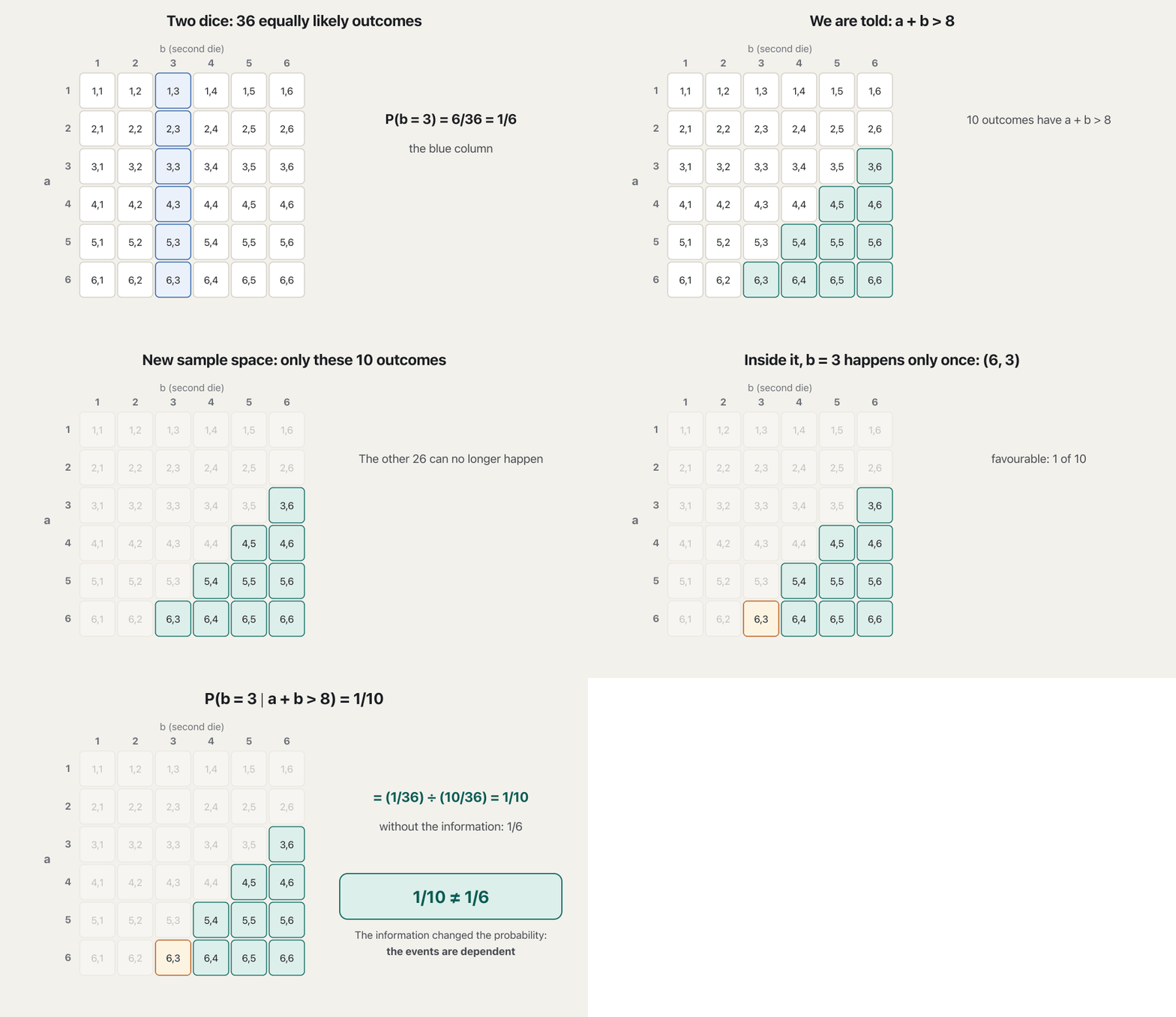
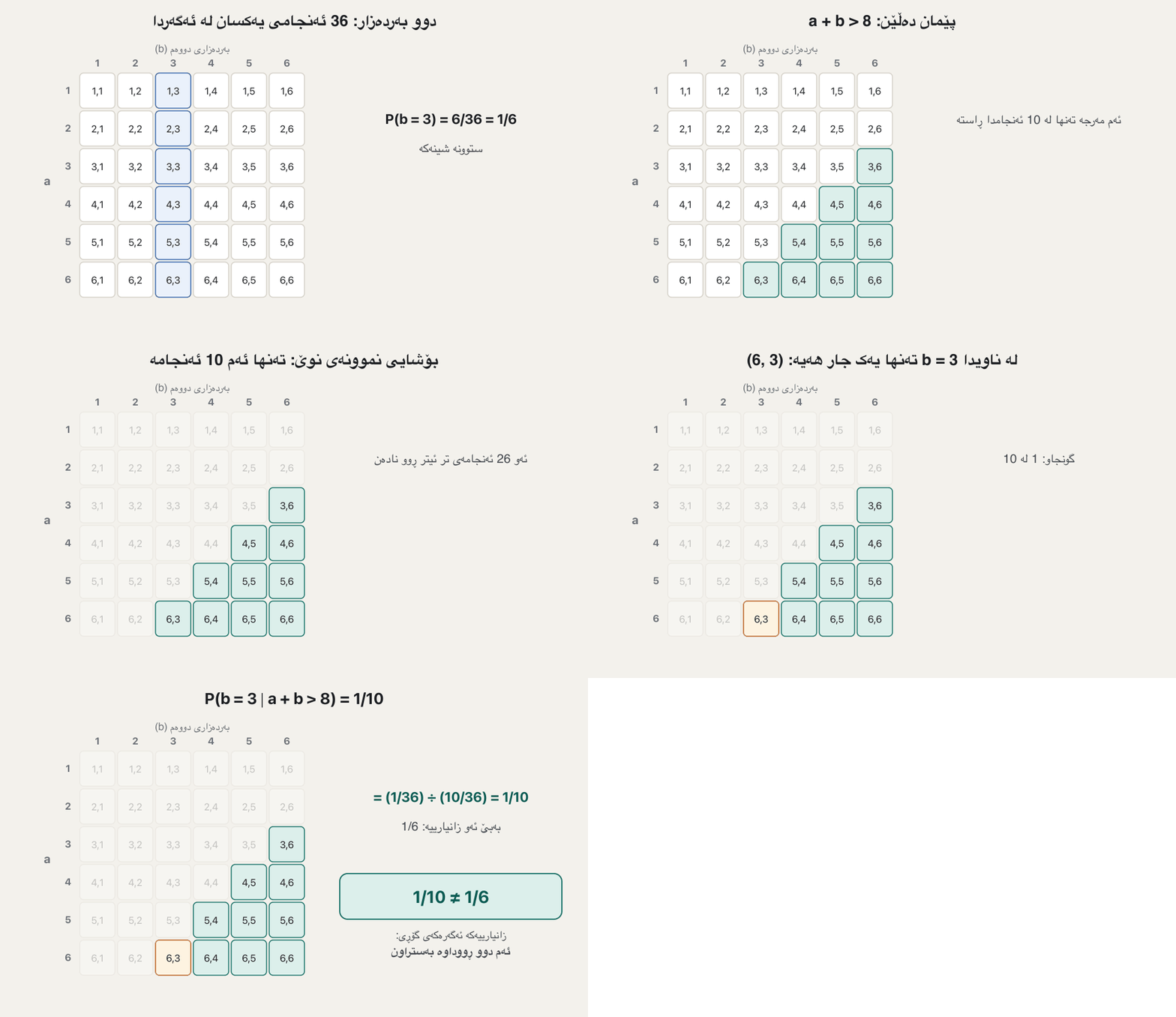
Counting inside the reduced sample space gives . Dividing probabilities gives the same thing and works even when outcomes are not equally likely:
ژماردن لە ناو بچووککراوەکەدا دەدات. دابەشکردنی هەمان شت دەدات و تەنانەت کاتێکیش کار دەکات کە هەمان نەبێت:
The 10 outcomes with are (3,6), (4,5), (4,6), (5,4), (5,5), (5,6), (6,3), (6,4), (6,5), (6,6).
ئەو 10 ـیان هەیە: (3,6)، (4,5)، (4,6)، (5,4)، (5,5)، (5,6)، (6,3)، (6,4)، (6,5)، (6,6).
Example (20): failing maths or statisticsنموونەی (20): کەوتن لە بیرکاری یان ئامار
Example (20). In a college, 25% of the students failed maths, 15% failed statistics and 10% failed both. One student is chosen at random. Let M = failed maths and S = failed statistics: , , .
نموونەی (20). لە کۆلێژێکدا 25%ـی قوتابیان لە بیرکاری کەوتن، 15% لە ئامار و 10% لە هەردووکیان. قوتابییەک بە هەڕەمەکی هەڵدەبژێردرێت. با M = لە بیرکاری کەوتووە و S = لە ئامار کەوتووە: ، ، .
- 1) Failed statistics: did they fail maths?1) لە ئامار کەوتووە: لە بیرکاریش کەوتووە؟
. Two thirds of those who failed statistics also failed maths.
. دوو لەسەر سێی ئەوانەی لە ئامار کەوتوون لە بیرکاریش کەوتوون.
- 2) Failed maths: did they fail statistics?2) لە بیرکاری کەوتووە: لە ئاماریش کەوتووە؟
.
.
- 3) Failed maths or statistics3) لە بیرکاری یان ئامار کەوتووە
This is the addition rule: .
ئەمە یاسای کۆکردنەوەی ئەگەرـە: .
Parts 1 and 2 use the same overlap but divide by different events, so is not . Never swap the two sides of the bar.
بەشەکانی 1 و 2 هەمان بەشی هاوبەش بەکاردەهێنن بەڵام دابەشی جیاواز دەکەن، بۆیە یەکسان نییە بە . هەرگیز دوو لای هێڵەکە ئاڵوگۆڕ مەکە.
Example (21): a two-way tableنموونەی (21): خشتەیەکی دوولایەنە
Example (21). The table gives the probabilities for a person chosen at random from a population: male or female, colour-blind or not.
نموونەی (21). خشتەکە دەدات بۆ کەسێک کە بە هەڕەمەکی لە کۆمەڵگەیەک هەڵدەبژێردرێت: پیاو یان ئافرەت، کوێری ڕەنگ یان نا.
| Personکەس | Colour-blind (CB)کوێری ڕەنگ (CB) | Normal (N)ئاسایی (N) | Sumکۆ |
|---|---|---|---|
| Female (F)ئافرەت (F) | 0.005 | 0.495 | 0.5 |
| Male (M)پیاو (M) | 0.025 | 0.475 | 0.5 |
| Sumکۆ | 0.030 | 0.970 | 1 |
The person chosen is colour-blind. What is the probability that the person is male? That the person is female? The condition CB keeps only the colour-blind column, whose total is 0.030:
کەسە هەڵبژێردراوەکە کوێری ڕەنگە. ئەوە چەندە کە پیاو بێت؟ ئافرەت بێت؟ مەرجی CB تەنها ستوونی کوێری ڕەنگ دەهێڵێتەوە کە کۆکەی 0.030ـە:
The two answers add up to 1: given CB, the person is either male or female.
دوو وەڵامەکە کۆیان 1ـە: بە مەرجی CB، کەسەکە یان پیاوە یان ئافرەت.
Reading the table the other way answers a different question: among males, ; among females, . Turning one direction into the other is the job of Bayes' theorem.
خوێندنەوەی خشتەکە بە پێچەوانەوە وەڵامی پرسیارێکی تر دەداتەوە: لە ناو پیاوان، ؛ لە ناو ئافرەتان، . گۆڕینی ئاڕاستەیەک بۆ ئەوی تر کاری سەلمێنراوی بەیزـە.
The general multiplication ruleیاسای لێکدانی ئەگەر بە شێوە گشتییەکەی
Multiply both sides of the conditional probability formula by the denominator and you get a rule for "A and B". The notes use it for the box homework without stating it, so here it is:
هەردوو لای لە بدە، یاسایەک بۆ «A و B» دەست دەکەوێت. تێبینییەکان بۆ ئەرکی ماڵەوەی سندووقەکە بەکاری دەهێنن بەبێ ئەوەی بینووسن، بۆیە ئەمەتا:
In words: the chance of A first, times the chance of B once A has happened. For three events: .
بە وشە: A سەرەتا، جارانی B دوای ئەوەی A ڕووی دا. بۆ سێ : .
Example. A box holds 4 red and 6 blue balls. Take two without putting the first back. With and for red on the first and second draw, : after one red ball, only 3 of the 9 remaining balls are red.
نموونە. سندووقێک 4 تۆپی سوور و 6 تۆپی شینی تێدایە. دوو دانە دەربهێنە بەبێ گەڕاندنەوەی یەکەم. با و نیشانەی سووربوون بن لە دەرهێنانی یەکەم و دووەمدا: : دوای تۆپێکی سوور، تەنها 3 لەو 9 تۆپەی ماونەتەوە سوورن.
A Kurdish Grade 9 lesson: multiply probabilities for "A then B", and change the bag after a ball is taken out without replacement.
وانەیەکی کوردیی پۆلی 9: بۆ «A پاشان B» لێک بدە، هەروەها دوای دەرهێنانی تۆپێک ، ناوەڕۆکی توورەکەکە بگۆڕە.
Plays 10:40-17:10 in Sorani: dependent events, P(A, then B) = P(A) × P(B after A); a bag of 4 red and 6 green balls, two drawn without putting the first back: 4/10 × 6/9, the same set-up as the screen.
لە 10:40 تا 17:10 بە سۆرانی پەخش دەبێت: ، ؛ توورەکەیەک بە 4 تۆپی سوور و 6 تۆپی سەوز، دوو تۆپ دەردەهێنرێن بێ ئەوەی یەکەمیان بگەڕێنرێتەوە: ، هەمان نموونەی سەر ئەم شاشەیە.
Independent eventsڕووداوی سەربەخۆ
Two events are independent when knowing that one happened does not change the probability of the other. Tossing a coin twice: "heads on the first toss" tells you nothing about the second toss. Any one of these three tests shows independence (they are equivalent):
دوو کاتێک زانینی ڕوودانی یەکێکیان ئەوی تر ناگۆڕێت. دوو جار هەڵدانی دراو: «شێر لە هەڵدانی یەکەمدا» هیچ دەربارەی هەڵدانی دووەم پێت ناڵێت. هەر یەکێک لەم سێ تاقیکردنەوەیە سەربەخۆیی پیشان دەدات (هاوتان):
Put into the conditional formula: . Events that are not independent are dependent.
لە دابنێ: . ئەو سەربەخۆ نین .
The third test is the multiplication theorem for independent events. Example (17): two independent tosses of a fair coin, , where and are heads on the first and second toss. Rolling a die twice, the chance of two sixes is .
تاقیکردنەوەی سێیەم بۆ ـە. نموونەی (17): دوو هەڵدانی سەربەخۆی دراوێکی دادپەروەر، ( و : شێر لە هەڵدانی یەکەم و دووەمدا). لە دوو جار هەڵدانی بەردەزاردا، دوو شەش ـە.
How to tell independent from dependent events and multiply their probabilities, including draws where the first result changes the second.
چۆن لە جیا دەکەیتەوە و لێک دەدەیت، لەوانە دەرهێنان کاتێک دەرهێنانی یەکەم دووەم دەگۆڕێت.
Independent events from 0:14, dependent events from 2:23, summary at 5:47.
لە 0:14ـەوە، لە 2:23ـەوە، کورتە لە 5:47.
Independent eventsڕووداوی سەربەخۆ
A coin has no memoryدراو بیرەوەریی نییە
A fair coin lands heads three times in a row. Is tails now "due"? List the 16 outcomes of four tosses. Exactly 2 of them start with HHH: HHHH and HHHT. So , where is heads on the 4th toss: the same as for any toss.
دراوێکی دادپەروەر سێ جار لە سەریەک شێر دەهێنێت. ئایا ئێستا «نۆرەی» خەتە؟ 16 چوار هەڵدان بنووسە. ڕێک 2یان بە HHH دەست پێ دەکەن: HHHH و HHHT. بۆیە (: شێر لە هەڵدانی چوارەمدا)، هەمان شت وەک هەر هەڵدانێکی تر.
The coin does not "know" what it did before. Believing that past results push the next independent result the other way is called the gambler's fallacy.
دراوەکە «نازانێت» پێشتر چی کردووە. باوەڕبوون بەوەی ئەنجامەکانی ڕابردوو ئەنجامی سەربەخۆی داهاتوو بەرەو لای تر پاڵ دەنێن پێی دەوترێت .
Independent eventsڕووداوی سەربەخۆ
Testing independence: midterm Q1.4تاقیکردنەوەی سەربەخۆیی: پرسیاری 1.4ـی تاقیکردنەوەی نیوەی وەرز
Midterm Q1, part 4. Two dice are rolled, on the first and on the second. Find the probability that , knowing that .
پرسیاری 1، بەشی 4ـی تاقیکردنەوەی نیوەی وەرز. دوو بەردەزار هەڵدەدرێن، لەسەر یەکەم و لەسەر دووەم. بدۆزەرەوە، بە زانینی ئەوەی .
Only (6, 4) has and a sum above 9. The six outcomes with a sum above 9 are (4,6), (5,5), (5,6), (6,4), (6,5), (6,6), so too.
تەنها (6, 4) ـی هەیە و کۆیەکی سەرووی 9ـی هەیە. ئەو شەش کۆیان سەرووی 9ـە بریتین لە (4,6)، (5,5)، (5,6)، (6,4)، (6,5)، (6,6)، بۆیە ـیش.
The condition did not change the probability: . So these two events happen to be independent, and indeed the chance of both is . Compare Example (22), where the condition changed into : dependent.
مەرجەکە نەگۆڕی: . بۆیە ئەم دوو بە ڕێکەوت و بە ڕاستی ڕوودانی هەردووکیان ـە. بەراوردی بکە بە نموونەی (22)، کە مەرجەکە ـی کردە : بەستراو.
| Pair of eventsجووتە | Testتاقیکردنەوە | Resultئەنجام |
|---|---|---|
| and و | independentسەربەخۆ | |
| and (Ex. 22) و (نموونەی 22) | dependentبەستراو | |
| failed maths and failed statistics (Ex. 20)کەوتن لە بیرکاری و ئامار (نموونەی 20) | dependentبەستراو | |
| die: even and بەردەزار: جووت و | independentسەربەخۆ |
Disjoint is not independentجیا سەربەخۆ نییە
Mutually exclusive and independent sound alike but are almost opposites. Take one roll: E = even, O = odd. They are mutually exclusive, so . But , so they are not independent. Knowing that E happened tells you for sure that O did not: that is the strongest dependence there is.
جیا و سەربەخۆ وا دیارە هەمان واتایان هەبێت، بەڵام نزیکەی پێچەوانەی یەکترن. یەک هەڵدان وەربگرە: E = جووت، O = تاک. ، بۆیە . بەڵام ، بۆیە سەربەخۆ نین. زانینی ڕوودانی E بە دڵنیاییەوە پێت دەڵێت O ڕووی نەداوە: ئەمە بەهێزترین بەستراوییە کە هەیە.
| Relationshipپەیوەندی | Meaningواتا | Testتاقیکردنەوە | Exampleنموونە |
|---|---|---|---|
| Independent | One does not change the other's probability.یەکێکیان ئەوی تر ناگۆڕێت. | two separate coin tossesدوو هەڵدانی جیای دراو | |
| Dependent | One changes the other's probability; we describe this with conditional probabilities.یەکێکیان ئەوی تر دەگۆڕێت؛ بە وەسفی دەکەین. | two draws without replacementدوو دەرهێنان | |
| Mutually exclusive | They cannot happen together.ناتوانن پێکەوە ڕوو بدەن. | even and odd on one rollجووت و تاک لە یەک هەڵداندا |
Why mutually exclusive and independent are different ideas: events that cannot happen together are in fact strongly dependent.
بۆچی و دوو بیرۆکەی جیاوازن: ئەو ناتوانن پێکەوە ڕوو بدەن لە ڕاستیدا زۆر بە یەکەوە بەستراون.
Mutually exclusive events at 0:32, independent at 2:03, dependent at 4:42, and how they relate at 5:55.
لە 0:32، لە 2:03، لە 4:42، هەروەها چۆن پێکەوە دەبەسترێنەوە لە 5:55.
Drawing without replacement: the box problemدەرهێنان بەبێ گەڕاندنەوە: کێشەی سندووقەکە
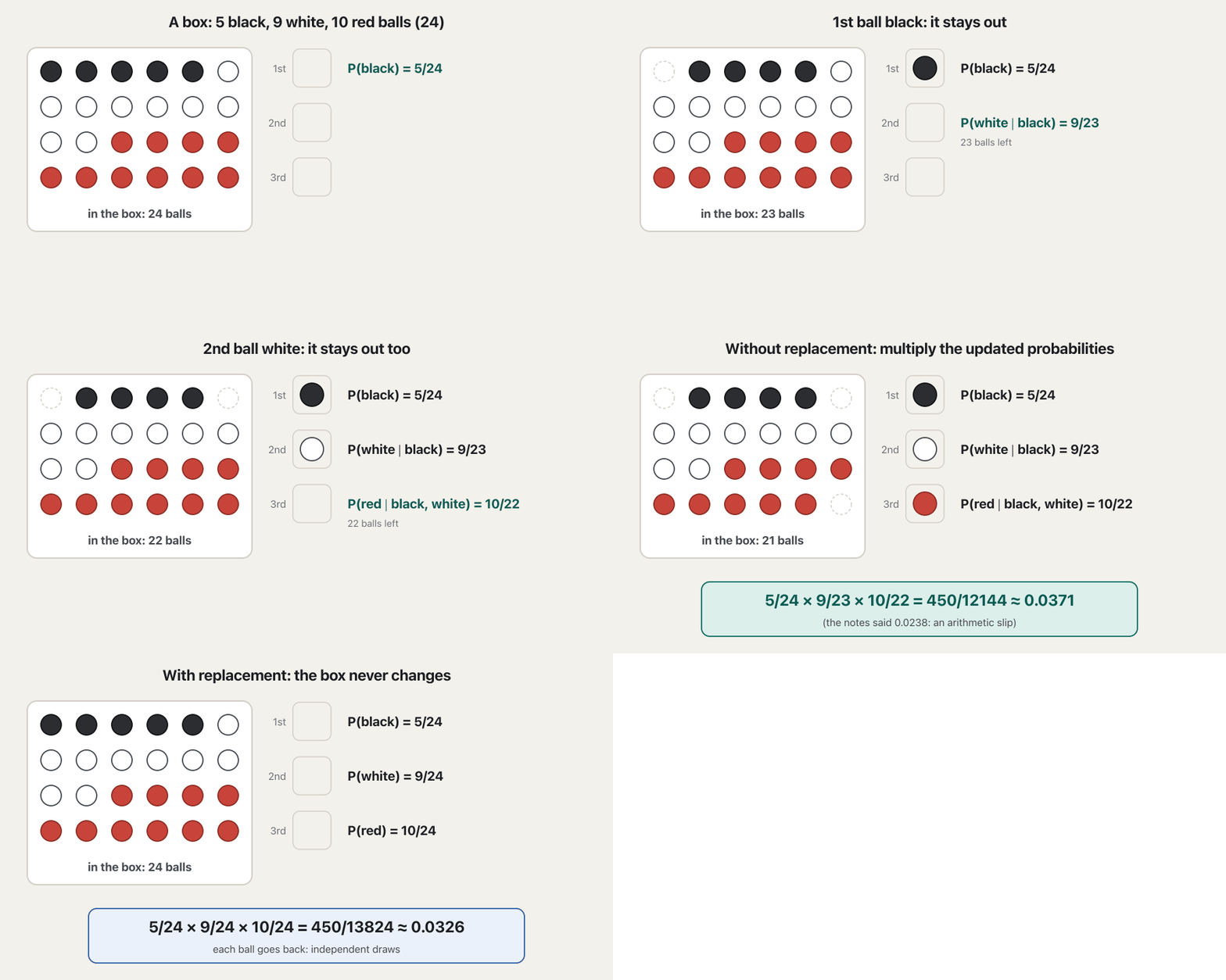
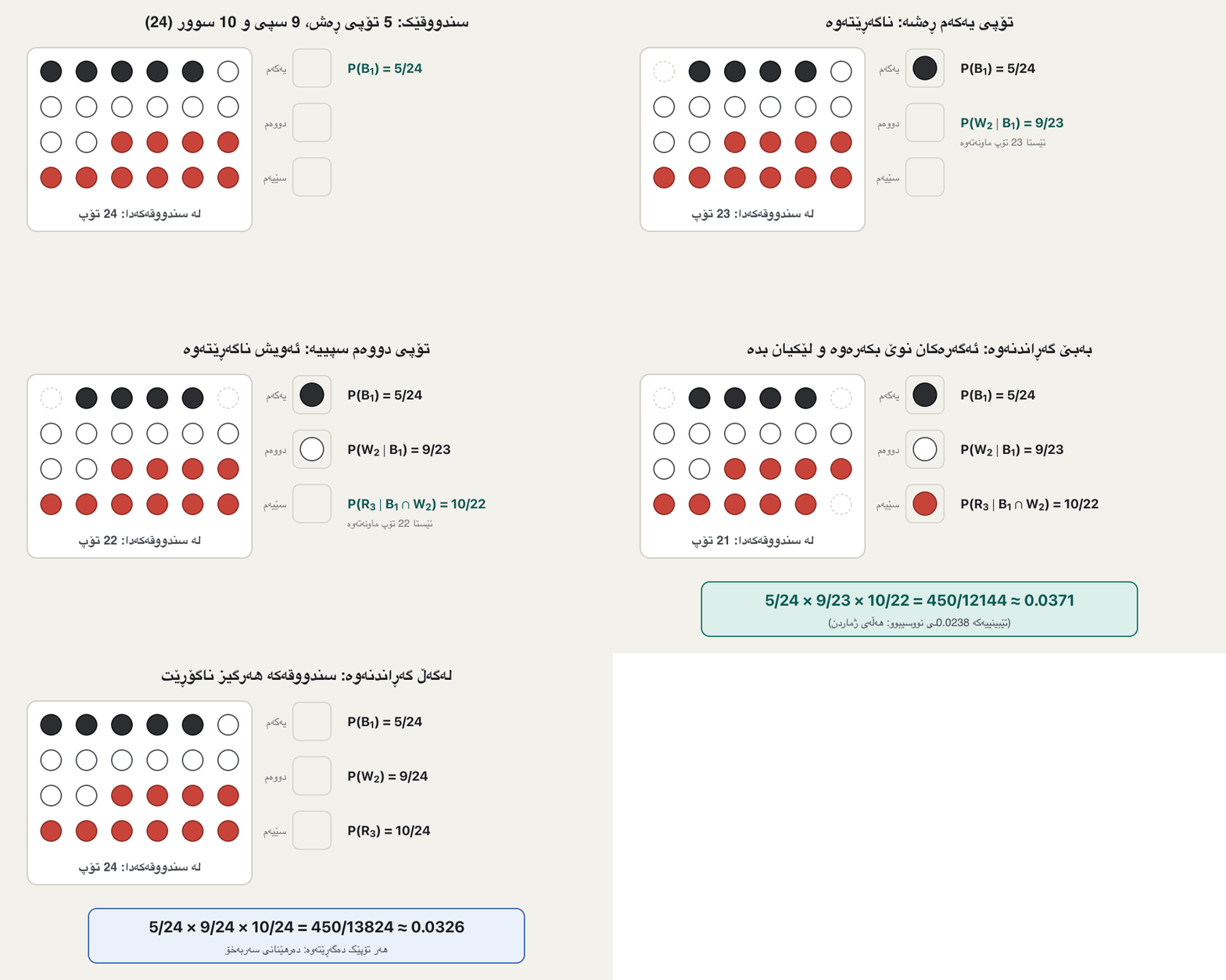
H.W (4). A box contains 5 black, 9 white and 10 red balls (24 in all). Three balls are drawn at random, one after another, and not put back. What is the probability that the first is black, the second white and the third red?
ئەرکی ماڵەوەی (4). سندووقێک 5 تۆپی ڕەش، 9 سپی و 10 سووری تێدایە (هەمووی 24). سێ تۆپ بە هەڕەمەکی یەک لە دوای یەک دەردەهێنرێن و ناگەڕێنرێنەوە. ئەوە چەندە کە یەکەم ڕەش بێت، دووەم سپی و سێیەم سوور؟
- First ballتۆپی یەکەم
5 of the 24 balls are black: .
5 لە 24 تۆپەکە ڕەشن: .
- Second ballتۆپی دووەم
23 balls are left and 9 are white: .
23 تۆپ ماونەتەوە و 9یان سپین: .
- Third ballتۆپی سێیەم
22 are left and all 10 red balls are still there: .
22 تۆپ ماونەتەوە و هەر 10 تۆپە سوورەکە هێشتا لەوێن: .
- Multiply (general multiplication rule)لێکیان بدە (یاسای لێکدانی ئەگەر)
.
.
With replacement (each ball goes back before the next draw) the box never changes, the draws are independent, and the answer is .
(هەر تۆپێک پێش دەرهێنانی داهاتوو دەگەڕێنرێتەوە) سندووقەکە هەرگیز ناگۆڕێت، دەرهێنانەکان سەربەخۆن و وەڵامەکە ـە.
Drawing without replacement: the box problemدەرهێنان بەبێ گەڕاندنەوە: کێشەی سندووقەکە
All four parts of H.W (4)هەر چوار بەشی ئەرکی ماڵەوەی (4)
The homework asks for four probabilities with the same box (no replacement). A neat way, used in one classmate's solution, is to write every answer over the same denominator .
ئەرکەکە چوار دەپرسێت بە هەمان سندووق (). ڕێگایەکی ڕێکوپێک، کە لە چارەسەری هاوپۆلێکدا بەکارهاتووە، ئەوەیە هەموو وەڵامێک لەسەر هەمان بنووسیت .
| Partبەش | Event | Productلێکدان | Probability |
|---|---|---|---|
| 1 | black, white, redڕەش، سپی، سوور | ||
| 2 | white, white, redسپی، سپی، سوور | ||
| 3 | red, red, redسوور، سوور، سوور | ||
| 4a | each of the first two black or white, third redهەر یەک لە دوو یەکەم ڕەش یان سپی، سێیەم سوور | ||
| 4b | both black or both white, third redهەردووکیان ڕەش یان هەردووکیان سپی، سێیەم سوور |
Tree diagramsهێڵکارییە درەختییەکان
A tree diagram organises draws one after another. Each branch carries a conditional probability; the branches leaving one point add up to 1. Two rules do all the work: multiply along a path, and add the paths that belong to the event.
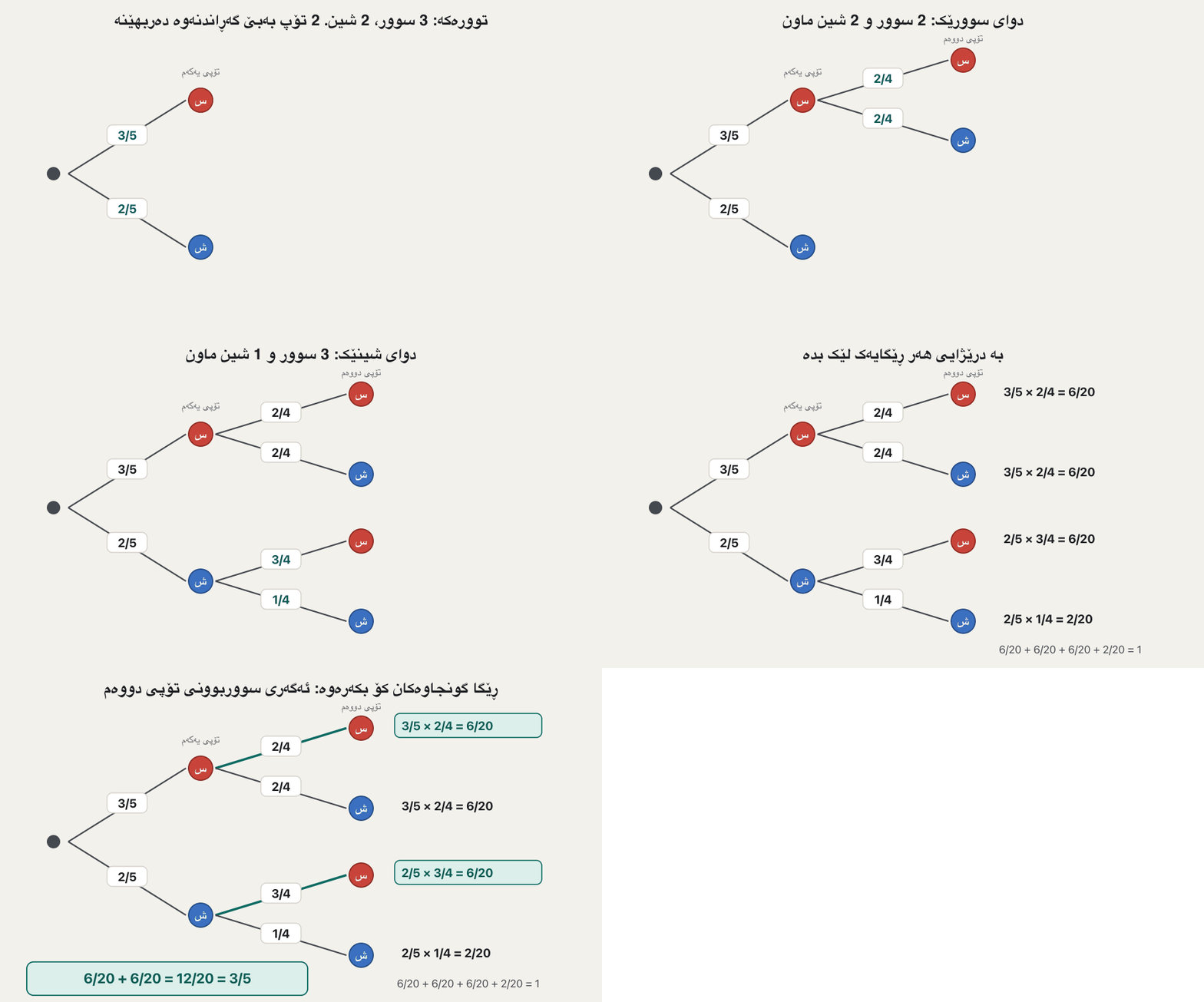
دەرهێنانەکان یەک لە دوای یەک ڕێک دەخات. هەر لقێک هەڵدەگرێت؛ ئەو لقانەی لە یەک خاڵەوە دەردەچن کۆیان 1ـە. دوو یاسا هەموو کارەکە دەکەن: بە درێژایی ڕێگایەک لێک بدە و ئەو ڕێگایانەی سەر بە کۆ بکەرەوە.
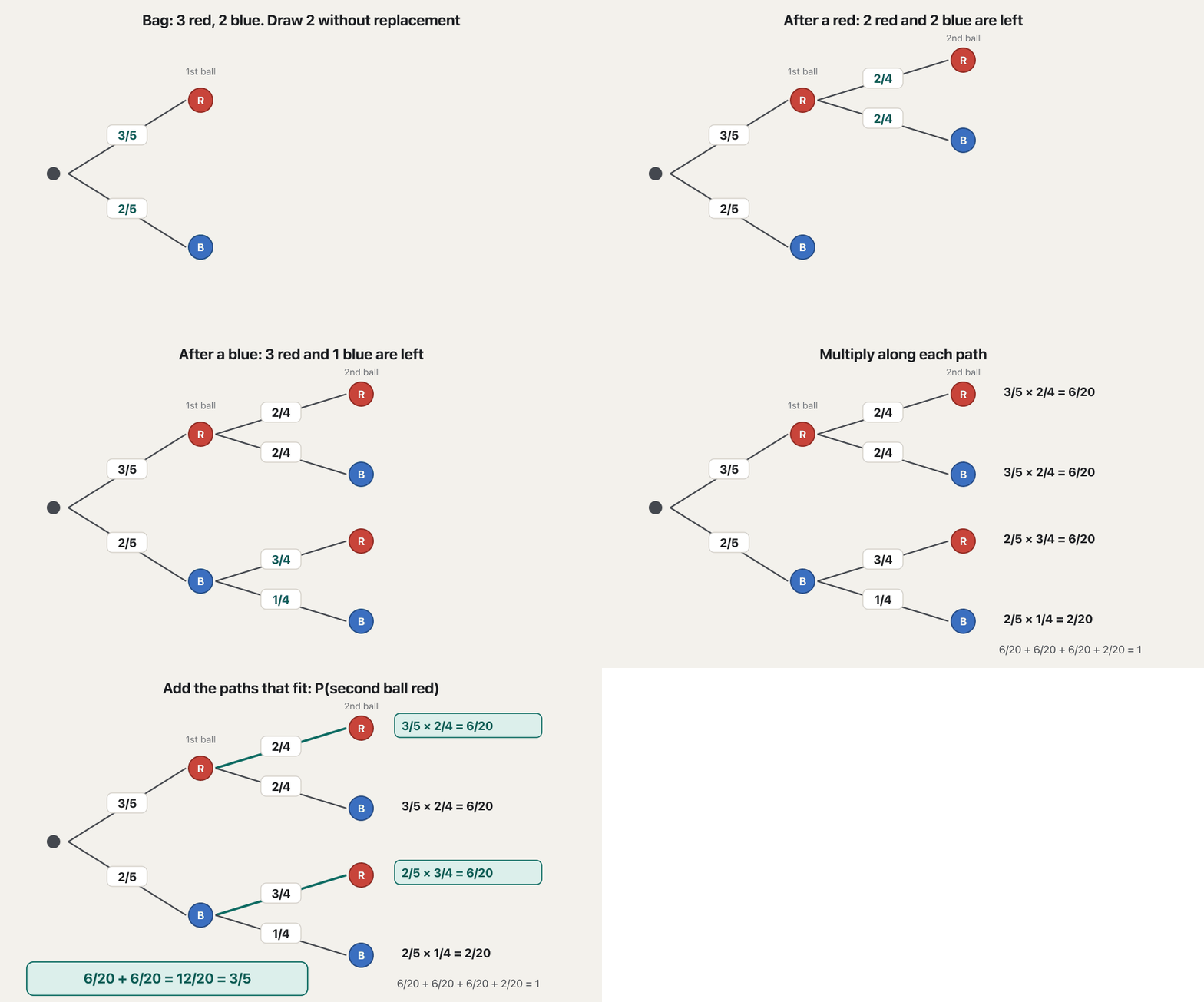
Surprise: (red on the second draw), exactly the same as (red on the first draw). Before you look at the first ball, the second ball is just as likely to be any of the 5 balls. Probabilities change only once you know what came first.
سەرسوڕهێنەرە: (تۆپی دووەم سوور)، ڕێک هەمان (تۆپی یەکەم سوور). پێش ئەوەی سەیری تۆپی یەکەم بکەیت، تۆپی دووەم بە هەمان ئەندازە دەکرێت هەر یەکێک لە 5 تۆپەکە بێت. تەنها کاتێک دەگۆڕێن کە بزانیت یەکەم چی بوو.
| Pathڕێگا | Without replacement | With replacement |
|---|---|---|
| RR | ||
| RB | ||
| BR | ||
| BB |
Common mistakesهەڵە باوەکان
| Mistakeهەڵە | Why it is wrongبۆچی هەڵەیە | Do this insteadلەبری ئەوە ئەمە بکە |
|---|---|---|
| Swapping and ئاڵوگۆڕی و | They divide by different events ( vs in Example 20).دابەشی جیاواز دەکەن ( بەرانبەر لە نموونەی 20). | Name the condition first; it goes in the denominator.سەرەتا مەرجەکە ناو بنێ؛ دەچێتە . |
| Multiplying for draws without replacementلێکدانی بۆ دەرهێنان | The draws are dependent; the box changes.دەرهێنانەکان بەستراون؛ سندووقەکە دەگۆڕێت. | Use and update the counts. بەکاربهێنە و ژمارەکان نوێ بکەرەوە. |
| Using one order when several orders give the eventبەکارهێنانی یەک ڕیز کاتێک چەند ڕیزێک دەدەن | Each order is a separate path of the tree.هەر ڕیزێک ڕێگایەکی جیای . | Add all paths (times 3 for "exactly one" of three draws).هەموو ڕێگاکان کۆ بکەرەوە (3 جار بۆ «ڕێک یەک» لە سێ دەرهێناندا). |
| "Tails is due after HHH"«دوای HHH نۆرەی خەتە» | Independent tosses have no memory (gambler's fallacy).هەڵدانی سەربەخۆ بیرەوەریی نییە (). | The next toss is still tails with probability .هەڵدانی داهاتوو هێشتا بە خەتە. |
| Calling disjoint events independent بە سەربەخۆ ناو بنێیت | If one happens the other cannot: the strongest dependence.گەر یەکێکیان ڕوو بدات ئەوی تر ناتوانێت: بەهێزترین بەستراوی. | Test . تاقی بکەرەوە. |
Exercisesڕاهێنانەکان
Two dice are rolled. The first die shows 3. What is the probability that the sum is 8?
دوو بەردەزار هەڵدەدرێن. بەردەزاری یەکەم 3 نیشان دەدات. ئەوە چەندە کە کۆکە 8 بێت؟
Show answerوەڵامەکە پیشان بدە
Given , the second die must show 5: one chance in six.
بە مەرجی ، بەردەزاری دووەم دەبێت 5 نیشان بدات: یەک لە شەش.
Two dice. A = "the first die shows 6", B = "the sum is at least 10". Find and . Are A and B independent?
دوو بەردەزار. A = «بەردەزاری یەکەم 6 نیشان دەدات»، B = «کۆکە لانیکەم 10ـە». و بدۆزەرەوە. ئایا A و B سەربەخۆن؟
Show answerوەڵامەکە پیشان بدە
Given a 6 first, the second die needs 4, 5 or 6. Since , knowing A changes the probability of B: they are dependent.
بە مەرجی 6 لە یەکەمدا، بەردەزاری دووەم پێویستی بە 4، 5 یان 6 هەیە. چونکە ، زانینی A B دەگۆڕێت: .
A box has 12 items, 3 of them defective. Three items are taken at random without replacement. A student writes the probability of exactly one defective item as . What is missing, and what is the right answer?
سندووقێک 12 کەرەستەی تێدایە، 3یان بێکەڵکن. سێ کەرەستە بە هەڕەمەکی دەردەهێنرێن. قوتابییەک ڕێک یەک کەرەستەی بێکەڵک بەم شێوەیە دەنووسێت: . چی کەمە و وەڵامی ڕاست چییە؟
Hintئاماژە
In how many positions can the defective item appear?
کەرەستە بێکەڵکەکە لە چەند شوێندا دەردەکەوێت؟
Show answerوەڵامەکە پیشان بدە
The product is only the path D, G, G (defective first). The defective item can also come second or third, and each of these paths has the same probability:
لێکدانەکە تەنها ڕێگای D، G، Gـە (بێکەڵک لە یەکەمدا). کەرەستە بێکەڵکەکە دەکرێت دووەم یان سێیەمیش بێت و هەر یەکێک لەم ڕێگایانە هەمان هەیە:
Let X be the number of defective items drawn. Combinations count the three orders automatically. This problem is H.W (10) of the expected-value lecture; its Kurdish answer in the course notes multiplies along one order only. The whole homework, with the expected number of defective items (0.75), is in Expected Value.
با X ژمارەی کەرەستە بێکەڵکە دەرهێنراوەکان بێت. سێ ڕیزەکە خۆکارانە دەژمێرن. ئەم کێشەیە ئەرکی ماڵەوەی (10)ـی وانەی ؛ وەڵامە کوردییەکەی لە تێبینییەکانی کۆرسەکەدا تەنها بە درێژایی یەک ڕیز لێک دەدات. هەموو ئەرکەکە، لەگەڵ ژمارەی پێشبینیکراوی کەرەستە بێکەڵکەکان (0.75)، لە نرخی پێشبینیکراودایە.
A box has 4 red and 6 blue balls. Two balls are drawn. Find the probability that both are red (a) without replacement, (b) with replacement. Which is larger, and why?
سندووقێک 4 تۆپی سوور و 6 تۆپی شینی تێدایە. دوو تۆپ دەردەهێنرێن. ئەوە بدۆزەرەوە کە هەردووکیان سوور بن، (أ) ، (ب) . کامیان گەورەترە و بۆچی؟
Show answerوەڵامەکە پیشان بدە
With replacement is larger: the red ball goes back, so the second draw still has 4 red balls out of 10.
گەورەترە: تۆپە سوورەکە دەگەڕێتەوە، بۆیە دەرهێنانی دووەم هێشتا 4 تۆپی سووری لە 10 هەیە.
Summaryپوختە
- : the condition B becomes the new, smaller sample space (Example 22: ).
- General multiplication rule ; for draws without replacement update the box after each draw (0.0371).
- Independent: , equivalently ; a coin has no memory.
- Disjoint events (with positive probabilities) are dependent, never independent.
- Tree diagrams: multiply along a path, add the paths; count every order.
- : مەرجی B دەبێتە نوێ و بچووکترەکە (نموونەی 22: ).
- بە شێوە گشتییەکەی ؛ بۆ دەرهێنان دوای هەر دەرهێنانێک سندووقەکە نوێ بکەرەوە (0.0371).
- سەربەخۆ: ، یان بە هەمان واتا ؛ دراو بیرەوەریی نییە.
- (بە ئەرێنی) ، هەرگیز سەربەخۆ نین.
- : بە درێژایی ڕێگایەک لێک بدە، ڕێگاکان کۆ بکەرەوە؛ هەموو ڕیزێک بژمێرە.
Why is different from ?بۆچی جیاوازە لە ؟
The first divides by (sum above 8) and gives ; the second divides by () and gives .
یەکەم دابەشی دەکات (کۆی سەرووی 8) و دەدات؛ دووەم دابەشی دەکات () و دەدات.
What was wrong with 0.0238 in the box note?چی هەڵە بوو لە 0.0238ـی تێبینیی سندووقەکەدا؟
Only the arithmetic: .
تەنها ژماردنەکە: .
Videoڤیدیۆ
Watch a videoسەیری ڤیدیۆیەک بکە
A video that viewers liked a lot and praised in their comments, chosen for this lesson.ڤیدیۆیەک کە بینەران زۆریان پێ خۆش بووە و لە کۆمێنتەکانیاندا ستایشیان کردووە، بۆ ئەم وانەیە هەڵبژێردراوە.
Conditional probability as a smaller sample space: what P(A|B) means, its formula and simple examples, with a first look at independence.
وەک بچووکتر: واتای چییە، و نموونەی سادە، لەگەڵ سەرەتایەک بۆ .
Sample space and Venn picture from 0:24, the definition at 2:29, examples from 4:58.
و لە 0:24ـەوە، پێناسەکە لە 2:29، نموونەکان لە 4:58ـەوە.
Lesson complete!وانەکە تەواو بوو!
Well done. Review the key terms, then go on to the next lesson.دەستخۆش. سەیرێکی زاراوە سەرەکییەکان بکەرەوە، پاشان بڕۆ بۆ وانەی داهاتوو.
Key termsزاراوە سەرەکییەکان
Bayes' Theoremسەلمێنراوی بەیز
Related lecturesوانە پەیوەندیدارەکان
References and further readingسەرچاوەکان و خوێندنەوەی زیاتر
- OpenStax, Introductory Statistics 2e, 3.2 Independent and Mutually Exclusive Events (three tests of independence, sampling with and without replacement)
- OpenStax, Introductory Statistics 2e, 3.3 Two Basic Rules of Probability (the multiplication rule)
- OpenStax, Introductory Statistics 2e, 3.5 Tree and Venn Diagrams (trees with and without replacement)
- MIT OpenCourseWare 18.05, Class 3 reading: Conditional Probability, Independence and Bayes' Theorem
- Cuemath: Dependent Events (the link kept in the course notes)
This lecture is a first edition. The Kurdish text and terminology are waiting for review by Kurdish IT teachers.ئەم وانەیە چاپی یەکەمە. دەقە کوردییەکە و زاراوەکانی چاوەڕێی پێداچوونەوەی مامۆستایانی کوردی بواری IT ن.