Chapterبەش 5 · Lectureوانە 5.3
Address Classes, and Why CIDR Replaced Themپۆلەکانی ناونیشانی IP و بۆچی CIDR جێگەیانی گرتەوە
From 1981 to 1993 the first bits of an IPv4 address fixed its class: A, B and C for hosts with the default masks /8, /16 and /24, D for multicast and E reserved. Learn the first-octet ranges and leading bits, count the networks and hosts of each class with , sort addresses into classful networks, see why fixed sizes wasted addresses — and how CIDR, with a prefix length such as /20, replaced classes in 1993.
لە 1981 تا 1993 یەکەم ناونیشانێکی پۆلەکەیان دیاری دەکرد: A، B و C بۆ بە بنەڕەتیی /8، /16 و /24، D بۆ و E تەرخانکراو. مەوداکانی یەکەم و پێشەوە فێر ببە، و هەر پۆلێک بە بژمێرە، ناونیشانەکان بەپێی پۆلدار ڕیز بکە و ببینە بۆچی قەبارە جێگیرەکان ناونیشانیان بەفیڕۆ دەدا — و چۆن بە وەک /20 لە 1993ـدا جێگەی پۆلەکانی گرتەوە.
What you will learnچی فێر دەبیت
- Name the five IPv4 classes from the first octet or the leading bits, and say what classes D and E are for.
- Give the network part, host part and default mask of classes A, B and C, and count their networks and hosts with .
- Group addresses into classful networks and find each network ID and broadcast address.
- Explain why classful addressing wasted addresses and how CIDR replaced it in 1993.
- Compare classful and classless addressing, and recognise where classes still appear today.
- پێنج پۆلەکەی لە یەکەم یان پێشەوە بناسیتەوە و بڵێیت پۆلەکانی D و E بۆ چین.
- ، و بنەڕەتیی پۆلەکانی A، B و C بڵێیت و و بە بژمێریت.
- ناونیشانەکان بەپێی پۆلدار ڕیز بکەیت و و هەریەکەیان بدۆزیتەوە.
- ڕوونی بکەیتەوە بۆچی ناونیشانی بەفیڕۆ دەدا و چۆن لە 1993ـدا جێگەی گرتەوە.
- و ناونیشانکردنی بێپۆل بەراورد بکەیت و بزانیت پۆلەکان ئەمڕۆ لە کوێ دەردەکەون.
Two ways to split an address: classes and CIDRدوو ڕێگە بۆ دابەشکردنی ناونیشان: پۆلەکان و CIDR
Every IPv4 address has a network part and a host part (IPv4 Addresses in Depth). But where exactly is the border between the two? The Internet has answered this question in two ways. From 1981 the class of the address decided: its first bits told every router how long the network part was. Since 1993 the Internet has been classless: the border is written next to the address as a prefix length, for example /24. This system is called CIDR.
هەموو ناونیشانێکی و هەیە (ناونیشانەکانی IPv4 بە وردی). بەڵام سنووری نێوان ئەم دوو بەشە ڕێک لە کوێدایە؟ بە دوو ڕێگە وەڵامی ئەم پرسیارەی داوەتەوە. لە 1981ـەوە پۆلی ناونیشانەکە بڕیاری دەدا: یەکەم ناونیشانەکە بە هەموو دەگوت چەند درێژە. لە 1993ـەوە بێپۆلە: سنوورەکە لە تەنیشت ناونیشانەکەوە وەک دەنووسرێت، بۆ نموونە /24. ناوی ئەم سیستەمە .
Classes are history, but you still meet them: exam questions use them, programs suggest a mask from them, and the private address ranges were described with them. This lesson shows the five classes, why they wasted addresses, and how CIDR replaced them.
پۆلەکان بوونەتە مێژوو، بەڵام هێشتا تووشیان دەبیت: پرسیارەکانی تاقیکردنەوە بەکاریان دەهێنن، بەرنامەکان لە ڕووی پۆلەوە پێشنیار دەکەن و مەوداکانی بە پۆل وەسف کران. ئەم وانەیە پێنج پۆلەکە، هۆی بەفیڕۆچوونی ناونیشانەکان و چۆنیەتی جێگرتنەوەیان بە نیشان دەدات.
Five classes, told by the first octetپێنج پۆل کە هەشتەی یەکەم دیاریان دەکات
In the classful system the first octet — the number before the first dot — tells you the class. Classes A, B and C hold unicast addresses for ordinary hosts: class A was meant for very large networks, class B for medium ones and class C for small ones. Class D is for multicast: one packet sent to a group of hosts. Class E is reserved and is never given to hosts.
لە سیستەمی پۆلداردا یەکەم — ئەو ژمارەیەی پێش یەکەم خاڵ — پۆلەکەت پێ دەڵێت. پۆلەکانی A، B و C ناونیشانی بۆ ئاسایی هەڵدەگرن: پۆلی A بۆ زۆر گەورە بوو، پۆلی B بۆ مامناوەند و پۆلی C بۆ بچووک. پۆلی D بۆ : یەک کە بۆ گرووپێک دەنێردرێت. پۆلی E تەرخانکراوە و هەرگیز نادرێت بە .
Two first octets are missing from class A. 0 means “this network” (the block 0.0.0.0/8), and 127 is the block of loopback addresses (127.0.0.0/8): 127.0.0.1 is your own computer, also called . That is why class A runs from 1 to 126 and class B starts at 128. If you wonder what happened to 127, between A and B: it was kept for loopback.
دوو ژمارە لە سەرەتای پۆلی A دیار نین. 0 واتە «ئەم » (بلۆکی 0.0.0.0/8) و 127 بلۆکی (127.0.0.0/8): 127.0.0.1 خۆتە، کە پێی دەگوترێت . بۆیە پۆلی A لە 1ـەوە تا 126 دەڕوات و پۆلی B لە 128ـەوە دەست پێ دەکات. ئەگەر پرسیارت کرد «ئەی 127، لە نێوان A و B، چی لێ هات؟» وەڵامەکە ئەمەیە: بۆ هەڵگیرا.
The leading bits behind the bordersبیتەکانی پێشەوە لە پشت سنوورەکان
Why do the borders fall at 128, 192, 224 and 240? Write the first octet in binary (Binary to decimal). RFC 791 (1981) fixed the first bit of class A at 0, the first two bits of class B at 10 and the first three bits of class C at 110. RFC 1112 (1989) added 1110 for class D and 1111 for class E. The other bits are free. So class A received half of all IPv4 addresses, class B a quarter, class C an eighth, and D and E a sixteenth each.
بۆچی سنوورەکان دەکەونە سەر 128، 192، 224 و 240؟ یەکەم بە بنووسە (لە دووانییەوە بۆ دەیی). RFC 791 (1981) یەکەم پۆلی A بە 0 جێگیر کرد، دوو یەکەمی پۆلی B بە 10 و سێ یەکەمی پۆلی C بە 110. RFC 1112 (1989) 1110ـی بۆ پۆلی D و 1111ـی بۆ پۆلی E زیاد کرد. تر ئازادن. بۆیە پۆلی A نیوەی هەموو ناونیشانەکانی وەرگرت، پۆلی B چارەکێک، پۆلی C هەشتیەک و D و E هەریەکەیان شانزەیەک.
A memory trick: count the 1s before the first 0. No 1 → A, one → B, two → C, three → D, four → E. And the border values are 10000000 = 128, 11000000 = 192, 11100000 = 224 and 11110000 = 240 — numbers you will meet again as mask values.
فێڵێکی بیرهێنانەوە: ئەو 1ـانە بژمێرە کە پێش یەکەم 0 دێن. هیچ ← A، یەک ← B، دوو ← C، سێ ← D، چوار ← E. بەهای سنوورەکانیش ئەمانەن: 10000000 = 128، 11000000 = 192، 11100000 = 224 و 11110000 = 240 — ژمارەگەلێک کە دیسان وەک بەهاکانی ماسکی ژێرڕایەڵە دەیانبینیتەوە.
Network part, host part and the default maskبەشی ڕایەڵە، بەشی میوانگر و ماسکی ژێرڕایەڵەی بنەڕەتی
The class also fixed where the network part ends. Class A: the first octet is the network and the other three octets are the host (8 + 24 bits). Class B: two octets and two octets (16 + 16). Class C: three octets for the network and one for the host (24 + 8). Addresses in the same network have the same network part and different host parts.
پۆلەکە ئەوەشی دیاری دەکرد کە لە کوێ کۆتایی دێت. پۆلی A: یەکەم و سێ تر (8 + 24 ). پۆلی B: دوو و دوو (16 + 16). پۆلی C: سێ بۆ و یەکێک بۆ (24 + 8). ناونیشانەکانی ناو یەک وەک یەکە و جیاوازە.
The default mask shows the same split: 255 for each network octet and 0 for each host octet. Class A: 255.0.0.0 (/8). Class B: 255.255.0.0 (/16). Class C: 255.255.255.0 (/24). For example, the class A network 10.0.0.0 has 8 network bits and 24 host bits, so its mask in binary is 11111111 00000000 00000000 00000000. That is also why Packet Tracer shows /24 next to a class C address such as 192.168.1.10.
بنەڕەتی هەمان دابەشکردن نیشان دەدات: 255 بۆ هەر و 0 بۆ هەر . پۆلی A: 255.0.0.0 (/8). پۆلی B: 255.255.0.0 (/16). پۆلی C: 255.255.255.0 (/24). بۆ نموونە، 10.0.0.0 لە پۆلی A هەشت و 24 هەیە، بۆیە بە دەبێتە 11111111 00000000 00000000 00000000. هەر بۆیە Packet Tracer لە تەنیشت ناونیشانێکی پۆلی C وەک 192.168.1.10 /24 نیشان دەدات.
How many hosts fit in one network?چەند میوانگر لە یەک ڕایەڵەدا جێ دەبنەوە؟
With H host bits there are different host parts. Two of them never go to a host: if all host bits are 0, the address is the network ID; if all are 1, it is the broadcast address. So every classful network had usable host addresses. A host is any device that uses an IP address: a PC, a phone, a printer or a router interface.
بە H جیاواز هەیە. دوانیان هەرگیز نادرێن بە : ئەگەر هەموو 0 بن، ناونیشانەکە ؛ ئەگەر هەموویان 1 بن، . بۆیە هەر پۆلدار ناونیشانی بەکارهاتووی بۆ هەبوو. هەر ئامێرێکە کە بەکار بهێنێت: ، مۆبایل، یان .
Usable hosts in one network of classes A, B and C (H = 24, 16 and 8 host bits).
بەکارهاتوو لە یەک پۆلەکانی A، B و C، کە بە ڕیز 24، 16 و 8 هەیە.
How many networks — and which class for whom?چەند ڕایەڵە — و کام پۆل بۆ کێ؟
To count the networks of a class, count the network bits that are free to change. Class A has 8 network bits, but the first is fixed at 0, so 7 are free: . Two are reserved — 0 (“this network”) and 127 (loopback) — which leaves 126. Class B: 16 bits minus 2 fixed bits = 14, so . Class C: 24 − 3 = 21, so . The powers 7, 14 and 21 come from the fixed leading bits.
بۆ ژماردنی پۆلێک، ئەو بژمێرە کە ئازادن بگۆڕێن. پۆلی A هەشت هەیە، بەڵام یەکەمیان بە 0 جێگیرە، بۆیە 7 ئازادن: . دوانیان تەرخانکراون — 0 («ئەم ») و 127 () — بۆیە 126 دەمێنێتەوە. پۆلی B: 16 لابردنی 2 جێگیر = 14، کەواتە . پۆلی C: ، کەواتە . 7، 14 و 21 لە جێگیری پێشەوە هاتوون.
| Classپۆل | Free network bits ئازادی | Networksژمارەی | Host bits | Usable hosts per network بەکارهاتوو لە هەر |
|---|---|---|---|---|
| A | 7 (8 − 1) | 126 | 24 | 16,777,214 |
| B | 14 (16 − 2) | 16,384 | 16 | 65,534 |
| C | 21 (24 − 3) | 2,097,152 | 8 | 254 |
So which class did an organisation get? It depended on the number of hosts: 100 computers → class C (254). 50,000 computers → class B (65,534). One million computers → only class A was big enough, because a class B network stops at 65,534 hosts.
کەواتە ڕێکخراوێک کام پۆلی وەردەگرت؟ بەپێی ژمارەی بوو: 100 ← پۆلی C (254). 50,000 ← پۆلی B (65,534). ملیۆنێک ← تەنیا پۆلی A بەس بوو، چونکە پۆلی B لە 65,534 دەوەستێت.
Which addresses share a network?کام ناونیشانانە ڕایەڵەیەکیان هاوبەشە؟
To find the classful network of an address, look only at the network octets of its class: one octet for A, two for B, three for C. Same network octets → same network. The network ID keeps the network octets and turns the host octets into 0; the broadcast address turns them into 255. Neither is given to a host: the network ID names the network itself (you will meet it in routing tables), and the broadcast reaches everyone on it.
بۆ دۆزینەوەی پۆلداری ناونیشانێک، تەنیا سەیری پۆلەکەی بکە: یەک بۆ A، دوو بۆ B، سێ بۆ C. وەک یەک ← هەمان . دەهێڵێتەوە و دەکاتە 0؛ دەیانکاتە 255. هیچیان نادرێن بە : ناوی خودی (لە دەیبینیتەوە) و دەگاتە هەموو ئەوانەی لەسەریەتی.
Two computers in different networks cannot talk directly, even when both networks are of the same class: a router must join them. Class A had only 126 such networks — you could draw 126 boxes like the green one below — class B had 16,384 and class C 2,097,152.
دوو لە دوو جیاوازدا ناتوانن ڕاستەوخۆ قسە بکەن، تەنانەت ئەگەر هەردوو لە هەمان پۆلدا بن: دەبێت پێکیان ببەستێتەوە. پۆلی A تەنیا 126 لەم جۆرەی هەبوو — دەتوانیت 126 چوارگۆشە وەک چوارگۆشە سەوزەکەی خوارەوە بکێشیت — پۆلی B 16,384 و پۆلی C 2,097,152.
Class D is multicast, class E is reservedپۆلی D بۆ فرەپەخشە، پۆلی E تەرخانکراوە
Class D (224–239) holds multicast group addresses: a packet sent to one of them reaches every host that joined the group, and nobody else (unicast, broadcast and multicast). Routing protocols use them: OSPF routers listen on 224.0.0.5 and RIPv2 routers on 224.0.0.9, while 224.0.0.1 means all systems on this subnet (IANA multicast registry, 2026; why OSPF hellos go to 224.0.0.5).
پۆلی D (224–239) ناونیشانی گرووپەکانی هەڵدەگرێت: کە بۆ یەکێکیان بنێردرێت دەگاتە هەموو ئەو کە چوونەتە ناو گرووپەکەوە و بۆ کەسی تر ناچێت (تاکپەخش، پەخشکردن و فرەپەخش). بەکاریان دەهێنن: گوێ لە 224.0.0.5 دەگرن و RIPv2 لە 224.0.0.9، 224.0.0.1ـیش واتە هەموو سیستەمەکانی سەر ئەم (تۆماری IANA، 2026؛ بۆچی پاکێتەکانی سڵاوی OSPF بۆ 224.0.0.5 دەچن).
Class E (240–255) was set aside for future use in 1989 (RFC 1112), and the IANA registry still lists 240.0.0.0/4 as reserved. The limited broadcast 255.255.255.255 sits at its very end. Classes D and E have no host part and no default mask; they were never given to hosts.
پۆلی E (240–255) لە 1989ـدا بۆ بەکارهێنانی داهاتوو هەڵگیرا (RFC 1112) و تۆماری IANA هێشتا 240.0.0.0/4 وەک تەرخانکراو دادەنێت. سنووردار، 255.255.255.255، لە کۆتایی ئەودایە. پۆلەکانی D و E نە هەیە، نە بنەڕەتی؛ هەرگیز نەدراون بە .
| Classپۆل | First octet یەکەم | Used forبەکارهێنان | Exampleنموونە |
|---|---|---|---|
| D | 224–239 | Multicast groupsگرووپەکانی | 224.0.0.5 (OSPF) |
| E | 240–255 | Reservedتەرخانکراو | 255.255.255.255 |
Why classes failedبۆچی پۆلەکان سەرکەوتوو نەبوون
Classful addressing was inflexible: a network came in only three sizes — 16,777,214, 65,534 or 254 hosts — and all hosts in a classful network used the same mask. Think of a company with 300 hosts. Class C (254) is too small, so it received a class B network: 65,536 addresses, of which 65,234 host addresses were never used — 99.5 %. Small networks wasted addresses, and big networks did not fit.
وشکوبرینگ بوو (inflexible): تەنیا سێ قەبارەی هەبوو — 16,777,214، 65,534 یان 254 — و هەموو ناو پۆلدار هەمان بەکار دەهێنا. کۆمپانیایەک بهێنە پێش چاوت کە 300 هەیە. پۆلی C (254) زۆر بچووکە، بۆیە پۆلی Bـی وەردەگرت: 65,536 ناونیشان، کە 65,234 ناونیشانی هەرگیز بەکار نەدەهاتن — 99.5%. بچووک ناونیشانیان بەفیڕۆ دەدا و گەورەش جێیان نەدەبووەوە.
By the early 1990s this caused two crises (RFC 4632): the class B networks were running out, and the routing tables of Internet routers grew faster than routers and people could manage — a company that took several class C networks instead needed one route for each of them.
لە سەرەتای ساڵانی 1990ـدا ئەمە بووە هۆی دوو قەیران (RFC 4632): پۆلی B خەریک بوو تەواو دەبوون و لەوە خێراتر گەورە دەبوون کە و خەڵک بتوانن بەڕێوەیان ببەن — کۆمپانیایەک کە لە جیاتی ئەوە چەند پۆلی Cـی وەردەگرت، بۆ هەریەکەیان ڕێگەیەکی جیای پێویست بوو.
CIDR: a prefix of any lengthCIDR: پێشگرێک بە هەر درێژییەک
In September 1993, RFC 1518 and RFC 1519 introduced CIDR, Classless Inter-Domain Routing; today's rules are RFC 4632 (2006). The network part can now have any length, written after the address: 192.168.1.0/24 means that the first 24 bits (192.168.1) are the network and the last 8 bits are the host. Inter-domain means between domains: between the networks of different organisations, as in routing between ISPs.
لە ئەیلوولی 1993ـدا دوو RFC، 1518 و 1519، هێنایانە ئاراوە (Classless Inter-Domain Routing، واتە بێپۆل لە نێوان پاوانەکاندا)؛ یاساکانی ئەمڕۆ RFC 4632ـن (2006). ئێستا دەتوانێت هەر درێژییەکی هەبێت و لە دوای ناونیشانەکەوە دەنووسرێت: 192.168.1.0/24 واتە 24 یەکەم (192.168.1) و 8 کۆتایی . «لە نێوان پاوانەکاندا» واتە لە نێوان ڕێکخراوە جیاوازەکاندا، وەک نێوان .
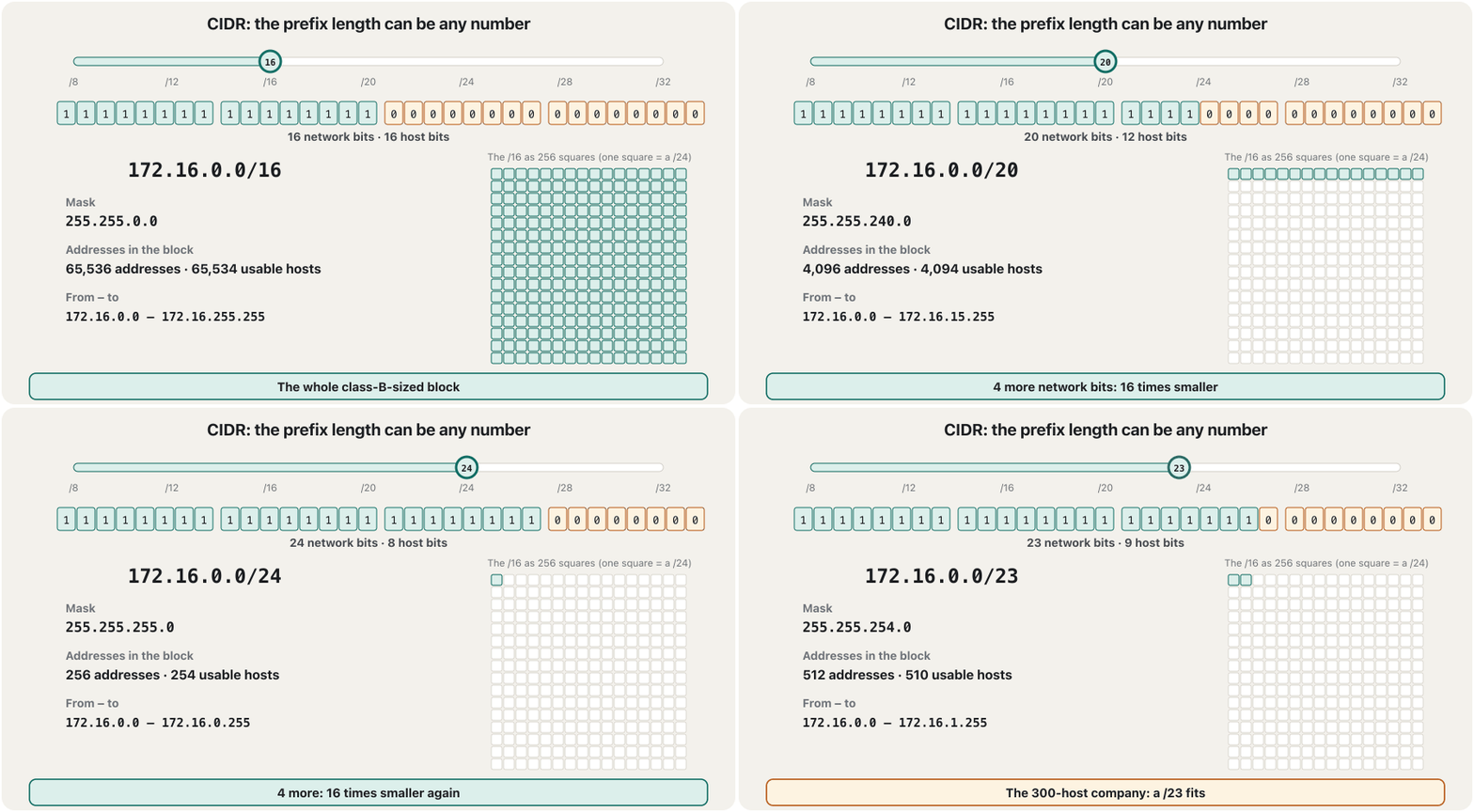
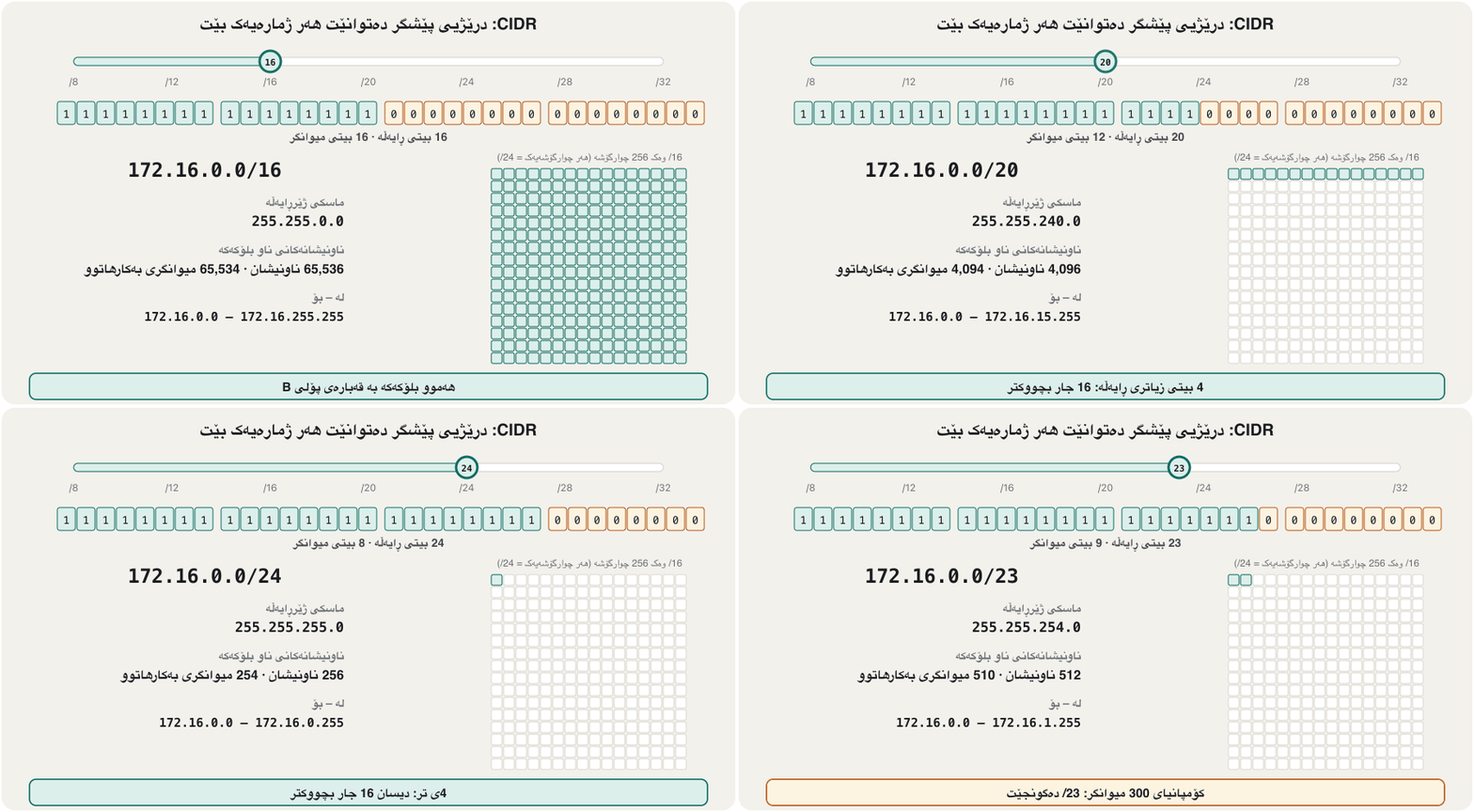
Each extra network bit halves the block and each bit less doubles it, so an organisation can get exactly the size it needs: the company with 300 hosts gets a /23 (510 hosts) instead of a whole class B. The animation starts with 172.16.0.0/16 and moves to /20, /24 and /23.
هەر زیاتری بلۆکەکە نیوە دەکات و هەر کەمتر دوو هێندەی دەکات، بۆیە ڕێکخراوێک دەتوانێت ڕێک ئەو قەبارەیە وەربگرێت کە پێویستیەتی: کۆمپانیاکەی 300 بلۆکێکی /23 (510 ) وەردەگرێت لە جیاتی هەموو پۆلی B. وێنە جووڵاوەکە لە 172.16.0.0/16 دەست پێ دەکات و دەچێتە سەر /20، /24 و /23.
CIDR: a prefix of any lengthCIDR: پێشگرێک بە هەر درێژییەک
Reading a CIDR addressخوێندنەوەی ناونیشانێکی CIDR
To write an address in CIDR notation, count the 1s of its mask. Take 10.217.123.7 with the mask 255.255.240.0: the mask has 8 + 8 + 4 + 0 = 20 ones, so you write 10.217.123.7/20. Subnet Masks shows every conversion step, and the next lessons show how to find the network this address belongs to.
بۆ نووسینی ناونیشانێک بە شێوەی ، 1ـەکانی بژمێرە. 10.217.123.7 لەگەڵ 255.255.240.0 وەربگرە: یەکی تێدایە، بۆیە دەنووسیت 10.217.123.7/20. ماسکی ژێرڕایەڵە هەموو هەنگاوەکانی گۆڕین نیشان دەدات و وانەکانی دواتر نیشانی دەدەن ئەم ناونیشانە سەر بە کام .
255.255.240.0 has 20 ones, so its prefix length is 20.
255.255.240.0 بیست یەکی تێدایە، بۆیە 20ـە.
Classful and classless side by sideپۆلدار و بێپۆل لە تەنیشت یەکەوە
Classful and classless addressing answer the same question — where does the network part end? — in two ways:
و ناونیشانکردنی بێپۆل وەڵامی هەمان پرسیار دەدەنەوە — لە کوێ کۆتایی دێت؟ — بە دوو ڕێگە:
| Pointخاڵ | Classful (1981–1993)پۆلدار (1981–1993) | Classless, CIDR (since 1993)بێپۆل، (لە 1993ـەوە) |
|---|---|---|
| Who decides the network part?کێ دیاری دەکات؟ | The class, from the first bitsپۆلەکە، لە سەرەتاوە | The prefix length you write (/n)ئەو دەینووسیت (/n) |
| Sizesقەبارەکان | Three fixed sizes: /8, /16, /24سێ قەبارەی جێگیر: /8، /16، /24 | Any length from /0 to /32هەر درێژییەک لە /0 تا /32 |
| Mask | Implied by the first octetلە یەکەمەوە دەزانرێت | Must always be givenدەبێت هەمیشە بنووسرێت |
| Subnets of one network یەک | All with the same maskهەموویان بە هەمان | Different sizes allowed (VLSM)قەبارەی جیاواز ڕێگەپێدراوە () |
| Routesڕێگەکان | One route per classful networkیەک ڕێگە بۆ هەر پۆلدار | Many networks summarised in one routeچەندین لە یەک ڕێگەدا کورت دەکرێنەوە |
| Todayئەمڕۆ | History; names for the default masksمێژوو؛ ناو بۆ بنەڕەتی | How the Internet worksشێوازی کارکردنی |
Two ideas grow out of CIDR and have their own lessons: VLSM splits one network into subnets of different sizes (More Subnetting and VLSM), and route summarisation joins many networks into one route (Summarization and CIDR). Routing protocols are classful or classless in the same way: a classful one sends its routes without masks (classful and classless routing protocols) — RIPv1 is classful, RIPv2 classless (RIP versions).
دوو بیرۆکە لە سەریان هەڵداوە و هەریەکەیان وانەی خۆی هەیە: یەک دەکات بە چەند قەبارە جیاواز (ژێرڕایەڵەسازیی زیاتر و VLSM) و چەندین لە یەک ڕێگەدا کۆ دەکاتەوە (ڕاپوختکردن و CIDR). هەروەها بە هەمان شێوە پۆلدار یان بێپۆلن: پۆلدار ڕێگەکانی بەبێ دەنێرێت (پرۆتۆکۆڵەکانی ڕێدۆزیی پۆلدار و بێپۆل) — RIPv1 پۆلدارە و RIPv2 بێپۆل (وەشانەکانی RIP).
Where you still meet classesلە کوێ هێشتا تووشی پۆلەکان دەبیت
Classes survive in four places. Words: people still say “a class C network” for a /24. Programs: Packet Tracer and Windows fill in the default mask of the class when you type an address — only a suggestion. Private ranges: RFC 1918 (1996) described them in class terms: 10.0.0.0/8 is one class A network, 172.16.0.0/12 is 16 class B networks and 192.168.0.0/16 is 256 class C networks. Old protocols: RIP version 1 is classful, so routing lessons meet class borders again: such protocols summarise routes by themselves at the class border (automatic summarization).
پۆلەکان لە چوار شوێندا ماونەتەوە. وشەکان: خەڵک هێشتا بە /24 دەڵێن « پۆلی C». بەرنامەکان: Packet Tracer و Windows کاتێک ناونیشانێک دەنووسیت بنەڕەتیی پۆلەکە پڕ دەکەنەوە — تەنیا پێشنیارێکە. مەوداکانی تایبەت: RFC 1918 (1996) بە زمانی پۆل وەسفی کردن: 10.0.0.0/8 یەک پۆلی Aـیە، 172.16.0.0/12 شازدە پۆلی B و 192.168.0.0/16 دووسەد و پەنجا و شەش پۆلی C. کۆن: RIP وەشانی 1 پۆلدارە، بۆیە وانەکانی دیسان تووشی سنووری پۆلەکان دەبنەوە: ئەم لە سنووری پۆلدا خۆیان ڕێگەکان کورت دەکەنەوە (ڕاپوختکردنی خۆکار).
Common mistakesهەڵە باوەکان
| Mistakeهەڵە | What is trueڕاستییەکە |
|---|---|
| Classes are still used to hand out addresses.پۆلەکان هێشتا بۆ دابەشکردنی ناونیشان بەکار دێن. | Since 1993 the Internet is classless (CIDR); classes are history.لە 1993ـەوە بێپۆلە ()؛ پۆلەکان مێژوون. |
| A class B network can hold a million hosts. پۆلی B دەتوانێت ملیۆنێک هەڵبگرێت. | At most 65,534 hosts. A million needed class A — today a /12.زۆرترین 65,534 . ملیۆنێک پۆلی Aـی دەویست — ئەمڕۆ /12. |
| The 2 missing class A networks are its network ID and broadcast.ئەو 2 پۆلی A کە کەم دەکرێنەوە و . | They are two reserved blocks: 0.0.0.0/8 (“this network”) and 127.0.0.0/8 (loopback).دوو بلۆکی تەرخانکراون: 0.0.0.0/8 («ئەم ») و 127.0.0.0/8 (). |
| Classes C and D are the special classes.پۆلەکانی C و D پۆلە تایبەتەکانن. | D (multicast) and E (reserved) are special; A, B and C are unicast.D () و E (تەرخانکراو) تایبەتن؛ A، B و C . |
| The powers 7, 14, 21 come from subtracting “a 255”. 7، 14 و 21 لە لابردنی «255ـێک» هاتوون. | They come from the fixed leading bits 0, 10 and 110.لە جێگیری پێشەوەی 0، 10 و 110 هاتوون. |
| Six addresses with four different first-two-octet pairs make three class B networks.شەش ناونیشان بە چوار جووتی جیاوازی دوو یەکەم سێ پۆلی B دروست دەکەن. | Count every pair: an address alone in its network is still a network — four.هەموو جووتێک بژمێرە: ناونیشانێک کە بە تەنیا لە بێت هێشتا — چوار. |
| In 192.168.1.0/24 the 24 is a “suffix”.لە 192.168.1.0/24ـدا 24 «پاشگر»ە. | 24 is the prefix length: the number of network bits.24 : ژمارەی . |
| Find a real network's mask from its class. ڕاستەقینە لە پۆلەکەیەوە دەدۆزرێتەوە. | Use the prefix length or mask of the network plan. یان نەخشەی بەکار بهێنە. |
Exercisesڕاهێنانەکان
For each address give its old class, network ID, broadcast address, and first and last usable address, using the default mask of its class: 192.168.1.200, 10.125.130.11, 203.0.113.200, 172.16.0.130 and 172.20.2.4. (The four key numbers are explained in IPv4 Addresses in Depth.)
بۆ هەر ناونیشانێک پۆلە کۆنەکەی، ، و یەکەم و دوایین ناونیشانی بەکارهاتووی بنووسە، بە بنەڕەتیی پۆلەکەی: 192.168.1.200، 10.125.130.11، 203.0.113.200، 172.16.0.130 و 172.20.2.4. (چوار ژمارە سەرەکییەکە لە ناونیشانەکانی IPv4 بە وردی ڕوون کراونەتەوە.)
Show answerوەڵامەکە پیشان بدە
| Addressناونیشان | Classپۆل | Network ID | Broadcast | First hostیەکەم | Last hostدوایین |
|---|---|---|---|---|---|
| 192.168.1.200 | C | 192.168.1.0 | 192.168.1.255 | 192.168.1.1 | 192.168.1.254 |
| 10.125.130.11 | A | 10.0.0.0 | 10.255.255.255 | 10.0.0.1 | 10.255.255.254 |
| 203.0.113.200 | C | 203.0.113.0 | 203.0.113.255 | 203.0.113.1 | 203.0.113.254 |
| 172.16.0.130 | B | 172.16.0.0 | 172.16.255.255 | 172.16.0.1 | 172.16.255.254 |
| 172.20.2.4 | B | 172.20.0.0 | 172.20.255.255 | 172.20.0.1 | 172.20.255.254 |
Method: find the class from the first octet, keep its network octets, write 0s for the network ID and 255s for the broadcast; the first host is the network ID + 1 and the last host is the broadcast − 1.
ڕێگە: پۆلەکە لە یەکەمەوە بدۆزەوە، بهێڵەوە، بۆ 0 و بۆ 255 بنووسە؛ یەکەم = + 1 و دوایین = − 1.
Group these class B addresses into networks and give each network ID and broadcast address: 172.16.5.7, 172.20.5.7, 172.18.5.12, 172.16.5.5, 172.31.12.12 and 172.31.12.1.
ئەم ناونیشانانەی پۆلی B بەپێی پۆل بکە و و هەریەکەیان بنووسە: 172.16.5.7، 172.20.5.7، 172.18.5.12، 172.16.5.5، 172.31.12.12 و 172.31.12.1.
Hintئاماژە
Class B: compare the first two octets.
پۆلی B: دوو یەکەم بەراورد بکە.
Show answerوەڵامەکە پیشان بدە
- 172.16.0.0 (broadcast 172.16.255.255): 172.16.5.7 and 172.16.5.5
- 172.20.0.0 (broadcast 172.20.255.255): 172.20.5.7
- 172.18.0.0 (broadcast 172.18.255.255): 172.18.5.12
- 172.31.0.0 (broadcast 172.31.255.255): 172.31.12.12 and 172.31.12.1
- 172.16.0.0 ( 172.16.255.255) ئەمانەی تێدایە: 172.16.5.7 و 172.16.5.5
- 172.20.0.0 ( 172.20.255.255) ئەمانەی تێدایە: 172.20.5.7
- 172.18.0.0 ( 172.18.255.255) ئەمانەی تێدایە: 172.18.5.12
- 172.31.0.0 ( 172.31.255.255) ئەمانەی تێدایە: 172.31.12.12 و 172.31.12.1
Six addresses, four networks: two of them hold only one address each. An address alone in its network still makes a network.
شەش ناونیشان، چوار : دوانیان هەریەکە تەنیا یەک ناونیشانیان تێدایە. ناونیشانێک کە بە تەنیا لە بێت هێشتا دروست دەکات.
Group these class C addresses into networks: 192.168.1.5, 192.168.2.5, 192.168.1.77, 203.0.113.9, 192.168.2.200 and 203.0.113.130.
ئەم ناونیشانانەی پۆلی C بەپێی پۆل بکە: 192.168.1.5، 192.168.2.5، 192.168.1.77، 203.0.113.9، 192.168.2.200 و 203.0.113.130.
Show answerوەڵامەکە پیشان بدە
- 192.168.1.0: 192.168.1.5 and 192.168.1.77
- 192.168.2.0: 192.168.2.5 and 192.168.2.200
- 203.0.113.0: 203.0.113.9 and 203.0.113.130
- 192.168.1.0: 192.168.1.5 و 192.168.1.77
- 192.168.2.0: 192.168.2.5 و 192.168.2.200
- 203.0.113.0: 203.0.113.9 و 203.0.113.130
Class C compares the first three octets, so 192.168.1 and 192.168.2 are different networks. The broadcast of each is its network ID with 255 at the end.
پۆلی C سێ یەکەم بەراورد دەکات، بۆیە 192.168.1 و 192.168.2 دوو جیاوازن. هەریەکەیان بە 255 لە کۆتاییدا.
Which class? An address whose first octet is 15, 126, 127, 150, 191, 200, 223, 239 or 250.
کام پۆل؟ ناونیشانێک کە یەکەمی 15، 126، 127، 150، 191، 200، 223، 239 یان 250 بێت.
Show answerوەڵامەکە پیشان بدە
- 15 and 126 → A
- 127 → class A range, but reserved for loopback
- 150 and 191 → B
- 200 and 223 → C
- 239 → D (multicast)
- 250 → E (reserved)
- 15 و 126 ← A
- 127 ← مەودای پۆلی A، بەڵام بۆ تەرخانکراوە
- 150 و 191 ← B
- 200 و 223 ← C
- 239 ← D ()
- 250 ← E (تەرخانکراو)
Explain the difference between classful and classless addressing in four or five sentences.
جیاوازیی نێوان و ناونیشانکردنی بێپۆل لە چوار یان پێنج ڕستەدا ڕوون بکەرەوە.
Show answerوەڵامەکە پیشان بدە
Both describe how an address is split into a network part and a host part. In classful addressing (1981–1993) the first bits fixed the class, and the class fixed the split: /8, /16 or /24. The sizes could not change, so small networks wasted addresses and large ones did not fit, and every subnet of a network used the same mask. Classless addressing (CIDR, since 1993) ignores the classes: the prefix length written after the address (/n) decides the split, so blocks can have the size that is needed, subnets can have different sizes (VLSM) and many networks can be summarised in one route.
هەردووکیان وەسفی ئەوە دەکەن کە ناونیشانێک چۆن دابەش دەبێت بۆ و . لە (1981–1993) سەرەتا پۆلەکەیان دیاری دەکرد و پۆلەکەش دابەشکردنەکەی: /8، /16 یان /24. قەبارەکان نەدەگۆڕان، بۆیە بچووک ناونیشانیان بەفیڕۆ دەدا و گەورەکان جێیان نەدەبووەوە و هەموو یەک هەمان بەکار دەهێنا. ناونیشانکردنی بێپۆل (، لە 1993ـەوە) پۆلەکان پشتگوێ دەخات: ئەو دوای ناونیشانەکە دەنووسرێت دابەشکردنەکە دیاری دەکات، بۆیە بلۆکەکان دەتوانن ئەو قەبارەیەیان هەبێت کە پێویستە، دەتوانن قەبارەی جیاوازیان هەبێت () و چەندین دەتوانن لە یەک ڕێگەدا کورت بکرێنەوە.
Under the class rules, which class fits 100 hosts, 50,000 hosts and 1,000,000 hosts? With CIDR, which prefix length fits 300 hosts?
بەپێی یاساکانی پۆل، کام پۆل بۆ 100، 50,000 و 1,000,000 دەگونجێت؟ بە ، کام بۆ 300 دەگونجێت؟
Show answerوەڵامەکە پیشان بدە
- 100 → class C (254 hosts)
- 50,000 → class B (65,534 hosts)
- 1,000,000 → class A (16,777,214 hosts)
- 300 → /23: 9 host bits, hosts
- 100 ← پۆلی C (تا 254 )
- 50,000 ← پۆلی B (تا 65,534 )
- 1,000,000 ← پۆلی A (تا 16,777,214 )
- 300 ←
/23: 9 ،
Summaryپوختە
- From 1981 to 1993 the first octet fixed the class: A 1–126, B 128–191, C 192–223, D 224–239 (multicast), E 240–255 (reserved). 0 and 127 are special; 127.0.0.1 is loopback.
- The leading bits are 0, 10, 110, 1110 and 1111: A gets half of all addresses, B a quarter, C an eighth.
- Default masks: A 255.0.0.0 (/8), B 255.255.0.0 (/16), C 255.255.255.0 (/24).
- Hosts per network = : A 16,777,214, B 65,534, C 254. Networks: A 126, B 16,384, C 2,097,152.
- Fixed sizes wasted addresses (300 hosts → a class B of 65,534) and filled the routing tables.
- Since 1993 CIDR (RFC 1518/1519, now RFC 4632) lets the prefix length be anything: address/prefix length, such as 10.217.123.7/20.
- Classes are vocabulary today: default masks in programs, exam questions, RFC 1918's private ranges and old classful protocols.
- لە 1981 تا 1993 یەکەم پۆلی دیاری دەکرد: A 1–126، B 128–191، C 192–223، D 224–239 ()، E 240–255 (تەرخانکراو). 0 و 127 تایبەتن؛ 127.0.0.1 .
- پێشەوە 0، 10، 110، 1110 و 1111ـن: A نیوەی هەموو ناونیشانەکان، B چارەکێک و C هەشتیەک وەردەگرن.
- بنەڕەتی: A 255.0.0.0 (/8)، B 255.255.0.0 (/16)، C 255.255.255.0 (/24).
- لە هەر = : A 16,777,214، B 65,534، C 254. : A 126، B 16,384، C 2,097,152.
- قەبارە جێگیرەکان ناونیشانیان بەفیڕۆ دەدا (300 ← پۆلی B بە 65,534) و پڕ دەکرد.
- لە 1993ـەوە (RFC 1518/1519، ئێستا RFC 4632) ڕێگە دەدات هەر ژمارەیەک بێت: ناونیشان/، وەک 10.217.123.7/20.
- پۆلەکان ئەمڕۆ تەنیا وشەن: بنەڕەتی لە بەرنامەکاندا، پرسیاری تاقیکردنەوە، مەوداکانی تایبەتی RFC 1918 و پۆلداری کۆن.
Lesson complete!وانەکە تەواو بوو!
Well done. Review the key terms, then go on to the next lesson.دەستخۆش. سەیرێکی زاراوە سەرەکییەکان بکەرەوە، پاشان بڕۆ بۆ وانەی داهاتوو.
Key termsزاراوە سەرەکییەکان
Subnet Masks: Binary, Dotted Decimal and Prefixماسکی ژێرڕایەڵە: دووانی، شێوەی دەییخاڵدار و پێشگر
Related lecturesوانە پەیوەندیدارەکان
- IP Addresses and MAC Addressesناونیشانەکانی IP و ناونیشانەکانی MAC
- Subnet Masks: Binary, Dotted Decimal and Prefixماسکی ژێرڕایەڵە: دووانی، شێوەی دەییخاڵدار و پێشگر
- Subnetting Step by Stepژێرڕایەڵەسازی هەنگاو بە هەنگاو
- More Subnetting: Bigger Networks, Exam Questions and VLSMژێرڕایەڵەسازیی زیاتر: ڕایەڵە گەورەکان، پرسیاری تاقیکردنەوە و VLSM
- Route Summarizationڕاپوختکردن
- The Network Layer and the IPv4 Packetچینی ڕایەڵە و پاکێتی IPv4
- IPv6 Addresses: Format and Typesناونیشانەکانی IPv6: شێوە و جۆرەکان
- From Binary, Octal and Hex to Decimalلە دووانی، هەشتی و شانزەییەوە بۆ دەیی
References and further readingسەرچاوەکان و خوێندنەوەی زیاتر
- RFC 791 (1981): Internet Protocol — §2.3 and §3.2, address classes a, b and c by their high-order bits
- RFC 1112 (1989): Host Extensions for IP Multicasting — §4, class D (1110) and class E (1111)
- RFC 950 (1985): Internet Standard Subnetting Procedure
- RFC 4632 (2006): Classless Inter-domain Routing (CIDR) — obsoletes RFC 1519 (September 1993)
- RFC 1918 (1996): Address Allocation for Private Internets — §3, the three blocks in pre-CIDR terms
- IANA IPv4 Special-Purpose Address Registry (0.0.0.0/8, 127.0.0.0/8, 240.0.0.0/4)
- IANA IPv4 Multicast Address Space Registry (224.0.0.1, 224.0.0.5, 224.0.0.9)
- Cisco: Configure IP Addresses and Unique Subnets for New Users (classes, natural masks, CIDR)
- Python documentation: ipaddress — IPv4/IPv6 manipulation library
This lecture is a first edition. The Kurdish text and terminology are waiting for review by Kurdish IT teachers.ئەم وانەیە چاپی یەکەمە. دەقە کوردییەکە و زاراوەکانی چاوەڕێی پێداچوونەوەی مامۆستایانی کوردی بواری IT ن.