Chapterبەش 1 · Lectureوانە 1.1
Analog and Digital Signalsسیگناڵەکانی ئەنالۆگ و دیجیتاڵ
Why computers work with only two values, what digital logic and signals are, how analog and digital signals differ, how a phone turns your voice into bits and back, and the HIGH/LOW levels, clock pulses and timing diagrams the rest of the course uses.
بۆچی تەنها بە دوو بەها کار دەکەن، و چین، و چۆن جیاوازن، مۆبایل چۆن دەنگەکەت دەگۆڕێت بۆ و بە پێچەوانەوە، هەروەها HIGH/LOW، کاتژمێر و ، کە لە باقیی کۆرسەکەدا بەکاردێن.
What you will learnچی فێر دەبیت
- Explain why computers store everything with two values, 0 and 1.
- Say what digital logic is and what a signal is.
- Tell analog and digital signals apart and compare them in seven points.
- Describe how a device mixes both: microphone, ADC, memory, DAC, amplifier, speaker.
- Read HIGH/LOW logic levels, a clock's period and frequency, and a simple timing diagram.
- ڕوونی بکەیتەوە بۆچی هەموو شتێک بە دوو بەها، 0 و 1، هەڵدەگرن.
- بڵێیت چییە و چییە.
- و لە یەک جیا بکەیتەوە و لە حەوت خاڵدا بەراوردیان بکەیت.
- باسی ئەوە بکەیت ئامێرێک چۆن هەردووکیان تێکەڵ دەکات: ، ADC، ، DAC، ، .
- HIGH/LOW، و و سادە بخوێنیتەوە.
Why computers use two valuesبۆچی کۆمپیوتەرەکان تەنها دوو بەها بەکاردەهێنن
Open any phone or laptop and you will find with billions of tiny electronic switches called . Each switch is either on or off. So a stores everything — numbers, letters, photos, songs — as long rows of just two values: 0 and 1.
هەر مۆبایل یان بکەیتەوە، تێدا دەبینیت کە ملیاران کلیلی ئەلیکترۆنیی زۆر بچووکیان تێدایە بە ناوی . هەر کلیلێک یان هەڵکراوە یان کوژاوە. بۆیە هەموو شتێک — ژمارە، پیت، وێنە، گۆرانی — وەک ڕیزێکی درێژ لە تەنها دوو بەها هەڵدەگرێت: 0 و 1.
Each of these 0s and 1s is called a , short for binary digit. A decimal digit can be any of ten values, 0 to 9; a bit can be only one of two, 0 or 1. Binary simply means “made of two”.
هەر یەک لەم 0 و 1ـانە پێی دەوترێت ، کورتکراوەی binary digit ( ). دەتوانێت یەکێک بێت لە دە بەها (0 تا 9)؛ بەڵام تەنها یەکێکە لە دوو: 0 یان 1. وشەی واتە «پێکهاتوو لە دوو».
Why computers store everything as 0s and 1s: on/off transistors, bits and binary place values.
بۆچی هەموو شتێک وەک 0 و 1 هەڵدەگرن: کە هەڵدەبن یان دەکوژێنەوە، و .
Stops at 3:39 before the ASCII part, so the 255/256 slip at 4:10 is not played.
لە 3:39 ڕادەوەستێت، پێش بەشی ، بۆیە ئەو هەڵە بچووکەی 4:10 (255 لە جیاتی 256) پەخش ناکرێت.
Why computers use two valuesبۆچی کۆمپیوتەرەکان تەنها دوو بەها بەکاردەهێنن
Why two states are reliableبۆچی دوو دۆخ جێی متمانەن
The course handout gives the main reason: most physical devices can hold one of two states far more reliably than one of many. A switch is open or closed; a wire is at a high or a low ; a spot on a hard disk is magnetised one way or the other; a spot on a DVD reflects light or does not.
یەکێک لە ڕێنماییەکانی کۆرسەکە هۆی سەرەکی دەڵێت: زۆربەی ئامێرە فیزیکییەکان یەکێک لە دوو دۆخ زۆر دڵنیاتر هەڵدەگرن وەک لە یەکێک لە چەندین دۆخ. کلیلێک کراوەیە یان داخراوە؛ وایەرێک بەرز یان نزمی هەیە؛ خاڵێک لەسەر بە ئاراستەیەک یان بە ئاراستەکەی تر موگناتیسی کراوە؛ خاڵێک لەسەر DVD ڕووناکی دەداتەوە یان نایداتەوە.
Think of the light switch in your classroom. It has only two positions: on and off. Even from the back row, even when the switch is old and dirty, everyone can see at once which position it is in. A computer uses two values for the same reason: two states are easy to make, easy to tell apart and very hard to confuse.
بیر لە کلیلی گڵۆپی پۆلەکەت بکەرەوە. تەنها دوو دۆخی هەیە: هەڵکراو و کوژاوە. تەنانەت لە ڕیزی دواوەشەوە، تەنانەت ئەگەر کلیلەکە کۆن و پیس بێت، هەمووان یەکسەر دەبینن لە کام دۆخدایە. هەر لەبەر ئەم هۆیە دوو بەها بەکاردەهێنێت: دروستکردنی دوو دۆخ ئاسانە، جیاکردنەوەیان ئاسانە و تێکەڵکردنیان زۆر زەحمەتە.
Where the analogy stops workingسنووری ئەم نموونەیە
A classroom switch is pressed by hand a few times a day; a transistor switches by itself billions of times every second. And inside a chip, “on” and “off” are voltages that are never exactly the same twice, so the chip accepts a whole band of voltages as “on” — see Logic levels.
کلیلی پۆل بە دەست و لە ڕۆژێکدا چەند جارێک دادەگیرێت؛ خۆی و ملیاران جار لە هەر چرکەیەکدا دەگۆڕێت. هەروەها لە ناو «هەڵکراو» و «کوژاوە» دوو کە هەرگیز دوو جار ڕێک وەک یەک نین، بۆیە ناوچەیەکی تەواوی وەک «هەڵکراو» وەردەگرێت — بڕوانە ئاستە لۆجیکییەکان.
Why computers use two valuesبۆچی کۆمپیوتەرەکان تەنها دوو بەها بەکاردەهێنن
Why not ten levels?بۆچی دە ئاست نا؟
Digital logic: rules for 0 and 1لۆجیکی دیجیتاڵ: یاساکانی 0 و 1
Using the two values 0 and 1 to build circuits that make decisions and do calculations. It is the base of every computer and phone.
بەکارهێنانی دوو نرخی 0 و 1ـە بۆ دروستکردنی کە بڕیار دەدەن و هەژمار دەکەن. بنەمای هەموو و مۆبایلێکە.
This course is about digital logic: the rules that electric circuits follow to work with 0s and 1s. A digital circuit shows information as numbers — 0 and 1 — and every decision it makes is a yes/no question: Is this input 1? Are both inputs 1? Is at least one of them 1? By joining many such small decisions, circuits can add numbers, compare them, store them and run programs.
ئەم کۆرسە دەربارەی : ئەو یاسایانەی پەیڕەوی دەکەن بۆ کارکردن لەگەڵ 0 و 1. وەک ژمارە پیشان دەدات — 0 و 1 — و هەر بڕیارێک کە دەیدات پرسیارێکی بەڵێ/نەخێرە: ئایا ئەم 1ـە؟ ئایا هەردوو 1ـن؟ ئایا لانیکەم یەکێکیان 1ـە؟ بە پێکەوەبەستنی زۆر بڕیاری بچووکی لەم جۆرە، دەتوانن ژمارە کۆ بکەنەوە، بەراوردیان بکەن، هەڵیانبگرن و جێبەجێ بکەن.
Why digital? The word comes from digit, and digit from the Latin digitus, “finger”: people first counted on their fingers. A digital machine counts too, in whole, separate steps.
بۆچی ناوی ؟ وشەکە لە وشەی ئینگلیزیی digit (بە واتای ) وەرگیراوە، کە ئەویش لە وشەی لاتینیی digitus واتە «پەنجە» هاتووە: مرۆڤ سەرەتا بە پەنجەکانی ژماردوویەتی. ئامێرێکی دەژمێرێت، بە هەنگاوی تەواو و جیاجیا.
Every digital device — a calculator, a washing machine, a phone, a data centre — is built on these rules. That makes digital logic the foundation of electronics, and the bridge between (the circuits) and (the programs that run on them).
هەموو ئامێرێکی — ، جلشۆرێک، مۆبایلێک، سەنتەرێکی — لەسەر ئەم یاسایانە دروست کراوە. بۆیە بناغەی ئەلیکترۆنیاتە و پردی نێوان () و (، کە لەسەریان کار دەکەن).
The smallest building blocks are : tiny circuits made of transistors, each with one or more inputs and one output that is 0 or 1. You will build them in the chapter Logic gates. First you need the numbers they work with — the chapter Number Systems comes next.
بچووکترین بەشەکانی بنیاتنان : هەر یەکەیان بچووکە کە لە دروست کراوە و یەک یان چەند هەیە لەگەڵ یەک کە 0 یان 1ـە. لە بەشی گەیتە لۆجیکییەکاندا دروستیان دەکەیت. پێش ئەوە پێویستت بەو ژمارانەیە کە کاریان لەگەڵ دەکەن — بەشی سیستەمە ژمارەییەکان دواتر دێت.
What is a signal?سیگناڵ چییە؟
A physical quantity, such as a voltage, a radio wave or a sound wave, that carries information by changing over time. Circuits send data as voltage signals; Wi-Fi and mobile networks send it as radio signals.
بڕێکی فیزیکییە، وەک ، شەپۆلی ڕادیۆ یان شەپۆلی دەنگ، کە بە گۆڕانی بە درێژایی کات زانیاری هەڵدەگرێت. وەک سیگناڵی ڤۆڵتیە دەنێرن؛ و وەک سیگناڵی ڕادیۆیی.
The lecture defines a signal as a physical quantity that carries information. Your voice is a sound wave; a microphone turns it into a changing voltage. Both are signals, and both carry the same message.
وانەکە بەم شێوەیە پێناسە دەکات: بڕێکی فیزیکییە کە هەڵدەگرێت. دەنگەکەت شەپۆلێکی دەنگە؛ دەیگۆڕێت بۆ کە بەردەوام دەگۆڕێت. هەردووکیان و هەردووکیان هەمان پەیام هەڵدەگرن.
Analog and digital signals are both used to send information, usually as electric signals. Sound, pictures and video are first turned into electric signals; then they can be sent, stored or processed.
و هەردووکیان بۆ ناردنی بەکاردێن، زۆربەی جار وەک کارەبایی. دەنگ، وێنە و ڤیدیۆ سەرەتا دەگۆڕدرێن بۆ کارەبایی؛ پاشان دەتوانرێت بنێردرێن، هەڵبگیرێن یان کاریان لەسەر بکرێت.
A signal is a function of one or more : its value depends on something else. The microphone voltage depends on time — one variable. The brightness of a black-and-white photo depends on the position of each point, x and y — two variables. A video depends on x, y and time — three.
بەندە بە یەک یان چەند : نرخەکەی بە شتێکی ترەوە بەستراوە. بەندە بە کاتەوە — یەک گۆڕاو. ڕووناکیی وێنەیەکی ڕەش و سپی بەندە بە شوێنی هەر خاڵێکەوە، x و y — دوو گۆڕاو. ڤیدیۆ بەندە بە x، y و کاتەوە — سێ گۆڕاو.
Signals come in two kinds: analog and digital. The next screens compare them.
دوو جۆرن: و . پەڕەکانی داهاتوو بەراوردیان دەکەن.
Analog and digitalئەنالۆگ و دیجیتاڵ
An analog signal can take any value in a range, and it changes smoothly, without jumps. The temperature in Erbil during a spring day is analog: on its way from 18 °C to 19 °C it passes through 18.1, 18.27, 18.5 … and every value in between.
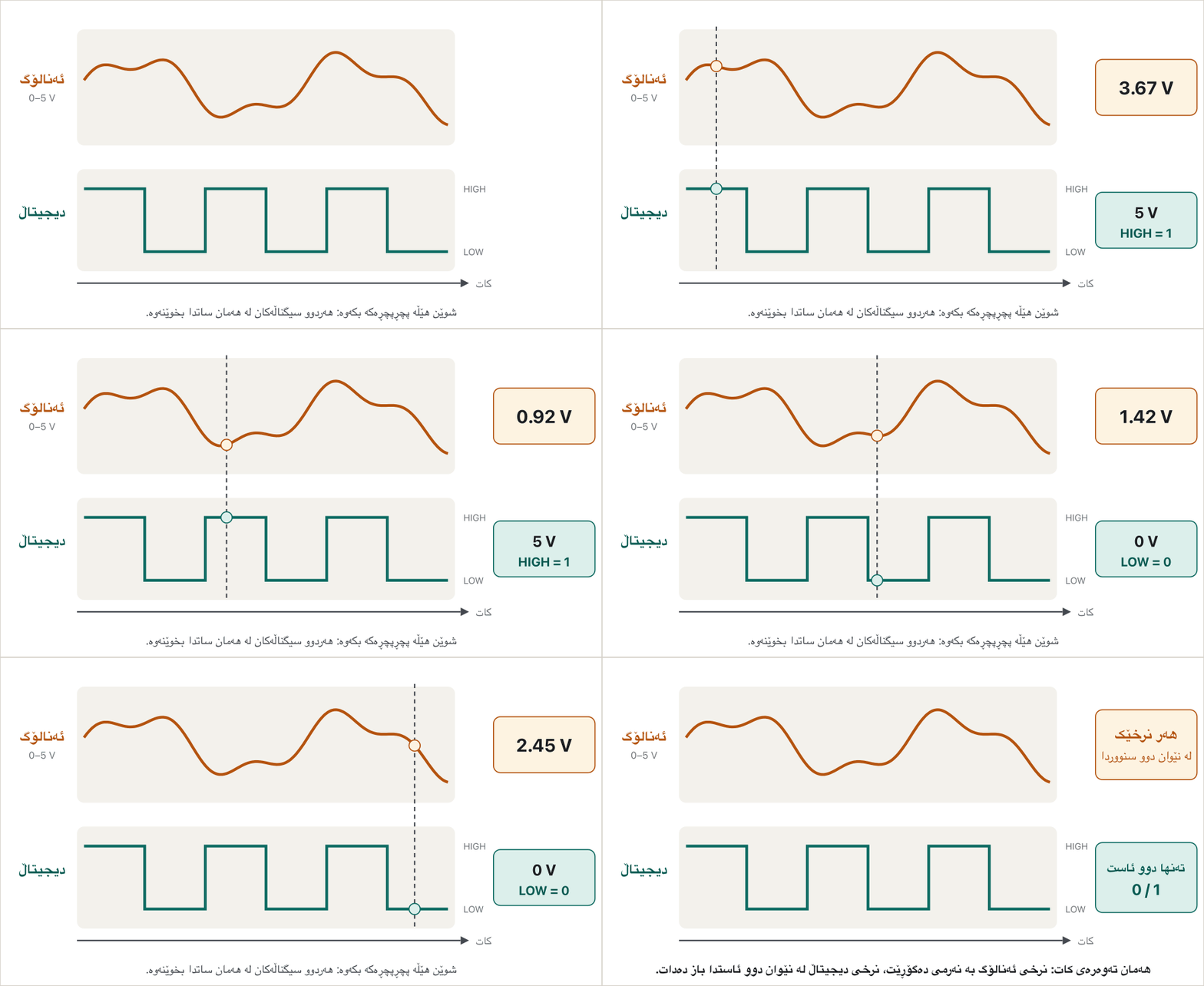
دەتوانێت هەر نرخێک لە نێوان دوو سنووردا وەربگرێت و بە نەرمی دەگۆڕێت، بێ باز دان. پلەی گەرمیی هەولێر لە ڕۆژێکی بەهاردا : لە ڕێگای 18 °C بۆ 19 °C بە 18.1، 18.27، 18.5 … و هەموو نرخێکی نێوانیاندا تێدەپەڕێت.
A digital signal can take only a few separate (discrete) values. In computers there are just two: LOW, written 0, and HIGH, written 1. A digital signal does not glide from one value to the next — it jumps.
تەنها دەتوانێت چەند نرخێکی جیا لە یەک وەربگرێت. لە تەنها دوو نرخ هەیە: LOW کە بە 0 دەنووسرێت و HIGH کە بە 1 دەنووسرێت. بە نەرمی لە نرخێکەوە ناچێت بۆ نرخی دواتر — باز دەدات.
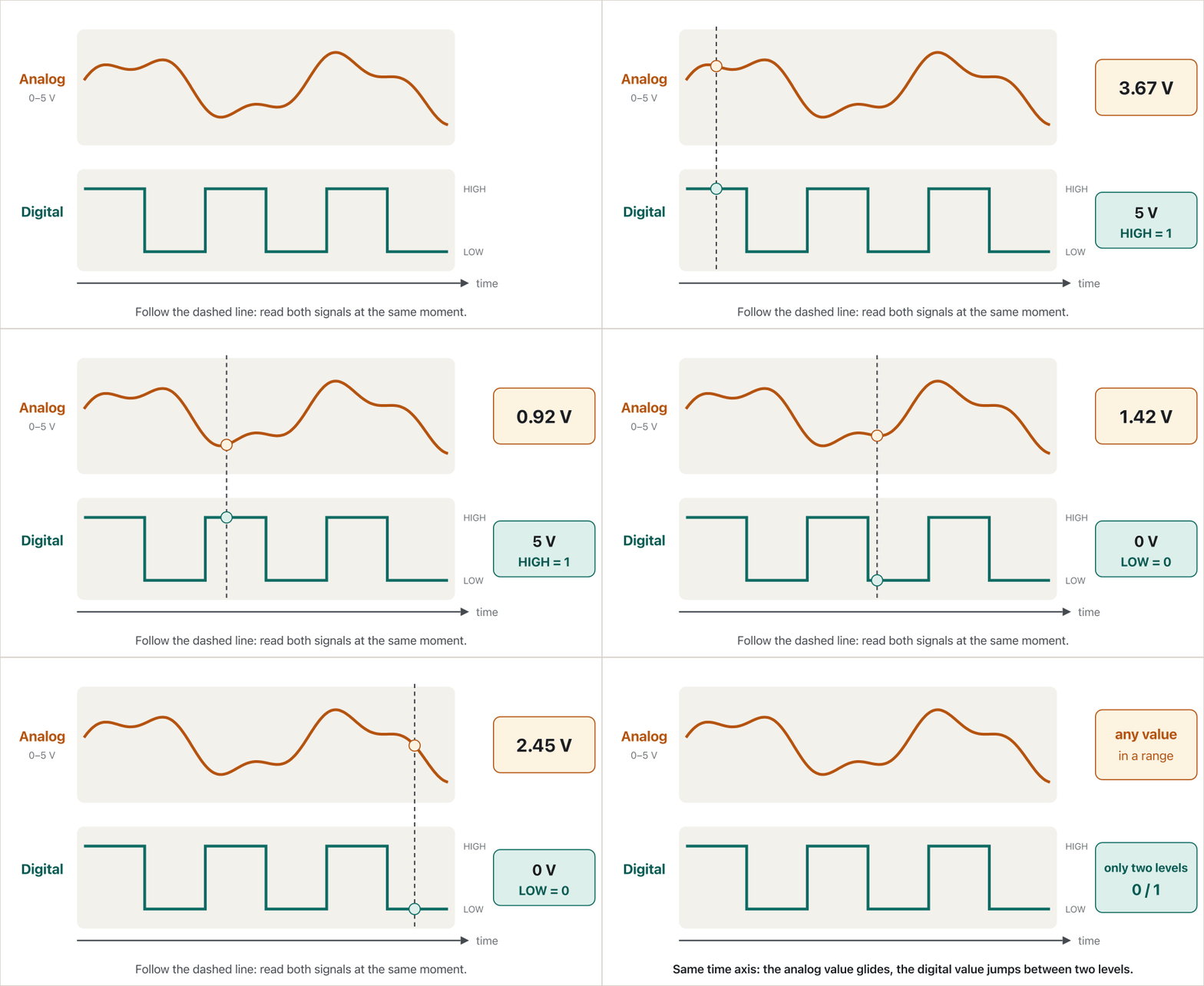
At the entrance of many hospitals there is a ramp next to the stairs. On the ramp you can stand at any height. On the stairs you can only stand on a step — step 3 or step 4, never step 3.4. The ramp is analog; the stairs are digital.
لە بەردەم دەرگای زۆر نەخۆشخانەدا ڕێگایەکی لێژ لە تەنیشت پلیکانەکانەوە هەیە. لەسەر ڕێگا لێژەکە دەتوانیت لە هەر بەرزییەکدا بوەستیت. لەسەر پلیکانە تەنها دەتوانیت لەسەر پلەیەک بوەستیت — پلەی 3 یان پلەی 4، هەرگیز پلەی 3.4 نا. ڕێگا لێژەکە ؛ پلیکانەکە .
Where the analogy stops workingسنووری ئەم نموونەیە
A staircase can have many steps; a computer's signal has only two, LOW and HIGH. And just as your foot is between two steps for a moment, a real signal needs a very short time to change (see Pulses).
پلیکانە دەتوانێت زۆر پلەی هەبێت؛ تەنها دوو پلەی هەیە: LOW و HIGH. هەروەها وەک چۆن پێت بۆ ساتێک لە نێوان دوو پلەدایە، ڕاستەقینەش کاتێکی زۆر کورتی پێویستە بۆ گۆڕان (بڕوانە تڕپەکان).
Analog and digitalئەنالۆگ و دیجیتاڵ
Seven differencesحەوت جیاوازی
The lecture compares the two kinds of signal in seven points. The table keeps all seven, with the wording made exact.
وانەکە دوو جۆرە لە حەوت خاڵدا بەراورد دەکات. خشتەکە هەر حەوتیان دەپارێزێت و دەربڕینەکانی ورد کراون.
| Pointخاڵ | Analog signal | Digital signal |
|---|---|---|
| Basic ideaبیرۆکەی بنەڕەتی | A continuous wave that changes smoothly over timeشەپۆلێکی بەردەوام کە بە تێپەڕبوونی کات بە نەرمی دەگۆڕێت | A discrete wave that carries information in binary form (0s and 1s)شەپۆلێکی پچڕاو کە بە شێوەی (0 و 1) هەڵدەگرێت |
| Typical shapeشێوەی باو | (the simplest example) (سادەترین نموونە) | (the ideal shape) (شێوە ئایدیاڵەکە) |
| Described byبە چی وەسف دەکرێت | , , and ، ، و | and bit interval و کاتی هەر |
| Valuesنرخەکان | Any value in a continuous rangeهەر نرخێک لە نێوان دوو سنووردا، بێ بازدان | Only a finite set of values; in this course two levels, 0 and 1تەنها ژمارەیەکی دیاریکراو لە نرخ؛ لەم کۆرسەدا دوو ئاست، 0 و 1 |
| Distortionتێکچوون | Easily spoiled by بە ئاسانی بە تێک دەچێت | Much less affected by noiseزۆر کەمتر بە کاری تێدەکرێت |
| How data is sent چۆن دەنێردرێت | As a continuous waveوەک شەپۆلێکی بەردەوام | As a sequence of bitsوەک زنجیرەیەک لە |
| Exampleنموونە | The human voiceدەنگی مرۆڤ | A computer |
Analog and digitalئەنالۆگ و دیجیتاڵ
Words that describe a waveئەو وشانەی شەپۆلێک وەسف دەکەن
- — the height of the wave. A louder sound gives a bigger amplitude.
- (T) — the time of one complete cycle of the wave.
- (f) — how many cycles happen in one second, measured in hertz (Hz). .
- — where the wave is in its cycle at the starting moment. Two identical waves can be shifted in time; they then differ in phase.
- — how many bits are sent per second (bit/s).
- Bit interval — the time one bit lasts. It is one divided by the bit rate: at 1000 bit/s each bit lasts .
- — بەرزیی شەپۆلەکە. دەنگی بەرزتر گەورەتر دەدات.
- (T) — کاتی یەک خولی تەواوی شەپۆلەکە.
- (f) — ژمارەی ئەو خولانەی لە یەک چرکەدا ڕوودەدەن، بە (Hz) دەپێورێت. .
- — شەپۆلەکە لە ساتی دەستپێکدا لە کوێی خولەکەیدایە. دوو شەپۆلی وەک یەک دەتوانن بە کات لە یەکتر لابدرێن؛ ئەو کاتە جیاوازە.
- — ژمارەی ئەو لە هەر چرکەیەکدا دەنێردرێن (bit/s).
- کاتی — ئەو کاتەی یەک دەخایەنێت. یەکسانە بە 1 دابەش بە : بە 1000 bit/s هەر دەخایەنێت.
The table names only the typical shapes. Speech is analog, but it is not a clean sine wave, and a real square wave needs a short time to rise and fall. The sine wave is the simplest smooth wave that repeats; you can watch one being drawn from a turning circle in Watch sine being drawn.
خشتەکە تەنها شێوە باوەکان دەڵێت. قسەکردن ، بەڵام پاک نییە؛ هەروەها لە ڕاستیدا کاتێکی کورتی پێویستە بۆ بەرزبوونەوە و نزمبوونەوە. سادەترین شەپۆلی نەرمە کە دووبارە دەبێتەوە؛ لە سەیری کێشانی ساین بکە دەبینیت چۆن لە بازنەیەکی سووڕاوەوە دەکێشرێت.
Analog and digitalئەنالۆگ و دیجیتاڵ
Noiseژاوەژاو
Noise is small, unwanted changes mixed into a signal — from nearby cables, radio waves or simply heat. Every real wire picks up some noise.
گۆڕانی بچووک و نەخوازراوە کە تێکەڵی دەبێت — لە کێبڵە نزیکەکانەوە، لە شەپۆلی ڕادیۆوە یان تەنها لە گەرمییەوە. هەموو وایەرێکی ڕاستەقینە بڕێک وەردەگرێت.
In an analog signal every value means something, so noise changes the message itself: if 2.31 V becomes 2.36 V, the sound is now slightly different. Each time an analog signal is copied or sent further, more noise is added, and nobody can separate it out again. That is why a copy of a copy of an old cassette tape hisses.
لە هەموو نرخێک واتایەکی هەیە، بۆیە خودی پەیامەکە دەگۆڕێت: ئەگەر 2.31 V ببێتە 2.36 V، دەنگەکە ئێستا کەمێک جیاوازە. هەر جارێک کۆپی دەکرێت یان دوورتر دەنێردرێت، زیاتری دەچێتە سەر و کەس ناتوانێت دووبارە جیای بکاتەوە. بۆیە کۆپیی کۆپیی کاسێتێکی کۆن خشەخش دەکات.
Analog and digitalئەنالۆگ و دیجیتاڵ
Why digital resists noiseبۆچی دیجیتاڵ بەرگەی ژاوەژاو دەگرێت
A digital receiver asks only one question: is this LOW or HIGH? A HIGH of 4.7 V that arrives as 4.5 V is still HIGH, so the bit is still 1. Each digital circuit then sends out a fresh, clean signal. Bits can be copied a million times and stay exactly the same.
وەرگرێکی تەنها یەک پرسیار دەکات: ئەمە LOWـە یان HIGH؟ HIGHـێکی 4.7 V کە وەک 4.5 V دەگات هێشتا HIGHـە، بۆیە هێشتا 1ـە. پاشان هەر نوێ و پاک دەنێرێتە دەرەوە. دەتوانرێت ملیۆن جار کۆپی بکرێن و ڕێک وەک خۆیان بمێننەوە.
In a crowded tea house, ask ten people to whisper a sentence from one to the next. The last person usually hears something different: small mistakes pile up. Now ask them to pass on only “yes” or “no” with a thumb up or down. The answer arrives unchanged, because a small mistake cannot turn a thumb up into a thumb down.
لە چایخانەیەکی قەرەباڵغدا داوا لە دە کەس بکە ڕستەیەک بە چرپە لە یەکێکەوە بۆ دواتر بگوازنەوە. دوایین کەس زۆربەی جار شتێکی جیاواز دەبیستێت: هەڵە بچووکەکان لەسەر یەک کەڵەکە دەبن. ئێستا داوایان لێ بکە تەنها «بەڵێ» یان «نەخێر» بە پەنجەی گەورەی سەرەوە یان خوارەوە بگوازنەوە. وەڵامەکە بێ گۆڕان دەگات، چونکە هەڵەیەکی بچووک ناتوانێت پەنجەی سەرەوە بکاتە پەنجەی خوارەوە.
Where the analogy stops workingسنووری ئەم نموونەیە
People can still make a big mistake, and so can circuits: very strong noise can flip a bit. Digital systems therefore add extra check bits, such as a parity bit, to find such errors (and with more check bits, to fix them).
خەڵک هێشتا دەتوانن هەڵەیەکی گەورە بکەن و هەروا: زۆر بەهێز دەتوانێت پێچەوانە بکاتەوە. بۆیە سیستەمە پشکنینی زیادە دادەنێن، وەک بیتی پاریتی، بۆ دۆزینەوەی ئەم هەڵانە (و بە پشکنینی زیاتر، بۆ چاککردنیان).
Analog and digitalئەنالۆگ و دیجیتاڵ
Digital or analog: pros and consدیجیتاڵ یان ئەنالۆگ: سوود و زیانەکان
These are the reasons digital replaced analog in most devices, and why computers stopped being analog too (analog and digital computers):
ئەمانە ئەو هۆکارانەن کە لە زۆربەی ئامێرەکاندا جێگەی گرتەوە و بۆچی ئیتر نین (کۆمپیوتەری ئەنالۆگ و دیجیتاڵ):
| Pointبابەت | Digital | Analog |
|---|---|---|
| Accuracyوردی | Exact: the same always gives the same bitsورد: هەمان هەمیشە هەمان دەدات | Drifts with heat, age and part differencesبە گەرما، تەمەن و جیاوازیی پارچەکان دەگۆڕێت |
| Versatilityفرەکاری | One chip, many jobs: load a new یەک و چەندین کار: نوێی بۆ دابنێ | Each job needs its own circuitهەر کارێک تایبەتی خۆی پێویستە |
| Noise and distance و دووری | Each resends clean bits, so signals travel farهەر بە پاکی دەنێرێتەوە، بۆیە دوور دەڕۆن | Noise, distortion and weather add up on the way، تێکچوونی و کەشوهەوا بە درێژایی ڕێگا کەڵەکە دەبن |
| Storing and copyingهەڵگرتن و کۆپی | Kept for years and copied with no lossساڵانێک دەمێنێتەوە و بەبێ هیچ لەدەستدانێک کۆپی دەکرێت | Every copy is a little worseهەر کۆپییەک کەمێک خراپترە |
| Privacy and sizeپاراستن و قەبارە | Can be encrypted and compressedدەکرێت بۆ بکرێت و بپەستێنرێت | Hard to encrypt or compress و پەستاندنی قورسە |
| Its strong sideلایەنی بەهێزی | Computing, storing and sending ژمێرکاری، هەڵگرتن و ناردنی | No conversion needed: the world is analog, and so are microphones, sensors and speakersپێویستی بە گۆڕین نییە: جیهان خۆی و ، و هەمیشە |
Systems that use bothئەو سیستەمانەی هەردووکیان بەکاردەهێنن
The world around us is analog: sound, light, temperature and movement change smoothly. Computers are digital. So most real devices mix the two.
جیهانی دەوروبەرمان : دەنگ، ڕووناکی، پلەی گەرمی و جووڵە بە نەرمی دەگۆڕێن. . بۆیە زۆربەی ئامێرە ڕاستەقینەکان هەردووکیان تێکەڵ دەکەن.
For many years digital electronics lived only inside computers. Today it also works in:
بۆ چەندین ساڵ ئەلیکترۆنیاتی تەنها لە ناو بوو. ئەمڕۆ لەم شوێنانەشدا کار دەکات:
- factories — machines and whole production lines controlled step by step (industrial process control);
- medicine — heart monitors (ECG), body scanners and other hospital equipment;
- TV, radio and phone networks;
- radar and satellite navigation ();
- defence systems.
- کارگەکان — ئامێر و هێڵی بەرهەمهێنانی تەواو کە هەنگاو بە هەنگاو کۆنترۆڵ دەکرێن (کۆنترۆڵی پرۆسەی پیشەسازی)؛
- پزیشکی — ئامێری چاودێریی دڵ (ECG)، ئامێرەکانی وێنەگرتنی ناو لەش و کەلوپەلی تری نەخۆشخانە؛
- تەلەفزیۆن، ڕادیۆ و تەلەفۆن؛
- ڕادار و دۆزینەوەی ڕێگا بە مانگی دەستکرد ()؛
- سیستەمە سەربازییەکان.
A simple public-address system — the loudspeakers of a school yard, for example — is fully analog. The microphone turns sound into a small voltage that copies the sound wave, an makes that voltage bigger, and the loudspeakers turn it back into louder sound. No bits are involved.
سیستەمێکی سادەی گشتی — بۆ نموونە حەوشەی قوتابخانە — بە تەواوی . دەنگ دەگۆڕێت بۆ بچووک کە لاسایی شەپۆلی دەنگەکە دەکاتەوە، ئەو گەورەتر دەکات و دەیگۆڕنەوە بۆ دەنگێکی بەرزتر. هیچ تێیدا نییە.
Other circuits stay fully analog too: the bass and treble knobs of a radio, which make some frequencies stronger or weaker (a filter), a lamp dimmer, a fan's speed control and the old TV sets that received analog broadcasts.
هەندێک تریش بە تەواوی دەمێننەوە: دوگمەکانی بەم و زیلی ڕادیۆیەک (کە هەندێک بەهێزتر یان لاوازتر دەکەن)، دوگمەی کەمکردنەوەی ڕووناکیی گڵۆپ، کۆنترۆڵی خێرایی پانکە و تەلەفزیۆنە کۆنەکانی پەخشی .
Systems that use bothئەو سیستەمانەی هەردووکیان بەکاردەهێنن
A phone uses bothمۆبایل هەردووکیان بەکاردەهێنێت
A phone that records and plays a voice message mixes both. The microphone gives an analog voltage. An (ADC) measures it thousands of times per second and writes each measurement as a binary number. The bits are stored in memory or sent over the network. To play the message, a (DAC) turns the numbers back into a smooth voltage, an amplifier makes it stronger, and the speaker makes sound again.
مۆبایلێک کە نامەیەکی دەنگی تۆمار دەکات و لێی دەداتەوە هەردووکیان تێکەڵ دەکات. دەدات. (ADC) لە هەر چرکەیەکدا هەزاران جار دەیپێوێت و هەر پێوانەیەک وەک ژمارەیەکی دەنووسێت. لە هەڵدەگیرێن یان بە دەنێردرێن. بۆ لێدانەوەی نامەکە، (DAC) ژمارەکان دەگۆڕێتەوە بۆ نەرم، بەهێزتری دەکات و دووبارە دەنگ دروست دەکاتەوە.
Systems that use bothئەو سیستەمانەی هەردووکیان بەکاردەهێنن
How sound becomes numbersدەنگ چۆن دەبێتە ژمارە
An ADC does two things again and again. First it measures the voltage at regular moments; each measurement is called a sample. Then it rounds each measurement to the nearest of a fixed number of levels and writes that level's number in binary.
ADC دوو کار بەردەوام دووبارە دەکاتەوە. یەکەم، لە ساتی ڕێکدا دەپێوێت؛ بە هەر پێوانەیەک دەوترێت نموونە (sample). دووەم، هەر پێوانەیەک بۆ نزیکترین ئاست لە ژمارەیەکی دیاریکراوی ئاست نزیک دەکاتەوە و ژمارەی ئەو ئاستە بە دەنووسێت.
The two steps have names. The measured samples alone — the circles in the picture — form a : it exists only at the measuring moments, but each value can still be anything, such as 2.3147 V. Rounding each sample to a level makes the signal digital: separate in time and in value.
ئەم دوو هەنگاوە ناویان هەیە. نموونە پێوراوەکان بە تەنها — بازنەکانی ناو وێنەکە — پێکدەهێنن: تەنها لەو ساتانەدا هەیە کە پێوانەکەی تێدا کراوە، بەڵام هەر نرخێکی هێشتا دەکرێت هەر شتێک بێت، وەک 2.3147 V. هەر نموونەیەک بۆ ئاستێک دەکاتە : هەم لە کاتدا و هەم لە نرخدا جیاجیا.
The picture uses 8 levels, so each sample needs 3 bits (000 to 111). Real sound uses far more: music on a CD takes 44,100 samples every second for each channel, and each sample has 16 bits, which gives 65,536 levels. More samples and more bits give a closer copy of the original wave.
وێنەکە 8 ئاست بەکاردەهێنێت، بۆیە هەر نموونەیەک 3 پێویستە (000 تا 111). دەنگی ڕاستەقینە زۆر زیاتر بەکاردەهێنێت: مۆسیقای سەر CD بۆ هەر کەناڵێک لە هەر چرکەیەکدا 44,100 نموونە وەردەگرێت و هەر نموونەیەک 16 هەیە، کە 65,536 ئاست دەدات. نموونەی زیاتر و زیاتر کۆپییەکی نزیکتر لە شەپۆلە ڕەسەنەکە دەدەن.
Rounding loses a tiny amount of detail once. After that the bits never change, however often they are copied or sent.
تەنها یەک جار وردەکارییەکی زۆر کەم لەدەست دەدات. لەوە بەدواوە هەرگیز ناگۆڕێن، هەر چەند جارێک کۆپی بکرێن یان بنێردرێن.
How an analog signal becomes bits: sampling at regular times, rounding each sample to a level, then writing the level in binary.
چۆن دەبێتە : پێوانەکردن لە کاتی ڕێکدا، هەر نموونەیەک بۆ ئاستێک، پاشان نووسینی ئەو ئاستە بە .
Chapters: 0:40 sampling, 3:53 quantizing. Uses the telecom name PCM for the same idea.
بەشەکان: 0:40 وەرگرتنی نموونە (sampling)، 3:53 بۆ ئاستەکان (quantizing). ناوی PCM بەکار دەهێنێت، کە لە ناوی هەمان بیرۆکەیە.
Logic levels: HIGH and LOWئاستە لۆجیکییەکان: HIGH و LOW
One of the two states of a digital signal: HIGH (1) or LOW (0). Each state is a band of voltages, not one exact voltage.
یەکێکە لە دوو دۆخەکەی : HIGH (1) یان LOW (0). هەر دۆخێک مەودایەکە لە ، نەک یەک ژمارەی ورد.
Inside a digital circuit, 0 and 1 are voltages. Normally the higher voltage means 1 and is called HIGH; the lower voltage means 0 and is called LOW. These two states are the logic levels.
لە ناو 0 و 1 . بە شێوەی ئاسایی بەرزتر واتە 1 و پێی دەوترێت HIGH؛ نزمتر واتە 0 و پێی دەوترێت LOW. ئەم دوو دۆخە .
HIGH is not one exact voltage but a whole band. For a classic 5 V chip of the TTL family, any input from 2 V to 5 V counts as HIGH and any input from 0 V to 0.8 V counts as LOW. Between 0.8 V and 2 V lies an undefined region: the chip may read it either way, so a correct circuit never leaves a signal there.
HIGH یەک ورد نییە، بەڵکو ناوچەیەکی تەواوە. بۆ کلاسیکی 5 خێزانی TTL، هەر لە 2 V تا 5 V بە HIGH دادەنرێت و هەر لە 0 V تا 0.8 V بە LOW. لە نێوان 0.8 V و 2 Vـدا ناوچەیەکی نادیار هەیە: دەکرێت بە هەر یەکێکیان بیخوێنێتەوە، بۆیە دروست هەرگیز لەوێدا ناهێڵێتەوە.
The bands explain why noise rarely matters: a HIGH output near 5 V can lose a lot before it falls below 2 V. Many newer chips run on 3.3 V or less; for the common CMOS family the bands are given as parts of the supply voltage — below 30 % is LOW and above 70 % is HIGH — but the idea is the same.
ئەم ناوچانە ڕوونی دەکەنەوە بۆچی بە دەگمەن گرنگە: HIGH نزیک لە 5 V دەتوانێت زۆر لەدەست بدات پێش ئەوەی بگاتە خوار 2 V. زۆرێک لە بە 3.3 V یان کەمتر کار دەکەن؛ بۆ خێزانی باوی CMOS ناوچەکان وەک بەشێک لە سەرچاوەکە دەدرێن — کەمتر لە 30 % LOWـە و زیاتر لە 70 % HIGHـە — بەڵام بیرۆکەکە هەمان شتە.
Logic levels: HIGH and LOWئاستە لۆجیکییەکان: HIGH و LOW
Pulses, period and frequencyتڕپەکان، کاتی خولی و لەرەلەر
When a digital signal goes from LOW up to HIGH and back down to LOW, it makes a . The step up is the ; the step down is the . Drawings show the edges as straight vertical lines, but a real signal needs a very short time to rise and to fall (the rise time and the fall time).
کاتێک لە LOWـەوە بەرز دەبێتەوە بۆ HIGH و دەگەڕێتەوە بۆ LOW، دروست دەکات. پلەی سەرەوە و پلەی خوارەوە . لە وێنەکاندا لێوارەکان هێڵی ڕاستی ستوونین، بەڵام ڕاستەقینە کاتێکی زۆر کورتی پێویستە بۆ بەرزبوونەوە و بۆ نزمبوونەوە.
A is a steady row of identical pulses — a . It is the heartbeat of a digital system: at each tick (usually each rising edge) all the circuits take their next step together.
ڕیزێکی ڕێک لە وەک یەکە — . لێدانی دڵی سیستەمێکی : لە هەر لێدانێکدا (زۆربەی جار لە هەر ) هەموو پێکەوە هەنگاوی داهاتوویان دەنێن.
The time of one complete cycle is the , T. The number of cycles in one second is the , f, measured in hertz (Hz). Each is the inverse of the other:
کاتی یەک خولی تەواو ، T. ژمارەی خولەکان لە یەک چرکەدا ، f، کە بە (Hz) دەپێورێت. هەر یەکەیان پێچەوانەی ئەوی ترە:
A shorter period means a higher frequency.
کورتتر واتە بەرزتر.
Example: a clock whose period is 2 nanoseconds ticks 500 million times per second.
نموونە: کە 2 نانۆچرکەیە، لە هەر چرکەیەکدا 500 ملیۆن جار لێ دەدات.
A phone processor with a 3 GHz clock ticks 3,000,000,000 times every second, so one period lasts only about 0.33 ns.
مۆبایلێک کە 3 GHzـە لە هەر چرکەیەکدا 3,000,000,000 جار لێ دەدات، بۆیە هەر تەنها نزیکەی 0.33 ns دەخایەنێت.
What a clock signal is: a steady square wave whose rising edges tell every circuit when to take its next step.
چییە: ڕێکوپێک کە بە هەموو دەڵێن کەی هەنگاوی دواتر بنێت.
0:40-1:59 only: the clock as a square wave of 0s and 1s, its rising and falling edges, and each tick moving the CPU one step (fetch, decode, execute). From 2:00 it builds a rising-edge detector from gates.
تەنها 0:40 تا 1:59: وەک لە 0 و 1 لەگەڵ و ، هەروەها هەر لێدانێک یەک هەنگاو دەبات بەرەو پێش (fetch، decode، execute). لە 2:00ـەوە بە دۆزەرەوەیەکی دروست دەکات.
Logic levels: HIGH and LOWئاستە لۆجیکییەکان: HIGH و LOW
Timing diagramsهێڵکارییەکانی کاتبەندی
A draws several digital signals one above the other on the same time axis, so you can see what each signal does at every moment. The lessons on logic gates use timing diagrams to show how a gate's output follows its inputs.
چەند لە ژێر یەکتردا لەسەر هەمان کات دەکێشێت، بۆ ئەوەی ببینیت هەر لە هەر ساتێکدا چی دەکات. وانەکانی گەیتە لۆجیکییەکان بەکاردەهێنن بۆ پیشاندانی ئەوەی چۆن شوێن دەکەوێت.
To read a signal as bits, look at it in the middle of each clock period, where it is steady: HIGH is 1, LOW is 0. Signal A carries 0 1 1 0 1 0 0 1, one bit per clock period. Here one bit interval equals one clock period, so the bit rate equals the clock frequency.
بۆ خوێندنەوەی وەک ، لە ناوەڕاستی هەر خولێکی کاتژمێردا سەیری بکە، کە تێیدا جێگیرە: HIGH واتە 1 و LOW واتە 0. A 0 1 1 0 1 0 0 1 هەڵدەگرێت، یەک بۆ هەر خولێکی کاتژمێر. لێرەدا کاتی هەر یەکسانە بە یەک خولی کاتژمێر، بۆیە یەکسانە بە کاتژمێرەکە.
What this course coversئەم کۆرسە چی دەگرێتەوە
The lecturer's topic list has twelve parts. CêIT teaches them, together with the lab work of the practical course, in ten chapters:
لیستی بابەتەکانی مامۆستاکە دوازدە بەشە. CêIT ئەوان، لەگەڵ کاری تاقیگەی بەشی پراکتیکیی کۆرسەکە، لە دە بەشدا دەخوێنێت:
What this course coversئەم کۆرسە چی دەگرێتەوە
Books for this courseکتێبەکانی ئەم کۆرسە
- Thomas L. Floyd, Digital Fundamentals — the course's main textbook; use the 11th edition (Pearson, 2015).
- M. Morris Mano and Charles R. Kime, Logic and Computer Design Fundamentals.
- Charles H. Roth, Fundamentals of Logic Design.
- Ronald J. Tocci and Neal S. Widmer, Digital Systems: Principles and Applications.
- Donald D. Givone, Digital Principles and Design.
- Also very good: M. Morris Mano and Michael D. Ciletti, Digital Design, 6th edition (Pearson, 2024).
- Thomas L. Floyd، Digital Fundamentals — کتێبی سەرەکیی کۆرسەکە؛ چاپی یازدەهەم بەکاربهێنە (Pearson، 2015).
- M. Morris Mano و Charles R. Kime، Logic and Computer Design Fundamentals.
- Charles H. Roth، Fundamentals of Logic Design.
- Ronald J. Tocci و Neal S. Widmer، Digital Systems: Principles and Applications.
- Donald D. Givone، Digital Principles and Design.
- هەروەها زۆر باش: M. Morris Mano و Michael D. Ciletti، Digital Design، چاپی شەشەم (Pearson، 2024).
Common mistakesهەڵە باوەکان
| Mistakeهەڵە | What is trueڕاستییەکە |
|---|---|
| “A digital signal can be 0.5.”« دەتوانێت 0.5 بێت.» | Digital has only a few separate values; in computers 0 and 1. Values in between are analog thinking. تەنها چەند نرخێکی جیای هەیە؛ لە 0 و 1. نرخەکانی نێوانیان بیرکردنەوەی . |
| “HIGH means exactly 5 V.”«HIGH واتە ڕێک 5 V.» | HIGH is a band (2 V to 5 V for 5 V TTL), and so is LOW.HIGH ناوچەیەکە (بۆ TTLـی 5 لە 2 V تا 5 V) و LOWـیش هەروا. |
| “Analog is old, so it is useless.”« کۆنە، بۆیە بێسوودە.» | The world is analog. Microphones, speakers and sensors are analog; ADCs and DACs connect them to digital circuits.جیهان . ، و ؛ ADC و DAC دەیانبەستنەوە بە . |
| “Period and frequency are the same thing.”« و یەک شتن.» | They are inverses: . A higher frequency means a shorter period.پێچەوانەی یەکترن: . بەرزتر واتە کورتتر. |
| Reading a timing diagram exactly at an edge.خوێندنەوەی ڕێک لەسەر لێوارێک. | Read in the middle of the clock period, where the signal is steady.لە ناوەڕاستی خولی کاتژمێرەکەدا بیخوێنەوە، کە تێیدا جێگیرە. |
| “Digital means electronic.”« واتە ئەلیکترۆنی.» | An electronic dimmer or amplifier can be completely analog. Digital means the values are separate steps.کلیلێکی ئەلیکترۆنیی کەم و زیادکردنی ڕووناکی یان دەتوانێت بە تەواوی بێت. واتە نرخەکان پلەی جیا لە یەکن. |
Exercisesڕاهێنانەکان
Classify each one as analog or digital: (a) the human voice; (b) the voltage from a microphone; (c) the numbers stored in a phone's memory; (d) the needle of a car speedometer; (e) a traffic light with red, yellow and green; (f) a song file on a USB flash drive.
هەر یەکێکیان دیاری بکە کە یان : (أ) دەنگی مرۆڤ؛ (ب) ؛ (ج) ئەو ژمارانەی لە مۆبایلدا هەڵگیراون؛ (د) دەرزیی خێراییپێوی ئۆتۆمبێل؛ (هـ) گڵۆپی هاتوچۆ بە سوور، زەرد و سەوز؛ (و) گۆرانی لەسەر .
Show answerوەڵامەکە پیشان بدە
- (a) analog; (b) analog; (c) digital; (d) analog; (f) digital.
- (e) digital: it has three separate states and nothing in between. It is digital but not binary, because it has three values, not two.
- (أ) ؛ (ب) ؛ (ج) ؛ (د) ؛ (و) .
- (هـ) : سێ دۆخی جیای هەیە و هیچ شتێک لە نێوانیاندا نییە. بەڵام نییە، چونکە سێ نرخی هەیە نەک دوو.
Classify each one as analog or digital. One of them is neither yet — which one? (a) the temperature of a room; (b) the air pressure in a car tyre; (c) the distance from your home to school; (d) the sound of a school bell; (e) the voltage of a phone battery as it runs down; (f) the electric current through a lamp; (g) the power of a heater, in watts; (h) the count on a step counter; (i) the bits of a photo; (j) the floor number shown in a lift; (k) a microphone's voltage measured once every millisecond, before rounding.
هەر یەکێکیان دیاری بکە کە یان . یەکێکیان هێشتا هیچیان نییە — کامەیان؟ (أ) پلەی گەرمیی ژوورێک؛ (ب) پەستانی هەوای تایەی ئۆتۆمبێلێک؛ (ج) دووریی نێوان ماڵەکەت و قوتابخانە؛ (د) دەنگی زەنگی قوتابخانە؛ (هـ) پاتریی مۆبایلێک کاتێک بەتاڵ دەبێتەوە؛ (و) تەزووی کارەبای ناو گڵۆپێک؛ (ز) هیتەرێک، بە ؛ (ح) ژمارەی سەر هەنگاوژمێرێک؛ (ط) وێنەیەک؛ (ی) ژمارەی نهۆم لەسەر شاشەی ئاسانسۆرێک؛ (ک) کە هەر میلیچرکەیەک جارێک دەپێورێت، پێش .
Show answerوەڵامەکە پیشان بدە
- (a)–(g) analog: these physical quantities change smoothly and can take any value in a range. A meter may show them with digits, but the quantity itself is analog.
- (h), (i) and (j) digital: they change in whole steps — one more step, one more bit, the next floor. (The lift itself moves smoothly; only the floor number is digital.)
- (k) neither yet: it is a . It exists only at the measuring moments, but each value can be any voltage. It becomes digital only after rounding — see How sound becomes numbers.
- (أ) تا (ز) : ئەم بڕە فیزیکییانە بە نەرمی دەگۆڕێن و دەتوانن هەر نرخێک لە نێوان دوو سنووردا وەربگرن. لەوانەیە پێوەرێک بە ژمارە پیشانیان بدات، بەڵام خودی بڕەکە .
- (ح)، (ط) و (ی) : بە هەنگاوی تەواو دەگۆڕێن — هەنگاوێکی تر، تر، نهۆمی دواتر. (ئاسانسۆرەکە خۆی بە نەرمی دەجووڵێت؛ تەنها ژمارەی نهۆمەکە .)
- (ک) هێشتا هیچیان نییە: . تەنها لە ساتەکانی پێوانەکردندا هەیە، بەڵام هەر نرخێکی دەکرێت هەر بێت. تەنها دوای دەبێتە — بڕوانە دەنگ چۆن دەبێتە ژمارە.
(a) A clock has a period of 10 ms. What is its frequency? (b) A processor clock runs at 2 GHz. What is its period?
(أ) 10 msـە. چەندە؟ (ب) بە 2 GHz کار دەکات. چەندە؟
Hintئاماژە
Use and . and .
و بەکاربهێنە. و .
Show answerوەڵامەکە پیشان بدە
A 5 V TTL input receives these voltages: 4.2 V, 0.5 V, 1.6 V, 2.4 V. How is each one read?
TTLـی 5 ئەم نرخانەی وەردەگرێت: 4.2 V، 0.5 V، 1.6 V، 2.4 V. هەر یەکەیان چۆن دەخوێندرێتەوە؟
Show answerوەڵامەکە پیشان بدە
- 4.2 V → HIGH (1)
- 0.5 V → LOW (0)
- 1.6 V → undefined: between 0.8 V and 2 V, no safe answer
- 2.4 V → HIGH (1): anything from 2 V up counts as HIGH
- 4.2 V: HIGH، واتە 1
- 0.5 V: LOW، واتە 0
- 1.6 V: نادیار — لە نێوان 0.8 V و 2 Vـدایە، وەڵامی دڵنیای نییە
- 2.4 V: HIGH (1) — هەر شتێک لە 2 Vـەوە بەرەو سەرەوە HIGHـە
A signal carries 1,000,000 bits per second. How long does one bit last? How long do 8 bits (one byte) take?
لە هەر چرکەیەکدا 1,000,000 هەڵدەگرێت. هەر چەند دەخایەنێت؟ 8 (یەک ) چەند دەخایەنێت؟
Show answerوەڵامەکە پیشان بدە
One bit lasts 1 µs, so 8 bits (one byte) take 8 µs.
هەر 1 µs دەخایەنێت، بۆیە 8 (یەک ) 8 µs دەخایەنن.
Name the independent variable(s) of: (a) a microphone signal; (b) a black-and-white photo; (c) a video.
ئەمانە بنووسە: (أ) ؛ (ب) وێنەیەکی ڕەش و سپی؛ (ج) ڤیدیۆیەک.
Show answerوەڵامەکە پیشان بدە
(a) time; (b) the position x and y; (c) x, y and time.
(أ) کات؛ (ب) شوێنی x و y؛ (ج) x، y و کات.
Summaryپوختە
- Computers use two values, 0 and 1, because devices hold two states most reliably. Each 0 or 1 is a bit.
- Digital logic is the set of yes/no rules that circuits use to work with bits; logic gates are its building blocks.
- A signal is a physical quantity that carries information and depends on one or more independent variables.
- Analog: any value in a range, smooth, easily spoiled by noise. Digital: only separate values (0 and 1), jumps, resists noise.
- Real devices mix both: microphone → ADC → bits → DAC → amplifier → speaker.
- Digital wins on accuracy, versatility, long distances, perfect copies, encryption and compression; analog needs no conversion. Samples taken at moments form a discrete-time signal; rounding them makes it digital.
- HIGH and LOW are voltage bands with an undefined gap between them (5 V TTL: LOW 0–0.8 V, HIGH 2–5 V).
- A clock is a square wave; . A timing diagram shows signals on one time axis; read each bit in the middle of a clock period.
- دوو بەها بەکاردەهێنن، 0 و 1، چونکە ئامێرەکان دوو دۆخ بە دڵنیاترین شێوە هەڵدەگرن. هەر 0ـێک یان 1ـێک .
- کۆمەڵە یاسایەکی بەڵێ/نەخێرە کە بۆ کارکردن لەگەڵ بەکاری دەهێنن؛ بەشە بنیاتنەرەکانی .
- بڕێکی فیزیکییە کە هەڵدەگرێت و بەندە بە یەک یان چەند .
- : هەر نرخێک لە نێوان دوو سنووردا، نەرم، بە ئاسانی بە تێک دەچێت. : تەنها نرخی جیا (0 و 1)، باز دەدات، بەرگەی دەگرێت.
- ئامێرە ڕاستەقینەکان هەردووکیان تێکەڵ دەکەن: ← ADC ← ← DAC ← ← .
- لە وردی، فرەکاری، دووری، کۆپیی تەواو، و پەستاندندا سەردەکەوێت؛ پێویستی بە گۆڕین نییە. ئەو نموونانەی لە ساتی جیاجیادا وەردەگیرێن پێکدەهێنن؛ دەیانکاتە .
- HIGH و LOW دوو ناوچەی و بۆشاییەکی نادیار لە نێوانیاندایە (TTLـی 5 : LOW 0–0.8 V، HIGH 2–5 V).
- ؛ . لەسەر یەک کات پیشان دەدات؛ هەر لە ناوەڕاستی خولێکی کاتژمێردا بخوێنەوە.
Why is a digital signal less affected by noise than an analog one?بۆچی سیگناڵی دیجیتاڵ کەمتر لە سیگناڵی ئەنالۆگ بە ژاوەژاو کاری تێدەکرێت؟
A digital receiver only decides LOW or HIGH, and each band is wide, so small noise does not change the bit; every circuit sends on a clean signal. In an analog signal every value matters, so noise changes the message and piles up.
وەرگرێکی تەنها لە نێوان LOW و HIGHـدا بڕیار دەدات و هەر ناوچەیەک پانە، بۆیە بچووک ناگۆڕێت؛ هەر پاک دەنێرێت. لە هەموو نرخێک گرنگە، بۆیە پەیامەکە دەگۆڕێت و کەڵەکە دەبێت.
What do the ADC and the DAC do?ADC و DAC چی دەکەن؟
The ADC measures an analog signal many times per second and writes each measurement as a binary number. The DAC turns the numbers back into a smooth analog signal.
ADC لە هەر چرکەیەکدا چەندین جار دەپێوێت و هەر پێوانەیەک وەک ژمارەیەکی دەنووسێت. DAC ژمارەکان دەگۆڕێتەوە بۆ نەرم.
A clock runs at 50 MHz. What is its period?سیگناڵێکی کاتژمێر بە 50 MHz کار دەکات. کاتە خولییەکەی چەندە؟
.
.
Videoڤیدیۆ
Watch a videoسەیری ڤیدیۆیەک بکە
A video that viewers liked a lot and praised in their comments, chosen for this lesson.ڤیدیۆیەک کە بینەران زۆریان پێ خۆش بووە و لە کۆمێنتەکانیاندا ستایشیان کردووە، بۆ ئەم وانەیە هەڵبژێردراوە.
How analog signals change smoothly while digital ones use separate steps, and why digital copies stay reliable.
چۆن بە نەرمی دەگۆڕێت، بەڵام بە هەنگاوی جیاجیا، هەروەها بۆچی کۆپیی متمانەپێکراو دەمێنێتەوە.
Chapters: 0:30 analog vs digital, 5:27 reliability, 6:01 conclusion.
بەشەکان: 0:30 بەرامبەر ، 5:27 بۆچی جێی متمانەیە، 6:01 پوختە.
Lesson complete!وانەکە تەواو بوو!
Well done. Review the key terms, then go on to the next lesson.دەستخۆش. سەیرێکی زاراوە سەرەکییەکان بکەرەوە، پاشان بڕۆ بۆ وانەی داهاتوو.
Key termsزاراوە سەرەکییەکان
Number Systems and Place Valueسیستەمە ژمارەییەکان و بەهای خانەیی
Related lecturesوانە پەیوەندیدارەکان
References and further readingسەرچاوەکان و خوێندنەوەی زیاتر
- T. L. Floyd, Digital Fundamentals, 11th ed. (Pearson, 2015), sections 1-1 Digital and analog quantities and 1-2 Binary digits, logic levels and digital waveforms (course textbook)
- Wikipedia: Logic level (TTL and CMOS voltage bands)
- Wikipedia: Digital signal
- Wikipedia: Analog signal (noise and generation loss)
- Wikipedia: Sampling (signal processing) — 44.1 kHz and 16-bit CD audio
- MIT 6.111: The digital abstraction (tutorial problems with answers)
- Harvard CS50 notes, week 0: bits, binary and light bulbs
- Pearson: Mano & Ciletti, Digital Design, 6th ed. (2024)
- Wiktionary: digital (etymology)
- Wikipedia: Numerical digit
- Wikipedia: Digital signal (signal processing)
- Wikipedia: Pulse-code modulation
This lecture is a first edition. The Kurdish text and terminology are waiting for review by Kurdish IT teachers.ئەم وانەیە چاپی یەکەمە. دەقە کوردییەکە و زاراوەکانی چاوەڕێی پێداچوونەوەی مامۆستایانی کوردی بواری IT ن.