Chapterبەش 2 · Lectureوانە 2.2
From Decimal to Binary, Octal and Hexلە دەییەوە بۆ دووانی، هەشتی و شانزەیی
Why repeated division gives the digits; decimal to binary, octal and hexadecimal by dividing (read up) and fractions by multiplying (read down); fractions that never end; and the midterm question: 757.17 to hex.
بۆچی دابەشکردنی دووبارە دەدات؛ بۆ ، و بە دابەشکردن (بەرەو سەرەوە بخوێنەوە) و بە لێکدان (بەرەو خوارەوە بخوێنەوە)؛ کە کۆتاییان نایەت؛ و پرسیاری نیوەی وەرز: گۆڕینی 757.17 بۆ .
What you will learnچی فێر دەبیت
- Explain why the remainders of repeated division are the digits of the new base.
- Convert whole decimal numbers to binary, octal and hexadecimal, reading the remainders from the bottom up.
- Convert decimal fractions by repeated multiplication, reading from the top down.
- Recognise fractions that never end and write a cut-off answer with ≈.
- ڕوونی بکەیتەوە بۆچی پاشماوەکانی دابەشکردنی دووبارە نوێیەکەن.
- ژمارە تەواوە بگۆڕیت بۆ ، و و پاشماوەکان لە خوارەوە بۆ سەرەوە بخوێنیتەوە.
- بە لێکدانی دووبارە بگۆڕیت و لە سەرەوە بۆ خوارەوە بخوێنیتەوە.
- ئەو بناسیتەوە کە کۆتاییان نایەت و وەڵامێکی بڕاو بە ≈ بنووسیت.
Why dividing gives the digitsبۆچی دابەشکردن تاکژمارەکان دەدات
Start with something you already know. Divide 2598 by 10: the quotient is 259 and the remainder is 8 — the last digit. Divide 259 by 10: remainder 9, the next digit. Keep going and the remainders give the digits from right to left: 8, 9, 5, 2.
لە شتێکەوە دەست پێبکە کە پێشتر دەیزانیت. 2598 دابەشی 10 بکە: ئەنجامی دابەشکردن 259ـە و پاشماوە 8ـە — دوایین . 259 دابەشی 10 بکە: پاشماوە 9ـە، دواتر. بەردەوام بە، پاشماوەکان لە ڕاستەوە بۆ چەپ دەدەن: 8، 9، 5، 2.
The same works for every base. When you divide a number by 2, the remainder (0 or 1) is its last binary digit — it tells you whether the number is even or odd. The quotient is the rest of the number with that last bit taken away. Divide the quotient by 2 again and you get the next bit, and so on.
هەمان شت بۆ هەموو کار دەکات. کاتێک ژمارەیەک دابەشی 2 دەکەیت، پاشماوەکە (0 یان 1) دوایین ژمارەکەیە — پێت دەڵێت ژمارەکە جووتە یان تاک. ئەنجامی دابەشکردن باقیی ژمارەکەیە بەبێ ئەو دوایین . دووبارە ئەنجامەکە دابەشی 2 بکە و دواتر وەردەگریت و بەم شێوەیە.
Every whole number n is two times its quotient q plus its remainder r. The remainder is the last bit; q holds all the other bits.
هەر ژمارەیەکی تەواوی n بەم شێوەیە دەنووسرێت: دوو جار ئەنجامی دابەشکردنەکەی (q)، لەگەڵ پاشماوەکەی (r). پاشماوەکە دوایین ؛ q هەموو تری تێدایە.
Why dividing gives the digitsبۆچی دابەشکردن تاکژمارەکان دەدات
A picture: packing eggsوێنەیەک: پێچانەوەی هێلکە
A shopkeeper has 13 eggs and packs them in pairs: 6 pairs, 1 egg left over — the last bit is 1. He packs the 6 pairs two by two into small boxes: 3 boxes, 0 pairs left — the next bit is 0. Then the 3 boxes two by two into crates: 1 crate, 1 box left — bit 1. Finally 1 crate: 0 bigger crates, 1 crate left — bit 1. Read the leftovers from the last one to the first: .
دوکاندارێک 13 هێلکەی هەیە و دوو دوو دەیانپێچێتەوە: 6 جووت، 1 هێلکە دەمێنێتەوە — دوایین 1ـە. 6 جووتەکە دوو دوو دەخاتە ناو قوتووی بچووکەوە: 3 قوتوو، 0 جووت دەمێنێتەوە — دواتر 0ـە. پاشان 3 قوتووەکە دوو دوو دەخاتە ناو سندووقەوە: 1 سندووق، 1 قوتوو دەمێنێتەوە — 1. لە کۆتاییدا 1 سندووق: 0 سندووقی گەورەتر، 1 سندووق دەمێنێتەوە — 1. ئەوەی ماوەتەوە لە دوایینەوە بۆ یەکەم بخوێنەوە: .
Where the analogy stops workingسنووری ئەم نموونەیە
Real eggs come in trays of 30, not in pairs. The picture only shows why each remainder is one digit and why the last remainder is the most important one.
هێلکەی ڕاستەقینە لە تەبەقی 30 دانەییدا دێت، نەک جووت جووت. وێنەکە تەنها پیشان دەدات بۆچی هەر پاشماوەیەک یەک و بۆچی دوایین پاشماوە گرنگترینیانە.
Decimal to binary: divide by 2 again and againدەیی بۆ دووانی: دووبارە و دووبارە دابەشی 2 بکە
Divide the decimal number by 2. Write down the quotient and the remainder.
ژمارە دابەشی 2 بکە. ئەنجامی دابەشکردن و پاشماوەکە بنووسە.
Divide the quotient by 2 again. Repeat until the quotient is 0.
ئەنجامەکە دووبارە دابەشی 2 بکە. ئەمە دووبارە بکەرەوە تا ئەنجامی دابەشکردن دەبێتە 0.
Read the remainders from the bottom up. The first remainder is the (LSB); the last one is the (MSB).
پاشماوەکان لە خوارەوە بۆ سەرەوە بخوێنەوە. یەکەم پاشماوە (LSB)؛ دوایینیان (MSB).
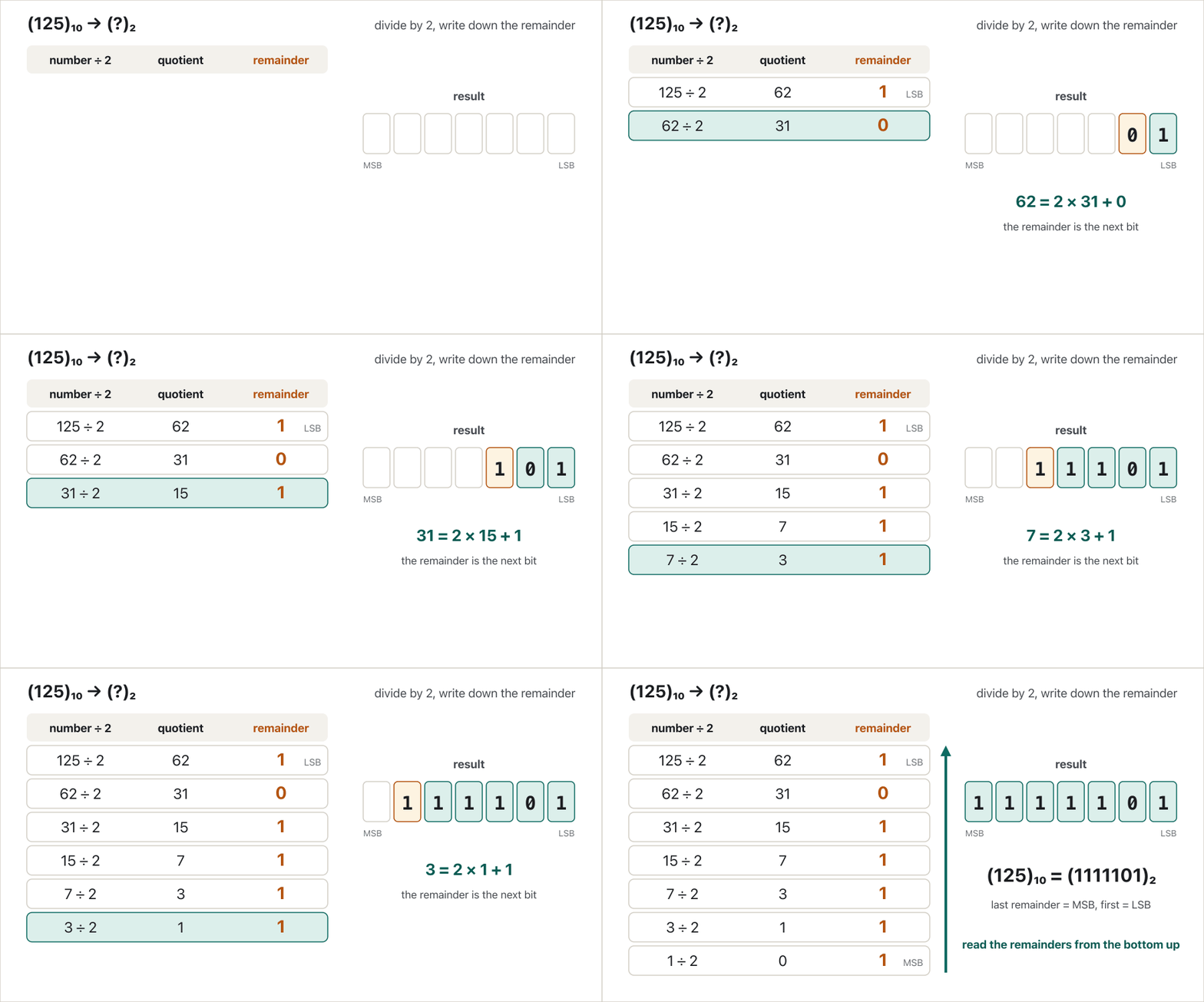
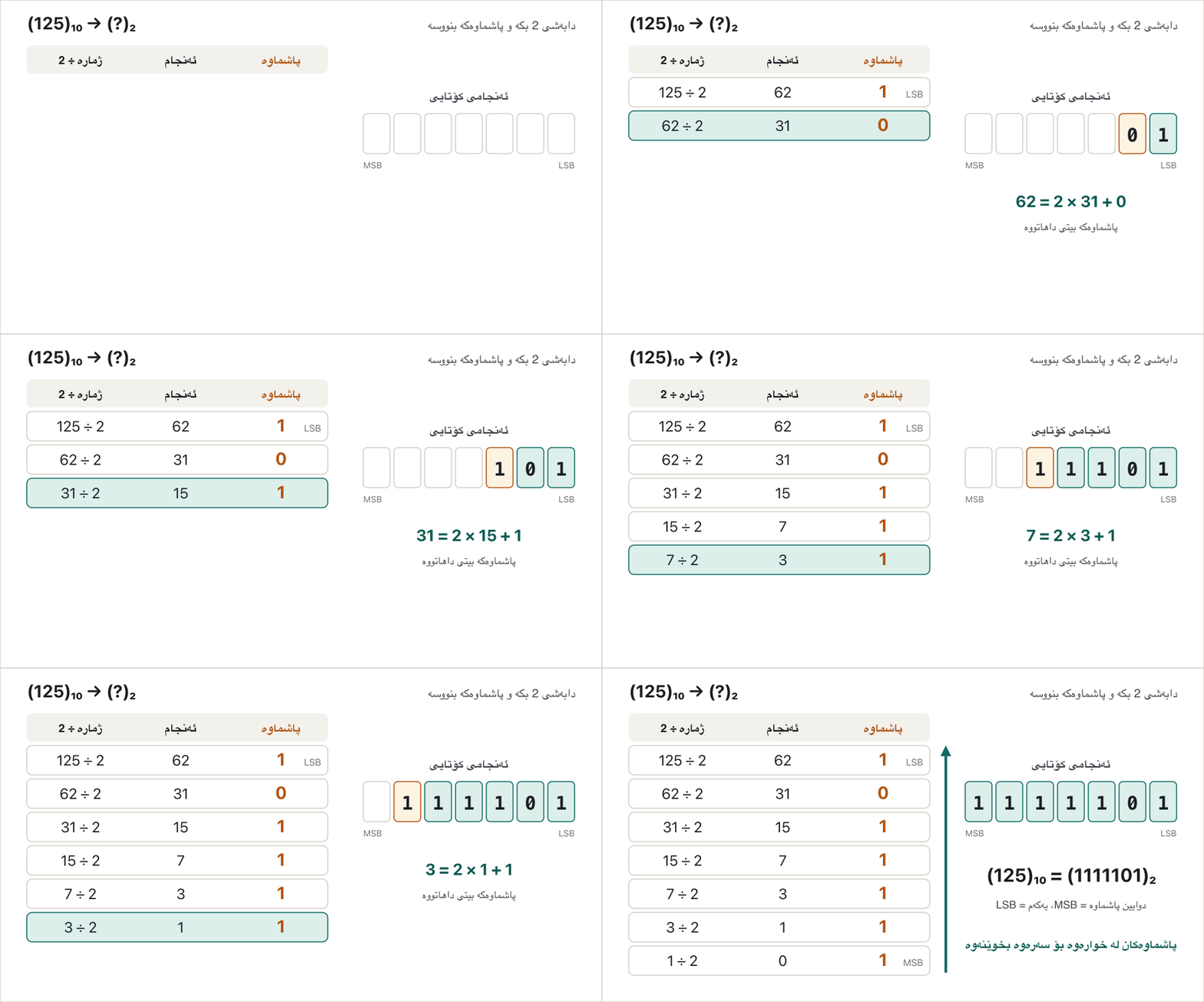
| Divisionدابەشکردن | Quotientئەنجامی دابەشکردن | Remainderپاشماوە |
|---|---|---|
| 62 | 1 (LSB) | |
| 31 | 0 | |
| 15 | 1 | |
| 7 | 1 | |
| 3 | 1 | |
| 1 | 1 | |
| 0 | 1 (MSB) |
Check: . Converting back is the method of the next lesson, From binary, octal and hex to decimal.
پشکنین: . گەڕاندنەوە ڕێگای وانەی داهاتووە، لە دووانی، هەشتی و شانزەییەوە بۆ دەیی.
Decimal to binary by dividing by 2 again and again and reading the remainders from the bottom up.
گۆڕینی بۆ بە دابەشکردنی دووبارە و دووبارە بەسەر 2ـدا و خوێندنەوەی لە خوارەوە بۆ سەرەوە.
Division-method chapters only (7:23 75, 9:46 142, 11:24 339).
تەنها بەشەکانی ڕێگای دابەشکردن (7:23 ژمارە 75، 9:46 ژمارە 142، 11:24 ژمارە 339).
Decimal to binary: divide by 2 again and againدەیی بۆ دووانی: دووبارە و دووبارە دابەشی 2 بکە
A second example: 19نموونەیەکی دووەم: 19
Write the work as a table with three columns: the number being divided, the quotient and the remainder. An arrow from the top row (LSB) to the bottom row (MSB) reminds you of the reading direction.
کارەکە وەک خشتەیەکی سێ ستوونی بنووسە: ئەو ژمارەیەی دابەش دەکرێت، ئەنجامی دابەشکردن و پاشماوە. تیرێک لە ڕیزی سەرەوە (LSB)ـەوە بۆ ڕیزی خوارەوە (MSB) خوێندنەوەکەت بیر دەخاتەوە.
| Divisionدابەشکردن | Quotientئەنجامی دابەشکردن | Remainderپاشماوە |
|---|---|---|
| 9 | 1 (LSB) | |
| 4 | 1 | |
| 2 | 0 | |
| 1 | 0 | |
| 0 | 1 (MSB) |
Bottom up: 10011. Check: .
لە خوارەوە بۆ سەرەوە: 10011. پشکنین: .
Decimal to binary: divide by 2 again and againدەیی بۆ دووانی: دووبارە و دووبارە دابەشی 2 بکە
Another way: subtract powers of twoڕێگایەکی تر: توانەکانی 2 لێ دەربکە
For small numbers there is a quick mental method. Find the largest power of 2 that is not bigger than the number, write a 1 in that place and subtract it. Repeat with what is left. Places you skip get a 0.
بۆ ژمارە بچووکەکان ڕێگایەکی خێرای مێشکی هەیە. گەورەترین 2 بدۆزەرەوە کە لە ژمارەکە گەورەتر نەبێت، 1 لەو خانەیەدا بنووسە و لێی دەربکە. لەگەڵ ئەوەی دەمێنێتەوە دووبارەی بکەرەوە. ئەو خانانەی تێیان دەپەڕیت 0 وەردەگرن.
, , , . The places 16 and 2 are skipped, so they get 0.
، ، ، . خانەکانی 16 و 2 تێیان پەڕیوین، بۆیە 0 وەردەگرن.
| 32 | 16 | 8 | 4 | 2 | 1 |
|---|---|---|---|---|---|
| 1 | 0 | 1 | 1 | 0 | 1 |
A quick mental method: write the powers of two (16 8 4 2 1) and put a 1 under each one you need.
ڕێگایەکی خێرا کە بە مێشک دەکرێت: 2 بنووسە (16 8 4 2 1) و لە ژێر هەر یەکێک کە پێویستت پێیەتی 1 دابنێ.
Checked a frame: 26 with the weights 16 8 4 2 1 written above.
لە ڤیدیۆکەدا ژمارە 26 دەبینیت کە 16 8 4 2 1 بەسەرییەوە نووسراون.
The fraction part: multiply by 2 again and againبەشی کەرتی: دووبارە و دووبارە لە 2 لێکی بدە
The part after the point needs the opposite operation. Multiply the fraction by 2. The whole-number part of the answer (0 or 1) is the next bit after the point. Keep only the fraction part and multiply again. Stop when the fraction becomes 0, or when you have as many bits as you need.
بەشی دوای خاڵەکە پێچەوانەی دابەشکردنی پێویستە: لێکدان. لە 2 لێک بدە. بەشی تەواوی ئەنجامەکە (0 یان 1) دواترە دوای خاڵەکە. تەنها بەشی بهێڵەوە و دووبارە لە 2 لێکی بدە. کاتێک دەبێتە 0 بوەستە، یان کاتێک ئەوەندە هەبوو کە پێویستتە.
Why does this work? Multiplying by 2 moves the binary point one place to the right, so the first bit after the point jumps in front of the point, where you can see it.
بۆچی ئەمە کار دەکات؟ لێکدان لە 2 یەک خانە بەرەو ڕاست دەبات، بۆیە یەکەم دوای خاڵەکە باز دەداتە پێش خاڵەکە، لەو شوێنەی دەتوانیت بیبینیت.
| Multiplyلێکدان | Resultئەنجام | Bit |
|---|---|---|
| 0.75 | 0 (first bit after the point)0 (یەکەم دوای خاڵەکە) | |
| 1.5 | 1 | |
| 1.0 | 1 (fraction is 0: stop)1 ( 0ـە: بوەستە) |
Read these bits from the top down — the opposite direction from the division table. The first bit you get is the most significant fraction bit.
ئەم لە سەرەوە بۆ خوارەوە بخوێنەوە — پێچەوانەی ئاراستەی خشتەی دابەشکردن. یەکەم کە وەریدەگریت گرنگترین بەشی .
The fraction part: multiply by 2 again and againبەشی کەرتی: دووبارە و دووبارە لە 2 لێکی بدە
Whole part and fraction togetherبەشی تەواو و بەشی کەرتی پێکەوە
So a number with a whole part and a fraction part is converted in two halves, and the halves are joined at the point: .
کەواتە ژمارەیەک کە بەشی تەواو و بەشی هەیە بە دوو نیوە دەگۆڕدرێت و دوو نیوەکە لە خاڵەکەدا بە یەکەوە دەبەسترێن: .
The fraction part: multiply by 2 again and againبەشی کەرتی: دووبارە و دووبارە لە 2 لێکی بدە
Fractions that never endکەرتەکان کە کۆتاییان نایەت
Try 0.1. Multiply by 2 again and again: gives 0, gives 0, gives 0, gives 1, gives 1, and then gives 0 again. The fraction 0.2 has come back, so from here the bits 0011 repeat for ever:
0.1 تاقی بکەرەوە. دووبارە و دووبارە لە 2 لێکی بدە: 0 دەدات، 0 دەدات، 0 دەدات، 1 دەدات، 1 دەدات و پاشان دووبارە 0 دەدات. 0.2 گەڕاوەتەوە، بۆیە لێرەوە 0011 بۆ هەمیشە دووبارە دەبنەوە:
The bar marks the block that repeats.
هێڵەکەی سەرەوە ئەو بلۆکە نیشان دەدات کە دووبارە دەبێتەوە.
Which fractions end? Write the fraction in lowest terms. It ends in binary — and in octal and hex too — only when its denominator is a power of 2. ends; never ends, because 10 contains the factor 5. For such a fraction, stop after a fixed number of digits and write ≈: the answer is cut off, not exact.
کام کۆتاییان دێت؟ بە سادەترین شێوە بنووسە. تەنها کاتێک لە — هەروەها لە و — کۆتایی دێت کە 2 بێت. کۆتایی دێت؛ هەرگیز کۆتایی نایەت، چونکە 10 هۆکاری 5ی تێدایە. بۆ لەم جۆرە، دوای ژمارەیەکی دیاریکراو لە بوەستە و ≈ بنووسە: وەڵامەکە بڕاوە، نەک ورد.
Decimal to octal: divide by 8دەیی بۆ هەشتی: دابەشی 8 بکە
The method is exactly the same; only the divisor changes. Divide by 8 until the quotient is 0. Each remainder is now an octal digit from 0 to 7. The first remainder is the (LSD), the last one the (MSD). Read them from the bottom up.
ڕێگاکە ڕێک هەمان شتە؛ تەنها دابەشکەرەکە دەگۆڕێت. دابەشی 8 بکە تا ئەنجامی دابەشکردن دەبێتە 0. ئێستا هەر پاشماوەیەک لە 0 تا 7. یەکەم پاشماوە (LSD) و دوایینیان (MSD). لە خوارەوە بۆ سەرەوە بیانخوێنەوە.
| Divisionدابەشکردن | Quotientئەنجامی دابەشکردن | Remainderپاشماوە |
|---|---|---|
| 44 | 7 (LSD) | |
| 5 | 4 | |
| 0 | 5 (MSD) |
Check: .
پشکنین: .
A number with a fraction, 45.5: the whole part gives remainder 5 and remainder 5, so 55. The fraction part: gives 4, and the fraction is now 0. So .
ژمارەیەک لەگەڵ ، 45.5: بەشی تەواو پاشماوە 5 و پاشماوە 5 دەدات، کەواتە 55. بەشی : 4 دەدات و ئێستا 0ـە. کەواتە .
Decimal to hexadecimal: divide by 16دەیی بۆ شانزەیی: دابەشی 16 بکە
Divide by 16 until the quotient is 0 and read the remainders from the bottom up. A remainder can now be anything from 0 to 15, and the remainders 10 to 15 are written with the letters A to F.
دابەشی 16 بکە تا ئەنجامی دابەشکردن دەبێتە 0 و پاشماوەکان لە خوارەوە بۆ سەرەوە بخوێنەوە. ئێستا پاشماوە دەتوانێت هەر شتێک بێت لە 0 تا 15 و پاشماوەکانی 10 تا 15 بە پیتەکانی A تا F دەنووسرێن.
| Divisionدابەشکردن | Quotientئەنجامی دابەشکردن | Remainderپاشماوە |
|---|---|---|
| 35 | (LSD) | |
| 2 | 3 | |
| 0 | 2 (MSD) |
The decimal, binary, octal and hexadecimal systems side by side, then decimal to octal and hex by dividing again and again.
، ، و لە تەنیشت یەکتر، پاشان گۆڕینی بۆ و بە دابەشکردنی دووبارە و دووبارە.
Chapter 8:42 Hexadecimal conversion: 348 to hex by dividing by 16.
بەشی 8:42، گۆڕین بۆ : 348 بە دابەشکردن بەسەر 16ـدا دەگۆڕێت بۆ .
Decimal to hexadecimal: divide by 16دەیی بۆ شانزەیی: دابەشی 16 بکە
The fraction part of 573.32بەشی کەرتیی 573.32
| Multiplyلێکدان | Resultئەنجام | Digit |
|---|---|---|
| 5.12 | 5 | |
| 1.92 | 1 | |
| 14.72 | ||
| 11.52 | ||
| 8.32 | 8 | |
| 5.12 | 5 — 0.32 is back: the digits repeat5 — 0.32 گەڕایەوە: دووبارە دەبنەوە |
After five multiplications 0.32 comes back, so the block 51EB8 repeats for ever. Any answer with a fixed number of digits is cut off, so write ≈.
دوای پێنج لێکدان 0.32 دەگەڕێتەوە، بۆیە بلۆکی 51EB8 بۆ هەمیشە دووبارە دەبێتەوە. هەر وەڵامێک بە ژمارەیەکی دیاریکراو لە بڕاوە، بۆیە ≈ بنووسە.
Exam example: 757.17 to hexadecimalنموونەی تاقیکردنەوە: 757.17 بۆ شانزەیی
This question comes from the course's midterm exam. It uses everything in this lesson: division for the whole part, multiplication for the fraction, letters for 10–15, and a fraction that never ends.
ئەم پرسیارە لە تاقیکردنەوەی نیوەی وەرزی کۆرسەکەوە هاتووە. هەموو شتێکی ئەم وانەیە بەکاردەهێنێت: دابەشکردن بۆ بەشی تەواو، لێکدان بۆ ، پیت بۆ 10–15 و کە کۆتایی نایەت.
Convert to hexadecimal.
بگۆڕە بۆ .
Hintئاماژە
Do the whole part and the fraction part separately. Remember: , , .
بەشی تەواو و بەشی جیا جیا بکە. لە بیرت بێت: ، ، .
Show answerوەڵامەکە پیشان بدە
| Divisionدابەشکردن | Quotientئەنجامی دابەشکردن | Remainderپاشماوە |
|---|---|---|
| 47 | 5 (LSD) | |
| 2 | ||
| 0 | 2 (MSD) |
| Multiplyلێکدان | Resultئەنجام | Digit |
|---|---|---|
| 2.72 | 2 | |
| 11.52 | B | |
| 8.32 | 8 | |
| 5.12 | 5 | |
| 1.92 | 1 | |
| 14.72 | E | |
| 11.52 | B — 0.72 is backB — 0.72 گەڕایەوە |
After the first fraction digit 2, the block B851E repeats. Stop after a few digits and write ≈.
دوای یەکەم (2)، بلۆکی B851E دووبارە دەبێتەوە. دوای چەند بوەستە و ≈ بنووسە.
Common mistakesهەڵە باوەکان
| Mistakeهەڵە | Fixچارەسەر |
|---|---|
| Reading the remainders from the top down.خوێندنەوەی پاشماوەکان لە سەرەوە بۆ خوارەوە. | Whole part: read the remainders from the bottom up (first remainder = LSB).بەشی تەواو: پاشماوەکان لە خوارەوە بۆ سەرەوە بخوێنەوە (یەکەم پاشماوە = LSB). |
| Reading the fraction bits from the bottom up.خوێندنەوەی لە خوارەوە بۆ سەرەوە. | Fraction part: read the whole-number parts from the top down.بەشی : بەشە تەواوەکان لە سەرەوە بۆ خوارەوە بخوێنەوە. |
| Stopping when the quotient is 1.وەستان کاتێک ئەنجامی دابەشکردن 1ـە. | Do one more division: remainder 1. That last 1 is the MSB.یەک دابەشکردنی تر بکە: پاشماوە 1. ئەو 1ـە دواییە MSBـە. |
| Multiplying the whole number, not just the fraction (for example ).لێکدانی هەموو ژمارەکە، نەک تەنها (بۆ نموونە ). | Split the number at the point: divide the whole part, multiply only the fraction part.ژمارەکە لە خاڵەکەدا جیا بکەرەوە: بەشی تەواو دابەش بکە و تەنها بەشی لێک بدە. |
| Writing a hex remainder of 10–15 as two digits, for example “1 3”.نووسینی پاشماوەیەکی 10–15 لە بە دوو ، بۆ نموونە «1 3». | Use one letter: .یەک پیت بەکاربهێنە: . |
| Giving a non-ending fraction as exact.دانی بێکۆتا وەک نرخێکی ورد. | Write ≈ and, if you see the repeat, mark the repeating block.≈ بنووسە و ئەگەر دووبارەبوونەوەکەت بینی، بلۆکە دووبارەکە نیشانە بکە. |
Exercisesڕاهێنانەکان
Convert to binary: (a) (b) (c) (d) (e) (f)
بگۆڕە بۆ : (أ) (ب) (ج) (د) (هـ) (و)
Show answerوەڵامەکە پیشان بدە
Each arrow is one division by 2 (the chain of quotients); the remainders are listed in the order you get them, so read them from the last to the first.
هەر تیرێک یەک دابەشکردنە بەسەر 2دا (زنجیرەی ئەنجامەکانی دابەشکردن)؛ پاشماوەکان بەو ڕیزەی وەریاندەگریت نووسراون، بۆیە لە دوایینەوە بۆ یەکەم بیانخوێنەوە.
- (a) ; remainders ; read up:
- (b) ; remainders ; read up:
- (c) ; remainders ; read up:
- (d) ; remainders ; read up: (the worked example above)
- (e) ; remainders ; read up: . Fraction: gives 1; so
- (f) ; remainders ; read up: . Fraction: gives 0, gives 1, gives 1; so (the worked example above)
- (أ) ؛ پاشماوەکان ؛ لە خوارەوە بۆ سەرەوە:
- (ب) ؛ پاشماوەکان ؛ لە خوارەوە بۆ سەرەوە:
- (ج) ؛ پاشماوەکان ؛ لە خوارەوە بۆ سەرەوە:
- (د) ؛ پاشماوەکان ؛ لە خوارەوە بۆ سەرەوە: (نموونە شیکراوەکەی سەرەوە)
- (هـ) ؛ پاشماوەکان ؛ لە خوارەوە بۆ سەرەوە: . بەشی : 1 دەدات؛ کەواتە
- (و) ؛ پاشماوەکان ؛ لە خوارەوە بۆ سەرەوە: . بەشی : 0 دەدات، 1 دەدات، 1 دەدات؛ کەواتە (نموونە شیکراوەکەی سەرەوە)
Convert to octal: (a) (b) (c) (d) (e) (f)
بگۆڕە بۆ : (أ) (ب) (ج) (د) (هـ) (و)
Show answerوەڵامەکە پیشان بدە
Each arrow is one division by 8 (the chain of quotients); the remainders are listed in the order you get them, so read them from the last to the first.
هەر تیرێک یەک دابەشکردنە بەسەر 8دا (زنجیرەی ئەنجامەکانی دابەشکردن)؛ پاشماوەکان بەو ڕیزەی وەریاندەگریت نووسراون، بۆیە لە دوایینەوە بۆ یەکەم بیانخوێنەوە.
- (a) ; remainders ; read up: (worked example)
- (b) ; remainders ; read up:
- (c) ; remainders ; read up:
- (d) ; remainders ; read up:
- (e) ; remainders ; read up: . Fraction: gives 4; so (worked example)
- (f) ; remainders ; read up:
- (أ) ؛ پاشماوەکان ؛ لە خوارەوە بۆ سەرەوە: (نموونەی شیکراوە)
- (ب) ؛ پاشماوەکان ؛ لە خوارەوە بۆ سەرەوە:
- (ج) ؛ پاشماوەکان ؛ لە خوارەوە بۆ سەرەوە:
- (د) ؛ پاشماوەکان ؛ لە خوارەوە بۆ سەرەوە:
- (هـ) ؛ پاشماوەکان ؛ لە خوارەوە بۆ سەرەوە: . بەشی : 4 دەدات؛ کەواتە (نموونەی شیکراوە)
- (و) ؛ پاشماوەکان ؛ لە خوارەوە بۆ سەرەوە:
Convert to hexadecimal: (a) (b) (c) (d) (e) (f)
بگۆڕە بۆ : (أ) (ب) (ج) (د) (هـ) (و)
Show answerوەڵامەکە پیشان بدە
Each arrow is one division by 16 (the chain of quotients); the remainders are listed in the order you get them, so read them from the last to the first.
هەر تیرێک یەک دابەشکردنە بەسەر 16دا (زنجیرەی ئەنجامەکانی دابەشکردن)؛ پاشماوەکان بەو ڕیزەی وەریاندەگریت نووسراون، بۆیە لە دوایینەوە بۆ یەکەم بیانخوێنەوە.
- (a) ; remainders ; read up:
- (b) ; remainders ; read up:
- (c) ; remainders ; read up:
- (d) ; remainders ; read up:
- (e) — the block 51EB8 repeats (worked example)
- (f) ; remainders ; read up:
- (أ) ؛ پاشماوەکان ؛ لە خوارەوە بۆ سەرەوە:
- (ب) ؛ پاشماوەکان ؛ لە خوارەوە بۆ سەرەوە:
- (ج) ؛ پاشماوەکان ؛ لە خوارەوە بۆ سەرەوە:
- (د) ؛ پاشماوەکان ؛ لە خوارەوە بۆ سەرەوە:
- (هـ) — بلۆکی 51EB8 دووبارە دەبێتەوە (نموونەی شیکراوە)
- (و) ؛ پاشماوەکان ؛ لە خوارەوە بۆ سەرەوە:
Convert to binary, then to octal and to hexadecimal.
بگۆڕە بۆ ، پاشان بۆ و بۆ .
Show answerوەڵامەکە پیشان بدە
- ; remainders ; read up: . Fraction: gives 1, gives 1; so
- ; remainders ; read up: (octal)
- ; remainders ; read up: (hex)
- ؛ پاشماوەکان ؛ لە خوارەوە بۆ سەرەوە: . بەشی : 1 دەدات، 1 دەدات؛ کەواتە
- ؛ پاشماوەکان ؛ لە خوارەوە بۆ سەرەوە: ()
- ؛ پاشماوەکان ؛ لە خوارەوە بۆ سەرەوە: ()
Summaryپوختە
- Whole part: divide by the new base again and again until the quotient is 0; the remainders, read from the bottom up, are the digits (first remainder = LSB/LSD).
- Fraction part: multiply by the base again and again; the whole-number parts, read from the top down, are the digits after the point.
- Bases 2, 8 and 16 use the same method; in hex the remainders 10–15 become A–F.
- A fraction ends in base 2, 8 or 16 only if its denominator is a power of 2; otherwise its digits repeat — write ≈.
- Say LSD/MSD (digit) for octal and hex, LSB/MSB (bit) for binary. Always check by converting back.
- بەشی تەواو: دووبارە و دووبارە دابەشی نوێیەکە بکە تا ئەنجام دەبێتە 0؛ پاشماوەکان کە لە خوارەوە بۆ سەرەوە دەخوێندرێنەوە (یەکەم پاشماوە = LSB/LSD).
- بەشی : دووبارە و دووبارە لە بیدە؛ بەشە تەواوەکان کە لە سەرەوە بۆ خوارەوە دەخوێندرێنەوە دوای خاڵەکەن.
- 2، 8 و 16 هەمان ڕێگا بەکاردەهێنن؛ لە پاشماوەکانی 10–15 دەبنە A–F.
- لە 2، 8 یان 16دا تەنها کاتێک کۆتایی دێت کە 2 بێت؛ ئەگەر نا دووبارە دەبنەوە — ≈ بنووسە.
- بۆ و بڵێ LSD/MSD ()، بۆ LSB/MSB (). هەمیشە بە گەڕاندنەوە بیپشکنە.
Why are the remainders read from the bottom up?بۆچی پاشماوەکان لە خوارەوە بۆ سەرەوە دەخوێندرێنەوە؟
The first division finds the last digit (the units place); every later division finds a digit further to the left. So the last remainder is the leftmost digit.
یەکەم دابەشکردن دوایین دەدۆزێتەوە (خانەی یەکەکان)؛ هەر دابەشکردنێکی دواتر دەدۆزێتەوە کە زیاتر لای چەپە. بۆیە دوایین پاشماوە چەپترین .
What is in binary? بە دووانی چەندە؟
gives 0 and gives 1, so .
0 دەدات و 1 دەدات، کەواتە .
What is in hexadecimal? بە شانزەیی چەندە؟
remainder 15 (F), then remainder 15 (F), so .
پاشماوە 15 (F)، پاشان پاشماوە 15 (F)، کەواتە .
Videoڤیدیۆ
Watch a videoسەیری ڤیدیۆیەک بکە
A video that viewers liked a lot and praised in their comments, chosen for this lesson.ڤیدیۆیەک کە بینەران زۆریان پێ خۆش بووە و لە کۆمێنتەکانیاندا ستایشیان کردووە، بۆ ئەم وانەیە هەڵبژێردراوە.
Kurdish lecture: decimal to binary, octal and hex by repeated division and multiplication, and binary to octal and hex by grouping.
وانەیەکی کوردی: گۆڕینی بۆ ، و بە دابەشکردن و لێکدانی دووبارە، هەروەها بۆ و بە کۆمەڵکردنی .
Kurdish. Chapters 0:00 decimal to binary (divide by 2, fraction ×2), 5:05 to octal, 7:31 to hex. Checked frames: the slide shows 13 ÷ 2 with remainders and 0.625 × 2.
بە کوردی. بەشەکان: 0:00 بۆ (دابەشکردن بەسەر 2ـدا و لێکدانی بە 2)، 5:05 بۆ ، 7:31 بۆ . لە ڤیدیۆکەدا لەگەڵ و پیشان دەدات.
Lesson complete!وانەکە تەواو بوو!
Well done. Review the key terms, then go on to the next lesson.دەستخۆش. سەیرێکی زاراوە سەرەکییەکان بکەرەوە، پاشان بڕۆ بۆ وانەی داهاتوو.
Key termsزاراوە سەرەکییەکان
From Binary, Octal and Hex to Decimalلە دووانی، هەشتی و شانزەییەوە بۆ دەیی
Related lecturesوانە پەیوەندیدارەکان
References and further readingسەرچاوەکان و خوێندنەوەی زیاتر
- T. L. Floyd, Digital Fundamentals, 11th ed. (Pearson, 2015), section 2-3 Decimal-to-binary conversion (course textbook)
- Wikipedia: Binary number — conversion to and from other numeral systems, fractions
- Wikipedia: Hexadecimal — conversion by repeated division, non-terminating fractions
- Wikipedia: Positional notation — base conversion and terminating fractions
This lecture is a first edition. The Kurdish text and terminology are waiting for review by Kurdish IT teachers.ئەم وانەیە چاپی یەکەمە. دەقە کوردییەکە و زاراوەکانی چاوەڕێی پێداچوونەوەی مامۆستایانی کوردی بواری IT ن.