Chapterبەش 3 · Lectureوانە 3.2
Domain, Range and Imageبوار، مەودا و وێنە
Which inputs a function accepts, which outputs it really gives, and how to find both from a formula or a graph. With worked answers to the ten domain-and-range exercises of the course.
کام وەردەگرێت، بە ڕاستی کام دەدات و چۆن هەردووکیان لە فۆرمولە یان هێڵکارییەکەوە دەدۆزرێنەوە. لەگەڵ وەڵامی چارەسەرکراوی دە ڕاهێنانەکەی و خولەکە.
What you will learnچی فێر دەبیت
- Tell apart the domain, the codomain and the range of a function.
- Find the image of an element and of a subset, and the pre-images of a value.
- Find the natural domain of a formula with fractions and roots.
- Find the range by reasoning, by solving for x, or from a graph.
- ، و لێک جیا بکەرەوە.
- و بدۆزەرەوە، هەروەها بەهایەک.
- فۆرمولەیەک کە و ڕەگی تێدایە بدۆزەرەوە.
- بە بیرکردنەوە، بە چارەسەرکردن بۆ x یان لە هێڵکارییەکەوە بدۆزەرەوە.
Inputs that are allowed, outputs that are reachedنێوخستەکانی ڕێگەپێدراو و دەرخستەکانی بەدەستهاتوو
Every function comes with three sets. The domain is the set of inputs. The codomain is the set in which the outputs are allowed to land. The range is the set of outputs that really appear.
هەموو سێ لەگەڵە. . ئەو کە ڕێگەیان پێدراوە تێیدا بنیشنەوە. ئەو کە ڕاستەقینەکانی تێدایە، واتە ئەوانەی بە ڕاستی دەردەکەون.
Think of the function "student → exam mark" in a small class. The domain is the class: Aram, Shilan, Karwan and Dilan. The mark sheet allows every whole number from 0 to 100; that is the codomain. But the marks that really happened are only 85, 92, 85 and 70, so the range is , a small part of the codomain.
بیر لە «خوێندکار ← نمرەی تاقیکردنەوە» بکەرەوە لە پۆلێکی بچووکدا. پۆلەکەیە: ئارام، شیلان، کاروان و دیلان. لاپەڕەی نمرەکان هەموو لە 0 تا 100 ڕێگەپێدراو دەکات؛ ئەمە . بەڵام ئەو نمرانەی بە ڕاستی هاتوون تەنها 85، 92، 85 و 70ن، بۆیە ـە، بەشێکی بچووکی .
Where the analogy stops workingسنووری ئەم نموونەیە
A teacher can change a mark later; a function's range is fixed by its rule and its domain. Also, the codomain is a choice: we could have chosen all real numbers as Y, and the range would stay the same.
مامۆستا دەتوانێت دواتر نمرەیەک بگۆڕێت؛ بەڵام بە یاسا و جێگیر دەبێت. هەروەها هەڵبژاردنێکە: دەمانتوانی هەموو وەک Y هەڵبژێرین و هەر وەک خۆی دەمایەوە.
Domain, codomain, image and pre-imageبوار، بواری بەرامبەر، وێنە و پێشوێنە
Let . The set X is the domain of f, written , and Y is the codomain of f. The unique y in Y that f assigns to an x in X is called the image of x under f, or the value of f at x, and is written . In the other direction, x is called a pre-image of y.
با بێت. X fـە و بە دەنووسرێت، Yـیش fـە. ئەو y تاقانەیەی لە Yـدا کە f بە xـێکی X دەیدات پێی دەوترێت x لە ژێر fـدا یان بەهای f لە xـدا و بە دەنووسرێت. بە پێچەوانەوە، x پێی دەوترێت y.
In the marks example, the image of Aram is 85. The mark 85 has two pre-images, Aram and Karwan, while 50 has no pre-image at all. That is the general picture: every x has exactly one image, but a y may have one pre-image, several, or none.
لە نموونەی نمرەکاندا، ئارام 85ـە. نمرەی 85 دوو هەیە، ئارام و کاروان، بەڵام 50 هیچ نییە. بە گشتی ئەمە ڕاستە: هەر x تەنها یەک هەیە، بەڵام y دەکرێت یەک ، چەندان یان هیچی نەبێت.
With arrow diagrams: the domain, the image of each element, the range, and the codomain, and why the range is a subset of the codomain.
بە هێڵکاریی تیر: ، هەر ، و ، هەروەها بۆچی .
Whole video (2:30). It uses a relation from A to B; the words mean the same for functions.
هەموو ڤیدیۆکە (2:30). لە A بۆ B بەکار دەهێنێت؛ وشەکان بۆ هەمان واتایان هەیە.
The range: all the images togetherمەودا: هەموو وێنەکان پێکەوە
The range of f, written , is the set of all images under f. It is also written :
f، کە بە دەنووسرێت، هەموو لە ژێر fـدا. بە ـیش دەنووسرێت:
Read: the elements y of Y for which at least one x in X gives (the symbol means "there is"). The second form says the same thing more briefly: collect for every x in X.
دەخوێنرێتەوە: ئەو y لە Y کە لانیکەم یەک x لە X هەیە بە جۆرێک کە (هێمای واتە «هەیە»). شێوەی دووەم هەمان شت بە کورتی دەڵێت: بۆ هەموو xـێکی X کۆ بکەرەوە.
The range is always a subset of the codomain, , and it can be much smaller.
هەمیشە () و دەکرێت زۆر بچووکتر بێت.
- Compute every imageهەموو وێنەکان بژمێرە
, , .
، ، .
- Collect them in a setلە کۆمەڵەیەکدا کۆیان بکەرەوە
.
.
- Notice the sizeسەرنجی ژمارەکەیان بدە
X has 3 elements but has only 2, because and have the same image. A set lists each element once.
X سێ هەیە بەڵام تەنها دووی هەیە، چونکە و هەمان هەیە. هەر تەنها یەک جار دەنووسێت.
The image of a subsetوێنەی ژێرکۆمەڵەیەک
We can also feed only part of the domain into f. If , the set is called the image of A under f and is written . The range is the special case : .
دەتوانین تەنها بەشێک لە بدەینە f. ئەگەر ، پێی دەوترێت A لە ژێر fـدا و بە دەنووسرێت. حاڵەتێکی تایبەتە کە : .
Examples with : for we get . For the interval we get : the smallest square comes from inside A, and the largest from . It is not : you must look at all of A, not only its ends.
نموونە بە : بۆ دەبێتە . بۆ دەبێتە : بچووکترین دووجا لە ـەوە دێت کە لە ناو Aـدایە و گەورەترینیان لە ـەوە. ئەنجامەکە نییە: دەبێت سەیری هەموو A بکەیت، نەک تەنها سەرەتا و کۆتاییەکەی.
Finding the domain from a formulaدۆزینەوەی بوار لە فۆرمولەیەکەوە
Often a function is given only as a formula, such as . Then its domain is understood to be every real x for which the formula gives a real number. This is called the natural domain. In practice, three things can go wrong:
زۆرجار تەنها وەک فۆرمولەیەک دەدرێت، وەک . ئەو کاتە هەموو xـێکی ڕاستییە کە فۆرمولەکە دەدات. ئەمە پێی دەوترێت . لە ڕاستیدا سێ شت دەتوانن کێشە دروست بکەن:
| Ruleیاسا | Whyبۆچی | Exampleنموونە |
|---|---|---|
| No division by 0دابەشکردن لەسەر 0 نییە | has no value. هیچ بەهایەکی نییە. | : |
| No even root (, , …) of a negative numberڕەگی جووت (، ، …) بۆ نییە | No real number squared is negative.دووجای هیچ سالب نییە. | : , |
| Logarithms only of positive numbers تەنها بۆ | is always positive (taught in Logarithms). هەمیشە موجەبە (لە لۆگاریتمەکان دەخوێنرێت). | : |
Odd roots are fine for every real number: , so has domain . A zero in the numerator is also fine: .
ڕەگی تاک بۆ هەموو دروستە: ، بۆیە ـە. سفر لە کێشە نییە: .
Start with all real numbers, .
بە هەموو دەست پێبکە، .
Remove every x that makes a denominator 0.
هەموو ئەو xـانە لاببە کە دەکەنە 0.
Under every even root, demand that the expression inside is ( if the root is in a denominator), and solve that inequality.
بۆ هەر ڕەگێکی جووت، داوا بکە ژێر ڕەگەکە بێت ( ئەگەر ڕەگەکە لە بێت) و ئەو چارەسەر بکە.
Inside every logarithm, demand that the expression is .
لە ناو هەر داوا بکە بێت.
Write what is left as an interval or a union of intervals.
ئەوەی دەمێنێتەوە وەک یان چەند بنووسە.
Finds the domain from a formula: no division by zero, nothing negative under a square root, answers in interval notation.
لە یاساکەی دەدۆزێتەوە: دابەشکردن بەسەر سفردا نییە، هیچ لە ژێر نییە، وەڵامەکانیش بە شێوەی .
Plays 0:00–10:48: polynomials, fractions and square roots; skips the harder fractions-with-roots part.
لە 0:00 تا 10:48 پەخش دەبێت: ، و ؛ بەشە قورسەکەی ئەو ڕەگیان تێدایە بەجێ دەهێڵێت.
Finding the rangeدۆزینەوەی مەودا
The range is usually harder than the domain. Three ways help:
دۆزینەوەی زۆرجار لە قورسترە. سێ ڕێگا یارمەتی دەدەن:
- Build it from simple facts: , , and is never 0.
- Solve for x and ask for which y an allowed x exists.
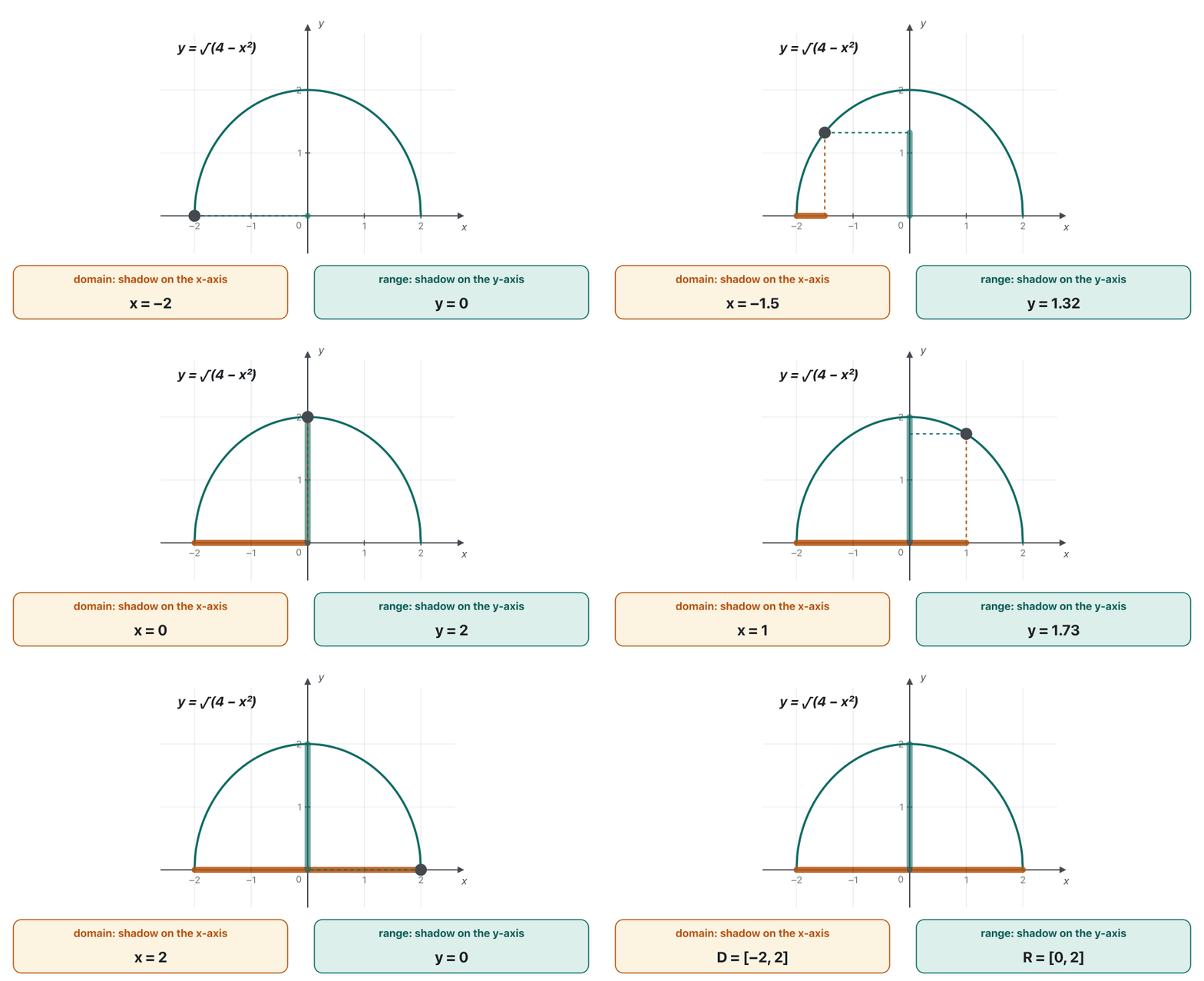
- Read the graph: the range is the shadow of the graph on the y-axis, and the domain is its shadow on the x-axis.
- لە ڕاستییە سادەکانەوە دروستی بکە: ، و هەرگیز 0 نییە.
- بۆ x چارەسەر بکە و بپرسە بۆ کام y، xـێکی ڕێگەپێدراو هەیە.
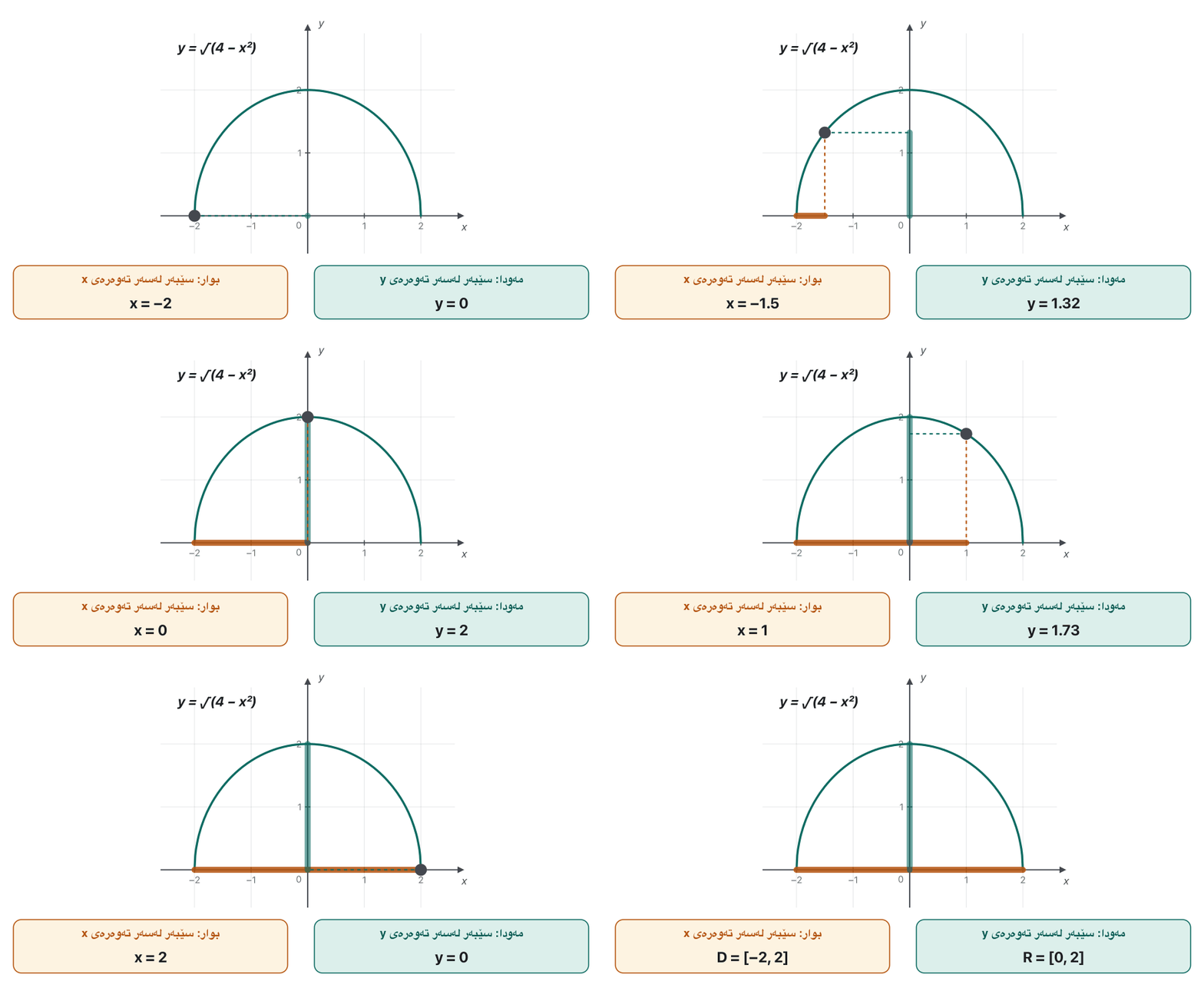
- بخوێنەرەوە: سێبەری هێڵکارییەکەیە لەسەر y و سێبەرەکەیەتی لەسەر x.
Reading domain and range from a graphخوێندنەوەی بوار و مەودا لە هێڵکارییەوە
A graph shows all the pairs at once. The domain is its shadow on the x-axis: the x values it covers. The range is its shadow on the y-axis: the heights it reaches. The ends of the graph decide the brackets:
هێڵکاری هەموو جووتەکانی پێکەوە پیشان دەدات. سێبەرەکەیەتی لەسەر x: ئەو بەهایانەی x کە دایاندەپۆشێت. سێبەرەکەیەتی لەسەر y: ئەو بەرزییانەی پێیان دەگات. کۆتاییەکانی هێڵکارییەکە کەوانەکان دیاری دەکەن:
- Filled dot: on the graph → or .
- Open dot: not on the graph → or .
- Arrow: the graph goes on for ever → or .
- For the range, find the lowest and highest points, not just the ends.
- خاڵی پڕکراو: سەر بە هێڵکارییەکەیە ← یان .
- خاڵی کراوە: سەر بە هێڵکارییەکە نییە ← یان .
- تیر: هێڵکارییەکە بێ کۆتایی بەردەوامە ← یان .
- بۆ ، نزمترین و بەرزترین خاڵ بدۆزەرەوە، نەک تەنها کۆتاییەکان.
In the picture: the graph starts at the filled dot and stops at the open dot , so . Its lowest point is , and its heights climb towards 6 without reaching it: . The start height 1 is not an end of the range, because the graph goes lower than that.
لە وێنەکەدا: هێڵکارییەکە لە خاڵی پڕکراوی ـەوە دەست پێدەکات و لە خاڵی کراوەی ـدا دەوەستێت، بۆیە . نزمترین خاڵی ـە و بەرزییەکانی بەرەو 6 دەچن بەبێ ئەوەی پێی بگەن: . بەرزیی سەرەتا، 1، کۆتاییەکی نییە، چونکە هێڵکارییەکە لەوە نزمتر دەچێت.
Reading domain and range from a graphخوێندنەوەی بوار و مەودا لە هێڵکارییەوە
Practice: read six graphsڕاهێنان: شەش هێڵکاری بخوێنەرەوە
Read the domain and the range of each graph. When a graph has only a few heights, write the range as a set in braces, not as an interval.
و هەر هێڵکارییەک بخوێنەرەوە. کاتێک هێڵکارییەک تەنها چەند بەرزییەکی کەمی هەیە، وەک لە ناو دا بنووسە، نەک وەک .
Graph A: .
هێڵکاریی A: .
Show answerوەڵامەکە پیشان بدە
Domain: the graph comes from the left without end and stops at the filled dot : . Range: its lowest height is 0, at the dot, and to the left it rises without end: . The formula agrees: means , and a square root is never negative.
: هێڵکارییەکە بێ کۆتایی لە چەپەوە دێت و لە خاڵی پڕکراوی ـدا دەوەستێت: . : نزمترین بەرزیی 0ـە کە لە خاڵەکەدایە و بەرەو چەپ بێ کۆتایی بەرز دەبێتەوە: . فۆرمولەکەش هەمان شت دەڵێت: واتە و هەرگیز سالب نییە.
Graph B: for , for , for .
هێڵکاریی B: بۆ ، بۆ ، بۆ .
Show answerوەڵامەکە پیشان بدە
Domain: every real x belongs to exactly one piece: . Range: the graph has only three heights: . A range does not have to be an interval; here it is a finite set. A graph made of flat steps like this is a step function.
: هەموو xـێکی ڕاستی سەر بە تەنها یەک پارچەیە: . : هێڵکارییەکە تەنها سێ بەرزیی هەیە: . پێویست نییە بێت؛ لێرەدا کۆتاییدارە. هێڵکارییەکی لەم جۆرە، کە لە پلەی تەخت پێک هاتووە، نەخشەیەکی پلەدارە.
Graph C: for , for .
هێڵکاریی C: بۆ ، بۆ .
Show answerوەڵامەکە پیشان بدە
Both pieces reach the point : the line ends there and the parabola starts there with a filled dot, so there is no gap. Domain: . Range: the line gives every height below 1, ; the parabola gives every height from 1 up, . Together they cover all heights: .
هەردوو پارچەکە دەگەنە خاڵی : هێڵەکە لەوێ کۆتایی دێت و بە خاڵێکی پڕکراو لەوێوە دەست پێدەکات، بۆیە هیچ بۆشاییەک نییە. : . : هێڵەکە هەموو بەرزییەکی خوار 1 دەدات، ؛ هەموو بەرزییەک لە 1ـەوە بۆ سەرەوە دەدات، . پێکەوە هەموو بەرزییەکان دەگرنەوە: .
Graph D: the horizontal line .
هێڵکاریی D: هێڵی ئاسۆیی .
Show answerوەڵامەکە پیشان بدە
Domain: . Range: the line has only one height: . It is not and not an interval, because the line never goes up or down. This is a constant function.
: . : هێڵەکە تەنها یەک بەرزیی هەیە: . نییە و نییە، چونکە هێڵەکە هەرگیز بەرز یان نزم نابێتەوە. ئەمە نەخشەیەکی نەگۆڕە.
Graph E: the V-shape .
هێڵکاریی E: شێوەی V، .
Show answerوەڵامەکە پیشان بدە
Domain: both arms go on for ever: . Range: the lowest point is the corner , and both arms rise without end: . Every U- or V-shape that opens upwards works the same way: the range starts at the height of its lowest point.
: هەردوو باڵەکە بێ کۆتایی بەردەوامن: . : نزمترین خاڵ گۆشەی ـە و هەردوو باڵ بێ کۆتایی بەرز دەبنەوە: . هەموو شێوەیەکی U یان V کە بەرەو سەرەوە کراوەیە بەم شێوەیەیە: لە بەرزیی نزمترین خاڵەکەیەوە دەست پێدەکات.
Graph F: a curve that comes from the left and ends at the open dot .
هێڵکاریی F: چەماوەیەک کە لە چەپەوە دێت و لە خاڵی کراوەی ـدا کۆتایی دێت.
Show answerوەڵامەکە پیشان بدە
Domain: ; 2 itself is not included. Range: the heights come down towards 1 but never reach it, and to the left they grow without end: . An open dot at the lowest point leaves its height out of the range.
: ؛ 2 خۆی ناگرێتەوە. : بەرزییەکان بەرەو 1 دادەبەزن بەڵام هەرگیز پێی ناگەن و بەرەو چەپ بێ کۆتایی گەورە دەبن: . خاڵێکی کراوە لە نزمترین شوێندا بەرزییەکەی لە دەردەکات.
Reading domain and range from a graphخوێندنەوەی بوار و مەودا لە هێڵکارییەوە
Domain and range of a relationبوار و مەودای پەیوەندییەک
Domain and range also make sense for a relation that is not a function. The domain is the set of all first numbers of the pairs, the range the set of all second numbers. On a graph you read the shadows exactly as before.
و بۆ هەر پەیوەندییەک واتایان هەیە، تەنانەت ئەگەر نەبێت. هەموو ژمارە یەکەمەکانی جووتەکانە و هەموو ژمارە دووەمەکانیان. لەسەر هێڵکاری، سێبەرەکان ڕێک وەک پێشوو دەخوێنیتەوە.
Find the domain and the range of the relation . Is it also a function?
و بدۆزەرەوە. ئایا ؟
Show answerوەڵامەکە پیشان بدە
and . The 3 appears twice as a second number but is written once. It is a function: no first number repeats. Two inputs, and , sharing the output 3 is allowed.
و . 3 دوو جار وەک ژمارەی دووەم دەردەکەوێت بەڵام یەک جار دەنووسرێت. بەڵێ، : هیچ ژمارەیەکی یەکەم دووبارە نابێتەوە. ئەوەی دوو ، و ، هەمان 3 بدەن ڕێگەپێدراوە.
The two curves below are not graphs of functions: a vertical line meets each of them twice (vertical line test). They are relations, and they still have a domain and a range.
دوو چەماوەکەی خوارەوە نین: هێڵێکی ستوونی هەر یەکەیان دوو جار دەبڕێت (تاقیکردنەوەی هێڵی ستوونی). و هێشتا و هەیە.
Read the domain and the range of the circle (centre , radius 2) and of the parabola that opens to the right (vertex ).
و بازنەکە (ناوەند ، نیوەتیرە 2) و (کە بەرەو ڕاست دەکرێتەوە، ) بخوێنەرەوە.
Show answerوەڵامەکە پیشان بدە
Circle: it reaches from to and from to , ends included (centre ± radius: and ): , . Parabola: it starts at its vertex, , and goes on to the right: ; its arms go up and down without end: .
بازنە: لە ـەوە تا و لە ـەوە تا دەگات و کۆتاییەکانیش دەگرێتەوە (ناوەند ± نیوەتیرە: و ): ، . : لە ، ، دەست پێدەکات و بەرەو ڕاست بەردەوام دەبێت: ؛ باڵەکانی بێ کۆتایی بەرەو سەرەوە و خوارەوە دەڕۆن: .
Exercises 1, 9, 10: no fractions, no rootsڕاهێنانەکانی 1، 9، 10: بێ کەرت و بێ ڕەگ
The notes give ten functions and ask for their domain and range; numbers 1, 2, 7, 8, 9 and 10 were homework. Here they are grouped by type, each with a worked answer. Try each one before you open the answer.
تێبینییەکانی وانەکە دە دەدەن و داوای و دەکەن؛ ژمارە 1، 2، 7، 8، 9 و 10 ئەرکی ماڵەوە بوون. لێرەدا بەپێی جۆر کۆکراونەتەوە و هەر یەکەیان وەڵامێکی چارەسەرکراوی هەیە. پێش کردنەوەی وەڵامەکە هەوڵی خۆت بدە.
Find the domain and the range of . (homework in the course)
و بدۆزەرەوە. (ئەرکی ماڵەوەی خولەکە)
Show answerوەڵامەکە پیشان بدە
Domain: there is no fraction and no root, so every real x works: .
: هیچ و ڕەگێک نییە، بۆیە هەموو xـێکی ڕاستی دەگونجێت: .
Range: , so . Every is reached by . So .
: ، بۆیە . هەموو بە بەدەست دێت. کەواتە .
Find the domain and the range of . (homework in the course)
و بدۆزەرەوە. (ئەرکی ماڵەوەی خولەکە)
Show answerوەڵامەکە پیشان بدە
Domain: . Range: a square is never negative, and every is the square of : .
: . : دووجا هەرگیز سالب نییە و هەموو دووجای ـە: .
Find the domain and the range of . (homework in the course)
و بدۆزەرەوە. (ئەرکی ماڵەوەی خولەکە)
Show answerوەڵامەکە پیشان بدە
Domain: . Range: as well. A cube can be negative, and every real y has a real cube root with ; for example .
: . : ئەویش . سێجا دەکرێت سالب بێت و هەموو yـێکی ڕاستی ڕاستی هەیە، ، کە ؛ بۆ نموونە .
Exercises 2 and 5: fractionsڕاهێنانەکانی 2 و 5: کەرتەکان
Find the domain and the range of . (homework in the course)
و بدۆزەرەوە. (ئەرکی ماڵەوەی خولەکە)
Show answerوەڵامەکە پیشان بدە
Domain: the denominator must not be 0, so : .
: نابێت 0 بێت، بۆیە : .
Range: solve for x: . This works for every , and is impossible because 1 divided by a number is never 0. So .
: بۆ x چارەسەر بکە: . ئەمە بۆ هەموو کار دەکات و مەحاڵە، چونکە 1 دابەش لەسەر هیچ ژمارەیەک نابێتە 0. کەواتە .
Find the domain and the range of .
و بدۆزەرەوە.
Show answerوەڵامەکە پیشان بدە
Domain: , so and : .
: ، بۆیە و : .
Range: call the denominator . Because , , and . If , then (for example gives and gives ). If , then . So . Check: , .
: با ناو بنێین . چونکە ، و . ئەگەر ، ئەوا (بۆ نموونە دەبێتە و دەبێتە ). ئەگەر ، ئەوا . کەواتە . پشکنین: ، .
In Sorani: find the domain and range of fraction functions (denominator not 0; solve y = f(x) for x), with past exam questions.
بە سۆرانی: دۆزینەوەی و ( سفر نەبێت؛ بۆ x چارەسەر بکە)، لەگەڵ پرسیارەکانی تاقیکردنەوەی وزاری.
Sorani segment 25:05-33:20: domain (denominator not 0) and range (solve y = f(x) for x) of fraction functions, then ministerial exam questions. Uses R{2} for the lesson's ℝ∖{2}.
بەشێکی سۆرانی، لە 25:05 تا 33:20: ( سفر نەبێت) و ( بۆ x چارەسەر بکە)، پاشان پرسیارەکانی تاقیکردنەوەی وزاری. لە جیاتی کە وانەکە دەینووسێت، بەکار دەهێنێت.
Exercises 3, 7, 8: square rootsڕاهێنانەکانی 3، 7، 8: ڕەگە دووجاکان
Find the domain and the range of . (homework in the course)
و بدۆزەرەوە. (ئەرکی ماڵەوەی خولەکە)
Show answerوەڵامەکە پیشان بدە
Domain: , so . Range: a square root is never negative, and every equals : .
: ، بۆیە . : هەرگیز سالب نییە و هەموو یەکسانە بە : .
Find the domain and the range of .
و بدۆزەرەوە.
Show answerوەڵامەکە پیشان بدە
Domain: : . Range: takes every value in , so takes every value in and every value in . The largest output is : .
: : . : هەموو بەهایەکی وەردەگرێت، بۆیە هەموو بەهایەکی و هەموو بەهایەکی وەردەگرن. گەورەترین ـە: .
Find the domain and the range of . (homework in the course)
و بدۆزەرەوە. (ئەرکی ماڵەوەی خولەکە)
Show answerوەڵامەکە پیشان بدە
Domain: , so : . Range: as x runs through , runs through , so the square root takes every value : .
: ، بۆیە : . : کاتێک x بە ناو ـدا دەڕوات، بە ناو ـدا دەڕوات، بۆیە ڕەگەکە هەموو بەهایەکی وەردەگرێت: .
Exercises 4 and 6: roots that need an inequalityڕاهێنانەکانی 4 و 6: ڕەگ کە لاسەنگەیەکی دەوێت
In these two exercises the domain is the solution of a quadratic inequality, so you use the sign-chart method from Quadratic inequalities.
لەم دوو ڕاهێنانەدا ، بۆیە ڕێگای لە لاسەنگە پلەدووەکان بەکار دەهێنیت.
Find the domain and the range of .
و بدۆزەرەوە.
Show answerوەڵامەکە پیشان بدە
Domain: we need . The zeros are 2 and 4. Test numbers: gives ; gives ; gives . The product is only between the zeros, zeros included: .
: پێویستمان بە ـە. سفرەکان 2 و 4ن. ژمارەی تاقیکردنەوە: دەدات ؛ دەدات ؛ دەدات . لێکدانەکە تەنها لە نێوان دوو سفرەکەدا ـە و خودی سفرەکانیش دەگرێتەوە: .
Range: multiply out: . On , goes from 0 to 1, so the inside goes from 0 to 1 and so does its square root. The top is : .
: بیکەرەوە: . لەسەر ، لە 0ـەوە دەچێت بۆ 1، بۆیە ناوەوەی ڕەگەکە لە 0ـەوە تا 1 دەڕوات و ڕەگەکەشی هەروا. بەرزترین خاڵ ـە: .
Find the domain and the range of .
و بدۆزەرەوە.
Show answerوەڵامەکە پیشان بدە
Domain: means , that is : .
: واتە ، یانی : .
Range: on , goes from 0 to 4, so goes from 4 down to 0 and its square root from 2 down to 0: . The graph is the upper half of the circle with radius 2 from the animation above.
: لەسەر ، لە 0ـەوە دەچێت بۆ 4، بۆیە لە 4ـەوە دادەبەزێت بۆ 0 و ڕەگەکەی لە 2ـەوە بۆ 0: . هێڵکارییەکەی نیوەی سەرەوەی ئەو بازنەیەیە کە نیوەتیرەکەی 2ـە و لە هێڵکارییە جووڵاوەکەی سەرەوەدا بینیت.
Common mistakesهەڵە باوەکان
| Mistakeهەڵە | What is trueڕاستییەکە |
|---|---|
| "The range is the codomain."« هەمان .» | The range is the part of the codomain that is really reached: . ئەو بەشەی کە بە ڕاستی پێی دەگەین: . |
| "The domain of is ."« ـە.» | is allowed, so it is , the interval . ڕێگەپێدراوە، بۆیە ـە، واتە . |
| For , removing only .بۆ تەنها لابردنی . | also makes the denominator 0; remove both.ـیش دەکاتە 0؛ هەردووکیان لاببە. |
| Image of under = . لە ژێر ـدا = . | The smallest square comes from : the image is . Check the whole set, not only the ends.بچووکترین دووجا لە ـەوە دێت: ـە. هەموو بپشکنە، نەک تەنها سەرەتا و کۆتاییەکەی. |
| Excluding x where the numerator is 0.دەرهێنانی ئەو xـانەی دەکەنە 0. | A zero numerator is fine (); only a zero denominator is forbidden.سفر لە کێشە نییە ()؛ تەنها سفر لە قەدەغەیە. |
| "The range of is ."« ـە.» | A square root is never negative: the range is . هەرگیز سالب نییە: ـە. |
Summaryکورتە
- For : X is the domain , Y the codomain. is the image of x (the value of f at x), and x is a pre-image of .
- The range is the set of all images; it is a subset of the codomain.
- The image of a subset A is .
- Natural domain: remove the zeros of denominators, demand under even roots ( when the root is in a denominator) and inside logarithms.
- Range: build it from facts like , solve for x, or read the graph's shadow on the y-axis.
- From a graph: the domain is the shadow on the x-axis, the range the shadow on the y-axis. A range can be a finite set, such as .
- بۆ : X ، ، Y . xـە (بەهای f لە xـدا) و x ـە.
- هەموو ؛ .
- A بریتییە لە .
- : سفرەکانی لاببە، لە ژێر ڕەگی جووتدا ( ئەگەر ڕەگەکە لە بێت) و لە ناو داوا بکە.
- : لە ڕاستییەکانی وەک ـەوە دروستی بکە، بۆ x چارەسەر بکە، یان سێبەری هێڵکارییەکە لەسەر y بخوێنەرەوە.
- لە هێڵکارییەوە: سێبەرەکەیە لەسەر x و سێبەرەکەیە لەسەر y. دەکرێت کۆتاییدار بێت، وەک .
Can two different inputs have the same image?دەکرێت دوو نێوخستەی جیاواز هەمان وێنەیان هەبێت؟
Yes: for . Then the range has fewer elements than the domain.
بەڵێ: بۆ ، . ئەو کاتە لە کەمترە.
Which numbers are excluded from the domain of ?کام ژمارانە لە بواری دەردەهێنرێن؟
1 and −1, the zeros of the denominator.
1 و −1، سفرەکانی .
Why can a range never contain a number that is not in the codomain?بۆچی مەودا هەرگیز ژمارەیەک لەخۆ ناگرێت کە لە بواری بەرامبەردا نەبێت؟
Because every output of is by definition an element of Y.
چونکە بەپێی پێناسە هەموو Yـە.
Lesson complete!وانەکە تەواو بوو!
Well done. Review the key terms, then go on to the next lesson.دەستخۆش. سەیرێکی زاراوە سەرەکییەکان بکەرەوە، پاشان بڕۆ بۆ وانەی داهاتوو.
Key termsزاراوە سەرەکییەکان
Kinds of Functions: Polynomial, Algebraic and Transcendentalجۆرەکانی نەخشە: ڕادەدار، جەبری و ناجەبری
Related lecturesوانە پەیوەندیدارەکان
- Quadratic Inequalities and the Sign Chartلاسەنگە پلەدووەکان و خشتەی هێماکان
- Kinds of Functions: Polynomial, Algebraic and Transcendentalجۆرەکانی نەخشە: ڕادەدار، جەبری و ناجەبری
- Equal, Constant, One-to-One and Onto Functionsنەخشەی یەکسان، نەخشەی نەگۆڕ، نەخشەی یەک بۆ یەک و نەخشەی گشتگر
- Graphs of Linear and Power Functions; Even and Odd Functionsهێڵکاریی نەخشە هێڵییەکان و نەخشەکانی هێز؛ نەخشە جووتەکان و نەخشە تاکەکان
- Adding, Subtracting, Multiplying and Dividing Functionsکۆکردنەوە، لێدەرکردن، لێکدان و دابەشکردنی نەخشەکان
References and further readingسەرچاوەکان و خوێندنەوەی زیاتر
This lecture is a first edition. The Kurdish text and terminology are waiting for review by Kurdish IT teachers.ئەم وانەیە چاپی یەکەمە. دەقە کوردییەکە و زاراوەکانی چاوەڕێی پێداچوونەوەی مامۆستایانی کوردی بواری IT ن.