Chapterبەش 5 · Lectureوانە 5.2
Components and Instruments on the Lab Benchپارچە و ئامێرەکانی سەر مێزی تاقیگە
The parts and instruments of a logic lab: fixed, variable and sensor resistors; the 4-band colour code (with an animation) and 3-, 5- and 6-band codes; capacitors; diodes and LEDs and how to choose an LED's resistor; switches and fuses; how a breadboard is connected; the DC power supply and function generator; and how to measure voltage, current, resistance and continuity safely with a multimeter.
پارچە و ئامێرەکانی تاقیگەی لۆجیک: ؛ چوار هێڵی (بە ئەنیمەیشنێک) و کۆدی سێ، پێنج و شەش هێڵی؛ ؛ و LEDـەکان و چۆنیەتیی هەڵبژاردنی LED؛ و ؛ چۆن بەستراوە؛ DC و ؛ و چۆن ، ، و بەستراوی بە سەلامەتی بە بپێویت.
What you will learnچی فێر دەبیت
- Name the kinds of resistor and read 3-, 4- and 5-band colour codes, including the tolerance range.
- Explain what a capacitor stores and read its units and three-digit code.
- Connect a diode and an LED the right way round and calculate an LED's series resistor.
- Tell SPST, SPDT, DPST and DPDT switches apart and explain what a fuse does.
- Build on a breadboard and measure voltage, current, resistance and continuity correctly with a multimeter.
- جۆرەکانی ناو ببەیت و کۆدی ڕەنگی سێ، چوار و پێنج هێڵی بخوێنیتەوە، لەگەڵ کەمترین و زۆرترین نرخ بە پێی ڕێژەی هەڵە.
- ڕوون بکەیتەوە چی هەڵدەگرێت و یەکەکانی و کۆدە سێ ژمارەییەکەی بخوێنیتەوە.
- و بە ڕاستی ببەستیت و LED بژمێریت.
- SPST، SPDT، DPST و DPDT لێک جیا بکەیتەوە و ڕوون بکەیتەوە چی دەکات.
- لەسەر دروست بکەیت و بە ، ، و بەستراوی بە دروستی بپێویت.
What is on a logic lab benchچی لەسەر مێزی تاقیگەی لۆجیک هەیە
In the lab you build circuits from a small set of parts and check them with a few instruments. This lesson introduces each of them: what it does, how to read its value, and how to connect it without damaging it. The electricity behind them — voltage, current, resistance and Ohm's law — is in Electricity basics.
لە تاقیگەدا لە کۆمەڵێکی بچووک پارچە دروست دەکەیت و بە چەند ئامێرێک تاقییان دەکەیتەوە. ئەم وانەیە هەر یەکێکیان دەناسێنێت: چی دەکات، نرخەکەی چۆن دەخوێنرێتەوە و چۆن ببەسترێت بێ ئەوەی تێک بچێت. ئەو کارەبایەی لە پشتیانەوەیە — ، ، و — لە بنەماکانی کارەبادایە.
| Partsپارچەکان | Instrumentsئامێرەکان |
|---|---|
| Resistors (fixed, variable, sensors) (جێگیر، گۆڕاو، ) | DC power supply DC |
| Capacitors | Function generator |
| Diodes and LEDs و LEDـەکان | Multimeter (voltmeter, ammeter, ohmmeter) (، ، ) |
| Switches and fuses و | Breadboard and wires و وایەر |
| Logic chips (7400 family) لۆجیکی (خێزانی 7400) | — and a simulator on the computer— هەروەها لەسەر |
Resistors: fixed, variable and sensorsبەرگرەکان: جێگیر، گۆڕاو و هەستەوەر
A resistor limits the current through its part of the circuit. Designers use that for several jobs: to protect a part that would take too much current (an LED), to divide a voltage into smaller parts, and, together with a capacitor, to set the timing of a circuit. A resistor works either way round.
لە بەشەکەی خۆیدا سنووردار دەکات. دیزاینەران ئەمە بۆ چەند کارێک بەکار دەهێنن: بۆ پاراستنی پارچەیەک کە زۆر دەکێشێت ()، بۆ دابەشکردنی بۆ بەشی بچووکتر و لەگەڵ بۆ دیاریکردنی کاتی کارکردنی . بە هەر لایەکدا دابنرێت کار دەکات.
- Fixed resistors have one value. The common through-hole kinds are carbon film and metal film; tiny surface-mount chips (SMD) fill phones and computers.
- Variable resistors change when you turn them: a potentiometer is the volume knob of a radio, a rheostat controls a larger current, and a trimmer is set once with a screwdriver.
- Sensor resistors change by themselves: a thermistor with temperature, a photoresistor (LDR) with light — the street lamp that switches on at dusk.
- یەک نرخیان هەیە. جۆرە باوەکانی قاچدار فیلمی کاربۆن و فیلمی کانزان؛ چیپی زۆر بچووکی سەر ڕووکار (SMD) مۆبایل و پڕ دەکەن.
- بە سووڕاندن دەگۆڕێن: پۆتێنشیۆمیتەر دوگمەی دەنگی ڕادیۆیە، ڕیۆستات گەورەتر کۆنترۆڵ دەکات و تریمەر یەک جار بە دەرنەفیس ڕێک دەخرێت.
- خۆیان دەگۆڕێن: سێرمیستەر بە پلەی گەرمی و LDR بە ڕووناکی — وەک گڵۆپی شەقام کە لە ئێوارەدا خۆی هەڵدەبێت.
Resistors: fixed, variable and sensorsبەرگرەکان: جێگیر، گۆڕاو و هەستەوەر
Writing resistor valuesنووسینی نرخی بەرگرەکان
Values are written in Ω, kΩ and MΩ, often in a short form printed on boards and diagrams: 100R = 100 Ω, 4k7 = 4.7 kΩ, 1M = 1 MΩ (the letter stands in for the decimal point). Every resistor also has a power rating; the small ones on a breadboard are usually ¼ W, which is plenty for logic circuits.
نرخەکان بە Ω، kΩ و MΩ دەنووسرێن، زۆرجار بە شێوەیەکی کورت کە لەسەر بۆرد و هێڵکارییەکان چاپ دەکرێت: 100R = 100 Ω، 4k7 = 4.7 kΩ، 1M = 1 MΩ (پیتەکە لە جیاتی خاڵی دەیی دانراوە). هەر سنوورێکی هەیە بۆ ؛ بچووکەکانی سەر زۆرجار ¼ Wـن، کە بۆ زۆر بەسە.
Reading the resistor colour codeخوێندنەوەی کۆدی ڕەنگی بەرگر
Small resistors are too tiny to print numbers on, so their value is painted as coloured bands. On the common 4-band resistor, bands 1 and 2 are the first two digits, band 3 is the multiplier (how many zeros to add), and band 4, usually gold or silver and a little apart, is the tolerance — how far the real value may be from the printed one.
ئەوەندە بچووکن کە ژمارەیان لەسەر چاپ ناکرێت، بۆیە نرخەکەیان بە هێڵی ڕەنگاوڕەنگ دەنووسرێت. لەسەر چوار هێڵی، هێڵی 1 و 2 دوو ژمارەی یەکەمن، هێڵی 3 لێکدەرە (چەند سفر زیاد بکەیت) و هێڵی 4، کە زۆرجار زێڕین یان زیوینە و کەمێک دوورترە، ڕێژەی هەڵەیە (tolerance) — واتە نرخی ڕاستەقینە چەند دەتوانێت لە نرخی نووسراو جیاواز بێت.
| Bandsهێڵەکان | Digitsژمارەکان | Multiplierلێکدەر | Valueنرخ |
|---|---|---|---|
| red, red, brownسوور، سوور، قاوەیی | 22 | ×10 | 220 Ω |
| orange, orange, brownپرتەقاڵی، پرتەقاڵی، قاوەیی | 33 | ×10 | 330 Ω |
| brown, black, redقاوەیی، ڕەش، سوور | 10 | ×100 | 1 kΩ |
| yellow, violet, redزەرد، مۆر، سوور | 47 | ×100 | 4.7 kΩ |
| brown, black, orangeقاوەیی، ڕەش، پرتەقاڵی | 10 | ×1000 | 10 kΩ |
In Sorani Kurdish, from the series 'Basics of electricity': resistance, kinds of resistors, the resistor colour code and Ohm's law.
بە کوردیی سۆرانی، لە زنجیرەی «بنچینەکانی کارەبا»: ، جۆرەکانی ، و .
Plays 13:48–15:48: the colour-code chart for 4-band and 5-band resistors: the digit bands, the multiplier and the tolerance.
لە 13:48 تا 15:48 پەخش دەبێت: نەخشەی بۆ چوار هێڵی و پێنج هێڵی: هێڵەکانی ژمارە، لێکدەر و ڕێژەی هەڵە.
Reading the resistor colour codeخوێندنەوەی کۆدی ڕەنگی بەرگر
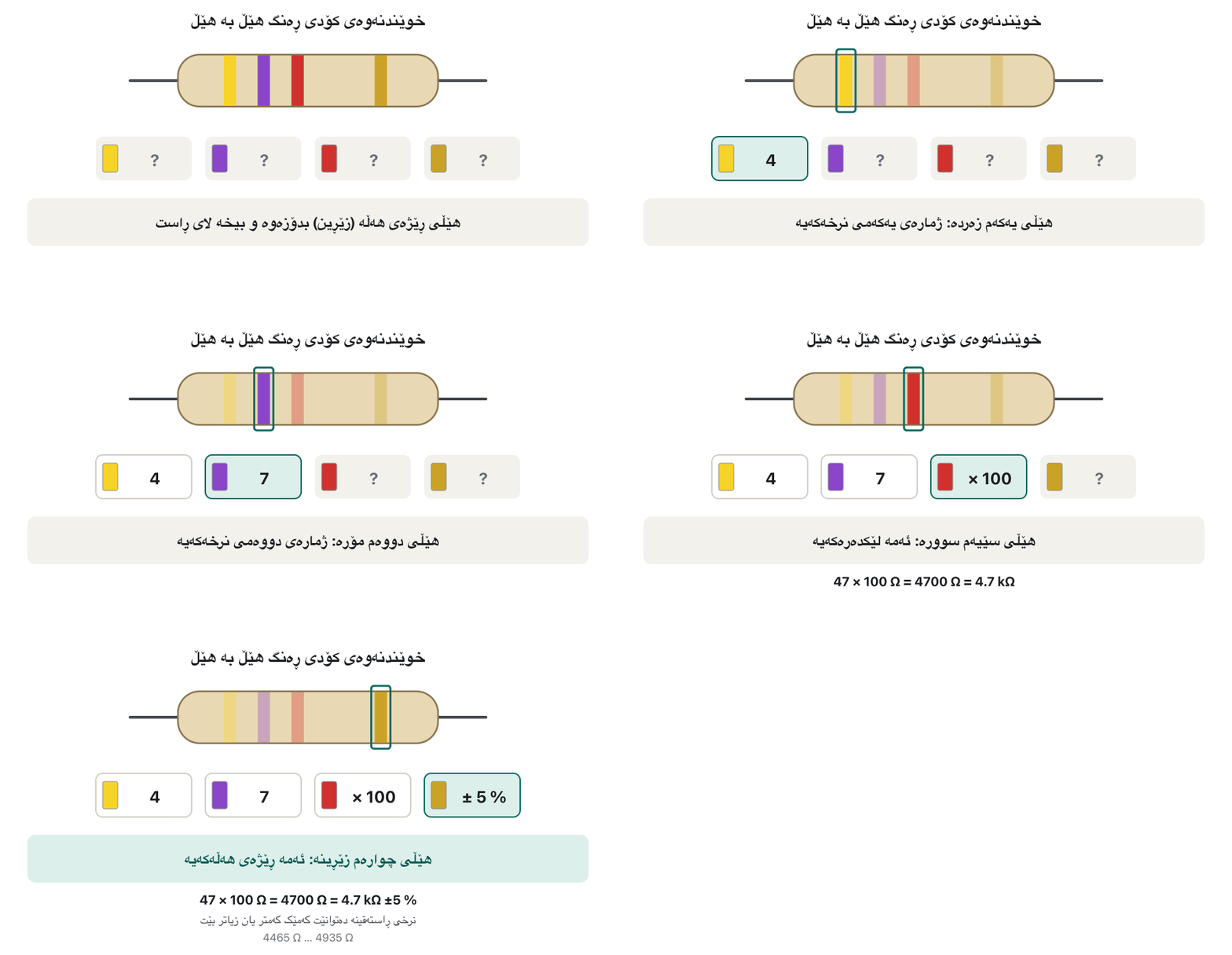
Watch it: 4.7 kΩ band by bandسەیری بکە: 4.7 kΩ هێڵ بە هێڵ
Turn the resistor so the gold band is on the right, then read from the left: yellow is 4, violet is 7, red means “add two zeros” (×100), and gold means ±5 %.
بسووڕێنە تا هێڵە زێڕینەکە بکەوێتە لای ڕاست، پاشان لە چەپەوە بخوێنەوە: زەرد 4ـە، مۆر 7ـە، سوور واتە «دوو سفر زیاد بکە» (×100) و زێڕین واتە ±5 %.
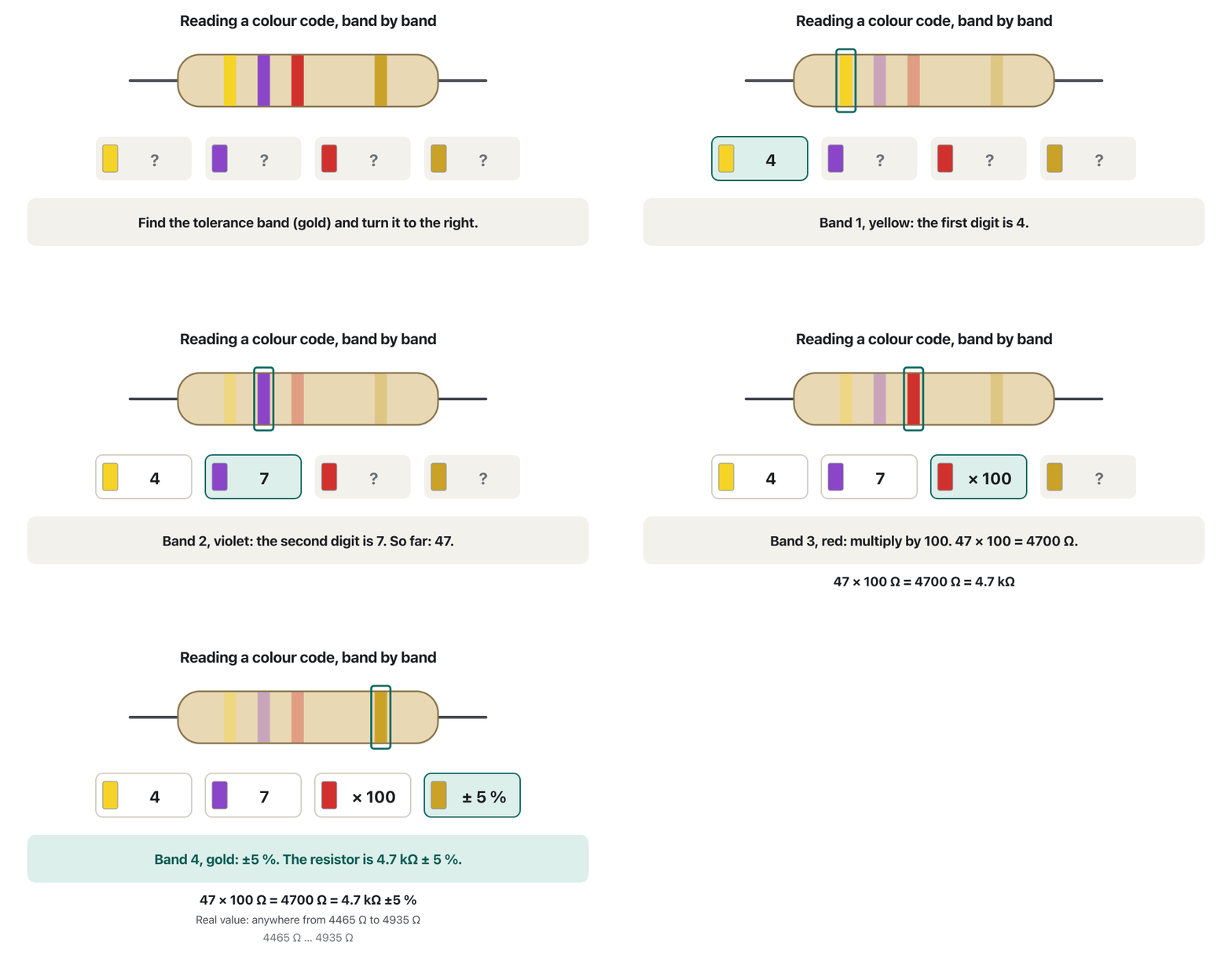
The tolerance gives a range: 5 % of 4700 Ω is 235 Ω, so a real “4.7 kΩ” resistor may measure anything from 4465 Ω to 4935 Ω and still be perfect. That is why resistors are sold only in standard steps (10, 22, 33, 47, 68 … and their multiples) and why a circuit is designed to work with any value inside the range.
ڕێژەی هەڵە کەمترین و زۆرترین نرخ دیاری دەکات: 5 %ـی 4700 Ω دەکاتە 235 Ω، بۆیە ڕاستەقینەی «4.7 kΩ» لەوانەیە هەر نرخێک لە 4465 Ω تا 4935 Ω بپێورێت و هێشتا بێکەموکوڕی بێت. بۆیە تەنها بە پلەی ستاندارد دەفرۆشرێن (10، 22، 33، 47، 68 … و جارانیان) و وا دیزاین دەکرێت کە بە هەر نرخێکی نێوان ئەو دوو سنوورە کار بکات.
Reading the resistor colour codeخوێندنەوەی کۆدی ڕەنگی بەرگر
Three, five and six bandsسێ، پێنج و شەش هێڵ
- 5 bands: precision resistors use three digit bands, then the multiplier, then the tolerance. Brown, black, black, brown, brown: , ±1 %.
- 6 bands: the same as five, plus a last band for the temperature coefficient — how many millionths (ppm) the value changes per degree.
- 3 bands: two digits and a multiplier with no tolerance band, which means ±20 %. Orange, white, brown: , ±20 %.
- پێنج هێڵ: سێ هێڵی ژمارە بەکار دەهێنن، پاشان لێکدەر، پاشان ڕێژەی هەڵە. قاوەیی، ڕەش، ڕەش، قاوەیی، قاوەیی: ، ±1 %.
- شەش هێڵ: وەک پێنج هێڵ، لەگەڵ هێڵێکی کۆتایی بۆ کاریگەریی پلەی گەرمی — نرخەکە بۆ هەر پلەیەک چەند لە ملیۆن (ppm) دەگۆڕێت.
- سێ هێڵ: دوو ژمارە و لێکدەرێک بێ هێڵی ڕێژەی هەڵە، کە واتە ±20 %. پرتەقاڵی، سپی، قاوەیی: ، ±20 %.
Precision tolerance bands: brown ±1 %, red ±2 %, green ±0.5 %, blue ±0.25 %, violet ±0.1 %; grey is ±0.05 % on older charts and ±0.01 % in today's IEC 60062 standard. A gold or silver multiplier (×0.1, ×0.01) is used for values below 10 Ω: red, violet, gold: .
هێڵەکانی ڕێژەی هەڵەی ورد: قاوەیی ±1 %، سوور ±2 %، سەوز ±0.5 %، شین ±0.25 %، مۆر ±0.1 %؛ خۆڵەمێشی لە خشتە کۆنەکاندا ±0.05 %ـە و لە ستانداردی ئەمڕۆی IEC 60062ـدا ±0.01 %. لێکدەری زێڕین یان زیوین (×0.1، ×0.01) بۆ نرخی کەمتر لە 10 Ω بەکار دێت: سوور، مۆر، زێڕین: .
Capacitors: small stores of chargeکاپاسیتەرەکان: کۆگای بچووکی بارگە
A capacitor is a two-terminal part made of two conducting plates with an insulator (the dielectric) between them. When a voltage is connected, charge is pushed onto it and it stores energy; it keeps that charge even after it is disconnected. No current flows through the insulator.
پارچەیەکی دوو سەرە کە لە دوو پەڕەی و لە نێوانیاندا پێک دێت. کاتێک دەبەسترێت، دەخرێتە سەری و وزە هەڵدەگرێت؛ تەنانەت دوای جیاکردنەوەشی دەپارێزێت. هیچ بە ناو ناڕوات.
While charging, electrons on one plate are pulled towards the source's + terminal, leaving that plate positive; the source pushes electrons onto the other plate, which becomes negative. Capacitance is measured in farads (F), but one farad is huge, so real values are given in µF (millionths), nF (billionths) and pF (millionths of a millionth of a farad).
لە کاتی پڕبووندا پەڕەیەک بەرەو سەری +ـی سەرچاوەکە ڕادەکێشرێن و ئەو پەڕەیە موجەب دەمێنێتەوە؛ سەرچاوەکە دەخاتە سەر پەڕەکەی تر کە سالب دەبێت. توانای بە (F) دەپێورێت، بەڵام یەک زۆر گەورەیە، بۆیە نرخە ڕاستەقینەکان بە µF (یەک لە ملیۆن)، nF (یەک لە ملیار) و pF (یەک لە ملیۆنی ملیۆن)ی دەنووسرێن.
- Timing: a resistor fills a capacitor at a steady pace, so the pair can measure out time — the blink of an LED.
- Smoothing: in a power supply a large capacitor fills the dips of rectified AC so the DC is steady.
- Blocking DC: a capacitor lets changing (AC) signals through but blocks steady DC.
- کات: بە ڕێکی پڕ دەکاتەوە، بۆیە جووتەکە دەتوانێت کات بپێوێت — وەک چاوتروکاندنی .
- لووسکردن: لە گەورە چاڵەکانی ACـی ڕاستکراوە پڕ دەکاتەوە تا DCـەکە جێگیر بێت.
- ڕێگرتن لە DC: ڕێگە بە گۆڕاو (AC) دەدات بەڵام DCـی جێگیر ڕادەگرێت.
Capacitors: small stores of chargeکاپاسیتەرەکان: کۆگای بچووکی بارگە
Capacitor codes, memory and clocksکۆدی کاپاسیتەر، بیرگە و کاتژمێر
Small ceramic capacitors can go in either way round and carry a three-digit code: two digits and a number of zeros, in pF. 104 is 10 followed by four zeros: ; 473 is . Larger electrolytic capacitors have a polarity: the − leg is marked and they must go in the right way round.
بە هەر لایەکدا دادەنرێن و کۆدێکی سێ ژمارەییان لەسەرە: دوو ژمارە و ژمارەی سفرەکان، بە pF. 104 واتە 10 و چوار سفر: ؛ 473 واتە . ئەلیکترۆلیتییە گەورەکان جەمسەریان هەیە: قاچی − نیشانە کراوە و دەبێت بە ڕاستی دابنرێن.
Diodes and LEDsدایۆدەکان و LEDـەکان
A diode is a two-terminal semiconductor part that lets current flow in one direction only, from its anode to its cathode, and blocks it the other way (as long as its voltage limits are kept). An ideal diode would have zero resistance forwards and infinite resistance backwards. Diodes are used, for example, to turn AC into DC in power supplies (the PSU).
پارچەیەکی دوو سەرە کە ڕێگە دەدات تەنها بە یەک ئاراستەدا بڕوات، لە ئانۆدەوە بۆ کاتۆد و بە پێچەوانەوە ڕێگری لێ دەکات (تا ئەو کاتەی سنوورەکانی تێنەپەڕێنرێن). تەواو بەرەو پێش سفر دەبوو و بەرەو دواوە بێکۆتا. بۆ نموونە لە AC دەگۆڕن بۆ DC (PSU).
In the diode symbol the arrow points the way conventional current flows when the diode conducts (it is “forward biased”); the bar is the cathode. Inside, the anode is p-type silicon (with missing electrons, called holes) and the cathode n-type silicon (with extra free electrons). Turned the other way (“reverse biased”), a region with no free charges forms at the junction and the diode blocks. A silicon diode needs about 0.7 V across it before it conducts.
لە تیرەکە ئاراستەی ڕێککەوتووی پیشان دەدات کاتێک دەیگەیەنێت (ئاراستەی پێشەوە)؛ هێڵە ستوونییەکە کاتۆدە. لە ناوەوە، ئانۆد سیلیکۆنی جۆری pـە (بە کەم، کە پێیان دەوترێت کون) و کاتۆد سیلیکۆنی جۆری nـە (بە ئازادی زیادە). ئەگەر بە پێچەوانەوە دابنرێت، ناوچەیەکی بێ ئازاد لە شوێنی بەیەکگەیشتنەکەدا دروست دەبێت و ڕێگر دەبێت. سیلیکۆن پێویستی بە نزیکەی 0.7 V هەیە پێش ئەوەی بگەیەنێت.
Diodes and LEDsدایۆدەکان و LEDـەکان
LEDs: diodes that lightLEDـەکان: دایۆدی ڕووناکیدەر
An LED (light-emitting diode) is a diode that gives off light when current flows forwards. It also works one way only: the long leg is the anode (+) and the flat edge of the rim marks the cathode (−). Once its “on” voltage is reached — about 1.8 to 2 V for red, about 3 V for blue and white — its current rises very fast for a tiny rise in voltage. That is why an LED always needs a resistor in series to set the current. (LEDs as a screen technology are in Displays.)
کە کاتێک بەرەو پێش دەڕوات ڕووناکی دەدات. ئەویش تەنها بە یەک ئاراستە کار دەکات: قاچە درێژەکە ئانۆدە (+) و لێوارە تەختەکەی بازنەکەی خوارەوە کاتۆد (−) نیشانە دەکات. هەر کە «هەڵبوون»ـی پێ بگات — نزیکەی 1.8 تا 2 V بۆ سوور، نزیکەی 3 V بۆ شین و سپی — بە زیادبوونێکی زۆر کەمی زۆر خێرا بەرز دەبێتەوە. بۆیە هەمیشە پێویستی بە هەیە بە بۆ دیاریکردنی . (LEDـەکان وەک تەکنەلۆژیای شاشە لە شاشەکاندا باس کراون.)
A part that lets flow in one direction only, from its anode to its cathode. Diodes turn AC into DC in power supplies; an is a diode that gives light.
پارچەیەکی کە ڕێگە دەدات تەنها بە یەک ئاراستەدا بڕوات، لە ئانۆدەوە بۆ کاتۆد. لە AC دەگۆڕن بۆ DC؛ دایۆدێکە کە ڕووناکی دەدات.
Diodes and LEDsدایۆدەکان و LEDـەکان
Choosing an LED's resistorهەڵبژاردنی بەرگرەکەی LED
The resistor takes whatever voltage the LED does not. With a supply , an LED voltage and the current you want :
ئەو وەردەگرێت کە وەری ناگرێت. بە ، و ئەو دەتەوێت :
Example: a 5 V supply, a red LED of about 2 V and 10 mA: . 300 Ω is not a standard value, so take the next one up, 330 Ω: the current is then , bright enough and safely below the usual 20 mA limit. The resistor turns into heat — easy for a ¼ W resistor.
نموونە: 5 V، LEDـێکی سووری نزیکەی 2 V و 10 mA: . 300 Ω نرخێکی ستاندارد نییە، بۆیە نرخی دواتری گەورەتر وەربگرە، 330 Ω: ئەوکات دەبێتە ، بەسە بۆ ڕووناکی و بە سەلامەتی لە خوار سنووری ئاسایی 20 mAـەوەیە. دەکات بە گەرمی — بۆ ¼ W ئاسانە.
Switches and fusesسویچ و فیوزەکان
A switch breaks a circuit (OFF) or completes it (ON). Switches are named by their poles — how many separate circuits they switch at once — and their throws — how many positions each pole can connect to.
دەپچڕێنێت (OFF) یان تەواوی دەکات (ON). بە ژمارەی جەمسەرەکانیان ناو دەنرێن — چەند جیا پێکەوە دەگۆڕن — و ژمارەی ڕێگاکانیان — هەر جەمسەرێک دەتوانێت بە چەند شوێن ببەسترێت.
| Nameناو | Meaningواتا | Typical useبەکارهێنانی باو |
|---|---|---|
| SPST | single pole, single throw: on/offیەک جەمسەر، یەک ڕێگا: هەڵکردن و کوژاندنەوە | a light switch گڵۆپ |
| SPDT | single pole, double throw: connects one terminal to A or Bیەک جەمسەر، دوو ڕێگا: خاڵێک بە A یان Bـەوە دەبەستێت | a logic input that is always 0 or 1 لۆجیکی کە هەمیشە 0 یان 1ـە |
| DPST | double pole, single throw: two circuits on/off togetherدوو جەمسەر، یەک ڕێگا: دوو پێکەوە هەڵدەکات و دەکوژێنێتەوە | mains switches that break both wires کارەبای ماڵ کە هەردوو وایەرەکە دەپچڕێنێت |
| DPDT | double pole, double throw: two SPDTs moved togetherدوو جەمسەر، دوو ڕێگا: دوو SPDT کە پێکەوە دەجووڵێن | reversing a motorپێچەوانەکردنەوەی ماتۆڕ |
A lab also uses push buttons (on only while pressed) and DIP switches (a row of tiny SPSTs, one per input bit). In a simulator the usual input is an SPDT switch, because it connects the gate's input firmly to either +5 V (1) or ground (0) — never to nothing. See Simulating and testing logic circuits.
تاقیگە دوگمەی پەستانیش بەکار دەهێنێت (تەنها لە کاتی داگرتندا هەڵکراوە) و DIP (ڕیزێک SPSTـی بچووک، یەکێک بۆ هەر ). لە ئاسایی SPDTـە، چونکە بە توندی یان بە +5 V (1) یان بە (0)ـەوە دەبەستێت — هەرگیز بە هیچەوە نا. بڕوانە هاوشێوەکردن و تاقیکردنەوەی سووڕە لۆجیکییەکان.
A fuse protects a circuit from too much current: it is a thin wire that melts and opens the circuit when the current goes above its rating. A 1 A fuse carries currents below 1 A for ever; a current well above 1 A melts it — quickly for a big overload, more slowly for a small one. A blown fuse is a warning: find the fault, then replace the fuse with one of the same rating, never a bigger one. Multimeters have a fuse in their current range for the same reason.
لە زۆر دەپارێزێت: وایەرێکی باریکە کە دەتوێتەوە و دەکاتەوە کاتێک لە ئاستەکەی زیاتر بێت. 1 A کەمتر لە 1 A بۆ هەمیشە دەگوازێتەوە؛ زۆر لە سەرووی 1 Aـەوە دەیتوێنێتەوە — بۆ بارێکی زۆر گەورە بە خێرایی و بۆ بارێکی بچووک هێواشتر. سووتاو ئاگادارکردنەوەیە: هەڵەکە بدۆزەوە، پاشان بە یەکێکی هەمان ئاست بگۆڕە، هەرگیز گەورەتر نا. بە هەمان هۆ لە بەشی هەیە.
The breadboardبریدبۆرد
A breadboard lets you build a circuit without soldering. Under the holes are metal spring strips. In the middle area each short column of five holes (a–e, or f–j) is one connected strip; the gap down the centre separates the two halves. Along the edges run the power rails: long rows marked + (red) and − (blue) that carry the supply to the whole board. Holes are 2.54 mm (0.1 inch) apart, the same as a chip's pins.
ڕێگە دەدات بێ لەحیمکردن دروست بکەیت. لە ژێر کونەکاندا پارچە کانزای فەنەرداری لێیە. لە ناوەڕاستدا هەر ستوونێکی کورتی پێنج کون (a–e یان f–j) یەک ڕیزی بەستراوە؛ بۆشاییەکەی ناوەڕاست دوو نیوەکە لێک جیا دەکاتەوە. بە درێژایی لێوارەکاندا هێڵەکانی وزە هەن: ڕیزی درێژی نیشانەکراو بە + (سوور) و − (شین) کە وزە بە هەموو تەختەکە دەگەیەنن. نێوانی کونەکان 2.54 mm (0.1 ئینج)ـە، هەمان نێوانی پینەکانی .
- Put each part across strips, so its legs land in different strips. A part placed along one strip has both legs joined: it is shorted out and does nothing.
- Place chips across the centre gap, so every pin has its own strip.
- Some boards split each power rail in the middle; bridge the halves with a wire if you need the whole length.
- Red wire for +, black or blue for −, short and flat: a tidy board is easier to check.
- هەر پارچەیەک بە پانی ڕیزەکان دابنێ، بۆ ئەوەی قاچەکانی بکەونە ڕیزی جیاوازەوە. پارچەیەک کە بە درێژایی یەک ڕیزدا دابنرێت هەردوو قاچی بەیەکەوە بەستراون: دەبێت و هیچ ناکات.
- بەسەر بۆشاییە ناوەڕاستەکەدا دابنێ، بۆ ئەوەی هەر پینێک ڕیزی خۆی هەبێت.
- هەندێک تەختە هەر هێڵێکی وزە لە ناوەڕاستدا دابەش دەکەن؛ ئەگەر هەموو درێژییەکەت پێویستە دوو نیوەکە بە وایەرێک ببەستەوە.
- وایەری سوور بۆ +، ڕەش یان شین بۆ −، کورت و لەسەر تەختەکە: تەختەیەکی ڕێکخراو ئاسانتر دەپشکنرێت.
How a breadboard is connected inside, which holes are joined, and how to build a simple LED circuit on it.
لە ناوەوە چۆن بەستراوە، کام کونەکان پێکەوە بەستراون و چۆن سادەی لەسەری دروست بکەیت.
Whole video (7:22).
هەموو ڤیدیۆکە (7:22).
Bench instruments: power supply and function generatorئامێرەکانی سەر مێز: سەرچاوەی وزە و بەرهەمهێنەری شەپۆل
A DC power supply gives a steady voltage to the circuit (its load). A bench supply has a knob for the voltage — set it to 5 V for 74-series logic before you connect anything — and often a current limit, which stops a short circuit from burning parts. How a supply turns the wall's AC into DC is explained in the PSU.
DC جێگیر دەدات بە (). سەر مێز دوگمەیەکی بۆ هەیە — پێش بەستنی هەر شتێک بیخە سەر 5 V بۆ لۆجیکی زنجیرەی 74 — و زۆرجار سنووری هەیە، کە ڕێگە نادات پارچەکان بسووتێنێت. چۆنیەتیی گۆڕینی ACـی دیوار بۆ DC لە PSUدا ڕوون کراوەتەوە.
A function generator produces AC waveforms — sine, triangle and square waves — at a frequency you can set from a fraction of a hertz up to several hundred kilohertz. For logic, its square wave is the most useful: a regular HIGH–LOW signal that can act as the clock of a circuit.
AC دروست دەکات — ، شەپۆلی سێگۆشەیی و — بە کە دەتوانیت لە بەشێک لە تا چەند سەد کیلۆهێرتز دیاری بکەیت. بۆ لۆجیک لە هەمووی بەسوودترە: ڕێکی HIGH–LOW کە دەتوانێت ببێتە سیگناڵی کاتژمێری .
The multimeterمەڵتیمیتەر
A multimeter, also called an AVO meter (ammeter–voltmeter–ohmmeter), combines several instruments in one box: it measures voltage, current and resistance, and most can test continuity with a beep. The black probe goes in the COM socket; the red probe goes in the V/Ω socket — or in the separate mA/A socket for current.
، کە پێی دەوترێت AVO (––)، چەند ئامێرێک لە یەک سندووقدا کۆ دەکاتەوە: ، و دەپێوێت و زۆربەیان دەتوانن بە دەنگێک بەستراوی (continuity) تاقی بکەنەوە. سەرە ڕەشەکە دەچێتە کونی COM؛ سەرە سوورەکە دەچێتە کونی V/Ω — یان بۆ دەچێتە کونی جیای mA/A.
- Voltageڤۆڵتیە
Choose DC volts (V with a straight line) or AC volts (V~). Touch the probes across the part, in parallel. Nothing in the circuit is disconnected.
DC (V بە هێڵێکی ڕاست) یان AC (V~) هەڵبژێرە. سەرەکان بە دوو سەری پارچەکەوە بنێ، بە . هیچ شتێکی جیا ناکرێتەوە.
- Currentتەزوو
Switch to amps, move the red probe to the mA/A socket, then open the circuit and put the meter in the gap, in series, so the current flows through it.
بیخە سەر ، سەرە سوورەکە بگوازەوە بۆ کونی mA/A، پاشان بکەرەوە و ئامێرەکە بخە ناو بۆشاییەکەوە، بە ، بۆ ئەوەی پێیدا بڕوات.
- Resistanceبەرگری
Switch the circuit off and take the resistor out (other parts in the circuit change the reading). Choose Ω and touch both legs.
بکوژێنەرەوە و دەربهێنە (پارچەکانی تری خوێندنەوەکە دەگۆڕن). Ω هەڵبژێرە و بەر هەردوو قاچی بکەوە.
- Continuityبەستراوی
With the power off, choose the beep setting and touch the two ends of a wire or a breadboard strip: a beep means they are connected; silence means a break.
بە کوژاوەیی کارەبا، ڕێکخستنی دەنگ هەڵبژێرە و بەر دوو سەری وایەرێک یان ڕیزێکی بکەوە: دەنگ واتە بەستراون؛ بێدەنگی واتە پچڕاوە.
In Sorani Kurdish: how to use a digital multimeter (AVO meter), choosing the right range and measuring voltage.
بە کوردیی سۆرانی: چۆن (ئاڤۆ) بەکار بهێنیت، ئاستی پێوانەی گونجاو هەڵبژێریت و بپێویت.
Plays 0:00-4:05: the dial and its ranges (written on paper) and measuring the DC voltage of batteries; stops before a power strip appears.
لە 0:00 تا 4:05 پەخش دەبێت: دەسکە سووڕاوەکە و ئاستەکانی پێوانە (لەسەر کاغەز نووسراون) و پێوانەکردنی DCـی پاترییەکان؛ پێش دەرکەوتنی پلاکێکی چەند سۆکێتی ڕادەوەستێت.
The multimeterمەڵتیمیتەر
Measuring without damageپێوانە بێ تێکدان
- Start on a range above the value you expect (20 V for a 5 V circuit). A reading of “1” or “OL” means the range is too low.
- Measure resistance only with the power off.
- Leave mains (230 V) measurements to qualified electricians.
- بە ڕێکخستنێکی سەرووی ئەو نرخەی چاوەڕێی دەکەیت دەست پێبکە (20 V بۆ 5 V). خوێندنەوەی «1» یان «OL» واتە ڕێکخستنەکە زۆر نزمە.
- تەنها بە کوژاوەیی کارەبا بپێوە.
- پێوانی کارەبای ماڵ (230 V) بۆ کارەباچییە شارەزاکان جێبهێڵە.
Common mistakesهەڵە باوەکان
| Mistakeهەڵە | Fixچارەسەر |
|---|---|
| An LED connected straight to 5 V with no resistor. ڕاستەوخۆ بە 5 Vـەوە بەسترابێت بێ . | It draws far too much current and burns out. Always add a series resistor (330 Ω to 1 kΩ at 5 V). زۆر زۆر دەکێشێت و دەسووتێت. هەمیشە بە زیاد بکە (330 Ω تا 1 kΩ بە 5 V). |
| An LED or electrolytic capacitor put in backwards. یان ئەلیکترۆلیتی بە پێچەوانەوە دابنرێت. | Long leg (anode) to +; the marked − leg of a capacitor to −.قاچی درێژ (ئانۆد) بۆ +؛ قاچی نیشانەکراوی −ـی بۆ −. |
| Reading the colour code from the tolerance end.خوێندنەوەی لە لای ڕێژەی هەڵەوە. | Turn the gold or silver band to the right first.سەرەتا هێڵی زێڕین یان زیوین بخە لای ڕاست. |
| Treating band 3 as a third digit (brown-black-red read as 102 Ω).هێڵی سێیەم وەک ژمارەی سێیەم دانرێت (قاوەیی-ڕەش-سوور وەک 102 Ω). | On a 4-band resistor band 3 is the multiplier: .لەسەر چوار هێڵی، هێڵی سێیەم لێکدەرە: . |
| A part placed along one breadboard strip.پارچەیەک بە درێژایی یەک ڕیزی دابنرێت. | Its legs are shorted together; place it across two strips.قاچەکانی بەیەکەوە دەبن؛ بە پانی دوو ڕیزدا دایبنێ. |
| A chip pushed into one side of the board, not across the gap. لە یەک لای تەختەکەدا دابنرێت، نەک بەسەر بۆشاییەکەدا. | Opposite pins are then joined; always straddle the centre gap.ئەوکات پینە بەرامبەرەکان بەیەکەوە دەبەسترێن؛ هەمیشە بەسەر بۆشاییە ناوەڕاستەکەدا دایبنێ. |
| Measuring current with the meter in parallel.پێوانی بە دانانی ئامێرەکە بە . | Current is measured in series; in parallel the meter shorts the circuit and blows its fuse. بە دەپێورێت؛ بە ئامێرەکە دەکات و دەسووتێت. |
| Measuring a resistor while it is still powered in the circuit.پێوانی لە کاتێکدا هێشتا لە کارەبای پێوەیە. | Switch off and take it out, then measure.بیکوژێنەرەوە و دەریبهێنە، پاشان بیپێوە. |
Exercisesڕاهێنانەکان
Give the value of each 4-band resistor (all have a gold fourth band): (a) green, blue, brown; (b) brown, grey, red; (c) orange, white, orange; (d) brown, black, yellow; (e) red, violet, gold (here gold is the multiplier band).
نرخی هەر چوار هێڵی بدۆزەوە (هەموویان هێڵی چوارەمیان زێڕینە): (أ) سەوز، شین، قاوەیی؛ (ب) قاوەیی، خۆڵەمێشی، سوور؛ (ج) پرتەقاڵی، سپی، پرتەقاڵی؛ (د) قاوەیی، ڕەش، زەرد؛ (هـ) سوور، مۆر، زێڕین (لێرەدا زێڕین هێڵی لێکدەرە).
Show answerوەڵامەکە پیشان بدە
| Bandsهێڵەکان | Workingژماردن | Valueنرخ |
|---|---|---|
| green, blue, brownسەوز، شین، قاوەیی | 560 Ω | |
| brown, grey, redقاوەیی، خۆڵەمێشی، سوور | 1.8 kΩ | |
| orange, white, orangeپرتەقاڵی، سپی، پرتەقاڵی | 39 kΩ | |
| brown, black, yellowقاوەیی، ڕەش، زەرد | 100 kΩ | |
| red, violet, goldسوور، مۆر، زێڕین | 2.7 Ω |
Which three colour bands (before the gold tolerance band) do (a) 470 Ω and (b) 6.8 kΩ have?
(أ) 470 Ω و (ب) 6.8 kΩ کام سێ هێڵی ڕەنگیان هەیە (پێش هێڵی زێڕینی ڕێژەی هەڵە)؟
Show answerوەڵامەکە پیشان بدە
- (a) : yellow, violet, brown.
- (b) : blue, grey, red.
- (أ) : زەرد، مۆر، قاوەیی.
- (ب) : شین، خۆڵەمێشی، سوور.
A red LED (2 V) should carry about 15 mA from a 9 V battery. Calculate the resistor and choose a standard value (… 330, 390, 470, 560 … Ω). What current flows with your choice?
LEDـێکی سوور (2 V) دەبێت نزیکەی 15 mA لە پاترییەکی 9 Vـەوە بگوازێتەوە. بژمێرە و نرخێکی ستاندارد هەڵبژێرە (… 330، 390، 470، 560 … Ω). بە هەڵبژاردنەکەت چەند دەڕوات؟
Show answerوەڵامەکە پیشان بدە
Take the next standard value up so the current stays a little below the target.
نرخی ستانداردی دواتری گەورەتر وەربگرە بۆ ئەوەی کەمێک لە خوار ئامانجەکەوە بمێنێتەوە.
An output pin of a 3.3 V board gives 3.3 V. A red LED (2 V) should carry about 5 mA. Which resistor?
پینێکی بۆردێکی 3.3 V، 3.3 V دەدات. LEDـێکی سوور (2 V) دەبێت نزیکەی 5 mA بگوازێتەوە. کام ؟
Show answerوەڵامەکە پیشان بدە
→ the next standard value is 270 Ω, giving .
← نرخی ستانداردی دواتر 270 Ωـە، کە دەدات.
Ceramic capacitors are marked 104, 473 and 222. Give each value in pF and nF.
سێ سیرامیکی بە 104، 473 و 222 نیشانە کراون. نرخی هەر یەکەیان بە pF و nF بنووسە.
Show answerوەڵامەکە پیشان بدە
- 104: 10 and four zeros, .
- 473: 47 and three zeros, .
- 222: 22 and two zeros, .
- 104: 10 و چوار سفر، .
- 473: 47 و سێ سفر، .
- 222: 22 و دوو سفر، .
For each job say how the multimeter is connected and which setting is used: (a) the voltage of a 9 V battery; (b) the current through an LED on a breadboard; (c) the value of an unmarked resistor; (d) whether a jumper wire is broken.
بۆ هەر کارێک بڵێ چۆن دەبەسترێت و کام ڕێکخستن بەکار دێت: (أ) پاترییەکی 9 V؛ (ب) LEDـێک لەسەر ؛ (ج) نرخی نیشانەنەکراو؛ (د) ئایا وایەرێکی پەیوەندی پچڕاوە.
Show answerوەڵامەکە پیشان بدە
- (a) DC volts, probes across the battery (parallel).
- (b) mA, red probe in the mA socket, circuit opened and meter in the gap (series).
- (c) Ω, power off, resistor out of the circuit, probes on its legs.
- (d) Continuity (beep), power off, probes on both ends of the wire.
- (أ) DC، سەرەکان بە دوو سەری پاترییەکەوە (هاوتەریب).
- (ب) mA، سەرە سوور لە کونی mA، کراوەتەوە و ئامێرەکە لە بۆشاییەکەدا (زنجیرەیی).
- (ج) Ω، کارەبا کوژاوە، لە دەرهێنراوە، سەرەکان لەسەر قاچەکانی.
- (د) بەستراوی (دەنگ)، کارەبا کوژاوە، سەرەکان لەسەر هەردوو سەری وایەرەکە.
Summaryپوختە
- Resistors limit current; they are fixed, variable (potentiometer, rheostat, trimmer) or sensors (thermistor, LDR).
- 4-band colour code: two digits, a multiplier, a tolerance; read from the end away from the gold band.
- Capacitors store charge between two plates; units µF, nF, pF; they time, smooth and block DC.
- Diodes conduct one way (anode → cathode); an LED needs a series resistor: .
- Switches are named by poles and throws (SPST, SPDT, DPST, DPDT); a fuse melts above its rating.
- Breadboard: 5-hole strips, chips across the gap, parts across strips.
- Multimeter: volts across (parallel), amps through (series), ohms with the power off.
- سنووردار دەکەن؛ جێگیرن، گۆڕاون (پۆتێنشیۆمیتەر، ڕیۆستات، تریمەر) یان (سێرمیستەر، LDR).
- چوار هێڵی: دوو ژمارە، لێکدەرێک، ڕێژەیەکی هەڵە؛ لەو سەرەوە بخوێنەوە کە لە هێڵە زێڕینەکە دوورە.
- لە نێوان دوو پەڕەدا هەڵدەگرن؛ یەکەکان µF، nF، pF؛ کات دەپێون، لووس دەکەن و ڕێگە لە DC دەگرن.
- بە یەک ئاراستە دەگەیەنن (ئانۆد ← کاتۆد)؛ پێویستی بە هەیە بە : .
- بە جەمسەر و ڕێگا ناو دەنرێن (SPST، SPDT، DPST، DPDT)؛ لە سەرووی ئاستەکەیەوە دەتوێتەوە.
- : ڕیزی پێنج کونی، بەسەر بۆشاییەکەدا، پارچەکان بە پانی ڕیزەکاندا.
- : بە دوو سەرەوە (هاوتەریب)، بە ناودا (زنجیرەیی)، بە کوژاوەیی کارەبا.
Why is the third band of a 4-band resistor not a digit?بۆچی هێڵی سێیەمی بەرگرێکی چوار هێڵی ژمارە نییە؟
It is the multiplier: it tells how many zeros follow the two digits (or ×0.1, ×0.01 for gold and silver).
لێکدەرە: دەڵێت چەند سفر بە دوای دوو ژمارەکەدا دێن (یان ×0.1، ×0.01 بۆ زێڕین و زیوین).
Why does a simulator use an SPDT switch for a logic input?بۆچی هاوشێوەساز سویچی SPDT بۆ نێوخستەیەکی لۆجیکی بەکار دەهێنێت؟
It always connects the input to either +5 V (1) or ground (0), so the input is never left floating.
هەمیشە یان بە +5 V (1) یان بە (0)ـەوە دەبەستێت، بۆیە هەرگیز بێ بەستن (floating) نامێنێتەوە.
Videoڤیدیۆ
Watch a videoسەیری ڤیدیۆیەک بکە
A video that viewers liked a lot and praised in their comments, chosen for this lesson.ڤیدیۆیەک کە بینەران زۆریان پێ خۆش بووە و لە کۆمێنتەکانیاندا ستایشیان کردووە، بۆ ئەم وانەیە هەڵبژێردراوە.
A quick tour of common components with their symbols and jobs: fixed and variable resistors, capacitors, diodes, transistors, regulators, ICs, displays and relays.
گەشتێکی خێرا بە ناو پارچە باوەکاندا لەگەڵ و کارەکانیان: و ، ، ، ، ڕێکخەری ، ، پیشاندەر و ڕیلە.
0:10 resistor; 0:21 variable resistor; 1:17 electrolytic capacitor; 2:40 capacitor; 3:21 diode; 4:01 transistor; 6:01 IC.
0:10 ؛ 0:21 ؛ 1:17 ئەلیکترۆلیتی؛ 2:40 ؛ 3:21 ؛ 4:01 ؛ 6:01 (IC).
Lesson complete!وانەکە تەواو بوو!
Well done. Review the key terms, then go on to the next lesson.دەستخۆش. سەیرێکی زاراوە سەرەکییەکان بکەرەوە، پاشان بڕۆ بۆ وانەی داهاتوو.
Key termsزاراوە سەرەکییەکان
Logic Gates, Truth Tables and the NOT Gateگەیتە لۆجیکییەکان، خشتەکانی ڕاستی و گەیتی NOT
Related lecturesوانە پەیوەندیدارەکان
- Building Gates from Transistorsدروستکردنی گەیتەکان لە ترانزیستۆرەکانەوە
- Simulating and Testing Logic Circuitsهاوشێوەکردن و تاقیکردنەوەی سووڕە لۆجیکییەکان
- Logic Gates, Truth Tables and the NOT Gateگەیتە لۆجیکییەکان، خشتەکانی ڕاستی و گەیتی NOT
- Memory: RAM, ROM and Cacheبیرگە: RAM، ROM و کاش
- Monitors and Displaysشاشەکان
- The System Unit, Motherboard and Power Supplyکەیس، بۆردی سەرەکی و سەرچاوەی وزە
References and further readingسەرچاوەکان و خوێندنەوەی زیاتر
This lecture is a first edition. The Kurdish text and terminology are waiting for review by Kurdish IT teachers.ئەم وانەیە چاپی یەکەمە. دەقە کوردییەکە و زاراوەکانی چاوەڕێی پێداچوونەوەی مامۆستایانی کوردی بواری IT ن.